
Patio furniture safety covers three real categories of risk: physical injuries from structural failure or sharp edges, health hazards from chemicals and mold, and weather-driven deterioration that quietly makes furniture dangerous before it looks obviously broken. The good news is that most of these problems are preventable with a basic inspection routine, smart setup habits, and knowing what to look for when you buy.
Patio Furniture Safety Guide: Prevent Injuries and Weather Damage

Theo Tierney
6 Jun 2026
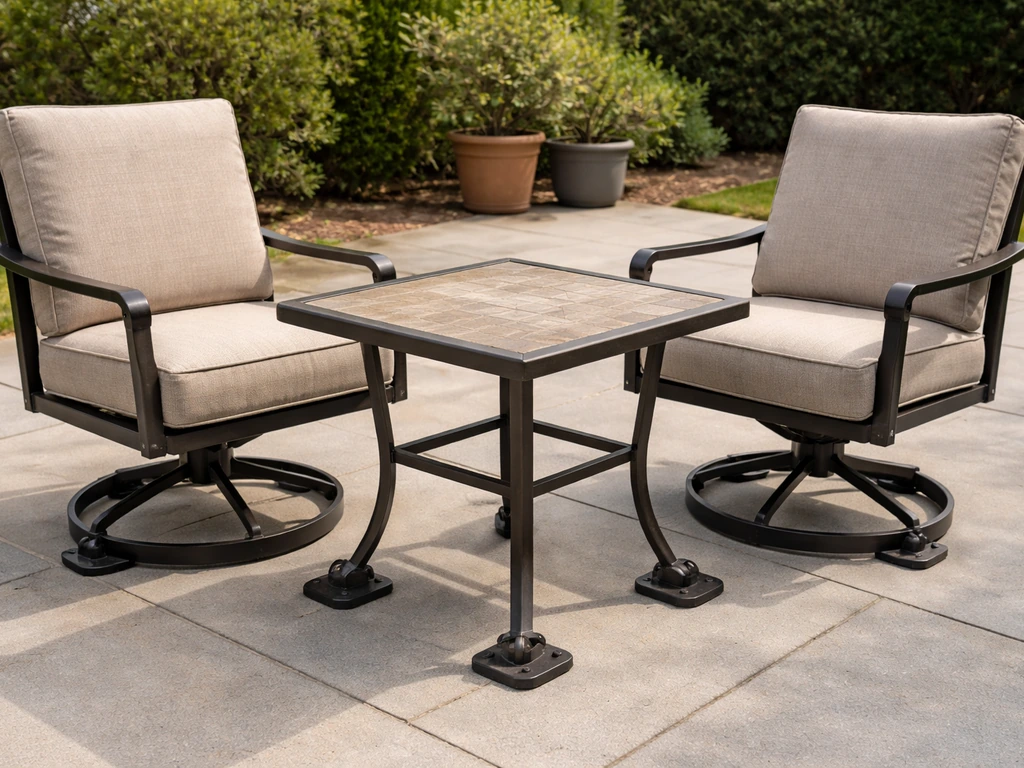
What patio furniture safety actually covers
Most people think of safety as 'don't trip over it,' but outdoor furniture safety is a lot broader than that. It falls into three buckets. First, physical hazards: wobbly chairs that tip or collapse, sharp metal edges, pinch points in folding frames, splinters from aging wood. Second, chemical and health exposure: off-gassing from finishes and sealers, pressure-treated wood preservatives, and mold growing on cushions or frames.
Third, environmental degradation: the slow, invisible damage that sun, rain, humidity, and freeze-thaw cycles do to a frame until it fails under someone's weight. None of these are exotic or rare. A recalled line of Adirondack-style patio chairs is a real example of what happens when structural failure leads to falls and injuries, and the CPSC documents furniture tip-overs as one of the more common emergency-room causes in home settings, with [roughly 22,500 Americans treated annually](https://www. cpsc.
gov/Newsroom/News-Releases/2022/CPSC-Injury-and-Fatality-Report-Shows-Despite-Some-Progress-Need-for-TV-and-Furniture-Tip-Over-Prevention-Remains-Strong). For example, the U. S. Consumer Product Safety Commission recalled [Adams Manufacturing’s Adirondack-style patio chairs](https://www.
cpsc. gov/Recalls/2026/Adams-Manufacturing-Recalls-Adirondack-Patio-Chairs-Due-to-Injury-and-Fall-Hazards) because of injury and fall hazards. Outdoor furniture isn't inherently more dangerous than indoor furniture, but it weathers constantly and often goes uninspected for months at a time, which is exactly when problems develop.
The most common hazards by material and design
Different materials fail in different ways, so knowing what you have tells you exactly what to watch for.
Wood furniture
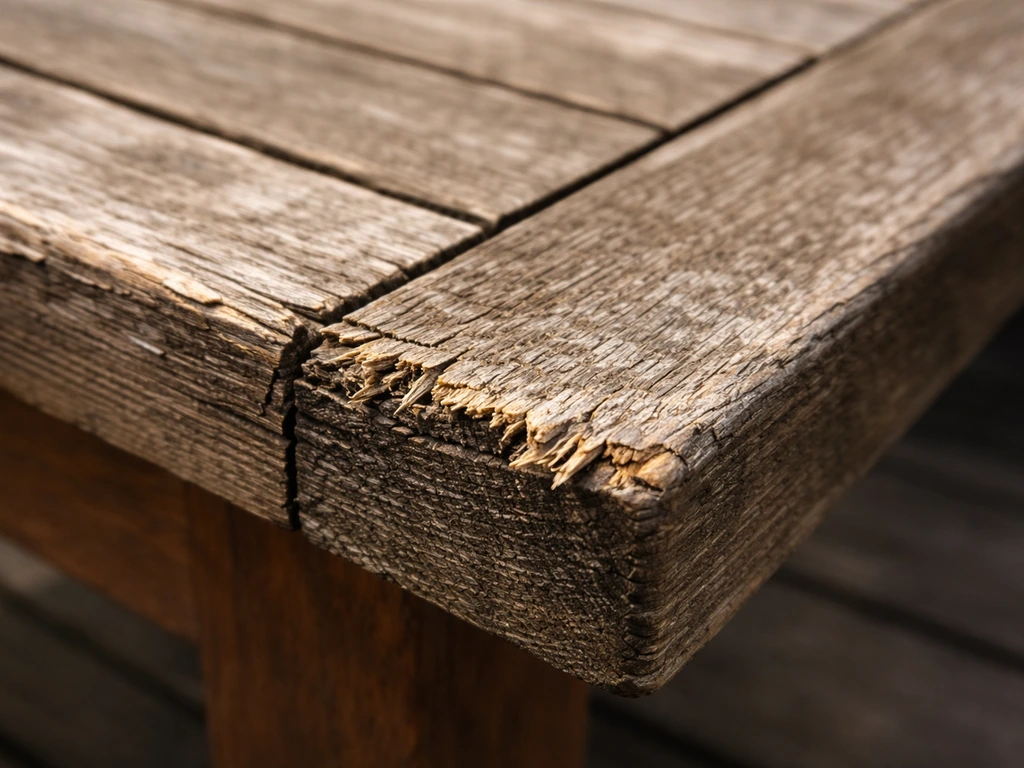
Wood looks beautiful but it's the highest-maintenance material outdoors. Untreated or poorly sealed wood develops splinters as the grain raises with repeated moisture exposure. Joints and mortise-and-tenon connections swell, contract, and eventually loosen, and a chair that wobbles even slightly is one hard landing away from a fall. Check where the legs attach to the seat frame, and look for cracks running along the grain near screw or bolt holes. Those cracks concentrate stress and can cause sudden failure.
Metal furniture
Steel frames rust from the inside out, especially at welds and tube ends where water pools. By the time you see orange rust bleeding through paint on the outside, the structural integrity underneath may already be compromised. Aluminum doesn't rust but it does corrode in salt air, and cheap cast aluminum can crack at stress points. Look for sharp edges on cut tubing, especially on budget furniture where the tube ends aren't deburred or capped. Folding metal furniture has pinch points at the hinge mechanism that can catch fingers, particularly for children.
Wicker, rattan, and resin wicker
Natural rattan and wicker can't really live outdoors full-time in wet climates. The weave loosens, strands break, and you end up with exposed sharp ends that scratch skin. Resin wicker (synthetic PE wicker) holds up much better, but the underlying steel frame is still vulnerable to rust. When resin wicker chairs sag in the middle, that's usually the frame failing underneath the weave, not the weave itself. Sagging seating changes the geometry of the chair and can tip someone backward.
Plastic and composite furniture
UV exposure degrades plastic over time, making it brittle and prone to cracking or snapping under load rather than bending. Cheap polypropylene or resin chairs can fail catastrophically after a few seasons in high-UV climates like Arizona or Florida. Higher-quality HDPE (high-density polyethylene) furniture holds up much better, but it still needs to be checked for hairline cracks, especially at leg joints and where armrests connect to the frame. Composite lumber decking chairs are generally more durable but heavier, and they can get very hot to the touch in direct sun.
Design features to watch regardless of material
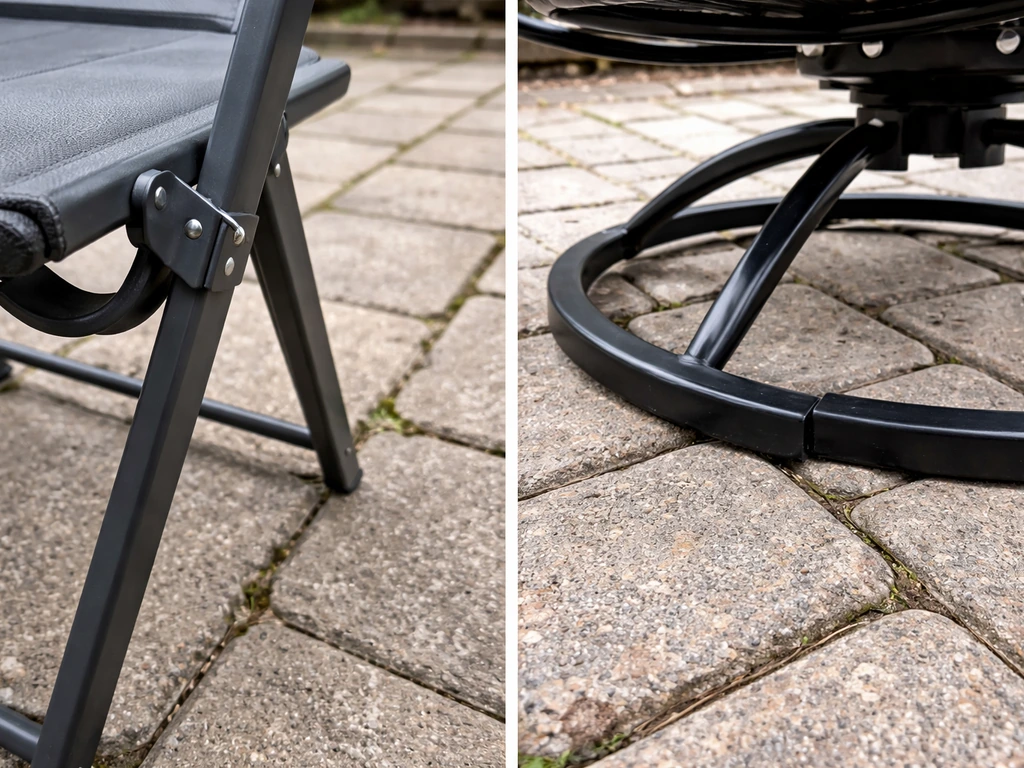
- Rocking chairs and chairs with curved bases: tip risk on uneven decking or pavers
- Folding chairs and tables: pinch points at hinges, locking mechanisms that wear out
- Bar-height stools and tall chairs: higher center of gravity, greater tip-over risk on soft ground or grass
- Glass tabletops: tempered glass is safer, but annealed glass shatters into dangerous shards
- Umbrella bases: unstable or undersized bases become projectiles in wind
Chemical and health concerns you shouldn't ignore
Pressure-treated wood was historically treated with chromated copper arsenate (CCA), which contains arsenic. CCA-treated lumber was phased out of residential use in the US in 2003, but older decks, furniture, and lumber sold before that date may still contain it. If you have very old wood furniture or bought it secondhand, it's worth knowing what you have. Modern pressure-treated wood uses copper-based preservatives that are safer, but you still shouldn't sand or burn it without proper protection.
Finishes, stains, and sealers are a more immediate concern for most people. Oil-based stains and sealers off-gas volatile organic compounds (VOCs) while curing, which can cause headaches, nausea, and eye irritation. Always apply them in a well-ventilated area, wear gloves, and keep children and pets away until the product is fully cured, which typically takes 24 to 72 hours depending on temperature and humidity. Water-based finishes have lower VOC content and are a better choice if you're sensitive.
Mold on cushions and fabric is a genuine health issue, not just an aesthetic one. Chiggers can sometimes survive on outdoor surfaces like patio furniture, so it helps to keep cushions and nearby areas clean and dry can chiggers live on patio furniture. The CDC notes that mold can cause symptoms including stuffy nose, sore throat, coughing, burning eyes, and skin rash even in people who aren't allergic to mold.
People with compromised immune systems or chronic lung conditions face higher risk. If your outdoor cushions have developed mold or mildew, don't just wipe them down and call it good. If you suspect bug bites after sitting outside, check your cushions and fabric for pests before you use the furniture again bug bites from patio furniture.
Wash the covers thoroughly, treat with a diluted white vinegar solution or a product designed for mold on fabric, and make sure they dry completely before reassembling. If the foam inside is moldy, replace it.
Some spray paints, powder coatings, and fabric treatments marketed for patio furniture contain chemicals that can irritate skin on contact when the surface is wet or hasn't cured fully. This is rare but worth knowing if you refinish furniture yourself. Let any painted or sealed surface cure completely before anyone sits on it.
How weather breaks furniture down and makes it dangerous
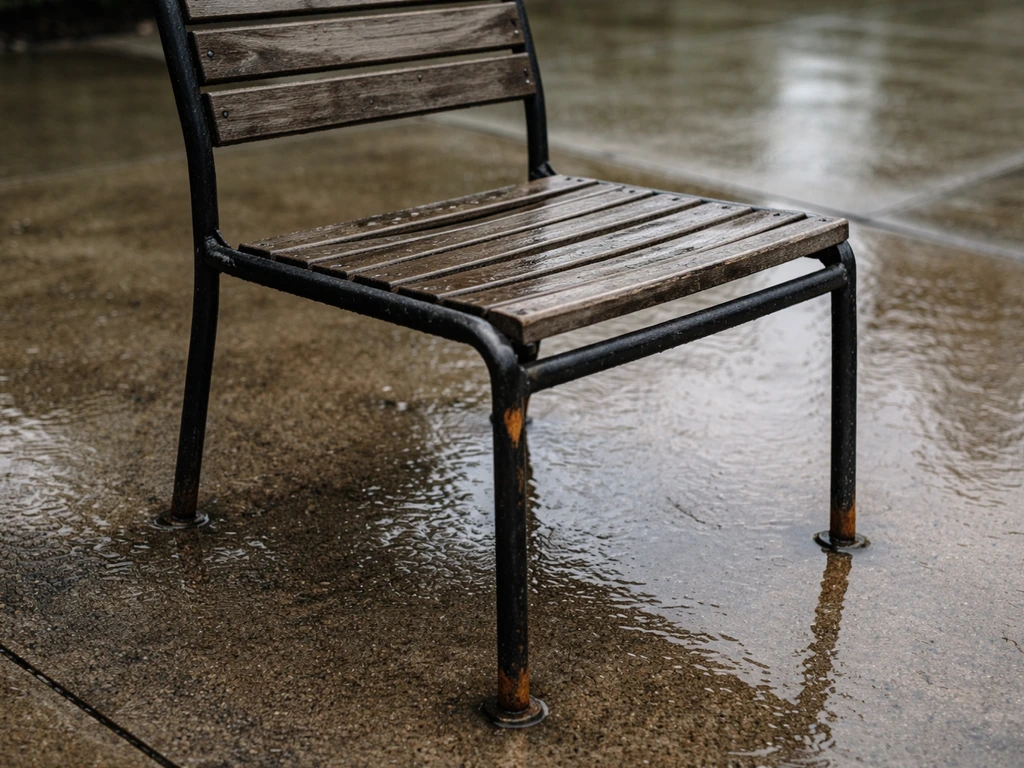
Weather doesn't just make furniture look old. If your patio furniture shocks you, that can be a sign of an electrical grounding or moisture issue that needs immediate attention why does my patio furniture shock me. It actively compromises structural integrity in ways that create real safety risks, and the pattern differs by climate.
| Climate type | Primary weather hazard | Materials most at risk | Key safety concern |
|---|---|---|---|
| Humid/coastal (Florida, Gulf Coast, Pacific NW) | Moisture, salt air, humidity | Steel frames, natural wood, natural fiber | Rust, rot, mold, structural failure |
| Hot/dry (Arizona, Nevada, Southern California) | UV radiation, extreme heat | Plastic, resin, fabric, foam | Brittleness, cracking, surface burns, fading |
| Cold/snowy (Midwest, Northeast, Mountain) | Freeze-thaw cycles, ice, snow load | Metal joints, wood, sealant integrity | Cracked welds, split wood, fastener failure |
| Mixed/moderate (mid-Atlantic, Pacific Coast) | Seasonal cycling, occasional storms | All materials | Gradual joint loosening, UV degradation over years |
Freeze-thaw cycles are particularly destructive to anything with moisture in a joint. Water expands about 9% when it freezes, which means trapped moisture in a wood joint or a hollow metal tube will crack it over time. If you leave furniture outside through a northern winter, pull cushions and covers, and ideally store lightweight pieces in a shed or garage. For furniture that stays out, make sure water can drain rather than pool inside hollow tubes or under seat slats.
In humid climates, the combination of warmth and moisture is perfect for mold growth on any porous surface, including cushion foam, fabric covers, and even unfinished wood frames. In coastal areas, salt air accelerates corrosion on steel frames dramatically. Even aluminum oxidizes in heavy salt exposure. If you're in a coastal environment, powder-coated aluminum or marine-grade teak are your most practical long-term choices from a safety-through-durability standpoint.
UV breaks down polymers. That matters for plastic furniture, resin wicker frames, and acrylic or polyester fabric. After 3 to 5 seasons in high-UV climates, cheap resin furniture can become brittle enough to crack suddenly under a normal load. This is one of the clearest cases where spending more upfront on UV-stabilized materials saves you both money and risk over time.
Safe setup: anchoring, placement, weight limits, and spacing
Where and how you place furniture matters as much as the furniture itself. A few setup practices prevent a lot of problems.
Anchoring for wind
Lightweight furniture, especially chairs and side tables, can become projectiles in high winds. This is a real risk in coastal areas, on elevated decks, and anywhere that gets strong seasonal storms. Furniture anchor straps and weighted bases are available for most chair and table styles. For umbrellas, use a base rated for at least 50 lbs, and close and lower the umbrella whenever you're not actively using it, especially when wind picks up. Never assume the umbrella latch is enough to hold it in place during a gust.
Weight limits and surface stability
Every chair and table has a rated weight capacity, and those ratings matter more for outdoor furniture than indoor because the frames are often lighter and more exposed to wear. For chairs, the manufacturer's rated capacity is usually listed in the assembly manual or on a tag. If that information isn't available, it's a fair reason to be skeptical of a piece from a no-name manufacturer. Stacking chairs beyond their rated load is a common cause of collapse. Also check the surface you're placing furniture on: bar-height stools on soft grass, uneven pavers, or a slightly sloped deck create tip-over conditions even when the furniture itself is structurally sound.
Spacing and traffic flow
Allow at least 36 inches of clearance around dining tables so chairs can be pushed back without creating trip hazards. Keep furniture legs off the edges of elevated decks and make sure leg levelers or non-slip feet are in contact with the surface, not hanging off an edge. For poolside furniture, make sure chairs aren't positioned so close to the water's edge that someone could fall in while getting up.
Safe cleaning practices
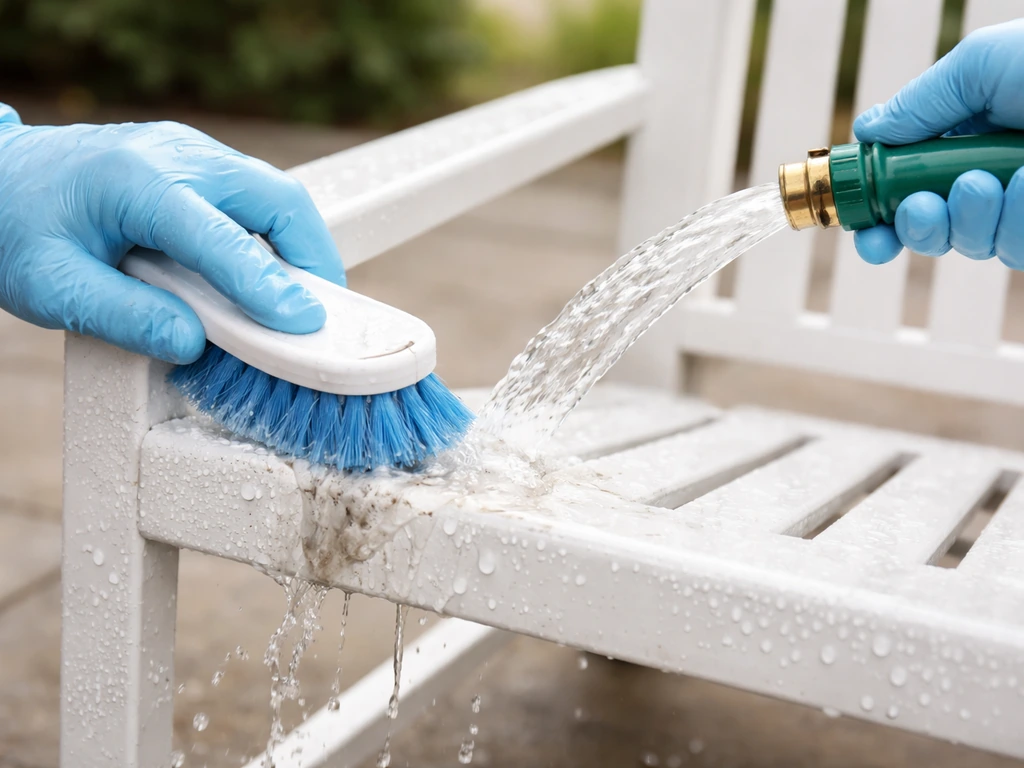
Use cleaners that are compatible with your furniture material. Bleach-based cleaners are effective against mold but will strip and degrade powder-coat paint finishes on metal over time, and can dry out and crack resin wicker. For metal frames, a mild soap-and-water solution followed by thorough rinsing and drying is usually best. For wood, avoid pressure washers at high settings, which can raise the grain and force water into joints. Oxygen bleach (sodium percarbonate) is safer for most wood furniture than chlorine bleach. Wear gloves when working with any cleaning concentrate, and keep the area ventilated.
How to inspect your furniture and catch problems before they cause injuries
Do a thorough inspection at least twice a year: once at the start of outdoor season and once at the end before storage or winterizing. If you start noticing bugs on patio furniture, treat the source and clean the surfaces so the furniture stays safe and comfortable to use. Bed bugs can also hide in outdoor furniture fabric or cushions, so inspect and clean patio pieces regularly, especially after guests or travel bed bugs on patio furniture. If you're in a climate that uses furniture year-round, do a quick check every month or two.
- Wobble test: Sit in each chair and shift your weight side to side and front to back. Any wobble means a loose joint or fastener that needs attention before it fails. Do the same with tables, pressing down on the corners.
- Check all fasteners: Tighten any bolts, screws, or nuts that have worked loose. If a fastener hole is stripped or the wood around a screw is splitting, the joint needs to be rebuilt or the piece retired.
- Inspect welds on metal frames: Look for cracks, separation, or rust bleeding from weld points. A cracked weld on a chair leg or cross-brace is a failure waiting to happen and generally can't be safely repaired at home.
- Check for rust on steel: Tap metal tubing at low points and weld joints. Hollow sound or soft spots indicate corrosion inside the tube. Surface rust can sometimes be treated; structural rust is a retirement signal.
- Inspect straps and slings: Look for fraying, UV cracking, or sagging in sling seating or strap chairs. A sagging sling changes seating geometry and can tip someone backward.
- Examine cushions and fabric: Look for mold (black, green, or gray spotting), tears, or foam that has compressed and lost its shape. Wet foam that doesn't dry is a mold factory.
- Check feet and glides: Non-slip feet and rubber glides protect your deck surface and keep chairs from sliding suddenly. Replace any that are cracked, missing, or worn flat.
- Look for sharp edges: Run a gloved hand along any cut metal edges, wicker ends, or cracked plastic. File down or cap sharp points before using the piece.
- Evaluate overall stability: For tall pieces like bar stools and plant stands, check whether the base is wide enough relative to the height. If it tips easily when you nudge it, reposition it or add a weighted base.
When something is genuinely unsafe, retire it. A chair with a cracked weld at the leg, a plastic piece that snaps rather than flexes, or a heavily rotted wood frame is not worth repairing in most cases. The repair cost often approaches replacement cost, and a bad repair can be worse than no repair. Broken patio furniture deserves an honest assessment rather than a patch job that hides the underlying problem.
How to choose safer patio furniture from the start
The best time to prevent safety problems is before you buy. Here's what to actually look for, as opposed to what the marketing will tell you. Choosing bug-resistant patio furniture also helps reduce the pests that can turn outdoor seating into an unpleasant and potentially unsanitary area safer patio furniture.
Construction and design features that matter
- Rounded or finished edges on metal and plastic: raw cut edges on budget furniture are sharper than they look
- Wide leg stance and low center of gravity: chairs that are wider at the base than the seat are inherently more stable
- Non-slip feet included: rubber or polyethylene glides on all legs, not just two
- Reinforced joints: mortise-and-tenon for wood, full-weld rather than spot-weld for metal, and corner brackets on dining sets
- Drainage holes in seat frames: pooling water accelerates corrosion and mold, so look for furniture designed to shed water
- UV-stabilized materials: listed explicitly in product specs, not just implied by 'weather-resistant'
- Tempered glass only for tabletops: never buy annealed glass for outdoor use
- Weight capacity clearly stated: if it's not listed, ask or walk away
Certifications and quality signals
Look for GREENGUARD or GREENGUARD Gold certification on furniture if off-gassing and chemical emissions concern you, especially for pieces near pools or spaces where children spend time. For wood furniture, FSC (Forest Stewardship Council) certification tells you the wood is legally and sustainably sourced, which also tends to correlate with better material quality. ASTM standards for outdoor furniture (like ASTM F1858 for resin wicker) indicate the product has been tested against specific performance benchmarks. These certifications don't guarantee a product is perfect, but their absence on a premium-priced piece is a flag worth noting.
Matching materials to your climate
The material that's safest in your climate is the one that holds its structural integrity longest. In humid or coastal climates, powder-coated aluminum or teak are the most durable choices that won't rust or rot. In high-UV climates, HDPE or solution-dyed acrylic fabrics hold up far better than polyester or cheaper plastics.
In cold climates, avoid hollow steel frames unless they're fully sealed, and prioritize materials that can stay outside through freeze-thaw cycling without cracking, like solid teak, quality HDPE, or thick-gauge powder-coated aluminum. Choosing the right material for your climate is genuinely one of the most effective safety decisions you can make, because a piece that degrades slowly stays structurally safe far longer than a piece that's fighting conditions it wasn't designed for.
Buying checks before you commit
Before purchasing, run the model name or brand through the CPSC recall database at cpsc. If you are wondering whether people steal patio furniture, it can help to check for recalls and also think about security steps like locking or storing valuables overnight CPSC recall database. gov. It takes about 30 seconds and will tell you if the specific product you're considering has been flagged for safety issues.
For assembled floor models at a store, do the wobble test right there before buying. For furniture shipped flat-pack, check online reviews specifically mentioning assembly quality and hardware, since stripped screw holes and missing hardware are reported early and often on problem sets. Finally, be skeptical of any furniture from an unknown brand with no US customer service presence. If something fails and you need warranty support or a part, an overseas-only manufacturer is practically unreachable.
FAQ
How often should I tighten or re-check patio furniture hardware to prevent safety failures?
Do a quick “touch and feel” check every month during active use, and a full hardware inspection twice per year. Look specifically at leg-to-seat bolts, hinge pins on folding frames, and umbrella mounts, then replace missing or corroded fasteners with stainless or exterior-rated hardware. If you tighten after cleaning with water, wait until the furniture is fully dry so you do not trap moisture inside joints.
What’s the safest way to clean patio furniture without damaging the protective coating?
Use mild soap and water for most metal and frames, then rinse thoroughly and dry completely. If you need stronger mold control, choose oxygen-based products rather than chlorine bleach because chlorine can degrade powder-coat finishes and accelerate wear on resin wicker. Avoid pressure washing at close range, especially on wood joints and under seat slats where water can get trapped.
Can I leave patio furniture outside in the winter, or should I store it?
In freezing climates, storing cushions and covers is the priority, and leaving frames outside is only safer if water cannot pool in hollow sections or under slats. If the furniture is lightweight, unanchored, or has any internal cavities that collect moisture, bringing it into a shed or garage reduces freeze-thaw cracking and corrosion risk. For year-round placement, check drainage paths and wipe off pooled water after snowmelt or rain.
How do I tell whether a moldy cushion should be cleaned or replaced?
If the mold is just on washable covers, you can often treat and fully dry them before reassembly. Replace the foam or any cushion component that smells musty after washing, has visible spotting that returns quickly, or feels damp or compressed even after drying. Also inspect seams and the underside, mold often hides where fabric folds over the frame.
What should I do immediately if patio furniture starts wobbling or tipping?
Stop using it and inspect the connection points first, leg attachments, hinge mechanisms, and any cracked weld areas. Test on a stable surface by gently applying pressure, if it shifts or creaks under normal effort, retire the piece or have it repaired by someone who can inspect the load-bearing structure, not just tighten visible screws. Do not try to “fix” a wobble by adding weight or shims, that can mask a failing joint and increase tipping risk.
Is it safe to refinish or paint patio furniture, especially around kids and pets?
Allow full curing time before anyone sits on it, even if it feels dry to the touch. Ventilate the area, wear gloves, and keep children and pets away until the product has fully cured, which is often longer in cool or humid weather. If you are treating foam or fabric, do not seal in contaminated material, clean first or replace if the core is moldy.
What type of anti-slip feet or protectors should I use on patio furniture?
Use feet made for outdoor use, typically rubber or thermoplastic, that are compatible with the surface you have (pavers, deck boards, concrete). Replace missing or cracked feet right away, uneven or missing feet create tip-over conditions even when the frame is sound. If your furniture sits on a sloped deck, add levelers rated for that load so legs stay planted rather than hanging off an edge.
How do I reduce the risk of electrical shock from outdoor metal furniture?
If you feel tingling or shock, treat it as an immediate moisture and grounding problem, stop using the item, and have an electrician check the source rather than drying it and hoping it resolves. Look for wet areas around power sources, damaged outdoor cords, and corroded connectors on nearby lighting or appliances. Do not keep using the furniture “carefully,” intermittent grounding can worsen and compromise structural parts.
What’s the safest umbrella setup to prevent wind-related injuries?
Use an umbrella base rated for the umbrella size, and close and lower the umbrella before storms or whenever wind picks up. Do not rely on the latch alone, gusts can lift and lever the pole even when it seems locked. For dining areas, keep the umbrella and chairs arranged so no one must reach or push through tight gaps that create tipping or trip hazards while moving.
Can bed bugs or chiggers survive on patio furniture, and how should I handle an infestation concern?
If you suspect bug activity, remove cushions and covers and clean them thoroughly, then inspect seams, undersides, and fold points where pests hide. Wash covers hot if the fabric allows, and dry fully, dampness can keep pests or mold active. For fabric or foam that cannot be effectively decontaminated, replacement is often safer than trying to “spot treat,” because re-infestation risks remain.
How can I screen a patio furniture purchase for safety when the brand is unfamiliar?
Look for clear material identification, weight capacity information, and accessible customer support in your country. If a product lacks a capacity rating, uses vague specs, or has no warranty support for replacement parts, treat it as a higher risk for hardware issues and delayed repairs. In-store, perform a wobble test on assembled pieces and inspect hinge areas for smooth operation and no sharp or uncapped tube ends.
Next Articles
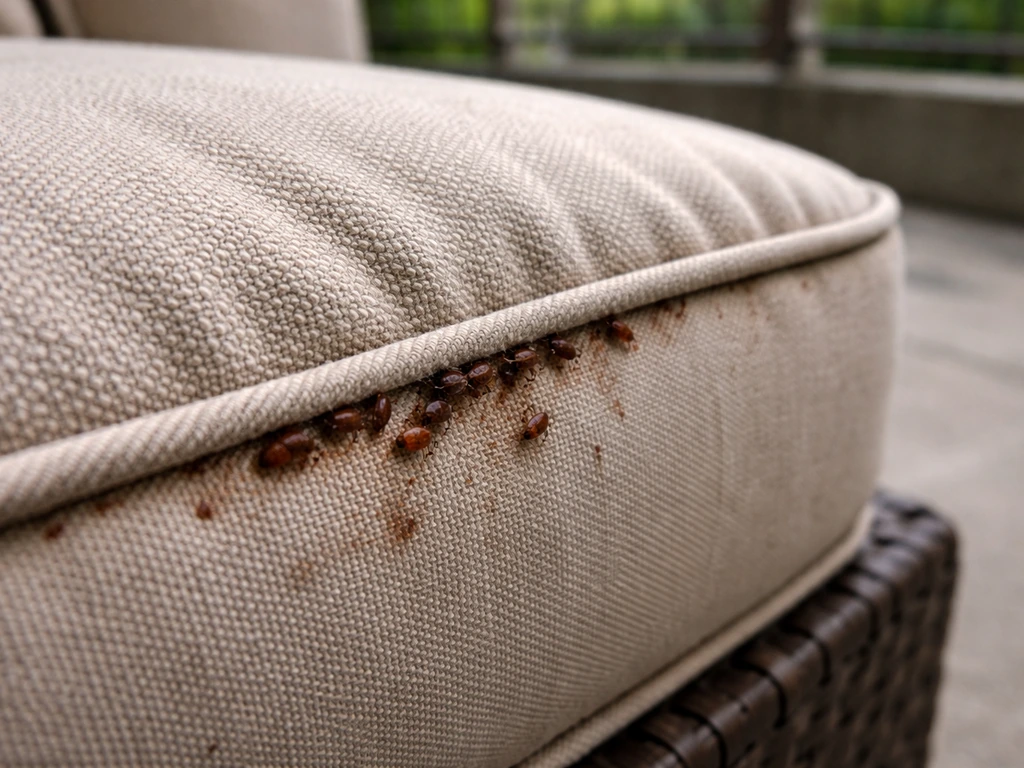
Bed Bugs on Patio Furniture: Identify, Treat, and Prevent
Confirm bed bugs on patio furniture, stop bites, treat by material, contain spread, and prevent re-infestation indoors.
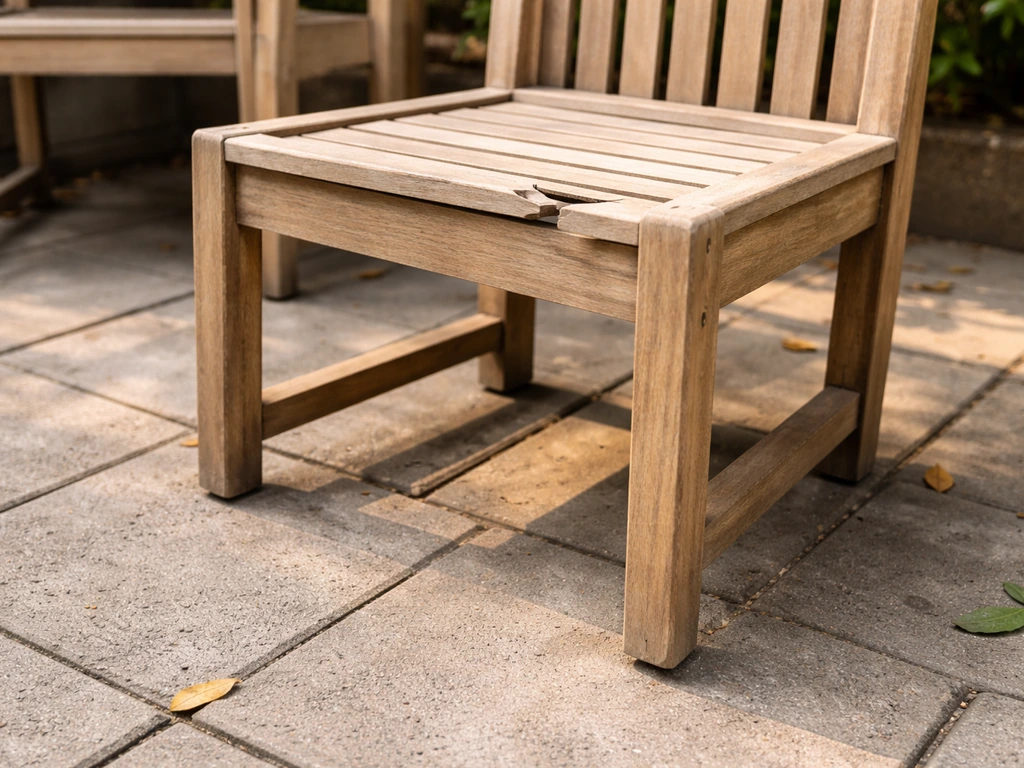
Broken Patio Furniture Repair Guide: Fix or Replace?
Step-by-step guide to repair broken patio furniture by material, decide fix vs replace, and prevent future damage.
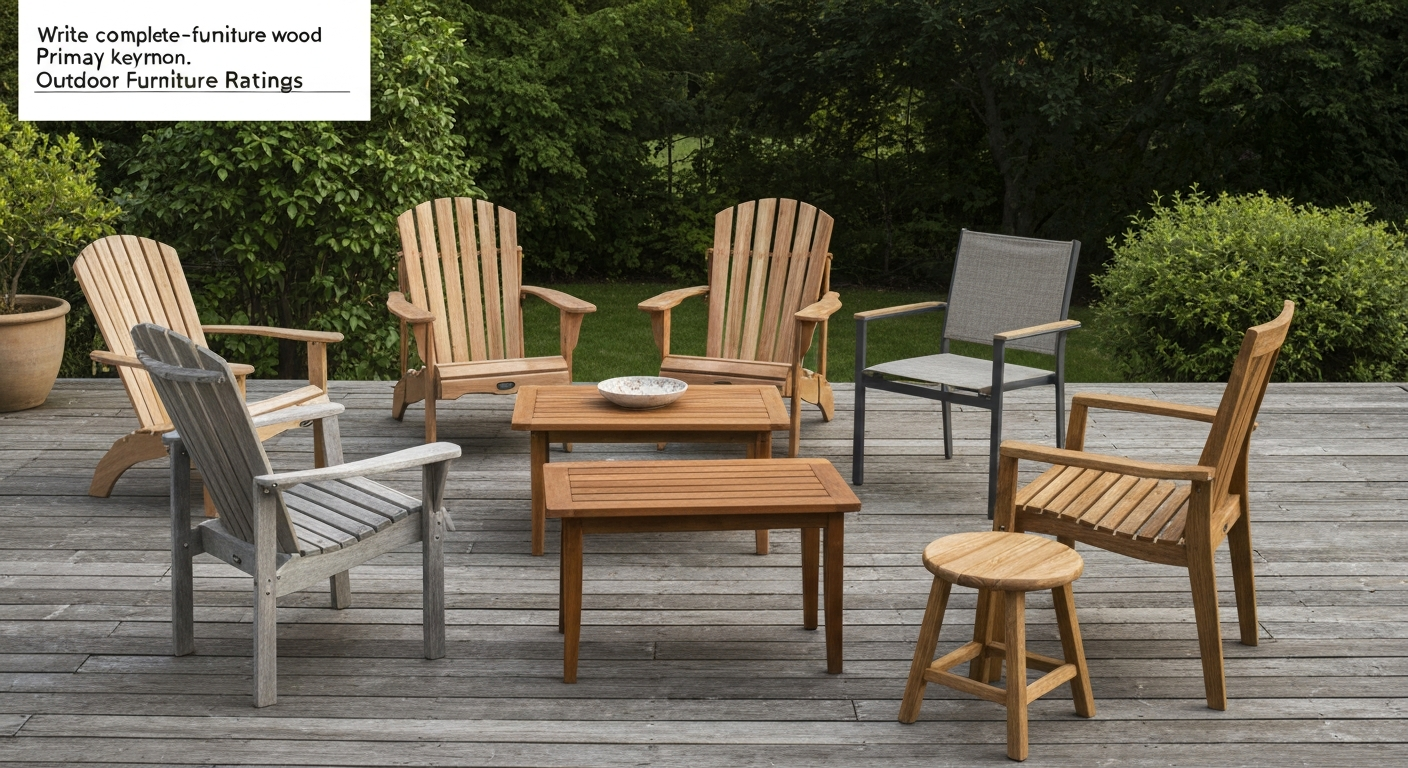
Common Patio Furniture Wood: Best Choices, Care & Tips
Compare common patio furniture wood types, teak, cedar, redwood, oak, with durability, finishes, and care tips.