
Yes, people absolutely steal patio furniture, and it happens more often than most homeowners expect. It ranges from someone grabbing a single chair cushion off your front porch to organized crews loading entire teak dining sets into a pickup truck or U-Haul. Police blotters across the country, from Torrance, CA to Fort Bend County, TX, document these incidents constantly. The good news is that a few targeted, inexpensive steps can make your setup a much harder target than your neighbor's.
Do People Steal Patio Furniture? Frequency, Risks & Prevention

Theo Tierney
20 Jul 2026
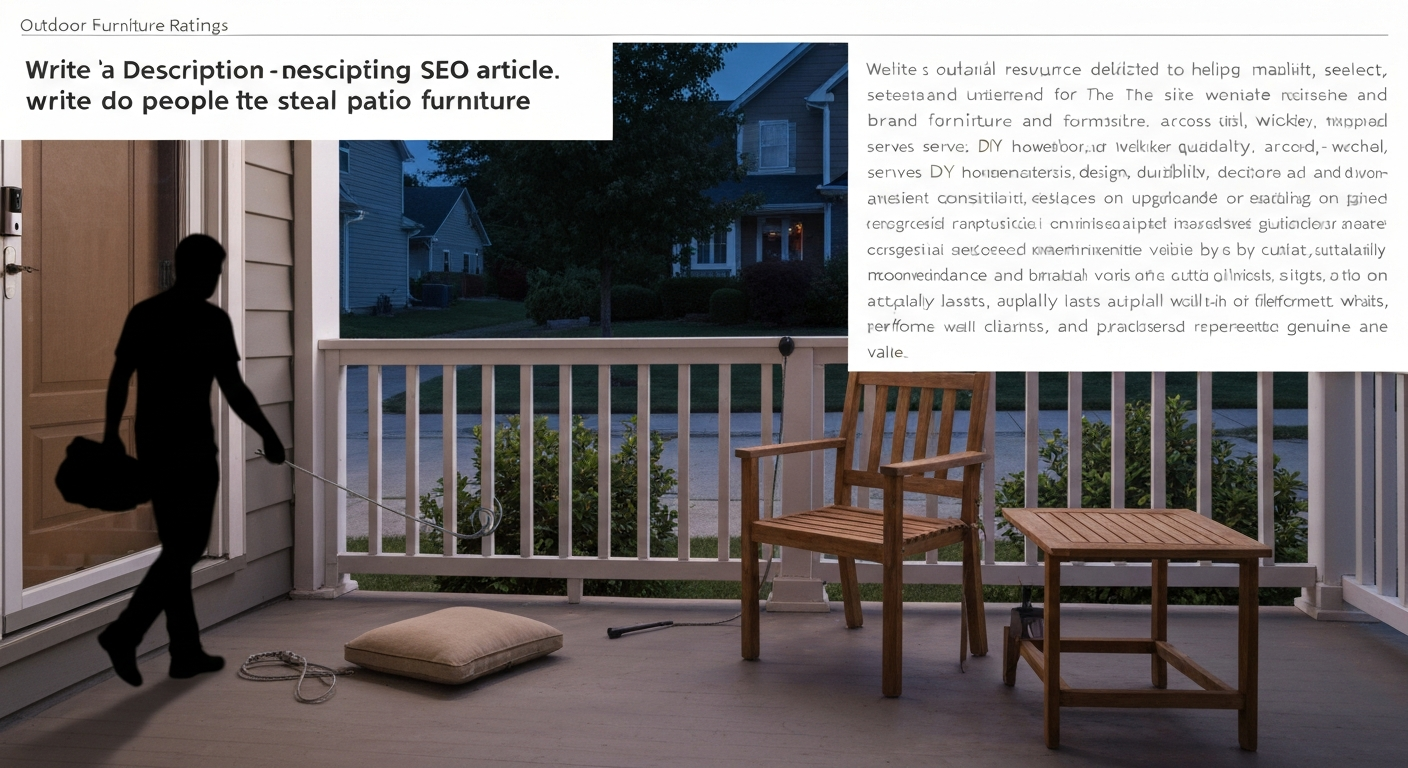
How common is patio furniture theft, really?
Precise national statistics on patio furniture specifically are not broken out by any agency, but the scale of the problem becomes clear when you look at the broader data. The Bureau of Justice Statistics' National Crime Victimization Survey recorded an estimated 13.4 million property victimizations across U.S. households in 2022, a rate of roughly 102 per 1,000 households and an increase from 11.7 million in 2021. The NCVS classification of 'other household theft' directly captures items stolen from porches, patios, yards, and driveways, which is exactly where your furniture lives.
At the local level, the picture sharpens. Municipal incident logs and patrol activity summaries routinely list outdoor furniture by name. A single Santa Clara County patrol document records approximately $5,030 in losses from stolen patio furniture in one summary period. City incident logs in Torrance, CA include explicit patio-furniture theft entries. Community platforms like Nextdoor and local subreddits are filled with first-person theft reports, the frustration of low recovery rates, and neighbor-to-neighbor prevention tips. This is not a rare edge case, it is a regular category of property crime.
Geography matters some, but less than people assume. Dense urban environments see opportunistic foot-traffic theft, while suburban and semi-rural areas see more vehicle-assisted operations. NCVS data shows household property victimization is widespread across metro and non-metro areas. See Criminal Victimization, 2022, Bureau of Justice Statistics (NCVS) for national NCVS estimates showing widespread household property victimization across metro and non‑metro areas Criminal Victimization, 2022 — Bureau of Justice Statistics (NCVS). If your furniture is visible from a public street or alley and left unsecured, location alone will not protect it.
Why thieves target outdoor furniture
Criminology's Routine Activity Theory, developed by Cohen and Felson in 1979, explains opportunistic property crime with three converging factors: a motivated offender, a suitable target, and the absence of capable guardianship. Outdoor furniture checks all three boxes in a way that interior furniture simply cannot. It sits outside, often overnight, frequently unlit and unmonitored, on a surface that requires no forced entry.
Portability and resale value drive target selection. Police reports and local news consistently list lightweight aluminum chairs, teak side tables, wicker loveseats, and high-end replacement cushions as the items taken. The Citrus Heights police bulletin, example listing of stolen patio furniture and grill documents thefts of chairs, full patio sets, and a barbecue grill Citrus Heights police bulletin — example listing of stolen patio furniture and grill. A set of four teak dining chairs retails for $600 to over $2,000 new; a thief who can move them in under two minutes and sell them on Facebook Marketplace for $150 has an effortless return on almost zero effort. Grills are also frequently listed alongside furniture in the same theft incidents.
Seasonal patterns make the problem worse in spring and summer. New patio sets purchased in May and June get placed outside while outdoor living is at its peak, guardianship drops (people are at work, on vacation, or distracted by warm-weather activities), and the resale market for outdoor pieces is strongest. Theft spikes in warmer months for the same reason patio furniture sales do.
What gets stolen most often, and where
Not all outdoor furniture is equally at risk. Thieves optimize for speed and resale, which means lightweight, portable, and recognizably valuable pieces disappear first.
| Item type | Risk level | Why it's targeted | Typical resale appeal |
|---|---|---|---|
| Seat cushions and throw pillows | Very high | Grabbed in seconds, no anchoring possible | Low individual value but zero effort |
| Single chairs (aluminum, resin, teak) | High | Portable, stackable, easy to carry | Strong secondhand market |
| Small side tables and bistro sets | High | Compact, fits in a car trunk | Easy to list online |
| Full dining sets (4–6 pieces) | High with vehicle | Requires a truck but high resale value | Teak and cast aluminum sell well |
| Wicker/rattan sectionals | Moderate to high | Bulky but lightweight frames | Visible and recognizable |
| Umbrellas and bases | Moderate | Umbrella carried easily; base left behind | Mixed |
| Concrete or cast-iron pieces | Low | Very heavy, difficult to move quickly | Hard to transport discreetly |
| Grills (gas and charcoal) | High | Frequently stolen alongside furniture | Strong local resale market |
Front-facing porches and unfenced patios visible from the street carry the highest risk. Ground-level apartment patios, particularly those adjacent to parking lots or alleys, are also frequently targeted. Elevated decks and fenced backyards with limited public sightlines offer more natural protection, though they are not immune, especially when the gate is unlocked or the fence is low.
How the theft actually happens
The methods range from embarrassingly simple to surprisingly organized. Understanding the mechanics helps you focus your prevention effort where it actually matters.
- Lift-and-run on foot: the most common method for single chairs, cushions, and small tables. One person walks up, grabs the item, and keeps walking. Takes under 30 seconds and requires no tools.
- Drive-by grab: a slow-moving car stops, a passenger steps out, takes the item, and the car moves on. Often done in daylight when streets are less monitored.
- Small-team truck operation: two to four people, a pickup or rental truck, and a quiet street. A Fort Bend County, TX case documented by the Houston Chronicle showed four suspects loading porch furniture into a U-Haul on camera. Multiple sets taken in a single pass.
- Cushion-only theft: thieves take cushions and leave the frames, likely because cushions are the most portable and resaleable component of premium sets. This is extremely common and rarely gets reported.
- Partial disassembly: some thieves remove visible bolts or unclip cable ties to free anchored chairs. This takes a few minutes but is still fast enough when guardianship is absent.
- Unoccupied-property sweeps: vacation periods, particularly around major holidays and summer travel weeks, see elevated incidents as thieves identify homes with no activity.
Doorbell and security camera footage plays a growing role in documentation. Indianapolis police, as reported by WRTV, used doorbell-camera footage in a porch furniture case and subsequently issued prevention guidance based on what the footage revealed about thief behavior. The cameras catch the method clearly, but they do not prevent the theft unless a visible camera changes the thief's decision in the first place.
Prevention checklist: what to do right now
This list is ordered by the effort-to-impact ratio. Do the top items first; they take under an hour and eliminate the easiest opportunities. For detailed guidance on reducing theft and injury risks, see our patio furniture safety guide.
- Bring cushions, pillows, and small accessories inside every night. They are the most-stolen items and the hardest to track. This costs nothing.
- Store lightweight chairs in a garage or shed overnight if the set is portable and you have the space.
- Install motion-activated lighting over and around your patio. A well-lit space removes the cover of darkness and is one of the most consistently recommended steps in police prevention advisories.
- Mount a visible security camera pointing at the patio. Visible cameras are a documented deterrent. Even a modest 1080p wired or battery camera covering the entrance to the patio changes a thief's risk calculation.
- Cable or chain heavy items together and to a fixed structural point (deck post, wall anchor, fence post). This turns a 30-second grab into a multi-minute operation that most opportunistic thieves will skip.
- Photograph all your furniture and note brand names, materials, and any distinguishing marks. If something is stolen, this is what helps police and helps you file a useful insurance claim.
- Mark items with an engraver or UV pen and attach a small label near the mark indicating it is documented. This is a low-cost step that aids recovery and prosecution.
- Post a visible security-system sign or camera notice near the patio entrance. Even without a monitored system, signage shifts the risk perception for opportunistic thieves.
- Tell neighbors when you are traveling. Neighborhood watch involvement is cited repeatedly in police prevention guidance as a meaningful deterrent because it restores the 'capable guardianship' element that thieves depend on being absent.
- Review your homeowners or renters insurance policy now, before anything is stolen, to understand your personal-property and off-premises theft limits.
Anchoring and bolting: what actually works
Anchoring is the single most effective physical deterrent for furniture that stays outside. The goal is not to make theft impossible, it is to make it slow enough and conspicuous enough that the thief moves on. Even a lightweight aluminum chair becomes a different proposition when it takes bolt cutters and two minutes of visible effort to remove.
Anchor types and what they suit
- Deck post anchor straps: stainless-steel straps with cable loops that bolt around deck posts or railings. Suitable for chairs and small tables. Relatively easy to install with a power drill, and the stainless-steel hardware resists corrosion reasonably well in most climates.
- Concrete anchors: expansion bolts set into a concrete patio slab with a D-ring or loop attachment. Extremely strong, essentially permanent, and the best option for heavy dining sets and umbrellas you want to leave in place all season. Requires a hammer drill and appropriate concrete bit.
- Furniture cable systems: coated steel cable, typically 3/16-inch or 1/4-inch diameter, threaded through chair legs and table frames and secured to a post anchor with a padlock. Flexible enough to connect multiple pieces in a chain. More on these in the locks section below.
- Sandbag or weighted base inserts: available for umbrella bases and some chair legs; add significant mass to resist casual lifting. Not a theft deterrent in a strict sense but prevents wind theft, and heavier furniture is slightly less attractive to foot-traffic thieves.
- Through-bolt anchoring to decking boards: suitable for heavier benches and settees. Bolts pass through deck planks into the subframe, with large washers on the underside. Requires access beneath the deck and is a semi-permanent installation.
Climate considerations for anchoring hardware
This is where material selection matters the same way it does when evaluating furniture quality. In coastal or humid Southern climates (Florida, Gulf Coast, the Carolinas), standard zinc or uncoated steel anchors will rust within one season. Use 304 or 316 stainless-steel hardware only, 316 grade contains added molybdenum for superior salt-air resistance and is worth the modest premium in any coastal or high-humidity environment. In freeze-thaw climates (the upper Midwest, New England), concrete expansion anchors can loosen over multiple cycles as the slab shifts; inspect them every spring and re-torque as needed. In Arizona heat, UV-degraded plastic cable coatings can crack within two seasons, stick with vinyl-coated galvanized or stainless cable rather than bare plastic-sheathed options.
Cost-benefit reality check
A basic concrete anchor kit runs $8 to $20 at any hardware store. A 15-foot length of 3/16-inch vinyl-coated stainless-steel cable costs $12 to $25. A quality padlock to secure it runs $15 to $40. Total investment: under $70 to protect a $1,500 teak set. That math is straightforward. For budget resin furniture worth under $100, the calculus shifts, bringing it inside is both free and more effective than hardware investment.
Locks and cable systems: padlocks, chains, and cables by price tier
Not all locks provide equal protection. The lock is only as strong as the cable, chain, or anchor it connects to, so think of it as a system rather than a single product. Here is a practical breakdown by cost and protection level.
| Lock / system type | Approximate cost | Protection level | Best use case | Key trade-off |
|---|---|---|---|---|
| Basic brass padlock (40mm body) | $8–$15 | Low | Cushion storage box latch, deterrence only | Soft shackle, picks easily, corrodes fast outdoors |
| Hardened-steel padlock (50mm body, boron-steel shackle) | $18–$35 | Moderate | Securing cable to deck post or fence | Resists bolt cutter better; still vulnerable to angle grinder |
| Combination padlock (weatherproof, 4-digit) | $12–$25 | Moderate | No-key-loss convenience for daily use | Slower to open; some weather-rated models lag on dial in cold weather |
| Coated steel cable loop (3/16" or 1/4" with integrated lock) | $20–$45 | Moderate | Connecting chair legs together, porch rail loops | Convenient all-in-one; loop diameter limits attachment point options |
| High-security padlock (ABUS 55/40 or equivalent, hardened boron shackle) | $35–$60 | High | Fixed anchor to structure; high-value furniture sets | Best cut resistance in this category; higher upfront cost |
| Heavy-duty chain (3/8" case-hardened steel) + disc lock | $45–$80 combined | High | Securing full sets to post anchors or ground anchors | Heavier to handle; chain must be stainless or galvanized for outdoor use |
| Hitch-style cable lock (bike-lock format, braided steel) | $25–$55 | Moderate to high | Flexible routing through multiple chair legs | Easier to thread than chain; lighter but less cut-resistant than chain |
For most homeowners, the moderate tier is the right balance. A $30 hardened padlock paired with a $20 vinyl-coated cable threaded through your chair legs and around a deck post costs less than $50 total and eliminates the 30-second grab. Thieves carrying angle grinders are targeting higher-value targets, not patio furniture. The goal is to be harder than your unprotected neighbor's setup, and at this price point you easily clear that bar.
One practical note on combination vs. keyed locks outdoors: combination dials collect moisture and can seize in cold climates. If you are in a freeze-thaw zone, a keyed padlock with a covered shackle and a plastic dust cover over the keyway will last longer and operate more reliably than most combination models in the $15 to $25 range.
What to do immediately after a theft
If furniture disappears, the first 24 to 48 hours matter most for recovery. Here is the sequence that documented recovery cases have in common.
- Check your own security camera footage and any nearby doorbell cameras (neighbors, Ring, or Nest devices). Preserve the footage immediately — some devices overwrite after 24 to 48 hours.
- File a police report the same day. This creates an official record, is required for most insurance claims, and gives investigators something to work with if the items surface later.
- Check Facebook Marketplace, Craigslist, OfferUp, and Nextdoor listings in your area immediately. Norfolk, VA police documented a case where stolen property was recovered directly after appearing on Facebook Marketplace within days. Search by item type, material, and brand. Check daily for two to three weeks.
- Check local pawn shops, especially within a 5 to 10 mile radius. Many jurisdictions require pawn shops to log seller information and hold items for a minimum period.
- Post in neighborhood groups (Nextdoor, local Facebook groups, neighborhood subreddits) with photos and descriptions. Community tips have directly led to recoveries in documented cases.
- Contact your homeowners or renters insurance company and reference your police report number. Most policies cover theft of personal property including items stolen from patios and yards, but off-premises limits (sometimes 10% of total personal-property coverage) and deductibles apply. A clear inventory with photos strengthens your claim considerably.
- If you marked your furniture or have serial numbers, provide those to police — they are searchable in national stolen-property databases and have assisted prosecutions in documented cases.
Insurance basics: what is actually covered
Homeowners and renters insurance typically cover theft of personal property, and outdoor furniture is personal property. The catch is in the limits. Many standard policies include an off-premises theft sublimit, often around 10% of your total personal-property coverage. So if you have $50,000 in personal-property coverage, your off-premises limit might be $5,000 before you hit the deductible. For a $2,000 teak set with a $1,000 deductible, the payout is modest. For a $6,000 outdoor living setup, the numbers get more interesting.
The practical steps: photograph and document all patio furniture you own, note purchase prices and dates, and keep receipts in a digital folder. If you invest significantly in outdoor furniture, a common situation when you are buying materials that are designed to last 15 to 25 years, as quality teak or powder-coated aluminum should, that documentation directly affects your claim payout. Some insurers offer scheduled personal-property endorsements for high-value items; worth asking about if a single set exceeds $2,000.
Material choice and theft resistance: how they connect
At this site we spend a lot of time on material durability and climate performance, and it turns out those same material characteristics affect theft risk. Cast iron and thick concrete composite pieces are genuinely difficult to steal quickly, they can weigh 50 to 150 pounds per piece, require multiple people and equipment, and thieves typically pass on them for easier targets. A heavy cast-iron bistro set is not the most comfortable choice for every homeowner, but its mass is an inherent deterrent.
On the opposite end, lightweight extruded aluminum and resin-wicker furniture is designed to be easy to move, it is a feature in the marketing and a vulnerability in the security context. That does not make it a bad choice. Powder-coated aluminum is an excellent outdoor material with 15-plus year lifespans in most climates. But its portability means it needs active securing measures, not passive ones. Teak sits in the middle: its density (teak weighs roughly 40 to 55 lbs per cubic foot) means single chairs are heavier than resin alternatives, but a set of four chairs and a table is still a truck-load-and-go job.
If theft prevention is a genuine priority in your buying decision, say you have an exposed front porch with high foot traffic, leaning toward heavier materials or built-in furniture (anchored benches, fixed planters with integrated seating) is a legitimate design and security strategy, not just an aesthetic one.
A note on related outdoor furniture concerns
Theft is not the only way your outdoor furniture can cause headaches or represent a loss. A few related issues worth being aware of, especially if you are building or refreshing a full outdoor setup:
Broken and structurally compromised furniture is a safety and cost issue that overlaps with theft prevention, a broken chair left outside is also a liability risk and, if it is salvageable, worth evaluating for repair versus disposal before you write it off. For guidance on repair options and safety checks for broken patio furniture, see our detailed repair-and-replace guide. Separate guidance on this covers the repair-versus-replace calculus for common materials.
Outdoor furniture that sits in storage or on shaded patios can harbor insects, including bed bugs, chiggers, and other biting pests. If you notice unexplained irritation after using outdoor seating, check for bug bites from patio furniture as a potential cause. For tips on identifying and removing bugs on patio furniture, see our guide. Bed bugs in particular can hitchhike on wicker, canvas cushions, and upholstered outdoor pieces. If you bring stored furniture out at the start of the season, inspect it carefully before use, especially natural-fiber pieces or anything stored in a shared space. This is directly relevant to the materials discussion: teak and powder-coated aluminum have no fabric or fiber for insects to nest in, while wicker-weave furniture and cushions are significantly higher risk for pest harboring. Can chiggers live on patio furniture? This short guide explains whether chiggers and similar pests can survive on cushions, wicker, and other outdoor materials. For tips on selecting bug-resistant patio furniture, see our guide to bug-resistant patio furniture.
Static shock from metal patio furniture is a different but common complaint, particularly in dry climates like Arizona or Colorado or during low-humidity winter months. This is not a sign of a dangerous electrical problem in most cases, but it is annoying and comes up often enough in our reader mail to mention. Understanding why it happens and how to reduce it is part of choosing and maintaining metal outdoor furniture in those conditions. For a detailed explanation of causes and fixes, see our guide on why does my patio furniture shock me.
Finally, furniture stability matters from a pure safety standpoint, especially for heavier cast pieces, umbrella bases in wind-prone areas, and stacking chairs on uneven surfaces. Anchoring for theft prevention and anchoring for stability are not the same thing, but they often use the same hardware and address the same vulnerabilities in your setup. Getting the right anchor in the right material for your climate covers both goals at once.
FAQ
Do people steal patio furniture? How common is it?
Yes. Porch/patio/yard furniture thefts are regularly recorded in police logs, news reports, and victimization surveys; they appear as part of the NCVS category “other types of household theft.” While national statistics group many property crimes, local police blotters and news stories across cities and suburbs repeatedly document standalone patio‑furniture thefts and organized multi‑actor operations, so the problem is real and widely dispersed (both opportunistic single‑person thefts and larger truck/U‑Haul jobs are reported).
Why do thieves target outdoor furniture?
Primary drivers are opportunity and resale value. Thieves select items that are portable, visible, and easy to move (single chairs, cushions, small tables, grills, whole teak/aluminum sets). Routine‑activity and situational‑crime frameworks explain this: motivated offender + suitable target + lack of capable guardianship equals increased risk. Visibility, low anchoring, and easy access make outdoor pieces attractive.
Who and which locations are most at risk?
Risk is not limited to one neighborhood type — reports and victimization data show incidents in urban, suburban and smaller communities. High‑risk situations: homes with visible furniture on porches/patios, weak evening lighting, no cameras or neighbor surveillance, homes with easy driveway/street access, short‑term rental properties, and multi‑unit buildings where ground‑floor items are unattended. Portable, high‑value-looking sets (teak, lightweight aluminum, new cushions) increase risk.
How do thieves typically steal outdoor furniture?
Common methods: quick ‘‘lift‑and‑run’’ on foot (grab chairs or cushions); opportunistic removal of cushions or tabletop items; small teams loading multiple sets into pickup trucks or cargo vans/U‑Hauls; unbolting or cutting loose anchors/cables; taking items during periods of low guardianship (daytime or late evening). Security cameras and doorbell footage often document these patterns.
Practical prevention checklist — prioritized steps with product types and cost‑benefit guidance
1) Remove loose items nightly: cushions, small tables and decor — lowest cost, highest benefit. 2) Secure/anchor large pieces: bolting to deck, through‑deck anchors, heavy‑duty patio furniture anchors or ground screws for freestanding sets — moderate cost, high benefit for permanent setups. 3) Cable/lock portable pieces: weatherproof hitch‑cable locks, disc‑locks, or hardened steel chain and padlock—low‑to‑moderate cost; good for temporary security. 4) Store seasonally: garage/shed or lockable storage box/Deck Box for cushions and small furniture — moderate cost, excellent for winter/rainy/freeze‑thaw climates. 5) Lighting and visible deterrents: motion‑sensing LED floodlights and dusk‑to‑dawn fixtures — low cost, high deterrence. 6) Cameras and signage: Wi‑Fi doorbell or outdoor camera with cloud recording and visible stickers — moderate cost; helpful for evidence and deterrence. 7) Mark and document: permanent marker, UV pen, or tamper‑proof engraver to mark owner info/ID; photograph items and record receipts/serial numbers — tiny cost, helps recovery and insurance claims. Cost‑benefit tip: start with removal and anchoring (cheap + effective), then add lighting and cameras if risk persists. For renters, cable locks and nightly removal are the most practical.
Which products/types work best for specific climates and why?
Freeze‑thaw/rainy climates: use rust‑proof materials (powder‑coated aluminum, marine‑grade stainless steel, resin wicker with UV‑stabilizer); store cushions in waterproof lockable boxes or indoors to prevent mold and weakening of fasteners that can reduce anchoring effectiveness. Hot/sunny climates: UV‑resistant fabrics and heat‑stable plastics reduce fading and embrittlement that can make items easier to damage and carry off. Coastal/salty air: prioritize marine‑grade stainless or teak (teak weathers but is heavy and resale‑valuable) and keep metal anchors in stainless to avoid corrosion. Climate note: seasonal storage reduces theft risk and extends life; in climates with freeze/thaw cycles, bringing furniture inside avoids weather damage that could also compromise anti‑theft hardware.
Next Articles

Bug Bites From Patio Furniture: Causes, Relief, Prevention
Stop bug bites from patio furniture with fast relief steps, culprit ID, safe cleaning, and long-term prevention tips.
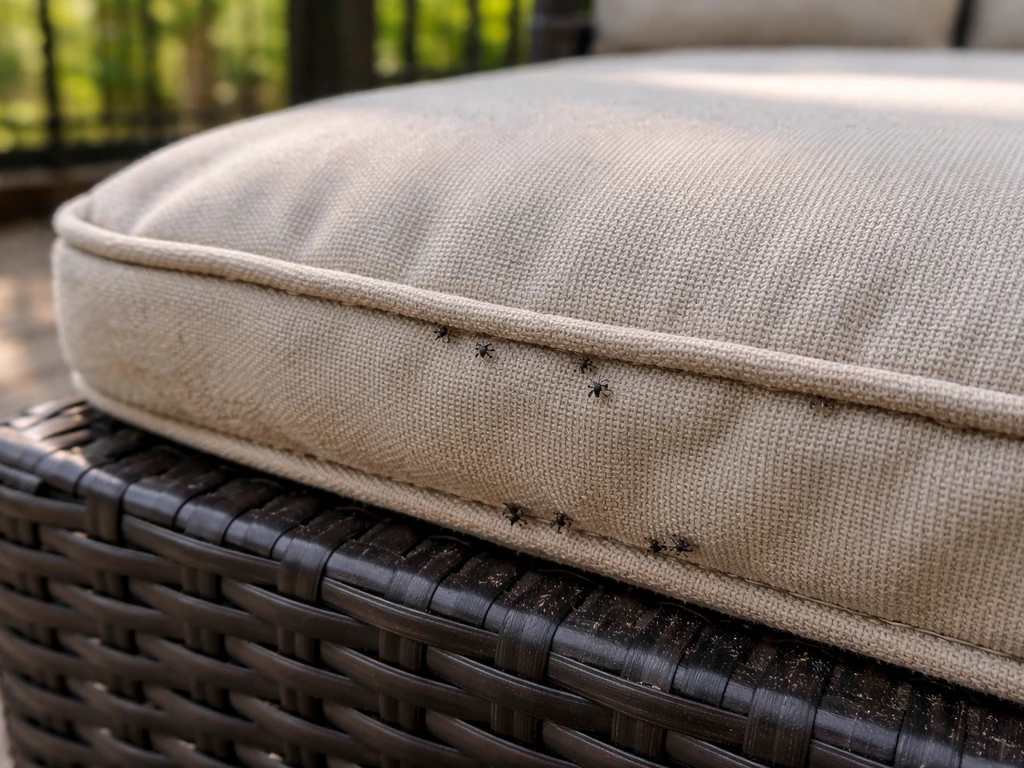
Bugs on Patio Furniture: Identify, Remove, Prevent
Identify bugs on patio furniture, remove nests and eggs safely by material, and prevent repeat infestations.
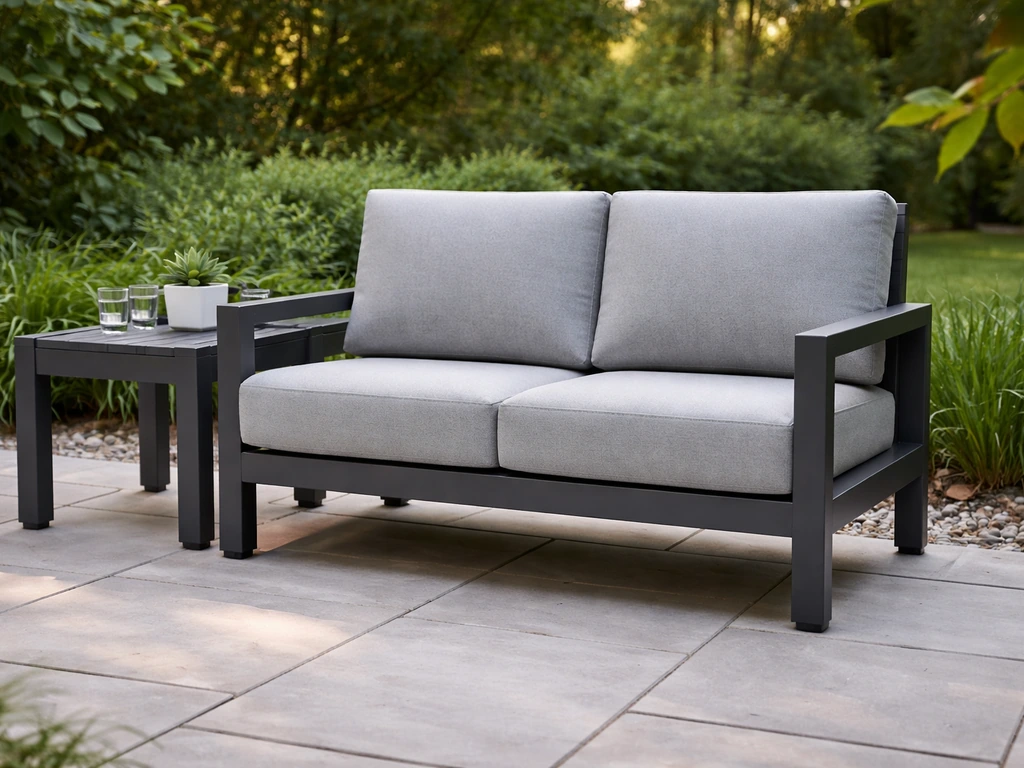
Bug-Resistant Patio Furniture: What to Buy and Maintain
Choose bug-resistant patio furniture and maintain it with the right materials, coatings, and cleaning for fewer insects.