
Most broken patio furniture can be fixed in an afternoon if you catch the problem early and know what you're dealing with. A wobbly chair with loose bolts takes five minutes. Rust creeping into a steel frame joint is a different story. The right move depends entirely on what broke, what it's made of, and how badly the structure is compromised. Work through the assessment below first, then follow the repair path that matches your material and damage type.
Broken Patio Furniture Repair Guide: Fix or Replace?

Theo Tierney
3 May 2026
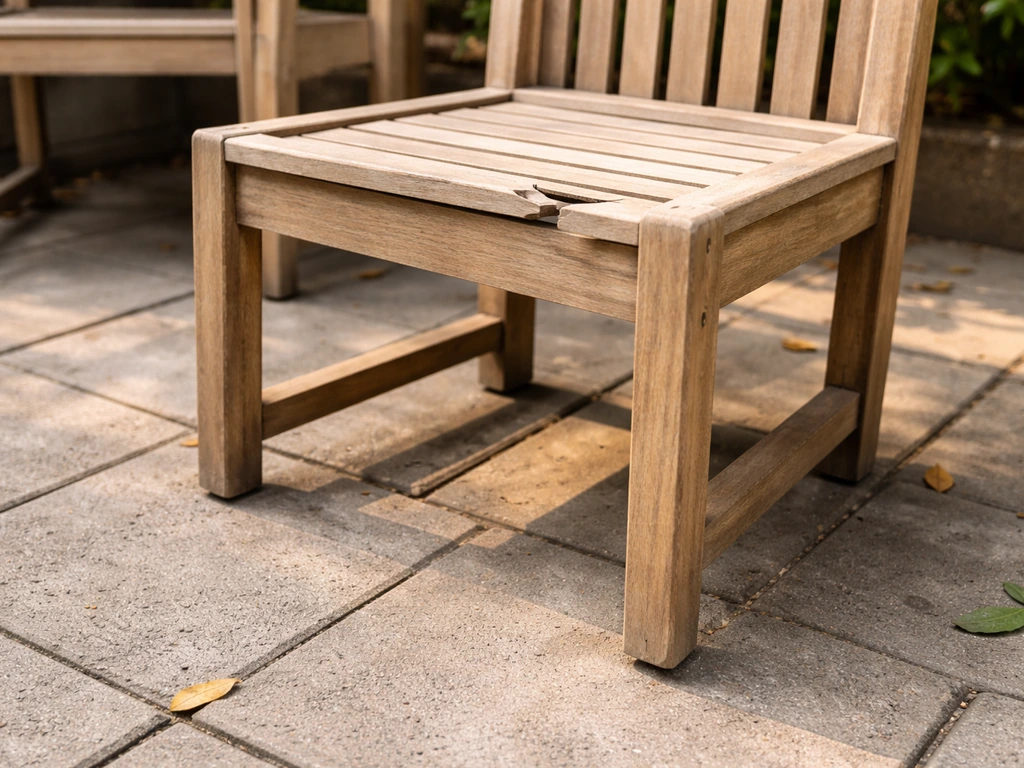
Assess what's broken before you touch anything
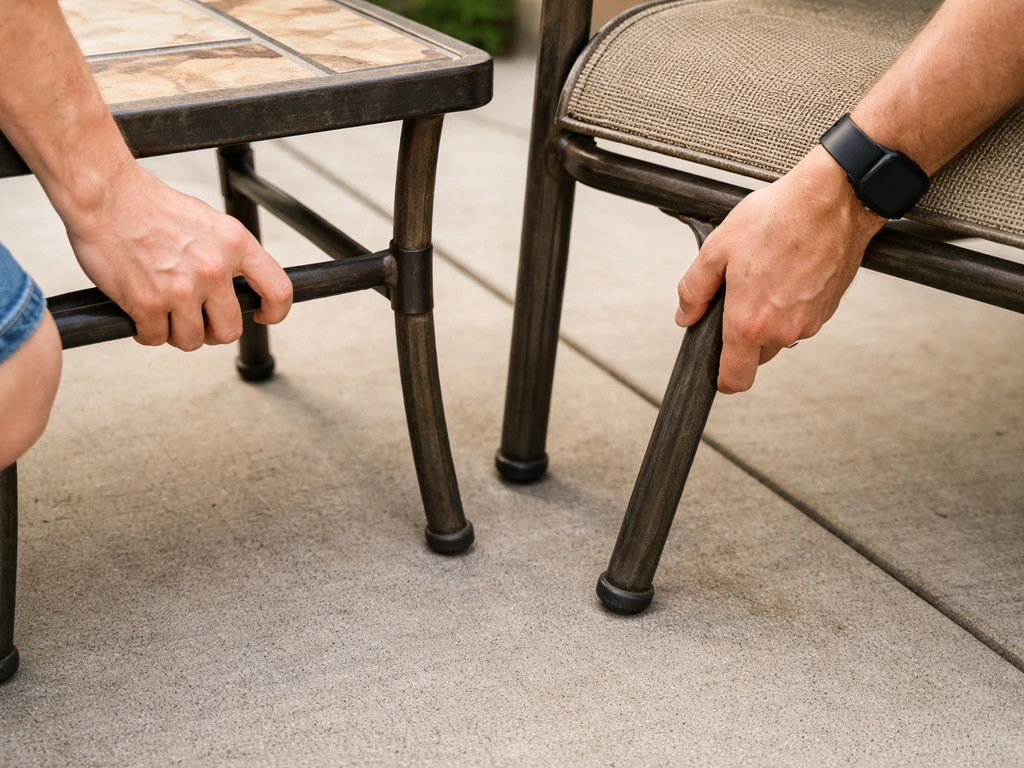
Start with a safety check. Before you sit on, lean on, or try to fix anything, gently push and pull the legs and frame. If the piece rocks, shifts at a joint, or any leg feels like it's moving independently from the rest of the frame, stop there and don't use it until it's repaired. A chair that tips under weight is a fall hazard, not just an annoyance. To stay safe while you inspect and repair, treat patio furniture as a potential fall or injury hazard until it is stable patio furniture safety.
Once you've confirmed it's stable enough to handle, figure out what actually failed. There are a handful of root causes that account for almost everything you'll see on a patio:
- Loose fasteners: bolts, screws, and rivets back out over seasons of thermal expansion and contraction
- Rust at joints: steel hardware and frames corrode from the inside out, especially in humid or coastal climates
- Wood rot or cracking: UV and moisture cycle through wood's surface coating and then the wood itself
- UV brittleness: plastic and resin become chalky and crack after years of direct sun exposure
- Wicker strand failure: individual strands split or unravel, usually starting at high-stress points like armrests and seat edges
- Bent or fatigued frames: metal frames flex over time and can develop stress cracks or permanent bends at welds
Look at the failure point closely. Is the damage cosmetic (surface finish, a cracked strand, a rust stain) or structural (the frame itself has bent, cracked, or the joint has fully separated)? That distinction drives every decision you'll make about repair versus replacement.
Quick fixes you can do right now
If the furniture is structurally sound but wobbly or partially disassembled, triage today with these steps:
- Re-tighten every bolt and screw on the piece, not just the obvious loose one. Use the correct driver or wrench and snug them firmly without overtightening, which can strip threads or crack plastic hardware brackets.
- Re-seat any joints that have pulled apart. On furniture with mortise-and-tenon or plug-style connections, push them fully back together before tightening any fasteners.
- Replace missing or stripped hardware immediately. A stripped bolt is worse than no bolt because it creates false confidence. A box of stainless steel M6 bolts and cap nuts costs a few dollars and fixes most patio chair hardware in one session.
- Patch small surface cracks on wood or plastic with an appropriate filler (exterior wood filler for wood, plastic epoxy for resin) as a temporary measure, but understand this buys time rather than restoring structural strength.
- Temporarily stabilize a bent leg or rail with a metal brace or hose clamp if you need to use the piece before a full repair. This is a band-aid, not a fix.
Know the line between DIY and professional work. Tightening fasteners, replacing hardware, gluing wood joints, and patching surface damage are all reasonable DIY tasks. Welding a cracked steel frame, rebuilding a fully rotted wood structure, or re-weaving a fully collapsed wicker seat is work that either requires tools and skills most homeowners don't have, or simply isn't cost-effective to attempt yourself.
Repair by material
Wood
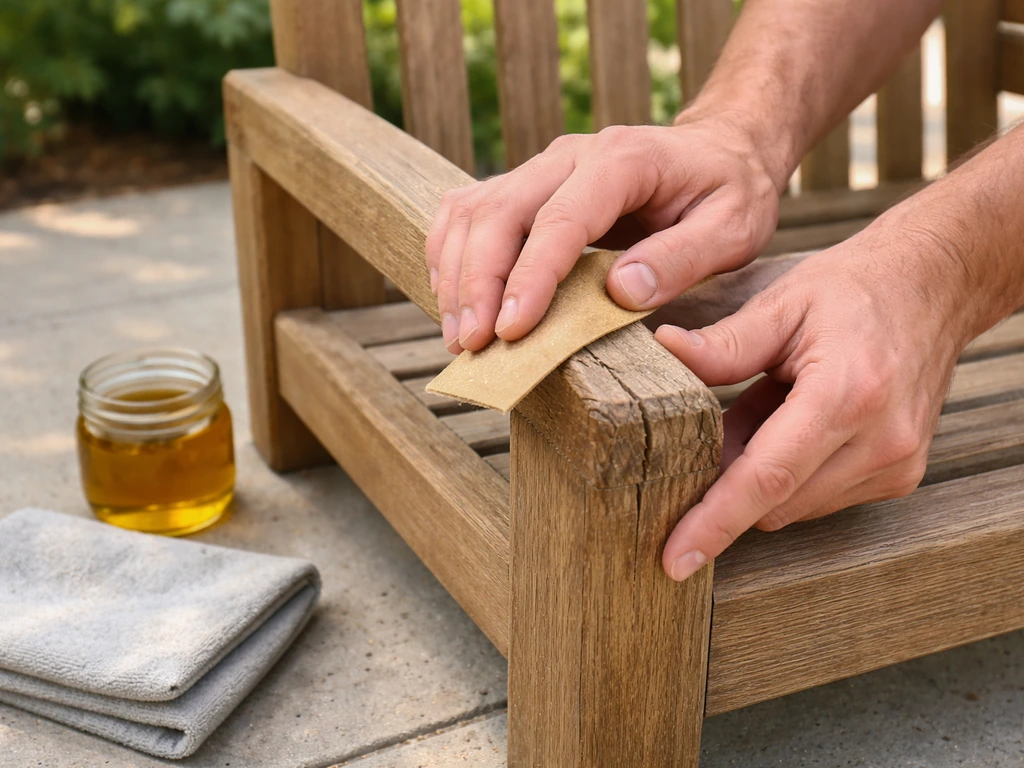
Wood furniture fails in two main ways: the finish breaks down and moisture gets in (leading to rot or cracking), or joints loosen and separate. For cracked or split wood, clean the crack, work exterior-grade wood glue (Titebond III is the standard recommendation for outdoor applications) into the joint, clamp it firmly, and leave it for at least 24 hours before putting any load on it. The glue itself sets in 30 to 60 minutes, but the joint needs a full day to reach working strength. For rot, probe the affected area with a screwdriver. If it sinks in more than a few millimeters, the wood is compromised below the surface and filler won't hold. At that point you're looking at replacing the component, not patching it.
After any wood repair, sand the area smooth and apply an exterior sealant or oil (teak oil for teak and ipe, a penetrating wood sealer for pine or cedar) to close the grain against future moisture intrusion. Skip this step and the repair won't last a full season.
Metal
Aluminum and steel furniture fail differently. Aluminum doesn't rust, but it does corrode (white chalky oxidation), bend at welds, and develop hairline cracks at stress points. Steel rusts, and once rust reaches a structural joint it's often game over for that frame. For surface rust on steel, wire-brush it back to clean metal, treat with a rust converter product, prime, and repaint with a rust-inhibiting enamel. For rust that has eaten through the wall of a tube or deeply pitted a joint, the structural integrity is gone and the piece needs to be replaced or professionally welded by someone who can assess whether the repair will hold under load. Bent frames are tricky: a slight bend in a minor rail can sometimes be corrected with gentle leverage, but any bend at a weld point usually means the weld has micro-cracked and the fix won't last.
Wicker
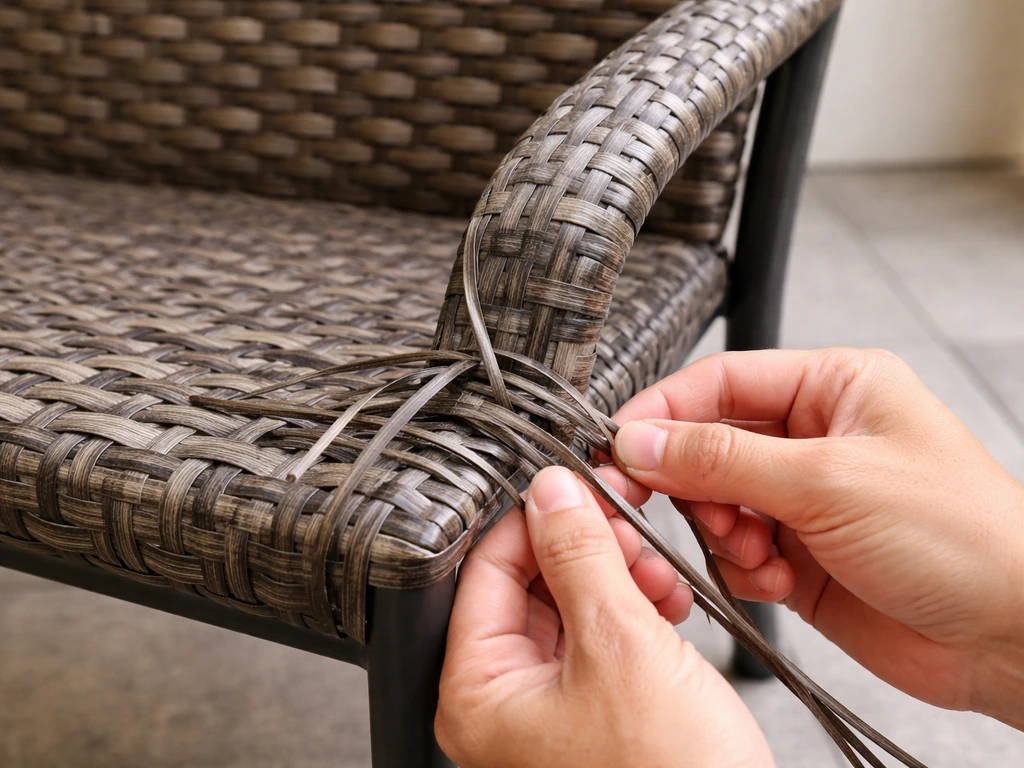
Modern patio wicker is almost always all-weather resin wicker over an aluminum or steel frame, not natural rattan. When strands break, you can reweave with matching replacement strand material sold by the roll. It's tedious but doable if only a few strands are damaged. The bigger question is always the frame underneath: if the steel sub-frame has rusted through, reweaving the wicker on top is wasted effort. Check the frame at every leg base and joint before committing to a reweave. When cleaning wicker furniture, stick to a medium-pressure hose and mild soap. High-pressure washing damages the weave, and bleach or abrasive cleaners permanently degrade the resin coating.
Plastic and resin
This is the trickiest material to repair. Plastic and resin degrade from UV exposure at a molecular level, becoming brittle and chalky over time. A crack in UV-fatigued plastic can be patched with plastic-specific epoxy or a plastic welder, but the surrounding material is still compromised and the repair is likely to fail again nearby. Budget resin chairs that are cracking after three or four years of sun exposure are generally not worth repairing. They've reached end of life. Thicker, commercial-grade resin furniture (like heavy-duty poly lumber) holds up much better and is worth repairing if the damage is isolated. The test: if the plastic snaps cleanly and the break edges are sharp, the whole piece is probably brittle throughout.
Composite and outdoor-grade materials
Composite furniture (poly lumber, HDPE, wood-plastic composites) is generally more repair-tolerant than resin because the material retains flexibility longer. Surface scratches and minor gouges can be sanded smooth. Cracked composite can sometimes be repaired with HDPE-compatible adhesive, though the repair won't be invisible. Ready Plastics explains in its HDPE FAQ that HDPE is difficult to bond with many adhesives because of its surface-energy and adhesion behavior, so polyolefins need compatible bonding methods HDPE-compatible adhesive. The critical distinction is cosmetic versus structural: a scratch on a composite armrest doesn't matter; a crack running through the leg of a composite chair is a structural failure and the piece should be replaced. These materials don't rot and don't rust, so if the frame itself is sound, the furniture usually has years of life left.
Replace the part or replace the whole piece?
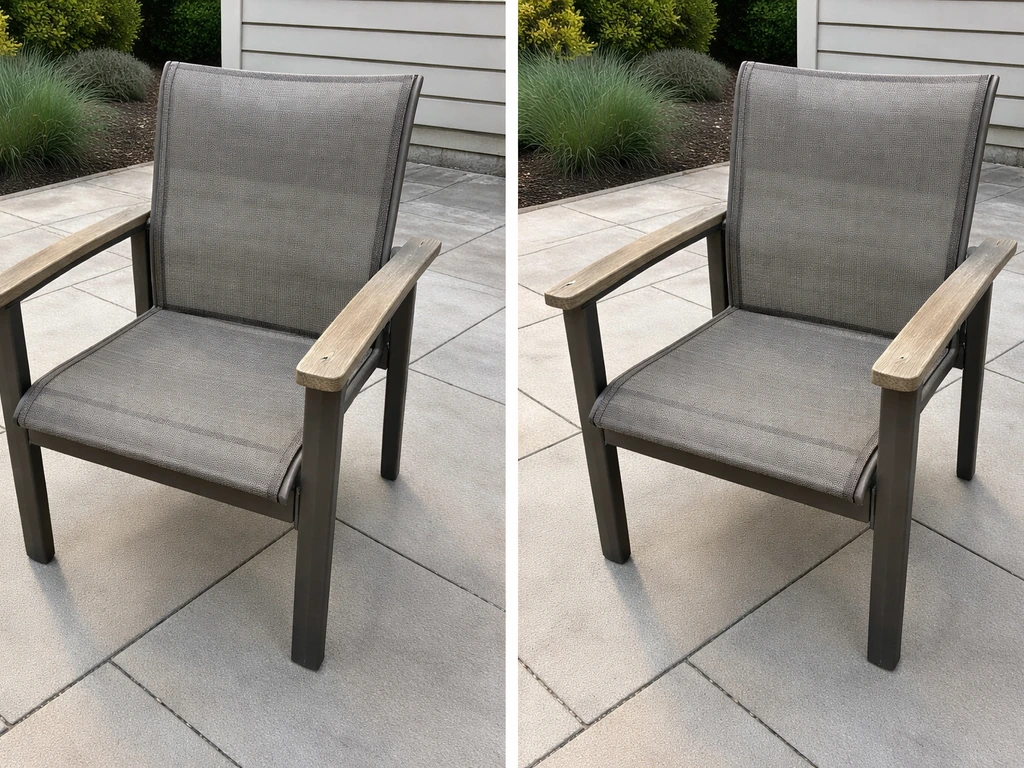
This is the real decision most people struggle with, and the honest answer is that it hinges on three things: the cost of the replacement part, the condition of the rest of the frame, and the original quality of the piece. Here's a practical framework:
| Scenario | Likely best move | Why |
|---|---|---|
| One broken slat, armrest, or cushion on a solid-frame piece | Replace the part | Frame has years of life left; parts are cheap relative to full replacement |
| Rusted-through steel joint on a budget piece | Replace the whole piece | Welding costs more than the furniture is worth; surrounding metal is suspect too |
| Loose joints on a quality aluminum or teak frame | Repair and re-tighten | High-quality frames are worth saving; repairs will hold |
| UV-cracked resin chair in a set | Replace the set | All pieces aged the same way; patching one delays the inevitable by weeks |
| Broken weld on a mid-range steel frame | Get a professional weld estimate first | May be cost-effective if the rest of the frame is clean; not if rust is widespread |
| Damaged cushions only | Replace cushions | Outdoor cushion sets are widely available and inexpensive relative to full replacement |
The general rule: if the repair costs more than 50% of what a comparable new piece would cost, and you're not dealing with heirloom or high-end furniture, replacement is almost always the smarter financial move. Quality matters here too. A $2,000 teak set with a cracked joint is worth repairing. A $150 resin set with the same problem is not.
Weather-proofing to stop this from happening again
Most patio furniture breaks prematurely because of exposure that could have been managed. Once you've made your repairs, this is how you protect the investment going forward.
Covers are the single most effective protection you can buy. A breathable, waterproof cover that fits the furniture properly keeps UV, rain, and debris off the surfaces during the weeks or months when you're not using the furniture actively. Avoid non-breathable plastic tarps because they trap moisture underneath and accelerate rust and rot faster than no cover at all.
Protective coatings matter by material. Steel and iron furniture needs a rust-inhibiting primer and paint touched up every season, or a wax-based protector applied to the clean surface. Aluminum benefits from a light application of paste wax or aluminum protectant to slow oxidation. Wood needs annual oiling or sealing (the schedule depends on your climate: once a year in dry climates, twice a year in humid or tropical zones). Resin and plastic can be treated with UV-protectant spray, which slows but doesn't stop long-term degradation.
Hardware is often the first thing to fail, and it's the cheapest thing to upgrade. Swap out standard steel bolts for stainless steel or hot-dipped galvanized hardware wherever possible. This one change dramatically extends the functional life of metal-frame furniture, especially in coastal, humid, or snowy climates where road salt gets tracked onto patios.
Set a tightening schedule. Once a year at the start of the outdoor season, go around every piece with the appropriate wrench or driver and snug every fastener. This five-minute habit catches loose joints before they become cracked frames.
Cleaning, maintenance, and storage by material
Cleaning patio furniture correctly is as important as any repair you'll make. The wrong cleaning method can strip protective coatings, damage weave structures, or introduce moisture into joints. If your patio furniture shocks you, the cause is usually electrical leakage or an unsafe grounding path, so address safety before repairing the physical damage why does my patio furniture shock me.
| Material | Cleaning method | Avoid | Storage tip |
|---|---|---|---|
| Wood (teak, cedar, ipe) | Mild soap and water, soft brush; rinse thoroughly | Pressure washing, bleach, abrasive pads | Store indoors or under breathable cover; oil before storing |
| Steel | Soap and water; dry immediately and completely | Letting water sit, wire brushing without repainting | Store indoors in winter; apply wax or rust inhibitor before storing |
| Aluminum | Soap and water or diluted white vinegar for oxidation | Steel wool, abrasive cleaners | Can stay outdoors year-round with a cover in most climates |
| Resin wicker | Medium-pressure hose, mild soap; air dry fully | High-pressure washing, bleach, abrasive cleaners | Store indoors or covered; avoid stacking heavy items on top |
| Plastic/resin solid | Soap and water; UV protectant spray after cleaning | Abrasive scrubbers that scratch the surface | Store out of direct sun if possible; stack carefully |
| Composite/poly lumber | Soap and water; light sanding for surface scratches | Solvents, strong degreasers | Highly weather-resistant; cover or store for cosmetic protection only |
For cushions, spot clean with mild soap, rinse completely, and stand them on edge to air dry before putting them back on or storing them. Cushions that stay damp underneath breed mildew and can stain frames. If you store cushions in a bin or bag over winter, make sure they're fully dry first.
One thing worth mentioning: if you're dealing with actual pests alongside your furniture damage (wicker that's been chewed through, cushions that have been compromised), that's a separate problem layered on top of the structural one. If you’re seeing pests like bugs along with the damage, identify the source first so you can clean and treat the affected areas without trapping them under covers bugs on patio furniture. Keeping furniture clean, dry, and properly stored also dramatically reduces the chances of insects making themselves at home in your outdoor pieces. These same outdoor pest issues can also show up as bug bites after you sit on or handle patio furniture insects making themselves at home. Keeping furniture clean, dry, and properly stored also helps discourage pests like chiggers from settling around your patio area. Bed bugs on patio furniture can also be a concern if infestations spread from nearby rooms, so treat it as a separate pest problem and get the right help fast.
The bottom line is that broken patio furniture is almost never a total loss on first inspection. If you suspect theft, it helps to check for missing hardware or signs the furniture was recently moved before you assume it was just weather damage broken patio furniture. Work through the assessment honestly, match the repair to the material and the actual damage type, and invest in weather-proofing before the next season starts. If you’re shopping for the next set, look for bug-resistant patio furniture designed to resist pests while still holding up outdoors. That combination will get you several more years out of most pieces and save you from buying replacements you didn't need.
FAQ
How can I tell the difference between a fixable wobble and a dangerous structural break in broken patio furniture?
If a leg, rail, or arm moves independently when you press or lift at a corner, treat it as a structural failure. For metal, stop if you see cracked welds or heavy rust at the joint. For wood, stop if you can push a probe (screwdriver tip) into the area and it sinks noticeably, because that usually means hidden rot. If any safety concern exists, don’t try to “make it through” until repairs are complete.
When is it safe to keep using broken patio furniture while I wait for parts, and when should I stop immediately?
Yes, but only for fasteners and minor cosmetic issues. If the damage involves a bent frame member, separated joint, rotted wood core, rust that has reached a structural joint, or a crack in resin/plastic that looks like it will propagate, replacement or professional work is usually the better option. A good rule is that if you have to remove and realign structural parts, you’re beyond simple DIY tightening.
What should I verify before buying replacement bolts or brackets for broken patio furniture?
Start by checking that the replacement part matches the original material and dimensions, including bolt size, thread type, and whether the frame uses through-bolts or inserts. If the chair used a mix of metals, don’t reuse rusty or mismatched hardware because galvanic corrosion can restart quickly. For outdoor replacements, use stainless or hot-dipped galvanized hardware and confirm the length so you don’t bottom out and strip threads.
How do I choose a patio cover so it actually prevents damage, especially for rust-prone frames?
Covers can still fail if they don’t fit. A cover that’s too small stretches and allows gaps where wind-driven rain and debris collect, especially around leg ends. Choose a cover that reaches down low enough to protect the most exposed joints, then use straps or ties so it doesn’t balloon in storms. Periodically check underneath for moisture, especially after heavy rain.
Do I need to retighten screws or fasteners after repairing broken patio furniture?
After any repair, retighten is critical. Many wood glue repairs reach handling strength before they reach full working strength, and metal joints can shift once loaded. Recheck all fasteners a day or two after the first use, then follow the seasonal tightening habit, once at the start of the outdoor season.
What are the most common reasons wood repairs fail when fixing broken patio furniture?
For wood glue repairs, the key failure mode is clamping too lightly or loading too soon. Make sure clamps pull the joint closed with minimal gap, and wipe away squeeze-out so it doesn’t interfere with sanding and sealing. If the crack surfaces were dirty or oily, adhesion will be weaker, so clean out the crack before gluing.
What’s the correct order of operations for treating rust or oxidation on metal patio furniture?
For steel and aluminum, plan on addressing corrosion before repainting or sealing. If rust is present on steel, remove loose material thoroughly, apply a rust converter where recommended for your product, then prime and use a rust-inhibiting exterior enamel. For aluminum, avoid coatings meant for steel only, and before wax or protectant, clean off oxidation so the protective layer can bond.
How do I decide whether to reweave wicker or replace broken patio furniture?
Wicker reweaving often looks fine while the underlying frame remains unsafe. Before investing time, inspect the frame at each leg base, the underside joints, and any weld or fastener points. If the sub-frame is rusted through, loose, or cracked, reweaving won’t restore stability, so prioritize frame repair or replacement first.
Can I reliably patch UV-brittled resin or plastic when repairing broken patio furniture?
For resin or plastic, “it’s just a surface crack” can still mean the material is brittle throughout. If the break edges are sharp and the piece feels chalky or snaps under light pressure, expect the crack to spread again near the repair area. In most cases, replacement is more reliable for budget resin chairs that have been UV-brittled for years.
Do composite scratches and gouges need repair, or should I leave them alone on broken patio furniture?
For composite (poly lumber, HDPE, wood-plastic), a big misconception is that every scratch needs repair. Many surface scratches are purely cosmetic, and sanding and leaving them alone can be enough. Repair only when you have a crack that affects load paths, such as through a leg or a structural notch, because adhesives may not fully restore invisibility or maximum strength.
How should I handle broken patio furniture if I also see pests, so I don’t make the problem worse?
When pests are involved, treat it as a separate problem without trapping moisture or chemicals under a cover. Start by identifying what you’re seeing (for example, active insects versus droppings or chewed fibers), then clean the affected area and let everything fully dry before sealing or covering. If the damage is chewed through, you still need to repair the structural damage, but you should clean and address the source first.
Next Articles
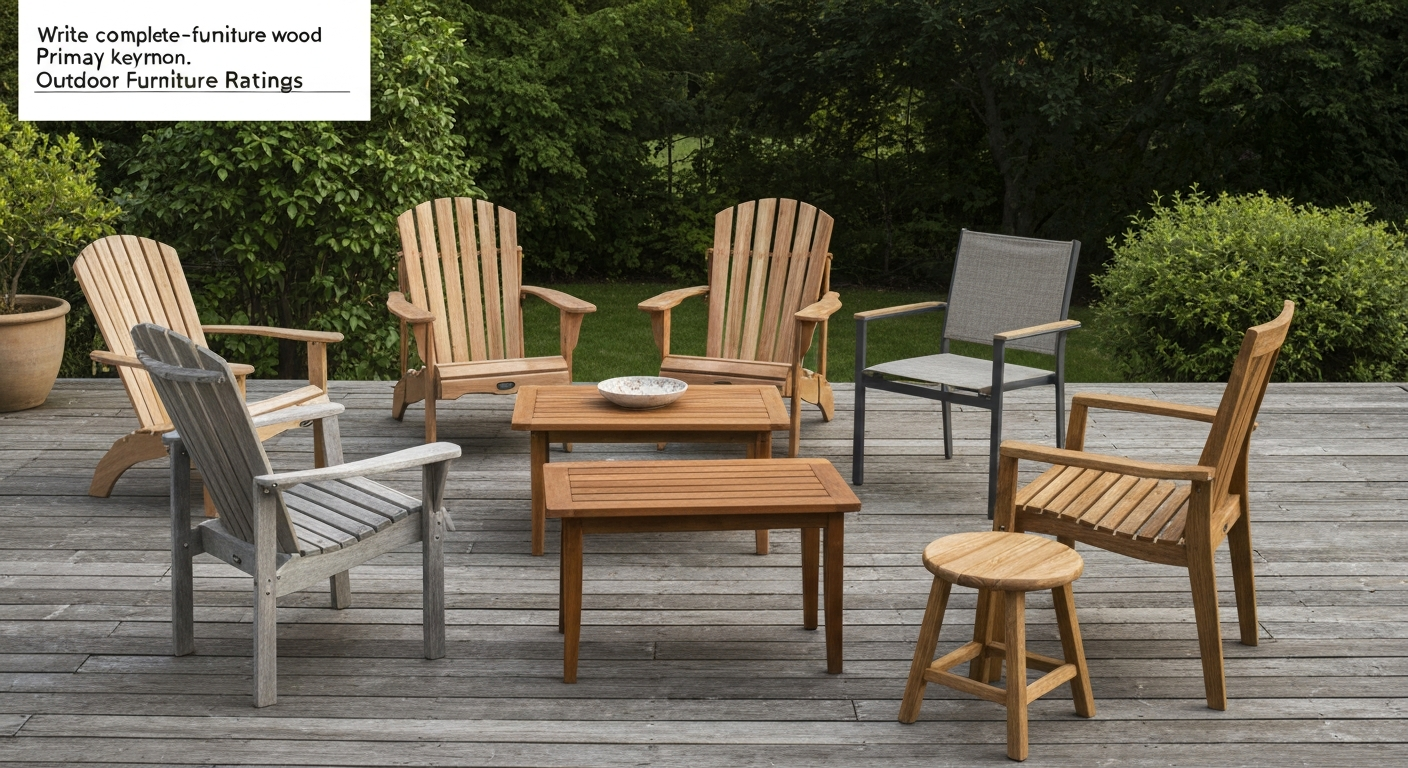
Common Patio Furniture Wood: Best Choices, Care & Tips
Compare common patio furniture wood types, teak, cedar, redwood, oak, with durability, finishes, and care tips.
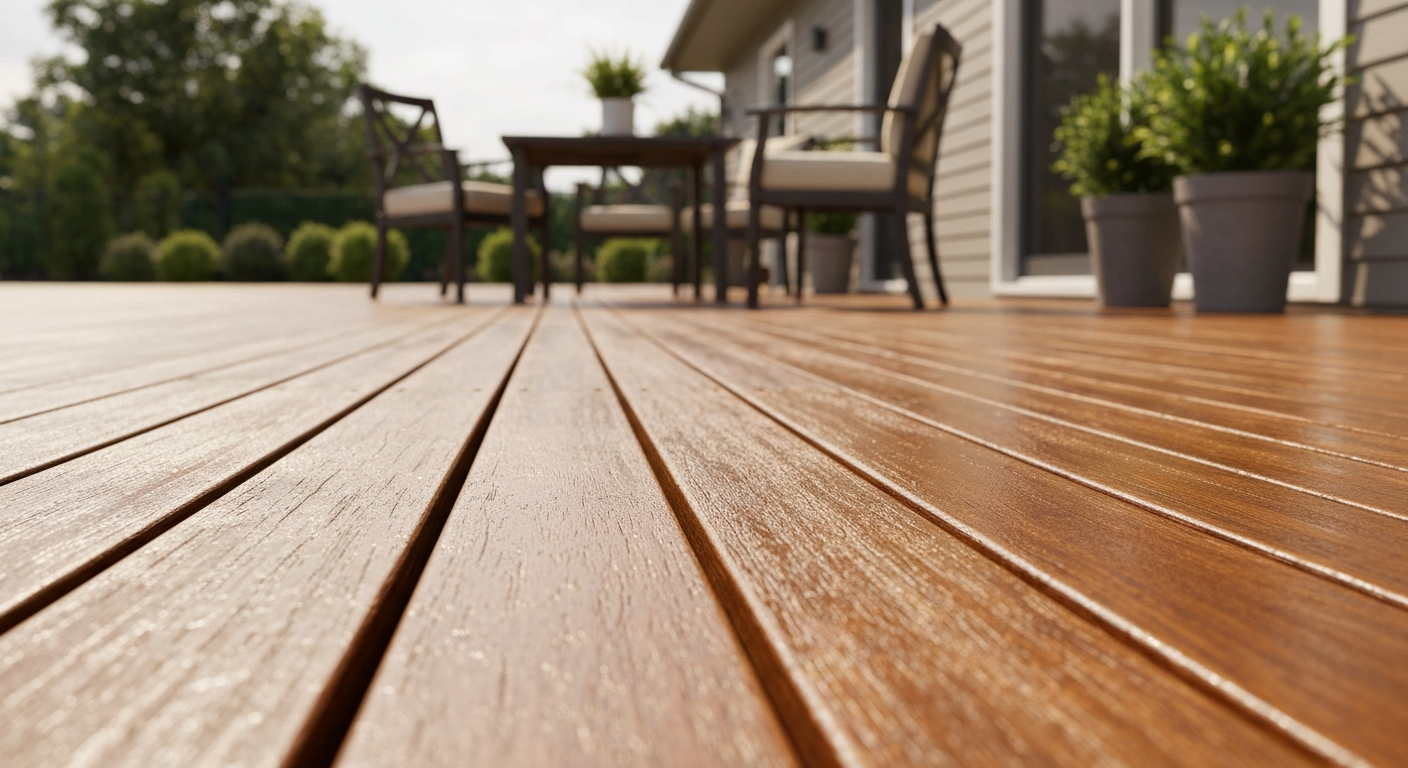
Best Wood Patio Stain: Choosing Durable, Low-VOC Finishes
Compare and choose the best wood patio stain: durability, finish, climate tips, prep, and top product picks.
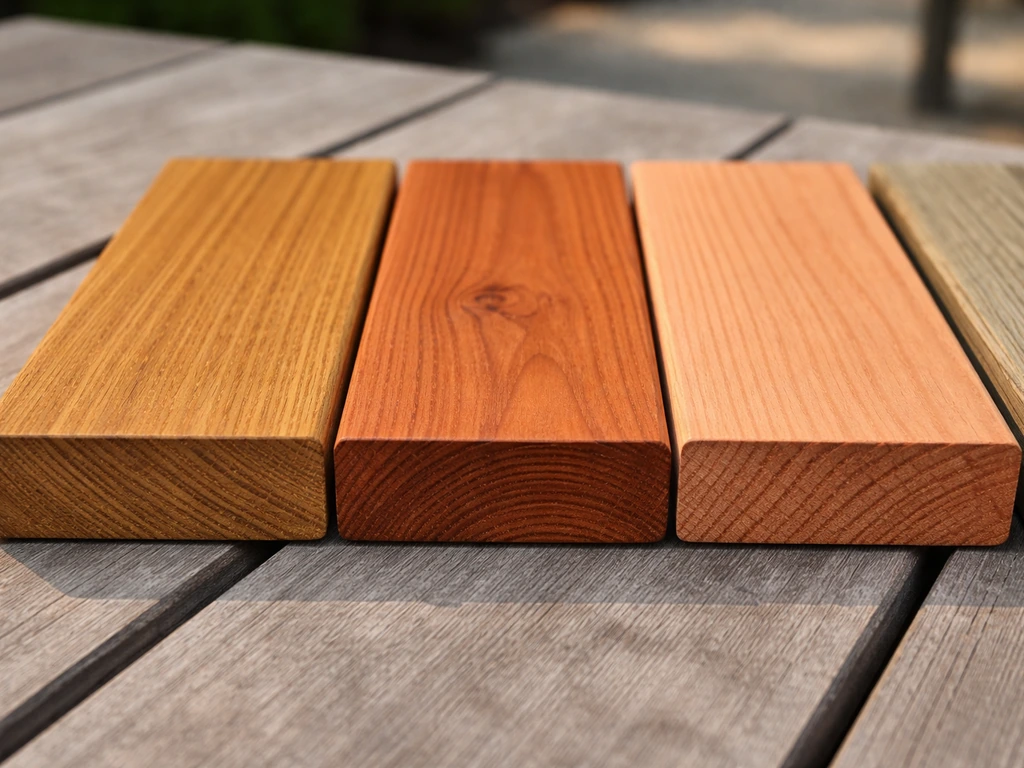
Common Patio Furniture Wood: Teak, Cedar, Redwood and More
Compare common patio woods like teak cedar redwood and pressure-treated: durability, quality checks, and care for long l