
No, outdoor patio furniture does not have to match. Buying a coordinated set is one option, not a requirement. Mixing patio furniture can offer flexibility to upgrade gradually, which reduces the need to replace an entire expensive matching set at once blank" rel="noopener noreferrer">reduce the need to replace an entire expensive matching set at once. Plenty of great-looking, functional patios are built from individual pieces across different brands, materials, and styles, and in most cases, that approach actually works better for your space, budget, and long-term upkeep than hunting for a perfectly uniform set.
Does Outdoor Patio Furniture Have to Match? Rules to Mix

Theo Tierney
6 Jun 2026
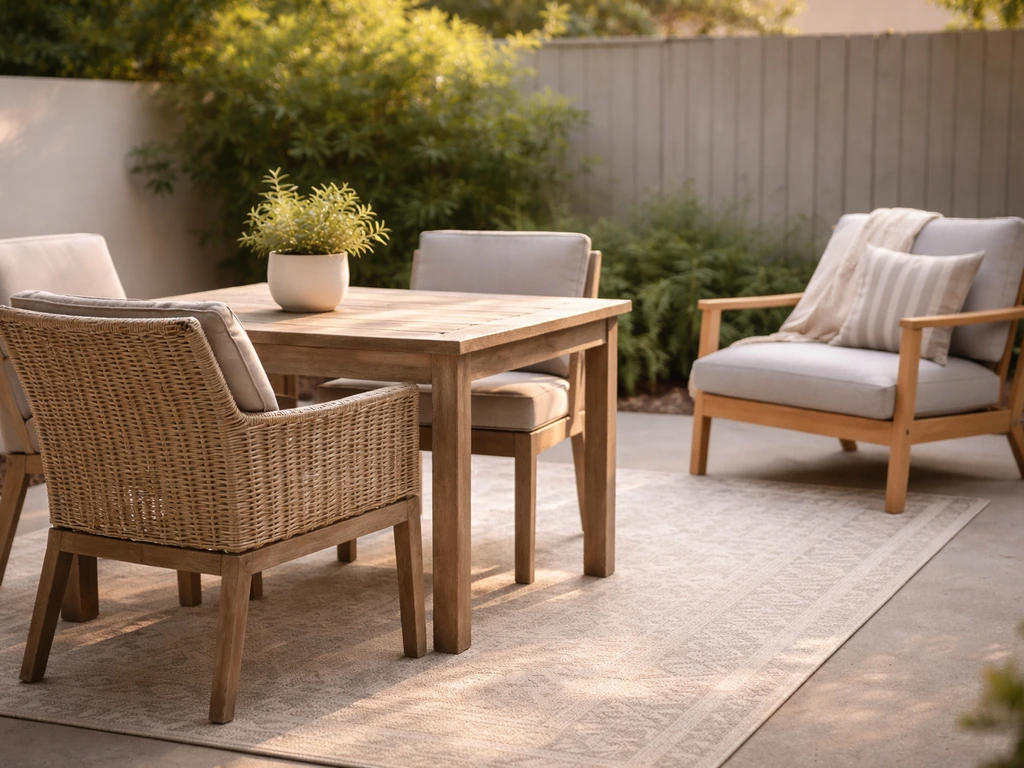
Do patio sets have to match?
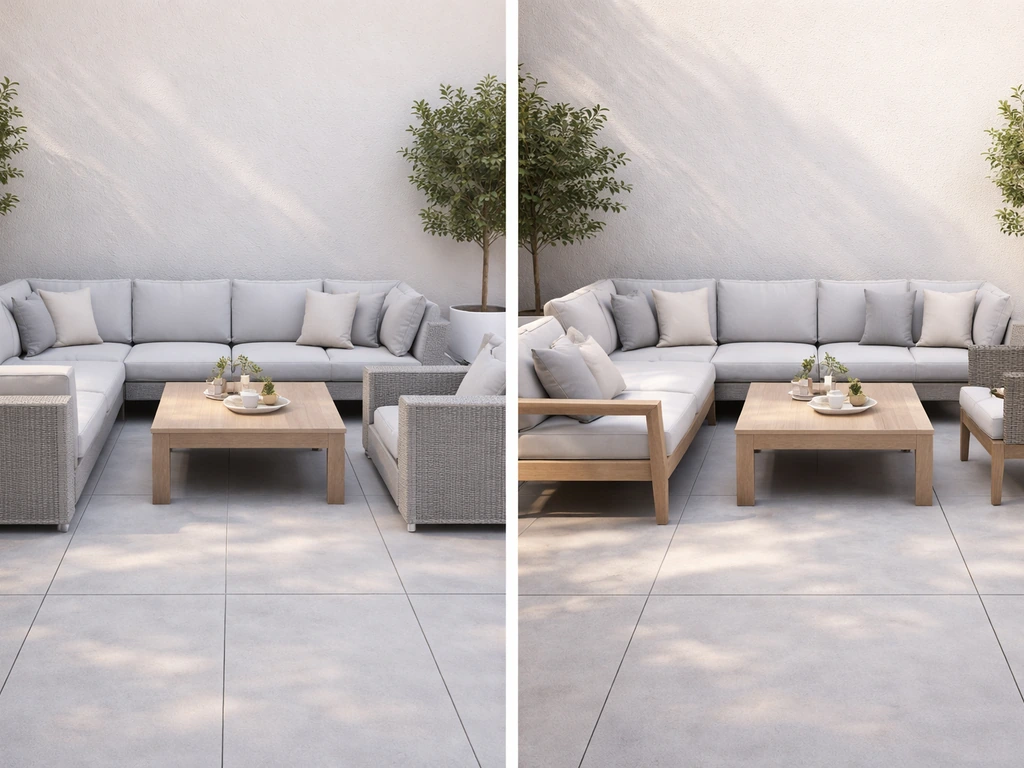
The short version: matching sets exist because they're convenient, not because they're the only correct way to furnish a patio. When you buy a full set, the pieces are designed to work together visually and often share hardware, cushion sizing, and finish specs. That makes buying simple. But outdoor design has moved well past the idea that everything needs to come from the same collection. Mixing pieces intentionally is now the mainstream approach, and it can produce a more personal, livable space than any boxed set.
That said, matching isn't wrong. If you want a clean, unified look with minimal effort, a matched set gets you there fast. The real question is whether that's what your space and lifestyle actually need.
When matching really helps
There are specific situations where buying a coordinated set makes genuine sense, and it's worth being honest about them rather than dismissing the option entirely.
- Small, clearly defined spaces: On a 10x12 deck or a small apartment balcony, a matched set reads as intentional and avoids the cluttered look that mismatched pieces can create in tight quarters.
- Resale and staging: If you're selling your home or staging an outdoor space, a uniform set signals "complete and thought-through" to buyers faster than a mix-and-match arrangement.
- Low-effort setup: Matching sets eliminate the coordination work. Every piece shares the same cushion dimensions, finish tone, and proportions — so you're not making judgment calls about what goes with what.
- Formal dining areas: A dining table with a matched chair set reads cleaner during gatherings than a mix of chair styles, especially when you have six to eight seats that need to feel like a cohesive unit.
- When materials need to agree on care: Matching sets are typically all one material — all aluminum, all teak, all resin wicker. That means a single cleaning routine, one maintenance schedule, and no compatibility guesswork.
When mixing is the smarter move
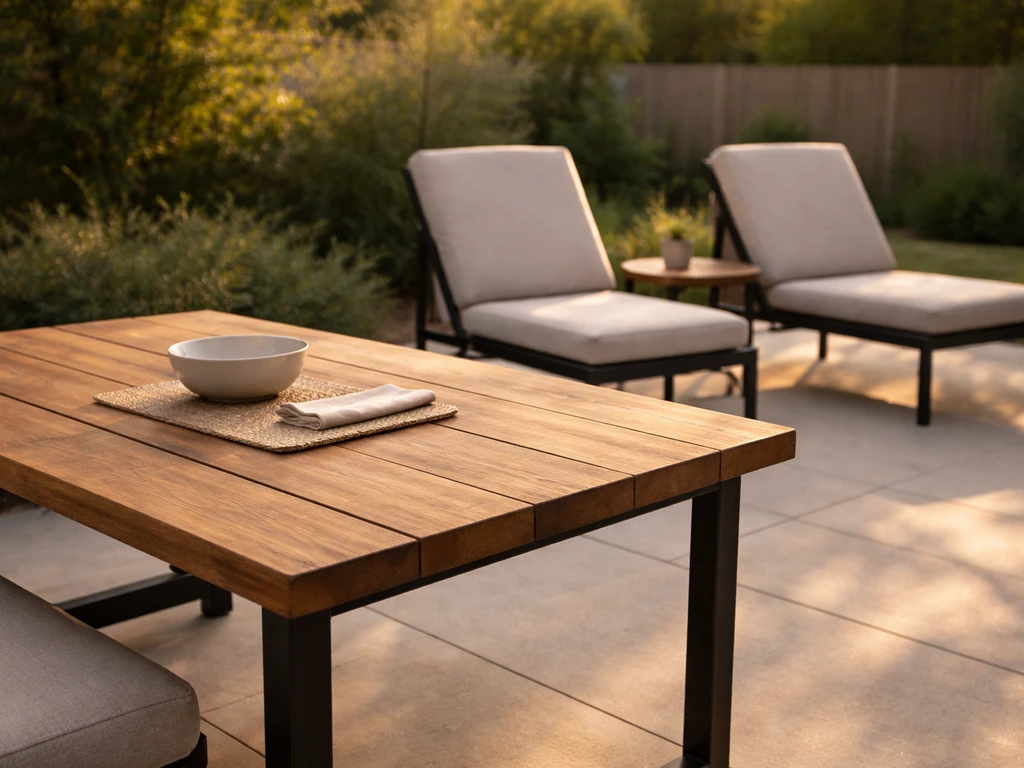
Mixing pieces isn't a compromise, it's often the better strategy. Here's when it pays off more than buying a matching set.
- Budget flexibility: You can prioritize spend on the pieces that matter most — say, a high-quality dining table or a durable lounge chair — without locking into a full set where you're paying for chairs you don't love.
- Gradual upgrades: If one section of your patio wears out before another, mixing lets you replace just that piece rather than scrapping an entire set to maintain uniformity.
- Irregular layouts: L-shaped patios, oddly positioned pergolas, and multi-zone outdoor spaces rarely fit the proportions of a boxed set. Individually sourced pieces let you fill the actual footprint.
- Climate-specific choices: You might want aluminum frames for durability in salt air but teak side tables for warmth and grip. Mixing lets you optimize by function and climate zone rather than buying whatever the set includes.
- A more personal look: A patio furnished from one collection can look like a showroom floor. Mixing pieces with intention produces a space that feels lived-in and specific to you.
How to mix pieces without it looking messy
The difference between a patio that looks intentionally curated and one that looks like a storage unit is structure. You can use the same mixing and anchoring ideas when planning patio furniture to use in your living room. Follow a few concrete rules and the mix will hold together.
Start with one anchor piece
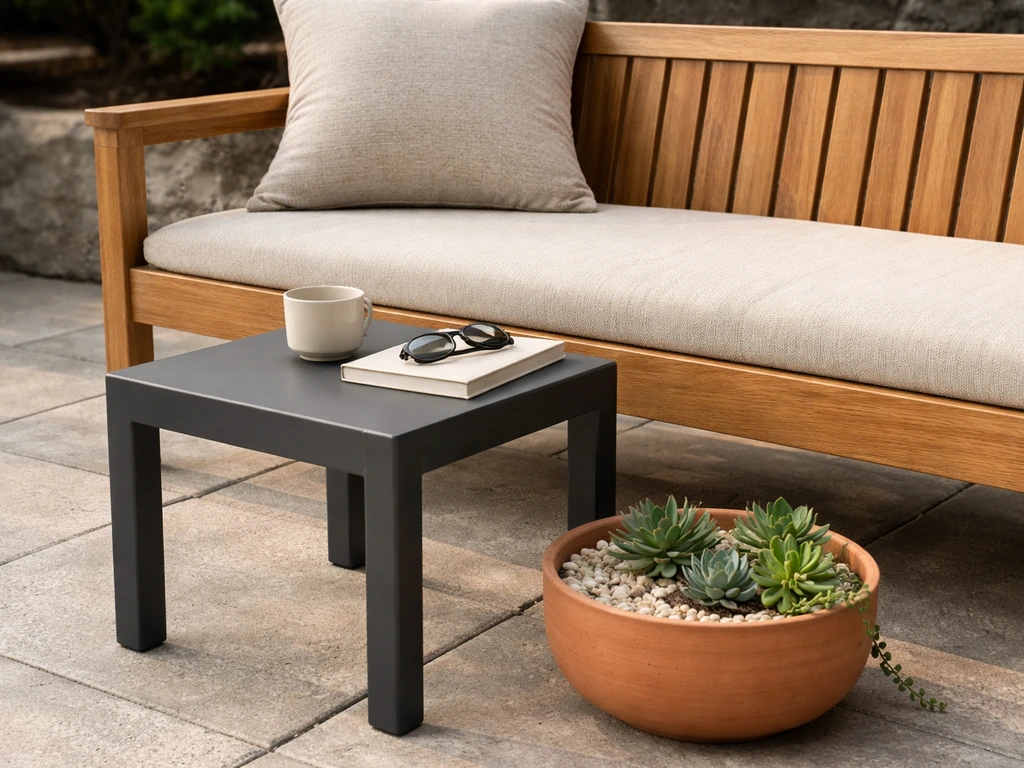
Pick one dominant piece, usually the largest item in the space, like a sofa, a sectional, or a dining table, and treat everything else as supporting. That anchor sets the tone: its material, finish, and scale become the reference point for every other choice. When you shop for additional pieces, you're asking "does this work with the anchor?" not "do all these pieces work with each other individually?"
Keep a consistent color story
You don't need identical colors, but you do need colors that belong in the same family. Warm neutrals (teak brown, sand, warm gray) work together. Cool neutrals (charcoal, slate, white) work together. Mixing warm and cool tones across pieces is where things start to compete visually. Cushion color is your easiest lever: a shared cushion color across seating in different materials or styles immediately ties the space together.
Limit your material count
Two materials in the same space is comfortable. Three can work if one is dominant. Four or more is where things get chaotic. A teak dining table paired with powder-coated aluminum chairs is a classic combination, the warm wood and the clean metal finish each do something the other doesn't, but they don't fight. Adding resin wicker for a lounge section nearby still works. Adding painted wood Adirondacks and wrought iron side tables on top of that is where you've lost the thread.
Match the visual weight and scale
Chunky, heavy pieces next to delicate, lightweight ones look accidental. Keep proportions in the same range. If your dining table has a solid, thick-slatted top, chairs with fine wire frames are going to look undersized. Shape consistency helps too, if most of your pieces have clean straight lines, a single ornate scrollwork chair reads as a mistake rather than an accent.
Use textiles to bridge the gaps
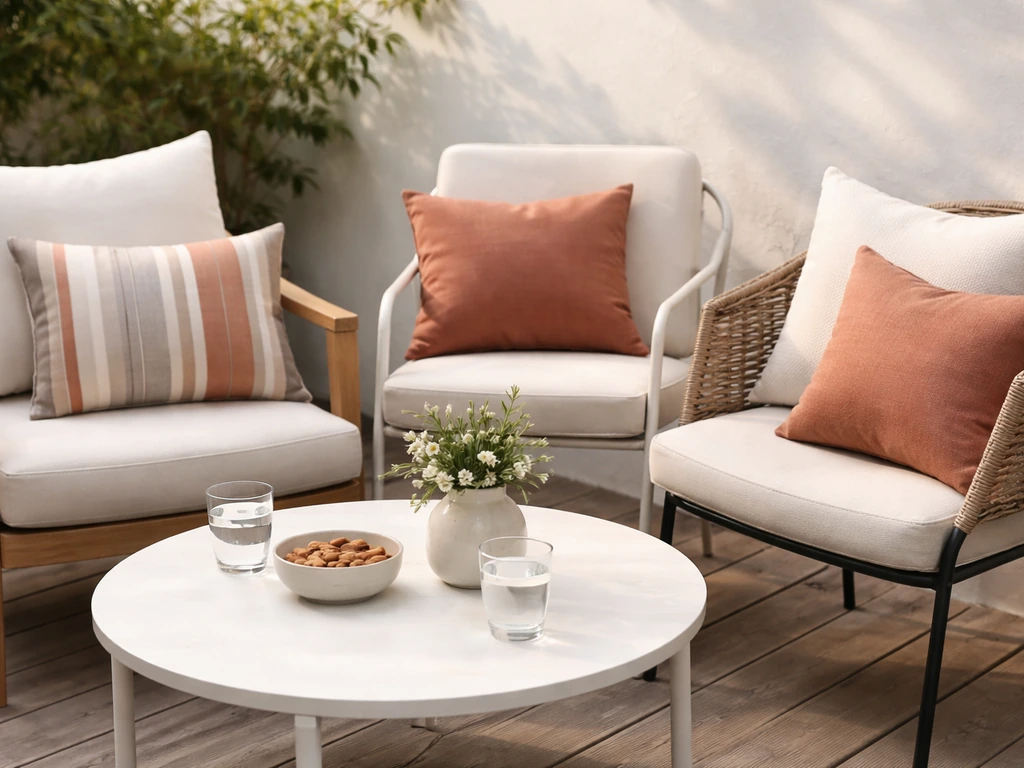
Coordinated throw pillows are one of the most effective tools for unifying a mixed patio. If your chairs are from three different places, pillows in the same two or three colors create visual continuity without requiring the furniture itself to match. Outdoor rugs work the same way, they define a zone and ground the pieces sitting on them into a single composition.
Best rules by material type
Material compatibility matters beyond aesthetics. When you mix materials, you also mix maintenance needs and weather resistance profiles. When temperatures drop, it's also smart to think about how your patio furniture will hold up if you don't bring it inside or cover it properly for winter bring in patio furniture in winter. Here's how the main material types interact and what to keep in mind when pairing them.
| Material | Pairs well with | Watch out for | Maintenance note |
|---|---|---|---|
| Teak wood | Powder-coated aluminum, resin wicker | Untreated softwoods, uncoated iron | Teak naturally weathers to silver-gray without oiling. Store cushions separately the first year — natural oils rising to the surface can stain fabric. |
| Powder-coated aluminum | Teak, resin wicker, composite | Bare steel, wrought iron (rust risk nearby) | Doesn't rust, but rinse salt and debris regularly. Quality powder coating (look for commercial-grade) resists fading and corrosion long-term. |
| Resin wicker | Aluminum frames (often built-in), composite tables | Natural wicker (weather resistance mismatch), raw wood | All-weather resin wicker handles moisture well. Natural wicker does not — don't mix them outdoors expecting equal lifespans. |
| Composite / HDPE | Aluminum, powder-coated steel | Real wood (different weathering rates and color drift) | Nearly maintenance-free. Won't crack, splinter, or need sealing. Works well in humid or wet climates where wood requires more attention. |
| Wrought iron / steel | Stone surfaces, concrete planters, heavier teak | Lightweight aluminum or resin wicker (scale mismatch) | Needs more rust protection than aluminum. Pair with materials that can handle the same heavy-duty care schedule. |
The practical takeaway: aluminum and teak is the most versatile and forgiving combination across climates. A teak care guide PDF notes that outdoor teak naturally weathers to a silver-gray color as the surface oil evaporates, which is part of why it can be forgiving over time aluminum and teak is the most versatile and forgiving combination across climates.. Resin wicker works well with aluminum because most resin wicker furniture already uses aluminum frames. Composite (HDPE) lumber plays nice with almost everything and is worth considering if you're in a wet climate like the Pacific Northwest or coastal Southeast and want zero maintenance on at least part of your setup.
Quick next steps to plan your patio look today
If you're standing at the starting line and not sure where to begin, here's a straightforward sequence that avoids the most common mistakes. If you’re wondering is it too early to put out patio furniture, the safest move is to wait until nights are consistently warm enough for your cushions, finishes, and materials.
- Measure your space first. Know your actual square footage and note any fixed features — doors, planters, fire pits, grill zones — before you look at a single piece of furniture. Dimension mismatches are the fastest way to end up with a patio that doesn't work.
- Identify your anchor piece. Decide what the biggest, most-used item will be — a dining table, a sectional sofa, a lounge set — and buy that one first. Get it right before adding anything else.
- Pick your material based on your climate. Salt air: powder-coated aluminum or composite. Humid and rainy: aluminum, composite, or all-weather resin wicker. Dry heat: teak, aluminum, or concrete. Snowy winters: aluminum or composite, or plan to store pieces indoors or covered when temperatures drop below 20°F for extended stretches.
- Choose two complementary materials maximum for the main furniture. A third is fine for accent pieces like side tables. More than that is where the space starts to feel unresolved.
- Pick one neutral color family and stay in it. Decide warm or cool, then let that guide cushion, rug, and accent choices. If you're mixing materials with different natural tones (like teak brown and silver aluminum), warm neutrals in your textiles will bridge them better than cool ones.
- Add coordinating textiles last. Pillows and an outdoor rug should be the final layer, not the first decision. Buy them after the furniture is placed so you can react to what the space actually needs rather than what you imagined.
- Think about long-term piece replacement now. If you're building a mixed setup, note what's hardest to replace individually. Proprietary cushion sizes from niche brands can become difficult to match later — standard dimensions are easier to work with over time.
One last thing worth flagging: if you're also thinking about whether any of these pieces could work in an indoor space, or when to bring them in seasonally for protection, those are decisions worth making before you finalize your material choices, since some materials handle the transition between indoor and outdoor environments better than others, and knowing your winter storage plan affects which pieces make sense for your setup. A good rule of thumb is to put patio furniture out when the weather is reliably warm and dry, and to bring it back in before cold snaps when should you put out patio furniture. If you're wondering can patio furniture be left outside year-round, the answer depends on the material and how well it’s protected from moisture and UV. You can also use patio furniture indoors, but the same mixing rules for finishes, colors, and comfort will help it look intentional indoor space.
FAQ
If my patio furniture doesn’t match, how do I make it look intentional instead of random?
Start with one anchor piece (usually the largest item) and repeat two visual connectors, like the same cushion color and the same finish tone, across at least three seating areas. You can also use a single outdoor rug to “frame” the mixed pieces so their shapes feel like one plan, not leftovers from different shopping trips.
Can I mix different frame finishes, like bronze, black, and natural metal, without the patio looking messy?
Yes, but keep the finishes in one family by repeating undertones. For example, pair black and charcoal frames together, and use bronze or warm metals only if you also bring warmth back through cushions, wood accents, or a warm-toned rug.
Is it okay if the cushion fabrics and colors don’t match exactly?
Exactly matching cushions are not required. What matters is that the patterns and solids share the same color temperature (warm versus cool) and you keep the number of competing accent colors to about two or three. If you use a pattern on one item, repeat one of its colors in the cushions on the other pieces.
How many different materials can I mix before it starts to look chaotic?
A practical limit is two to three main materials, then limit anything beyond that to small accessories (like side tables or a planter). If you want four-plus materials, choose one to be clearly the “secondary” and make the rest visually supportive by keeping their color and line style consistent.
What’s the safest material combination if I’m not sure about weather durability in my area?
If you want the most forgiving setup, prioritize an aluminum frame plus teak or a composite option for wood-like pieces. This reduces rust concerns, handles temperature swings better than many untreated woods, and gives you an easier maintenance routine if you cannot store cushions seasonally.
Can I mix outdoor furniture styles, like modern chairs with a traditional sofa or dining set?
You can, as long as at least one element is shared in scale or line language. For instance, keep the seat height and overall profile similar, and match the “busy-ness” by limiting ornate details to one piece only. Repeating straight-line shapes across multiple items is usually the easiest way to blend styles.
Do I need to match dining chairs to a dining table to look good outdoors?
No, but chair scale should be believable against the tabletop. Aim for a consistent seat height and a similar visual weight, if your table top is chunky, choose chairs that are not extremely delicate. Also consider using one shared element, like the same cushion fabric color across all seating.
How should I handle mismatched cushions if the pieces came with different thicknesses or shapes?
Use cushion inserts and covers to standardize thickness where possible, especially on chairs with different frames. Even if covers are different, aligning the seat depth and firmness prevents the “lopsided” look that often gives mixed setups an unfinished feel.
Can patio furniture be left outside if the pieces aren’t from the same brand or material line?
Sometimes, but not the same way for every piece. Even if the setup looks cohesive, each material has different tolerance for moisture and UV, so plan for targeted protection, like furniture covers on frames and quick removal of cushions. If your area has heavy rain or intense sun, leaving mixed materials uncovered can cause uneven fading and swelling.
Should I pick furniture based on indoor use too, or finalize the outdoor look first?
If you may use pieces indoors seasonally, finalize comfort and cleaning practicality first, then match the indoor materials and finishes to what you can realistically care for. Some outdoor materials transfer better (like sealed aluminum and many composites), while others, like certain woods or fabrics, may require additional protection or quicker replacement indoors.
Next Articles
Can Patio Furniture Be Left Outside Long-Term?
Learn when patio furniture can stay outside long term by material, weather, and climate, plus cover and cushion care che
Can You Use Patio Furniture Indoors Safely?
Yes with conditions: how patio furniture materials fare indoors, prep steps, and placement tips to prevent rust, mold, r
Common Patio Furniture Wood: Best Choices, Care & Tips
Compare common patio furniture wood types, teak, cedar, redwood, oak, with durability, finishes, and care tips.