
Bring patio furniture out in spring once your overnight lows are consistently staying above 40°F and the last frost date for your area has passed. In general, patio furniture can be left outside only if you keep an eye on overnight temperatures and protect it during freezes Bring patio furniture out in spring. Bring it back in during fall when nighttime temps are regularly dropping to 40°F or below, or anytime a freeze warning (32°F or colder) is in the forecast. That's the practical rule of thumb that works across most of the country, but your specific material, climate, and microclimate can shift that window by several weeks in either direction.
When to Bring in Patio Furniture: Spring and Fall Timing

Theo Tierney
18 Jun 2026
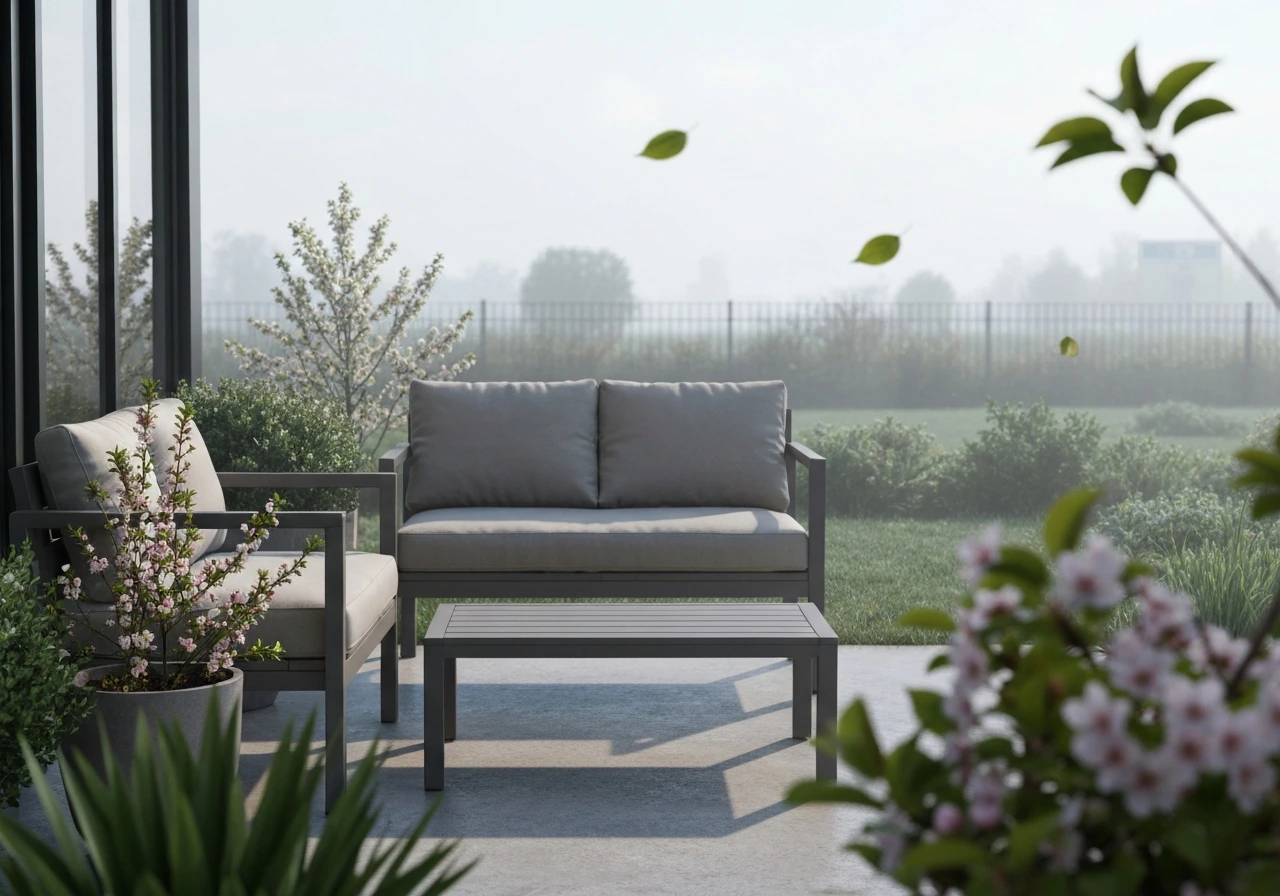
When to bring patio furniture out in spring
Most people put their furniture out too early because a warm weekend in March tempts them into it, and then a surprise frost a week later causes real damage. The better approach is to watch two things: the calendar and the overnight thermometer. Your target is a stretch of nights where temperatures are reliably above 40°F and the region's average last frost date has passed.
The National Weather Service defines a freeze as surface air temps of 32°F or below, and they track average last spring freeze dates by location. NWS instructional materials also note that frost and freeze dates are based on the median date of the last Spring Freeze and the median date of the first Fall Freeze [NWS frost/freeze dates are based on the average (median) date of the last Spring Freeze and the average date of the first Fall Freeze](https://www. weather.
gov/media/box/Frost_Freeze. pdf). Look yours up once and remember it.
For most of the northern U.S., that window opens somewhere between late April and mid-May. In the mid-Atlantic and Pacific Northwest, it's often mid-April. In the Deep South and Southern California, furniture can reasonably go out year-round or as early as February. If you plan to switch seasons, you can also mix and match patio furniture pieces based on how well each part handles cooler overnight temperatures can reasonably go out year-round. The point isn't to pick a specific date off a calendar but to stop watching highs and start watching lows. A 70°F afternoon means nothing if the same night dips to 28°F.
Cushions are the most vulnerable piece of the puzzle in spring. Even if the frame is fine, cushions brought out too early in cold, wet weather will absorb moisture and become breeding grounds for mold. If your spring is rainy and still cool, wait until you're seeing consistent overnight lows above 50°F before leaving cushions outside at all.
When to bring patio furniture in during fall
Fall is where most people are slower to act than they should be. The weather stays warm during the day, the evenings feel pleasant, and then suddenly there's a frost warning and your teak chairs have been sitting in 28°F temps all night. The practical trigger to start thinking about storage is when your overnight lows start regularly hitting 40°F. That's the point where cushion foam starts absorbing more moisture, finishes begin experiencing more stress from repeated temperature swings, and anything with trapped water in the framing (hollow tubing especially) is at real risk once it dips below 32°F.
The absolute deadline is any forecast of 32°F or below. The NWS issues Freeze Warnings for exactly this threshold during the growing season. That's your hard cutoff. If a freeze warning is in the forecast, the furniture needs to be in, covered, or otherwise protected before that night. Water expands when it freezes, and hollow metal frames or resin wicker frames that have accumulated moisture can crack from the inside out.
For cushions specifically, the guidance is to store them when temperatures are dropping below 50°F on a regular basis. Don't wait for a freeze. Repeated exposure to cold and moisture shortens cushion life dramatically, and getting mold out of outdoor cushion foam is nearly impossible once it takes hold.
Weather triggers that matter more than the calendar
The calendar gives you an estimate. Actual weather gives you the answer. Here are the specific triggers worth tracking regardless of what month it is.
- Frost warning or freeze warning: Any forecast of 32°F or below at night means bring in or fully cover furniture before dark. This is a hard rule, not a judgment call.
- Sustained wind over 25 mph: High winds can topple chairs, collapse umbrella frames, and drive rain horizontally into cushion fabric. If a significant storm is coming, stack and secure or bring items inside.
- Multiple consecutive rainy days: Even waterproof cushion fabric saturates eventually, and trapped moisture under covers in humid conditions creates a mold environment. Relative humidity above 60% sustained over days significantly increases condensation and mold risk.
- Overnight lows below 40°F for several nights in a row: This is your cue that the shoulder season is over. Start transitioning, even if the afternoons are still comfortable.
- Early cold snaps in September or October: These are exactly when people get caught off guard. Check the 10-day forecast at the start of each month during shoulder seasons.
Adjusting for your climate and microclimate
Blanket timing rules only get you so far. Where you live and how your yard is situated can shift the practical bring-in date by three to four weeks.
Cold-winter climates (Upper Midwest, Northeast, Mountain West)
If you're dealing with real winters, you're typically looking at furniture going out in mid-May and coming in by mid-October. If you are dealing with cold-winter conditions, the same idea applies: bring patio furniture in before hard freezes so it is not exposed all winter. Frost can hit well into May and return as early as September in Minnesota, Wisconsin, or mountain elevations. Don't get overconfident after a warm spell. These are also the regions where freeze-thaw cycles are most damaging to furniture frames, especially anything with hollow tubing or wood joints that can absorb water and then expand.
Mild and coastal climates (Pacific Coast, Southeast, Gulf Coast)
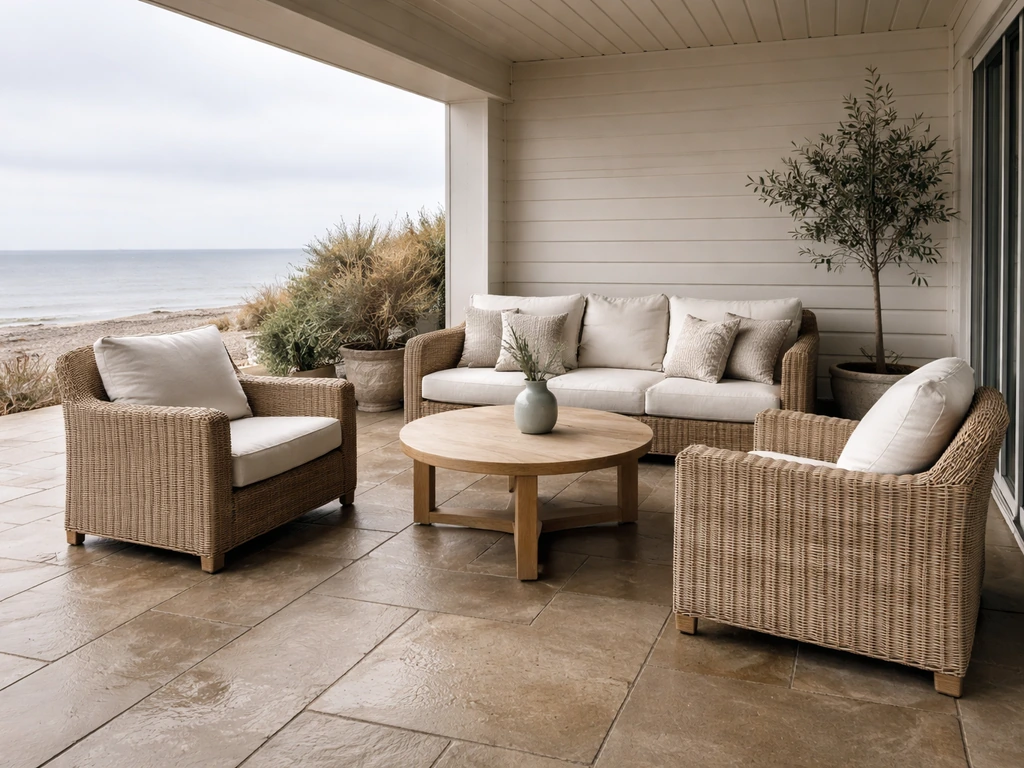
In places like coastal California, Florida, or the Gulf Coast, furniture often stays out year-round or needs to come in only for hurricane season or occasional cold snaps. The bigger risk here isn't freezing, it's humidity, UV exposure, and salt air. Cushions may still need to come inside during rainy stretches or when humidity is sustained above 60% for long periods. The EPA mold prevention course material notes that when relative humidity stays above 60%, condensation is likely and that condensation can lead to mold growth humidity sustained above 60%. The calendar matters less; the weather app matters more.
Freeze-thaw regions (Mid-Atlantic, Pacific Northwest, parts of the South)
These areas are arguably the trickiest. You might get 60°F in January followed by a hard freeze the next week. For these climates, I'd suggest keeping furniture covered and ready rather than fully stored during the winter months, so you can pull it out for warm stretches without committing. That said, hollow frames still need to be drained of any standing water, and cushions should come inside any time sustained cold is forecast.
Microclimate factors in your own yard
Two houses on the same block can have meaningfully different frost risk. Here's what to look for in your own space.
- North-facing patios or deeply shaded areas: Stay colder longer in spring and frost earlier in fall. Add one to two weeks of caution on either end compared to regional averages.
- Low-lying areas or ground-level patios: Cold air settles into low spots. Frost risk is higher than on an elevated deck, even in the same yard.
- Wind-exposed areas: More evaporative stress on cushions and finishes in summer, and wind chill makes cold temperatures more damaging in winter.
- Covered patios or pergolas: Offer meaningful protection from frost and rain, which can extend your season by a few weeks on each end, but only if coverage is solid.
How timing changes by furniture material
Not all patio furniture needs to come in at the same time or for the same reasons. Your material should absolutely influence your timing decisions.
| Material | Biggest seasonal risk | When to bring in (fall) | Spring readiness |
|---|---|---|---|
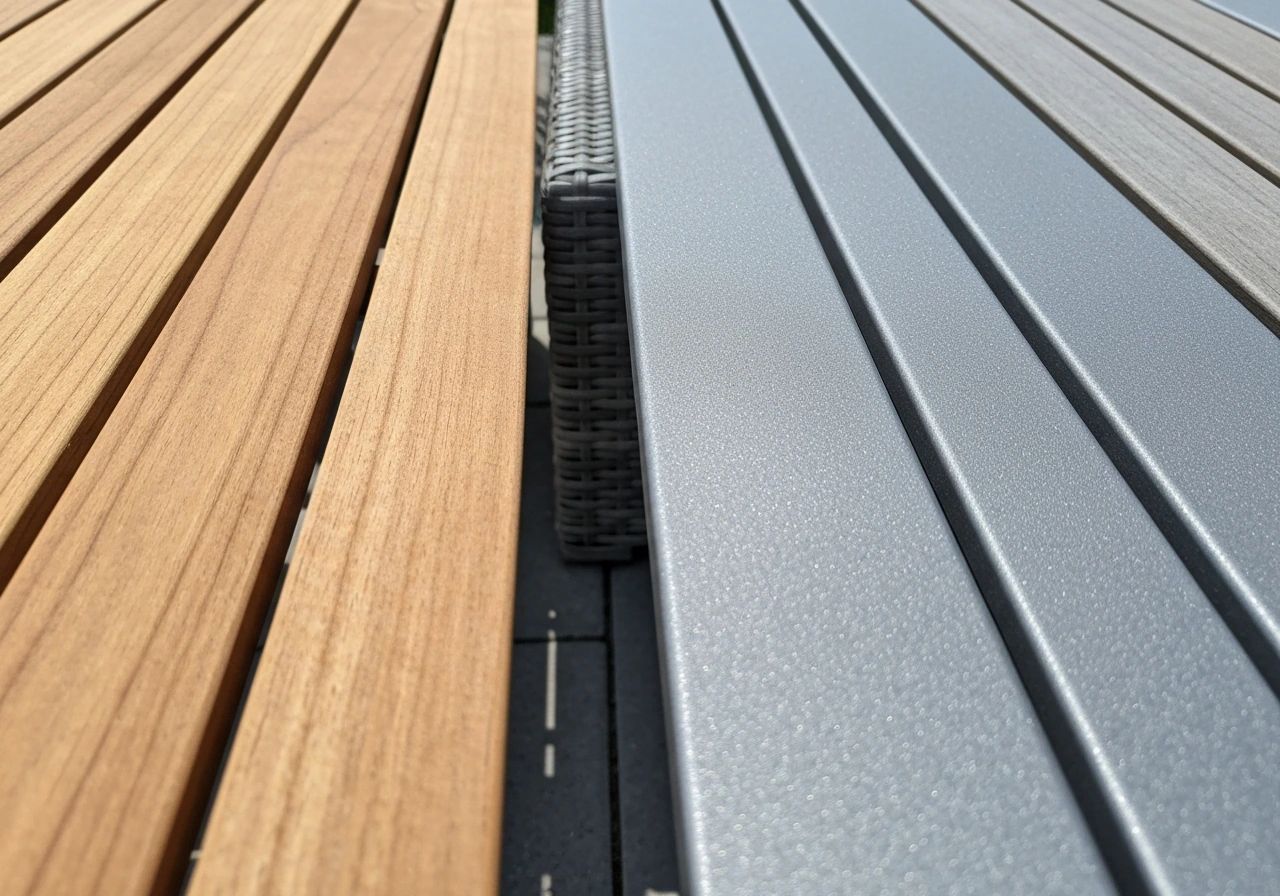
| Teak and hardwood | Moisture absorption causing swelling, cracking, or mildew in joints | Before first freeze; clean and oil before storage | Any time after last frost; allow to dry after any rains before oiling |
| Powder-coated aluminum | Freeze damage in hollow tubing; coating damage from chips left exposed | Drain tubing before hard freeze; store dry to prevent condensation on coating | Can go out early; inspect and touch up any coating chips first |
| Resin wicker (all-weather) | Cracking from UV and freeze-thaw cycling; moisture trapped in weave | Before sustained freezes; cover or store to prevent brittleness | Resilient in spring, but inspect weave for cracks after winter |
| Composite and recycled plastic | Very tolerant; primarily risk from high winds toppling pieces | No strict deadline; still worthwhile to store cushions by 50°F nights | Can come out early in spring; most cold-resistant material |
Wood furniture
Teak, eucalyptus, and other hardwoods are more tolerant than people assume, but they're not immune to damage. The risk isn't a single frost, it's repeated freeze-thaw cycles that expand and contract the wood fibers and can cause checking (small cracks) or splitting at joints. Bring wood furniture in before your first hard freeze if possible, and make sure it's clean and completely dry before storage. If you oil teak annually, do it before storage rather than after, so the wood goes into the off-season protected.
Powder-coated aluminum
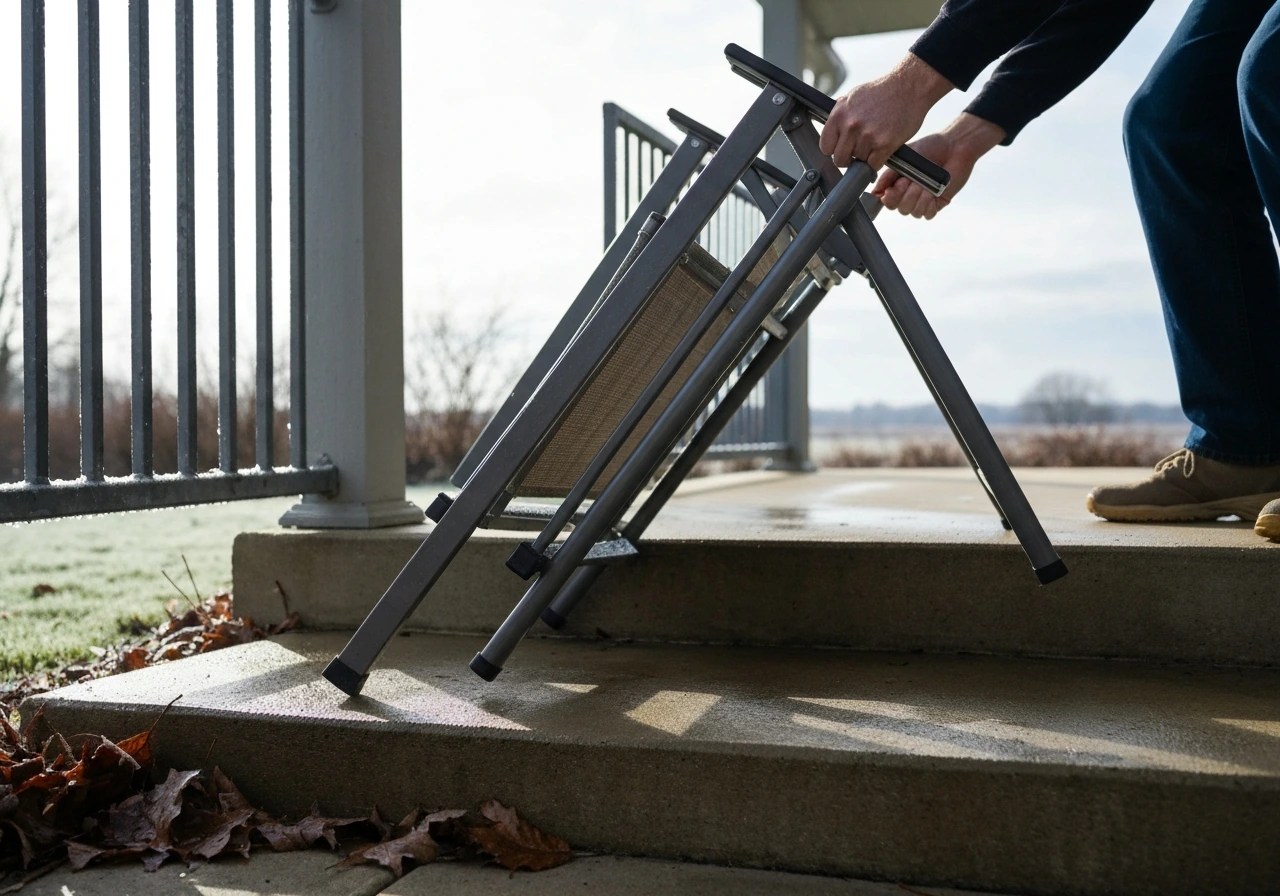
Aluminum itself doesn't rust, but the powder-coat finish can and does degrade when moisture gets into chips or scratches and oxidation takes hold beneath the surface. More urgently: hollow aluminum tubing can collect water inside the frame. If that water freezes, you can get cracked welds or deformed framing. Drain any furniture with hollow legs or arms before a hard freeze by tilting pieces to let water run out. Always store aluminum completely dry because wet metal stored in an enclosed space develops condensation that can affect the coating over the winter months.
Resin wicker
All-weather resin wicker handles moisture better than natural wicker, but it still becomes brittle with repeated freeze-thaw cycling over the years. UV exposure in spring and summer is also gradually degrading the resin. Storage before hard freezes extends the lifespan noticeably. If you're in a mild climate, covering the furniture with a breathable cover through winter is usually sufficient. In cold-winter climates, bring it inside. In cold-winter climates, bring it inside, and you can use patio furniture indoors as a practical alternative when outdoor conditions are too harsh can you use patio furniture indoors.
Composite and recycled plastic
This is the most weather-tolerant category you can buy. Quality composite lumber and recycled HDPE furniture handles cold, UV, and moisture better than any other material. Timing pressure is minimal. That said, even composite furniture can get lifted and thrown by high winds, so secure or store lightweight pieces ahead of storms. Cushions still follow the same 50°F storage guideline regardless of frame material.
What to do when conditions are in-between
Sometimes you're not sure. There's a warm weekend forecast but cold evenings, or you don't have storage space ready yet, or you just aren't ready to commit to putting everything away. Patio furniture can also work in a living room, but bring it in only if you can keep it clean and dry and protect cushions from moisture and cold Patio furniture in your living room. Here's how to manage those in-between situations without leaving your furniture unprotected.
- Use breathable furniture covers: A good quality cover keeps frost, rain, and UV off the furniture without trapping moisture. Avoid non-breathable tarps for extended use because they hold humidity underneath and encourage mold, especially on cushions.
- Bring cushions inside even if frames stay out: This one step alone prevents most of the moisture and mold damage people deal with. Frame materials are almost always more durable than cushion foam. When in doubt, the cushions come in first.
- Elevate furniture slightly off wet ground: Legs sitting in standing water or on constantly wet concrete will accelerate finish degradation and, on wood, can cause staining and rot at the base. Even a few inches of clearance makes a meaningful difference.
- Stack chairs and store them together: Reduces total exposed surface area and wind-catch. A stack of four chairs is far less likely to blow over than four individual chairs.
- Check your 10-day forecast before leaving furniture out unattended: If you're heading out of town and a cold snap is in the forecast, take 20 minutes to cover or store before you leave.
Your bring-in checklist for fall storage
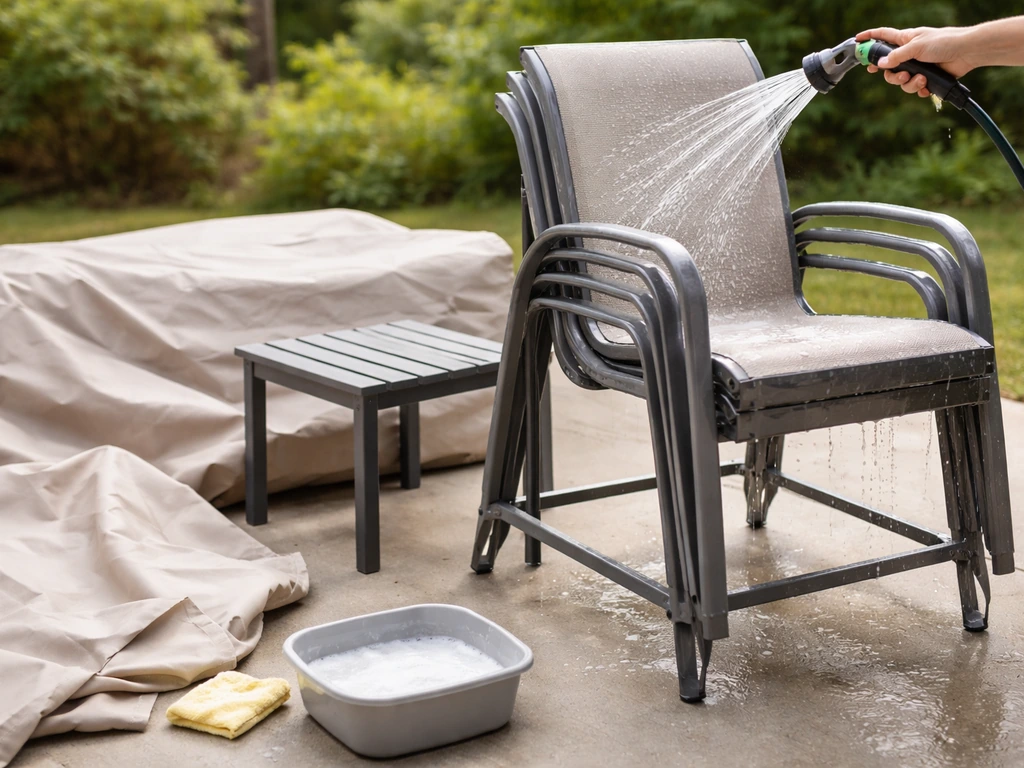
When the time comes to put furniture away for the season, doing it right takes maybe an hour and makes a significant difference in what you pull out next spring. Here's the sequence I'd follow.
- Clean everything first: Wash frames with mild soap and water. For aluminum, rinse thoroughly and dry with a soft cloth to avoid water spots. For wood, use a wood-appropriate cleaner and let it dry fully. For resin wicker, hose it down and let it drain completely.
- Dry completely before storing: This is the most important step people skip. Storing anything wet, whether a cushion, a metal frame, or a wood chair, traps moisture and creates exactly the conditions for mold, corrosion, and wood rot. Aim for a dry day with low humidity. Relative humidity below 60% in your storage space is the target.
- Inspect and repair before storage: Touch up any chips in powder-coat finishes before storing aluminum. Sand and re-oil any checking or rough spots on wood. Repair any loose wicker before weave damage gets worse over winter.
- Drain hollow metal frames: Tilt chairs, tables, and loungers to allow any water inside hollow tubing to drain out before freezing temperatures arrive.
- Store cushions separately in a dry, ventilated space: A storage bin with a vented lid, a basement shelf, or a garage corner all work well. Avoid airtight plastic containers unless cushions are completely dry, as even slight moisture creates a mold environment.
- Stack or nest frames efficiently: Most patio chairs are designed to stack. Use this to save space and reduce the number of exposed surfaces. Wrap stacked pieces in a breathable furniture wrap or cover if storing in a garage or shed.
- Store in a space that stays above freezing if possible: A garage or basement is ideal. An unheated shed is acceptable for composite and aluminum but less ideal for wood and cushions. If outdoor storage is your only option, use quality covers and make sure nothing retains standing water.
Getting timing right isn't about being precious with your furniture. It's about not spending money replacing pieces that would have lasted another decade with a little seasonal attention. Whether you're deciding if it's too early to bring furniture out this spring or figuring out when you need to move pieces indoors before winter hits, the same logic applies: watch your overnight temperatures, act before the freeze warning, and let your material guide how urgent that action needs to be. If you are planning ahead, you can also use the same overnight-temperature approach to figure out when should you put out patio furniture each spring.
FAQ
What should I do if the forecast says a few nights below 40°F but highs stay warm for weeks after?
Treat it as a temporary “do not risk it” situation for cushions. Bring cushions in first whenever you expect sustained dips, even if it quickly warms again. For frames, you can often leave them out if the nighttime drop is brief and there is no forecasted freeze warning at 32°F or colder, but cover and keep them dry to limit freeze-thaw cycles.
How do I handle patio furniture when my area has microclimates, like a shaded patio or a low spot in the yard?
Use your closest spot to where the furniture sits, not just the nearest weather station. If your patio is shaded or sits near a low area that holds cold air, assume frost risk is higher and move your bring-in date earlier by a few nights (or more) than the general neighborhood guidance. A cheap overnight thermometer placed near the furniture can confirm whether you are consistently hitting the 40°F or 32°F thresholds.
Is it safe to leave furniture outside if it’s covered with a plastic tarp?
Not always. Tarping can trap moisture against frames and cushions, which worsens mold risk and can accelerate coating damage. If you cover, use a breathable cover for cushions and most outdoor textiles, and ensure the furniture is completely dry beforehand. For frames, cover mainly to block rain and reduce moisture retention, and avoid fully sealing wet items.
Can I leave metal patio furniture out during winter if temperatures rarely reach 32°F?
Often yes for solid, non-hollow pieces, but be careful with hollow tubing and anything that can collect water. Even if the air stays just above freezing, condensation and trapped moisture can still cause internal freeze damage during rare colder nights. Drain hollow legs and arms before those cold forecasts, then store or cover fully dry to prevent condensation buildup.
When should I clean and dry cushions before storage?
Clean them right before storage season change, then let them dry until they are fully moisture-free. If you store slightly damp cushions, mold can start inside the foam even if the outside feels dry. In rainy climates, plan to dry cushions with airflow indoors (or in a sheltered, ventilated area) before putting them away.
Do I need to bring in outdoor throw pillows or only the main cushions?
Bring in anything that can hold moisture, including small throw pillows and cushion toppers, at the same 50°F storage trigger you use for cushions. If a piece is mostly fabric and foam, it becomes a mold risk once cold and damp conditions become regular, even when the furniture frame is still okay outside.
What’s the best approach if I don’t have full storage space and I must leave furniture outside?
Use staged protection instead of full storage. Keep frames covered but breathable if possible, and move cushions inside or into a dry closet when overnight lows approach 50°F. If you must keep cushions out, stack them off the ground, keep them dry, and use weather protection that does not trap condensation.
How can I tell the difference between early cold nights and an actual freeze threat?
Focus on the minimum temperature prediction for the exact night, not daytime highs. A night dropping below 40°F is a “watch and prepare” signal, while a forecast of 32°F or colder is the hard cutoff. If you’re unsure, prioritize safety for cushions and plan to act before the freeze window arrives.
Should I oil teak before or after I bring it in for winter?
Oil it before storage. Applying oil before the off-season helps the wood enter protected rather than being sealed in with leftover moisture or seasonal debris. Also make sure teak is clean and completely dry before you oil and store, since trapped moisture can still drive checking and joint stress during temperature swings.
Do hurricane-season rules in coastal areas change the 40°F guidance?
You still follow the cold-temperature thresholds for cushions and trapped-water risks, but your biggest practical planning factor may be wind and storms. In hurricane-prone locations, secure or relocate lightweight pieces before storm warnings, then handle cold snaps separately using the 40°F and 32°F guidance. Cushions may still need indoor protection during prolonged humidity or rainy stretches.
Next Articles
When Should You Put Out Patio Furniture? Exact Timing
Know exact timing to put out patio furniture using temperature, frost, wet spells rules plus material and cushion care t
Does Outdoor Patio Furniture Have to Match? Rules to Mix
Does outdoor patio furniture have to match? Yes sometimes, learn when mixing works and how to coordinate materials, colo
Can Patio Furniture Be Left Outside Long-Term?
Learn when patio furniture can stay outside long term by material, weather, and climate, plus cover and cushion care che