
The size patio furniture you should buy depends on two things: your actual measured space and how you plan to use it. For a dining setup, you need the table footprint plus at least 24 inches on every side for chair pull-out (30 inches feels much better). For a lounge or conversation layout, budget a sofa-to-coffee-table gap of 14–18 inches and a clear 36-inch walkway from the house to the yard.
What Size Patio Furniture to Buy: Measure and Plan

Theo Tierney
13 Jun 2026
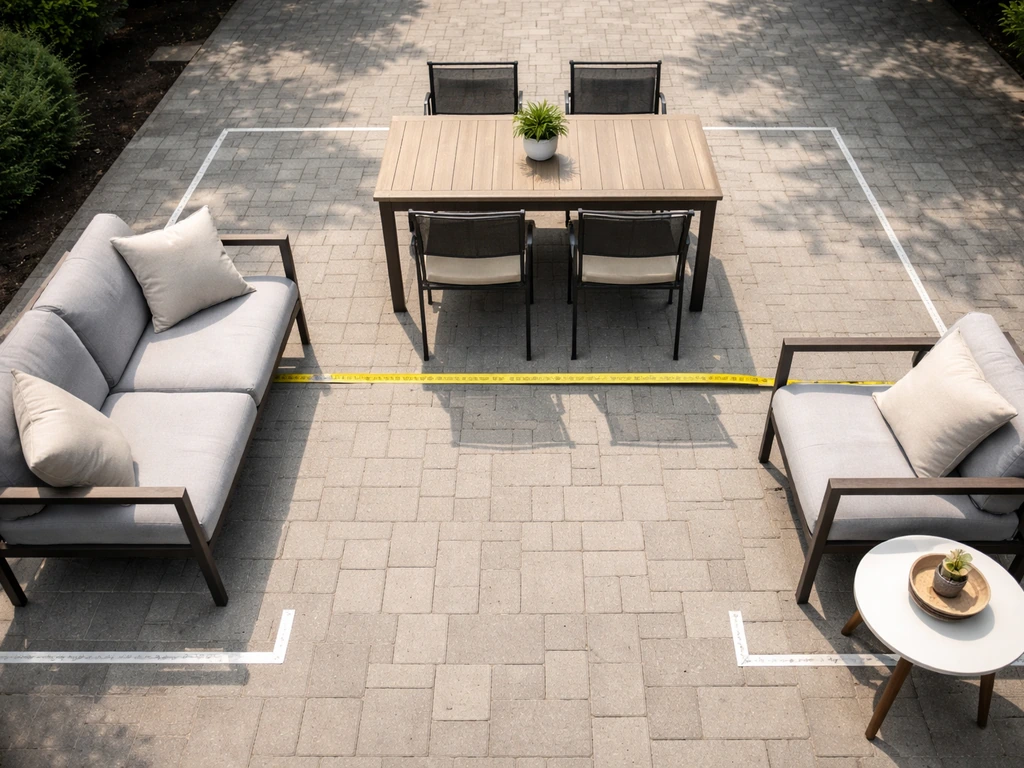
If your patio is under 10x10 feet, keep furniture coverage below 50–60% of the total floor area or it will feel like an obstacle course. RattanKind recommends using a visual-scale guideline for small patios by keeping furniture coverage below about 50, 60% of the total patio area to help avoid an overcrowded, cramped feel keep furniture “coverage” below 50–60%. Measure first, then shop, in that order.
How to measure your patio correctly
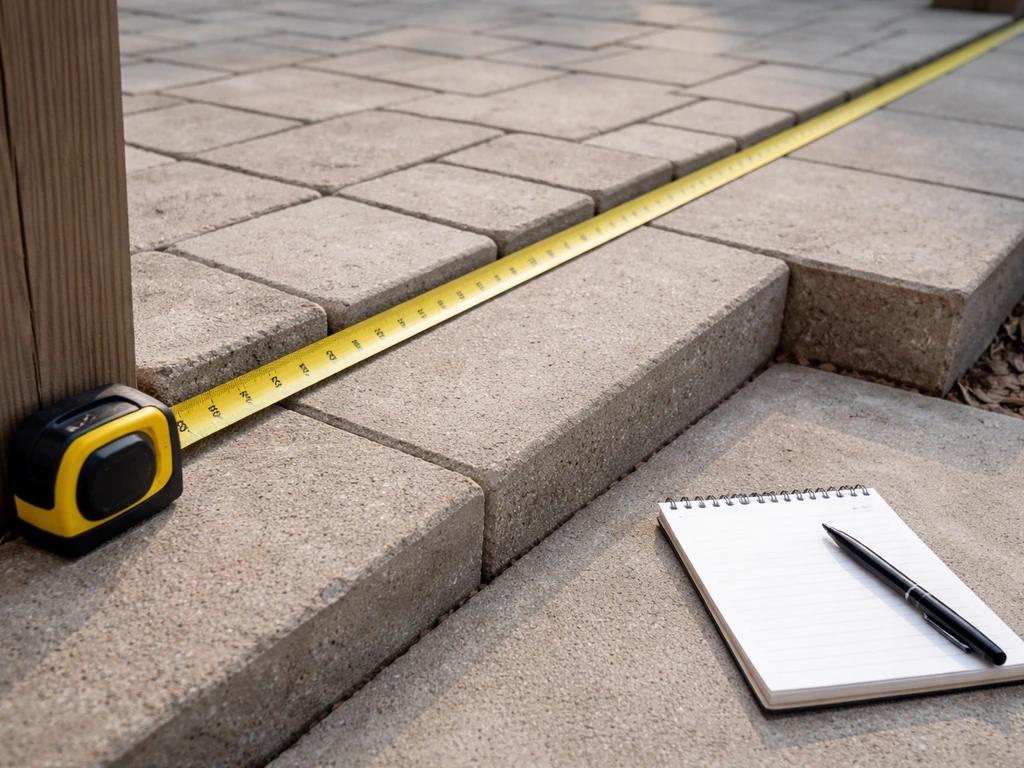
Grab a 25-foot tape measure, a notepad, and ideally a helper. Measure the longest length and widest width of the patio and write them down. Then measure from fixed obstacles, the house wall, a door frame, a downspout, a post, so you know exactly where those constraints land. This is more important than just knowing total square footage, because a 200-square-foot patio with a central drain, a sliding door on one end, and a gas line stub on one side is very different from a clean 200-square-foot rectangle.
For irregular or L-shaped patios, break the space into simpler rectangles. Measure each rectangle separately, calculate its area (length x width), then add the totals. That gives you a realistic sense of usable space per zone, which matters when you are trying to figure out whether zone A fits a dining set and zone B fits a couple of lounge chairs. Do not try to average an L-shape as one blob, you will end up buying furniture that does not fit either arm of the L.
For curved or irregular boundaries, use a carpenter's square to get clean right-angle reference lines, then sketch the shape on graph paper at a consistent scale (1 square = 1 foot works well). If you hate erasing, use a free online patio planner or even a basic drawing app on your phone, they let you drag and resize furniture outlines without committing to anything. Mark every fixed obstacle on the plan: doors, steps, hose bibs, outdoor lighting posts, and any built-in grill or kitchen counter. The goal is a map you can hold up next to a product listing and make an honest comparison.
One measuring trick worth repeating: start from the outer edges of your designated furniture zone, measure consistently in one direction from a chosen baseline (usually the house wall), and locate every obstacle using two intersecting measurements from that baseline. This approach pins obstacles to precise positions on your plan rather than estimating them by eye.
Choosing furniture sizes by layout
Dining layouts
A dining setup needs more floor space than most people expect. The table footprint is just the starting point. Add at least 24 inches on every side where chairs will pull out, that is the bare minimum for someone to slide in and sit down. Thirty inches behind each chair edge is where it actually starts to feel comfortable, especially if anyone at the table has armchairs or uses seat cushions that add bulk. That means a 36x60-inch rectangular dining table for four needs a total planning footprint of roughly 8 feet x 10 feet (adding 24 inches all around). If you want the more comfortable 30-inch clearance, plan for closer to 8.5 x 11 feet.
Round tables are forgiving in tighter spaces because you can angle chairs more freely and there are no sharp corners cutting into walkways. A 48-inch round table comfortably seats four and, with 30-inch clearance, needs about a 9-foot diameter zone. Seat width for outdoor dining side chairs typically runs 19–23 inches, so use 24 inches per person as your place-setting math baseline when figuring out how many people fit at a table you are considering.
Lounge and conversation layouts
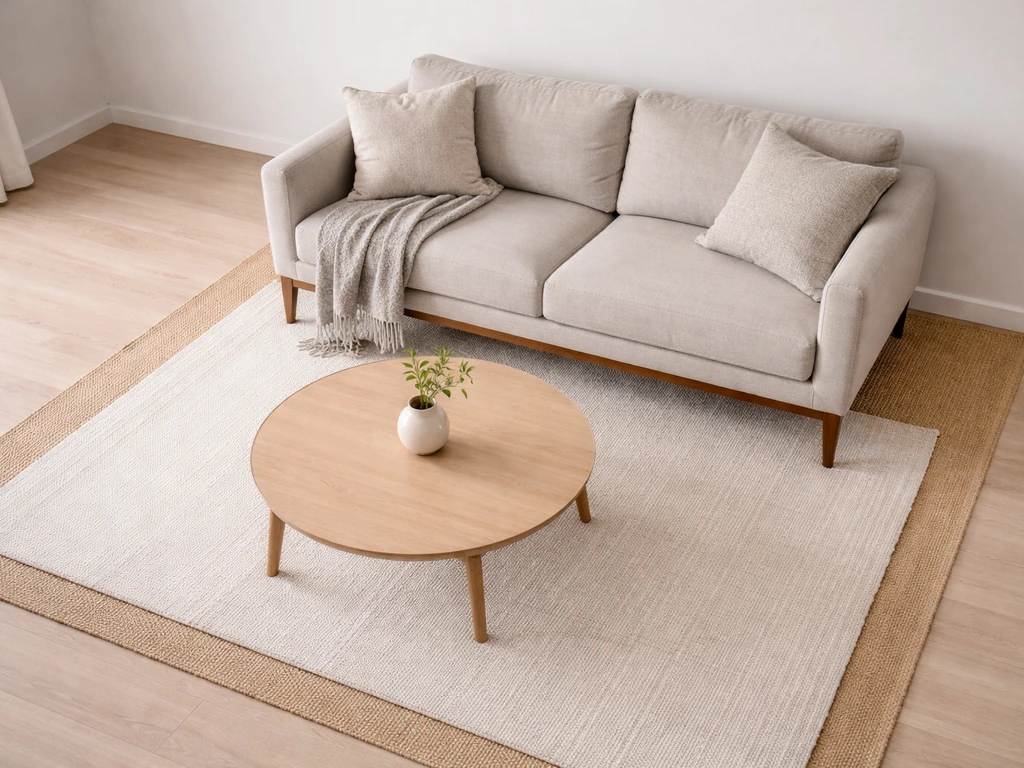
A conversation or lounge layout centers on a sofa or pair of club chairs facing each other across a coffee table. Keep the sofa-to-coffee-table gap at 14–18 inches, close enough to set a drink down without leaning, but not so tight you are constantly bumping your shins. A typical outdoor two-seat loveseat runs about 52–60 inches wide and 30–34 inches deep. A three-seat sofa is usually 75–85 inches wide. Add the coffee table (typically 20–48 inches long outdoors) and a clear 36-inch lane for people to move around the arrangement, and a basic conversation set takes up at least a 10x12-foot footprint in practice.
Sectionals are the most common sizing mistake I see. People buy a large L-shaped sectional that looks proportional in a showroom or in a product photo, then it lands on a 12x14-foot patio and there is nowhere to walk. Before buying a sectional, measure out the total footprint with painter's tape on your actual patio surface. Walk around it. Open the back door and walk to the yard. If it feels tight with tape on the ground, it will feel worse with actual furniture.
Mixed dining and lounge zones
If your patio is large enough to hold both a dining zone and a lounge zone, treat them as separate rooms with a clear 36-inch lane between them. The most natural split on a rectangular patio is dining near the house (close to the kitchen door) and lounge further out toward the yard. On an L-shaped patio, one arm handles dining and the other handles lounging, this is exactly why measuring each rectangle of the L separately matters.
Common size guidelines for major furniture pieces
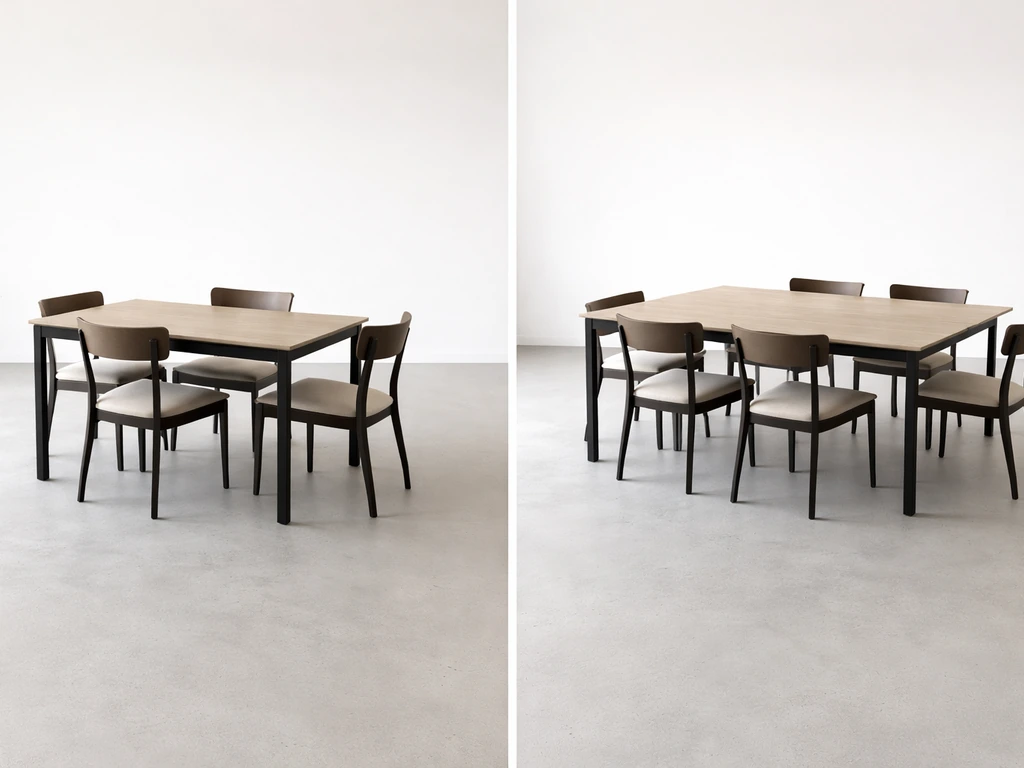
| Furniture Piece | Typical Dimensions | Planning Footprint (with clearance) |
|---|---|---|
| 4-person rectangular dining table | 36" x 60" | ~8' x 10' (24" clearance) or ~8.5' x 11' (30" clearance) |
| 6-person rectangular dining table | 36–40" x 72–84" | ~9' x 12' (24" clearance) |
| 4-person round dining table | 48" diameter | ~9' diameter zone (30" clearance) |
| Outdoor dining chair (side chair) | 19–23" wide, 16–19" seat height | Add 24–30" behind table edge for pull-out |
| 2-seat loveseat | 52–60" wide, 30–34" deep | 10' x 10' minimum for loveseat + coffee table + lanes |
| 3-seat outdoor sofa | 75–85" wide, 30–36" deep | 10' x 12' minimum with coffee table |
| L-shaped sectional (typical) | 100–120" per leg | 12' x 14' or larger; tape it out first |
| Outdoor coffee table | 20–48" long, 16–24" wide | Allow 14–18" gap from sofa edge |
| Dining table height | 28–30" standard | Pair with 16–19" seat height chairs |
Table height matters more than most shoppers realize. Standard outdoor dining tables run 28–30 inches tall. Pair them with chairs in the 16–19 inch seat-height range to get the 10–12 inches of leg clearance between seat and tabletop that feels comfortable for extended meals. If you are mixing and matching chairs from different brands, check both measurements explicitly, do not assume a "dining height" label means the same thing across manufacturers.
Clearance for walking, doors, and grilling
The 36-inch walkway rule is your most important number. A 36-inch clear path from your sliding or French door to the yard edge feels noticeably more functional than a 24-inch squeeze, especially when you are carrying a plate of food, navigating around a dog, or moving outdoor cushions. Place furniture to one side of the door swing so the active panel of the door stays fully functional, this is obvious in theory and routinely ignored in practice.
For grilling, do not rely on generic rules. Always check your specific grill's manual for clearance-to-combustible distances, these vary by model and fuel type. Gas grills in particular need specific ventilation and air-flow clearances, and built-in grill units have additional requirements for enclosure clearances and cross-ventilation. If you are placing a freestanding grill near patio furniture, a practical starting point is 3 feet of clearance on the sides and rear, with nothing combustible directly overhead. Verify your grill's manual before finalizing layout.
Sliding doors deserve special attention in layout planning. Position the furniture arrangement so 36 inches of clear path runs parallel to the door track from inside to yard. If a sofa arm or chair back cuts into that lane, move the entire grouping or choose a smaller piece, the circulation problem will frustrate you every single day.
Matching furniture scale to your space
Scale is the relationship between furniture size and the space it sits in. Get it wrong in either direction and the patio feels off, either cramped and cluttered or weirdly empty. The practical guideline for small patios (10x10 feet or under): keep total furniture coverage below 50–60% of the floor area. On a 100-square-foot patio, that means no more than 50–60 square feet of furniture footprint, including chair pull-out zones. For medium patios in the 12x16 to 16x20 range, aim for 40–55% furniture coverage and use the remaining floor space for circulation and visual breathing room.
Visual scale also matters. A chunky deep-seating sectional with fat cushions looks proportional on a generous patio but suffocating on a tight one, even if the raw measurements technically fit. Slimmer-profile furniture, thinner arms, raised legs, lighter materials like powder-coated aluminum, reads as lighter visually and leaves the space feeling more open. If you are working with a small or medium patio, prioritize pieces with a smaller visual footprint even if they have a similar physical footprint to the bulkier alternative.
On very large patios, the opposite problem comes up: too little furniture spread across too much space looks sparse and uninviting. A helpful fix is defining furniture zones with an outdoor rug sized to anchor the grouping, so the arrangement reads as intentional rather than floating in open space. The furniture-to-patio ratio still matters, but with large patios the goal is creating distinct zones rather than filling area.
Climate-proofing choices that affect how furniture fits long-term
Furniture size decisions are not just about square footage, climate affects whether the furniture stays outside year-round or needs to be moved, covered, or stored seasonally. That distinction changes your sizing math significantly.
If you live somewhere with real winters (freezing temps, snow load, road salt in the air), you need to account for furniture storage or cover space. A dining set that fits beautifully on the patio in July might need to get stacked and moved to the garage in November. Plan for that now: does the furniture stack for compact storage? Do the chairs fold? Will the table fit through your garage door? Buying furniture that cannot be practically stored often means it stays outside in conditions it was not built for, shortening its life significantly.
If you are using covers to protect furniture in place, size decisions extend to cover fit. Patio furniture covers generally need to be 12–24 inches larger than the table or furniture dimensions to drape properly and stay secure in wind. That is relevant to layout: if covers are part of your protection plan, make sure the furniture arrangement does not press so close to walls or railings that you cannot get a cover fully seated.
Round up all measurements to the nearest inch when shopping for patio furniture covers, and confirm the cover size matches your exact furniture footprint. Round up all measurements to the nearest inch when shopping for covers, and match covers to the specific furniture type rather than grabbing a generic "large" size.
For many patio furniture covers, the guide notes you should measure the furniture’s width, depth, and height, then round up, and it also claims covers are often larger than the furniture footprint, with dining covers typically running 12, 24 inches bigger than the table dimensions. For more on whether are patio furniture covers necessary in different seasons, review the practical weather-protection considerations and fit tips discussed next. If you are wondering whether are patio furniture covers necessary, they can help protect furniture from weather, but you still need the right fit for your specific pieces.
Material choice also determines whether size decisions are permanent. Powder-coated aluminum and high-density polyethylene (HDPE) lumber, like POLYWOOD, stay outside year-round in most climates without degrading, so their footprint is fixed. Teak, eucalyptus, and wicker (with quality all-weather weave) can also handle most conditions if properly sealed and covered, but they tend to be heavier and harder to store. Cheap steel frames rust quickly in humid or coastal climates regardless of coverage. If you are in Florida humidity, coastal salt air, or the Arizona heat, prioritize materials that eliminate the need to move or store furniture at all, and plan your layout as a permanent installation rather than a seasonal one.
The connection between material choice, sizing, and climate is one worth thinking through before you buy. A dining set that technically fits the patio but requires seasonal storage in a garage that cannot accommodate it is a sizing problem, even if the measurements looked fine on paper.
Shop with a checklist, not just measurements
Once you have your patio mapped, your zones defined, and your clearance lanes accounted for, use these steps before hitting purchase on anything.
- Write down the maximum furniture footprint for each zone, not just the table or sofa size. Include chair pull-out distance (add 24–30 inches per side where chairs pull out) and at least one 36-inch circulation lane.
- On every product listing, find the assembled dimensions: overall width, depth, and height. Do not rely on the product name or category label to infer size.
- For dining tables, confirm the table height (target 28–30 inches) and check it against any chairs you are pairing (target 16–19 inch seat height). If buying as a set, this is pre-matched; if mixing brands, verify both measurements.
- For dining chairs, note the chair width (typically 19–23 inches for side chairs). Multiply by the number of chairs to check whether they actually fit along each side of the table with reasonable spacing.
- For sofas and sectionals, note the depth in addition to width — depth determines how much the piece projects into the patio. Deep-seating pieces (34–40 inch depth) eat floor space fast.
- Check whether chairs stack or fold if storage is part of your plan. If using covers, note whether the product dimensions allow a proper cover drape away from walls.
- Tape out the exact footprint on your patio before ordering. Walk through it, open the back door, pretend to carry a plate. If it feels tight with tape, do not buy the furniture.
- Confirm the return or exchange policy before buying anything large — shipping oversized outdoor furniture is expensive, and returns are often freight-only.
Sizing mistakes almost always happen when someone shops by eye or trusts a product photo without translating the listed dimensions into their actual patio plan. The tape-on-the-ground test is low-effort and catches problems before they are expensive. Do that step and you will save yourself a return shipment.
Once you have sizing sorted, the next practical questions are usually about material durability for your climate, which type of furniture layout best suits your lifestyle, and what covers or maintenance the pieces actually need to last. If you are also wondering what type of patio furniture you should get, start by matching the layout and materials to your space and how you plan to use it material durability for your climate. Those decisions build naturally on getting the size right first, but they matter just as much for long-term satisfaction with what you buy.
FAQ
If my patio has both dining and lounge furniture, how do I size the two zones without crowding the walkway?
Treat them as separate “rooms” and measure each one first. Then keep a dedicated 36-inch clear lane between the zones (not just between individual pieces), and only assign furniture to the lane-free areas on your sketch. If you cannot maintain the lane, reduce chair count or swap in lighter pieces (like armless chairs or a slimmer coffee table) rather than trying to squeeze everything in.
Do I need to include an allowance for umbrellas, pergolas, or patio heaters when figuring out what size patio furniture to buy?
Yes. For an umbrella, measure the fully opened canopy diameter and add clearance for tilt, especially if the umbrella base or pole will sit inside your dining zone. For heaters and pergolas, ensure you keep seating far enough away from heat and any overhead elements so people can still sit and move without turning into those obstacles. Add these as separate “no-furniture” zones on your plan.
How much space should I allow for door swings and gate swings near the furniture area?
Use the door’s full arc, not just the doorway opening. Place furniture so the clear path remains open when the door is fully swung out, and if possible keep the active panel from intersecting chair pull-out space. A common mistake is planning for a 36-inch lane in one direction, then discovering a door swing or gate intrudes into the lane by 6 to 10 inches.
What if my chairs are the type that slide under the table, do I still need 24 inches of clearance?
You still need clearance for safe sit and stand positions, but the “pull-out” number may shrink. The best approach is to simulate with painter’s tape and account for the chair back or any arm bulk when the chair is pulled fully out to sit. If chairs tuck in completely with arms tucked and legs clear, you can sometimes reduce the outer margin, but do not cut the clearance below what still lets someone pass between the chair and the nearest obstacle.
How should I adjust sizing if my dining chairs have arms or thick seat cushions?
Plan based on the chair bulk in the real position, not the marketing dimensions. Start from the table footprint and add chair pull-out clearance, then add extra room behind the chair edges for arm sway and cushion compression if your seating is plush. If you are unsure, do the tape test with a chair you already own or a borrowed measurement set, and walk around with it in place.
Can I size patio furniture by square footage alone, or is that too rough?
Square footage alone is usually too rough because it ignores chair pull-out space, circulation lanes, and fixed obstacles. Two patios with the same area can feel completely different if one has a central drain, a sliding door on one side, or a gas line stub. Always translate furniture footprints into a scaled plan that includes clearances around movement paths.
What’s the best way to measure for a round dining set if the table has a leaf or if guests sit at angles?
Use the maximum table diameter including the leaf, then add clearance around it for chair backs pulled out. Because chairs can angle more freely, you may be able to reduce wasted corner space, but only if your plan still preserves a clear lane to doors and walkways. As a sanity check, place tape outlines for chairs at the intended angle and walk the lane to confirm no chair backs block circulation.
If I buy covers, how do I make sure the furniture arrangement leaves enough room for cover installation?
Leave clearance for you to access all sides of the furniture so you can fully drape and secure the cover. If your plan pushes pieces right up against walls or railings, you may not be able to seat the cover or tighten it for wind. A practical step is to measure cover “reach” in real life by marking the furniture footprint on the patio, then standing where you would normally pull the cover to see if you can reach corners comfortably.
What should I do if my patio dimensions don’t match the furniture packaging dimensions exactly (fractions, rounding, out-of-stock sizes)?
Round up your measured clearances to the nearest inch for both layout and purchasing, then base buying decisions on the larger requirement. Also assume some variation because furniture dimensions can differ slightly by model and production run. If you’re between two sizes, choose the one that preserves the 36-inch walkway and chair pull-out comfort margin rather than the tighter option that “fits on paper.”
How can I avoid the common “sectional fits in the photo but not on my patio” problem?
Do a painter’s tape mock-up of the sectional footprint on your patio, then walk to and from the door and sit in the spot where you would actually relax. Check how the back of the sectional affects the circulation lane, because photos often hide how much a long sofa back obstructs movement. If the tape test feels tight while walking, plan on it being worse when people stand, pass by, and retrieve cushions.
Should I size furniture differently if I store it seasonally or need to move it through a narrow garage door?
Yes. Measure the widest assembled piece and confirm it can be carried out and stored through your garage door opening and any gates or steps. Also check whether chairs fold or stack, and whether the table can be broken down. A set that technically fits the patio can still be a sizing failure if it cannot be stored realistically, so prioritize “movable” dimensions and storage-friendly configurations.
Next Articles
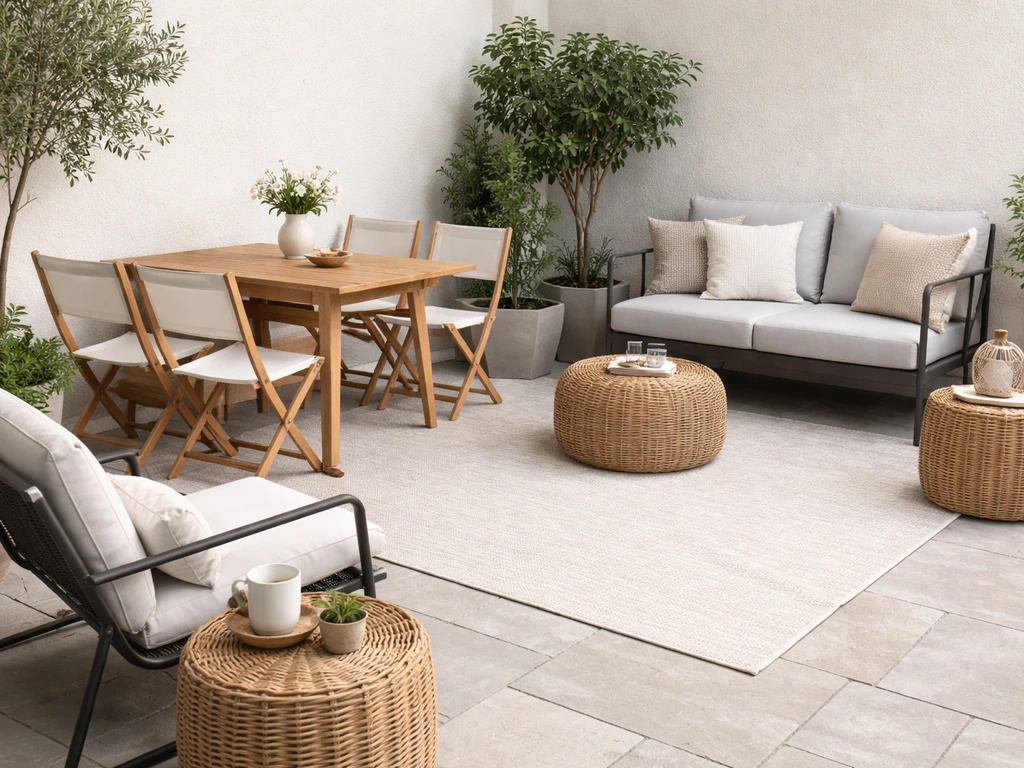
What Type of Patio Furniture Should I Get? A Guide
Match patio furniture types and materials to your climate, space, lifestyle, and budget, plus care tips for lasting dura
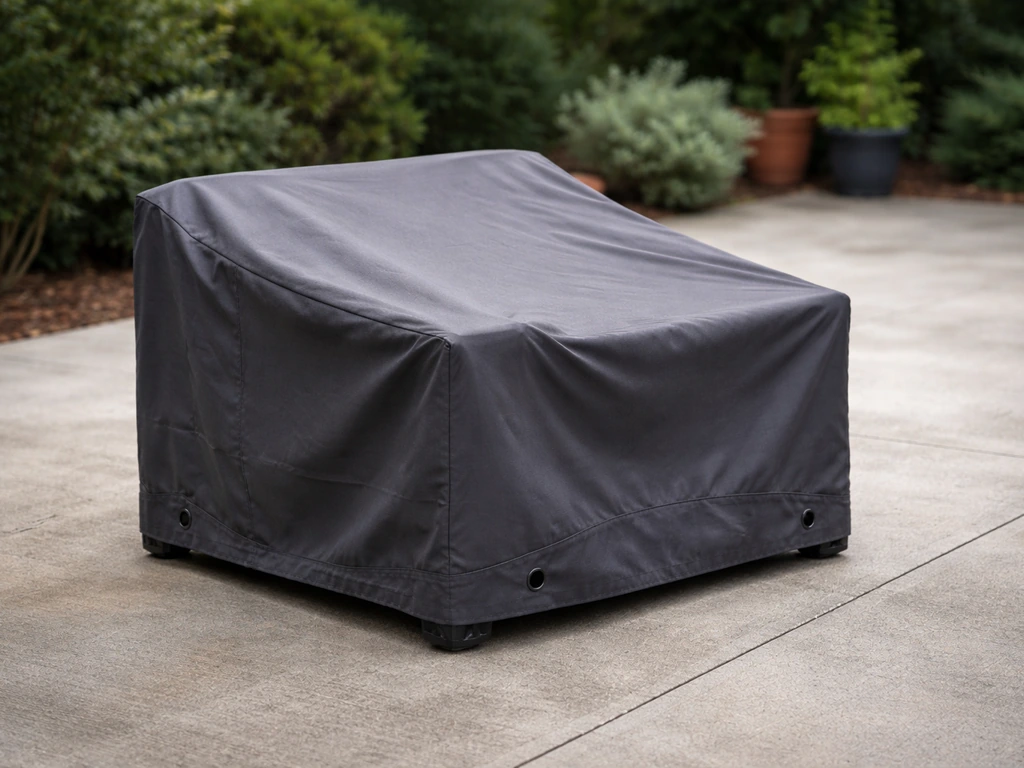
What Are the Best Patio Furniture Covers? Buyers Guide
Buyer guide to the best patio furniture covers by size, material, climate, and wind protection, plus care and troublesho
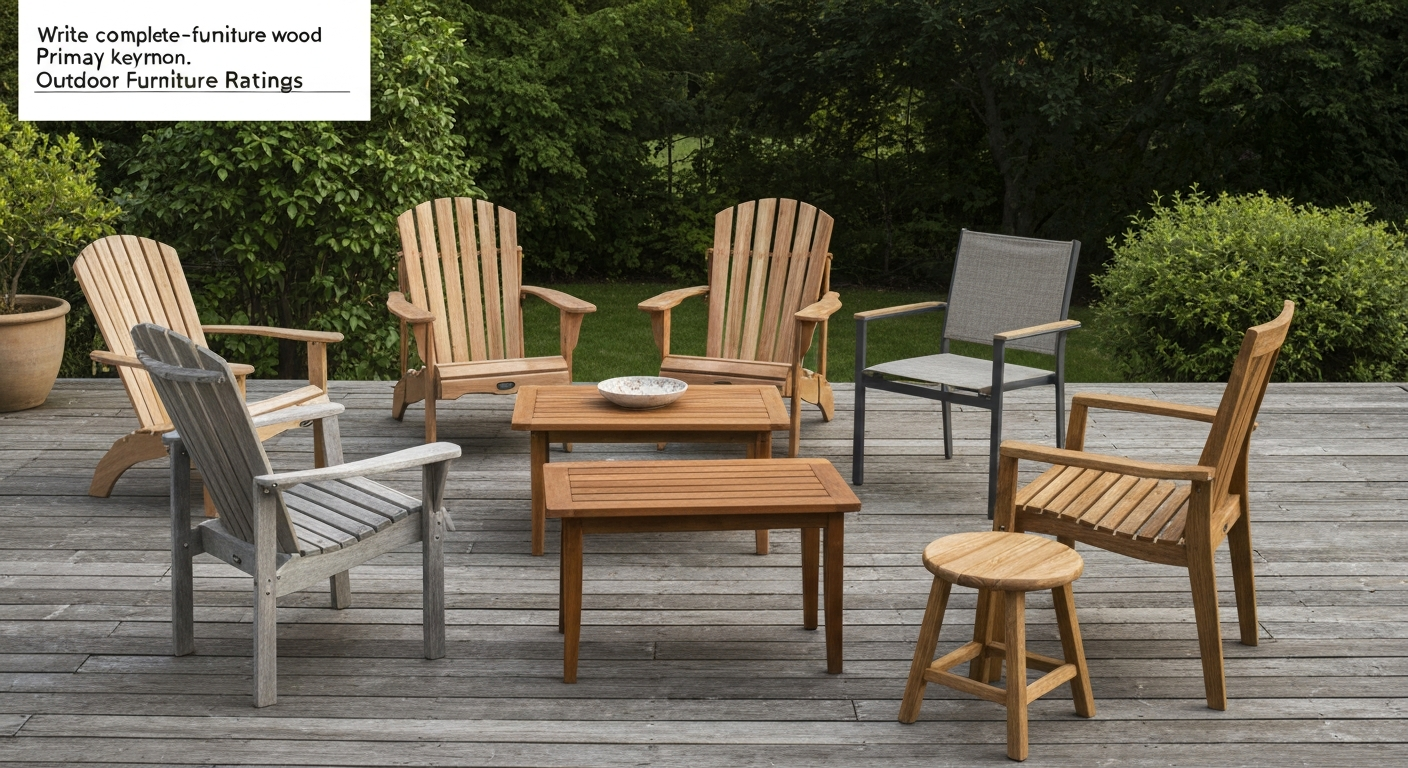
Common Patio Furniture Wood: Best Choices, Care & Tips
Compare common patio furniture wood types, teak, cedar, redwood, oak, with durability, finishes, and care tips.