
To choose the right patio furniture cover, measure your furniture's full footprint (length, width, and height including chair backs or extended arms), pick a water-resistant breathable cover in 600D polyester or solution-dyed acrylic that matches your climate, and make sure it has proper securement like elastic hems, tie-down straps, or snap closures so it stays put in wind. Avoid fully waterproof vinyl covers that trap moisture underneath and cause exactly the mildew and rust damage you're trying to prevent. If you are also choosing the right patio furniture itself, start by matching the material and construction to your local weather conditions so it lasts longer what type of patio furniture should i get.
How to Choose Patio Furniture Covers: Size, Climate, Fit

Theo Tierney
27 Jun 2026
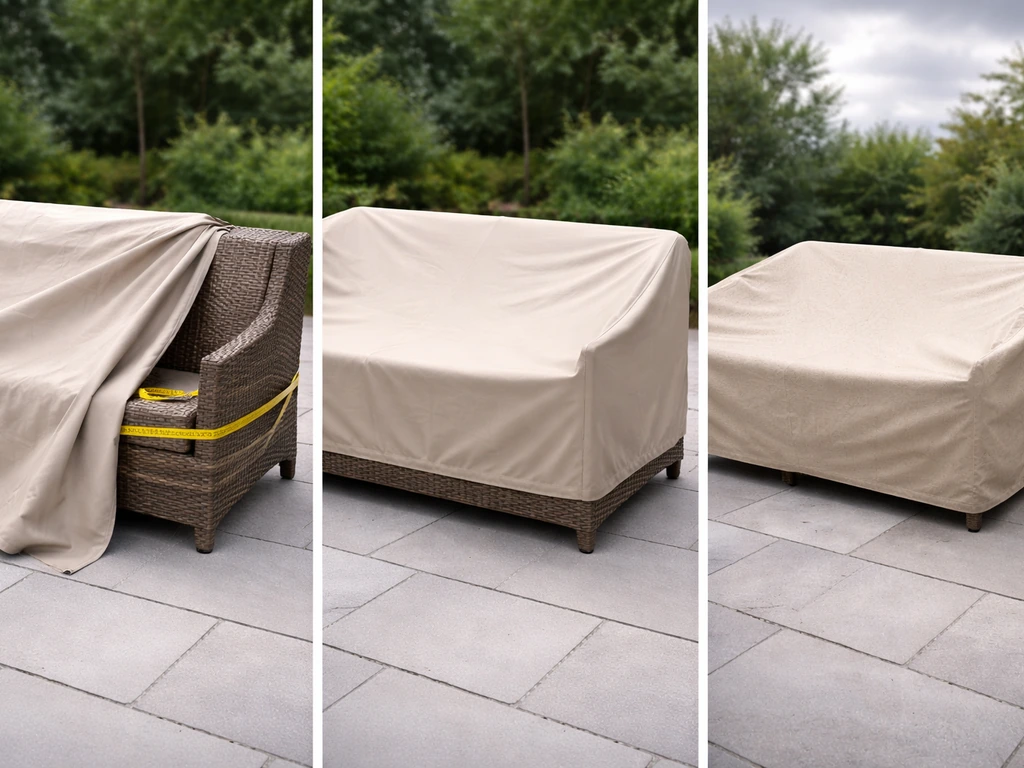
Measure and map your furniture layout first
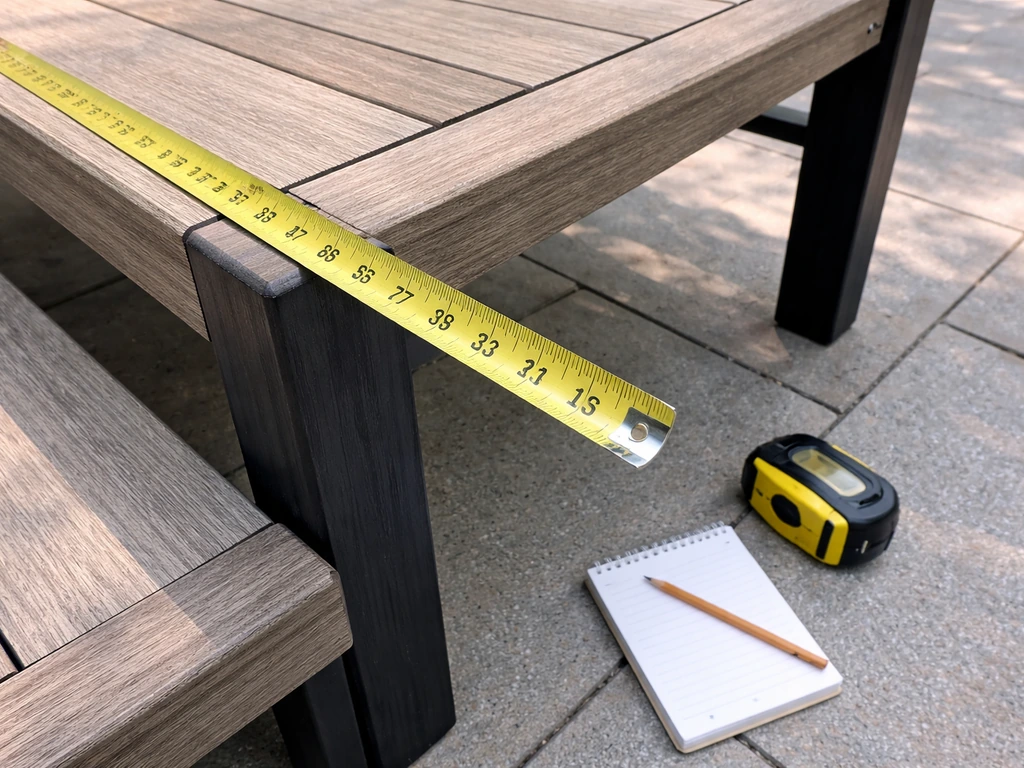
Before you buy anything, grab a tape measure and write down three numbers for every piece you want to cover: length (or width), depth, and height. These need to be the true outer dimensions, not the seat dimensions. For a chair, that means measuring from the widest point of the arms and from the front leg to the very back of the chair back, not just the seat cushion. Height goes from the ground to the tallest point, whether that's the top of the back or a headrest.
For a full dining set, you're not measuring individual chairs. You measure the entire footprint of the table plus chairs pulled in, from the back of one chair to the back of the chair directly opposite, and the width across the widest row. AoodorShop's sizing guide similarly warns that dining set cover sizing differs from sofa or seat-only sizing, and it stresses measuring the full assembled footprint for a proper fit, including chair backs. Include chairs that sit at the ends. This is a mistake a lot of people make, buying a cover sized to the tabletop and then watching it perch on top of the chairs instead of covering them.
Sectionals need a bit more care. If your sectional has a curved or contoured back, measure depth at the deepest point, not the average. A cover that fits the shallow section will sag and pool at the deep section. For any piece with a recliner mechanism, extended ottomans, or umbrella holes, include those features in your measurements. A cover that clears the furniture cleanly at its most extended point will drape properly everywhere else.
Once you have your dimensions, sketch a quick layout of where your furniture sits on the patio. After you map the layout, you can estimate how much space you need for your patio furniture so the seating can be used comfortably how much space do you need for patio furniture. This helps you decide whether one large sectional cover works better than individual piece covers, and whether you have room to pull covers off and on without knocking things over. If your pieces are jammed together in a tight corner, individual fitted covers are often more practical than wrestling a single large cover into place alone.
Choose the right cover size and fit for your specific pieces
The goal is a cover that pulls down as far as possible on the furniture frame without being so loose that it billows and sags on top. Patio furniture covers are necessary for protecting against rain, UV rays, and humidity buildup that can lead to rust, warping, and mildew. Sagging on top is a real problem because it creates flat pockets where water pools, and standing water will eventually find a way through any cover material, not to mention the rust, warping, and mold it causes underneath. A snug drop hem that reaches close to the ground is what you want.
Chairs and sofas
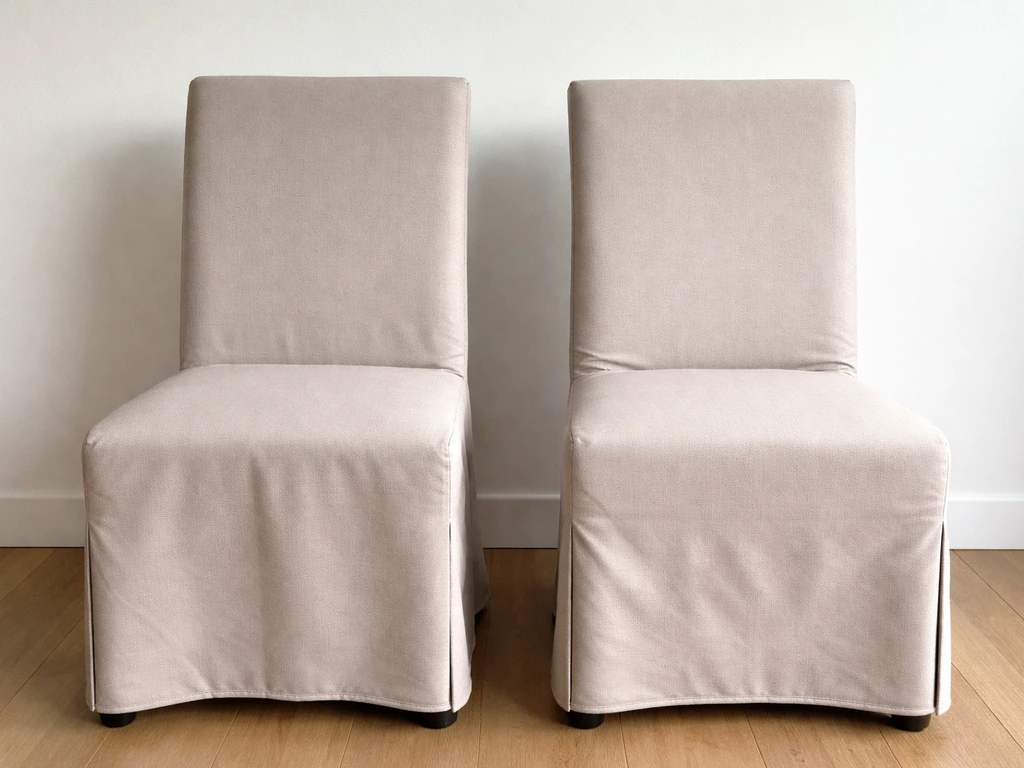
For individual chairs, add about 2 inches to your measured dimensions to allow for easy on/off without a fight. For sofas and loveseats, the same rule applies. The cover should clear the arms and drop cleanly down the sides. If you have cushions on, leave them in place when you measure, because that's how the cover will actually be used most of the time.
Dining sets and tables
For a dining set cover, measure chair backs in the measurement, not just the table. If you're wondering what size patio furniture to buy for a cover, start by measuring chair backs and the full assembled footprint so the fit protects everything. Push chairs in to their normal position and measure the full assembled footprint. A round table cover should be sized to the full diameter of the table with chairs pushed in, and the height should reach the chair seat or ideally all the way to the ground. A cover that only covers the tabletop is essentially decorative and not protective.
Umbrellas
Umbrella covers are sold by pole diameter and canopy diameter. Measure your canopy when closed and add a couple of inches. An umbrella cover that's too tight will be difficult to zip and will stress the fabric. Most freestanding and table umbrellas with a 9-foot canopy take a cover in the 56 to 60-inch length range when the canopy is folded down, but always check the closed diameter of your specific model.
When to consider custom sizing
If your furniture is an unusual shape (a large curved sectional, an oversized modular set, or a deep-seat chaise with a thick cushion stack), stock sizes often don't fit cleanly. A poorly fitting cover is worse than no cover in some ways because it traps humidity in pockets and blows off in wind. Custom sizing is worth the extra cost when no standard cover drapes without significant excess fabric at the top. Coverstore similarly recommends considering custom-size patio furniture covers when standard sizes do not fit cleanly, because a better-draping fit helps prevent sagging pockets that can collect and pool water custom sizing is worth the extra cost when no standard cover drapes without significant excess fabric at the top.
Match your cover to your climate
Climate is probably the most underrated factor in cover selection and the one that separates a cover that lasts five years from one that falls apart in eighteen months. Here's how to think about it by condition.
| Climate/Condition | Key Cover Priority | What to Look For | What to Avoid |
|---|---|---|---|
| Heavy rain (Southeast, Pacific Northwest) | Water shedding and breathability | Water-resistant fabric with breathable vents, taped seams, good drape angle | Waterproof vinyl that traps moisture under the cover |
| Snow and freeze-thaw (Midwest, Northeast) | Weight resistance and cold-temperature flexibility | Heavy-duty 600D polyester, coatings that stay flexible below freezing, tight hem securement | Thin polyester that cracks in cold; vinyl that stiffens and splits |
| Intense UV (Arizona, Southern California, high altitude) | UV and fade resistance | Solution-dyed fabrics, UPF 50+ rated covers, TPU or acrylic coatings | Dyed-surface fabrics that fade and degrade within one season |
| Wind (plains, elevated decks, coastal) | Securement and fit | Elastic hems, tie-down straps or snap closures, weighted bottoms | Loose covers with no straps that turn into sails |
| Coastal salt air (Florida, Gulf Coast, ocean-adjacent) | Corrosion resistance and rinse-ability | Breathable fabrics that can be rinsed frequently, rust-proof hardware on closures | Covers with metal grommets or buckles that corrode and stain furniture |
| High humidity (South, tropical climates) | Breathability above all else | Mesh vents, woven breathable backing, covers that let air move | Any fully sealed waterproof cover, especially vinyl |
In coastal environments, covers do double duty, blocking both UV and salt spray. You'll want to rinse them more frequently (every few weeks during heavy use seasons) and check the closure hardware. Cheap metal buckles corrode fast in salt air and can stain your furniture underneath. Look for plastic or coated hardware. In snowy climates, the coating on your cover matters more than anywhere else because many coatings crack when flexed in sub-freezing temperatures. Solution-dyed acrylic-based fabrics like Sunbrella handle temperature extremes well because the coating doesn't crack or peel even in sustained cold.
Pick cover material that protects without trapping damage
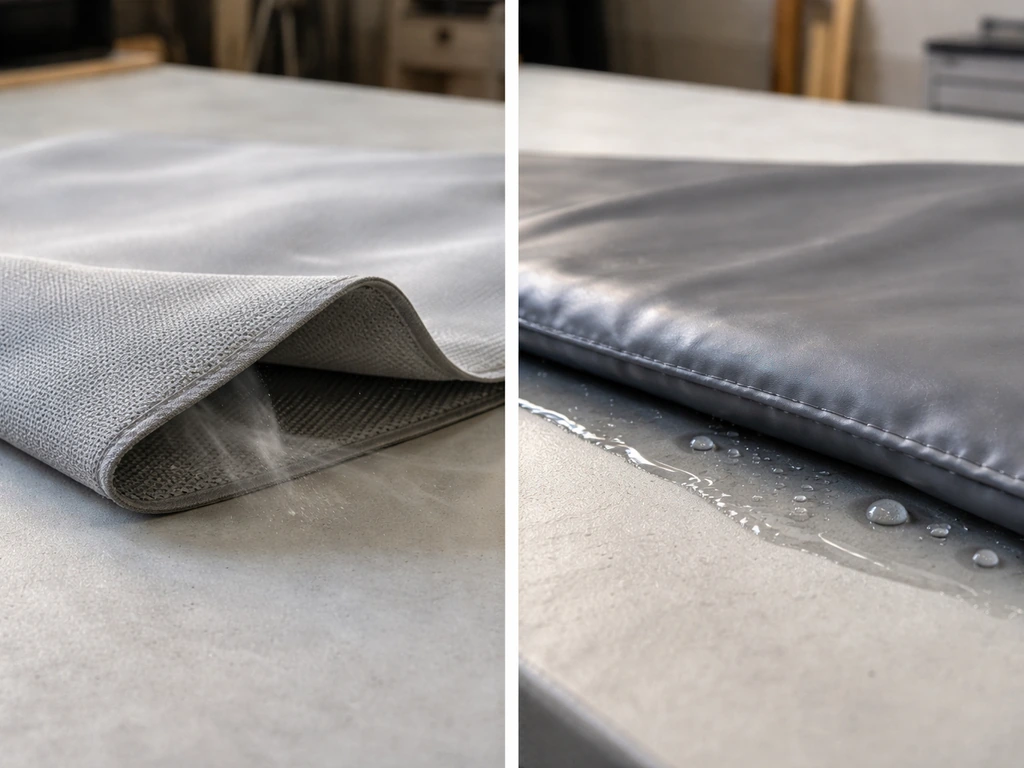
The biggest misconception in the cover market is that waterproof equals better. It doesn't. A fully waterproof cover, typically vinyl or heavily coated polyester with sealed seams, blocks every route for water to escape, including the moisture that's already trapped under the cover from condensation, humidity, and the brief moment before you cover damp furniture. That moisture turns into mildew and the conditions for rust and wood warping. What you actually want is a water-resistant cover that sheds rain from the outside but allows some vapor transmission from underneath.
600D solution-dyed polyester
This is the most common material in quality covers and generally the right choice for most homeowners. The 600D refers to the denier count (yarn thickness), and at 600D you get a cover that's heavy enough to resist tearing and abrasion without being so thick it's hard to fold and store. Solution-dyed means the color goes all the way through the fiber, so UV exposure doesn't bleach the surface layer away. Look for 600D Oxford weave with a laminated or TPU backing (not a full PVC seal) and taped seams. Taped seams prevent water from wicking through the needle holes without making the entire cover vapor-impermeable.
Solution-dyed acrylic (Sunbrella-type)
This is the premium option and the one I'd recommend if your furniture is expensive and you live somewhere with intense UV, coastal salt air, or extreme temperature swings. Solution-dyed acrylic doesn't crack or peel in heat or subzero temperatures, it's inherently UV-resistant, and it's naturally breathable without needing vent holes engineered into it. The trade-off is cost. It's significantly more expensive than polyester covers, but the material lifecycle is longer and it handles every climate condition better.
Vinyl covers
Avoid these for any climate with meaningful humidity or temperature variation. Vinyl is fully waterproof on both sides, which means it traps everything under it. In cold climates, vinyl stiffens and cracks within a couple of seasons. The only scenario where vinyl makes sense is temporary storage in a climate-controlled garage, where you're not relying on the cover to manage outdoor moisture.
Lightweight polyester (under 300D)
These are the covers you'll find for under $20 and they rarely last a full season in any real climate. They tear at contact points, fade quickly (especially if not solution-dyed), and the coating delaminates within a year. They're fine for occasional use or as a backup cover, but don't count on them for primary protection.
Securement features that actually keep covers on
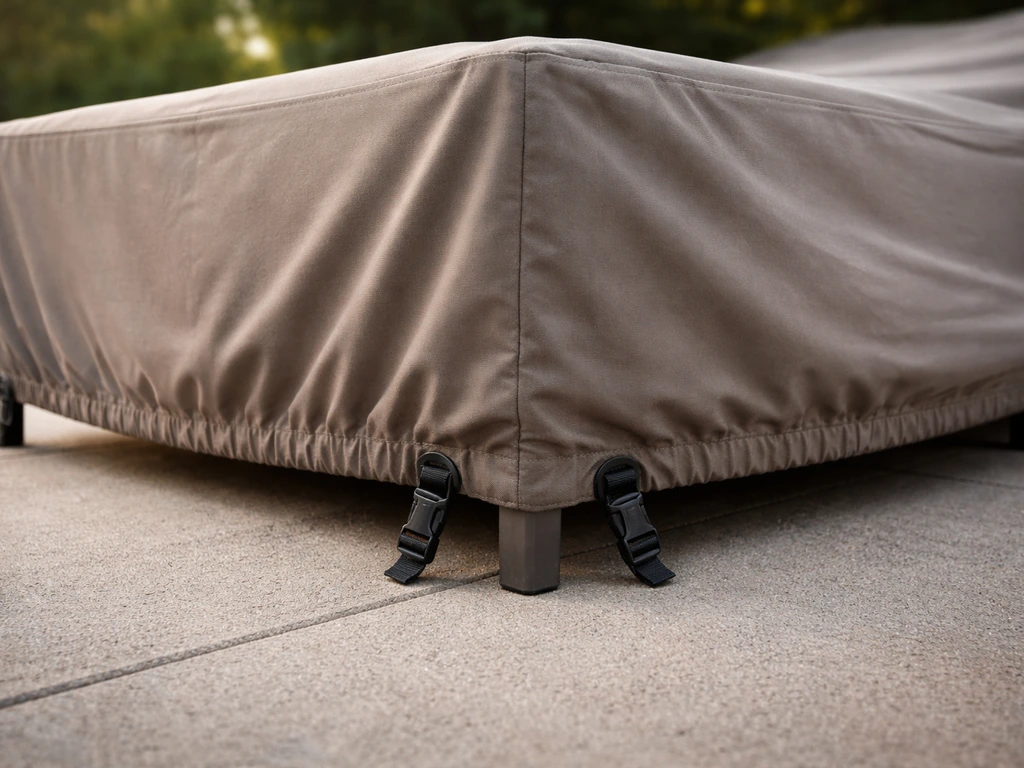
A cover that blows off in a storm gives you zero protection. Securement is one of those features that gets ignored until the first gusty night, and then it becomes the only thing that matters. Here's what actually works.
- Elastic hem: An elasticized bottom hem grips the legs or base of the furniture and prevents the cover from lifting at the corners. This is the minimum you should accept on any cover.
- Adjustable tie-down straps: Straps that cinch under the furniture frame and tighten to the legs are the most reliable way to keep a cover on in sustained wind. They should be adjustable, not fixed, to accommodate different leg configurations.
- Snap-closure straps: Snap straps that close under the furniture are a faster alternative to buckle straps and work well for lighter pieces like chairs and small tables.
- Weighted hem: Some covers use a weighted bottom edge to keep the hem down. This helps on flat surfaces but isn't as reliable as a strap in high wind.
- Drawstring cord: A cinch cord at the hem opening lets you tighten the cover around tapered bases or pedestal tables. Works well for round table covers.
- Grommets with bungee cords or zip ties: Some heavy-duty covers include grommets at the hem that you can thread with a bungee cord for extra securement in exposed locations.
If your patio is in a wind-exposed location (elevated deck, open yard, rooftop, or coastal) don't rely on elastic alone. Use a cover with straps and run them under the frame or around legs. For sectionals and large sets, covers with multiple attachment points at different corners are significantly more stable than a single drawstring. The goal is a cover that moves with the furniture, not one that catches air and lifts off.
Common mistakes that cause mildew, blow-off, and early failure
Most cover failures aren't about the cover quality. They're about how the cover is used. These are the patterns I see most often.
- Covering wet or damp furniture: If it just rained and you cover the furniture immediately, you're sealing moisture inside. Let the furniture dry first, or at least run a dry cloth over it before covering.
- Using a fully waterproof cover in a humid climate: As covered above, a vapor-sealed cover in Florida or coastal Georgia is a mildew incubator. Use breathable water-resistant covers with mesh vents.
- Leaving the cover on year-round without removal: Covers need to breathe periodically. On warm, dry days, pulling the cover off to let sun hit the furniture and air circulate prevents the slow buildup of condensation and surface mold.
- Buying a cover that's too large: Excess cover fabric pools on top and collects standing water. If the cover doesn't pull down tightly over the furniture contours, size down or go custom.
- No securement in a wind-prone area: Loose covers that blow off repeatedly get dragged across concrete and grass, abrade faster, and sometimes damage the furniture they're supposed to protect when they catch on corners.
- Covering furniture with sharp edges or rough weld points without protection: Metal furniture with sharp frame edges or rough welds will puncture a cover from the inside over time, especially when wind causes the cover to flex against those contact points. A small foam pad or cloth wrap at contact points extends cover life significantly.
- Storing a damp cover folded: This is how covers get mildewed in storage. Always air dry completely before folding and storing for the season.
Care, cleaning, and seasonal storage to get more life from your covers
Even a high-quality cover degrades faster than it should if you don't maintain it. The good news is that maintenance is simple and takes almost no time.
Regular cleaning
Rinse the covers periodically (once a month during heavy use, more often in coastal environments) to clear pollen, bird droppings, and salt deposits. For deeper cleaning, use mild dish soap and warm water under 100°F and scrub gently with a soft brush or cloth. Never use abrasive scrubbers, bleach, or harsh chemical cleaners. They break down the water-resistant coating faster than UV exposure does. Rinse thoroughly and air dry completely before putting the cover back on furniture or folding it for storage. Do not machine dry. The heat damages coatings and can shrink the fabric.
Seasonal storage
Before putting covers away for winter (or for a long storage period), clean them first. Folding away a cover with embedded pollen or dirt allows those materials to break down the coating slowly over the off-season. Once clean and fully air dried, lay the cover flat on a clean surface, fold it neatly to avoid sharp crease lines that can stress the coating, and store it in a cool, dry place, ideally in a breathable bag or pillowcase rather than a sealed plastic bin. A sealed bin traps any residual humidity and you end up with that mildew smell come spring.
When to remove the cover (not just when to put it on)
On warm, dry days during the off-season, pull covers off for a few hours if you can. This ventilates the furniture and prevents the slow moisture buildup that happens even under breathable covers. In climates where mild weather comes and goes through fall and spring, think of the cover as something you put on for wet or extreme weather, not something that stays on the furniture for months uninterrupted. That mindset shift alone will extend both cover and furniture life.
Refreshing water-repellency
After a few seasons, you may notice water soaking into the cover fabric instead of beading off. This means the DWR (durable water-repellent) finish has worn down. You can restore it with a fabric DWR spray (products like Nikwax or Scotchgard Outdoor work on polyester covers). Clean the cover first, apply the treatment, and let it cure fully before using. This adds one to two seasons of effective water shedding and is far cheaper than buying a new cover.
A quick decision checklist before you buy
- Have I measured length, width, and height including chair backs, arm extensions, and cushions?
- Is the cover water-resistant with breathable vents rather than fully waterproof vinyl?
- Is the fabric at least 600D solution-dyed polyester or solution-dyed acrylic for UV and abrasion resistance?
- Does it have taped seams to prevent wicking through needle holes?
- Does it have elastic hem plus tie-down straps or snap closures for wind resistance?
- Is the sizing close enough that the cover drapes tightly without pooling on top?
- Have I checked the closure hardware for corrosion resistance (especially for coastal use)?
- Do I know how I'll clean it and where I'll store it off-season?
Getting the size right is the foundation, and it directly connects to how well your furniture is actually protected day-to-day. If you're still figuring out what size you need for specific piece types, that's worth working through carefully before purchase. And if you're weighing whether covers are worth buying at all for your setup, the answer usually comes down to your furniture material and climate exposure, since wood and wicker in wet climates benefit dramatically from covers while powder-coated aluminum in a dry climate is more forgiving. The right cover chosen well is a low-effort way to meaningfully extend the life of furniture you've invested real money in. The best patio furniture covers balance fit, breathable water resistance, and securement so they protect against rain, sun, and wind low-effort way to meaningfully extend the life.
FAQ
Should I buy a cover that’s the exact size of my patio furniture, or slightly larger?
In most cases, aim for a snug fit that reaches close to the ground at the furniture’s highest and deepest points. If you go much larger, the fabric will billow, create air pockets, and eventually pool water. If you go slightly tight, you risk tension that stresses zippers and seams, so for individual chairs and similar pieces add a small margin for easy on/off.
My furniture has removable seat cushions, should I cover it with the cushions on or off?
For the best day-to-day protection, measure and cover with the cushions in the normal installed position, because that is when the cover actually drapes and seals against wind. If cushions are frequently removed for daily use, consider a separate cushion storage approach, so you do not leave wet cushions under a cover for extended periods.
What if my dining chairs have tall backs or unusual arm shapes?
Measure the outermost points that the cover must clear, including the widest part of the arms and the full height of the back. If the cover is designed to fit standard chair silhouettes, tall or curved backs can leave gaps at corners where wind drives water in, so prioritize covers that explicitly mention tall-back dining fit or custom sizing.
How can I tell whether my cover material is likely to trap moisture or breathe properly?
Avoid fully sealed, non-breathable designs that block vapor from underneath. The practical sign is whether the cover relies on a breathable water-resistant fabric system rather than an impermeable vinyl layer. If your area is humid or you see a steady musty odor under the cover, that usually indicates poor vapor management, not just a need for cleaning.
Do I need to use straps on every cover, or is elastic enough?
Elastic can help with fit, but in wind-exposed areas it is rarely sufficient by itself. Use tie-down straps or run straps under the frame or around legs, and look for multiple attachment points on large covers so the cover moves with the furniture instead of lifting and flapping.
How often should I clean patio furniture covers to prevent mildew and rust?
A good baseline is rinsing about once a month during heavy use seasons, and more often in coastal or pollen-heavy areas. If you notice standing water, stains, or a musty smell, clean sooner. Always air dry the cover fully before reinstalling or folding for storage.
Can I machine wash or machine dry my patio furniture cover?
No. Machine drying can shrink the fabric and damage the coating, and it can also warp stitched seams. For deeper cleaning, use mild dish soap and warm water below about 100°F, scrub gently, rinse thoroughly, then air dry completely.
What should I do if the water no longer beads on top of the cover?
That usually means the water-repellent finish (often described as DWR) has worn down. Clean the cover first, then apply a fabric DWR spray made for the cover’s material, let it cure fully, and then put it back on. This can extend performance by about one to two seasons when treated early.
Is a waterproof cover always better for heavy rain?
Not automatically. A fully waterproof, sealed cover can block drainage and trap condensation and humidity under the cover, which increases the risk of mildew and rust. Prefer water-resistant breathable materials that shed rain from the outside while allowing vapor to escape from underneath.
Should I cover my furniture in the fall and leave it on all winter?
If possible, remove the cover on warm, dry days in the off-season to ventilate and reduce slow moisture buildup. In climates where conditions swing between wet and dry, treat the cover like protection for bad weather rather than a constant layer all season, especially if you notice condensation.
How do I choose between a cover for a full set versus individual piece covers?
Use individual covers when pieces are tightly packed or when you need better clearance at complex shapes, since one large cover often bridges spaces and creates sagging pockets. Use a full-set cover when you have enough room to pull it on easily and the set is fairly uniform, but verify it can cover corners and chair backs without perching.
My umbrella cover keeps stressing or tearing near the zipper, what size mistake am I likely making?
Most often the cover is too tight relative to the umbrella’s closed canopy diameter and pole size. Measure the canopy when closed, then add a small margin so the zipper can work without tension. Too-snug covers increase seam strain and shorten zipper life.
When is custom sizing worth paying for?
Custom sizing is usually worth it when your furniture shape is significantly non-standard, such as deep-seat chaise stacks, oversized modular layouts, or curved sectionals. Stock covers that leave large excess at the top can billow and form water-pooling areas, which can be worse than a tighter custom drape.
Next Articles
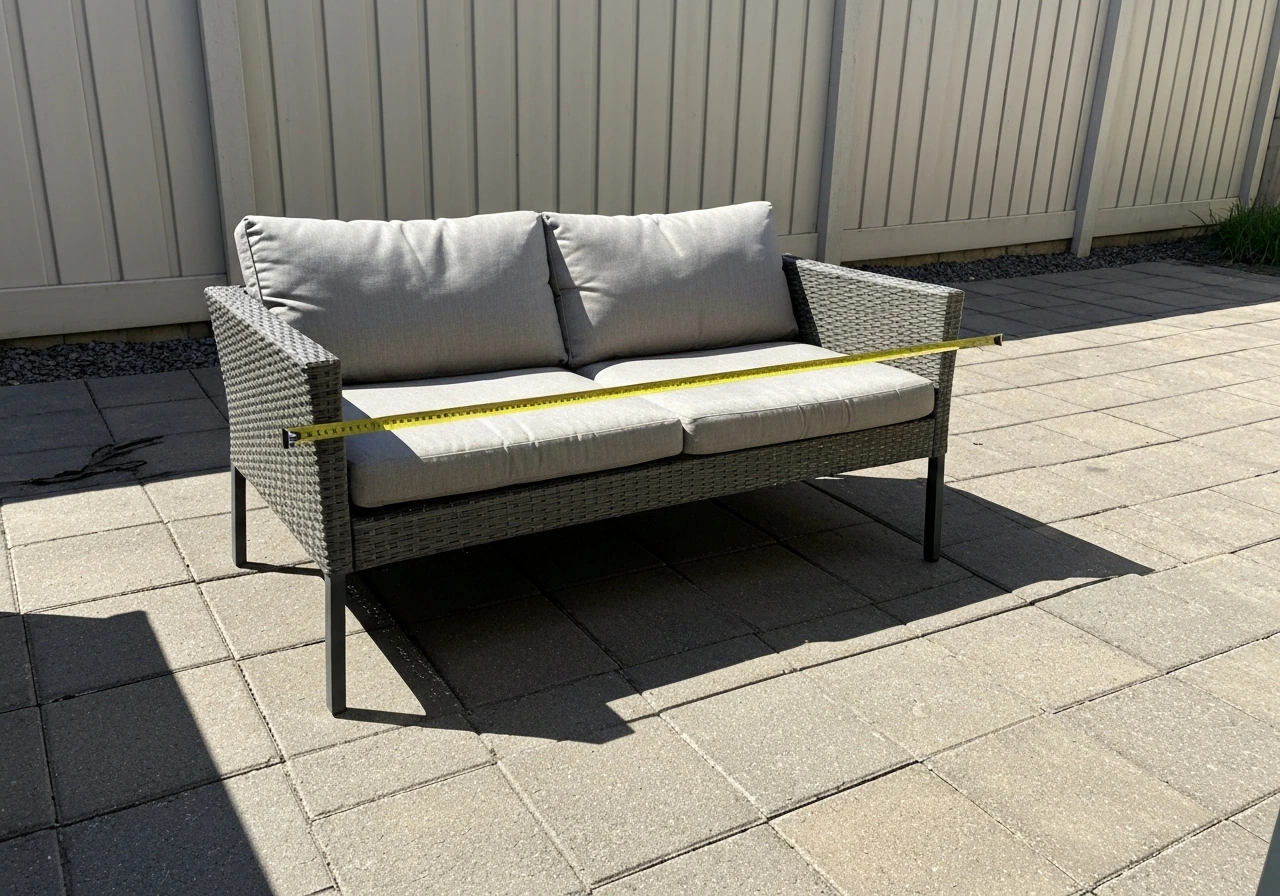
What Size Patio Furniture Cover Do I Need? Measure Fast
Quick steps to measure patio furniture and pick the right cover size, including height, cushions, overhang, and irregula
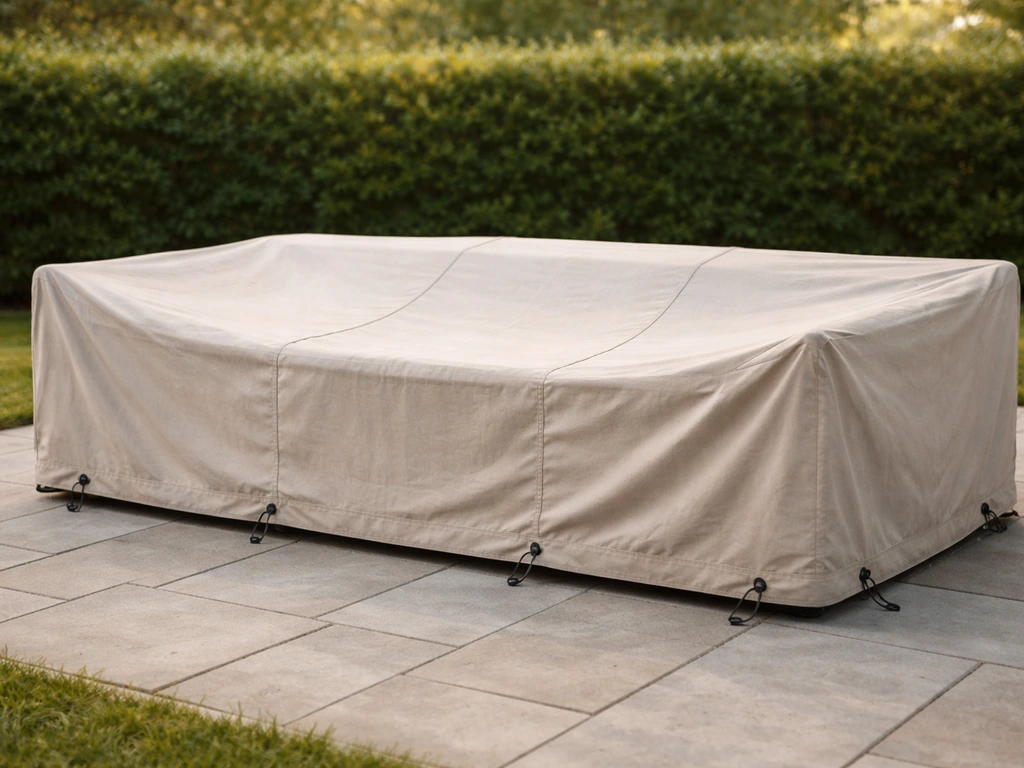
Quality Patio Furniture Covers: How to Choose, Measure, and Maintain
Choose quality patio furniture covers with fit, breathable weather protection, and fabric durability plus measuring and
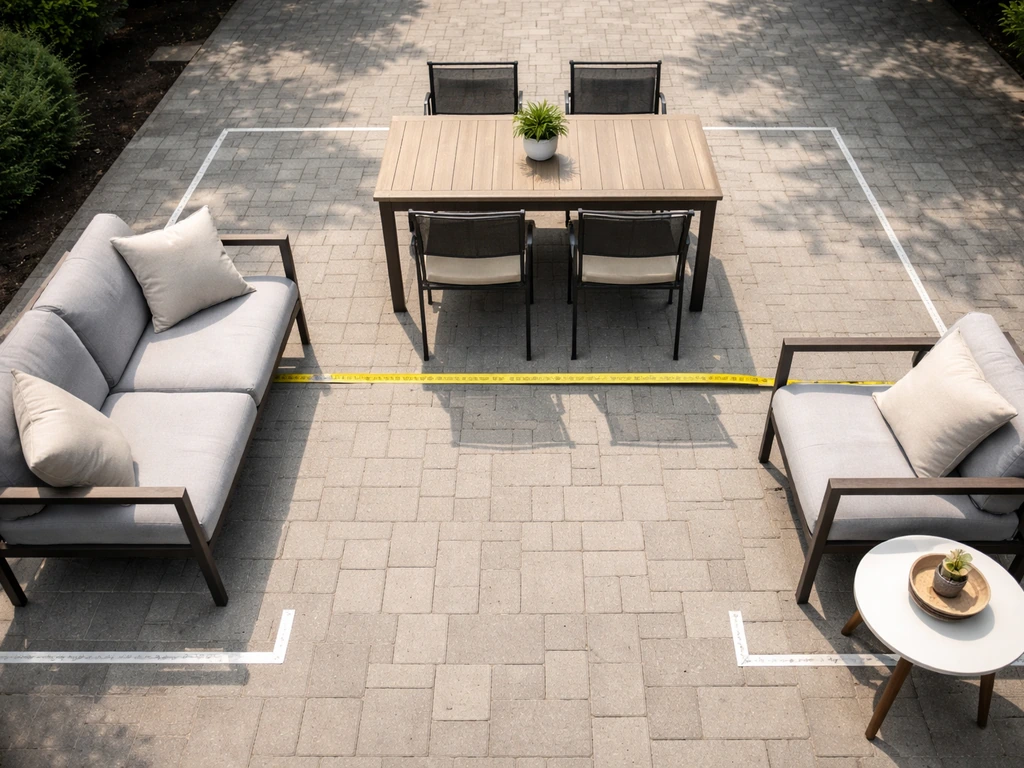
What Size Patio Furniture to Buy: Measure and Plan
Learn what size patio furniture to buy using patio measurements, layout clearances, dining and lounge sizing, and weathe