
You need three measurements for almost any piece of patio furniture: width (the widest point, side to side), depth (front to back), and height (top to the ground). Write those down in inches, then compare them against a brand's 'fits up to' spec, making sure your furniture measurements are equal to or smaller than every listed dimension. That's the core of it.
What Size Patio Furniture Cover Do I Need? Measure Fast

Theo Tierney
21 Jun 2026
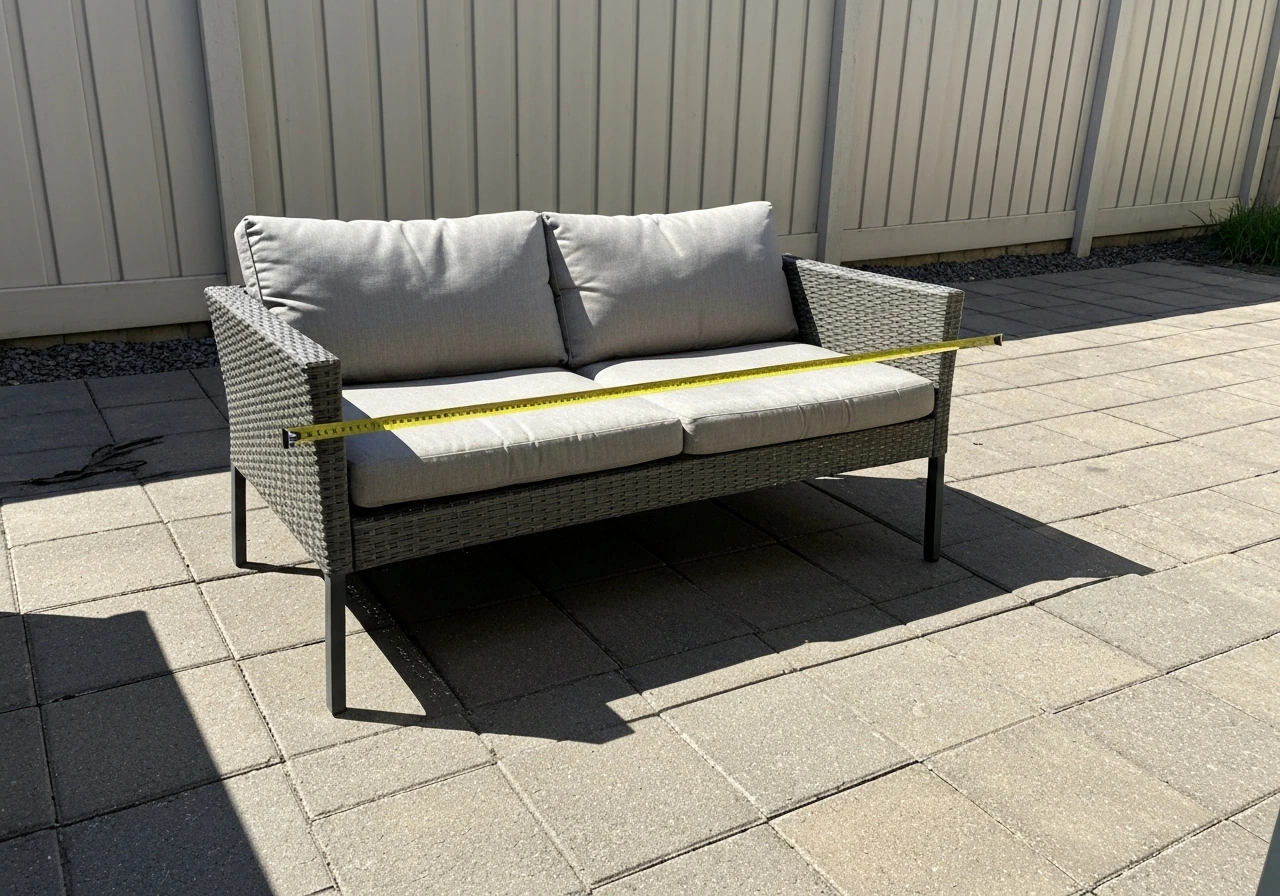
If you want the right choice beyond measurements, decide what type of patio furniture you have first (chairs, sectional, dining set, or umbrella). The rest of this guide is about getting those numbers right the first time, handling awkward shapes like sectionals or dining sets with chairs, and avoiding the common mistakes that lead to covers that flap in the wind, rip at the seams, or don't actually protect your furniture.
How to measure your patio furniture for a cover
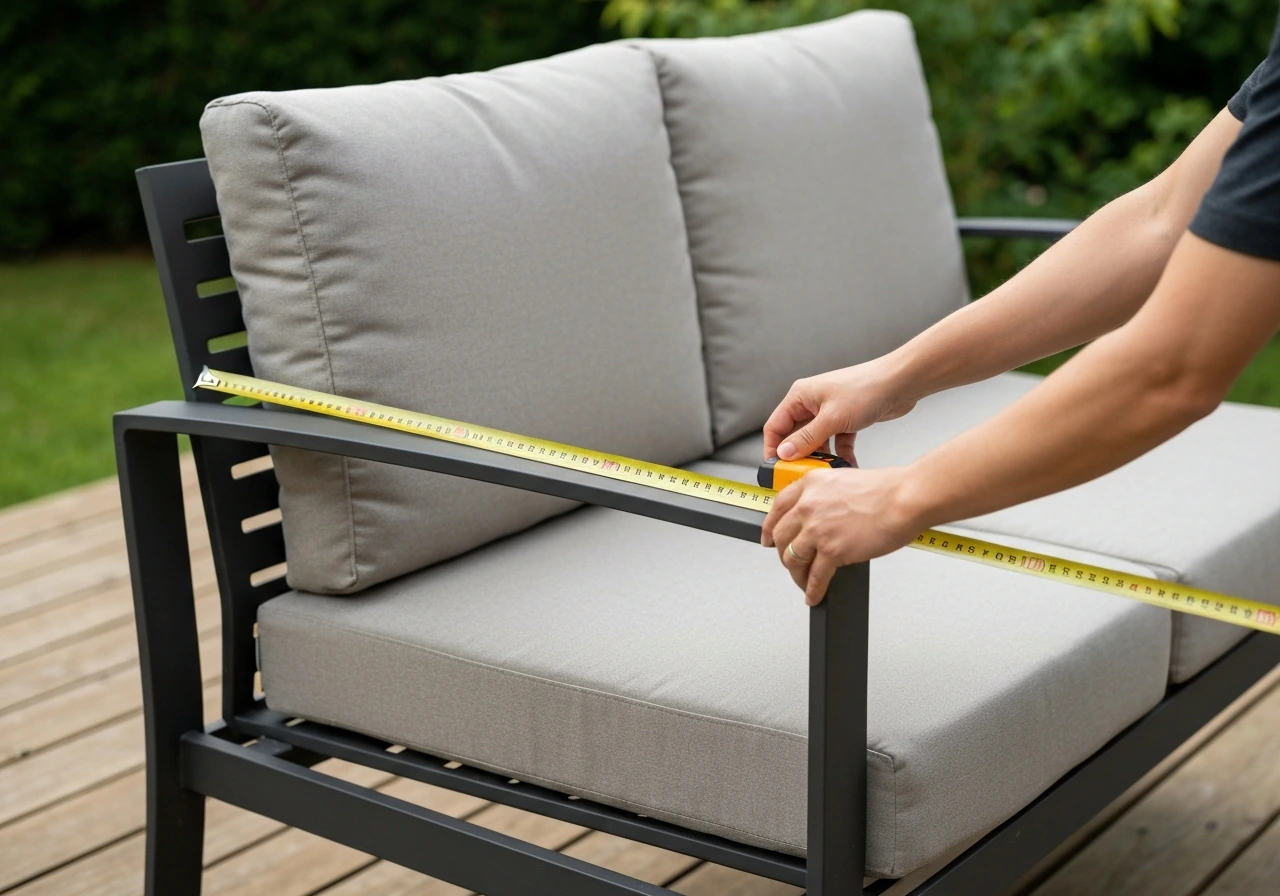
Grab a tape measure, a notepad, and measure your furniture while it's in its actual outdoor position, cushions on and ready for the season. Don't measure from a spec sheet or a store listing. Manufacturers measure frames without cushions, and some list dimensions without armrests. Your cover has to fit the real thing sitting on your patio, not the box dimensions it shipped in.
For a sofa, loveseat, or armchair, measure at the absolute widest point (usually armrest to armrest), the deepest point (front leg to back leg, including any cushion overhang), and the tallest point (floor to the top of the back). If you have an L-shaped sectional, treat it as two rectangles. Measure the long side and the short side separately, because most sectional covers are sold by the combined footprint and you need both legs of the L to find the right fit.
For a dining table and chair set, measure the table with the chairs pulled out to their normal seated position. That's the real footprint the cover needs to wrap. Classic Accessories specifically recommends measuring the full length and width of the table plus chairs as a unit, not just the tabletop. Most people measure only the table and then wonder why the cover is too small to get the chairs under it.
For a patio umbrella, open it fully and measure the canopy from outer edge to outer edge. That diameter is your key measurement. If your umbrella table has a center hole for the pole, that hole diameter matters separately if you're buying a cover designed to go over a table-and-umbrella setup together.
Choosing cover dimensions: length, width, height, and overhang
Every cover spec lists 'fits up to' dimensions for a reason: the cover is larger than the listed number so it can drape over the furniture. When you see a Coverstore dining set cover listed at 90 inches wide by 58 inches deep by 30 inches tall, that means your measured furniture grouping needs to be at or under those numbers. If your measured width is 91 inches, that cover won't work cleanly.
Height deserves a specific note. Classic Accessories states outright that height is not a required measurement for their general-purpose grouping covers, because those covers drop to the ground and the hem handles it. But for fitted covers on sofas, chairs, or dining sets, height matters a lot. A cover labeled 36 inches tall may only deliver around 32 inches of actual protection once you account for how the cover sits on and wraps the furniture. CoverMagix flags this exact issue: the labeled height and the real protection height aren't always the same. When in doubt, measure your furniture's height and compare it against the cover's protection height, not just the labeled size.
Overhang is the amount of cover material that drops past the furniture's bottom edge toward the ground. More overhang means better rain and wind protection. Less overhang means a neater look but more exposure at the base. Some covers are designed to reach within 2 to 6 inches of the ground (KoverRoos recommends this clearance range). If your priority is weather protection, lean toward covers with more drop. If you're in a dry, low-wind climate, a snugger profile is fine.
Cover fit types: chair, sectional, table, and umbrella covers
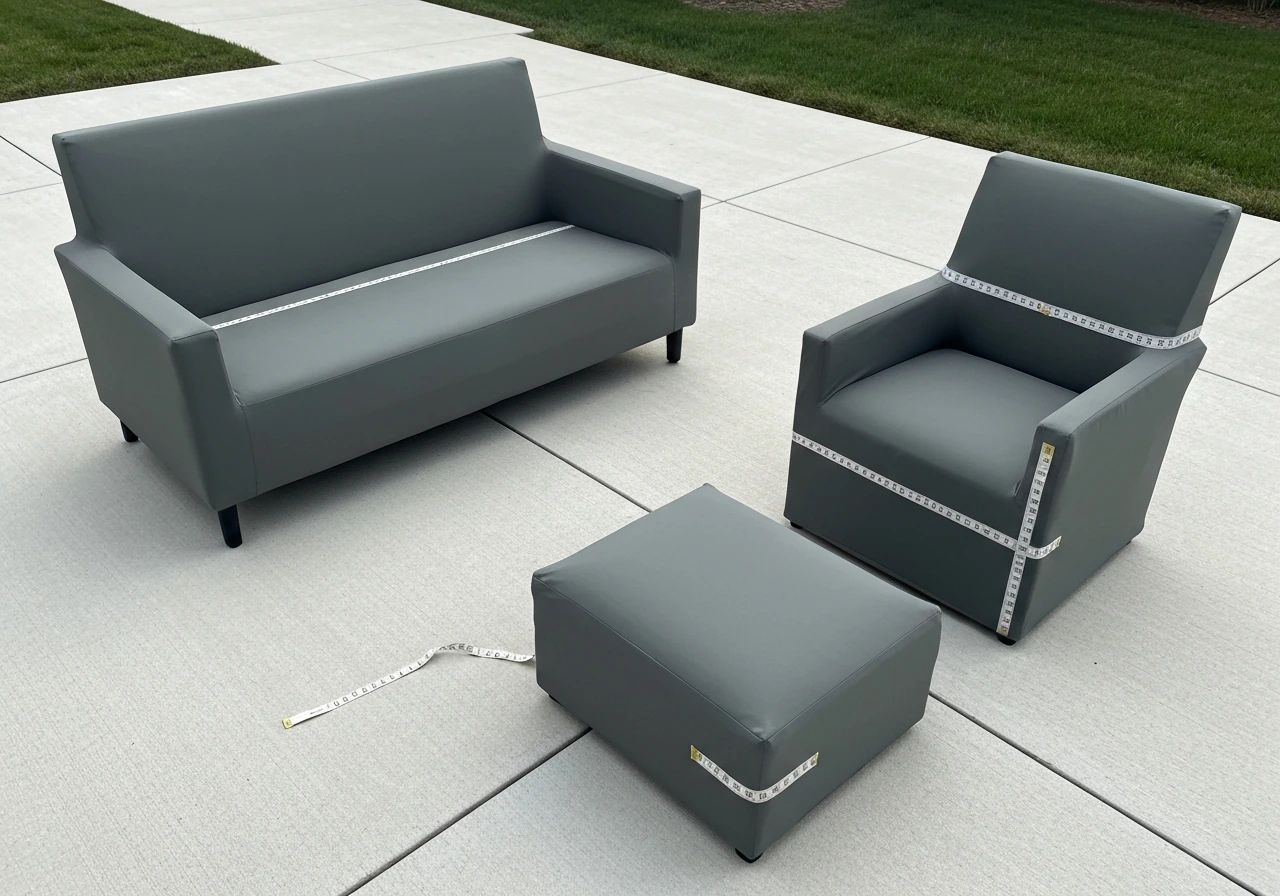
Different furniture types use different cover formats, and 'exact size' means something different for each one.
Chair and sofa covers
These are typically fitted covers meant to hug the furniture's shape. Classic Accessories designs their sofa and loveseat covers to fit snugly and stay put. The snug fit is intentional because it resists wind better, but it also means you have less margin for error on measurements. If you're between sizes on a chair or sofa cover, go up one size rather than trying to stretch a too-small cover over the frame.
Sectional covers
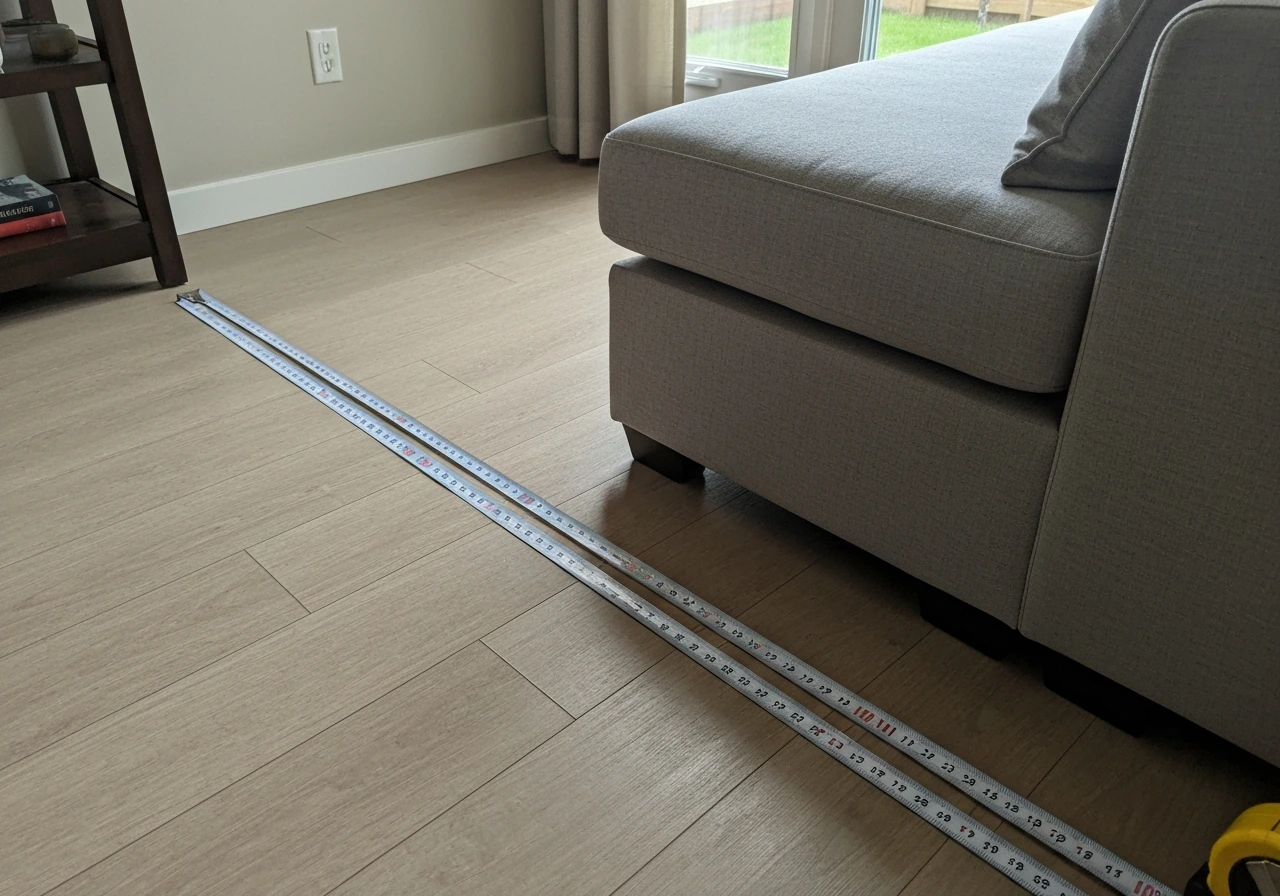
Sectional covers are usually sold by the total piece count (3-piece, 4-piece, L-shaped) and by the overall footprint. Measure your L's longest arm and shortest arm separately, then look for a cover spec that accommodates both. Single-piece sectional covers tend to have more material and a looser drape, which actually helps on irregular shapes.
Dining table and chair set covers
These are some of the most size-specific covers on the market because the combination of table dimensions and chair count creates a wide range of footprints. Leader Covers, for example, sells rectangular dining set covers in distinct sizes like 75W x 46D x 28H, 96W x 64D x 32H, 109W x 84D x 32H, and 127W x 84D x 32H. You need to know your exact measured footprint to pick the right one. A common mistake is buying the table size and discovering the chairs don't fit under the cover when they're pulled out.
Umbrella covers
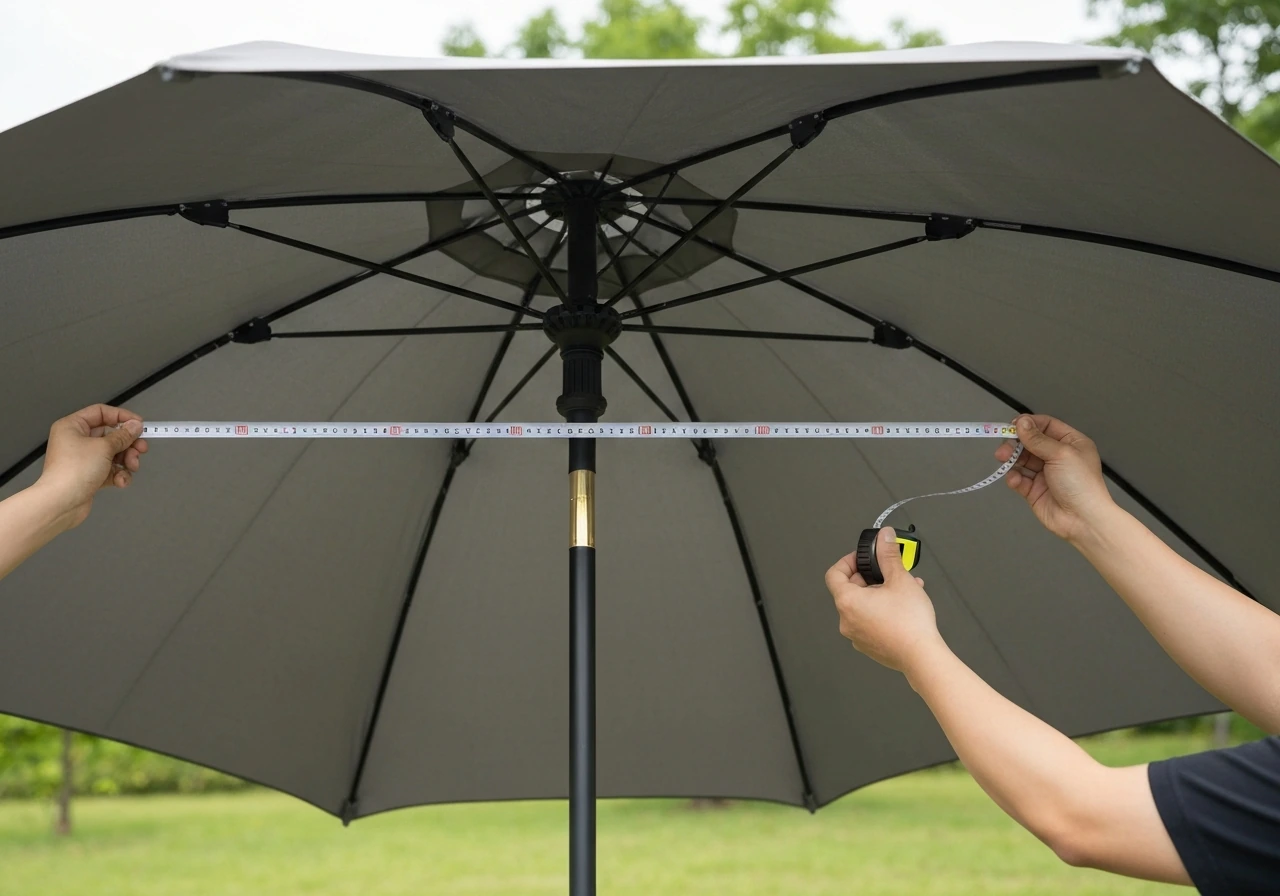
Umbrella covers are sized by canopy diameter when open. Measure your fully opened canopy edge to edge. Freestanding umbrella covers also need to account for the base, while table-mounted umbrella covers need the cover to clear the canopy and drop down over any exposed pole.
If your table has an umbrella hole and you want one cover over the whole setup, look for dining set covers that specifically list an umbrella hole opening, like the Coverstore umbrella-hole table cover designed for sets up to 90W x 58D x 30H.
If you are matching a table-mounted umbrella setup with a single cover, you will also need to size the umbrella pole hole using the umbrella diameter and inner hole sizing guidance in the Futureglass measurements document [umbrella hole opening](https://www. futureglass. co. uk/image/catalog/product/Patio-Furniture-Replacement-Glass-421/How%20to%20work%20out%20the%20diameter%20of%20your%20patio%20top%20hole.
pdf).
Weather protection priorities by climate and season
Where you live should shape how you think about cover sizing and coverage. Quality patio furniture covers help you protect chairs, sofas, and tables from rain, sun, and seasonal weather changes. These aren't minor considerations: the wrong fit in the wrong climate means water pooling, mold, or a cover that ends up in your neighbor's yard after the first storm.
| Climate / Season | Main Risk | Sizing Priority |
|---|---|---|
| Heavy rain (Pacific Northwest, Southeast, Florida) | Water pooling, mold under cover | Maximum drop/overhang, snug base straps |
| Snow (Upper Midwest, Northeast, Mountain West) | Weight stress, cover collapse, moisture seep | Reinforced seams, generous height clearance, vented cover |
| High wind (Plains states, coastal areas) | Cover blow-off, abrasion damage | Tie-downs, elastic hem, snug fit at base |
| Intense heat and UV (Arizona, Southern California, Texas) | Fabric degradation, off-gassing under cover | Breathable fabric, lighter color, UV-resistant material |
| Salt air (Coastal) | Corrosion acceleration under trapped moisture | Breathable cover with airflow vents, frequent removal in off-season |
In snow climates, height clearance is critical. You want a cover tall enough that heavy snow accumulation doesn't press down and crack furniture or stress the cover seams. A cover that fits perfectly in fall may be dangerously taut under a foot of snow. In wind-heavy areas, a cover that's too large becomes a sail. A snugger fit with elastic hems and buckle straps is more important than a little extra coverage drop. In Florida or Gulf Coast climates, breathability matters as much as waterproofing: a fully sealed cover that traps humidity creates the perfect environment for mold on your cushions and wood frames.
Material and construction choices that affect sizing needs
The cover material directly affects how the sizing works in practice. A thick, stiff waterproof cover doesn't conform to furniture edges the way a softer fabric does, so you often need slightly more generous dimensions to get it on and off without fighting it. A breathable cover with a looser weave can tolerate a slightly bigger size because it doesn't trap air under it, making it easier to secure.
- Waterproof covers (polyester with PVC or polyurethane coating): These shed water reliably but can trap humidity underneath. They work best with a snug fit that limits air gaps at the base, and they tend to be stiffer, so size up slightly if you have a furniture piece with unusual angles.
- Breathable covers (solution-dyed acrylic, vented polyester): These allow air circulation, which reduces mold risk. They're more forgiving on sizing because they don't balloon or trap air, but they may need a snugger fit to block wind-driven rain.
- Elastic hems: An elastic hem at the base grips the furniture legs or base and keeps the cover in place. If your furniture has splayed or wide legs, check that the hem diameter matches before buying.
- Buckle straps and tie-downs: These compensate for slightly larger cover sizes by pulling the cover tight against the furniture. They matter most in wind-prone areas. A cover with no straps in a gusty location is asking for trouble.
- Drawcord closures: Common on chair covers, these cinch at the base. They're more adjustable than elastic alone, which gives you more tolerance if your furniture is between standard sizes.
Cushion thickness is something most guides skip over, but it matters. A sofa with 5-inch cushions is meaningfully deeper and taller than the bare frame. Measure with cushions in place, every time. If you store cushions separately and cover just the frame off-season, measure without cushions. The two scenarios call for different cover sizes.
Common sizing mistakes and how to confirm compatibility
These are the errors that show up over and over, and every one of them is avoidable if you measure carefully and read the brand's sizing chart correctly. To learn more about the full process, follow this guide on how to choose patio furniture covers based on your exact measurements measure carefully.
- Measuring the frame only: Cushions, armrests, and decorative knobs add real inches. Measure the full assembled piece the way it lives on your patio.
- Ignoring height: Even when a brand says height isn't required for grouping covers, you still need to know your furniture's height to confirm the cover won't be too short and expose legs and bases to water.
- Forgetting chairs in a dining set: The table cover size is meaningless if the chairs don't fit under it. Measure width and depth with chairs pulled to a normal seated position.
- Assuming the listed cover size equals the furniture size: As Coverstore notes, published dimensions refer to the cover's sizing conventions, not necessarily the furniture's footprint. A '90-inch cover' may accommodate furniture up to 86 inches, not 90 inches.
- Going too small to get a 'snug' look: A too-small cover will rip at the seams when stretched over furniture, won't fasten properly, and wears out fast. Reddit users consistently flag this: when in doubt, go one size up.
- Ignoring brand-specific sizing charts: Different brands measure and label their covers differently. Classic Accessories, Coverstore, Leader Covers, and KoverRoos all have distinct sizing conventions. Don't assume a size 'Large' from one brand matches another.
- Not checking for irregular overhangs or extensions: If your sectional has a chaise attachment, a table has a leaf, or your dining chairs have high backs, those extensions need to be measured and compared against the cover spec.
To confirm compatibility, go directly to the brand's sizing chart, not just the product title. Patio furniture covers are often necessary to protect your pieces from weather, debris, and premature wear between uses. Look for a 'fits up to' dimension table that lists width, depth, and height ranges. Plug in your measured numbers and confirm all three dimensions fall within the range. If you're on the edge, contact the brand's support before buying. Coverini's advice is practical here: if you're between sizes, go one size up. A slightly loose cover with straps is always preferable to a too-tight cover that tears or traps moisture.
Quick sizing worksheet and what to buy next
Before you open a single product page, work through this. It takes about five minutes and saves a return shipping headache.
- Identify every piece you're covering: sofa, loveseat, chairs, dining table, sectional sections, umbrella. List them out.
- For each piece, measure width at the widest point (side to side, including arms and any hardware), depth at the deepest point (front to back, including cushion overhang), and height from the floor to the top of the back or the highest point.
- For a dining set, pull the chairs out to a normal seated position and measure the full combined width and depth of the set as a single footprint.
- For an umbrella, open it fully and measure the canopy diameter edge to edge.
- Write down each measurement in inches. Label them clearly: Sofa: 87W x 38D x 34H. Dining set: 102W x 68D x 36H. Umbrella: 9ft canopy.
- Note your climate's primary risk from the table above (rain, snow, wind, heat, salt air). This tells you whether to prioritize breathable vs waterproof fabric and how important straps and elastic hems are for your situation.
- Go to the specific brand's sizing chart (not just the product name) and confirm your measurements fall within the 'fits up to' dimensions for every number: width, depth, and height.
- If you're between sizes, go up one. If you're buying a sectional cover, double-check that the cover's L-shape dimensions match both arms of your sectional.
- Check that the cover includes tie-down straps or an elastic hem if you're in a wind-prone area. Confirm venting if you're in a humid climate.
- Record the cover's model name, exact listed dimensions, and your furniture's measurements together before ordering. Keep that note so you can reorder the exact same cover or compare it if you switch brands.
Once you have your measurements and climate notes in hand, shopping becomes straightforward. To buy the right patio furniture size, use these same measurement tips so your furniture footprint matches the cover or product requirements shopping becomes straightforward. You're looking for a cover where every one of your furniture dimensions is less than or equal to the cover's 'fits up to' spec, with construction features that match your weather reality. Choosing the right cover size and the right cover material are equally important decisions. A perfectly sized cover made from a fabric that can't handle your climate will fail just as fast as one that doesn't fit.
FAQ
Should I measure my patio furniture cover size with cushions on or cushions off?
Measure in the way you plan to cover it. If cushions stay on outdoors, include their overhang in depth and any added height, otherwise you will underestimate what the cover must clear. If you store cushions separately and cover only the frame, use bare-frame height and depth so you do not buy an overly tall, loose cover that can shift in wind.
What if my furniture is between two cover sizes, should I go smaller or larger?
Go up one size if your measurements are close to the limit. A slightly larger cover usually still drapes and can be secured with straps and elastic, while a too-tight cover tends to pull seams, lift at the edges, and reduce rain and wind protection.
How much overhang should my cover have for best protection?
Aim for a balance based on your weather. For heavy rain and wind, more drop near the ground generally performs better because it blocks side runoff. For drier climates, you can accept less clearance for a cleaner look, but if you notice the hem sitting well above the base, water can pool around legs and frames.
Do I need to worry about labeled height on the cover, or is width and depth enough?
For many general-purpose grouping covers, height may not be strictly required because the hem reaches down, but for fitted sofa, chair, and dining set covers height can materially change real coverage. If the brand lists both labeled height and an expected protection height, compare your measurement to the protection figure, not just the number on the label.
My dining chairs fit under the tabletop, but not under the cover. What measurement did I miss?
Check that you measured the chairs pulled out to their normal seated position, not just “in” storage position. Many dining set covers are sized to the combined footprint of table plus chairs, so measuring only the tabletop often leads to a cover that drags or leaves chair backs exposed.
How do I size a cover for an L-shaped sectional if the cushions are irregular or asymmetrical?
Treat the sectional as two rectangles and measure each leg’s longest and shortest footprint independently. If one side’s cushions overhang more than the other, measure depth including the cushion overhang for each leg, since sectional covers can be loose-draping on one side and tight on the other.
What’s the difference between canopy diameter and overall umbrella height when buying an umbrella cover?
Most umbrella cover sizing is driven by canopy diameter measured edge to edge when fully open, but the cover still needs enough height to clear exposed pole hardware and any base mount. If your umbrella uses a center pole hole or an umbrella base attachment, look for covers that explicitly accommodate that setup, otherwise the fit can be correct in diameter but too short around the pole and base.
I live in a hot, humid climate. Is a more waterproof cover always better?
Not always. In humid regions, a fully sealed, non-breathable cover can trap moisture and increase mold risk, especially under patio cushions and on wood frames. If you are in this climate, prioritize breathable or vented cover designs while still ensuring the fabric is weather-resistant and properly secured.
How should wind affect the patio furniture cover size decision?
Wind favors a snugger fit. If a cover is too large, it can billow and create abrasion, seam stress, or snap-back that loosens straps. Prefer elastic hems, buckle straps, and a size that is at or slightly above your measured dimensions rather than significantly oversized.
If my patio furniture cover is for storage, should I size differently than for year-round weather?
Yes. For storage where rain and wind exposure are minimal, a slightly looser cover can be acceptable because it is less likely to flap and tear. For year-round protection, strict “fits up to” matching matters more since the cover must stay stable through storms and temperature cycles.
Next Articles
Quality Patio Furniture Covers: How to Choose, Measure, and Maintain
Choose quality patio furniture covers with fit, breathable weather protection, and fabric durability plus measuring and
What Size Patio Furniture to Buy: Measure and Plan
Learn what size patio furniture to buy using patio measurements, layout clearances, dining and lounge sizing, and weathe
What Type of Patio Furniture Should I Get? A Guide
Match patio furniture types and materials to your climate, space, lifestyle, and budget, plus care tips for lasting dura