
The best UV protection for patio furniture depends on the material: penetrating oil-based sealers with UV absorbers for wood, a quality clear UV-blocking topcoat or touch-up paint for powder-coated metal, a UV-resistant fabric spray like 303 Fabric Guard for cushions and upholstery, and a dedicated composite cleaner-plus-sealer for WPC or composite pieces. For any furniture you want to protect without daily effort, a well-fitted solution-dyed acrylic cover adds a strong second layer of defense on top of whatever finish you apply directly. There is no single product that works for every material, but once you match the right approach to what you actually own, the whole thing becomes straightforward.
Best UV Protection for Patio Furniture: Choose and Apply

Theo Tierney
17 Jun 2026

What UV actually does to your furniture
UV radiation does not just fade color. It breaks down the chemistry of materials at a molecular level, and understanding that helps you pick the right protection instead of just the prettiest bottle on the shelf.
On wood, UV drives photo-oxidation of lignin, the natural polymer that holds wood fibers together. That is why unfinished wood turns gray within a single summer: the lignin degrades, cellulose fibers loosen at the surface, and you get that silvery, fibrous texture. Left long enough, it is not just cosmetic. The surface becomes rough and porous, which lets water in deeper, accelerating cracking, checking, and rot. Even a quality film-forming finish like varnish can fail at the wood-finish interface as UV works through the coating and degrades the layer beneath it.
On powder-coated or painted metal, UV breaks down the resin binder in the coating. Qualicoat UK and Ireland also explains that UV rays break down the paint or powder coating resin, leading to chalking and fading and, in harsher conditions like humidity or coastal areas, potentially peeling or bubbling Powder-coated or painted metal, UV breaks down the resin binder in the coating. The visible symptom is chalking, that powdery residue you can wipe off with a finger. Once chalking starts, the pigment is migrating out of the binder system and the coating is losing its protective function. In coastal or humid environments, that process accelerates and you can see peeling and bubbling on top of it.
On plastic and polymer-based materials including wicker resin, rattan, and composite decking or furniture, UV causes photo-oxidative degradation through a chain-scission process. Polymer chains literally break apart, which makes the material brittle, discolored, and structurally weaker over time. HALS (hindered amine light stabilizers) are the chemical additive manufacturers use to slow this process in quality outdoor plastics, so when you see a product advertised as UV-stabilized, that is usually what is in it.
On fabric and cushions, UV degrades surface-printed dyes quickly, which is why cheap outdoor cushions go from bold colors to washed-out pastels in one season. Heat amplifies all of these effects: the hotter the surface, the faster the chemical reactions run.
Match your protection to the material
This is where most people go wrong. They buy one product and use it on everything. Here is the honest breakdown by material type.
Wood furniture
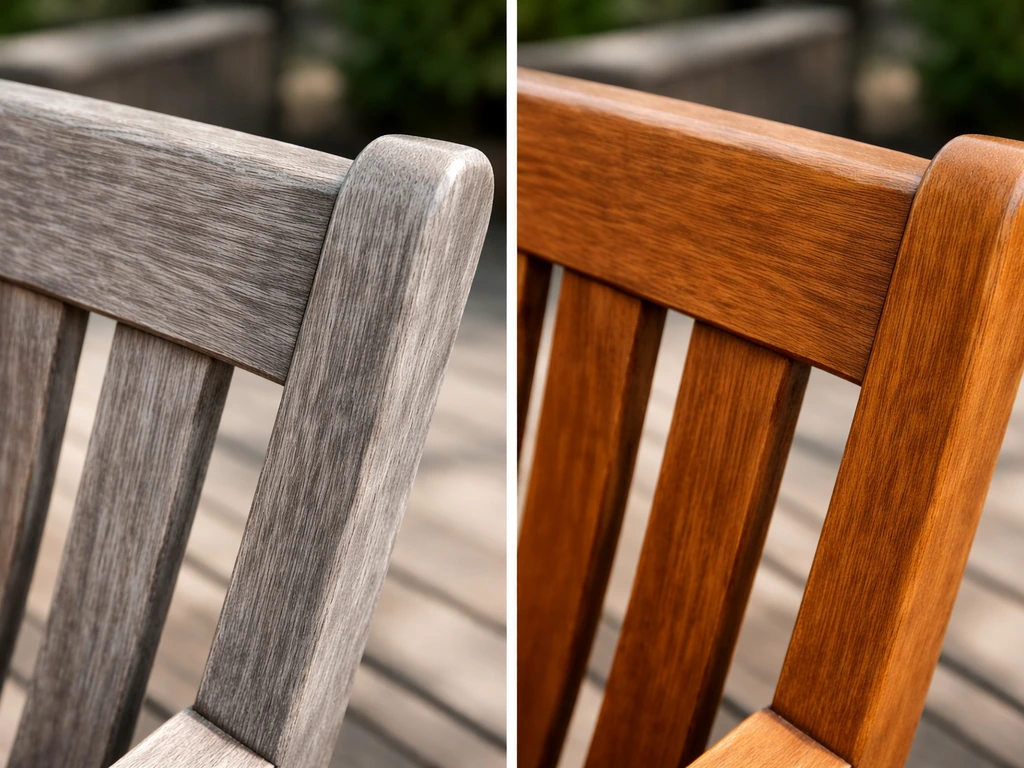
Wood needs a UV-blocking finish that either penetrates the wood fibers or forms a protective film on top. Penetrating oil-based finishes (like teak oil, Australian timber oil, or a product like Ready Seal) soak into the wood and protect from inside. They are easier to maintain because you do not strip them to recoat, you just clean and apply another coat.
Film-forming finishes like spar varnish create a harder surface layer with stronger UV blocking, but when they fail they peel, and you need to strip them before recoating. For most patio furniture, penetrating finishes are the practical choice unless you want a glossy showroom look and are willing to do the maintenance that comes with it.
For the best finish for wood patio furniture, use a penetrating wood sealer that includes UV absorbers, so it protects from inside and helps keep the grain looking consistent over time penetrating finishes. Either way, look for products that explicitly list UV absorbers in their formulation, not just "UV resistant" as a vague claim.
Metal furniture (powder-coated or painted)
If the powder coat is intact, your job is to keep it that way. A coat of car wax or a purpose-made metal protectant applied once or twice a year creates a sacrificial barrier that slows UV penetration into the coating itself. Once chalking has started, you need to clean the chalk off, address any bare spots with a touch-up paint rated for exterior metal, and then wax or seal the whole piece.
For new metal furniture, look for frames with AAMA 2605-compliant coatings if you are buying in a hot or coastal climate. That standard requires passing 10-year South Florida outdoor exposure tests with defined color and gloss retention limits, which is the highest durability bar for architectural coatings.
Wicker and resin rattan
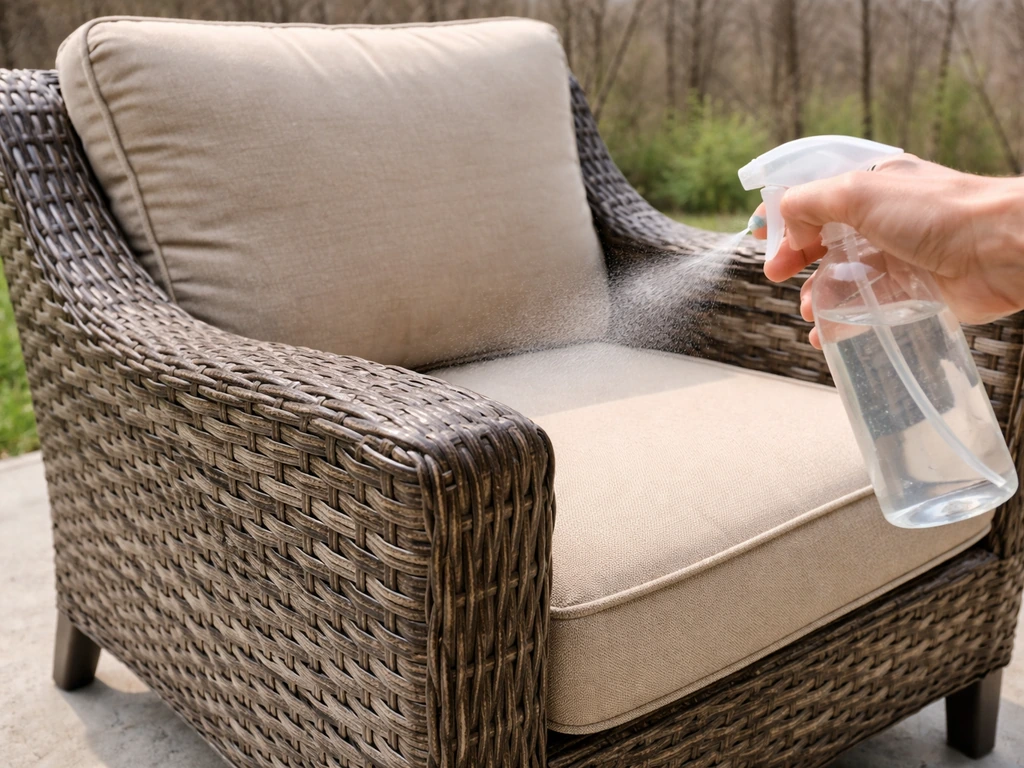
Natural rattan is genuinely not suited for year-round outdoor use in most climates, UV exposure or not. If you have natural wicker outside, a clear UV-blocking spray finish can extend its life, but you will still need to cover it or bring it in during harsh weather. Resin wicker and synthetic rattan are a different story: quality versions are UV-stabilized at the manufacturing stage. Your protection job here is mostly a UV-protective clear spray annually and keeping the furniture covered when not in use. Look for sprays that mention HALS or UV absorbers, not just "UV resistant."
Composite and WPC furniture
Wood-plastic composites (WPC) used in outdoor furniture and decking degrade via the wood flour component inside the composite. Even with a capped surface layer, UV eventually affects color and texture. A UV-blocking composite sealer or a clear penetrating UV protectant formulated for composites is your best move. Avoid film-forming finishes here because they will peel as the composite expands and contracts.
Upholstery and cushions
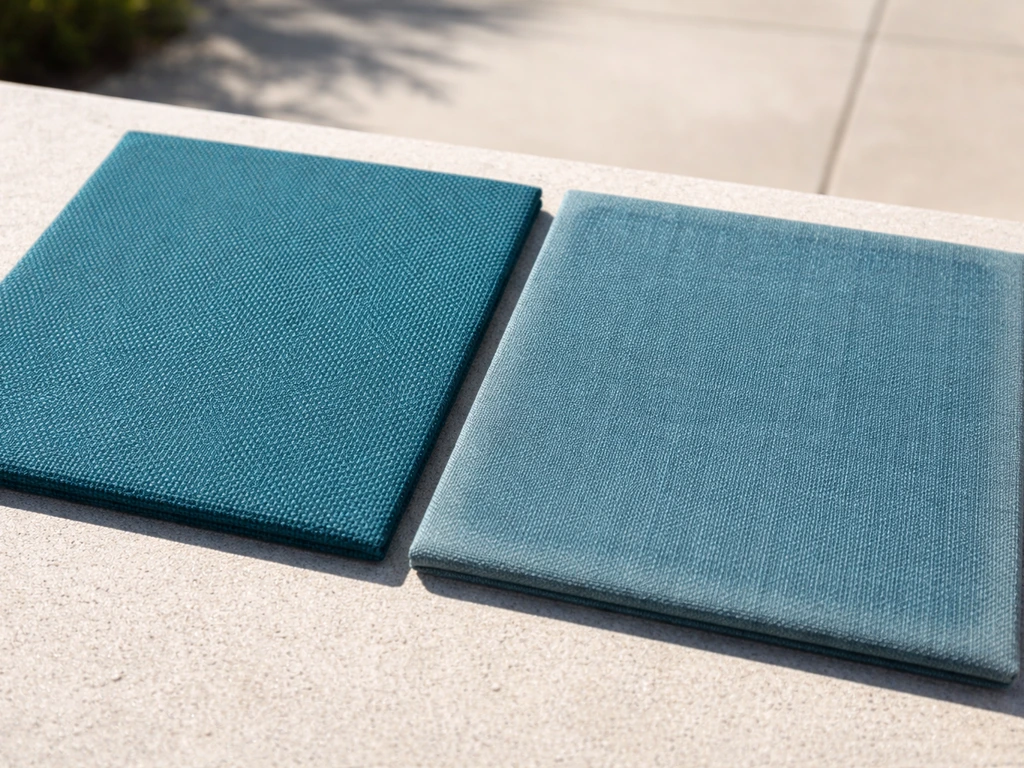
The gold standard for outdoor cushion fabric is solution-dyed acrylic, where the color is embedded in the fiber itself rather than printed on the surface. Brands like Outdura and Sunbrella publish UV performance ratings upward of 1,500 accelerated hours and UPF 50+ ratings, which means almost no UV reaches through the fabric. If you already own cushions in solution-dyed acrylic, maintenance is mostly cleaning, not re-treating. For cushions in lesser fabrics, a UV-protective fabric spray like 303 Fabric Guard adds meaningful protection. It is not a permanent fix but it buys you significantly more seasons if you reapply once or twice a year.
Covers vs sealers vs sprays: when to use each
These three approaches are not competing, they work together. But they solve different problems at different costs.
| Protection Type | Best For | UV Blocking Level | Longevity | Effort |
|---|---|---|---|---|
| UV-resistant furniture cover | All materials; full-piece protection when not in use | Very high (blocks direct UV entirely) | 3–5+ years if solution-dyed acrylic | Low: put it on and take it off |
| Penetrating sealer/finish | Wood, composite, some wicker | High when freshly applied | 2–4 years depending on surface/climate | Moderate: prep + application + recoat schedule |
| Film-forming finish (varnish/lacquer) | Wood tabletops wanting gloss | High | 1–3 years before peeling/stripping needed | High: strip and refinish cycle |
| UV-protective spray (clear) | Metal, resin wicker, hard plastics, fabric | Moderate to high | 6–18 months | Low to moderate: clean and reapply |
| Wax or polish | Metal, smooth hard surfaces | Low to moderate (sacrificial barrier) | 3–6 months | Low: buff on/off |
Covers are the single highest-impact protection you can add to any piece of furniture because they simply block UV from reaching the surface at all. But they only work when the furniture is not in use, so you still need a surface treatment underneath. Sealers and penetrating finishes are the core protection for wood and composites. UV sprays fill the gap for materials where a sealer is not practical, like metal frames or resin wicker. Wax is not a substitute for a proper sealer or finish on wood, but on powder-coated metal it genuinely helps by slowing the UV attack on the coating's resin system.
When buying a cover, look for solution-dyed acrylic fabric with ventilation panels. The solution-dyed construction means the color will not fade and the UV-blocking properties stay embedded in the fiber for the life of the cover. Ventilation panels prevent trapped moisture from creating a mildew environment underneath. A cover that fits correctly matters more than most people realize: a loose cover flaps in wind, abrades the furniture surface, and lets rain pool inside.
How to pick the right product: what labels actually mean
The outdoor furniture protection market is full of vague claims. Here is what to actually look for.
Clear vs pigmented finishes
Pigmented (tinted or semi-transparent) finishes provide better UV protection than clear finishes because the pigment particles physically block UV before it reaches the substrate. Even a light tint adds meaningful UV screening. If you want to preserve the natural look of wood, a semi-transparent stain-sealer gives you more UV protection than a purely clear finish while still showing the grain. Full solid stains offer the most UV protection of all wood finishes, but they completely cover the grain. For tabletops and showpiece pieces where the wood character matters, a clear UV-resistant finish with named UV absorbers in the formulation is worth paying more for.
UV absorbers and stabilizers
A product labeled as UV resistant could mean almost anything. What you want to see is a specific chemistry claim. UV absorbers (UVA) are chemicals that absorb UV energy and convert it to heat, protecting the substrate below. HALS (hindered amine light stabilizers) inhibit the free-radical chain reactions that UV triggers in polymers and coatings. Premium exterior finishes and outdoor-rated sprays often include both. BASF's Tinuvin product line is the industry benchmark: if a product mentions Tinuvin-type chemistry or hydroxyphenyl-triazine UV absorbers, that is a meaningful quality indicator. For fabric protectants, look for products listing UV absorbers in their active ingredients rather than just water repellency claims.
Longevity claims and performance standards
Real durability claims are backed by ASTM G155 accelerated weathering tests (xenon-arc lamps that simulate compressed years of sun exposure) or real outdoor exposure at high-UV test sites like South Florida. AAMA 2605 is the highest standard for metal coatings, requiring 10-year South Florida outdoor performance. For fabric, UPF ratings determined via AATCC TM183 testing are meaningful. UPF 50 means only 1/50th of UV energy passes through the fabric. For wood sealers, manufacturer recoat schedules give you a rough longevity benchmark: a product requiring recoat every year is delivering less total UV protection than one specifying every 3 to 4 years on vertical surfaces.
Safety and VOC considerations
Water-based UV protectants have improved significantly and are now a practical choice in most climates. Oil-based penetrating sealers still outperform water-based in deep wood penetration and water repellency in very wet climates, but they carry higher VOC loads and longer cure times. If you are comparing options for “best oil for patio furniture,” the key is still matching the product type to the material and expected UV exposure.
If you are applying indoors, in a garage, or in a poorly ventilated space, water-based is the safer call. For fabric sprays, apply outdoors and let the fabric dry completely before using the furniture. Some UV filter chemistries used in coating products are also raising environmental questions similar to those raised about sunscreen UV filters in aquatic systems, so following manufacturer disposal instructions matters.
Prep and application: do this right or the product underperforms
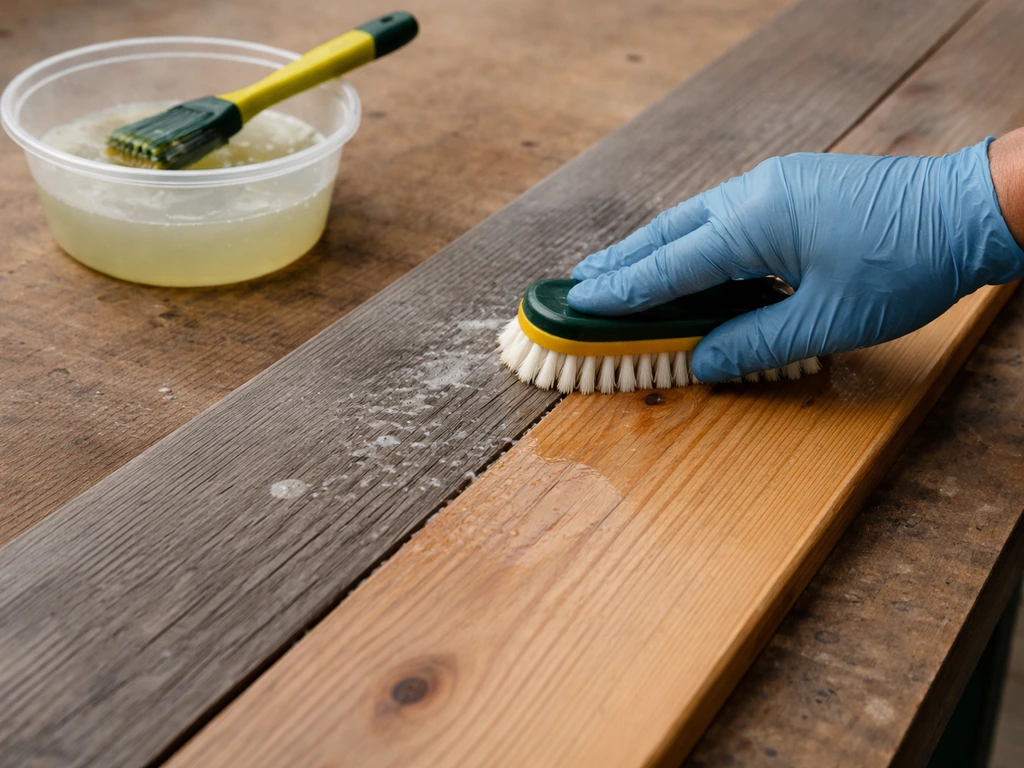
Even the best UV protectant will fail early if the surface underneath is not properly prepared. This is not a step you can skip.
Cleaning
Start with a thorough clean. For wood, a dedicated wood cleaner or an oxalic-acid brightener removes gray surface oxidation, mildew staining, and old finish residue. A brightener step after cleaning restores the wood's natural pH and opens the grain for better sealer penetration. For metal, clean off any chalk residue with a degreasing cleaner, then rinse and dry completely. For fabric, follow the fabric manufacturer's cleaning instructions, usually mild soap and water, then rinse and allow to dry fully. For resin wicker or composites, a mild soap-and-water scrub removes surface grime that would otherwise be sealed under your protectant.
Sanding
Wood that has grayed or has a failing film-forming finish needs light sanding before you apply a new sealer. For penetrating finishes, 80 to 120 grit is enough to open the surface without removing too much material. For film-forming finishes like spar varnish, you may need to strip the old finish entirely if it is peeling, then sand smooth before recoating. Composite furniture generally does not need sanding unless the surface is visibly damaged.
Composite furniture generally does not need sanding unless the surface is visibly damaged, and if you do need it, choosing the best sander for patio furniture helps you avoid over-removing material before you seal. Metal frames with peeling paint need the loose material removed and any bare spots spot-primed before a topcoat.
Moisture and temperature
Wood needs to be dry before you apply any sealer. Ready Seal specifies 12% moisture content or less as the target condition. New pressure-treated lumber needs at least 30 days (and ideally 2 to 3 months) of drying time before sealing because the preservative chemicals and moisture content need to stabilize first. Apply on a dry day when temperatures are between roughly 50 and 90 degrees Fahrenheit. Avoid applying in direct hot sun because the product can dry too fast on the surface before it penetrates, leaving a surface film instead of a deep seal.
Application
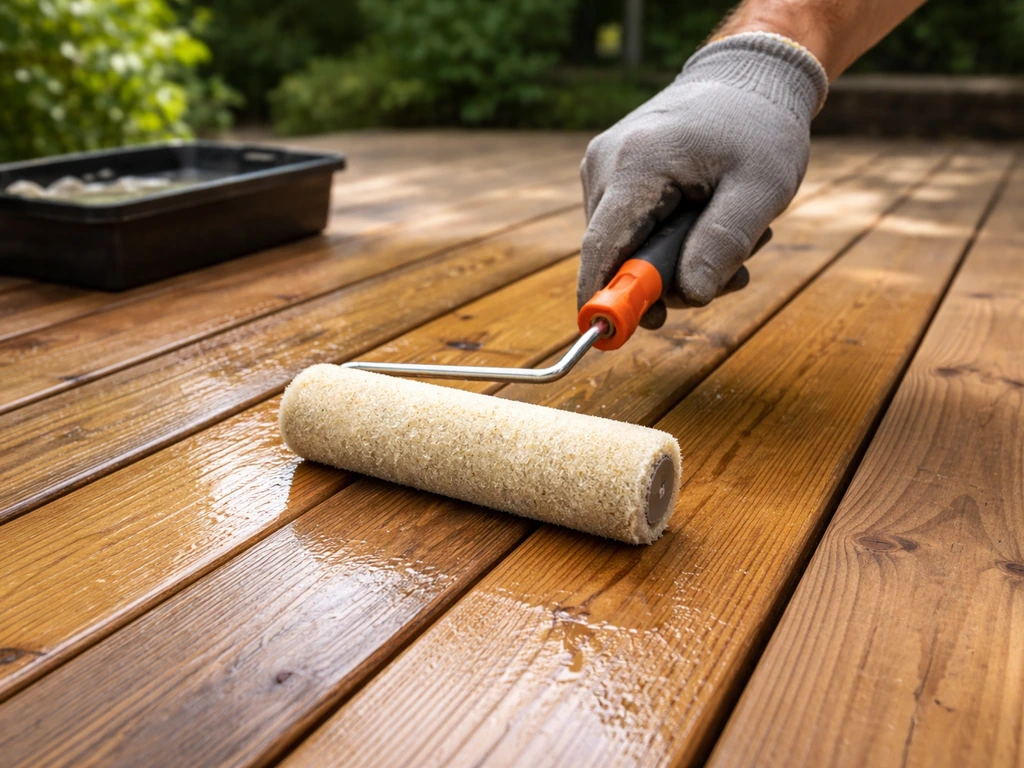
- Apply penetrating wood sealers with a brush, roller, or sprayer. If using an airless sprayer, Ready Seal recommends 40 to 60 PSI with an appropriate tip size. Brush-and-back-roll gives the most controlled penetration.
- Apply in the direction of the wood grain, working in small sections to avoid lap marks.
- Allow 48 to 72 hours of drying time between coats for most penetrating sealers. Check the manufacturer's TDS for exact guidance.
- Two coats are typically the right number for a first-time application on bare or freshly stripped wood. Maintenance coats on previously sealed surfaces usually need only one coat.
- For UV sprays on metal or plastic, apply in thin even passes and overlap by about 50%. Two thin coats beat one heavy coat.
- For fabric guard sprays, apply evenly at the distance specified on the label, let dry completely (typically several hours), and do not use the furniture until fully dry.
Seasonal maintenance and reapplication schedule
UV protection is not a one-and-done application. How often you reapply depends on the product type, the material, and how much sun the piece actually gets.
| Material / Product Type | Low Exposure (shade/covered) | Moderate Exposure | High Exposure (full sun, harsh climate) |
|---|---|---|---|
| Wood with penetrating sealer (horizontal surfaces) | Every 3–4 years | Every 2–3 years | Every 1–2 years |
| Wood with penetrating sealer (vertical surfaces) | Every 4–5 years | Every 3–4 years | Every 2–3 years |
| Wood with film-forming finish (varnish/lacquer) | Every 2–3 years | Every 1–2 years | Annually (inspect for peeling) |
| Powder-coated metal (wax/polish) | Every 6–12 months | Every 3–6 months | Every 3 months |
| Resin wicker / plastic (UV spray) | Annually | Every 6–9 months | Every 6 months |
| Fabric / cushions (UV fabric guard) | Annually | Every 6–9 months | Every 6 months or start of season |
| Furniture covers (inspection) | Check annually | Check each season | Check monthly in peak sun season |
The practical maintenance rhythm that works for most people is a spring and fall routine. In spring: clean all furniture, inspect for UV damage or finish failure, touch up bare spots, apply UV spray to metal and wicker pieces, check cover condition. In fall: deep clean, apply a fresh coat of sealer to wood if it is due, cover everything that will not be used over winter. If you live somewhere with year-round outdoor use (Florida, Southern California, the Gulf Coast), replace the fall deep-clean with a midsummer inspection and touch-up cycle.
Climate-specific recommendations
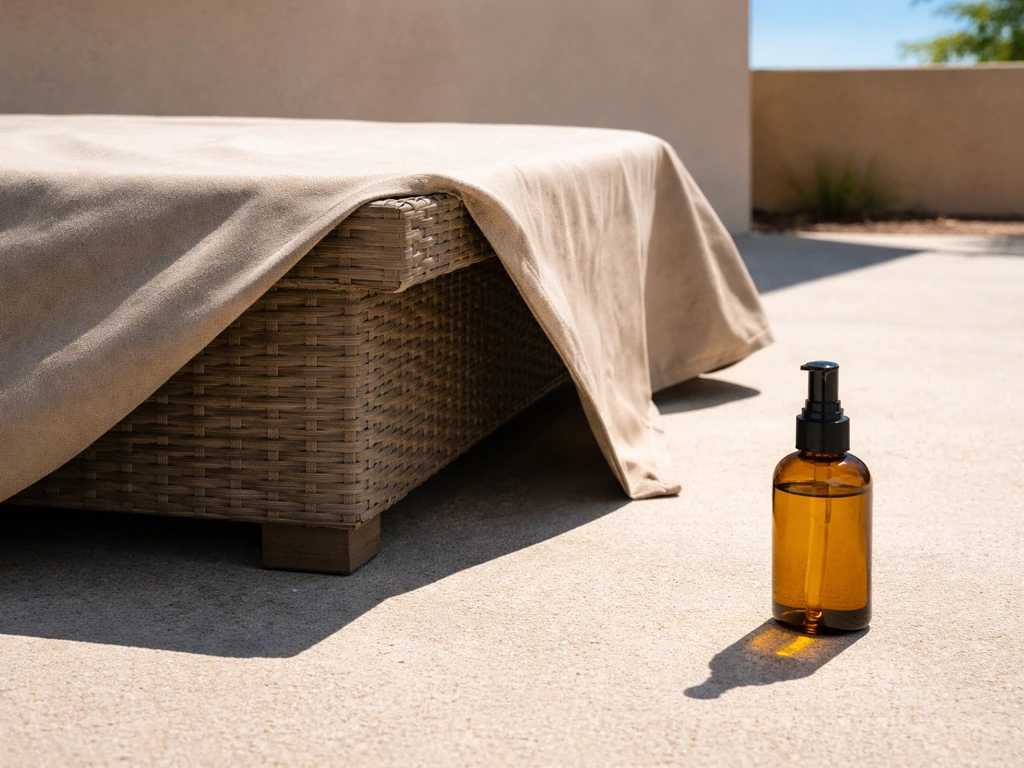
Where you live changes the math significantly. The same furniture will need different protection strategies in Phoenix versus Portland versus Miami.
Intense direct sun (desert Southwest, high altitude)
UV intensity is highest in the desert Southwest and at elevation. In these climates, pigmented finishes outperform clears because the pigment physically screens UV before it penetrates the substrate. For wood, a semi-transparent stain-sealer with named UV absorbers in the formulation is your baseline, and you should expect to recoat horizontal surfaces every one to two years. For metal frames, AAMA 2605-rated coatings are the benchmark: that standard was specifically developed against high-UV South Florida exposure. Shade structures and covers during peak afternoon hours genuinely extend finish life, which matters when you are already recoating more often than you would like.
Coastal and salt air environments
Salt air accelerates powder coat failure by working into micro-cracks in the coating and promoting corrosion underneath. The combination of UV and salt is what causes the peeling and bubbling you see on coastal patio furniture that looks fine inland. For metal in coastal environments, a fresh coat of car wax or metal protectant every three months is not excessive, and annual touch-up painting of any chips or scratches is mandatory rather than optional. For wood, marine-grade spar varnish or a marine-grade penetrating sealer with both UV absorbers and moisture-blocking capability is the right call. These products were literally designed for boats, which is about as coastal as it gets.
Hot and humid climates (Gulf Coast, Southeast)
Humidity creates two competing demands: you need UV protection, but you also need finishes and covers that let wood breathe and do not trap moisture. Film-forming finishes that seal the surface completely can trap moisture in the wood beneath them in humid climates, which leads to peeling faster than the UV degradation would have caused. Penetrating finishes are generally better here. For cushions, solution-dyed acrylic fabric is especially valuable in humid climates because it resists mold and mildew in addition to UV, and it is bleach-cleanable for the inevitable mildew that will try to grow. Make sure furniture covers have ventilation panels: a sealed cover in a humid climate creates a greenhouse effect under the cover that promotes mildew growth.
Freeze-thaw climates (Midwest, Northeast, Mountain West)
The challenge in freeze-thaw climates is not just UV, it is moisture that gets into finish cracks during warmer months and then freezes and expands, blowing finish off the substrate. The prep step matters more here than anywhere else: any micro-cracking in an existing finish needs to be addressed before winter arrives. Apply penetrating sealers in late summer or early fall while temperatures are still in the acceptable application range and the wood is dry.
Make sure Ready Seal and similar products are applied only when wood moisture is at or below 12%, because trapped moisture under the sealer in a freeze-thaw climate will push the finish off. Storing or covering furniture through winter is not just about convenience, it meaningfully extends finish life by reducing the freeze-thaw cycles the finish has to survive.
Putting it all together: a practical decision path
Start with your material. Wood gets a penetrating sealer with UV absorbers, semi-transparent if you can tolerate a slight tint. Metal gets waxed every few months and touched up when the coating chips. Resin wicker and composite pieces get a UV-protective clear spray annually. Cushions in solution-dyed acrylic need cleaning and occasional fabric guard; anything in lesser fabric gets 303 Fabric Guard or equivalent applied at the start of each season. Then add a well-fitted solution-dyed acrylic cover for everything you are not actively using.
For product selection, go beyond the label's marketing language and look for named UV absorbers or HALS chemistry in the formulation, performance standards like AAMA 2605 for metal coatings or ASTM G155 weathering test data for sealers, and manufacturer-stated recoat intervals that tell you how long the protection is actually engineered to last. Longer stated intervals generally mean more active ingredient, not just better marketing.
The finishing and sealing choices for wood connect closely with decisions about the best finish for wood patio furniture overall, the best varnish for pieces where you want a film-forming topcoat, and the best sealer for wood patio furniture where moisture and UV protection both matter. If you are restoring older furniture before sealing, the best oil for patio furniture and best sander for patio furniture are worth looking at for prep and conditioning steps. And if metal frames need repainting rather than just touch-up, the best patio furniture paint and best paint for plastic patio furniture guides cover that path in detail.
FAQ
Can I use the same UV protectant on wood, metal, and cushions?
Not usually. UV protectants bond to the substrate they are meant for, so a wood sealer used on powder-coated metal or a fabric spray used on wood often underperforms or peels. Use the product category matched to your material (wood sealer, metal protectant, composite/capped-composite sealer, fabric guard) and only “cross-apply” if the label explicitly says it is compatible with that substrate.
If I use high-quality covers, do I still need to seal or spray the furniture?
Yes, but with the right expectations. A cover blocks most UV when the furniture is not in use, but it does not replace the finish underneath because UV still reaches the surfaces on uncovered days and covers also need care (cleaning, keeping vents clear). For best results, treat covers as a second barrier, then maintain the underlying sealer or spray on schedule.
How often should I reapply fabric guard on solution-dyed acrylic cushions?
Solution-dyed acrylic cushions generally do not need re-treatment frequently, but the fabric can still lose performance if it gets contaminated. Clean according to the fabric maker, and reapply fabric guard only to non-solution-dyed cushions or if the water repellency or color stability visibly drops. Also confirm the guard is meant for your cushion fabric type before applying broadly.
Can I clean gray wood with any cleaner before applying a UV sealer?
Skip “brightening” after UV damage if you can’t rinse and neutralize thoroughly. For wood, oxalic-acid brighteners require careful application and full cleanup, otherwise residues can interfere with bonding and create uneven color under the next UV-blocking sealer. If you are unsure, test a small hidden area and verify the wood looks uniform before sealing.
What if my wood already has varnish or an old finish, can I just apply a new UV sealer over it?
No. Most wood UV failures happen at the interface between existing finish and new coating, so sanding and moisture control matter. If a film-forming finish is peeling, remove the loose material and sand smooth before you recoat, and if it is intact and sound you may still need scuff sanding for adhesion. Always check that the wood is within the specified moisture range before applying.
Is wax enough to fix powder-coated metal that is already chalking or peeling?
Car wax and metal protectants help on powder-coated metal, but they are not a substitute for addressing damage. If you see chalking, exposed bare spots, or corrosion at chips, you need to clean, remove loose material, spot prime/touch up rated for exterior metal, then apply wax/protectant over the restored areas.
Do I need different UV protection schedules for tabletops versus chair backs?
If your furniture sits outside in strong sun, you will get more UV exposure on horizontal surfaces, where recoat schedules often shorten. A practical approach is to treat “top surfaces” (tabletops, seat tops) as separate from vertical faces, and inspect those areas first in spring and fall. Plan for more frequent topcoat refresh where you see fading, roughness, or thinning film.
What changes in freeze-thaw climates that affect UV protection timing?
In freeze-thaw areas, the risk is finish failure from trapped moisture expanding, which can look like cracking or peeling unrelated to UV color fade. Prioritize fixing micro-cracks before winter, then apply only when wood moisture is at or below the product target. Consider late-summer or early-fall application so the sealer fully cures before the first cold swings.
Will applying extra layers of UV protectant last longer?
More application is not the goal, correct application is. Over-thick coats can trap solvents or moisture, prevent even penetration on wood, and lead to blotchy appearance or early peeling on composites. Follow the stated coverage rate and dry times, and apply on the recommended temperature and sun conditions so it penetrates or levels properly.
Should I choose clear UV protection or a tinted or stained finish for the best UV performance?
A slight tint can meaningfully reduce UV, but it also changes appearance. If you want to preserve grain, semi-transparent pigmented options usually give a better balance than fully clear, while solid stains deliver the most UV screening but hide more of the wood character. If you must keep it clear, choose products that specify UV absorber chemistry and accept that clear options typically need earlier recoat cycles.
How do I prevent mildew or trapped moisture under a patio furniture cover?
Moisture under a cover is a bigger issue than many people expect, especially in humid climates. Use covers with ventilation panels, keep the fabric clean, and avoid fully cinching so tightly that rain or dew cannot escape. If you remove a cover and see mildew, clean and dry fully before resealing or reapplying any protective spray.
Next Articles
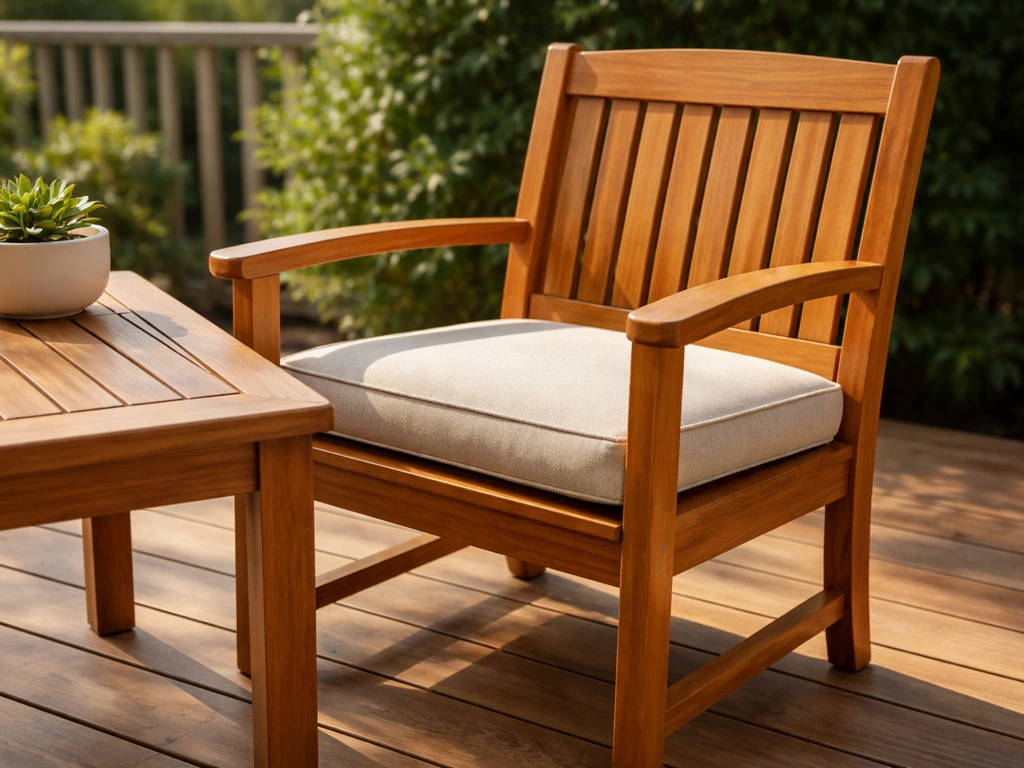
Best Oil for Patio Furniture: Teak, Wood Types, and Steps
Choose the best oil for patio furniture by wood type, fix current finishes, and apply steps for lasting water and UV pro
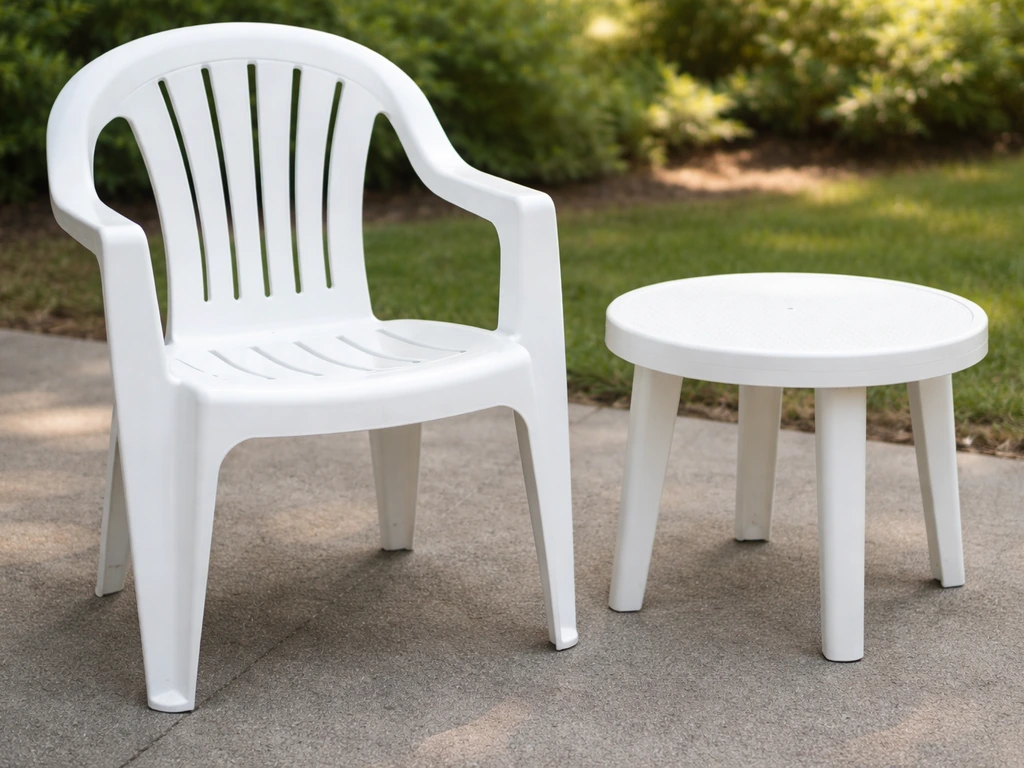
Best Paint for Plastic Patio Furniture: What Works
Pick the best paint for plastic patio furniture: prep, primers, spray vs brush, finish, curing, and lasting outdoor resu
Best Finish for Wood Patio Furniture: Choose and Apply
Pick the best outdoor wood finish for patio furniture by wood type and weather, with prep, coats, curing, and maintenanc