
Hampton Bay patio furniture is water-resistant, not waterproof. The frames, woven resin wicker, and cushion fabrics are built to handle rain and humidity without immediately failing, but none of it is rated waterproof under any standardized hydrostatic pressure test. If you leave Hampton Bay cushions outside in a downpour and expect them to perform like marine-grade outdoor gear, you will be disappointed. Think of it as weather-tolerant furniture built for everyday outdoor use, with the expectation that you cover it or bring cushions inside when storms roll through.
Is Hampton Bay Patio Furniture Waterproof? Facts & Care

Theo Tierney
18 Jul 2026
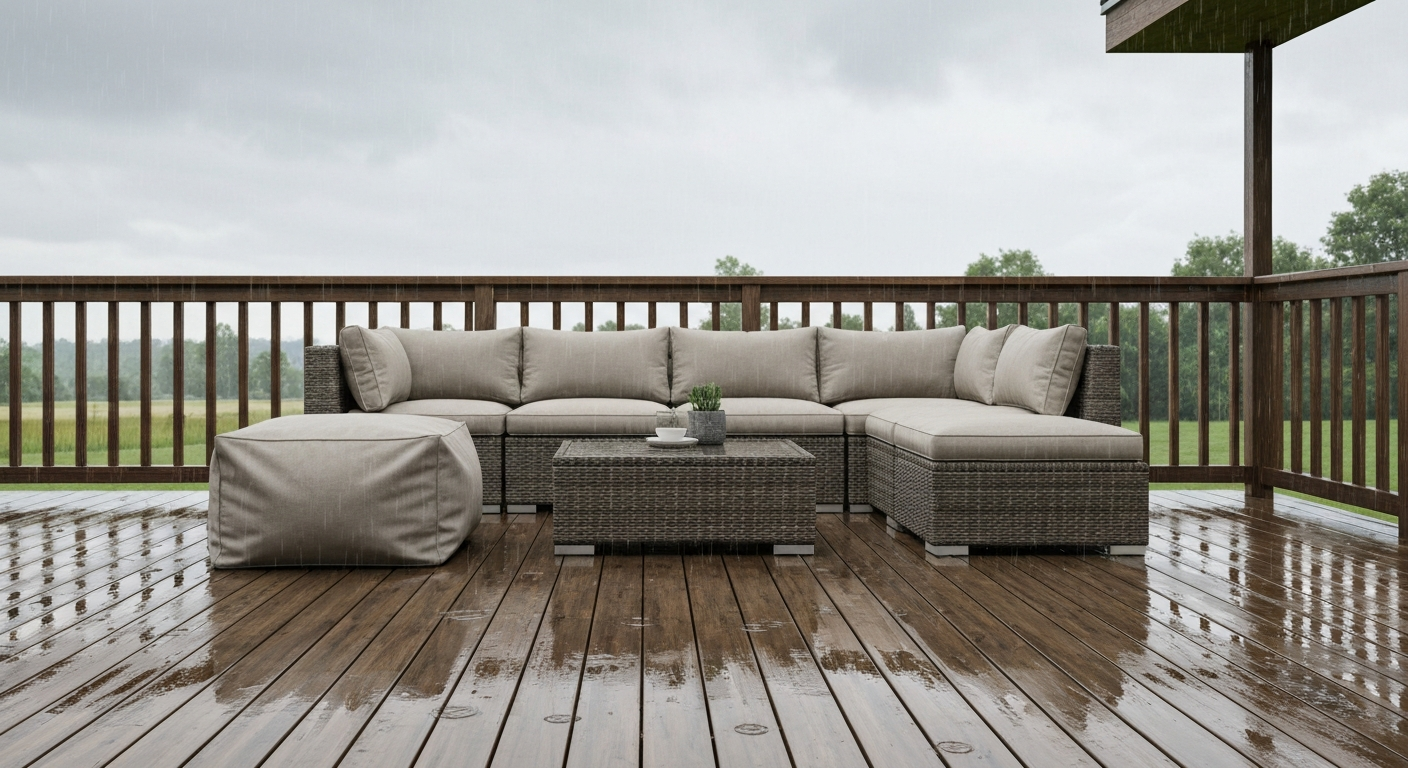
Waterproof vs. water-resistant: why the distinction matters for patio furniture
These two terms get used interchangeably in outdoor furniture marketing, but they mean very different things. Waterproof means water cannot penetrate the material under sustained pressure. In the textile world, this is measured with a hydrostatic head test (ISO 811 / AATCC 127), where higher pressure ratings mean stronger protection. A material tested to 1,500 mm or more of water column pressure qualifies as truly waterproof. Water-resistant means the material sheds light moisture and resists surface absorption for a period of time, but it will eventually allow water to soak through if exposed long enough or to enough volume.
For patio furniture specifically, almost nothing you buy at a mass-market price point is truly waterproof across all components. Frames can be corrosion-resistant without being waterproof. Fabrics can repel a quick shower without surviving a week of rain. Even Sunbrella, which is one of the best outdoor fabric brands available, officially lists "Waterproof: No" in its specification sheets, though it carries an excellent water resistance rating. So when Hampton Bay product pages say "all-weather" or "water-repellent," that is water resistance language, not a waterproof claim backed by a test standard.
Hampton Bay materials and how they handle direct rain
Hampton Bay sells across a wide range of frame materials and surface treatments. Understanding each one separately is the only honest way to answer whether a specific piece will survive your climate.
Steel frames with powder-coat finish
Many Hampton Bay collections use powder-coated steel. The powder-coat layer is the key: it creates a sealed barrier against moisture and oxidation, and it can perform well in standard rain exposure. The vulnerability is at edges, welds, and any chips or scratches where bare metal is exposed. Once moisture gets under the coating, rust spreads fast on steel. The powder-coat finish is typically rated for about 2 years under Hampton Bay's warranty, which is honest about its expected lifespan in outdoor conditions. Salt air accelerates degradation significantly, so steel frames are a poor choice for coastal climates regardless of how good the finish is.
Aluminum frames
Aluminum is the better frame material for weather resistance. It does not rust, it handles humidity, and it tolerates rain indefinitely under normal conditions. Hampton Bay uses aluminum frames in many of its higher-end collections. The coating on aluminum still chips and can look worn over time, but the underlying metal will not corrode the way steel does. For coastal exposure, aluminum with a quality powder-coat is far more reliable than steel, though it still benefits from rinsing off salt residue regularly.
Resin wicker (all-weather wicker)
Hampton Bay's woven pieces, including popular collections like the Laguna Point sectional, use all-weather resin wicker rather than natural wicker. Resin wicker is extruded plastic woven over a metal frame, and it is genuinely rain-tolerant. Water runs off the surface, it does not absorb moisture the way natural fiber does, and it resists mildew and cracking better than organic alternatives. The main issue is UV degradation over several years and potential color fading, not water damage. It is one of the more weather-durable components in the Hampton Bay lineup.
Natural wicker
If you have a Hampton Bay piece labeled natural wicker, rattan, or seagrass, treat it as indoor/covered porch furniture. Natural fibers swell, crack, mold, and deteriorate quickly with repeated wet-dry cycles. Hampton Bay sells primarily resin wicker for outdoor use, but it is worth double-checking any product listing before assuming.
Plastic and polypropylene pieces
Solid plastic and polypropylene furniture from Hampton Bay is essentially water-immune at the frame and surface level. Water does not penetrate these materials, they will not rust, and they handle rain without any protective coating. The trade-off is aesthetics and UV fading rather than moisture damage.
| Material | Rain Tolerance | Rust/Corrosion Risk | Best Climate Fit |
|---|---|---|---|
| Powder-coated steel | Moderate (coating-dependent) | High if coating chips | Mild, low-humidity climates |
| Powder-coated aluminum | Good | Low | Most climates, including coastal with maintenance |
| All-weather resin wicker | Good | None (plastic) | Most climates; UV fading is main concern |
| Natural wicker/rattan | Poor | N/A (mold risk instead) | Covered or indoor use only |
| Polypropylene/solid plastic | Excellent | None | Any climate |
Hampton Bay cushions and fabrics: what water-resistant actually looks like
This is where most Hampton Bay owners run into trouble. The cushion fabric and the fill material behave very differently when it comes to water.
Hampton Bay's CushionGuard fabric is marketed as water-repellent and stain-resistant. In practice, the surface treatment does repel light rain and spills reasonably well for a while. But CushionGuard is not a hydrostatic-rated waterproof fabric. It uses a surface treatment rather than a fundamentally waterproof weave. Over time, the repellency degrades with UV exposure, washing, and general use. It is a solid mass-market fabric, but it is not in the same category as solution-dyed acrylics like Sunbrella, which are woven from pre-dyed fibers and carry a 5-year warranty on Home Depot's higher-end collections.
The bigger issue is the fill. Most Hampton Bay cushions use 100% polyester fiberfill rather than quick-dry reticulated foam. The Hampton Bay 20 x 24 CushionGuard High Back Dining Chair Cushion, The Home Depot (specs show 100% polyester fill) lists its filler as 100% polyester fill blank" rel="noopener noreferrer">Hampton Bay 20 x 24 CushionGuard High Back Dining Chair Cushion — The Home Depot (specs show 100% polyester fill). Polyester fill is absorbent. If a cushion gets thoroughly soaked in a heavy rain, that fiberfill holds moisture for a long time, creating a perfect environment for mildew to develop inside the cushion even after the outer fabric looks dry. Hampton Bay's own care guide acknowledges this reality by telling owners to rinse cushions and let them drip dry completely, and to bring cushions indoors when not in use. That is not the behavior of a waterproof product. For a focused explainer on whether patio furniture cushions are waterproof, see Are patio furniture cushions waterproof.
Quick-dry cushions use reticulated (open-cell) foam, sometimes called DryFast foam, which allows water to drain through rather than absorbing it. Paired with a waterproof inner liner, that construction dramatically reduces dry time and mold risk. Most Hampton Bay cushions at standard price points do not use this construction. If you want truly rain-tolerant cushions, look specifically for products that list reticulated foam or DryFast fill in the spec sheet.
Hampton Bay covers: marketed as waterproof, but read the fine print
Hampton Bay sells patio furniture covers separately, and some are labeled "waterproof" in their product listings on Home Depot. These covers are typically made from polyester with a polyurethane or PVC coating and are marketed with features like waterproof protection and mildew resistance. For short-to-medium rain events, they generally do what they say. The caveat is that "waterproof" on a $30-$50 cover is a marketing claim rather than a hydrostatic head rating. Seams and vents are weak points, and cheaper cover materials can crack or degrade with UV and temperature cycling in two to three seasons.
That said, even an imperfect cover is dramatically better than no cover. A cover reduces direct UV exposure, limits water pooling in frame joints, and extends the life of both the frame and any cushions stored underneath. Hampton Bay's own guidance specifically recommends covering the patio set and bringing cushions indoors when the set is not in use, which is an honest acknowledgment that the furniture itself is not designed for indefinite unprotected outdoor exposure.
Can you leave Hampton Bay furniture out in the rain?
The frame can handle it, at least in the short term. Aluminum and resin wicker frames will not be damaged by a rain shower or even a few days of wet weather. For alternatives specifically designed to withstand being left in the open, consider patio furniture that can get wet which uses marine-grade aluminum, waterproof fabrics, and quick-dry cushions. Powder-coated steel frames are fine in rain as long as the coating is intact, but any chips or scratches become entry points for rust. The instruction from Hampton Bay's customer service is clear: do not allow water to build up in the frame. This points to a real design concern. Water pooling inside hollow frame tubes accelerates corrosion from the inside out, where you cannot see it or treat it easily. If you’re asking 'can patio furniture get wet', the short answer is yes for short periods, but prolonged exposure will cause deterioration unless the pieces are designed and maintained for it.
Cushions are a different story. For more on how cushions and other components fare in storms, see our patio furniture when it rains guide. Standard polyester-fill cushions left out in the rain will get saturated and stay wet for an extended period. In warm, humid weather, that is a mold and mildew problem within days. In cold weather, saturated cushions can freeze, which degrades the fill material faster. Leaving cushions out through repeated rain cycles will noticeably shorten their usable life, and Hampton Bay's warranty explicitly excludes damage caused by weathering and elemental exposure. If you're concerned about weather-related loss, read our guide on whether homeowners insurance covers patio furniture. This is not unique to Hampton Bay, but it is important to understand before you assume covered storage is optional.
Protective measures that actually make a difference
There are practical steps you can take to extend the life of Hampton Bay furniture regardless of which collection you own. None of these are complicated, but they make a real difference over multiple seasons.
- Bring cushions inside when rain is forecast or when you are done using the furniture for the day. This one habit extends cushion life more than any other single action.
- Use a fitted furniture cover rated for outdoor use during extended periods when the furniture is not in use. Look for covers with vents to prevent condensation buildup underneath.
- Elevate furniture slightly off a concrete or wood deck surface using furniture feet or pads. This improves air circulation under frame legs, reduces moisture retention, and slows corrosion at contact points.
- Inspect powder-coated frames each spring for chips or rust spots. Touch up with outdoor metal paint or a matching rust-inhibiting primer immediately. A small scratch treated early prevents a large rust patch later.
- Apply a waterproofing spray (such as 303 Fabric Guard or similar fluoropolymer-based treatments) to CushionGuard fabrics once per season. This restores the surface repellency that degrades with UV exposure and cleaning.
- Rinse aluminum and steel frames with fresh water after coastal rain or if you live within a few miles of the ocean. Salt residue accelerates coating breakdown even on quality powder-coat finishes.
- Store cushions and fabric pieces indoors during the off-season, especially in climates with snow, ice, or extended cold-wet periods.
Climate-specific guidance: what to change based on where you live
Climate is where generic furniture advice breaks down fastest. A Hampton Bay set that performs fine in Phoenix for ten years may look rough after three seasons in Miami or coastal Maine. Here is how to think about it by climate type.
Humid climates (Southeast, Gulf Coast, Pacific Northwest)
Humidity is the primary enemy of cushion fills and frame coatings. Polyester fiberfill absorbs ambient moisture even without direct rain contact, and mildew can establish inside a cushion that never got directly wet. In humid climates, the priority is maximum airflow around and through cushions, frequent drying in sunlight, and bringing cushions in overnight. Aluminum frames outperform steel significantly here. For Hampton Bay specifically, look for collections with aluminum frames and consider upgrading to aftermarket quick-dry foam cushion inserts if you want to leave cushions outside more freely.
Coastal and salty air environments
Salt air is more aggressive than fresh-water rain. Sodium chloride in the air attacks powder-coat finishes and accelerates corrosion at an accelerated rate compared to inland environments. ASTM B117 salt spray testing is the industry standard for evaluating this, and the test reveals that even good powder-coat finishes have limits. The Powder Coat Applications: Final Report, U.S. EPA (technical report referencing salt‑spray testing) documents that powder‑coat formulations are commonly evaluated in salt‑spray (ASTM B117) chambers to characterize corrosion performance, with many reports showing resistance measured in the hundreds of hours Powder Coat Applications: Final Report — U.S. EPA (technical report referencing salt‑spray testing). Within a few miles of the ocean, Hampton Bay steel frames require frequent inspection and touch-up to stay ahead of rust. Aluminum frames are genuinely better here: aluminum does not rust and handles salt air much more gracefully. Resin wicker also performs well since the plastic woven surface has nothing to corrode. If you are on the coast, prioritize aluminum frame collections over steel ones and rinse frames monthly.
Snowy and wet cold climates (Northeast, Upper Midwest, Mountain regions)
Cold-wet cycles are hard on paint, coatings, and cushion fill materials. Freeze-thaw cycling causes moisture inside hollow steel frames to expand and contract, which can crack welds and push corrosion from the inside out. Snow sitting on resin wicker or cushions is manageable if addressed promptly, but leaving furniture unprotected through winter is a reliable way to shorten its life significantly. Full winterization is the right strategy here: clean and dry all cushions, store them indoors, cover frames with quality waterproof covers, or move pieces into a garage or shed entirely. Aluminum and solid plastic pieces handle winter storage better than steel.
| Climate Type | Best Frame Material | Cushion Strategy | Cover Necessity |
|---|---|---|---|
| Humid / Southeast | Aluminum | Store indoors daily; consider quick-dry foam inserts | High — use covers when furniture is idle |
| Coastal / salt air | Aluminum (rinse monthly) | Bring inside; rinse fabrics regularly | High — plus fresh-water rinse of frames |
| Snowy / cold-wet | Aluminum or solid plastic | Full indoor storage for winter | Critical — or full interior storage |
| Dry / arid (Southwest) | Steel or aluminum | Bring in occasionally; UV protection more critical | Moderate — mainly for UV and dust protection |
Buying checklist: what to verify before you buy Hampton Bay (or any patio furniture)
Marketing copy on product pages is optimistic by design. These are the specific things worth verifying in the actual product specifications or warranty document before purchasing.
- Frame material: confirm whether it is aluminum or steel. "Alloy steel" or simply "metal" often means steel. Aluminum will be explicitly listed as aluminum.
- Finish type: look for "powder-coated" rather than painted, and check whether the warranty covers finish peeling or rust — Hampton Bay's powder-coat warranty is typically 2 years.
- Cushion fill: check whether the spec sheet lists polyester fiberfill (absorbent, slower drying) or reticulated/DryFast foam (drains quickly, mold-resistant). Most Hampton Bay standard cushions use polyester fill.
- Fabric type: CushionGuard is water-repellent but not waterproof and lacks a hydrostatic rating. Sunbrella or solution-dyed acrylic fabrics offer better long-term fade and moisture resistance and typically carry a longer warranty (5 years vs. 2 years for standard CushionGuard).
- Warranty coverage and exclusions: read the exclusions section. Hampton Bay warranties explicitly exclude damage from weathering, salt water exposure, and elemental fading. This tells you exactly what risk you are absorbing.
- Cover fit and waterproof claim: if buying a Hampton Bay cover, check whether "waterproof" is a feature label or comes with a specified hydrostatic rating. Look for reinforced seams and UV-resistant fabric.
- Product labeling: terms like "all-weather," "weather-resistant," and "water-repellent" all mean water-resistant, not waterproof. Only purchase furniture labeled as waterproof if you can verify the test standard behind the claim.
- Homeowners insurance: standard homeowners policies typically do not cover weather damage to outdoor furniture unless it is part of a covered peril like wind or hail. Do not assume your insurance protects Hampton Bay pieces left out year-round.
When Hampton Bay is the right choice and when it is not
Hampton Bay delivers real value in mild-to-moderate climates where you will actively maintain the furniture, store cushions regularly, and use a cover during off-season periods. The aluminum-frame collections with CushionGuard fabrics are genuinely solid performers for the price point, and resin wicker bodies hold up well with basic care. If you are buying outdoor furniture for a covered porch, a mild-weather region, or a situation where you will follow the care instructions, Hampton Bay is a reasonable buy.
Where Hampton Bay falls short is in truly demanding exposures: coastal salt air with steel-frame collections, year-round outdoor cushion storage in humid climates, or any situation where you want to leave everything outside without regular maintenance. For those use cases, the right specification is marine-grade aluminum frames, solution-dyed acrylic fabric (Sunbrella), quick-dry reticulated foam with waterproof inner liners, and stainless steel hardware. That combination costs more, but it actually survives the conditions rather than tolerating them temporarily. For comparisons and buying recommendations, see our guide to the best waterproof patio furniture. Hampton Bay does not consistently offer that full package across its standard lineup, so knowing the gap lets you decide whether to supplement with better cushions or look at different brands entirely.
The bottom line: water-resistant is not a failure, it is a category. Hampton Bay furniture is designed to live outside with reasonable protection, not to be left saturated and uncovered season after season. Treat it accordingly and it will hold up. Ignore the care requirements in a demanding climate and the warranty exclusions will remind you why that was a mistake.
FAQ
Is Hampton Bay patio furniture waterproof?
No — Hampton Bay furniture is generally weather‑resistant but not truly waterproof. Frames, resin wicker and many fabrics are designed to tolerate outdoor conditions (rain, sun) for normal use, but cushions and some fabric finishes are water‑repellent rather than having a standardized waterproof rating. Manufacturer care instructions and warranties assume you will cover or store cushions and protect sets from prolonged or extreme exposure.
What’s the difference between waterproof and water‑resistant (or water‑repellent)?
Waterproof means a material prevents water penetration under specified test conditions (measured by hydrostatic head standards) and stays dry under sustained exposure. Water‑resistant or water‑repellent means the surface resists or sheds water for a time, but water can still penetrate under heavy/sustained rain, pressure or saturation. Most consumer patio fabrics are water‑resistant, not fully waterproof.
Which Hampton Bay frame materials tolerate direct rain?
Aluminum and powder‑coated steel frames used in Hampton Bay lines are corrosion‑resistant in normal conditions and will tolerate rain. Aluminum resists rust better than steel; powder coatings protect steel but can chip and expose metal. Coastal/salty conditions accelerate corrosion, so extra care or marine‑grade specs are recommended there.
How does Hampton Bay resin/woven wicker perform in rain?
Hampton Bay’s resin or all‑weather wicker is made to withstand outdoor exposure and handles rain well (it won’t rot like natural wicker). However, water can pool in weave crevices and on cushions; prolonged saturation may promote mildew or faster wear. Resin wicker is weather‑resistant but not a substitute for waterproof protection.
Are Hampton Bay cushions and fabrics waterproof?
Most Hampton Bay cushions use water‑repellent fabric finishes (e.g., CushionGuard) and polyester/polyfill or standard foam cores that are not waterproof. They repel light moisture and stains but can absorb water if left in heavy rain. Some covers and select SKUs may be marketed as “waterproof,” but that typically refers to the cover material rather than the cushion interior.
Do Hampton Bay furniture covers keep furniture waterproof?
Hampton Bay sells covers labeled waterproof or water‑resistant; a good cover will protect furniture from rain when properly sized and secured. Keep in mind waterproof covers can trap condensation if left on continuously in humid conditions — periodic airing or breathable covers are preferable to prevent mildew.
Next Articles
Patio Furniture When It Rains: Waterproof vs Water-Resistant
Can patio furniture get wet? How to choose, protect & maintain models, cushions, covers, and warranties.
Are Patio Furniture Covers Waterproof? What to Know
Learn what waterproof means for patio covers, common failure points, and how to choose and install for dry outdoor furni
Are Patio Furniture Cushions Waterproof? How to Tell
Learn if patio cushion covers are truly waterproof, how to test, and how to clean, dry, and store to prevent soaking.