
Most patio furniture can handle getting wet occasionally, but the materials, finishes, cushion fills, and construction details determine whether it bounces back or quietly rots, rusts, and molds over a season or two. If you want furniture you can leave outside through rain, sprinklers, dew, and the occasional surprise storm without babysitting it, you need to shop for specific materials and verify specific details on product pages before you buy.
Patio Furniture That Can Get Wet: What to Buy and Do

Theo Tierney
7 May 2026
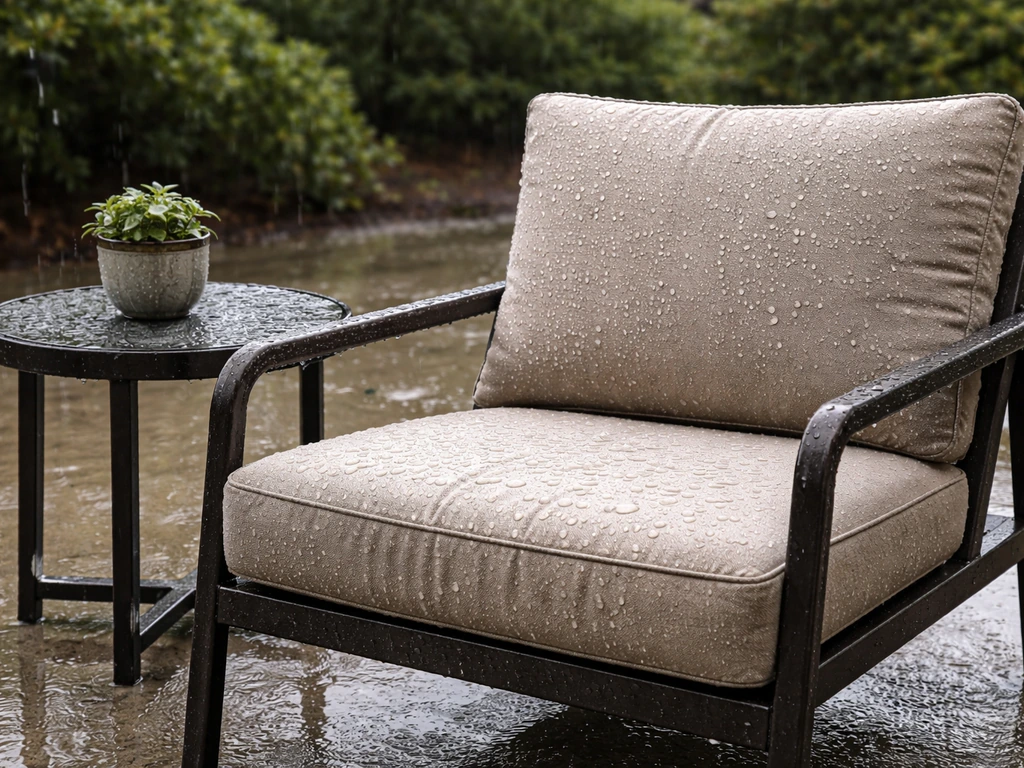
If you need patio furniture when it rains, focus on materials and construction that drain quickly and resist rust, rot, and mold. But even if a product is marketed for outdoor use, the real question is whether the patio furniture is waterproof under normal rain conditions is patio furniture waterproof. To answer can patio furniture get wet without causing rot, rust, or mildew, you have to choose materials and cushion fills designed for moisture exposure.
Here is exactly how to do that.
Why getting wet is the real test for outdoor furniture
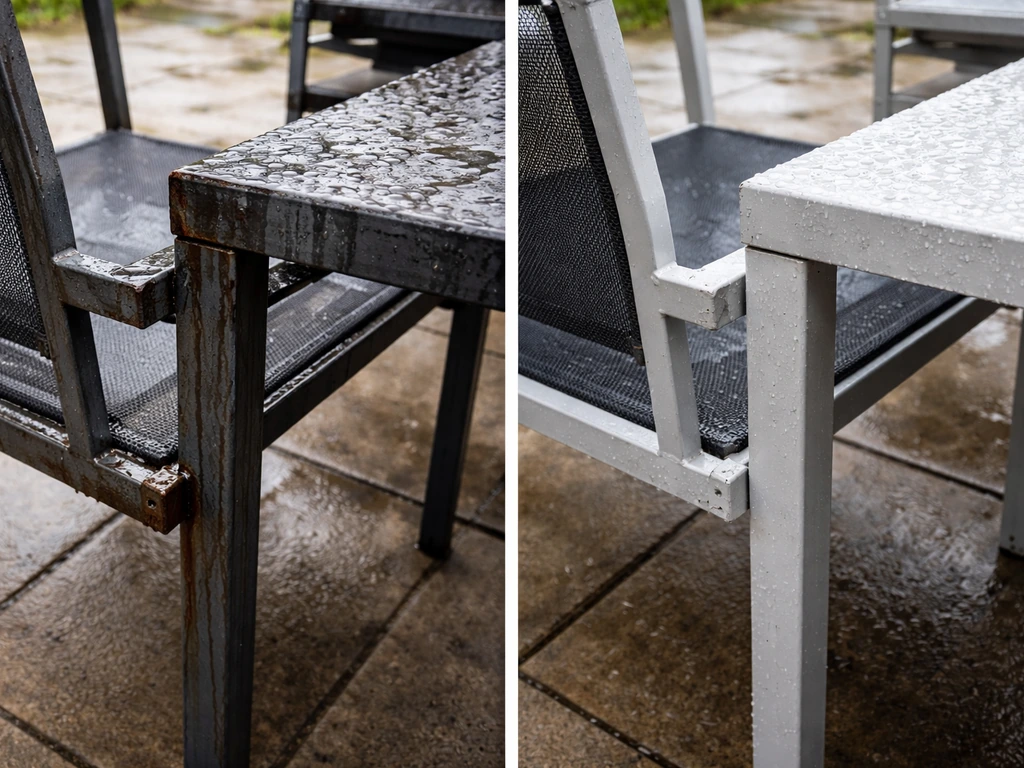
Rain is the obvious culprit, but it is rarely the only source of moisture that destroys patio furniture. Sprinkler overspray hits frames and cushions several times a week during summer. Morning dew soaks into any cushion left outside overnight. Tropical storms and extended rainy seasons push water into joints, welds, and crevices that look sealed but are not. Even normal condensation from a humid evening can pool inside hollow metal frames and stay there for days.
The problems this moisture causes depend on the material. Steel rusts from the inside out once water gets into a scratch or a drain hole. Natural wicker warps, swells, and mildews within a season of regular soaking. Cushion fills that trap water become breeding grounds for mold fast, especially in warm climates. Even teak, one of the most water-tolerant woods on the market, can expand, contract, and push out liquid in freeze-thaw conditions if it absorbs enough moisture over the winter. None of this means you cannot have beautiful, functional outdoor furniture that handles rain and sprinklers. It means you need to pick the right stuff and set realistic expectations about what each material can actually take.
Best materials for wet weather: what actually holds up
Not all outdoor-labeled furniture is built for the same level of wet exposure. Here is how the main material categories stack up in real conditions.
Aluminum
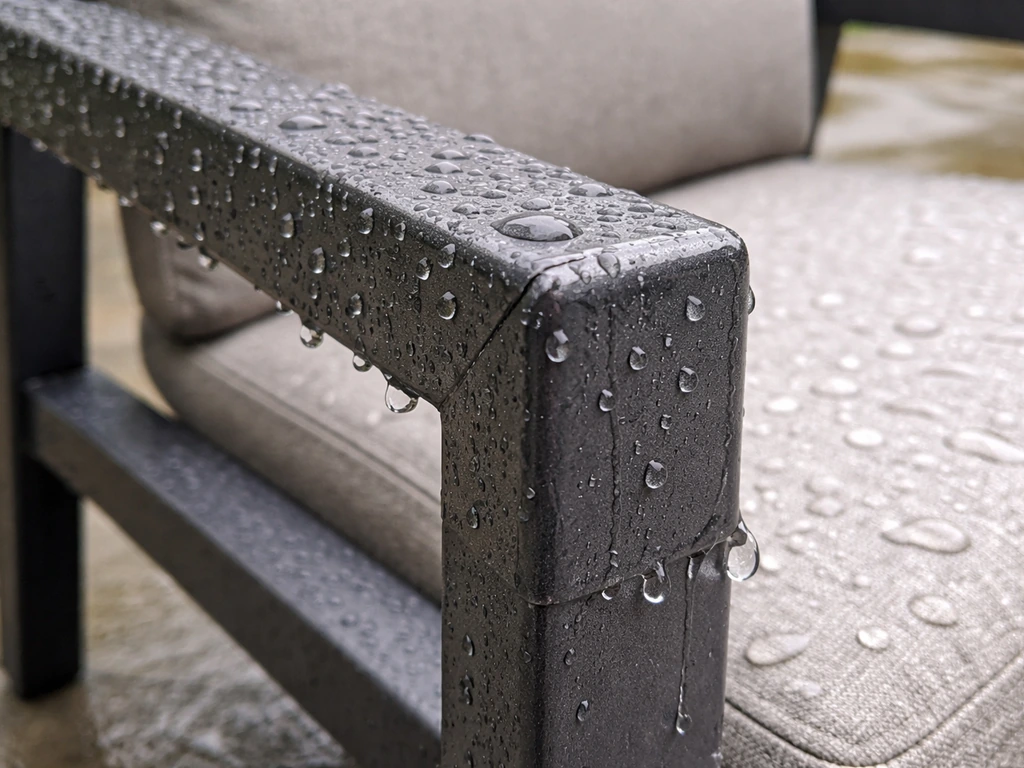
Cast or extruded aluminum is the best all-around frame material for wet environments. It does not rust, it handles freeze-thaw cycles better than steel, and a quality powder-coat finish that has been tested to standards like ASTM B117 or ISO 9227 for salt-spray corrosion will resist even coastal air. To find the best waterproof patio furniture, look for powder-coated aluminum, tightly sealed construction, and cushions that drain quickly after rain.
If you live anywhere with humidity, rain, or near saltwater, aluminum is the frame I would tell you to start with. The one thing to watch: if the powder coat gets chipped and is not touched up, moisture gets in and the coating can bubble and peel from underneath. Touch up chips promptly.
Teak and other hardwoods
Teak is genuinely exceptional in wet conditions because of its natural silica and oil content. You can leave quality teak outside in all weather and it will not rot or warp the way pine or eucalyptus will. Rain washes over it, it dries, and it moves on. Over time it will silver to a grey patina, which is harmless and easy to restore if you prefer the golden color.
The maintenance traps with teak are real though: teak oil sounds helpful but it actually attracts mildew in warm, humid climates and does not extend the furniture's functional life. Skip the oil. If you want to maintain color, use a teak sealer or protector instead, and let the wood dry completely (at least a full day) before applying anything. Other hardwoods like shorea or ipe can perform well, but they need more regular sealing to match teak's natural wet tolerance.
All-weather resin wicker
The key word here is resin. True all-weather wicker is synthetic, typically woven polyethylene or vinyl, and it resists water, UV, and mildew without needing to be sealed. Natural rattan or paper-wrapped wicker sold as patio furniture is a trap: it looks similar but falls apart fast in wet conditions. When you are shopping, look specifically for polyethylene resin weave over a welded aluminum frame, plus UV inhibitors built into the weave. The weave itself is not the weak point in this setup; the frame underneath and the cushions on top are where wet-weather problems start. Buying synthetic wicker from a brand that uses a proper welded aluminum base eliminates most of the structural risk.
Steel (including stainless)
Powder-coated steel can work in moderate wet climates, but it is the material that requires the most maintenance vigilance. Once coating fails, steel rusts quickly. In coastal or very humid climates, I generally would not recommend steel frames as a first choice. If you are looking at stainless steel, grade matters more than the label: 316 stainless is far more corrosion-resistant in salt air and chloride environments than 304, but even 316 is not absolutely corrosion-proof in continuous seawater contact. Stainless hardware on aluminum frames is a good middle-ground approach many quality brands use.
HDPE and composite materials
High-density polyethylene (HDPE) lumber and recycled composite materials are genuinely waterproof at the frame or slat level. They will not absorb water, rot, splinter, or need sealing. The trade-off is that they can look plastic and utilitarian if the design is not well executed, and cheaper versions can fade from UV. Good quality HDPE furniture with UV stabilizers is an excellent long-term choice for anyone who wants truly low-maintenance, wet-tolerant furniture, especially near pools or in climates with heavy rainfall.
| Material | Rust/Rot Risk | Best Climate Fit | Maintenance Level | Wet Tolerance |
|---|---|---|---|---|
| Aluminum (powder-coated) | Very low | All climates, coastal | Low | Excellent |
| Teak | None (rot) | All climates | Low-moderate | Excellent |
| Resin wicker (PE over aluminum) | Low (frame only) | All climates | Low | Very good |
| HDPE/composite | None | All climates, poolside | Very low | Excellent |
| Powder-coated steel | Moderate | Dry-moderate climates | Moderate-high | Fair |
| 316 Stainless steel | Low | Coastal (not direct seawater) | Low-moderate | Good |
| Natural wood (pine, cedar) | High (rot) | Dry climates only | High | Poor |
| Natural rattan/wicker | High (rot/mold) | Covered/sheltered only | High | Very poor |
What to actually verify on product listings before you buy
This is where most buyers go wrong. The words waterproof, weather-resistant, and water-resistant get thrown around on product pages in ways that mean very different things, and sometimes they mean almost nothing. Under U.S. consumer-protection rules, a product technically cannot be called waterproof unless it prevents water from contacting its contents under normal use during its anticipated life. That standard keeps the term honest for things like watches and electronics, but outdoor furniture rarely gets labeled that way. Instead you will see weather-resistant or outdoor-rated, which are essentially marketing descriptions with no standardized testing threshold behind them.
A more useful signal is whether the brand references actual test methods. BIFMA's OF-2025 outdoor furniture framework, released in 2025, sets a methodology that includes water spray applied from above and all four sides to evaluate real-world rain exposure. The [BIFMA OF](https://cdn. ymaws.
com/www. bifma. org/resource/resmgr/standards/Outdoor-Furniture-Whitepaper. pdf)-2025 outdoor furniture framework describes a “rain spray” test cycle under a rain spray apparatus using UL 588 19th Ed Section 89 (modified), with a full-sample exposure time of 120 ± 2 minutes.
If a brand references BIFMA outdoor standards, that tells you something. Salt-spray testing to ASTM B117 or ISO 9227 tells you the finish on a metal frame has been evaluated for corrosion. For fabrics, look for references to AATCC 22 spray testing or ASTM D3393 for coated fabrics. For fabric spray testing guidance, AATCC’s “[Water Absorbency Spray Rating (WASR) Testing](https://www.
aatcc. org/wp-content/uploads/2020/10/Water-Absorbency-Spray-Rating. pdf)” describes WASR as an absorbency evaluation used alongside AATCC TM 22 after specified conditioning (document references “after 30HLTD”). These are not perfect guarantees, but they are far better than a product page that only says weather-resistant.
Beyond certifications, here is what to check on every product listing:
- Frame material: aluminum vs steel vs HDPE, and whether joints are welded or bolted (welded aluminum is stronger and less prone to water intrusion at connection points)
- Fastener material: stainless steel or aluminum hardware matters more than people realize, especially in humid or coastal climates where zinc or standard steel screws rust out first
- Finish type: powder-coat thickness and UV stability, or in the case of wood, whether it arrives sealed or raw
- Drainage holes: hollow frame sections need drain holes at the lowest point so water does not pool inside and freeze or cause rust from within
- Cushion fabric: Sunbrella and other solution-dyed acrylic fabrics are the gold standard for outdoor wet resistance; cheaper fabrics labeled outdoor may still absorb water and trap moisture
- Cushion fill: the fabric matters far less than the foam inside; more on this below
- Cover included or sold separately: quality sets should either not need covers or come with them; budget sets that need covers to survive rain are a cost and hassle to factor in
Cushions, upholstery, and covers: what survives a soaking and what does not
Honestly, cushions are where most patio furniture wet-weather problems actually start. The frame can be perfect aluminum, the weave can be premium PE resin, and if the cushions trap water in their fill for three days after a rainstorm, you will have mildew within a season. This is the part of the buying process people under-research.
Cushion fabric
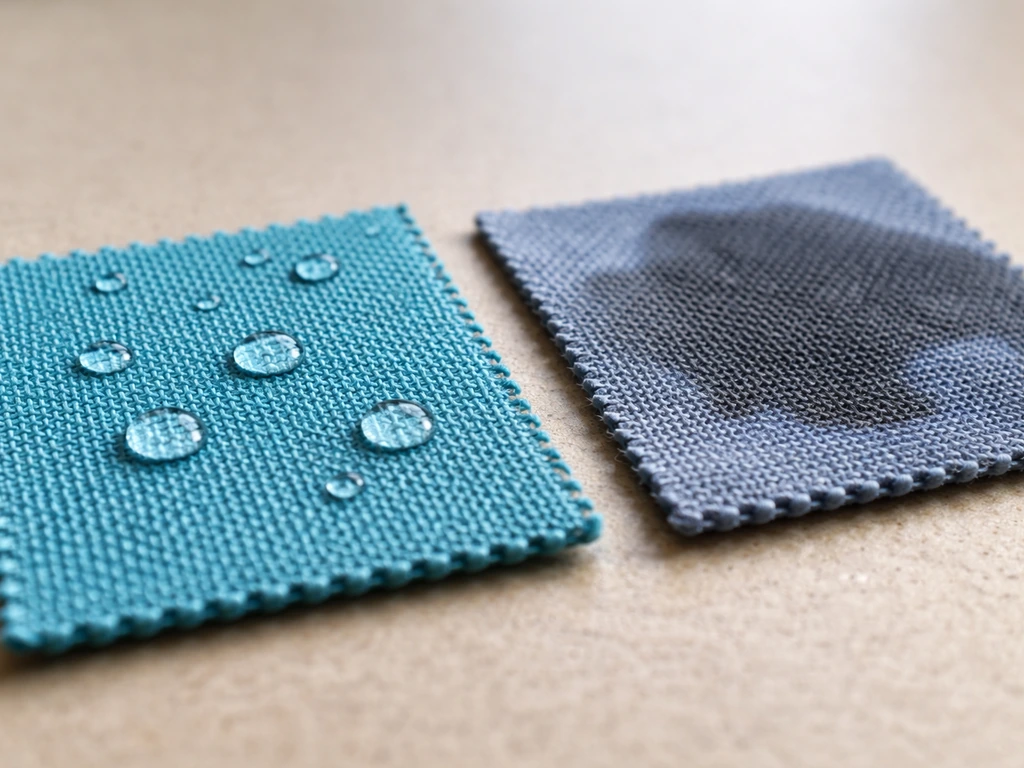
Solution-dyed acrylic fabric, most famously made by Sunbrella, is the benchmark for outdoor cushion fabric. The color goes all the way through the fiber rather than sitting on the surface, so fading and degradation from UV and moisture are dramatically reduced. Critically, Sunbrella fabrics do not promote mildew growth on their own, though mildew can still grow on dirt or organic debris that collects on the surface. That means regular cleaning still matters.
When mildew does appear, a diluted bleach solution removes it without damaging the fabric, which is not true of most other materials. Water repellency in outdoor fabrics is typically tested using spray tests like AATCC 22, so when you see that spec in a listing, it means the fabric has been evaluated for how well it sheds water rather than just resisting a light splash.
Cushion fill: the part that makes or breaks wet tolerance
Most cushion fills are not designed for wet exposure. Standard polyester fiber fill is a sponge. It absorbs water, stays wet for a long time, and is the single biggest driver of mold and mildew odor in outdoor cushions. If you are buying furniture where cushions will regularly get rained on and left outside, you need open-cell reticulated foam, commonly called Dry Fast foam.
This is an open-cell polyurethane foam where water literally passes through the structure and drains out the bottom within minutes. It does not hold onto moisture the way standard foam or fiber does, and it resists mold and mildew in the material itself. If the product listing just says foam fill or fiber fill with no further specification, assume it is the wrong fill for regular wet exposure and ask the retailer before buying.
Covers: useful tool, not a replacement for good materials
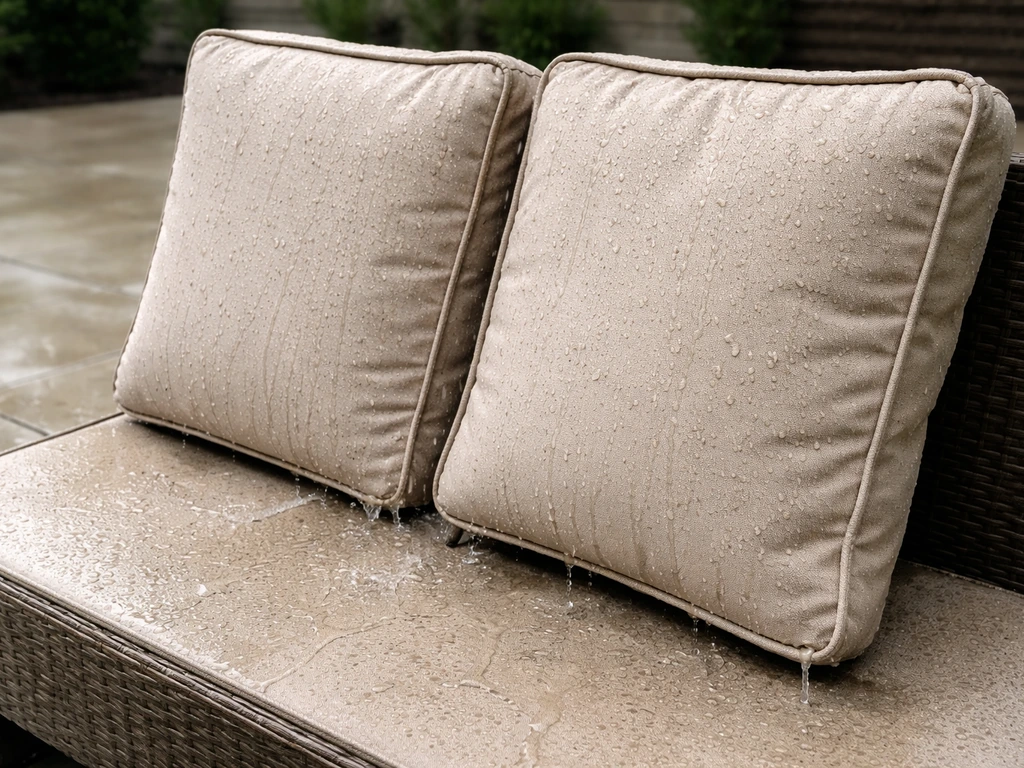
A quality furniture cover rated at 6,000mm or more of water resistance with a breathable membrane is worth having, especially for cushions with standard fill or for any wood furniture. The breathable membrane matters because a completely sealed cover traps condensation underneath and creates exactly the warm, damp environment mold loves. When you cover furniture, leave a small air gap at the bottom so air can circulate.
Never cover wet cushions or wet wood directly, as trapped moisture with zero airflow is worse than leaving things uncovered in light rain. Covers are best used during periods when furniture is not in use, not as a daily on-and-off routine. Whether patio furniture covers are truly waterproof versus merely water-resistant is a related question worth exploring separately, since cover quality varies enormously by brand.
Whether patio furniture covers are truly waterproof is different from being water-resistant, and cover quality varies a lot by brand are patio furniture covers waterproof.
After it gets wet: care steps that actually prevent damage
What you do in the hours and days after a soaking has a bigger impact on furniture longevity than almost any product feature. Here is the practical sequence:
- Tilt cushions on edge or stand them upright after rain so water drains through rather than pooling at the base. If your cushions have Dry Fast foam, this speeds up what is already a fast process. If they have standard fill, get them upright fast and give them as much airflow as possible.
- Wipe down metal frames after heavy rain or storms, paying attention to joints, welds, and any areas where debris accumulates. Trapped wet debris accelerates finish degradation even on aluminum.
- Check drain holes in hollow frame sections (chairs, tables with hollow legs) to make sure they are not blocked by debris. Water sitting inside a hollow aluminum leg is mostly harmless; water sitting inside a hollow steel leg is a rust incubator.
- For teak, a light rinse with a garden hose to remove debris after storms is fine. If grime is building up in grain lines (which traps moisture and promotes mildew), a soft brush and mild soap followed by a thorough rinse works well. Let it fully dry before applying any sealer or protector, at least a full day in good conditions.
- For resin wicker, hose it off and let it air dry. The weave structure is not the problem; make sure the area around the frame joints dries out and does not collect standing water.
- If mildew appears on cushion fabric (Sunbrella or similar), mix one cup of bleach and one quarter cup of mild dish soap per gallon of water, apply, let sit for 15 minutes, and rinse thoroughly. Do not let bleach solutions dry on the fabric.
- Before storing furniture at end of season, everything needs to be completely dry. Covering or boxing damp cushions, even in a breathable bag, causes odor and mold. If cushions have been in a storage box through temperature swings, check for condensation smell before the season starts.
Climate-specific recommendations: match your furniture to where you live
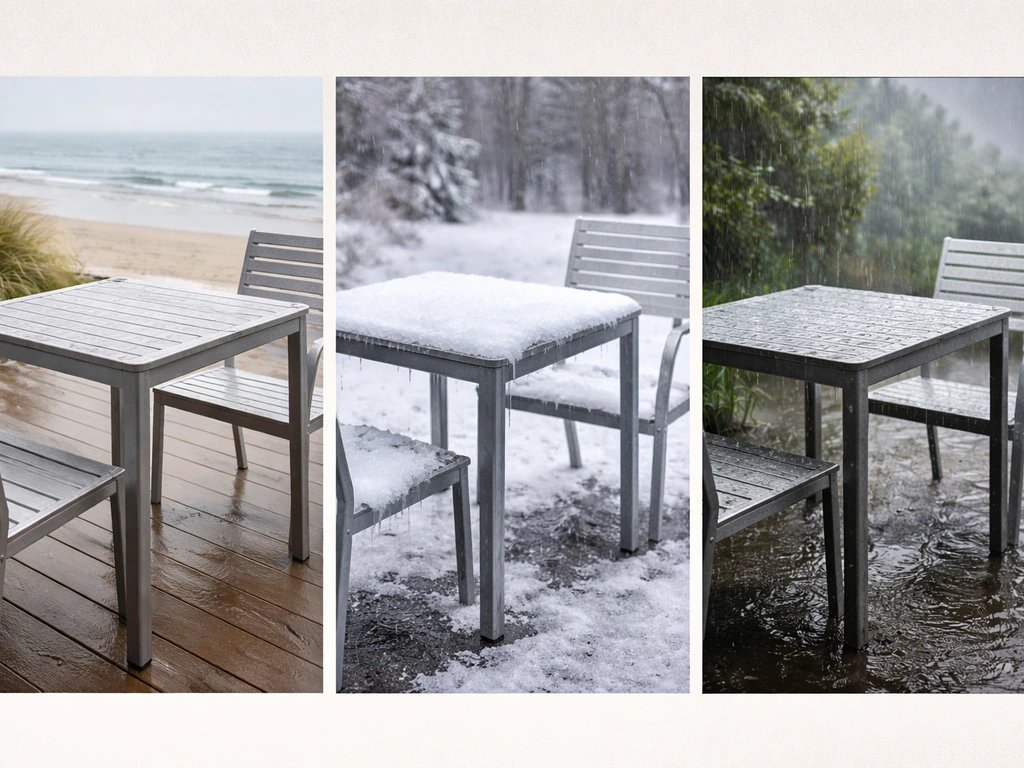
The right wet-weather furniture choice looks different depending on whether you are in coastal Florida, the Pacific Northwest, or a cold-winter state that freezes in January. Here is how to think through it by climate.
Humid and coastal climates (Southeast, Gulf Coast, Hawaii, mid-Atlantic)
Heat and humidity combined with salt air is the hardest test for outdoor furniture. In these climates, aluminum is your best frame choice. Powder-coated aluminum with a finish tested to salt-spray standards will last far longer than steel or iron. Teak performs well here too, but skip the teak oil entirely in humid climates since it creates a sticky surface that mildew loves.
Use a sealer instead if you care about maintaining color. For cushions, Dry Fast foam with Sunbrella-grade fabric is not optional here; it is the minimum standard if cushions are staying outside. All-weather PE resin wicker over an aluminum frame is also a strong choice and tends to be more budget-accessible than solid teak. Expect to clean everything more frequently than in a dry climate, especially any surface where organic debris can collect and trap moisture.
Cold and wet climates with freeze-thaw cycles (Northeast, Midwest, Pacific Northwest)
The freeze-thaw cycle is a different kind of threat. Water that gets inside a hollow frame section and then freezes can crack or distort the frame from the inside. This applies to aluminum as well as steel, though aluminum handles the stress better. Make sure any furniture with hollow sections has drain holes oriented so gravity pulls water out rather than in.
When storing for winter, do not store hollow furniture upside down thinking you are draining it; if water has pooled inside a section and cannot drain while upside down, you have made things worse. Store it right-side up with drain holes clear. Teak handles freeze-thaw well structurally, but in wet cold climates it will absorb moisture and expand, which can cause minor surface weeping when temperatures swing. This is cosmetic and not a structural concern in quality teak.
Cushions need to come inside for winter in these climates, period. A cushion storage box is only safe when overnight temperatures stay above freezing; temperature fluctuations in a closed box cause condensation that causes odor and mold even in a breathable container.
Dry climates with seasonal heavy rain (Southwest monsoon, California)
In climates that are mostly dry with bursts of intense rain, the issue is less about ongoing moisture management and more about handling sudden heavy exposure. Almost any good quality outdoor material handles this well, which means you have more flexibility in material choice. Steel becomes more viable here than in humid climates, though powder-coat touch-up is still important. Teak is excellent and requires the least maintenance in low-humidity conditions. Wood furniture that would mildew in Florida can last years in Arizona or Southern California with minimal care.
How to shop smarter: choose this if...
Here is the direct version of what all of the above means when you are actually standing in a store or scrolling a product page.
- Choose powder-coated aluminum frames if you want the best combination of wet tolerance, low maintenance, and longevity in virtually any climate.
- Choose teak if you want a premium wood that genuinely handles outdoor wet exposure without sealing, and you are okay with either the natural silver patina or periodic sealer application.
- Choose PE resin wicker over a welded aluminum frame if you want a comfortable, cushioned outdoor set that handles rain without special care, and you are willing to invest in proper cushions.
- Choose HDPE or composite lumber furniture if you want the closest thing to truly waterproof outdoor furniture and you prioritize zero maintenance over aesthetics.
- Choose Sunbrella-fabric cushions with Dry Fast open-cell foam if you want cushions that can stay outside through regular rain without developing mold and odor.
- Avoid natural rattan/wicker, untreated wood, and standard steel frames in any climate with regular rainfall or humidity unless you are fully committed to covering and maintaining them consistently.
- Avoid standard polyester fiber-filled cushions if the furniture is going to be left outside in rain regularly, no matter how good the fabric is on the outside.
One more practical point: warranties on outdoor furniture almost universally exclude rust and mold or mildew staining from coverage. That means even a brand with a confident-sounding warranty is not going to replace your furniture when the cushions mold or the frame surface rusts. Homeowners insurance coverage for patio furniture depends on what caused the damage, such as a covered peril versus long-term moisture buildup.
Choosing the right materials from the start, and maintaining them correctly after they get wet, is the only real protection. Related topics worth thinking through alongside this one include how to evaluate whether specific brands like Hampton Bay are genuinely waterproof, how to decide if furniture covers are worth buying for your setup, and what happens to patio furniture cushions specifically after they get soaked, since cushion decisions often deserve as much attention as frame decisions.
If you are looking at Hampton Bay specifically, check whether the product is truly waterproof or only water-resistant by reviewing the materials, test specs, and how the cushions and frames drain and dry. If you are wondering whether patio furniture cushions are waterproof, the key is the cushion fill and fabric, not the marketing label are patio furniture cushions waterproof.
FAQ
What does “water-resistant” mean for patio furniture, compared with “waterproof” claims?
For furniture, “water-resistant” usually means it can handle splashes or light rain without immediate damage, it does not mean the interior (frame cavities, cushion fill) stays dry over hours or multiple storms. “Waterproof” is rarely used because it would require the manufacturer to demonstrate no water contact with contents under normal use for the product’s expected life.
How long can patio furniture cushions stay wet before mildew becomes likely?
Cushions become risky when they remain damp for days, especially in warm, humid weather. Even fast-draining covers and breathable membranes cannot fully prevent mildew if the fill stays saturated, that is why open-cell Dry Fast foam and moisture-shedding fabric specs matter.
Can I leave aluminum, teak, or resin wicker outside during the winter if it freezes?
Yes, but the details differ. Aluminum frames can handle freeze-thaw better, make sure hollow sections have drain holes correctly oriented and remain clear. Teak can survive structurally, but cushions should come indoors, because condensation in winter storage can cause odor and mold even when temperatures are near freezing.
Is a furniture cover helpful or can it make mildew worse?
It can do either, a sealed cover traps condensation and creates a damp environment under the cover. Use a cover with a water-resistant rating plus a breathable membrane, leave a small airflow gap at the bottom, and avoid covering furniture when cushions or wood are wet.
If the product page lists a fabric like acrylic, do I still need to worry about the cushion fill?
Yes. Fabric performance affects water shedding, but fill is what determines whether moisture drains quickly or lingers. If the listing does not specify open-cell reticulated foam (Dry Fast) for frequent wet exposure, assume the fill is not appropriate for leaving cushions out through rain.
Do I need to dry patio furniture after rain, or is “leave out” truly low-effort?
For rain that passes quickly, properly built materials are designed to recover. Still, for occasional downpours, you should spot-check drainage areas and remove pooled water from seat and back cavities, if water sits for long periods, even aluminum can develop corrosion at chips or seams.
What should I do if rain gets inside a hollow frame section?
Do not assume it will dry by itself. Tilt or reposition so drain holes face downward and airflow reaches the interior, then allow it to dry fully before re-covering. If the frame is indoors-in-winter storage, keep it right-side up so pooled water cannot remain trapped.
How do I check whether powder coating is likely to fail?
Look for how the brand describes repair or touch-up support, and treat chips quickly. Powder coating can bubble and peel when moisture gets underneath, so a “lifetime warranty” that does not cover surface corrosion or rust from chips still may not protect you in real use.
Will salt air and coastal humidity change which material I should buy?
Yes, it usually pushes you away from steel toward aluminum or well-chosen stainless hardware. If the finish is tested for salt-spray corrosion (for example ASTM B117 or ISO 9227), that is a useful signal, and you should still inspect and touch up any coating damage promptly.
Is teak oil actually a good choice for patio furniture that gets wet?
Usually no. Teak oil can attract mildew in warm, humid conditions and does not reliably extend functional life. If you want to maintain color, use a teak sealer or protector and let the wood dry completely, at least a full day, before applying.
How can I tell if wicker is truly all-weather?
Confirm the weave is polyethylene (PE) resin, not natural rattan or paper-wrapped wicker. Also verify the structure includes a welded aluminum base, because the frame beneath is where moisture exposure tends to cause the real failures.
Are HDPE and recycled composite slats truly “set and forget” in rain?
They are among the lowest maintenance options because they do not absorb water like wood, but UV fading can still happen on cheaper products. If appearance matters, look for UV stabilizers and avoid scraping or pressure-washing aggressively if the finish layer is thin.
Do warranties cover rust or mildew for patio furniture that gets wet?
Often they do not. Outdoor warranties frequently exclude rust and mildew staining because they are treated as maintenance or usage outcomes rather than defects. Before buying, check what is explicitly excluded and assume you will not be able to replace furniture simply because it developed mildew after regular wet exposure.
Can patio furniture cushions be recovered after soaking?
Sometimes, but the steps matter. If mildew is present, cleaning must be done with the right chemicals for the fabric type, dilution and fabric compatibility are important. If the fill stayed saturated for days, odor can persist and the cushion may not fully recover, which is why choosing Dry Fast foam upfront is so critical.
Next Articles
Can Patio Furniture Get Wet Safely? Material Guide
Learn if patio furniture can get wet and how to protect wood, metal, wicker, and composite from rust, rot, and mildew.
Best Waterproof Patio Furniture: Materials, Picks, Checklist
Best waterproof patio furniture guide: water-resistant vs waterproof, top materials, climate tips, and a buy checklist
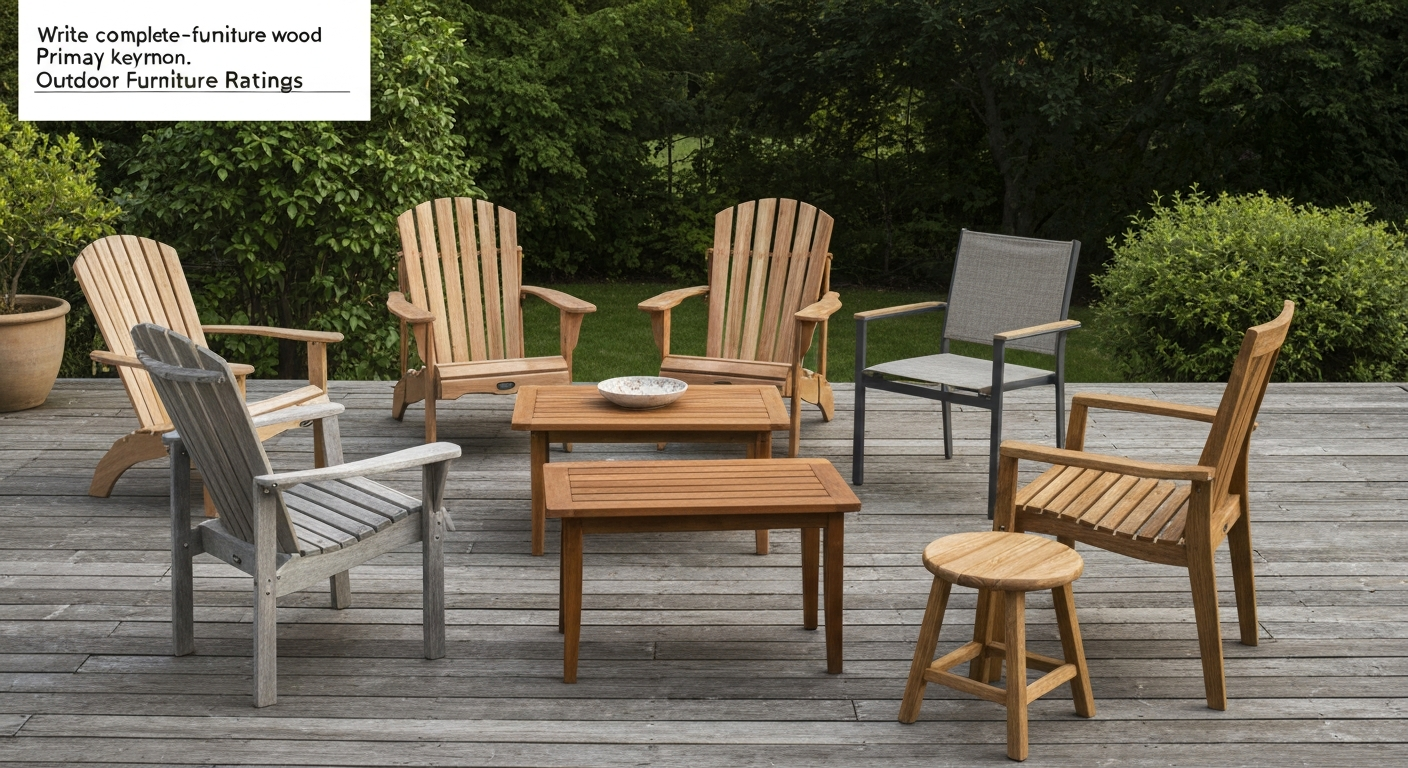
Common Patio Furniture Wood: Best Choices, Care & Tips
Compare common patio furniture wood types, teak, cedar, redwood, oak, with durability, finishes, and care tips.