
Most patio furniture can get wet without immediate damage, but no common outdoor furniture material or cushion fabric is truly 100% waterproof in every condition. What you're really dealing with is a spectrum: some materials shed rain with zero consequences, others tolerate it fine if they dry out quickly, and a few will degrade fast if you leave them soaked season after season. The practical answer is to match your material choices to how much rain your climate delivers, how much maintenance you're willing to do, and whether you'll cover or store cushions when serious weather rolls in.
Patio Furniture When It Rains: Waterproof vs Water-Resistant

Theo Tierney
14 Jul 2026
Waterproof vs. water-resistant: what those terms actually mean
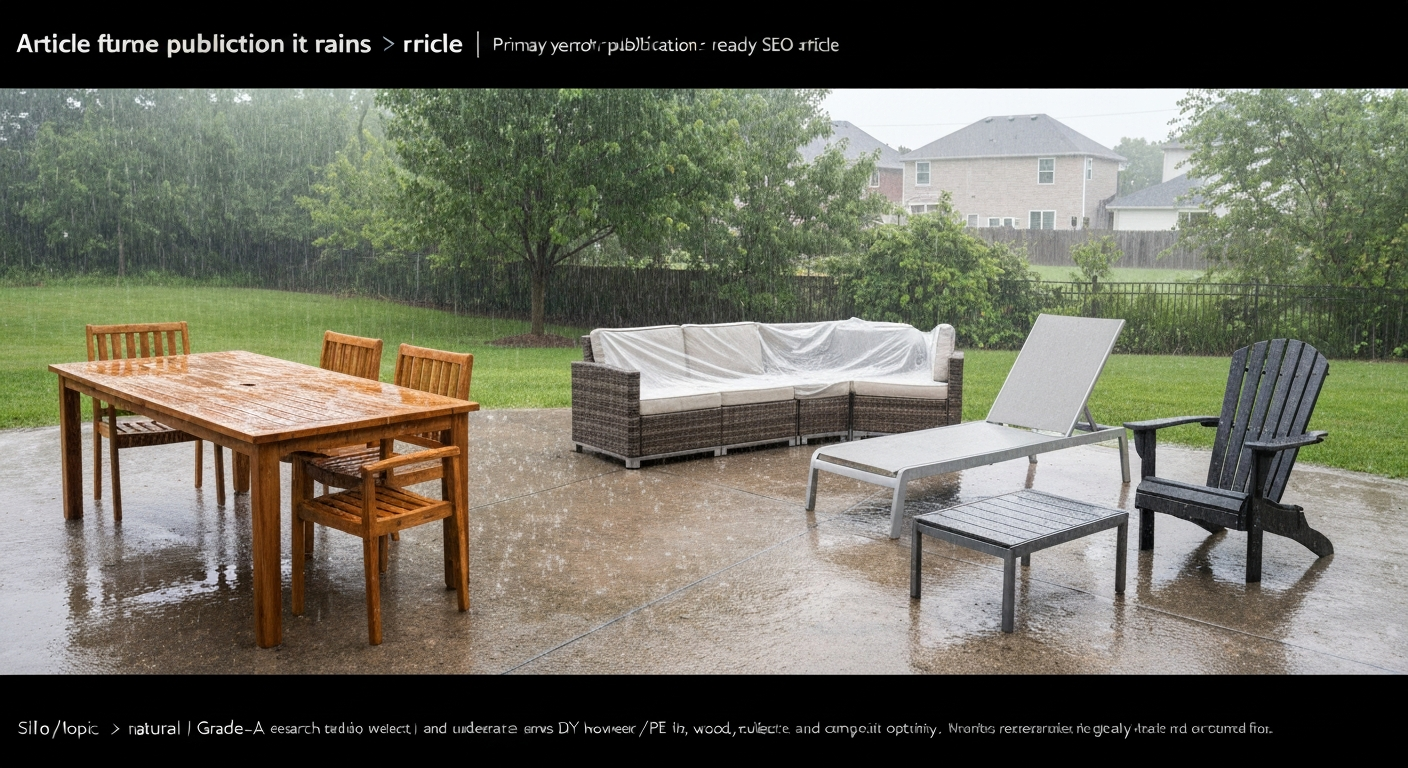
Manufacturers throw around 'waterproof' and 'water-resistant' like they're interchangeable. They aren't. Water-resistant means a material or fabric will shed light rain and surface splashing but will eventually wet through under sustained pressure, pooling, or wind-driven rain. Waterproof means it resists penetration under significant hydrostatic pressure, which in fabric terms is measured in millimeters of water column using AATCC TM127 or ISO 811 testing. The trade rule of thumb is that fabrics below roughly 1,000 mm hydrostatic head are showerproof at best. Above 1,000 to 1,500 mm, with sealed seams, you start approaching genuinely waterproof. For reference, an uncoated solution-dyed acrylic like standard Sunbrella typically tests in the 250 to 950 mm range depending on grade and finish, which makes it excellent at shedding light-to-moderate rain but not a true waterproof barrier under pooled or heavy sustained rain. Back-coated or laminated versions of the same fabric can exceed 1,000 mm, but then seam construction becomes the limiting factor. The bottom line: when a furniture brand says 'waterproof fabric,' ask for the AATCC 127 or ISO 811 hydrostatic head number, not just a spray rating.
How to think about rain exposure before you buy anything
The first thing I look at when evaluating furniture for a wet climate isn't the material rating, it's the drainage design. Does the frame have hollow tubes that can trap water? Are there horizontal surfaces where water pools? Do seat slats angle slightly to shed water, or are they flat and tight enough to hold puddles? These construction details matter as much as material choice. A well-designed aluminum frame with angled slats and drainage holes at the lowest points will outlast a poorly designed teak frame with flat surfaces that collect standing water.
Climate matters enormously here. In a place like Miami or New Orleans, you're dealing with daily summer downpours plus humidity that prevents anything from fully drying between rain events. That's a fundamentally different challenge than Seattle's persistent drizzle or Phoenix's occasional monsoon dump. Coastal environments add salt air to the mix, which accelerates corrosion on any metal and can degrade certain fabric coatings faster. Before buying, honestly assess your exposure: how many rain days per year, does furniture sit in direct rain or under a covered patio, and how likely are you to actually cover or store cushions during storms? Your honest answer to that last question alone should drive most of your decisions.
Teak and outdoor woods in the rain
Teak is genuinely the gold standard for outdoor wood in wet climates, and it earns that reputation. The natural silica and oil content in teak creates a wood that resists rot, warping, and splitting even when left exposed to rain year-round. I've seen properly maintained teak sets in Florida that are 15 to 20 years old and still structurally sound. The trade-off is cost: quality teak is expensive, and the market has a lot of lower-grade plantation teak with fewer of those natural oils. Check that you're getting Grade A teak (tight grain, fewer knots, warm honey color) rather than Grade B or C, which dry out faster and need more frequent oiling.
Other outdoor woods don't perform nearly as well in consistently wet conditions. Eucalyptus is a reasonable budget alternative, moderately rot-resistant and decent in moderate rain climates, but it needs annual oiling to stay that way. Cedar and redwood are good in dry-to-moderate climates but will grey out, check, and eventually rot in high-humidity or high-rainfall environments without diligent sealing. Acacia is popular right now because it's cheap, but acacia used outdoors in humid climates warps and cracks within a couple of seasons unless it's under a covered patio and regularly oiled. The honest recommendation: if you live somewhere with heavy or frequent rain, spend the money on teak or skip wood entirely.
Aluminum: the practical choice for wet climates
Aluminum is my go-to recommendation for anyone in a high-rain or coastal environment. It doesn't rust, full stop. The aluminum oxide layer that forms on the surface actually protects the metal from further oxidation, which is why you see aluminum outdoor furniture that's decades old and still structurally intact. Powder-coated aluminum adds a UV and scratch-resistant finish layer that also protects against surface pitting in salt air. Good powder coat tested via ASTM B117 salt spray should hold up 500 to 1,000-plus hours without failure on a quality finish, though salt-spray test hours aren't a direct translation to service years.
The limitations of aluminum are mechanical, not corrosion-related. Thin-walled aluminum tubing dents easily, and the thinner the wall, the more it flexes in wind. Look for cast aluminum construction (thicker, heavier, formed joints) for dining chairs and tables that get a lot of use, and tubular aluminum for lighter pieces like loungers. In cold climates, powder coat can microcrack over time from freeze-thaw cycling, which eventually lets moisture behind the coating. That's a slow process, but it's why I recommend inspecting powder coat on aluminum furniture every couple of years in northern climates and touching up chips before they spread.
Steel and wrought iron: real rust risk, manageable with the right approach
Steel and wrought iron furniture can be beautiful and is genuinely heavy and stable, which matters in windy conditions. But iron and unprotected steel will rust when exposed to rain, and this is the one category where I see the most homeowner regret after a few wet seasons. The protection strategy is everything here. Hot-dip galvanizing to ASTM A123 provides a zinc coating that sacrificially corrodes before the base steel does, with coating thicknesses commonly in the 50 to 100 micron range on structural pieces. Galvan Industries states that hot‑dip galvanizing to ASTM A123/ISO 1461 is the standard protection method for steel and that ASTM A123 prescribes minimum zinc coating thicknesses that typically range by substrate thickness, with common structural coatings in the tens of microns (commonly 50–100 µm) Hot‑dip galvanizing to ASTM A123/ISO 1461 is the standard method to protect steel; ASTM A123 prescribes minimum zinc coating thicknesses that commonly fall in the tens of microns (often about 50–100 µm on many structural parts).. Powder coat over galvanized steel is the best combination for outdoor longevity. Powder coat alone, without galvanizing, is vulnerable at any chip, scratch, or welded joint where the coating is thinner.
Wrought iron furniture sold at mass-market price points is almost never galvanized, just powder coated. In a dry climate under a covered patio, that's fine for many years. In Florida, coastal New England, or the Pacific Northwest? You'll see rust bleeding through the finish at welds and edges within a couple of seasons. If you love the look of iron, budget for annual touch-up paint and a good furniture cover, or accept that you're buying a piece that will need refinishing every few years. Stainless steel (304 or 316 grade) is an alternative that handles wet conditions much better, but genuine stainless outdoor furniture is expensive and less common in the residential market.
Resin and PE wicker: the wet-weather wicker option
Natural rattan wicker and water do not mix. Natural wicker softens, molds, and falls apart when repeatedly soaked, which is why it belongs indoors or in covered sunrooms only. Resin wicker (sometimes labeled PE wicker or synthetic wicker) is an entirely different product made from polyethylene strands woven over a metal or aluminum frame. The PE material itself is not affected by water and won't mold or rot. This makes resin wicker one of the better options for rainy climates in terms of the wicker component itself.
The vulnerability in resin wicker sets is usually the frame underneath. Cheaper sets use steel frames that rust when the weave cracks or gaps and lets moisture in. Higher-quality sets use aluminum frames, which eliminates that problem entirely. In terms of the PE weave itself, UV exposure over many years causes brittleness and cracking more than rain does. I've seen resin wicker sets hold up well for 8 to 10 years in humid climates when the frame is aluminum and the weave density is tight enough to prevent standing water on horizontal surfaces. The maintenance reality is simple: rinse with a hose after dirty weather, use a soft brush to clear debris from the weave, and keep cushions stored in heavy rain.
HDPE and composite lumber: bulletproof in rain, but read the fine print
High-density polyethylene (HDPE) lumber, sold under brand names like Polywood and others, is genuinely waterproof as a material. It won't rot, won't absorb water, won't rust, and holds color well because the pigment runs through the entire board rather than sitting on the surface. If you've ever seen those Adirondack chairs on a New England beach that look the same after 10 years, they're probably HDPE. This is the material I recommend most often for people who want zero-maintenance furniture in high-rain or coastal environments.
The practical caveats are thermal expansion and temperature sensitivity. HDPE expands and contracts with temperature swings, so furniture assembled with tight hardware can creak or warp slightly in extreme heat (think 100-plus-degree Arizona summers). Quality manufacturers account for this in their fastener design, but cheap composite furniture sometimes doesn't. Also, HDPE and composite lumber can get very hot to the touch in direct sun in hot climates, which affects comfort. In terms of drainage, HDPE slat furniture is great because water runs off immediately, but look at the frame connection points: metal fasteners set into plastic boards can loosen over time, especially in temperature-extreme climates. Annual hardware checks and retightening keep that from becoming a problem.
Material rain performance at a glance
| Material | Rain/Moisture Tolerance | Rust/Rot Risk | Best Climate Fit | Maintenance Level |
|---|---|---|---|---|
| Teak (Grade A) | Excellent | Very low rot risk | All climates including high humidity | Low to moderate (oil every 1-2 years) |
| Eucalyptus/Cedar/Acacia | Moderate | Moderate rot risk | Dry to moderate rain climates, covered patios | Moderate to high (annual oiling/sealing) |
| Aluminum (powder coated) | Excellent | No rust | All climates including coastal/humid | Low (rinse, occasional touch-up) |
| Steel/Wrought Iron (powder coated only) | Poor to moderate | High rust risk at chips/welds | Dry climates, covered patios | High (annual inspection, touch-up paint) |
| Steel (galvanized + powder coated) | Good | Low to moderate rust risk | Moderate rain climates | Moderate (inspect coating annually) |
| Resin/PE Wicker (aluminum frame) | Good | Very low (frame dependent) | Humid/rainy climates | Low (rinse, UV protection) |
| Resin/PE Wicker (steel frame) | Moderate | Moderate (rust at frame) | Moderate rain, covered | Moderate (monitor frame for rust) |
| HDPE/Composite Lumber | Excellent | None | All climates including coastal | Very low (rinse only) |
Cushions and fabrics: are they actually waterproof?
This is where most people get surprised, because cushion and fabric marketing is heavily aspirational. For retailer-specific details, see our short guide titled is Hampton Bay patio furniture waterproof, which reviews model-level specs and waterproofing tests. The honest answer is that most outdoor cushions sold at retail are water-resistant, not waterproof. The distinction matters a lot when a summer thunderstorm drops two inches of rain in an hour and you forgot to bring the cushions in. For a direct answer and detailed guidance on cushion waterproofing, see our piece titled "are patio furniture cushions waterproof".
Solution-dyed acrylic (Sunbrella and similar)
Solution-dyed acrylic is the best readily available outdoor fabric for a combination of UV resistance, fade resistance, and water repellency. The dyeing process runs color through the fiber rather than coating the surface, which is why these fabrics hold color for years longer than surface-dyed alternatives. On water performance, Sunbrella's standard furniture-grade fabric typically carries a durable water repellent (DWR) finish that scores well on the AATCC TM22 spray test, meaning it sheds light rain nicely. The hydrostatic head on standard uncoated solution-dyed acrylic commonly falls in the 250 to 500 mm range, though marine and awning grades can run up to around 450 to 950 mm depending on finish. Practical manufacturer example: Sunbrella 'marine/awning' product pages list hydrostatic resistance values expressed as AATCC 127/ISO 811 results (example marine/awning items published with ~400–950 mm hydrostatic figures depending on grade and finish) Practical manufacturer example: JT's Outdoor Fabrics lists Sunbrella marine/awning product pages with AATCC 127 hydrostatic values in the ~400–950 mm range for various grades and finishes.. That's solid performance for normal outdoor use, but it's below the 1,000 to 1,500 mm threshold that separates truly waterproof fabrics from showerproof ones. In a genuine downpour, water will eventually work through the face fabric, especially at seam lines. The DWR finish also depletes over time and needs reapplication, typically every one to two seasons with regular outdoor use.
Olefin (polypropylene) fabric
Olefin fabric is the budget-friendly alternative to solution-dyed acrylic and is genuinely water-resistant in similar ways. It's hydrophobic by nature, dries quickly, and resists mildew well. The trade-off versus acrylic is UV stability: olefin degrades faster under prolonged sun exposure, which means cushions on a south-facing patio in Arizona or Florida will fade and break down noticeably faster than acrylic ones. In climates with more rain than sun, olefin is a reasonable value choice. In sun-heavy climates, the UV degradation typically shortens cushion life enough to make the cost savings less meaningful over a 5-year horizon.
Quick-dry foam and cushion cores
Quick-dry foam, often labeled reticulated or open-cell foam, is engineered with an open-pore structure specifically so water drains through and out rather than soaking in and staying. The foam itself is not waterproof, and it does hold some moisture until it drains and air-dries. Drying time depends heavily on thickness, climate humidity, and whether the cushion is propped up to allow airflow underneath. In a hot, dry climate, a quick-dry foam cushion left in a summer shower will often be dry within a few hours. In a humid coastal environment, the same cushion might stay damp for a full day if it's sitting flat on a chair without airflow. Reticulated foam is significantly better than standard polyurethane foam in outdoor applications, but it's not a substitute for bringing cushions in during sustained heavy rain.
Waterproof shells and inner liners
Some higher-end cushions and covers use a back-coated or laminated face fabric (hydrostatic head above 1,000 mm), a PU or PVC inner liner, and welded or taped seams to create a genuinely waterproof assembly. This is the construction standard where cushions can actually be left out in rain without significant water ingress. As independent textile testing from labs like Centexbel and mill technical documentation from manufacturers like Recasens confirms, the face fabric's hydrostatic head rating is only one part of the equation. Seam construction is equally important: uncoated seams on even a high-rated fabric will leak under sustained rain, which is why welded seams or seam tape are required to carry a credible waterproof claim. If a manufacturer claims waterproof cushions, ask specifically about seam treatment and inner liner construction, not just the face fabric spec.
Practical expectations for cushions in rain
- Standard solution-dyed acrylic cushions (Sunbrella and equivalents): excellent for light to moderate rain, will wet through in heavy sustained rain, DWR needs reapplication every 1-2 seasons
- Olefin cushions: good light-rain performance, faster UV degradation in sun-heavy climates, reasonable budget choice in northern or cloudy climates
- Quick-dry foam cores: drain and dry faster than standard foam but are not waterproof, drying time varies by climate and cushion thickness
- Waterproof cushion assemblies (back-coated fabric, PU liner, welded seams): genuinely rain-resistant in most conditions, look for stated hydrostatic head above 1,000 mm plus described seam sealing
- Budget polyester cushions: worst performers in rain, absorb water readily, prone to mildew in humid conditions, replace or store in all rain events
Covers: what actually works and what to look for
A good furniture cover is the single highest-value-per-dollar investment for protecting patio furniture in rain. For the details on how hydrostatic head, seam construction, and breathability determine real-world performance, see our guide on whether patio furniture covers are patio furniture covers waterproof. The cover doesn't need to be fancy, but it needs to be right for the application. Covers made from solution-dyed polyester or solution-dyed acrylic with a polyurethane backing perform well and typically carry hydrostatic head ratings in the 1,500 to 3,000 mm range, which is enough to handle realistic rain exposure. Fully waterproof covers, however, raise the issue of breathability: a non-breathable cover traps moisture and condensation underneath, which promotes mold and mildew on both the cover and the furniture. The better covers use a laminated fabric that balances waterproofing with enough vapor permeability to allow condensation to escape.
Seam construction on covers matters just as much as on cushion fabric. Heat-welded or taped seams hold up in heavy rain; stitched-only seams eventually wick water through the needle holes under sustained exposure. Look for covers with vents or mesh panels at the bottom to allow airflow. Fit also matters: a loose cover that flaps in wind will abrade whatever it's covering and may blow off entirely. Cord-lock closures, elastic hems, or strap-and-buckle systems keep covers in place through storms. For value, mid-range covers in the $30 to $80 range for chair covers and $60 to $150 for sectional or table covers typically outperform cheap covers significantly in longevity.
Buying checklist: choosing furniture that handles rain
When you're shopping for patio furniture with wet weather in mind, these are the questions worth asking before you buy, not after you've had two rainy seasons of regret. For a concise guide to materials and designs suited to heavy exposure, see our piece on patio furniture that can get wet.
- What is the frame material? Aluminum or HDPE are the best choices for rainy and coastal climates. Teak is excellent but costs more. Steel requires a galvanized plus powder-coated finish for wet climates.
- Does the frame have drainage provisions? Look for drain holes at low points in hollow tubes and angled or slatted seating surfaces.
- For cushions, what is the face fabric and hydrostatic head rating? Request the AATCC 127 or ISO 811 number. Below 500 mm is surface-repellent only. Above 1,000 mm with sealed seams approaches waterproof.
- Are seams on cushion covers stitched, welded, or taped? Stitched only means water-resistant at best.
- Is the cushion foam standard polyurethane or a reticulated/quick-dry grade? This affects recovery time after rain exposure.
- Does the manufacturer provide any warranty language about water damage or weather exposure? Most residential furniture warranties exclude weather damage unless specifically stated otherwise.
- For brands like Hampton Bay (sold at big-box retail), check whether the stated frame material is solid cast aluminum or thin-walled steel with aluminum-look powder coat — this is where the actual product spec matters more than the marketing copy.
- Is the powder coat or finish rated or tested to ASTM B117 salt spray? Some brands publish this, most don't. It's a useful differentiator for coastal or high-humidity climates.
- Can you realistically store or cover cushions during heavy rain events? If no, budget for fully weather-resistant or waterproof cushion assemblies rather than standard DWR fabric.
What to do right after heavy rain
The actions you take in the first few hours after a significant rain event have a real impact on how long your furniture lasts, especially for cushions and wood pieces.
- Remove and stand cushions on edge or prop them at an angle to allow water to drain from the foam core and air to circulate on both sides
- Wipe down metal frames with a dry cloth to remove pooled water from joints, hollow tube ends, and fastener areas — standing water at these points accelerates corrosion or staining
- For wood furniture, wipe off surface water and check that no debris (leaves, dirt) is sitting against the wood surface, which holds moisture and can initiate mold or staining
- Check covers that stayed on during the storm for pooled water on top, which adds weight stress and can force water through seams — remove standing water promptly
- Open any stored cushion containers or deck boxes to allow ventilation if they trapped any humidity during the storm
- Inspect resin wicker and composite furniture joints for debris accumulation in the weave or slat gaps and rinse clean before debris dries and becomes harder to remove
- Once everything is dry, recheck any powder-coated metal pieces for new chips or scratches and apply touch-up paint or clear coat to exposed areas before the next rain event
Routine maintenance to prevent weather damage over time
Maintenance schedules depend heavily on climate, but these are the baseline tasks that consistently extend outdoor furniture life in wet climates. For teak and other outdoor wood, oil or seal once or twice per year (twice in high-humidity or high-rainfall climates). Use a penetrating oil for teak rather than a surface sealant, which can trap moisture below the surface and cause premature cracking. For powder-coated metal, wash the finish with mild soap and water twice a season to remove salt, pollen, and airborne contaminants that degrade the coating, and touch up any chips immediately with matching powder coat paint or automotive touch-up paint.
Cushion fabric DWR finishes need reapplication as they deplete. You can test DWR performance by sprinkling water on the fabric: it should bead and roll off. If it soaks in instead, clean the fabric first (mildew and oils clog DWR), then apply a fabric DWR spray rated for outdoor textiles. Cushion foam should be inspected annually for compression or mold, especially in climates with more than 50 inches of annual rainfall or high humidity. Resin wicker benefits from UV protectant spray once a year to slow the brittleness that comes with long-term sun exposure, which is the primary failure mode for this material in sun-heavy climates.
Insurance and warranties: what's actually covered
Homeowners insurance coverage for patio furniture under rain or weather damage is limited and conditional. For a quick primer on whether homeowners insurance covers patio furniture, see does homeowners insurance cover patio furniture. Standard HO-3 policies generally cover sudden and accidental damage from named perils, which can include wind damage during a storm. However, gradual deterioration, rust, rot, mold, and general weather exposure are specifically excluded under most standard policies as maintenance issues. If a storm blows a tree onto your patio furniture, you likely have a claim. If years of rain caused your steel frame to rust through, that's excluded. Coverage limits for personal property also often cap outdoor furniture at lower sublimits than interior contents, sometimes under $2,500 total for all outdoor items. Check your specific policy's personal property and outdoor property sublimits before assuming you're covered.
Manufacturer warranties on outdoor furniture are similarly limited when it comes to weather damage. Most frame warranties (commonly 1 to 5 years on residential furniture, sometimes lifetime on premium aluminum or HDPE brands) cover defects in materials and workmanship but explicitly exclude normal weathering, fading, rust from coating damage, and cushion fabric degradation. Cushion warranties are typically 1 year and cover only manufacturing defects. A warranty that specifically calls out UV resistance or weather resistance is more meaningful than a generic 'limited warranty,' but even those usually require you to prove the damage was from a defect rather than exposure. The practical takeaway is to treat furniture longevity as a material and maintenance question, not an insurance or warranty question.
Climate-specific recommendations
| Climate Type | Priority Material Choices | Key Concerns | Top Maintenance Priorities |
|---|---|---|---|
| Humid subtropical (FL, Gulf Coast, SE) | Teak, cast aluminum, HDPE/composite, resin wicker (aluminum frame) | Mold on cushions, rust on steel, wood rot | DWR reapplication 2x/year, cushion storage in rain, annual wood oiling |
| Coastal/salt air (any coast) | Marine-grade aluminum (6061/6063 alloy), HDPE, teak | Salt accelerates corrosion on all metals, degrades fabric coatings | Regular freshwater rinse of all surfaces, inspect powder coat monthly |
| Pacific Northwest (high rain, mild temps) | Teak, aluminum, HDPE, resin wicker | Persistent moisture, mold risk, UV is less aggressive | Keep cushions covered or stored, annual mold inspection, wood oiling |
| Arid/Southwest (low rain, extreme heat) | Aluminum, HDPE (check thermal expansion design), resin wicker | UV degradation faster than moisture damage, heat warps cheap plastics | UV protectant on wicker annually, check HDPE fasteners for loosening |
| Cold/snowy (upper Midwest, Northeast) | Cast aluminum, HDPE, teak | Freeze-thaw stresses powder coat, snow load on covers | Store or fully cover in winter, inspect powder coat in spring, retighten hardware |
The rain question ultimately comes down to buying for your actual climate and being realistic about your maintenance habits. The best patio furniture for rainy conditions isn't the most expensive set on the market, it's the one made from a material that tolerates your specific combination of rain, humidity, salt, and temperature, paired with cushions that either handle getting wet or that you'll consistently bring in when weather turns. For tested options, see our guide to the best waterproof patio furniture. Get that match right and most outdoor furniture will serve you well for a decade or more.
FAQ
Short answer: Can patio furniture safely get wet in rain? What's the difference between waterproof and water‑resistant?
Short answer: Many pieces of patio furniture are designed to get wet occasionally, but 'safe' depends on material and construction. Water‑resistant (aka showerproof) means the fabric or finish sheds light rain and splashes but will eventually let water through under sustained, wind‑driven rain or pooled water. Waterproof means the assembled panel or cushion resists water under pressure (measured by hydrostatic head, mm H2O) and requires waterproof membranes/coatings, welded or taped seams, and sealed closures. Use testable benchmarks: spray tests (AATCC TM22 / ISO 4920) indicate surface repellency; hydrostatic head (AATCC TM127 / ISO 811) gives a numeric waterproof rating — values <1,000 mm are generally water‑resistant/showerproof, while consistently >1,000–1,500 mm plus sealed seams is what trade sources call 'truly waterproof' for assemblies.
How do common frame materials compare for rainy climates (teak and other woods, aluminum, steel/wrought iron, resin/PE wicker, composites)?
Material summary and climate suitability: - Teak/Hardwoods: Naturally very water‑tolerant due to oils and dense grain; performs best in humid/rainy climates if finished and periodically maintained. Will weather to a silver patina unless oiled; joints and fasteners can trap water — good for wet climates with routine care. - Other woods (e.g., eucalyptus, acacia): Less durable than teak; need sealers and more frequent maintenance in wet climates; better for covered patios or seasonal use. - Aluminum: Excellent corrosion resistance, lightweight; powder‑coated aluminum performs well in most wet climates including coastal, though poor coating prep can chalk or chip over time—look for good powder‑coat spec and salt‑spray performance. - Steel / Wrought Iron: Strong but susceptible to rust unless hot‑dip galvanized or high‑quality powder coat with corrosion primers. In wet or coastal climates prefer galvanized + powder coat or stainless steel alloy. - Resin / PE wicker (synthetic wicker): UV‑stabilized polyethylene over an aluminum frame is low‑maintenance and tolerates rain well; avoid wicker over untreated steel frames. - Composites (HDPE lumber, plastic/board composites): Very water‑resistant, low maintenance and stable in wet climates; watch for creep/thermal expansion and verify UV resistance. Climate guidance: rainy, humid, or coastal — prioritize teak, powder‑coated aluminum, stainless or galvanized steel, PE wicker over aluminum, or HDPE/composite. Cold wet climates with freeze/thaw — avoid moisture‑sensitive woods without full sealing; cushions should be removable.
What about cushions and fabrics — which options tolerate rain and are cushions truly waterproof?
Fabric & cushion guidance: - Solution‑dyed acrylic (e.g., Sunbrella): Excellent UV/colorfastness and surface water repellency; typical uncoated acrylic is water‑resistant (spray ratings good) with hydrostatic heads often ~200–950 mm depending on grade. Uncoated acrylic sheds light rain but is not universally waterproof unless back‑coated/laminated. - Olefin (polypropylene): Good water resistance and fast drying; generally less UV‑resistant than high‑end acrylics but lower cost. - Waterproof shells / coated fabrics: Laminated/coated fabrics or bonded membranes can produce hydrostatic heads >1,000 mm — required for truly waterproof cushions. - Quick‑dry / reticulated foam cores: Open‑cell, reticulated foams drain and dry much faster than standard foam but are not waterproof — they let water pass through to drain. - Practical reality: Most ready‑made outdoor cushions are water‑resistant, not fully waterproof. To get waterproof cushions, look for product TDS showing AATCC TM127 hydrostatic numbers >1,000 mm for the fabric/liner, sealed/welded seams, waterproof zippers and an inner waterproof membrane. Otherwise choose quick‑dry foam + water‑shedding cover and expect some soaking with heavy rain.
Do covers and storage options actually protect furniture in rain? What types of cover fabric and construction features matter?
Covers and storage guidance: - Cover fabrics: Breathable coated polyester (with PU treatment), solution‑dyed acrylic covers, and heavy‑duty PVC/PE tarpaulin are common. Breathable coated fabrics reduce condensation and mold risk; fully impermeable PVC can trap moisture unless ventilation is provided. - Construction features that matter: Drawcords or elastic hems to keep cover secure, taped or welded seams for waterproof covers, reinforced grommets for tie‑downs, and vents (mesh) to reduce trapped humidity. - Short‑term protection: A good cover or tarp protects from direct rain and staining for short to medium durations. Use breathable covers where possible to avoid condensation and mildew when covering for days/weeks. - Long‑term storage: For extended wet seasons, store cushions and small items indoors or in ventilated waterproof storage boxes; invert furniture to shed water and keep under a covered area. - Testable tips: Check seams (seam sealing tape or welding) and look for product spec showing seam treatment; lift corners during rain to verify water beads off rather than soaking through; inspect inside after use to confirm no trapped moisture.
Buying checklist: What to look for when choosing 'best waterproof patio furniture' and how to test manufacturer claims?
Practical buying checklist and testing tips: - Look for quantified specs: AATCC TM22 (spray) and AATCC TM127 / ISO 811 hydrostatic head (mm) on technical data sheets for fabrics. Prefer hydrostatic >1,000–1,500 mm if the vendor claims 'waterproof'. - Construction: welded or taped seams, sealed zippers, waterproof inner liners for cushions, powder‑coat over aluminum, hot‑dip galvanizing (ASTM A123/ISO 1461) or stainless fasteners for steel. - Frame finish: request salt‑spray (ASTM B117) hours for powder coat if planning coastal use; consider thicker powder‑coat specs and good pretreatment. - Cushion core: quick‑dry (reticulated) foam for rapid drainage, plus DWR fabric for face; waterproof shell if you need no moisture ingress. - Warranty & documentation: read warranty exclusions for weather, UV, mildew, and finish; request TDS for fabrics and finishes. - Test claims in store: pour a measured cup of water on a hidden seam/area to see pooling or penetration; inspect seams and zippers; check weight and frame wall thickness for sturdiness. - Brand notes: mainstream mass-market brands (including Hampton Bay) offer value-priced options; inspect materials and finish specs closely — Hampton Bay often uses aluminum and resin lines with varying finishes across SKUs, so check the specific product TDS and consumer reviews for finish longevity and cushion construction rather than assuming uniform quality across the brand.
Climate‑specific recommendations: which materials and approaches work best for different rainy climates?
Climate recommendations: - Mild/rainy, non‑coastal (temperate): Powder‑coated aluminum, PE wicker on aluminum, teak, HDPE/composite. Use quick‑dry cushions and breathable covers. - Humid, high‑mildew risk (southeast/very humid): Teak or HDPE/composite + solution‑dyed acrylic fabrics; store cushions when not in use; breathable covers and good ventilation. - Coastal (salt air): Stainless steel fasteners or powder‑coated/aluminum frames with high salt‑spray resistance; avoid plain steel unless hot‑dip galvanized + quality topcoat. Choose marine‑grade fabrics and rinse frames periodically to remove salt. - Cold with freeze/thaw: Avoid moisture‑sensitive woods unless fully sealed; use materials that tolerate thermal cycling (aluminum, HDPE). Remove cushions to prevent trapped water freeze damage. - Very heavy/monsoon rain: Rely on waterproof‑rated fabrics (>1,000–1,500 mm hydrostatic) and sealed assemblies or plan on indoor storage/covers with good drainage. In all rainy climates, elevated frames and sloped surfaces help shed water.
Next Articles
Are Patio Furniture Covers Waterproof? What to Know
Learn what waterproof means for patio covers, common failure points, and how to choose and install for dry outdoor furni
Are Patio Furniture Cushions Waterproof? How to Tell
Learn if patio cushion covers are truly waterproof, how to test, and how to clean, dry, and store to prevent soaking.
Is Patio Furniture Waterproof? How to Test and Maintain It
Learn if patio furniture is waterproof, how to test it, and maintenance tips by material to prevent rust, swelling, and