
Capped WPC (wood-plastic composite) is the best composite patio furniture material for most homeowners right now. It resists UV fading, sheds moisture, won't splinter, and handles freeze-thaw cycles far better than wood, plain plastic, or uncapped composite. If you want furniture that still looks decent in five or seven years without a lot of upkeep, capped WPC frames or slat construction paired with a powder-coated aluminum subframe is the combination worth hunting for.
Best Composite Patio Furniture: How to Choose in 2026

Theo Tierney
30 May 2026
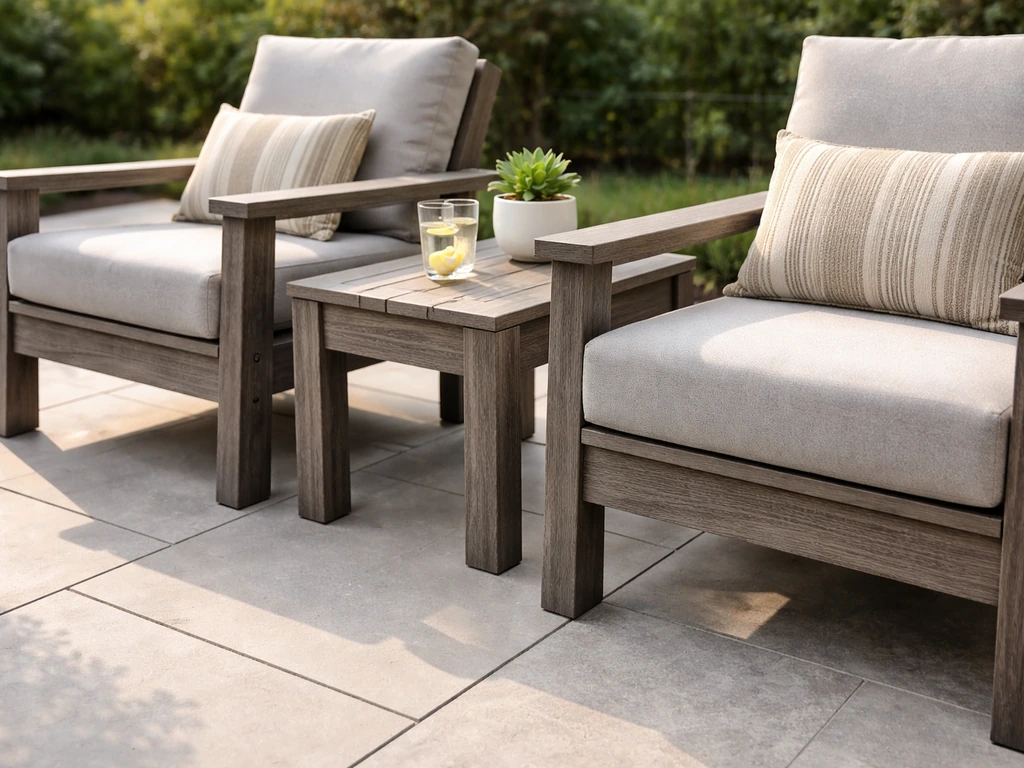
What 'composite' actually means in patio furniture
The word 'composite' gets slapped on a lot of outdoor furniture, and it doesn't always mean the same thing. There are at least three distinct categories floating around the market, and confusing them will cost you money.
WPC and TPC: the real deal
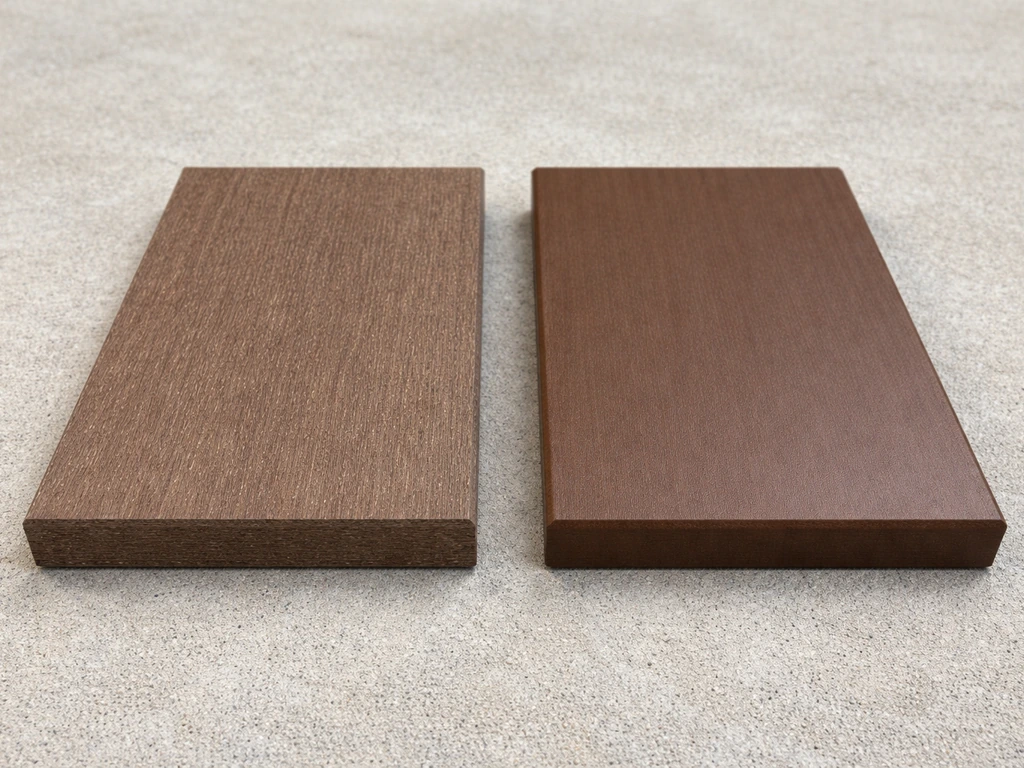
WPC stands for wood-plastic composite. It's made by blank" rel="noopener noreferrer">blending wood flour or wood fibers with a thermoplastic resin, usually HDPE (high-density polyethylene), polypropylene (PP), or PVC, then extruding the mixture into lumber-like profiles. The result looks a lot like wood, takes paint or embossed grain textures well, and doesn't rot or splinter the way real wood does. TPC (thermoplastic composite) is a related category that swaps the wood fiber component for alternative natural or synthetic fibers, but the manufacturing logic is the same: fiber plus polymer, extruded into a structural profile. Both are used in outdoor furniture as slats, frames, tabletops, and chair backs.
Within WPC, the critical split is capped versus uncapped. Uncapped WPC exposes wood fiber at the board surface. Moisture, UV, and bacteria can work into that surface over time, leading to fading, staining, and eventually mold growth. Capped (co-extruded) WPC adds a protective polymer shell bonded to the WPC core during the extrusion process itself.
Capped composite decking that uses a bonded outer cap layer in a multi-layer, co-extruded construction is designed to create an impermeable barrier that delays water absorption and weathering a multi-layer, co-extruded capped composite construction. That outer cap layer acts as a near-impermeable barrier, dramatically slowing moisture absorption, UV degradation, and microbial growth.
For patio furniture that lives outside year-round, capped WPC is meaningfully better. Don't let a retailer tell you otherwise.
Resin wicker: different animal entirely
Resin wicker, also called all-weather wicker or synthetic wicker, is woven strands of polyethylene or PVC resin wrapped around a metal frame (usually steel or aluminum). It's weather-resistant, comfortable, and popular for its traditional wicker aesthetic. But it's not the same material as WPC. The woven strands can crack, fade, or unravel at weave points after several years, and the underlying metal frame is where corrosion risk lives. High-quality resin wicker with an aluminum frame is genuinely good furniture. Cheap versions with a steel frame will rust at the joints inside the weave before the weave itself fails.
Pure plastic: not the same as composite
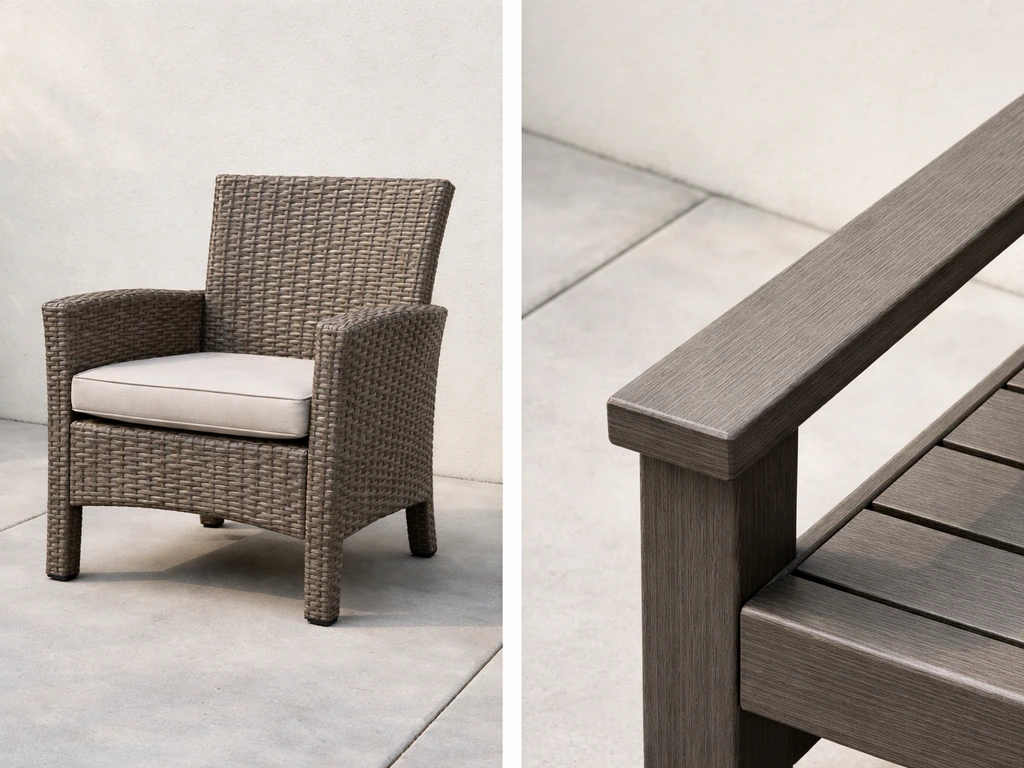
Plain plastic or 'poly lumber' furniture (HDPE recycled plastic boards with no wood fiber component) is sometimes marketed as composite, but it isn't. It's 100% plastic, typically recycled HDPE. It's extremely durable, moisture-proof, and low maintenance, and it's a legitimate alternative worth considering. But it has its own trade-offs: it can feel cheap, scratches more visibly, and in hot climates it expands and contracts more aggressively with temperature swings. True WPC composite sits between poly lumber and wood in feel and performance.
What to look for when you're actually shopping
Construction quality matters more than the brand name on the tag. Here's what to evaluate before you buy.
Frame and substructure
Good composite patio furniture uses WPC or TPC for the visible surfaces (slats, backs, tabletops) but relies on a structural subframe for load-bearing strength. That subframe should be aluminum, ideally powder-coated aluminum. Aluminum doesn't rust, handles thermal expansion well, and is light enough to move. Steel subframes are cheaper and heavier but will rust eventually, especially at weld points and where powder coat chips. If a set has a steel frame and the listing just says 'metal frame,' that's a yellow flag. Ask specifically.
Capping and surface quality
Look for products that explicitly describe co-extrusion or a capped composite construction. Brands that use capped WPC will usually say so in the product specs because it's a selling point. If the listing only says 'WPC' or 'composite lumber' without mentioning capping, assume it's uncapped. Feel the surface if you can: capped composite has a slightly smooth, almost matte-plastic feel. Uncapped has a rougher, more fibrous texture that feels closer to painted wood.
UV and weather resistance claims
Manufacturers routinely claim UV resistance for everything. What you're looking for is a UV-stable cap layer and colorfast pigmentation in the cap, not just in the core. Ask whether the color runs all the way through the cap or is only a surface coating. Through-color in the cap layer means that even if the surface gets scratched or scuffed, you won't see a stark color difference underneath. Surface-only color treatment wears through and looks patchy within a few seasons.
Hardware: the most overlooked detail
Fasteners, hinges, and connectors are where cheap composite sets fall apart. Look for stainless steel hardware (grade 304 minimum, 316 for coastal environments) or hot-dip galvanized hardware. Zinc-plated or plain steel screws will rust and stain the surrounding composite, often within the first or second winter. If a product listing doesn't specify hardware material, it's probably not stainless. That's a real longevity problem, not a cosmetic one.
Weight, stability, and joint design
Heavier composite furniture tends to be more stable and uses thicker profiles, which matters in wind. Check the listed weight for chairs and tables: a decent composite dining chair should weigh 15 to 25 pounds. Suspiciously light chairs (under 12 pounds) usually have thin-walled profiles that flex and fatigue at joints. Look at how slats connect to the frame: bolted connections are more durable than glued or friction-fit. Mortise-and-tenon style joints in the frame are a positive sign in higher-end sets.
How composite stacks up against other patio materials
Most people shopping for composite furniture are also comparing it to teak, aluminum, cast aluminum, resin wicker, or steel. Here's the honest breakdown.
| Material | Durability | Maintenance | Weight | Rust/Rot Risk | Best For |
|---|---|---|---|---|---|
| Capped WPC Composite | Excellent (10-15+ years) | Low: rinse, occasional scrub | Medium | None (rot/rust at fasteners if not SS) | Most climates, low-maintenance priority |
| Teak / Acacia Wood | Excellent if oiled | High: oil 1-2x per year | Heavy | Rot if neglected | Classic look, willing to maintain |
| Powder-Coated Aluminum | Excellent (15+ years) | Very low | Light | None | Wind-prone areas, light portability |
| Cast Aluminum | Excellent (20+ years) | Very low | Very heavy | None | Permanent setups, formal look |
| Resin Wicker (alum. frame) | Good (7-12 years) | Low: rinse, avoid UV | Light-medium | None (alum. frame) | Casual, comfort-first setups |
| Resin Wicker (steel frame) | Fair (4-7 years) | Low but frame corrodes | Medium | Frame rusts | Budget, covered spaces only |
| Powder-Coated Steel | Fair-Good (5-10 years) | Low but chips corrode | Heavy | Rust at chips/welds | Budget, not coastal |
| Pure HDPE Poly Lumber | Excellent (15-20 years) | Very low | Heavy | None | Wet climates, pool surrounds |
The honest recommendation: if you want as close to zero maintenance as possible and you're not in a covered space, capped WPC with an aluminum subframe is the practical winner for most homeowners. Teak beats it on beauty and feel but demands real upkeep. Cast aluminum beats it on raw longevity but costs more and is nearly impossible to move around. Poly lumber (HDPE) is actually more durable than WPC in very wet environments but feels more plastic-y and has fewer style options. Resin wicker is more comfortable and casual-looking but the strand weave has a finite life that solid composite boards don't.
Matching composite furniture to your actual climate
Where you live should drive your composite selection more than aesthetics or price. The same set performs very differently in Phoenix versus Portland versus coastal South Carolina.
Hot sun and high UV (desert Southwest, inland Florida, Texas)
UV is the biggest enemy of any composite material in full-sun hot climates. Capped composite with UV-stable pigmentation in the cap layer is essential here, not optional. Look for products tested to ASTM D7032 or that cite specific fade ratings over multi-year accelerated UV exposure. Dark colors (charcoal, espresso, dark brown) will fade more visibly than lighter grays and taupes in high UV environments. Thermal expansion is also real: composite expands in heat. Well-designed furniture accounts for this with slight gaps at joints and slat ends. If slats are butted hard against each other with no gap, they'll buckle in extreme heat. In these climates, adding shade from an umbrella or pergola dramatically extends the furniture's lifespan.
Freeze-thaw cycles (Midwest, Northeast, mountain regions)
Moisture that penetrates composite and then freezes will crack it from the inside. Capped composite's near-impermeable surface layer makes it genuinely freeze-thaw resistant in a way uncapped WPC is not. Aluminum subframes handle freeze-thaw with no issues. Steel subframes are more vulnerable to corrosion after the coating is damaged by ice, road salt (if near a driveway or road), or just mechanical stress from expansion cycles. In these climates, prioritize capped WPC and aluminum frames. Storing cushions and lightweight furniture pieces during deep winter extends life, but solid composite sets can stay outside without real risk if they're quality construction.
Coastal salt air (Atlantic and Gulf coasts, Pacific Northwest coast)
Salt air attacks metal aggressively. An aluminum subframe with a good powder coat finish is far better than steel in coastal environments. Hardware must be 316 stainless steel (marine grade) because 304 stainless is not fully sufficient in direct ocean-front exposure. WPC composite itself handles salt air well since there's no metal in the boards. The vulnerable points are always the hardware and subframe. If you're within a mile of the ocean, this is non-negotiable: aluminum frame, 316 SS fasteners, rinse the furniture monthly with fresh water to remove salt deposits. Resin wicker on an aluminum frame is also a solid coastal choice as long as you keep up with that fresh water rinse.
Heavy rain and high humidity (Southeast US, Pacific Northwest, Hawaii)
In persistently wet climates, moisture management is everything. Capped WPC resists standing water well, but design matters too: look for furniture with drainage gaps in seat slats and tabletops so water doesn't pool. Furniture that traps standing water will develop mold and mildew on the surface even if the composite itself doesn't absorb moisture, because mold grows on organic debris that collects in wet conditions. Elevate furniture slightly off the ground (feet with caps) to prevent wicking from pooled groundwater. In high-humidity climates, pure HDPE poly lumber is actually a strong competitor to WPC because it has zero moisture absorption at all, which can be worth the trade-off in aesthetics.
Wind, sand, and abrasion exposure
Windblown sand is abrasive and will scratch composite surfaces over time, especially lighter-weight furniture that moves around. Heavier cast aluminum or thick-profile composite frames stay put better. For very exposed, windy locations (rooftop patios, open coastal lots), weight and anchor-ability matter as much as material. A light composite chair that blows across the patio will get scuffed before the UV does any damage. Consider furniture anchors or weighted bases if wind is a regular factor.
Cushions, textiles, and everything that goes with the frame
Even the best composite frame is uncomfortable without the right cushions, and cheap cushions will fail faster than the furniture itself. Most composite dining and lounge sets either come with cushions or require them for seating comfort. Here's what matters.
Cushion fill and fabric
Look for cushions filled with polyester fiber or open-cell foam rated for outdoor use. Closed-cell foam retains moisture and grows mold. The cover fabric should be solution-dyed acrylic (Sunbrella is the brand name most people know, but there are comparable alternatives) or a polyester rated for outdoor UV exposure. Solution-dyed means the color is baked into the fiber during manufacturing, not printed on top, so it holds color dramatically longer under UV. Avoid cushions with cotton or cotton-blend covers outside unless they're stored when not in use.
Cushion sizing and attachment
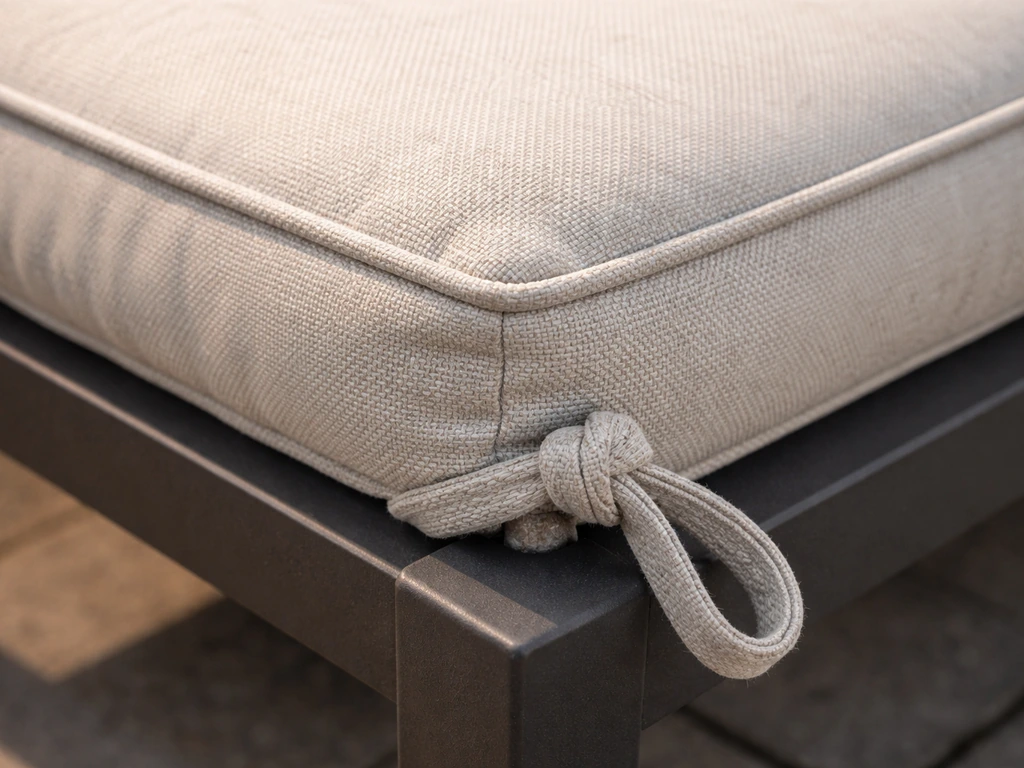
Cushions should have tie-down straps or Velcro attachments to the chair frame so they don't blow off in wind. A 4-inch cushion depth is comfortable for lounging; 2 to 3 inches is typically fine for dining chairs. Check that replacement cushions are available for the set you're buying, either from the manufacturer or in a standard size that aftermarket cushions fit. Some brand-specific frame shapes take proprietary cushion dimensions that are hard to source in year three.
Feet, glides, and surface protection
Composite furniture feet should have rubber or plastic glide caps that protect both the furniture and the surface underneath. This matters particularly if your furniture sits on composite decking (scuffing and scratching are real concerns) or on poured concrete. For help choosing styles and construction that work especially well on composite decking, see the best patio furniture for composite decking guide. Aluminum feet without glide caps can oxidize and leave white residue marks on certain surfaces.
If the furniture you're buying doesn't include glide caps, they're cheap and easy to add. If you're placing this furniture on a composite deck specifically, look for non-marking feet and avoid dragging pieces rather than lifting them. If you want the best patio furniture for deck, prioritize capped WPC with non-marking glide caps so scuffing and moisture issues are minimized.
How to clean and maintain composite furniture so it actually lasts
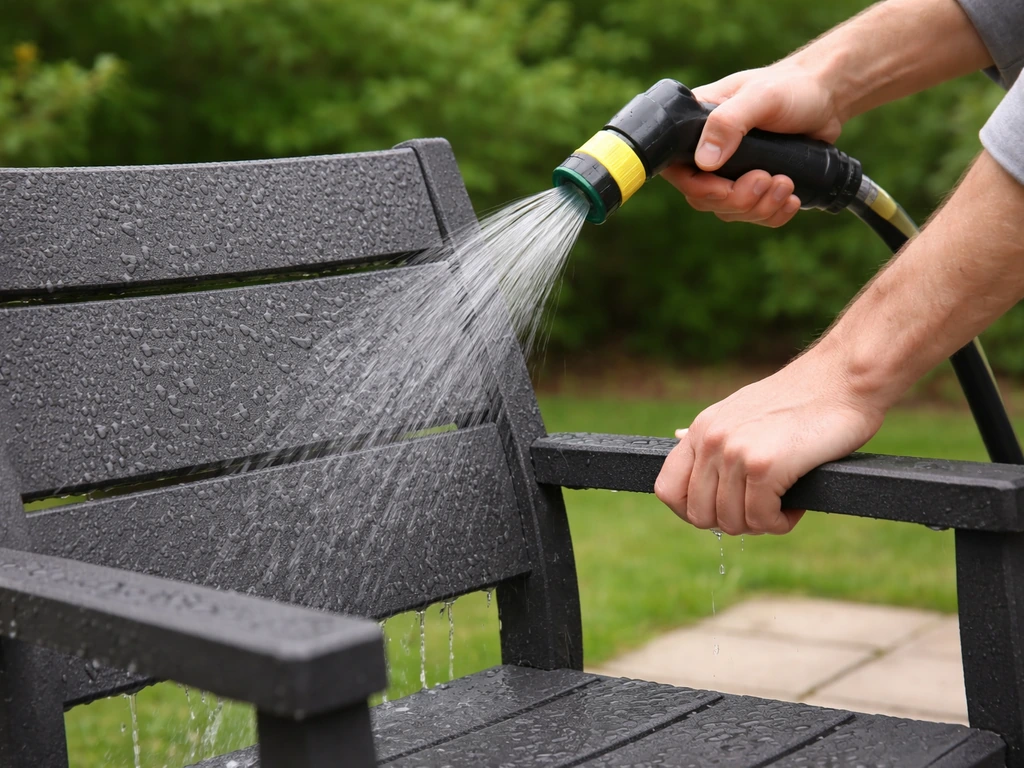
The honest case for composite is that it's low maintenance, not no maintenance. The difference between furniture that looks great in year seven and furniture that looks tired in year three is usually just basic, consistent care.
Routine cleaning
Rinse composite furniture with a garden hose every few weeks during the season. For a deeper clean, mix warm water with a small amount of dish soap (something like Dawn works fine) and scrub with a soft-bristle brush. Work along the grain texture of the composite surface. Rinse thoroughly and let it air dry. Do this two to four times per season in wet climates, once or twice in dry climates. That's genuinely all most composite furniture needs.
Stain and mildew removal
For mildew or algae (the green or black streaks that appear in shaded, humid spots), a diluted solution of oxygen bleach (not chlorine bleach) in warm water works well. Apply, let it sit for 10 to 15 minutes, scrub, and rinse. Avoid chlorine bleach on composite: it can lighten or discolor the cap layer and degrade the surface over time. For grease or tannin stains (bird droppings, food, leaf tannins), try a composite deck cleaner, which is formulated for exactly this material and won't damage the cap layer.
What to avoid
- Pressure washers at high PSI: they can erode the cap layer surface texture and force water into joint gaps. If you use one, stay at or below 1,500 PSI and hold the wand at least 8 inches from the surface.
- Chlorine bleach: discolors and degrades the polymer cap layer.
- Acetone, paint thinner, or petroleum-based solvents: they soften and damage the polymer surface.
- Abrasive scrub pads or steel wool: scratch the cap layer and create microscopic channels for moisture entry.
- Leaving wet leaves or organic debris piled against the furniture for extended periods: organic material on the surface feeds mold even on capped composite.
Seasonal care and storage
Do a thorough clean at the start and end of each outdoor season. Before winter in freeze-thaw climates, clean the furniture, dry it off, and check all hardware for any early rust or corrosion. Tighten any loose fasteners. Stainless hardware will be fine; any zinc-plated screws showing rust should be replaced with stainless equivalents now, not later. Store cushions indoors or in a deck box over winter. The composite frames themselves can stay outside in most climates, but covering them with breathable furniture covers (not sealed plastic tarps, which trap moisture) keeps them cleaner and reduces UV exposure during off-season months.
Troubleshooting common problems
Fading on capped composite is usually a slow surface process. Light fading can often be improved with a composite cleaner and a UV-protective outdoor furniture spray (look for products designed for composite decking, which share the same material). Warping in composite slats usually indicates either uncapped boards with moisture uptake, inadequate gap for thermal expansion, or a structural failure at the fastening point. Minor warps sometimes correct themselves through seasonal cycles; significant warps usually need the slat replaced. Discoloration that looks orange or rust-streaked is almost always from corroding hardware or metal contact, not from the composite itself. Address the hardware source and clean with an oxalic acid-based cleaner to remove the stain.
Your practical buying checklist before you pull the trigger
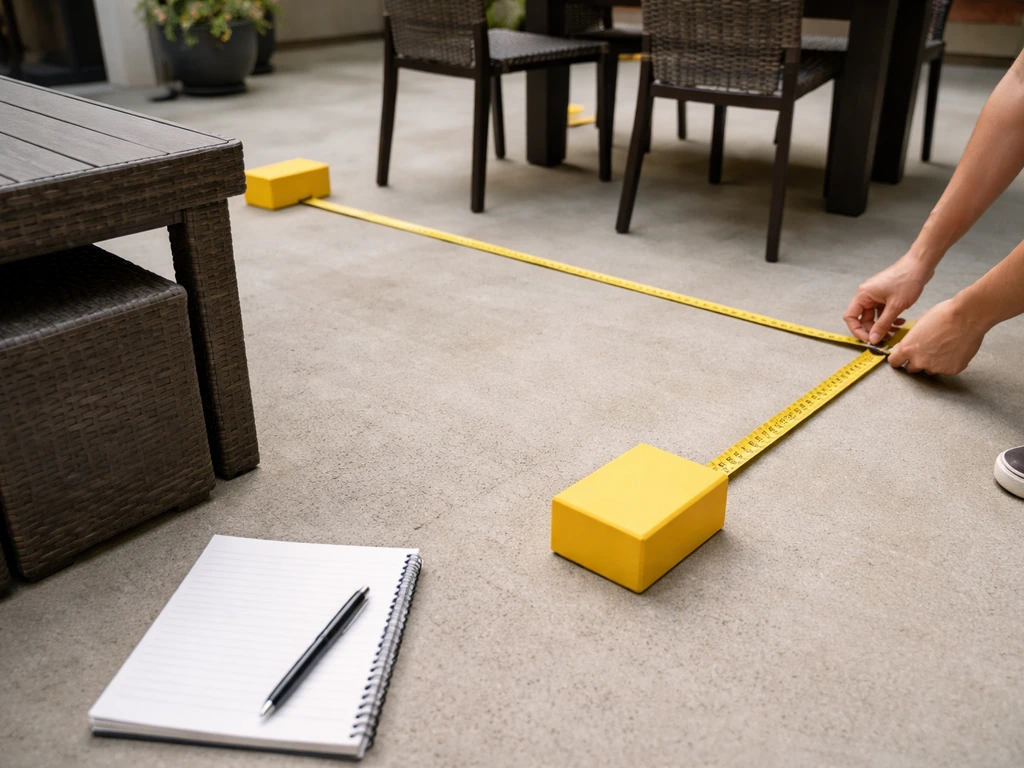
Use this to shortlist and compare any set you're seriously considering.
Measure your space first, every time
Leave a minimum of 36 inches of clearance around dining tables for chair pull-out and walking. For a six-person dining set, expect the table to be roughly 60 to 72 inches long and 36 to 40 inches wide. Lounge and conversation sets need to be evaluated as a configured group, not just individual piece footprints. Measure your patio with that clearance in mind before you fall in love with a set.
If your patio is on the smaller side, the best furniture for small patio considerations will overlap significantly with composite choices since many compact composite sets exist. If you’re shopping for the best furniture for small patio, look for compact sets made from capped WPC with an aluminum subframe and comfortable outdoor cushions.
Seating dimensions that actually matter
Standard dining chair seat height is 17 to 19 inches from the ground. Standard dining table height is 29 to 31 inches. If you're mixing a composite table with chairs from a different set, verify these dimensions are compatible. Lounge chair seat heights typically run 14 to 16 inches for a more reclined feel. Deep-seat lounge furniture (the kind that needs thick cushions) typically has seat depths of 24 to 28 inches.
Warranty and brand reputation
A credible composite furniture brand will offer at minimum a 3 to 5 year structural warranty. Brands offering 10-year or lifetime warranties on composite frames are confident in their material and manufacturing, and that confidence is worth something. Read the warranty terms: some 'lifetime' warranties cover only manufacturing defects under normal residential use, and may exclude fading, surface wear, or damage from improper cleaning. Check for actual customer reviews specifically mentioning year 3 or 4 performance, not just first-impression reviews. That's the real indicator.
Value framing: cost per year, not sticker price
A $400 composite set that lasts 4 years costs $100 per year. A $1,200 capped WPC set with an aluminum frame that lasts 12 to 15 years costs $80 to $100 per year and requires less upkeep. The budget set always looks like the safer financial decision until you run this math. This is where composite's advantage over wood also becomes clearest: a teak set at the same price point requires $40 to $60 in teak oil per year and several hours of maintenance, plus more risk of neglect damage. Composite is consistently the lower total-cost option over time.
Quick shortlist criteria
- Confirm the composite type: capped WPC or TPC, not uncapped or 'composite lumber' without clarification.
- Confirm the subframe material: aluminum preferred, powder-coated steel acceptable for covered/inland locations only.
- Confirm hardware material: stainless steel (304 minimum, 316 for coastal).
- Check that the product specifies UV-stable colorfast pigmentation in the cap layer, not just 'UV resistant.'
- Look for slat or joint designs that allow for thermal expansion gaps.
- Verify warranty duration and what it specifically covers.
- Check cushion fabric: solution-dyed acrylic or UV-rated outdoor polyester.
- Confirm replacement cushions are available (standard sizing or brand-supplied).
- Read 2+ year-old reviews if available, not just launch-era impressions.
- Measure your patio and confirm the configured set (with clearance) actually fits before ordering.
If you're placing composite furniture on a composite deck, there are some additional compatibility and surface-protection considerations worth thinking through, since the furniture feet and any dragging or moisture pooling affect the deck surface differently than concrete or tile. Deck vs patio furniture also matters when you think about how your surface handles foot traffic, moisture pooling, and wear over time.
Similarly, if this is for a front porch or an apartment balcony, weight limits and space constraints shift the priorities slightly from what a full backyard patio setup demands. If you're shopping for the best patio furniture for apartment setups, double-check weight limits and choose pieces that are easy to move and secure apartment balcony.
The core material logic holds across all of these contexts: capped WPC, aluminum subframe, stainless hardware is the combination that delivers the longest reliable life with the least ongoing effort.
FAQ
How can I tell from the product listing whether WPC is capped or uncapped?
Use this rule of thumb: if the listing does not explicitly say capped, co-extruded, or include a protective cap layer, treat the boards as uncapped. “WPC” by itself is not enough, and you can confirm by looking for warranty language that mentions color fade and surface wear, not just “rot resistance.”
What should I watch for in the first few seasons, fading versus damage from hardware?
It is normal for capped composite to develop slight surface whitening or sheen changes from sun and cleaning, but through-color fading should stay uniform. If you see rust-colored lines or orange streaks, check for corroding hardware contact first, since the composite cap usually does not create true rust staining on its own.
Will composite patio furniture crack in winter, even if it is capped WPC?
For freeze-thaw climates, you want capped composite boards and an aluminum subframe, but also verify there is thermal-expansion allowance, meaning slat ends have gaps or joints that are not jammed. If a set looks perfectly tight with no spacing, it is more likely to warp under extreme heat-cold swings.
Is UV resistance the same thing as color staying uniform over time?
Do not rely only on the “UV-resistant” marketing word. Ask whether the cap layer uses UV-stable pigmentation (through-color) or just a surface coating, and whether replacement parts (slats or cushions) are available. A set can be UV-resistant but still look patchy if only the outer pigment is superficial.
What is the minimum hardware spec I should require for composite furniture near the ocean?
Stainless grade matters. In coastal or near-ocean settings, look for 316 stainless fasteners and aluminum frames, then rinse monthly with fresh water to remove salt residue from joints and crevices. Even high-quality composite can suffer if salt sits on hardware heads.
What changes when I place composite patio furniture on composite decking?
If the furniture is for a composite decking surface, prioritize non-marking glide caps and avoid sliding during installation. After it is placed, keep leaves and debris from sitting under chair feet, since debris trapped between glides and deck can scratch both the deck and the glide surface.
How can I tell if a composite set will collect standing water on seats or tabletops?
Look for drainage gaps and a seat design that does not create puddles under cushions. If the set traps water on the top surface or underneath slats, you can still get mildew streaking and must clean more often, even when the board material is capped.
What are the real signs that composite furniture will feel flimsy or wobble?
If your chair is unusually light, check for thin-walled frames and weak joint methods. Weighing alone is not perfect, but for stability, aim for chairs that feel rigid when you push on the arms and do not flex at the slat-to-frame connections.
Can I count on cushion replacement availability for composite patio furniture?
Yes. When a set uses proprietary cushion shapes, you may struggle to replace them after a few years. Before buying, confirm replacement cushion availability, cushion thickness options (often 2 to 3 inches for dining, 4 inches for lounging), and whether covers are sold separately.
What is the safest way to remove mildew from capped composite furniture?
You can, but do it carefully. Avoid chlorine bleach, use oxygen-based cleaner for algae or mildew, and stick to soft-bristle scrubbing along the grain. After cleaning, rinse thoroughly and let it dry fully, because residue can dull the surface cap.
How should I evaluate warranties for best composite patio furniture?
Warranty length matters less than warranty scope and exclusions. A “lifetime” offer may cover only manufacturing defects and exclude fading or damage from cleaning chemicals, so read whether the warranty covers surface wear and color change. Also look for reviews that mention performance after year 3, not just initial appearance.
What measurements should I double-check if I mix a composite table with different chairs?
When you mix composite pieces from different sets, verify seat height, table height, and cushion thickness so backs align comfortably and chairs slide in without scraping. Small height mismatches are more noticeable with fixed-arm chairs and deep-seat loungers.
What maintenance prevents rust stains and hardware failure over time?
Do a seasonal check of fasteners and look for any rust or white corrosion at joints. Replace any zinc-plated hardware showing early corrosion with stainless equivalents before it spreads, since corroding fasteners can stain the composite cap and also loosen the connection.
Next Articles
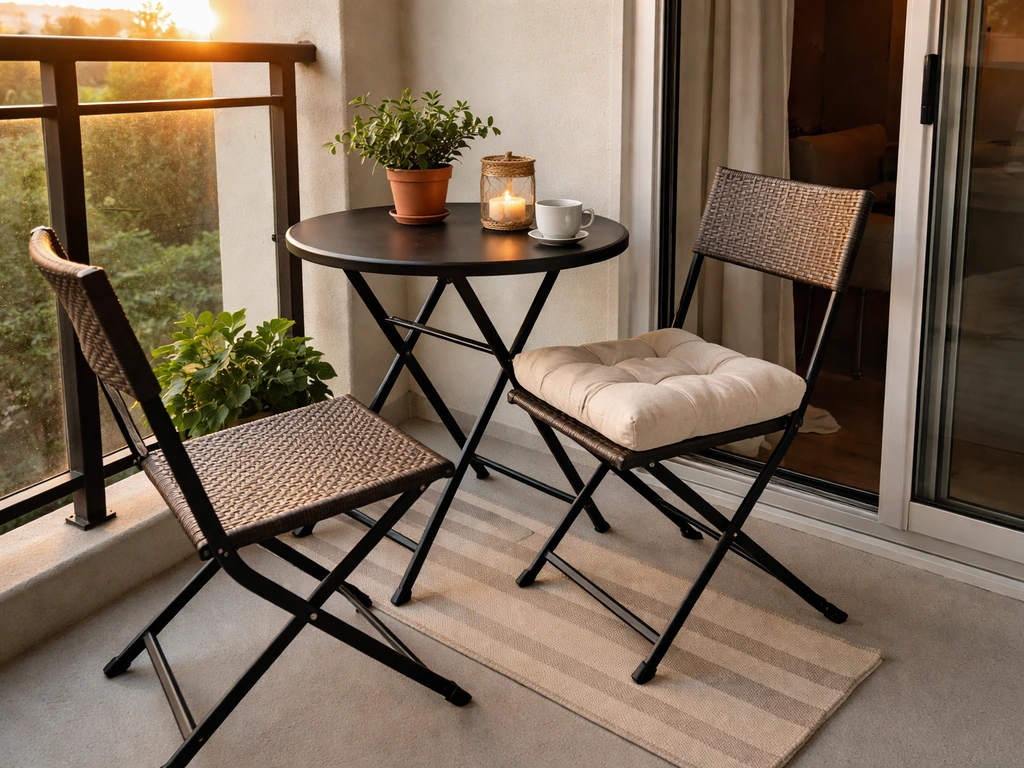
Best Patio Furniture for Apartment Balconies: Buyer Guide
Small-space balcony patio sets ranked by material, comfort, wind stability, and weather durability for apartments.
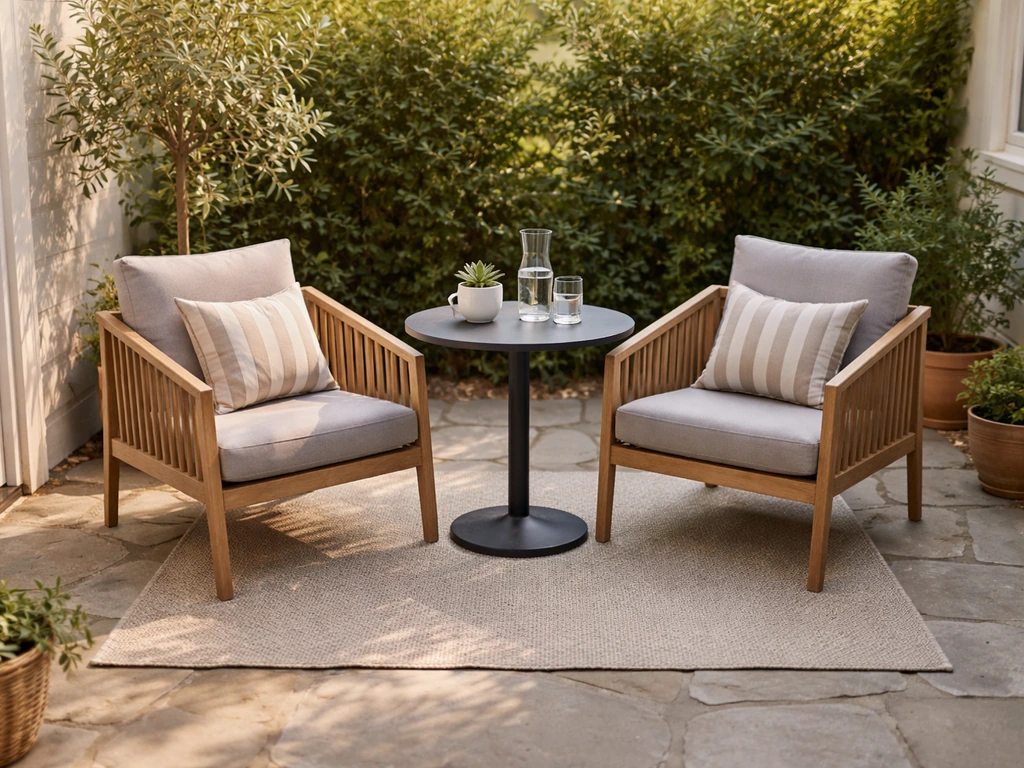
Best Furniture for Small Patio: Buying Guide for Comfort
Find the best furniture for small patios with layout tips, space saving sets, durable weatherproof materials, and care s
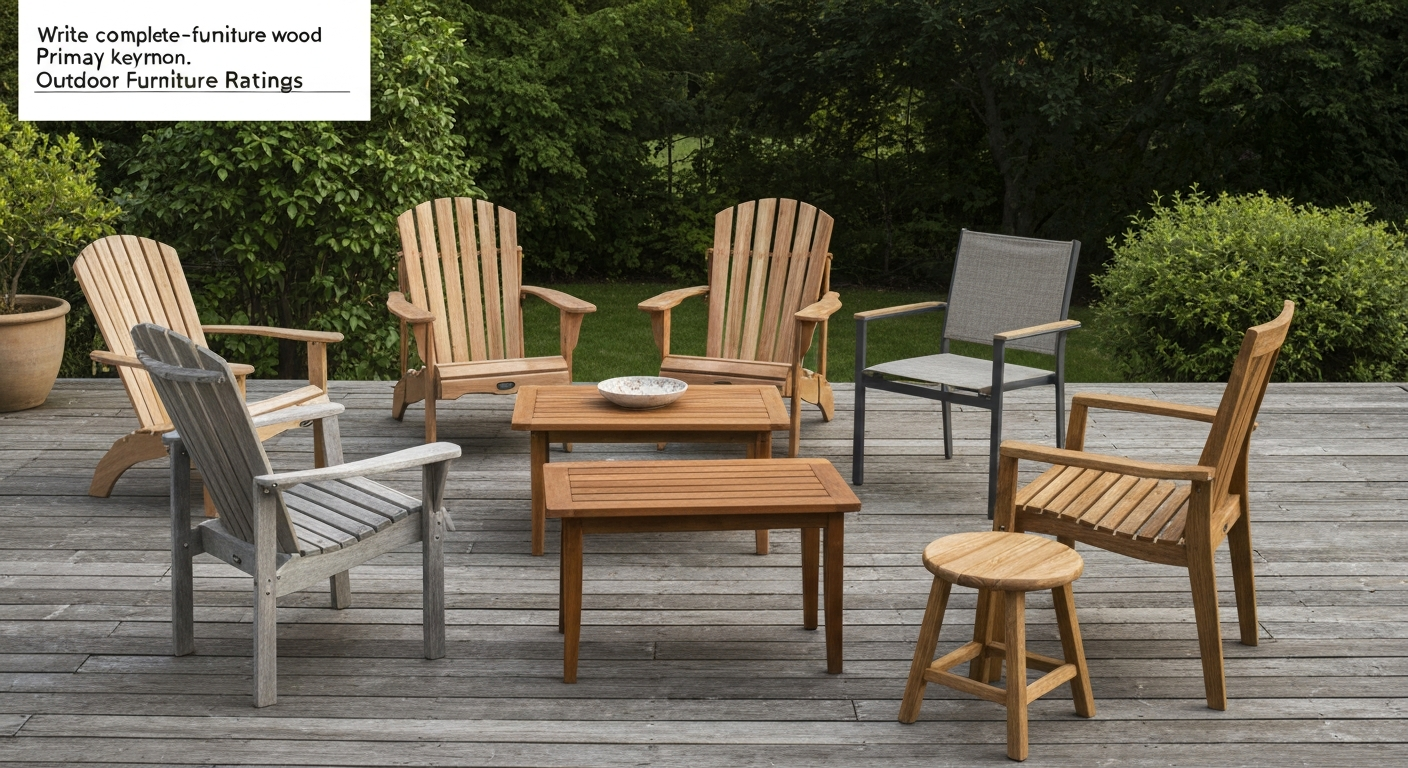
Common Patio Furniture Wood: Best Choices, Care & Tips
Compare common patio furniture wood types, teak, cedar, redwood, oak, with durability, finishes, and care tips.