
The best furniture for a small patio starts with measuring your actual usable space before you buy anything, then choosing compact pieces that leave at least 30 inches of walkway and match how you really use the space. A bistro set works for a tiny balcony where you eat and drink. A loveseat-and-coffee-table conversation setup works if you mostly relax. Modular sectionals work if you want flexibility without permanently sacrificing circulation. Material choice matters more on a small patio than a large one because pieces sit closer together and closer to walls, trapping moisture and UV exposure. Get the layout right first, then match material to your climate, and you'll end up with furniture that fits well and lasts.
Best Furniture for Small Patio: Buying Guide for Comfort

Theo Tierney
11 May 2026
Measure before you shop (this step actually matters)

Pull out a tape measure before you open a single product page. Measure the full length and width of your patio, balcony, or deck. Then note where the door or sliding glass door sits, because that opening needs at least 60 inches of clearance in front of it so people can actually get in and out. Mark down any structural posts, railings, or walls, and measure the distance from those edges to the center of your space. Also note which direction gets the most sun and where any shade falls, since that affects where you'll actually want to sit.
From your total dimensions, subtract your clearance requirements to find the real usable footprint. You need at least 30 to 36 inches of walkway around and between furniture pieces. In high-traffic zones, bump that up to 40 inches. If your patio has a single narrow path to the door, reserve 24 inches minimum, though 30 inches is far more comfortable.
Leave 18 inches between a seat back and any wall or railing so people can actually pull the chair out and sit down. With a bistro table near a doorway, plan for 18 inches of chair push-back clearance behind each seat plus a 30 to 36 inch circulation lane alongside it. What's left after all those buffers is the space your furniture can actually occupy.
Write down that usable footprint as a rectangle or L-shape, then sketch it to scale on paper or in a free tool like Coohom or Maglin's planning templates. It sounds tedious, but it's the reason people end up with furniture that either blocks the door or looks marooned in the middle of the space.
Layouts that actually work in tight spaces
Decide how you use the space before picking a furniture type, because each use case has a different optimal layout. Most small patios fall into one of three modes: dining, lounging, or a hybrid of both. Trying to do all three at once on a 6x8 foot balcony is how you end up with a cluttered, barely functional mess.
Dining and eating outdoors
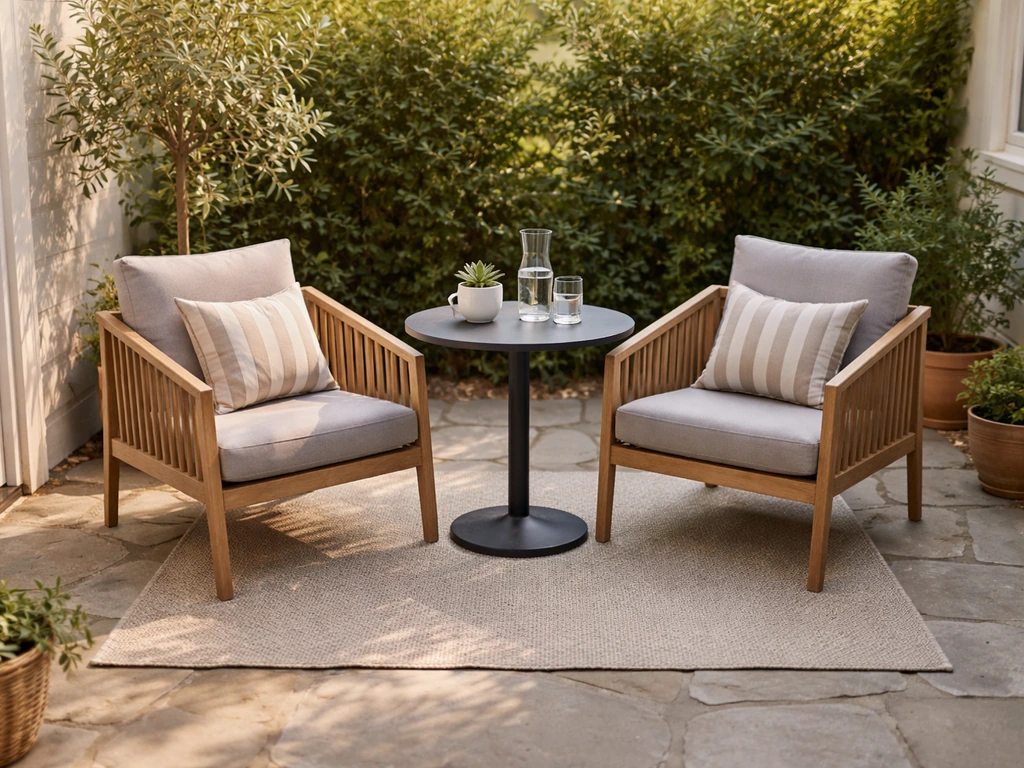
If you eat outside regularly, a bistro set is the most efficient use of a small footprint. A round bistro table (typically 24 to 28 inches in diameter) with two chairs takes up roughly a 5x5 foot zone once you account for chair pull-back. Push the table against the railing or wall and you can reclaim a lane of circulation. Table height should be in the 28 to 30 inch range for comfortable seated dining. Avoid rectangular dining tables on very small patios because the long axis almost always blocks either the door or the walkway.
Relaxing and lounging
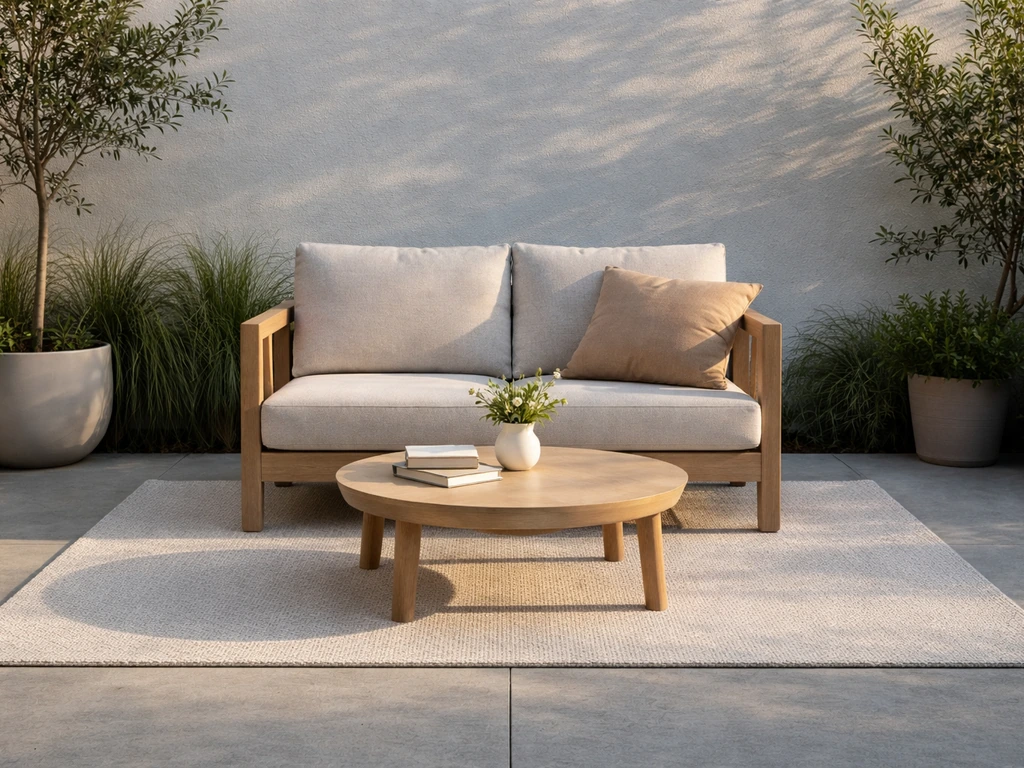
For lounging, a loveseat or two-seat conversation set with a small coffee table gives you maximum comfort per square foot. Keep the coffee table in the 16 to 24 inch clearance range from the sofa edge so it's reachable without being a shin hazard. A compact loveseat typically runs 48 to 52 inches wide and 28 to 32 inches deep, which is manageable on a 6-foot-wide balcony if you run it along one wall. Two armchairs angled toward each other with a small nesting table in between is another efficient lounging layout and scales down even further.
Hybrid spaces and small decks
If your patio is in the 8x10 to 10x12 foot range, you can layer dining and lounging with a modular or convertible approach. A small sectional with a built-in table component, or a dining set with foldable chairs that you swap out for lounge chairs, lets the space flex. On small front porches and decks, a rocking chair or swing is often more efficient than trying to fit a full seating arrangement.
For those comparing front porch setups specifically, that use case has its own design logic worth looking at separately. For many homes, the best patio furniture for a front porch is the same idea: measure your usable space, pick weather-ready materials, and choose a layout that leaves clear walkways front porch setups.
Best materials for small patio furniture
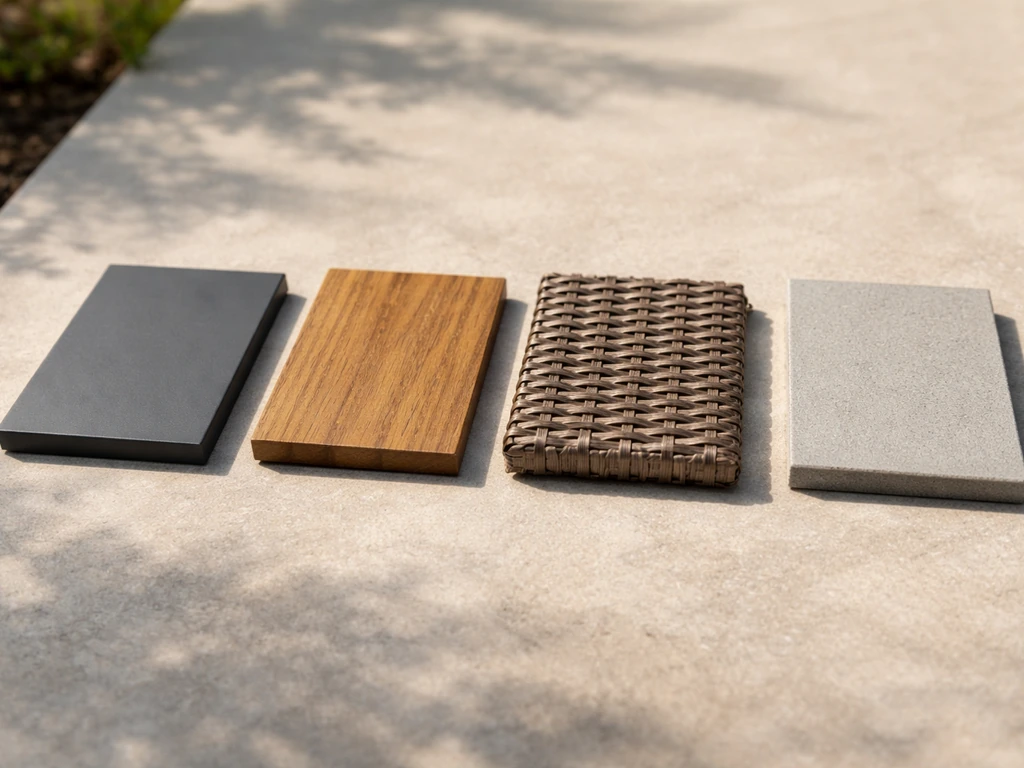
Material choice is where most people either get it right for a decade or replace their furniture every two years. On a small patio, pieces often sit against walls, get less airflow, and may be harder to cover or store. That makes material durability more critical, not less.
| Material | Weight | Rust/Rot Resistance | UV/Fade Resistance | Best Climate | Longevity (maintained) |
|---|---|---|---|---|---|
| Powder-coated aluminum | Light | Excellent (no rust) | Good (quality powder coat) | All climates, especially coastal and humid | 15-20+ years |
| Teak wood | Heavy | Excellent (natural oils) | Good (silvers gracefully) | Humid, rainy, coastal | 25+ years |
| Eucalyptus wood | Medium-heavy | Good (denser than pine) | Moderate | Moderate climates | 10-15 years |
| All-weather wicker (resin) | Light-medium | Excellent (no rust/rot) | Moderate (degrades in intense UV) | Most climates; avoid extreme desert sun | 7-12 years |
| Steel (powder-coated) | Heavy | Fair (chips can rust) | Good | Dry, low-humidity climates | 8-12 years |
| Composite/HDPE | Medium | Excellent | Excellent | All climates, extreme heat and cold | 20+ years |
Aluminum: the practical default for small spaces
Powder-coated aluminum is the best all-around material for most small patios. It's light enough to move and rearrange easily, which matters a lot when you're working with a tight footprint. It doesn't rust, doesn't rot, and a quality powder coat holds up to UV and rain without peeling for many years. [AAMA 2604](https://www.
tcipowder. com/media/2811/aama-warranties-for-website-5-15-23. pdf) is commonly referenced in AAMA warranty documentation for powder-coated aluminum, including examples that cite “AAMA 2604” in the warranty context. The trade-off is that thinner aluminum frames (under 1.
5mm wall thickness) flex and wobble, so check the frame gauge before buying. Cast aluminum is heavier and more rigid than extruded aluminum tubing and tends to look more substantial, but it's considerably heavier. For balconies with weight limits, extruded aluminum is the smarter pick.
Teak and hardwood: the long-haul investment
Teak is genuinely excellent outdoor wood, and if you buy Grade A teak (tight grain, from the heartwood), it will outlast almost any other material. The natural silica and oil content resists moisture, insects, and rot without treatment. It will silver to a gray patina if you leave it unsealed, which some people love and some people don't. A yearly application of teak oil or a UV-protective sealer keeps the honey-brown color if you prefer that look.
The real barrier on small patios is weight. Teak furniture is dense and heavy, which is a problem if you're on a balcony or want to store pieces seasonally. Eucalyptus is a more affordable alternative with similar rot resistance, though it benefits more from regular sealing and won't match teak's 25-plus-year track record.
All-weather wicker: comfortable but needs the right frame
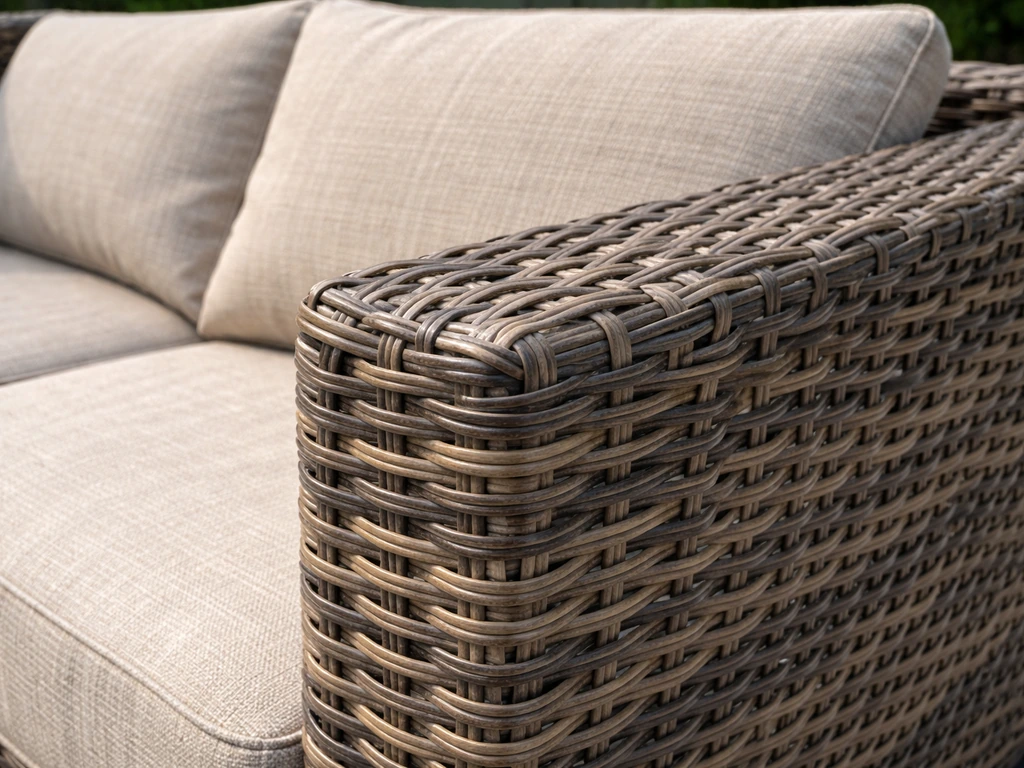
What's sold as all-weather wicker is almost always polyethylene resin woven over a frame, usually aluminum or steel. The weave itself handles moisture and UV reasonably well. The frame underneath is the thing to check. An aluminum frame under the wicker will last; a steel frame will eventually rust through at the welds and kill the piece even if the wicker looks fine. Ask specifically about the frame material before buying any wicker furniture. The cushions that come with most wicker sets are the other weak point. Look for cushion fabric rated for outdoor use (solution-dyed acrylic like Sunbrella is the standard to beat) and foam that's either quick-dry or open-cell so it doesn't hold water and mildew.
Composite and HDPE: the low-maintenance option
High-density polyethylene (HDPE) lumber is what most quality composite patio furniture is made from. It genuinely does not rot, rust, or require painting or sealing. Color holds well even in intense UV exposure because pigment is integrated through the material rather than surface-coated. It's heavier than aluminum but lighter than hardwood, and it can feel slightly plastic to the touch on budget versions. For small patios in climates with extreme temperature swings (freezing winters, very hot summers), composite holds up better than wood and better than thin powder-coated steel. If low maintenance is your primary requirement, composite and aluminum are the two materials to focus on.
Top picks by category for small patios
Bistro sets
A two-piece bistro set is the single most efficient option for a small balcony or patio where you want to eat or have coffee outside. Look for a round table in the 24-inch diameter range and folding or stackable chairs so you can collapse the setup when it's not in use. Powder-coated steel or aluminum frames with a slatted seat are classic and practical. The French cafe-style iron bistro sets look great but tend to be heavy and need rust treatment on cut edges over time. Aluminum versions in the same style weigh less and won't rust, making them easier to store or reposition.
Conversation sets and loveseats
A compact loveseat (48-52 inches wide) paired with one or two matching chairs and a small coffee table is the go-to layout for relaxed outdoor seating on a patio in the 6x8 to 8x10 foot range. All-weather wicker over an aluminum frame is the most popular choice here because it's comfortable, looks finished, and the cushions add softness without requiring built-in upholstery. Deep-seating conversation sets with cushion depths of 20-24 inches feel more like indoor furniture outdoors, which most people love. The trade-off is that deep cushions need somewhere dry to go when it rains, which is a real logistics issue on a tiny patio with no storage.
Compact sectionals
Modular sectionals designed for small spaces (sometimes called apartment sectionals or balcony sectionals) use smaller-than-standard modules, typically 24-28 inches per piece rather than the 32-35 inch pieces in full-size sectionals. If you are looking for the best patio furniture for apartment living, start by choosing compact, modular pieces that fit your measurements and stay easy to store apartment patio furniture. This matters enormously on a small patio.
A three-piece L-shaped sectional with modules in that range can fit on an 8x8 patio and still leave a 30-inch walkway on the open side. Look for modular pieces that can rearrange from an L-shape to a straight sofa, since that flexibility lets you optimize for different uses. If you're furnishing a small apartment patio or balcony, this category overlaps closely with what works for apartment outdoor spaces generally.
Loungers and daybeds
Full-size chaise loungers run 72-78 inches long, which rules them out for most small patios unless you have a long narrow space (like a balcony that's 5 feet wide by 10 feet long) where a single lounger can sit lengthwise along a wall without blocking anything. Compact reclining chairs are more practical in tight spaces: they provide the same lay-back function in a 36-40 inch footprint. Some folding sun loungers collapse flat for storage, which makes them workable even on small spaces because you can put them away when not in use. On a small deck, a single quality lounger with a side table is often a more honest use of space than trying to squeeze in a whole seating set.
Space-saving features worth paying for
The difference between small-patio furniture and regular patio furniture is largely about what happens when the piece isn't actively in use. On a small space, you need furniture that earns its footprint or gets out of the way.
- Foldable chairs: A chair that folds flat against a wall or stacks in a corner lets you expand seating for guests without permanently committing to the footprint. Look for a fold mechanism that doesn't require tools and locks open firmly.
- Stackable chairs: Four stackable side chairs can store in the same space as one chair. Good stackable outdoor chairs aren't cheap but the storage math is compelling on a tiny patio.
- Nesting tables: A set of two or three nesting tables gives you table surface when you need it and collapses to one table's footprint when you don't. Much more useful than a single large coffee table on a small space.
- Folding or drop-leaf tables: A bistro table with a fold-down leaf can serve two comfortably and fold to a narrow console profile when not in use. Some fold completely flat against a wall.
- Modular seating: Pieces that reconfigure from L-shape to straight line, or that can separate into individual chairs, adapt the space to dining versus lounging modes.
- Built-in storage: Ottomans with storage lids and benches with lift seats let you keep cushions, covers, and accessories out of sight and protected without needing a separate deck box.
- Slim profiles and armless chairs: Armless chairs and benches waste less lateral space than traditional armchairs. On a 5-foot-wide balcony, an armless loveseat instead of an armed two-seater can free up 6-8 inches per side.
Weather resistance by climate
Climate is one of the most underrated factors in small patio furniture selection. On a small space, furniture often sits closer to walls, railings, and overhangs, which changes how moisture, UV, and salt air interact with the materials.
| Climate Type | Main Threats | Best Materials | Avoid |
|---|---|---|---|
| Humid Southeast / Florida | Moisture, mildew, UV, mold on cushions | Powder-coated aluminum, teak, HDPE composite | Steel frames, untreated wood, cheap resin wicker |
| Arid Southwest / Arizona | Intense UV, heat expansion, dry rot on wood | Aluminum, composite/HDPE, powder-coated steel with quality coat | Unfinished or lightly finished wood, thin resin wicker |
| Coastal / Salt Air | Salt corrosion, moisture, wind | Marine-grade aluminum (6000-series alloy), teak, HDPE composite | Any steel, low-grade aluminum, wrought iron |
| Northern winters / freeze-thaw | Freeze-thaw cracking, snow weight, moisture | Aluminum, HDPE composite, teak (with seasonal storage) | Ceramic tile tops, thin-wall aluminum tubing, wicker with steel frames |
| Pacific Northwest / wet temperate | Constant moisture, low UV, mildew | Teak, aluminum, HDPE, resin wicker with aluminum frame | Steel, softwood, cheap powder coat that chips and traps moisture |
Coastal environments are the harshest test. Salt air corrodes steel aggressively, even through powder coating if there are any chips or exposed edges. Stick to aluminum alloys (look for 6061 or 6063 grade) or teak and composite if you're within a few miles of the ocean. In the desert Southwest, the enemy is UV intensity combined with dry heat that makes wood crack and split, and that degrades resin wicker faster than in moderate climates.
In cold northern climates, moisture that freezes inside cracks or joints is the killer, so materials that don't absorb water (aluminum, HDPE) outlast those that do. In the humid Southeast, it's the combination of moisture, heat, and mildew pressure that does in cheap cushion fabric and untreated wood frames.
Keeping your small patio furniture in good shape
Maintenance on a small patio is actually easier than on a large one because there's less surface area to deal with, but pieces can be harder to move and dry out if they're tucked against walls or under overhangs. A consistent routine makes the difference between furniture that looks good for ten years and furniture that looks rough in three.
Routine cleaning
Wipe down aluminum and composite frames monthly during the use season with a mild soap and water solution. For best results with composite decking, choose patio furniture made for outdoor use that can handle moisture and UV without frequent upkeep. A soft brush (an old dish brush works fine) gets into wicker weave and frame joints where dirt and moisture accumulate. For teak, rinse with water and a gentle scrub to prevent mildew in humid climates, and apply teak oil or sealer once per year if you want to maintain the color. Avoid pressure washing wicker and cushion fabric at full force since it can force water into foam and compromise the weave over time.
Cushion care
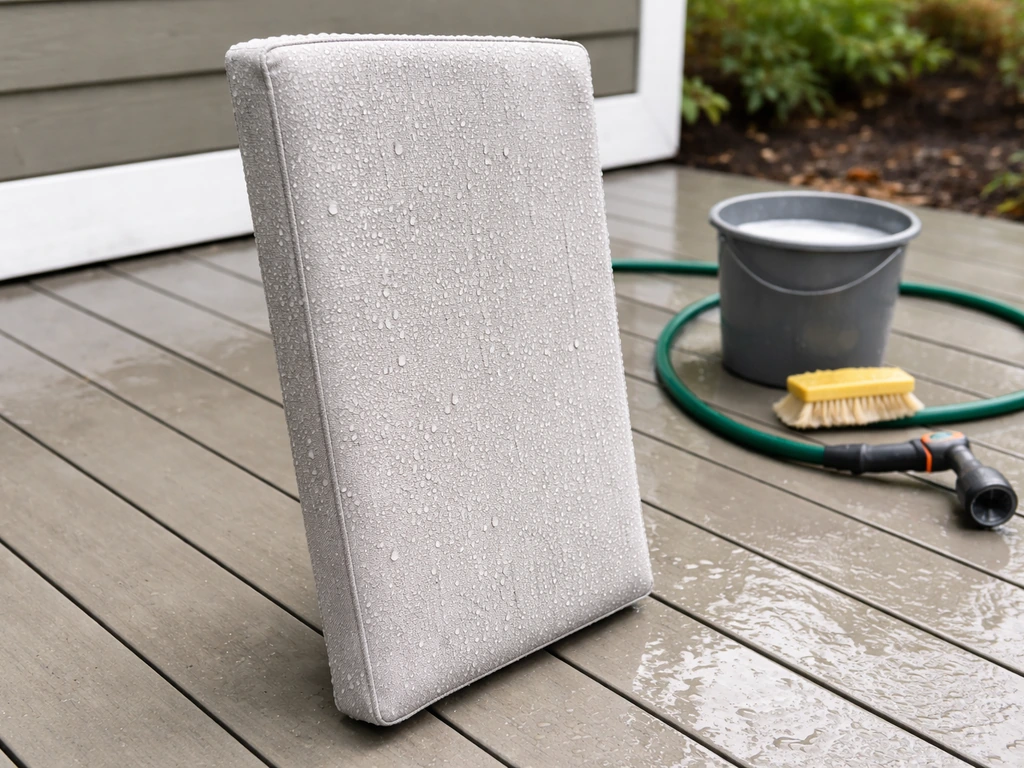
Cushions are typically the first thing to fail on outdoor furniture. Stand cushions on edge after rain so water drains out rather than pooling at the bottom. If your cushions have removable covers (and they should, when you're buying), wash the covers at the end of the season and store them dry and compressed. Sunbrella and other solution-dyed acrylic fabrics can be cleaned with a mild bleach solution without damaging the color. Foam cores should be allowed to fully dry before storage. On a small patio where storing cushions is already a challenge, an ottoman with a storage compartment or a compact deck box tucked in a corner is worth the footprint it takes up.
Covering and seasonal storage
Furniture covers are one of the best investments you can make in longevity, especially on a small patio where pieces may not get as much airflow. Get covers that fit the specific pieces rather than generic tarps, because covers that trap moisture underneath do more harm than no cover. Look for covers with air vents and cinch straps that keep them from blowing off. In climates with real winters (freezing temperatures, snow), bringing cushions and lightweight pieces like folding chairs indoors is the single most effective thing you can do to extend their life. Aluminum and composite frames can stay outside year-round in most climates. Teak can stay out but benefits from being moved under cover if possible.
When to repair versus replace
Powder coat chips on aluminum or steel are worth addressing quickly. Touch-up paint (spray or brush-on) matched to the frame color prevents rust from creeping under the finish. A small chip ignored for one winter can spread into a larger rust bloom that compromises the joint. Wicker strands that come loose can usually be tucked back or re-glued, but if a significant section starts unraveling, the whole panel typically needs replacement.
Replacement cushions for popular furniture lines are widely available and usually far cheaper than replacing the whole set, so it's worth checking cushion availability before buying a set. [Expect quality aluminum or composite frames to last 15 to 20 years with reasonable care. ](https://www. urbanoutdoorfurniture.
com/knowledge/17662. html) Expect cushions to need replacement every 5 to 8 years, sooner if they're not brought in during the off-season.
Making a confident purchase today
Here's a practical sequence for making a good decision without overcomplicating it. Measure first, then pick your primary use case (dining, lounging, or hybrid), then filter by material based on your climate. If you're in a humid or coastal environment, aluminum or composite over steel every time. If you want maximum longevity and don't mind the weight, teak is still the gold standard. If you want low maintenance above all else, composite HDPE wins. Once you've narrowed the material, look for space-saving features that match your storage reality: foldable or stackable chairs if storage is tight, modular pieces if you want flexibility, built-in storage if cushions have nowhere to go.
- Measure your full patio dimensions and note door clearance, wall clearance, and available walkway space before opening any shopping tabs.
- Decide your primary use: dining, lounging, or hybrid. This determines whether you start with a bistro set, conversation set, or modular sectional.
- Match material to your climate using the table above. Eliminate steel from consideration if you're in a coastal or high-humidity environment.
- Look specifically at the frame material on any wicker furniture. Aluminum frame only.
- Check whether cushion covers are removable and whether replacement cushions are available for the set you're considering.
- Identify at least one space-saving feature (foldable, stackable, nesting, or modular) that fits your storage reality.
- Measure the specific pieces you're considering against your usable footprint before purchasing, not against the full patio dimensions.
Small patios, balconies, and decks reward the buyer who plans carefully more than any other outdoor space because every inch is in play. For a quick starting point, use this guide to choose the best patio furniture for deck layouts based on size, layout, and weather. Get the measurements right, match material to climate, and pick pieces that serve your real use case rather than your aspirational one, and you'll end up with a setup that's comfortable, durable, and actually enjoyable to use every day.
FAQ
Can I fit furniture on a small patio if I need to keep it open for foot traffic most days?
Yes, as long as you plan for the piece to stay usable. For example, choose a bistro table with a tight diameter (24 to 28 inches) and foldable chairs so you can close the gap after meals. If you go with a loveseat or modular set, prioritize sections that can be reconfigured into a single, compact “sofa” shape, then store the extra cushions or move the separate items into a dry corner.
What’s the best way to place a small dining set near a door without blocking entry?
You can, but only with a layout that treats the door swing and chair pull-back as non-negotiable. If you use a bistro set near the entry, position the table so chairs pull back toward an open side, not into the doorway. Leave the same clearance you would for a walkway lane, typically 30 to 36 inches next to the path people use to enter.
Are deep-seating conversation sets worth it on tiny patios?
Avoid locking yourself into deep cushions on a space without dry storage. If your patio gets regular rain, stick to shallower seating (conversation-style) or choose a set where cushions can be fully removed and stored indoors or in a sealed deck box. Deep, rain-absorbing cushions can stay damp longer on small patios, even if the furniture “looks dry” on the surface.
If my measurements are close, how can I downsize without ruining the setup?
The easiest swap is to keep the same layout and change the “footprint multiplier,” which is usually chairs and side tables. If you need to reduce size, switch from standard chairs to folding or stackable chairs, and replace bulky end tables with a narrow side table or a tray on a coffee table. This keeps circulation while still giving you surfaces for drinks.
Which furniture types are easiest to move and store seasonally on a small patio?
For most small patios, prioritize lightweight and stackable options for anything you might move seasonally. Folding chairs and modular pieces are practical because you can change the layout for weather (sun and shade), and you can bring items in during storms or winter if storage is available. Heavy pieces like full teak sets are fine when you can cover them well and lift them safely.
How do I choose patio furniture covers for small spaces so they don’t trap moisture?
A breathable cover should be sized to your exact furniture, and you should never tighten it so hard that it traps moisture against cushion surfaces. Look for vented covers and straps that keep airflow underneath. If you cover wicker and cushions together, use separate cover strategies or ensure cushions are fully dry before covering to prevent mold.
What should I check before buying “all-weather” wicker on a small patio?
Check the frame and the joinery, not just the label. For wicker, confirm the frame is aluminum or corrosion-resistant and verify cushion fabric is solution-dyed outdoor-rated. For metal, inspect welds and corners for coating gaps since those are the areas where rust typically starts.
How should I dry and store cushions when my patio is covered or has limited sunlight?
Cushion placement and drying matter more than many people expect. After rain, stand cushions on edge so water drains, and ensure foam has time to fully dry before storage. If your patio is shaded or under an overhang, increase drying time and consider bringing cushions indoors instead of relying on covers.
What’s the most common mistake that shortens the life of patio cushions on small patios?
If you can’t get covers to fit perfectly, it’s often better to avoid covering tightly wrapped cushions outdoors. For frames, full-time outdoor durability is usually fine with aluminum and HDPE, but cushions and fabric tops need off-site drying or at least an indoor storage plan. A small deck box can solve the most common failure point, wet cushions, by keeping fabric sheltered and away from puddling.
Does teak always need to be sealed to keep its color, and how do I handle weight on a balcony?
Teak can silver if left unsealed, which some people like and others don’t. If color retention matters, plan for at least a yearly maintenance cycle with teak oil or a UV-protective sealer. Also consider weight limits on balconies, because teak’s density can be a practical constraint even when the wood is long-lasting.
What’s the best way to repair small chips on aluminum or steel frames before they turn into rust?
Powder coating chips can spread rust faster than most people expect, especially on small patios where pieces sit closer to walls and get less airflow. Treat chips promptly with touch-up paint matched to the frame color. If you notice coating failures at seams, monitor closely, since joints are common initiation points for corrosion.
How do I prioritize what to buy first when I’m furnishing a small patio on a budget?
Choose the pieces that “earn their footprint,” and treat multifunction as non-negotiable. For tiny patios, focus on a single primary activity zone (dining, lounging, or hybrid) and use secondary surfaces only if they don’t force extra chair pull-back. For example, an ottoman with storage can replace a separate storage need while also giving you a place to rest feet.
Next Articles
Common Patio Furniture Wood: Best Choices, Care & Tips
Compare common patio furniture wood types, teak, cedar, redwood, oak, with durability, finishes, and care tips.
Best Wood Patio Stain: Choosing Durable, Low-VOC Finishes
Compare and choose the best wood patio stain: durability, finish, climate tips, prep, and top product picks.
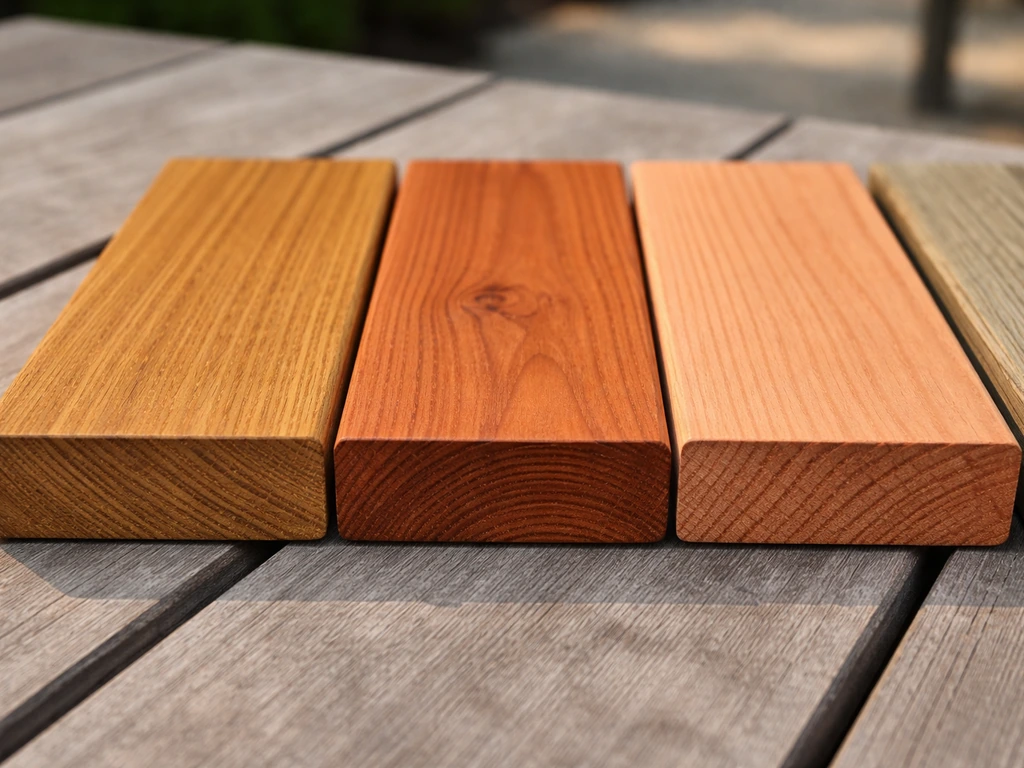
Common Patio Furniture Wood: Teak, Cedar, Redwood and More
Compare common patio woods like teak cedar redwood and pressure-treated: durability, quality checks, and care for long l