
The best patio furniture for a deck depends on three things you need to nail down before you look at a single product listing: how much usable square footage you actually have (not what the builder marketed), whether your deck is covered or fully exposed to sun and rain, and what your local climate does to outdoor materials over a few seasons. Get those three right and the rest of the decision becomes straightforward. Get them wrong and you end up with a dining set that wobbles in the wind, cushions that go moldy by August, or wood that cracks by year two.
Best Patio Furniture for Decks: Buyer Guide by Size and Climate

Theo Tierney
10 Jul 2026
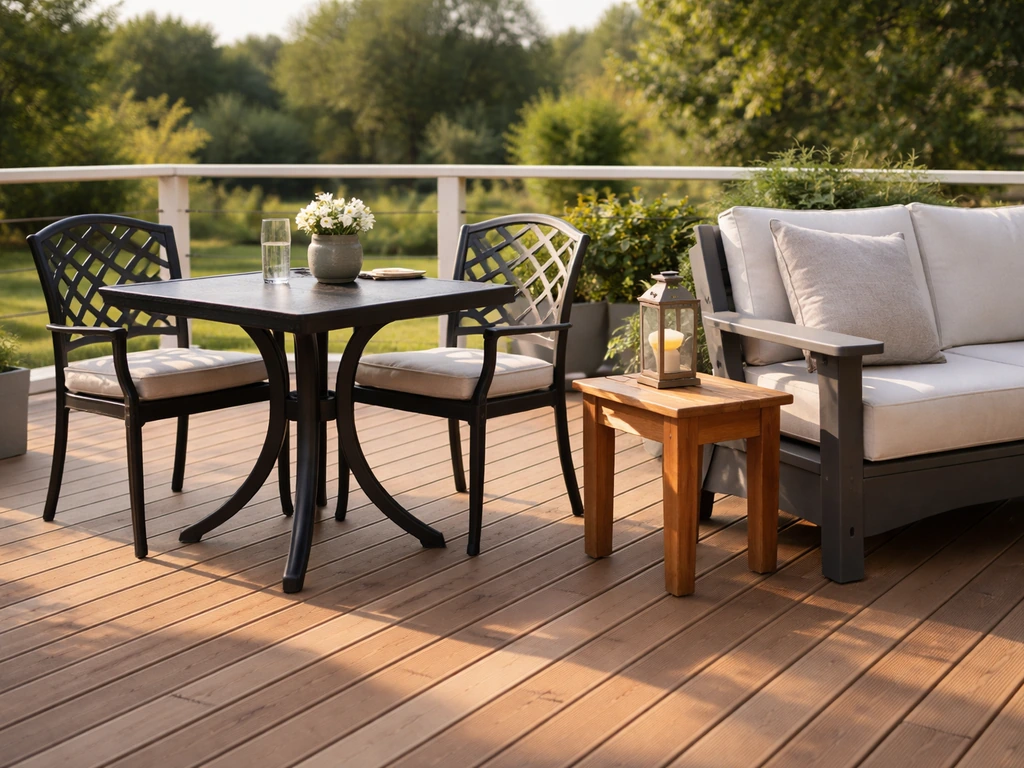
Measure your deck before you shop for anything
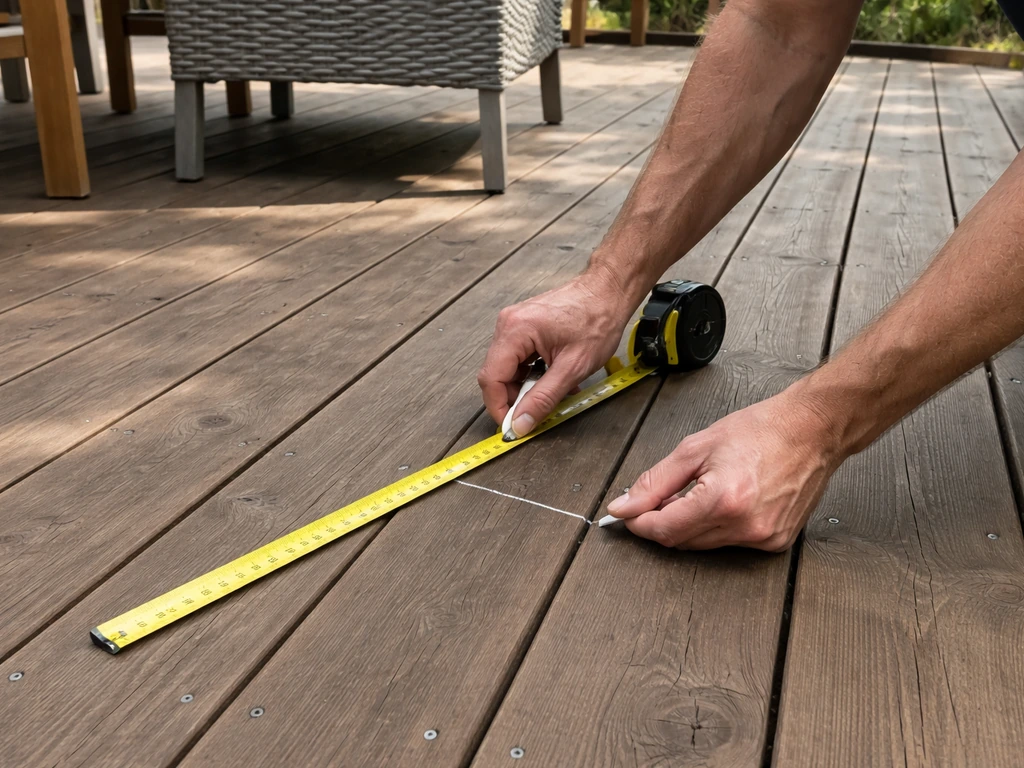
This sounds obvious but most people skip it, buy furniture that fits on paper, and then discover they've blocked the door or can't pull a chair back without hitting the railing. Patio furniture for a front porch follows the same spacing logic, so measure for traffic lanes, door clearance, and seat pull-out before you buy. Tape measure in hand, record the full deck dimensions, then subtract the zones that aren't really usable: the 30-inch arc a swinging door needs, any built-in planters or grill stations, and blank" rel="noopener noreferrer">a 36-inch clear path for every main traffic route (door to grill, door to steps, door to garden). That 36 inches is a practical minimum for one person carrying a tray to pass comfortably.
For dining specifically, a simple rule works well: add the chair depth on one side (about 36 inches), the table width or diameter, and the chair depth on the other side. For example, a patio-set buying guide uses a rule of thumb that combines chair depth plus table width or diameter plus the other chair depth to estimate linear dining space. A 48-inch round table with four chairs needs roughly 120 inches (10 feet) in at least one direction just to seat people and push chairs back. Behind each dining chair you want 18 to 24 inches of clearance for the pull-out. Between furniture groupings, a 24-inch gap between seat backs is the minimum for a passable walkway, though 30 to 36 inches is far more comfortable and safe.
Covered decks change the calculation. If you have a pergola or roof, you're protected from direct UV and rain, which opens up more material options and lets you use thicker cushions year-round without the same weathering stress. Fully exposed decks take the full hit of sun, rain, and temperature swings, so material durability moves to the top of the priority list over almost everything else.
Small decks, apartment decks, and front porches
If your deck is on the smaller side, or you're working with a front porch or balcony, the layout rules still apply but the furniture category shifts. Small decks generally call for bistro sets, slim-profile loveseats, or foldable pieces that can be stored flat. If you're shopping for the best furniture for small patio, those same compact options typically work best because they fit tighter footprints without sacrificing comfort bistro sets, slim-profile loveseats, or foldable pieces. A front porch has its own traffic and visual considerations that differ from a backyard entertaining deck. The same layout math still applies though: never sacrifice those walkway clearances just to fit more seating.
Wood, metal, wicker, or composite: what actually lasts on a deck
Every material has a real-world lifespan that manufacturer marketing glosses over. Here's the honest breakdown.
Wood
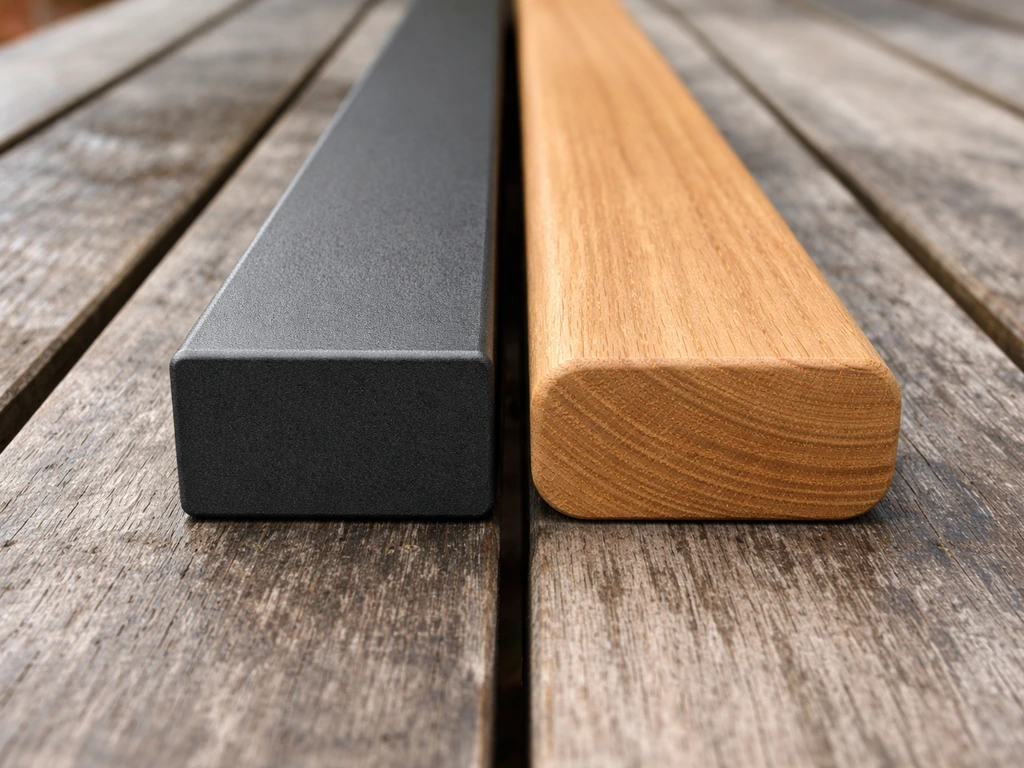
Teak is the benchmark. Its natural silica and oil content make it genuinely rot-resistant and dimensionally stable even through repeated wet-dry cycles. Left untreated it weathers to a silver-gray in 6 to 12 months, which many people like. Re-oiled annually it stays honey-colored and the surface stays smooth. The downside is price: quality teak sets run $800 to $3,000+. Shorea and eucalyptus are sold as teak alternatives and they do perform reasonably well, but they need more consistent oiling and you'll see more surface checking over time. Acacia is the budget wood you'll see everywhere; it splits and warps noticeably faster than teak in exposed deck conditions unless you're diligent about yearly treatment. Pine and cedar are soft woods that absorb moisture easily and aren't a good long-term choice for a fully exposed deck.
Metal
Cast aluminum is the best all-around metal for decks. It doesn't rust (no iron content), holds paint finishes well for years, and is heavy enough to resist wind without being so heavy it damages a deck surface or becomes impossible to rearrange. Powder-coated finishes in quality aluminum sets resist chipping and UV fade reasonably well for 5 to 10 years with basic care. Avoid steel unless it's been galvanized and powder-coated, and even then check welds and joints because that's where rust starts. Wrought iron is heavy and classic-looking but genuinely painful to maintain if you live anywhere with real humidity or coastal salt air. Thin-gauge aluminum (budget sets under $200) dents easily and the powder coat fails fast.
Wicker and resin wicker
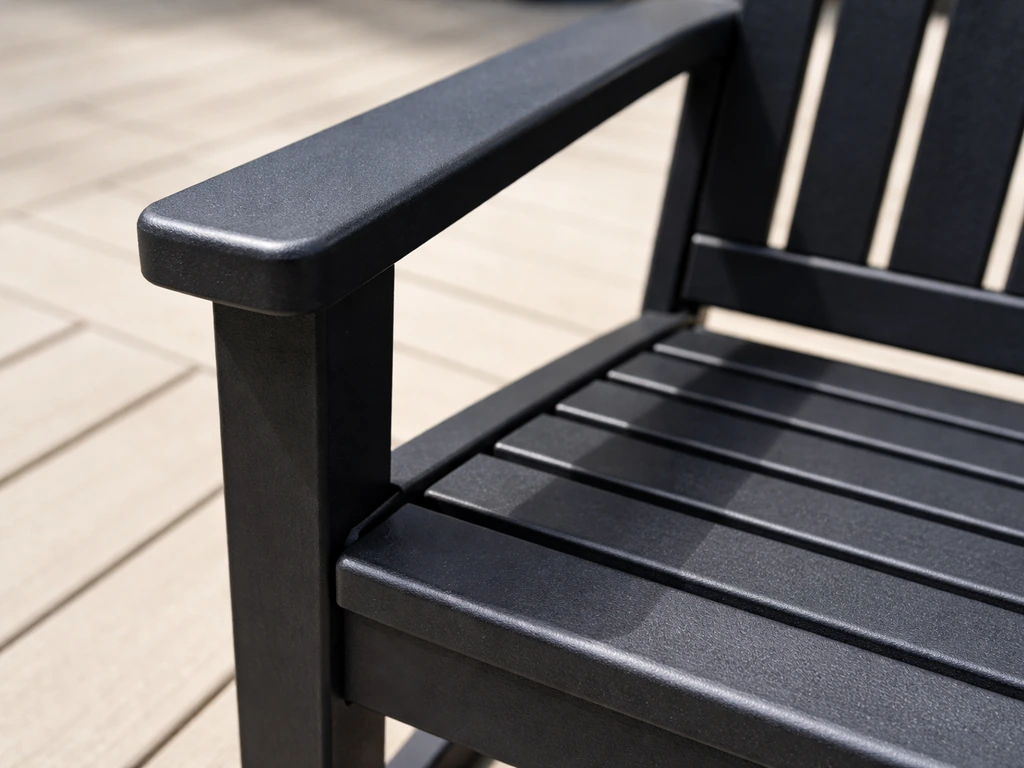
Natural wicker rattan is an indoor material. Full stop. Put it on an exposed deck and it cracks, fades, and falls apart within two seasons. What most outdoor furniture marketed as 'wicker' is actually HDPE resin wicker woven over an aluminum frame, and that combination is genuinely durable outdoors. The HDPE fiber doesn't absorb water, resists UV better than natural materials, and cleans easily with a hose. The aluminum frame underneath won't rust. The weak point is weave quality: look for tight, consistent weaving without gaps, and check that the fiber is woven over and around the frame rather than stapled or glued. Cheap resin wicker unravels at stress points within a couple of years.
Composite and HDPE lumber
Recycled HDPE lumber (the solid plastic lumber used in Polywood-style furniture) is as close to maintenance-free as outdoor furniture gets. It doesn't rot, splinter, crack from freeze-thaw cycles, or need any sealing or staining. Colors are molded in, so fading is extremely slow. The trade-off is that it's heavy, it has a look that some people find plasticky, and quality varies widely. Look for solid (not hollow) HDPE pieces and stainless steel hardware. If you want the best composite patio furniture, focus on solid (not hollow) HDPE pieces with stainless steel hardware. This material is particularly good for decks in climates with heavy rain, snow, or high humidity.
| Material | Rust/Rot Risk | UV/Fade | Maintenance Level | Best Climate Fit | Typical Lifespan |
|---|---|---|---|---|---|
| Teak | Very low | Weathers naturally, minimal fade | Low–medium (annual oil) | All climates | 20+ years |
| Cast Aluminum | None | Good with powder coat | Low (annual wipe-down) | All climates | 10–20 years |
| Resin Wicker (HDPE/Al) | None | Good quality-dependent | Low (hose clean) | All except extreme heat | 7–15 years |
| HDPE Composite | None | Excellent | Very low | All climates, esp. wet/snowy | 15–25 years |
| Acacia/Eucalyptus | Moderate if untreated | Surface checking over time | Medium (yearly oil/seal) | Dry to moderate climates | 5–10 years |
| Steel (powder coated) | Moderate at welds | Good initially | Medium–high | Dry, inland climates | 5–10 years |
| Natural Wicker Rattan | High | Poor | High | Covered/indoor only | 2–4 years outdoors |
Choosing the right furniture type for your deck
The category of furniture matters as much as the material. A dining set on a 10x12 deck is a mistake if you primarily use the space for morning coffee and evening drinks. Match the furniture type to how you actually use the deck, not how you imagine you might use it.
Dining sets
Dining sets (table plus four or six chairs) are the right choice if outdoor meals are your primary use. For a deck, round or square tables up to 48 inches across work well for four people without requiring a huge footprint. Rectangular tables seat more but demand significantly more linear space. Extension tables are a smart compromise for decks that host occasional larger gatherings. For the chairs, look for stackable or foldable designs if you ever need to clear the space, and make sure the chair legs have rubber or felt glides so they don't scratch composite decking or pressure-treated wood.
Conversation and lounge sets
Conversation sets (loveseat or sofa plus two chairs plus a coffee table) are ideal for decks used for relaxing and socializing rather than eating. They create a comfortable living-room feel outdoors. On a typical 12x16 or larger deck, a three-piece conversation set plus a side table fits well. Keep the coffee table height around 16 to 18 inches so it's actually usable from a seated position. Deep-seat lounge chairs (seat depth 22 to 26 inches) are more comfortable than shallower dining-height chairs for long evenings outside but require more floor space per person.
Sectionals
Sectional sets give you flexibility in arrangement, which is useful for oddly shaped decks. The risk is over-buying: a five or six-piece sectional that looks manageable in a showroom can easily consume 120 to 180 square feet of deck space once you account for traffic clearances. Measure with tape on the actual deck before committing. Sectional pieces with modular frames that can be reconfigured are worth the slight extra cost if your deck doubles as entertainment space and everyday relaxation space.
Bar-height and counter-height sets
Bar-height sets (table around 40 to 42 inches, stools around 28 to 30 inches) work particularly well on decks with views: a rooftop deck, a hillside deck, or any elevated space where you want to look out rather than down. They have a smaller footprint than a full dining set and give the deck a more casual, social feel. The downside is stability: bar stools have a higher center of gravity and are more susceptible to wind than lower chairs. Look for heavy bases, non-slip feet, and stools with back support if anyone in the household has mobility considerations.
Chaise lounges and daybeds
A pair of chaise lounges is a great choice for a sunny deck if you actually use the space for sunbathing or reading. They're long (typically 72 to 80 inches), so two lounges plus a side table need at least 8 to 9 feet of clear width to sit comfortably side by side. Avoid wooden chaise lounges on fully exposed decks unless you're committed to annual treatment. Cast aluminum or HDPE composite frames are the low-maintenance pick here.
Cushions and fabrics: where most people get burned
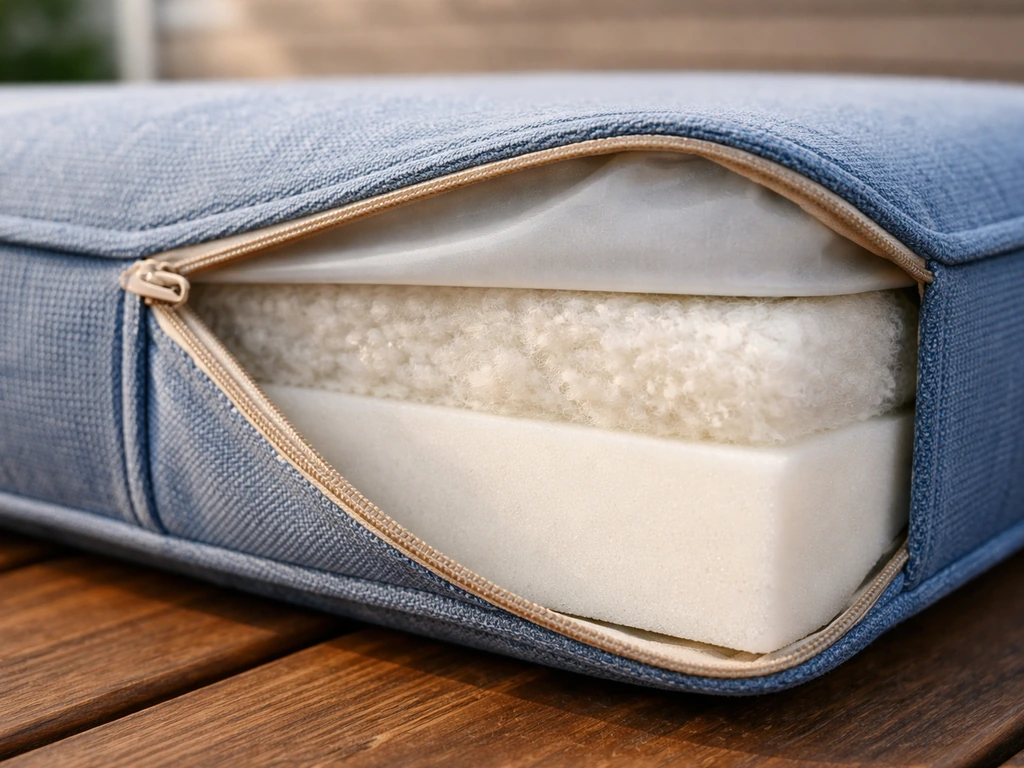
The cushion situation is where a lot of good furniture investments go wrong. The frame lasts 15 years; the cushions are garbage by year three. The right fabric and fill make a real difference.
Solution-dyed acrylic fabric (Sunbrella is the most recognized brand, but several competitors now make comparable products) is the standard you should hold all outdoor cushion fabric to. The color is applied in the fiber before the yarn is spun, not printed on the surface, which means UV fading is dramatically slower than printed or dyed-after-weave alternatives. It also resists mold and mildew reasonably well when it can dry out between uses. Cheap polyester cushion covers fade noticeably within one season on a fully exposed deck and start mildewing in humid climates by mid-summer.
For fill, quick-dry foam wrapped in a polyester fiber outer layer is the practical choice. Open-cell foam without a quick-dry treatment stays wet for days and becomes a mold factory. Sealed, non-porous foam doesn't breathe well. High-quality outdoor cushions use a reticulated (open-cell, fast-draining) core that releases water quickly. Check the product listing for 'quick-dry' or 'water-resistant' fill: that's the spec you want, not just the fabric.
On a covered deck, you can reasonably leave cushions out year-round in mild climates. On an exposed deck, the practical routine is bringing cushions in when rain is expected or storing them in a deck box between uses. A waterproof storage bench or deck box isn't glamorous but it extends cushion life by years and keeps your deck looking clean between gatherings.
Stability and safety on decks: things people overlook
A deck isn't a concrete patio. The surface is elevated, often has gaps between boards, and in many cases sits 30 inches or more above grade, which triggers guardrail requirements under the IRC (at least 36 inches high, measured from the deck surface to the top of the rail). This structural reality affects furniture choices in a few specific ways.
Furniture near railings needs to be the right height. A bar stool or tall planter placed close to a 36-inch railing effectively reduces the perceived railing height and creates a step-up risk, especially for children. Keep seating that allows someone to stand on it well away from the deck perimeter, or choose seating that's clearly lower than the rail. This isn't being overly cautious; it's just thinking through how the furniture and deck structure interact.
Wind is a serious issue on elevated decks. Lightweight aluminum furniture or stackable chairs that are fine on a sheltered patio can blow around dangerously on a second-story deck in a summer storm. Heavy cast aluminum, solid teak, and HDPE composite furniture all have enough mass to resist moderate wind. For lighter pieces, look for integrated furniture weights, tie-down anchor points, or simply plan to store lightweight items before storms. This is especially relevant for umbrella stands: a freestanding umbrella on an exposed deck needs a base of at least 50 to 60 pounds and should be closed and secured any time winds pick up.
Furniture feet matter on decks. Metal furniture with narrow, unprotected legs will dent or scratch composite decking (including Trex and similar products) and can leave rust stains on light-colored pressure-treated wood. Fit rubber or neoprene caps on all metal legs and check them every season. Furniture with wide, flat sled-style feet distributes weight better and is less likely to cause surface damage. If you have composite decking specifically, this is a bigger consideration than most manufacturers acknowledge.
Leave gap clearance between the furniture and deck boards if possible. Furniture that sits flat and traps moisture against the deck surface accelerates board weathering underneath. Slightly raised furniture feet or slatted furniture bases that allow airflow help the deck surface dry out between rain events.
Climate-specific picks: what works where you actually live
General durability ratings don't mean much if they don't account for your specific climate stressors. Here's how to match material and furniture type to the real conditions your deck faces.
Hot sun and UV-heavy climates (Southwest, Southern California, high altitude)
UV degradation is your primary enemy. Resin wicker fades fastest, followed by cheaper powder-coat finishes on steel. Teak weathers to gray quickly in intense sun but the wood itself holds up well. Cast aluminum with a quality powder coat, HDPE composite, and teak are your three best materials here. For cushions, solution-dyed acrylic is non-negotiable. A shade sail or pergola dramatically extends the life of any furniture in a high-UV zone. Also consider furniture scale: in hot climates, people often want to avoid spending time outdoors during midday heat, so a smaller lounge setup or conversation set rather than a big dining arrangement may match actual use patterns better.
High humidity and rain (Southeast, Gulf Coast, Pacific Northwest)
Mold, mildew, and rot resistance are everything. Natural wood requires consistent maintenance in high-humidity climates: teak can handle it with annual oiling, but acacia and eucalyptus will struggle without treatment. HDPE composite is genuinely the easiest material in wet climates because it doesn't absorb water at all. Resin wicker over aluminum is also solid, but make sure the weave is tight so water doesn't pool in gaps. For cushions, plan to store them in a waterproof box regularly rather than leaving them out. Look for powder-coat finishes with a rust warranty on any metal furniture.
Coastal and salt air environments
Salt accelerates corrosion faster than almost any other environmental factor. Steel is largely off the table within a few miles of the ocean. Even galvanized and powder-coated steel will show rust at welds and joints within a few seasons. Cast aluminum is the metal of choice: it genuinely doesn't rust. Marine-grade 316 stainless steel hardware is worth paying extra for on any furniture near the coast. Teak is excellent in coastal environments. HDPE composite is also a natural fit. Rinse furniture with fresh water every month or so during salt-spray season to slow surface degradation on any material.
Freeze-thaw climates (Northeast, Midwest, Mountain West)
The repeated expansion and contraction of freeze-thaw cycles is hard on materials that absorb moisture. Wood that isn't properly sealed will crack. Cheaper resin wicker can become brittle in extreme cold. Tubular steel and wrought iron hold up structurally but the finish takes a beating. The best performers in freeze-thaw zones are cast aluminum (doesn't crack, finish stays intact), HDPE composite (designed to handle temperature swings without cracking or absorbing water), and well-maintained teak. The practical move in most of these climates is to store cushions indoors for the winter and cover or store the furniture frames if you have the space. Even low-maintenance materials benefit from not sitting under a snow load for four months.
Shaded decks
Heavy shade reduces UV damage, which is good, but it also means slower drying after rain, which promotes mold on cushions and organic materials. On a consistently shaded deck, wood furniture needs consistent ventilation and annual treatment more than sun-exposed wood does (counterintuitively). Resin wicker and HDPE composite handle shade and perpetual dampness well. Avoid dark powder-coat finishes on metal in deep shade: they show moisture spots and mineral deposits more than lighter colors do.
Maintenance and protection routines that actually extend lifespan
The difference between furniture that lasts 5 years and furniture that lasts 15 is mostly maintenance consistency, not initial price. Here's what a realistic year-round routine looks like for each major material category.
Wood (teak and hardwood)
- Spring: Clean with a mild soap and water or a dedicated teak cleaner. Let dry fully (48 hours minimum) before treating.
- Apply a penetrating teak oil or sealer once a year if you want to maintain the golden color. Skip oiling if you prefer the silver-gray patina; it's structurally fine.
- Inspect joints and hardware annually. Stainless steel hardware is standard on quality pieces; replace any corroded fasteners.
- Sand lightly with 220-grit sandpaper if the surface gets rough or splintery before re-oiling.
- In freeze-thaw climates, cover or store wood furniture before the first snow. Prolonged wet-snow contact accelerates surface checking.
Cast aluminum and metal
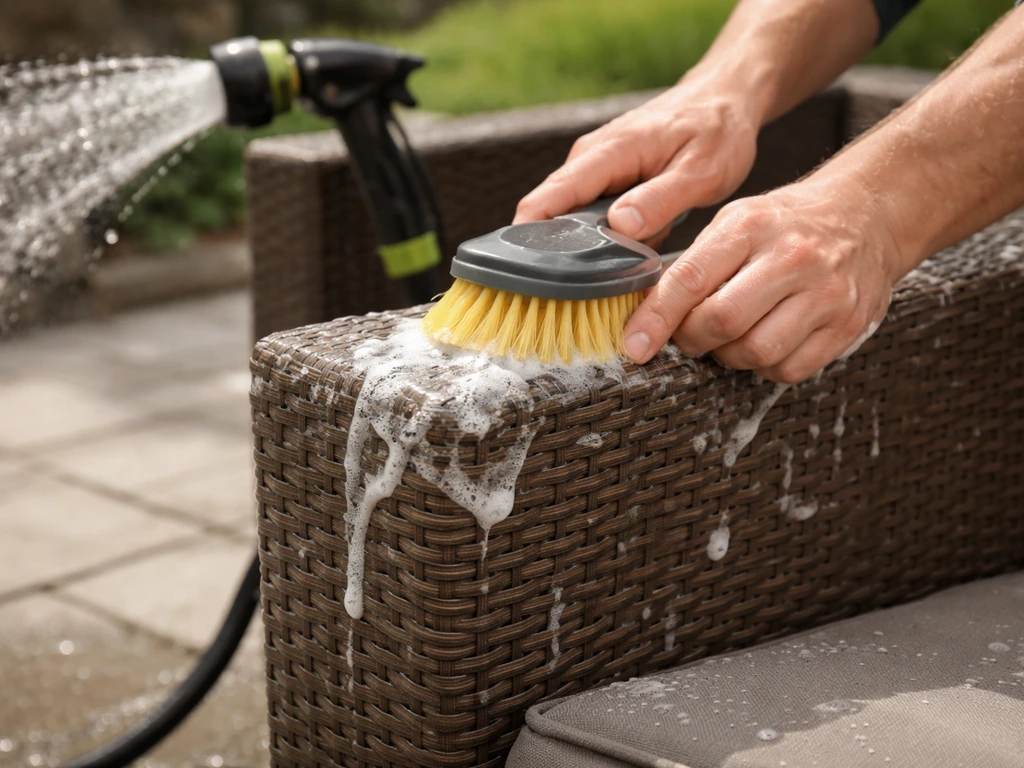
- Hose down or wipe down two to four times per season to remove dirt, pollen, and salt residue.
- Inspect the powder-coat finish for chips annually. Touch up chips immediately with matching powder-coat or spray paint to prevent corrosion from starting underneath.
- Check and replace rubber leg caps or glides every season.
- In coastal environments, rinse with fresh water monthly during the main season.
- Store or cover in heavy snow zones to protect the finish from prolonged moisture exposure.
Resin wicker and HDPE composite
- Hose down and scrub with mild soap and a soft brush two to three times per season. HDPE and resin wicker don't need more than this.
- Check the wicker weave annually for loose or unraveling strands; small repairs with UV-resistant outdoor zip ties can extend life significantly.
- No sealing, oiling, or painting required.
- Store cushions between uses or in a waterproof box; the frames themselves can stay out year-round in most climates.
- For HDPE composite, occasional mineral deposits from hard water can be cleaned with a mild oxalic acid solution.
Cushions year-round
Store cushions flat or upright (not stacked and compressed) in a breathable storage bag or a vented deck box. Moisture trapped in a sealed plastic bag will grow mold even on solution-dyed acrylic fabric. At the end of the season, wash cushion covers per the manufacturer's instructions (most unzip and are machine washable on cold), let the fill dry completely in the sun before storage, and don't close the storage box until everything is bone dry. A cedar block inside the storage box helps deter mildew during the off-season.
What to buy and what to skip for decks specifically
After all of this, here's the bottom line on smart buys versus things to avoid when you're furnishing a deck rather than a ground-level patio.
Strong buys for decks
- Cast aluminum dining or conversation sets with powder-coat finish: rust-free, wind-resistant enough, and low-maintenance for virtually every climate
- HDPE composite (Polywood-style) furniture: genuinely maintenance-free and the best choice for wet, snowy, or coastal climates
- Teak dining sets or lounge chairs for decks where aesthetics matter and you'll commit to annual oiling
- Resin wicker over aluminum frames for conversation sets on covered or partially covered decks
- Solution-dyed acrylic cushions regardless of which frame material you choose
- A waterproof deck box or storage bench for cushion storage
- Furniture with rubber or neoprene leg caps to protect decking surfaces
- Umbrellas with at least a 50-pound weighted base and a tilt mechanism
Things to avoid on decks
- Natural rattan or wicker furniture marketed without explicitly saying 'all-weather resin wicker': it will fail outdoors within two seasons
- Steel furniture without marine-grade hardware in coastal or high-humidity climates
- Acacia wood on fully exposed decks unless you're prepared to oil it every single year without fail
- Lightweight stackable chairs near open deck railings or on elevated, exposed decks prone to wind
- Cheap polyester cushion fabric: it fades, mildews, and degrades quickly on exposed decks
- Furniture with solid flat bases that trap moisture against deck boards (accelerates deck surface weathering underneath)
- Bar stools placed close to 36-inch deck railings, which creates a step-up risk near the perimeter
- Oversized sectionals on undersized decks: always map the clearances before buying
The honest spending guidance: a mid-range cast aluminum dining set ($600 to $1,200) with quality solution-dyed acrylic cushions will outlast three rounds of budget furniture ($200 to $400 sets) in most climates. On exposed decks in coastal or freeze-thaw zones, HDPE composite in the $800 to $1,500 range is cheaper over a 10-year horizon than anything that requires meaningful maintenance or replacement. Spend the money once on the right material for your specific deck conditions, and you won't be back on the product review pages in three years.
FAQ
What size patio furniture should I buy if my deck has a railing or built-in stairs nearby?
Use your usable floor area, then treat the railing edge like a no-furniture zone for anything tall. Keep bar stools, planters, and tall items far enough back that someone cannot accidentally climb or use the furniture to step over (especially with children). Recheck clearance not only from the furniture to the nearest obstacle, but also from the chair when pulled out (seating clearance is different than table clearance).
Do I need umbrella compatibility when choosing the best patio furniture for deck use?
Yes if you plan to use shade often. Before buying, measure whether an umbrella will fit without forcing the base into a traffic lane, and confirm the furniture height and table design allow the umbrella to sit centered without blocking conversation or meal setup. On exposed decks, plan for a heavier umbrella base and keep the umbrella closed during wind events to prevent furniture movement and railing interference.
Are foldable or stackable chairs worth it for a deck?
They can be, especially on smaller decks or decks that need occasional clear space. The key is choosing foldable chairs with leg glides that protect composite and pressure-treated boards, and confirming the chairs still feel stable when locked. If you routinely rearrange for parties, also check that folding hinges do not create wobble under load.
What’s the best way to protect composite decking from metal furniture feet?
Fit rubber or neoprene caps on every metal leg and recheck them each season (caps shrink or slip over time). Prefer wide, flat feet or furniture with sled-style base plates that distribute load. Also consider slightly raising furniture (using spacers or designed feet) so water can dry under the base after rain.
How do I keep outdoor cushions from going moldy on an exposed deck?
Do not rely on fabric alone. Bring cushions in before rain, store them in a waterproof deck box, and let the fill dry completely before sealing in storage. Avoid compressing cushions tightly in sealed bags, trapped moisture can cause mildew even with solution-dyed acrylic.
Should I buy outdoor wicker or is resin wicker really different?
If the listing only says “wicker,” confirm it is resin wicker (HDPE fiber) woven over an aluminum frame. Natural wicker rattan is not a deck material in any climate with sun and precipitation, it will crack and fade quickly. For resin wicker, inspect weave consistency closely, loose or poorly stapled areas unravel sooner where water pools or gets in stress points.
Is cast aluminum always the best metal choice, or when should I choose something else?
Cast aluminum is the best default because it resists rust and holds up well to wind on elevated decks. Choose wrought iron only if you are prepared for ongoing maintenance (especially in humidity or near the coast). Avoid thin-gauge aluminum budget sets unless you want occasional use, they tend to dent and the powder coat can fail faster.
What should I look for to avoid wobble or wind issues on a second-story deck?
Prioritize heavier frames and stable bases, then look for integrated weights or non-slip feet. Test for movement by trying to rock the set gently, if it shifts easily with light force, wind will be worse in storms. Also confirm any umbrella accessories are secured correctly and do not leave a lightweight setup free to act like a sail.
Can I leave patio furniture cushions outside year-round in winter?
In most freeze-thaw and exposed-deck situations, you should not. Store cushions indoors or in a vented, dry deck box and keep frames covered if possible. Even materials that resist rot can trap moisture in winter and damage textiles or accelerate wear on seams and foam.
What’s the quickest mistake that ruins deck furniture purchases?
Ignoring chair pull-out and traffic lanes after the furniture is in place. A set can “fit” by table dimensions but still block door clearance or create a cramped path when chairs are occupied. Before ordering, tape out the full chair footprint, then add the recommended walkway gaps so you can walk past comfortably with normal carry habits (like trays or groceries).
Next Articles
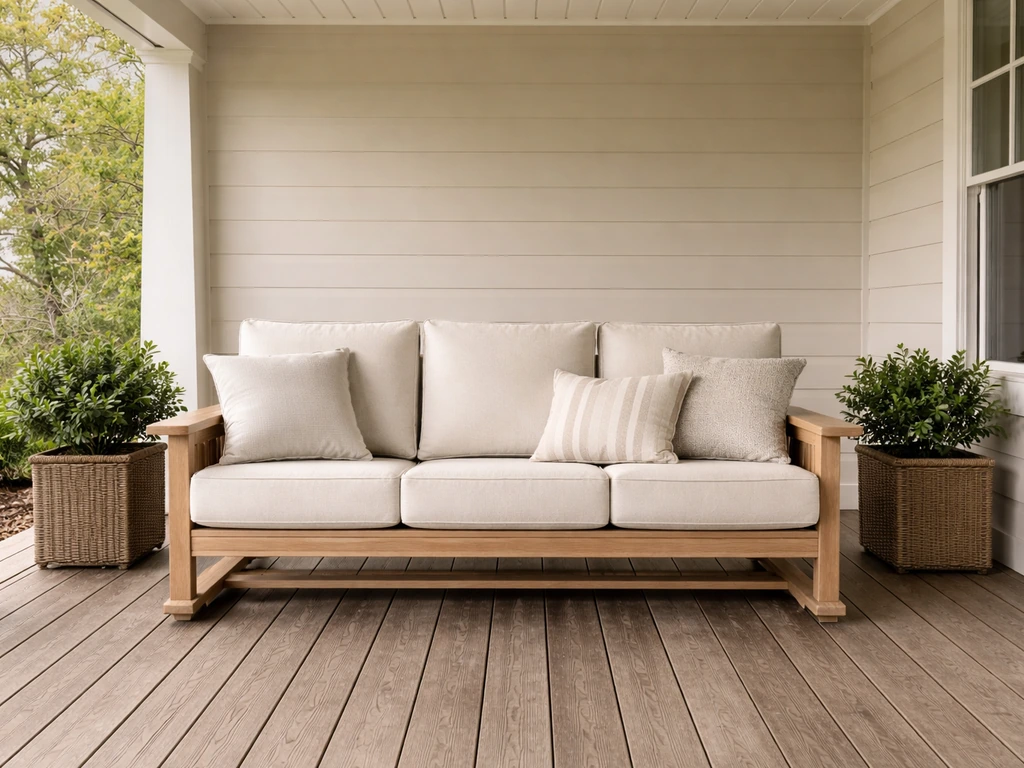
Best Patio Furniture for Front Porch: Buy Guide
Porch-ready patio furniture guide: size, layout, and the best materials for comfort and weather durability.
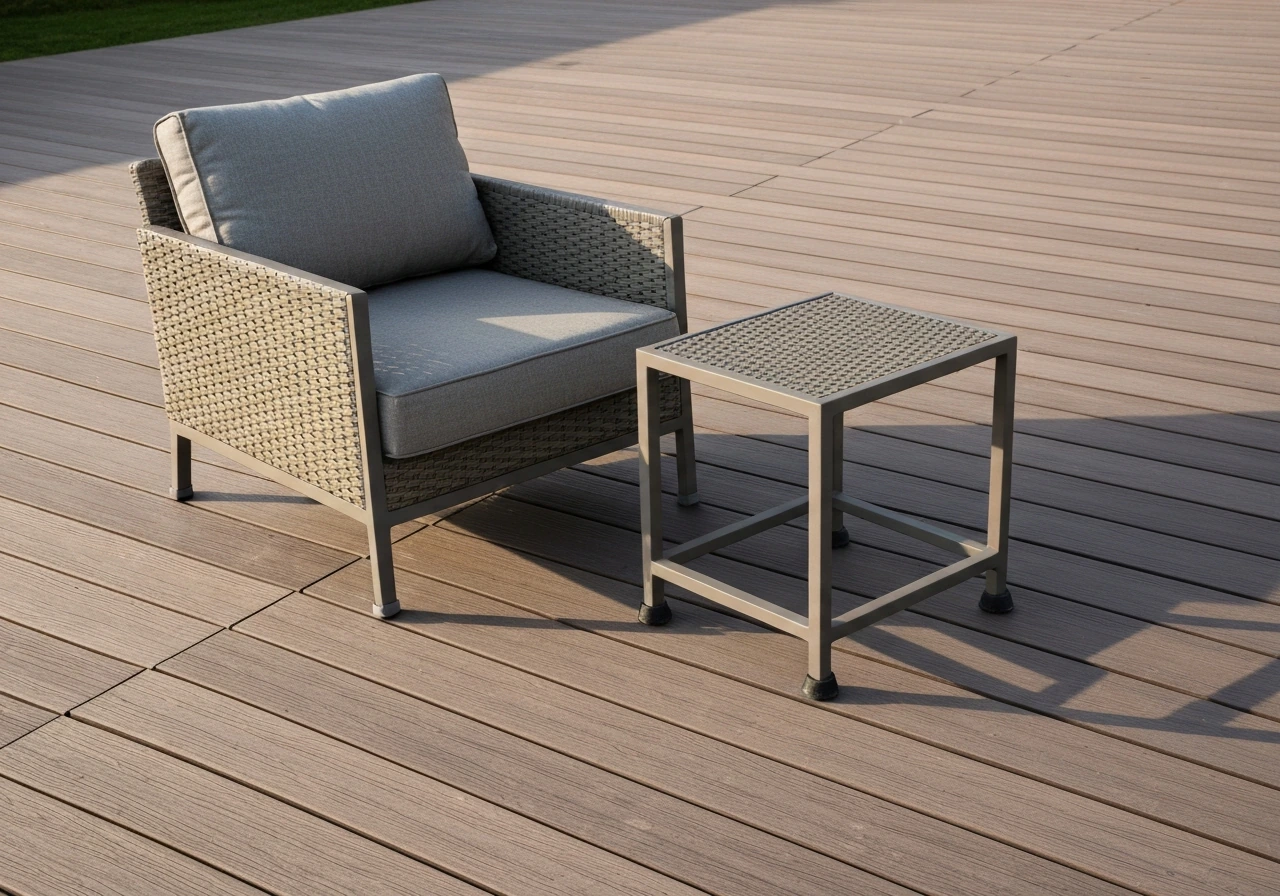
Best Patio Furniture for Composite Decking: Buyer’s Guide
Shop the best patio furniture for composite decking: materials, styles, foot pads, climate tips, and safe cleaning
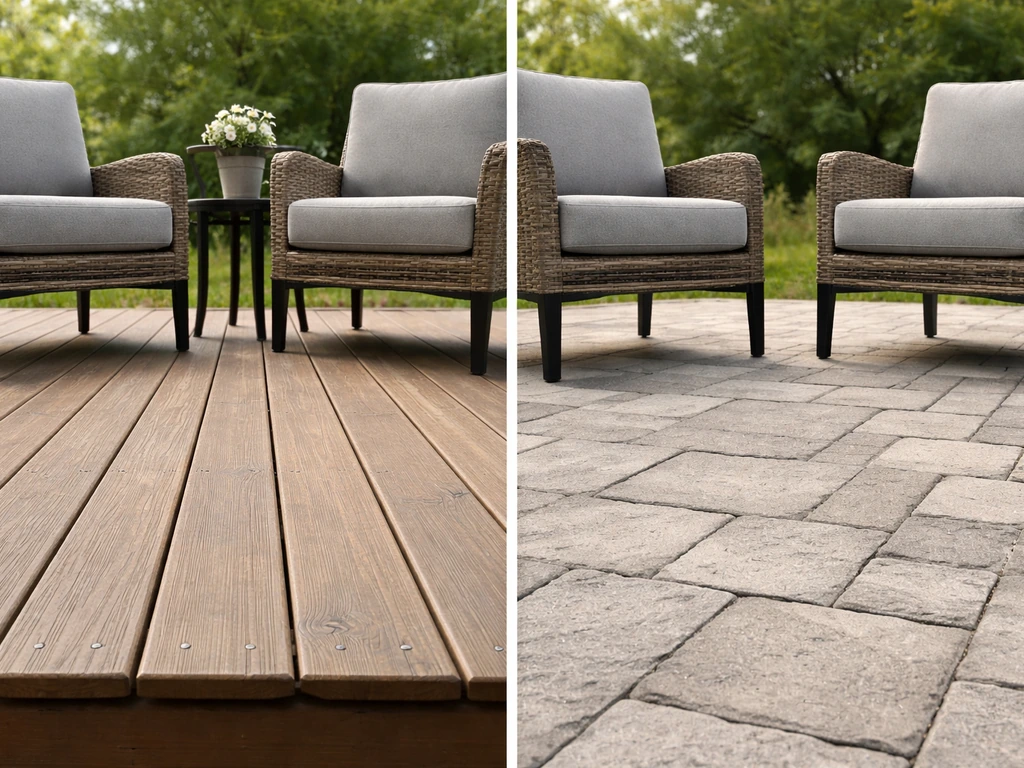
Deck vs Patio Furniture: What to Buy and Place
Deck vs patio furniture guide: pick the right materials, placement, and protection for heat, moisture, and stability.