
Sling patio furniture is outdoor seating where a taut sheet of flexible fabric or mesh, called the sling, is stretched across a rigid frame to form both the seat and the backrest. There are no cushions involved. The sling does all the work, contouring slightly to your body under load and springing back when you stand up. It is one of the oldest, most practical forms of outdoor seating, and it remains popular because the fabric breathes, sheds water instantly, and requires almost no maintenance compared to cushioned alternatives.
What Is Sling Patio Furniture: Guide to Choosing & Care

Theo Tierney
17 Jul 2026
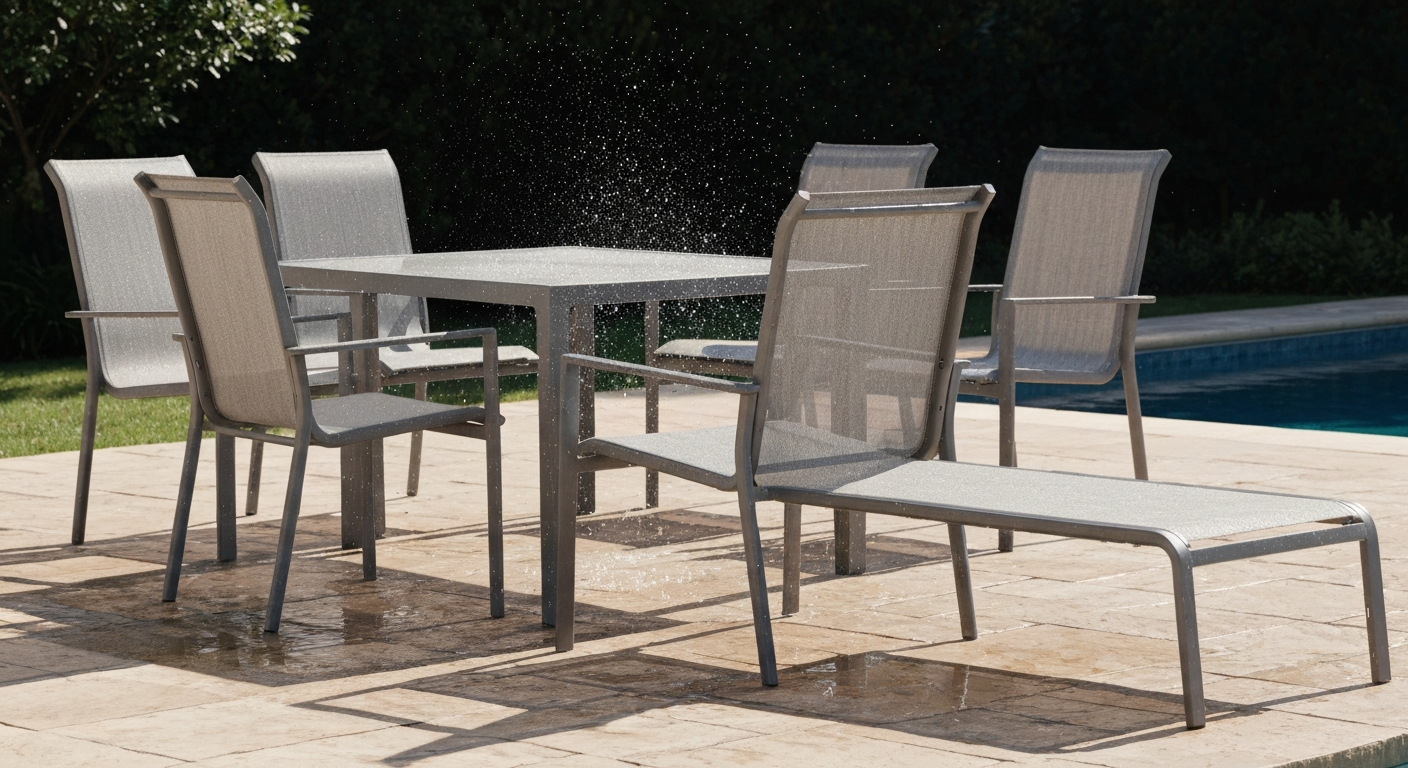
Sling furniture defined: what it is and the main variants
The term covers a wide range of pieces. Sling patio chairs are the most common form, including dining chairs, lounge chairs, and stackable side chairs. Sling chaise lounges are a poolside staple because the sling panel runs the entire length of the frame and drains in seconds after a splash. Sling loveseats and conversation chairs extend the same construction to two-seat frames. Sling dining chairs sit at standard table height and typically have a more upright back angle suited for eating. All of these share the same fundamental structure: a closed, rigid frame with the sling anchored under tension at the top rail and bottom rail, or threaded through channel pockets routed into the frame members.
You will also see the term 'sling seating' used broadly for commercial pool decks, hospitality spaces, and contract furniture. That is the same product; the construction standards are simply tighter because the pieces see far more daily use. When you are shopping for residential furniture, pieces marketed as 'commercial grade' or 'contract grade' sling chairs typically use heavier-gauge frames, reinforced sling attachment channels, and higher-spec textiles, which translates directly to longer residential lifespan.
How sling seating actually works
The mechanics are straightforward but the details matter a lot for long-term performance. The frame forms a rigid rectangle or contoured shape, and the sling panel is anchored to it under deliberate tension. Most residential and commercial sling furniture uses one of two attachment methods: a sewn-sleeve or spline system where a bead or folded hem at the sling's top and bottom edge slides into a routed channel machined into the frame rail, or a laced/strapped system where webbing or cord threads through grommets and ties off underneath.
The spline channel system is what you see on better furniture. The sling hem slides into a groove that runs the full width of the frame rail, then a rubber or plastic spline is pressed in behind it to lock the fabric. When you look at the top rail of a quality sling chair, you see a clean seam, not exposed hardware. The tension is set at the factory by how tightly the sling is cut relative to the frame span. Over years of UV exposure and heat cycling, the sling can relax and sag, which is why replaceable sling panels are a meaningful feature to look for when buying.
Some lower-cost pieces use a simpler wrap-and-staple or clip approach at the back of the frame. Those work fine initially but are harder to re-tension and usually mean the sling is not field-replaceable without specialized tools or professional help. For anything you expect to last more than five years, check that the sling is attached via a routed channel with a removable spline, or at minimum that the manufacturer sells replacement slings for that specific frame.
Frame materials and how they affect real-world performance
The frame is the part that determines whether a sling chair lasts five years or twenty. The sling textile is a maintenance item you can eventually replace. The frame is the long-term investment. Here is how the common options compare.
| Frame Material | Weight | Corrosion Resistance | Best Climate | Typical Lifespan | Maintenance Demand |
|---|---|---|---|---|---|
| Aluminum (powder-coated) | Light (approx. 7–12 lb for a dining chair) | Excellent when anodized or powder-coated | Coastal, humid, hot | 15–25+ years | Low — rinse and inspect coating annually |
| Powder-coated steel | Heavy (approx. 15–25 lb for a dining chair) | Moderate — depends entirely on coating quality and galvanizing | Dry inland climates | 8–15 years with care | Moderate — watch for chips, touch up promptly |
| Wrought iron | Very heavy | Poor without coating — will rust through | Dry climates only | 10–20 years if maintained | High — annual re-coating often needed |
| Teak / hardwood | Moderate to heavy | Excellent (teak) to moderate (other hardwoods) | Any climate; teak excels in wet climates | 20–50+ years (teak) | Low to moderate — oil or seal periodically |
Aluminum is the right default choice for most homeowners, especially in Florida humidity, coastal salt air, or climates with significant rainfall. It does not rust. A quality powder coat applied at 1 to 3 mils dry film thickness gives it excellent surface durability without adding meaningful weight. For fasteners on aluminum frames, look for 304 or 316 stainless steel hardware. If you are within a mile of the ocean, 316 (sometimes marked A4 stainless) is worth the premium because it resists chloride-induced pitting far better than 304.
Powder-coated steel frames cost less and feel solid, but they demand more vigilance. A chip or scratch that reaches bare steel in a wet or salty environment will start rusting within a season. Hot-dip galvanized steel (conforming to ASTM A153 for hardware) under the powder coat dramatically extends lifespan by adding a sacrificial zinc layer, but that detail is rarely disclosed on retail product pages. If a steel-frame chair is not described as galvanized or as using a zinc primer under the topcoat, assume it is not, and price that into your expectations.
Wrought iron sling chairs are mostly a historical product and an aesthetic choice at this point. The weight is punishing for anything you move frequently, and iron without diligent annual maintenance will rust through at welds and crevices. Teak frames paired with sling panels are less common but genuinely excellent in warm, wet climates. Teak's natural silica and oil content makes it inherently rot-resistant, and a properly maintained teak frame can outlast three or four sets of sling replacements.
Sling materials: what the fabric is actually made of
The sling panel is not just fabric. It is a engineered composite textile designed to handle continuous UV exposure, body load, moisture, and temperature swings. The four dominant commercial textile families you will encounter in quality sling furniture are Textilene, Phifer SunTex, Serge Ferrari Batyline, and Sunbrella Sling. Understanding what each is made of helps you evaluate durability claims on product pages.
Textilene
Textilene is a vinyl-coated polyester woven mesh and is the most common sling material in the mass market. The vinyl coating over the polyester yarn base gives it mildew resistance, fast drainage through the open weave, and decent UV resistance. It is affordable, widely sourced, and used in everything from big-box-store patio chairs to mid-tier hospitality furniture. The trade-off is that the vinyl coating can stiffen noticeably in cold weather and fade or chalk over time in intense sun climates like Arizona or Southern California.
Phifer SunTex
Phifer's SunTex line is also a vinyl-coated polyester mesh, but it is specified with published technical data and carries a 10-year exterior warranty on many grades. SunTex 80 fabric runs approximately 31% polyester and 69% vinyl by composition, with roughly 25% mesh openness and measured breaking strengths around 269 pounds in the warp direction and 237 pounds in the fill direction. The SunTex 90 grade is denser (about 10% openness) and slightly heavier at approximately 16.5 oz per square yard. These published numbers matter because they let you compare actual structural integrity rather than relying on marketing language. When a manufacturer specifies SunTex by grade on a product page, that is a transparency signal worth noting.
Serge Ferrari Batyline
Batyline from Serge Ferrari is a step up in engineering. It is a PVC-coated high-tenacity polyester membrane (not a simple mesh weave) with anti-fungal treatment built in, engineered for dimensional stability under sustained tension load. See the Batyline Eden product listing & datasheet reference for this variant. Serge Ferrari uses what they call 'Smart Yarn' technology to improve the integration of PVC coating with the polyester substrate, which enhances colorfastness and tear resistance beyond what standard vinyl-coated meshes achieve. Batyline is specified heavily in hospitality and contract seating, which tells you something about its durability expectations. If you see it called out by name on a residential product, you are looking at furniture built to a higher standard than the typical big-box chair.
Sunbrella Sling
Sunbrella Sling is a different animal. Standard Sunbrella fabric is a solution-dyed acrylic, famous for its colorfastness. The Sling variant blends Sunbrella acrylic yarn with a PVC backing specifically for sling applications, combining the color durability and softness of acrylic with enough structural stiffness to function as a load-bearing panel. Sunbrella, Sunbrella Sling product page states Sunbrella Sling combines Sunbrella acrylic yarn with a PVC backing to create a softer, sling‑specific fabric designed for seating Sunbrella — Sunbrella Sling product page. It runs heavier than plain mesh textiles but delivers a noticeably softer feel underhand and exceptional colorfastness over many UV exposure years. This is worth prioritizing if fading is a concern and you are in a high-UV climate.
| Sling Textile | Base Composition | Key Strength | Key Weakness | Best For |
|---|---|---|---|---|
| Textilene | Vinyl-coated polyester woven mesh | Low cost, widely available, quick-dry | Cold stiffness, can chalk/fade over time | Budget-conscious buyers in moderate climates |
| Phifer SunTex | Vinyl-coated polyester mesh (published specs) | Documented strength ratings, 10-year warranty on select grades | Still vinyl-based; similar cold stiffness to Textilene | Mid-range to premium residential, verifiable durability |
| Serge Ferrari Batyline | PVC-coated HT-polyester membrane | Dimensional stability, anti-fungal, high tear resistance | Higher price point, limited retail availability | High-traffic, commercial-grade or premium residential |
| Sunbrella Sling | PVC-backed solution-dyed acrylic blend | Excellent colorfastness, softer feel | Heavier, higher cost | High-UV climates, color-critical design setups |
Why homeowners choose sling furniture: the real advantages
The case for sling seating is strongest in hot, wet, or poolside environments, and I think it is genuinely underrated for everyday practicality compared to cushioned options. Here is what it actually delivers.
- Breathability: The open mesh or perforated membrane allows airflow through the seat and back, which meaningfully reduces heat buildup on hot days. Sitting on a sling chair in 95-degree summer heat is noticeably cooler than sitting on a solid cushion that traps warmth.
- Instant drainage: Sling fabric sheds water in seconds. After rain or a pool splash, you can sit down immediately. There is no wet-cushion problem, no waiting for foam to dry, and no mildew developing inside a soaked cushion core.
- Low maintenance: A rinse with a garden hose removes most dirt and grime. There are no covers to store, no cushions to haul inside before a storm, and no fabric to dry before re-stacking.
- Weight and storage: Most aluminum-frame sling chairs weigh between 7 and 15 pounds and stack. A set of six stackable sling dining chairs stores in a fraction of the space needed for six cushioned chairs, and moving them around a patio alone is easy.
- Consistent look: Sling fabric does not compress, shift, or develop the lumpy look that worn cushion foam creates over time. The panel either holds its tension and looks good, or it sags visibly and tells you it needs replacement.
Honest drawbacks: what sling furniture does not do well
No material is perfect for every situation, and sling furniture has real limitations that are worth understanding before you buy.
- UV fading: Even quality vinyl-coated polyester will fade over years of direct sun exposure. Cheaper Textilene can start showing chalking or color shift within three to five years in high-UV climates. Sunbrella Sling and Batyline hold color longer, but no sling textile is immune to long-term UV degradation.
- Sag and stretch: Under sustained load or repeated heavy use, the sling panel can relax and lose its original tension, creating a hammock-like sag that affects both comfort and appearance. This happens faster with lower-quality textiles and in hot climates where vinyl softens slightly. It is manageable if the sling is field-replaceable; it is a death sentence for a chair if it is not.
- Weight limits: Sling chairs typically carry manufacturer weight ratings between 250 and 300 pounds for residential pieces, with commercial-grade frames going higher. The weak point is usually the sling attachment at the frame channel, not the textile itself. Exceeding the rating stresses the hem stitching and spline channel.
- Cold weather stiffness: Vinyl-coated polyester mesh becomes noticeably stiffer in cold temperatures. In climates that see temperatures below 40°F regularly, the sling may feel rigid and slightly less comfortable until it warms up. This is a minor annoyance for most people but worth knowing.
- Limited padding: There is no getting around it: a sling is a fabric panel, not a cushion. For short sits, the contouring is sufficient and comfortable. For long, lounging sessions of several hours, some people find they want more support. This is the single biggest reason cushioned seating retains its appeal.
Sling vs. cushion patio furniture: how to actually decide
This is the most common decision homeowners face, and the right answer depends on your climate, how you use the furniture, and how much ongoing effort you want to spend maintaining it. The comparison between sling and cushion seating deserves its own in-depth look (it is a topic covered fully elsewhere on this site), but here is the practical framework. For a dedicated comparison, see our guide on sling vs cushion patio furniture.
| Decision Factor | Sling Wins | Cushion Wins |
|---|---|---|
| Poolside or high-moisture use | Yes — drains instantly, no mildew risk | No — wet foam is a real maintenance problem |
| Long sit comfort (3+ hours) | Marginal — fine for most, but no padding | Yes — especially with high-quality foam |
| Hot climates (Florida, Texas, Arizona) | Yes — breathes, stays cool | Depends on fabric; non-breathable covers trap heat |
| Cold climates (winter use) | No — vinyl stiffens below 40°F | Yes — fabric cushions are warmer and more comfortable |
| Maintenance effort | Very low — hose off and done | Moderate to high — storage, drying, replacement cycles |
| Storage/portability | Yes — lightweight and stackable | No — cushions require storage space and drying time |
| Upholstered, luxurious aesthetic | No — sling has a more utilitarian look | Yes — wide fabric and color options |
| Long-term cost | Lower (replace slings, not full set) | Moderate (cushion replacement every 3–7 years) |
My honest take: if your furniture lives outdoors year-round in a warm or humid climate and you do not want to think about it much, sling is the better choice. If you have a screened porch or covered patio, use the furniture primarily for dining or entertaining, and bring cushions in during bad weather, cushioned seating offers a comfort level sling cannot match for long evenings outside. For a poolside chaise or a set of chairs that will see rain and heat regularly, I would choose sling every time.
Fit considerations for tall people and deep-seating setups
Sling chair geometry is worth understanding because standard sling chairs sit lower and shallower than cushioned deep-seating pieces, and this affects comfort significantly depending on your height and how you use the furniture. For more detail on the design reasons and typical seat-height standards, see our article on why patio furniture is so short. See why patio furniture is often low to the ground for a short explanation of seating geometry and comfort trade-offs.
A standard sling dining chair typically has a seat height of 17 to 18 inches and a seat depth of 16 to 19 inches. Those dimensions work fine for average-height adults at a dining table, but tall people (roughly 6 feet 2 inches and above) often find the seat depth too short to support the thigh fully, and the seat height too low to sit comfortably without the knees being elevated awkwardly. If you are tall and shopping for sling dining chairs, prioritize frames with seat heights at or above 18 inches and seat depths at or above 18 to 19 inches. See our guide to the best patio furniture for tall people for specific models and sizing recommendations. Some brands offer extended-dimension or 'tall' configurations. For guidance on balcony-specific clearances and recommended seat heights, see what is balcony height patio furniture.
Sling lounge chairs and chaises are generally more forgiving for tall people because the reclined angle distributes leg length differently. The more relevant measurement for a chaise is the overall length of the sling panel. A standard lounge sling runs about 70 to 74 inches in total frame length; taller users benefit from frames at the longer end of that range so feet are not hanging off the end.
Deep-seating sling chairs (with seat depths of 22 to 26 inches and lower seat heights of 14 to 16 inches) exist but are far less common than deep-seating cushioned furniture. For a quick definition of what does deep seating patio furniture mean, see our short guide on deep seating. The design challenge is that a very deep sling tends to sag into a hammock shape under the user's weight unless the frame and sling attachment are engineered for it. Most deep-seating outdoor furniture relies on thick cushions precisely because the geometry demands the support cushions provide. If deep seating is important to you, a sling-and-cushion hybrid (sling back with a seat cushion) is a practical middle ground that several brands offer.
Arm height is another dimension that matters. Standard sling chair arms sit at about 26 to 28 inches from the ground. For tall users, this can put the arm at an awkward mid-forearm height rather than at elbow level. Look for arm heights of 28 inches or above if you plan to use the chair for relaxed conversation rather than just upright dining.
Climate-specific guidance
Where you live should heavily influence both the frame material and the sling textile you choose. Here is how I break it down by region type.
- Coastal and high-humidity climates (Florida, Gulf Coast, Pacific Coast): Aluminum frame with 316 stainless fasteners is the only sensible default. Sling textile should be Phifer SunTex, Batyline, or Sunbrella Sling — not bare-minimum Textilene — because the combination of salt air and UV is harsh on lower-grade vinyl coatings. Expect to replace even good slings in 7 to 10 years.
- Desert and high-UV climates (Arizona, New Mexico, inland Southern California): UV degradation is the primary threat. Sunbrella Sling holds color best here. Aluminum frame still wins on weight and heat expansion. Avoid very dark sling colors in direct desert sun; they absorb heat and degrade vinyl coatings faster.
- Humid continental and Midwest climates: Aluminum or galvanized steel frame both work. Standard Textilene or SunTex is adequate if furniture is stored or covered in winter. The bigger risk is freeze-thaw cycling on steel frames, which attacks paint chips.
- Cold-winter climates (New England, Upper Midwest, high-elevation West): Sling furniture should be stored or covered in winter. Vinyl-coated mesh becomes brittle and more crack-prone in sustained below-freezing temperatures. Bring chairs into a garage or use protective covers rated for temperatures below 0°F.
Buying checklist: what to verify before you purchase
After evaluating dozens of sling chair sets, these are the specific things I check on every product before recommending it to anyone.
- Frame material: Is it aluminum or galvanized/powder-coated steel? Is the specific alloy or treatment disclosed?
- Sling textile: Is the brand named (Textilene, SunTex, Batyline, Sunbrella Sling)? If not, the manufacturer is hiding a cheaper material.
- Sling attachment method: Is it a routed channel and spline system? Are replacement slings available for purchase separately?
- Fastener specification: Are screws and bolts stainless steel? Coastal buyers should confirm 304 or 316 grade.
- Weight rating: Is a maximum user weight clearly listed? Look for 300 lbs or above for durable residential use.
- Seat dimensions: Confirm seat height (aim for 17–18 inches for dining, 14–16 inches for lounge), seat depth (18+ inches for most adults), and arm height if relevant.
- Warranty: Frame warranty of 5 years or more signals quality. Sling warranties of 1 to 3 years are standard; anything longer suggests confidence in the textile.
- Stackability: For dining and side chairs, confirm whether the design stacks and how many units can safely stack together.
Routine care, cleaning, and sling replacement
Sling furniture is genuinely low-maintenance, but 'low' does not mean 'none.' The basic routine is straightforward: rinse the frame and sling with a garden hose monthly or after storms, and give it a proper wash once or twice per season with mild soap and water. Avoid bleach on vinyl-coated sling fabrics because it accelerates coating degradation. A soft brush handles any mildew spots that form in humid climates; for Sunbrella Sling, a diluted solution of dish soap and water with a soft-bristle brush is sufficient for most stains.
Inspect the frame powder coat annually, especially at welds and joints. Touch up any chips on steel frames immediately with a matching powder coat touch-up paint or a rust-inhibiting primer to prevent rust from establishing. On aluminum frames, watch for any white oxidation at fastener points, which can indicate electrolytic corrosion between dissimilar metals if non-stainless hardware was used.
When a sling starts to sag noticeably or shows cracking at the hem, that is the signal to replace it. On a channel-and-spline frame, sling replacement is a manageable DIY project. You remove the spline with a flathead screwdriver, pull the old sling out of the channel, slide the new sling in with the folded hem into the groove, and press the new spline in to lock it. Replacement slings for most commercial-grade chairs are available from the original manufacturer or from specialty sling fabric suppliers who can cut to size. Expect to pay $30 to $80 per panel for a residential dining chair, more for a chaise. That cost is significantly less than replacing the full chair, which is the whole point of a replaceable sling system.
A quality aluminum-frame sling chair with a commercial-grade sling textile should realistically deliver 10 to 15 years of performance with one sling replacement cycle mid-life. Budget vinyl-coated mesh on a steel frame in a coastal climate may need sling replacement in 4 to 5 years and frame replacement in 8 to 10. Those lifecycle gaps explain the real cost difference between buying cheap and buying well.
FAQ
What is sling patio furniture (sling patio chair)?
Sling patio furniture is seating where a flexible sheet of fabric, mesh or webbing—the "sling"—is stretched and fastened to a rigid frame to form the seat and/or back. Variants include sling dining chairs, lounge chairs, poolside loungers and sling benches. The sling material breathes, sheds water quickly and replaces bulky cushions in many outdoor uses.
How does sling seating work (how is it constructed)?
A tubular or flat frame (usually metal or wood) provides structure. The sling fabric is attached at multiple points—rails, pockets, clips, or tensioned bars—so it carries body load by tension. Good construction balances enough tension to prevent sag with some give for comfort; end attachments, reinforcement at stress points and the material's weave/laminate determine performance.
What sling fabrics are common and how do they differ?
Common commercial sling textiles: Textilene® (vinyl‑coated polyester mesh) — inexpensive, fast‑draining and UV resistant; Phifer SunTex® family (vinyl‑coated polyester) — measured strength, openness grades for airflow/shade; Serge Ferrari Batyline® — engineered PVC‑coated high‑tenacity polyester for high performance; Sunbrella® Sling — solution‑dyed acrylic blended/coated for better colorfastness and comfort. Key differences: breathability, tensile strength, UV/colorfastness, feel and cost.
What frame materials are used and which should I choose?
Common frames: aluminum — lightweight, corrosion‑resistant (good general/coastal choice when powder‑coated or anodized); powder‑coated steel — strong and economical but needs good galvanization/coating to resist rust; stainless steel (316 preferred for marine) — highest corrosion resistance and cost; teak and other hardwoods — very durable and warm-looking but heavier and need periodic maintenance. Choose aluminum or 316 stainless for coastal exposure, quality galvanized/powder‑coated steel for budget-friendly, and teak for premium natural look.
What are the main pros of sling patio furniture?
Pros: comfortable flexible support with some conforming to body shape; excellent drainage and quick‑drying after rain; low‑profile, modern aesthetic; lower maintenance than cushions; generally lighter and easier to move than upholstered pieces.
What are the main cons and failure modes to watch for?
Cons: fabric can UV‑fade over years, stretch or sag under heavy use, and has weight/load limits; some slings show abrasion or edge wear at attachments; not as soft as thick cushions for deep lounging preferences; metal frames can corrode if finishes are poor or fasteners are wrong for the environment.
Next Articles
Why Is Patio Furniture So Short? Fix Height and Fit
Learn why patio furniture feels short and how to fix seat, back, and arm height with measurements, comfort checks, and r
Sling vs Cushion Patio Furniture: Which Is Better?
Compare sling vs cushion patio furniture on comfort, durability, weather care, cost, and climate fit to choose confident
What Is Balcony Height Patio Furniture? Sizing Guide
Learn what balcony-height patio furniture means and measure for the right seat, table, and safety fit range.