
If you're 6'2" or taller and every patio chair you sit in makes you feel like you're crouching over a kindergarten table, the fix is straightforward: look for dining chairs with a seat height of at least 18–19 inches, seat depth of 20–22 inches, and a chair-to-tabletop clearance of 10–12 inches.
Best Patio Furniture for Tall People: Fit, Comfort, Durability

Theo Tierney
21 May 2026
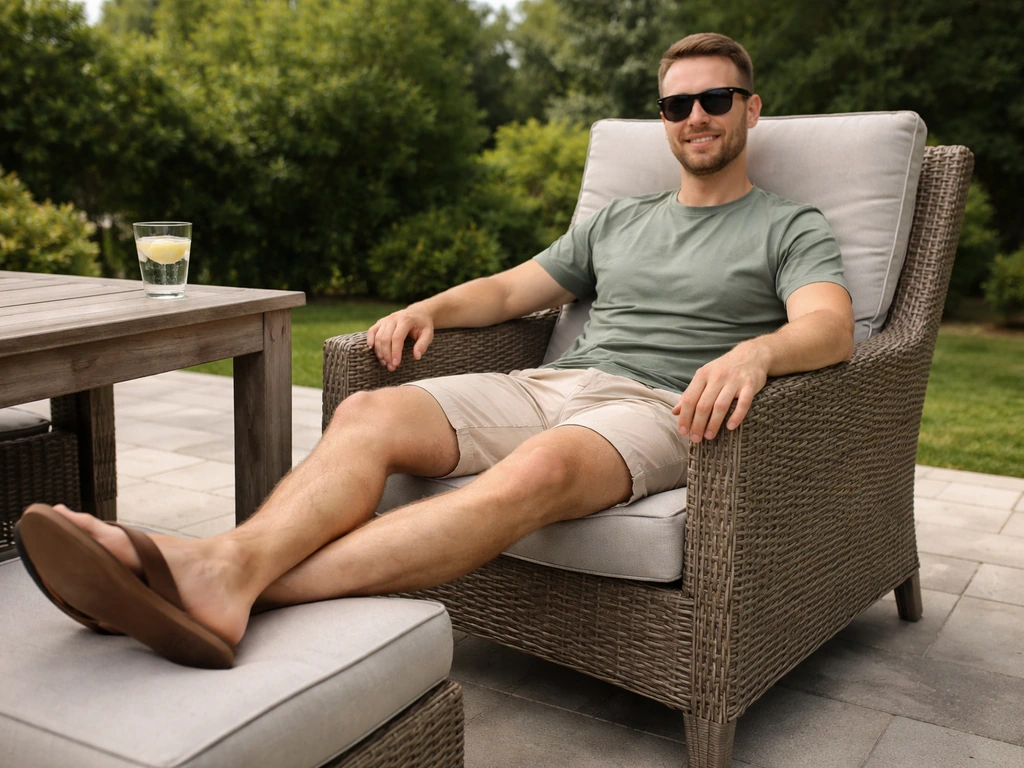
If you're wondering why patio furniture seems so short, the usual culprit is that many chairs and tables are sized for average-height users, not for longer legs and higher seating needs. For lounging, bar-height sets with 28–30 inch seat heights are the single biggest upgrade most tall people can make. The right dimensions exist across wood, aluminum, and composite materials, you just have to know what numbers to search for, because most product listings bury them.
How to Measure for a Tall (and Big & Tall) Fit Before You Buy

Before you spend a dollar, grab a tape measure and spend five minutes on yourself and your existing outdoor space. This prevents the single most common complaint from tall buyers: furniture that looked proportional in photos but felt like a toy in person.
Start with your own body. Sit in a standard kitchen or dining chair and measure the distance from the floor to the back of your knee (your popliteal height). For most tall adults, this falls between 17 and 21 inches. That number is the minimum seat height you want, ideally a half-inch to an inch above it. Next, measure your seated torso height (seat base to the top of your shoulder). This tells you how much blank" rel="noopener noreferrer">chair back height you actually need. For tall people, a chair back under 20 inches leaves your shoulders unsupported, which gets uncomfortable fast.
For big and tall buyers, seat width matters just as much. A chair seat narrower than 20 inches feels pinched. Many standard outdoor chairs come in at 18–19 inches wide; look for 21–24 inches if you need more room. Seat depth, front edge to the back, should land around 20–22 inches for tall frames, which keeps your thighs supported without the front edge cutting into the back of your knees.
Then measure your space. Note the distance from your floor to the underside of any existing table (that's your leg clearance), and double-check that new chairs won't leave you with less than 10 inches between seat and tabletop. For bar setups, measure from your deck or patio surface to the underside of the bar counter so you can match stools correctly. Balcony height and patio furniture measurements follow the same seat-height and leg-clearance logic, so measure your space before you buy bar-height table. Write these numbers down before you open a single product page.
Best Patio Furniture Types for Tall People
Not every furniture category is equally friendly to tall frames. Here's how the main types stack up, and which one is likely right for your situation.
Outdoor Dining Sets
Dining sets are the most versatile pick for tall people because the table-and-chair pairing is designed around a specific height relationship. Standard outdoor dining tables run 28–30 inches tall, which works fine for most people, but for tall buyers, the chair seat height is the real variable. Look for dining chairs at 18–19 inches rather than the budget-grade 16–17 inch seats you'll see everywhere. The difference sounds small but is enormous in practice: at 16 inches, a 6'4" person has their knees practically at chin level.
Bar-Height and Counter-Height Sets
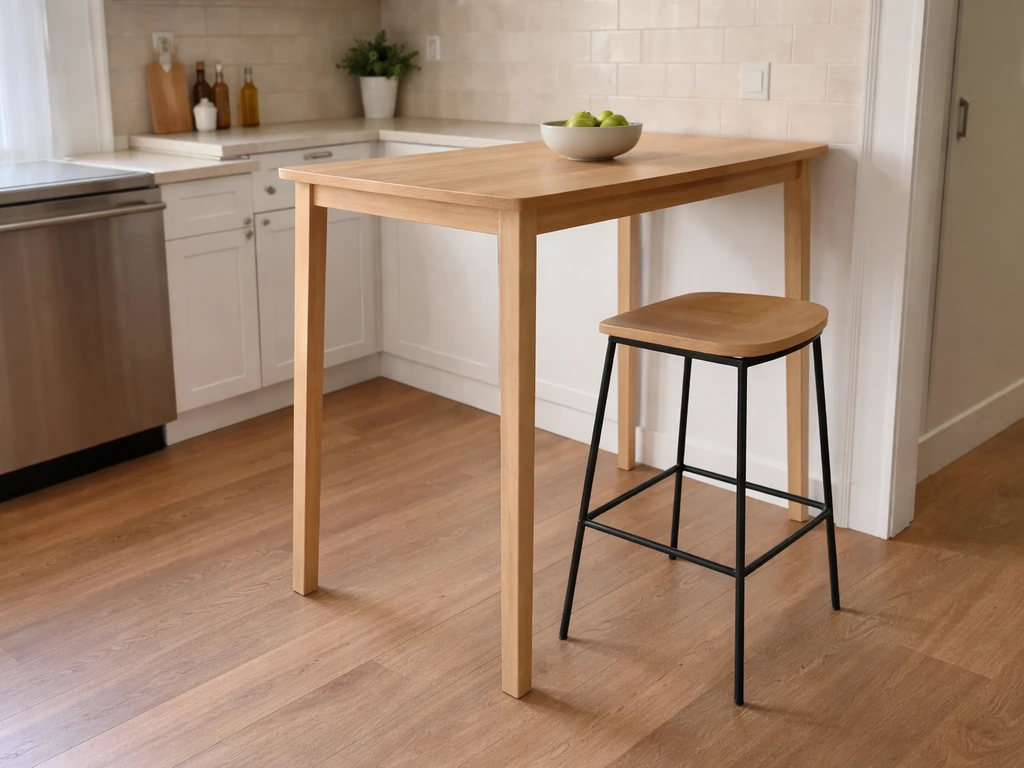
This is probably the most underrated upgrade for tall people. Bar-height tables run 40–42 inches tall, with matching stools or chairs at 28–30 inches. That elevated seat height means your legs drop at a natural angle instead of folding up underneath you. It also makes getting in and out of the chair far easier on knees and hips. If you entertain at an outdoor kitchen or island, matching the bar-height table to a built-in counter makes the whole space feel cohesive. Counter-height sets (34–36 inch tables, 24–26 inch seats) split the difference and work well for very tall people who find full bar height a little too elevated.
Lounge Chairs and Chaise Lounges
Most standard lounge chairs and deep-seating pieces are built low to the ground, often 14–16 inches of seat height, which is a problem for tall people who then struggle to stand back up. If you want a lounge chair, prioritize chaise lounges over club-style chairs: a chaise gives your full leg length somewhere to extend, which is far more comfortable than having your legs dangle or fold. Look for chaises with an overall length of at least 76–80 inches. Adjustable back positions are a bonus since they let you shift between upright and reclined without committing to one angle.
Sectionals
Sectionals present a common sizing trap. They look substantial in photos, but many outdoor sectional seats sit at only 15–17 inches off the ground with very deep cushions, meaning you sink in and end up lower than you expected. For tall people, sectionals work best when seat height (before cushion compression) is at least 17 inches and seat depth doesn't exceed 24 inches. Beyond that depth, shorter-legged tall people end up with no lumbar support because their back can't reach the frame. Deep-seating sectionals, which are specifically designed with extra depth, are worth knowing about, but approach them cautiously if you prefer sitting upright rather than lounging at a recline.
What Dimensions to Look For: The Numbers That Actually Matter
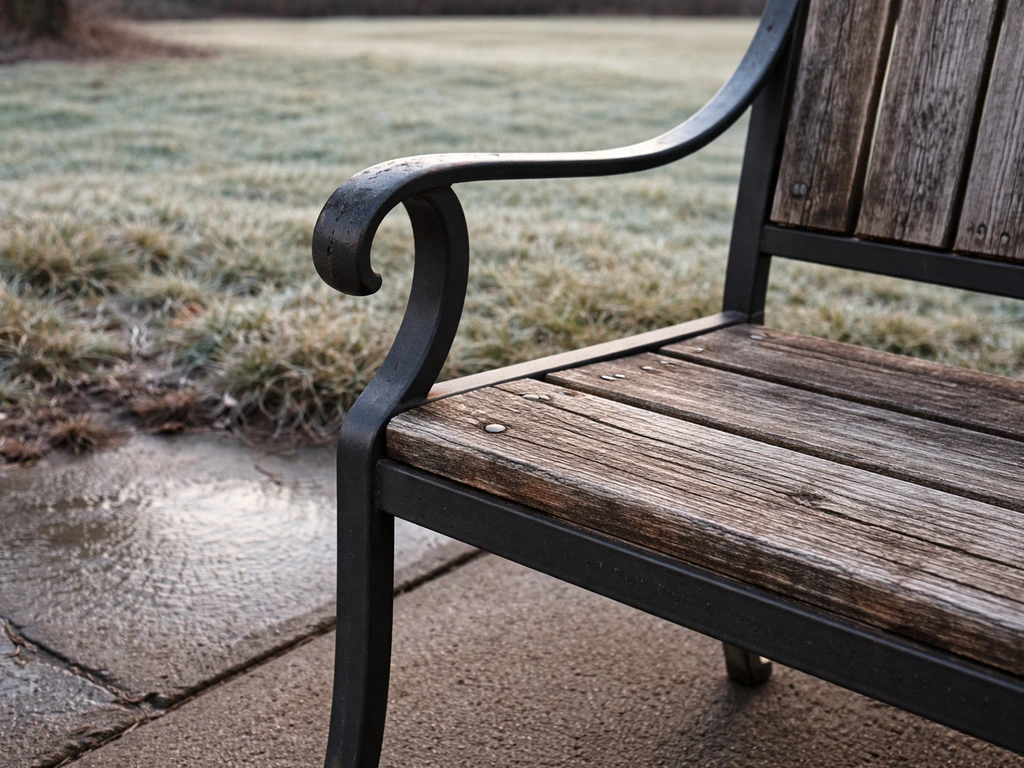
Product listings are inconsistent about which measurements they publish and how they label them. Here's exactly what to look for and what range works for tall and big & tall buyers.
| Dimension | Standard Range | Tall-Person Target | Why It Matters |
|---|---|---|---|
| Seat Height | 16–18 in | 18–20 in | Keeps knees at or below hip level; avoids the "crouching" position |
| Seat Depth | 18–22 in | 20–22 in | Supports thighs without cutting off circulation at the knee |
| Seat Width | 18–20 in | 21–24 in (big & tall) | Prevents pinching; more important for broader frames |
| Back Height | 18–22 in | 22–26 in | Provides shoulder and upper back support for tall torsos |
| Arm Height | 24–27 in | 26–28 in | Keeps arms at a resting angle; too low causes shoulder strain |
| Chair-to-Tabletop Clearance | 10–12 in | 10–12 in (non-negotiable) | The universal comfort rule — don't go below 10 inches |
| Dining Table Height | 28–30 in | 30 in preferred | Pairs with taller chairs; more leg room underneath |
| Bar Table Height | 40–42 in | 40–42 in | Standard bar height; pairs with 28–30 in stools |
| Chaise Length | 72–76 in | 78–80 in | Full leg extension for taller frames without hanging off the end |
One measurement that almost never appears in listings is the distance from the floor to the underside of the tabletop, which is what actually determines how much leg clearance you have. If it's not listed, email the retailer or calculate it: table height minus tabletop thickness. For tall buyers with long thighs, anything under 26 inches of clearance from floor to underside gets tight. Aim for 27–28 inches when you can find it.
Material-by-Material Picks: Comfort, Durability, and Real-World Trade-offs
Tall and big & tall buyers put more load on frames, joints, and cushions than average buyers. That makes material choice more consequential, not because standard materials can't support you, but because joint failure and cushion compression happen faster under higher use loads. Here's what to expect from each major category.
Wood (Teak, Eucalyptus, Acacia)
Quality hardwood is one of the best choices for tall buyers because it offers rigid, predictable support without flex. Teak is the gold standard: its natural silica and oil content resist moisture, insects, and rot without much intervention. A well-made teak dining chair can carry 300+ pounds without the joints working loose over time, which cheaper materials can't claim. Eucalyptus is a budget-friendlier alternative with similar density; acacia is even less expensive but more porous and prone to cracking in freeze-thaw climates unless sealed annually.
The downside with wood is maintenance. If you let teak go untreated for years, it weathers to a silvery-gray that many people find attractive, but acacia and eucalyptus need annual oiling or sealing to prevent surface checking. Wood is also heavier to move around, which matters if you reconfigure your patio often. Weight capacity is rarely an issue with solid hardwood if the joinery is mortise-and-tenon or through-bolted rather than just glued.
Metal (Aluminum and Steel)
Cast aluminum is probably the single most practical choice for most tall buyers who want durability without annual maintenance. A quality cast aluminum frame won't rust, won't flex noticeably under load, and can be powder-coated in finishes that hold up to UV and rain for 10-plus years. The key distinction is cast aluminum (thick, rigid, excellent for chairs and dining frames) versus extruded or tubular aluminum (lighter, more prone to denting, common in budget sets). For big and tall buyers especially, cast aluminum is worth the price premium over tubular frames.
Steel is stronger pound-for-pound than aluminum but requires rust protection. Powder-coated steel works well in dry climates; in coastal or humid environments, you need galvanized or marine-grade finishes, and even then you should expect to touch up chips before rust starts. Wrought iron is extremely rigid and heavy (genuinely good for stability in windy spots) but needs annual rust inspection and touch-up paint in humid regions. If you're in a salt-air environment, aluminum wins outright.
Wicker and Resin Wicker
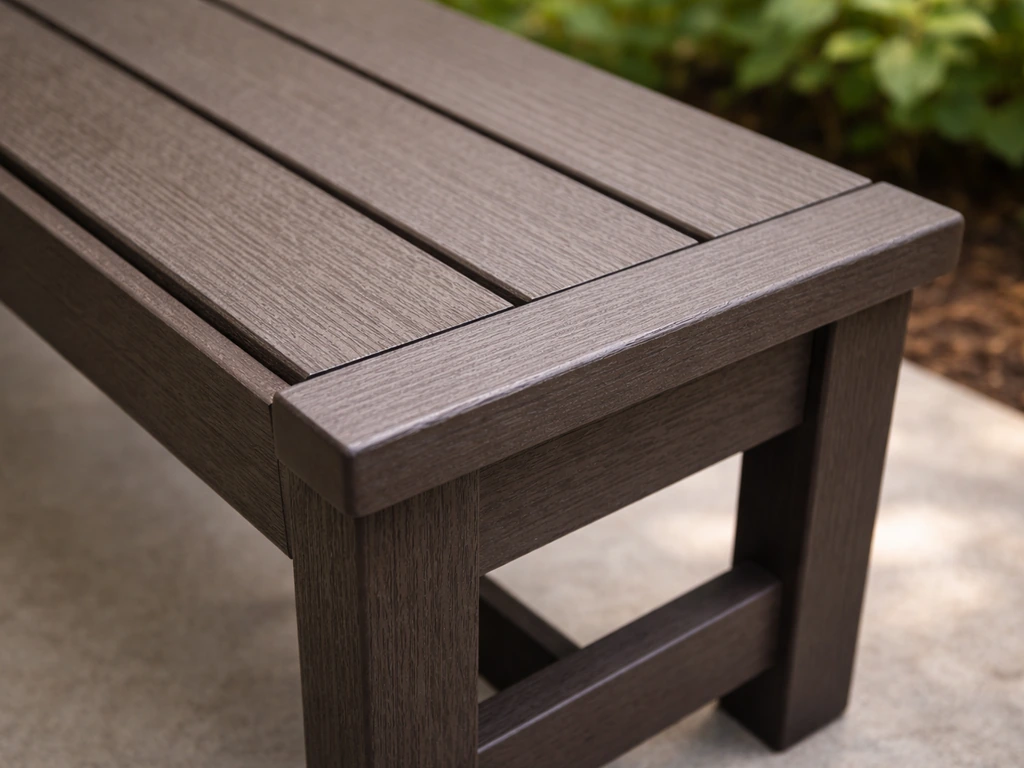
Natural wicker belongs indoors or in covered, dry spaces. It absorbs moisture, deteriorates with UV exposure, and weakens structurally over time under sustained load. For tall and big & tall buyers who want wicker aesthetics outdoors, resin wicker (HDPE or polyethylene woven over an aluminum frame) is the right answer. A quality resin wicker piece over a solid aluminum frame is weather-resistant, UV-stable, and carries load well because the frame is doing the structural work.
The thing to check with resin wicker is the weave density and the underlying frame gauge. Loose weaves flex and can develop gaps at stress points. Round or flat weave patterns over 1-inch aluminum frames are the most durable. Budget resin wicker tends to use thinner aluminum or steel frames that rust through the weave after a few seasons, you won't notice until the chair suddenly gives way. This is one category where paying more upfront genuinely saves you money.
Composite and Recycled Plastic (HDPE Lumber)
HDPE (high-density polyethylene) lumber, sold under brand names like Polywood, is an excellent low-maintenance choice for tall buyers, particularly for dining and bar-height tables and Adirondack-style chairs. It doesn't rot, doesn't need sealing, resists UV fading better than most painted wood, and is genuinely maintenance-free in a way that no other material fully matches. Weight capacity is excellent because HDPE boards are solid and dense.
The trade-off is aesthetics and feel. HDPE furniture looks slightly more utilitarian than teak or cast aluminum, and the material can get hot to the touch in direct sun (though no hotter than metal). For Adirondack chairs specifically, which aren't the easiest get-in, get-out option for tall people, HDPE is worth considering because the chair will outlast virtually anything else with zero maintenance. Just pair it with an elevated side table or an extended leg option to make the sitting height more workable.
| Material | Best For | Rust/Rot Risk | UV Resistance | Maintenance Level | Big & Tall Load Support |
|---|---|---|---|---|---|
| Teak | Dining, benches | Low (natural oils) | Excellent | Low–Medium (oiling optional) | Excellent if mortise-and-tenon joinery |
| Cast Aluminum | Dining, bar-height | None | Excellent (powder coat) | Very Low | Excellent |
| Steel (powder-coated) | Dining, frames | Medium (chips expose metal) | Good | Medium (touch-ups needed) | Excellent |
| Resin Wicker / HDPE frame | Sectionals, lounge | Low (frame is key) | Good–Excellent | Low | Good (depends on frame gauge) |
| HDPE Lumber (composite) | Dining, Adirondack | None | Excellent | Very Low (wash only) | Excellent |
Climate and Weather Protection: What Actually Affects Long-Term Comfort
The material that's comfortable to sit on today has to still feel good three summers from now. Climate determines how fast that degrades, and the wrong material in the wrong climate is how people end up replacing patio furniture every two or three years.
Humid Climates (Southeast, Gulf Coast, Pacific Northwest)
Humidity is the enemy of cushion foam, natural wicker, and any bare or painted steel. In persistently humid environments, cushion foam retains moisture and develops mildew odor within a season if the fabric isn't solution-dyed acrylic (Sunbrella and similar). Quick-dry foam cores with ventilated covers make a genuine difference and are worth the added cost. For frames, cast aluminum or HDPE lumber are the most sensible picks. If you love wood, teak handles humidity better than any other species, acacia and eucalyptus will need more frequent sealing.
Salt Air (Coastal Zones)
Salt air is corrosive to steel at a pace that surprises most buyers. Even powder-coated steel can show rust at joints and scratches within a single season a quarter-mile from the ocean. In coastal zones, marine-grade aluminum (5000 or 6000 series alloys) or HDPE lumber are the straightforward answers. Stainless steel hardware (rather than zinc-plated) makes a meaningful difference at connection points. Teak handles salt air well. Resin wicker on an aluminum frame is fine if the frame is marine-grade aluminum.
Hot, Dry Climates (Southwest, Desert Regions)
Intense UV exposure fades and degrades almost everything faster than humidity does. Powder coatings chalks, cushion fabric bleaches, and plastic components become brittle. In Arizona or Nevada, prioritize UV-resistant powder coatings (look for TGIC polyester formulas rather than basic epoxy coatings), solution-dyed acrylic cushion covers, and HDPE lumber which has UV stabilizers built into the material. Metal gets extremely hot in direct sun, a cast aluminum chair in direct afternoon Phoenix sun can blister exposed skin. Light-colored frames and covers reduce that significantly.
Freeze-Thaw Climates (Midwest, Northeast, Mountain West)
Freeze-thaw cycles crack wood that isn't properly sealed, split cushion foam that retains water, and work loose any joint that relies on wood expansion for tightness. In cold climates, HDPE lumber and cast aluminum are genuinely maintenance-friendly choices because neither is meaningfully affected by freeze-thaw. Wood requires annual sealing before winter and storage of cushions indoors. Steel chairs should be brought undercover or into a garage to prevent rust-accelerating condensation cycles.
Maintenance, Cushions, and Storage: Keeping It Comfortable Year After Year
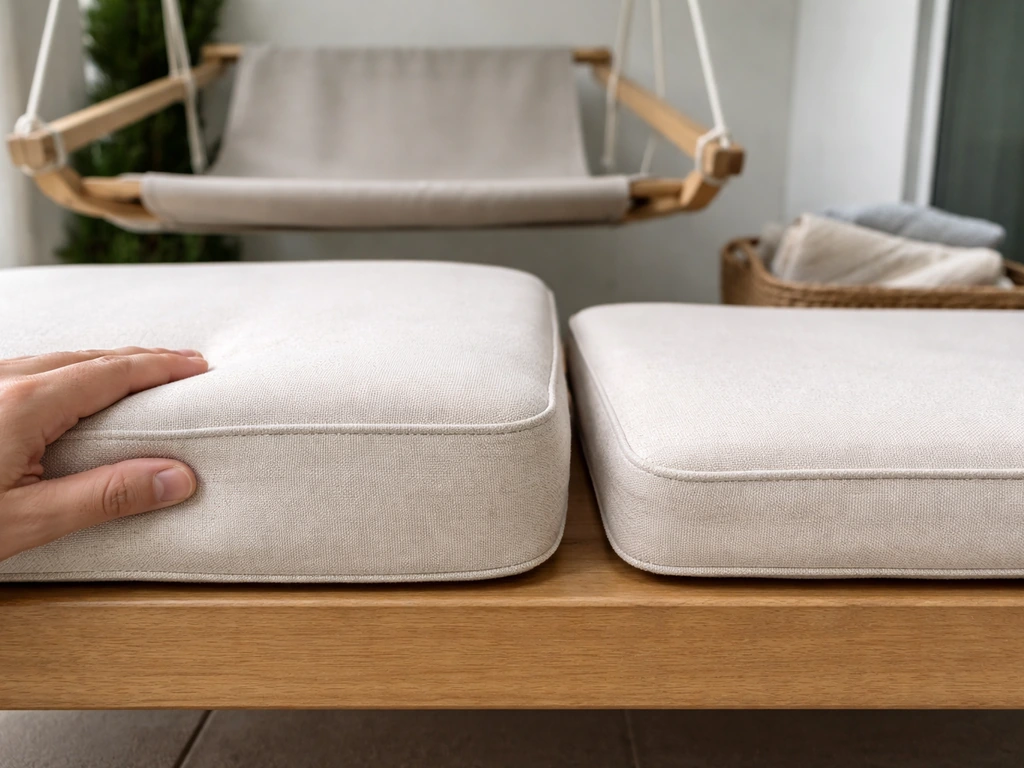
Tall people's furniture takes more mechanical stress, cushions compress faster, joints flex more, and armrests get more leverage applied to them. Choosing between sling and cushion patio furniture comes down to how you want to handle support, airflow, and long-term wear cushions compress faster. Building a simple seasonal maintenance habit extends the useful life of good furniture significantly.
Cushion Selection for Tall and Big & Tall Bodies
Cushion thickness and foam density matter far more than most buyers realize. A 3-inch cushion with low-density foam (1.5 lb/cu ft or less) compresses quickly under sustained load and loses its height, putting you back in the too-low position you were trying to avoid. Look for outdoor cushions with a minimum 4-inch depth and high-resilience foam at 1.8 lb/cu ft or better. Quick-dry foam cores wrapped in Dacron batting hold their shape longer and resist moisture. Cover fabric should be solution-dyed acrylic, not screen-printed polyester, which fades and deteriorates in UV within a couple of seasons.
Frame and Finish Maintenance by Material
- Teak: Apply teak oil or sealer annually if you want to preserve the golden-brown color. If you prefer the weathered gray look, rinse with mild soapy water each spring and inspect joints for looseness.
- Acacia and eucalyptus: Seal or oil every 6–12 months depending on your climate. Don't skip this — unsealed acacia cracks and splinters within two seasons in anything but mild, dry weather.
- Cast aluminum: Wipe down annually. If powder coat chips, touch up immediately with matching spray paint to prevent corrosion at exposed aluminum.
- Steel: Inspect every spring for rust spots, especially at joints, welds, and where the powder coat has chipped. Sand, prime, and repaint any bare metal before the season starts.
- Resin wicker: Hose off or wipe with a soft brush. Check the underlying frame at joints annually — if the frame rusts through, the weave goes with it.
- HDPE lumber: Wash with soap and water once or twice a year. That's genuinely all it needs.
Storage Tips That Actually Protect Your Investment
Cushions should come indoors or go into a sealed storage bin every season, not because patio cushions can't get wet, but because continuous wet-dry cycles accelerate foam breakdown and mildew growth. Heavy-duty breathable covers (not solid plastic, which traps condensation) protect frames left outdoors through winter. If you're storing chairs stacked, put felt or rubber pads between pieces to prevent powder-coat scratching. Folding or stacking chairs designed for flat storage make winter management much easier, especially with the larger frames required for tall-person furniture.
Your Quick Buying Checklist Before You Pull the Trigger
Run through this before you buy anything. It takes about five minutes and prevents 90% of the sizing and durability regrets that drive returns.
- Measure your popliteal height (floor to back of knee while seated) — that's your minimum seat height target.
- Confirm seat height on the product listing is 18–20 inches for dining chairs, 28–30 inches for bar stools.
- Check that chair-to-tabletop clearance will be at least 10–12 inches with the chairs you're pairing.
- Verify seat depth is 20–22 inches and seat width is at least 21 inches if you need big & tall sizing.
- For lounge seating, look for chaises 78–80 inches long or bar-height chairs rather than low club-style loungers.
- Match your frame material to your climate: aluminum or HDPE for coastal and humid zones; teak for anywhere; steel only in covered or dry settings.
- Confirm cushion foam density is at least 1.8 lb/cu ft and covers are solution-dyed acrylic.
- Check weight capacity listed by the manufacturer — look for 300+ lbs for big & tall use.
- For sectionals, verify seat height before cushions, not after — compressed cushion height is always lower than listed.
- Factor in your storage situation: if cushions live outside year-round, budget for replacement covers within 2–3 seasons unless you're buying high-end solution-dyed acrylic.
The bottom line is that tall-friendly patio furniture exists at every price point, you just have to filter ruthlessly on seat height, depth, and clearance numbers before anything else. Sling patio furniture is a great option when you want supportive, low-maintenance seating that still feels comfortable for tall frames. Bar-height sets are worth a serious look if you've never tried them.
Cast aluminum and HDPE lumber give you the best combination of load support and low maintenance for most climates. And if a retailer won't publish the specific dimensions you need, that's a signal to keep shopping, the right piece will have the specs listed, because the brands that build furniture for real bodies tend to be proud of the measurements.
FAQ
If my height falls between “tall” and “very tall,” should I start with seat height or chair back height when shopping?
Start with seat height. If your popliteal height is already near the low end of the target range, most of the discomfort comes from knees sitting too high. After seat height looks right, then verify the chair back clears your seated torso height so your shoulders are supported and you do not end up leaning forward to feel stable.
How do I estimate seat height if a listing only provides “overall height” or “to top of back” measurements?
Use the underside-to-floor logic where possible. If the listing does not publish seat height, overall height is not reliable because back designs vary. Best approach, measure from the floor to the seat surface on a similar chair you own, then compare proportions by looking for published seat height on a comparable model from the same brand or by asking the retailer for “seat height to top of cushion (or to the frame seat).”
What cushion height should I assume when a chair’s listing does not specify cushion thickness?
Assume you will lose height over time and that your comfort depends on the uncompressed foam and the final sitting level. A practical method is to subtract roughly 1 to 2 inches from the “initial” seat height you find in person or from photos, then recheck that your thighs are still supported with your needed seat depth. If you cannot confirm foam density or cushion depth, treat the product as a higher risk return candidate.
Do tall-friendly dining chairs still need leg clearance under the table, even if the tabletop height matches bar or dining standards?
Yes, because clearance is what prevents your knees from bumping the underside. Even with a table at a correct height (like 28 to 30 inches for standard dining), tall legs can still require more floor-to-underside clearance. If the listing does not publish it, calculate it from tabletop thickness, then confirm you have enough room for your walking stance and not just your sitting posture.
Can I mix bar-height stools and a bar-height table if the seat-to-counter dimensions do not match exactly?
Small mismatches can feel worse over long meals because your hip angle changes. Aim for the stool seat height to land close to the table height minus leg clearance you need, and prioritize how the stool back or arm positions your shoulders. If the retailer does not provide seat height and distance to the underside of the bar, choose a matching set or only buy if you can verify those numbers directly.
What’s the difference between “seat depth” and “overall chair length,” and why does it matter for tall people?
Seat depth is the distance from the front of the seat to the back support, it determines whether your thighs are supported without pressure on the back of your knees. Overall length can mislead you because it includes extra back or leg structure. For tall buyers, you want the seat depth within the target range and then verify that the chair does not force you to sit too far back or too far forward.
How can I tell if a sectional is actually tall-person friendly if the listing only shows “seat height” and the cushion looks thick?
Check whether the seat height is reported before cushion compression, and look for cushion depth and foam density, not just thickness. If it only provides “seat height” with no cushion compression context, assume you will sit lower than expected once weight is applied. A safer strategy is to test in person or require the brand to confirm cushion compressive range and frame seat height.
What should I do if I want wood but live in a humid or freeze-thaw climate?
You can still choose wood, but plan on a maintenance schedule and expect more frequent sealing for acacia and eucalyptus. Teak is more forgiving in humidity, it handles moisture better and resists rot. In freeze-thaw areas, prioritize sealed wood with a regular annual re-seal before winter, and store cushions indoors to reduce water absorption and foam breakdown.
Is sling furniture comfortable for tall people if the seat is elevated?
It can be, because slings often provide supportive airflow and keep you from feeling trapped in a deep cushion. For tall people, comfort depends on whether the sling and frame create the right seat height and prevent excessive sag under your load. Look for sling chairs with firm sling tension, published seat height, and an armrest geometry that does not force your shoulders forward.
How do I choose between cast aluminum and HDPE if I care about both durability and comfort?
Cast aluminum is excellent for structural rigidity and typically stays cool relative to some plastics, HDPE lumber is very maintenance-friendly and resists rot. Comfort differences often come from the cushion system, so choose based on how you will sit most of the day: for firm support with minimal fuss, cast aluminum with quality cushions is strong. For near-zero maintenance and long-term weather resistance, HDPE tables and Adirondack styles are a safe bet, but confirm you have an adequate sitting height and extension or side support.
What is the biggest mistake tall buyers make when shopping online?
Buying based on “overall look” and ignoring the measurement fields that govern comfort. The most common error is skipping verification of seat height and floor-to-underside clearance, then being surprised by knee bumping or unsupported shoulders. Treat the listing specs as mandatory, if the retailer will not share dimensions you need, move on.
How should I maintain tall-person patio cushions so they do not end up too low?
Rotate and store them seasonally. Even high-quality foam compresses faster when it stays wet and then dries repeatedly, so bring cushions indoors or into sealed, dry storage for the off-season. Also choose breathable, heavy-duty covers for any cushions that must remain outside, and avoid solid plastic wraps that trap condensation.
Can I reduce discomfort from armrests on tall furniture?
Sometimes, but it depends on the chair design. If armrests are too high or too far forward, they can put extra leverage on your elbows and pull your torso forward, worsening back support. If you cannot adjust the seating height, prioritize chairs with wider seat width and a back height that lets you sit upright, then test whether you can rest your arms without shrugging or leaning.
Next Articles
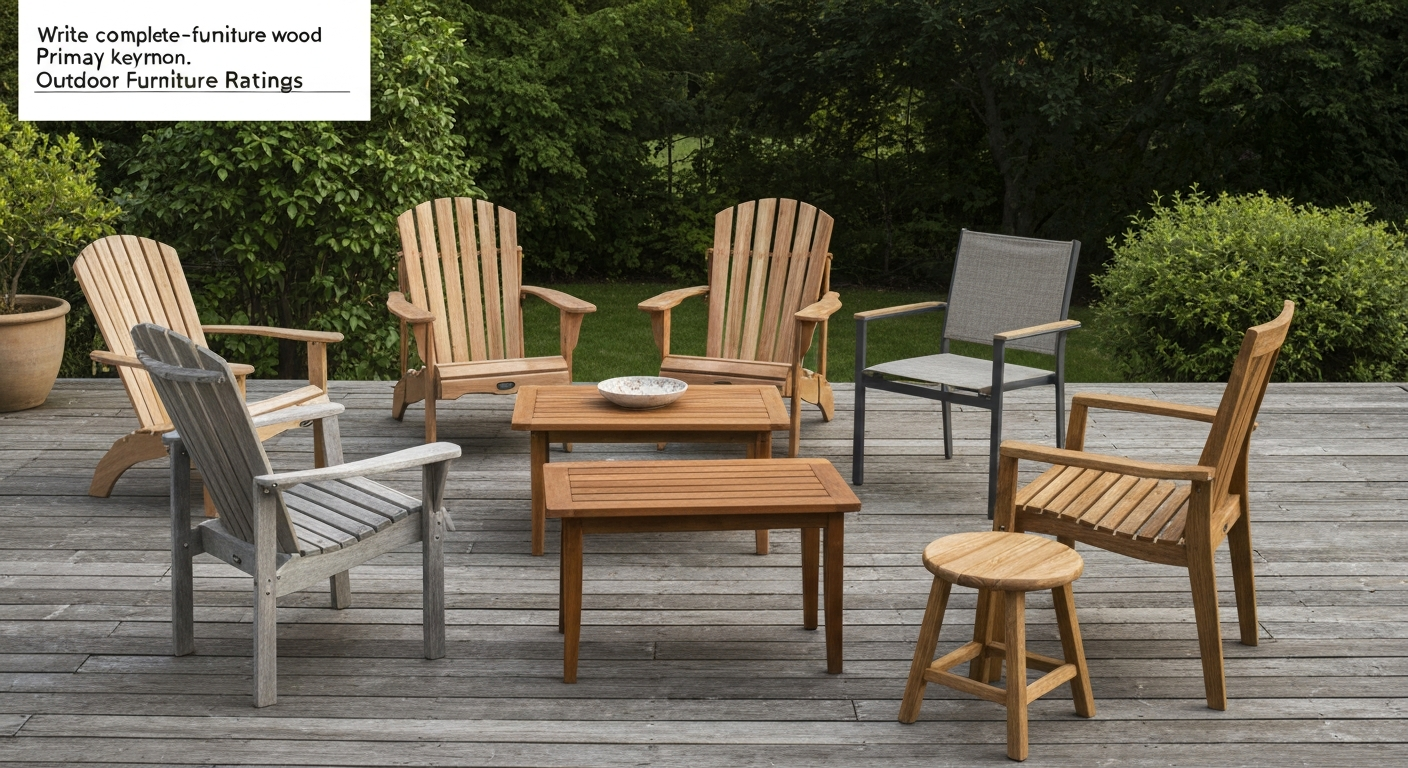
Common Patio Furniture Wood: Best Choices, Care & Tips
Compare common patio furniture wood types, teak, cedar, redwood, oak, with durability, finishes, and care tips.
Best Wood Patio Stain: Choosing Durable, Low-VOC Finishes
Compare and choose the best wood patio stain: durability, finish, climate tips, prep, and top product picks.
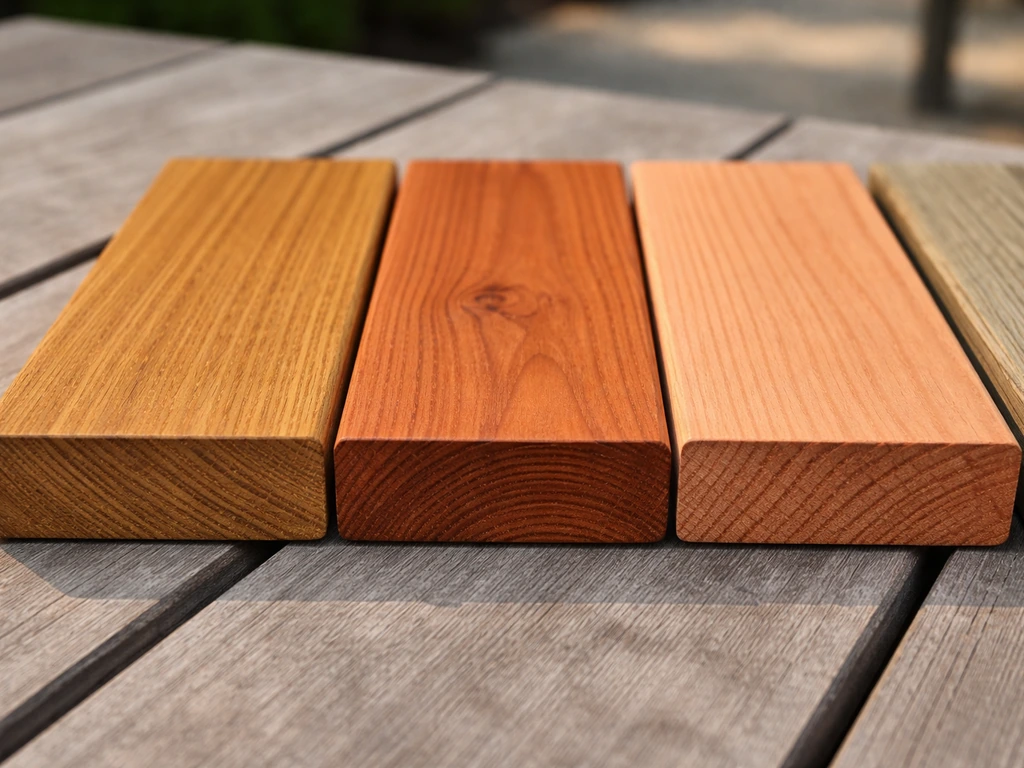
Common Patio Furniture Wood: Teak, Cedar, Redwood and More
Compare common patio woods like teak cedar redwood and pressure-treated: durability, quality checks, and care for long l