
Truly weatherproof patio furniture resists rain, UV fading, salt air, wind, temperature swings, and in cold climates, freezing temperatures and snow load, without rotting, rusting, cracking, or fading into an embarrassing mess after two seasons. The materials that actually deliver on that promise are powder-coated aluminum, teak (properly maintained), high-quality HDPE resin wicker, and certain composites. Cheap steel, untreated softwood, standard indoor-grade wicker, and poorly finished pieces marketed as "all-weather" will not. Here's how to tell the difference before you buy.
Patio Furniture That Is Weatherproof: Buying Guide

Theo Tierney
31 May 2026
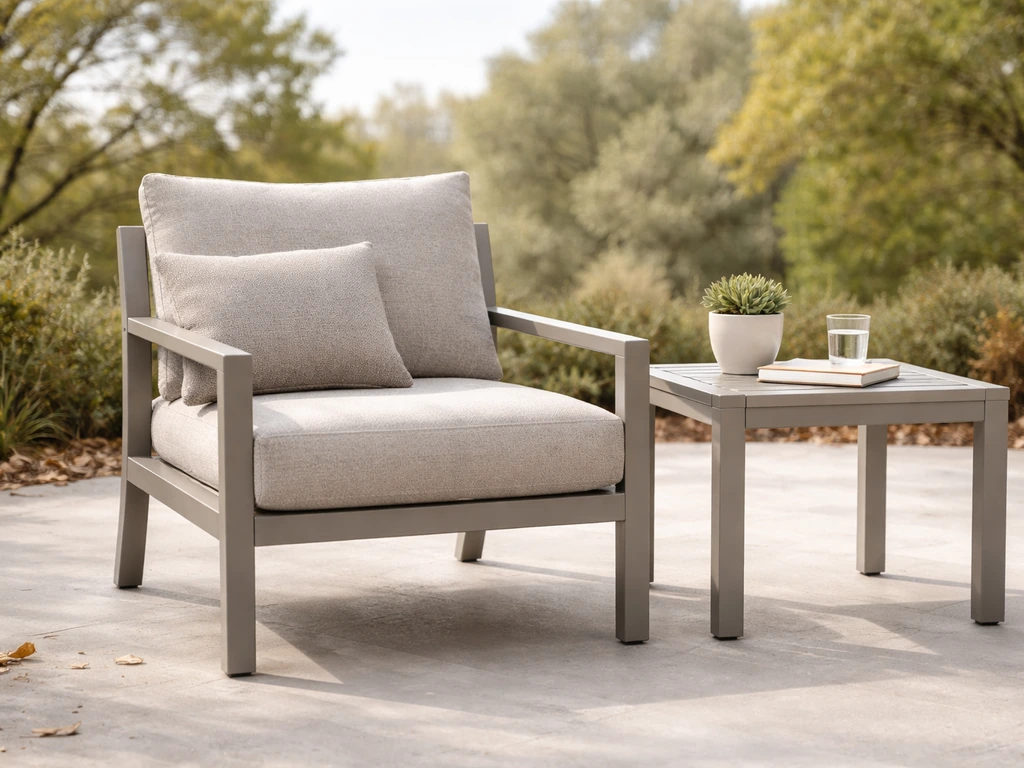
What "weatherproof" actually means for outdoor furniture
The term "all-weather" is not a regulated standard. Any manufacturer can print it on a hang tag. Real weatherproofing means a piece is engineered to resist a specific set of outdoor stressors, and it's worth knowing what those are so you can ask the right questions.
- UV radiation: breaks down polymer chains in plastics, fades dyes, and degrades wood surfaces. Standards like ASTM G154 simulate this with fluorescent UV lamps and water spray cycles to measure color fading, surface cracking, and gloss loss — but test hours don't directly translate to years of outdoor life, so treat them as relative comparisons, not guarantees.
- Moisture and rain: penetrates joints, expands wood, corrodes metals, and feeds mold and mildew. Flat surfaces that pool water are a red flag.
- Salt air: accelerates corrosion on metals dramatically. ASTM B117 (and the international equivalent ISO 9227) are salt-spray fog tests used to compare corrosion resistance of metals and coated metals — good furniture brands will reference these for coastal-rated products.
- Thermal cycling: repeated freeze-thaw or extreme heat-cold swings crack finishes, loosen joints, and degrade coatings. BIFMA's outdoor furniture standards reference thermal cycling tests cycling between roughly 50°C and -18°C over 30 cycles as part of durability evaluation.
- Wind: cheap lightweight pieces blow over and the impact damage compounds every other problem.
- Humidity: even without standing rain, high ambient humidity feeds mold, swells wood, and corrodes steel hardware.
When a brand calls something weatherproof, ask which of these stressors they actually engineered for. A piece made for Arizona sun is not automatically good for a Florida porch or a Chicago winter.
Choosing your material: metal, wood, wicker, or composite
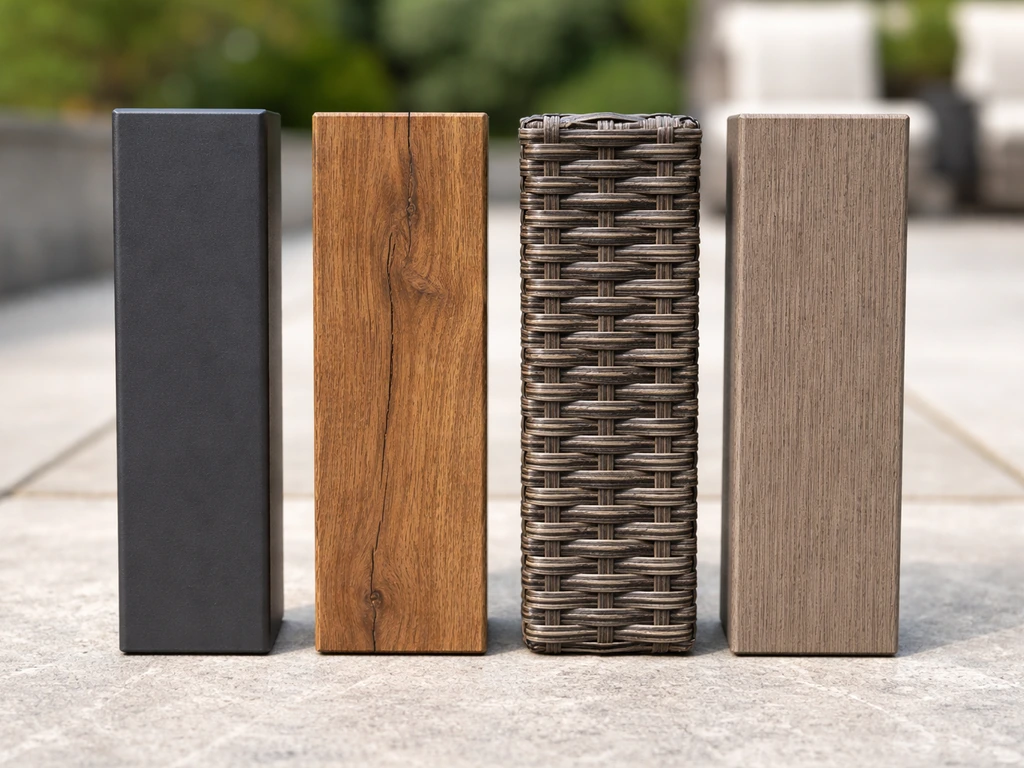
Each material has a real performance ceiling and a real weak point. Here's the honest version.
Aluminum
Powder-coated aluminum is the most reliably weatherproof frame material for most climates. It doesn't rust, it's lightweight, and a quality powder coat is chemically bonded to the surface rather than painted on, so it resists chipping and corrosion far better than spray-painted finishes. The weak point is that thin-gauge aluminum dents and bends, and cheap cast aluminum joints crack under stress. Look for 6000-series alloy and thick-walled tubing if you want it to last. Aluminum can technically stay outside year-round, but keeping it covered and upright (not stored upside down) prevents water from entering the hollow frame and freezing, which can cause internal damage in cold climates.
Teak and hardwoods
Teak is the gold standard in outdoor hardwood because its natural oil content makes it inherently resistant to moisture, insects, and rot. Left untreated, it weathers to a silver-gray patina that many people find attractive. The problem is neglect: in wet or humid conditions, mold and mildew will grow on surface dirt even on teak, and applying teak oil or linseed oil in wet climates actually makes this worse by trapping dirt and feeding fungal growth.
A clear sealer, reapplied periodically (typically once a year in wet climates, less often in dry ones), is a better approach than oil. Shorea, eucalyptus, and ipe are decent alternatives at lower price points, but none match teak's long-term rot resistance. Avoid pine, cedar, or any softwood unless it's pressure-treated and you're prepared for regular maintenance.
Resin wicker (HDPE)
Real wicker, natural rattan or reed, has no place outdoors. It will degrade quickly with moisture. What gets sold as "outdoor wicker" or "all-weather wicker" is almost always resin wicker, and quality matters enormously here. The best outdoor wicker is made from HDPE (high-density polyethylene) blended with UV stabilizers that prevent the photodegradation that causes fading and brittleness.
Its non-porous surface also resists mold and mildew on the weave itself. The catch: standard, non-UV-stabilized HDPE is not suitable for long-term outdoor use, and black HDPE only performs marginally better because carbon black absorbs UV energy. When you're buying, confirm the wicker is specifically UV-stabilized HDPE or PVC, not generic resin. The frame underneath matters just as much, look for a powder-coated aluminum frame, not steel.
Wood-plastic composites (WPC)
WPC decking and furniture (wood flour blended with HDPE or other polymers) is marketed heavily as low-maintenance and weatherproof. The reality is more nuanced. UV exposure and especially UV combined with water spray causes both color change and gradual mechanical property loss in WPCs, moisture is a bigger driver of degradation than UV alone. Higher-quality co-extruded WPCs that incorporate light stabilizers perform meaningfully better over time, but budget WPC furniture often skips these additives. If you're buying composite furniture, ask specifically whether it has a co-extruded cap layer with UV and moisture stabilizers. Without that, expect surface cracking and color shift within a few years in wet climates.
Steel
Galvanized or powder-coated steel is heavier and more wind-stable than aluminum, but it's also far more vulnerable to rust when the coating fails, and it will fail at scratches, weld points, and joints. Stainless steel (316 marine grade for coastal areas) is a different story and performs very well, but it costs significantly more. Plain painted steel is fine as a budget choice if you're willing to touch up chips annually. If you're not, the rust starts fast.
| Material | Rust/Corrosion Risk | UV/Fade Resistance | Mold/Mildew Risk | Freeze-Thaw Performance | Maintenance Level | Best For |
|---|---|---|---|---|---|---|
| Powder-coated aluminum | Very low | High (with quality coat) | Very low | Excellent | Low | Most climates |
| Teak hardwood | None | High (weathers naturally) | Low (if clean) | Good | Moderate | Humid, wet, or coastal climates |
| UV-stabilized HDPE resin wicker | None (aluminum frame) | High (if UV-stabilized) | Very low | Good | Low | Humid, sun-heavy climates |
| WPC composite | None | Moderate (varies by grade) | Low to moderate | Moderate | Low to moderate | Dry to moderate climates |
| Galvanized/coated steel | Moderate (if chip) | Moderate | Low | Good | Moderate | Inland, low-humidity areas |
| Stainless steel (316) | Very low | High | Very low | Excellent | Low | Coastal, coastal high-salt areas |
Construction details that separate furniture that lasts from furniture that doesn't
Materials alone don't make furniture weatherproof. Two pieces with identical aluminum frames can perform completely differently depending on how they're built. These are the construction details that actually matter.
Frames and wall thickness
Aluminum tubing should be at least 1.5 to 2mm thick for structural integrity. Thin-walled tubing bends, and once bent, the powder coat cracks and corrosion follows. Cast aluminum connectors at joints are stronger than tube-to-tube welded connections at corners, but the weld quality still matters, look for smooth, fully sealed welds with no pitting or gaps where water can enter.
Joints and drainage
Water pooling inside hollow frames is a slow killer. Quality outdoor furniture has drainage holes at low points in the frame so water doesn't accumulate inside tubing. Joints that trap water, flat-on-flat metal connections, recessed areas on seat backs, or horizontal surfaces without slight drainage angles, will corrode or rot from the inside out regardless of how good the surface finish is.
Hardware
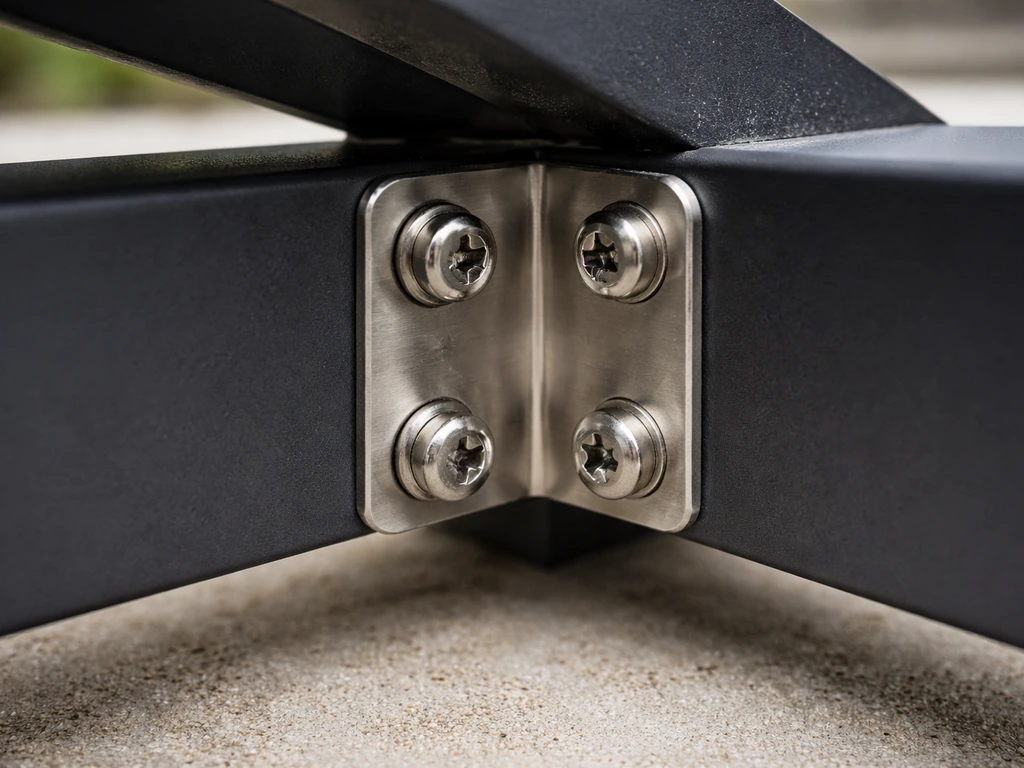
Stainless steel hardware is non-negotiable for anything intended to stay outside. Zinc-plated or standard steel screws and bolts rust within a season, stain surrounding surfaces, and eventually seize up or fail structurally. Check every visible fastener: hinges, brackets, connection bolts, and adjustment mechanisms. If the furniture is otherwise aluminum but uses cheap steel hardware, it will show rust spots and potential structural failure at those points.
Finishes and coatings
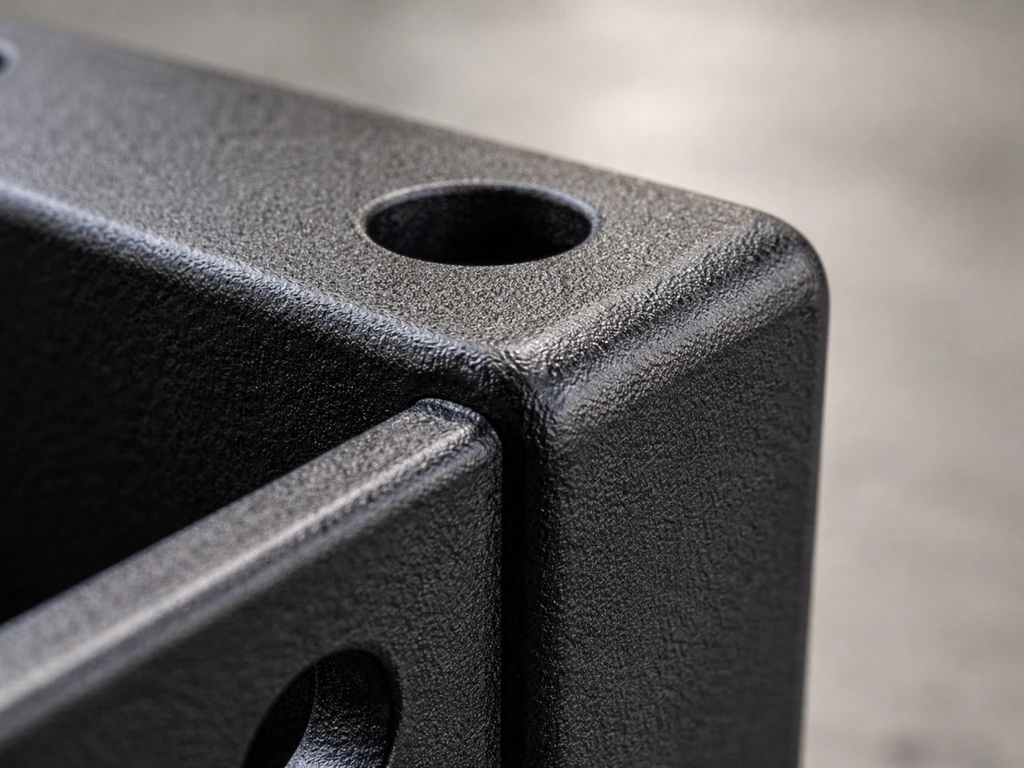
Powder coating should be thick enough to resist chips (look for 60–80 microns or more), uniformly applied with no thin spots at edges and corners where it's most likely to fail first. Liquid paint is a budget-grade alternative that chips much more easily. On wood, a penetrating sealant or UV-inhibiting finish is better than a surface film in outdoor conditions because surface films peel as wood moves with moisture changes. On composites, the protective cap layer (if present) is what's doing most of the UV and moisture work.
Cushions, upholstery, and umbrellas: what actually belongs outside
The frame is only half the story. Cushions and fabric are where most outdoor furniture fails first, and it's where marketing language is most misleading.
Fabric: what outdoor-rated actually means
Solution-dyed acrylic is the benchmark for outdoor fabric performance. Sunbrella is the most recognized brand in this category, and its fabrics are genuinely engineered for outdoor use: the color is locked into the fiber during the spinning process rather than applied as a surface dye, which makes it inherently resistant to UV fading. The fibers are also designed to resist mold and mildew growth.
However, Sunbrella itself is clear that mildew can still grow on dirt and organic matter sitting on the fabric surface, the fabric doesn't promote growth, but it doesn't prevent mildew from feeding on grime. Regular cleaning is essential. Look for outdoor fabrics that have been tested to ASTM G154 (UV/water exposure) and AATCC 127 (water resistance via hydrostatic pressure). A Sunbrella-style 5-year fade warranty is a meaningful signal of quality; a vague "weather resistant" label on polyester is not.
Foam and fill
The best outdoor cushion foam is either open-cell quick-dry foam or polyester fiberfill that is specifically rated for outdoor use. Both allow water to drain and dry rather than staying saturated. Closed-cell indoor foam trapped in an outdoor cushion will stay wet for days, grow mold inside, and eventually smell. The cover fabric can be perfect and the cushion will still fail. If cushions don't have drainage holes or a mesh bottom panel, that's a problem.
Umbrellas
Umbrella poles should be powder-coated aluminum or fiberglass, not wood (which warps) and not plain steel (which rusts at the joint between pole and hub). The canopy fabric should meet the same standard as cushion fabric: solution-dyed acrylic or coated polyester with a stated UV rating. Umbrella ribs are a weak point, look for fiberglass ribs rather than aluminum in high-wind areas because they flex rather than snap. Always close and secure umbrellas when you're not actively using them. No umbrella is wind-rated for being left open unattended.
Climate-specific recommendations
One of the biggest mistakes buyers make is treating weatherproof as a single standard. The stressor profile in Phoenix is almost nothing like the one in Miami or Chicago. Here's how to match your material choices to your actual climate.
Hot, sunny, dry climates (desert Southwest)
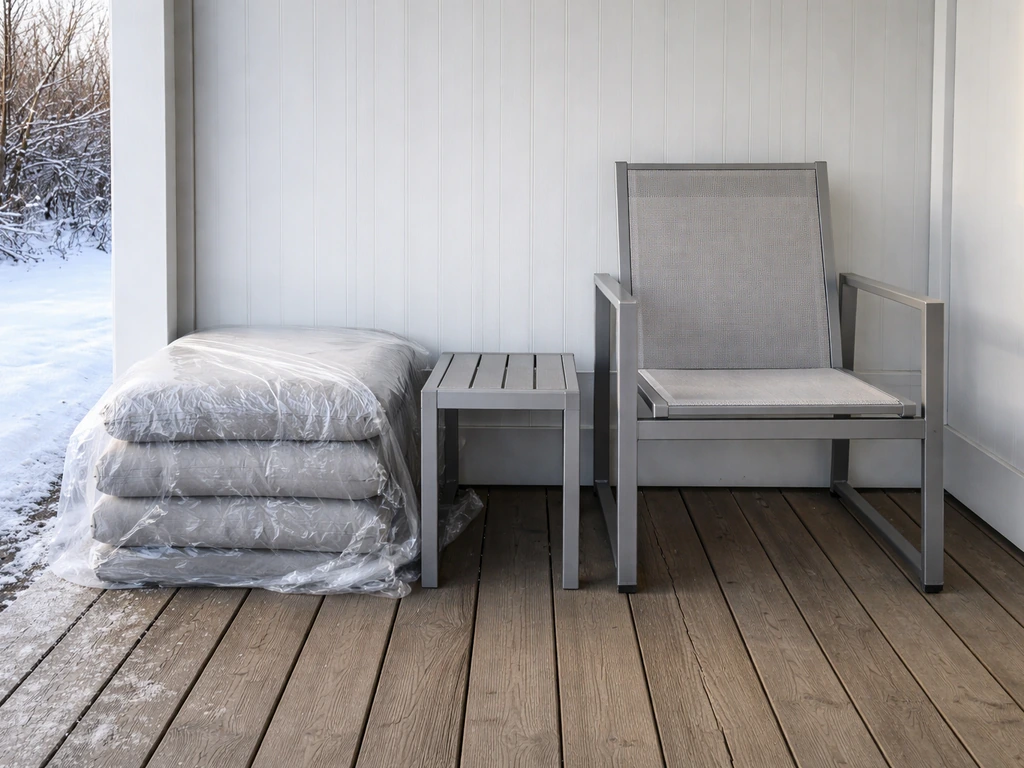
UV is your primary enemy. Aluminum frames hold up extremely well, but darker powder coats can get hot enough to burn skin. Fabric UV resistance is critical, solution-dyed acrylic or high-quality coated polyester with verified ASTM G154 test results. WPCs can work here since moisture degradation is minimal, but UV stabilizers in the composite still matter. Teak holds up well and won't develop mold in dry heat. If you're in Arizona or New Mexico, the thermal cycling from very hot days to cool nights stresses finishes, so look for powder coats specifically tested for thermal cycling.
Humid, rainy climates (Southeast, Pacific Northwest)
Moisture and mildew are your biggest threats. Teak is excellent here, its natural oils resist moisture and rot better than any other wood, but avoid teak oil treatments in humid climates because they trap dirt and promote mold. Use a clear sealer instead. HDPE resin wicker with aluminum frames is also a top choice because neither material absorbs water.
Avoid wood-plastic composites without a high-quality capped surface because moisture accelerates mechanical degradation. Keep cushions stored or covered whenever rain is expected, even with outdoor-rated fabric. If you're in a particularly wet area, this is exactly the scenario where choosing furniture with drainage holes in the frame and seat slats instead of solid panels makes a measurable difference. Specific guidance for wet climates is covered in more depth in our guide on best patio furniture for wet climates. This guide breaks down the materials and construction details that hold up best when rain, humidity, and mildew are constant best patio furniture for wet climates.
If you need Midwest-specific guidance like freeze-thaw durability and storage, check our guide on the best patio furniture for midwest. For Chicago specifically, you’ll want to prioritize materials and construction that handle freezing winters and windy freeze-thaw cycles without cracking or rusting best patio furniture for chicago weather. Specific guidance for wet climates is covered in more depth in our guide on the best patio furniture for wet climates.
Coastal and salt-air environments
Salt air corrodes metals at a dramatically accelerated rate. If you're within a mile or two of the ocean, standard powder-coated aluminum is adequate but needs more frequent inspection and rinsing. For truly exposed coastal settings, 316 marine-grade stainless steel hardware is mandatory, and upgrading to marine-grade aluminum (or stainless steel frames) is worth it. All metals should be verified against [salt-spray testing (ASTM B117 or ISO 9227)](https://store.
astm. org/B117. html). [ISO 9227](https://www.
iso. org/cms/%20render/live/en/sites/isoorg/contents/data/standard/08/17/81744. html? browse=tc):2022 is the international standard for salt-spray testing in artificial atmospheres, used to check that metallic materials (with or without corrosion protection) maintain quality under salt-spray exposure.
Teak is an excellent coastal wood choice, historic marine use says everything about its salt resistance. Rinse all furniture regularly with fresh water to remove salt deposits before they work into joints and hardware.
Freezing winters (Midwest, Northeast, Mountain regions)
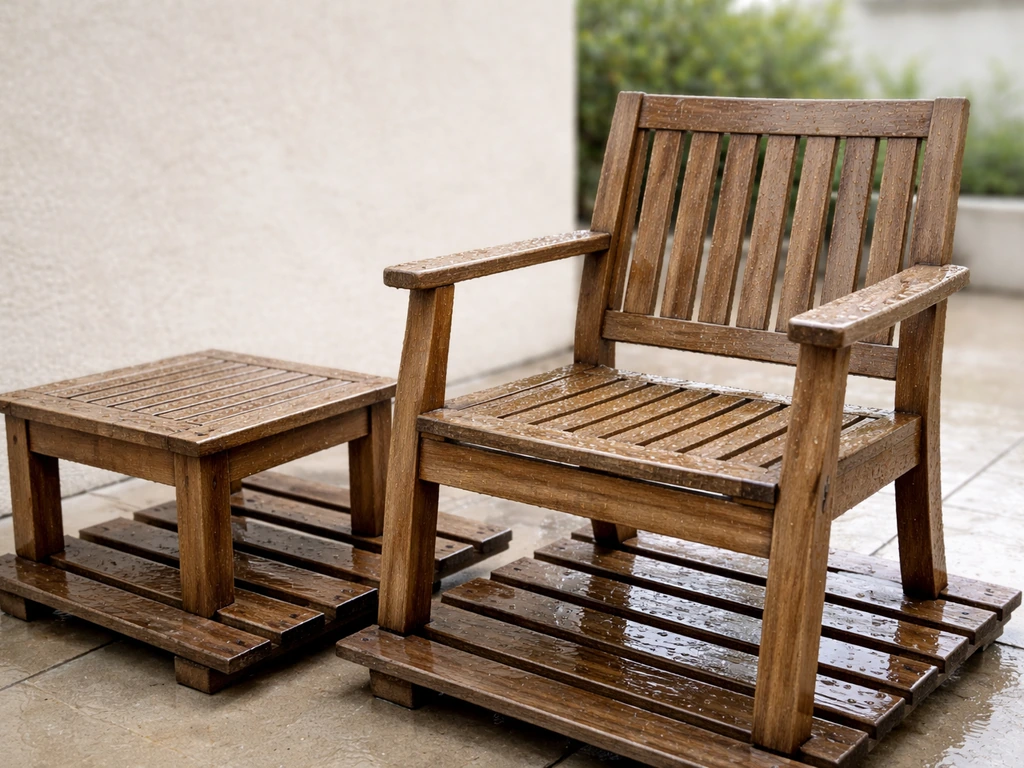
Freeze-thaw cycling is brutal on finishes, joints, and materials that absorb water. Aluminum frames handle it very well, but need to be stored upright, not upside down, so water doesn't collect inside hollow tubes and crack them from the inside when it freezes. Cushions must come indoors for winter; even outdoor-rated fabrics will suffer "freeze tears" when saturated and frozen. Teak handles freezing well if sealed.
Avoid WPCs without a moisture-resistant cap layer in freeze-thaw climates because moisture penetration followed by freezing is what breaks down the composite matrix. More specific guidance for Midwest winters is in our guides on best patio furniture for the Midwest and best patio furniture for Chicago weather, and a deeper dive on winter-specific performance is in our guide on best patio furniture for winter weather.
The buying checklist: what to look for and what to avoid
Use this as your actual decision tool when you're shopping, whether online or in a showroom. The red flags are just as important as the positives.
What to look for
- Frame material: powder-coated aluminum (most climates), 316 stainless steel (coastal), or quality hardwood like teak or shorea
- Hardware: stainless steel on every visible fastener — screws, bolts, hinges, brackets
- Powder coat quality: look for uniform coverage with no thin spots at edges, and ask about coating thickness (60–80 microns minimum)
- Drainage: check for drainage holes in hollow tube frames and drainage angles or gaps on flat surfaces
- Resin wicker (if applicable): confirm it's UV-stabilized HDPE or quality PVC, not generic resin, and that the underlying frame is aluminum
- Cushion fabric: solution-dyed acrylic (Sunbrella or similar) with documented UV and mildew resistance; ASTM G154 test reference is a good sign
- Cushion fill: quick-dry open-cell foam or outdoor-rated polyester fill with drainage provision in the cover
- Warranty: meaningful fade and structural warranties (5 years on fabric, 3+ years on frame) from a brand that will actually honor them
- Composite furniture (if applicable): confirm co-extruded cap layer with UV and moisture stabilizers
- Salt-air rating: for coastal use, look for ASTM B117 or ISO 9227 salt-spray test references
Red flags to avoid
- "All-weather" or "weatherproof" labels with no supporting specs or test references
- Steel frames sold as rust-resistant without powder coating or galvanizing — painted steel chips and rusts fast
- Untreated or poorly finished softwood (pine, fir) sold as outdoor furniture
- Generic resin wicker without UV stabilizer specification, especially in black frames using only carbon-black UV absorption
- Flat surfaces with no drainage slope or holes — these pool water and accelerate every failure mode
- Standard zinc-plated or steel hardware on an otherwise aluminum frame
- Indoor-grade foam cushions with just an outdoor fabric cover — the foam stays wet and molds
- WPC furniture without a capped co-extruded surface, especially for wet or cold climates
- Budget composite or resin that becomes brittle or fades in the first season — UV stabilizers were likely skipped
- Umbrella poles or ribs in untreated wood or plain steel
Maintenance, cleaning, and seasonal storage: how to make it last
Even the best materials degrade faster without basic upkeep. The good news is that the maintenance required for genuinely weatherproof furniture is straightforward, it's more about consistency than complexity.
Regular cleaning
Clean all surfaces at least twice a season, spring setup and fall teardown, and spot-clean after storms or heavy pollen. For aluminum and resin wicker, mild soap and water is all you need. For teak, a soft brush with warm soapy water removes surface dirt and the organic matter that mildew feeds on. For fabric, Sunbrella recommends cleaning with mild soap and water and rinsing thoroughly; mold grows on dirt left on fabric, not on the fabric itself, so keeping cushions clean is the actual mildew prevention strategy. For coastal furniture, rinsing with fresh water monthly (or more frequently if heavily salt-exposed) is essential to prevent salt buildup from working into hardware and joints.
Protecting frames and wood
Inspect powder-coated frames for chips annually and touch up with matching powder coat paint or a compatible metal paint before rust can start. For teak, reseal with a clear UV-inhibiting wood sealer once a year in wet climates, less frequently in dry ones. Skip teak oil in humid or wet climates, it builds up, traps dirt, and creates conditions for mold. For WPC furniture, clean the surface regularly and inspect the cap layer for cracking; once moisture penetrates through cracks, degradation accelerates.
Covers
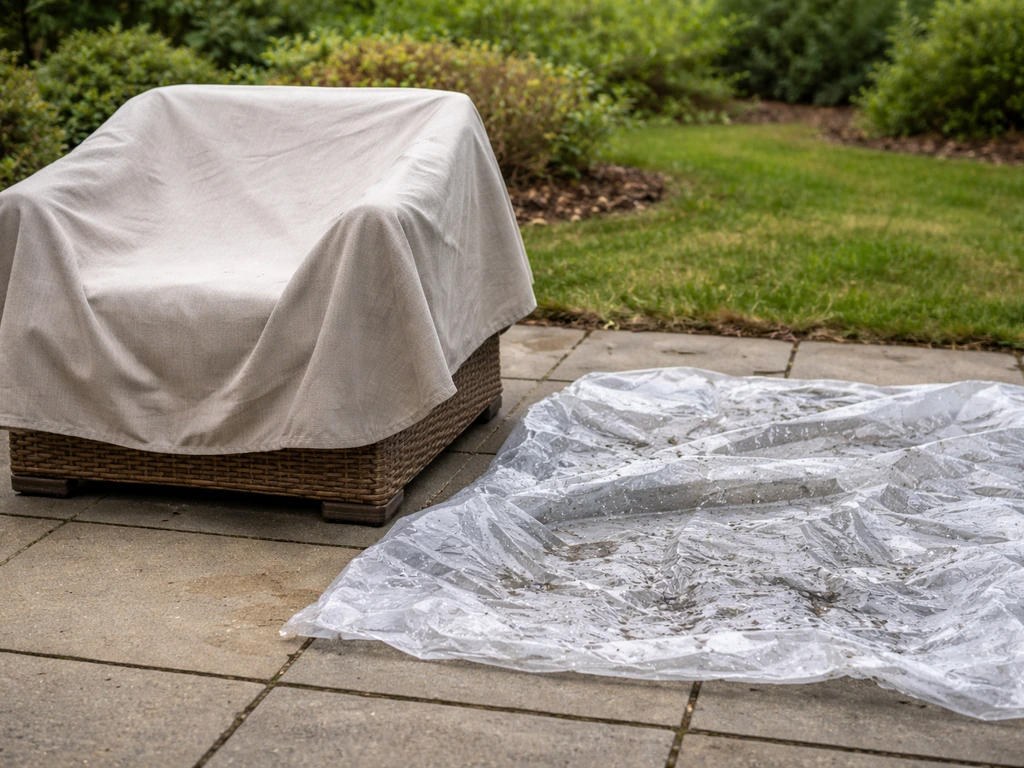
Good outdoor furniture covers are breathable (not plastic tarps), water-resistant, and UV-resistant themselves. A breathable cover keeps rain off while allowing moisture that does get underneath to evaporate rather than condensing and sitting. Covers extend the life of both the frame finish and any cushions left outside. Use them whenever the furniture isn't in regular use, especially in shoulder seasons with unpredictable weather.
Seasonal storage
In freezing climates, cushions must come inside for winter, outdoor fabric doesn't protect against freeze damage when the foam or fill is saturated. Frames can stay outside if properly covered, but storing them upright is important: an aluminum frame stored upside down can collect water in the hollow tubes, which then freezes and cracks from inside. A dry garage or shed is always better than outside, especially for wood furniture. For umbrellas, close and secure the canopy whenever wind picks up, and store the canopy indoors over winter. A season or two of this routine makes a meaningful difference in how long every piece in your set performs.
FAQ
What does “weatherproof” mean for patio furniture during heavy rain, not just normal wet weather?
For heavy rain, weatherproof should include built-in drainage paths (not flat, pooling surfaces) and non-porous materials for the cushion base and frame. If a set has no drainage between slats or inside hollow frames, water can accumulate and cause internal corrosion or mildew even if the exterior surface looks fine.
Is powder-coated aluminum always truly rustproof if I leave it outside year-round?
It can be highly rust-resistant, but not damage-proof. Chips, scratches, and coating failures at weld points are where rust starts. Plan on annual inspection of the frame, especially around joints and where cushions or accessories rub, and touch up chips before they expand.
Can I rely on “all-weather” wicker if the tag does not mention UV-stabilized HDPE or PVC?
Not for long-term outdoor use. “All-weather” is not a standardized term, and generic resin wicker often fades and becomes brittle faster. Confirm the weave material is UV-stabilized HDPE or PVC, and verify the frame is aluminum rather than steel.
For teak, what’s better in humid areas, oil or a sealer?
A clear sealer (reapplied on a schedule) is usually the safer choice in wet or humid climates. Teak oil and linseed-based treatments can trap dirt and worsen mildew growth when surfaces stay damp. Even sealed teak still needs regular cleaning so grime does not feed mildew on the surface.
Do I need to bring cushions inside even if they’re “outdoor-rated”?
Yes, especially in freezing climates or during storms where cushions can stay saturated. Outdoor fabrics can handle sun and rain exposure, but the foam or fill can freeze when wet and suffer structural damage, plus saturated cushions dry slowly and can develop mildew.
How can I tell if composite (WPC) furniture will crack or fade in my climate?
Ask whether the product has a co-extruded cap layer and whether it includes UV and moisture stabilizers. Without that cap layer, expect faster color shift and surface cracking in wet regions. Also pay attention to how the top surface handles standing water, since moisture penetration drives degradation.
What’s the biggest hidden weak point in many “weatherproof” furniture sets?
The hardware and fasteners. Hinges, bolts, and adjustment mechanisms often use zinc-plated or standard steel that rusts quickly, even if the frame material is aluminum. If you see any steel fasteners exposed, treat it as a red flag unless the brand specifies stainless, typically 316 marine grade for coastal areas.
Does storing frames upside down actually matter in cold weather?
It does. Upside-down storage can trap water inside hollow aluminum tubes, and that trapped water can freeze and cause internal cracking. Store upright when covered, and if possible, keep frames in a dry space like a garage or shed during winter.
What cushion features help prevent mildew when it’s raining often?
Look for drainage holes or an elevated, breathable bottom panel (mesh or slatted base) so water can move through. Also choose foam or fill designed to dry quickly, like open-cell quick-dry foam or outdoor-rated polyester fiberfill, because trapped moisture is where mildew and odor start.
Are breathable furniture covers actually worth it, and what should I look for?
They are worth it because they reduce rain contact while letting trapped moisture escape. Avoid plastic tarps that trap condensation and create constant dampness underneath. Choose covers that are water-resistant, UV-resistant, and breathable, and use them in shoulder seasons when weather changes quickly.
How often should I rinse coastal patio furniture to prevent corrosion?
In salt-exposed areas, rinsing with fresh water monthly is a common baseline, but more frequent rinsing is better after windy storms or heavy salt spray. Focus on joints and hardware, since salt buildup works into crevices and accelerates corrosion.
What’s a practical inspection checklist I can do without tools?
Once per year, check for coating chips at edges and corners, look for rust spotting around welds and joint areas, and verify fasteners have no staining or looseness. For cushions, check the bottom for drainage access and inspect seams and zippers for water retention or early mildew smells.
Next Articles
Common Patio Furniture Wood: Best Choices, Care & Tips
Compare common patio furniture wood types, teak, cedar, redwood, oak, with durability, finishes, and care tips.
Best Wood Patio Stain: Choosing Durable, Low-VOC Finishes
Compare and choose the best wood patio stain: durability, finish, climate tips, prep, and top product picks.
Common Patio Furniture Wood: Teak, Cedar, Redwood and More
Compare common patio woods like teak cedar redwood and pressure-treated: durability, quality checks, and care for long l