
For wet, rainy, or consistently humid climates, the best patio furniture materials are powder-coated aluminum, teak, HDPE resin wicker, and high-density polyethylene composites. These hold up because they either shed water naturally, resist rot and corrosion at the material level, or have finishes that seal them against moisture intrusion. The details matter just as much as the material: drainage holes, stainless steel hardware, open-cell cushion foam, and solution-dyed acrylic fabric are what separate furniture that lasts a decade from furniture that looks rough after two rainy seasons.
Best Patio Furniture for Wet Climates: Materials and Care

Theo Tierney
15 Jun 2026
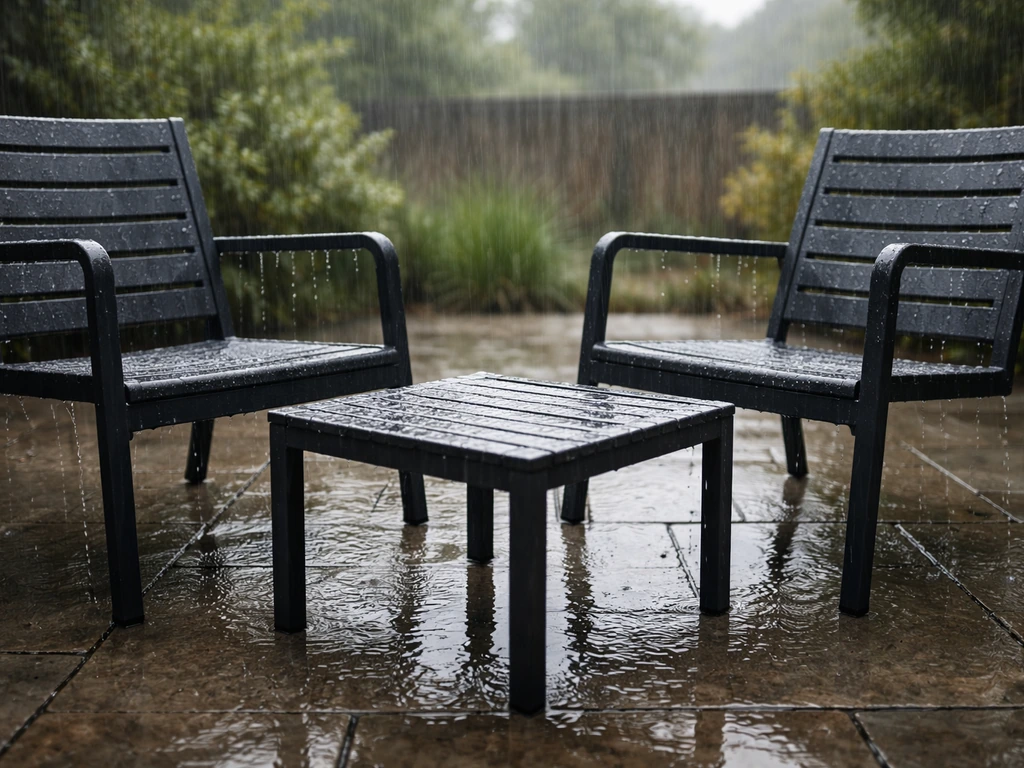
How wet climates actually destroy patio furniture
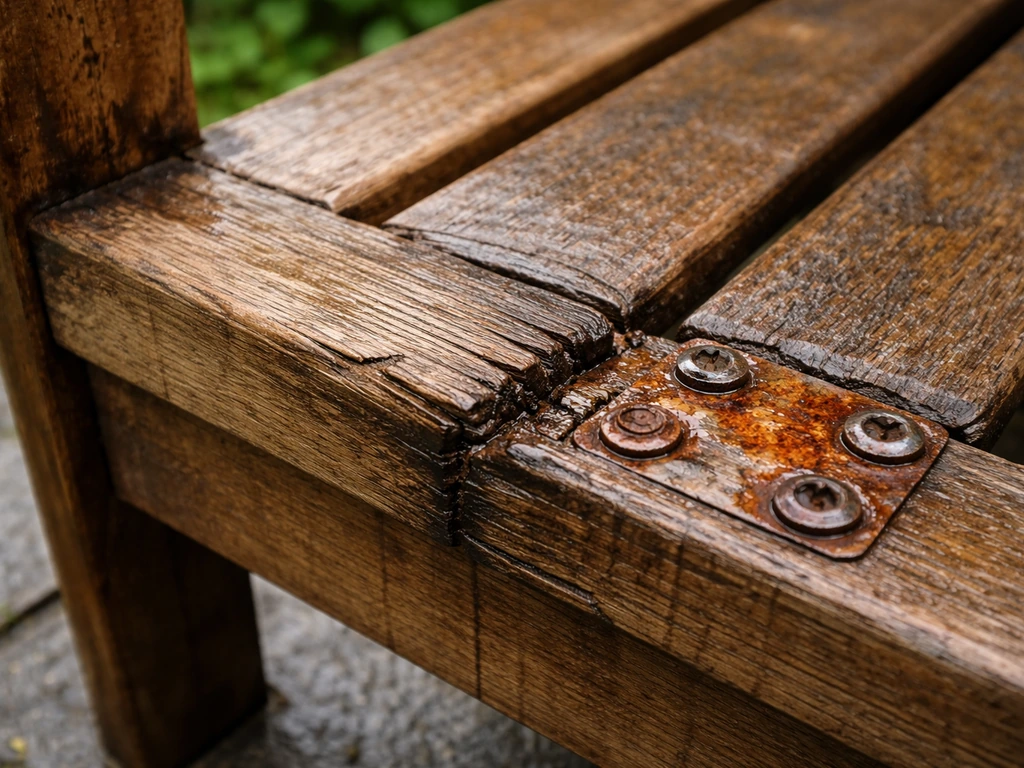
It helps to understand what you're actually fighting before you spend money. Wet climates don't just make furniture wet once in a while, they create a relentless cycle of moisture absorption, swelling, drying, and shrinking that works on every joint, fastener, and fiber over time.
Wood is the most vulnerable. When wood absorbs moisture, it swells. When it dries, it shrinks. That repeated dimensional movement loosens joints and fasteners over years, and if the wood stays wet for extended periods, you get wet rot, a decay process where fungi break down the wood's structural fibers. Untreated outdoor wood furniture can develop rot, mildew, and structural weakening within roughly two to three years in persistently wet conditions. Even treated wood will eventually succumb without proper sealing and maintenance.
Metal has its own failure modes. Plain carbon steel oxidizes rapidly when exposed to moisture and oxygen, that means rust forming not just on the surface but working inward, especially at welds and cut edges. Even powder-coated steel is vulnerable once the coating gets a chip or scratch, because moisture and air infiltrate those micro-cracks and cause corrosion creep under the coating that's invisible until the finish starts bubbling or flaking.
Cushions are where most people lose the battle. Standard foam soaks up water like a sponge and holds it against the fabric and frame for days. That sustained moisture is exactly what mold and mildew need to establish themselves. Fabrics that aren't solution-dyed or treated for water resistance will stain, fade, and eventually degrade from UV and mold exposure combined. And wicker, specifically natural rattan or low-grade synthetic weaves, will fray, soften, or mold when it stays damp for long stretches.
The best materials for rainy and humid patios
Here's a direct look at how the main material categories perform in wet conditions, including where each one succeeds and where it needs help.
Powder-coated aluminum
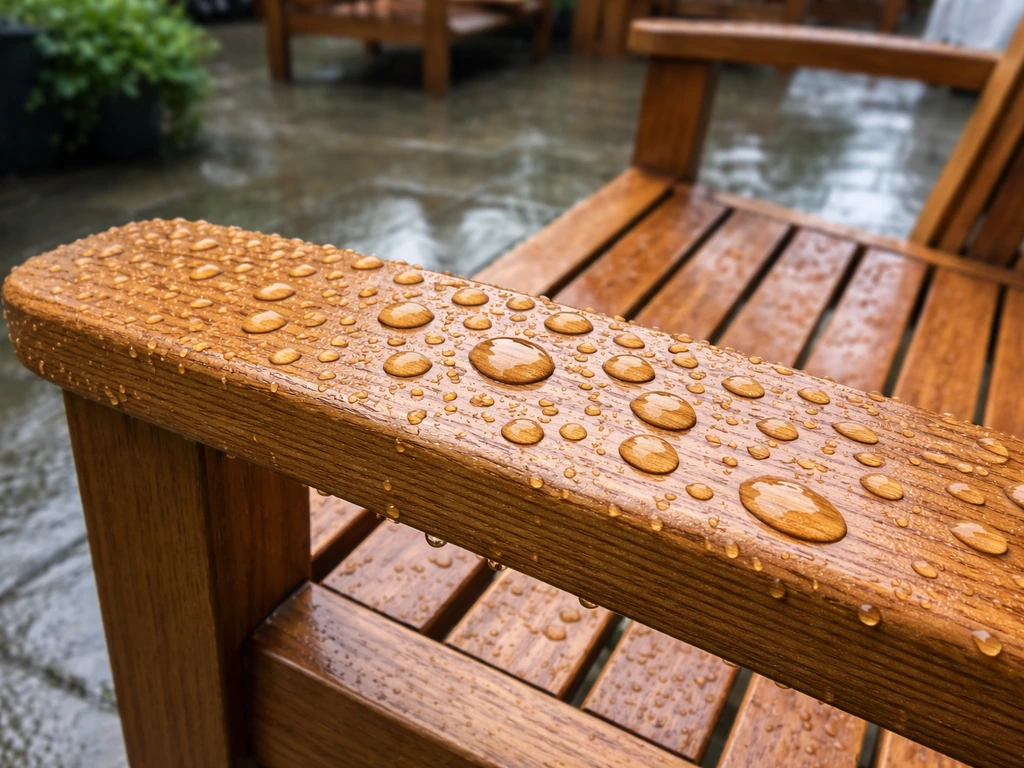
This is my top pick for most wet-climate patios. Aluminum doesn't rust, it oxidizes to form a self-sealing layer that actually protects it further. Add a quality powder coat finish and you get something that's genuinely low maintenance and corrosion resistant. The catch is that powder coating is only as good as the prep work and curing behind it. Cheap powder coat applied over contaminated or poorly prepped aluminum will fail, and once moisture gets into a chip or edge crack, it creeps under the coating. So when you're buying, look for brands that are specific about their coating process and offer a written warranty on the finish, at least two years, and ideally more. One thing to know: dirty rainwater drying in direct sun can leave staining on powder-coated surfaces, so a quick rinse now and then matters.
Teak and naturally rot-resistant woods
Teak is the gold standard for wet-climate wood furniture, and the reason is its natural oil content. Those oils repel water and inhibit the fungi that cause rot, which is why teak is described as extremely rot-resistant even without additional treatment. It will gray over time if left untreated, which is purely cosmetic, the wood itself stays sound. Other naturally resistant species like shorea and eucalyptus can work, but their oil content and density vary more than teak does. What you want to avoid is furniture labeled generically as 'hardwood' or 'solid wood' without specifying the species. Pressure-treated pine can work for budget applications, but make sure it's rated for above-ground use (like an Adirondack chair) rather than ground-contact grade, and it still needs sealing to perform well long-term.
HDPE resin wicker and all-weather wicker
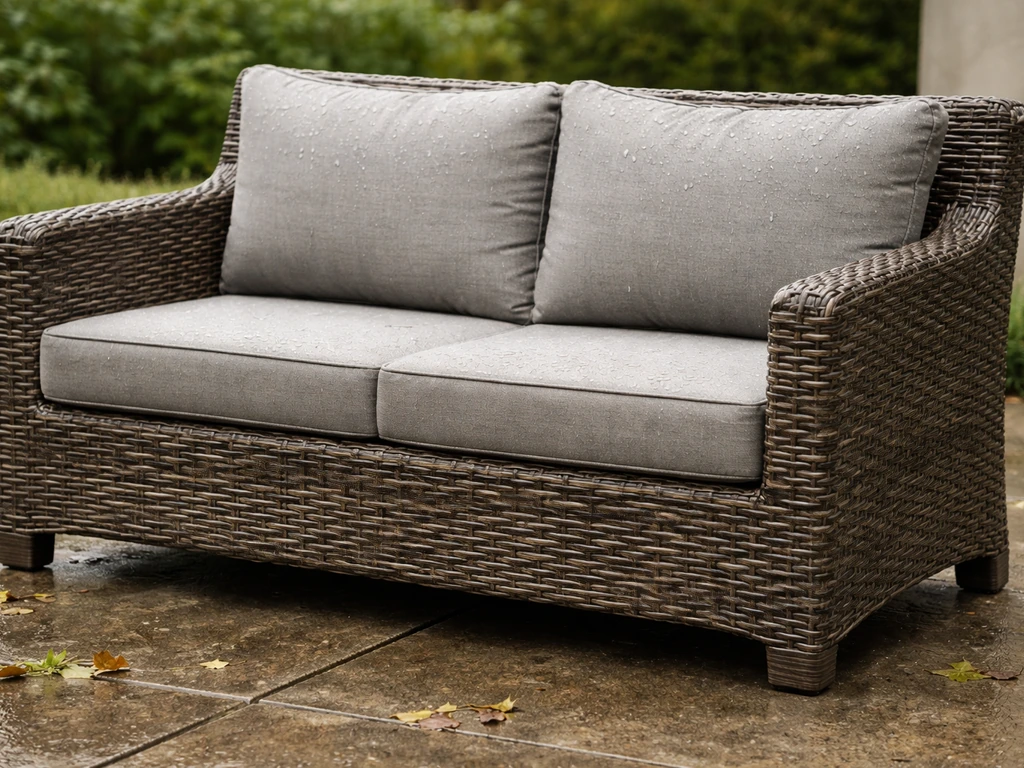
Synthetic resin wicker made from high-density polyethylene is the right call if you love the look of wicker but live somewhere wet. Natural rattan and low-grade PE wicker both deteriorate in persistent humidity, they soften, fray, and mold. Quality HDPE resin wicker is UV-stabilized, doesn't absorb moisture, and is woven around a rust-resistant aluminum frame. The frame underneath matters enormously: resin wicker over a steel frame is a wet-climate liability because water gets inside the weave and accelerates rust on the frame. After rain, check that water isn't pooling inside any hollow frame sections, and drain it if it is.
Wrought iron and steel
Wrought iron is heavy, stable, and classically attractive, but it's a high-maintenance choice in wet climates. It will rust without consistent attention, and even well-finished iron needs annual touch-ups and re-coating in rainy environments. Powder-coated steel is better than bare or painted steel, but it still doesn't match aluminum for genuine corrosion resistance. If you're buying steel furniture for a wet patio, treat it as a material that requires real upkeep rather than a set-and-forget choice.
Composite and recycled plastic lumber
HDPE composite furniture (often sold as recycled plastic lumber) is probably the most bulletproof option in terms of moisture resistance. It doesn't rot, doesn't rust, doesn't absorb water, and holds its color without painting or sealing. The trade-off is that it can feel heavy and plasticky compared to wood or metal, and it expands and contracts with temperature more than wood does. For coastal and tropical climates where humidity and rain are relentless, it's worth serious consideration.
| Material | Rust/Rot Resistance | Maintenance Level | Best For | Watch Out For |
|---|---|---|---|---|
| Powder-coated aluminum | Excellent | Low | Most wet patios, year-round exposure | Chip repair, coating quality |
| Teak | Excellent | Low to medium | Classic look, long-term investment | Cost, graying without oiling |
| HDPE resin wicker | Good (frame matters) | Low | Casual, coastal, humid climates | Steel frames underneath |
| HDPE composite/recycled plastic | Excellent | Very low | Coastal, tropical, maximum neglect | Aesthetic, thermal expansion |
| Wrought iron / steel | Poor to fair | High | Covered patios, seasonal climates | Rust without consistent upkeep |
| Untreated softwood | Poor | High | Avoid in wet climates | Rot within 2-3 years |
Construction details that actually matter in the rain
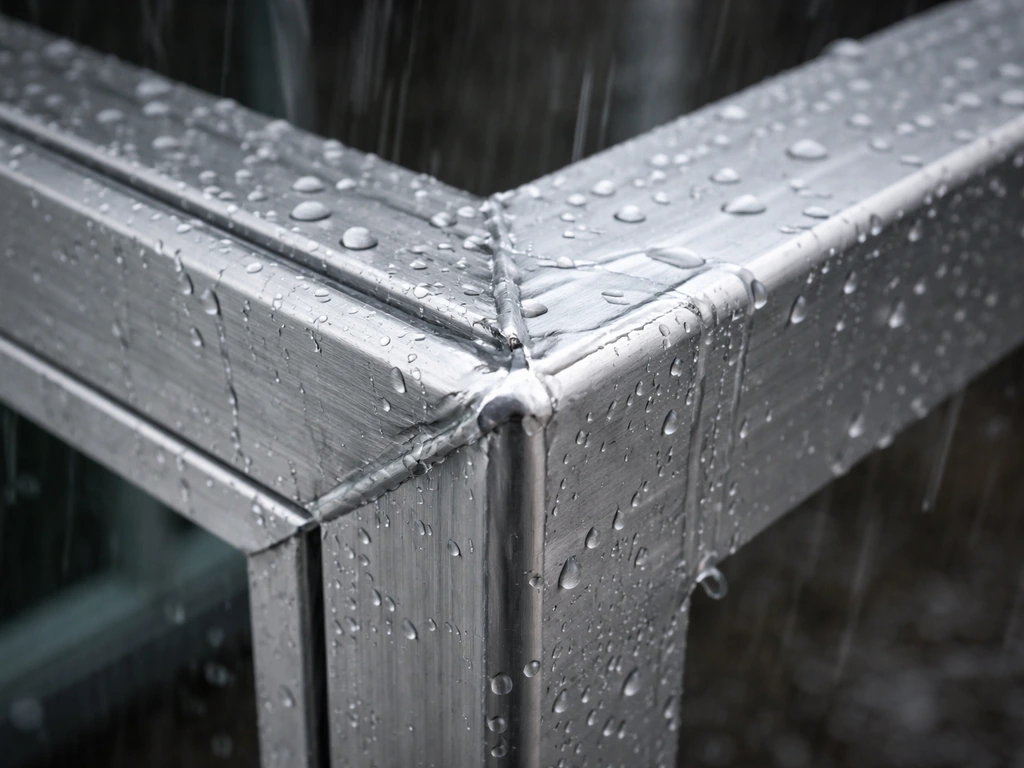
Material choice is only half the story. The way a piece is built determines whether it sheds water or holds it against every vulnerable surface.
Frames, joints, and fasteners
Look for welded aluminum frames rather than bolted-together sections, welds eliminate the gaps and threads where water sits and initiates corrosion. When bolts and screws are used, they need to be stainless steel. Plain carbon steel fasteners oxidize fast when exposed to moisture and oxygen, and a rusting screw can stain and damage the surrounding material even on an otherwise rust-proof frame. For any furniture near saltwater or in a very high-humidity coastal environment, marine-grade 316 stainless steel fasteners are worth the premium, 316 stainless has molybdenum added to resist pitting corrosion in chloride-heavy air that regular stainless can't handle.
Drainage and slat design
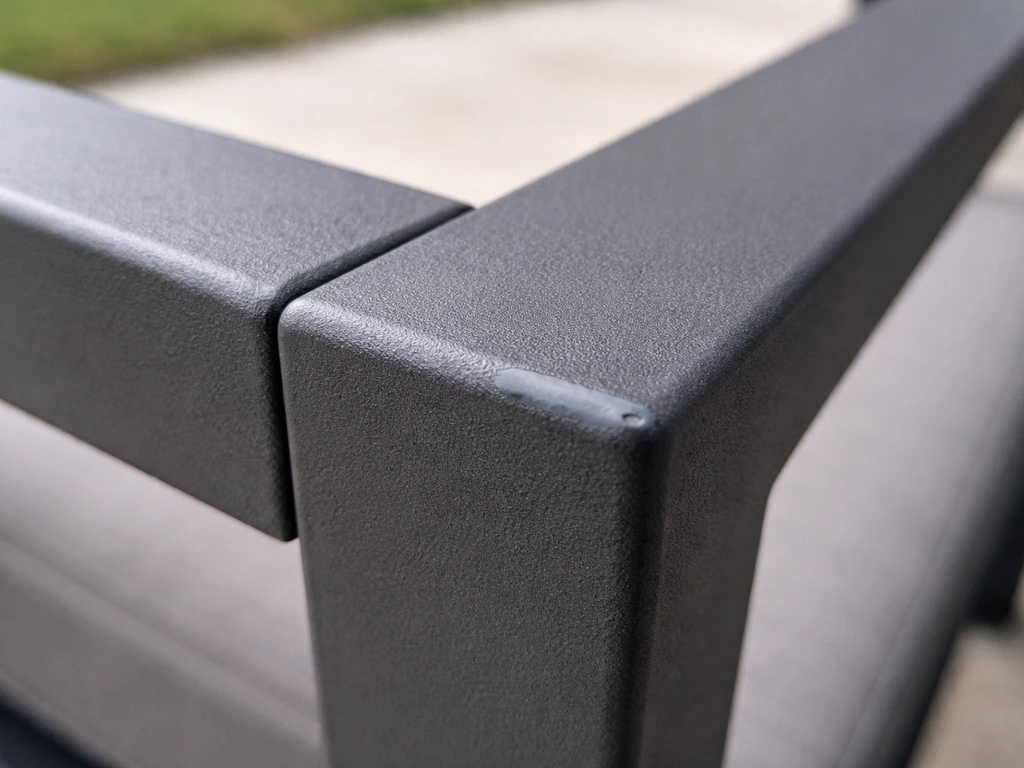
Any seat or table surface that holds water is a problem. Wide slats with gaps between them, sling-style seating that lets rain fall through, and any chair design that avoids flat horizontal surfaces will dramatically reduce how much standing water accumulates. Check the undersides of cushion platforms, seat pans, and frame junctions, these are where water pools and stays. On hollow frames, drainage holes at the low points of each section are critical; without them, water fills the tubes and accelerates rust from the inside out.
Finishes and coatings
Quality powder coating on aluminum outperforms liquid paint in durability and corrosion resistance when it's applied correctly over properly prepped metal. But the edges, holes, and cut ends of frames are where coating is thinnest and most likely to fail first. Ask manufacturers whether cut edges are treated or sealed, and inspect those areas closely on display models. For wood furniture, look for factory-applied sealants or oil treatments, and confirm the product can be re-applied at home. Teak that's been left bare will still resist rot, but annual teak oil or sealant keeps the surface from absorbing surface contaminants.
Best furniture styles for wet climates
Not every style of patio furniture makes equal sense in a rainy climate. Here's how to think about each category.
Sling dining and lounge chairs
Sling seating, where the seat and back are a single stretched fabric panel over an aluminum frame, is one of the smartest choices for wet climates. There's no cushion to waterlog and no seat pan to collect water. Textilene, a polyester fabric woven around an acrylic thread, is a common sling material that's water-permeable by design: rain passes straight through rather than sitting on top. Sunbrella sling fabric is 100% solution-dyed acrylic, mildew-resistant, and breathable, which also helps prevent condensation buildup. These chairs can get rained on and be ready to sit in quickly once they dry, which makes them ideal for uncovered patios or anywhere rain comes without warning.
Conversation sets and sectionals
Deep-seat conversation furniture is popular, but it's also the category most likely to give you cushion and mildew problems in wet climates. The volume of cushion foam involved is large, drying time after rain is long, and most conversation sets are left outside between uses. If you go this route, the foam and fabric choices become the critical variables (more on that below), and you should plan for a consistent cover and storage routine. Sets with removable cushions stored indoors or in a weatherproof deck box are far more practical in rainy climates than sets where the cushions are semi-fixed.
Dining sets
For a wet-climate dining setup, a slatted aluminum or teak table with aluminum sling chairs is close to ideal. The table surface drains, the chairs drain and dry fast, and the whole ensemble can sit uncovered through a rainstorm without damage. Avoid glass tabletops with metal frames that have open edge channels, water sits in those tracks and works on the frame continuously. Concrete and porcelain tabletops are excellent for wet climates and essentially impervious to moisture.
Lounge chairs and chaises
Chaise lounges work well in wet climates if they have a sling or perforated seat surface rather than a thick cushion platform. Aluminum frames with textilene or Sunbrella sling surfaces are purpose-built for poolside and rainy-climate use. If you want cushioned chaises, choose ones with quick-dry foam and store cushions when they aren't in use.
Cushions, fabrics, and covers that won't grow mold
This is where most people make the most expensive mistakes. The wrong cushion setup in a wet climate means re-buying cushions every two or three years, dealing with persistent mold smell, or just giving up and removing cushions entirely.
Foam: open-cell and quick-dry construction
Standard closed-cell foam resists water at the surface but traps any moisture that does get in, and in a humid environment, moisture gets in. The result is foam that stays wet inside for days after rain, which is exactly the condition mold needs. Quick-dry or reticulated open-cell foam has a highly porous structure that lets water and air move through it freely, so the foam drains and dries instead of staying waterlogged. Look for cushions that explicitly call out quick-dry or open-cell foam construction, and check whether the cushion has drainage holes in the fabric envelope. Those holes matter: proper drainage combined with open-cell foam is the combination that genuinely prevents mildew rather than just slowing it down.
Fabric: solution-dyed acrylic is worth paying for
Solution-dyed acrylic is the benchmark for outdoor upholstery fabric in wet climates. Sunbrella is the most recognized brand, but other solution-dyed acrylics like Perennials perform similarly, mildew-resistant, UV-stable, stain-resistant, and bleach-cleanable. The 'solution-dyed' part matters because the color is in the fiber itself rather than applied to the surface, so it doesn't fade from UV and the dye process doesn't create a surface coating that moisture can degrade. Avoid fabrics that are described only as 'water-resistant' without mildew resistance claims, water resistance alone just means the fabric sheds surface water, not that it resists the mold that grows in persistent humidity.
Furniture covers: breathable beats waterproof
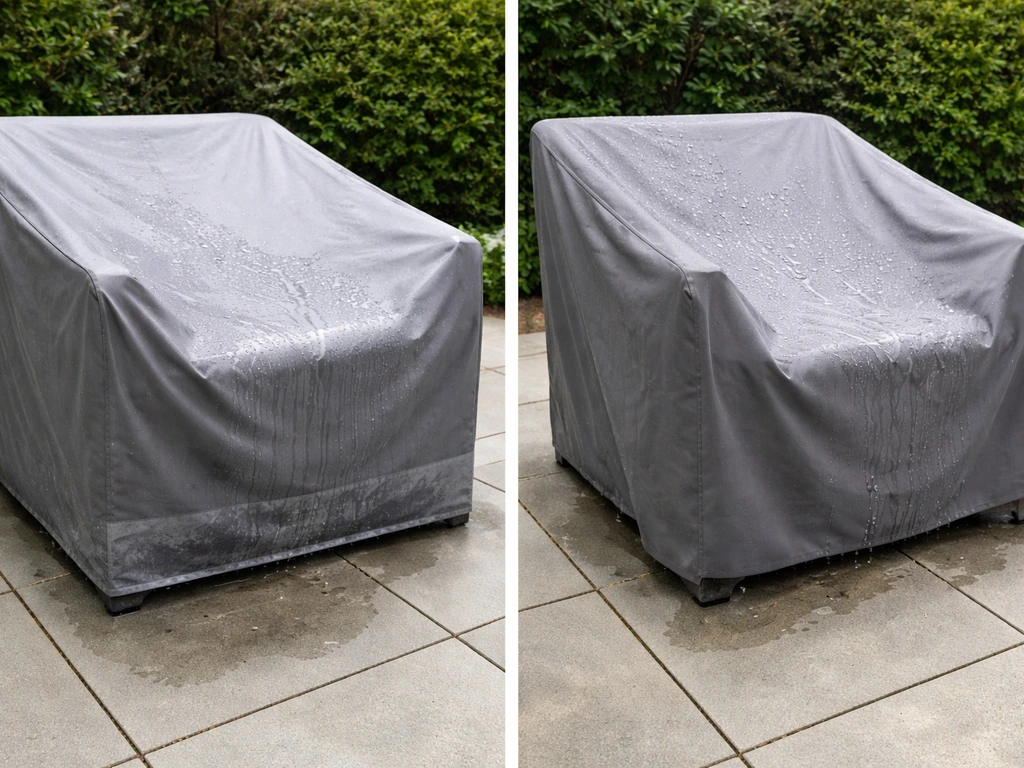
This is counterintuitive, but a fully waterproof cover is often worse for wet-climate furniture than a breathable water-resistant one. A sealed cover traps condensation and humidity underneath, which creates exactly the dark, moist environment where mold thrives on cushions, fabric, and wood. Breathable covers with a membrane that sheds rain but allows moisture vapor to escape outperform impermeable covers in humid climates. Shield Outdoor covers describe breathable cover features intended to shed rain while venting moisture to reduce mold and mildew buildup breathable water-resistant. The practical rule: in a climate with heavy rain, a quality breathable cover beats a cheap waterproof tarp. Always let furniture dry before covering it, covering damp furniture seals that moisture in.
A realistic maintenance routine for wet-climate furniture
Even the best materials need some attention in wet climates. The good news is that the right furniture dramatically reduces what you have to do, and the routine is straightforward if you build habits around it.
Regular cleaning
For aluminum frames, a wipe-down with a damp cloth every few weeks removes the dirty rainwater residue that can stain powder coat when it dries in the sun. Mild soap and water handles most grime. For teak, an annual cleaning with teak cleaner before re-oiling or sealing keeps the surface from becoming discolored and re-opens the wood grain to accept the sealant. Resin wicker needs occasional rinsing to flush accumulated debris from the weave, and if your frame has hollow sections, check that no water has pooled inside after heavy rain.
Cushions and fabric
Stand cushions on edge after rain so they drain and dry through both faces. If you see early mildew spots on solution-dyed acrylic fabric, a diluted bleach solution (Sunbrella and Perennials both support this) will clean it without damaging the fiber. Let everything dry completely before stacking or storing cushions, covering or boxing damp cushions guarantees mildew. In persistently rainy seasons, consider storing cushions in a waterproof deck box between uses rather than leaving them out.
Sealing, coating, and touch-ups
Inspect powder-coated frames at the start and end of each season for chips, scratches, and edge wear. Touch up damaged spots immediately with color-matched touch-up paint or an automotive rust-inhibiting primer, don't wait, because moisture creep under a powder coat chip moves faster than you'd expect. For iron or steel furniture, a full repaint or re-coating every one to two years in wet climates isn't excessive; it's what keeps the investment alive. Teak and other wood furniture should be re-sealed or re-oiled annually, ideally before the rainy season starts.
Seasonal storage and cover strategy
If you're in a climate with a distinct rainy season or cold wet winters, getting furniture off the patio during that period dramatically extends its life. For furniture that stays out year-round, which is common in mild but persistently wet climates like the Pacific Northwest or Gulf Coast, a breathable cover during extended absences and storms is the best middle ground. For winter weather specifically, many of the same “low moisture retention” choices and breathable cover rules apply, but you also want to check cold-weather rust and finish durability for your specific setup best patio furniture for winter weather. Before covering for a longer period, wipe frames down, dry or store cushions separately, and make sure no water is pooled in any frame sections.
Matching the right furniture to your specific patio and exposure level
The 'best' wet-climate furniture isn't one-size-fits-all. Your exposure level, patio size, and how much maintenance you're willing to do all change the answer.
Covered vs. uncovered patios
If your patio has a roof, pergola with roof panels, or substantial overhead cover, you have much more flexibility. Covered patios shed the direct rain load, which is the primary stress on furniture. You can use a wider range of materials with less aggressive maintenance, including steel furniture that would struggle in a fully exposed location. An uncovered patio in a rainy climate is where material selection becomes non-negotiable, aluminum, teak, HDPE composites, and resin wicker over aluminum frames are the options to focus on.
Small patios vs. large outdoor spaces
On a small patio, you can more easily bring cushions inside, use a single furniture cover, and store pieces during storm season. That flexibility lets you invest in better-looking furniture (like teak dining chairs) that you actively manage. On a large patio or pool deck where convenience drives the decision to leave everything out, buy for maximum neglect tolerance: HDPE composite, powder-coated aluminum with sling seating, and quick-dry cushions only where necessary.
Budget considerations
Spending more upfront usually makes sense in wet climates because the cost difference between cheap and quality furniture compounds over replacement cycles. Budget wicker over a steel frame, for example, might cost a third of what quality HDPE wicker over aluminum costs, but if it needs replacing in three years instead of ten, the economics flip. If budget is genuinely tight, focus your spending on the material and hardware quality of the frames and buy budget cushions, since cushions are replaceable and frames are what you're really investing in.
Evaluating product claims and warranties
Marketing terms like 'weatherproof,' 'all-weather,' and 'rust-resistant' are applied loosely. Look for patio furniture that is weatherproof in construction and materials, not just in marketing terms like “all-weather.”. Here's how to evaluate them more honestly: ask for the frame material and alloy grade (6061 aluminum is better than unspecified 'aluminum alloy'), confirm whether wicker is HDPE over an aluminum frame specifically, ask about fastener material (stainless steel versus unspecified), and request the powder coat warranty in writing. A manufacturer that warrants the powder coat finish for two or more years and specifies the conditions under which the warranty applies is a better signal than generic weather-resistance language. For coastal or salt-air environments specifically, ask about 316 stainless hardware and marine-grade coating processes, these are details that separate genuine marine-rated furniture from furniture that's just marketed at the coast.
If you're deciding between related scenarios, such as furniture that sits through a cold wet winter versus a consistently hot and humid summer, or furniture for a specific windy midwest patio versus a covered coastal porch, the same core principles apply: prioritize drainage design, corrosion-resistant materials, and finishes with documented warranties. If you live in the Chicago area, focus on patio furniture designed for heavy rain, humidity, and temperature swings midwest patio. The material that fits your specific exposure level, your maintenance willingness, and your replacement budget is the right choice, not the one with the most aggressive weather-resistance marketing.
FAQ
What should I do first if I want the “best patio furniture for wet climates” but I can’t bring pieces inside during storms?
Prioritize drainage design: choose slatted or sling-style tops, welded aluminum frames, and cushions that can be stood on edge to fully dry. Also, plan for a breathable cover that only protects during extended absences, since covering damp furniture traps condensation and accelerates mildew.
Is powder-coated aluminum actually better than stainless steel for wet climates?
For most rainy and humid patios, powder-coated aluminum is excellent because it resists corrosion even if water lingers briefly, and it is lightweight. Stainless steel is also corrosion-resistant, but it can still suffer issues if it is part of a mixed-metal setup with untreated steel nearby, so mixed materials and fasteners still matter.
Can I use resin wicker in a wet climate if the frame is steel but the wicker looks high-end?
Avoid it. Resin wicker over a steel frame is a common failure pattern because water migrates into the weave and stays in contact with the steel, accelerating rust from inside the furniture. If the frame is not aluminum (or another corrosion-resistant material), pick sling seating or HDPE composite instead.
How often should I rinse off powder-coated aluminum in heavy rain areas?
After periods of frequent rain, a quick freshwater rinse helps prevent staining from dirty rainwater residues that dry and bake in sun. You do not need harsh cleaning, just a rinse and a mild soap wipe-down every few weeks, especially near roads or industrial areas.
What’s the difference between solution-dyed acrylic and “water-resistant” fabric for wet climates?
Solution-dyed acrylic resists mold and mildew in persistent humidity because the fabric is engineered to handle both UV and moisture exposure. “Water-resistant” usually means it sheds surface water, it does not guarantee resistance to mildew growth that thrives after water soaks in and stays trapped.
Should I choose closed-cell foam or open-cell foam for cushions if my patio is frequently humid?
Open-cell (including reticulated quick-dry) foam is the safer choice in wet climates because it drains and dries faster when water gets in. Closed-cell foam can block water initially but can also trap moisture inside, leaving cushions damp for days after storms.
Are “fully waterproof” covers a bad idea for patio furniture in wet climates?
They can be, because impermeable covers trap humidity and condensation underneath, creating the wet environment mildew needs. Use breathable covers with a membrane that sheds rain but lets vapor escape, and always dry furniture fully before covering.
How do I tell if a powder-coated frame was prepped well enough to last?
Look for detail-level questions: ask whether the manufacturer describes their coating prep process (degreasing, pretreatment, and curing) and whether they provide a written powder-coat warranty. Also inspect cut edges, weld seams, and hardware mounting points, those are where coating is typically thinnest and failure starts.
What cushion storage approach works best during a long rainy season?
Store cushions indoors or in a waterproof deck box between uses, especially when rain is continuous. If you must leave them outside, stand them on edge to dry after storms, and never stack or box cushions while they are still damp to prevent hidden mildew inside the stack.
How can I prevent mildew on already-mildewed cushions without damaging the fabric?
Treat early mildew spots promptly using a diluted bleach solution appropriate for outdoor solution-dyed acrylic, then rinse and let the cushions fully dry. Avoid blanket soaking that saturates frame areas, and re-check that open-cell foam and drainage holes are actually clearing water.
What table surface is best for wet climates, and is glass ever a good option?
Slatted aluminum or teak tops drain more reliably, and sling chair designs reduce standing water. Glass tabletops can work only if the design avoids water-trapping channels around the metal frame, because trapped water keeps corrosion active where the frame meets the tabletop.
How do I handle winter wet conditions if I also get freeze-thaw cycles?
In cold wet climates, the biggest risk is trapped water in frames and cushions, because freeze-thaw can widen cracks and break down coatings. Before winter, rinse, dry, inspect for chips, ensure drainage holes are clear, and store cushions separately if possible.
Is it worth buying expensive teak for wet climates if I do not want to re-oil every year?
Teak is naturally rot-resistant, but surface care still affects appearance and cleanliness. If you skip annual re-oiling or sealing, the wood will gray faster and can absorb stains more readily, so “low rot” does not equal “no maintenance.”
What is the most common expensive mistake when shopping for wet-climate patio sets?
Buying a deep-seat conversation set where cushions stay outdoors between storms. The cushion volume takes longer to dry, and many people do not have a routine to drain and store cushions, leading to mildew odor and premature cushion replacement.
What measurements or setup choices should I consider for a rainy patio layout?
Choose furniture that avoids flat horizontal surfaces where water pools, and confirm there is space for airflow around cushions after rain. On larger patios, prioritize sets that can be left out safely with quick-dry cushions, rather than relying on frequent manual drying.
Next Articles
Patio Furniture That Is Weatherproof: Buying Guide
Weatherproof patio furniture buying guide: materials, UV and rust resistance, what to avoid, and maintenance for lasting
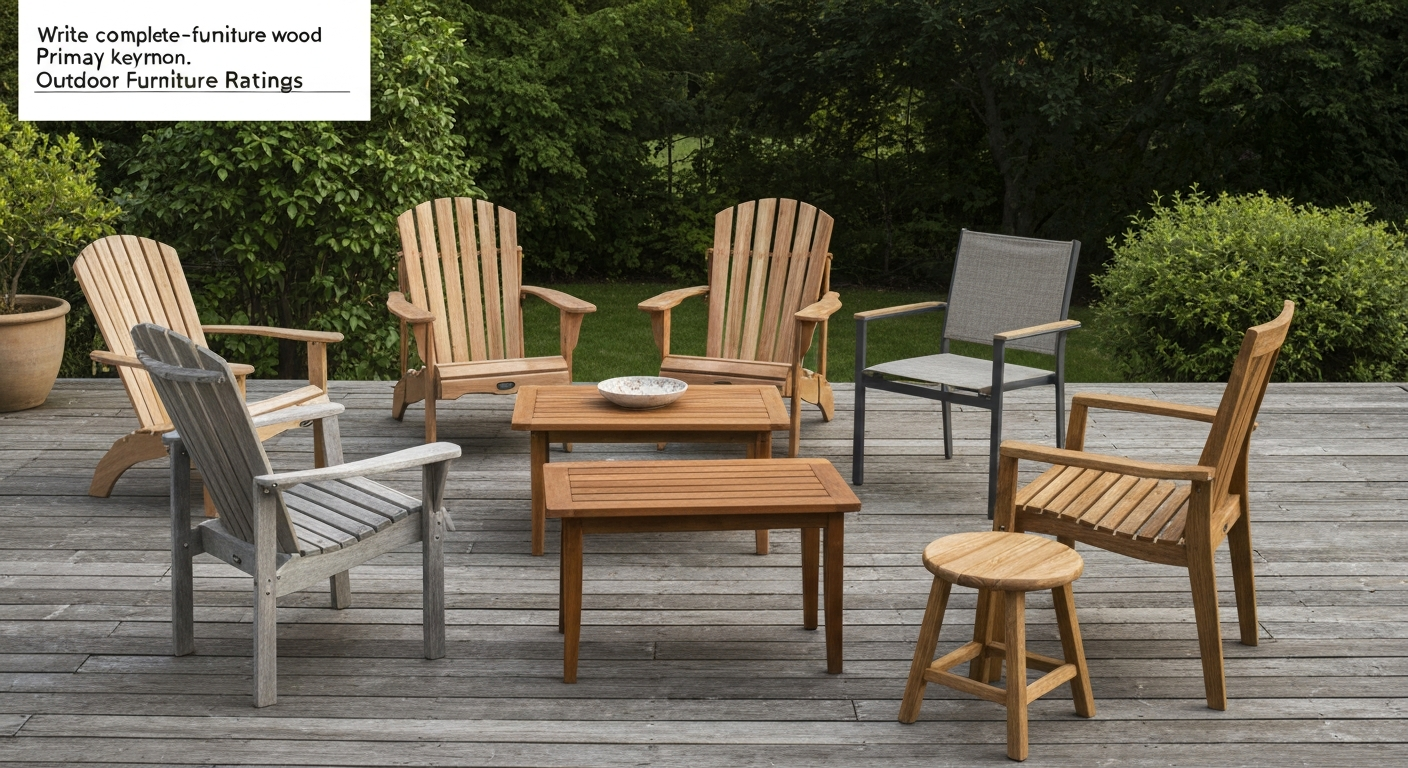
Common Patio Furniture Wood: Best Choices, Care & Tips
Compare common patio furniture wood types, teak, cedar, redwood, oak, with durability, finishes, and care tips.
Best Wood Patio Stain: Choosing Durable, Low-VOC Finishes
Compare and choose the best wood patio stain: durability, finish, climate tips, prep, and top product picks.