
The best patio furniture for long-term performance comes down to matching the right material to your specific climate, then checking the construction details that actually determine whether a set lasts 2 seasons or 20. For most homeowners, that means aluminum frames with Sunbrella-grade cushion fabric in humid or coastal areas, HDPE lumber (like POLYWOOD) for freeze-thaw or wet climates, powder-coated steel for dry inland climates, and quality all-weather wicker only when it's paired with a rust-resistant aluminum or steel frame underneath. The material on the tag matters less than how it's built, what's holding it together, and whether you can actually maintain it.
Do It Best Patio Furniture Guide: Choose the Right Set

Theo Tierney
13 Jun 2026
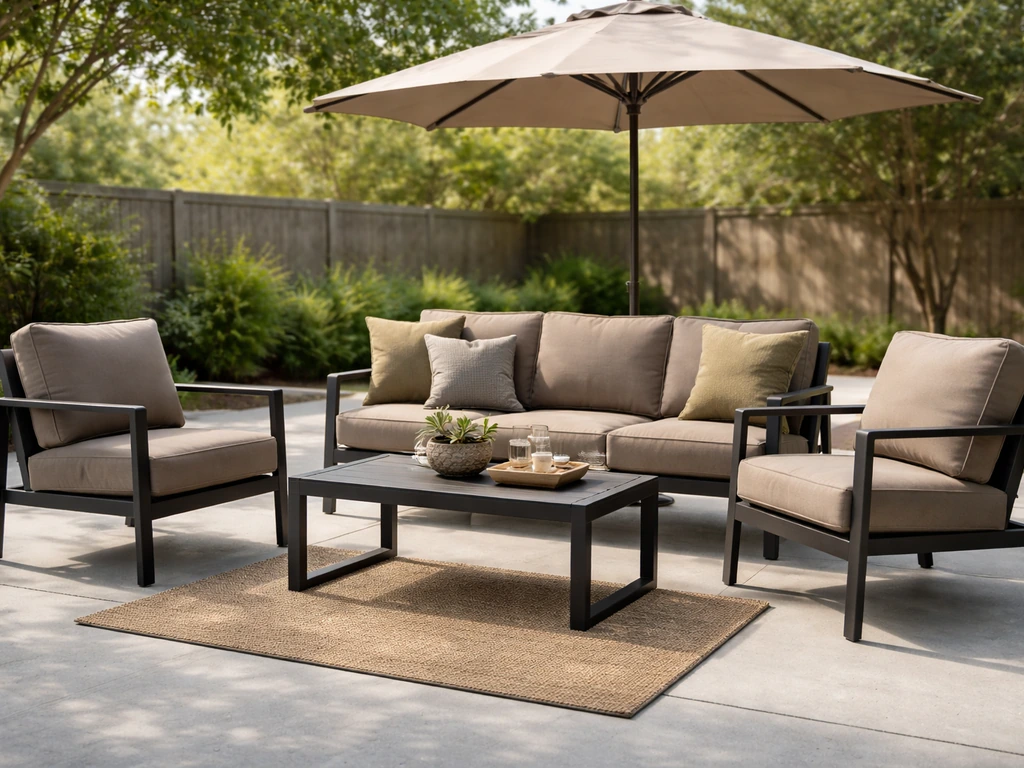
How to choose patio furniture that truly lasts
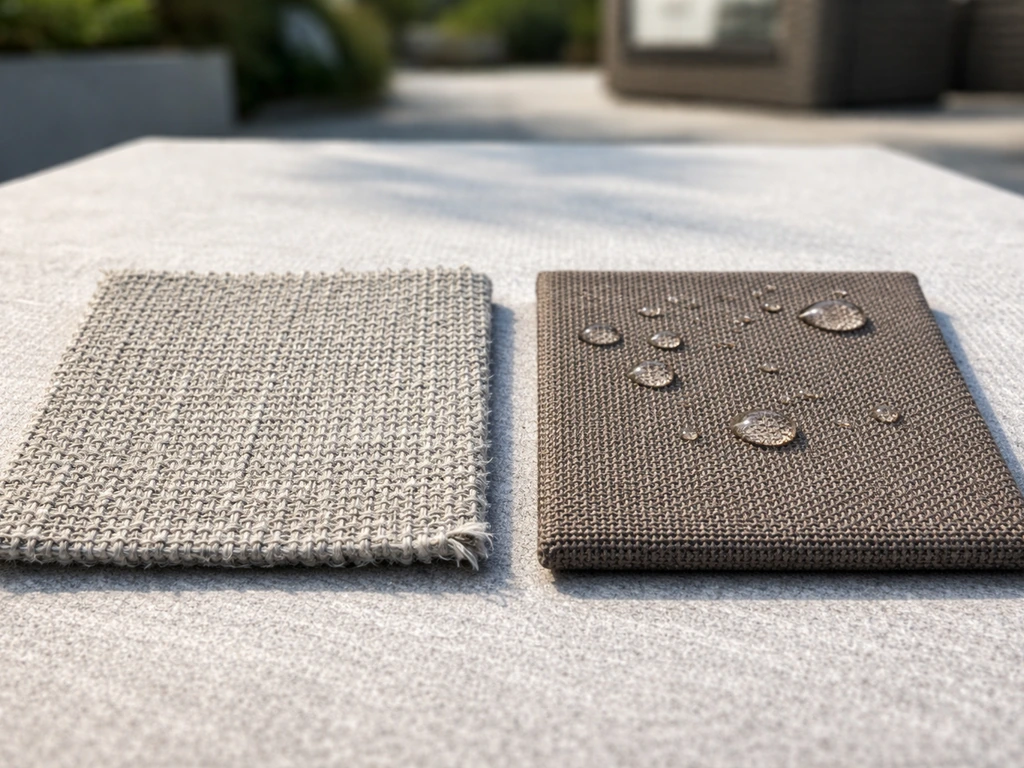
Most people shop patio furniture the wrong way. They find something that looks good in the showroom or in a catalog photo, buy it, and then wonder why it's faded, rusted, or wobbling after two Florida summers or one Minnesota winter. The right starting point isn't style or price. It's asking: what is this actually going to go through?
Think through your specific exposure before you spend a dollar. Do you get direct, all-day sun? Prolonged humidity or salt air? Hard freezes? Heavy rain followed by dry heat? Each of those conditions punishes different materials in different ways. UV destroys unprotected plastics and fades slings. Humidity and salt air corrode fasteners and frames. Freeze-thaw cycles crack wood and warp composites that aren't designed for them. Matching material to exposure is the single highest-leverage decision you can make.
After climate fit, look at construction quality in this order: fasteners and frame joints first, finish quality second, fabric and cushion construction third. A beautiful finish on a frame held together with cheap zinc hardware will fail at the joints. A premium frame with a thin polyester cushion will become unusable in one rainy season. Get the hierarchy right.
- Identify your climate type before choosing any material: coastal, humid subtropical, arid, or freeze-thaw
- Check where the furniture will actually live: full sun, partial shade, covered porch, or open yard
- Prioritize frame and fastener quality over surface finish or cushion aesthetics
- Look for brands that publish actual warranty terms with specific coverage periods, not vague language
- Ask what fails first on each material, not just what it's made of
Best materials by climate: wood, metal, wicker, and composite
Each material has a real sweet spot and a real failure mode. Here's the honest breakdown.
Wood
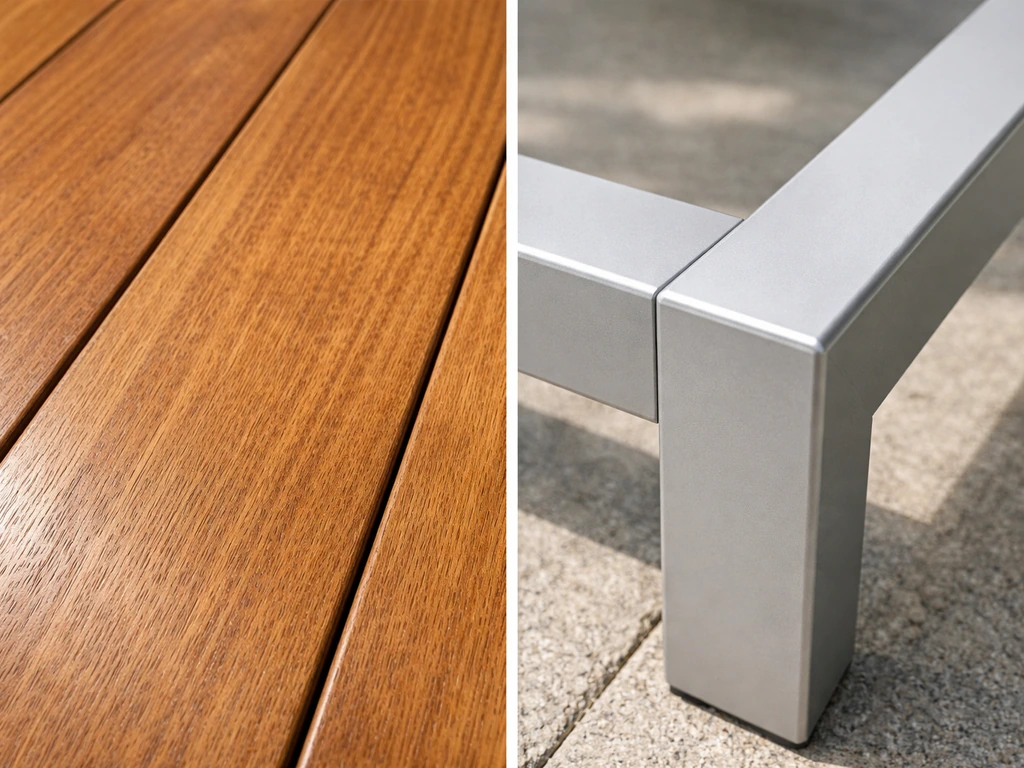
Teak is the gold standard of outdoor wood because of its high natural oil content and tight grain, which resists water absorption and insect damage. Quality teak furniture can genuinely last decades with minimal maintenance if you let it silver naturally, or with periodic oiling if you want to keep the honey color. The problem is price: good teak is expensive, and the market is full of cheaper plantation teak and other tropical hardwoods (shorea, eucalyptus) marketed similarly. Acacia is another popular option, solid but more moisture-sensitive and better suited to covered patios than open exposure. Wood in general is not a great choice for coastal salt air or climates with repeated wet-dry cycles unless you're committed to annual maintenance.
Metal: aluminum vs. steel
Cast aluminum is the workhorse of the patio furniture world for good reason. It doesn't rust, it's lightweight, and when it's powder-coated well, it handles sun, rain, and humidity without complaint. Brands like Tropitone back their aluminum frames with a 15-year residential warranty, which tells you something real about expected lifespan. Wrought iron is heavier and more ornate but will rust if the finish is scratched and left untreated. Powder-coated steel splits the difference in cost, but it's the material most vulnerable to rust if the coating chips, making it better for dry climates (think Arizona or Colorado) than coastal or humid zones.
All-weather wicker and resin
True rattan or natural wicker belongs indoors or in a covered sunroom. What you see sold as outdoor wicker is almost always high-density polyethylene (HDPE) resin woven around a metal frame. The weave quality matters: look for a tight, even weave with no gaps, and check that the core frame is aluminum or powder-coated steel, not bare steel or plastic. Good all-weather wicker handles sun and rain well, but UV exposure over years can make it brittle, especially in climates with intense summer sun. A covered porch extends its life significantly.
Composite (HDPE lumber)
HDPE lumber composites, best known through brands like POLYWOOD and Trex, are the most weather-resistant solid furniture material available at the consumer level. They genuinely don't absorb water, they won't rot, splinter, crack, chip, or peel, and POLYWOOD backs this with a 20-year residential structural warranty. Their hardware (POLYWOOD calls it ClimateTuff) uses marine-grade 18-8 stainless steel fasteners with Xylan corrosion-resistant coating, which is the same grade used on marine hardware. This material is ideal for coastal climates, freeze-thaw regions, and any situation where you'd rather spend zero time on refinishing. The trade-off is that HDPE furniture is heavier than aluminum and the aesthetic is more traditional/Adirondack-style than sleek.
| Material | Best Climate | Biggest Risk | Maintenance Level | Expected Lifespan |
|---|---|---|---|---|
| Teak wood | Moderate, dry or covered | Neglect, salt air | Medium (annual oiling optional) | 20+ years if maintained |
| Cast aluminum | Any, especially humid/coastal | Scratched finish (minor) | Low | 15-20+ years |
| Powder-coated steel | Dry, low-humidity | Rust when finish chips | Medium (inspect/touch up) | 5-12 years |
| All-weather wicker (HDPE weave) | Moderate to humid, covered preferred | UV brittleness over time | Low to medium | 8-15 years |
| HDPE composite (POLYWOOD/Trex) | Any, including coastal/freeze-thaw | Heavier weight, limited styles | Very low | 20+ years |
Comfort, size, and layout: picking the right pieces for your space
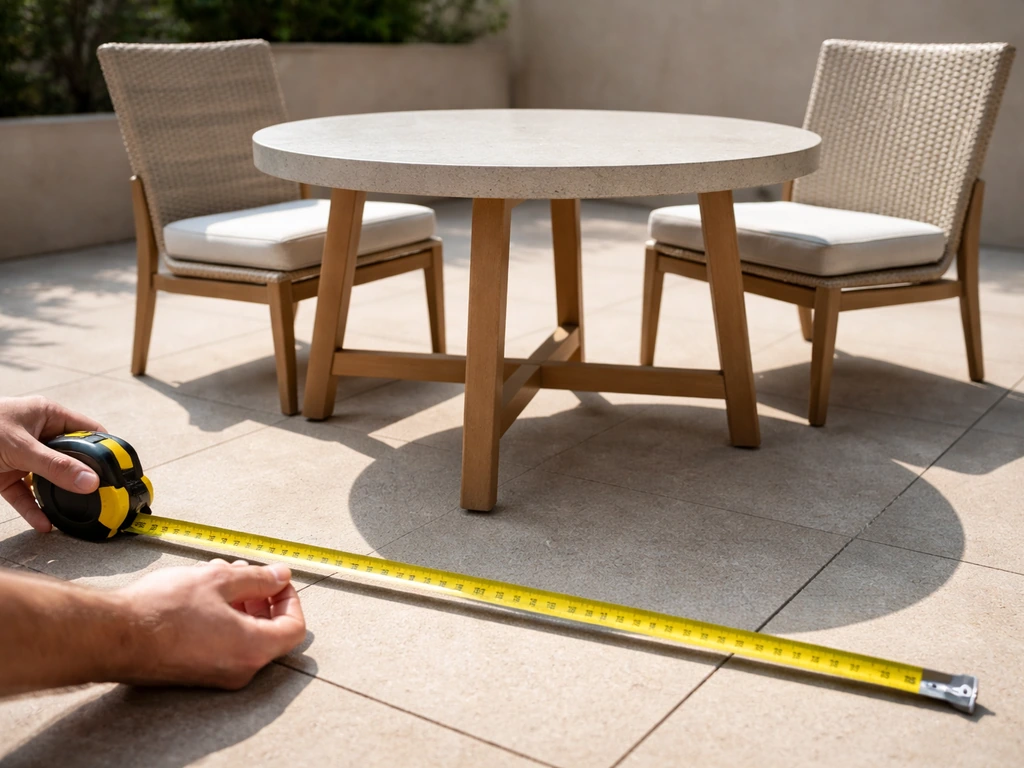
Most people underestimate how much space outdoor furniture actually needs to feel comfortable and function properly. A dining set that looks proportional in a showroom can make a 10x12 patio feel like a storage unit. Measure your space before you shop, then subtract 3 feet on all sides of any table or seating group for circulation room. That 36 inches is not excessive. It's what allows you to pull a chair out and stand up without bumping into a wall or railing.
For dining sets, a 48-inch round table seats 4 comfortably; a 60-inch round handles 6. Rectangular tables need about 24 inches of width per person on each long side. For lounge seating, standard deep-seat chairs run 30-34 inches deep and work best with cushion thickness of at least 4 inches for real comfort. Sling chairs are shallower (around 22-26 inches) and more supportive for upright sitting, which makes them better for dining or conversation sets where you're not reclining.
Don't forget traffic flow between zones. If you're combining a dining area and a lounge area on the same patio, allow at least 5-6 feet between the two groupings. An ottoman that doubles as a coffee table can save space in a tight lounge area, but make sure it's rated for the weight if you plan to sit on it.
- Measure your patio and mark it with tape before ordering any set
- Leave at least 36 inches of circulation space around tables and seating groups
- Deep-seat cushions should be 4 inches thick minimum for genuine comfort
- Sling chairs work better for dining and conversation; deep-seat for lounging
- 48-inch round table seats 4; 60-inch round seats 6; plan 24 inches per person for rectangular tables
- Account for umbrella base clearance if you plan to add shade
Weather resistance and durability checklists
Frames and fasteners
The fasteners are almost always what fails first, not the frame material itself. Look for stainless steel hardware (18-8 grade or better) on any furniture that will see moisture or salt air. Zinc-plated or uncoated steel screws will rust through in 2-3 seasons in a coastal climate. On aluminum frames, check that welds are smooth and consistent, not porous or rough, which indicates lower casting quality. On powder-coated pieces, look for uniform coverage without thin spots around edges or legs, since those are where chips start.
Finishes
Powder coat is the most durable frame finish for outdoor furniture, outperforming liquid paint in chip resistance and UV stability. Both Trex and POLYWOOD warrant their powder coat finish against peeling for 5 years. That's a reasonable benchmark: if a brand won't back powder coat for at least 3-5 years, treat it as a signal about quality. Anodized aluminum finishes are also durable but less common on residential furniture. Avoid any frame that comes with a painted-on finish rather than a baked powder coat, especially if you live in a humid or salty climate.
Cushions and sling fabric
Cushion construction separates good outdoor furniture from furniture that becomes unusable in one rainy season. Look for solution-dyed acrylic fabric, with Sunbrella being the benchmark: it's warranted for 10 years against fade, mold, and mildew under normal exposure. The fill matters too. Closed-cell foam cores repel water; open-cell foam cores absorb it and take days to dry, becoming a mildew factory. Quick-dry foam with wrapped Dacron batting is the right combination for outdoor use. For sling chairs, Trex warrants its sling fabric for 3 years against tears and dimensional instability from sunlight, mildew, and rot. If a brand won't publish any sling warranty, that's a red flag.
- Hardware: 18-8 stainless steel minimum; marine-grade or Xylan-coated for coastal use
- Frame welds: smooth and consistent, no porosity on cast aluminum
- Powder coat: look for brands warranting at least 3-5 years against peeling
- Cushion fabric: solution-dyed acrylic (Sunbrella or equivalent); not polyester
- Cushion fill: closed-cell or quick-dry foam, not standard open-cell foam
- Sling fabric: look for UV, mildew, and tear warranty of at least 3 years
- Zippers: YKK or equivalent quality; avoid cheap plastic zippers that split with UV exposure
Maintenance, cleaning, and storage to extend lifespan
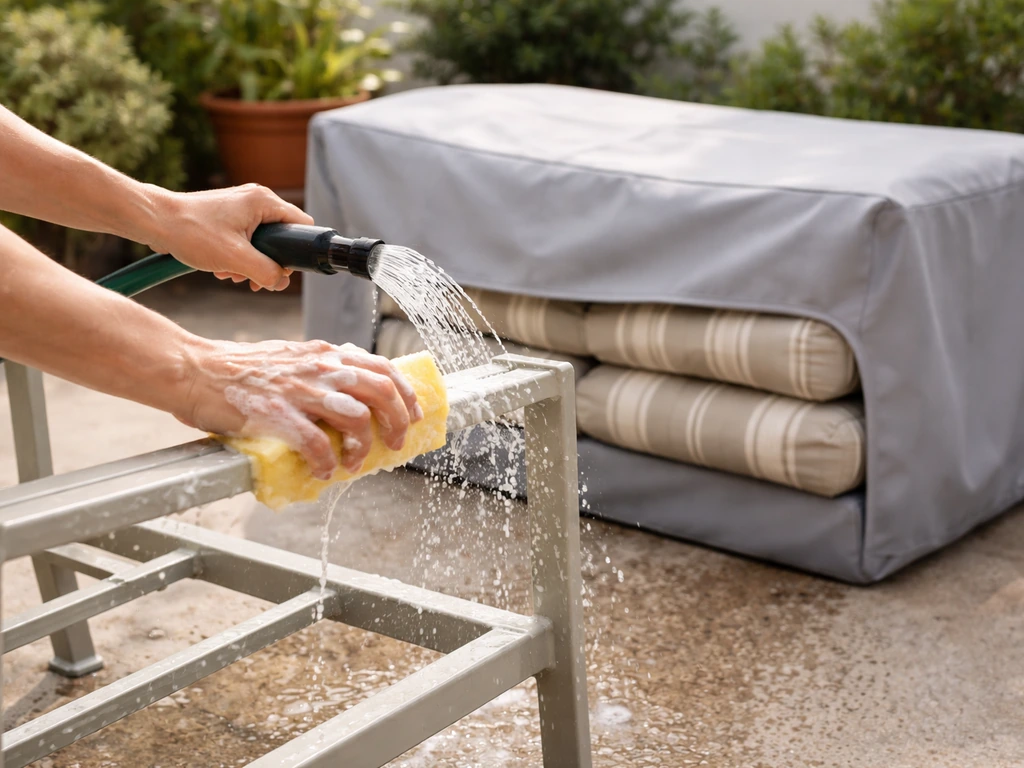
The single biggest predictor of how long outdoor furniture lasts is not material quality. It's whether the owner actually maintains it. Even the best HDPE composite or cast aluminum will degrade faster than expected if it's never cleaned and stored improperly in winter.
For frames, the baseline is simple: rinse or wipe down with mild soap and water a few times per season, and do a thorough rinse after any salt air exposure, chemical fertilizer contact, or heavy pollen season. Tropitone's care guidance calls for mild soap, water, and a fresh water rinse after contact cleaning, which is the right protocol for any powder-coated or anodized aluminum piece. Check fasteners annually. If you see rust around screws or at joint contact points, address it immediately with a rust-inhibiting touch-up, or replace the hardware.
For Sunbrella or solution-dyed acrylic cushions, spot clean with a mild soap solution, rinse thoroughly, and let them air dry before storing. Sunbrella’s upholstery care guide recommends spot-spraying a mild soap-and-water cleaning solution, then rinsing thoroughly, and it also provides mildew and mold removal steps for upholstery fabrics. For mildew (common in humid climates), Sunbrella's care guidance calls for a diluted bleach solution (1 cup bleach per gallon of water with a small amount of dish soap), applied carefully, then rinsed completely. Never store cushions while damp. That's how you grow mildew that won't come out.
Storage habits vary by climate. In freeze-thaw regions, bring cushions inside by October and consider covering frames or moving them to a garage or shed. In hot, dry climates, sun is the bigger enemy than cold: UV covers are worth using year-round on cushions if the furniture is in full sun. In coastal areas, rinsing salt off frames monthly and after storms is not optional if you want finishes to last.
- Clean frames with mild soap and water 2-4 times per season; rinse thoroughly after salt or fertilizer exposure
- Inspect all fasteners and frame joints annually; replace corroded hardware immediately
- Touch up powder coat chips with manufacturer-matched paint to prevent rust spread
- Clean cushion fabric with mild soap solution; use diluted bleach for mildew per Sunbrella's guidelines
- Always dry cushions completely before storage; never store damp
- Use fitted furniture covers for off-season storage or extended periods in direct UV
- In freeze-thaw climates, store cushions inside from late fall through early spring
- For HDPE composite furniture, clean with soap and water; light sanding with 120-grit can restore surface over time
Top features and brands worth buying for long-term results
There are a handful of brands that have genuinely earned their reputation through material quality, construction, and warranty backing. POLYWOOD is the benchmark for HDPE composite furniture: 20-year structural warranty, marine-grade hardware, tested for sun, rain, salt air, and snow. If you want nearly zero-maintenance furniture that can stay outside year-round in almost any climate, POLYWOOD is the honest top pick, especially for traditional and Adirondack styles. The price is higher than big-box imports, but the cost per year of use is almost always lower.
For aluminum, Tropitone is a commercial-quality brand that covers frames for 15 years residentially. Their construction targets the hospitality industry, which means it's built for heavy daily use in all conditions. For those who want sling or mesh seating, Trex Outdoor Furniture offers a solid middle ground with a 5-year powder coat warranty and 3-year sling warranty at a price point more accessible than Tropitone.
Cushion fabric is where you should not compromise: Sunbrella's 10-year fabric warranty is a real differentiator. If you're buying a set that doesn't come with Sunbrella or a comparable solution-dyed acrylic fabric, budget to upgrade the cushions. A frame that lasts 15 years is useless if the cushions fail in year 3 and replacements aren't available.
For budget-conscious shoppers, the best approach is to buy a quality frame (cast aluminum or HDPE composite) at a mid-tier price and immediately upgrade the cushions to Sunbrella grade. If you're searching for the best patio furniture UK, focus on frame materials and cushion grades that match your local weather and maintenance tolerance. That combination typically outperforms a premium-priced set with mediocre cushions. When comparing options more broadly, you'll find that brands carrying must-have features like quick-dry cushion fills, stainless hardware, and published warranty terms stand apart from those competing solely on price or visual appeal. Compare patio furniture by focusing on climate fit, frame finish, and warranty, not just the showroom look. For truly must-have patio furniture, focus on quick-dry cushion fills, stainless hardware, and clear, published warranty terms must have patio furniture.
| Brand/Material | Key Warranty | Best For | Climate Suitability |
|---|---|---|---|
| POLYWOOD (HDPE composite) | 20-year structural, 5-year powder coat | Zero-maintenance, any climate | All climates including coastal, freeze-thaw |
| Tropitone (cast aluminum) | 15-year frame | High-use, luxury outdoor | All climates; excellent for humid/coastal |
| Trex Outdoor Furniture (aluminum/sling) | 5-year powder coat, 3-year sling | Sling seating, moderate budget | Good for most climates; dry or moderate best |
| Sunbrella fabric (cushions) | 10-year fabric performance | All outdoor cushion upholstery | All climates; solution-dyed for UV/mildew resistance |
| Quality teak wood | Varies by brand | Premium aesthetic, covered or dry | Moderate climates; avoid heavy salt air |
Common mistakes to avoid when upgrading patio furniture
Buying the wrong material for your local climate is the most expensive mistake you can make. It's not just that the furniture looks bad after a few years; it's that you're replacing it entirely rather than maintaining it, which is a much bigger cost. Coastal homeowners who buy standard powder-coated steel furniture without checking the hardware type almost always regret it. Humid-climate shoppers who buy cushions with polyester fabric covers find themselves fighting mildew by the second summer.
Another common mistake is ignoring assembly quality. Many mid-range sets arrive with instructions that suggest using the included hardware, which is often under-spec zinc or coated steel. If you're handy, replacing cheap included fasteners with stainless steel equivalents at assembly time costs very little and dramatically improves longevity. Check joint tightness after the first season too: thermal expansion and contraction loosens connections.
Buying a set without confirming cushion replacement availability is a mistake that bites you 3-5 years in. Before you buy, check whether the brand sells replacement cushions for that specific model. Proprietary cushion sizes from discontinued collections leave you with a perfectly good frame and unusable seating. Stick to brands with active replacement parts programs or standard cushion sizes that can be sourced independently.
- Buying powder-coated steel or bare-steel hardware for coastal or humid climates
- Choosing cushions with polyester covers instead of solution-dyed acrylic fabric
- Not measuring the actual patio space before ordering a set
- Using the included assembly hardware without verifying its corrosion resistance
- Not checking whether replacement cushions are available for the specific model
- Storing cushions while still damp, then wondering why there's mildew
- Skipping annual fastener inspection and letting joint corrosion spread to the frame
- Buying for aesthetics first in a climate that will destroy that aesthetic within 2 seasons
- Choosing natural rattan or untreated wicker for an exposed outdoor space
Your next step is straightforward: define your climate type and exposure level, pick the frame material that fits it from the table above, confirm the cushion fabric grade before buying, and measure your space before you commit to any set. That process takes 20 minutes and eliminates the most common reasons people replace patio furniture every 3 years instead of every 15. If you're still deciding, look for the latest patio furniture trends that match your climate and maintenance habits. Once you've matched material to climate and confirmed construction quality, you're buying furniture that actually performs rather than furniture that just looks good in June. If you're shopping for an earl may patio furniture set, start by matching the frame and cushion materials to your climate, then verify warranty and maintenance requirements.
FAQ
Can do it best patio furniture stay outdoors year-round, or should I store it in winter?
That depends on how exposed the set is. In coastal salt air or climates with frequent storms, even “outdoor” cushions should come in or at least be fully covered and kept dry when not in use. If your set stays uncovered in direct sun for most of the day, prioritize solution-dyed acrylic or Sunbrella-grade fabric and quick-dry foam, then plan a seasonal rinse and thorough drying before storage.
How can I tell if a patio set’s fasteners and joints will actually last?
Don’t assume the tag is enough. Verify the frame finish process (baked powder coat on aluminum/steel), and check that hardware is stainless grade at minimum (18-8 or better) or marine-grade equivalents. A set can have “rust-resistant” marketing but still fail early if the fasteners are zinc plated.
Is it worth upgrading the hardware myself when assembling a patio set?
Yes, but do it selectively. You can replace included screws with stainless at assembly time, but keep the same thread size and use hardware that matches the frame’s material. After installation, recheck joint tightness after the first hot and cold cycles, because expansion and contraction can loosen connections even when the frame finish is fine.
What space calculations matter most if my patio is small or oddly shaped?
Measure again with the “chair pull” in mind. The article guidance uses a circulation buffer, but the practical rule is that you should still be able to sit down, pull a chair out, and stand without scraping a rail or wall. For narrow patios, prioritize swivel chairs or lighter-weight dining frames to reduce the effective footprint.
What’s the quickest way to prevent mildew on outdoor cushions?
If cushions get wet and cannot dry between uses, mildew risk rises quickly. Look for closed-cell foam or quick-dry foam plus wrapped batting, and avoid storage with any moisture trapped. Even “mildew resistant” covers can underperform if you store cushions damp in a humid garage or shed.
Which material choices are safest for freeze-thaw regions?
For freeze-thaw and wet climates, prioritize HDPE composite or materials that don’t absorb water, like quality HDPE lumber, and avoid wood types that aren’t meant for repeated wet-dry cycles unless you commit to annual maintenance. Also protect frames from trapped moisture by keeping them off the ground and ensuring covers allow ventilation.
How do I confirm I can buy replacement cushions later?
Check whether replacement cushions exist for the exact model number and whether the brand offers them directly or through authorized dealers. Avoid sets where cushion size is proprietary to an old collection, since the frame can become unusable when cushions are discontinued.
What should I do if my patio furniture is in intense summer sun?
Yes, UV damage can be faster than you expect, especially for plastics, slings, and unprotected wicker-like weaves. If your furniture sits in full sun, add year-round UV covers for cushions and choose solution-dyed acrylic or Sunbrella-grade fabric, then rotate seating positions occasionally to even out wear.
How should I interpret warranties when comparing patio furniture sets?
Warranties are useful, but only if the coverage matches your reality. Look for terms that explicitly cover fade, mildew, structural issues, and peeling, and note whether they specify “residential” conditions versus limited use. A shorter finish warranty combined with long frame coverage often means you should budget for cushion or finish upkeep sooner.
Will wind and uneven ground cause certain materials to loosen or wobble sooner?
It can matter a lot. Cast aluminum is often more stable than lighter steel in windy areas, but the key is how the set is anchored and how the base is constructed. If your area gets strong gusts, consider heavier frames, wider bases, and verify whether the chairs have sturdy leveling or anti-wobble design.
Next Articles
Who Has Patio Furniture: Best Places to Buy and Compare
Find who sells patio furniture: compare stores, brands, and materials to pick durable sets for your climate fast.
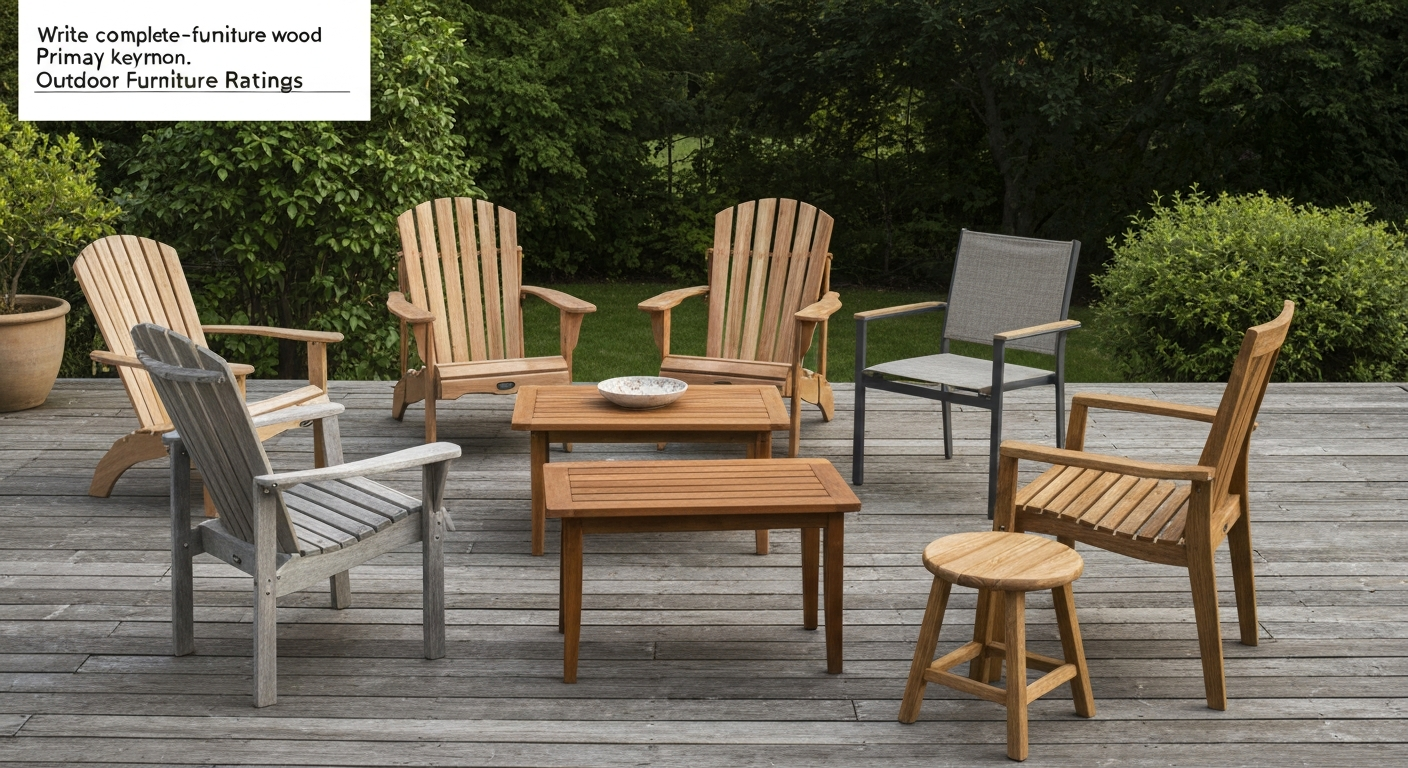
Common Patio Furniture Wood: Best Choices, Care & Tips
Compare common patio furniture wood types, teak, cedar, redwood, oak, with durability, finishes, and care tips.
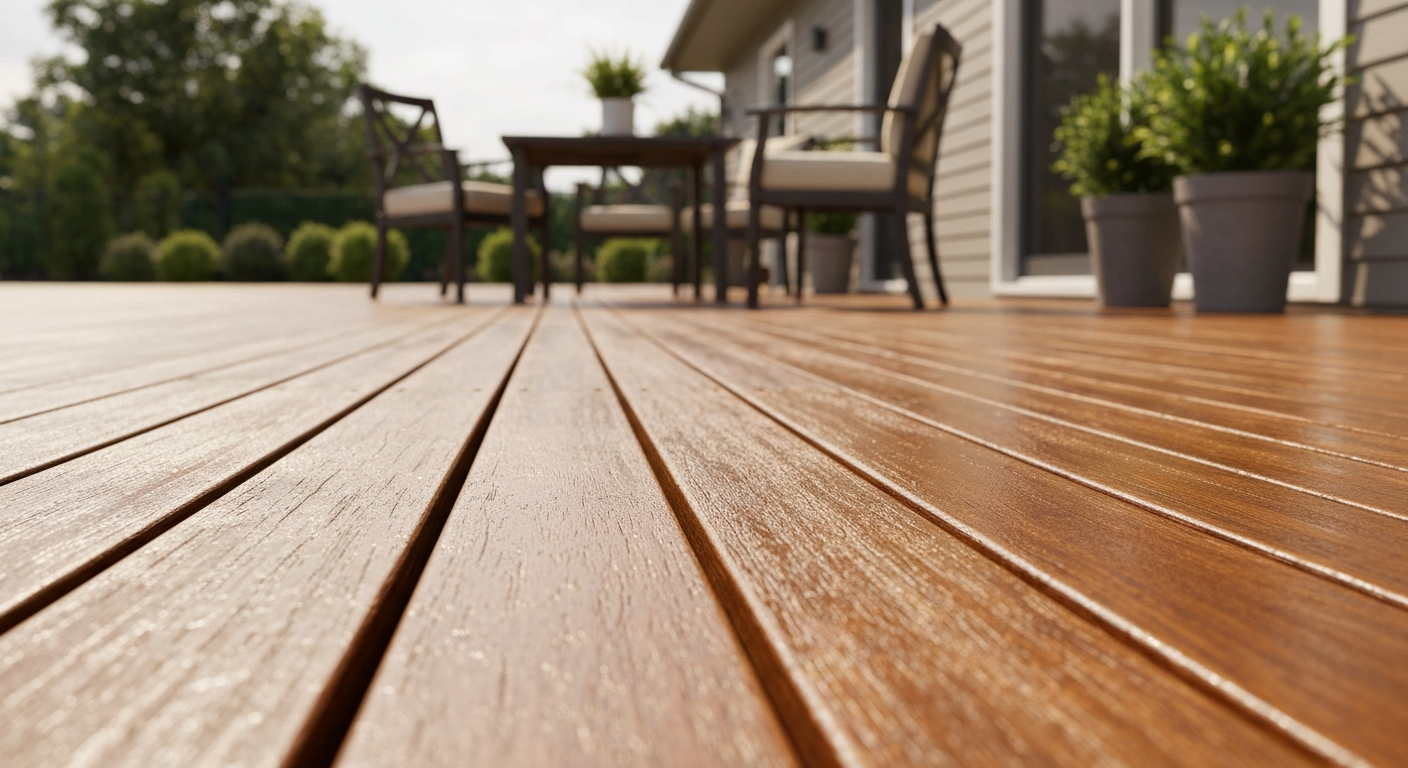
Best Wood Patio Stain: Choosing Durable, Low-VOC Finishes
Compare and choose the best wood patio stain: durability, finish, climate tips, prep, and top product picks.