
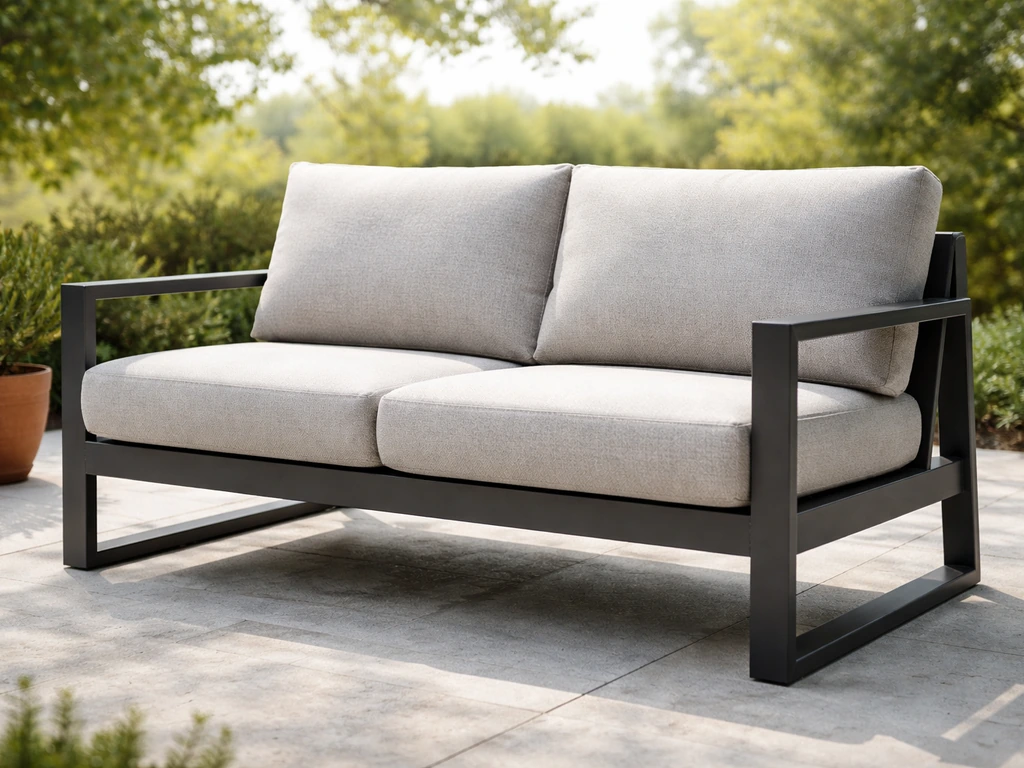
The best patio furniture you can buy right now is powder-coated aluminum paired with solution-dyed acrylic cushions, or high-density polyethylene (HDPE) lumber if you want truly zero-maintenance frames. Those two material combinations have seen the most meaningful improvements between 2024 and 2026, they hold up across the widest range of climates, and they come in the modular, lounge-forward silhouettes that dominate today's outdoor design. Everything else, including teak, resin wicker, and steel, can still be a smart buy, but each one comes with conditions worth knowing before you commit. If you want to narrow down who has patio furniture options available to ship and install, focus on retailers with clear warranty terms and documented material specs.
Latest Patio Furniture Buying Guide: Trends, Materials, Durability

What 'latest' actually means when you're shopping for patio furniture
When people search for 'latest patio furniture,' they're usually asking two different questions at the same time. The first is about style: what shapes, colors, and configurations are showing up this season? The second is about performance: have the materials and finishes improved enough that it's worth replacing what I have? Both questions are worth answering, and they don't always point at the same products.
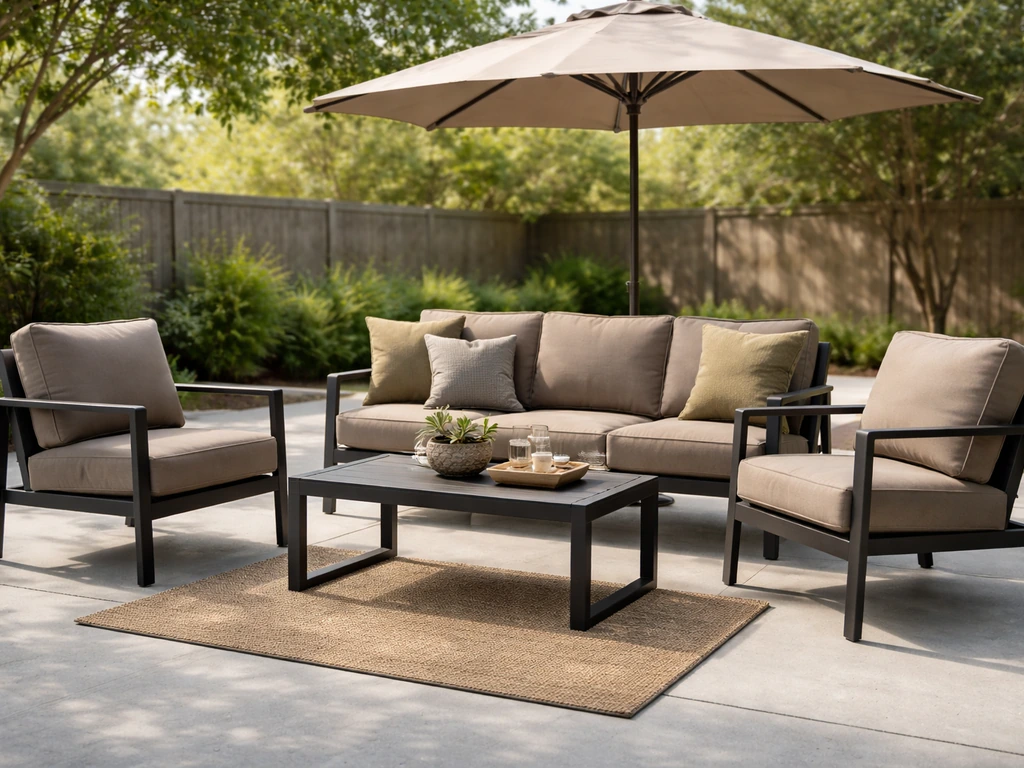
On the style side, 2025 and 2026 trend coverage points to a few clear directions. Modular sectionals and outdoor lounge sets with deep, sofa-like seating have gone from a luxury niche to a mainstream category you can find at Home Depot. Color-forward pieces (think terracotta, forest green, and warm clay rather than the gray-and-black that dominated for years) are showing up widely. And mixed-material construction, such as aluminum frames with woven rope or resin wicker accents, has moved from boutique brands to mid-market lines.
On the performance side, the real news from 2024 to 2026 is incremental but meaningful. Powder coat chemistry has improved, solution-dyed outdoor fabrics now routinely achieve 2,000-hour UV resistance ratings on better collections, and quick-dry reticulated foam has become far more available as a standard cushion fill rather than a premium upgrade. If your current furniture is more than 7 to 10 years old, the replacement options genuinely perform better today, especially for cushions and finishes.
Match your material to your climate before you do anything else
The single biggest mistake I see homeowners make is buying furniture based on looks without considering what their local climate does to outdoor materials. A set that looks gorgeous in a showroom and holds up fine in San Diego can be a rusting, warping mess in three years on the Florida Gulf Coast or in Minneapolis. If you want an easy way to narrow options, you can start by looking at brands that specialize in climate-appropriate outdoor sets, including earl may patio furniture, and then verify the materials and warranty details. Here's how to think about it by region.
Rainy and humid climates (Gulf Coast, Pacific Northwest, Florida, Southeast)
Moisture and humidity are the primary enemies here. Powder-coated aluminum and HDPE lumber are the two safest frame choices because neither rusts and neither absorbs water. Resin wicker over an aluminum frame works well too, but check that the frame underneath is fully aluminum, not steel. Teak can survive humidity if you maintain it, but untreated teak will develop surface mold in high-moisture environments and needs annual attention. Avoid steel frames entirely in this climate unless they carry a robust powder coat and you're prepared to inspect and touch up chips every season.
Freezing winters (Midwest, Northeast, Mountain West)
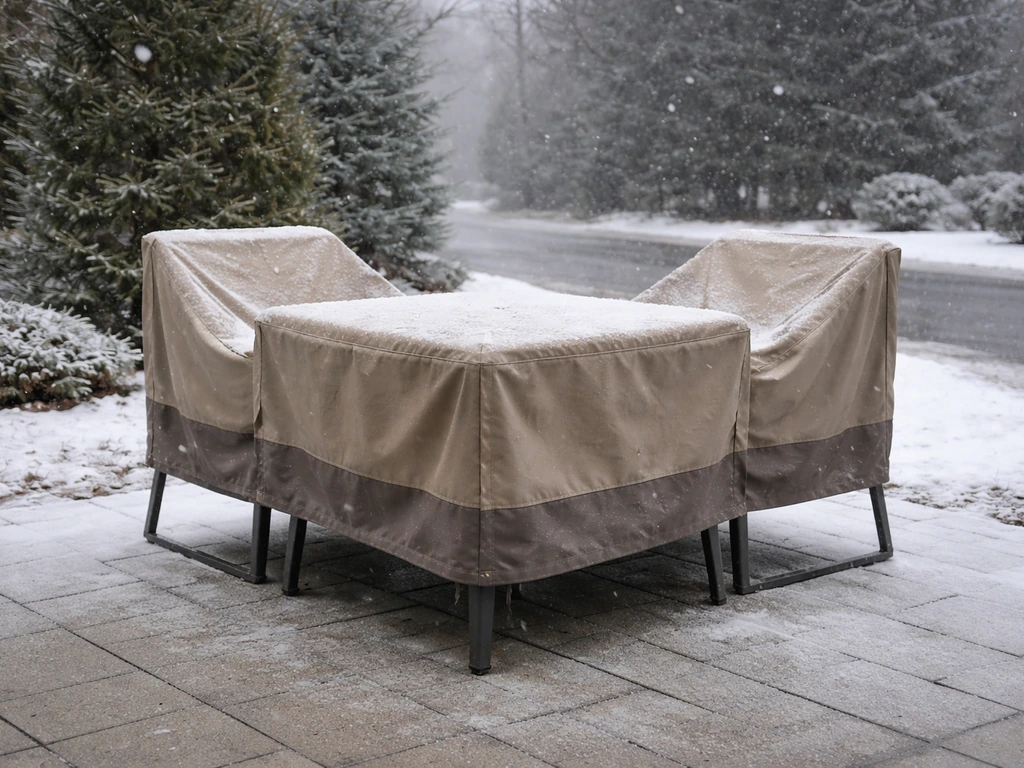
The problem in cold climates isn't just cold, it's freeze-thaw cycling combined with road salt and snow load. Aluminum and HDPE handle freezing without issue. The real vulnerability is cushions: even water-resistant cushions that sit out through freeze-thaw cycles will degrade much faster. Plan to store cushions inside for winter, or invest in a dedicated outdoor storage box. Teak can handle freezing winters if sealed or kept covered, but it's a more involved commitment than aluminum.
Intense sun and dry heat (Desert Southwest, Southern California, Texas)
UV degradation is the primary threat here. Fading frames, cracked or brittle resin wicker, and bleached-out cushion fabric are the typical failure modes. Powder-coated aluminum with a UV-stable coating holds up well. HDPE lumber is also UV-rated by most reputable manufacturers. For cushions, this climate is where solution-dyed acrylic fabrics earn their price premium, since standard piece-dyed fabrics can start visibly fading within a single Arizona or Texas summer. If you're comparing fabric specs, look for ASTM G154 UV test ratings at 1,000 hours or higher as a minimum; the better collections hit 2,000 hours.
Coastal salt air (Atlantic coast, Gulf Coast beaches, Pacific Coast)
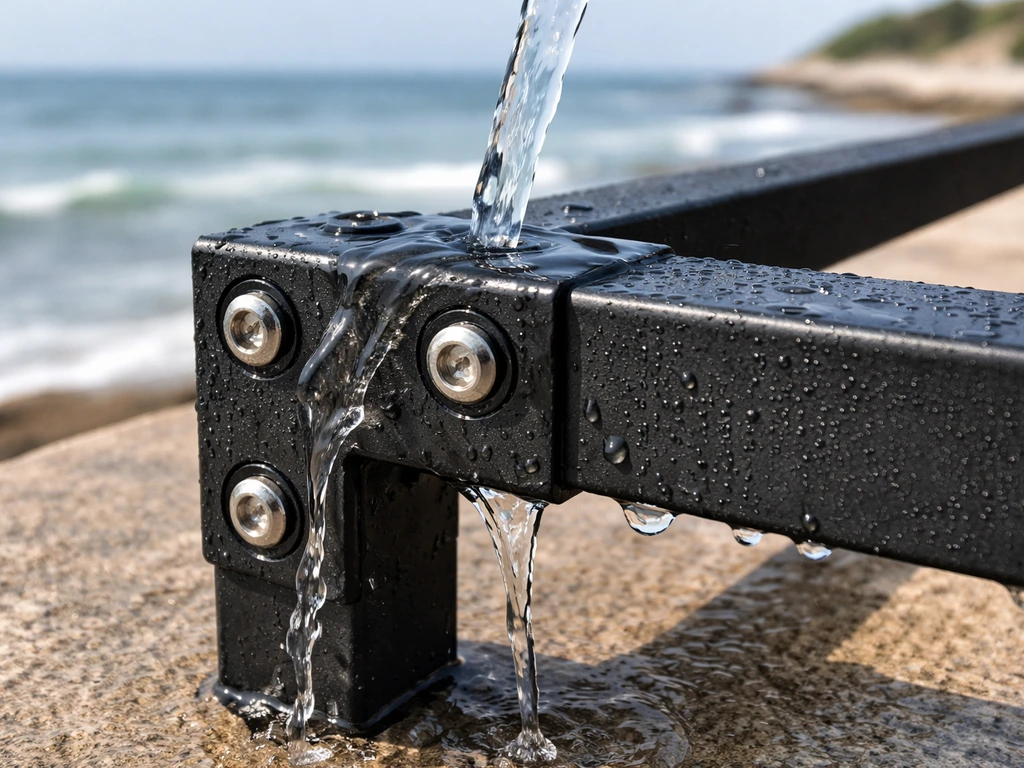
Salt air is corrosive in a way that surprises people who haven't lived near the ocean. Even materials that perform fine inland can pit and corrode within a season or two when they're within a mile or two of salt water. Here, the standard for frame metal is marine-grade powder-coated aluminum or 316 stainless steel hardware. Corrosion resistance for coatings is formally tested under ASTM B117 (the salt-spray fog test), and better brands reference this when marketing coastal-rated furniture. Avoid steel fasteners, exposed iron or uncoated metal of any kind, and bargain-grade aluminum alloys. Rinse your furniture with fresh water regularly, especially after storms, and you can dramatically extend its life.
Material by material: what's actually worth buying right now
| Material | Best For | Worst Climate | Maintenance Level | Typical Lifespan |
|---|---|---|---|---|
| Powder-coated aluminum | All climates, coastal, humid, freezing | None significant | Low | 15–20+ years |
| HDPE lumber (e.g., Trex, POLYWOOD) | All climates, especially sun and coastal | None significant | Very low | 20+ years |
| Teak | Dry/moderate climates, high-end look | High humidity without maintenance | Medium to high | 20+ years with care, 10 without |
| Resin wicker over aluminum | Moderate climates, covered patios | Intense desert UV, salt air | Low to medium | 8–15 years |
| Steel (powder-coated) | Dry, low-humidity climates | Coastal, humid, freezing | Medium | 5–10 years |
| Wrought iron | Dry climates, covered areas | Everywhere wet or coastal | High | 10–15 years with repainting |
Powder-coated aluminum
This is the most versatile frame material available right now, and the 2024 to 2026 product cycle has pushed quality up noticeably at mid-market price points. Aluminum doesn't rust, it doesn't absorb water, and it's light enough to move without a crew. The powder coat finish is where quality separation happens.
Better brands apply thicker coats, use UV-stable pigments, and back it up with real warranty language: POLYWOOD warranties its powder coat against peeling for five years on residential use, and Gloster covers aluminum frames for five years. When you're evaluating an aluminum piece, check for smooth welds (rough or pitted welds are a sign of lower-grade construction), stainless-steel or aluminum fasteners throughout, and a powder coat that feels matte-hard rather than thin and paintlike.
Tubular aluminum frames are common and fine for most uses; cast aluminum is heavier but more rigid and handles joinery stress better in rocking chairs and deep-seat loungers.
HDPE lumber (recycled plastic composite)
HDPE lumber, which is what brands like Trex Outdoor Furniture and POLYWOOD use, is high-density polyethylene, often made from recycled plastic. It doesn't rot, splinter, or absorb water, and it holds color through UV exposure far better than wood. Trex backs its lumber with a 20-year residential warranty against fading and weathering, which is a meaningful commitment. The tradeoff is that it feels and looks like plastic, which some people prefer to avoid aesthetically. It's also heavier than aluminum. But for anyone who genuinely wants to buy furniture once and never think about it again, HDPE is the closest thing to a maintenance-free option on the market.
Teak
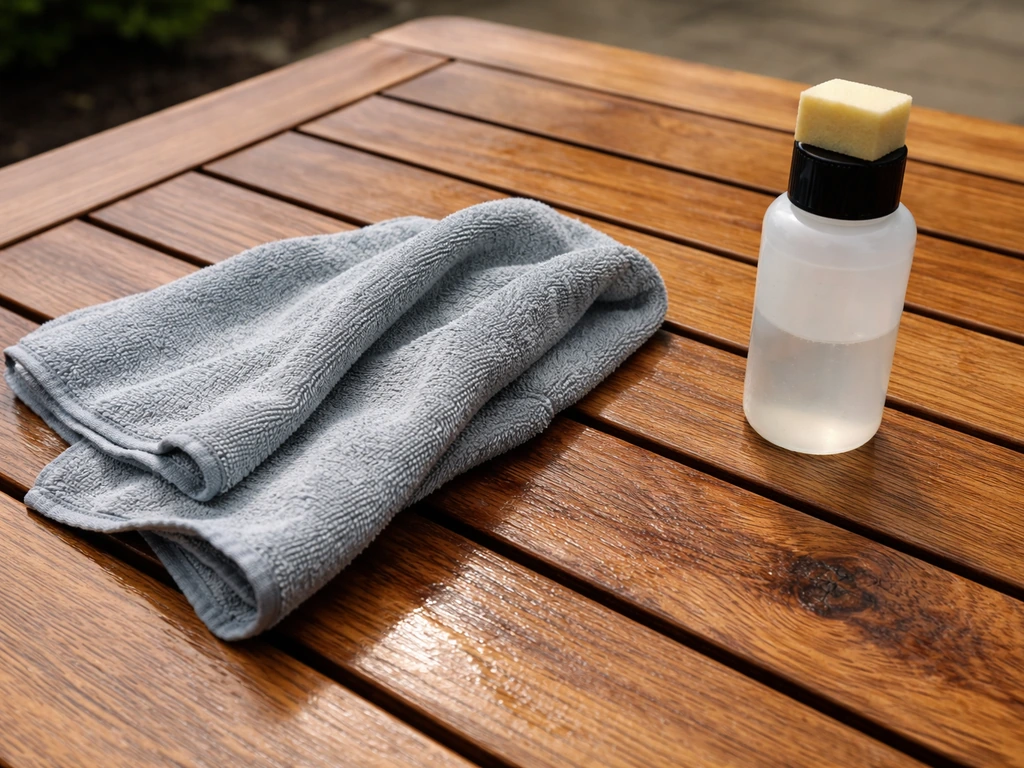
Teak has natural oils that make it more weather-resistant than almost any other wood, and it's genuinely beautiful. The honest reality is that it requires real maintenance if you want to keep it looking good. Left untreated, teak weathers to a silver-gray patina, which some people love and others hate. If you want to preserve the golden-brown color, you'll need to clean it and apply a sealer or oil on a yearly basis, or more frequently in wet climates.
The recommended approach is a two-coat application at the start, then an annual recoat with a quality teak sealer. For heavily weathered pieces with old sealer buildup, a two-part cleaner is needed before you can reseal. Oxford Garden warrants teak and shorea wood products for three years against structural failure, rot, and insect damage. Gloster's teak warranty is five years, but explicitly notes that weathering and color change are normal and not covered claims.
The key caution: store cushions separately from bare teak for at least the first year, since teak's natural oils can transfer and stain light-colored fabric.
Resin wicker
Modern resin wicker is a significant step up from the cheap synthetic rattan that flaked and cracked on older sets. The good stuff is made from high-density polyethylene or similar resin wound over an aluminum frame. The wicker itself resists moisture and UV reasonably well, but the frame underneath is what determines longevity. Always confirm the frame is aluminum, not steel.
In very intense desert sun, even quality resin wicker can become brittle over 8 to 10 years, so it's not the top pick for Arizona or New Mexico. In coastal environments, the aluminum frame underneath will outlast the weave, so budget for eventual re-weaving or replacement. Oxford Garden's warranty gives resin wicker a three-year structural and one-year material warranty, which is a reasonable baseline for evaluating competing brands.
Steel and wrought iron
Steel and wrought iron are the traditional choices for heavy, substantial-feeling outdoor furniture, and there's still a place for them in dry, low-humidity climates or covered patios. The challenge is that both materials rust when the powder coat chips or scratches, and chips happen. Consumer Reports specifically flags wrought iron as susceptible to rust and recommends covered placement. For steel, the same principle applies: the powder coat is the only barrier between the metal and corrosion, so chip inspection and touch-up should be part of your annual routine. Neither is a good call for coastal use.
The features that actually matter in 2026
Cushion fabric: solution-dyed vs. piece-dyed
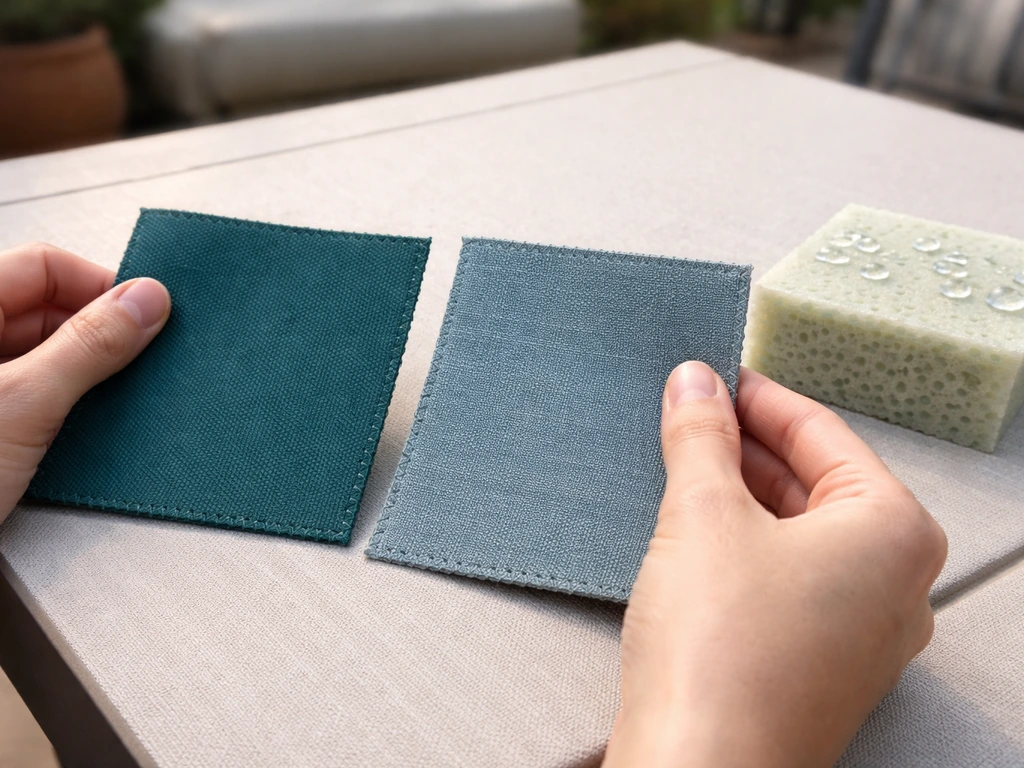
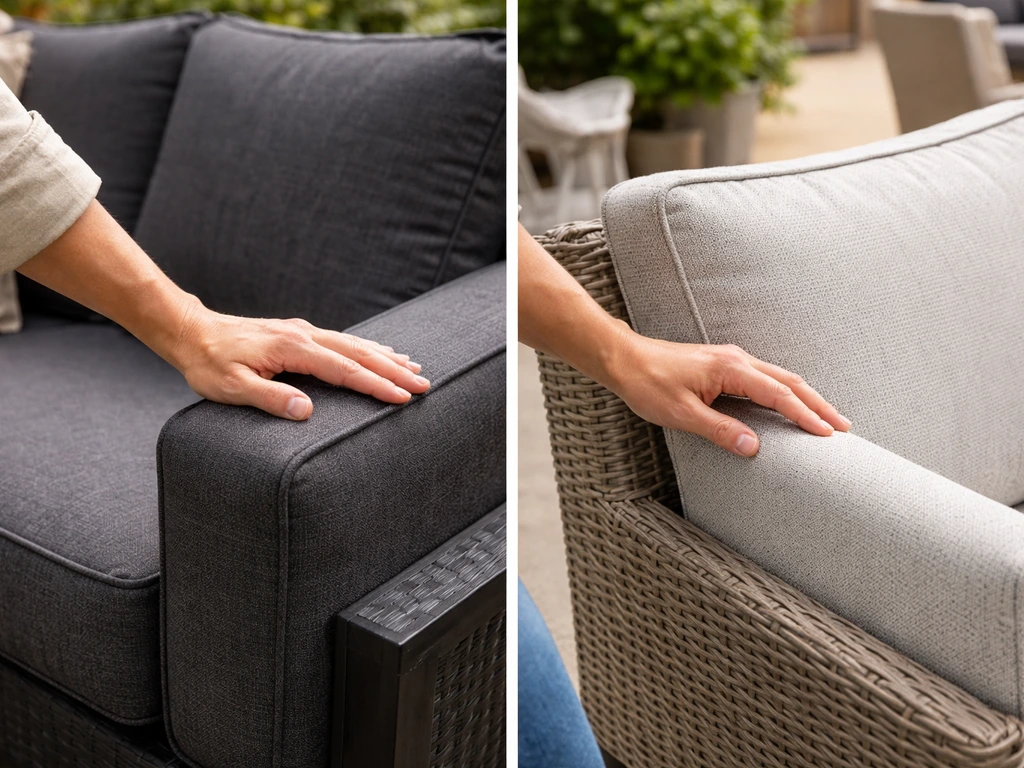
This is the single most underrated decision point in buying patio furniture. Most budget sets come with piece-dyed fabric, where the dye sits on the surface of the fiber and fades as UV breaks it down. Solution-dyed fabric is made with pigment integrated into the fiber itself during manufacturing, so the color runs all the way through. The practical result is dramatically better UV resistance.
Regal Fabrics' Outshine collections cite up to 2,000 hours of UV resistance on their top-tier solution-dyed lines. Sunbrella, which is the benchmark brand for solution-dyed acrylic, achieves an ISO 105 B02 colorfastness rating of 8 out of 8. Budget another $50 to $150 per cushion to go solution-dyed if your set comes with inferior fabric; it's almost always worth it.
Cushion foam: open-cell quick-dry vs. closed-cell
Outdoor cushion foam has improved considerably. The current standard for quality outdoor cushions is reticulated (open-cell) foam, which has a porous structure that lets water drain through and air move freely. Brands like Foamite's Qik-Dri and Future Foam's Hyper-Dri are designed specifically for this. The difference in practice: after a rainstorm, a quality quick-dry cushion may be ready to sit on within an hour or two; a closed-cell foam cushion can stay wet and heavy for days and is far more likely to develop mold. When shopping, ask specifically whether the cushion fill is reticulated open-cell foam. If the listing doesn't mention it, assume it isn't.
Frame construction details to check
- Weld quality: look for smooth, consistent welds at all joints, especially where armrests and legs connect to the seat frame
- Fastener material: stainless-steel or aluminum fasteners only; zinc-plated or bare steel screws will rust and streak finish within a few seasons
- Wall thickness: for tubular aluminum, thicker walls (around 0.07 to 0.08 inch or more) mean better rigidity and resistance to denting
- Foot caps: rubber or plastic foot caps protect powder coat on leg bottoms and prevent scratching on decking
- Leveling glides: adjustable glides on dining chairs and tables are a practical sign of thoughtful construction
Rust and corrosion resistance
For any metal furniture, the powder coat is the protection layer. Thicker coats (measured in mils) hold up longer. Better manufacturers use a multi-stage application that includes a primer layer before the top coat, creating better adhesion and chip resistance. BIFMA's Outdoor Furniture Whitepaper (OF-2025) describes a standards-based approach to accelerated weathering testing that the furniture industry is increasingly using to validate durability claims. If a brand references BIFMA conformance or third-party testing, that's a meaningful signal compared to brands that offer only unverified marketing language. For coastal-rated products specifically, ask whether they reference ASTM B117 salt-spray testing.
Ergonomics and seat depth
The push toward deeper, more lounge-like seating is a genuine improvement in comfort, but it creates a practical trade-off: deep-seat furniture (seat depths of 26 to 30 inches or more) requires thicker cushions, typically 4 to 6 inches, and those cushions need better quick-dry foam because there's simply more material for water to saturate. Modular sectionals with deep seating are the dominant trend in 2025 and 2026, and they work well on a covered patio or in a moderate climate. If you want truly comfortable must have patio furniture, you should prioritize deep-seat modular sectionals, especially when you can place them on a covered patio or match them to a moderate climate. In a rainy or high-humidity climate, budget more for quality cushions if you go this route.
How to evaluate brands without getting fooled by marketing
The outdoor furniture market is full of brands that use the same language (weather-resistant, all-season, powder-coated) to describe very different quality levels. Here's how to cut through it.
Start with warranty specifics, not warranty length. A five-year warranty that covers structural failure and powder coat peeling under clearly defined conditions is worth more than a vague 'limited lifetime' warranty that only covers manufacturing defects under normal use. POLYWOOD's warranty specifically covers powder coat not peeling for five years. Oxford Garden's powder-coated aluminum warranty covers structural failure for five years. Gloster's five-year aluminum and teak warranty is clearly scoped. These brands are telling you exactly what they're standing behind. When a brand doesn't publish specific warranty terms, that's your answer.
Next, look for third-party testing references. ASTM G154 (fluorescent UV lamp testing) and ASTM B117 (salt-spray corrosion testing) are the relevant standards for outdoor furniture performance. ASTM D4329 is an ASTM standard practice for evaluating fluorescent UV lamp apparatus exposure of plastics to assess resistance to deterioration from light, heat, and water. When a manufacturer lists these test results with actual hours or ratings, rather than just saying 'UV resistant,' they're making a verifiable claim. BIFMA Compliant registration is another useful marker for structural and safety conformance.
For fabric, Sunbrella is the longstanding benchmark for solution-dyed acrylic, but it's not the only quality option. Regal Fabrics' Outshine and similar solution-dyed collections from other suppliers meet comparable specs. The key question is whether the fabric is solution-dyed and what the UV test rating is. At the budget end, avoid sets where the cushion fabric spec is simply described as 'polyester' with no further detail. That usually means piece-dyed, and you'll see it fade.
Finally, match brand claims to the retail tier. Brands like Trex, POLYWOOD, Gloster, and Oxford Garden publish their specs and back them with specific warranties. You can also find good mid-market aluminum and resin-wicker sets from mass retailers that use quality components; the difference is that you often have less warranty support and more variability in construction quality. If you're spending under $800 on a complete set, test welds and fasteners in person if possible, or buy from a retailer with a good return policy. If you want to compare patio furniture efficiently, focus on warranties, frame construction, and third-party testing instead of marketing buzzwords.
How to make new patio furniture last: a realistic maintenance plan
Aluminum and HDPE frames
Both materials are genuinely low maintenance, but 'low maintenance' doesn't mean 'no maintenance.' For powder-coated aluminum, rinse with clean water and towel-dry after exposure to salt air, heavy rain, or obvious dirt buildup. Avoid abrasive cleaners that can scratch the powder coat surface. Inspect welds and coat edges once per season and touch up any chips with a color-matched powder coat pen or paint before corrosion can start underneath. For HDPE lumber, warm water with mild soap is all you need. Neither material needs to be covered or stored indoors, but covering or storing cushions separately will extend their life dramatically.
Teak and wood frames
Start from clean and dry every time before applying any treatment. For regular maintenance, wash teak with warm water and mild soap, let it dry completely, then apply a quality teak sealer in two coats initially. Recoat once a year in moderate climates, or twice a year in high-humidity or tropical environments. If you're dealing with weathered teak that has old sealer buildup, use a two-part teak cleaner before resealing to remove the old layer. Avoid teak oil products on furniture that stays outdoors full-time; they tend to attract mildew in humid climates and require more frequent reapplication than a proper sealer.
Cushion care
Even the best solution-dyed acrylic cushions benefit from a consistent care routine. Brush off loose dirt before it sets. Spot-clean with mild soap and water, then rinse well and allow to air-dry fully before storing or covering. Make sure cushions are completely dry before putting them in a cover or storage bag: trapped moisture is what creates mold, not the moisture exposure itself. In climates with significant winter cold, store cushions indoors or in a dry outdoor storage box through the off-season. A storage bench or dedicated deck box isn't a luxury; it's the single best investment you can make to double cushion lifespan.
Winterization and cover use
Furniture covers protect against leaf staining, UV off-season, and moisture accumulation, but they can also trap condensation if not vented. Look for covers with ventilation grommets or air vents, and never cover furniture that's wet or has wet cushions. Remove cushions and store them separately even when you use furniture covers. For furniture that stays outside through winter, aluminum and HDPE frames don't need shelter, but teak benefits from being covered or moved to a garage or shed. If you're in a climate with snow load risk, fold or stack lightweight pieces and bring in anything that could be damaged by impact from snow clearing.
Budget ranges and what to realistically expect
Outdoor furniture is an area where the price-to-quality relationship is real, but it's not linear. If you want the best patio furniture UK buyers tend to shortlist, focus on the same durability signals: solution-dyed fabrics, UV-rated ratings, and powder-coated frames suited to your local weather. There are genuine value tiers worth knowing, and there are also price points where you're paying for brand premium rather than better construction.
| Budget Tier | Typical Spend (Complete Set) | What You Get | What You Don't Get |
|---|---|---|---|
| Entry | Under $500 | Basic aluminum or steel frames, polyester cushions, limited warranty | Solution-dyed fabric, quick-dry foam, thick powder coat, fastener quality |
| Mid-range | $500–$1,500 | Better aluminum frames, mix of solution-dyed options, 2–3 year warranties | Cast aluminum construction, Sunbrella-level fabric standard, full modular flexibility |
| Upper mid | $1,500–$3,500 | Solid aluminum or HDPE frames, solution-dyed cushions standard, 5-year warranties, modular options | Luxury brand finishes, premium teak, bespoke sizing |
| Premium | $3,500+ | Cast aluminum or teak, Sunbrella or equivalent fabric standard, 5–20 year warranties, heirloom durability | Lower price; these sets are investments |
The most common budget mistake is buying a $400 set and replacing it every three to four years instead of spending $1,200 to $1,500 once on a set that lasts 15 years. If you want to “do it best” with patio furniture, aim for construction and materials that minimize premature fading, rust, and cushion breakdown do it best patio furniture.
When you do the math, the mid-range and upper-mid tiers are almost always the better value over a 10-year horizon. That said, if you're renting, if your needs might change, or if you genuinely just want to try out an outdoor setup without committing, a decent entry-level aluminum set from a major retailer isn't irrational. Just go in knowing you'll likely replace it.
A few marketing claims worth ignoring: 'weatherproof' without any specific test reference, 'lifetime warranty' without published terms, and 'hand-woven' wicker that turns out to be machine-woven resin over a steel frame. These phrases appear across every price tier and tell you essentially nothing. Focus on warranty terms, fastener materials, frame construction, and fabric specifications. Those details separate furniture that lasts from furniture that looks good in a photo.
Your next steps before you buy
- Measure your space and decide on a configuration: dining set, lounge sectional, conversation set, or a mix. Modular sectionals give the most flexibility but require more square footage to feel proportional.
- Identify your climate category: humid/rainy, freezing winters, intense UV, coastal salt air, or a combination. This narrows your material shortlist to aluminum/HDPE for most conditions, with teak as an option if you'll do the maintenance.
- Set a realistic budget for the full kit, including cushions, covers, and a storage solution. Don't price just the frame.
- Check fabric specs before finalizing any set: look for 'solution-dyed' and an ASTM G154 rating at or above 1,000 hours. Upgrade cushions if the included fabric doesn't meet that threshold.
- Read the actual warranty document, not the marketing summary. Look for specific coverage of powder coat, welds, and fastener rust.
- Plan your maintenance routine before the furniture arrives: note your climate's sealing or cleaning schedule for wood, set a reminder for seasonal cushion cleaning, and buy a cover or storage box at the same time as the furniture.
FAQ
What’s the safest “latest patio furniture” combination to buy without overthinking it?
If you want the “latest patio furniture” look with the least risk, prioritize deep-seat modular sectionals with powder-coated aluminum frames plus solution-dyed acrylic cushions (or HDPE-only framing if you truly want zero-maintenance frames). For uncovered patios, also confirm reticulated open-cell foam in the cushion fill, because deeper seating saturates faster and takes longer to dry.
How can I tell if the cushion fabric is actually fade-resistant, not just marketed as outdoor?
Don’t decide by fabric word alone. “Outdoor polyester” usually means piece-dyed (color only on the surface). If you want maximum color staying power, look for solution-dyed acrylic plus a UV test rating, and treat any listing that omits UV hours as a red flag.
What should I check specifically for resin wicker sets before buying?
A common trap is assuming the frame material matches the advertised weave. For resin wicker, verify the frame is aluminum (not steel), then check how the cushion brackets attach. If the listing shows steel hardware or “mixed metal,” plan on faster corrosion or higher upkeep near coastal air.
When evaluating powder-coated aluminum in person, what details predict durability?
For aluminum frames, focus on weld quality and edge coverage, not just the word “powder-coated.” Look for smooth, fully bonded welds and powder coverage at tube ends and seams. If chips appear at edges or the finish looks thin and glossy like paint, that usually means the coating will fail sooner.
Are furniture covers worth it, or do they cause problems?
Yes, but timing matters. Tight covers during wet seasons can trap condensation and accelerate mildew on cushions and even on frame crevices. If you use covers, dry the furniture fully first, then remove covers periodically if you notice interior dampness, and always store cushions separately.
Can I upgrade performance by replacing just the cushions instead of the whole patio set?
You can often keep the best cushions and replace only the fabric or fill, but it depends on construction. If the cushion cores are reticulated open-cell foam, recovering is usually the most cost-effective option. If the foam is closed-cell or permanently compressed, replacement will perform better than re-covering.
Does “powder-coated” truly mean no rust in coastal areas?
Not always. Powder coat quality varies by thickness and prep, so you still want a maintenance plan in salt air. Rinse with fresh water after storms or heavy sea mist, inspect for chips at seams each season, and touch up quickly with color-matched repair so corrosion does not start under the coating.
What setup mistakes make premium deep-seat patio furniture fail early?
Even in excellent materials, deep-seat modular pieces need spacing and drainage. Place them so water can run off beneath, avoid trapping runoff against the frame, and keep cushion storage areas dry. This reduces mildew risk and prevents cushions from staying damp long enough to degrade.
How do I winterize the latest patio furniture in freezing climates without damaging it?
For winter cold, the key is protecting cushion cores and preventing water from sitting inside cushions and frames. Store cushions indoors or in a dry ventilated storage box, and for any piece with removable cushions, keep hardware and fabric completely dry before stacking or covering.
Which is easier to manage long-term, aluminum or HDPE lumber?
If you need to move it yourself, aluminum usually wins because it stays lighter than HDPE and won’t get heavier when it absorbs water. HDPE is heavier than aluminum but still very stable, and it stays visually consistent. Choose HDPE when your priority is long service life over portability.
If I buy entry-level latest patio furniture, what should I spend money on first?
A “cheap replacement cycle” is usually a fabric issue and a cushion issue, not just frames. Budget sets may use piece-dyed fabric and closed-cell foam, both of which fade faster or stay wet longer. If your budget is limited, prioritize solution-dyed cushions first, then upgrade frame coverage and warranty terms second.
How do I keep solution-dyed cushions clean and mold-free during off-season storage?
Yes, even with solution-dyed acrylic. If you regularly store cushions in a cover or bin, dry them fully before sealing them away, because trapped moisture drives mold. When cleaning, avoid harsh abrasives and do not pressure wash seams aggressively, as that can force grime into stitching and zippers.
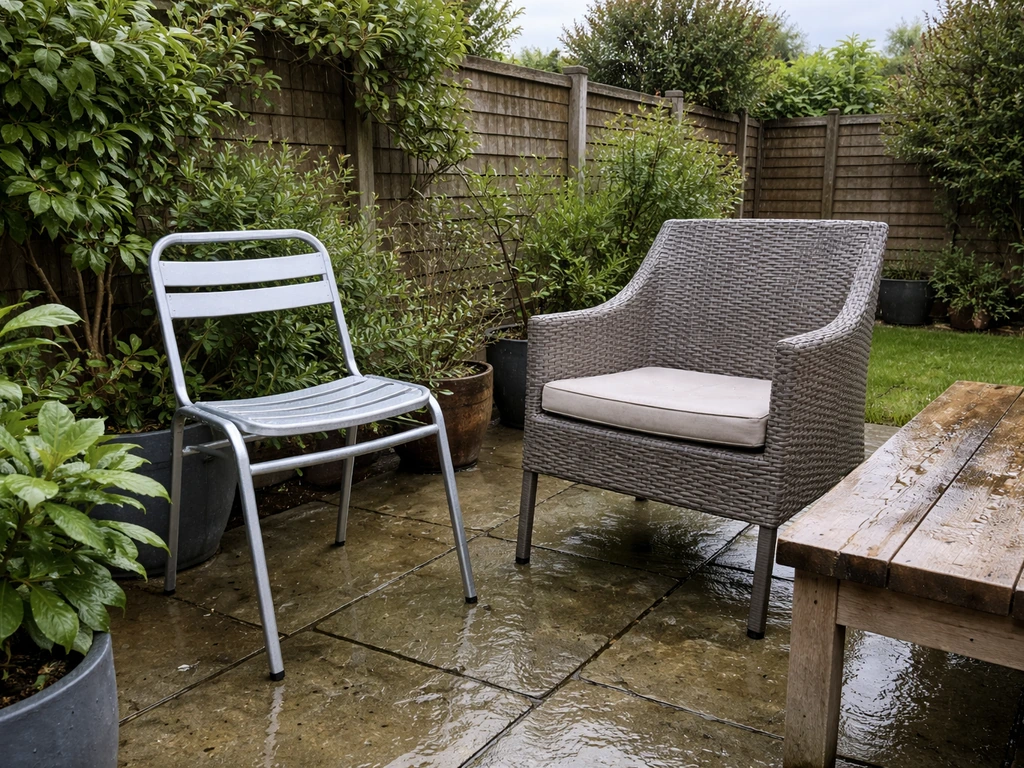
UK patio furniture guide for rain and wind: choose the best wood, metal, rattan or composite, durable and comfy.
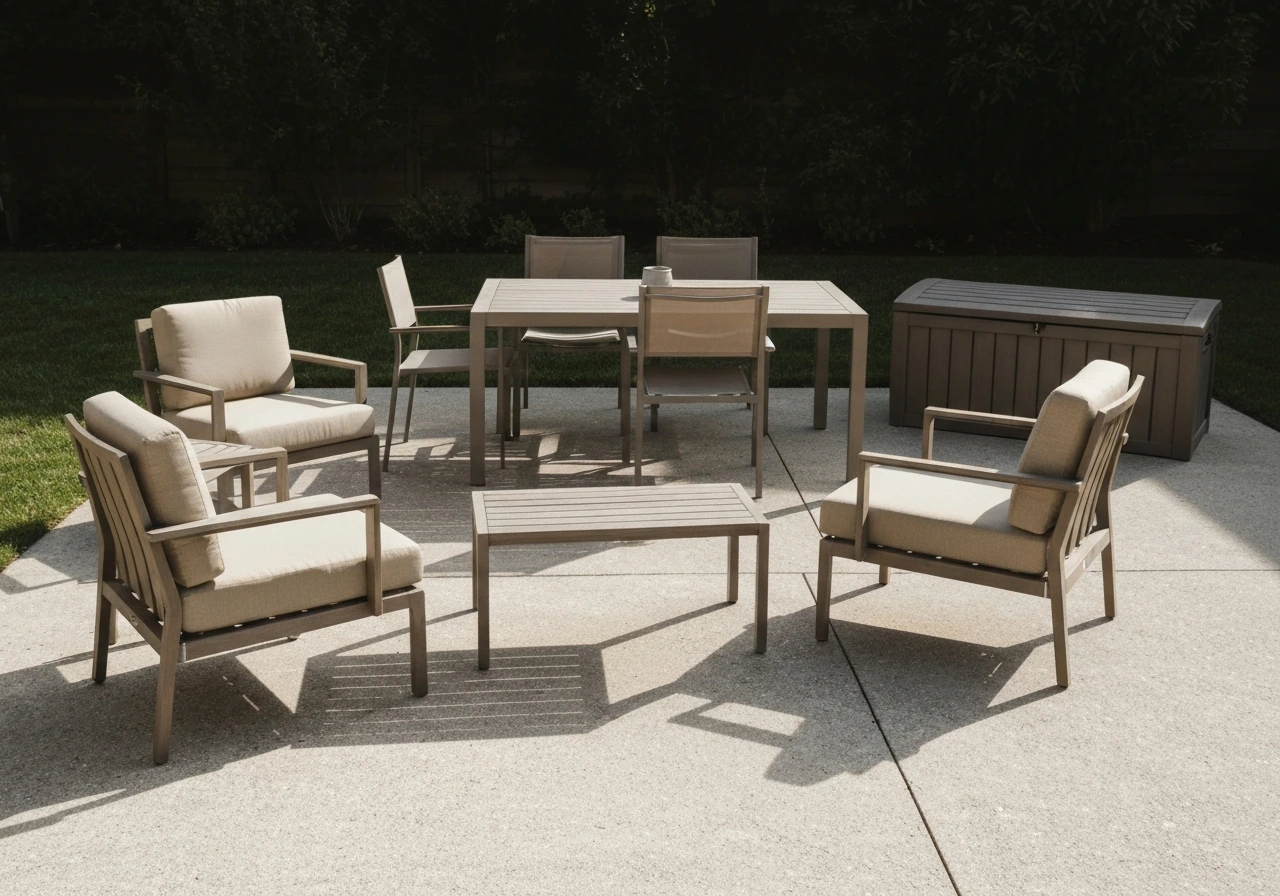
Must have patio furniture checklist with picks for seating, dining, tables, storage, plus material durability and mainte
Choose do it best patio furniture with climate-fit tips, material comparisons, and weatherproof checklists for lasting c