
When you compare patio furniture across wood, aluminum, wicker, and composite, the honest answer is that no single material wins everywhere. Teak and eucalyptus outlast almost everything in wet climates but cost more upfront. Powder-coated aluminum is the best all-rounder for most homeowners. Synthetic resin wicker looks great and handles temperate weather well, but it does degrade faster in extreme UV. HDPE composite (think POLYWOOD-style lumber) is the closest thing to a set-it-and-forget-it option if budget allows. What you pick should come down to your climate, how much maintenance you'll actually do, and how long you want the furniture to last.
Compare Patio Furniture: Materials, Brands, Climate Picks

Theo Tierney
15 Jul 2026
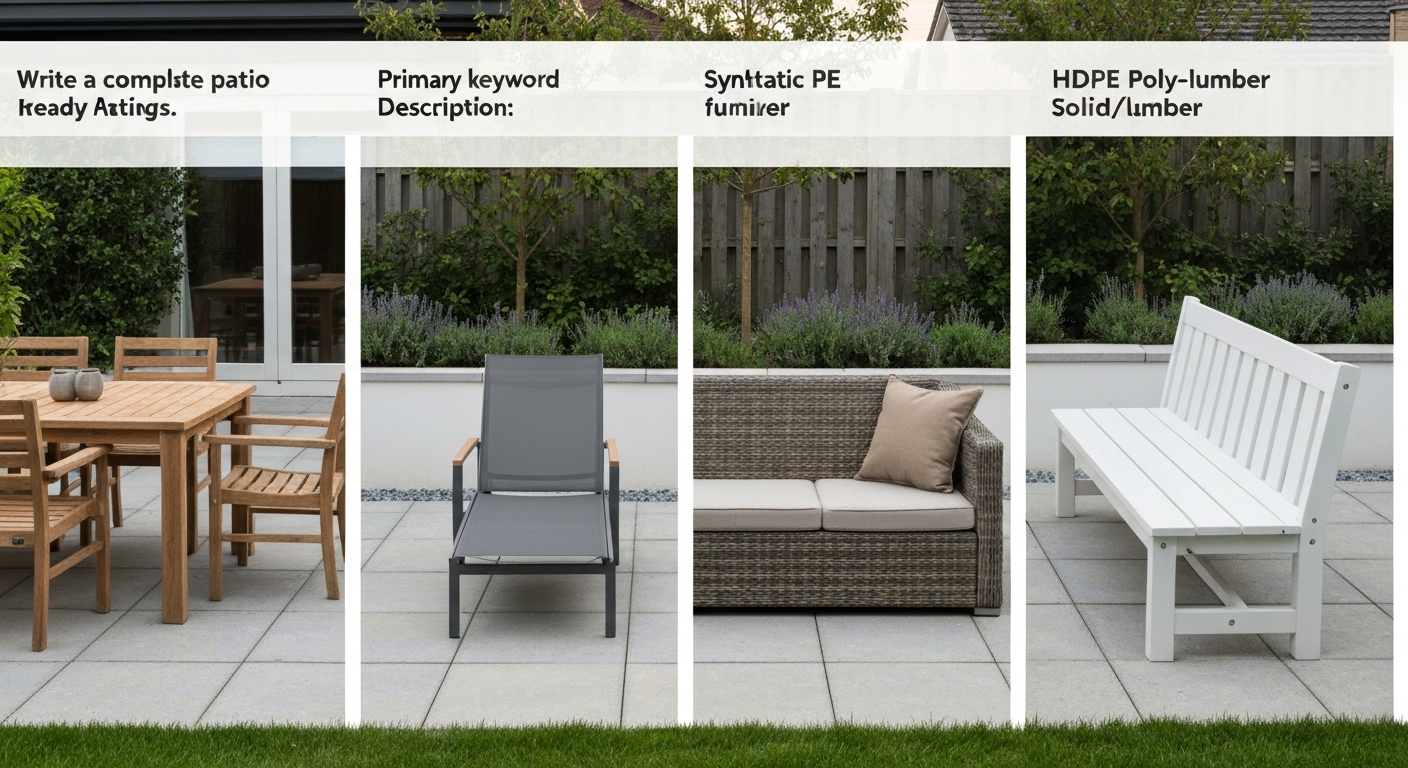
Who this guide is for and what you'll get out of it
This guide is written for homeowners and decorators who are tired of vague advice like 'teak is premium' or 'aluminum is lightweight.' You need to know why teak performs better in humid climates, what grade of aluminum actually resists corrosion, when cheap wicker is fine versus when it's a waste of money, and what a realistic 10-year cost of ownership looks like across materials. Whether you're shopping at a big national chain, browsing UK garden centre listings, or ordering direct from a manufacturer, the framework here applies. I'll also cover cushions and outdoor fabrics, because a great frame paired with cheap cushions is a mistake I see people make constantly.
- Side-by-side material comparison covering durability, weather resistance, and cost
- Climate-specific recommendations for coastal, humid, arid, and freeze-thaw environments
- Realistic life-expectancy estimates by material and budget tier
- Cushion and fabric guidance including UV and mildew resistance
- Maintenance schedules that actually extend furniture life
- A practical decision checklist to narrow your choice before you buy
At-a-glance comparison: wood vs aluminum/steel vs wicker/rattan vs composite
| Material | Weather Resistance | Typical Lifespan | Maintenance Level | Budget Range (set) | Best Climate Fit |
|---|---|---|---|---|---|
| Teak | Excellent | 20–50+ years | Low–Medium (oiling optional) | $1,500–$6,000+ | Humid, tropical, coastal |
| Cedar / Eucalyptus | Good | 10–20 years | Medium (seal/stain annually) | $400–$2,000 | Temperate, dry, mild coastal |
| Powder-coated Aluminum | Very Good | 15–25 years | Low | $300–$3,500+ | All climates including coastal |
| Galvanized / Powder-coated Steel | Good (with upkeep) | 10–20 years | Medium (inspect for chips) | $200–$2,500 | Dry, low-salt inland |
| Synthetic Resin Wicker (PE/HDPE) | Good | 8–15 years | Low–Medium | $250–$2,500 | Temperate, mild UV |
| Natural Rattan / Wicker | Poor outdoors | 2–5 years uncovered | High (covered storage) | $150–$800 | Covered/sheltered only |
| HDPE Composite (Poly Lumber) | Excellent | 20–30+ years | Very Low | $600–$4,500+ | All climates, coastal-safe |
| Powder-coated Steel + Sling/Mesh | Good | 10–15 years | Low–Medium | $200–$1,500 | Dry, moderate UV |
Use this table as a starting filter, not a final verdict. The sections below go deeper on each material so you can match performance claims to your actual conditions.
Wood patio furniture: teak, cedar, and eucalyptus
Wood furniture earns its reputation, but the differences between species are large enough that treating them as one category is a mistake. Teak (Tectona grandis) is the gold standard for outdoor use. Its naturally high silica and oil content make it resistant to moisture, rot, insects, and UV degradation without any finishing at all. Left untreated, teak weathers to a silver-grey patina within six to twelve months. That's not damage; it's just the surface oils oxidizing. Apply a teak sealer or oil once a year if you want to keep the honey-brown colour, but even if you never touch it, a well-made teak set from plantation-grown timber can last 30 to 50 years in temperate and tropical climates alike. The catch is cost: expect to pay $1,500 to $6,000 or more for a quality dining set.
Cedar (Western Red Cedar specifically) is far more affordable, typically $400 to $1,500 for a set, and it handles moisture well because of its natural tannins and low density. It's a good choice for the Pacific Northwest or other cool, damp climates where freeze-thaw cycles are moderate. The limitation is that cedar is softer than teak. It dents and scratches more easily, and you need to clean and apply a penetrating oil or UV-protective stain every one to two years to keep it from drying out and cracking. Skipping maintenance accelerates deterioration fast; a neglected cedar set in Arizona heat can look rough in as few as three years.
Eucalyptus is positioned by many retailers as a budget alternative to teak, and while that comparison is partially fair, eucalyptus is denser and harder than cedar and has decent natural oil content. A properly maintained eucalyptus set oiled annually can realistically last 10 to 15 years. The issue is that quality varies significantly by species and sourcing. Eucalyptus grandis is softer and less durable than the denser Eucalyptus saligna used in better-grade furniture. When you're evaluating eucalyptus listings at big chains or regional sellers, look for FSC certification, density ratings, and whether the brand specifies the species. Vague listings that just say 'eucalyptus' are a warning sign.
Wood maintenance in practice
- Clean annually with a mild soap and soft brush before applying any treatment
- For teak: apply teak oil or sealer once per year if retaining colour; otherwise let it grey naturally and clean with a teak cleaner every two years
- For cedar/eucalyptus: apply a penetrating UV-protective oil or stain every 12 to 18 months depending on sun and rain exposure
- Sand lightly with 120-grit before refinishing to open the grain
- Store cushions indoors or in a weatherproof box; wood frames can stay out year-round in most climates
- In freeze-thaw climates, move pieces under cover or use breathable furniture covers to prevent cracking at joinery
Aluminum and steel frames: what actually holds up
Aluminum is my default recommendation for most homeowners, and here's why. It does not rust. Period. Unlike steel, aluminum forms a self-limiting oxide layer that stops further corrosion rather than encouraging it. For outdoor furniture, the relevant alloy grades are typically 6000-series (6061 or 6063) for cast and extruded frames. What matters more than alloy grade in practice is the finish. Powder coating is the industry standard, and a properly applied superdurable polyester powder coat at 60 to 100 micrometres film thickness, over a chemically pretreated substrate, will resist chalking, fading, and salt-spray corrosion for 15 years or more. That's backed by ASTM B117 and ISO 9227 salt-spray testing, which simulate corrosive coastal conditions at an accelerated rate. When a manufacturer says their finish passed 1,000 hours of salt-spray testing, that's meaningful for coastal buyers.
Steel is heavier and, in most configurations, more affordable than cast aluminum. The trade-off is corrosion risk. Bare steel rusts quickly in humid or coastal environments, so the quality of the powder coat and the pretreatment underneath it are critical. A chip in the finish on a steel frame will start rusting within weeks if moisture gets in, while the same chip on an aluminum frame is cosmetic. Galvanized steel (hot-dip galvanized before powder coating) performs significantly better than standard steel, but it still doesn't match aluminum in salt-air environments. For coastal gardens or anywhere with high humidity and salt exposure, marine-grade 316 stainless steel fasteners are worth specifying specifically because of their molybdenum content, which resists chloride-induced pitting that affects standard 304 stainless. Budget steel sets ($200 to $600) are fine for dry inland climates with good seasonal care; I would not buy them for a Florida or UK coastal garden.
What to check when buying metal frames
- Ask for alloy specification: cast aluminum (heavier, sturdier joints) vs tubular extruded aluminum (lighter, adequate for most use)
- Check film thickness of powder coat if listed; below 60 µm is a risk factor for longevity
- Look for welded joints rather than bolt-and-bracket assembly at weight-bearing points
- Inspect (or ask about) fastener material: stainless steel fasteners on an aluminum frame prevent galvanic corrosion where dissimilar metals meet
- For coastal use, ask explicitly about salt-spray test certification or marine-grade specification
- Warranty length for finish/coating is as important as warranty for the frame itself
Wicker and rattan: natural vs synthetic and where each belongs
The word 'rattan' on a product listing in 2026 almost always means synthetic resin wicker made from polyethylene (PE) or high-density polyethylene (HDPE). That's not a bad thing. UV-stabilized PE rattan woven over an aluminum or steel frame is the dominant format for outdoor wicker furniture sold in the UK, Europe, and North America, and for good reason: it handles rain, doesn't rot, and cleans up easily with soapy water. Which? and other UK consumer bodies consistently recommend synthetic resin wicker over natural rattan for any outdoor application in a British climate. Natural rattan is a palm-derived material that swells, warps, splits, and molds when exposed to repeated wetting and drying. Unless it's under a covered pergola or moved indoors seasonally, natural rattan furniture degrades quickly outdoors.
For synthetic wicker, the variables that separate a good set from a disappointing one are weave tightness and UV stabilizer content. A loosely woven or thin-strand PE wicker will stiffen, fade, and begin to unravel at stress points (armrests, corners, seat edges) within five to eight years under strong UV. High-quality synthetic wicker with robust UV stabilization and an aluminum frame can realistically last 10 to 15 years in temperate climates, less in high-UV environments like the American Southwest or southern Mediterranean without regular UV protectant application. UK buyers looking at branded sets (KETTLER, Alexander Rose, and similar) will typically see 2 to 5-year manufacturer warranties on synthetic wicker components, with some brands like KETTLER offering around 3 years on specific lines as documented on major retail listings. That warranty gap versus composite or teak reflects the material's actual longevity ceiling.
Caring for synthetic wicker
- Wipe down monthly in summer with a damp cloth and mild detergent; avoid pressure washers at close range as they can force water into the weave and underlying frame
- Apply a UV protectant spray (303 Aerospace or similar) at the start of the season in high-UV climates
- Store flat-stacked or covered in winter to prevent weave stress from pooled water freezing in the strands
- Inspect annually for loose or fraying strands at stress points; small repairs with UV-resistant adhesive can extend life meaningfully
- Clean the underlying aluminum frame where exposed and touch up any chips to prevent rust if the sub-frame is steel
Composite and engineered materials: HDPE poly lumber and powder-coated mixes
HDPE poly lumber is the material I point people toward when they want to stop thinking about maintenance. Made from recycled high-density polyethylene (often from milk jugs and similar post-consumer plastics), it looks like painted wood, feels solid, and genuinely does not rot, splinter, or require sealing. POLYWOOD, one of the most visible brands in this category, backs their lumber with a 20-year warranty. That's not marketing fluff: HDPE poly lumber is essentially immune to moisture, salt air, insects, and freeze-thaw cycling. It's also UV-tested under ASTM G154 protocols and resists significant fading and structural degradation over decades of sun exposure. The trade-offs are weight (HDPE sets are noticeably heavy) and aesthetics: the material looks plastic, not wood, regardless of the colour or texture added during manufacturing.
Composite materials that blend wood fiber with polymer binders (wood-plastic composites, or WPC) are a different category and generally less durable outdoors than pure HDPE poly lumber. WPC can absorb moisture at cut edges and fastener points, which eventually leads to swelling and discolouration. It's more common in decking than in furniture for that reason. For furniture frames, powder-coated aluminum paired with HDPE slats or sling fabric is an effective engineered combination: the aluminum handles structural loads, while the HDPE or UV-stabilized sling handles weather exposure. This hybrid format is common in mid-range contract and residential furniture and performs well across most climates.
HDPE composite maintenance reality check
Cleaning HDPE poly lumber is genuinely simple: soap, water, and a soft brush once or twice a season. For deeper staining or chalking (especially on white or light colours after years outdoors), a light scrub with a diluted bleach solution restores appearance. You do not oil, seal, or sand it. Fasteners and frame connections are worth an annual check because the lumber itself outlasts the hardware in most cases. The manufacturer warranty typically covers the lumber but not the frame or hardware, so inspect those separately.
Cushions, outdoor fabrics, and fastenings
This is where I see the most money wasted. A $2,000 teak or aluminum set paired with bargain-bin polyester cushions will look terrible and smell of mildew within two seasons. Outdoor cushions should be treated as a significant part of the investment, not an afterthought.
Solution-dyed acrylic fabrics are the right benchmark for outdoor cushion covers. Sunbrella is the most well-known brand in this category, and their technical advantage is real: the pigment is introduced into the fiber at the polymer stage, not surface-printed or piece-dyed, which means UV exposure doesn't bleach the surface layer because there is no surface layer. Sunbrella carries application-specific limited warranties of 5 to 10 years depending on product class. That's backed by ASTM G154 UV exposure testing. In practical terms, a Sunbrella-covered cushion in a moderately sunny climate will still look close to its original colour after seven or eight years of seasonal use. Generic 'outdoor polyester' fabric will noticeably fade within two to three seasons and may start cracking at fold lines.
Cushion filling matters nearly as much as cover fabric. Dry-fast open-cell foam (also marketed as 'quick-dry foam') is the correct interior material for outdoor cushions. It drains within hours of rain rather than holding moisture that promotes mildew growth inside the cushion. Standard upholstery foam is not suitable for outdoor use even under a waterproof cover, because condensation accumulates inside. If you're replacing cushions on an existing set, specify dry-fast or reticulated foam explicitly. Budget cushions almost always use standard foam with a nominal 'water resistant' cover; that combination will eventually retain moisture and develop a mildew odour that doesn't wash out.
Fastenings and attachment points
Cushion ties, zippers, and velcro attachments are high-failure points that are easy to overlook. Brass or stainless-steel zipper teeth outlast nylon zipper teeth in humid/salt environments by years. Cushion ties should be nylon or polyester webbing, not cotton (cotton rots). On the frame side, plastic inserts that hold cushions in place degrade faster than metal track systems, especially under UV exposure. These are small details, but they're the reason a $400 cushion set often outlasts a $150 one in real use.
Climate-based recommendations: matching material to where you live
Using the Köppen-Geiger climate classification as a baseline, and NOAA climate normals for US-specific conditions, here's how I map materials to real-world environments. The Köppen–Geiger climate classification (Peel, Finlayson & McMahon 2007 updated world map) is the standard, citable baseline for mapping material recommendations to climate zones Peel, Finlayson & McMahon (2007) — Updated world map of the Köppen–Geiger climate classification (Hydrology and Earth System Sciences). These aren't arbitrary preferences; they follow directly from each material's known failure modes under specific stressors.
| Climate / Environment | Primary Stressors | Best Material Choices | Avoid |
|---|---|---|---|
| Coastal/salt air (Florida, California coast, UK seaside) | Salt spray, high humidity, UV | Teak, HDPE composite, marine-grade powder-coated aluminum with 316 SS fasteners | Bare steel, galvanized steel alone, natural rattan |
| Hot/arid (Arizona, Nevada, inland Southern California) | Extreme UV, heat cycling, low humidity | Cast aluminum, HDPE composite, teak (with UV sealer) | Cedar (dries and cracks), synthetic wicker (degrades faster under extreme UV) |
| Humid subtropical (Gulf Coast, Southeast US, Southeast Asia) | Heat + humidity + mildew, UV, occasional freeze | Teak, HDPE composite, powder-coated aluminum with sling fabric | Cedar, natural rattan, cheap steel |
| Temperate/rainy (Pacific Northwest, UK, Northern Europe) | Frequent moisture, moderate UV, occasional frost | Teak, cedar (maintained), powder-coated aluminum, synthetic PE wicker | Natural rattan outdoors, untreated softwoods |
| Continental with harsh winters (Midwest, Northeast US, Canada) | Freeze-thaw cycles, snow load, UV in summer | HDPE composite, powder-coated aluminum, teak (covered or stored) | Natural rattan, cedar (if stored), cheap powder-coat steel |
| Mediterranean (Southern Europe, Southern California inland) | High UV, dry heat, mild wet winters | Teak, cast aluminum, HDPE composite, synthetic wicker (quality grade) | Natural rattan, untreated softwoods |
UK buyers in particular are well served by synthetic PE wicker over aluminum frames or by teak, both of which handle the combination of persistent damp, low UV intensity, and occasional frost that defines a British garden environment. For a UK-focused buying shortlist and retailer recommendations, see our guide to the best patio furniture UK. UK outdoor furniture sold through major retailers is typically tested or at minimum marketed against blank" rel="noopener noreferrer">BS EN 581 safety and durability requirements, which is worth checking on product spec sheets alongside warranty terms.
Realistic life-expectancy and warranty expectations by material and cost tier
The ranges below reflect what I've observed across real product lifecycles and are consistent with manufacturer warranty structures and independent testing guidance. 'Life expectancy' here means the point at which structural integrity or appearance degrades to the point of replacement, assuming normal seasonal use and basic maintenance.
| Material | Budget Tier (set price) | Expected Lifespan | Typical Warranty | Notes |
|---|---|---|---|---|
| Teak | Budget: $500–$900 | 8–12 years | 1–2 years | Lower-grade teak, often faster-grown; requires more maintenance |
| Teak | Mid-range: $900–$2,500 | 15–25 years | 2–5 years | Plantation A-grade teak; good joinery; standard annual oiling extends life significantly |
| Teak | Premium: $2,500–$6,000+ | 30–50+ years | 5–10 years | FSC-certified old-growth or high-density plantation teak; handcrafted joinery |
| Powder-coated Aluminum | Budget: $200–$600 | 8–12 years | 1–2 years | Thinner wall sections, basic powder coat; inspect welds |
| Powder-coated Aluminum | Mid-range: $600–$2,000 | 15–20 years | 3–5 years | Cast or heavy-gauge extruded; superdurable powder coat standard |
| Powder-coated Aluminum | Premium: $2,000–$4,000+ | 20–25+ years | 5–10 years | Contract-grade alloy; marine-finish options; stainless hardware throughout |
| Synthetic PE Wicker | Budget: $150–$500 | 4–7 years | 1 year | Thin strands, minimal UV stabilization; avoid for high-UV climates |
| Synthetic PE Wicker | Mid-range: $500–$1,500 | 8–12 years | 2–3 years | Thicker weave over aluminum frame; adequate UV stabilizer content |
| Synthetic PE Wicker | Premium: $1,500–$3,000+ | 12–15 years | 3–5 years | Heavy-gauge PE rattan, full aluminum frame, marine-grade hardware |
| HDPE Poly Lumber (composite) | Budget: $400–$900 | 12–18 years | 5–10 years (lumber) | Brand and recycled-content quality varies; check lumber density |
| HDPE Poly Lumber (composite) | Mid-range: $900–$2,500 | 20–25 years | 15–20 years (lumber) | POLYWOOD and comparable brands; hardware typically 1–3 year warranty separately |
| HDPE Poly Lumber (composite) | Premium: $2,500–$5,000+ | 25–30+ years | 20 years (lumber) | Commercial-grade lumber; aluminum or stainless frame components; best coastal option |
| Cedar / Eucalyptus | Budget: $300–$700 | 5–8 years | 1 year | Often low-grade or unspecified species; requires consistent maintenance |
| Cedar / Eucalyptus | Mid-range: $700–$2,000 | 10–15 years | 1–3 years | Decent species quality; needs annual oil/seal to achieve upper range |
| Steel (powder-coated) | Budget: $150–$600 | 5–10 years | 1 year | Adequate for dry inland climates; any coating chips accelerate rust |
| Steel (powder-coated) | Mid-range: $600–$2,000 | 10–15 years | 2–3 years | Galvanized pretreatment standard; still not recommended for coastal use |
One pattern worth flagging: manufacturer warranty length and actual useful lifespan are not the same number. A 20-year HDPE lumber warranty covers the lumber against structural failure and color fade, not the hardware, cushions, or frame. A 5-year aluminum frame warranty might be backed by a product that realistically lasts 20 years with minimal care. Read what the warranty actually covers before treating it as a lifespan indicator.
How to evaluate retailer listings before you buy
Whether you're browsing a big national chain, a regional outdoor specialist, or a direct-to-consumer brand online, the same checklist applies. Most retailer product pages include enough information to make a well-informed decision if you know what to look for. The problem is that marketing copy is optimized to sound impressive rather than to communicate specific, useful data.
- Material specification: look for alloy grade (aluminum), species and certification (wood), or polymer type (PE/HDPE for wicker or composite). Vague terms like 'premium aluminum' or 'quality wood' tell you nothing
- Frame construction: 'cast aluminum' is stronger at joints than 'tubular aluminum'; 'hand-woven' wicker on aluminum frame is better than wicker on steel
- Finish specification: superdurable or TGIC polyester powder coat is the benchmark for metal; check if pretreatment (phosphate or chromate) is mentioned for coastal suitability
- Warranty terms: note what is and isn't covered (frame vs finish vs fabric vs hardware) and for how long separately
- Weight: heavier almost always means thicker material and better construction for both aluminum and HDPE
- Cushion fill and fabric spec: 'solution-dyed acrylic' is the phrase to look for; 'water resistant polyester' is a compromise
- Country of origin and whether third-party safety testing (ASTM, BS EN 581) is referenced
- Customer reviews filtered for long-term ownership (two-plus years), not just delivery and first impressions
Seasonal maintenance schedule that actually extends furniture life
The gap between a patio set that lasts 8 years and one that lasts 15 years with the same starting quality is almost always maintenance frequency and seasonality of care. This schedule takes about two to three hours per year and covers most material types.
| Season / Task | Wood (Teak/Cedar) | Aluminum (Powder-coated) | Synthetic Wicker (PE) | HDPE Composite |
|---|---|---|---|---|
| Spring (pre-season) | Clean with appropriate wood cleaner; oil/seal cedar and eucalyptus; inspect joints for cracking | Wipe down with mild soap; inspect powder coat for chips; touch up with matching paint pen if needed | Wash with soap and water; apply UV protectant spray; inspect weave for fraying strands | Soap and brush wash; inspect hardware and fasteners; tighten or replace if corroded |
| Summer (ongoing) | Wipe down monthly; rinse off bird droppings and sap promptly (staining risk) | Rinse with fresh water weekly in coastal environments to remove salt deposit | Monthly wipe-down; re-apply UV protectant mid-season in high-UV climates | Rinse as needed; no treatment required |
| Autumn (post-season) | Clean and re-oil/seal cedar and eucalyptus before covering; teak can be left or covered | Clean thoroughly; cover or store cushions; aluminum frames can stay out year-round | Clean and dry thoroughly before covering to prevent mildew under cover | Clean and cover or stack in a sheltered location |
| Winter (storage) | Breathable covers recommended for joinery protection in freeze-thaw climates; cushions stored indoors | Covers recommended but not essential; remove cushions and store indoors | Cover or move under shelter; frozen pooled water in weave can stress strands | Can stay outdoors uncovered in most climates; covers preferred for appearance |
Your decision checklist before you buy
Run through these questions before committing to any set. It takes five minutes and it's saved a lot of people from a purchase they regret after the first winter. If you're short on time, use this quick 'must have patio furniture' checklist to avoid common mistakes before the first winter.
- What is your climate's primary stressor: UV intensity, salt air, humidity, freeze-thaw cycles, or persistent rain?
- How much time per year are you genuinely willing to spend on maintenance? Be honest: 'low maintenance' claims from manufacturers assume some minimum annual care that many people skip
- Is the furniture fully exposed, under a pergola or overhang, or on a covered porch? Covered installations dramatically extend the viable lifespan of lower-rated materials like natural wicker or cedar
- What is your realistic budget for the set plus replacement cushions every 5 to 8 years (budget fabrics) or 8 to 12 years (solution-dyed acrylic)?
- Do you want to leave furniture out year-round, or are you willing to cover or store it seasonally? Seasonal storage unlocks better options at lower price points
- Does the listing specify: material grade, finish spec, warranty coverage detail, and cushion fill type? If not, ask or look elsewhere
- Are the fasteners specified as stainless steel? If you're in a coastal or humid environment and the listing doesn't mention this, assume they're not
- Have you checked independent reviews (Which?, Good Housekeeping Institute, and similar editorial testers) rather than relying only on retailer reviews?
- For UK buyers: does the product reference BS EN 581 compliance, and does the warranty include UK-specific after-sales support?
- What is your plan for the furniture in 15 years? If you're renovating and likely to change the outdoor space anyway, mid-range is often better value than premium
Where to shop and what to watch for at common retailers
Big national chains and regional sellers (including US home improvement retailers, UK garden centres, and department stores) stock a wide range of furniture across all material types, but the quality range within any material category is enormous. For an updated list of sellers and who has patio furniture available right now, see our who has patio furniture guide. For real-time selections and reviews of the latest patio furniture, see our curated buying guide. Regional garden centres and local chains, including options like Earl May patio furniture, are worth checking for competitively priced seasonal ranges and in-person quality checks. If you prefer shopping at a cooperative of independent retailers, consider Do it Best patio furniture for a mix of national brands and local service. A $500 'teak' set at a big box store and a $2,500 teak set from a specialist brand may look identical in a thumbnail but have completely different wood grades, joint construction, and hardware. At major department stores in the UK, branded sets from manufacturers like KETTLER tend to carry documented warranties and care instructions on the product page, which is a useful baseline for comparison. In the US, brands that publish specific alloy grades, lumber densities, or powder-coat film thicknesses are generally more confident in their product's performance than those that don't.
Wherever you shop, whether that's a specialist outdoor retailer, a regional chain, or a direct-to-consumer brand, the same principle applies: the spec sheet tells you more than the marketing copy. Price tier is a rough proxy for quality, but it's not reliable enough on its own. A $1,200 set from a brand that publishes full material specs and backs it with a 5-year warranty is a safer buy than a $1,500 set with vague claims and a 1-year warranty.
FAQ
What primary material properties must I research for each patio furniture material (wood, aluminum/steel, wicker/rattan, composite)?
Collect evidence on density/strength, UV/photo‑degradation resistance, water absorption and freeze‑thaw behavior, susceptibility to corrosion or rot, maintenance needs (sanding, sealing, re‑coating), typical finish systems (powder coat, marine varnish), and expected dimensional stability. Use lab standards (ASTM D4329 / G154 for UV, ISO 9227 / ASTM B117 for salt‑spray corrosion) and manufacturer technical data sheets (TDS) to quantify these properties.
Which durability and life‑expectancy metrics should I establish and how should I source them?
Define realistic service‑life ranges (e.g., 3–10 years, 10–20 years, 20+ years) tied to climate exposures and maintenance level. Source warranty statements and product spec pages from manufacturers/retailers (e.g., POLYWOOD warranty pages), independent test results (Which?, Consumer Reports, Wirecutter), and accelerated lab test data (ASTM/ISO reports) to triangulate claims.
How do I evaluate weather resistance for different climates (sun/UV, salt air, humidity, freeze‑thaw)?
Map material performance to climate stressors using climate datasets (Köppen‑Geiger maps; NOAA/NCEI climate normals). Consult UV/weathering test standards (ASTM G154, D4329), corrosion standards (ISO 9227 / ASTM B117), and corrosion guidance (AMPP/NACE) for salt/chloride risk. Use stainless‑steel grade guidance (304 vs 316) and powder‑coating technical notes to advise coastal vs inland choices.
What retailer and brand information is necessary for credible buyer guidance, including UK specifics?
Collect manufacturer and retailer product pages (warranty, care instructions, materials), third‑party retailer listings (big chains and regional sellers), and UK retailer examples (John Lewis, B&Q, garden specialist stores). Verify warranty lengths and stated care from product pages and cross‑check with independent reviews and Which? testing for UK market relevance.
Which authoritative standards and test methods should be consulted and cited?
Cite ASTM G154 and D4329 for UV/weathering, ISO 9227 and ASTM B117 for salt‑spray/corrosion, BS EN 581 (and EN 581‑2/‑3) for outdoor furniture mechanical/durability/safety in the UK/EU, and AMPP/NACE materials for corrosion mechanisms. Use these to interpret lab data and to explain what lab tests mean for consumers.
What independent test and editorial sources should I consult for real‑world comparative performance?
Use consumer testing organizations and editorial testers such as Which? (UK), Consumer Reports, Good Housekeeping Institute, and Wirecutter for head‑to‑head tests, durability notes, and maintenance findings. Include recent test results and methodology summaries when available.
Next Articles
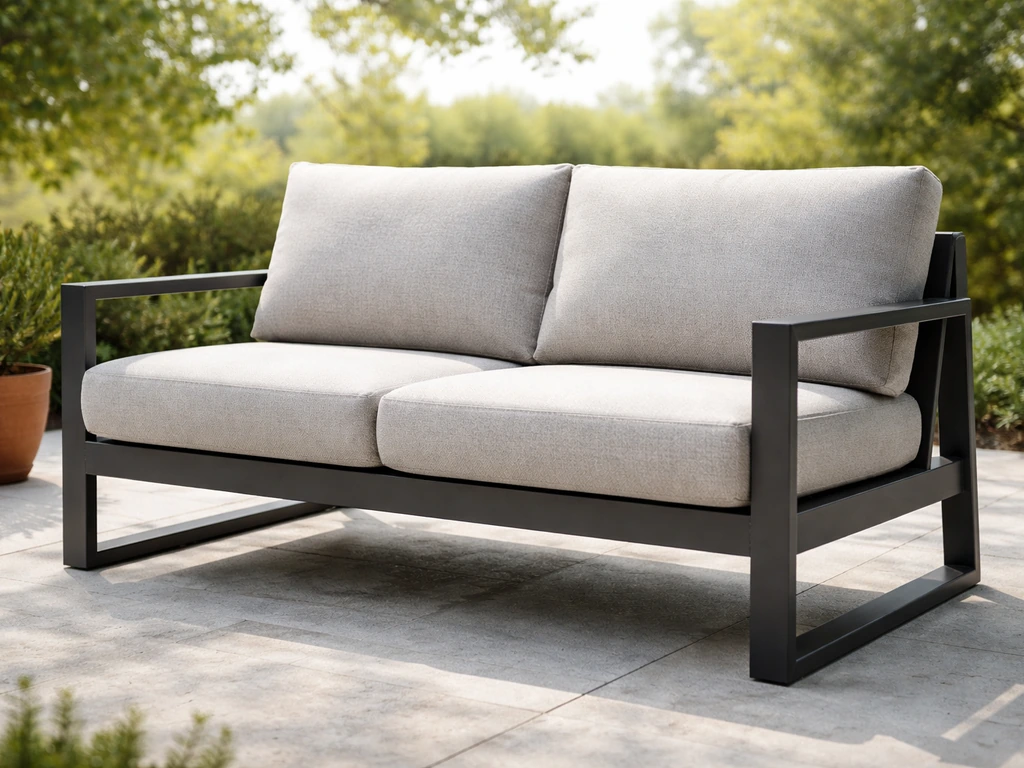
Latest Patio Furniture Buying Guide: Trends, Materials, Durability
Durability-first guide to the latest patio furniture trends, materials, cushions, and care by climate and budget
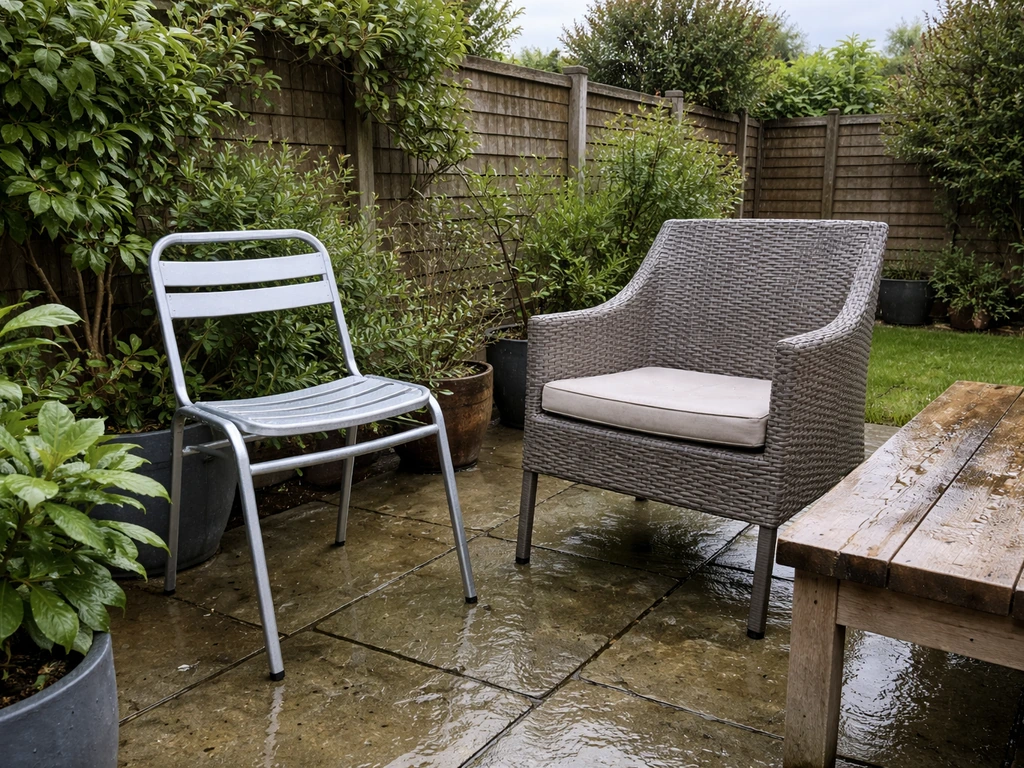
Best Patio Furniture UK Buying Guide for British Weather
UK patio furniture guide for rain and wind: choose the best wood, metal, rattan or composite, durable and comfy.
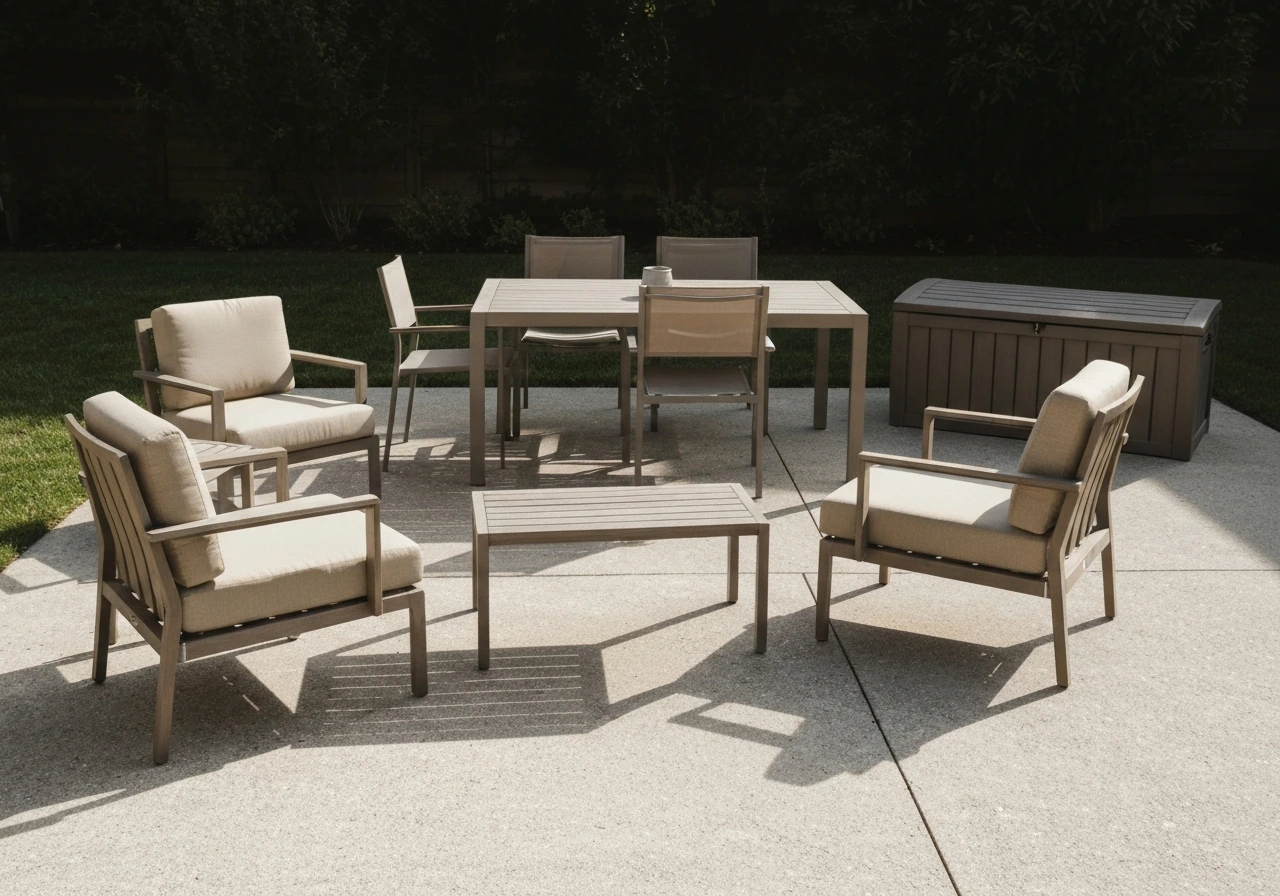
Must Have Patio Furniture: Buying Checklist and Guide
Must have patio furniture checklist with picks for seating, dining, tables, storage, plus material durability and mainte