
For most patio chairs, you want something in the 20 to 40 lb range per piece. In addition to safety, these practical ranges also answer how strict weight limits are for patio chairs in different conditions how strict are weight limits on patio chairs. That's enough weight to resist tipping in moderate wind without becoming a two-person job every time you need to move one.
Best Patio Furniture Weights: Choose Stable Sets by Type

Theo Tierney
24 May 2026
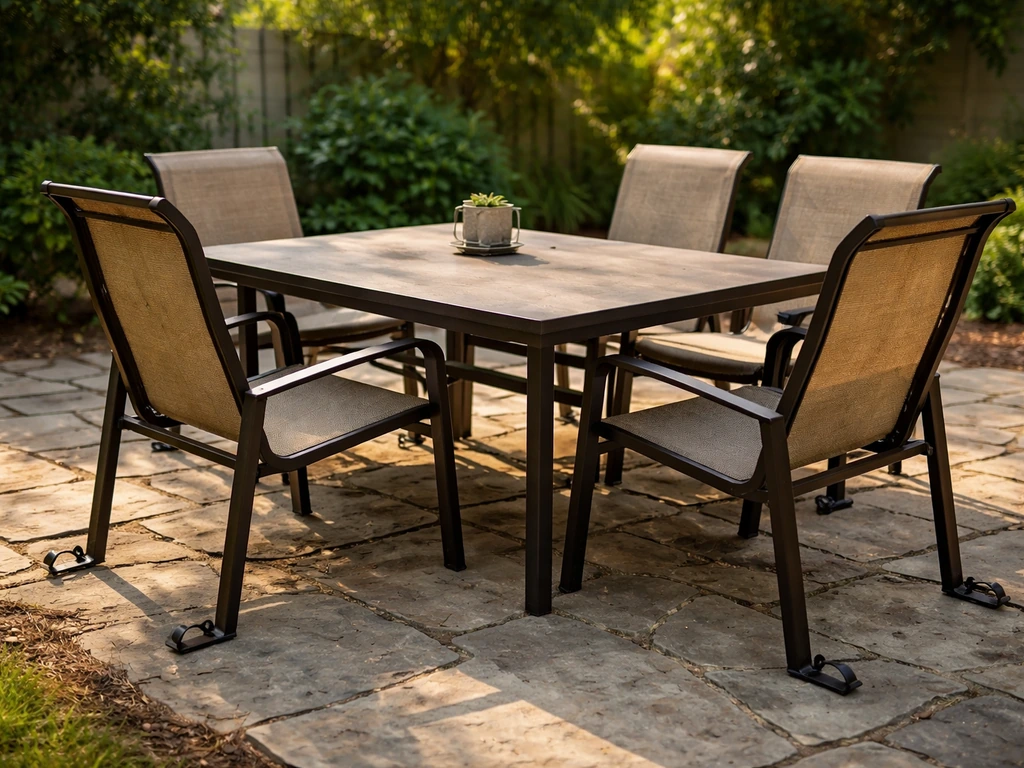
Dining tables should land between 50 and 100 lbs depending on size, loungers between 30 and 60 lbs for resin or aluminum, and sectional pieces between 40 and 80 lbs each. Go heavier than those ranges and you're either getting a truly massive piece, an extremely dense hardwood set, or cast iron, all of which have their place, but only if your space and lifestyle actually call for it.
Why patio furniture weight matters more than most buyers realize
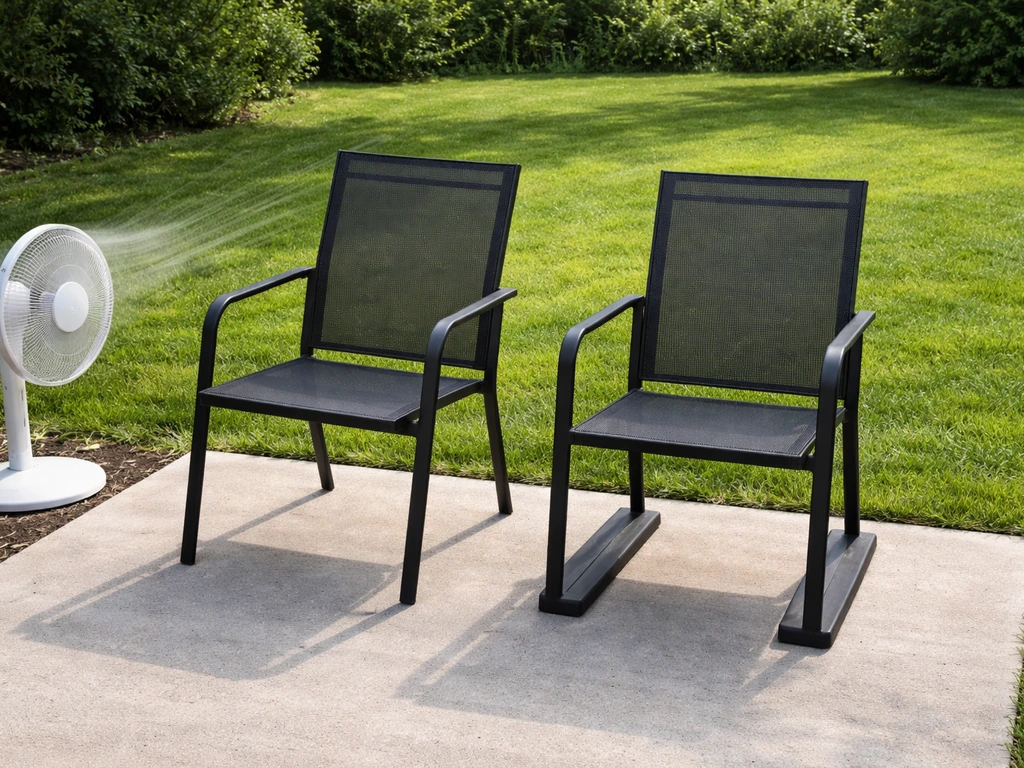
Weight isn't just about whether something feels cheap. It's directly tied to stability, and stability outdoors is a completely different problem than indoors. A lightweight aluminum chair that's fine on a still evening can be a projectile hazard in a 25 mph gust. A concrete-heavy cast iron table won't blow anywhere, but if your deck surface is slightly uneven, and most are, it'll rock every time someone leans on it. Weight interacts with surface contact, leg spread, frame geometry, and wind exposure in ways that no spec sheet fully explains.
There's also a real safety dimension here. Tipping risk isn't just annoying, it matters if you have kids around, seniors who rely on furniture for balance (which we cover separately in our guide to the best patio furniture for seniors), or if your patio is elevated. The right weight range for your situation depends on your wind conditions, your surface type, how often you rearrange, and whether you store pieces seasonally or leave them out year-round.
How to estimate your needed weight range by furniture type
There's no universal "right" weight, but there are practical ranges that work for most residential settings. Use these as a starting baseline, then adjust based on your wind exposure and surface type.
| Furniture Type | Recommended Weight Range | Notes |
|---|---|---|
| Dining chair | 20 – 40 lb | Under 20 lb tends to tip in wind; over 45 lb gets hard to reposition |
| Dining table (4–6 seat) | 50 – 100 lb | Heavier bases help on windy patios; lighter tops need anchoring or ballast |
| Lounge/chaise chair | 30 – 60 lb | Heavier aluminum or HDPE frames add stability without sacrificing portability |
| Sectional piece (per module) | 40 – 80 lb | Sectionals stay put better when connected; each piece still needs enough mass |
| Side/accent table | 15 – 35 lb | Lighter is fine if sheltered; heavier base essential in open, exposed spaces |
| Umbrella base | 50 – 100 lb filled | This is one place where more weight is almost always better |
If you're in a consistently windy environment, coastal areas, hilltops, open fields, push toward the upper end of each range or plan to supplement with anchoring (more on that below). If your patio is sheltered by walls, fences, or dense plantings and you rearrange furniture often, stay toward the lighter end of these ranges.
What each material actually weighs, and what that tells you about performance
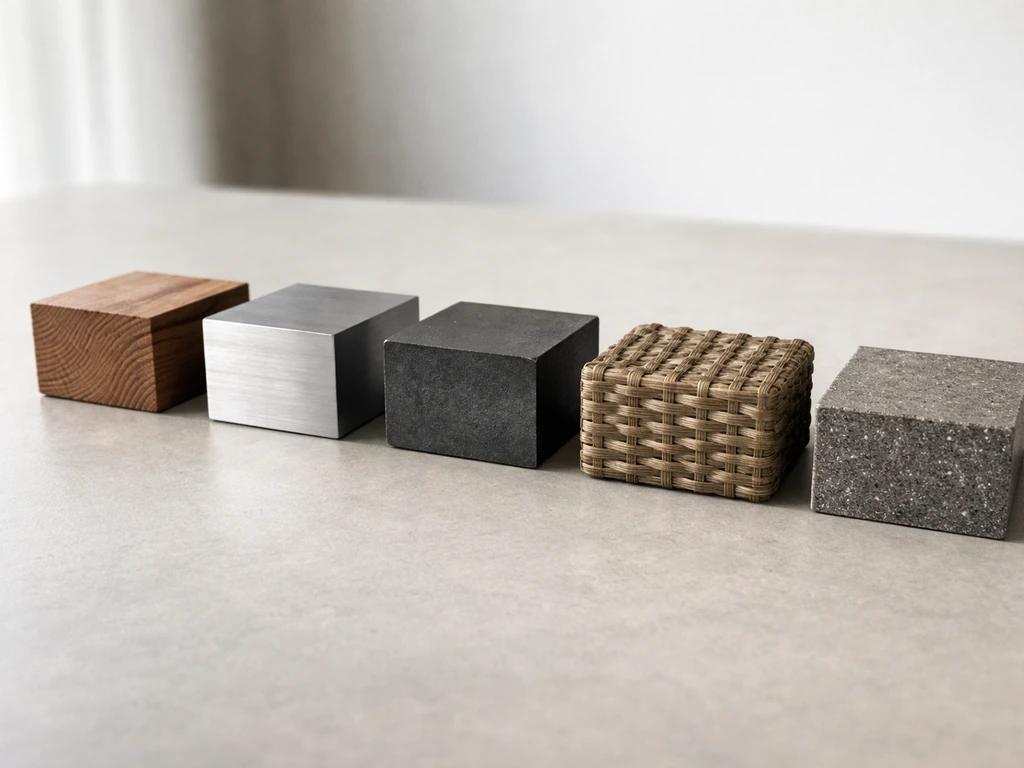
Material choice drives weight more than any other design factor. Here's what to realistically expect from each material family, and what the weight actually tells you about how the furniture will perform outdoors.
Wood: dense, heavy, and genuinely stable
Solid hardwood, teak, eucalyptus, shorea, is naturally heavy. A teak dining chair typically runs 25 to 45 lbs; a 6-seat teak dining table can easily hit 120 to 180 lbs. That mass is part of why teak stays put in wind without any anchoring. The density that makes it heavy also makes it rot-resistant and dimensionally stable across temperature swings. The tradeoff: moving a teak set for cleaning or winter storage is real physical work. Softer wood options like pine or cedar save 20 to 30 percent of that weight, but they also dent and weather faster. With wood, heavier generally means denser, and denser usually means longer-lasting.
Metal: the aluminum vs. steel/iron split
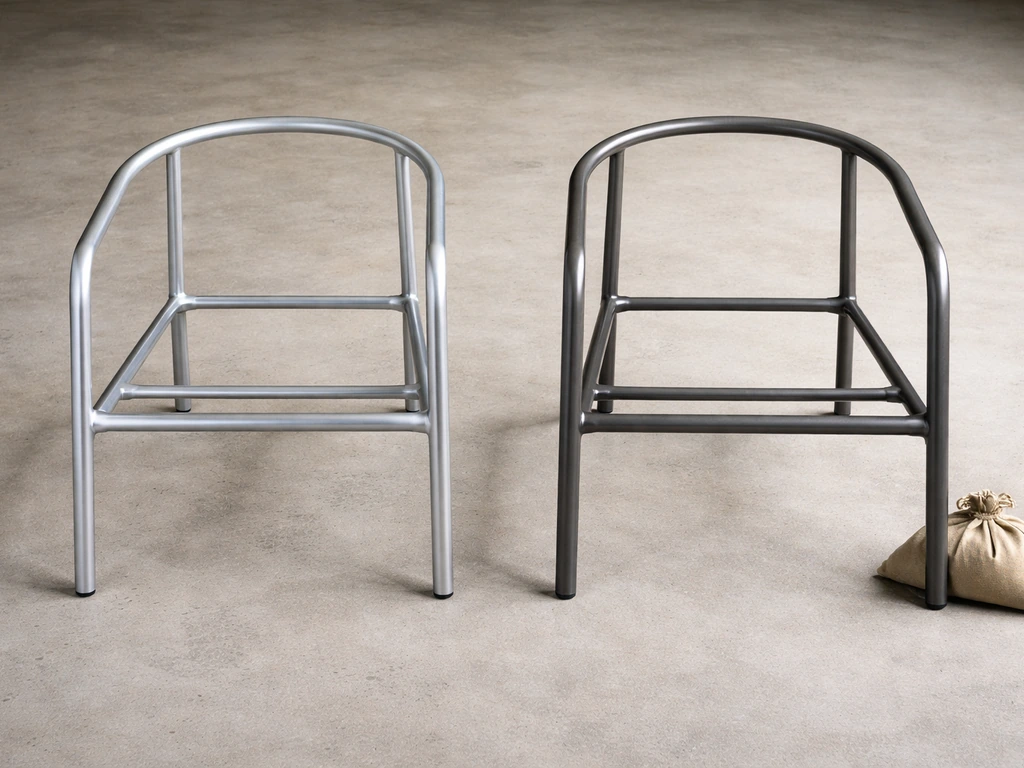
This is where you see the biggest weight variation within a single material category. Cast iron is brutally heavy, an iron bistro chair can weigh 30 to 50 lbs before you add cushions, and a cast iron table base can hit 80 lbs on its own. That weight makes it nearly windproof, but iron rusts without proper coating and is very hard to move. Wrought iron is similar, slightly lighter in thin sections, but still demanding. Steel is in the middle: heavier than aluminum, but much lighter than cast iron, and it provides a good balance of stability and manageability.
Aluminum is the material most people end up with, and for good reason. A quality cast or extruded aluminum dining chair typically lands between 15 and 28 lbs. It won't rust, won't fade if the powder coating is quality, and handles freeze-thaw cycles without cracking. The problem is that the lightest aluminum frames, think thin-wall extruded tube construction, can feel flimsy and tip in moderate wind. The better aluminum pieces use thicker walls, wider leg spreads, or cast aluminum joints that add meaningful weight at the frame's critical stress points. When comparing aluminum chairs, look for anything above 20 lbs as a sign you're getting a more substantial build.
Wicker and resin wicker: light frames, heavier than they look when fully built
Natural rattan wicker is lightweight and not suited for year-round outdoor use in wet climates. Resin wicker (all-weather wicker) is a different animal, it's a synthetic weave over a metal frame, usually aluminum or steel. That underlying frame does most of the structural work. A resin wicker dining chair typically weighs 15 to 30 lbs, and the steel-framed versions land noticeably heavier than aluminum-framed ones.
Deep-seating resin wicker pieces like sectionals can get quite heavy when you factor in the thick cushions, individual cushions on a quality sectional often add 15 to 25 lbs per seat. Without cushions, a resin wicker sectional module might feel surprisingly light. Add cushions and stack them together, and the whole set becomes stable. When shopping wicker, always check whether the weight listed in the spec sheet includes cushions or not, manufacturers are inconsistent about this.
HDPE composite: heavy, stable, and built for permanence
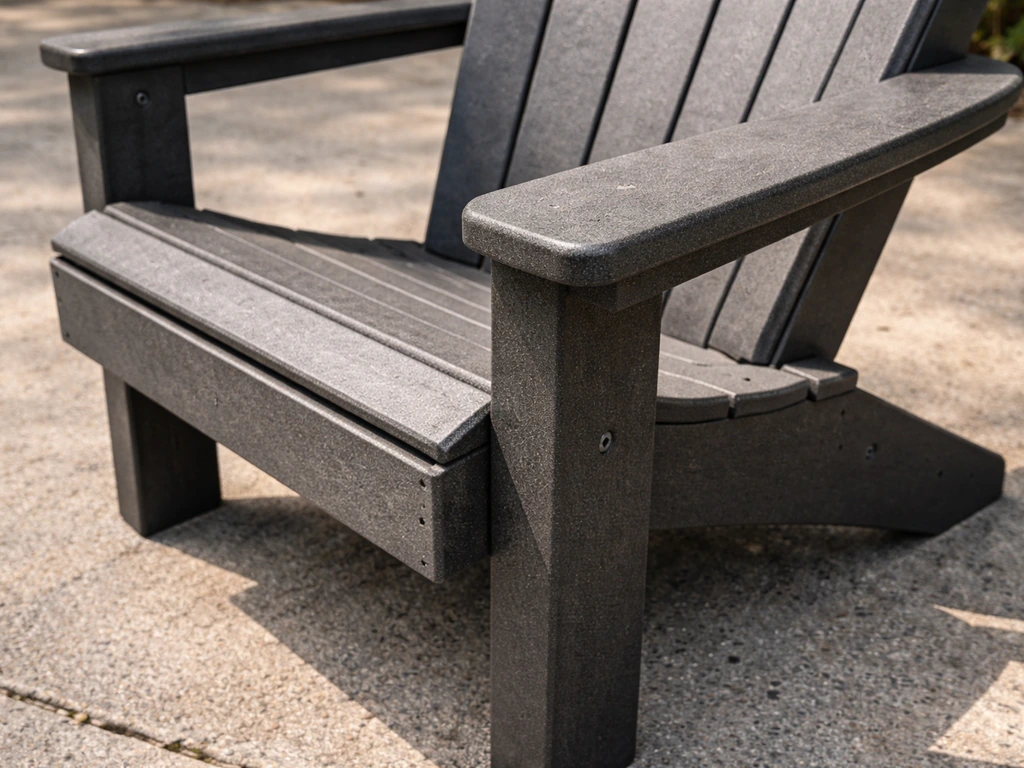
High-density polyethylene (HDPE) composite furniture, POLYWOOD is the most recognized brand, is genuinely heavy for a plastic product. POLYWOOD's Estate Dining Arm Chair weighs 32. 8 lbs and carries a 300 lb weight capacity. That weight comes from the density of the recycled lumber boards used in the frame, and it's a big part of why these pieces sit so solidly.
POLYWOOD also states the Estate Dining Arm Chair is stable on most flat surfaces. Compare that to a thin aluminum chair at 14 lbs and you'll immediately feel the difference in perceived sturdiness.
HDPE composite doesn't rust, rot, or need sealing, and its natural mass gives it good wind resistance without anchoring. Some HDPE lounge pieces get genuinely heavy, [POLYWOOD's Latitude Lounge Chair, for example, lists an item weight of 111 lbs](https://cdn. spasoftwaresolutions. net/product_documents/polywood%C2%AE/2023/Latitude%20Lounge%20Chair%20Spec%20Sheet-121170.
pdf), which puts it in a different category entirely and isn't something most people will be moving around often. That's not a bug for everyone; if you want a permanent, weather-proof lounge setup you rarely move, that weight works in your favor.
Stability in wind and on uneven ground: when to go heavier vs. when to anchor
Heavier furniture is not always the right answer for wind stability. Frame geometry matters just as much as raw weight. A chair with wide-set legs and a low center of gravity is more stable than a tall, narrow chair that weighs the same. Before you default to buying the heaviest option, consider what kind of stability problem you're actually solving.
- Wind tipping: A wider leg spread and lower seat height help more than adding 10 lbs. If you're already in the 25 to 35 lb range for a dining chair, anchoring to a deck surface or using furniture straps is more practical than going to a 50 lb iron alternative.
- Rocking on uneven surfaces: This is a frame and foot design issue, not a weight issue. Furniture glides, rubber feet, or adjustable leveling feet solve this better than mass. A heavy piece that rocks is still unsafe and annoying.
- Sliding on smooth surfaces: Rubber feet or non-slip pads are the right fix. A heavier piece slides less, but not by enough to skip the pads if your deck or tile surface is smooth.
- Sustained high-wind environments: Coastal areas or open hilltop settings may genuinely call for heavier materials (cast iron, HDPE, dense hardwood) or furniture anchoring systems. Deck anchor straps and weight plates for umbrellas are worth the investment in these situations.
For most suburban patios with occasional wind, a chair in the 25 to 35 lb range on a flat surface needs no anchoring. The real value of anchoring comes when you're in a high-exposure location or when you have lightweight pieces you love but can't easily replace. Sectionals especially benefit from connecting modules together, it makes the total mass work as one unit instead of individual light pieces.
Living with the weight: moving, cleaning, and storing your furniture
This is the part people underestimate most when they buy heavy furniture. A 60 lb teak dining chair sounds stable, and it is, but if you have to move eight of them every time you want to sweep under the table, or haul them all to a garage every November, the math changes. Weight isn't just a spec; it's a daily use calculation.
If you live somewhere with real winters (freeze-thaw cycles, snow, ice) and store furniture seasonally, weight matters enormously for practicality. A blank" rel="noopener noreferrer">POLYWOOD lounge chair at 111 lbs isn't going anywhere by yourself. You need a plan: furniture dollies, a storage shed on the same level as the patio, or simply accepting that some pieces stay put under weatherproof covers. Covers are genuinely underused, a quality all-weather cover lets you leave heavier pieces out year-round in climates where prolonged snow load isn't an issue, cutting the weight problem entirely.
For regular cleaning, hosing down, sweeping underneath, wiping cushion frames, lighter pieces between 20 and 35 lbs are much more practical to tilt, shift, or pick up. If you have a small patio where you frequently rearrange to accommodate different group sizes or activities, staying under 30 lbs per chair is worth prioritizing even if it means slightly less wind resistance. Your back will thank you.
How weight interacts with frame design and seat support
Weight capacity and furniture weight are two different numbers, and both matter. A chair's weight capacity tells you the maximum load the frame is engineered to support safely, this is not the same as how heavy the chair itself is. A lightweight aluminum chair rated for 250 lbs is not the same structural product as an HDPE chair rated for 300 lbs, even if their capacities look similar. The materials, joint construction, and seat pan design are doing different work under stress.
Frame weight is often a proxy for build quality because thicker walls, solid joints, and higher-density materials all add mass. When two chairs have similar listed weight capacities, the heavier one is usually the more robustly built option, it's using more material, not just rated higher by the marketing team. This matters especially if you're buying furniture for larger adults or for active outdoor use.
Our separate guides on the best patio furniture for heavy persons and best heavy-duty patio furniture go deeper on weight capacity ratings specifically, but the short version here is: a furniture piece that feels substantial and sits in the 30 to 40 lb range for a dining chair is almost certainly better built than one that hits the same capacity rating at 16 lbs. If you want a quick shortlist for high stability and stronger construction, that guide to the best heavy-duty patio furniture is the most direct place to start.
If you are focused on comfort and safety for older adults, you can also use our checklist for the best patio furniture for seniors to choose the right blend of stability and manageable weight best patio furniture for heavy persons. If you want to compare models, our best heavy-duty patio furniture guide can help you choose options that balance stability, materials, and weight.
Seat support also interacts with frame weight in a subtle way. Lighter frames often use thin sling fabric or minimal webbing because the engineering budget went into reducing material cost rather than adding structural members. Heavier frames can support denser cushions, deeper seat pans, and more complex support systems. If you want truly comfortable, supportive deep seating, the chair probably needs to weigh enough to support the full cushion and seat system, typically 35 lbs or more for a quality deep-seat piece.
Picking the right weight range for your climate and how you use your outdoor space
Climate should shape your weight decision as much as personal preference. Here's how to think through it by situation.
Hot, sunny climates (Arizona, inland Southwest, deep South)
UV and heat are your main enemies, not wind or moisture. Weight matters less here for weather resistance, but you'll want aluminum or HDPE over steel (which can get searingly hot in direct sun) and over wood (which dries out and cracks without regular oiling). Mid-weight aluminum or HDPE in the 20 to 35 lb range per chair is usually ideal, light enough to move into shade, substantial enough to feel stable.
Coastal and high-humidity environments (Florida, Gulf Coast, Pacific Northwest)
Salt air corrodes steel and iron faster than most people expect. In true coastal zones, stick to marine-grade aluminum, HDPE composite, or teak, all of which handle salt exposure well. Teak's natural weight (typically 30 to 45 lbs per dining chair) is an advantage here because it doesn't need anchoring in the afternoon sea breezes common along coastlines. HDPE is a great alternative: similar weight class, zero maintenance, and completely immune to salt.
Cold climates with seasonal storage (Upper Midwest, Northeast, Mountain West)
If you're pulling furniture in for winter, weight is a serious practical consideration. Staying under 30 lbs per chair makes seasonal storage manageable for one person. Aluminum stacks and stores easily; HDPE is heavier but virtually indestructible through freeze-thaw cycles if you can handle the move. Wood needs to come in or be very carefully covered, the seasonal weight problem is real with hardwood sets. If you go heavy, plan your storage logistics before you buy.
Exposed, windy spaces (rooftop decks, hilltops, open yards)
This is where higher weight furniture earns its keep. Aim for the upper end of the ranges in the table above, or combine mid-weight furniture with proper anchoring. Furniture-to-deck anchor straps run $20 to $50 and are worth every cent on a rooftop. For tables especially, a heavier base (70 to 100 lbs) is much more practical than anchoring every time.
Sheltered suburban patios used for dining and entertaining
This is the majority of homeowners, and the answer here is straightforward: mid-weight aluminum or resin wicker in the 20 to 35 lb range per chair, 60 to 90 lbs for the dining table. You don't need iron or heavy hardwood. You'll get better use out of your furniture if you can rearrange easily, and in a sheltered patio the wind resistance advantage of extra mass is minimal. Spend the money you save on better cushions, they improve the experience far more than extra pounds in the frame.
When shopping and weights aren't listed on the product page, there are a few practical cues to look for. Check the shipping weight listed in the product specs, subtract roughly 10 to 20 percent for packaging to estimate actual furniture weight. Read the weight capacity rating: anything under 200 lbs suggests a lighter-duty build; 250 to 300 lbs is standard residential; 350 lbs and above signals a heavier-built, more robust frame. Look for frame wall thickness in the description for aluminum, "heavy-gauge" or "thick-wall" are meaningful signals. And if you can, check in-person: picking up a floor sample at a retailer tells you more in five seconds than any spec sheet.
FAQ
If my patio is uneven or slightly sloped, what weight should I prioritize for stability?
Prioritize furniture that has a low center of gravity plus enough mass to resist rocking, not just a higher number. In practice, aim toward the upper end of your category range (for example, 30 to 40 lb for many chairs) and ensure the legs are wide-set or have leveling glides, then test by leaning in a normal seating position before fully arranging the set.
How do I estimate patio furniture weight if only the shipping weight is listed?
Use a conservative adjustment. Subtract about 10 to 20% for packaging and pallets, but if the item ships in multiple boxes or includes cushions separately, subtract closer to 20%. If the estimated furniture weight still places it below the lower end of the recommended range, assume it will feel less stable in wind than the number suggests.
Do weight ranges change for stackable or folding patio chairs?
Yes, they often use thinner frames and more joints to support folding, which can reduce stability even if the chair weight falls in-range. For stackable or folding models, target the higher end of the chair weight band and verify leg geometry, wide feet, and whether the chair locks rigidly when deployed (not just held in place by a latch).
Should I trust furniture weight capacity more than the listed weight for wind resistance?
Not always. Capacity ratings tell you what the structure can safely support, but they do not guarantee tipping resistance. A piece can be high capacity and still tip if it is tall, narrow, or uses a light frame. Use both, but treat weight as a stability clue and frame geometry (leg spread, center of gravity) as the deciding factor for wind and tipping.
For resin wicker, does the listed chair weight usually include cushions?
Often it does not, since manufacturers vary. If the spec lists a weight but your cushion set adds noticeable bulk, expect the fully “ready to sit” weight to be higher (and typically more stable). When comparing models, match the comparison condition, either all with cushions or all without, or you will likely overestimate stability based on spec-sheet weight.
What’s the best way to anchor furniture without making it harder to clean or rearrange?
Use anchoring where it matters, the corners or the heaviest points, and consider quick-release straps for setups you move seasonally. For rooftops or high-wind locations, anchoring tables with a heavier base tends to be more practical than anchoring every chair, since tables catch more wind and topple more easily when chairs are spread out.
Are heavier furniture sets always safer around kids and seniors?
Heavier usually helps reduce tipping, but the bigger issue is predictable movement. Chairs with higher mass can still shift or tip if they have narrow legs, slick feet on decking, or tall backs that catch wind. Prioritize stable leg design, non-slip feet, and appropriate placement (keep sets away from play zones) even if you choose lighter materials for manageability.
What should I do if I want deep-seating comfort, but I also need manageable weight?
Aim for the threshold where the chair can support the seat and cushion system. Deep-seat pieces often need about 35 lb or more for the full comfort stack, but you can offset the weight with a layout plan, for example fewer modules, fewer chairs, or sectionals that connect into a single anchored unit rather than many lightweight pieces.
How do I choose weights for coastal or salt-air patios when furniture brands vary?
Stick to salt-tolerant materials and keep weight in the mid-to-upper band for stability, marine-grade aluminum, HDPE composite, or teak. If you compare by weight, remember that lighter aluminum can feel unstable in strong gusts, so compare frame thickness and leg spread, not just the overall item weight, especially in exposed coastal breezes.
What’s a practical rule for winter storage logistics by weight?
If you need to store by yourself, try to keep chairs under about 30 lb so one person can lift them safely. For heavier items, plan ahead with furniture dollies, stored covers, or offloading to a shed that matches the patio elevation. If you cannot change the storage constraints, choose lighter models even if that means compromising slightly on wind resistance.
If weights are not listed, what cues besides material tell me a chair will be stable?
Look for indications of build thickness and rigidity, such as heavy-gauge or thick-wall aluminum, cast aluminum joints, wide leg spreads, and fixed hardware that resists wobble. Also consider that sling-style frames and minimal webbing often belong to lighter builds, which can be fine in sheltered areas but are more prone to tipping in moderate wind.
Next Articles
Common Patio Furniture Wood: Best Choices, Care & Tips
Compare common patio furniture wood types, teak, cedar, redwood, oak, with durability, finishes, and care tips.
Best Wood Patio Stain: Choosing Durable, Low-VOC Finishes
Compare and choose the best wood patio stain: durability, finish, climate tips, prep, and top product picks.
Common Patio Furniture Wood: Teak, Cedar, Redwood and More
Compare common patio woods like teak cedar redwood and pressure-treated: durability, quality checks, and care for long l