
Teak is the best wood for outdoor patio furniture overall, full stop. It sits at durability class 1 under EN 350 standards, meaning its heartwood resists rot, insects, and moisture cycling better than almost anything else you can buy. But teak is expensive, and depending on your climate, budget, and what you're building, species like ipe, white oak, black locust, and western red cedar can be smarter choices. Here's how to match the right wood to your actual situation.
Best Wood for Outdoor Patio: Top Choices for Tables

Theo Tierney
23 May 2026
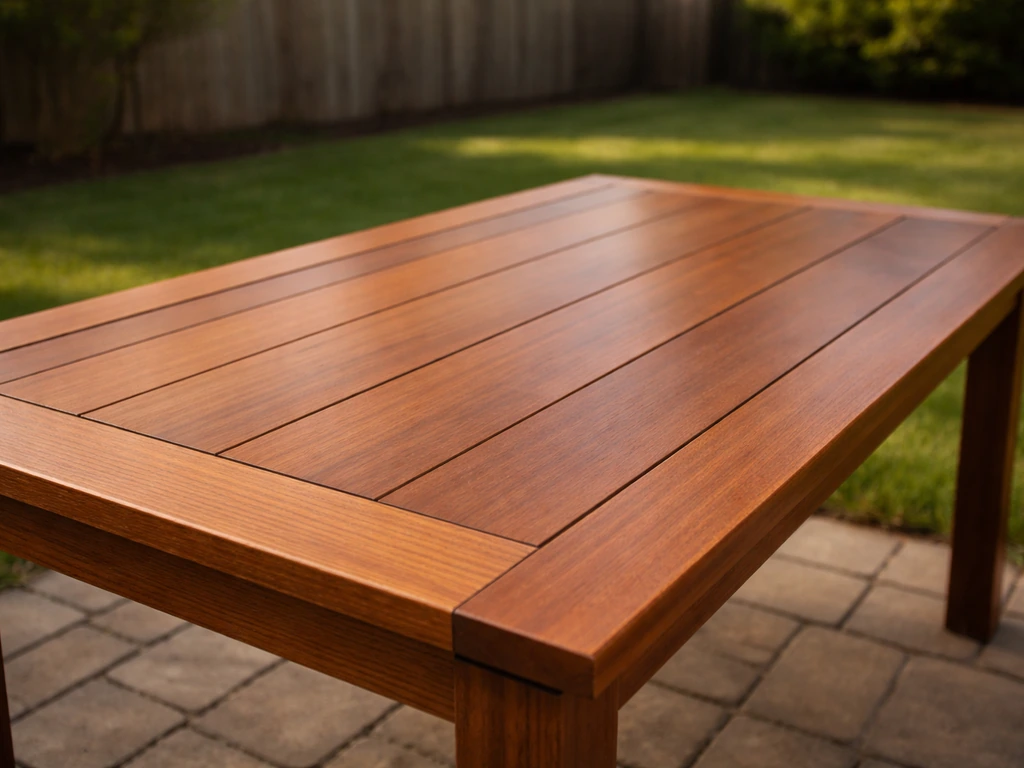
Top wood choices for outdoor use
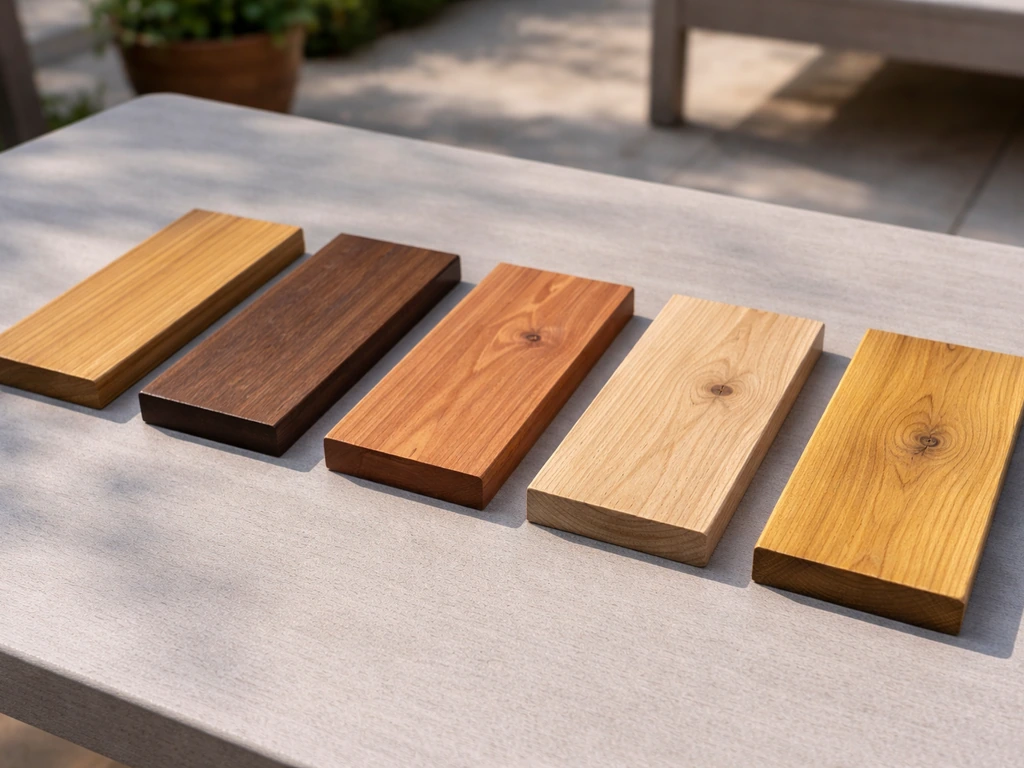
Not all wood is created equal outdoors. The species that survive years of sun, rain, and freeze-thaw cycles share a few traits: dense, oil-rich or tannin-rich heartwood that resists moisture absorption, and tight grain that limits how much the wood moves as humidity changes. Here are the ones worth considering.
| Wood Species | Durability Class | Natural Oils/Tannins | Rot Resistance | Insect Resistance | Relative Cost |
|---|---|---|---|---|---|
| Teak | Class 1 (Very Durable) | High natural oils | Excellent | Excellent | High |
| Ipe (Brazilian Walnut) | Class 1 | High tannins + oils | Excellent | Excellent | High |
| Black Locust | Class 1–2 | High tannins | Excellent | Good | Moderate |
| White Oak | Class 2 (Durable) | Tyloses block vessels | Very Good | Good | Moderate |
| Western Red Cedar | Class 2–3 | Natural thujaplicins | Good | Moderate | Low-Moderate |
| Shorea / Meranti | Class 2 | Moderate oils | Good | Moderate | Moderate |
| Eucalyptus (select species) | Class 1–2 | Variable by species | Very Good–Excellent | Good–Excellent | Low-Moderate |
Teak gets the top spot because its combination of natural oils, silica content, and tight interlocked grain makes it genuinely low-maintenance by wood standards. If you want to preserve the warm reddish-brown color, you'll need to apply teak oil regularly, but if you leave it alone it weathers to an attractive silver-gray that's still structurally sound for decades.
Ipe is arguably tougher in raw durability tests and is denser than teak, but it's harder to work with and can be even pricier. Black locust is the underrated option, especially in North America: its heartwood rivals teak in rot resistance, grows domestically, and costs significantly less. White oak's vessels are plugged by tyloses, a cellular structure that makes it unusually water-resistant for a domestic hardwood.
Cedar is the budget-friendly pick for frames and light structures, though it needs more maintenance protection on horizontal surfaces that collect water.
Durability and rot resistance: what actually matters
When you see a wood marketed as 'rot-resistant,' the claim applies to heartwood only. The sapwood of virtually every species, including teak and ipe, decays quickly when exposed to moisture. This is why buying cheap lumber with a lot of sapwood (you'll see it as lighter-colored streaks or edges) is a false economy. Durability ratings like EN 350 and ASTM D2017 test heartwood blocks specifically, so when you're shopping, look at the cut face of any board and make sure the majority of the cross-section is the darker heartwood.
Beyond species, three physical factors drive real-world longevity. First is density: denser woods (measured in pounds per cubic foot or kg/m3) absorb moisture more slowly, giving decay fungi less of a foothold. Ipe is so dense it barely floats. Second is grain orientation.
According to the Wood Handbook from the USDA Forest Products Laboratory, wood moves most in the tangential direction (perpendicular to growth rings) and least in the radial direction. Flatsawn boards move more than quartersawn boards, which means they crack and cup faster on horizontal outdoor surfaces. For tabletops especially, quartersawn or riftsawn material is worth the extra cost. Third is joinery: water traps at poorly fitted joints and accelerates rot right where structural stress is highest.
Even the best species will fail early if the construction is sloppy.
- Heartwood only: check the cut face for the darker core material; avoid boards with wide sapwood bands
- Higher density = slower moisture absorption = longer service life in wet conditions
- Quartersawn or riftsawn boards warp and check less on horizontal surfaces like tabletops
- Tight, waterproof joinery matters as much as species choice; gaps collect water and breed decay
Weather and climate fit (hot sun, rain, freeze-thaw, humidity)
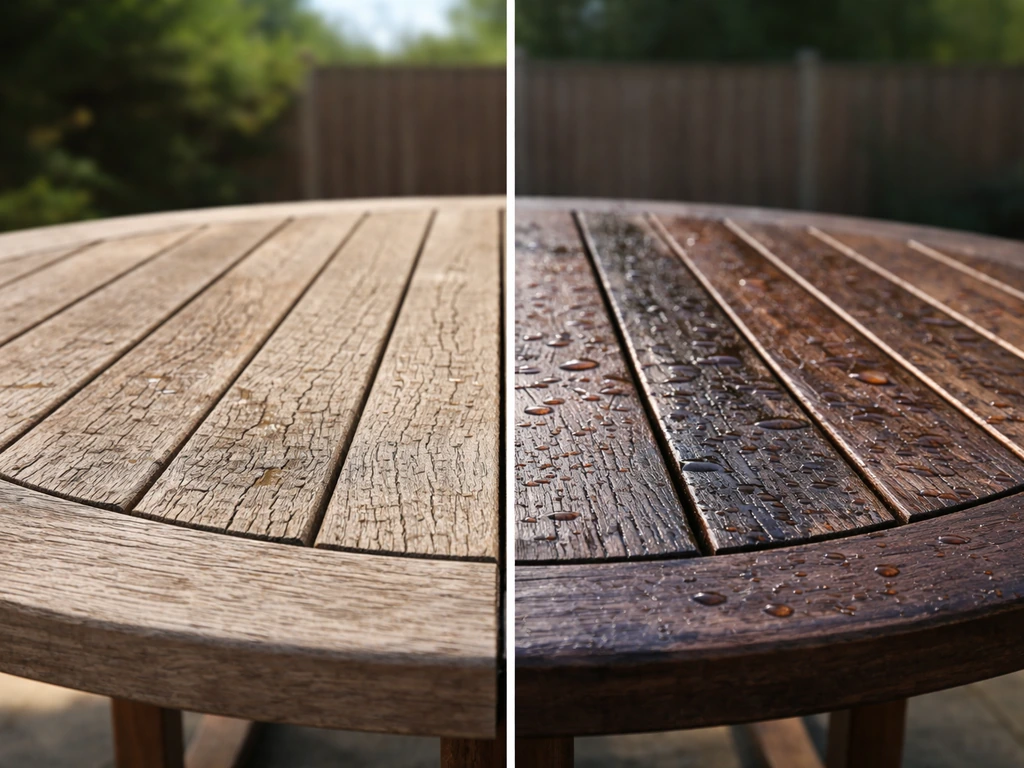
Climate is the variable most buying guides skip over, and it's where species selection gets personal. The wood that thrives on a shaded Florida porch is not automatically the right call for an exposed Arizona deck or a Minnesota backyard.
Hot sun and UV exposure (Southwest, desert climates)
UV radiation is the enemy of wood color and surface integrity. Dense, oil-rich woods like teak and ipe gray more slowly and crack less under UV bombardment than lighter species, but no wood is UV-immune. In harsh sun environments, a semi-transparent exterior stain with UV blockers (look for products positioning themselves in the DEFY Extreme category, which explicitly claims UV protection) makes a real difference compared to clear finishes. Messmer's UV Plus points this out directly: clear finishes with no pigmentation provide essentially no UV protection. Go with a pigmented, penetrating oil-based stain in high-UV climates, and plan to reapply on a 1-to-2-year cycle.
Heavy rain and high humidity (Southeast, Pacific Northwest, Gulf Coast)
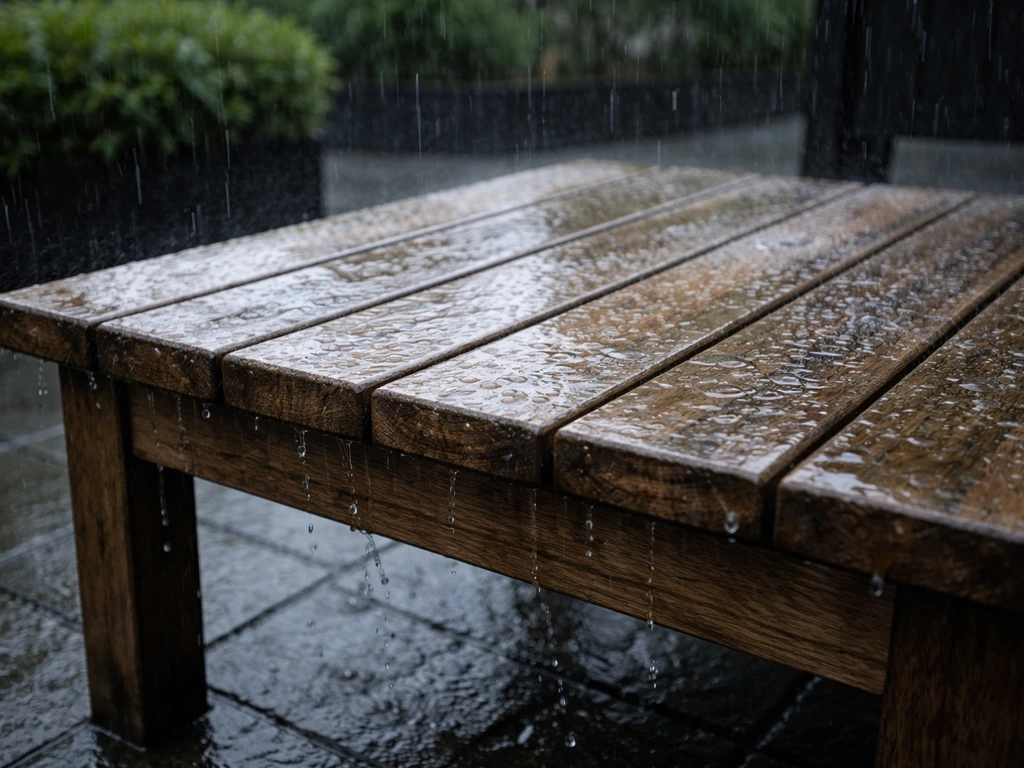
In persistently wet climates, you're dealing with wood that rarely fully dries out. This is the scenario where durability class 1 species pull ahead by the widest margin. Teak, ipe, and black locust are your best bets here. Cedar will work with diligent maintenance, but plan on annual sealing at minimum. Keep furniture off solid surfaces that trap standing water by using furniture feet, glides, or placing pieces on slatted decking so air can circulate underneath. Mildew is also a real problem in humid climates, even on teak, so regular cleaning with a mild oxalic-acid brightener keeps surfaces from going dark and slimy.
Freeze-thaw cycles (Midwest, Northeast, mountain regions)
Freeze-thaw is brutal on wood because water expands when it freezes. Any moisture that penetrates a finish and sits in the wood will expand, opening up cracks and checking that then let in more water. In these climates, bringing furniture indoors or at least covering it tightly over winter makes a massive difference in longevity regardless of species. If that's not practical, prioritize dense, tight-grained heartwood and apply a penetrating oil or stain before the cold season, not in spring after the damage is done. White oak handles freeze-thaw well because its tyloses-blocked vessels limit water penetration in the first place.
Coastal and salt-air environments
Salt air accelerates corrosion on metal hardware and breaks down many finishes faster than inland conditions. Use stainless steel or silicon bronze hardware (never standard zinc or cheap galvanized fasteners) and stick with species like teak or ipe that have inherent resistance and don't depend heavily on surface coatings to survive. Rinse furniture occasionally with fresh water to remove salt deposits, which pull moisture into wood and accelerate surface degradation.
Best woods by patio furniture type
Different parts of outdoor furniture take different kinds of abuse. A tabletop sits in standing water every time it rains. Chair legs contact soil or wet concrete. Bench frames carry weight and flex. Matching species and construction details to the specific demand of each piece is how you avoid the weakest-link failure that ruins otherwise good furniture. You can use the same approach to compare which of the best woods for patio furniture types fits your needs best wood for patio furniture.
Tabletops
Tabletops need the most rot-resistant, dimensionally stable wood you can get, because they hold water after every rain. Teak and ipe are the top choices. For either species, specify quartersawn or riftsawn boards to minimize cupping. Slat-style tops that let water drain through are more forgiving than solid panel tops, which trap moisture at the edges and bottom face.
If you're buying a solid tabletop in a budget wood like shorea or eucalyptus, make sure there are drainage gaps and that the underside is sealed, not just the top. USDA Forest Service reporting on robusta eucalyptus indicates that its heartwood shows resistance to termite and insect attack, supporting its durability characteristics [solid tabletop in a budget wood like shorea or eucalyptus](https://www. fs. usda.
gov/psw/publications/documents/pswrp009/pswrp009. pdf? q=robusta).
Chairs and seating
Chair frames flex under load and weight, so you need a wood with both rot resistance and enough flex strength that joints don't work loose under repeated use. Teak is excellent here. Black locust is strong enough for this application and significantly cheaper. Western red cedar is light and comfortable to work with for DIY seating, but reinforce joints with stainless screws and a good exterior wood glue rather than relying on the wood's compression strength alone. Avoid pine or fir for chair frames, even pressure-treated, because the joints loosen faster and the wood checks badly in wet-dry cycling.
Benches
Benches live outdoors year-round more than almost any other piece, often left uncovered on patios or in gardens. White oak and black locust are excellent here because they combine durability with availability in thicker stock. Teak benches are common for good reason, they last for generations with minimal care, but a well-made black locust bench is a smarter value buy if you're sourcing from a domestic sawyer. For seat slats, slightly round over the top edges so water sheds off rather than sitting in a flat groove that holds moisture.
Frames and structural components
Structural frames need strength and decay resistance, and they're often partially hidden, so appearance matters less. For frames, black locust and white oak are excellent, practical choices. Ipe is strong but very hard to drill and fasten without pre-drilling every hole, making it harder for DIY builds. Western red cedar frames work well if they're off the ground and not in constant contact with moisture. Pressure-treated lumber is an option for substructure (like where the frame contacts the ground or a deck surface), but avoid it for visible furniture components because it's harder to finish attractively and the treatment chemicals can bleed through some finishes.
Finishes, sealing, and maintenance routines
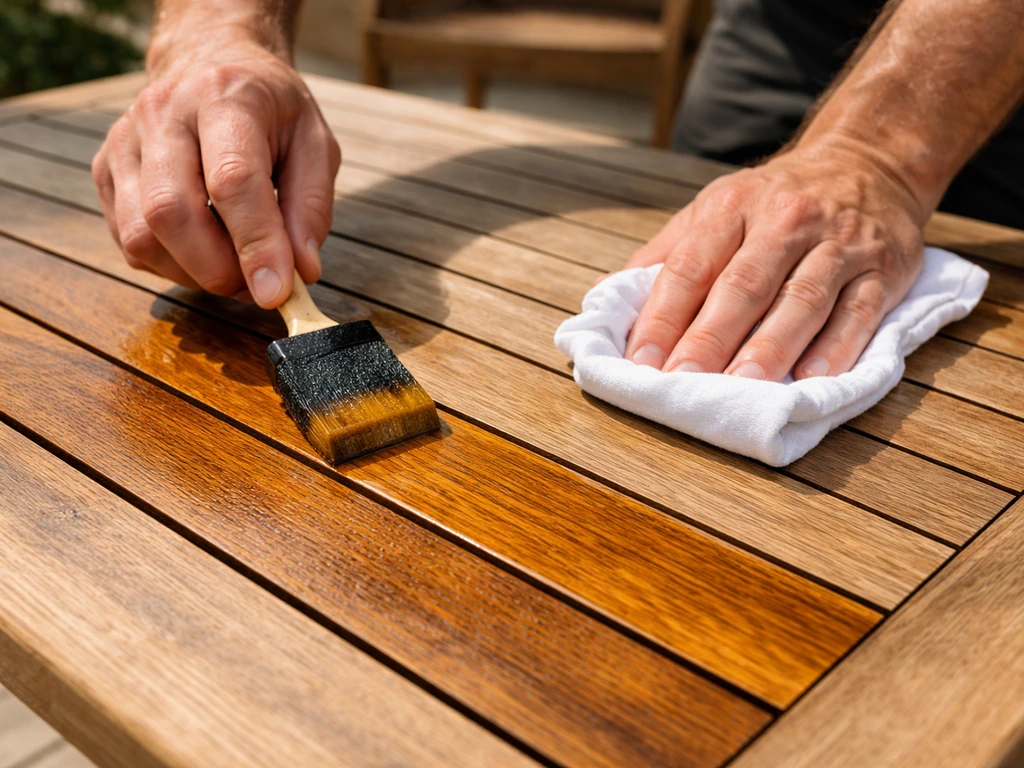
The finish you choose determines how much work you're signing up for, not just how the wood looks. Here's the honest breakdown.
Penetrating oils
Penetrating teak oils and marine-grade oils soak into the wood rather than forming a surface film. This is generally the right approach for dense outdoor hardwoods like teak and ipe, because a surface film peels and traps moisture underneath, which is worse than no finish at all. The trade-off is reapplication frequency. DEFY Extreme’s datasheet also lists drying time parameters for the stain, which can help you plan when it’s ready for the next coat [reapplication frequency](https://deckstain.
com/pdf/defy-extreme-wood-stain-datasheet. pdf). Penofin's own technical guidance calls for retreating within 3 to 6 months after the first application, then again within 10 to 12 months after that. On weathered or grayed teak, TotalBoat recommends cleaning and sanding in the grain direction before re-oiling.
If you want to preserve teak's reddish-brown color, as Carl Hansen and Westminster Teak both point out, you need to oil regularly, because graying is just surface oil evaporating and UV breaking down the lignin. The silver-gray look is harmless but permanent if you let it go too long without treatment.
Semi-transparent stains
A quality semi-transparent exterior stain is the best option for softer or lighter woods like cedar and white oak, and works well on teak if you want UV color protection without heavy film buildup. For the best wood patio stain results, choose a semi-transparent, water-repellent product that penetrates and offers UV protection without heavy film buildup. The pigment in semi-transparent stains blocks UV rays, which clear finishes simply cannot do. Look for water-repellent formulations that penetrate rather than film-build. These typically need reapplication every 1 to 2 years on horizontal surfaces, and every 2 to 3 years on vertical surfaces that drain naturally.
What to avoid
Exterior paint is a trap on most hardwood furniture. It looks clean initially but traps moisture underneath as it inevitably cracks, leading to faster decay than bare wood would experience. Varnish and polyurethane have the same problem: they film-build on top of the wood, and when that film fails (and it will), you've got a peeling mess that requires stripping before you can refinish. Save paints and film-building finishes for indoor furniture. Outdoors, penetrating finishes are almost always the better long-term choice.
Maintenance schedule
- Spring: Clean with a wood-appropriate cleaner or a diluted oxalic acid brightener to remove mildew, tannin bleed, and gray surface oxidation. Rinse thoroughly and let dry completely (at least 48 hours).
- Spring (after drying): Apply penetrating oil or semi-transparent stain according to product specs. For dense hardwoods, one coat is usually sufficient. For cedar or softer woods, two coats with 8 to 12 hours between applications.
- Mid-summer (for oil-finished dense hardwoods): Check for graying or water no longer beading. If water absorbs instead of beading, reapply a maintenance coat.
- Fall: Clean again, inspect joinery for loosening or cracking, tighten or repair as needed, and apply a final maintenance coat before covering or storing for winter.
- Ongoing: Keep furniture off surfaces that trap standing water, and shake off pooled water after heavy rain rather than letting it sit.
Buying guidance: quality grades, thickness, joinery, and value
Most of the quality decisions happen before the furniture hits your patio. Here's what to look for when buying, whether you're shopping for pre-made furniture or sourcing lumber to build your own.
Lumber grades and heartwood content
For species like teak, ipe, and black locust, the durability ratings that matter (ASTM D2017 and EN 350 class ratings) apply strictly to heartwood. When buying teak furniture, look for 'plantation teak' with verified sourcing (FSC or SVLK certification), and inspect the wood's cut surfaces. Deep golden-brown color throughout, with minimal light-colored sapwood at edges, is what you want. For white oak or cedar at a lumber yard, look for tight grain (more rings per inch = slower-grown = denser and more stable) and minimal knots in load-bearing pieces like chair legs and frame rails.
Thickness and dimensions
Thicker stock holds up better outdoors because it has more material to lose to surface checking and abrasion before structural integrity is compromised. For tabletops, look for slats or panels that are at least 1 inch thick (25mm) finished. Chair seat slats at 7/8 to 1 inch are comfortable and durable. Legs and aprons should be at least 1.5 inches in their thinner dimension for any real outdoor load-bearing situation. Furniture with very thin components (3/4 inch or less on legs) is making a cost cut that shows up later as broken joints and warped slats.
Joinery quality
This is where most cheap outdoor furniture fails first. Look for mortise-and-tenon joints at the main structural connections (where legs meet aprons and stretchers), not just dowels or screws. Bolted connections with stainless steel hardware are acceptable and actually serviceable outdoors if the bolt holes are sealed. Avoid furniture where the primary structural connections are just glue and a single dowel or screw. Check that any exposed end grain (the cut ends of wood) is sealed or capped, because end grain absorbs moisture at many times the rate of face grain and is where checking and decay start.
Solid wood vs. engineered components
For visible surfaces and structural load-bearing parts (tabletops, legs, arms), solid wood from a quality species is worth the investment. For hidden framing or secondary structural elements, engineered options like marine-grade plywood with solid wood edge banding can work, but only if the core is rated for exterior use and all edges are fully sealed. Standard interior plywood or MDF outdoors is not a trade-off, it's a mistake; those materials fail in one or two seasons.
Value reality check
Genuine teak furniture is expensive, but the total cost of ownership over 20 years is often lower than replacing cheap softwood furniture every 3 to 5 years. If budget is tight, black locust or white oak furniture from a domestic craftsman is a genuinely excellent alternative at a lower price point. Cedar is a workable budget option for covered patios or climates with moderate moisture, but budget for annual maintenance.
The worst value is 'teak-look' furniture made from lower-durability tropical species with minimal heartwood content, sold at aspirational prices. If a teak set seems unusually cheap, the wood is probably mostly sapwood, a junior species, or plantation-grown timber that wasn't allowed to mature enough to develop real heartwood density. If you want more guidance on evaluating complete furniture sets by species, that falls naturally into comparing specific pieces across the best wooden patio furniture options available today.
For more guidance on evaluating complete furniture sets by species, see our breakdown of the best wooden patio furniture options available today. If you're working on a common patio furniture wood crossword clue, look for woods like teak or ipe that are frequently recommended for outdoor sets. For more, explore how to compare specific pieces across the best wooden patio furniture options available today.
FAQ
Is teak always the best wood for an outdoor patio, even if it is covered most of the year?
Teak is the most forgiving overall, but “best” depends on exposure. If the patio is genuinely sheltered from driving rain and you only get occasional wetting, white oak and black locust often perform nearly as well with less cost. The biggest deciding factor is how often tabletops and chair legs fully dry after rain.
How can I tell if a board has enough heartwood before buying?
Inspect the cut face and the edges. You want the darker, uniform majority of the cross-section to be heartwood, with only thin, light sapwood bands at the perimeter. If the piece is mostly light-colored wood, the rot resistance claim usually does not apply to the sapwood portion.
Should I choose quartersawn or riftsawn wood for outdoor patio furniture parts other than tabletops?
Quartersawn or riftsawn is most critical where cupping or warping causes puddling or joint stress, mainly tabletops and other flat horizontal parts. For legs and frames, tight grain still matters, but the “must-have” stability requirement is lower because those members are not typically holding standing water.
What’s the biggest mistake people make when finishing outdoor hardwoods?
Using a film-building finish like paint, varnish, or polyurethane. These trap moisture when they inevitably crack, and failures can force full stripping. For most top patio woods, penetrating or semi-transparent, pigment-based penetrating stains reduce maintenance pain because they do not create a thick film layer.
How often should I refinish teak or ipe if I want it to last for decades?
Expect a maintenance cycle rather than “set it and forget it.” Teak oils are commonly reapplied within months after the first application, then on an annual or 1-to-2-year rhythm depending on exposure and whether the finish is penetrating oil versus a stain. Horizontal surfaces generally require more frequent attention than vertical ones.
Do I need to oil teak even if I do not care about preserving the reddish-brown color?
No, the silver-gray weathered look is structurally fine. What you trade is surface appearance and how fast the surface checks may develop. If you want to slow graying and keep the surface more uniform, regular oiling is the practical lever.
Can I use pressure-treated lumber for patio furniture components you will see every day?
It is best reserved for hidden substructure (like parts that contact the deck) rather than visible furniture. Visible components are harder to finish attractively, and some treatments can bleed through certain coatings over time. If you do use it, seal all surfaces, especially end grain, and plan for a higher maintenance baseline.
Is it okay to mix different woods in one furniture set, like teak tops with cedar frames?
It can work, but match the “moisture behavior” and finish approach. Different woods move differently and will age differently under UV, so using different species often increases cosmetic mismatch. If you mix species, keep hardware and joint design robust (good joinery, sealed end grain, and properly sized outdoor fasteners).
What’s the best approach if my patio furniture is always in humid air, but not in constant standing water?
Focus on preventing mildew and keeping surfaces able to dry. Even rot-resistant heartwoods can go dark in humidity. Use periodic cleaning (a mild oxalic-acid brightener can help), ensure proper ventilation under pieces, and avoid trapping the furniture directly on solid surfaces where moisture lingers.
Do the recommended “rot-resistant” woods still fail if the finish breaks down?
Yes, finish breakdown does not eliminate rot risk, it just slows it. Heartwood resistance helps, but sapwood and unsealed end grain still absorb moisture quickly. The long-term outcome depends on sealing end grain, keeping joints well-fitted, and using drainage-friendly designs so water does not sit.
Which wood is safest for a tabletop if it rains frequently and people don’t dry it right away?
Prioritize species and construction that tolerate water sitting briefly after rain. Teak and ipe are top picks, and for design, slat-style tops or draining panel designs reduce trapped moisture. If using a solid top from a softer species, ensure underside sealing and drainage gaps, not just a sealed top surface.
What kind of hardware should I use for salt-air locations?
Use stainless steel or silicon bronze fasteners, not standard zinc or cheap galvanized hardware. Also rinse the furniture occasionally with fresh water to remove salt deposits, since salt can accelerate metal corrosion and increase how often moisture-driven surface degradation occurs.
If I buy “teak-look” furniture, what should I look for to avoid a disappointment?
Be suspicious of unusually low prices for full, high-heartwood teak appearance. Check for sapwood-heavy construction signals, uneven color gradients that suggest low heartwood content, and marketing that does not clearly state the species and sourcing standard. The “look” may match, but long-term durability depends on real heartwood density and joinery quality.
Next Articles
Common Patio Furniture Wood Crossword Answers and Care
Solve common patio furniture wood crossword clues and choose the right outdoor wood, with care tips by climate.
Best Wood for Patio Furniture: Top Choices by Climate
Compare the best wood for patio furniture by climate, with finish and maintenance tips to prevent rot and warping.
Best Wooden Patio Furniture: Choose, Compare, and Care
Guide to best wooden patio furniture: pick the right wood, compare durability, hardware and finishes, and maintain long-