
Truly heavy-duty patio furniture has a steel or thick-walled aluminum frame, welded or bolted joints (not just screwed together), a powder coat at least 60 microns thick, and a rated weight capacity of 300 lbs or more per seat. Everything else, cushion fabric grade, hardware alloy, slat thickness, and warranty language, layers on top of those basics. If a piece can't meet those structural minimums, no amount of attractive design or bold marketing will make it last.
Best Heavy-Duty Patio Furniture: Buyer and Care Guide

Theo Tierney
11 Jun 2026
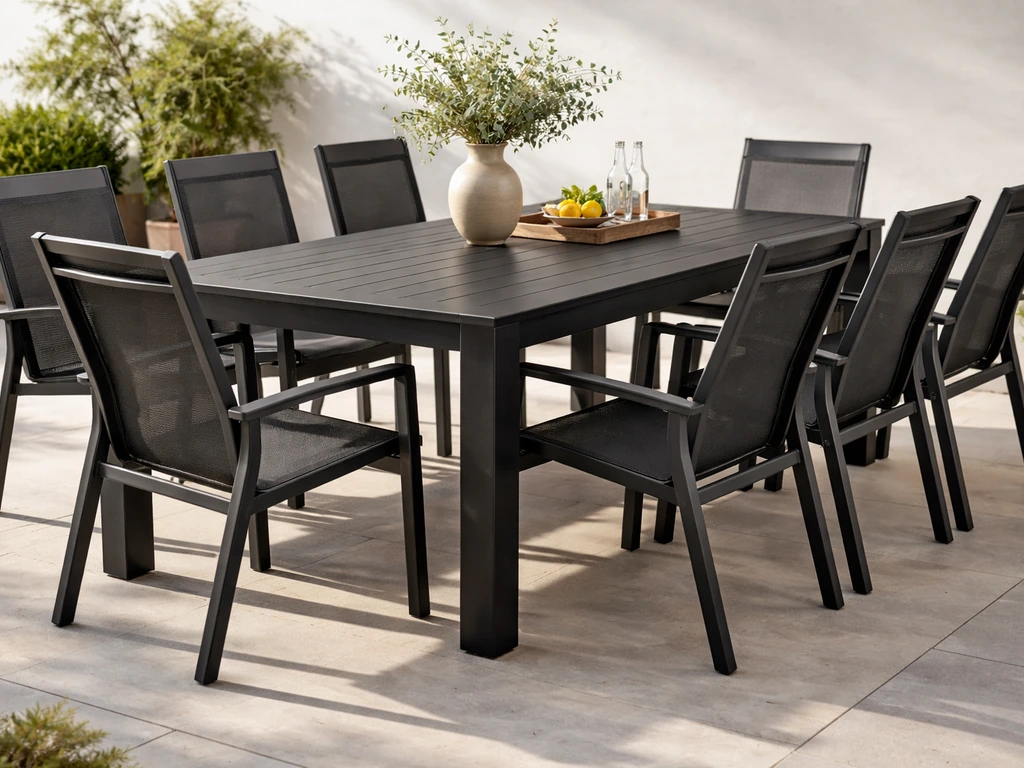
What 'heavy-duty' actually means in product specs
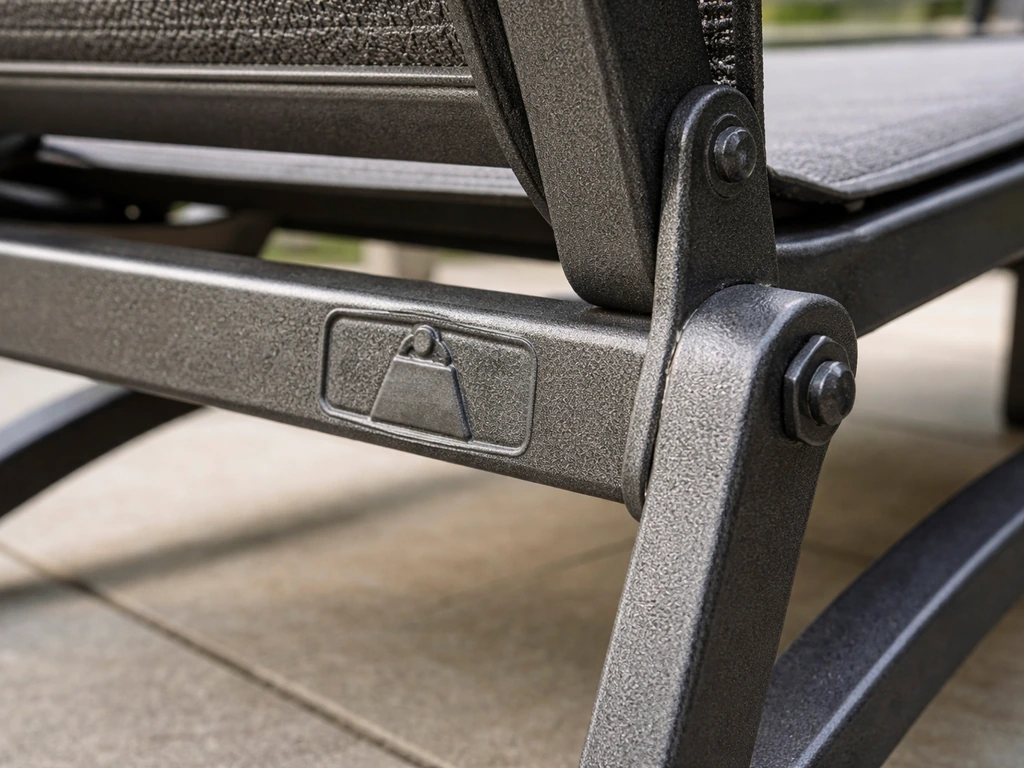
Manufacturers throw 'heavy-duty' and 'commercial-grade' around freely, so you need to know what specs to look for rather than relying on those labels. There are a few concrete things to evaluate.
Weight capacity is the most direct signal. A chair rated at 300 lbs (like some POLYWOOD Adirondack models) is a baseline for heavy use. Anything under 250 lbs is consumer-light. For dining chairs, benches, and loungers in frequent use, look for 300 to 400 lbs capacity per seat. For large tables and sectionals, check that the frame rating is listed separately from the individual seat rating.
Frame construction matters more than the material itself. Welded joints are stronger than screwed-together assemblies. For metal frames, look for wall thickness: aluminum tube should be at least 1.5mm thick for standard chairs, ideally 2mm or more for heavy-duty claims. Steel frames should be 14-gauge or heavier. Inspect (or ask about) corner gussets and crossbars, both of which dramatically improve rigidity and prevent the rocking that eventually cracks welds or strips threads.
Powder-coat thickness is something most shoppers never think to ask about. A quality outdoor powder coat should be around 60 to 80 microns thick. Below that, it chips faster, especially at corners and weld points where metal stress concentrates. Industrial coating standards put useful film thickness in the 50 to 125 micron range depending on exposure, so 60+ microns for a patio piece that sits outside year-round is a minimum, not a luxury.
Hardware is where cheap furniture fails first. Zinc-plated screws rust visibly within one or two seasons. For coastal or humid climates, you want stainless steel fasteners, specifically 316-grade marine stainless in salt-air environments. Even inland, 304-grade stainless or hot-dipped galvanized bolts outlast plated hardware by years.
Testing standards give you a way to cut through marketing. ASTM F1561-03 covers outdoor plastic chair performance including static load, rear leg stability, impact, and weathering. BIFMA testing is the benchmark for chairs in commercial settings and defines 'functional load' as representing hard-use conditions. If a brand references these standards on their spec sheet, they're at least held to an external bar. If they just say 'heavy-duty tested' with no standard cited, be skeptical.
The best materials for heavy-duty outdoor furniture
Each material family has a real ceiling for durability, and each has genuine trade-offs. Here's how they stack up for heavy-duty use specifically.
Aluminum
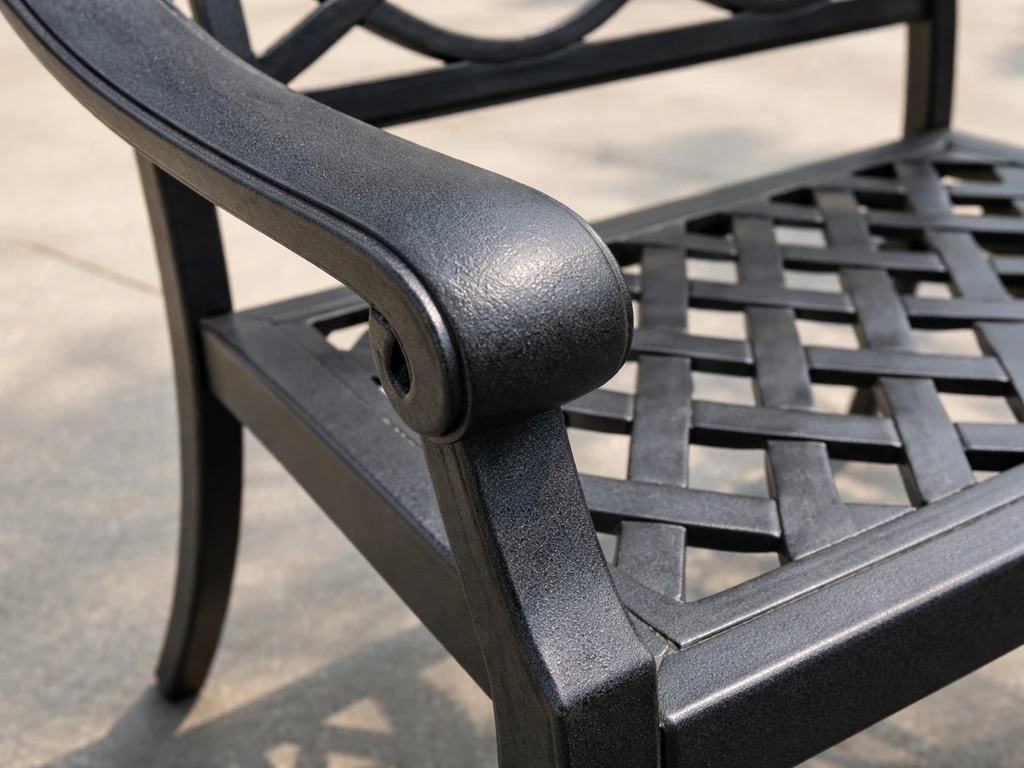
Cast aluminum is the gold standard for heavy-duty metal patio furniture. It doesn't rust, it's genuinely heavy (which helps with stability in wind), and cast pieces have thick walls by definition. Tubular aluminum is lighter and cheaper but still corrosion-resistant, just make sure the tube walls are thick enough and that joints are welded, not just crimped. The weakness of aluminum is that it dents rather than bends back, and low-grade alloys can pit in salt air. Look for 6061 or marine-grade alloy designations when buying coastal pieces.
Steel
Steel is stronger than aluminum per unit of cross-section, which is why heavy-duty commercial seating often uses it. The trade-off is weight and rust risk. Powder-coated steel can last 10 to 15 years inland, but the coating must stay intact. Once it chips, especially at welds and hardware holes, rust moves fast. If you're in a humid or coastal climate, aluminum is a better long-term choice. Steel makes the most sense for covered patios or areas with dry winters.
Teak and hardwood
Grade-A teak is the benchmark for outdoor hardwood. Dense, naturally oily, and dimensionally stable, it handles moisture cycles, UV, and even salt air better than almost any other wood. The downside is cost and the maintenance question: untreated teak weathers to silver-gray, which many people actually like, but if you want the original honey tone you'll need to oil it annually. Other dense hardwoods like eucalyptus and shorea are cheaper alternatives, but they require more consistent maintenance to prevent checking (surface cracks) and graying. Avoid softwoods like pine and cedar for heavy-duty use, they're fine for light furniture but they dent, warp, and absorb water in ways that shorten their lives significantly.
HDPE / recycled poly lumber
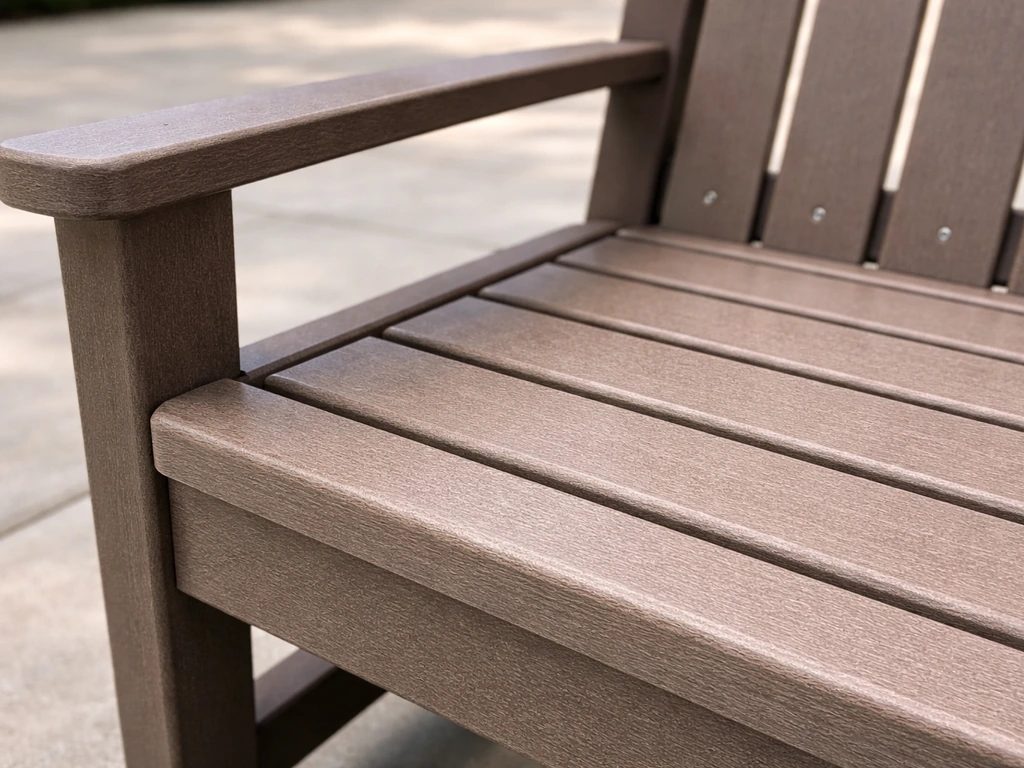
High-density polyethylene (HDPE) furniture, sold under brand names like POLYWOOD and made from recycled plastic, has become a legitimate heavy-duty option. It doesn't rot, splinter, or absorb moisture. It handles freeze-thaw cycles well, which is why POLYWOOD specifically markets it for snowy winters and salt spray. Weight capacities of 300 lbs are common on residential HDPE chairs. Warranties on woven inserts (like POLYWOOD's five-year residential warranty against structural failure, cracking, or unraveling) give you a concrete benchmark for quality. The trade-off: HDPE is heavier than it looks, and cheap versions can fade unevenly. Look for solid-core boards, not hollow profiles.
Resin wicker / all-weather wicker
Natural wicker has no place in a heavy-duty outdoor context. All-weather resin wicker over a steel or aluminum frame is a different story. The frame is what carries structural load, so the wicker weave is essentially a weather-resistant cladding. Quality all-weather wicker uses round-core PE resin strands (not flat ribbon) and should be tightly woven without gaps or loose ends. Check the frame underneath: if the wicker covers a thin steel frame without crossbars, that's where it will fail. A good all-weather wicker chair over a welded aluminum or heavy steel frame can genuinely be heavy-duty, but you're buying the frame, not the weave.
| Material | Rust/Rot Risk | Weight Capacity Potential | Best Climate | Maintenance Level |
|---|---|---|---|---|
| Cast aluminum | None | High | All climates including coastal | Low |
| Powder-coated steel | Moderate if coating fails | Very high | Dry/covered patios, inland | Moderate |
| Grade-A teak | None (rot) | High | All climates | Low to moderate |
| HDPE/recycled poly | None | High (300+ lbs) | All climates, snow and salt | Very low |
| All-weather resin wicker | Depends on frame | Moderate to high | Mild to warm climates | Low to moderate |
Matching your furniture to your climate
Climate is probably the single biggest factor in how long outdoor furniture actually lasts, and it's where a lot of buyers go wrong by defaulting to what looks nice rather than what performs in their specific conditions.
Rain, snow, and freeze-thaw cycles
If you're in the Upper Midwest, New England, or anywhere with hard winters, freeze-thaw is your main enemy. Water expands when it freezes, and anything that traps moisture in joints, hollow tubes, or wood grain will crack over time. HDPE poly lumber handles this the best, it doesn't absorb water, so there's nothing to freeze. Cast aluminum is the next best choice; it doesn't corrode and sealed hollow sections drain rather than trap water. Teak is workable if it's dried properly between seasons. Steel needs to be stored or covered in snowy climates, or you'll be chasing rust spots every spring.
Intense sun and UV (desert Southwest, Florida summers)
UV breaks down almost every outdoor material faster than anything else. Powder coats chalk and fade. Resin wicker gets brittle. Cushion fabrics bleach out. In high-UV climates, you want solution-dyed fabrics (Sunbrella is the benchmark, it's solution-dyed acrylic from Glen Raven, meaning the color goes all the way through the fiber rather than sitting on the surface). For frames, aluminum with a thick powder coat holds up better than steel in UV-intense climates, partly because the coating doesn't have to work as hard to prevent rust. Color choice matters too: lighter colors and darker finish tones fade differently, but UV stabilizers in the coating are more important than the pigment itself.
For color stability in composite materials, TimberTech's composite warranty uses a threshold of 5 Delta E (CIE) color-change units as the acceptable limit before a warranty claim applies, which gives you a calibration point for how brands define 'excessive fading' in technical terms.
Coastal salt air
Salt air is corrosive in ways that inland humidity simply isn't. It attacks coatings, oxidizes metals, and attacks fasteners at joints. Multiple major brands, Fermob, CostaELM, Durapatio, explicitly exclude coastal corrosion from their warranties unless maintenance protocols are followed. For example, a retailer warranty policy PDF addresses rust and corrosion replacement terms differently depending on where the furniture is used, such as coastal areas rust and corrosion replacement terms in coastal areas. That's a meaningful signal: even quality furniture corrodes faster at the coast, and you should plan for it.
For coastal use, the material hierarchy is clear: HDPE poly lumber and marine-grade aluminum are your best structural choices. Fasteners should be 316-grade stainless (not 304, and definitely not plated zinc). Salt-spray resistance is tested using ASTM B117, which exposes coatings to a 5% sodium chloride mist, ask brands if their coatings are B117-tested and for how many hours, since higher hours mean better real-world performance. Avoid painted steel anywhere within a few miles of salt water unless you're prepared for annual touch-up.
How to judge build quality before you buy
Marketing photos are designed to make everything look sturdy. Here's what to actually look for, whether you're shopping in a showroom or evaluating product pages online.
Frames and joints
Pick the piece up. A heavy chair, one that takes real effort to lift, usually means thicker walls and more material throughout. Wobble it by grabbing opposite corners of the seat. A good frame has virtually no twist. If a dining chair flexes noticeably in your hands, it will flex more under body weight, and that movement eventually cracks welds or strips threads. Look for corner gussets (triangular reinforcements inside corners) and crossbars under the seat. Both are signs of a frame engineered for load rather than assembled to look like one.
Hardware and fasteners
Flip the chair over and look at the hardware. Stainless steel bolts have a dull, slightly warm sheen. Zinc-plated hardware is shinier and often has a bluish tinge. If the screws or bolts already show orange spots at the showroom, that's a pass. For upholstered pieces, check how the frame and fabric attachment points are secured, stapled webbing over thin rails fails much faster than bolted or strap-secured suspension systems.
Cushions and fabric
Cushion quality is often where manufacturers cut corners because it's the hardest thing to evaluate by looking at photos. Look for cushion covers that zip off for cleaning. Sunbrella or other solution-dyed acrylic fabrics should be your baseline for UV and moisture resistance. The foam inside matters too: open-cell outdoor foam with drainage holes dries faster after rain and resists mold better than standard upholstery foam. Covers made from thin polyester feel cheap and usually are, they pill, fade, and trap mildew within one or two seasons.
Powder coat and surface finish
Run your hand along an edge or weld point. A quality powder coat feels smooth and consistent, no thin spots or bubbling at welds. Thin coats tend to look slightly uneven up close and chip at corners when scratched with a fingernail. You can't measure micron thickness at a store, but chipping resistance (try pressing a thumbnail into a corner edge, it shouldn't peel) gives you a rough proxy for coating quality.
Size, capacity, and layout for real patios
A piece rated for heavy use in the lab still needs to work practically in your space. Layout and sizing mistakes are some of the most common regrets in patio furniture buying.
For dining sets, allow at least 36 inches of clearance around the table on all sides to pull chairs out comfortably. A 60-inch round table seats six people without feeling cramped. A standard rectangular dining table that's 36 inches wide feels narrow for four people, 40 to 42 inches wide is better for heavy-duty use where you want stability and room to place dishes. Deep-seat lounge chairs typically run 32 to 38 inches deep. Oversized or 'big and tall' lounge chairs go to 42 to 46 inches deep with seat widths of 24 to 28 inches, and those are the ones to look at if weight capacity is a priority, they're engineered differently from the start.
For sets versus individual pieces: sets are usually better value per piece and are guaranteed to coordinate visually. But individual pieces let you right-size for your space and mix higher-capacity chairs with standard side pieces. If you need specific weight ratings across different seats, buying individual pieces and verifying each spec is often cleaner than assuming a set is rated uniformly.
For the most reliable stability, use the best patio furniture weights as your benchmark when comparing seat ratings across pieces per-seat capacity. Related to this, if you're shopping specifically because of weight support needs, the guidance on best patio furniture for large persons and best patio furniture for heavy persons covers per-seat capacity in more detail. You can use the same per-seat capacity benchmarks to find the best patio furniture for heavy person, not just “heavy-duty” marketing claims.
If you're deciding based on weight support, these patio chair weight limit guidelines will help you choose chairs that can handle your needs comfortably. If you need guidance specifically for a bigger body, use the sections on capacity, seat width, and stability to find the best patio furniture for large persons.
Ground stability matters especially on uneven patios or decks with slight slopes. Wide-base frames (chairs with feet set at least 18 to 20 inches apart front-to-back) tip less easily than narrow-legged designs. Glide feet protect both the frame and your deck surface and are worth checking for, rubber or nylon glides that are bolted on, not just press-fit, won't fall off and scratch your surface.
Maintenance that actually prevents failure
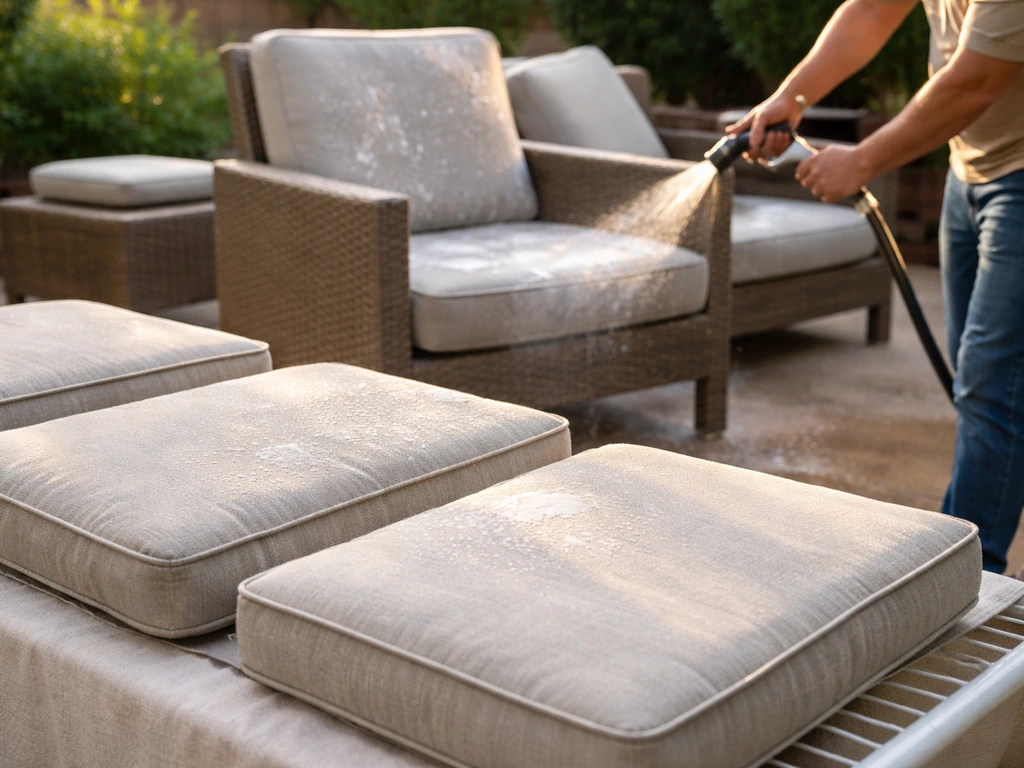
The gap between a piece that lasts five years and one that lasts fifteen is almost always maintenance, not just material quality. Here's what actually matters, by material and season.
Cleaning, get the chemistry right
Mild dish soap or non-bleach liquid laundry detergent in warm water works safely across almost all frame materials and most fabrics. Forever Patio and similar brands specifically call out this combination for resin and frame cleaning. The bleach question is genuinely material-specific: Trex Outdoor Furniture's care guidance includes a diluted bleach solution for mold/mildew on their materials, while Terra Outdoor Living explicitly says do not use bleach. Follow the manufacturer's care sheet for your specific pieces. When in doubt, skip bleach, it degrades powder coats and weakens some resin wicker strands over time.
Seasonal care by climate
- Snowy climates: clean and dry frames thoroughly before first frost, store cushions indoors, cover or store lightweight aluminum pieces that could blow over, check all hardware after snow season for rust or loosening
- Humid/rainy climates: rinse frames monthly to remove mold spores before they establish, dry cushion covers after rain, apply a UV-stabilizing furniture wax to powder-coated metal once per season
- High-UV climates: apply marine-grade UV protectant to plastic and resin pieces twice annually, rotate furniture position if possible to even out UV exposure, inspect cushion seams for UV degradation every spring
- Coastal salt air: rinse frames with fresh water every two to four weeks (especially after storms), inspect and tighten hardware each season, treat any paint chips or scratches immediately with touch-up paint before salt penetrates the metal
Material-specific maintenance reality checks
HDPE poly lumber (POLYWOOD and similar): genuinely low maintenance. Soap and water cleaning once or twice a season is typically sufficient. KETTLER describes their recycled resin as 'virtually maintenance free' and safe to leave outdoors year-round, that's mostly accurate for quality HDPE. Teak: annual oiling if you want to keep the original color, or let it go silver-gray and do nothing.
Just don't let debris pile in joints where water sits. Powder-coated metal: the coating does all the work until it fails. Touch up chips within a season of noticing them, auto touch-up paint in a matched color works fine for small spots. Cushions: store indoors or in a deck box when not in use for more than a few days.
Even solution-dyed Sunbrella fabric stays cleaner and lasts longer when it's not sitting in rain for days at a time.
Your buyer checklist and how to shortlist today
Before you start browsing, answer these four questions: What's your climate (coastal, snowy, hot/dry, or humid)? What's the realistic weight load per seat you need to support? Do you have a covered patio or is the furniture fully exposed? And do you want true low-maintenance or are you willing to do annual upkeep for a material you love aesthetically? Your answers will eliminate at least half the market immediately.
- Measure your space first: note the patio dimensions, clearance from doors or railings, and whether the surface is level. This sets your size limits before you fall in love with something that won't fit.
- Set a minimum weight capacity per seat based on the heaviest person who will use the furniture regularly — then add 20% buffer.
- Match material to climate: HDPE or marine aluminum for coastal or snowy, teak or cast aluminum for humid/rainy, any quality material with solution-dyed cushions for high UV.
- Check frame specs: welded joints, tube wall thickness stated (not just 'heavy-gauge'), powder-coat referenced as 60+ microns or 'electrostatic' applied (a process indicator for consistency).
- Verify fastener material: stainless steel hardware should be stated explicitly. If a product page doesn't mention it, ask the retailer directly.
- Read the warranty carefully: look for what's excluded (coastal environments, normal fading, coating chalking) rather than just the headline duration. A 10-year warranty that excludes coastal use is worth less than a 5-year warranty that covers it.
- Check for ASTM F1561 or BIFMA test references on plastic or commercial-claim chairs — these indicate third-party load and stability testing.
- Order fabric swatches or samples if cushions are included: feel the fabric weight and check the weave density. Thin polyester feels light and slippery; solution-dyed acrylic feels heavier and almost canvas-like.
- Look up the brand's care instructions before buying, not after: if the care sheet is hard to find or requires products not sold locally, factor that into your decision.
The shortlist process is straightforward once you have your specs. Filter by material first, then weight capacity, then warranty terms, then aesthetics, in that order. Most buyers do it backwards and end up with furniture that looks great for two seasons. If you're also weighing how much furniture needs to weigh to stay put in wind, or shopping specifically for seniors who need stable, easy-to-rise-from frames, those are adjacent decisions worth thinking through alongside material and capacity.
A lot of the “heavy-duty” checklist items, like higher per-seat weight ratings and stable frames, translate directly into finding the best patio furniture for seniors. But for most buyers, starting with frame construction and climate compatibility gets you 80% of the way to a choice you won't regret.
FAQ
Is “heavy-duty” the same as “commercial grade,” and can I trust those labels alone?
Usually not. Many brands use those terms without listing the engineering specs, like per-seat weight ratings, wall thickness, joint type, or the coating film thickness. If the product page does not clearly state those numbers (and ideally test standards), treat the label as marketing and verify the construction details instead.
What should I check for per-seat capacity on tables and sectionals?
Look for separate ratings for the frame and for seats, some sets list only one number that’s not meaningful for load distribution. Also confirm whether the rating assumes a static load, a dynamic load, or a specific test method, because the furniture can feel “sturdy” while still failing earlier under repeated motion.
Do I need 316 stainless hardware everywhere, or is 304 ok?
Coastal conditions are where hardware grades matter most. In salt-air environments, 316 is the safer choice because 304 can corrode faster when fasteners sit at stress points and at frame joints. Inland, 304 stainless or hot-dipped galvanized bolts can last a long time, but plated zinc hardware is the most common early-failure category.
How can I tell if a powder coat is good when I can’t measure microns in a store?
Use practical proxies: check corners and welds for consistent thickness, look for smoothness without thin spots, and test for flaking resistance by lightly scratching an inconspicuous area. If the finish chips easily at edges or around hardware holes, the coating is likely too thin or not properly cured.
Will welded joints and gussets really prevent wobble over time?
Yes, because rocking flexes the frame and concentrates stress at welds and threads. Corner gussets and crossbars reduce twist and keep the frame rigid under repeated seating pressure. If a chair twists when you grab opposite corners, expect faster loosening and earlier cracking even if the paint looks intact.
How should I choose between steel, cast aluminum, and HDPE if my patio gets sun all day?
For high-UV areas, solution-dyed cushions usually matter as much as the frame, but the frame still matters because powder coat performance affects long-term corrosion protection and appearance. Cast aluminum with thick powder coat generally holds up better than steel if your goal is minimal rust risk and stable finish, while HDPE is often the lowest fuss option for exposed areas.
Can I use patio furniture outdoors during winter without covering it?
It depends on climate and material. Freeze-thaw climates punish anything that traps water, hollow tubes, and wood fibers. HDPE tends to handle freeze-thaw best because it doesn’t absorb water, cast aluminum is a strong second, while steel often needs covering or regular inspection for chips and early rust spots.
What’s the biggest mistake people make with cushions on heavy-duty furniture?
Assuming cushions last as long as the frame. Even if the frame is built for years, low-quality fabric and foam can bleach, pill, and trap mildew. Zip-off covers help, solution-dyed acrylic is the baseline for sun resistance, and open-cell foam that drains dries faster after storms.
Are all-weather wicker chairs heavy-duty?
Not in the “wicker” sense, only when the structural frame underneath is truly heavy-duty. If the wicker sits over a thin frame without crossbars, the weave can look intact while the chair loses rigidity. For heavy-duty performance, focus on the welded frame first, then verify the resin strand type and weave tightness.
How do I know whether a bench, chair, or lounger is stable for weight support?
Stability is more than capacity. Check for a wide base footprint (front-to-back spacing), solid cross support under seating, and minimal flex when you apply force by hand. Also verify seat width targets, because narrow seats can concentrate pressure and increase racking even when the stated weight rating is high.
What cleaning products are safest, and when should I avoid bleach?
A mild non-bleach liquid detergent or mild dish soap in warm water is usually the safest starting point. Avoid bleach unless the manufacturer explicitly instructs it for your material, because bleach can degrade powder coats and some composite or resin fibers, and it may worsen discoloration rather than solve it.
If powder-coated metal gets scratched, can I just ignore it?
Don’t ignore chips, especially at welds and hardware holes. Touch up scratches as soon as you notice them so corrosion doesn’t start at exposed metal edges. For larger chips, matched auto touch-up paint can help, but you should still monitor for bubbling or spreading rust over the next few seasons.
How do I plan seating space so heavy-duty chairs still feel comfortable?
Measure clearances around the table and allow enough room for chair pull-out and arm movement. For dining, many people underestimate the need for at least about 36 inches of circulation around a table, and for deep lounge styles, seat and back depth can change how much walkway space you actually have.
Should I buy a set for heavy-duty patio furniture or mix individual pieces?
Sets can be convenient and visually coordinated, but individual pieces often let you match the exact per-seat weight ratings and widths you need for your specific layout. If you require different ratings across different people or seat types, mixing pieces and verifying each spec can be more reliable than assuming uniform set ratings.
What should I ask about warranties for truly heavy-duty furniture?
Pay attention to what the warranty covers and excludes, and whether it explicitly addresses corrosion in your climate. Coastal-oriented products often specify maintenance protocols or limit claims if care steps are skipped. Also confirm whether the warranty covers structural failure, cracking, and fastener-related issues, since these are the failure modes that matter most for heavy use.
Next Articles
Best Patio Furniture Weights: Choose Stable Sets by Type
Find the right patio furniture weight by type and material for wind stability, less tipping, and lasting outdoor comfort
Common Patio Furniture Wood: Best Choices, Care & Tips
Compare common patio furniture wood types, teak, cedar, redwood, oak, with durability, finishes, and care tips.
Best Wood Patio Stain: Choosing Durable, Low-VOC Finishes
Compare and choose the best wood patio stain: durability, finish, climate tips, prep, and top product picks.