
Patio chair weight limits are real structural boundaries, not just legal disclaimers, but they're also not a hard cliff where one pound over the rating means the chair collapses. Most chairs are tested to handle significantly more than their published limit under controlled static conditions. The real risk is repeated, dynamic loading over time: sitting down hard, shifting your weight, rocking, or using the chair daily for years. If you're near the listed limit, you're not automatically in danger, but you do need to know what to check, what the margin actually looks like, and when it's smarter to replace or upgrade.
How Strict Are Weight Limits on Patio Chairs? Safety Guide

Theo Tierney
7 Jul 2026
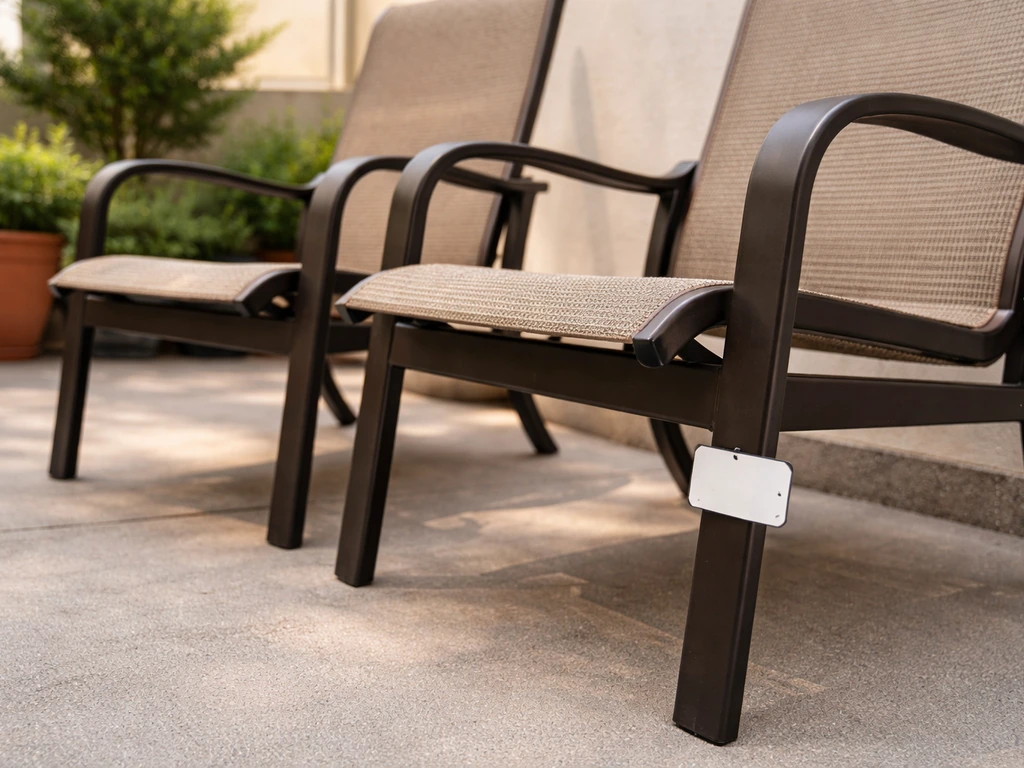
What 'weight limit' actually means on a patio chair
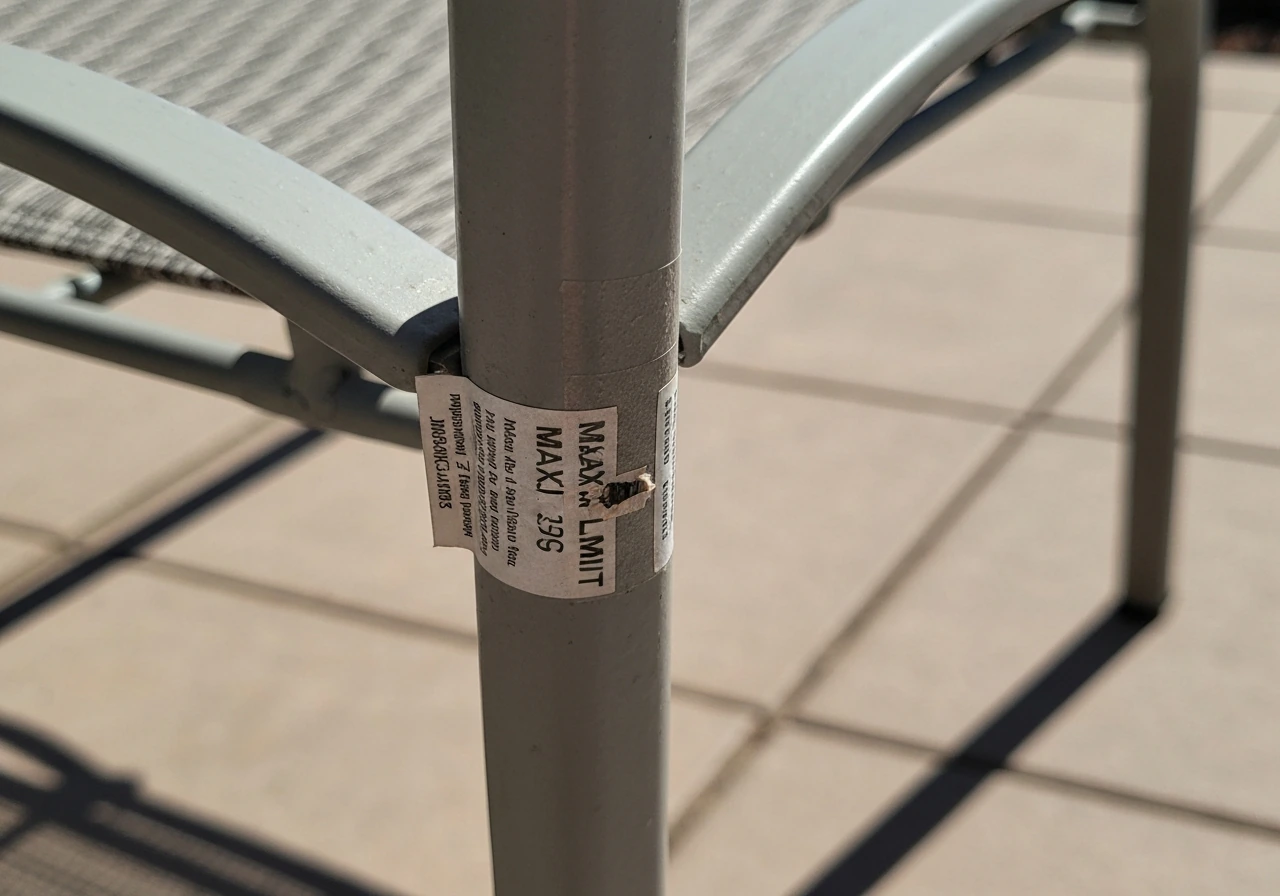
The number printed on a product listing or label, usually somewhere between 250 and 400 lbs for standard consumer patio chairs, is the manufacturer's rated maximum load. It's not a random number. It's supposed to reflect the maximum user weight the chair's frame, joints, and fasteners can safely support under normal use conditions. Retailers like Walmart and Lowe's publish these specs directly on product pages, and you'll see ranges like 250 lbs for a basic Amazonia-style chair up to 300 lbs or more for reinforced stackable sets.
Here's the thing most people don't realize: that published number typically refers to a static load, meaning a steady, centered, downward force. blank" rel="noopener noreferrer">Testing standards like ANSI/BIFMA X5.1 (used widely for general-purpose seating) and the European EN 581-2 outdoor seating standard base test loads on statistical references, often the 95th percentile male weight, with design assumptions built around a single-shift, 10-year life. BIFMA has also published its own position memo noting that a chair can pass a static test at 1,000 lbs or more and still have practical limitations in real-world use. So the rated limit is a benchmark, not a complete picture of how the chair will behave over years of actual use on your deck.
Some brands publish two separate figures: a maximum weight load and a recommended user weight. The recommended figure is lower and accounts for normal use patterns. The maximum is the absolute structural ceiling. If you see both numbers, pay attention to both. The gap between them is your comfort margin.
How strict are these ratings in real life
Static vs dynamic loads: the difference that matters most
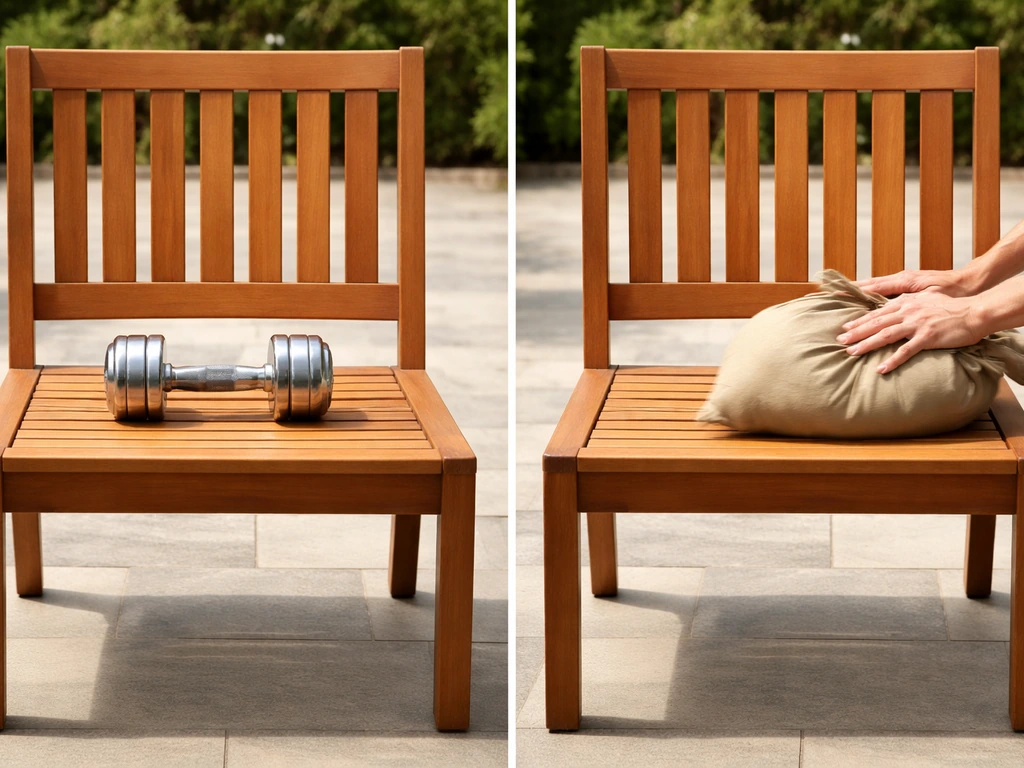
A static load test pushes a defined force straight down onto a chair seat and holds it. The chair either cracks, bends, or passes. This is useful but incomplete. Real-world seating is dynamic: you sit down with impact, you shift sideways, you lean back, you stand up using the armrests. Each of those motions applies force in different directions and at different magnitudes than a straight vertical push. Dynamic load testing, which standards like EN 1728 and BIFMA's dynamic drop tests simulate, accounts for these real-use impacts by cycling loads hundreds or thousands of times and measuring whether joints crack, welds fail, or frames deform.
The practical implication: a chair rated at 250 lbs might survive a single 400-lb static test just fine, but fail much sooner than expected if a 260-lb person sits down hard repeatedly every day for two summers. The rating is conservative enough for ordinary use at or under the stated weight. It becomes genuinely optimistic if you're consistently over the limit, sitting heavily rather than lowering yourself carefully, or using the chair on uneven surfaces that create lateral stress.
What failure actually looks like
The failure modes I see most with patio chairs are predictable: weld cracking at joint intersections on metal frames, fastener loosening or stripping on chairs assembled with screws or bolts, cracking at pivot points on folding chairs, and sagging or delamination of seat slats on wood or composite chairs. Real forum discussions from users who've broken patio chair welds confirm this pattern. The chair rarely collapses dramatically in one moment. It usually gives you warning signs: a wobble, a creak, a visible gap at a joint. The danger is when people ignore those signs and keep using the chair.
How material and design change your margin
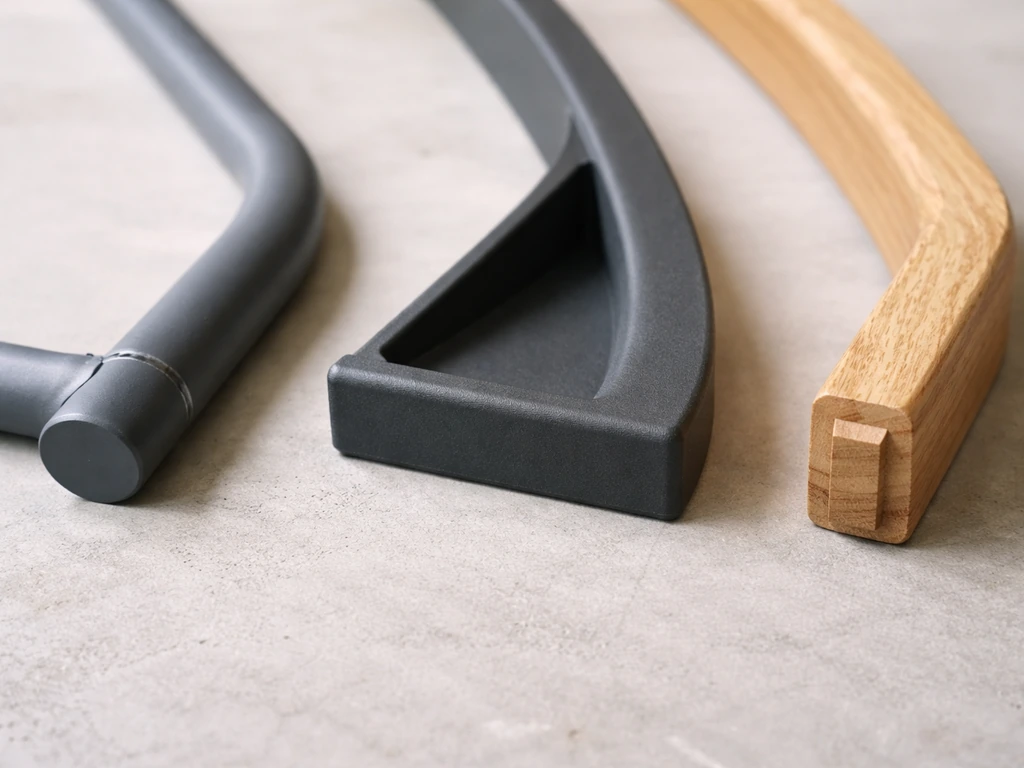
Not all chairs rated at 300 lbs are equally trustworthy at 295 lbs. The margin between the rating and actual failure depends heavily on what the chair is made of and how it's built.
| Material | Typical Weight Range | Failure Mode | Margin Reliability |
|---|---|---|---|
| Powder-coated steel | 250–400 lbs | Weld cracking, rust weakening joints | High when welds are quality, degrades with rust |
| Cast or extruded aluminum | 250–350 lbs | Joint fatigue, casting cracks | Good in dry climates, watch cast fittings |
| Solid teak or hardwood | 250–350 lbs | Tenon joint loosening, splitting at screws | High when properly maintained, drops when wood dries out |
| HDPE (polywood/composite) | 250–400 lbs | Flex/sag of slats, fastener pull-through | Consistent, not affected by moisture |
| Resin/plastic injection-molded | 200–300 lbs | Brittle cracking, leg snap under impact | Lower, especially in cold weather or UV degraded plastic |
| Powder-coated aluminum with wicker/rattan wrap | 200–300 lbs | Frame joints, wicker unraveling (cosmetic) | Depends on frame underneath, not wicker material |
Frame design matters just as much as material. A cantilever chair, where the seat extends beyond the base without a rear leg directly beneath it, puts enormous leverage stress on the front joint. These chairs often have lower effective margins than their rating implies for heavier users. Similarly, stacking chairs are designed with legs that angle outward slightly, and repeated stacking stress on those leg-to-seat joints can compromise structural integrity over time. Armrests create additional load paths: when users press down on armrests to stand up, they're applying force in a direction the chair's rating may not fully account for.
Outdoor use also introduces stressors that indoor chair ratings don't consider. Sun exposure degrades resin and plastic, making brittle failure more likely. Moisture cycles loosen wood joints and promote rust inside steel tubes even when the exterior looks fine. Uneven patio surfaces (pavers with slight gaps, deck boards that aren't perfectly level) can cause chairs to flex asymmetrically under load, concentrating stress at one joint instead of distributing it across all four legs.
What to do if you're near or above the limit
Honest risk check
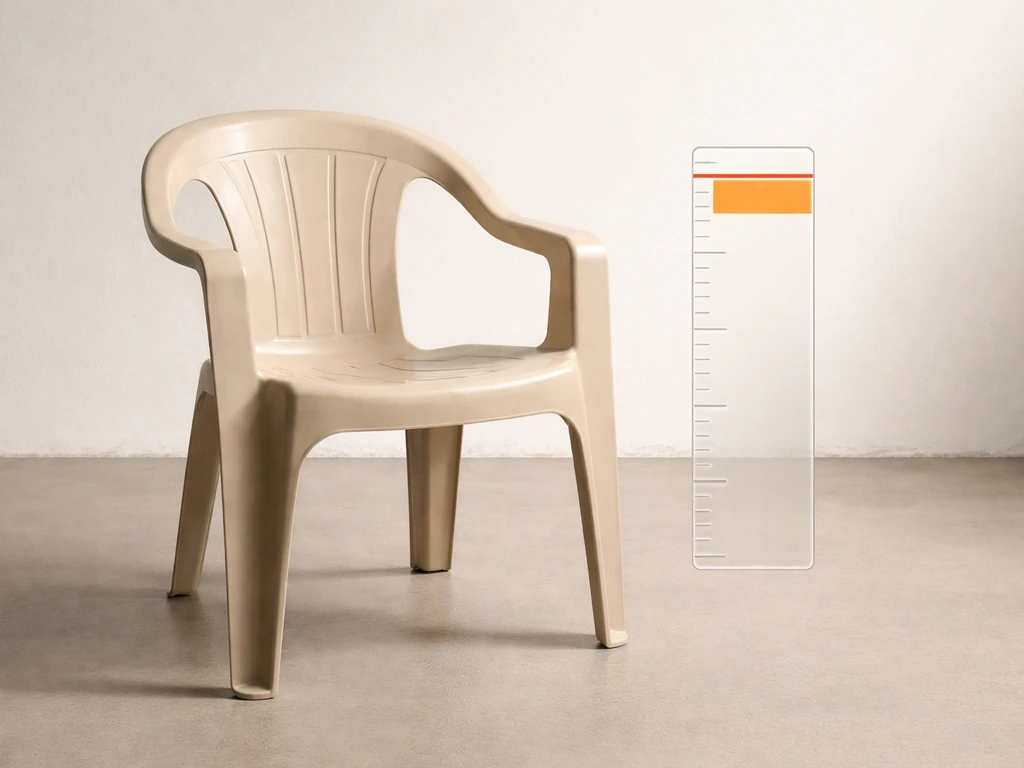
If your weight is within about 10 to 15 percent of the chair's rated limit, you're in a caution zone, not an immediate danger zone. If you're over the rated limit, you should treat the chair as a temporary situation and start looking at alternatives. If you're shopping for the best patio furniture for heavy person, focus on chairs with higher rated capacity, better build quality, and strong dynamic-load performance alternatives. Here's a quick way to assess actual risk for your specific situation:
- How close are you to the limit? Within 20 lbs is higher risk than within 50 lbs, especially on plastic or thin aluminum frames.
- How do you sit? Dropping into a chair from a standing position creates impact forces well above your body weight. Lowering yourself deliberately is much safer.
- How often is the chair used? Daily use at near-limit weight will fatigue joints far faster than occasional use.
- What material is the chair? Metal and hardwood frames with welded or mortise-and-tenon joints handle near-limit loads better than injection-molded plastic or resin chairs.
- Is the chair showing any warning signs? Wobble, visible cracks at welds, loose fasteners, or legs that splay are all reasons to stop using the chair immediately.
When to upgrade
If you're consistently at or above a chair's rated limit, the honest answer is to replace it rather than hope it holds. Heavy-duty patio chair options with ratings of 400 lbs or more are widely available, and they're built with thicker-gauge steel or aluminum, wider seat widths (typically 22 inches or more), and reinforced joint construction. Heavy-duty patio furniture is built for repeated use, typically with thicker-gauge materials and reinforced joints to maintain a larger safety margin Heavy-duty patio chair options. These aren't niche products. They're a practical category, and the investment is worth it compared to the alternative of a chair failing under you. If you're shopping for a larger household or buying for guests, choosing chairs with higher-rated frames and wider seats is simply the responsible default.
How to find the exact weight rating on your chair
Start with the product itself. Both POLYWOOD and Trex, two of the most popular outdoor furniture brands, put barcoded serial number stickers on the underside of chair legs or the bottom of the seat frame. Other brands follow similar placement. Flip the chair over and look for a label, sticker, or stamped marking on the underside of the seat or on the inside of a leg. That label or the model number it contains is your key to finding the full spec sheet.
- Check the underside of the seat frame and the inner surface of the legs for a label or sticker.
- Note the model number and search the manufacturer's website for the product page or spec sheet.
- If you bought from a retailer like Walmart, Home Depot, or Lowe's, search the model number on their site. Weight capacity is usually listed in the product specifications tab.
- If no label is visible, check the original packaging, assembly manual, or any paperwork that came with the chair.
- Contact the manufacturer directly with the model number if nothing else works. Most brands can tell you the rated capacity for any model in their lineup.
One thing to watch for: some manufacturers list capacity per chair in a set, while others list it for the set as a whole (which is a meaningless metric for individual chairs). Always confirm the per-chair figure. Also check whether the rating applies to the chair with or without cushions, since cushioned versions sometimes have slightly different frame specs than sling or slat versions.
Choosing safer patio chairs: specs that actually matter
When you're shopping for a chair that will handle your actual weight comfortably and safely, here's what to prioritize rather than just looking at price or style: If you are buying for seniors, use these same specs to find the best patio furniture for seniors, especially chairs with a comfortable margin and stable construction.
- Rated capacity with margin: Choose a chair rated at least 50 lbs above your weight for everyday use. If you're 250 lbs, look for 300 lbs minimum. If you're 300 lbs, look for 350 to 400 lbs.
- Frame material and gauge: Welded steel or thick-wall aluminum tubing (1 to 1.5 inch diameter or more) is more reliable than thin-walled tubes or cast fittings. Check product specs for tube diameter or frame gauge when listed.
- Seat width: A seat that's too narrow concentrates your weight unevenly. For larger users, look for seats at least 20 to 22 inches wide.
- Joint construction: Welded joints on metal chairs are stronger than bolted or riveted connections. For wood chairs, mortise-and-tenon or doweled joints outlast screws alone.
- Certifications and test standards: Products that reference ANSI/BIFMA X5.1, EN 581-2, or BIFMA X5.4 testing have been through standardized structural and durability evaluation, not just a manufacturer's internal check.
- Avoid purely aesthetic frames: Thin decorative metalwork and ornate cast pieces look great but aren't built for structural load. Functional frame members should be substantial, not decorative tubes.
If you're buying for a household where multiple people of different sizes will use the same chairs, it's worth choosing a higher-capacity frame across the board rather than mixing rated capacities. Typical consumer patio chairs top out around 350 lbs, but reinforced heavy-duty models reach 400 lbs and occasionally higher. If you need the best patio furniture for large person, aim for those reinforced heavy-duty models built for higher weight capacity and real outdoor wear. For users who need that range, commercial-grade outdoor seating designed for high-use contract environments offers the most reliable structural performance.
Quick inspection and maintenance to prevent early failure

Even a well-rated chair will fail prematurely without basic maintenance, especially in outdoor conditions. A 10-minute inspection at the start and end of each outdoor season will catch most problems before they become dangerous.
- Check all welds and joints visually. Look for hairline cracks, rust blooms at the base of welds on steel chairs, or white oxidation pitting on aluminum. Either is a sign the joint is weakening.
- Tighten all fasteners. Bolts, screws, and carriage bolts loosen through normal use and thermal expansion cycles. Use the correct tool (not just hand-tight) and check every connection point.
- Test for wobble. Place the chair on a flat surface and apply pressure to each corner of the seat. Any rocking beyond what the surface itself causes means a leg or joint is compromised.
- Inspect plastic and resin components. UV degradation turns injection-molded plastic brittle over several seasons. Look for chalking, surface cracking, or any flexing of leg sections that feels soft rather than rigid.
- Treat wood annually. Teak and hardwood frames need oil or sealant once a year to prevent the wood from drying out and joints from loosening. Dry tenon joints can fail under load even when the wood itself looks fine.
- Check for rust inside steel tubes. Even powder-coated steel can rust from the inside out where end caps trap moisture. Remove end caps if possible and inspect. Replace caps that no longer seal.
- Store or cover during off-season. Long-term UV and moisture exposure degrades every material category. A quality cover or indoor storage between seasons extends the structural life of any chair significantly.
If you find a cracked weld or a joint that's visibly compromised, stop using the chair immediately. Repairs like brazing or re-welding are possible for metal frames, and some people do attempt them, but a repaired weld is rarely as strong as the original unless done by a qualified welder with proper equipment. For most consumer patio chairs, replacement is safer and more practical than structural repair. If you are shopping for the best patio furniture weights, use this as a reminder that replacement is often safer than trying to patch a compromised frame. The cost of a new chair is far lower than the cost of an injury from a sudden failure.
FAQ
If I’m 10 to 15% over the listed chair weight limit, am I in immediate danger?
A common misconception is that being slightly over the printed number automatically triggers failure. In practice, the rating is mostly about safety under normal conditions, and real failures usually come from repeated dynamic stress (sitting down hard, rocking, standing using armrests) and outdoor wear. If you are above the limit, treat it as a temporary-risk situation and plan to replace or upgrade rather than “testing” it.
Why does a chair that seems to hold my weight still become unsafe over time?
Use the rating as a ceiling for the chair itself, but also consider how the chair is loaded in your routine. If you tend to sit down quickly, shift sideways, or press down on armrests to stand, you create lateral and impact forces that static tests may not capture. That means a chair can feel “okay” while joints and fasteners slowly loosen.
How can I tell if a capacity rating on a patio set applies to each chair or the whole set?
Check whether the capacity is listed per chair or for the entire set. Some manufacturers use set totals, which can mislead you into assuming each chair is rated for more than it actually is. When comparing, always confirm the per-chair number and match the same chair type (sling versus slat versus folding).
Does the weight limit change depending on whether the chair has cushions?
Yes, cushions can matter because they can change how you sit (slightly more sink, more shifting) and sometimes the manufacturer uses different frame specs for the cushioned model. Even when the capacity is the same, the way forces transfer through the seat and fasteners can be different, so verify whether the brand lists separate specs for “with cushions” versus “no cushions.”
Are some chair designs more sensitive than others if I’m near the weight limit?
It can, especially for heavier users. Cantilever chairs transfer leverage stress to the front joint because the seat extends beyond the base, and stacking chairs experience repeated stress at leg-to-seat joints. If your body weight is near the limit, these designs typically deserve a larger margin than standard four-leg chairs.
Do patio chair weight limits account for sun, rain, and seasonal wear?
Outdoor conditions reduce effective margin over time because UV can make plastics or resin more brittle, moisture cycles loosen wood joints, and trapped rust can weaken steel from the inside. A chair that performed fine in season one may feel less rigid later, so you should re-evaluate the risk at the start of each season, not only when you first buy it.
How does an uneven patio surface affect weight-limit safety?
Uneven patios (wobbly pavers, deck boards that are not level) cause asymmetric loading, meaning one joint takes more force than it was designed for. That increases the chance of fastener loosening, weld cracking, or frame deformation even if your weight matches the rating. Leveling or using chair pads designed for outdoor use can reduce concentrated stress.
What are the most important warning signs that my chair is nearing failure?
Use early warning signs seriously: persistent wobble, creaking that grows louder over time, visible gaps at joints, loose fasteners you can tighten and then quickly find loosened again, or sagging that worsens during the same season. If you notice any of these repeatedly, stop using the chair for your full weight and replace it or switch to a heavier-rated model.
Is it safer to buy chairs with one high rating for everyone, or mix capacities based on who uses them?
Don’t mix rated capacities by “guessing” that all chairs in a style are equivalent. Even within the same product line, construction details like gauge thickness, joint reinforcement, and how the frame locks together can vary. If multiple people use the same set, it’s safer to buy higher-rated frames across all chairs rather than alternating between near-limit and under-limit models.
What’s the best way to verify the exact capacity for the chair I actually have?
Flip it over and verify the model and sticker location, then confirm the capacity applies to the exact chair configuration you own. Also look for serial number or model markings on the underside or inside legs, then use that to find the spec sheet. This avoids a common mistake where buyers reference a different variant with a different load rating.
Can I repair a damaged patio chair instead of replacing it?
If you find a cracked weld, split frame, or visibly compromised joint, stop using it immediately. Repairs like re-welding or brazing may be possible for certain metal frames, but a repaired area often does not regain the original performance unless done by a qualified welder and done with the right process. For most consumer patio chairs, replacement is usually the safer, more reliable path.
Next Articles
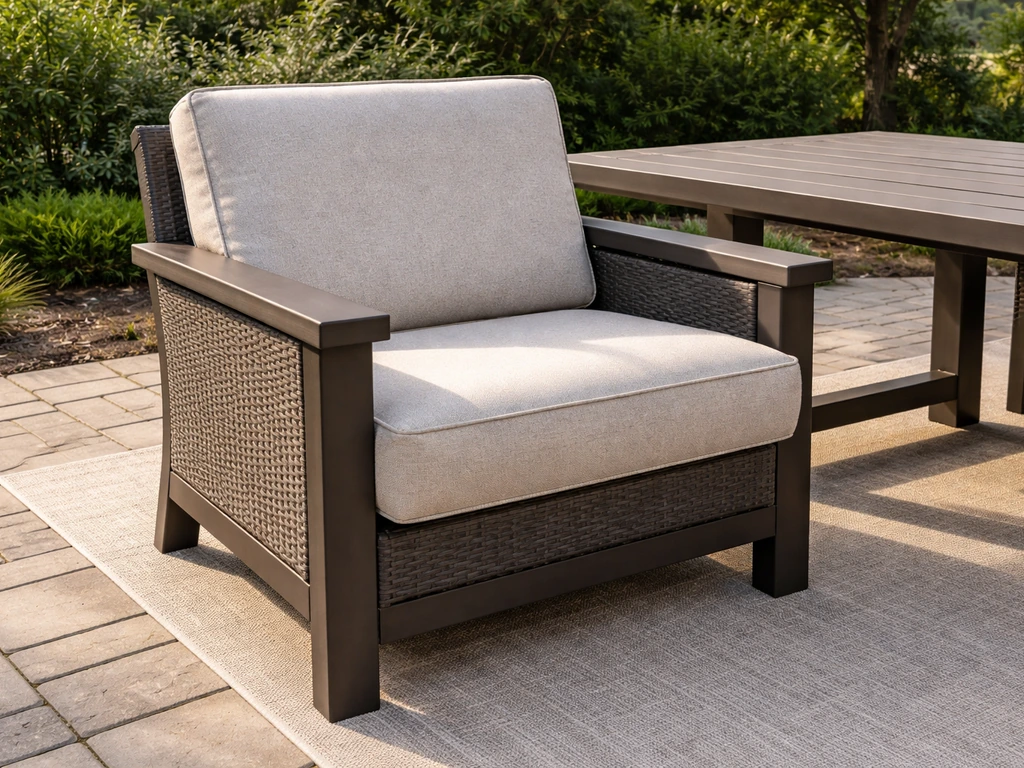
Best Patio Furniture for a Large Person: Complete Guide
Choose durable outdoor seating with capacity, size, and weatherproof materials for large frames, plus a quick buying che
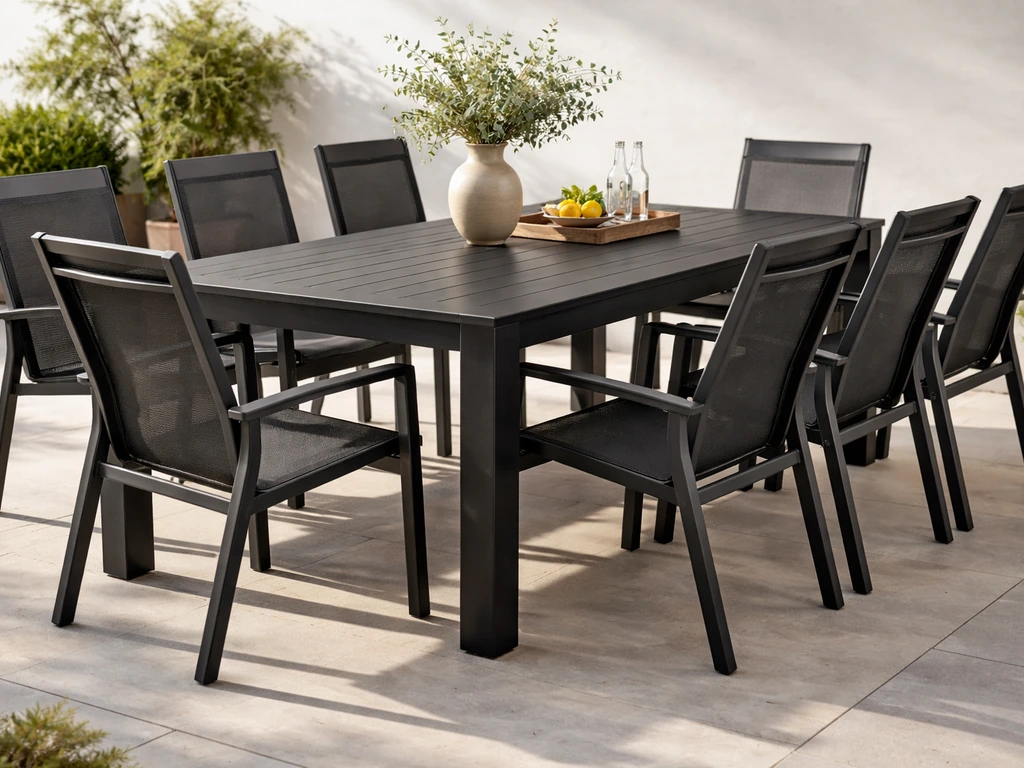
Best Heavy-Duty Patio Furniture: Buyer and Care Guide
How to choose and maintain the best heavy-duty patio furniture by material, climate, specs, and care checklist.
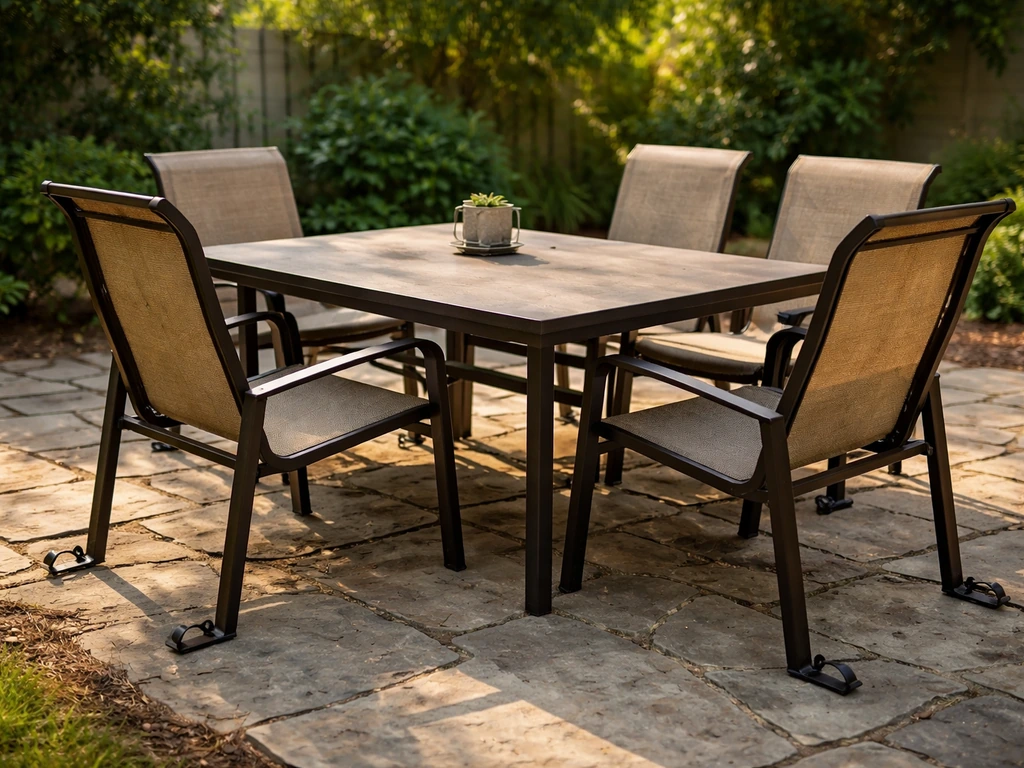
Best Patio Furniture Weights: Choose Stable Sets by Type
Find the right patio furniture weight by type and material for wind stability, less tipping, and lasting outdoor comfort