
For the Pacific Northwest, your best patio furniture materials are powder-coated aluminum, teak, HDPE (high-density polyethylene) lumber, and all-weather resin wicker over aluminum frames. These four options handle PNW conditions better than anything else on the market because they resist the one thing this climate never stops throwing at your furniture: prolonged moisture. Not just rain, but damp air, dripping condensation, and weeks of low-light, high-humidity days that rot wood, rust steel, and grow mold on anything porous. Get those materials right, pair them with solution-dyed acrylic cushions, and your outdoor setup will last a decade or more with minimal drama.
Best Patio Furniture for Pacific Northwest Homes: Picks

Theo Tierney
30 May 2026
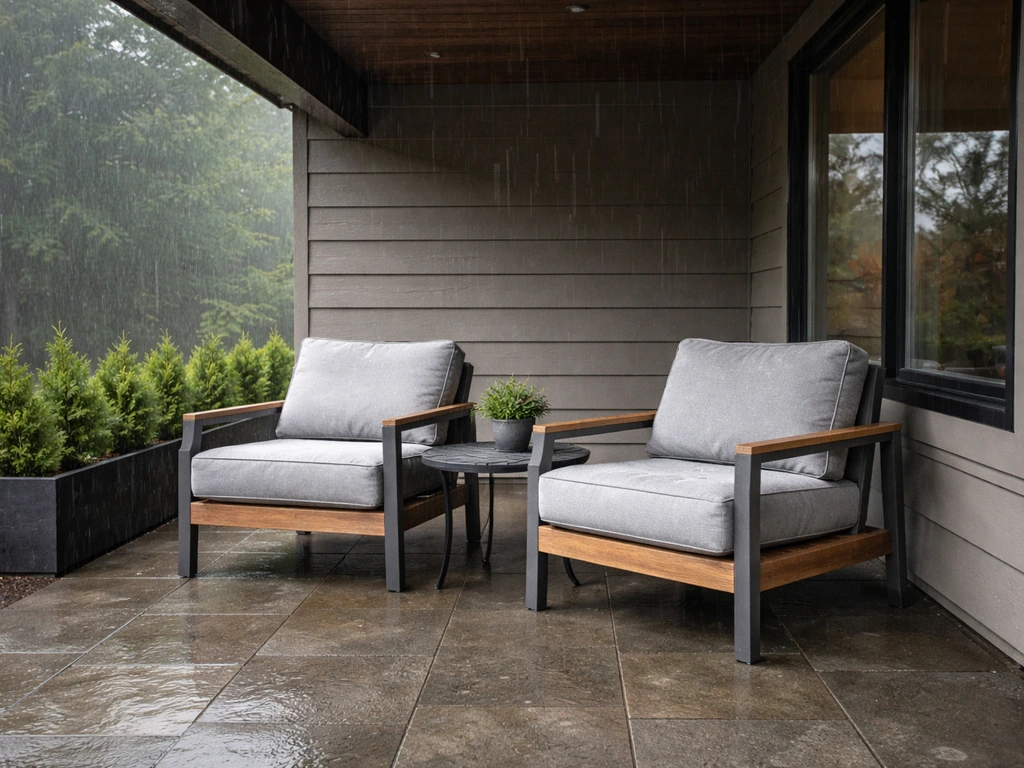
Why PNW conditions are uniquely hard on patio furniture
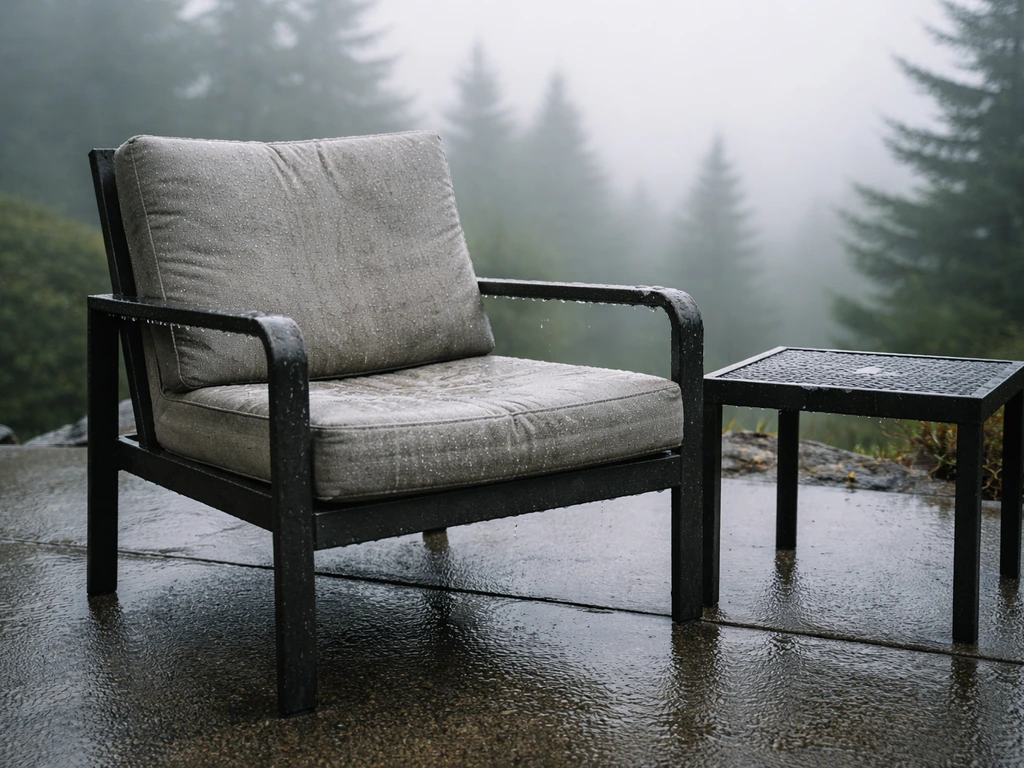
Most furniture is tested for heat, UV, or freeze-thaw cycles. The Pacific Northwest does something different: it keeps things persistently wet and cool for months at a stretch. West of the Cascades, winters are mild but relentlessly damp. Temperatures rarely dip below freezing, so you don't get ice cracking finishes apart, but you do get months where furniture never fully dries out. The EPA notes that warming winters are shifting more precipitation toward rain rather than snow at lower elevations, which actually extends the wet season further into the calendar year. That means your patio furniture spends a longer continuous stretch in damp conditions.
Wind is another factor that gets underestimated. Coastal PNW locations and the Puget Sound corridor see regular wind events that can scatter lightweight furniture or stress joints repeatedly. Then there's UV exposure, which surprises people because they think clouds mean no UV. The EPA's UV Index scale goes to 11+, and even on overcast Pacific Northwest days, UV readings regularly hit the moderate range. Over years, that diffuse UV fades synthetic fabrics, chalks plastic surfaces, and degrades sealants on wood. You need furniture built for UV resistance even if you're not sitting in direct sun most of the year.
Temperature swings also matter at a seasonal level. Summer in Portland or Seattle can hit the mid-to-upper 80s, sometimes briefly cracking 100°F. Then it drops back to wet, 45-degree winters. That thermal cycling stresses joints, expands and contracts finishes, and tests waterproofing year after year. The furniture you buy needs to handle the full swing, not just one end of it.
Best materials for PNW patios: what actually lasts
Here's how the major furniture materials stack up when you put them in PNW conditions specifically. This isn't about aesthetics, it's about which ones don't fail on you after two rainy seasons.
Powder-coated aluminum
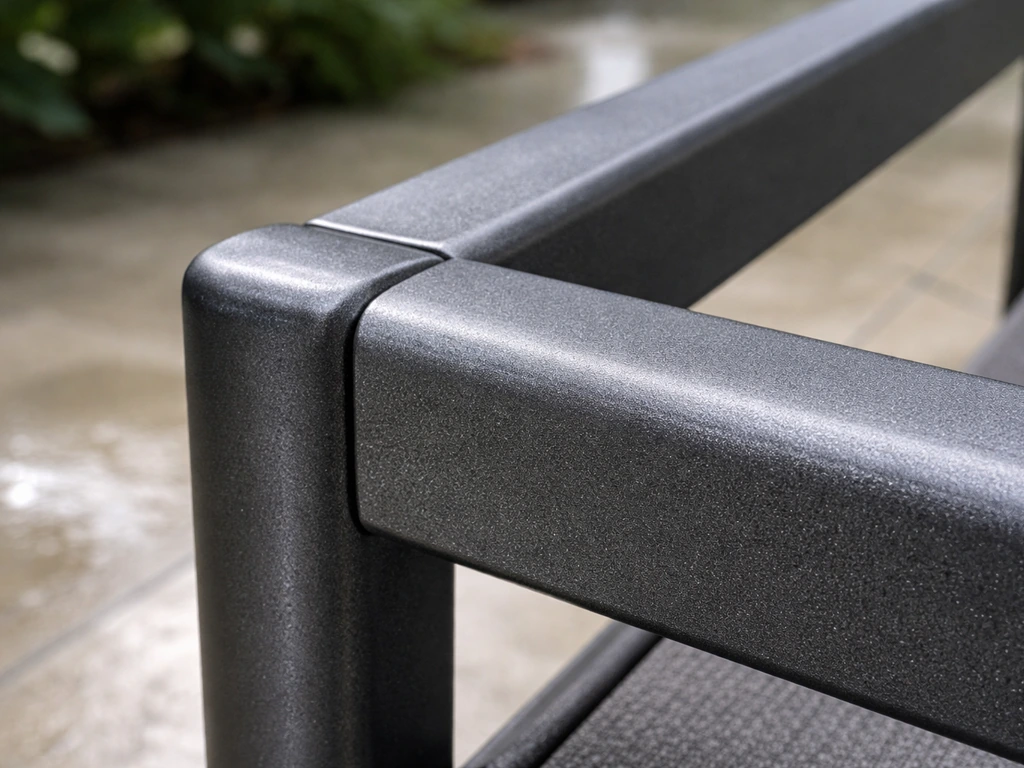
This is the single most practical frame material for wet climates. Aluminum doesn't rust, period. It can corrode over very long timelines near salt air, but for most PNW homeowners, you're looking at a frame that will outlast two or three sets of cushions. The key is that it must be powder-coated, not painted.
Powder coating bonds electrostatically to the metal and is baked on, creating a much thicker, more durable barrier than liquid paint. A good powder-coat finish protects against rust, UV, and moisture. When you do get a scratch or chip, treat it immediately with a touch-up pen to prevent corrosion from spreading under the coating. Look for manufacturers who test their coatings to ASTM B117 (the standard salt spray test used to evaluate corrosion resistance), that's a real spec, not marketing.
Teak
Teak is the gold standard for outdoor wood in wet climates. Its natural silica and oil content make it inherently resistant to moisture, rot, and insects without requiring constant sealing. Left unfinished, teak weathers to a silver-grey, which many people actually prefer. If you want to keep the warm honey color, apply a teak oil or sealer once a year.
The critical maintenance rule in the PNW: always let teak dry completely before covering it or putting it into storage.
Trapped moisture under a cover on wet teak leads to mold, and once mold gets into the grain, it's a real cleanup job. Teak is expensive, but over a 15-to-20-year lifespan, the cost per year is often competitive with budget materials you replace every few seasons.
HDPE lumber (poly furniture)
High-density polyethylene lumber looks like painted wood but is made from recycled plastic. It will not rot, crack, splinter, or absorb moisture. It doesn't need sealing, painting, or staining. For a climate where maintenance time is a real consideration, HDPE is genuinely low-effort. The trade-off is that it looks slightly more casual or utilitarian than teak, finer grain appearance is getting better with newer products, but it's still plastic. For uncovered patios where you want something that can sit through the entire rainy season with zero attention, HDPE is hard to beat.
All-weather resin wicker over aluminum frames
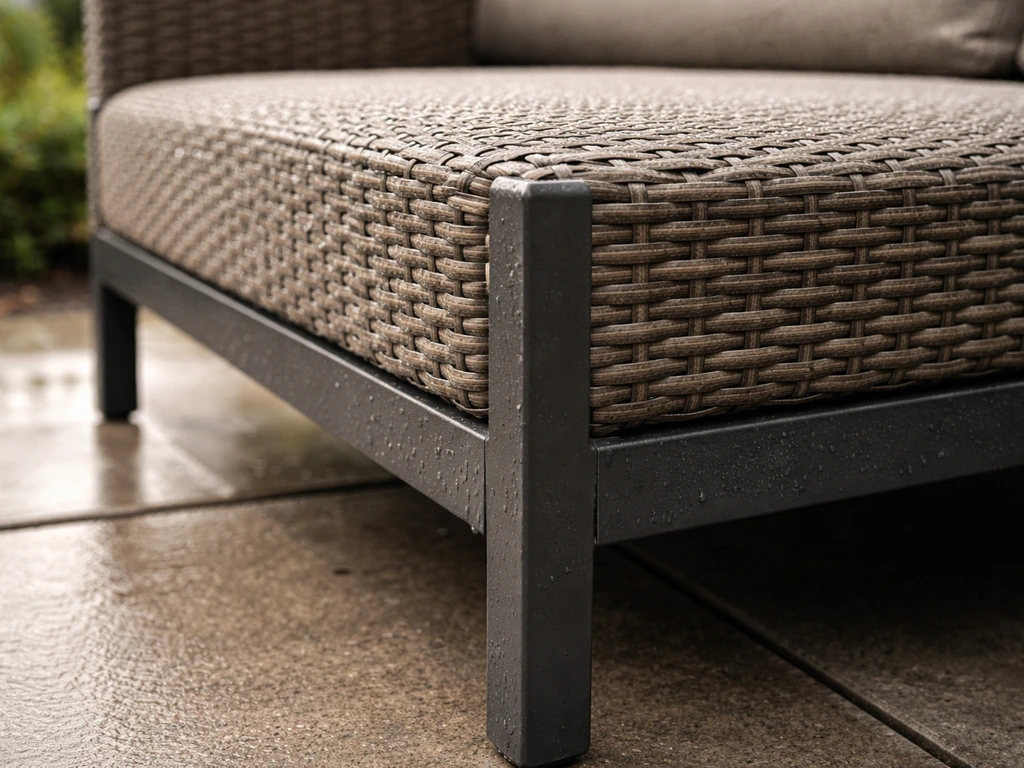
Resin wicker is the synthetic version of traditional rattan/natural wicker, and for the PNW the distinction matters enormously. Natural wicker and rattan are not outdoor materials. They mold, warp, and disintegrate in damp conditions. Real-world care guides for natural wicker explicitly recommend dehumidifiers and dry storage in humid climates, that's not a product that belongs on a PNW patio.
All-weather resin wicker, on the other hand, is UV-stabilized polyethylene or similar material wrapped around an aluminum frame. The key specs to look for are a tight, consistent weave pattern with no gaps or loose ends, and aluminum (not steel) as the underlying frame. Steel frames under resin wicker will eventually rust from the inside out, and you often won't see it until the frame is structurally compromised.
What to avoid in the PNW
- Bare steel or iron frames with no powder coating: rust starts within one season in damp air
- Natural rattan or wicker: molds rapidly in persistent humidity without climate-controlled storage
- Untreated softwoods like pine or fir: absorb moisture, swell, crack, and rot within a few years
- Cheap painted aluminum with thin coatings: the paint chips, moisture gets under it, and oxidation spreads fast
- Polywood or plastic resin chairs without UV stabilizers: they chalk and become brittle after repeated UV exposure even in cloudy climates
Quick material comparison
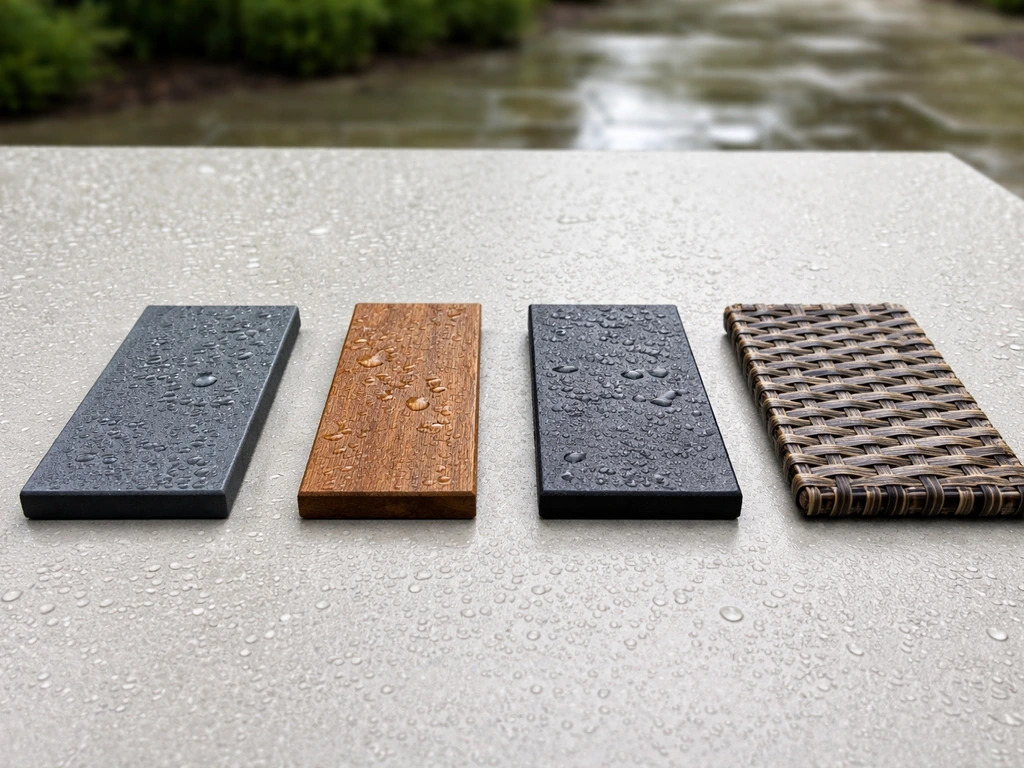
| Material | Rust/Rot Risk | Maintenance Level | UV Resistance | Best For | Relative Cost |
|---|---|---|---|---|---|
| Powder-coated aluminum | Very low | Low | Good with quality coating | All set types, uncovered patios | Mid to high |
| Teak | Low (if dried before covering) | Moderate (oiling, drying) | Good naturally | Dining, accent pieces | High |
| HDPE lumber | None | Very low | Excellent (built-in) | Covered and uncovered patios | Mid |
| All-weather resin wicker/aluminum | Low (aluminum frame) | Low to moderate | Good (UV-stabilized) | Conversation sets, lounge | Mid to high |
| Natural rattan/wicker | High (mold/warp) | Very high | Poor | Indoor use only | Low to mid |
| Bare steel/iron | Very high | High | Poor without coating | Not recommended for PNW | Low to mid |
Match your furniture type to your patio setup
Before you pick a material, figure out what you're actually building out there. A PNW patio used mostly for weekend dinners needs something totally different than one you want to lounge on during the dry summer months. Here's how to think about set types.
Dining sets
An outdoor dining set is the workhorse of most patios. For the PNW, powder-coated aluminum tables paired with teak or sling-seat chairs are a strong combo. Sling chairs (taut synthetic fabric stretched across an aluminum frame with no cushion) are particularly practical because there are no cushions to manage through the wet season. If you want cushion comfort for dining, look for chairs with drainage holes in the seat frame.
Spacing matters: leave 24 to 30 inches behind each chair so people can pull back without scraping on wet pavers or decking, and budget 36 inches of clearance for walkways behind seated guests. Dining table heights run 28 to 30 inches; standard dining chair seat heights run 17 to 19 inches, verify those numbers when mixing and matching brands.
Conversation sets
Conversation sets (two chairs or a loveseat plus a low coffee table) are ideal for smaller covered patios or roofed deck situations common in the PNW. Because they're typically lower and more lounge-oriented, cushions are usually thick and integral to the design. This is where fabric choice becomes really important, more on that in the next section. Aluminum or resin wicker frames work best here. A good all-weather resin wicker conversation set with Sunbrella cushions is a classic PNW setup for covered spaces.
Sectionals
Sectionals make sense for larger patios, especially covered ones. In the PNW, a sectional on an uncovered patio is a high-maintenance commitment because you're managing a lot of cushion square footage. If you have a covered patio or a pergola with good drainage, an aluminum or resin wicker sectional with thick solution-dyed acrylic cushions can be spectacular. For uncovered use, stick with a sectional that has thin, quick-dry cushions or modular pieces you can stack and cover easily.
Lounge chairs
For the PNW dry season (roughly June through September), lounge chairs see real use. Teak or aluminum sling loungers are practical because both materials dry quickly. Fully cushioned loungers are fine for covered patios. For uncovered patios, consider lounge chairs with removable cushions you can take inside or stack under a small cover after use.
Bistro sets
For small urban Seattle or Portland balconies and patios, a bistro set (two chairs and a round table, typically around 30 inches tall) is often the only proportionate option. Powder-coated aluminum bistro sets are ideal here. They're lightweight enough to move inside a garage or covered area quickly when a storm rolls through. Look for sets that fold flat for easy storage.
Construction quality and cushion specs that actually matter
Frames and joints
Welded joints are more durable than bolt-together construction for frames that stay outdoors year-round. If a frame is bolted, the hardware needs to be stainless steel or marine-grade aluminum, regular zinc or cadmium hardware will corrode and seize up within a few PNW winters. Check that any drainage holes are present in hollow tube sections so water doesn't pool inside the frame and freeze (on the rare cold snap) or grow algae. For aluminum, look for 6061 or similar alloy grades, they're stronger and more corrosion-resistant than cheap cast aluminum. Furniture that feels noticeably heavy for aluminum is usually using thicker-walled tubing, which is a good sign.
Cushion fabrics
This is where most PNW patio setups succeed or fail. Two fabrics consistently outperform everything else in damp climates: solution-dyed acrylic (Sunbrella being the most well-known brand) and olefin (polypropylene). Solution-dyed acrylic has the color baked into the fiber itself, not just applied to the surface, so it resists UV fade and doesn't support mold growth the way surface-dyed fabrics do. Sunbrella specifically offers UV protection and mildew resistance that's well-documented across marine and outdoor applications.
Sunbrella specifically provides UV protection and mildew resistance, which can help limit fading and microbial growth in outdoor use. Olefin is worth considering as a budget-friendly alternative: it repels moisture, dries quickly, and resists mildew because water doesn't absorb into the fiber.
For the PNW, the practical rule is: if the cushion tag doesn't say solution-dyed acrylic or olefin, assume you'll be replacing it within two or three seasons.
Cushion fill and drainage
Outer fabric matters, but inner fill matters almost as much. Look for quick-dry foam or open-cell foam fills that don't trap water. Some better cushions now include fabric mesh bottoms or ventilation holes. Avoid high-density closed-cell foam as the primary fill, it stays wet for days. If you're buying replacement cushions, feel the fabric and check for zippers (so you can pull the fill if needed). Also look at how the cushion sits on the chair: raised slat seats or sling backs promote airflow and faster drying versus fully upholstered chair pans where the cushion sits flat against a solid surface.
Best picks by budget and covered vs. uncovered patio
The covered/uncovered question is probably the biggest single variable in what you should buy. A covered patio (roof, pergola, or significant overhang) dramatically reduces moisture exposure and lets you use a wider range of furniture with proper care. Uncovered patios need furniture that can handle sitting in the rain for weeks without degrading.
Covered patios
If you have a covered patio or roofed deck, you have the most flexibility. This is where a teak dining set, an upholstered aluminum sectional with Sunbrella cushions, or a resin wicker conversation set all shine. Budget realistically: a quality covered-patio setup runs $800 to $2,500 for a dining set (mid-range teak or powder-coated aluminum) and $1,200 to $4,000 for a full sectional or conversation group. At the lower end of those ranges, you're looking at thinner aluminum tubing and cheaper polyester cushion fabric. Spending toward the middle buys you meaningfully better construction. Spending at the top mostly buys you design aesthetics and brand name.
Uncovered patios
For fully exposed patios, simplify. The best uncovered-patio furniture in the PNW is: HDPE lumber pieces (nearly zero maintenance, handles constant moisture), powder-coated aluminum sling chairs and tables (no cushions to deal with, extremely durable), or teak with minimal cushions. If you’re shopping specifically in Houston, focus on patio sets built for constant moisture resistance, durable frames, and quick-dry cushions best patio furniture houston.
Budget range here is similar, but the return on investment is higher because the materials are genuinely lower maintenance. A quality HDPE dining set runs $600 to $1,800 depending on size. Powder-coated aluminum sling dining sets are $400 to $1,500.
If you're on a tight budget and your patio is uncovered, two or four HDPE or aluminum sling chairs and a small aluminum table is a more honest investment than a cheap cushioned set that you'll be replacing in two years.
Budget reality check
| Budget Range | Covered Patio Best Bet | Uncovered Patio Best Bet | What You're Giving Up at Lower Price |
|---|---|---|---|
| Under $500 | Powder-coated aluminum sling bistro or dining set | HDPE bistro set or aluminum sling chairs + small table | Thinner tubing, lower-grade powder coat, no-name hardware |
| $500–$1,500 | Resin wicker/aluminum conversation set with olefin cushions | HDPE dining set or aluminum sling 4-piece dining | Some aesthetic options, brand warranty support |
| $1,500–$3,500 | Teak dining set, aluminum sectional with Sunbrella cushions | Teak pieces or HDPE sectional + covers | Mostly design choices; construction is solid at this range |
| $3,500+ | Premium teak or designer aluminum with full Sunbrella upholstery | Same, with full covers | Diminishing returns on durability; you're paying for design |
Maintaining your patio furniture through PNW rainy seasons
Even the best furniture fails fast without a basic maintenance routine in this climate. The good news is this doesn't need to be complicated, it just needs to happen consistently.
Seasonal cleaning routine
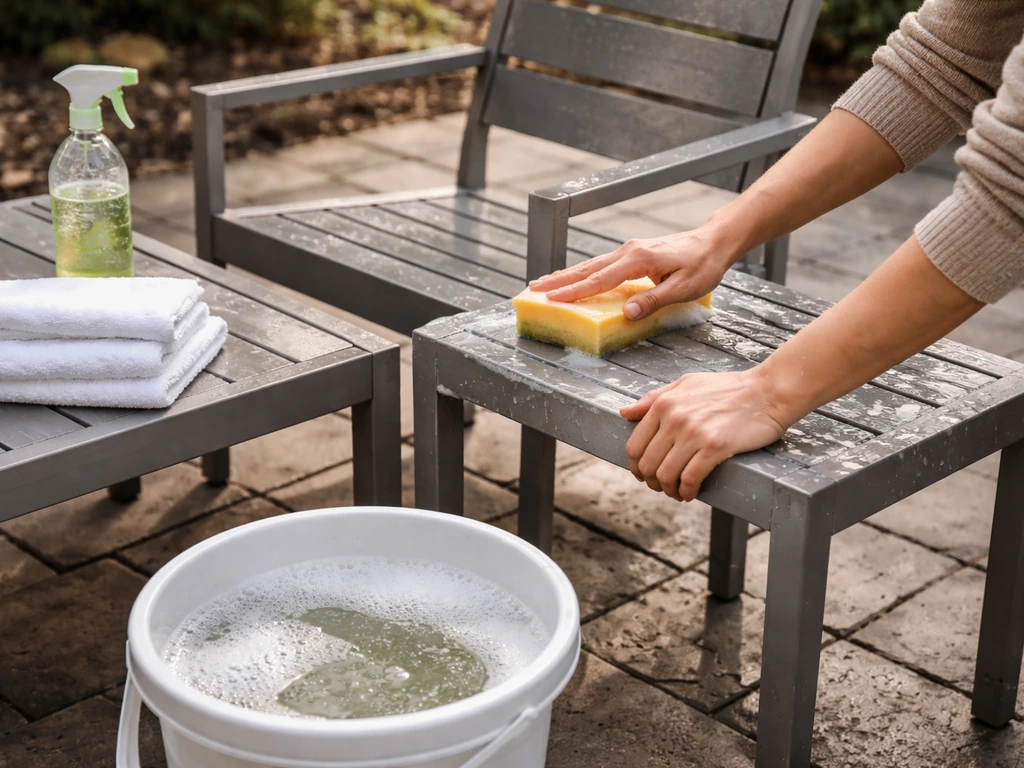
Do a thorough cleaning twice a year: once in late spring before heavy use and once in late fall before the wet season sets in. For aluminum, warm water with mild dish soap and a soft brush is all you need. Rinse well and let dry fully, this matters more than people realize. For teak, a teak cleaner or diluted oxygen bleach (not chlorine bleach) handles mildew and graying. Resin wicker can be cleaned with the same mild soap solution; use a soft brush to get into the weave. Check for any loose weave strands or structural flex in the frame at this point, small problems are cheap to fix, big ones aren't.
Covers: the right way to use them
Furniture covers are useful in the PNW but they can actually cause more damage than they prevent if used incorrectly. The non-negotiable rule: furniture must be completely clean and dry before you put a cover on it. Covering damp furniture traps moisture, creates a dark, humid environment, and accelerates mold and corrosion. This applies to every material: teak, aluminum, wicker, HDPE. The cover itself should be breathable, not a solid tarp. Look for covers made from breathable, water-resistant fabric with ventilation panels. Covers that are highly resistant to water, mold, mildew, and tearing while still allowing air circulation are what you want. Avoid polyurethane-coated tarps; they trap condensation inside.
Cushion care and storage
Even Sunbrella and olefin cushions benefit from being stored off the furniture during extended wet periods. If you have a garage, shed, or deck box, bring cushions in when you're not using the patio. If they do get wet, stand them on edge in a spot with good airflow so both faces can dry, laying them flat on concrete traps moisture underneath. If you spot any mildew starting on a fabric (look for dark spotting, especially along seam edges), treat it immediately with a diluted oxygen bleach solution, rinse thoroughly, and dry fully before covering or storing. Mildew on outdoor fabric rarely stays contained if you ignore it.
Winter and off-season storage
For most PNW homeowners, full winter storage isn't required for the right materials. Powder-coated aluminum, HDPE, and teak can all stay outside with quality covers. What should come inside or go into covered storage: cushions (always), natural fiber pieces if you somehow have them, and any lightweight items that wind can throw around. If you're storing aluminum furniture in a garage or shed, make sure it's clean and dry first, and leave some airflow, don't press it against damp concrete walls. For teak stored under cover, allow air circulation so the natural oils in the wood can breathe. A completely sealed, airtight storage situation for teak is actually worse than a breathable covered storage area.
Touch-up and repair to extend lifespan
Don't let small damage wait. On powder-coated aluminum, a chip or scratch exposes bare metal to the consistently damp PNW air, and rust will develop under the coating and spread laterally if you ignore it. Powder coat touch-up pens matched to your frame color are inexpensive. On teak, if you want to maintain the golden color rather than let it gray naturally, a fresh application of teak sealer in spring takes about 20 minutes per chair and extends the finish by a full year. For resin wicker, trim any loose ends flush immediately, they catch on clothing, unravel, and once the weave structure is compromised, it's hard to reverse.
The PNW isn't a brutal climate for patio furniture the way Florida humidity or Arizona summer heat is, but it is a persistent one. Furniture that can handle months of damp rather than bursts of extreme weather is what you need. Cities like Seattle, Vancouver, and Portland all share this same core challenge: wet winters, mild summers, and a window of genuinely great outdoor time worth protecting with good furniture and a simple care routine. For homeowners in Los Angeles, the best patio furniture selections focus less on moisture and more on heat and UV durability best patio furniture Los Angeles.
If you’re shopping for the best patio furniture in Vancouver, prioritize powder-coated frames and solution-dyed cushions that handle persistent damp weather Seattle, Vancouver, and Portland. If you're shopping for the best patio furniture for seattle, prioritize powder-coated aluminum frames and solution-dyed acrylic cushions to handle damp winters and UV exposure. Get the materials right, buy quality cushion fabric, keep things dry before covering them, and your outdoor space will hold up through many seasons without drama.
If you want the best patio furniture Los Angeles, prioritize rust-resistant frames and quick-dry, fade-resistant cushions. If you're shopping for patio furniture for Long Beach specifically, prioritize rust-resistant frames and quick-drying cushions so the salty coastal air and humidity do not shorten the lifespan best patio furniture for Long Beach. If you're aiming for the best patio furniture long beach, focus on rust-resistant frames and quick-drying, fade-resistant cushions patio furniture for Long Beach specifically.
FAQ
What’s the best patio furniture for a covered patio vs an uncovered PNW patio?
If your patio is uncovered or only partially protected, choose furniture where the frame can stay outside while the cushion workload is minimized. Powder-coated aluminum frames with sling chairs, or HDPE dining chairs without fabric cushions, are the lowest-failure options because they do not trap moisture in fabric and foam. If you want upholstered comfort, plan to take cushions inside after use during the wet season.
Can I just use patio furniture covers year-round in the Pacific Northwest?
No. In the PNW, a “water-resistant” cover can still trap condensation against the surface. Only cover when everything is fully clean and completely dry, and use breathable covers with ventilation panels so airflow can remove humidity. Also, avoid stacking multiple covered items directly against each other, because the trapped air pockets keep surfaces wet longer.
How do I tell if an aluminum patio set is truly PNW-ready?
For aluminum frames, welds plus proper drainage matter more than how fancy the paint looks. Look for sloped or drilled drainage holes inside hollow tube sections, and confirm the hardware is stainless steel or marine-grade aluminum. If joints are bolt-only, check that the bolts are not standard zinc hardware, because it can corrode and seize in damp cycles within a few seasons.
Will sealed cedar or pressure-treated wood last on a Pacific Northwest patio?
If you already own wood furniture, the limiting factor is whether it is genuine teak or an imitation wood product. Natural wood that is not inherently rot-resistant will require frequent maintenance and will still struggle with months of damp, even with sealing. Teak can handle the PNW pattern better, but it still needs complete dry time before covering or storage to prevent mold in the grain.
What cushion specs should I look for beyond fabric color and brand name?
For cushions on PNW patios, the fastest “quality check” is the label plus the construction. Avoid cushions that are mainly polyester or surface-dyed and look for tags that explicitly say solution-dyed acrylic or olefin. For fill, prioritize quick-dry or open-cell foam and ensure there is airflow under the cushion (mesh bottoms, slat bases, raised seating, or ventilation holes).
Is it okay to mix and match dining chairs and tables for the PNW?
Mixing dining chair brands is fine if seat heights and clearances are planned, but do not assume every brand’s measurements match. In the PNW, small fit issues become bigger problems because wet footwear and pavers create friction, so allow extra walking and pulling space. As a practical rule, keep 24 to 30 inches behind chairs for easy pull-back and 36 inches for the walkway path behind seated guests.
Do I need to bring cushions inside every night in the Pacific Northwest?
Yes, but choose the right use case. Teak can be left outside with good covers, but cushions should be stored off the furniture during long wet stretches. If you use a deck box, open it for airflow and keep cushions standing on edge when drying, because laying flat on concrete can trap moisture underneath and create mildew spots.
What should I do if my outdoor cushions get mildew in the rainy season?
Start with the simplest diagnosis: if mildew appears, treat immediately and fully dry before the next rain cycle. For active spots on Sunbrella or olefin, use a diluted oxygen bleach solution, rinse thoroughly, then dry fully before covering. If mildew keeps returning in the same area, it usually means trapped moisture, poor airflow under cushions, or a cover applied too early.
Are tarp-style covers bad for patio furniture in the PNW?
Not always. Vinyl or solid tarps can create a humid microclimate that speeds corrosion and mold, even if they block rainfall. Instead, use breathable, water-resistant covers designed for outdoor furniture, with ventilation panels. Also, verify cover fit so air can circulate and the cover does not sag and pool water on top of the fabric.
Should I seal teak every year in the Pacific Northwest?
If you’re sanding or re-sealing teak, the risk is trapping moisture or sealing over residues. In practice, clean first, dry completely, and apply sealer during a dry stretch if possible. If you prefer the silver-grey look, you can skip yearly sealer, but still do regular cleaning and always let it dry fully before covering.
How do I handle scratches and small damage so they do not become early failures?
When damage exposes bare metal, the goal is to stop corrosion from spreading under the coating. Use a touch-up pen matched to the frame color as soon as you notice chips, and inspect after wind storms when abrasion is common. For loose weave ends on resin wicker, trim them immediately so the structural pattern does not start unraveling.
Next Articles
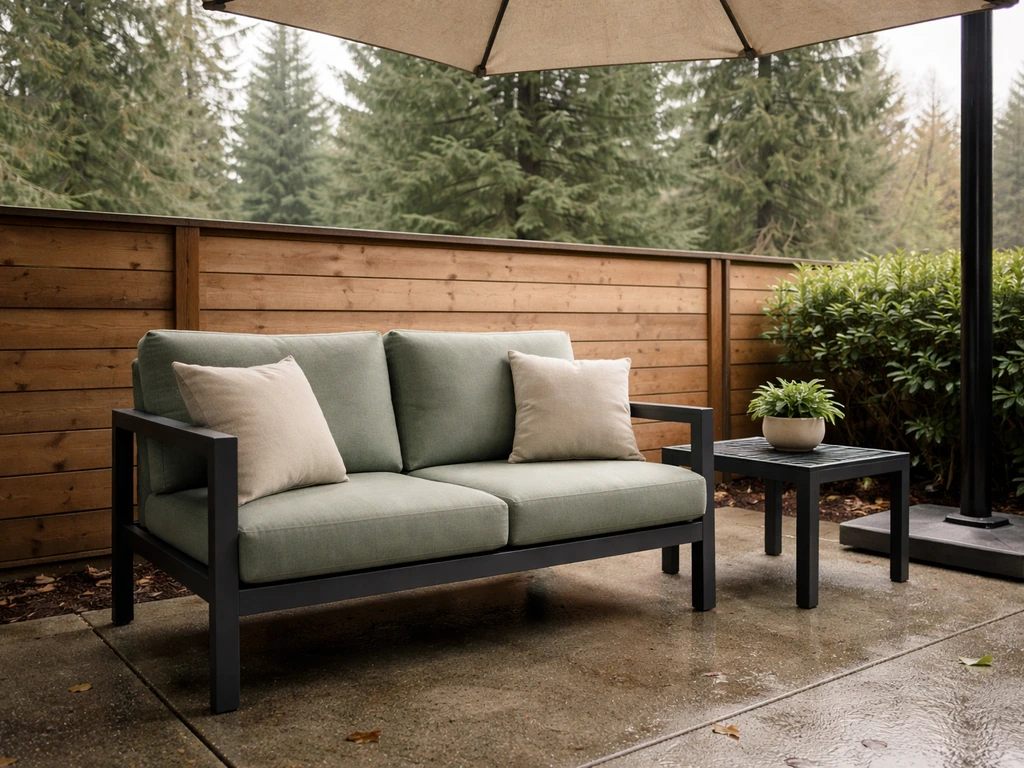
Best Patio Furniture for Seattle: What to Buy Today
Seattle-ready patio furniture guide: best materials, rustproof metal, mildew-resistant cushions, quick-dry features, and
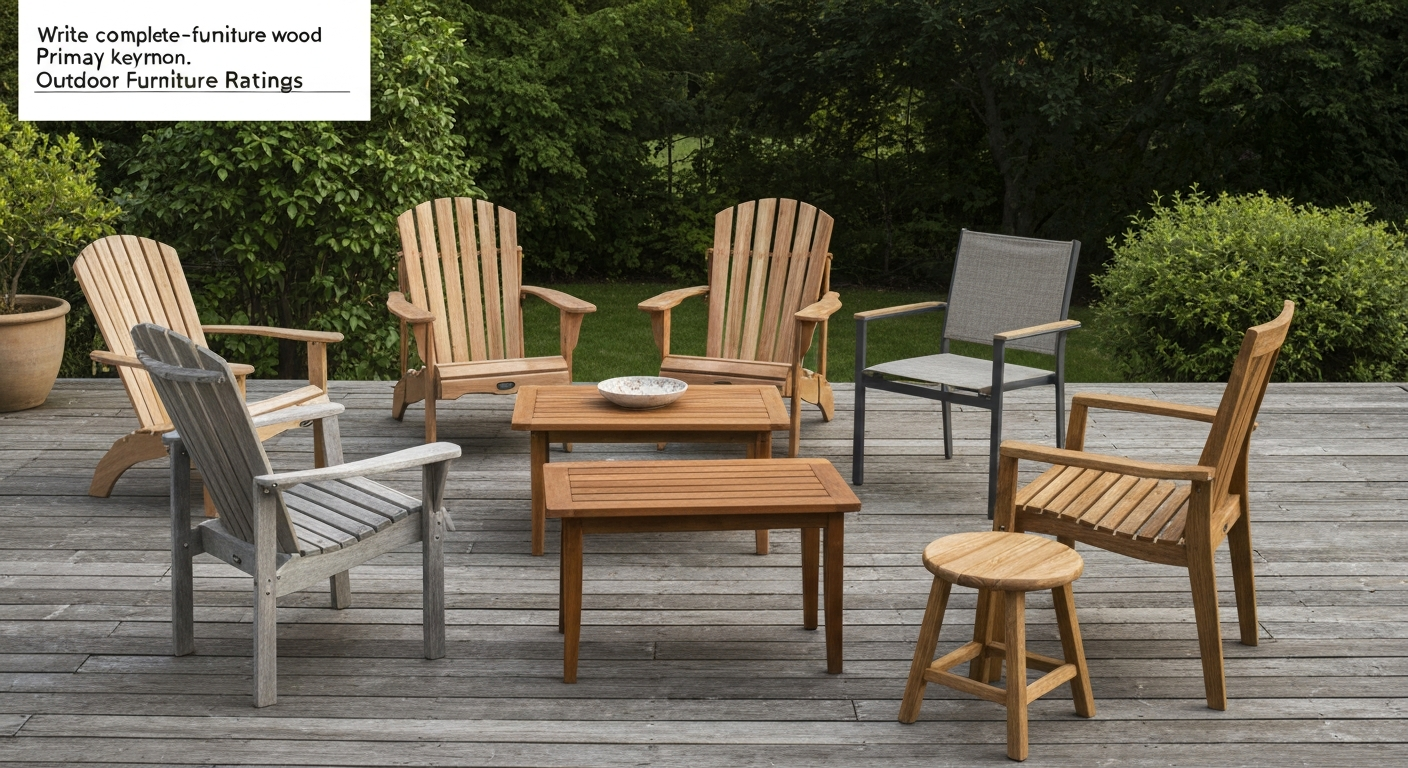
Common Patio Furniture Wood: Best Choices, Care & Tips
Compare common patio furniture wood types, teak, cedar, redwood, oak, with durability, finishes, and care tips.
Best Wood Patio Stain: Choosing Durable, Low-VOC Finishes
Compare and choose the best wood patio stain: durability, finish, climate tips, prep, and top product picks.