
For Houston, the materials that consistently hold up are powder-coated aluminum, HDPE (recycled plastic) lumber like POLYWOOD, and high-quality synthetic wicker. Pair any of those frames with solution-dyed acrylic cushions, Sunbrella being the gold standard, and you have a setup that can realistically last 10-plus years in Houston's punishing heat, humidity, and UV. Teak works too but costs more and needs annual oiling. What fails fast: untreated steel, cheap painted aluminum, natural rattan, and budget polyester cushions. That's the short version. Here's the full breakdown so you can shop with confidence.
Best Patio Furniture Houston Guide for Heat and Rain

Theo Tierney
21 Jun 2026
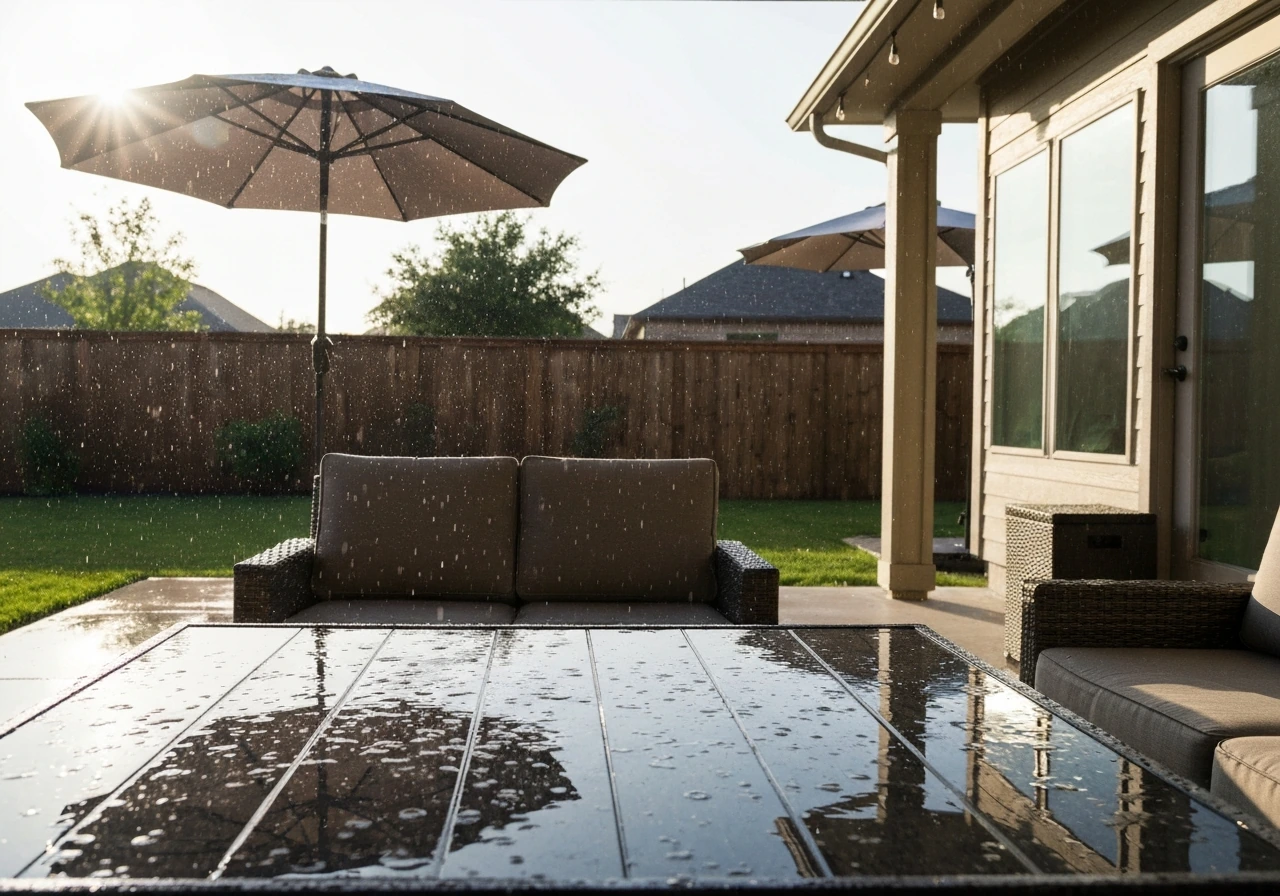
What Houston's climate actually does to patio furniture
Houston is a humid subtropical city sitting close to the Gulf, and that combination is genuinely brutal on outdoor furniture. The city averages around 49.8 inches of rain per year, spread heavily across spring through fall. That's not just wet seasons, it means your furniture is getting rained on routinely, drying slowly in thick humidity, then baking in intense sun the next day. Average humidity hovers around 71%, which is exactly the condition that turns a cheap cushion into a mildew farm within one season.
UV exposure is the other major threat. Houston sits at a latitude and sun angle that delivers high daily UV index readings throughout the summer months. That UV breaks down finishes, fades colors, and degrades foam and fabric much faster than most people expect. A patio set that looks fine in Portland or Seattle after five years can look chalky, cracked, and sun-bleached in Houston after two. If you want the best patio furniture for Seattle, look for materials and cushion choices that handle frequent rain, cool temps, and seasonal moisture.
Don't sleep on the freeze risk either. County freeze-date climatology datasets for Texas compile freeze statistics by location, including measures like earliest freeze date, which helps estimate how freezing likelihood varies by county blank" rel="noopener noreferrer">freeze risk. Houston gets occasional hard freezes, sometimes blank" rel="noopener noreferrer">as late as April on record, and the 2021 winter storm was a sharp reminder that sub-freezing temperatures do happen. These cold snaps are short but they can crack ceramics, split natural wood that's absorbed moisture, and stress finishes on cheaper frames. If you're near the coast or industrial areas, salt air and airborne pollutants add a corrosion layer on top of all that. Furniture near Galveston Bay or the Ship Channel corrodes noticeably faster than furniture in The Woodlands.
Choosing the right material for Houston's conditions
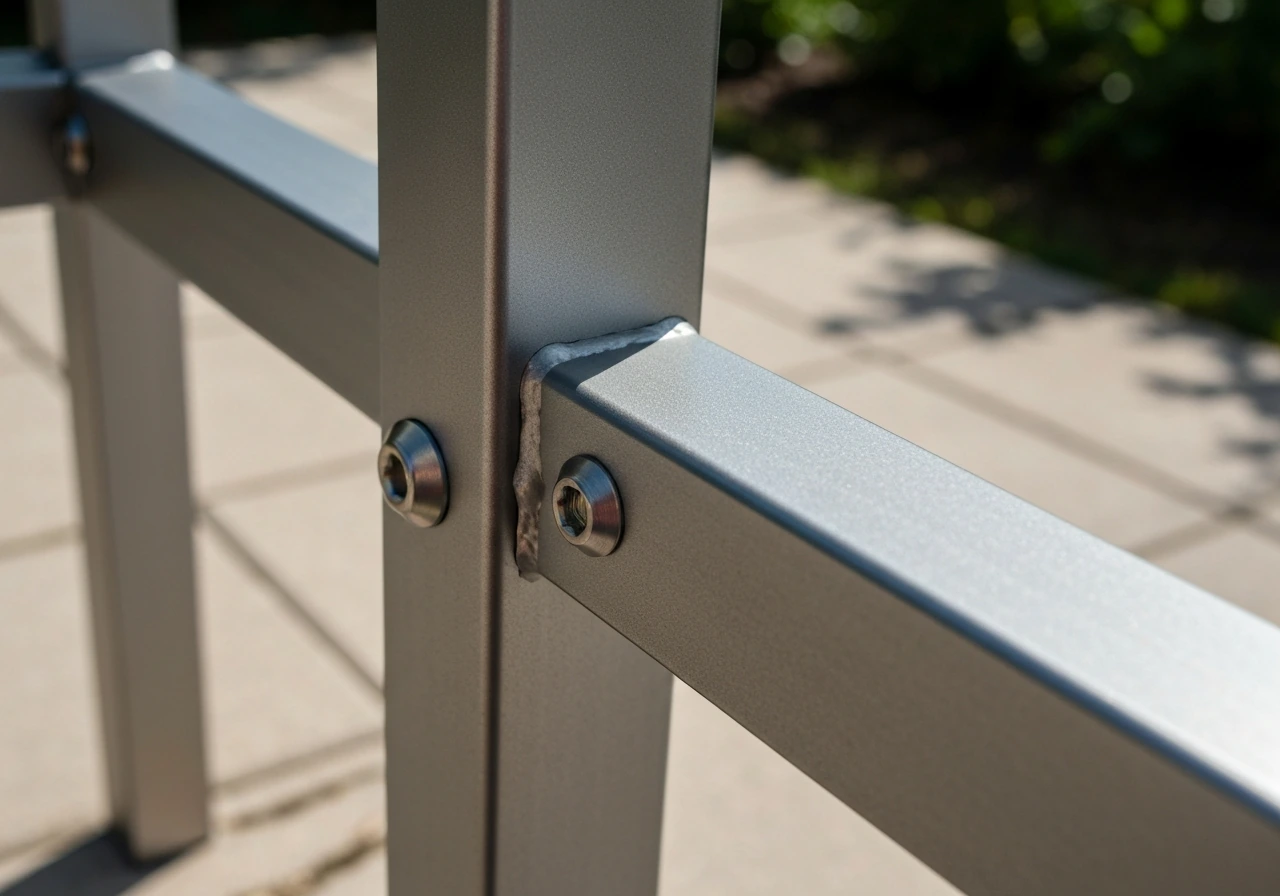
Every material has a real trade-off in Houston's climate. Here's what you're actually signing up for with each one.
Powder-coated aluminum
This is the closest thing to a universal recommendation for Houston. Aluminum doesn't rust, it's light enough to move indoors before a storm, and when the powder coat is thick and properly applied (typically 60-100+ microns for outdoor use), it resists UV fading and chalking for years. The catch is that powder coat quality varies wildly. Cheap furniture uses thin coatings with weak adhesion, which chip, expose bare aluminum, and start looking rough within two or three seasons. When you're shopping, look for brands that specify their powder coat thickness or describe a multi-stage application process. If they just say "powder coated" and nothing else, assume the minimum.
If your patio is close to the coast or a waterway, also check the hardware. Stainless steel fasteners are common, but grade matters: 316-grade stainless (marine grade, alloyed with molybdenum) resists chloride corrosion significantly better than standard 304-grade. This is a detail almost no marketing material tells you, but it's the difference between hardware that holds up and screws that rust and stain your furniture within a few years.
HDPE lumber (recycled plastic)
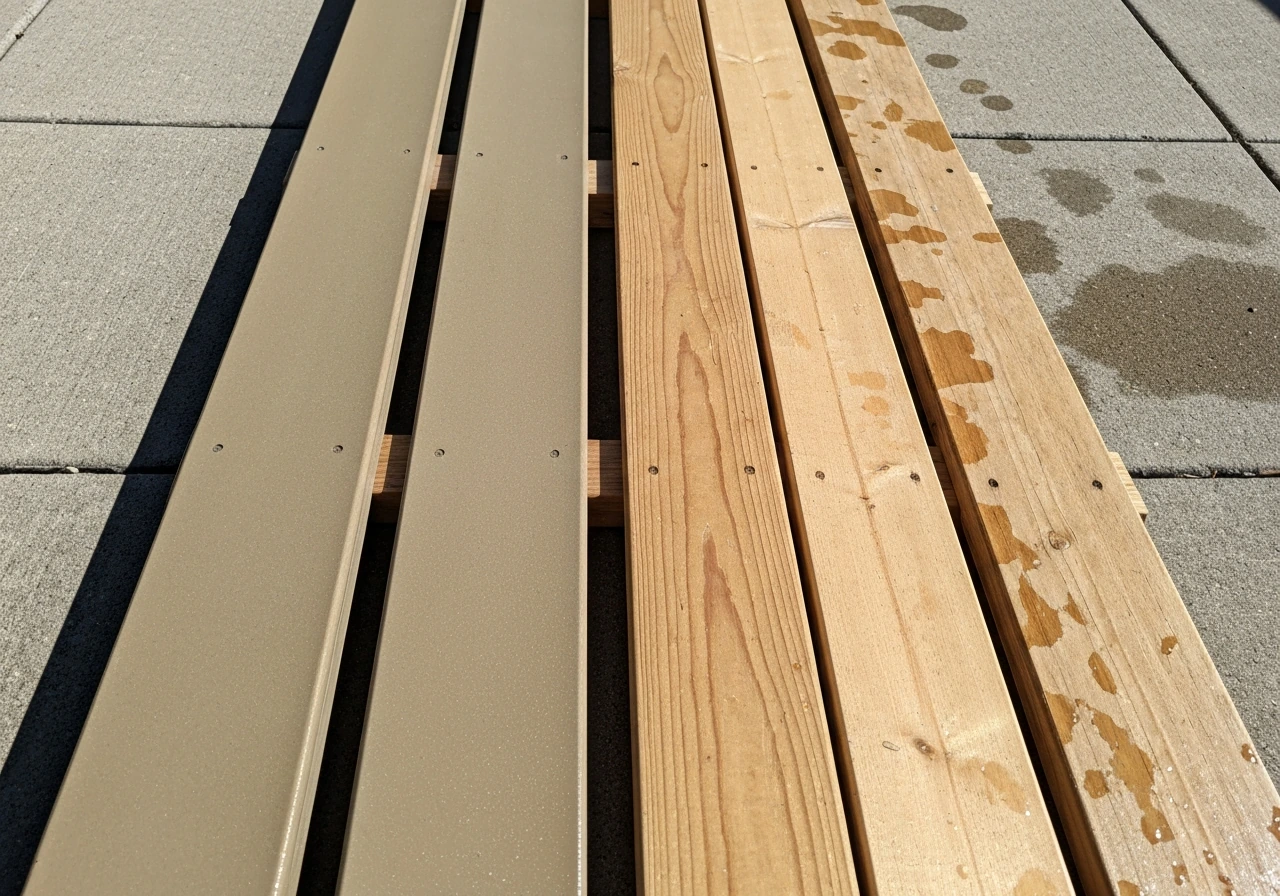
POLYWOOD is the best-known brand in this category and for good reason. HDPE (high-density polyethylene) lumber is genuinely one of the most low-maintenance options for a Houston patio. The material won't crack, splinter, rot, or absorb moisture. UV stabilizers and pigments are mixed throughout the material rather than applied as a surface coat, which means the color retention is fundamentally more durable than painted wood or wicker. POLYWOOD backs this with a residential warranty that covers against splintering, cracking, and rotting under normal conditions. The aesthetic is more casual/Adirondack than sleek modern, so it's not for every style, but if you want something you can essentially leave outside year-round with minimal fuss, HDPE lumber is hard to beat in Houston's climate.
Teak wood
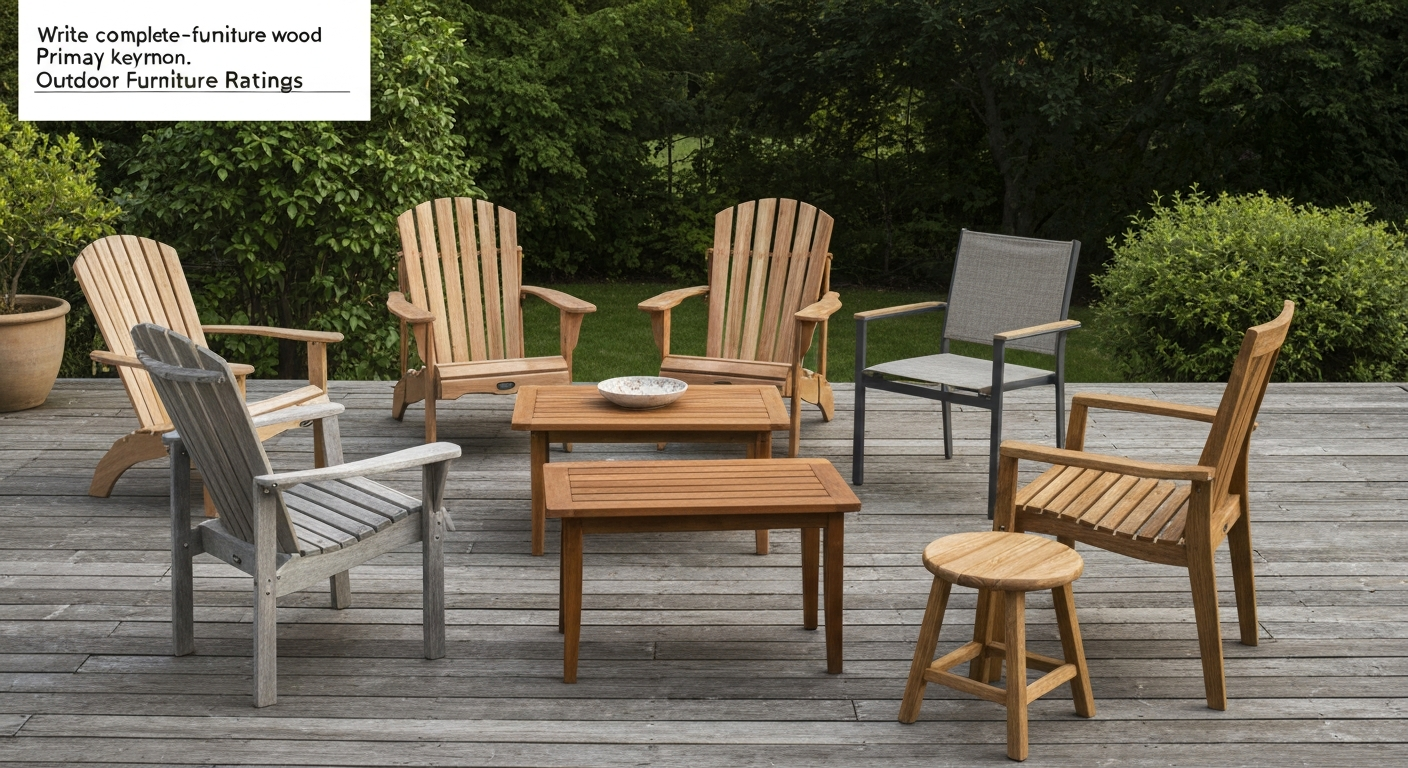
Teak is the king of outdoor wood because its natural oil content makes it inherently resistant to rot, insects, and weather without chemical treatment. In Houston's humidity, a good teak set can last 20-plus years if you maintain it. The downsides are cost (quality teak is expensive) and the maintenance reality: if you want to keep it looking warm and golden, you need to clean and oil it once or twice a year. If you skip that, it weathers to a silver-gray patina which is fine structurally but not everyone's look. Other woods like eucalyptus and ipe can perform well too, but teak is the most forgiving for people who might miss a year of maintenance. Avoid acacia and mango wood in Houston, they look nice at the price point but don't hold up to sustained high humidity.
Synthetic wicker vs. natural rattan
Natural rattan or reed wicker is a non-starter for Houston outdoor use. It absorbs moisture, grows mold, and unravels within a season or two in Houston's humidity. Synthetic (resin) wicker is a completely different material: it's typically woven from UV-stabilized polyethylene or similar plastics over a powder-coated aluminum frame. The best synthetic wicker is tight, even weave with no gaps where water pools, and a frame gauge heavy enough that it doesn't flex when you sit down. Lower-quality synthetic wicker uses thinner resin strands that become brittle in UV over time and start cracking or fraying after three to four Houston summers. Check that the weave color is solution-dyed all the way through rather than surface-coated.
Wrought iron and steel
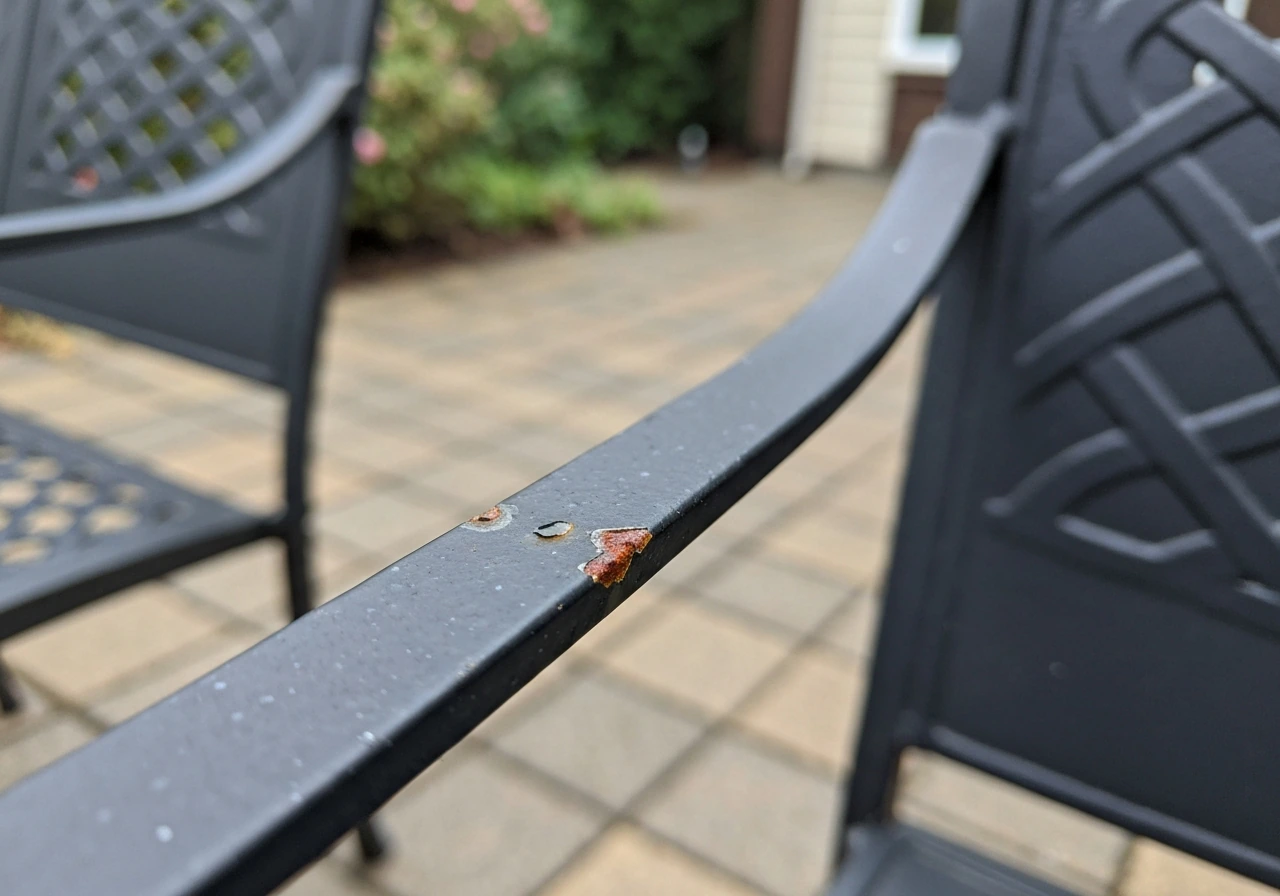
Classic-looking but high-maintenance in Houston. Wrought iron is heavy and sturdy, but it requires consistent rust prevention. Even a small chip in the coating lets Houston's humidity get underneath and start oxidizing. If you love the aesthetic, budget for annual touch-up paint and a quality rust-inhibiting primer coat. Regular painted steel (not stainless, not aluminum) is the worst choice for Houston, it rusts fast, the paint bubbles and peels, and within a few years you're dealing with visible corrosion on every joint and weld point.
| Material | Rust/Rot Risk | UV/Fade Resistance | Humidity Performance | Maintenance Level | Best For |
|---|---|---|---|---|---|
| Powder-coated aluminum | None | Good (quality-dependent) | Excellent | Low | Most Houston patios |
| HDPE lumber (POLYWOOD-style) | None | Excellent | Excellent | Very low | Casual, low-fuss setups |
| Teak wood | None (rot-resistant) | Good (grays without oiling) | Good | Moderate (annual oiling) | Higher-end, long-term investment |
| Synthetic resin wicker | None (frame aluminum) | Good (quality-dependent) | Good | Low-moderate | Conversational/lounge settings |
| Natural rattan/reed wicker | N/A | Poor | Very poor | High | Indoor use only |
| Wrought iron/steel | High | Moderate | Poor | High | Occasional, short-term use |
What styles last and what to skip in Houston
Beyond material, the construction details and design choices make a real difference in how long Houston furniture survives. Here's what to prioritize and what to avoid.
Styles and features that hold up
- Sling chairs: Fabric stretched over an aluminum frame with no cushion needed. No mildew risk, quick-drying, and one of the most durable designs for humid climates. The sling fabric itself can eventually stretch or need replacement, but that's a $50-100 repair, not a furniture replacement.
- Open-frame designs: Furniture with drainage gaps, slatted tops, and open weave patterns lets water run off instead of pooling. Standing water is one of the fastest ways to degrade cushions and frame finishes in Houston.
- Quick-dry cushion foam: If you're buying cushioned furniture, look for open-cell reticulated polyurethane foam — marketed as "quick-dry" or "Dri-Fast" style. This foam drains water within minutes rather than staying saturated for days. It's a non-negotiable feature for Houston.
- Solution-dyed acrylic fabric (Sunbrella and equivalents): The dye goes all the way through the fiber, not just the surface. This means Houston's UV can't bleach the color out the same way it does with printed or coated fabrics. Sunbrella carries a 10-year limited warranty specifically covering mildew and fading.
- Furniture with removable, zip-off cushion covers: Easier to clean, easier to store separately during Houston's wet stretches, and extends the life of both the cushion and the cover significantly.
What fails fast in Houston
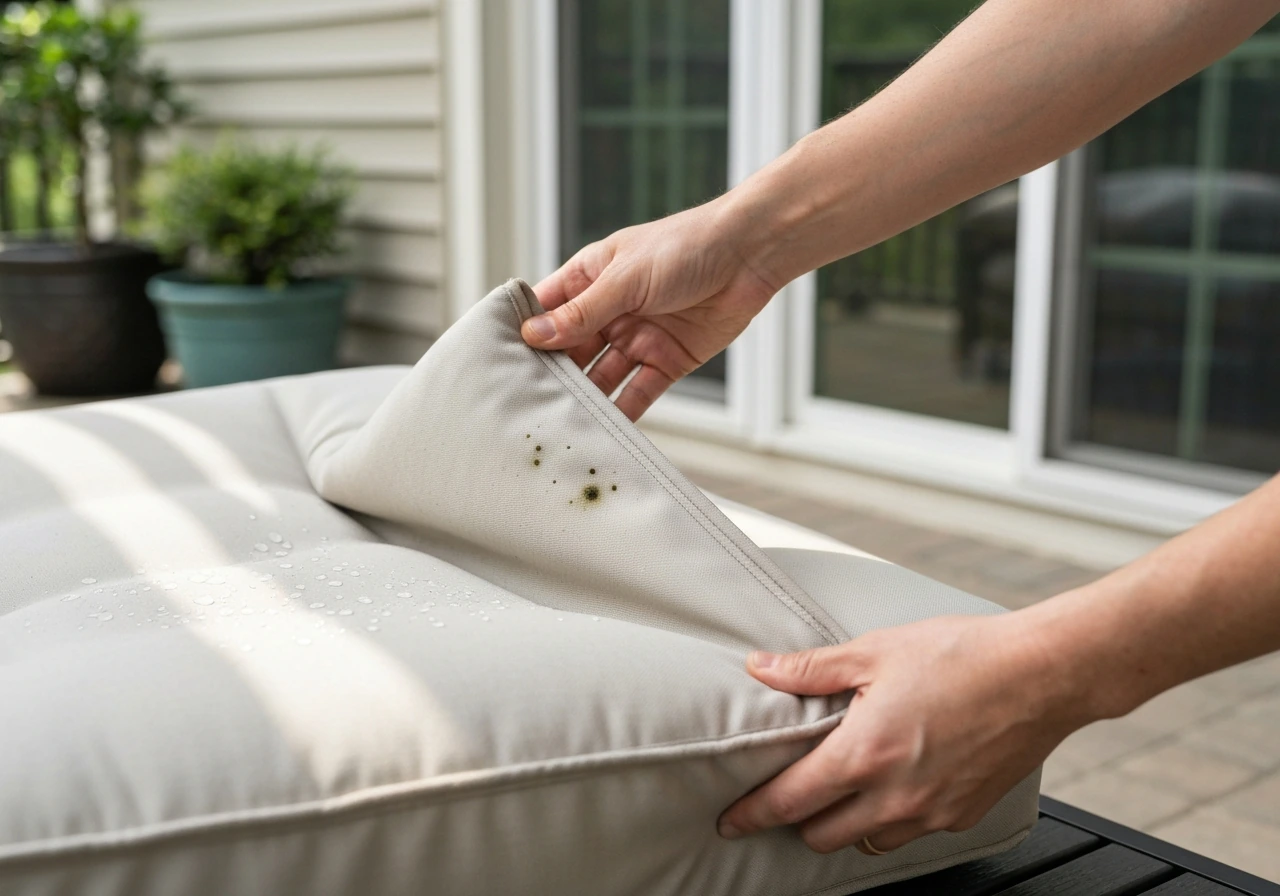
- Solid foam cushions with non-breathable covers: Water gets trapped inside and never fully dries in Houston's humidity. Mold grows inside the foam even when the outside looks fine.
- Glass tabletops with painted metal frames: The glass survives fine, but painted steel or low-grade aluminum frames around glass rust at the joints and look ruined within two to three seasons.
- Wicker over steel frames: The steel frame corrodes, the wicker loosens, and the whole piece falls apart faster than wicker over aluminum.
- Painted wood furniture (not teak or eucalyptus): The paint traps moisture underneath, leads to cracking, and makes the wood rot faster than if it were just left bare.
- Cheap umbrella bases: Heavy rain and Houston's thunderstorm winds can knock over a light base, which then takes out whatever furniture it falls on. Get a base rated for at least 50 lbs.
Brand and product recommendations by category
These are honest category picks for Houston based on material quality, durability track record, and value rather than current promotions or sponsorships.
Outdoor dining sets
For dining, powder-coated aluminum is the move. Brands like Telescope Casual, Woodard, and Brown Jordan sit at the higher end and use heavier gauge aluminum with better powder coat processes. For mid-range dining sets, look at Crosley, Hanover, and Polywood's dining lines. POLYWOOD's farmhouse and nautical dining tables with matching chairs are excellent value for Houston specifically because there's zero worry about the tabletop warping or the legs rotting in rain. Avoid any dining set with a steel frame unless you can verify it's galvanized or stainless, painted steel dining chairs are one of the most commonly returned products after a Houston summer.
Lounge chairs and cushioned seating
Sling lounge chairs from brands like Tropitone and Telescope Casual are top-tier for Houston. The sling design means no cushion to manage and the aluminum frame resists everything Houston throws at it. If you want cushioned lounging, OW Lee and Mallin make cushioned aluminum frames with quality Sunbrella fabric options. For a more budget-conscious cushioned chair, look at Hampton Bay's higher-end lines at Home Depot (not the entry-level stuff), just make sure you're specifying Sunbrella or Olefin fabric rather than the default polyester, which will fade noticeably in one or two Houston summers.
Conversation sets and sectionals
Synthetic wicker conversation sets are the most popular patio purchase in Houston right now and for good reason, they look great, fit covered patios well, and the better ones hold up. At the higher end, Ratana, Jensen Leisure, and Kettler make resin wicker pieces that are genuinely built to last. Mid-range, look at Agio (widely sold at Costco) and Better Homes and Gardens' upper lines at Walmart, but scrutinize the frame gauge and weave quality before buying. For large sectionals, aluminum-framed sectionals with thick, all-weather cushions from brands like Bali Outdoors or Suns Out (direct-to-consumer) offer good performance. Avoid oversized sectionals made with thin-walled steel frames, they look impressive in the showroom and feel loose and wobbly after two seasons.
Umbrellas and shade structures
A patio umbrella in Houston is more than aesthetic, shade keeps cushions and frames cooler, which slows UV degradation on everything underneath. Look for solution-dyed acrylic canopies (same Sunbrella or equivalent logic as cushions) and a solid aluminum or fiberglass ribbed frame. Fiberglass ribs are actually better in Houston because they flex in wind rather than snapping or inverting. Brands like Treasure Garden and California Umbrella make commercial-grade umbrellas that last. Budget umbrellas with polyester canopies and thin steel poles are a seasonal item, not a multi-year investment.
Layout, comfort, and making the space actually work
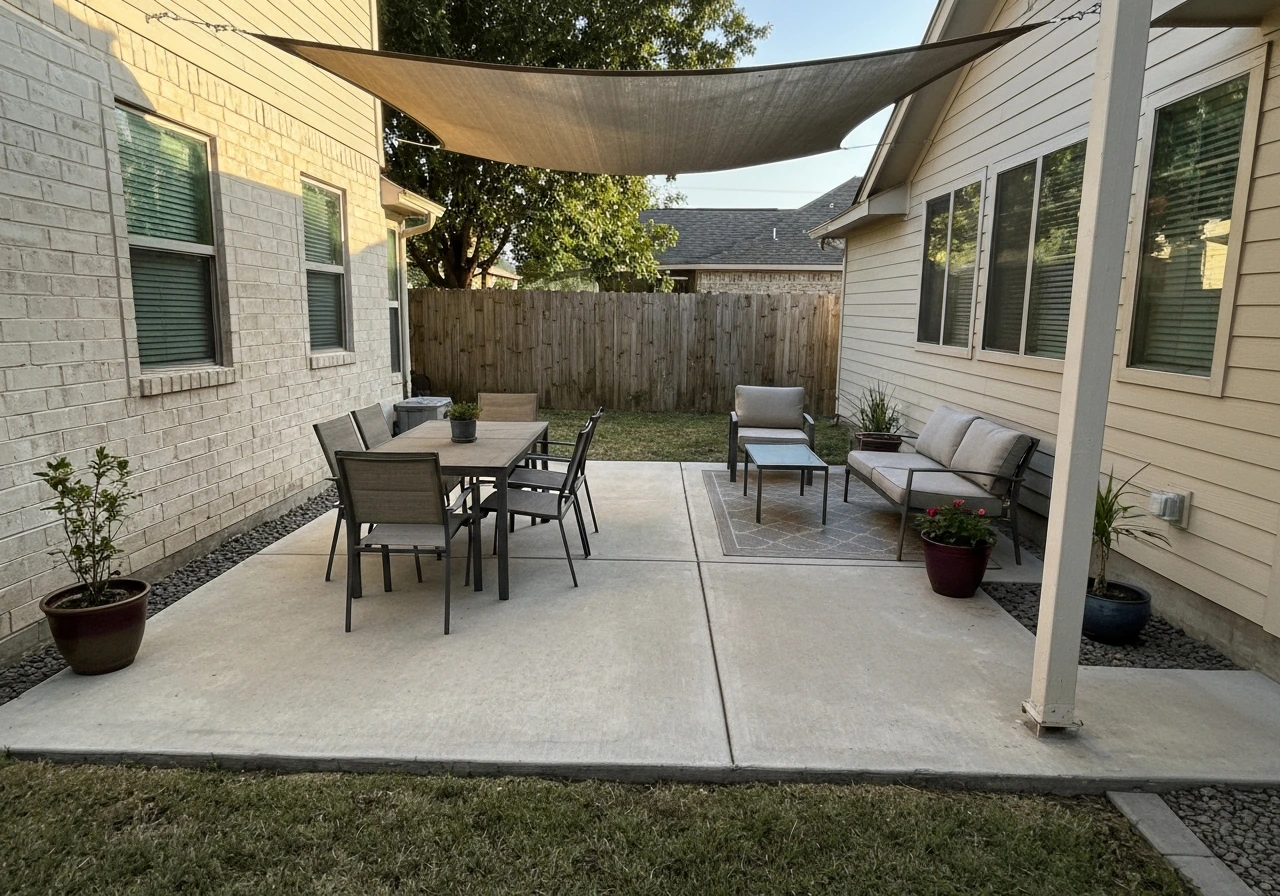
Houston outdoor living is heavily shaped by the heat. Most Houstonians use their patios hardest from March through May and again October through November. The brutal June through August stretch is when you want your furniture arranged for maximum shade and airflow, not stacked in full sun. A covered patio or pergola is not a luxury in Houston; it's close to essential if you want year-round use and if you want your furniture to last. UV exposure under a solid or slatted roof is a fraction of what direct sun delivers, which directly translates to longer cushion and finish life.
For space planning, a 10x12 foot patio comfortably fits a 4-person dining set or a 3-piece conversation grouping with some circulation room. Go up to 12x16 or larger and you can layer a dining zone plus a lounge area. One tip specific to Houston: leave a few feet of clearance between furniture and the house wall or fencing to allow air circulation and let things dry faster after rain. Moisture trapped between furniture and a wall is exactly where mold starts.
Stick to weather-resistant rugs if you want to define a seating zone, look for polypropylene rugs specifically marketed for outdoor use. They handle rain, dry quickly, and resist mildew. Natural fiber rugs like jute or sisal are indoor-only; they'll mold within weeks on a Houston patio.
Weatherproofing, maintenance, and cleaning routines
The single biggest mistake Houston homeowners make is thinking durable furniture means zero maintenance. Even the best materials last longer with basic seasonal care. Here's a practical routine that doesn't take much time.
After every major rain or storm
- Prop cushions on their sides or stand them upright so they drain and air-dry fully. Don't lay them flat — that traps water in the foam.
- Wipe down aluminum or wicker frames with a dry cloth to remove standing water from joints and weave gaps.
- If you had covers on, remove them briefly to let any trapped moisture escape before re-covering.
Monthly during the wet season (April through October)
- Hose down all frames and let them dry in sun.
- Inspect cushions for early mildew spots — white or black speckling on the fabric surface. Catch it early and it comes out with a mild bleach solution (Sunbrella's own guidance recommends a quarter cup of bleach per gallon of water with mild soap, then thorough rinsing).
- Check wicker weave for any fraying or cracking strands — early damage is patchable, widespread cracking means the material is degrading.
- Spot-treat any chips in powder-coated aluminum with outdoor touch-up paint rated for metal. A chip left untreated through a Houston summer will spread.
Annual maintenance (ideally late fall)
- Deep clean all frames with mild dish soap and a soft brush.
- Apply teak oil or sealant to teak and other wood pieces if you're maintaining the warm color tone.
- Wash cushion covers per manufacturer instructions — most quality covers are machine washable on gentle cold.
- Store cushions completely dry in a breathable bin or bag in a garage or closet. Storing damp cushions — even under a cover — is what causes mold that then destroys the foam from the inside.
- Apply a light coat of car wax to powder-coated aluminum frames. It sounds fussy but it genuinely adds a protective layer against UV and moisture.
- Cover furniture that's staying outside during the winter months with breathable, fitted covers rated for outdoor use. Non-breathable plastic traps moisture underneath and causes exactly the kind of mold and corrosion you're trying to prevent.
Before a freeze warning
Houston freezes are infrequent but they happen, sometimes with very little warning. Keep a mental plan: bring cushions and fabric items inside (or into a dry garage), move any ceramic or terracotta planters off the patio, and if you have wood furniture that's been sitting in prolonged wet weather, bring it under cover. Aluminum and HDPE furniture handle freezes fine in place. Teak handles freezes too, but if the wood has been soaking in moisture and then freezes hard, you can get surface cracking, a covered spot or garage is better.
Budget, value, and when to buy in Houston
Patio furniture pricing in Houston follows the same national retail patterns with a local twist: the weather means you can use furniture more months of the year, which makes it worth spending a bit more than you might in a city with shorter outdoor seasons. If you are shopping for your Southern California patio, you can use these same durability criteria when picking the best patio furniture long beach brands offer. Here's roughly what different price tiers get you.
| Price Range | What You're Getting | Realistic Lifespan in Houston | Best For |
|---|---|---|---|
| Under $300 (set) | Thin-gauge steel or aluminum, polyester cushions, minimal warranty | 2-3 years before visible degradation | Renters, temporary setups, covered patios with low sun exposure |
| $300-$800 (set) | Better aluminum or HDPE, olefin or entry Sunbrella cushions, some brand warranty | 5-7 years with basic maintenance | First-time buyers, mid-size patios |
| $800-$2,000 (set) | Heavy-gauge aluminum or solid teak, full Sunbrella cushions, multi-year warranty | 8-12+ years with seasonal maintenance | Most homeowners who want real longevity |
| $2,000+ (set) | Commercial or semi-commercial grade, premium teak or aluminum, extended warranties | 15-20+ years | Design-focused buyers, large spaces, long-term investment mindset |
The biggest value trap in Houston specifically is buying cheap cushioned furniture for a full-sun patio. The furniture looks fine for a year, the cushions fade and mildew by year two, and by year three you're either replacing the whole set or sitting on ugly, musty cushions. Spending an extra $200-400 on Sunbrella cushions upfront almost always wins over a two-year replacement cycle.
When to buy for the best deals
The best patio furniture sales nationally happen between the Fourth of July and Labor Day, with the deepest clearance discounts appearing in September and into early October. If you're shopping outside Houston, you can use the same material and build-quality checklist to find the best patio furniture in Vancouver for local weather best patio furniture vancouver. For Houston specifically, this lines up well because September through November is actually a pleasant outdoor season, buying clearance in September gets you discounted furniture right as the weather becomes genuinely enjoyable. Memorial Day weekend is the other major sale window with solid discounts, though selection is still full and prices aren't as low as late summer clearance.
A note on buying locally vs. online: for lower-budget pieces, online retailers (Wayfair, Amazon, Overstock) often have better prices. For higher-end furniture where you're spending $1,000 or more on a set, visiting local dealers like Patio One, Texas Casual, or a specialty outdoor furniture store in Houston lets you actually test the build quality, how the frames feel, how the weave sits, how the cushion foam responds. That hands-on check is worth a lot at that price point, and local dealers will often price-match if you've done your research. If you are looking for the best patio furniture Los Angeles, focus on materials and fabrics that can handle sun exposure and coastal wear local dealers will often price-match.
Your pre-purchase checklist
- Confirm the frame material is powder-coated aluminum, HDPE lumber, or teak (not painted steel or natural rattan).
- Check that cushion foam is open-cell quick-dry polyurethane, not solid foam with a non-breathable cover.
- Verify cushion fabric is solution-dyed acrylic (Sunbrella or equivalent) rather than polyester or olefin for full-sun Houston patios.
- If near the coast, check that hardware fasteners are 316-grade stainless steel.
- Look for removable, zip-off cushion covers for easier cleaning and storage.
- Buy a fitted, breathable outdoor cover for each major piece before your first rainy season.
- Plan your layout around shade: covered patio or pergola extends furniture life significantly in Houston.
- Time your purchase for Labor Day clearance if your patio can wait, or Memorial Day if you need furniture for the summer.
FAQ
Do I really need Sunbrella-grade cushions for a covered patio in Houston?
If your furniture is under a roof and not exposed to direct rain, you can sometimes reduce spend, but you still want solution-dyed fabric if the cushions face even occasional drizzle or humidity pooling. Under-roof shade cuts UV a lot, so prioritize mildew resistance and fabric weight (better all-season cushions) over getting the exact brand name.
What powder-coated aluminum specs should I look for, beyond just “powder coated”?
Aim for vendors that mention a multi-stage coating process and provide a coating thickness range or at least a warranty period that matches outdoor use (often several years). Also check that the frame is aluminum alloy intended for outdoor exposure, because thin or generic coatings chip sooner under Houston’s expansion and contraction cycles.
Are HDPE (POLYWOOD-style) tables and chairs safe for year-round outdoor use in Houston?
Yes for most normal Houston conditions, including heat and humidity, but you should still store or cover cushions and any removable fabric components. Also confirm the product uses UV-stabilized pigments throughout the material, not a painted finish that can scuff or fade at edges.
Should I cover my patio furniture during hurricanes and heavy storms?
For most aluminum and HDPE frames, covering mainly protects cushions, fabric, and any non-corrosion-resistant hardware. Use breathable covers that vent moisture, avoid tightly sealed plastic that can trap humidity, and secure the cover so it cannot flap and abrade powder coat or resin wicker.
What’s the best way to handle mildew on synthetic wicker or sling chairs?
At the first sign of mildew, rinse thoroughly, then use a mild soap-and-water cleaner, and let it dry with airflow. Avoid harsh bleach unless the manufacturer allows it, because it can degrade colorfast fabrics and weaken some resins over time.
If I buy teak, how do I prevent long-term discoloration without doing heavy maintenance?
You can slow the silvering by cleaning and oiling on a lighter schedule, for example a single refresh early in the season, instead of two full oiling sessions. If you miss a year, focus on a thorough clean and then a single oil step, the goal is to restore moisture balance rather than over-oiling.
Do stainless steel fasteners really matter, or is it mostly about the frame?
Hardware matters a lot in Houston if you are near the coast or have salty air, because screws and brackets often rust first even when the frame looks fine. Look specifically for 316-grade or “marine-grade” fasteners on documents or spec sheets, and check that cushions and sling components have corrosion-resistant fittings too.
Is resin wicker always safe in Houston, or can it still fail early?
It can fail if the resin strands are thin or the color is only surface-coated, those tend to become brittle and crack faster under intense UV. Also check the frame, if the aluminum is light-gauge and flexes, the weave loosens and water pools, which speeds deterioration.
How should I choose outdoor rugs so they do not mold on a Houston patio?
Choose polypropylene outdoor rugs designed to drain quickly and dry fast, then elevate them slightly off the ground if water pools. Avoid jute, sisal, and other natural fiber options outdoors even if they look “strong,” they absorb moisture and typically mildew quickly in Houston humidity.
What should I do about freeze risk if I have cushions and planters?
Have a simple “freeze kit” ready, bring cushions in or into a dry area, and move planter pots that can crack (especially ceramic and terracotta). Keep furniture frames in place if they are aluminum or HDPE, but cover them with breathable material if temperatures drop again soon, to prevent condensation thaw-freeze cycles.
What are the most common mistakes when shopping for the best patio furniture Houston homeowners regret later?
The big ones are buying budget cushions for full sun, choosing steel frames without verifying stainless or galvanized components, and ignoring ventilation between furniture and walls or fencing. If you have a tight patio layout, prioritize airflow clearance so everything dries within a few hours after rain.
Should I prioritize slings over cushions for Houston heat?
Slings are often a smart choice because they dry faster after rain and reduce mildew risk, and they stay cooler than foam cushions since there is no thick sponge layer holding moisture. If you want maximum comfort, pick high-quality breathable cushion designs with quick-drain construction, not thick foam that stays wet for days.
Do I need to worry about furniture cleaning products damaging finishes?
Yes, some “deck” or general-purpose cleaners can dull powder coat or cloud certain resins, and they can strip fabric treatments. Use cleaners labeled safe for outdoor furniture finishes, do a small test in an inconspicuous area, and always rinse and fully dry after cleaning.
Next Articles
Best Patio Furniture for Pacific Northwest Homes: Picks
Best patio furniture for Pacific Northwest climates: top materials, buying picks, and care tips for rain, wind, and mild
Best Patio Furniture for Seattle: What to Buy Today
Seattle-ready patio furniture guide: best materials, rustproof metal, mildew-resistant cushions, quick-dry features, and
Common Patio Furniture Wood: Best Choices, Care & Tips
Compare common patio furniture wood types, teak, cedar, redwood, oak, with durability, finishes, and care tips.