
For Long Beach patios, powder-coated aluminum and all-weather synthetic wicker are the two materials that hold up best against the coast's salt air, persistent marine fog, and intense UV. Teak is the one natural wood worth considering. Untreated steel, cheap resin wicker, and most painted iron should be avoided entirely. Get those choices right and your furniture will last a decade or more with minimal fuss. Get them wrong and you'll be back at the store in two or three seasons.
Best Patio Furniture Long Beach: Durability Guide for 2026

Theo Tierney
5 Jul 2026
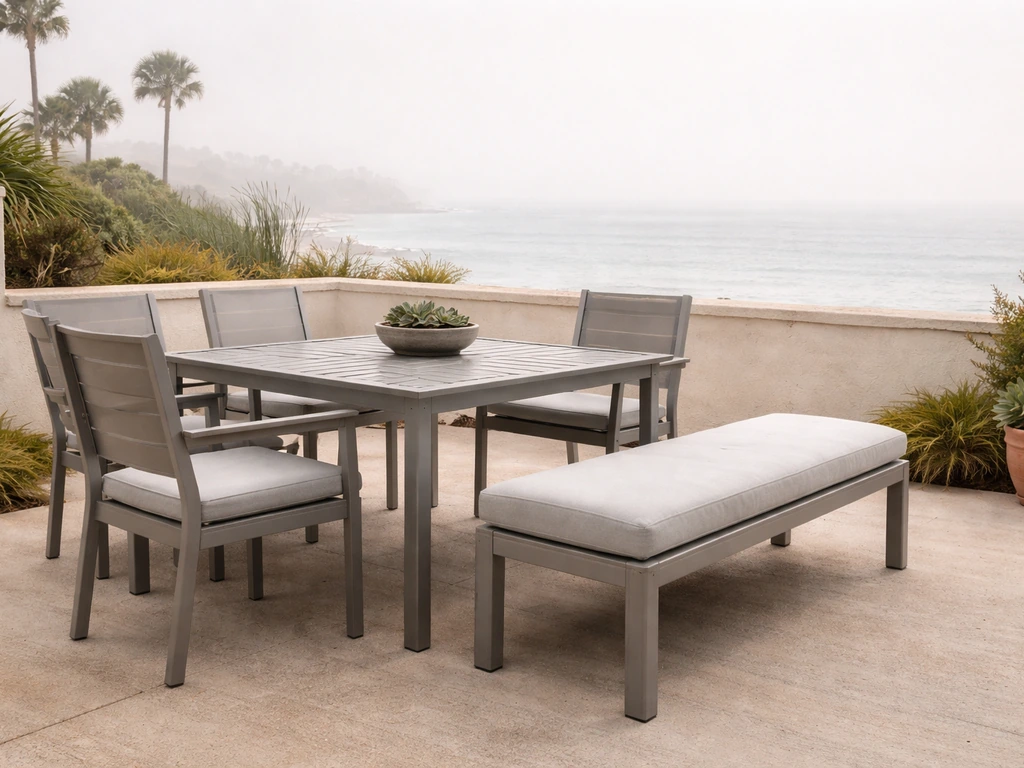
What Long Beach's climate actually does to patio furniture
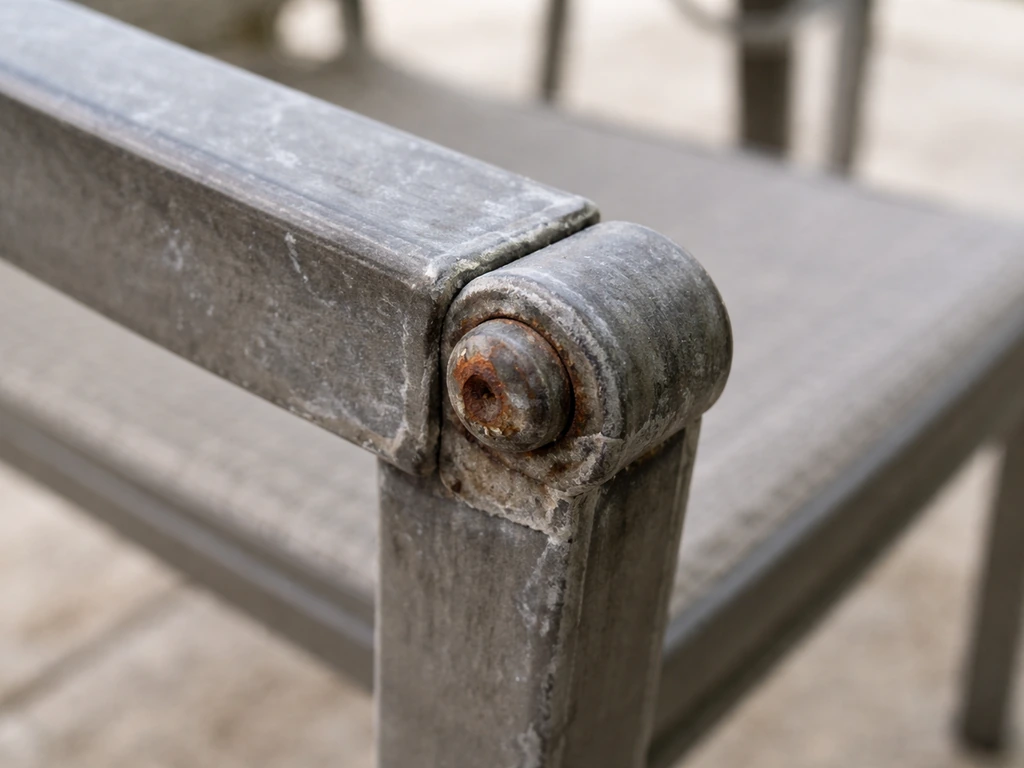
Long Beach sits right at the edge of a coastal microclimate that is genuinely hard on outdoor furniture in ways that aren't obvious if you've only owned a patio set in a dry inland city. The big factors are salt-laden air, persistent marine layer fog, strong UV, and occasional wind-driven rain in winter.
The marine layer is the sneaky one. NOAA and the USGS both document how moist Pacific air saturates and condenses over the cool nearshore water, forming a low fog bank that can be pushed inland by onshore wind and trapped under a high-pressure inversion for days or even weeks at a stretch. Local Long Beach residents describe some fog episodes as genuinely wet, not just misty. That means your furniture is getting damp repeatedly, sometimes without a drop of recorded rainfall, which is exactly the condition that accelerates corrosion on bare metal and mildew on cushions. Combined with Long Beach's typical rainfall pattern (very dry from May through September, wetter from November through March based on NOAA's 1991-2020 climate normals for the Daugherty Field station), you essentially have two distinct seasonal threats: UV and salt desiccation in summer, repeated damp-and-dry cycles from fog and rain in the cooler months.
Salt air doesn't need to be visible to do damage. Within about a mile of the waterfront, microscopic salt particles land on every surface and act as an electrolyte that speeds up oxidation dramatically. If you're in Belmont Shore, Naples, or anywhere near the marina, treat your furniture like it's in a marine environment, because it is. Even a few miles inland in areas like Bixby Knolls or North Long Beach, the marine influence is still enough to shorten the life of untreated or poorly finished materials.
Choosing the right material: what actually lasts here
Every material category has options that work and options that fail in coastal Southern California. Here's an honest breakdown.
Aluminum: the practical winner
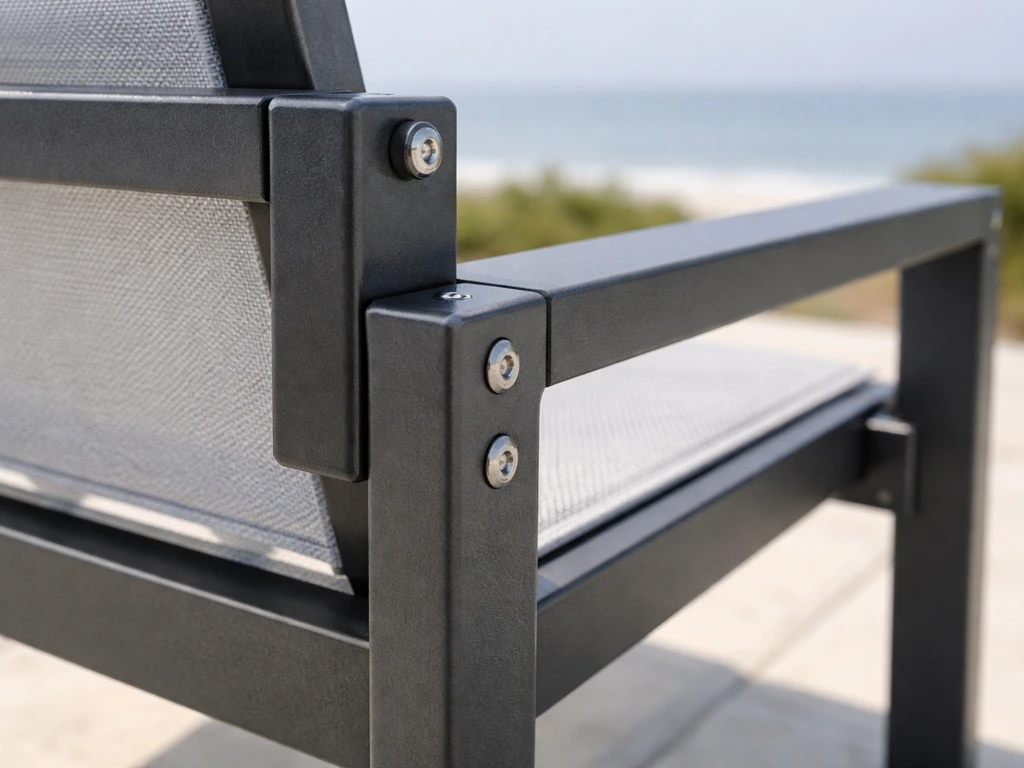
Powder-coated aluminum is the single best all-around choice for Long Beach. Aluminum doesn't rust, full stop. Salt air cannot cause iron-oxide corrosion on it because there's no iron involved. A quality powder coat adds UV and chip resistance, and the finish on a well-made piece is thick enough (typically 60-80 microns) that it won't fade visibly for five to ten years even under strong Southern California sun. The frame itself will last indefinitely if the coating stays intact.
What to watch for: not all aluminum is equal. Cast aluminum is heavier, denser, and more resistant to denting than extruded aluminum tubing. Extruded aluminum is lighter, which is convenient on a breezy patio, but thin-walled tubing can flex and the welds are a vulnerability point. Look for wall thickness of at least 1.2mm on tube frames. Avoid anything labeled just 'metal' without specifying aluminum, and steer clear of chrome or brushed steel finishes, which will corrode. Also skip wrought iron and bare cast iron, which are beautiful but will rust aggressively in marine air no matter how often you seal them.
Teak and other hardwoods
Teak is the only wood I'd comfortably recommend for Long Beach without heavy caveats. Its natural silica and oil content make it highly resistant to moisture, salt, rot, and insects. Left untreated it weathers to a silver-gray patina in 6-12 months, which many people find attractive. To keep it honey-brown you'll need to apply teak oil or a UV sealer once or twice a year, which is a realistic maintenance commitment. Quality teak furniture is expensive, typically $800-$3,000+ for a dining set, but it can last 20-30 years with basic care.
Shorea (meranti) is a cheaper teak alternative with similar density and reasonable moisture resistance, though it doesn't have quite the same natural oil content. It's a credible budget option if you maintain it consistently. Eucalyptus falls in a similar category. What to avoid entirely: pine, cedar, and fir. These are fine for dry inland climates but will absorb coastal moisture, swell, crack, and rot within a few seasons near the water, especially with the repeated wet-dry cycling Long Beach fog creates. Acacia is trendy and cheap but very prone to checking (surface cracks) in alternating damp-and-sun conditions, which is exactly what you get here.
Synthetic wicker and rattan
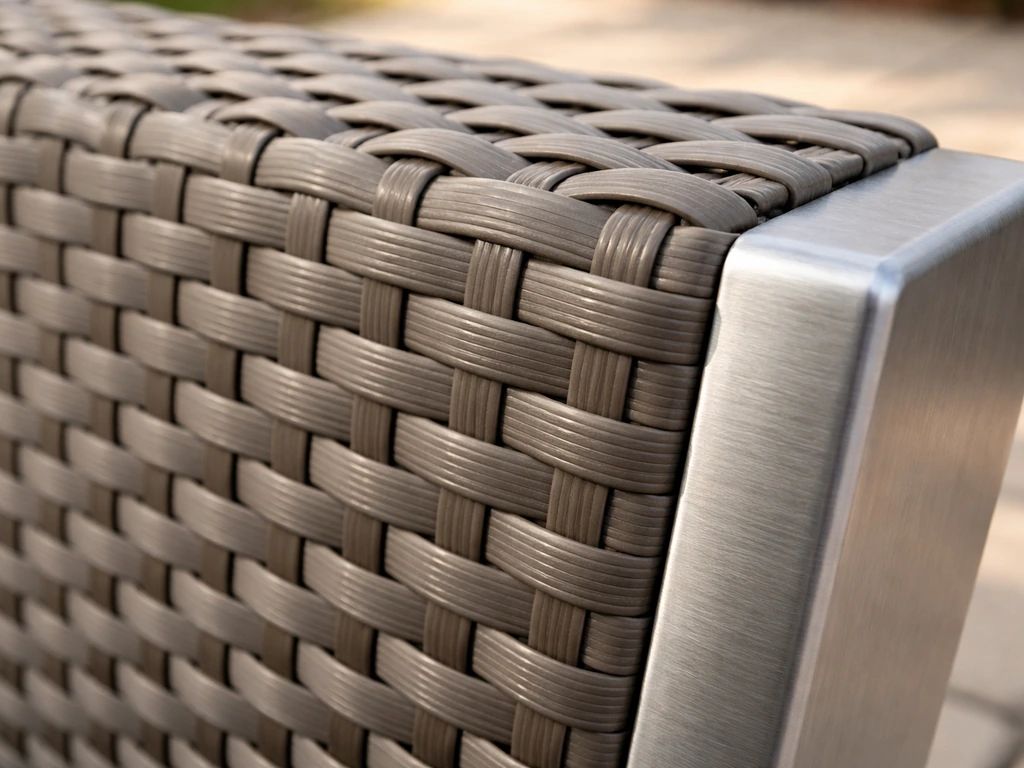
All-weather synthetic wicker (HDPE or polyethylene resin woven over an aluminum frame) is an excellent Long Beach choice. The key word is synthetic. Natural rattan wicker will absorb moisture, swell, crack, and deteriorate fast in a coastal environment. Synthetic wicker doesn't absorb water and won't rot, mold, or fade significantly when the UV stabilizers in the resin are high quality.
What separates good synthetic wicker from bad is the resin grade and weave density. Look for HDPE (high-density polyethylene) rather than cheaper PVC-based weaves. HDPE is more UV-stable, more flexible, and less prone to cracking. Dense, tight weave patterns hold up better than loose decorative weaves, which can unravel at the edges over time. The underlying frame matters too: aluminum frames won't rust, but cheaper synthetic wicker sets often use steel frames with a thin powder coat, which will rust through at joints and stress points within two to three years in marine air.
Composite and recycled plastic lumber
HDPE recycled plastic lumber (the stuff that looks like wood planks but is made from milk jugs and similar post-consumer plastic) is seriously underrated for coastal environments. It won't rot, doesn't absorb water, won't splinter, is basically impervious to salt air, and can be cleaned with a hose. It's heavy, which is actually a plus in a breezy coastal yard. The aesthetic is more casual and utilitarian than teak or wicker, but if you want zero-maintenance outdoor furniture for a deck or a beach-facing patio, it's worth considering. Brands like Polywood have popularized this category and make genuinely durable pieces.
Material comparison at a glance
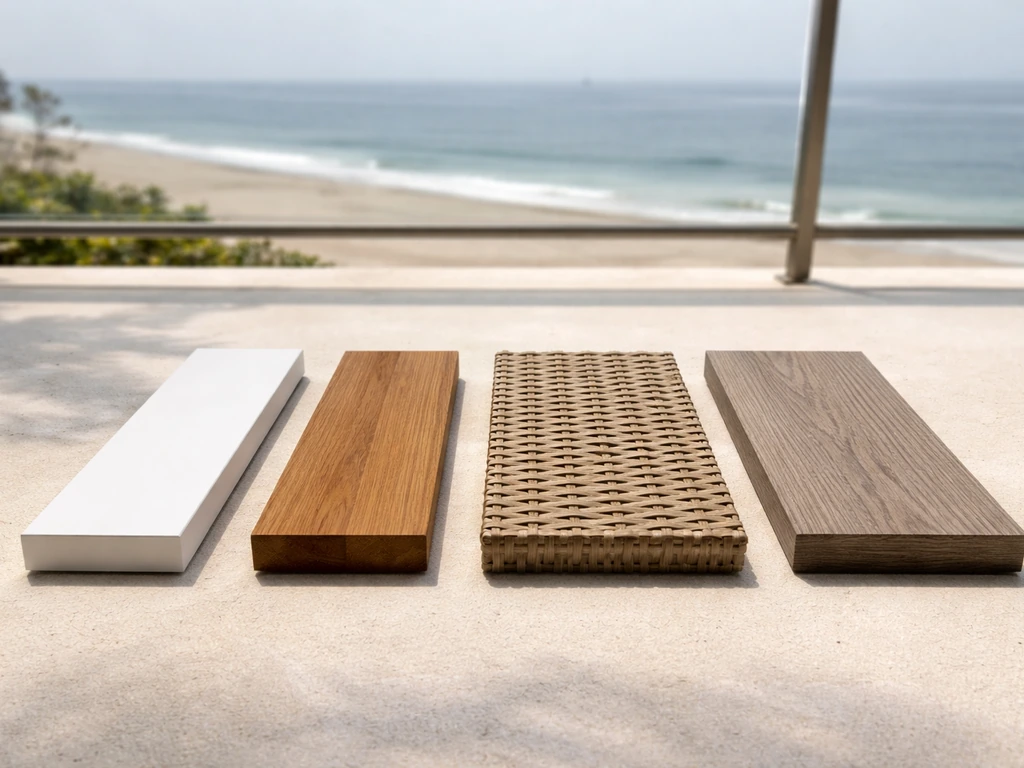
| Material | Salt Air Resistance | UV Resistance | Maintenance Level | Typical Lifespan | Cost Range |
|---|---|---|---|---|---|
| Powder-coated aluminum | Excellent | Good-Excellent | Low | 10-20+ years | $$-$$$ |
| Teak | Excellent | Good (with treatment) | Medium | 20-30 years | $$$-$$$$ |
| HDPE synthetic wicker (aluminum frame) | Excellent | Good (HDPE grade dependent) | Low-Medium | 8-15 years | $$-$$$ |
| HDPE recycled plastic lumber | Excellent | Good | Very Low | 20+ years | $$-$$$ |
| Wrought/cast iron | Poor | Good | High | 3-7 years near coast | $-$$$ |
| Natural rattan wicker | Poor | Poor | High | 1-3 years near coast | $-$$ |
| Pine/cedar/acacia | Poor | Poor | High | 2-4 years near coast | $-$$ |
| Steel (powder-coated) | Fair | Good | Medium-High | 4-8 years | $-$$ |
Styles and layouts that work for Long Beach patios
Long Beach has a huge range of outdoor spaces, from tight bungalow side yards and second-floor condo balconies to generous suburban backyards and wide front porches in historic neighborhoods. Your layout strategy should match your actual square footage, not a showroom floor model.
Small balconies and compact patios (under 80 sq ft)
For small spaces, a bistro set (two chairs and a small round or square table, typically 24-28 inches across) is the most versatile option. A folding bistro set lets you reclaim the space entirely when not in use. Alternatively, a compact loveseat with one or two side chairs and a low coffee table can create a lounge feel without dominating the space. Keep furniture legs thin and open-framed so the eye can move through the space. Bulky sectionals will make a small balcony feel claustrophobic and won't get used.
Mid-size patios and standard backyards (80-300 sq ft)
This is where most Long Beach homeowners have flexibility. A 4-6 person dining set with an umbrella is the workhorse choice: practical for daily use, easy to configure, and available in every material category. If the patio sees more socializing than structured meals, a sectional sofa with a coffee table and a side chair or two is increasingly popular. The key for Long Beach is to leave clearance for wind: don't push a large umbrella right against the fence or wall, and make sure tables are heavy enough (or have an umbrella base rated for coastal breeze) to stay put on windy afternoons, which are common near the water from spring through fall.
Larger spaces and full outdoor rooms
For patios over 300 square feet, you can think in zones: a dining zone, a lounge or conversation zone, and sometimes a cooking or bar zone. L-shaped or U-shaped sectionals define the lounge area without requiring walls. A pergola or shade sail helps anchor the space and provides the UV protection your furniture and your family need during Long Beach's long, sunny summers. If you're investing in a full outdoor room, this is where splurging on aluminum frames and quality cushions pays off, because the furniture will be out year-round and taking constant exposure.
Sizing, comfort, and configuration basics
A few measurements that matter and are frequently ignored in showrooms:
- Dining table clearance: allow at least 36 inches (preferably 42 inches) between the table edge and any wall or fence so chairs can pull out fully.
- Conversation seating: coffee table height should be 14-18 inches, roughly level with the seat cushion top, so drinks and snacks are within easy reach without bending.
- Sectional depth: deep sectionals (36+ inch seat depth) are comfortable but require significant space and are harder to move when you need to clean under them or shelter them before a storm.
- Chair seat height: most standard dining chairs are 17-19 inches, which pairs with tables 28-30 inches tall. If you're buying a bar or counter-height set, confirm the chair height matches the table (counter height is typically 34-36 inches, bar height is 40-42 inches).
- Umbrella base weight: for an exposed Long Beach patio, a 9-foot market umbrella needs a base of at least 50 lbs; near the waterfront, go heavier at 75 lbs or add a secondary ground anchor.
- Cushion thickness: outdoor dining chair cushions of 2-3 inches are comfortable without raising the seated height too much; lounge cushions of 4-6 inches add real comfort for extended sitting.
Comfort is also about fabric. For Long Beach's combination of UV, moisture, and salt air, Sunbrella and similar solution-dyed acrylic fabrics are the standard recommendation. The dye goes all the way through the fiber, so fading is minimal even after years of direct sun. They resist mildew and clean up with mild soap and water. Cheap polyester cushion covers will fade, pill, and grow mildew at the seams within one or two seasons. It's worth paying the premium or replacing stock cushions with Sunbrella covers early.
Weatherproofing and maintenance for the Long Beach coast
The single most protective thing you can do for any patio furniture in a coastal Southern California environment is cover it consistently after foggy nights and wash it down regularly to remove salt buildup. If you're looking for the best patio furniture Houston, focus on materials and finishes that can handle heat, humidity, and frequent outdoor use outdoor furniture in a coastal Southern California environment. That sounds simple, but most people skip it and then wonder why their furniture looks tired after three years.
Cleaning routines that actually matter
Salt deposits from marine air are invisible until they start accelerating corrosion or dulling finishes. A quick rinse with fresh water every one to two weeks during summer (more often if you're within a few blocks of the water) makes a real difference. For aluminum frames, mild dish soap and a soft brush once a month will keep the powder coat clean and let you spot any chips before they become rust starters. For teak, wipe down with a dry cloth after foggy nights and do a deeper clean with a teak cleaner before re-oiling each season. For synthetic wicker, rinse the weave thoroughly since salt and grime accumulate in the channels of the weave and can degrade the resin over time.
After foggy periods (which NOAA and local observers confirm can leave furniture noticeably damp), air-dry cushions by standing them on edge or leaning them against the back of a chair. Don't leave them flat on a seat where water pools underneath. Persistent moisture trapped between a cushion and a seat frame is where mildew starts and where steel frames begin to rust through the powder coat.
Protective coatings and treatments
For aluminum, if you spot a chip or scratch in the powder coat, touch it up promptly with a matching spray paint or touch-up pen. Left exposed, the aluminum won't rust, but the underlying surface can become pitted and discolored. For teak and other hardwoods, apply a UV-protective teak oil or sealer (products like Star Brite Teak Oil or Semco Teak Sealer are well-regarded) at the start of each season and again mid-year if you want to maintain the color. For HDPE recycled plastic furniture, a UV protectant spray like 303 Aerospace Protectant will extend the life of the surface color and sheen. Synthetic wicker doesn't need coating, but inspect the frame connections and screws annually and replace any steel hardware with stainless steel if you find rust starting.
Covers and seasonal storage
Good covers are a genuinely worthwhile investment, especially for Long Beach's winter rain season (November through March). A Long Beach planning document that summarizes Long Beach Airport climate data also notes that monthly rainfall varies widely, with far lower precipitation in summer and much higher totals from winter through spring blank" rel="noopener noreferrer">Long Beach's winter rain season (November through March). Look for covers made from polyester with a PVC or PE lining, rated for outdoor UV and water resistance. Cheap covers trap condensation underneath, which is worse than no cover. Quality brands like Classic Accessories or COVERS & ALL make covers that breathe enough to prevent trapped moisture while still blocking rain and debris. Make sure the cover fits snugly and has tie-down straps or elastic hems, because Santa Ana winds and coastal gusts can send loose covers flying.
Long Beach's mild winters mean you don't need to store furniture indoors the way someone in Seattle or Vancouver would. Seattle patio sets also need to plan for local dampness, salt air, and seasonal weather so cushions and frames last best patio furniture for seattle. But if you have a garage or shed, moving cushions inside during the wettest months (December through February) will dramatically extend their life. The furniture frames can stay outside if covered; the cushions are the most expensive part to replace and the most vulnerable to mildew and sun damage over time.
How to evaluate value: construction, quality, and warranties
Price at purchase is a poor proxy for value in patio furniture. A $400 set that lasts three years in coastal conditions costs more per year than an $1,100 set that lasts fifteen. Here's how to evaluate what you're actually buying.
Frame construction
Lift the piece. Quality aluminum furniture is heavier than it looks because the wall thickness is meaningful. Flex the frame gently. Good frames are rigid; cheap frames flex and wobble at the joints. Examine the welds on aluminum or steel frames: smooth, full-penetration welds are a sign of quality manufacturing. Rough, porous, or incomplete welds are stress and corrosion points. On cast aluminum, look at the surface finish of the casting itself: fine-grained, uniform surface texture indicates a quality alloy and casting process. Coarse or pitted surfaces suggest lower-grade material.
Hardware and fasteners
This is the detail most buyers skip and regret. Check what the bolts, screws, and fasteners are made of. Stainless steel (look for 304 or 316 grade markings if possible, or ask) won't rust. Zinc-plated steel will hold for a season or two before rust stains start appearing on your cushions and decking. Marine-grade or stainless hardware costs the manufacturer almost nothing extra but signals that they're building for longevity. If a brand won't tell you what their hardware is made of, assume it's zinc-plated steel.
Cushions and fabric
Cushion quality varies enormously even within the same brand's lineup. Key things to check: foam density (look for 1.8 lb per cubic foot or higher for outdoor foam, which resists compression over time), cover fabric fiber (solution-dyed acrylic like Sunbrella vs. polyester), and whether the cover zips off for washing. Bonus points if the foam core is wrapped in a polyester fiberfill layer, which helps the cushion retain its shape. Avoid foam that feels immediately springy and collapses fast when you press it, which is a sign of low-density foam that will flatten quickly.
Warranties and brand reliability
A meaningful warranty for outdoor furniture is at least 3 years on frames and 1 year on cushions from a brand that will actually honor it. Watch out for 'lifetime' warranties from budget brands that have gone through multiple ownership changes or are sold exclusively through off-brand online marketplaces: they're often unenforceable in practice. Brands with strong reputations in the outdoor category (Telescope Casual, Brown Jordan, Woodard, Polywood, Castelle, and in the mid-range, Tropitone and Mallin) have been around long enough that their warranties mean something. For budget options, IKEA's ÄPPLARÖ and Nardi (an Italian brand widely available in the US) offer solid construction and real warranties at accessible price points. Avoid no-name direct-import sets sold only through flash-sale sites: the manufacturing quality is unpredictable and there's rarely a warranty that's actually redeemable.
Where to shop in Long Beach
For mid-range and budget options, Home Depot, Lowe's, and IKEA (the Carson location is close to Long Beach) give you the ability to see and touch the furniture before buying, which matters for evaluating quality. For higher-end and trade-quality pieces, specialty outdoor furniture retailers in the greater Los Angeles area carry lines like Woodard, Tropitone, and Brown Jordan with staff who can advise on coastal-specific options. If you want the best patio furniture Los Angeles shoppers choose for coastal durability, focus on powder-coated aluminum, solution-dyed cushions, and stainless or marine-grade hardware greater Los Angeles area. Buying online from established brands is fine for mid-range pieces, but try to see the cushion fabric and frame finish in person first if you can, especially since Long Beach conditions are more demanding than what the average lifestyle photo on a product page is designed to communicate.
The calculus for Long Beach is similar to what you'd apply shopping for patio furniture in Los Angeles generally, but the proximity to salt water pushes the material standards higher. If you're comparing notes with someone outfitting a patio in an inland part of Southern California, you can afford to be a bit more lenient on material grade; on the coast, you really can't. And if you're used to dealing with the opposite extreme, like the relentless rain of Seattle or the Pacific Northwest, Long Beach's drier summers are easier on furniture overall, but the salt air adds a specific demand that inland and northern coastal climates don't share in the same way. Because the Pacific Northwest is also known for moisture, you’ll want similar weatherproof materials and maintenance habits.
FAQ
Is it worth buying patio furniture “covered” if I live near the marina in Long Beach?
Yes, but use the cover correctly. A cover helps most for winter rain and daytime debris, but salt fog still deposits fine particles. After foggy nights, rinse or wipe furniture surfaces, because trapped salt under a cover can keep corroding frames and stiffening cushion fabrics even when rain never hits.
How close is “close enough” to salt air that I should treat furniture like a marine environment?
As a rule of thumb, if you can smell the ocean regularly or your home is within a few blocks to a couple miles of the waterfront, assume salt influence. The damage is often invisible at first, and you will notice it sooner on powder coat chips, cushion seams, and screw holes.
Can I use stainless steel hardware but still get rust on my furniture?
You can. Stainless hardware prevents rust on the fasteners, but corrosion can still start around damaged coatings, at welded joints, or where steel parts contact aluminum without proper isolation. Inspect stress points, especially chair bases and table aprons, for flaking paint or any bare metal exposure.
What’s the safest way to touch up powder-coated aluminum if a chip appears?
Clean the area first, remove any loose coating, then apply touch-up paint designed for powder-coated aluminum (matching color and finish). Let it cure fully before use, and avoid letting water sit on the chip while it dries, since salt residue can interfere with proper adhesion.
How often should I hose down or rinse synthetic wicker in Long Beach?
During the summer foggy season, rinse at least every 1 to 2 weeks, and do it more often if the weave is visibly collecting grime. After rinsing, let the cushions and any moisture trapped in the weave fully dry, because damp channels can still promote mildew-like odor even if the resin itself is corrosion-resistant.
Do I need to store cushions indoors in Long Beach winter?
Not always, because winters are milder than colder wet regions, but it depends on exposure. If your cushions stay damp for long stretches (covered patio with limited airflow, or furniture close to window wells), bring cushions into a garage or shed during the wettest months (roughly December through February) to prevent persistent mildew risk.
What cushion thickness and foam type hold up best to coastal conditions?
Look for outdoor foam with density around 1.8 lb per cubic foot or higher, and choose cushions with solution-dyed acrylic covers that fit tightly. Thicker cushions are not automatically better if the foam is low-density, since it will compress and create flat spots that trap moisture against the seat.
Is Sunbrella necessary, or will another solution-dyed fabric work?
Sunbrella is a reliable benchmark, but other solution-dyed acrylics can work if they match the same core idea: dye throughout the fiber (not surface dyed), mildew resistance, and easy cleaning. Avoid standard polyester covers in coastal Long Beach, because they often fade and grow mildew at seams faster than acrylic.
What cover material is safest for fog and condensation, and what should I avoid?
Choose covers that are water-resistant but breathable enough to reduce condensation, such as fabric with an inner lining that limits water entry. Avoid heavy, non-breathing plastic covers that trap moisture underneath, since condensation can be worse than leaving furniture slightly exposed.
Why does furniture look “fine” at first but fail after 2 to 3 seasons?
The most common cause is coating or hardware failure at small points: chipped powder coat, thin-walled aluminum frames flexing at joints, or zinc-plated fasteners corroding near cushion attachment points. Salt fog repeatedly cycles moisture and salt onto those weak spots, so early inspection and prompt touch-ups matter.
What’s the best umbrella setup for windy coastal patios in Long Beach?
Use a weighted umbrella base rated for high wind or a base that’s heavy enough that it cannot rock on windy afternoons. Also position the umbrella with clearance from walls and fences so gusts do not drag the fabric side-loading against furniture frames and cushions.
Should I choose bistro sets, dining sets, or sectionals for Long Beach balconies and side yards?
For tight spaces, prioritize compact footprints and open, thin legs so air can circulate and the set does not feel enclosed. Folding bistro sets reduce clutter and limit the time cushions are exposed when you are not using the area, which can indirectly extend cushion life.
Next Articles
Best Patio Furniture Houston Guide for Heat and Rain
Choose the best patio furniture for Houston heat and rain, with durable materials, care tips, and buying checklists.
Best Patio Furniture for Pacific Northwest Homes: Picks
Best patio furniture for Pacific Northwest climates: top materials, buying picks, and care tips for rain, wind, and mild
Best Patio Furniture for Seattle: What to Buy Today
Seattle-ready patio furniture guide: best materials, rustproof metal, mildew-resistant cushions, quick-dry features, and