
In Las Vegas, the furniture that survives isn't the prettiest stuff at the big-box store. It's the aluminum or HDPE piece with a proper UV-stabilized finish, sitting under real shade, cushioned with solution-dyed acrylic over reticulated foam. The climate here, sustained 100°F-plus summer heat, a UV Index that regularly hits 12, haboob-level dust events, and monsoon gusts topping 60 mph, eliminates most materials within a few seasons if you buy wrong. Get the material and setup right, though, and good outdoor furniture can last 15 to 20 years in a Las Vegas backyard.
Best Patio Furniture for Las Vegas: Durable Choices & Care
Theo Tierney
12 Jul 2026
Why Las Vegas is one of the hardest climates on patio furniture
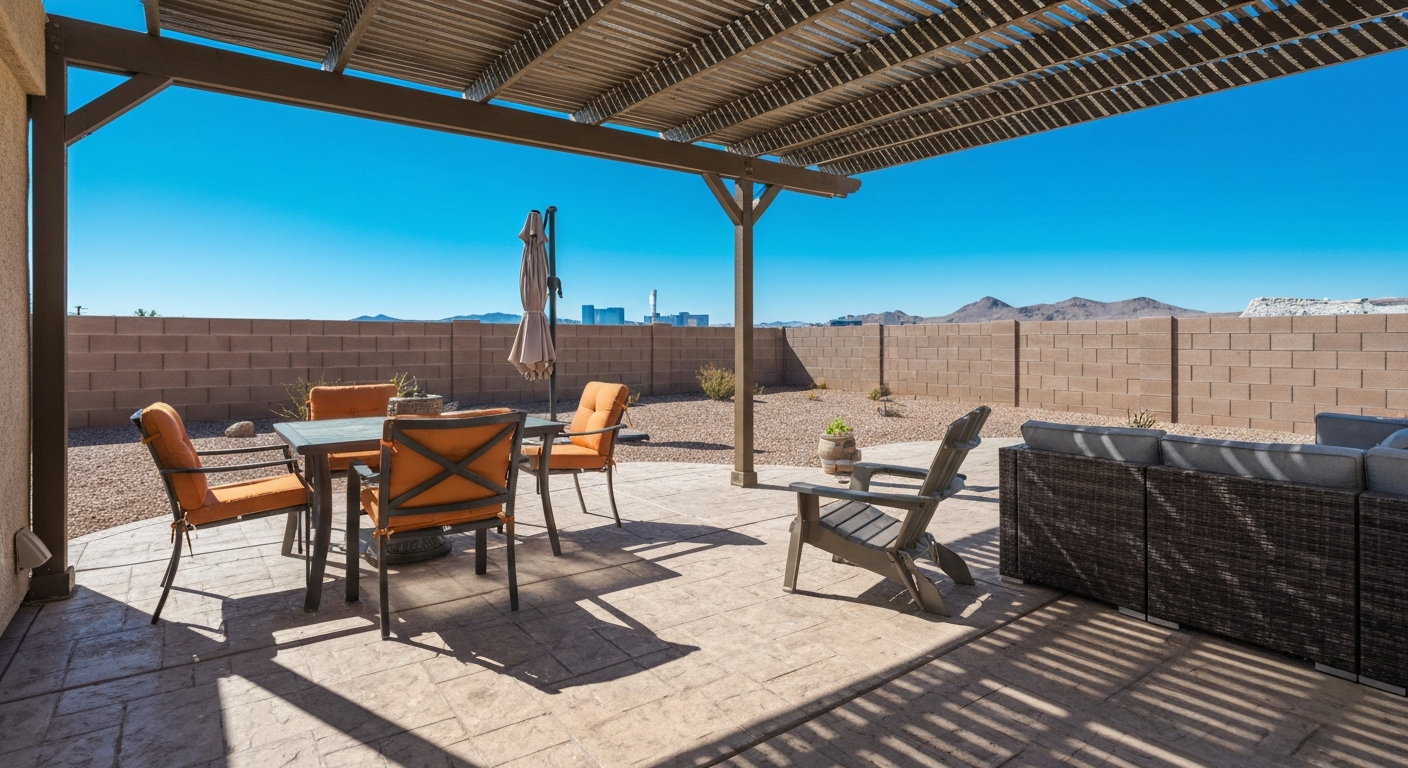
Most patio furniture is designed with mild climates in mind. Las Vegas is not mild. The NOAA 1991–2020 climate normals for McCarran Airport put the mean July daily high at 104.5°F and the mean June daily high at 99.4°F. That's average temperatures, not the record spikes. Furniture frames, frames, and fabrics sitting in direct sun can reach surface temperatures of 150°F or higher on a clear July afternoon. Add a UV Index around 12 at summer noon (one of the highest ratings on the EPA scale), more than 300 sunny days per year, and you have a relentless, full-spectrum assault on finishes, dyes, foams, and structural adhesives. Nevada Commission on Economic Development notes southern Nevada commonly receives more than 300 sunny days per year Nevada Commission on Economic Development notes southern Nevada commonly receives more than 300 sunny days per year..
Then there's the weather that people don't think about until it happens. Summer monsoon outflows regularly push gusts through the Las Vegas Valley at 40 to 60 mph, with documented events reaching 67 mph and historical spikes near 78 mph at nearby stations. See "Has Las Vegas been abnormally windy this year?, Las Vegas Review‑Journal (analysis with NWS data)" for NWS-verified local gusts including 67 mph on June 12 and historical gusts near 78 mph at Nellis AFB Has Las Vegas been abnormally windy this year? — Las Vegas Review‑Journal (analysis with NWS data). Dust events in the Mojave are dramatic: a 2002 haboob drove PM10 particulate readings in Las Vegas from around 100 µg/m3 to over 1,100 µg/m3 in under 30 minutes. Fine abrasive grit works into wicker weaves, scratches anodized surfaces, clogs cushion vents, and accelerates finish wear. None of this is accounted for in the marketing copy on most outdoor furniture tags.
The specific threats your furniture faces here
UV radiation and solar intensity
A UV Index of 12 is in the "extreme" category. At that level, unprotected plastics chalking, fabric dyes fading, and wood surface fibers degrading isn't a slow process, you can see meaningful change within a single summer season. The combined effect of UV and heat also accelerates chemical degradation that neither would cause alone: a powder-coated frame that might last 15 years in Seattle could show chalking and microcracks in 5 years in Las Vegas if the coating isn't specified to AAMA 2604 or 2605 standards.
Extreme heat and thermal cycling
Daily swings from 75°F at night to 105°F or more by mid-afternoon mean every frame material expands and contracts significantly, every single day for several months. Aluminum handles this reasonably well. Steel with a quality finish handles it less well over time. Wood handles it poorly unless it's an oily, stable hardwood like teak. Screws and bolts work loose, welds fatigue, and any furniture assembled with adhesive rather than mechanical fasteners will eventually fail at those joints.
Monsoon winds and dust abrasion
The monsoon season (roughly July through September) brings fast-moving storm outflows that can knock over unsecured furniture in seconds. Beyond the wind itself, the fine alkaline dust that coats everything in the Mojave is mildly abrasive. It collects in wicker weave gaps, on fabric surfaces, and in frame joints. Left in place and allowed to accumulate moisture from rare rains, it accelerates corrosion on hardware, degrades fabrics, and physically abrades finishes when furniture is moved or wiped down carelessly.
Material breakdown: what works and what doesn't
Here's the honest comparison. I've organized these by real-world Las Vegas performance, not by how they look in a showroom.
| Material | Las Vegas Durability | UV/Heat Resistance | Maintenance Demand | Expected Lifespan | Best For |
|---|---|---|---|---|---|
| Cast/welded aluminum (powder-coated) | Excellent | Excellent (AAMA 2604/2605 coatings) | Low–moderate | 8–20+ years | Frames, dining sets, loungers |
| Powder-coated steel | Good (with caveats) | Good if coating is intact | Moderate | 5–15 years | Budget-conscious buyers willing to maintain |
| Wrought iron | Fair | Fair — heavy, dense, but rust-prone at chips | High | 10–20 years with upkeep | Heavy, wind-stable accent pieces |
| Teak / dense hardwood | Good structurally | Good structure, surface weathers fast | Moderate–high (oiling) | 20+ years structural / needs refinishing | Tables, benches, design-focused buyers |
| HDPE / Polywood | Excellent | Excellent (UV stabilizers built in) | Very low | 20+ years (structural) | Low-maintenance, families, poolside |
| Resin wicker (HDPE-based) | Good–Excellent | Good (UV-stabilized strands) | Low–moderate | 10–15 years (premium) | Lounge sets, sectionals, dining |
| Composite / mixed material | Varies widely | Varies by component | Varies | 7–15 years | Check UV and heat specs before buying |
Aluminum
This is my top recommendation for Las Vegas frames, and for most desert climates. Aluminum's natural oxide layer gives it inherent corrosion resistance that matters even in dry climates where occasional alkaline dust and trace moisture collect in joints. It's light enough to move but dense enough that a well-built frame won't rattle. The key specification is the coating: look for powder-coat systems listed to AAMA 2604 or 2605 standards. These are industrial-grade coatings with documented UV and weathering resistance. A budget-tier powder coat from an unknown supplier will chalk, crack, and peel in two to three Las Vegas summers. An AAMA 2605-rated finish can hold color for a decade or more. The downside of aluminum is that galvanic corrosion can occur at hardware joints where dissimilar metals contact, use stainless steel or aluminum hardware only, not zinc or plain steel fasteners.
Powder-coated steel
Steel is heavier than aluminum (which helps with wind stability) and usually cheaper for equivalent visual quality. The problem in Las Vegas is that any chip, scratch, or edge break in the coating exposes bare steel, and rust starts within one or two monsoon seasons even in a dry climate. Alkaline dust holds trace moisture against metal surfaces longer than you'd expect. If you buy powder-coated steel, inspect the welds and hardware points before purchase, these are where coating coverage is thinnest and where rust initiates. Annual touch-up of chips with a matching rust-inhibiting paint is mandatory, not optional.
Wrought iron
Wrought iron is heavy, which is genuinely useful in a monsoon-wind environment. The problem is the same as steel, amplified: it's dense and thick, so surface rust progresses more slowly, but once it starts it's hard to reverse. In Las Vegas, wrought iron requires annual wire-brushing and repainting of any rust spots, and should be stored or covered during the three-month monsoon season if you want it to last 15 to 20 years. For most homeowners, the maintenance reality of wrought iron doesn't match the appeal.
Teak and dense hardwoods
Teak has a well-earned structural reputation. Its natural silica and oil content resist rot, insect damage, and dimensional movement better than virtually any other wood. In Las Vegas, the structural longevity holds, teak tables and benches can genuinely last decades. The surface, however, takes a beating from UV. Untreated teak will go silver-gray within one season. That's an aesthetic choice, not a structural failure, but if you want the original honey-brown look you're looking at teak oil or sealer applications two to three times per year in this climate. Skip a season and you'll be sanding before you can re-seal. Other hardwoods (eucalyptus, acacia, shorea) are structurally decent but need more frequent sealing and are less stable in the extreme heat cycles. Softwood (pine, spruce) has no place in a Las Vegas outdoor setting.
HDPE and Polywood-style furniture
High-density polyethylene lumber is the genuinely low-maintenance choice for Las Vegas. It doesn't rot, doesn't rust, and the UV stabilizers built into quality HDPE formulations resist fading far better than painted wood or standard plastics. POLYWOOD-type manufacturers commonly back their lumber with 20-year residential warranties. Color fade still occurs over long outdoor exposure, that's physics, not a warranty violation, but the structural integrity holds. HDPE is heavier than aluminum, which helps in wind, but the shapes are typically bulkier than metal-frame furniture. For poolside use, utility spaces, and families with kids, it's hard to beat for durability-per-dollar over a 10-plus-year window.
Resin wicker (HDPE-based)
Good resin wicker is made from UV-stabilized HDPE strands with color through the full thickness of the strand, not just surface-dyed. These "color-through" or "solution-through" strands resist fading and don't expose a white interior when the surface weathers. Premium HDPE wicker over aluminum frames is a legitimate 10 to 15-year product in Las Vegas. Budget versions on steel frames with PVC-based wicker are a different story: the PVC becomes brittle in UV, the steel frames rust at weld points, and you're looking at replacement in 3 to 5 years. Ask the retailer specifically whether the wicker is HDPE or PVC, and whether the frame is aluminum or steel.
Composite materials
"Composite" outdoor furniture is a broad category that covers wood-plastic composite tables, recycled-material decking-style furniture, and mixed-material pieces with multiple frame types. Performance varies enormously depending on the formulation. The check I always apply: look for documented UV performance data, not just marketing language like "weather-resistant" or "all-season." Without that data, you're guessing. Some composites handle Las Vegas fine; others delaminate or warp in their first summer.
Fabrics and cushions: the part most people get wrong
Cushions are often the first failure point in a Las Vegas setup, even when the frame lasts. The combination of UV intensity, extreme heat, and occasional dust-loaded rain events is brutal on anything that isn't specifically engineered for it.
The right fabric: solution-dyed acrylic
Solution-dyed acrylic is the fabric standard for high-UV outdoor use, and it's not close. Sunbrella documents that its solution‑dyed acrylic outdoor fabrics are tested with AATCC and ASTM accelerated weathering protocols (many rated to ~1,500–2,000 test hours) and are sold with multi‑year limited warranties Sunbrella — Solution‑dyed acrylic fabric technical claims (UV/fade resistance). In solution-dyeing, the color is embedded throughout the fiber before it's spun, it's not a surface treatment that UV can bleach away. Brands like Sunbrella use AATCC and ASTM accelerated weathering tests (including AATCC TM16.3 and ASTM G154) to validate colorfastness, with many fabrics rated to 1,500 to 2,000 accelerated test hours. In Las Vegas, that translates to meaningful real-world color life. For comparison, a standard polyester outdoor fabric will show visible fading within one or two summers here. If you're replacing cushions, specify solution-dyed acrylic by name, "outdoor fabric" or "UV-resistant" on its own tells you very little.
Cushion foam: dry-fast is non-negotiable
In Las Vegas, you might think foam type doesn't matter because it rarely rains. But monsoon season delivers heavy, fast downpours, and furniture left outside accumulates dew and humidity around the few dozen nights per year when temperatures drop enough. Standard closed-cell foam that traps water against the fabric creates mildew even in the desert. Reticulated (open-cell dry-fast) foam has an interconnected pore structure that drains and dries within hours rather than days. For any cushion that will stay outside through the monsoon months, dry-fast foam is the correct choice. Pair it with a fabric cover that has mesh or perforated undersides, vent channels, or grommets to allow airflow.
Removable covers and heat tolerance
Removable covers matter more in Las Vegas than in most climates because you'll want to bring them inside during dust storms and extended heat spells when the furniture isn't in use. Zippers should be rust-resistant (look for marine-grade or coated zippers). Velcro attachments fail quickly in UV and heat, the hook-and-loop bond degrades into something that barely grips after a season or two of direct sun exposure. Tie-on or snap closures with UV-stabilized hardware are more durable. On very hot days, dark-colored cushions sitting in direct sun can reach surface temperatures that accelerate fabric degradation, lighter colors in solution-dyed acrylic help here, though they don't eliminate the issue.
How Las Vegas specifically breaks down furniture over time
Fading and UV degradation
UV photons break molecular bonds in dyes, polymers, and organic finishes. At a UV Index of 12, this happens faster than most product testing protocols assume. The practical result: furniture that's rated for "outdoor use" based on testing done in temperate climates will fade, chalk, or embrittle faster in Las Vegas. Products with built-in UV stabilizers (HDPE, solution-dyed acrylic) resist this at the molecular level. Products with surface UV protection (painted coatings, topcoat sealers on wood) provide a barrier that degrades and eventually fails. Understanding which category your furniture falls into tells you how much maintenance to expect.
Thermal expansion and finish cracking
Metal frames expand in heat and contract overnight. Powder coatings are somewhat flexible but have limits. On cheaper steel furniture, thermal cycling causes micro-cracking in the coating at stress points, weld seams, corners, and hardware penetrations, typically within 3 to 5 years of Las Vegas summers. Once moisture and alkaline dust enter those cracks, corrosion accelerates. This is why coating specification matters: AAMA 2604 and 2605 coatings have documented flexibility and adhesion retention under weathering that cheaper coatings lack.
Hardware corrosion
Even in dry Las Vegas, hardware fails faster than people expect. Alkaline desert dust, trace condensation, and occasional rain concentrate salt and mineral deposits at bolt threads and screw heads. Steel bolts in aluminum frames create galvanic couples that accelerate corrosion at the contact point. The fix is straightforward: buy furniture with stainless steel hardware, or replace hardware at purchase. This is a $10 to $20 investment that can add years to a frame's life.
Dust abrasion on finishes
The Mojave dust that settles on furniture after a wind event is finely particulate and slightly abrasive. Wiping dusty furniture with a dry cloth or paper towel without first rinsing off the grit is one of the most common ways people inadvertently scratch their furniture's finish. Over dozens of dustings and wipe-downs per season, this creates micro-scratch patterns that visually dull powder coatings and anodized surfaces and create channels for moisture to penetrate.
Installation and anchoring by surface type
Concrete patios
Concrete is the most common patio surface in Las Vegas and the most straightforward for anchoring. For furniture you want permanently or semi-permanently secured against monsoon winds, concrete anchors are the right tool. Through-bolt anchoring with stainless expansion anchors works well for umbrella bases, pergola posts, and heavy conversation sets. For furniture that moves seasonally but needs wind resistance when in place, weighted umbrella bases (filled with sand or water) paired with foot-plate anchors that hook to a concrete anchor bolt give you flexibility without permanent installation. Epoxy anchors (a two-part resin system) provide stronger pull-out resistance than standard expansion anchors in concrete and are appropriate for pergola posts that will bear wind loads.
Grass and soft-ground areas
In Las Vegas, grass lawns are less common than in other climates due to water restrictions, but they exist. For advice on selecting the best patio furniture for grass, including leg pads, weight-distribution pads, and ground anchors, see our guide on best patio furniture for grass. Furniture legs on grass or soft soil will sink and create uneven, unstable setups over time. Rubber or composite foot pads under each leg distribute weight and prevent sinking. For heavier conversation sets or dining tables, a compacted gravel or crushed decomposed granite base under the furniture area provides stability without a concrete pour. Furniture stakes or ground anchors driven into soil provide meaningful wind resistance and are easy to remove seasonally.
Pea gravel areas
Pea gravel is popular in desert landscaping because it requires no water and reflects heat reasonably well. The challenge for furniture is that gravel shifts under load, causing legs to sink unevenly, rocking chairs and tables that should be stable. The practical solutions: set large-format pavers (at least 12x12 inches) under each furniture leg as load-bearing pads, or lay a full paver or concrete base in the furniture zone and keep the surrounding area as gravel. For specific product recommendations and styles that work well on pea gravel, see our guide to the best patio furniture for pea gravel. For heavier structures like pergola posts, concrete tube footings poured through the gravel layer and into compacted soil below provide the wind-load resistance you need. Base plates welded to pergola post bottoms, bolted to those footings, give you a secure connection.
Managing wind, shade and heat on a Las Vegas patio
Shade structures and their anchoring needs
Shade isn't just comfort in Las Vegas, it's the single most effective way to extend furniture life. A piece of aluminum furniture under a pergola or shade sail gets maybe half the UV dose and 20 to 30 degrees cooler surface temperatures compared to furniture in direct sun. See our guide to the best patio furniture for desert climate for specific product recommendations and buying tips. That directly translates to longer finish and fabric life. Cantilever umbrellas are popular but require careful anchoring: in a 50-mph monsoon gust, an unsecured cantilever umbrella becomes a projectile. Weight the base to manufacturer specifications (most require 150 to 250 lbs of ballast for large cantilevers), and close them whenever a storm is approaching. Shade sails require corner anchors rated for the combined wind load of the sail area, for a 12-by-12-foot sail in a 60-mph gust, you're looking at several hundred pounds of force on each anchor point. Post anchors set in concrete are the appropriate installation.
Pergolas: the most durable shade option
A well-anchored aluminum or steel pergola is the most durable shade solution for a Las Vegas patio. It handles monsoon winds that destroy freestanding umbrellas, provides consistent shade geometry, and can be fitted with shade cloth, polycarbonate panels, or a louvered roof that adjusts to conditions. If you're investing in quality furniture, a pergola protects that investment. Aluminum pergola kits have become very accessible in the $1,500 to $5,000 range for a typical patio size; professional installation with proper concrete footings is worth the cost for wind-load compliance.
Ventilation and preventing heat trapping
Enclosed patios and recessed patio layouts with solid roof structures can trap heat, pushing the air temperature 10 to 15 degrees above ambient on still days. Louvered pergola panels, lattice-top pergolas, and shade sails (which are permeable) allow convective air movement while still providing meaningful UV reduction. For covered patios, ceiling fans rated for outdoor use (look for UL wet- or damp-location ratings) dramatically improve comfort and reduce the heat-trapping effect without reducing shade.
Cleaning dusty desert furniture the right way
The most important cleaning rule in Las Vegas: never wipe dust off dry. Always rinse first. This applies to every material and every surface. Wiping grit across a powder-coated frame or wicker weave without rinsing first is essentially sanding those surfaces with fine abrasive. Over a season of regular dustings and dry wipe-downs, you'll see visible dulling on finishes that weren't worn, they were scratched.
Daily and weekly care
- After a dust event, rinse frames, table surfaces, and wicker weaves with a garden hose before touching them — let the water carry grit away rather than rubbing it across the surface.
- For cushions: shake off loose dust, then rinse with the hose and allow to air-dry fully in shade or a covered space before replacing them on furniture.
- Weekly: wipe frames with a soft, damp microfiber cloth after rinsing. A mild dish soap diluted in water (one teaspoon per quart) is safe for aluminum, powder-coated steel, HDPE, and resin wicker.
- Avoid pressure washers on wicker — even HDPE wicker — at close range. A wide-fan nozzle at 3 or more feet is acceptable for frames and table surfaces.
- Check hardware points (bolts, screws, hinge pins) monthly during monsoon season for any rust initiation. Catch it early and you can stop it with a rust-inhibiting primer and touch-up paint.
Seasonal deep cleaning
Twice a year, before summer heat peaks (late April/early May) and after monsoon season ends (October), do a thorough deep clean. For aluminum and steel frames, use a car-wash-grade foam wash or a dedicated outdoor furniture cleaner, scrub joints and recesses with a soft brush, rinse thoroughly, and dry with a clean cloth. For powder-coated frames, apply a spray wax or UV-protective detailer product (the kind used on automotive finishes) after cleaning, this refreshes the UV-protective layer on the coating surface. For teak and hardwoods, the post-monsoon clean is when you assess whether re-oiling or re-sealing is needed before the surface dries and cracks further through the following summer.
Safe cleaning products and what to avoid
- Safe for most surfaces: mild dish soap in water, car-wash foam, dedicated outdoor furniture cleaners marked pH-neutral.
- Safe for solution-dyed acrylic fabric: mild soap and water, or manufacturer-recommended fabric cleaners; light bleach solutions (1:4 bleach to water) are tolerated by Sunbrella-type fabrics for mildew treatment — rinse thoroughly afterward.
- Avoid: abrasive scrubbers, scouring pads, or steel wool on any finished surface. Avoid solvent-based cleaners (acetone, mineral spirits) on powder coatings — they can soften and damage the coating. Avoid chlorine-heavy pool chemicals near furniture — they accelerate corrosion on aluminum and steel hardware.
- For wicker: use a soft brush to dislodge grit from weave gaps after rinsing. A detailing brush or old toothbrush works well for tight weave patterns. Never use a stiff wire brush.
- For wood: use a wood-specific cleaner or diluted deck cleaner. Avoid pressure washing at high PSI directly on end grain — it drives moisture into the wood and accelerates checking.
Comparing Las Vegas to nearby desert climates
Las Vegas shares most of its furniture challenges with the broader desert Southwest. If you're also considering properties in Arizona, the material recommendations are nearly identical, Phoenix and Tucson deliver similar UV intensity, extreme heat, and monsoon wind seasons with slight variations in humidity. The main differences are elevation (some Arizona locations sit higher, with modestly lower peak temperatures) and monsoon intensity (the Arizona monsoon is generally more consistent and wetter than Las Vegas). For anyone comparing furniture choices between Las Vegas and Arizona desert climates, the same material hierarchy applies: aluminum over steel, HDPE for low maintenance, solution-dyed acrylic for fabrics. For curated recommendations tailored to similar desert conditions, see our guide to the best patio furniture for Arizona. Colorado is a very different story, snow, freeze-thaw cycles, and ice load create a completely different set of material requirements, particularly for frames and fabrics, and furniture rated for Las Vegas conditions isn't necessarily rated for freeze exposure. For specific recommendations on the best patio furniture for Colorado, see our guide to the best patio furniture for Colorado (resource ID 1306507c-ad44-4747-ad21-3848cb117edf). For regions with snow and freeze-thaw cycles, see our guide to the best patio furniture for snow for recommendations on frames, fabrics, and anchoring suited to cold climates.
What to avoid buying for a Las Vegas patio
- Natural rattan or wicker: natural plant-fiber rattan becomes brittle and breaks apart in UV and dry heat within one to two seasons outdoors in Las Vegas.
- Softwood furniture (pine, cedar, spruce): even sealed, softwoods check, crack, and splinter in extreme heat cycling. Cedar is sometimes marketed as outdoor-capable but it won't last well here.
- Standard polyester or acrylic-blend fabrics without solution-dyeing: these fade noticeably within a single summer under peak Las Vegas UV.
- Furniture with zinc, plain steel, or brass hardware in aluminum or wicker frames: galvanic corrosion and rust will start at those contact points within a few monsoon seasons.
- Glass tabletops without UV-protective coatings or shade coverage: tempered glass can shatter from thermal stress in extreme sun exposure, and the risk is higher on patterned or partially-shaded surfaces that create thermal gradients.
- PVC-based wicker frames: PVC becomes brittle and chalky in prolonged UV exposure; it doesn't have the UV-stabilizer chemistry that HDPE wicker uses.
- Cheap umbrella bases under 50 lbs for use in open areas: monsoon outflow gusts will move or flip them, and an airborne umbrella is a safety hazard.
A practical buying checklist for Las Vegas patio furniture
- Frame material: aluminum (preferred) or HDPE for low maintenance; powder-coated steel if budget requires, with AAMA 2604 or 2605 coating specification.
- Hardware: confirm stainless steel hardware at all joint and fastener points. Ask or check the spec sheet — many manufacturers don't advertise this.
- Coating specification: for powder-coated frames, ask for AAMA 2604 or 2605 rating. If the retailer doesn't know what that means, it probably isn't that grade.
- Fabric: solution-dyed acrylic only. Reject "UV-treated polyester" or unlabeled "outdoor fabric" for any cushion that will spend full seasons outside.
- Foam: dry-fast (reticulated) foam in cushions. Confirm this with the retailer before buying — standard foam will mildew even in the desert.
- Wind rating: for any freestanding umbrella or shade structure, confirm the anchoring weight or installation method. Cantilever umbrellas need 150 to 250 lbs of ballast minimum.
- Shade plan: have a plan for UV and heat protection before buying the furniture — shaded furniture lasts significantly longer and stays usable in July.
- Surface preparation: match the anchoring solution to your surface (concrete anchors, pavers on gravel, pads on soft ground) before furniture is delivered.
- Maintenance schedule: commit to a rinse-first cleaning protocol after dust events and a twice-yearly deep clean with appropriate products for your materials.
FAQ
Which patio furniture materials reliably withstand Las Vegas’ hot, high‑UV desert climate?
Top choices: powder‑coated or anodized aluminum, HDPE/’polywood’ lumber, and high‑quality UV‑stabilized resin (PE) wicker. Aluminum resists corrosion in low‑RH desert air and—when anodized or finished with AAMA‑2604/2605 powder coat—retains color and surface integrity. HDPE boards are rot‑proof, resist moisture and insects, and come with long warranties; they will eventually fade slowly. Premium PE wicker with color‑through, UV‑stabilized strands holds up far better than natural rattan. Teak and other hardwoods are structurally durable for decades but will naturally weather to silver and need refinishing/oiling if you want original color. Avoid uncoated mild steel or untreated iron unless regularly maintained and protected.
How do outdoor fabric types compare for cushions and pillows in Las Vegas?
Solution‑dyed acrylic fabrics (Sunbrella and equivalents) are the gold standard for UV/fade resistance and mildew resistance — they perform best under intense sun and are backed by multi‑year warranties. Polyester outdoor fabrics with UV finishes are cheaper but tend to fade and degrade faster. PVC/vinyl coated fabrics resist moisture but can trap heat and become brittle in long, hot exposures. For cushions, pair solution‑dyed fabrics with breathable construction and quick‑draining foam to avoid trapped moisture and mold.
What cushion core and construction are best for desert use?
Use reticulated (‘dry‑fast’) foam or other open‑cell, quick‑draining cushion cores so any moisture from cleaning, rare storms or morning condensation can drain and dry rapidly. Enclose foam in breathable, water‑resistant liners; use vented cushion bases or mesh undersides and grommets to promote airflow. Avoid closed‑cell foams that trap heat and sweat against the body and may produce odor or mildew when covers are left on wet.
How does intense UV and heat affect material lifespans and finishes?
High UV levels (UV Index often ~12 at noon in summer) accelerate polymer embrittlement, color fade, and chalking of organic finishes. Heat (frequent 100°F+ days) can soften some plastics and adhesives and accelerate creep in low‑grade polymers. Powder‑coating specified to AAMA‑2604/2605 or anodizing on aluminum, UV‑stabilized HDPE, and solution‑dyed acrylic fabrics are engineered to resist these effects; lower‑grade paints, PVC, or untreated fibers will degrade much faster.
What are realistic longevity expectations by material in Las Vegas?
Approximate service ranges with appropriate materials and maintenance: HDPE/polywood structural life: multi‑decades (20‑year warranties common) though color will fade slowly; powder‑coated aluminum (AAMA‑2604/2605): ~8–20+ years depending on coating quality and maintenance; premium HDPE wicker: ~10–15 years; teak/hardwood: structurally decades but requires periodic refinishing to preserve original color (or will silver). Lower‑grade metals, PVC wicker and untreated woods can fail in 3–7 years under strong sun and dust if not maintained.
How should I anchor or install furniture on different Las Vegas surfaces (concrete, grass, pea gravel)?
Concrete: use stainless steel expansion anchors or through‑bolts for permanent benches, pergola seating or heavy planters; protect finishes with isolation pads when mixing dissimilar metals. Grass or packed soil: use ground stakes/anchors rated for the load (spiral auger anchors for light furniture, heavy deadmen or concrete footings for permanent fixtures). Pea gravel: use wide‑footed bases or base plates to distribute load and anchor with buried plates or helical anchors; consider rigid platforms or pavers under furniture to prevent sinking. For all surfaces, design for wind uplift and lateral gusts — tie down or stack/store items that catch wind during monsoon or storm warnings.
Next Articles
Best Patio Furniture for Pea Gravel: Stability and Picks
Best patio furniture for pea gravel: stable, weatherproof picks for seating and tables plus setup steps to prevent wobbl
Best Patio Furniture for Grass: Buyer Guide and Tips
Choose patio furniture that stays stable on grass: materials, climate tips, anti-mold care, and layout planning.
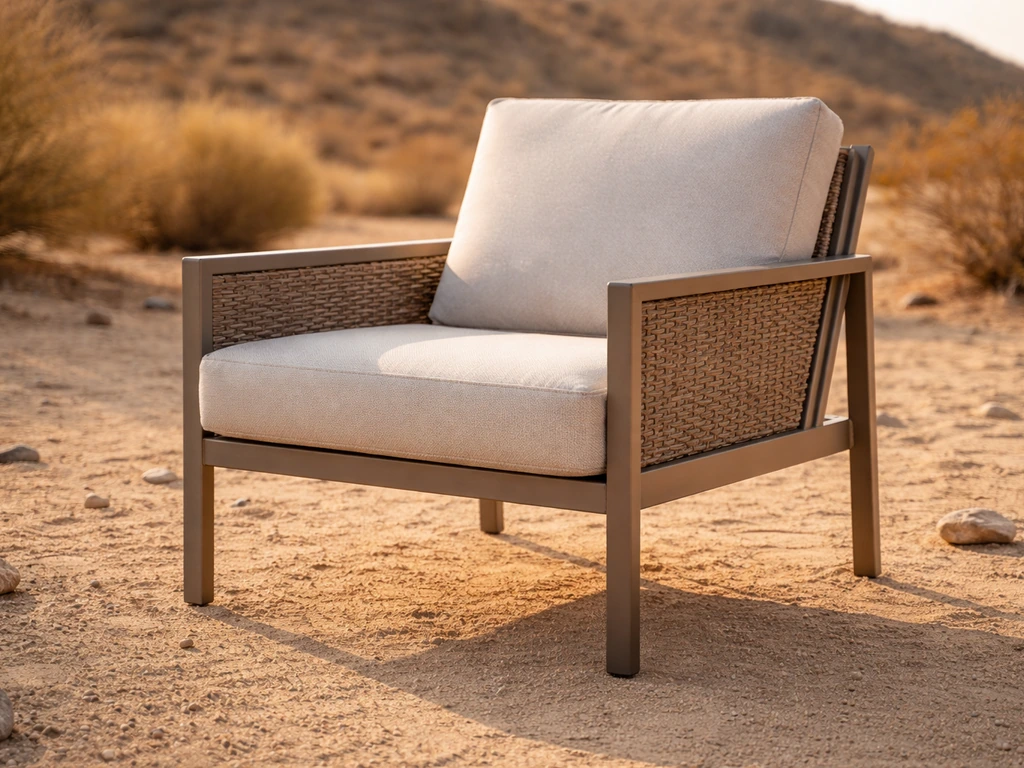
Best Patio Furniture for Desert Climate: Buyer Checklist
Desert climate patio buying checklist: UV proof materials, rustproof construction, cushion specs, care tips, and best pi