
For a snowy climate, your best patio furniture materials are powder-coated aluminum, marine-grade stainless steel, HDPE (high-density polyethylene) "all-weather" lumber, and teak or ipe with proper sealing. These are the only materials that reliably handle repeated freeze-thaw cycles, snow load, and months of damp cold without rusting through, cracking, or warping apart at the joints. Wicker made from synthetic resin (not natural rattan) can work too, but only if it's HDPE-based and mounted on an aluminum frame. Cushions need solution-dyed acrylic fabric and open-cell (reticulated) foam, not closed-cell foam that traps water and turns into a block of ice. Everything else is a compromise you'll regret by year two or three.
Best Patio Furniture for Snow: Durable Picks and Buying Guide

Theo Tierney
19 May 2026
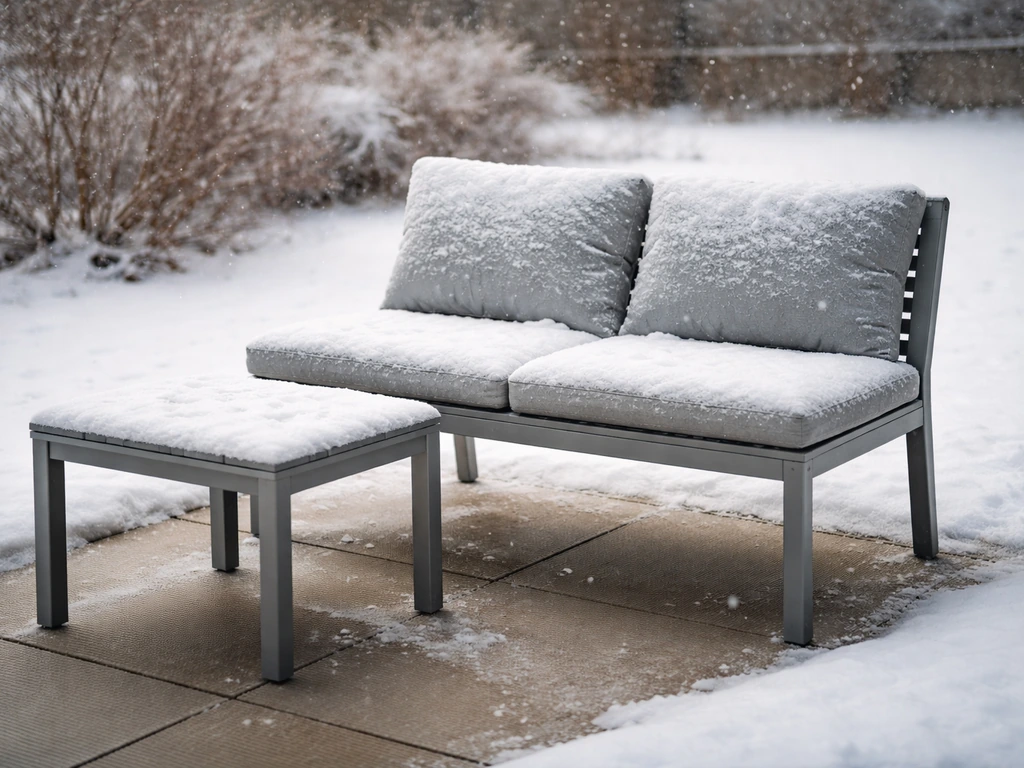
How Much Snow and Cold Your Furniture Actually Needs to Handle
Before you buy anything, get honest about your specific conditions. There's a big difference between Denver, where you get a handful of heavy snowstorms and 200+ days a year below freezing, and a mid-Atlantic state that gets occasional ice and maybe one or two real snowfalls. NOAA's 1991-2020 U.S. Climate Normals give you the real numbers by location: average annual snowfall, number of freeze days, and first/last freeze dates. The USDA Climate Hubs also break down first fall 32°F freeze dates by county, which tells you roughly how long your furniture will sit in freeze conditions each year.
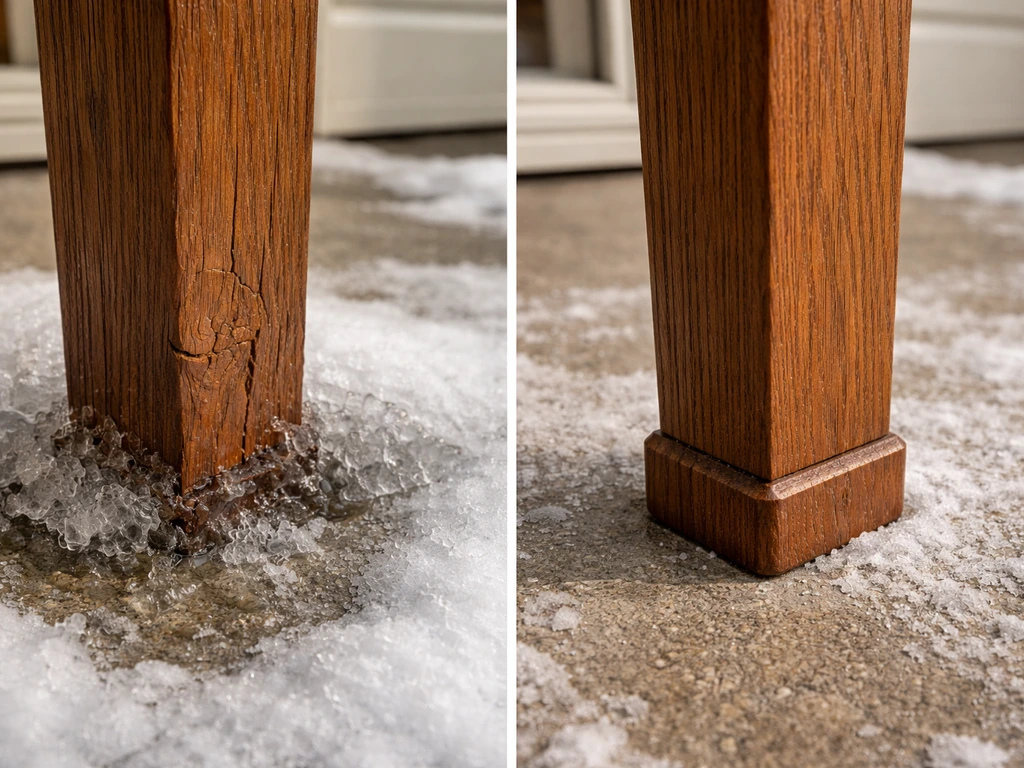
The freeze-thaw cycle is the real enemy, not just cold temperatures. When liquid water infiltrates a small crack, a rust spot, or a porous wood surface and then freezes, it expands and widens that opening.
The next thaw lets more water in. The next freeze makes the damage worse. Over two or three winters, what started as a hairline scratch in a powder coat or a small check in a wood joint becomes structural failure. The NIH has documented this exact mechanism in concrete and brick assemblies, and it plays out identically in furniture: trapped surface water is what does the damage, not cold air alone.
This is why drainage, sealed hardware, and impermeable surface finishes matter so much more than people realize when they're shopping based on looks.
If you're in a zone that regularly sees 40 or more inches of annual snowfall (think Minnesota, upstate New York, Colorado's Front Range, or most of Canada), you need furniture built to that standard, full stop. For a quick guide to the best options in Colorado, focus on powder-coated aluminum, HDPE, and sealed teak with the right cushion and cover materials best patio furniture for colorado. If you're in a borderline zone that might get a freak snowstorm once or twice a year, you have more flexibility, but the materials advice here still applies. It's always cheaper to buy right the first time than to replace furniture every few years.
The Best Materials for Snowy Climates
Here's an honest breakdown of each material category and how it actually performs in cold, wet, snowy conditions. Not marketing copy, just what I've seen hold up and what fails.
Powder-Coated Aluminum
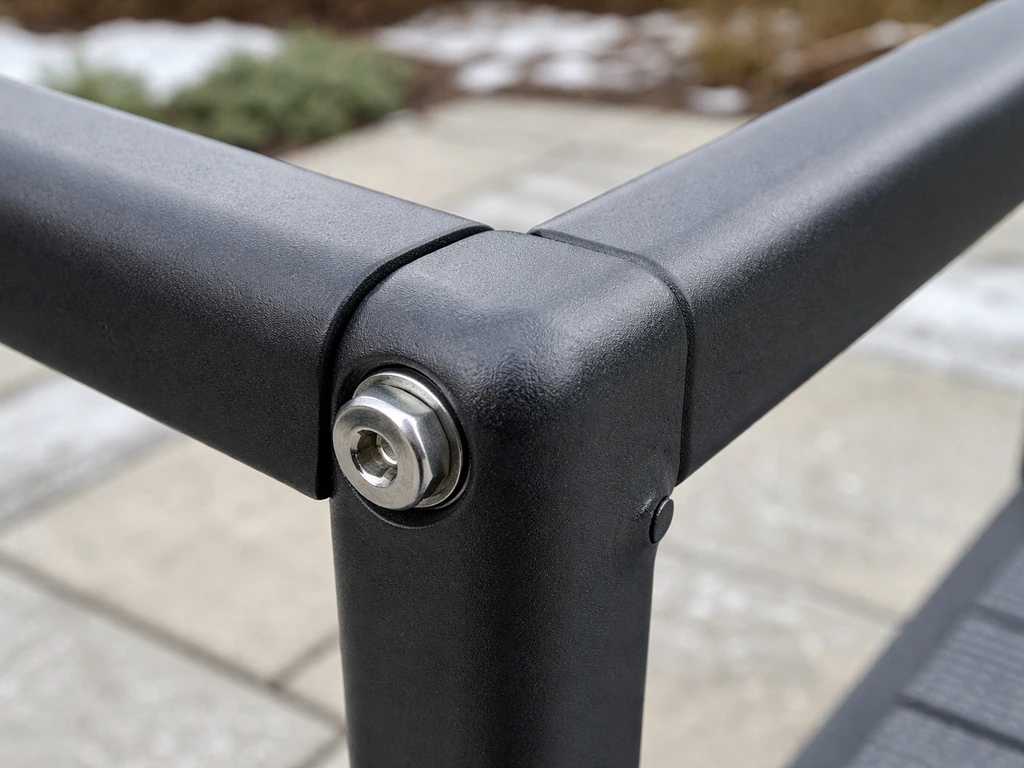
This is my top recommendation for snowy climates. Aluminum doesn't rust, it's lightweight so it doesn't crack concrete patios under snow load, and a quality powder coat finish gives it serious corrosion protection. Research from MDPI found that black powder-coated aluminum shows roughly 60 times lower corrosion rates than untreated aluminum, and pre-anodized plus powder-coated samples showed protection improvements closer to 1,000 times.
The finish to look for is one that meets the AAMA 2605 architectural coating specification, which is the high-performance standard used in commercial construction. When a manufacturer says "commercial-grade powder coat" (like Jensen Outdoor does), that's what it should mean. A good powder coat seals out moisture at the surface level so freeze-thaw cycles have nothing to exploit.
The weak points in aluminum furniture are the hardware (bolts, screws, bracket connections) and any welded joints that weren't properly prepped before coating. Look for stainless steel hardware, not zinc or plated steel. A frame that's 100% powder-coated aluminum with 316-grade stainless fasteners is as close to maintenance-free as you'll get in a snowy climate.
HDPE (Recycled Plastic Lumber)
HDPE lumber, the kind used by brands like POLYWOOD, is genuinely excellent for snow. High-density polyethylene doesn't absorb water, doesn't swell, doesn't crack from freeze-thaw, and doesn't need seasonal sealing. POLYWOOD backs its HDPE furniture with a 20-year residential warranty on frames and a 5-year warranty on woven HDPE products. There are credible accounts of HDPE Adirondack chairs lasting 25-plus years with minimal maintenance, and the material is specifically designed to sit outdoors year-round. The trade-off is that HDPE furniture tends to look more casual and the color palette is more limited than cast aluminum or teak. For Adirondack chairs, deep-seat loungers, and casual dining sets left outdoors all winter, it's hard to beat.
Teak and Sealed Hardwoods
Teak is the best wood option for outdoor use in general, including snowy climates, because of its high natural oil content and tight grain. It resists moisture penetration much better than cheaper woods. That said, untreated teak left under heavy snow for months will still weather, check (form surface cracks), and slowly gray. For snowy climates specifically, sealing teak annually with a quality teak oil or sealant before winter is not optional, it's necessary maintenance.
Ipe and other dense tropical hardwoods perform similarly to teak. What you want to avoid completely is pine, cedar, or softwoods with only a paint or stain finish in a heavy snow zone. Water will get in, freeze, expand, and split the wood within a few seasons.
All-Weather Wicker (Synthetic Resin)
Real wicker (natural rattan or reed) has no place in a snowy climate. It will absorb moisture, swell, crack, and deteriorate fast. Synthetic all-weather wicker, made from HDPE or polyethylene resin woven over an aluminum frame, is a completely different product. POLYWOOD's all-weather wicker uses HDPE strands that are moisture- and fade-resistant. The key is that the frame underneath must be aluminum, not steel. Even with a powder coat, a steel frame under wicker is a long-term rust risk in a wet, cold climate because every wicker tie and weave point is a potential water trap against the frame surface.
Steel and Wrought Iron
Heavy wrought iron and steel furniture can work in snowy climates, but they require more vigilance. Galvanized steel is meaningfully more rust-resistant than plain steel, and stainless steel (especially 316-grade, which uses molybdenum to resist chloride-induced pitting) is the best option if you're going steel. But weight is also a concern: heavy steel furniture sitting on a patio through freeze-thaw can shift, tilt, and damage surfaces over time. If you choose steel, inspect the powder coat every spring, touch up any chips immediately, and pay close attention to joints and hardware where water collects.
| Material | Freeze-Thaw Resistance | Rust/Rot Risk | Maintenance Level | Best Use Case |
|---|---|---|---|---|
| Powder-coated aluminum | Excellent | Very low (stainless hardware required) | Low | All furniture types, year-round outdoor |
| HDPE lumber | Excellent | None | Very low | Adirondacks, loungers, casual dining |
| Teak / sealed hardwood | Good (with sealing) | Low (if sealed) | Moderate (annual sealing) | Dining sets, benches, accent pieces |
| HDPE all-weather wicker | Good | Low (aluminum frame required) | Low-moderate | Deep seats, sectionals, accent chairs |
| Galvanized / stainless steel | Fair-Good | Low-moderate | Moderate (annual inspection) | Dining tables, frames |
| Natural rattan / softwood | Poor | High | High | Not recommended for snowy climates |
Cushions, Covers, and Fabrics That Survive Freezing Conditions
The frame is only half the equation. Cushions fail in snowy climates in two ways: the fabric degrades from moisture and UV cycling, or the foam core traps water and either molds out or freezes solid and loses its structure. Getting both the fabric and the foam right is what separates a cushion that lasts five-plus seasons from one that needs replacing every year.
Fabric: Solution-Dyed Acrylic Is the Standard
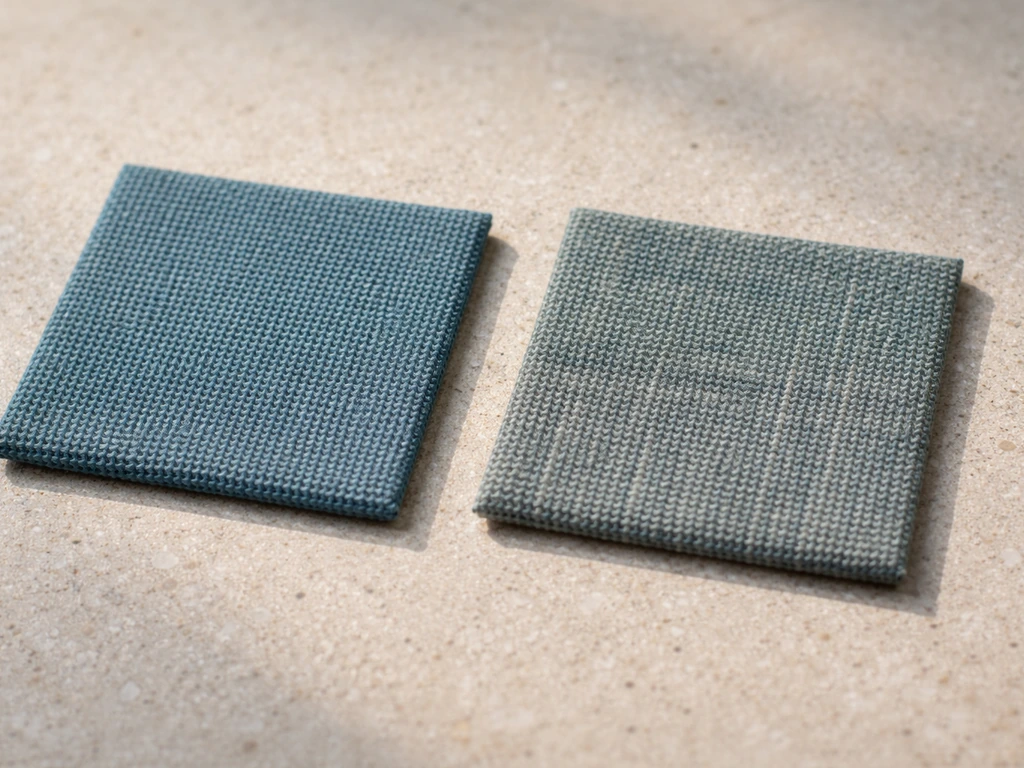
Solution-dyed acrylic is the benchmark for outdoor cushion fabric performance. Sunbrella is the most recognized brand, and the reason it has that reputation is legitimate: the color is dyed into the fiber during the extrusion process, not printed or coated on top, which means it doesn't fade or bleed when wet. It's inherently mold- and mildew-resistant, breathable, and UV-stable. For snowy climates specifically, the breathability matters because trapped moisture is what causes mold during the damp thaw periods.
Olefin (polypropylene) fabric is a step down but still acceptable for budget applications as long as the weave is tight and the cushion has drainage. What you want to avoid are polyester covers with printed patterns: they look fine in the store, degrade fast outdoors, and start peeling or fading within one or two freeze-thaw seasons.
Foam: Open-Cell Only
The foam inside the cushion has to be reticulated (open-cell) foam, not closed-cell foam. This is a point where marketing actively misleads people. "Waterproof foam" sounds like what you want outdoors, but closed-cell foam doesn't drain: water gets in through the seams and zipper and then has nowhere to go. It sits in the cushion, molds, and in freezing conditions, it can freeze and damage the foam structure. Open-cell reticulated foam like Dry Fast foam or Future Foam's Hyper-Dri drains water freely and dries quickly. It's what marine and high-end outdoor furniture manufacturers use. If a cushion you're considering doesn't advertise reticulated or open-cell foam, ask the manufacturer directly or assume it's closed-cell and plan accordingly.
Covers: Breathable, Not Plastic
For frames you're leaving outdoors through winter, a quality furniture cover is important, but it needs to be breathable. Fully airtight plastic tarps trap condensation against the furniture surface, which creates exactly the damp environment that causes mold on cushions and accelerates corrosion on any metal components. Look for covers made from breathable, woven polyester with reinforced seams and tie-down straps or elastic hems that seal against wind. Vented covers that allow some airflow while blocking precipitation are significantly better in practice than water-tight plastic wraps. Always make sure furniture is clean and dry before covering it for winter.
Design Features That Prevent Snow and Ice Damage
Beyond material choice, specific construction and design details separate furniture that survives snowy winters from furniture that doesn't. These are the things to look for when you're actually evaluating a set.
- Rust-proof frames: Aluminum or powder-coated steel with stainless steel hardware at every connection point. Pay attention to what the bolts and screws are made of, not just the frame. Zinc or plated hardware will rust at the joints even if the frame itself holds up.
- Sealed hardware and recessed fasteners: Hardware that sits in recessed channels or is capped prevents water pooling directly on the connection. Any exposed hardware should be stainless steel, not chrome-plated or zinc-coated.
- Drainage channels and holes: Tables and chair seats should have drainage holes or slatted designs that prevent standing water after rain or snowmelt. Solid-surface tables with no drainage lip are water traps in a freeze-thaw climate.
- Elevated frames and feet: Furniture with rubber-capped feet or slightly elevated legs prevents direct contact with wet concrete or decking, which is where corrosion and moisture wicking into wooden legs typically starts.
- Protective finish quality: Look for AAMA 2605-standard powder coating or pre-anodized plus powder-coated aluminum for the best corrosion resistance. On wood furniture, look for factory-applied sealant and ask whether the wood is kiln-dried before coating.
- Tight weave construction: On all-weather wicker, look for a tightly woven HDPE pattern with no gaps or loose ends where water can pool against the frame underneath.
- UV-stable finishes: Snowy climates get intense winter UV (especially with snow reflection), which degrades finishes and fabrics faster than people expect. UV inhibitors in both frame finish and cushion fabric matter for long-term color retention.
Top Picks by Category for Snowy Climates
Rather than naming specific SKUs that will change every season, here are the type and construction specs that consistently perform in snowy climates, along with brand tiers worth considering in each category.
Best Chairs
HDPE Adirondack chairs are the single best choice for chairs left outdoors year-round in snowy climates. POLYWOOD is the benchmark brand: their chairs use solid HDPE lumber over stainless steel hardware, require no sealing, and carry a 20-year warranty. For something more formal, a cast aluminum sling chair or a deep-seat chair with Sunbrella cushions (on an aluminum frame) is the right setup. Avoid steel-framed sling chairs at the lower price points: the sling fabric and the steel frame both tend to give out in three to four years in cold, wet conditions.
Best Dining Sets
Cast aluminum or extruded aluminum dining sets are the right call. Look for welded construction rather than bolt-together frames, commercial-grade powder coat, and a tabletop design with drainage (slat-top, tile inset, or tempered glass with drainage gaps rather than solid aluminum with no runoff path). Brands like Gensun offer extruded aluminum dining collections with a 15-year structural warranty on table frames and a 5-year warranty on powder coat finish. For a teak dining set, the investment is worth it in a snowy climate if you're committed to annual sealing and proper winter storage. It's a maintenance relationship, but quality teak at a proper thickness (look for furniture-grade teak with at least 1.5-inch top thickness) will outlast most aluminum sets aesthetically.
Best Sectionals
Sectionals are the highest-risk category in snowy climates because they're expensive, awkward to move, and almost always include cushions that stay outside. If you're buying a sectional for a snowy-climate patio, the frame must be aluminum (not steel), the cushions must have solution-dyed acrylic covers and reticulated foam cores, and you should plan to either store cushions indoors or invest in breathable covers sized specifically to the sectional configuration. HDPE all-weather wicker sectionals on aluminum frames (available from POLYWOOD and similar brands) are the most weather-tolerant. High-end cast aluminum deep-seat sectionals from brands with commercial-grade powder coat are the step up if you want more design flexibility.
Best Loungers
For chaise lounges, powder-coated aluminum with adjustable back positions and sling or Sunbrella-fabric seats performs well. The advantage of sling loungers (where the seat and back are a single piece of taut fabric stretched over the frame) is that there's no foam core to worry about: water can't pool in them. Resin sling fabric is inherently drain-through. If you prefer a padded lounger, the same rules apply: reticulated foam, solution-dyed acrylic fabric, and either store the cushions or cover them properly. HDPE loungers are also excellent for leaving outdoors year-round with no maintenance concern.
Winter Storage and Spring Reset Routine
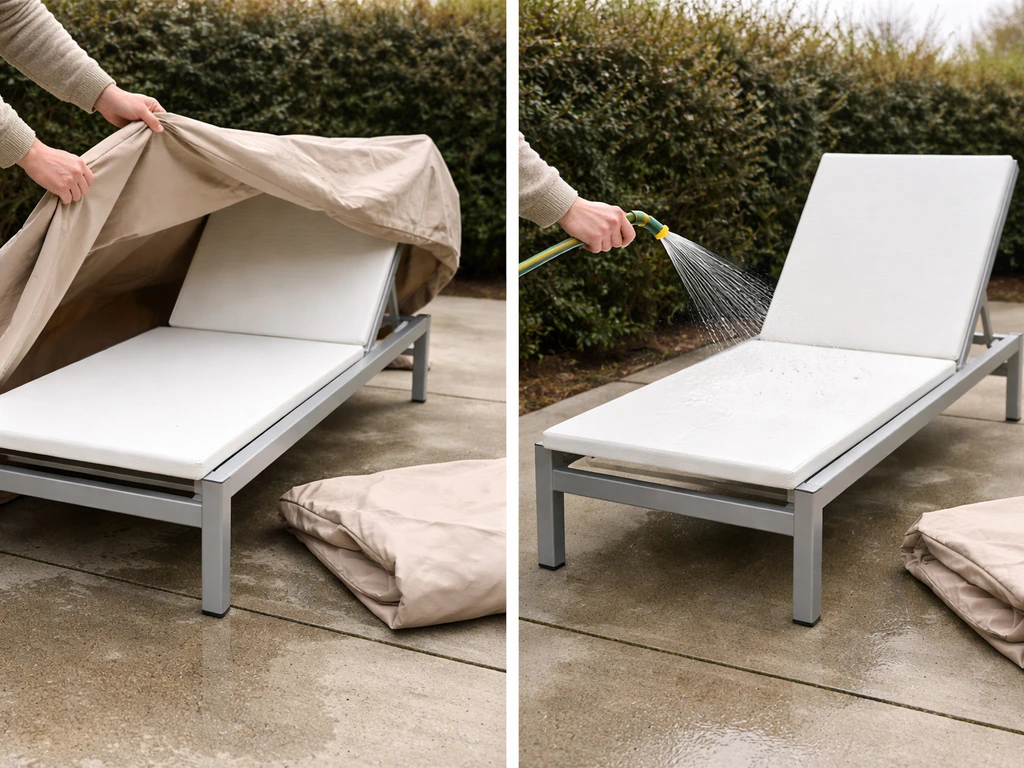
Having the right furniture doesn't mean you can ignore seasonal maintenance. Even the best aluminum or HDPE furniture benefits from a consistent end-of-season routine, and cushions almost always need to come indoors unless you've specifically confirmed they're rated for outdoor storage in freezing conditions.
Before the First Hard Freeze
- Clean all furniture thoroughly. Soap and water or a product rated for the specific material. Remove dirt, pollen, mildew, and any bird or tree debris before it gets sealed under a cover or frozen in place.
- Inspect every frame for chips in the powder coat, rust spots on hardware, cracks in HDPE, or checks in wood. Touch up any powder coat chips with a matching touch-up paint before they have a winter to worsen.
- Treat wooden furniture (teak, ipe) with a fresh coat of sealant or teak oil while the wood is clean and dry.
- Remove all cushions. Store them in a dry, ventilated space indoors, not a damp basement or unheated garage where they can absorb moisture all winter. Let them fully air out before stacking or bagging.
- If cushions absolutely must stay outdoors (sectionals too large to easily decushion), lay them flat on the seat frame and cover the entire piece with a breathable fitted cover, not a plastic tarp.
- Cover frames with breathable covers if leaving them outdoors. Secure the covers against wind with ties, straps, or elastic hems. A cover that blows off in December provides no protection.
- Elevate furniture legs off the deck or patio surface if possible, especially wood legs on any surface that holds standing water during thaw periods.
Spring Reset
- Remove covers once temperatures are consistently above freezing and inspect the furniture in daylight for any damage that developed over winter.
- Wash frames with mild soap and water to remove any winter grime, road salt (if your patio is near a salted surface), or mineral deposits from snowmelt.
- Inspect all hardware connections. Tighten any bolts or screws that loosened from freeze-thaw movement. Replace any hardware showing rust, even surface rust, before it spreads.
- Bring cushions out only after temperatures are reliably above freezing, and let them air out fully before putting them back in use. Compressed indoor-stored cushions benefit from a day of sunlight and air to restore their loft.
- Re-treat any wooden surfaces that look dry or have grayed, and reapply sealant if water is no longer beading on the surface.
- Note any finish chips or damage points that need attention before next winter. A small repair now costs nothing; ignoring it costs a replacement frame in two seasons.
One important note on warranties: some manufacturers, including Hanamint, explicitly exclude freeze damage from their warranty coverage. Read the warranty terms before you buy, and understand that leaving furniture outdoors through a hard winter without proper precautions can void coverage even on otherwise high-quality pieces.
Your Buying Checklist and the Mistakes to Avoid
Use this as your filter when you're evaluating any furniture purchase for a snowy climate. If a set you're considering can't check most of these boxes, it's not the right set for your conditions, regardless of how good it looks in the showroom or product photos.
Pre-Purchase Checklist
- Frame material is aluminum (preferred), HDPE, sealed hardwood, or stainless/galvanized steel
- Hardware at all connection points is stainless steel (ideally 316-grade), not zinc or chrome-plated
- Powder coat finish meets AAMA 2605 or is described as commercial-grade by the manufacturer
- Wood components are kiln-dried, sealed at the factory, and have accessible instructions for re-sealing
- Tabletop and seat designs include drainage (slatted, drain holes, or tile/glass insets with gaps)
- Cushion fabric is solution-dyed acrylic (Sunbrella or equivalent) rather than polyester
- Cushion foam is reticulated/open-cell (Dry Fast, Hyper-Dri, or equivalent), not closed-cell
- Manufacturer offers a residential warranty of at least 5 years on frame and finish
- Warranty terms do not exclude freeze or snow damage without reasonable care provisions
- Compatible furniture covers are available in your size/configuration from the same manufacturer or a reputable cover brand
The Most Common Mistakes
- Buying based on looks and price alone without checking material specs: Big-box patio sets often look great in April and start failing by the second winter. The frame might be steel with a thin paint coat, the hardware might be zinc, and the cushions are closed-cell polyester. These are not design choices, they are cost-cutting measures that shift the cost onto you.
- Assuming "weatherproof" means "snow-proof": Most furniture is rated for rain and UV, not for freeze-thaw cycling and snow load. Read the warranty and climate suitability language carefully.
- Covering furniture with plastic tarps: A non-breathable plastic cover traps humidity under it all winter, creating a perfect mold environment on cushions and accelerating corrosion on metal surfaces. Breathable fitted covers cost a little more but work correctly.
- Leaving cushions outdoors without proper covers: Even solution-dyed acrylic cushions with reticulated foam should come inside for winter if at all possible. Leaving them out exposed adds unnecessary wear and shortens their lifespan by years.
- Ignoring hardware: The frame might be aluminum, but if the bolts are low-grade steel, that's where corrosion starts. Rust bleeds from hardware connections down onto aluminum and wood and looks terrible. Check the hardware, not just the frame material.
- Skipping the spring inspection: A small chip in the powder coat in October is a serious rust spot by May if it's left untreated through a freeze-thaw winter. Five minutes of inspection and touch-up in spring saves you hundreds of dollars.
- Choosing a set designed for warm climates without checking its cold-weather suitability: If you're in a snowy climate and found good advice for a desert or Arizona climate, note that those recommendations prioritize UV resistance and heat tolerance over freeze-thaw performance. The best materials overlap somewhat, but the specific priorities are different.
The bottom line is straightforward: buy aluminum or HDPE frames with stainless hardware, solution-dyed acrylic cushions with reticulated foam, and invest in breathable covers for winter. If you're dealing with a hot, dry desert climate instead, look for heat-tolerant finishes and materials that resist UV fading while still handling occasional rain.
If you live in Arizona, use the same framework to narrow down the best patio furniture for your heat, sun exposure, and dust best patio furniture for arizona. Store cushions indoors if you can. Inspect everything in spring and touch up before problems compound. Do that, and the furniture you buy this year should still be performing a decade from now, even if it sits through hard Northern winters every year.
FAQ
Can I leave cushions outside all winter if I buy the best fabric and foam?
Most “outdoor cushions” are not designed for freezing storage. If you are not explicitly told the cushion is rated for outdoor use in freezing temperatures, plan to remove cushions and store them indoors (or at least in an unheated, dry space) before the first hard freeze. If you use a cover, choose one that is breathable and keep cushions either dry or ventilated, otherwise trapped moisture will still build up during thaw periods.
Is it safe to keep patio furniture outside year-round in heavy snow?
Yes, but only if the furniture is truly engineered for freeze exposure. For wood, look for furniture-grade teak or ipe that is annually sealed and has drainage-friendly designs. For non-wood materials, verify the manufacturer specifies stainless or sealed hardware and a powder coat or finish intended for exterior freeze conditions. If a cover review or warranty explicitly mentions “freeze,” “standing water,” or “outdoor storage,” that is a better sign than generic “all-weather” marketing.
What parts of powder-coated aluminum fail first in snowy climates?
Powder coat quality matters, but so does what is underneath it. Even with an excellent coating, damage at the hardware and weld points can start the failure because those areas can be less uniformly prepared or less protected. The practical approach is to check spring for chips at bolt heads, bracket connections, and seam lines, then touch up immediately using the manufacturer-recommended coating touch-up (or a compatible outdoor-grade touch-up kit).
How should I cover furniture during winter to prevent mold and corrosion?
If the cushions are removable, store them indoors. If you must keep them outside, use a cover that allows some airflow, tie it down, and ensure the furniture and cushions are fully dry before covering. Do not rely on airtight plastic wraps, which can trap condensation against the cushion and accelerate mold and metal corrosion during repeated thaw and refreeze cycles.
What should I look for in a patio dining table so snow melt does not wreck it?
For dining tables, choose designs that shed water instead of holding it. Slat tops, tile inset tops with drainage paths, or tempered glass tables with drainage gaps are preferable to solid-surface aluminum tops with no runoff. Standing water on horizontal surfaces is where ice expansion can slowly loosen hardware and stress joints over multiple winters.
How can I tell whether the hardware on furniture is actually snow-safe?
Marine-grade stainless is the safest default, but “stainless” is not always equal. Look specifically for 316-grade stainless hardware for maximum resistance to pitting in wet conditions, and avoid zinc-plated or plain steel fasteners on snowy patios. Also check that the frame uses stainless fasteners throughout, not just on visible parts.
Is synthetic resin wicker actually safe in snow, and what setup should I avoid?
Wicker can work, but only when the “wicker” is really a resin rope over a corrosion-resistant frame. If you see aluminum framing with HDPE or polyethylene resin woven over it, that is usually the workable route. Avoid natural rattan and avoid resin wicker over a steel frame, because the steel frame becomes the rust risk at every weave connection where water collects.
What is the best cushion foam type for freeze-thaw climates, and why does “waterproof foam” not help?
Conventional foam is usually the weak link, especially if it is closed-cell “waterproof” foam. Closed-cell foam can trap water that enters through seams and then freezes, which damages the foam structure and increases mildew risk during thaw cycles. Look for cushions that explicitly say reticulated or open-cell foam and solution-dyed acrylic fabric.
Why are sectionals riskier in snowy climates, and how do I choose one anyway?
A sectional is the hardest category because it combines high cost, bulky geometry, and cushions that sit outside. The practical decision aid is: frame must be aluminum, cushions should use solution-dyed acrylic plus reticulated foam, and you should plan to store cushions indoors or use a cover made for the sectional configuration. If you cannot store cushions and you cannot find a breathable, sectional-sized cover, consider switching to a more modular seating set.
Do warranties usually cover freeze damage, or can they exclude it?
Yes, and it should be part of your purchase plan. Some brands exclude freeze damage from warranty coverage, especially if furniture is left outdoors during hard winters without proper preparation. Before buying, read the warranty fine print for terms like “freeze,” “standing water,” “outdoor storage,” and maintenance requirements, then confirm whether covering or cushion storage is expected.
Next Articles
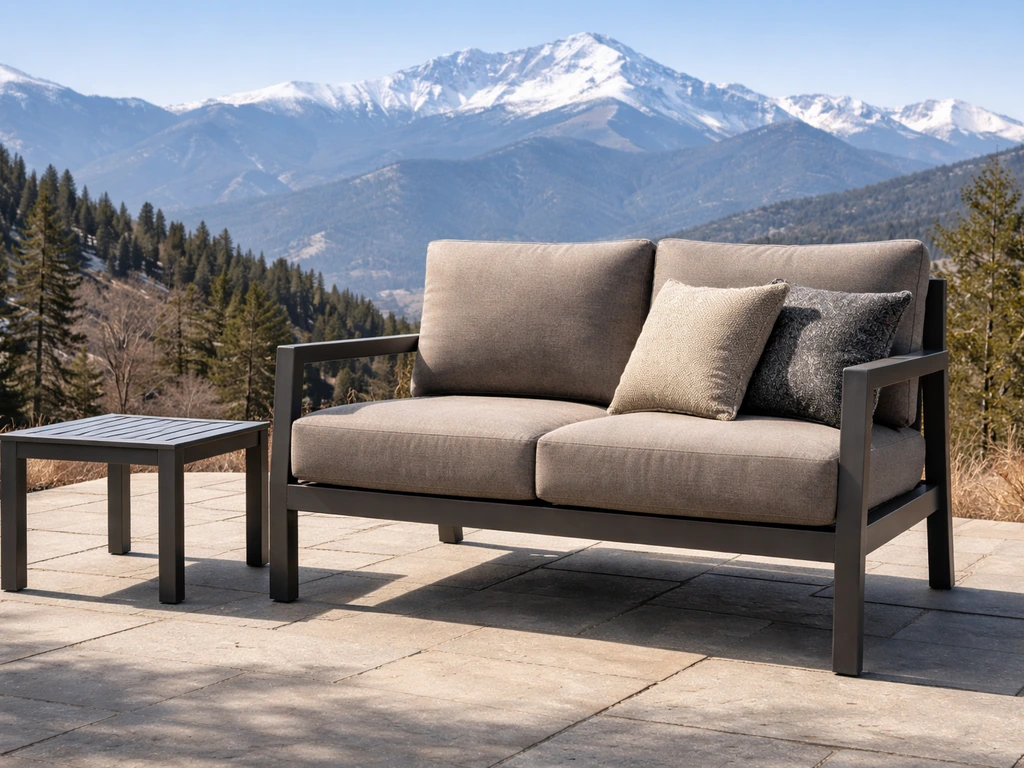
Best Patio Furniture for Colorado: What Lasts and Why
Colorado-ready patio furniture guide: durable materials, cushion picks, what to avoid, plus year-round care and protecti
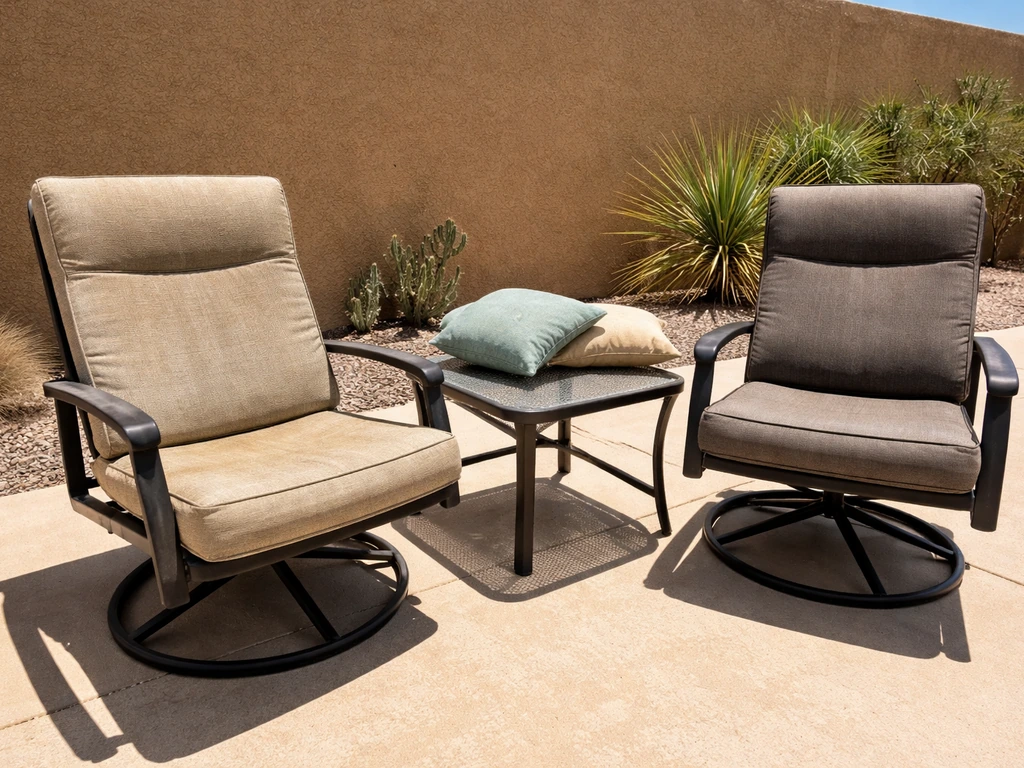
Best Patio Furniture for Arizona Heat: What Actually Lasts
Best patio furniture for Arizona: UV and rust resistant materials, cushions, frames, and maintenance to survive heat and
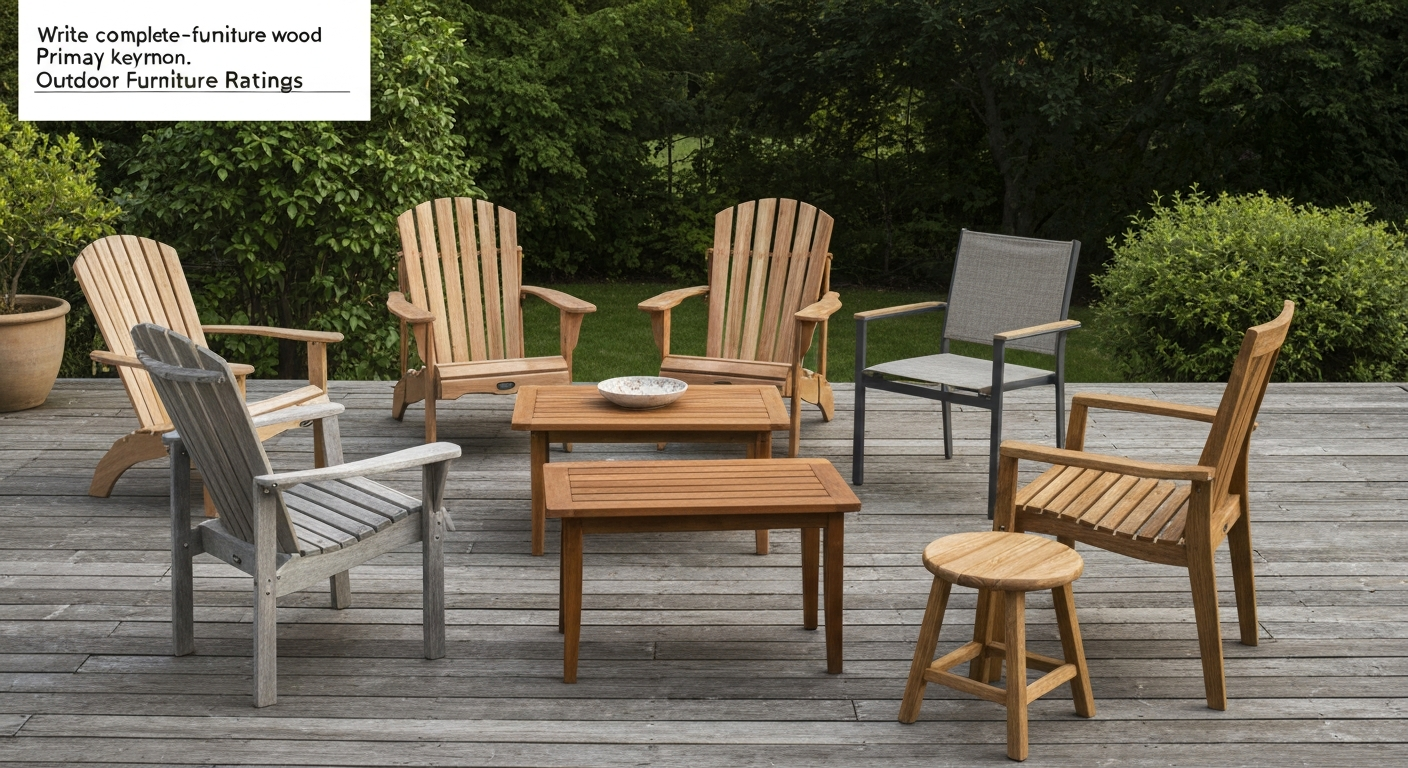
Common Patio Furniture Wood: Best Choices, Care & Tips
Compare common patio furniture wood types, teak, cedar, redwood, oak, with durability, finishes, and care tips.