
For Arizona patios, powder-coated aluminum and all-weather HDPE resin wicker are the two best material choices, full stop. If you want the fastest path to the best patio furniture for Colorado, start by prioritizing UV-stable frames, weather-ready cushions, and covers that handle seasonal moisture. They handle brutal UV exposure, dry heat, and the sudden moisture of monsoon season better than anything else at a reasonable price.
Best Patio Furniture for Arizona Heat: What Actually Lasts

Theo Tierney
12 May 2026
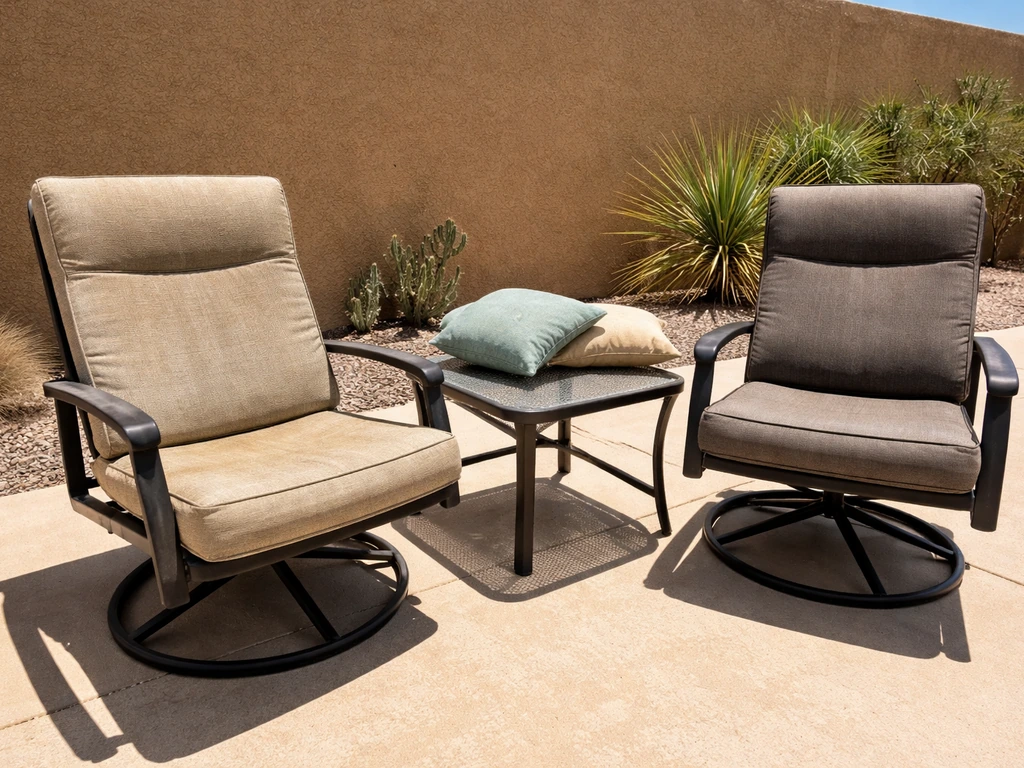
Dörken describes electrostatic powder spraying as charging powder granules during spraying so they are attracted to the earthed component and build the coating layer before curing powder granules are electrostatically charged during spraying. Pair either frame material with Sunbrella or solution-dyed acrylic cushions, and you have furniture that can genuinely last a decade or more without looking wrecked.
Wood, steel, and wrought iron can work, but they demand more effort and more money to stay in good shape under an Arizona sun.
What Arizona's climate actually does to patio furniture
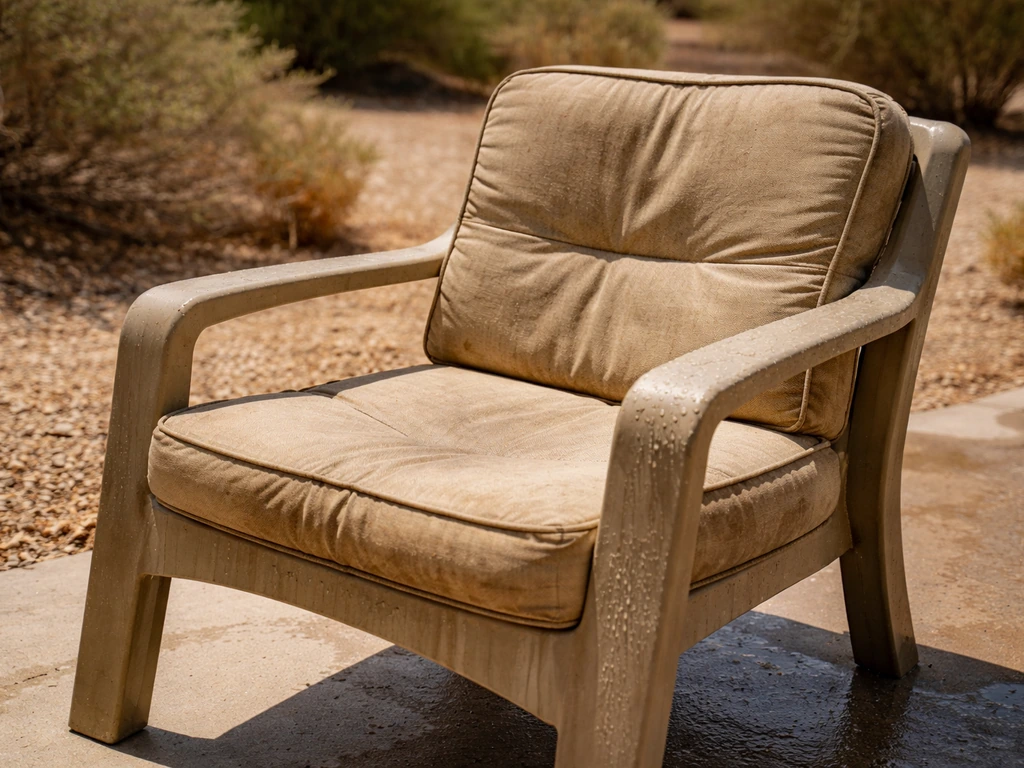
Arizona throws a combination of stressors at outdoor furniture that most climates don't stack together. You get relentless UV radiation from March through October, ambient temperatures that regularly push past 110°F in Phoenix and Tucson, extremely low humidity for most of the year, pervasive fine dust that works into finishes and weaves, and then a monsoon season (roughly July through September) that delivers sudden heavy rain, humidity spikes, and sometimes hail. That last part surprises people: Arizona furniture doesn't just get sun-damaged, it also gets wet in ways that can accelerate rust, mold, and finish breakdown if the furniture isn't built for it.
UV exposure is the primary killer. It degrades plastics, fades fabrics, breaks down paint and blank" rel="noopener noreferrer">powder coat, and dries out and cracks wood. Heat compounds the damage by accelerating the chemical reactions UV starts. Darker powder-coated frames absorb more heat and UV energy, which means they tend to fade and develop thermal stress faster than lighter-colored frames, worth knowing when you pick a color. Dust and grit act like fine sandpaper on finishes over time, especially on anything with a glossy or painted surface. Then the monsoon arrives and introduces moisture into every crack and chip the dry season created.
The honest breakdown on every material
Powder-coated aluminum: the workhorse pick
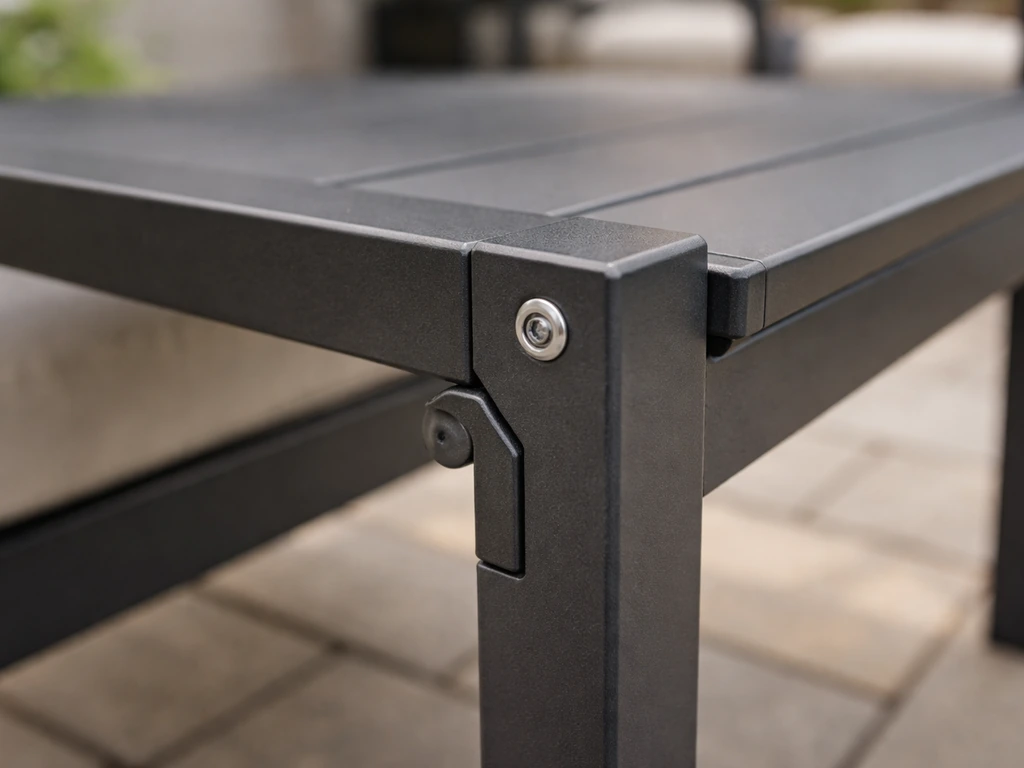
Aluminum is lightweight, naturally rust-resistant, and handles heat and UV well when the powder coating is intact and well-applied. A quality powder coat with UV stabilizers in the formula can keep a frame looking good for well over a decade in harsh environments. The catch is that aluminum isn't invincible: once the coating chips or scratches, moisture gets underneath and the aluminum can pit and oxidize. That's the leading failure mode, not aluminum itself, but coating damage. Buy from brands that use thicker-gauge aluminum (look for 6061 or similar commercial alloys rather than thin-wall budget extrusions) and a high-quality powder coat, and you have the most low-maintenance frame option available for Arizona.
HDPE resin wicker: the UV-stable comfort option
All-weather wicker made from HDPE (high-density polyethylene) resin fiber is a genuinely good choice for Arizona when you buy quality. UV-stabilized HDPE holds its color and structural shape through years of sun exposure in a way that cheaper PVC wicker simply doesn't. The fiber itself is the first thing to evaluate, but the hardware matters just as much, look for stainless steel or marine-grade corrosion-resistant fasteners, because cheap zinc or aluminum hardware under wicker weave is what typically fails first when monsoon moisture works its way in. Avoid anything marketed as "all-weather" that doesn't specify HDPE resin and corrosion-resistant hardware. That usually means PVC fiber over a cheap steel frame, and it will look rough within two seasons in Arizona.
Steel and wrought iron: durable but demanding
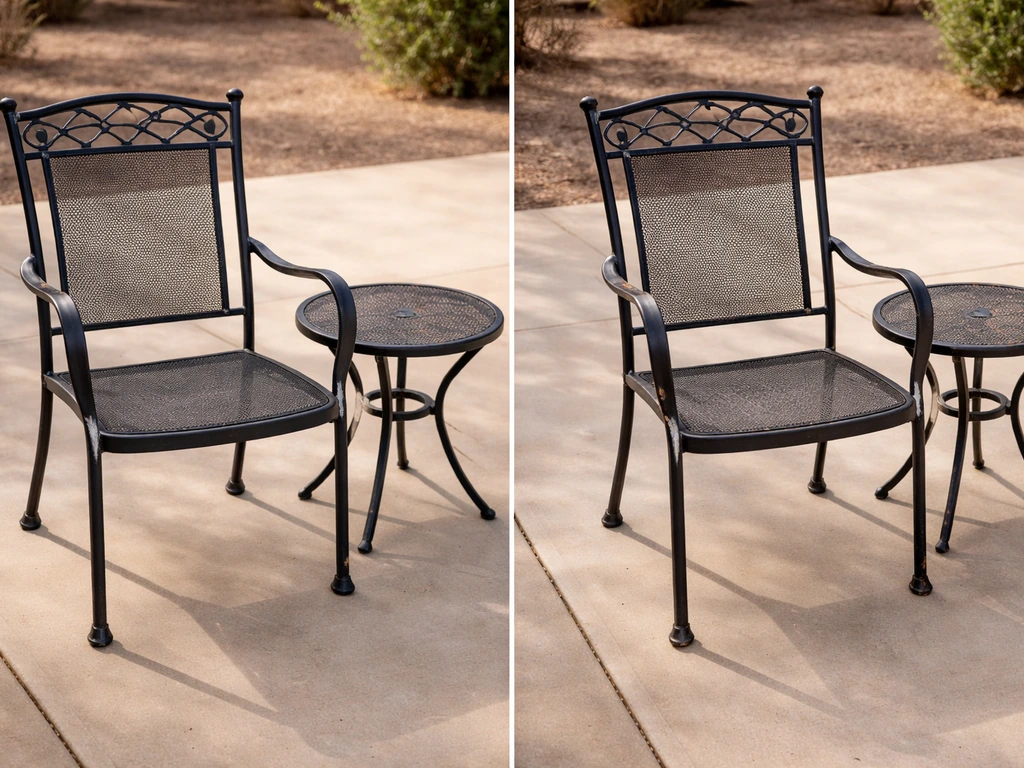
Steel and wrought iron furniture is heavy, solid, and visually impressive. The weight is actually an advantage in Arizona, strong monsoon winds won't send a wrought iron chair across the yard. But iron and steel rust, period. They require a diligent maintenance routine: inspect the finish regularly, touch up any chips or scratches before monsoon season, and store or cover carefully through the wet months.
Galvanized steel with a powder coat extends the window between maintenance significantly, but you're still doing more work than you would with aluminum. For covered patios or partially shaded spaces where the UV punishment is reduced, wrought iron is a beautiful and extremely long-lasting choice. For an exposed, uncovered patio in the desert sun, it's higher effort than most people want.
Teak and hardwoods: beautiful but high-maintenance in AZ
Teak is the gold standard of outdoor wood furniture because its natural oils resist moisture and rot. In many climates you can leave it outside and let it silver gracefully. In Arizona, the extreme dryness is actually the bigger problem: without regular treatment with teak oil, the wood dries out and cracks much faster than it would in a humid environment. You need to oil teak every season, maybe more, and keep a close eye on it. Other hardwoods like eucalyptus and shorea have similar demands. Wood furniture looks stunning on a covered patio where it's shaded from the worst UV and kept reasonably dry, it's a much harder commitment on a fully exposed Arizona patio.
Composite and recycled plastic lumber: underrated and tough
Capped composite and solid recycled HDPE lumber furniture flies under the radar but is genuinely excellent for Arizona. The polymer cap on capped composite products shields the core from moisture and UV, reducing fading and preventing the kind of weathering that degrades uncapped options. Solid recycled HDPE is even more robust, it doesn't splinter, won't rot, and resists stains and scratches well. The downside is aesthetics: it doesn't have the warmth of real wood. But for durability-focused buyers who don't want to fuss with maintenance, a recycled poly Adirondack chair or a composite dining table is genuinely set-it-and-forget-it.
Cheap plastic and budget wicker: avoid these
Standard injection-molded plastic furniture and low-end PVC wicker will look terrible within a year or two in Arizona. UV breaks down unstabilized plastics quickly, leading to fading, brittleness, and cracking. The money you save upfront disappears when you're replacing the set after two seasons. If budget is genuinely tight, go with the cheapest aluminum-frame furniture you can find over cheap plastic every time.
| Material | UV/Heat Performance | Monsoon/Moisture Resistance | Maintenance Level | Best For |
|---|---|---|---|---|
| Powder-coated aluminum | Excellent (with quality coat) | Good (if coating intact) | Low | Most patios, uncovered or covered |
| HDPE resin wicker | Excellent (UV-stabilized) | Good (with S/S hardware) | Low-medium | Lounge areas, covered patios |
| Wrought iron / steel | Good (with finish intact) | Moderate (rusts if exposed) | High | Covered patios, design-focused spaces |
| Teak / hardwood | Moderate (needs oiling) | Good (natural oils) | High | Covered patios, shaded spaces |
| Capped composite / recycled poly | Excellent | Excellent | Very low | Exposed patios, low-maintenance buyers |
| PVC wicker / basic plastic | Poor | Poor | N/A — avoid | Not recommended for Arizona |
Best furniture by how you actually use your patio
Lounging and poolside areas
For chaise lounges and deep-seating sectionals around the pool, sling-style furniture or HDPE wicker with quick-dry cushions is the right call. Sling fabric (like Phifer's outdoor sling weave) is purpose-built for water and UV exposure, it dries immediately and doesn't harbor mold. For cushioned loungers, pair an aluminum or HDPE wicker frame with Sunbrella or solution-dyed acrylic fabric cushions. Sunbrella is solution-dyed, meaning the color goes all the way through the fiber rather than being applied on the surface, which is why it's the benchmark for fade resistance. In a climate with this much UV, that distinction matters enormously.
Outdoor dining areas
For dining sets, a cast or extruded aluminum table with matching aluminum chairs is the practical choice. It's light enough to rearrange, won't rust, and is easy to clean after dusty days or monsoon dirt. Teak or composite tabletops are excellent if you want a wood look, both handle spills and heat from dishes well. Avoid glass tabletops on fully exposed patios: the thermal cycling from 110°F days to cool evenings stresses glass, and strong monsoon winds can turn a glass table into a serious hazard. If you love glass, use it on a covered or screened patio.
Shade structures and covered patio zones
If you have a ramada, pergola, or covered patio, you open up your material options considerably. Direct UV is the biggest threat in Arizona, and covering your furniture extends the lifespan of virtually every material. Under a shade structure, wrought iron and teak become much more practical choices because you've removed the worst UV exposure.
That said, even covered patios in Arizona still get radiated heat and occasional blown-in dust, so the same fabric rules apply: solution-dyed acrylic is the right choice for cushions, full stop. For neighboring climates like Las Vegas, the calculus is nearly identical, extreme dry heat paired with occasional moisture events means the same material priorities apply there as they do here.
If you're shopping for Las Vegas specifically, these same material priorities for UV resistance and weatherproof construction help you pick a set that won't fade or fall apart quickly best patio furniture for las vegas.
Weatherproofing features that actually matter
Frames and finishes
- Powder coat thickness and quality: look for electrostatically applied powder coat with UV stabilizers in the formulation, not a thin spray paint
- Lighter frame colors: they absorb less heat and UV, reducing thermal stress and slowing color fade
- Welded joints over bolted joints: welded aluminum frames have fewer moisture entry points and are structurally stronger over time
- Rust-resistant hardware: stainless steel bolts and fasteners everywhere, not zinc or bare steel
- Drainage holes in tubular frames: water pooling inside hollow aluminum tubes corrodes from the inside out
Cushions and fabric
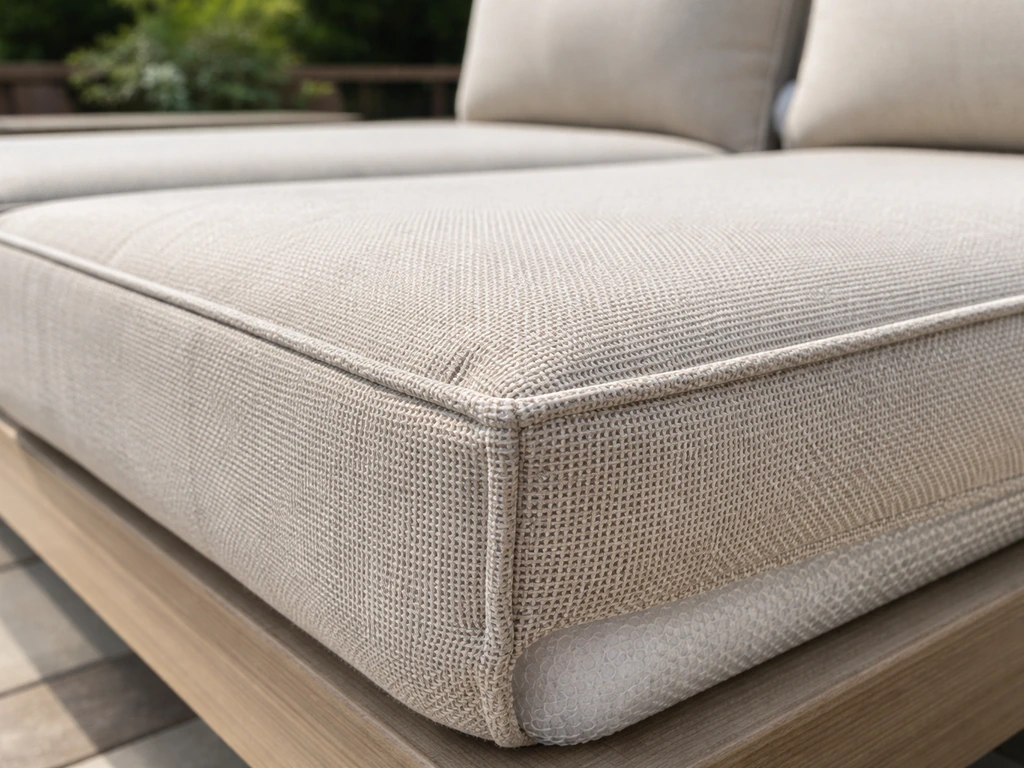
- Solution-dyed acrylic fabric (Sunbrella is the standard): color is part of the fiber, not applied to the surface, so UV can't strip it away
- Quick-dry foam fill: standard foam holds water and breeds mildew; look for open-cell or reticulated foam cores that drain and dry quickly
- Removable, washable covers: essential for dealing with monsoon soil and dust accumulation
- UV-resistant thread: even the best fabric fails early if the stitching breaks down; look for UV-stabilized polyester thread specifically
Covers and protection
A good furniture cover is one of the best investments you can make for Arizona patio furniture, but the wrong cover can cause as much damage as no cover at all. Solid vinyl or non-breathable covers trap moisture underneath, which creates exactly the humid, dark conditions that breed mold and mildew and accelerate finish degradation. You want a cover with a waterproof outer surface (to handle monsoon rain) and a breathable construction that allows moisture vapor to escape. Custom-fit covers beat baggy universal-fit covers because loose covers flap in wind and cause abrasion damage to frames and finishes.
Your Arizona patio furniture maintenance calendar
Spring (March to May): set up and inspect
- Pull furniture out of storage or remove covers; inspect all frames for chips, scratches, or coating damage from winter
- Touch up any bare metal spots with matching powder coat spray or a rust-inhibiting primer before UV season starts
- Wash all frames with mild soapy water and a soft cloth; rinse thoroughly
- Inspect cushion fabric for mold or mildew from storage; wash covers per manufacturer instructions
- Check all hardware: tighten loose bolts, replace any rusted fasteners immediately
- If you have teak, clean the wood and apply fresh teak oil before the dry heat of summer
Summer (June to September): active season plus monsoons
- Shake cushions weekly to remove accumulated dust; rinse frames with a hose every 1 to 2 weeks
- Before each monsoon storm (check forecasts July through September), bring cushions inside or stack and cover them
- After monsoon rains, allow frames and cushions to dry completely before replacing covers
- Inspect for any new coating damage after hail events; address bare metal spots immediately
- If you have steel or wrought iron, check for any surface rust after wet monsoon periods and treat with rust converter before it spreads
Fall and winter (October to February): wind down and store
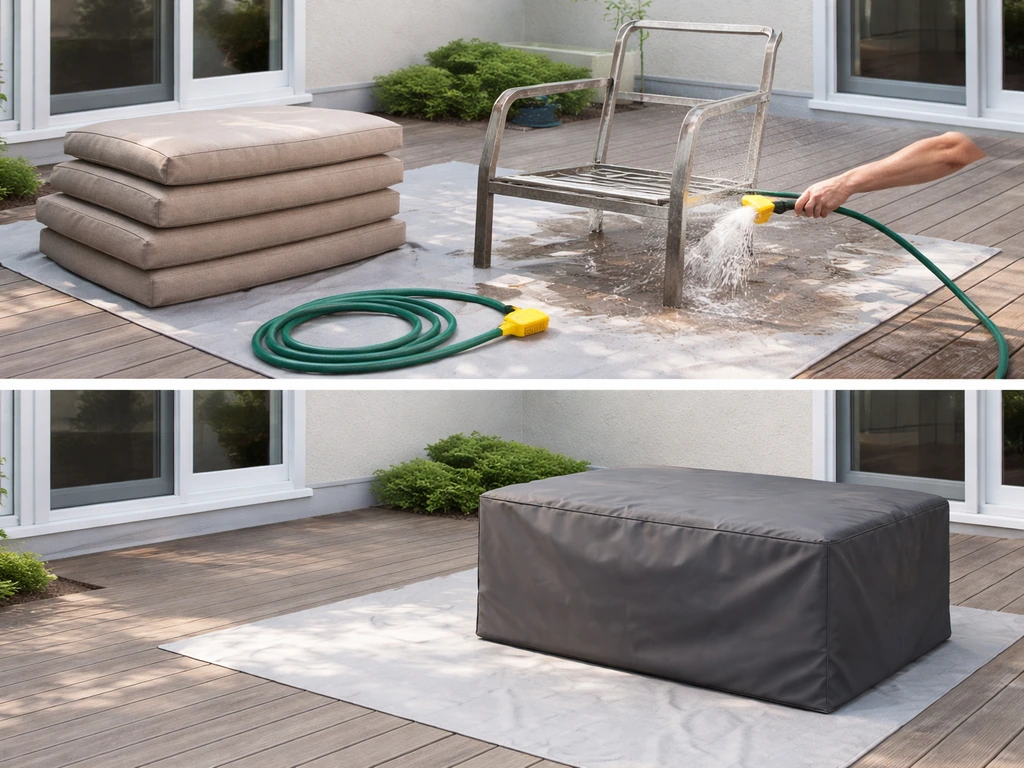
- Do a thorough end-of-season clean: scrub frames, wash all cushion covers, let everything dry completely before storing
- Store cushions inside or in a dry deck box; never store them in plastic bags (traps moisture)
- Cover or store furniture if you won't use it regularly; even Arizona winters have some moisture, and UV continues year-round
- Apply a fresh coat of teak oil to any wood furniture before storing for the season
- Check covers for damage and replace any that are torn or no longer waterproof
How to actually choose the right set
Measure your space first
Before you shop, measure your patio and think about traffic flow. For a dining area, allow at least 36 inches between the edge of the table and any wall or railing so chairs can pull out comfortably. For a deep seating conversation set, you need enough space to walk around it without it feeling cramped, a standard L-shaped sectional with coffee table needs roughly 10 by 12 feet minimum. Sketch it out on paper before you buy anything.
Nothing is more frustrating than beautiful furniture that makes your patio feel like an obstacle course. If your patio is laid with pea gravel, it is also worth choosing furniture that stays stable and easy to maintain on that surface, which is why the best patio furniture for pea gravel matters.
Comfort, scale, and proportions
Patio furniture tends to be larger-scaled than indoor furniture, and for good reason: it looks better in open outdoor space. But on a smaller Arizona townhouse patio, oversized deep-seat sectionals become overwhelming. Match the scale of the furniture to your space. For dining chairs, sit in them before you buy if at all possible: seat height, arm height, and back support vary enormously between manufacturers, and this is furniture you'll use in outdoor heat where discomfort feels magnified.
Honest budget guidance
For a four-piece aluminum dining set in Arizona, expect to spend $400 to $800 for a quality set that will actually last. Anything under $300 for a full set is typically thin-gauge aluminum with a cheap powder coat and bargain hardware, it'll last maybe three years in Arizona conditions. On the other end, $1,500 to $3,000 gets you commercial-grade aluminum or premium teak that can realistically last 15 to 20 years with proper care. The math on cost-per-year almost always favors spending more upfront. For HDPE wicker, budget $600 to $1,200 for a quality sectional; below that range and you're usually looking at PVC fiber on a steel frame, which is the combination to avoid.
Buying checklist and mistakes to avoid
Before you buy: quick checklist
- Confirm frame material: is it aluminum alloy, HDPE wicker, steel, or wood? Get specifics, not just 'metal' or 'resin wicker'
- Check for UV-stabilized HDPE (not PVC) if buying wicker; ask the retailer directly if the listing isn't clear
- Verify powder coat is electrostatically applied with UV stabilizers; avoid spray-paint finishes on metal
- Confirm cushion fabric is solution-dyed acrylic (Sunbrella, Outdura, or equivalent) — not polyester
- Check cushion fill for quick-dry foam construction
- Inspect or confirm stainless or marine-grade hardware throughout
- Look for welded rather than only bolted frame joints on aluminum pieces
- Measure your patio and confirm furniture dimensions with 36-inch traffic clearance for dining areas
- Budget for a breathable, fitted cover if the furniture will sit on an exposed patio
Common mistakes Arizona buyers make
- Buying dark-colored frames without considering heat absorption: black and deep charcoal powder coat runs significantly hotter and fades faster than lighter tones in direct Arizona sun
- Ignoring cushion fabric type: the frame lasts but the cushions look faded and wrecked within a season when they're made from cheap polyester
- Using non-breathable vinyl covers: they trap condensation and actually accelerate the mold and finish problems you're trying to prevent
- Skipping the cover entirely: even UV-stable furniture degrades faster without protection during Arizona's off-season
- Assuming 'all-weather' on a product label means anything: it's a marketing term, not a standard — always verify the actual materials
- Leaving cushions out through monsoon storms: quick-dry foam is not the same as waterproof; bring cushions in when storms are forecast
- Buying furniture sized for a larger patio than you have: it makes the space feel cluttered and actually makes the furniture harder to maintain
- Delaying touch-up repairs: a small chip in powder coat that costs nothing to fix with touch-up spray becomes a pitting corrosion problem if left through a monsoon season
Arizona is genuinely one of the harder climates for patio furniture, not because of any single factor, but because of the combination of extreme UV, dry heat, dust, and seasonal moisture. The good news is that the right materials and a basic maintenance habit get you surprisingly far. Powder-coated aluminum or quality HDPE wicker, Sunbrella cushions, a breathable cover, and one serious cleaning session per season will keep a good set looking sharp for a decade or more.
If you want the best patio furniture for snow, prioritize rust-resistant frames, sealed finishes, and cushions that can handle freeze-thaw cycles. Start with the right material for your budget, don't skip the fabric quality, and the rest is straightforward. If you use pea gravel, look for outdoor sets with rust-resistant frames and cushions that drain and dry fast best patio furniture for pea gravel.
FAQ
How can I tell if patio cushions will survive Arizona’s sun and monsoons?
For Arizona patios, choose fabric colorfastness plus drying speed. Even if a cushion is labeled “outdoor,” look for solution-dyed acrylic or Sunbrella, and prefer thinner fills or quick-dry foam so moisture from monsoon storms does not linger inside the cushion.
If I buy the best patio furniture for Arizona, do I still need covers?
Yes, but the key is maintenance and placement. A cover can help most, yet any furniture left uncovered on the sunniest side will still fade. Use covers for full seasons, and keep water from pooling under the cover by selecting breathable construction and properly tensioned, custom-fit sizing.
What should I look for in “all-weather” resin wicker besides the word all-weather?
The common mistake is buying “all-weather” wicker that uses cheaper PVC fiber or corrosion-prone hardware. Confirm the fiber is HDPE resin and the hardware is stainless or marine-grade corrosion-resistant, because fasteners are often the first failure point after monsoon moisture gets into the weave.
What routine should I do during monsoon season to extend furniture life?
After a monsoon, wipe down and dry quickly, especially around frame seams and under cushions. If you see chipped powder coat or fraying on sling fabric, address it promptly, since damaged coating is what allows moisture to reach the metal and start pitting or oxidation.
How do I prevent powder-coated aluminum from failing early in Arizona?
For powder-coated aluminum, the failure starts when the coating chips or scratches, so inspect for edge wear and sharp abrasion points (like chair legs on pavers). Avoid stacking or dragging pieces across stone, and use furniture pads under legs to prevent coating loss.
How often should I clean patio furniture to deal with Arizona dust?
Dust is more abrasive than people expect, and it can turn into gritty paste when it mixes with moisture. Brush off or rinse dust monthly during peak season, then clean with a gentle outdoor cleaner (not harsh solvents) so you remove grit without damaging the finish or leaving residue.
Do shaded or partially covered patios change which materials are best in Arizona?
If you have a partially covered patio, the “need” for UV-proof materials goes down but not to zero. Use lighter-weight UV protection for shaded areas, but still prioritize solution-dyed acrylic for cushions, since radiated heat and dust continue even under shade structures.
What’s the best way to protect furniture if my patio surface holds heat or water?
Don’t rely on a cover alone for ground heat. If your patio floor traps heat or stays damp after rain, place furniture on surfaces that drain well, use furniture risers or pads, and ensure cushions are not stored compressed for long periods during wet months.
Can I use glass tabletops outdoors in Arizona, and when is it risky?
Avoid glass on fully exposed patios due to thermal cycling, which can stress glass, and due to wind-driven safety risk. If you love glass, choose it for covered or screened areas, and consider tempered glass plus stable frames that do not flex.
Is aluminum or composite better if I want the least maintenance in Arizona?
If you’re choosing between aluminum and composite, decide based on maintenance appetite. Aluminum is low maintenance but requires protecting the powder coat from chips, while composite or capped HDPE is more “set-and-forget” and resists splintering and staining, though it can look less natural than wood.
How can I avoid getting bargain aluminum furniture that won’t last?
Yes, cost “saves” usually fail quickly when the powder coat is thin or hardware is bargain quality. When comparing, focus on thicker-gauge aluminum, reputable powder coating, and corrosion-resistant fasteners, then confirm warranty length and whether replacement parts are offered.
What’s different about choosing furniture for a poolside patio in Arizona?
For deep seating near pools, choose sling or quick-dry cushions because lingering moisture accelerates mildew and odor. Also rinse after heavy splashes, and avoid storing cushions indoors without full drying, since humidity trapped inside storage can still damage fabrics.
What should I consider if my patio is on pea gravel?
If you use pea gravel, ensure tables have frames that won’t trap moisture near joints, and pick cushions that drain and dry fast. Also confirm the set is stable on uneven ground so legs do not rock, which can scratch coatings and create hidden water retention points.
Next Articles
Common Patio Furniture Wood: Best Choices, Care & Tips
Compare common patio furniture wood types, teak, cedar, redwood, oak, with durability, finishes, and care tips.
Best Wood Patio Stain: Choosing Durable, Low-VOC Finishes
Compare and choose the best wood patio stain: durability, finish, climate tips, prep, and top product picks.
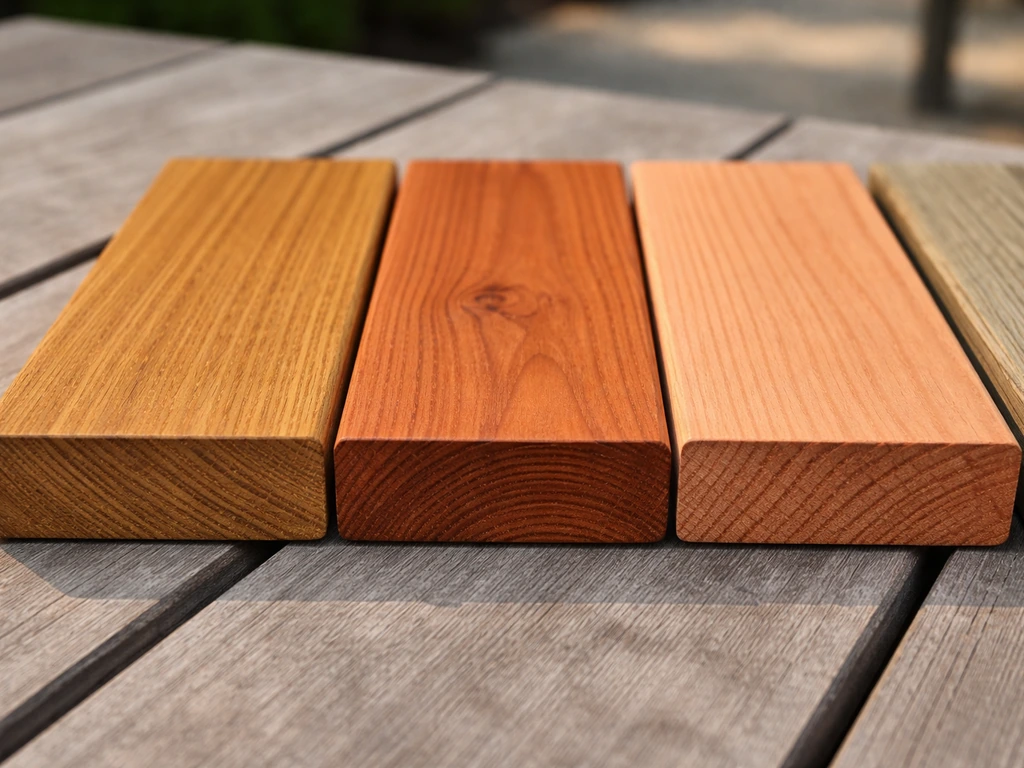
Common Patio Furniture Wood: Teak, Cedar, Redwood and More
Compare common patio woods like teak cedar redwood and pressure-treated: durability, quality checks, and care for long l