
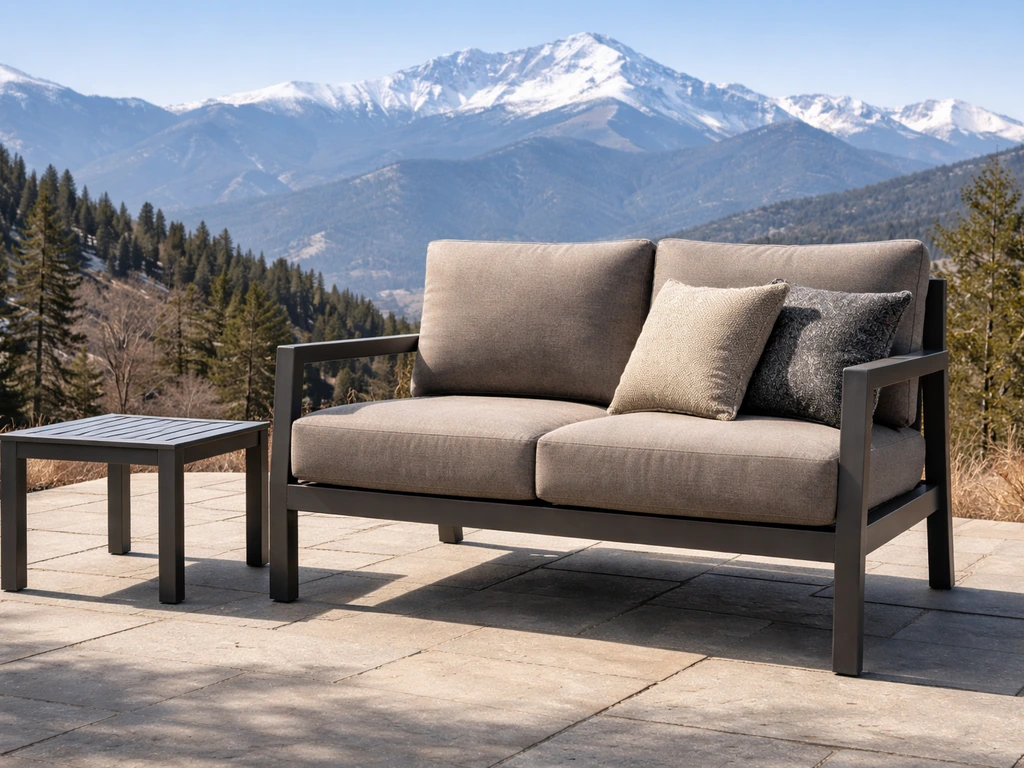
The best patio furniture for Colorado is powder-coated aluminum or heavy-gauge wrought iron paired with Sunbrella-fabric cushions. Those two combinations survive the state's brutal climate combination better than anything else on the market: freeze/thaw cycles that crack lesser materials, UV intensity that bleaches most fabrics within a season, hail that dents thin metal and chips cheap finishes, and wind that sends lightweight furniture across your yard. If you only remember one thing from this guide, it's that Colorado demands furniture built for abuse, not furniture built for a catalog photo.
Best Patio Furniture for Colorado: What Lasts and Why

Theo Tierney
17 May 2026
What Colorado's climate actually does to your patio furniture
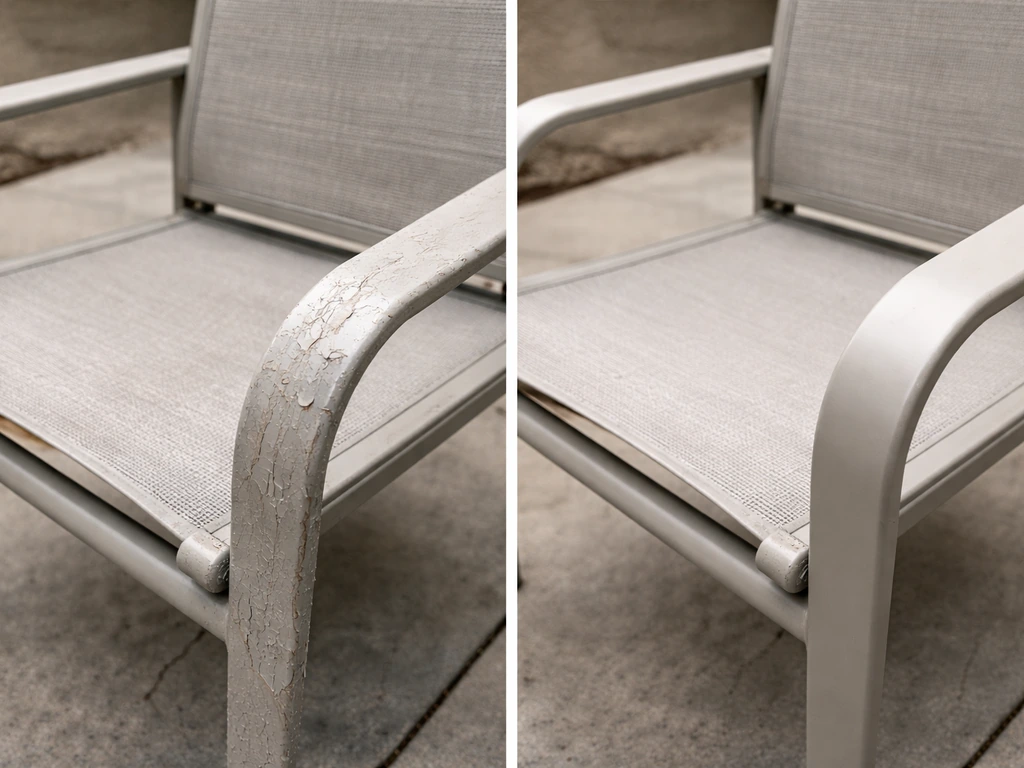
Colorado is genuinely one of the hardest climates for outdoor furniture in North America, and most people don't realize it until they've burned through a cheap set or two. The problems stack up fast.
Freeze/thaw cycles
Denver alone sees temperatures swing above and below freezing roughly 100 times per year. Water gets into any crack, seam, or unsealed joint, freezes, expands, and slowly destroys the material from the inside. Wicker weaves split. Wood checks and warps. Powder coat lifts off bare metal and lets rust start. Furniture that handles a single Minnesota winter might not survive three Colorado seasons because the freeze/thaw cycle here repeats constantly rather than staying frozen all winter.
UV intensity at elevation
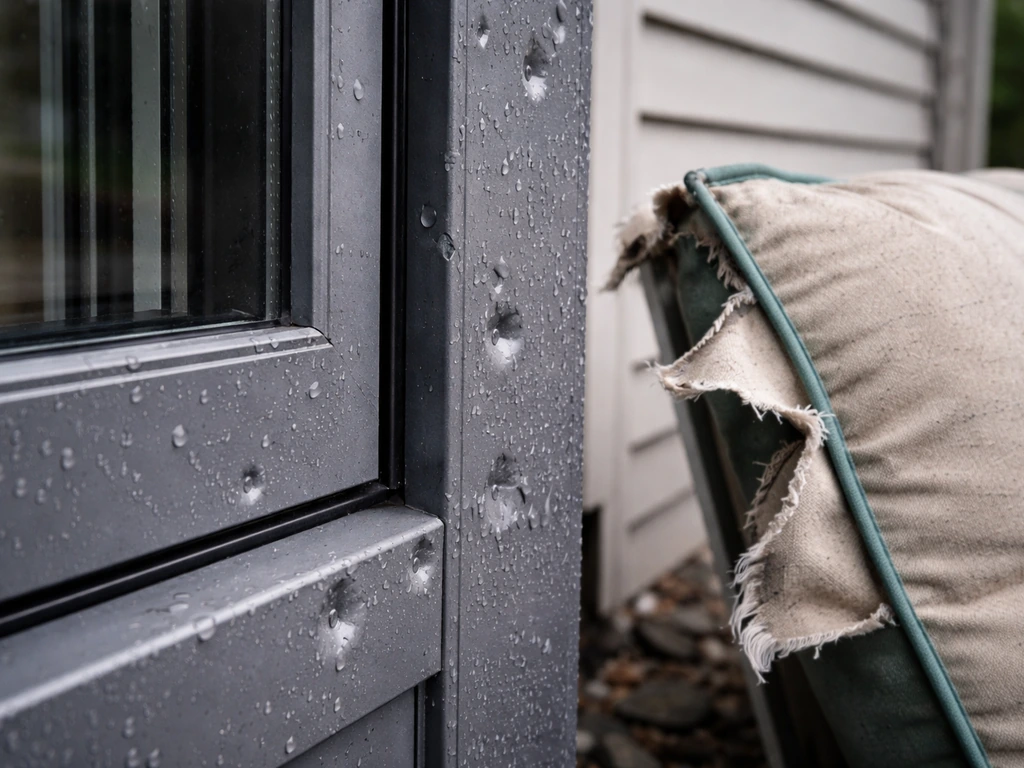
Colorado's elevation is not a minor factor. UV intensity increases roughly 6% for every kilometer of elevation gain, which means Denver at 5,280 feet is already receiving meaningfully more UV radiation than a city at sea level. Mountain communities above 8,000 feet are getting hit even harder. That UV load fades fabrics, degrades plastic and resin, and breaks down any finish that isn't specifically engineered for prolonged sun exposure. Fabrics that look fine in Georgia or Ohio after two years can look washed out in Colorado after one summer.
Hail and wind
The Colorado Front Range sits squarely in what meteorologists call Hail Alley, the highest-frequency large-hail zone in North America. The National Weather Service describes “Hail Alley” (including the Colorado Front Range) as averaging about seven to nine hail days per year Hail Alley, the highest-frequency large-hail zone in North America. The Denver area averages seven to nine hail days per year, and those aren't always small stones. A serious hail event will chip or dent thin metal, crack resin furniture, and shred umbrellas or lightweight covers. Wind compounds the problem by turning furniture into projectiles if it isn't weighted down, and by accelerating surface drying that cracks wood finishes.
Summer heat
Colorado summers are not as brutal as Arizona or Las Vegas, but they are genuinely hot with intense direct sun. If you're shopping for the best patio furniture for Las Vegas instead, you'll want to prioritize sun-baked heat performance and fade-resistant materials. Metal furniture left in full sun can get hot enough to be uncomfortable or unsafe to touch. Dark-colored cushions fade faster. PVC pipe frames, thin plastics, and low-quality resins soften and deform over repeated high-heat cycles.
Material by material: what actually lasts in Colorado
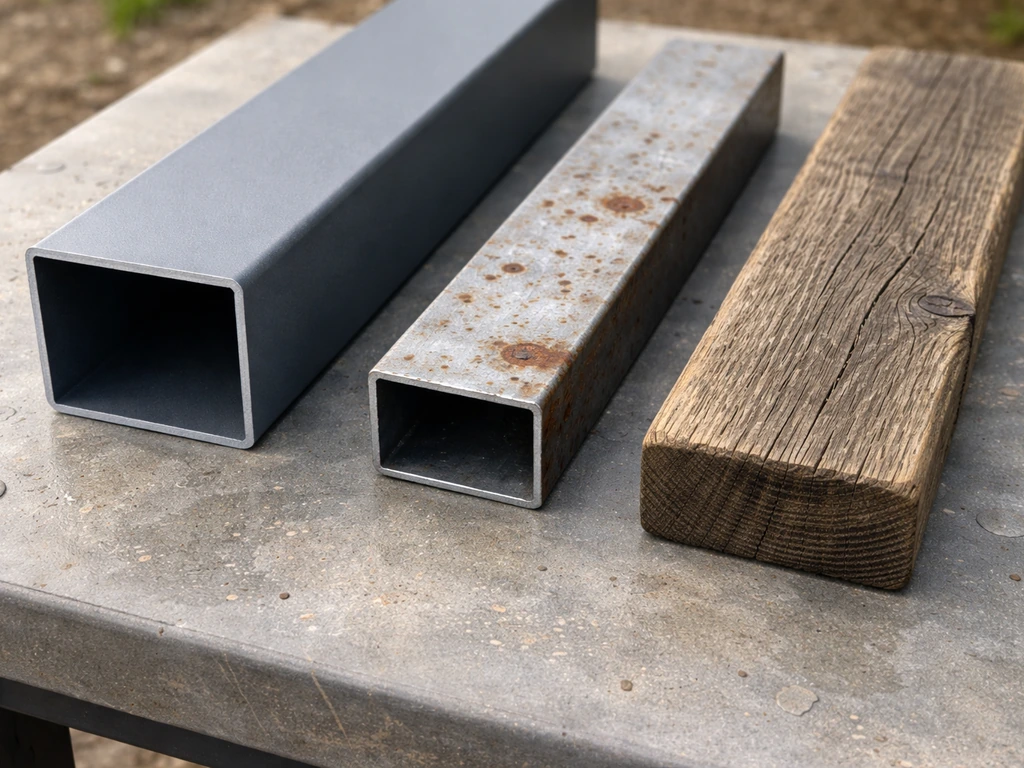
Not every material fails the same way here. Here's an honest breakdown of what each one does well, where it falls short, and whether it makes sense for a Colorado patio.
| Material | Freeze/Thaw | UV Resistance | Hail/Impact | Wind | Overall Colorado Rating |
|---|---|---|---|---|---|
| Powder-coated aluminum | Excellent | Excellent (if quality coat) | Good (dents, doesn't rust) | Poor (light) | Best overall |
| Wrought iron / steel | Good (sealed) | Excellent | Excellent | Excellent (heavy) | Excellent (with maintenance) |
| Teak | Good | Good (oiled) | Fair | Good | Very good (with upkeep) |
| Other hardwoods / pine | Poor to fair | Fair | Fair | Fair | Not recommended |
| High-density polyethylene (HDPE) resin | Excellent | Very good | Fair to good | Poor (light) | Very good |
| Standard PVC / cheap plastic | Poor | Poor | Poor | Poor | Avoid |
| All-weather PE wicker (on aluminum) | Excellent | Very good | Fair | Poor (light) | Very good |
| Natural wicker / rattan | Poor | Poor | Poor | Poor | Avoid |
| Solution-dyed acrylic cushions (e.g., Sunbrella) | Excellent | Excellent | N/A | N/A | Best for cushions |
| Polyester cushions | Fair | Poor | N/A | N/A | Avoid for Colorado |
Powder-coated aluminum
This is my top pick for Colorado and the material I'd start with for most people. Aluminum doesn't rust, period. It's lightweight enough to rearrange but can be weighted or anchored against wind. A quality powder coat finish (look for at least two-stage coating with a primer layer) resists UV, chips, and moisture better than painted steel. The downside is that it can dent in a severe hail event, and cheap aluminum furniture with thin-walled tubing will wobble and fail at the joints within a couple of seasons. Look for cast aluminum construction for the most durable pieces, especially for chairs and table legs, because the solid casting holds up far better than hollow tubing.
Wrought iron and heavy-gauge steel
Wrought iron and heavy-gauge steel are the most wind-resistant options available because they're simply heavy. If you live somewhere with serious wind exposure on the Front Range or in the mountains, iron and steel stay put when aluminum chairs blow over. The trade-off is rust. Any chip in the coating lets moisture in, and Colorado's freeze/thaw cycle is merciless on bare steel. You need to inspect the coating every spring, touch up any chips immediately, and re-apply a rust-inhibiting spray or paint to exposed areas. Done right, iron furniture lasts decades. Neglected, it turns into a rust disaster within five to seven years.
Teak and quality hardwoods
Teak is the gold standard of outdoor wood because its natural oils resist moisture, rot, and insects without requiring constant treatment. In Colorado's dry climate, teak actually performs better than it does in humid places because you don't fight mold. The challenge here is the intense UV and low humidity, which dry teak out faster than in coastal climates.
You'll want to apply teak oil or a UV-blocking teak sealer once or twice a year to prevent the wood from graying and checking. Quality teak furniture is expensive upfront but genuinely lasts 20 to 30 years with reasonable care. Other woods like eucalyptus and ipe can also work but require more diligence.
Avoid pine, cedar (unless very high quality), and any softwood for Colorado patios, as those species don't handle repeated freeze/thaw stress well and need recoating almost every year.
HDPE resin and recycled plastic lumber
High-density polyethylene (HDPE) furniture, often marketed as recycled plastic or poly lumber, is seriously underrated for Colorado. It doesn't absorb water, doesn't rust, doesn't rot, and handles freeze/thaw cycles without cracking. UV-stabilized HDPE resists fading far better than standard plastic. It's heavier than you'd expect, which helps with wind. The aesthetic is more casual or country-style, so it doesn't fit every patio design, but for durability per dollar it's extremely competitive. Avoid standard PVC or thin injection-molded plastic furniture entirely in Colorado: it gets brittle in UV, cracks in freezes, and typically fails within two to three seasons.
All-weather PE wicker
The key distinction here is between all-weather PE (polyethylene) wicker and natural wicker or rattan. Natural wicker disintegrates outdoors in Colorado within a couple of seasons: the UV bleaches it, moisture works into the weave, and freeze/thaw cracks it apart. All-weather PE wicker is entirely different. It's a synthetic resin strand woven over a powder-coated aluminum or steel frame, and it handles UV and moisture well.
Look for a round-strand or flat-band weave on a heavy aluminum frame, and check that the frame corners are welded rather than just clamped. The weakest point on wicker sets is almost always the frame connection at the base legs, so sit in the chair and push on the arms to test for flex before you buy.
Cushions and fabrics: the piece most people get wrong
Cushions are the highest-failure-rate component on any patio set in Colorado, and most furniture is sold with cheap polyester cushions that fade, mold, and compress within one or two seasons. Sunbrella markets its outdoor cushion fabrics as fade-proof/UV resistant and mold and mildew resistant, targeting the UV and moisture failure modes that commonly ruin patio cushions solution-dyed acrylic fabric.
The solution is solution-dyed acrylic fabric. Sunbrella is the most recognized brand in this category and for good reason: the color is dyed into the fiber rather than printed on top, which is why it resists UV fading so well that certain Sunbrella marine fabrics carry a 10-year warranty against fading. You can also look for comparable solution-dyed acrylic fabrics from Outdura, Tempotest, or other outdoor-rated brands.
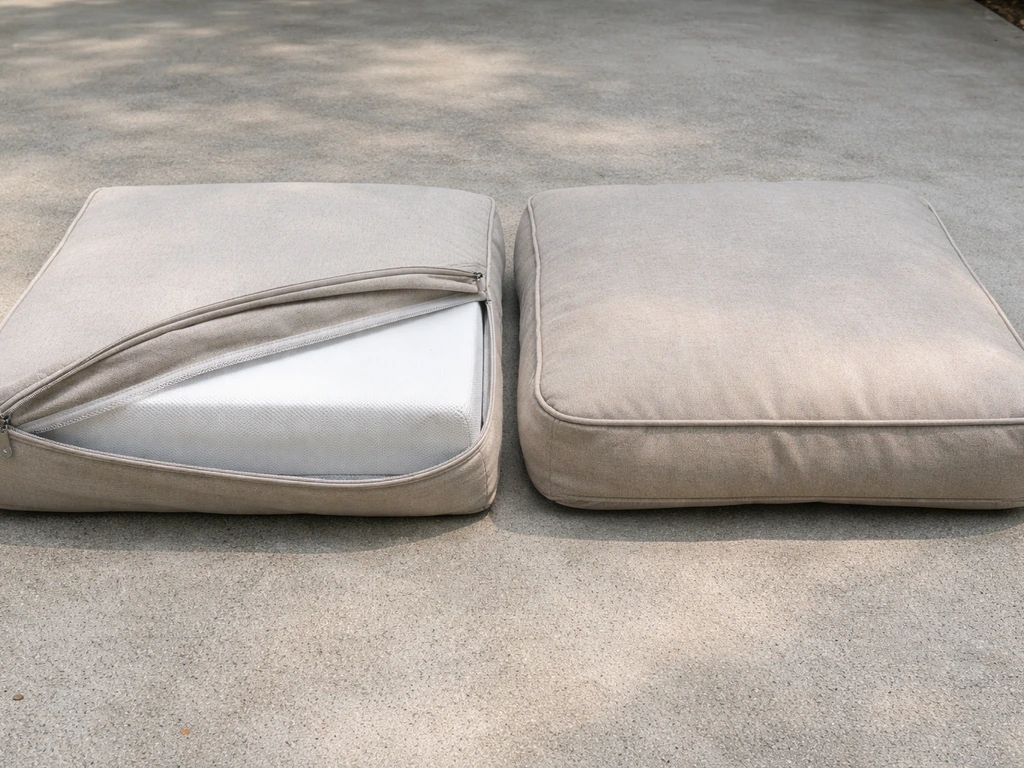
The foam or fill inside the cushion matters too: closed-cell foam or quick-dry foam inserts resist water absorption and dry faster after rain, which prevents the mold and mildew that's common when wet cushions sit in temperature swings.
Best picks by furniture type and use case
Dining sets
For Colorado outdoor dining, cast aluminum or wrought iron dining sets are the right call. Look for a table with a slatted or perforated top rather than solid glass: glass tabletops shatter in severe hail, and slatted metal drains rain and doesn't collect standing water that freezes. Chair frames should be welded (not bolted) at the leg-to-seat junction, and the table base should have adjustable leveling feet for uneven patios. Brands worth evaluating include Telescope Casual, Homecrest, and Winston, all of which offer commercial-grade aluminum construction with quality powder coatings. Avoid dining sets with glass tops unless you can store them or cover them reliably every hail season.
Conversation sets
Conversation sets (the chairs-plus-coffee-table groupings) are where all-weather PE wicker on aluminum frames really shines, because the design aesthetic suits the typical casual-comfort use case and the materials hold up well. Look for sets where the wicker has a UV-inhibitor additive, which you can sometimes confirm by asking the retailer or checking the spec sheet. Deep-seat conversation chairs with quick-dry foam cushions in Sunbrella fabric are the best combination for practical Colorado use. Tropitone, Brown Jordan, and Hanamint make sets at the quality end of this category. At mid-price, look for sets from Woodard or Homecrest.
Loungers and chaise lounges
For loungers, aluminum is almost always the right choice because weight matters: you'll want to move and angle them throughout the day to follow sun or shade. Look for aluminum loungers with adjustable back positions that lock with a positive-click mechanism rather than just friction, since cheap friction recliners drift and collapse over time. The sling fabric on many aluminum loungers (a taut mesh fabric stretched across the frame) is a good low-maintenance option because there's no cushion to store or dry, and quality sling fabric is UV and moisture resistant. If you prefer cushioned loungers, again: solution-dyed acrylic cushions and quick-dry foam are non-negotiable for Colorado.
Sectionals
Outdoor sectionals are the biggest investment and the piece most likely to be left out through weather events, so material choice really matters here. The best Colorado-ready sectionals are built on powder-coated aluminum frames with all-weather PE wicker exteriors and deep Sunbrella cushions. Check that the individual sections connect with secure hardware (not just resting against each other), because wind will separate loose sections. Avoid sectionals with thin hollow steel frames: the welded joints on cheaper sets crack under freeze/thaw stress within a few seasons. Budget at least $1,500 to $2,500 for a quality five-to-seven piece sectional that will hold up; sets below that price range almost always cut corners on frame gauge or cushion quality.
Weatherproofing and maintenance throughout the year
Even the best furniture fails faster without a maintenance plan. The good news is that Colorado's dry climate means you're not fighting constant humidity or salt air the way a coastal homeowner would. But you are dealing with intense UV, freeze/thaw, and hail season, and each one requires a specific response.
Covers
Furniture covers are non-negotiable in Colorado. A quality cover during hail season alone pays for itself by preventing finish chips and fabric damage. Look for covers with a solution-dyed polyester or marine-grade fabric exterior, a soft fleece or felt interior lining so they don't scratch finishes, and vented sides to prevent moisture condensation building up underneath. Avoid cheap PVC covers: they trap moisture, crack in UV, and often blow off in Colorado wind because they don't fit snugly. ADCO, Classic Accessories, and Duck Covers make weather-grade options worth considering. Use tie-down straps or weight bags to keep covers in place on windy days.
Cleaning schedule
- Spring (before setup): Wash all frames with mild soap and water, inspect powder coat for chips, touch up any bare metal immediately with matching touch-up paint or clear rust-inhibiting spray.
- Early summer: Apply teak oil or UV-blocking sealer to any wood components. Rinse cushions and let dry fully before storing or using.
- Mid-season: Rinse wicker and aluminum frames monthly to remove UV-degrading dust and pollen. Wipe cushions down with a damp cloth.
- After any hail event: Inspect frames for chips or dents, inspect cushions for tears, cover damaged areas promptly.
- Fall (before storage or covering): Deep clean everything. Apply a final coat of oil to wood. Treat any rust spots on steel with rust converter before storage.
Rust control for iron and steel
The moment you see rust starting on a steel or iron piece, treat it immediately. Sand down to bare metal, apply a rust converter or inhibiting primer (Rust-Oleum Stops Rust primer is widely available), then apply matching powder coat touch-up paint or a quality spray enamel. Waiting even one season lets rust spread under the surrounding coating and turns a minor repair into a major problem. If you're buying iron or steel furniture, pick up a matching touch-up pen or spray paint at the same time so you're ready to act fast.
Storage strategy
In Colorado, full indoor storage for the winter is ideal but not always realistic. If you have a garage or shed, stack aluminum chairs and bring in all cushions. Cushions stored outdoors through Colorado winters, even covered, are at risk from freeze/thaw moisture cycles and rodents looking for nesting material. If furniture must stay outside, use high-quality fitted covers, elevate pieces slightly off the ground to prevent water pooling under them, and make sure covers are vented. Heavy iron or teak tables can stay outside under covers; lighter aluminum furniture in high-wind areas should be moved or secured.
How to read quality and value before you buy
Marketing language around outdoor furniture is genuinely misleading. Terms like 'rust-resistant,' 'weather-resistant,' and 'all-weather' mean almost nothing without specifics. Here's what to actually look at.
Frame construction
For aluminum, look for cast aluminum components at the joints and stress points rather than just bent or welded tube. Cast aluminum can handle repeated stress without cracking. Check the wall thickness of tubing: quality aluminum furniture uses at least 1.5mm wall thickness on chair arms and legs. For steel, gauge matters: 12 or 14 gauge is commercial quality, while 18 or 20 gauge is borderline for residential use in a harsh climate. Lift a chair to feel actual weight: a noticeably heavy chair usually indicates good material thickness.
Welds and joints
Flip a chair upside down and look at the welds. They should be smooth, continuous, and fully penetrated (not just tacked). Exposed bolts at structural joints are a warning sign on otherwise 'premium' furniture because bolts loosen with temperature cycling and often hold less well than proper welding. On wicker pieces, check that the wicker is tightly wrapped at the frame edges and that there are no loose ends or gaps in the weave.
Powder coat and finish quality
Ask or check spec sheets for the number of coating stages: a quality outdoor powder coat uses a phosphate pre-treatment, a primer coat, and the topcoat powder. That three-stage process is what separates furniture that holds up for 10+ years from furniture that starts chipping in two. Single-stage powder coat is common on budget furniture and shows its limitations fast under Colorado's UV and hail exposure. Matte and satin finishes tend to hide minor chips and scratches better than high-gloss finishes.
Hardware
All hardware should be stainless steel or at minimum zinc-coated. Standard zinc or uncoated steel screws and bolts rust fast and stain the surrounding finish. On reclining chairs and adjustable pieces, test the adjustment mechanism multiple times in the store: it should move smoothly and lock firmly without slop.
Cushion fill and inner components
Open a zipper and look inside if you can. Quality outdoor cushions use high-density, closed-cell foam or quick-dry polyester fiber fill wrapped in a permeable inner liner so water drains and dries fast. Cheap cushions use standard upholstery foam that absorbs water, grows mold, and compresses flat within one season. The outer fabric should be solution-dyed acrylic: check the label or ask specifically, because 'outdoor fabric' and 'fade-resistant' can legally be applied to materials that fade in one Colorado summer.
Warranties
A meaningful warranty on the frame is five years minimum; ten or more years is a signal of genuine confidence in the construction. Cushion fabric warranties from solution-dyed acrylic brands like Sunbrella cover fading for multiple years. Be skeptical of 'one-year limited warranty' language on anything marketed as premium: that's a sign the manufacturer doesn't trust the product's longevity. Commercial-grade brands like Telescope Casual, Brown Jordan, and Tropitone offer longer warranties because their furniture is built to withstand far more abuse than residential products.
Seasonal setup, placement, and protective accessories
Placement strategy
In Colorado, where you put your furniture matters almost as much as what you buy. West-facing patios get the most intense afternoon UV and are most exposed to incoming hail storms (which typically move from southwest to northeast across the Front Range). Positioning dining sets and conversation groupings closer to the house wall or under a pergola or roof overhang provides meaningful hail and UV protection. East-facing patios get gentler morning sun and are partially shielded from the prevailing storm direction. If you're on a mountain property or exposed ridge, wind anchoring is critical regardless of direction.
Anchoring and wind management
Lightweight aluminum furniture needs anchoring on any exposed Colorado patio. Umbrella bases should weigh at least 50 pounds for a nine-foot umbrella, and 75 pounds or more for anything larger. Strap-and-stake anchoring kits work for chairs on grass or gravel patios. If you want the best patio furniture for grass, strap-and-stake anchoring kits are one practical way to prevent chairs from shifting in wind.
On concrete or pavers, weighted furniture leg sleeves or tie-down straps attached to wall anchors keep pieces from blowing. If you're setting up furniture on pea gravel or grass, check the weight distribution of your chair legs: wide flat feet spread weight better and don't sink or punch through on soft ground.
That means you should prioritize furniture with wide, stable feet that won't sink, plus materials that handle wind and freeze/thaw well on an uneven gravel surface pea gravel.
Cushion drainage and setup
Cushions should be stored indoors or in a ventilated deck box when not in active use during hail season (roughly May through August for Colorado). If you leave cushions on furniture overnight, make sure the chair or seat has drainage holes so water doesn't pool under the cushion. During hail season, get in the habit of bringing cushions inside when a storm is approaching: even UV-stable fabrics can be torn or dimpled by large hail, and covers alone don't protect against severe impact events.
A simple setup and buying checklist
- Choose your primary material: powder-coated aluminum for the best all-around durability, wrought iron for maximum wind resistance, teak if you'll commit to annual oiling, HDPE resin if you want near-zero maintenance.
- Confirm cushion fabric is solution-dyed acrylic (Sunbrella or equivalent) and foam is closed-cell or quick-dry rated.
- Check frame welds are continuous and smooth, not tacked or bolted at structural joints.
- Verify all hardware is stainless steel.
- Choose a table with a slatted or perforated top if you're in a hail-exposed area, not glass.
- Buy furniture covers at the same time: vented, fitted, marine-grade exterior with soft interior lining.
- Plan anchor or weighting strategy before your first windy season, not after.
- Store all cushions indoors between October and April at minimum, and during hail season storms.
- Schedule a spring inspection every year: check powder coat, touch up chips, oil wood, tighten hardware.
Colorado is harder on outdoor furniture than most climates, but if you buy the right materials and spend 30 minutes twice a year on maintenance, a good set will outlast cheap furniture by a decade or more. If you're comparing options beyond Colorado and specifically need the best patio furniture for desert climate conditions, look for heat-tolerant materials and fade-resistant finishes. The upfront cost of quality is almost always less than the total cost of replacing budget furniture every three or four years, which is the cycle most Colorado homeowners end up in when they prioritize price over construction. If you're also considering other challenging climates like Arizona or Las Vegas, the UV and heat concerns are similar, but the freeze/thaw factor is uniquely Colorado's problem and should be the primary lens when you're choosing what to buy here.
FAQ
Is powder-coated aluminum always the best choice for the best patio furniture for Colorado, even if we get hail?
Aluminum is the best baseline for Colorado because it resists rust and handles moisture cycles well, but hail is the exception. If you’re in a high-hail area, prioritize cast aluminum at chair and table stress points, choose thicker-wall frames (at least 1.5 mm where available), and plan for covers during hail season to prevent finish chips that can start corrosion on any exposed steel hardware.
Can I leave wicker outside year-round in Colorado if it’s covered?
Natural wicker still fails outdoors in Colorado, even under a cover, because UV breaks down the fibers and freeze-thaw moisture works into the weave. If you want wicker, choose all-weather PE wicker on a powder-coated frame, and still use vented covers during hail season. Also inspect the frame connections, since that’s usually where wicker sets loosen first.
What’s the biggest mistake people make with cushions in Colorado?
Buying cushions labeled “outdoor” or “weather-resistant” without confirming solution-dyed acrylic and quick-dry fill. Standard polyester cushions and conventional upholstery foam tend to absorb water, mold during temperature swings, and compress quickly. If you can, open the cushion and verify the fill is quick-dry or closed-cell/quick-dry foam, not regular upholstery foam.
Do I need full indoor storage for winter, or is a cover enough?
Full indoor storage is ideal, especially for cushions, but a quality cover can work for the furniture frames. Cushions are the priority to remove or place in a ventilated storage box because freeze-thaw moisture and rodents are common. If you must leave cushions outside, make sure covers are vented and that the chair has drainage so water can’t pool under the cushion.
How do I tell if my “all-weather” fabric is actually fade-resistant for Colorado?
Look specifically for solution-dyed acrylic fabric. Marketing terms like “fade-resistant” can apply even if the color is surface-dyed or printed. If the label or spec sheet doesn’t clearly say solution-dyed acrylic (or a comparable solution-dyed outdoor fabric), treat it as a higher-risk purchase for Colorado sun exposure.
Are steel and wrought iron okay in Colorado if I keep up with maintenance?
Yes, but only if you stay proactive. Colorado’s freeze-thaw turns small chips into larger rust problems, so you’ll need to inspect for damage every spring, touch up chips immediately, and keep stainless or zinc-coated hardware. Neglect is what usually shortens iron or steel furniture life from decades to just a few years.
What’s the best way to anchor patio furniture for wind in Colorado?
Use anchoring matched to your surface. On grass or gravel, strap-and-stake kits help prevent shifting, wide flat chair feet reduce sinking, and tie-down straps reduce movement during gusts. On pavers or concrete, use weighted leg sleeves or straps to wall anchors or properly installed anchors, and do not rely on small furniture covers to stop wind movement.
Do I need to store or protect umbrellas differently for hail season?
Yes. Umbrellas are among the easiest items to damage in a hail event because the fabric can shred and the frame can dent or bend. During hail season, close the umbrella, use a proper cover with tie-downs, and consider moving lighter frames indoors when a storm is forecast.
How can I verify a furniture frame is truly built for Colorado, not just marketed as premium?
Check construction details that correlate with durability: welded and fully penetrated joints, thicker wall tubing (where specified, aim for 1.5 mm or higher on aluminum stress areas), and stainless or zinc-coated hardware. Also confirm powder coat uses multiple stages (including a primer and topcoat), because single-stage coatings often chip faster under hail and intense UV.
What warranty should I look for when shopping for the best patio furniture for Colorado?
For frames, look for five years minimum, and ten years or more is a stronger signal of confidence in the construction and coating system. Be skeptical of one-year limited warranties on furniture marketed as premium, and verify that cushion fabric warranties cover fading rather than only structural defects.
Next Articles
Best Patio Furniture for Arizona Heat: What Actually Lasts
Best patio furniture for Arizona: UV and rust resistant materials, cushions, frames, and maintenance to survive heat and
Common Patio Furniture Wood: Best Choices, Care & Tips
Compare common patio furniture wood types, teak, cedar, redwood, oak, with durability, finishes, and care tips.
Best Wood Patio Stain: Choosing Durable, Low-VOC Finishes
Compare and choose the best wood patio stain: durability, finish, climate tips, prep, and top product picks.