
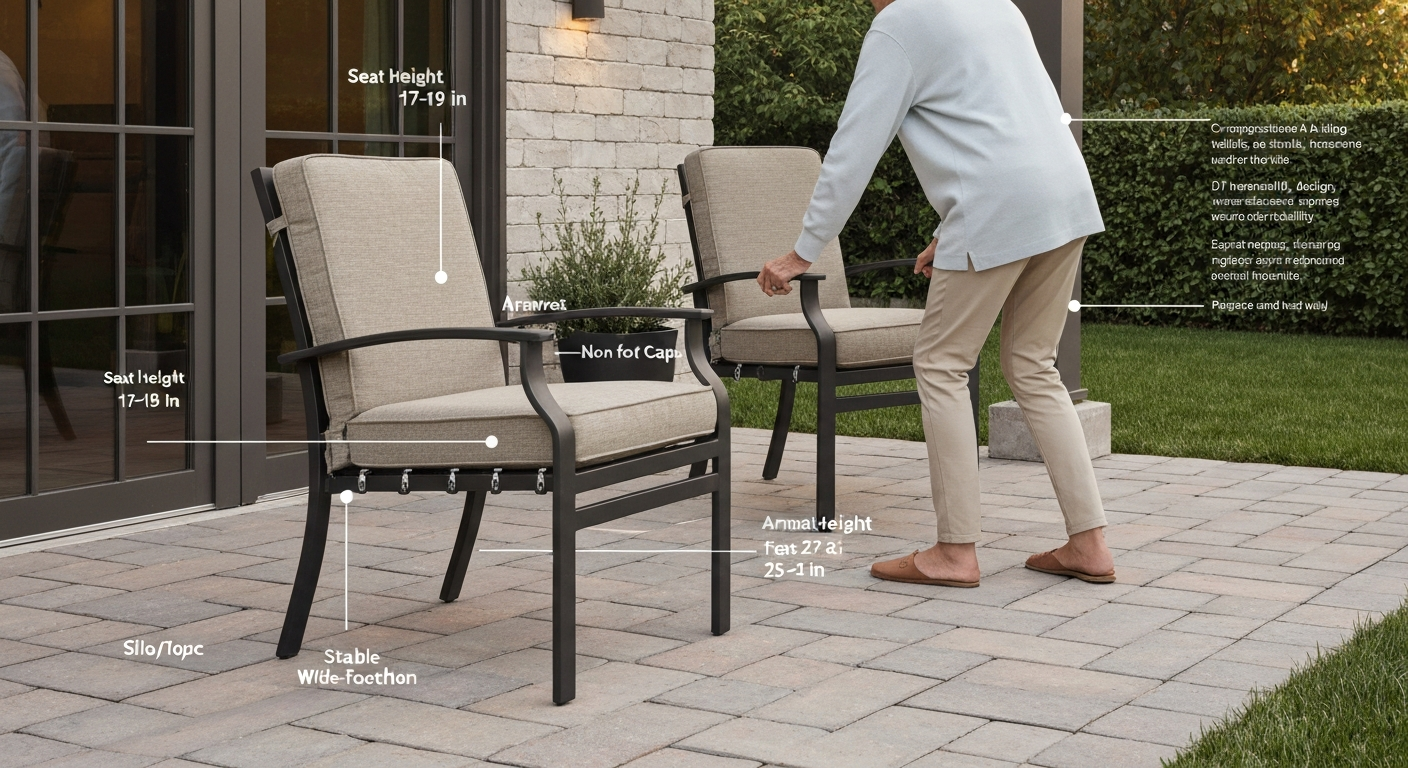
The best patio furniture for seniors prioritizes a seat height between 17 and 19 inches from the ground, firm cushions (not plush, compressible foam), full-length armrests at roughly 25 to 27 inches from the floor, and a stable, wide-footed or sled-based frame with non-slip foot caps. Those four factors, backed by biomechanics research published in the Journal of the American Geriatrics Society, are what actually determine whether an older adult can sit down and stand up safely. Everything else, the material, the finish, the brand name on the hang tag, matters for durability and value, but it comes second to those structural basics.
Best Patio Furniture for Seniors: Safety, Comfort & Durability

Theo Tierney
13 Jul 2026
Why senior-specific priorities actually matter
Falls are the leading cause of injury-related death among adults 65 and older, according to the National Institute on Aging, and a significant share of falls happen during chair transfers, the moment of sitting down or pushing up to stand. Most standard outdoor seating is designed around aesthetic proportions, not biomechanics. Deep-seated lounge chairs, sling backs with little edge support, and ultra-low Adirondack designs look great on a showroom floor and are genuinely hazardous for many seniors. When I look at a piece of outdoor furniture for an older adult, I'm asking four questions before anything else: Can they get up from it without assistance? Is the frame stable enough that pushing down on an armrest won't tip or flex the whole piece? Does the seat surface stay firm under repeated load? And will it still be safe in five years without major maintenance intervention?
What to look for in senior-focused outdoor seating
Seat height
Peer-reviewed studies on sit-to-stand biomechanics are remarkably consistent: small increases in seat height measurably improve chair-rise performance in older adults. A 1996 JAGS study identified seat height alongside armrest placement, seat compressibility, and backrest recline as the most clinically significant design variables for older adult chair egress. For most seniors, a seat height of 17 to 19 inches works well. If the person uses a wheelchair or walker, or has significant knee or hip limitation, 19 to 21 inches, sometimes called a 'raised' or 'comfort height' seat, can be the difference between independent transfers and needing help every time. Measure the user's popliteal height (back of knee to floor while seated) and aim to match or slightly exceed it.
Cushion firmness
Soft, deeply compressible cushions feel comfortable when you first sit down but create real problems on the way up. A cushion that compresses 2 to 3 inches under body weight effectively lowers the functional seat height and destabilizes the pelvis. The industry standard for foam testing is ASTM D3574, which measures indentation force deflection (IFD), the force required to compress foam 25 percent of its depth. For seniors, aim for cushion foam with an IFD of at least 35 to 40 lb, which gives a firm, supportive feel without bottoming out. Avoid cushions marketed simply as 'plush' or 'cloud-like', those descriptions typically mean IFD values in the 20s, which is too soft for safe chair transfers.
Armrests, back support, and frame stability
Armrests need to run the full length of the seat, not just a stubby pad at the front, so the user can push down along the full arc of standing up. Armrest height at roughly 25 to 27 inches from the floor works for most adults; too low and it forces the torso forward awkwardly, too high and it jams the shoulders. Lumbar support matters too: a gently contoured backrest that contacts the lower back at 4 to 8 inches above the seat surface keeps the pelvis in a position that makes standing easier and reduces back fatigue during extended sitting. Flat slab backs with no contouring, or canvas sling backs that allow the lower back to round outward, are both problematic. For frame stability, push down firmly on both armrests of any chair before purchasing or recommending it, it should feel solid, with no racking or flex. Non-slip foot caps (rubber or silicone) are non-negotiable on hard surface patios; they prevent both chair migration and the sudden lurch that can cause a fall mid-transfer.
Weight capacity, testing, and when to go heavy-duty
Weight capacity labels on outdoor furniture are frequently misunderstood. A chair labeled '250 lb capacity' doesn't mean it safely holds 250 lb in everyday use, it typically means the chair passed a static load test at that figure, often with a modest safety factor applied. For a deeper explanation of how strict weight limits on patio chairs typically are, see how strict are weight limits on patio chairs. The most credible manufacturers test to ANSI/BIFMA X5.1 or X5.4 standards, conducted by accredited independent labs (look for Intertek, SGS, or A2LA-accredited testing on product documentation). BIFMA protocols include static load, fatigue cycling, and stability/tip tests, a chair that passes all three has been subjected to significantly more abuse than simple dead-weight loading. When shopping, ask whether the listed weight rating reflects BIFMA-tested capacity or just a manufacturer's internal figure. See our guide to best patio furniture weights for how to interpret rated capacities and apply practical safety margins.
For heavier users, I'd recommend applying a 25 to 30 percent safety margin: if the user weighs 250 lb, look for a chair rated to at least 325 lb under verified testing conditions. For recommendations on heavy-duty seating and options specifically sized for larger bodies, see best patio furniture for large person. For options specifically rated for larger bodies, see our guide to the best patio furniture for heavy person. Reinforced or 'heavy-duty' frames typically use thicker-wall tubing (14-gauge or better for aluminum, 12-gauge for steel), larger-diameter legs, and cross-bracing under the seat. Some outdoor dining and deep-seating collections are available in heavy-duty configurations without looking institutional. For buyers who need especially robust frames, see our guide to the best heavy-duty patio furniture for tested, high-capacity options. For users above 400 to 450 lb, purpose-engineered bariatric outdoor seating exists, it's not widely stocked at retailers, but several commercial and medical equipment suppliers carry it. Bariatric clinical literature is clear that ad-hoc consumer furniture modifications (adding a board across the seat, stacking seat pads) are not safe substitutes for purpose-rated equipment at high weight levels.
Material guide: what actually lasts outdoors
Material choice determines how much maintenance a senior or caregiver will have to perform and how long the furniture actually lasts. Here's the honest breakdown across the four main categories:
| Material | Durability | Maintenance load | Weight | Best climate fit | Weak spots |
|---|---|---|---|---|---|
| Teak hardwood | Excellent (30+ years with oil; 15–20 years without) | Low to moderate — annual oiling optional, occasional sanding | Heavy (20–35 lb per chair) | Most climates; naturally oil-rich, handles wet/dry cycles | Cost is high; heavy to move; silver-grey patina without oiling |
| Powder-coated aluminum | Very good (15–20+ years with quality coating) | Low — rinse and inspect coating annually | Light (10–18 lb per chair) | All climates; won't rust; ideal for coastal if coating is intact | Thin-wall frames dent; coating chips expose bare metal near coasts |
| Galvanized or powder-coated steel | Good to very good (10–20 years depending on coating) | Moderate — inspect for rust annually, touch up chips | Heavy (25–45 lb per chair) | Inland, low-humidity; poor coastal choice unless 316 SS or heavily coated | Rusts at coating failures; heavy to reposition |
| All-weather resin wicker / HDPE | Good to excellent (10–20 years for quality HDPE cores) | Very low — soap and water, no sealing or oiling | Light to moderate | Excellent for UV, humid, coastal; avoid freeze/thaw if hollow-core cheap wicker | Cheap resin fades, cracks; look for UV-stabilized HDPE specification |
| HDPE poly-lumber (e.g., recycled plastic lumber) | Excellent (20–50 year claims; UV-stabilized grades tested) | Very low — rinse only, never needs sealing or painting | Heavy (similar to wood) | Outstanding in UV, coastal, humid, freeze/thaw | High upfront cost; limited style options; can fade if non-UV-stabilized grade |
| Composite / blended materials | Variable — depends heavily on core construction | Low to moderate | Moderate | Check manufacturer UV/salt test data before assuming outdoor suitability | Marketing claims frequently outpace actual testing data |
A word on wicker weave quality
Not all resin wicker is equal. Quality all-weather wicker is woven from flat or round HDPE (high-density polyethylene) strands around a powder-coated aluminum frame. The HDPE should be UV-stabilized, manufacturers will note this in product specs, sometimes citing UV test data. Cheap alternatives use PVC or thin polypropylene strands on steel frames; these fade, crack, and rust internally within three to five years. When you're buying for a senior, a wicker chair with a corroded internal steel frame is a structural failure waiting to happen, because the frame damage is invisible until it fails under load. Stick with brands that specify aluminum frames and UV-stabilized HDPE or resin strands, and confirm it in writing.
Climate-specific recommendations
High UV and desert heat (Arizona, Nevada, inland California)
UV degradation is the primary threat here. Fabric cushions should use solution-dyed acrylic, Sunbrella is the benchmark, and their published care guides and multi-year fade warranties exist because the color is embedded in the fiber rather than surface-dyed. For frames, powder-coated aluminum or UV-stabilized HDPE lumber perform well; expect to store or cover cushions in summer if temperatures exceed 110°F regularly, since even quality foam degrades faster in extreme sustained heat.
Coastal and salt air (Florida coasts, Gulf, Pacific coast)
Salt air causes chloride-induced pitting corrosion on most metals, including 304 stainless steel and mild steel regardless of powder coating quality. If you're within a mile of salt water, use powder-coated aluminum (inspect the coating annually and touch up chips immediately), 316/316L stainless steel for any fasteners and hardware, or HDPE poly-lumber for frames entirely. The materials science on this is clear: 316 stainless has molybdenum content that gives it significantly better chloride corrosion resistance than 304, and it's the preferred grade for coastal hardware. ASTM B117 salt-spray testing is how manufacturers legitimately substantiate 'coastal-grade' claims, ask for test data if it's marketed as such.
Humid and tropical conditions (Florida interior, Gulf Coast, Southeast)
Mold and mildew on cushions is the primary maintenance problem in humid climates. Solution-dyed acrylic fabrics resist mildew growth when cleaned regularly, but no fabric is impervious if left wet and dirty for months. Quick-dry foam inserts (open-cell foam with drainage holes) significantly reduce mildew risk compared to solid foam cores. Teak and HDPE lumber both handle high humidity without warping or rotting; avoid raw or poorly sealed wood species. For detailed durability data on teak's natural oils, silica content, and decay resistance, see Teak (Tectona grandis), durability and properties (The Wood Database) Teak (Tectona grandis) — durability and properties (The Wood Database). For frames, aluminum is the practical choice over steel.
Cold winters and freeze/thaw cycles (Midwest, Northeast, mountain regions)
The main risk here is water infiltration and freeze-expansion damage in hollow-core frames and cushion foam. HDPE poly-lumber is genuinely freeze/thaw resistant, it doesn't absorb water. Quality aluminum frames handle freezing without structural damage. Cushions should be stored indoors over winter; leaving foam cushions through freeze/thaw cycles accelerates foam breakdown significantly. Teak handles freeze/thaw well due to its natural oils and low moisture absorption, though annual oiling in early spring is practical maintenance. Cheap resin wicker and hollow steel are the worst performers in cold climates.
What to measure before you buy
Shopping without measurements is how people end up with furniture that doesn't work for their specific body or space. Before ordering anything, record these numbers:
- Popliteal height of the primary user (back of knee to floor, measured while seated in a standard chair): this determines ideal seat height
- Hip width at the widest point plus 2 inches minimum: this determines minimum seat width (18 inches minimum; 22+ inches for larger users)
- Path width from house door to seating area: minimum 36 inches clear for a walker, 48 inches preferred; 60 inches for a wheelchair to turn
- Transfer approach clearance: ADA standards specify 30 x 48 inches of clear floor space at each seat for a forward or side approach
- Existing seat heights on indoor furniture the person uses independently — outdoor furniture should match or slightly exceed this height
- Weight of the primary user and any other regular users — cross-reference against tested weight capacity with a 25–30% safety margin applied
- Doorway and gate widths if furniture needs to be moved seasonally (relevant for storage of heavy teak or steel pieces)
Sizing and placement for safe transfers and mobility
The 2010 ADA Standards for Accessible Design provide the most useful technical baseline for outdoor seating clearances, even in residential settings. A 30-by-48-inch clear floor space at each seat allows an unobstructed forward or side approach for a walker or wheelchair. Turning space, for a wheelchair or rollator to complete a 180-degree turn, requires a 60-inch diameter circle or a T-shaped space. These aren't just regulatory requirements; they're practical spatial minimums derived from actual mobility device dimensions and transfer mechanics.
Surface underfoot matters as much as the chair itself. Hard, smooth pavers or concrete provide the most stable transfer surface; loose gravel and thick grass are hazardous for anyone using a cane or walker. If the existing patio surface is uneven or loose, that's the first modification to address, no amount of good furniture design compensates for an unstable transfer surface. For deck boards, check for gaps (no wider than 1/2 inch) and raised edges; both are fall hazards. If you're working with existing surfaces, rubber-backed pathway runners or interlocking deck tiles can fill gaps and create a firmer approach path.
Accessories, retrofits, and modifications worth considering
Lift-assist recliners and powered chairs
Outdoor lift-assist chairs, with motorized seats that tilt the user forward to ease standing, exist in both indoor and outdoor-rated versions. Look for frames in powder-coated aluminum or marine-grade materials if leaving outdoors; indoor-rated lift chairs need to be covered or brought inside. These are genuinely useful for users with significant lower-body weakness, but they add cost (typically $400 to $1,200 for quality outdoor versions) and need occasional motor and battery maintenance. For users who can still stand independently with armrest support, a well-designed fixed chair with the right seat height is usually safer, simpler, and more durable long-term.
Transfer handles and grab bars
Portable transfer handles that clamp to the chair frame are available and useful for temporary situations, but the clamp mechanism needs to be checked for compatibility with the specific frame profile. Purpose-built freestanding grab bars can be anchored adjacent to seating areas on hard surfaces, these are the most reliable option when the chair itself doesn't provide sufficient push-up support. Avoid relying on nearby table edges or railings not designed for load-bearing use; they may shift or tip under lateral load.
Non-slip pads, seat cushion risers, and cushion retrofits
Rubber or silicone non-slip foot pads should be on every piece of furniture on hard surfaces; verify the coefficient of friction meets ASTM D2047 slip-resistance standards (COF above 0.5 is the commonly cited minimum for safe walking surfaces). For a chair that's already good structurally but sits too low, a firm seat riser, typically 2 to 4 inches of high-density foam with a waterproof cover, strapped to the seat, raises the functional height without replacing the chair. Make sure any added cushion or riser doesn't raise the armrests to an unusable height; measure before buying. For frame reinforcement, steel cross-bracing kits are available for some commercial chair lines; if a frame has developed flex or wobble, replacement is usually safer than repair for a senior user.
Recommended product categories (not brands)
Rather than recommending specific models that change year to year, here are the categories that consistently deliver for senior users:
- Raised dining chairs (seat height 19–21 inches): standard outdoor dining chairs often sit at 17–18 inches, which is manageable but bar-height or counter-height chairs (24–28 inch seat height with footrest) are too high for most seniors without a footrest — look specifically for 'comfort height' or 'tall' versions of standard dining chairs
- Club or lounge chairs with high, firm seats and full armrests: avoid deep bucket designs; look for seat depth of 18–20 inches (not 22+ inch deep-lounge designs) and firm cushions rated at IFD 35 or higher
- Heavy-duty Adirondack-style chairs in HDPE poly-lumber: traditional Adirondack proportions are too low and reclining for most seniors, but 'elevated' or 'comfort' versions exist at higher seat heights with angled armrests — these work well and require zero maintenance
- Reinforced outdoor benches with backrests and armrests: backless benches are not suitable for seniors; look for full back support and end armrests, rated 500+ lb for institutional or commercial grades
- Motorized lift-assist outdoor recliners: useful for users with moderate to severe lower-body limitation; confirm outdoor weatherproof ratings on motor and fabric before leaving outside
- Commercial/bariatric outdoor chairs: for users above 350–400 lb, purpose-rated commercial seating (rated 500–800 lb under BIFMA-style testing) is the right category — available through commercial outdoor furniture suppliers even for residential use
Maintenance and longevity: keeping it safe year after year
Maintenance requirements should factor directly into the buying decision. A senior living alone or a caregiver with limited time shouldn't be buying teak furniture that needs annual sanding and oiling, it won't happen, and the furniture will degrade faster than expected. Here's the honest maintenance reality by material:
- HDPE poly-lumber: spray with garden hose, occasional soap scrub — annually. That's it. No sealing, painting, or seasonal treatment needed.
- Powder-coated aluminum: rinse monthly in coastal areas, annually inland. Inspect the coating for chips or scratches each spring and touch up with matching paint pen to prevent corrosion from spreading under the coating.
- Teak: leave it to silver naturally with no maintenance, or apply teak oil annually (spring, before heavy use season). Sand lightly before oiling if the surface has roughened. No sealant — it traps moisture under the surface.
- Resin wicker: soap and water annually, rinse well, let dry completely before covering. Check frame legs and connection points for rust if steel-framed; aluminum-framed versions don't have this issue.
- Cushions (all materials): store indoors or in a deck box over winter. Spot-clean with mild soap and water; for solution-dyed acrylic (Sunbrella-type), a diluted bleach solution (1 cup bleach per gallon of water) kills mildew without damaging the fiber — per manufacturer published cleaning guidance. Rinse thoroughly and air dry before storing.
- Protective covers: use breathable (not sealed plastic) covers to allow moisture to escape; plastic-only covers trap condensation and accelerate mildew on both fabric and frames. Quality polyester covers with venting grommets work well.
Structural safety checks should happen annually, ideally at the start of the outdoor season. Push down on both armrests, rock the frame gently, check all bolts and fasteners for looseness or corrosion, and inspect weld points for cracking. A chair that was solid when purchased can develop frame fatigue over years of use, especially if it regularly bears loads near its rated capacity. Replacing hardware is inexpensive; replacing a chair because a weld failed during a transfer is far more costly in every sense.
Cutting through marketing claims
Outdoor furniture marketing is full of vague durability language, 'all-weather,' 'rust-resistant,' 'UV-stable,' 'commercial-grade.' None of these terms has a legal or standardized definition. The way to cut through them is to ask for specific test data: Which standard was used? Independent testing and comparative reviews, such as The Very Best Tables and Chairs for Outdoor Dining (Wirecutter / New York Times), provide hands‑on durability and methodology summaries useful for cross‑checking manufacturer claims and warranties. Which lab performed the testing? What was the rated load, and at what test methodology? For corrosion resistance claims, ask for ASTM B117 salt-spray test results and how many hours the coating was tested at. For UV claims, ask for test data rather than accepting 'UV-resistant' at face value. For weight ratings, ask whether the figure reflects BIFMA X5.1/X5.4 static and fatigue testing or an internal manufacturer specification. Legitimate manufacturers with well-tested products will have this documentation; ones that deflect or vague-out on these questions are telling you something about the quality of their testing.
Warranties are another area where marketing language and reality diverge. A 'lifetime warranty' on a powder-coated aluminum frame typically covers manufacturing defects in the coating, it rarely covers normal weathering, fading, or corrosion resulting from coastal exposure unless specifically stated. Read the actual warranty document before purchase. Ask specifically whether the warranty covers: corrosion, UV fade, frame failure under rated load, and what the process is for replacement parts versus full replacement. Brands that stock replacement parts for five to ten years after product discontinuation are a meaningful signal of quality commitment.
Questions to ask manufacturers and retailers
- What standard was the weight capacity tested to, and by which accredited laboratory?
- Is the aluminum frame 6061-T6 alloy or equivalent, and what gauge is the tubing?
- What is the coating thickness on powder-coated pieces, and is it polyester or TGIC polyester (the latter has better UV and weather resistance)?
- For wicker products: is the frame aluminum or steel, and is the resin HDPE or PVC/polypropylene?
- What cushion foam density and IFD rating are specified, and is the foam open-cell with drainage capability?
- What fabric is used on cushions: solution-dyed acrylic, polyester, or something else, and what is the manufacturer's published mildew and UV resistance documentation?
- Are replacement parts (cushions, foot caps, hardware, straps) available, and for how long after purchase?
- What does the warranty specifically cover and exclude — corrosion, UV fade, frame failure, foam compression?
- For coastal installations: do you have ASTM B117 salt-spray test data for the coating system?
Buying checklist and decision flow
- Measure popliteal height, hip width, and body weight of primary users — write these down before opening a browser or entering a store
- Measure patio or deck space: pathway widths, transfer clearances, and door/gate widths for seasonal furniture movement
- Determine climate zone priority: UV/heat, coastal/salt, humid/tropical, or freeze/thaw — this filters your material shortlist immediately
- Set a realistic maintenance budget in time, not just money: if annual oiling or repainting won't happen, eliminate those materials from consideration
- Filter by seat height (17–21 inches depending on user), seat depth (18–20 inches for most seniors, not deep-lounge), and armrest presence — eliminate any options that fail these criteria regardless of price or appearance
- Check weight capacity against user weight plus 25–30% safety margin; request BIFMA test documentation for any claim above 300 lb
- Evaluate cushion specs: look for IFD 35+ foam, solution-dyed acrylic fabric, and open-cell or drain-hole construction
- Confirm replacement parts availability and read the actual warranty document — not just the summary
- If mobility aids (walker, wheelchair, rollator) are in use, verify 36-inch minimum pathway clearance and 30×48-inch transfer space at each seat before finalizing placement plan
- Make a shortlist of two or three options and compare total cost of ownership over five years: initial cost plus likely maintenance costs plus replacement cushion costs
Quick action plan: from measuring to purchase
If you've read this far and want a clear next step, here it is: spend 15 minutes with a tape measure before doing anything else. Record popliteal height, hip width, body weight, and your patio pathway dimensions. Those numbers will immediately eliminate the majority of furniture on any showroom floor or product page as unsuitable, and they'll give you credible, specific criteria to use when questioning a salesperson or reading a product spec sheet. After that, identify your climate zone, set your maintenance reality, and narrow to material. Then filter by seat height. Then check weight capacity documentation. By the time you've done all of that, you'll have a short list of genuinely suitable options rather than a confusing sea of attractive-looking chairs that may or may not support safe, comfortable outdoor living for years to come.
FAQ
What peer‑reviewed research and clinical guidance should inform senior‑focused patio seating recommendations?
Use gerontology and biomechanics studies showing seat height, armrests, seat edge geometry and cushion firmness affect sit‑to‑stand (e.g., J Am Geriatr Soc studies cited). Incorporate clinical guidance from the American Occupational Therapy Association (AOTA) and fall‑prevention resources from the National Institute on Aging (NIA) for transfer safety, recommended clearances, and functional assessment considerations.
Which standards define structural strength, fatigue and stability testing for seating and how do they apply?
ANSI/BIFMA standards (X5.1, X5.4 and related consumer/public seating standards) specify static loads, cyclic fatigue, and stability/tipping tests used to validate seat strength and durability. Look for BIFMA test reports from accredited labs (A2LA, Intertek, SGS) to substantiate load ratings and cycle life claims.
How should weight‑capacity claims be validated and what margins are prudent?
Prefer products with third‑party, BIFMA‑based test reports showing tested static loads and cyclic life. Understand manufacturer rated capacity vs. tested failure loads; safe practice uses a safety margin (e.g., 25–50% above expected user weight). For heavy/bariatric needs, use purpose‑engineered bariatric seating with explicit high capacities and clinically rated equipment (600–1000+ lb) rather than retrofit consumer pieces when possible.
What material tests and standards are essential for outdoor durability in different climates?
Key tests: ASTM B117 salt‑spray for corrosion resistance of metals/coatings (coastal), UV‑exposure/accelerated weathering tests (ASTM D4329/ISO 4892) for plastics and fabrics, and ASTM D3574 for cushion foam compression and fatigue. For slip/feet, reference ASTM slip‑resistance methods (e.g., D2047) when evaluating non‑skid pads.
Which fabric and cushion specifications matter for seniors and long‑term value?
Select solution‑dyed acrylic or other UV‑stable outdoor fabrics (e.g., Sunbrella) with published cleaning care and mildew resistance. For cushions, require ASTM D3574 metrics: foam IFD/ILD (firmness), density, compression set and fatigue results. Firmer, higher‑IFD foams with good recovery maintain transfer support longer.
What material choices are recommended by climate and why?
Sun/coastal: corrosion‑resistant metals (316 stainless) or HDPE/poly‑lumber and teak; require powder coat plus 316 in salt air. Humid: rot‑resistant hardwoods (teak) or synthetic wicker/resin with UV additives and mildew‑resistant cushions. Cold/freeze‑thaw: closed‑cell cushions, non‑absorbing materials (HDPE, aluminum) and removable cushions for storage. Use manufacturer technical data and independent corrosion/UV test reports to compare.
Next Articles
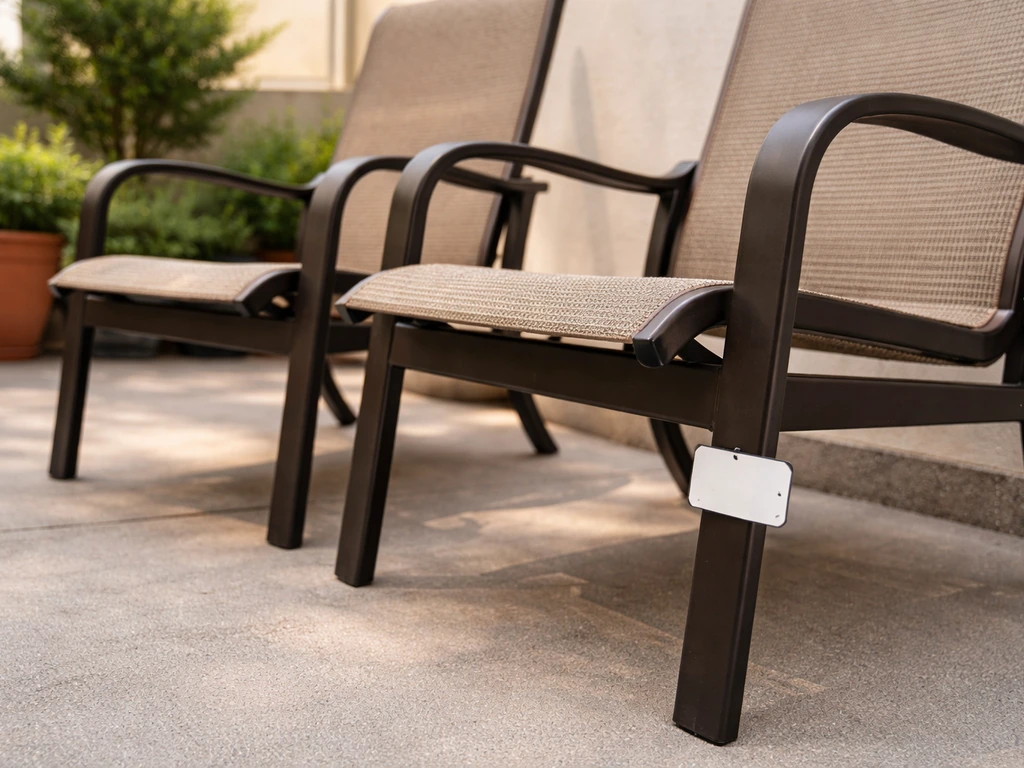
How Strict Are Weight Limits on Patio Chairs? Safety Guide
Learn how patio chair weight limits are enforced, what the ratings mean, and how to choose safe seating fast.
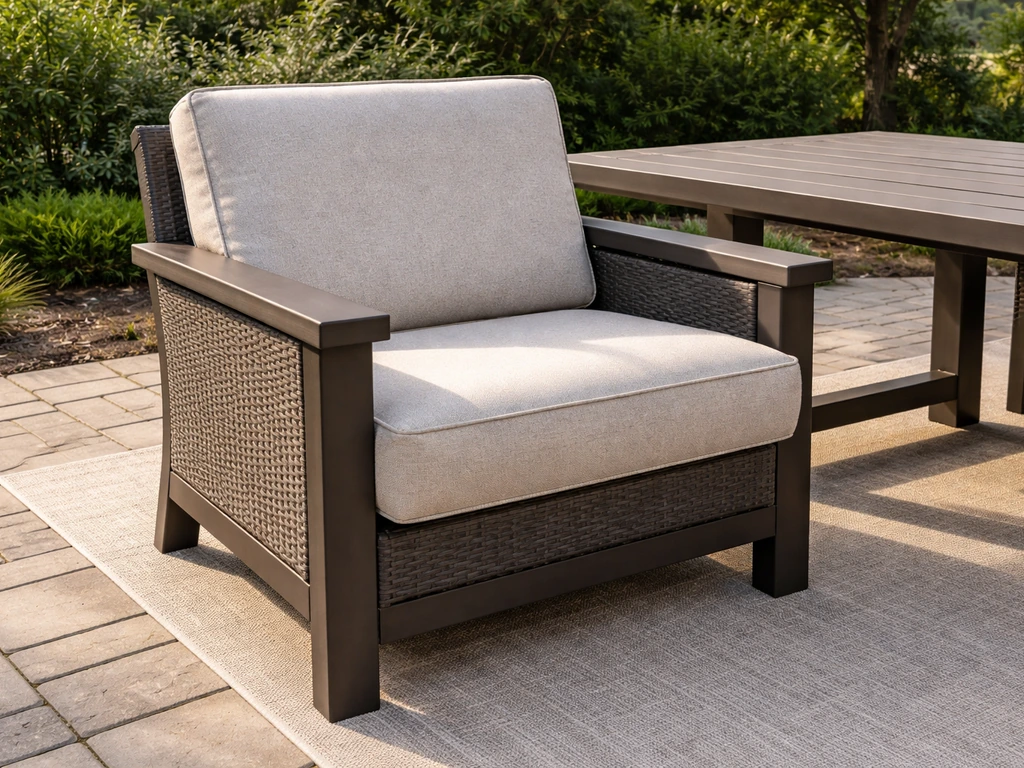
Best Patio Furniture for a Large Person: Complete Guide
Choose durable outdoor seating with capacity, size, and weatherproof materials for large frames, plus a quick buying che
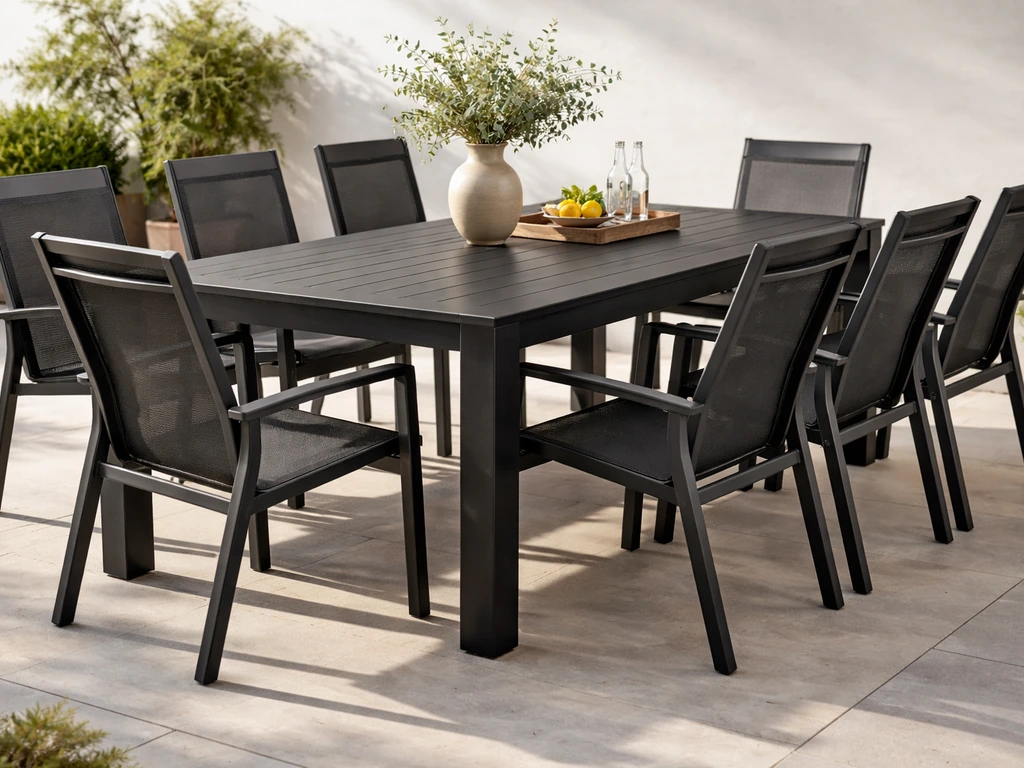
Best Heavy-Duty Patio Furniture: Buyer and Care Guide
How to choose and maintain the best heavy-duty patio furniture by material, climate, specs, and care checklist.