
The most important things to check in patio furniture are material quality and how that material handles your specific climate, construction details like weld integrity and fastener type, realistic comfort dimensions, and whether the maintenance it demands actually fits your lifestyle. Use this patio furniture buying guide checklist to match materials, construction, and comfort to your specific climate and use. Get those four things right and you'll end up with furniture that lasts a decade or more. Get them wrong and you'll be replacing cushions, repainting frames, or hauling rust-stained chairs to the curb within a couple of seasons.
What to Look for in Patio Furniture: Buying Guide

Theo Tierney
28 May 2026
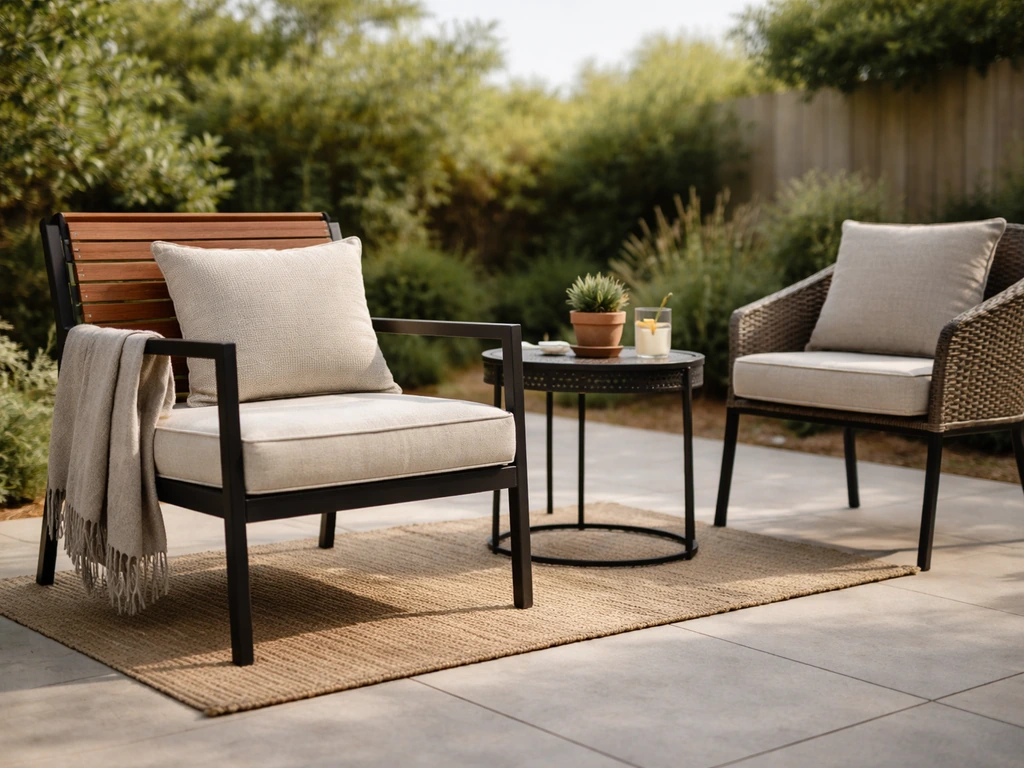
Your climate and use plan come first
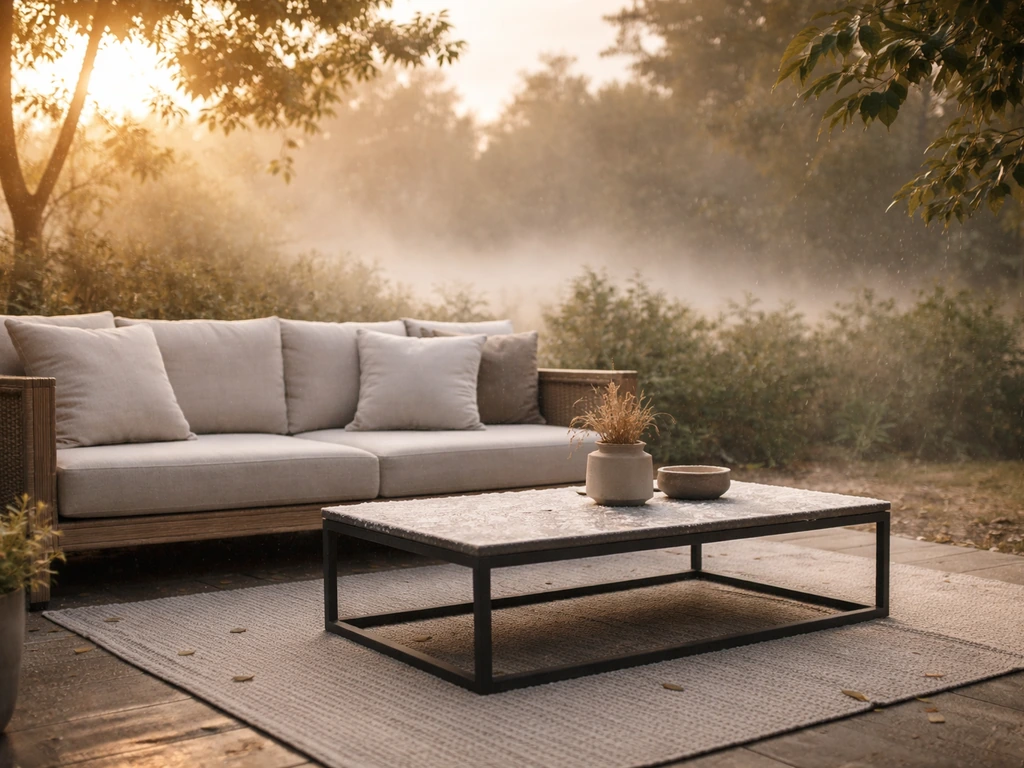
Before you even look at a single piece, be honest about where you live and how you actually use your outdoor space. Climate is the single biggest factor in how long patio furniture survives. A wrought iron table that looks great in dry Phoenix will be a rust disaster on a Florida lanai. Teak that holds up beautifully in humid Georgia heat will gray and crack faster in the dry heat and UV intensity of the Arizona desert without proper oiling.
Think through these questions before you shop: Do you get hard freezes or snow? Is your air salty from coastal exposure? Is your climate humid year-round, or does it swing between wet and dry? How much direct sun hits the space daily? And probably most importantly: do you store furniture in the off-season, or does it stay outside 365 days a year? Furniture that gets covered or brought inside each winter can be less weather-hardened and still last for years. Furniture that lives outside through a coastal winter needs to be genuinely tough.
Also consider frequency of use. A set that gets used twice a week for casual dinners can be a mid-grade material with good finish protection. A set that hosts weekly gatherings with kids, pets, and dragged chairs needs heavy-gauge frames, UV-stabilized finishes, and fabric that can take repeated washing. Matching the product to the actual use case is how you avoid overpaying for durability you don't need or underpaying and getting burned.
Materials: what actually holds up outside
Every furniture salesperson will tell you their material is "weather-resistant." Here's what that actually means across the four major categories you'll encounter.
Wood
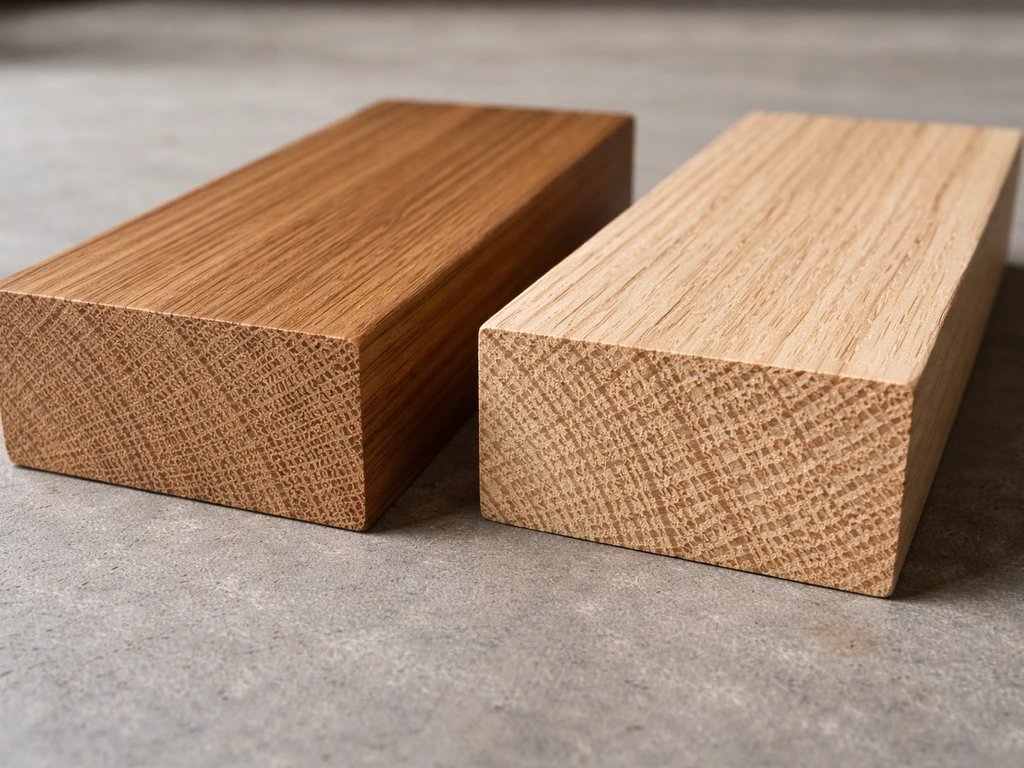
Not all outdoor wood is equal. Teak is the gold standard for a reason: it's naturally high in silica and oils that resist moisture, insects, and rot. Shorea (sometimes sold as "plantation teak") is a decent mid-range alternative. Eucalyptus and acacia are budget-friendly but need more consistent sealing. Pine and other softwoods are generally a poor choice unless they're pressure-treated, and even then they tend to splinter and warp within a few years outdoors. USDA Forest Products Laboratory research is clear that weathering and decay are the primary forces that shorten outdoor wood's service life, so species selection and finish protection are not optional extras.
When you inspect a wood piece, look at the grain. Tight, straight grain means a denser, more stable piece. Wide, irregular grain means more expansion and contraction with moisture changes, which eventually leads to cracking. Check that any finish or sealant applied isn't creating a vapor-tight barrier over the wood surface. The Forest Products Laboratory notes that finish systems that trap moisture rather than letting wood breathe actually reduce long-term durability rather than improving it. A penetrating oil finish generally outperforms a thick surface coating for most outdoor wood.
Metal
Aluminum is the most practical metal for outdoor furniture in most climates. It doesn't rust, it's lightweight, and cast aluminum (poured into molds) is significantly more durable than tubular aluminum (hollow extrusions). Check wall thickness on tubular frames: anything under 1.2mm will dent and bend under real use. Powder-coated finishes are the standard protective layer, and you want thick, even coverage with no chips, bubbles, or thin spots at weld joints, because that's where rust starts if moisture gets in.
Wrought iron is heavy, stable, and has a classic look, but it will rust if the finish is compromised. It's a poor choice for coastal salt air unless you're committed to annual touch-up painting. Stainless steel (look for 316-grade in marine environments) resists corrosion better than iron but is expensive. Budget steel frames with a thin coating are the worst option for outdoor use: they'll look fine in the store and start rusting at screw holes within one rainy season.
Wicker and woven materials
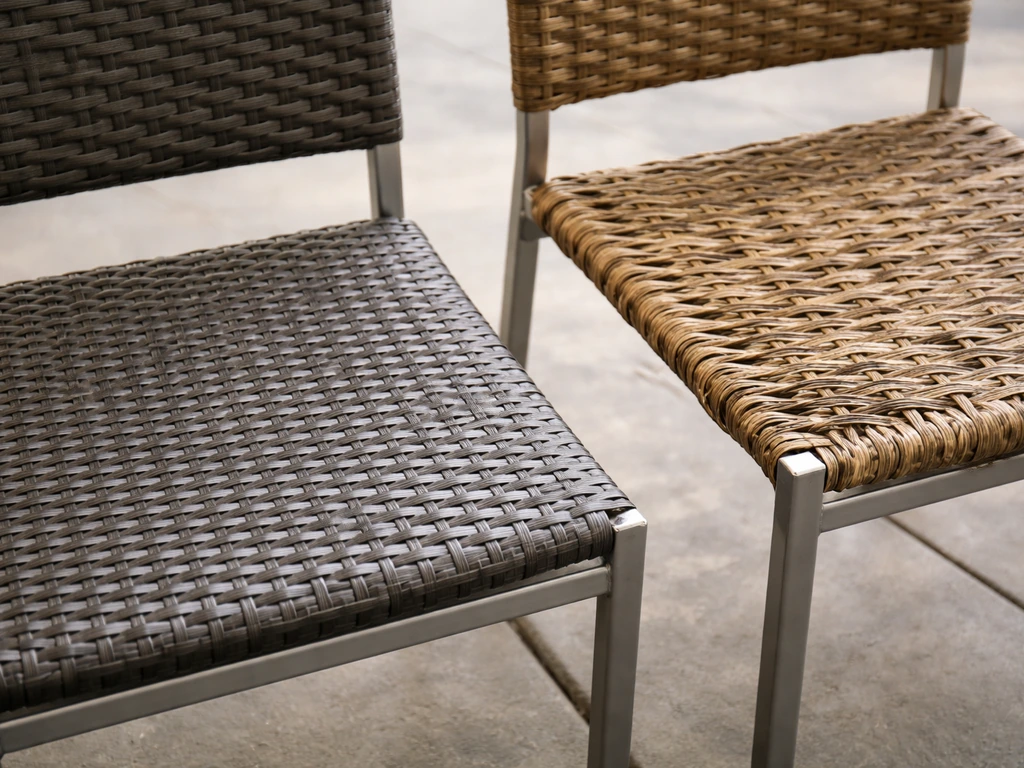
Natural wicker (rattan, seagrass, bamboo) is not designed for outdoor exposure. Full stop. It will unravel, mold, and disintegrate when it gets wet repeatedly. What you actually want for outdoor use is synthetic resin wicker, sometimes called all-weather wicker. The best versions are made from high-density polyethylene (HDPE) resin woven over a powder-coated aluminum frame. The weave should feel tight and consistent, with no loose ends, gaps, or areas where the strands sit flat instead of maintaining their rounded, woven profile. Round weaves hold shape better than flat-weave variants under UV stress.
The frame underneath the weave matters as much as the wicker itself. A wicker chair with a steel (not aluminum) frame will eventually rust from the inside out, and you'll see it as brown staining seeping through the weave before the frame fully fails. Always ask or check the spec sheet for the frame material before buying wicker furniture.
Composite and plastic
HDPE lumber (sometimes branded as Polywood or similar) is one of the most genuinely low-maintenance options available. It's made from recycled plastic, doesn't rot, doesn't splinter, and never needs painting or sealing. The quality differentiator is UV stabilization. ASTM G154 UV testing is the standard used to evaluate how well plastic components hold up against the kind of UV radiation they'll face outdoors.
Better manufacturers publish this data or test to this standard. Furniture that skips this testing will fade and become brittle within a few years, especially in high-UV climates. UV exposure intensity varies significantly by location, as ASTM D1435 research on outdoor weathering of plastics confirms, so a product tested in Florida conditions is more reassuring than one with no published weathering data at all.
| Material | Best Climate Fit | Main Weakness | Maintenance Level |
|---|---|---|---|
| Teak / quality hardwood | Humid, tropical, coastal | Cost; needs periodic oiling | Low to moderate |
| Cast aluminum | All climates including coastal | Can dent if thin-walled | Very low |
| Wrought iron | Dry climates, minimal salt air | Rusts if finish chips | Moderate |
| All-weather resin wicker (HDPE over aluminum) | Most climates; avoid extreme freeze-thaw | Frame quality varies | Low |
| HDPE composite lumber | All climates, especially high-UV and coastal | Limited style range | Very low |
Construction and hardware checks you should actually do
Material quality gets you halfway there. Construction quality is what separates furniture that holds its shape after three years from furniture that wobbles after three months. These are the specific things I look at before buying.
- Weld quality on metal frames: look for smooth, consistent welds with no porosity (tiny holes), cracks, or rough blobs. A good weld is uniform and slightly raised. A bad weld looks like it was done in a hurry and will be the first thing that fails.
- Frame joints on wood: mortise-and-tenon or dowel joints are stronger than butt joints held with screws alone. Look for metal corner brackets as reinforcement on chairs that will get side-loaded regularly.
- Slats and cross-bracing: for chairs and benches, count the support slats and check their spacing. Slats spaced more than about 3 inches apart on seat surfaces will sag under weight over time. Cross-bracing on chair legs adds significant rigidity.
- Fasteners: stainless steel screws and bolts are mandatory for any furniture that lives outside. Zinc-plated or uncoated fasteners will rust and stain the surrounding material within months. Check the screws at frame joints, not just decorative hardware.
- Cushion attachment: quality outdoor cushions have tie strings, velcro tabs, or zipper pockets that anchor them to the frame. Cushions that just sit loose will blow off or shift constantly. Cushion fabric should specifically be labeled as solution-dyed acrylic (like Sunbrella) rather than polyester, which fades faster and holds moisture longer.
- Leveling feet or glides: check that chair and table legs have rubber or plastic feet to prevent moisture wicking up into end grain on wood or into the coating on metal.
One quick field test: pick up a chair and flex it slightly at the frame joints. A well-built chair has almost zero play. If you feel significant flex or hear creaking from a brand-new piece, it will loosen and fail faster under real outdoor use.
Comfort and sizing: the dimensions that actually matter
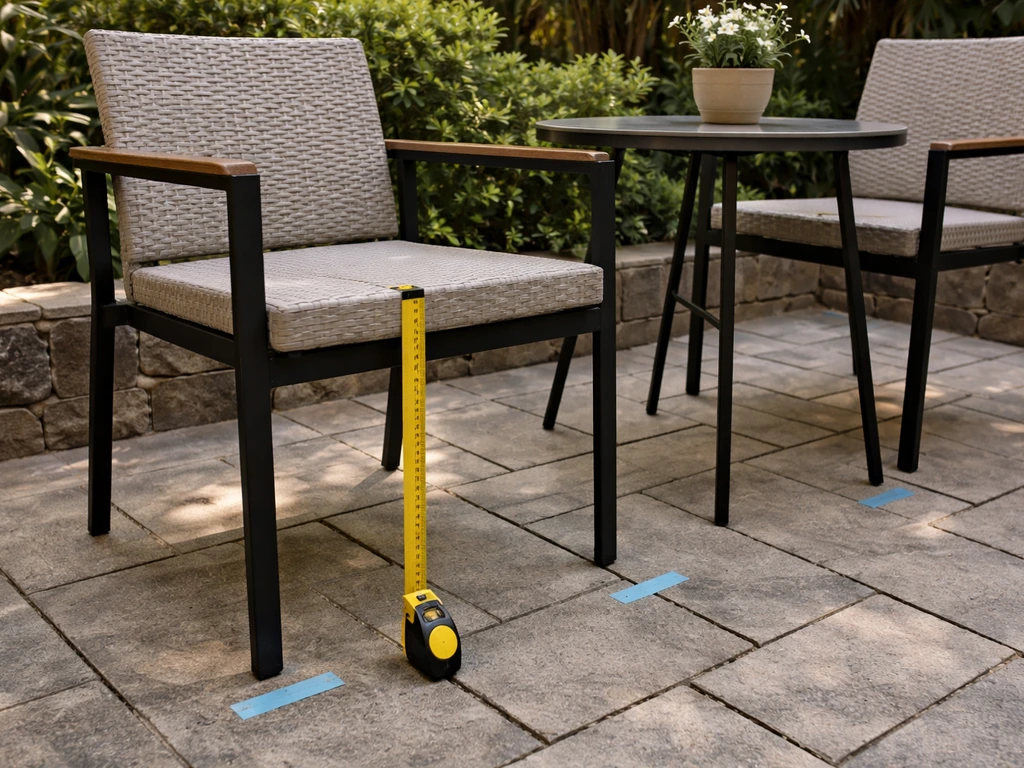
Outdoor furniture tends to be sized differently from indoor furniture, and not always for the better. Here are the measurements worth checking before you commit to a set. These details are worth a dedicated look in a full patio furniture size guide, but the core numbers to know are listed below.
Seating dimensions
Seat height for dining chairs should be between 17 and 19 inches from the ground. Below 17 inches and most adults will struggle to stand up comfortably; above 19 and shorter people's feet won't reach the ground. Seat depth for a relaxed outdoor lounge chair should be at least 20 inches. Deep-seated lounge chairs (22 to 24 inches) are more comfortable for extended sitting but harder for people with shorter legs or limited mobility to get in and out of. Check seat width too: 19 to 21 inches per seat is standard for dining chairs; less than 18 inches feels cramped at a table for anyone average size or larger.
Armrests should clear the tabletop by at least an inch when chairs are pushed in, or you'll spend every meal unable to pull your chair close. This is one of the most common mismatches when people mix-and-match chairs and tables from different collections or brands. Bring measurements when you shop, or check the spec sheets carefully.
Table sizing and spacing
Allow 24 inches of table width per person for comfortable dining. A 48-inch round table seats four people reasonably; a 60-inch round seats six. For rectangular tables, 72 inches (6 feet) is a comfortable six-person table; 36 inches wide is the minimum for place settings and dishes on both sides. Standard outdoor dining table height is 28 to 30 inches to match standard dining chairs. Counter-height sets run 34 to 36 inches with matching stools at 24 to 26 inches.
For spacing around tables, allow at least 36 inches between the table edge and a wall, fence, or other furniture so chairs can be pulled back. On a tight patio, 30 inches is workable but feels cramped with multiple people moving around. If your space is genuinely small, a bistro set (two chairs, 24-inch round table) is a better choice than a scaled-down version of a full dining set that won't actually function well.
Weather resistance and what maintenance actually looks like
Every outdoor furniture product claims weather resistance. The honest question is: weather-resistant under what conditions, and for how long? Here's the realistic maintenance picture for each major material, because what sounds low-maintenance in a showroom can mean different things in practice.
- Teak and quality hardwoods: natural teak can be left to weather to a silver-gray with no treatment and will still be structurally sound for 15-plus years. If you want to preserve the warm honey color, apply teak oil or a penetrating sealer once or twice a year. Avoid film-forming coatings (varnish, polyurethane) on outdoor wood because moisture that gets underneath will cause peeling and can accelerate rot from the inside.
- Powder-coated aluminum: wash with mild soap and water once or twice a season to prevent pollen and grime from etching the finish. Touch up any chips immediately with matching paint to prevent corrosion at the exposed point. No other real maintenance required.
- Wrought iron: inspect annually for rust spots, sand them down to bare metal, prime, and repaint. In dry climates this might be a minor annual task. In humid or coastal climates, it becomes a real commitment every year.
- All-weather resin wicker: hose it down and scrub with a soft brush and mild detergent. Avoid pressure washers on wicker, which can stretch or loosen the weave strands. No oiling, painting, or sealing needed.
- HDPE composite: hose it off. That's essentially the entire maintenance program. It doesn't fade, crack, or absorb moisture. In high-UV environments, a UV-stabilized formula (verified through published testing data) is important, but quality HDPE composite requires almost no active upkeep.
- Cushions and fabric: solution-dyed acrylic fabrics (Sunbrella being the most recognized brand) can be scrubbed with a diluted bleach solution for mildew and will hold their color for years. Store them in a dry place or in a weatherproof storage box when not in use. Even the best outdoor fabric will degrade faster if it stays wet and compressed.
If you're not going to store furniture in winter, choose materials that are genuinely rated for year-round outdoor exposure: cast aluminum, HDPE composite, quality resin wicker over aluminum frames, and teak. If you will cover or store furniture, you have more flexibility on material choice, and even wood species that require more maintenance become practical.
Style, finish, and how to judge real value
The outdoor furniture market has a wide price range, and the spread between a $300 set and a $3,000 set isn't all marketing. But it's also not uniform: some mid-range products genuinely outperform expensive ones, and some premium-priced furniture is really just premium aesthetics over mediocre construction. Here's how to cut through it.
Finish quality is visible if you know what to look for. On painted metal, run your hand across the surface and check for orange-peel texture (tiny bumps), uneven coverage at corners, or a thin feel near welds. Better powder-coat applications are thick and uniform even at edges. On wood, look for finish that saturates rather than sits on the surface. A finish that flakes at the edges of a brand-new product will fail completely within a season.
Color and style choice matters more for longevity than people think. Dark colors in high-UV climates absorb more heat and tend to fade faster, especially on lower-quality finishes. Neutral tones (charcoal, tan, off-white, dark green) hold up better than saturated trendy colors that require premium pigments to stay stable under UV. If you love a bold color, verify that the finish uses UV-stabilized pigments, not just surface dye.
On value: calculate cost per year, not just purchase price. A $600 aluminum dining set that lasts 12 years costs $50 per year. A $200 steel-frame set that needs replacing in 3 years costs $67 per year and requires more of your time. For cushions especially, investing in solution-dyed acrylic fabric rather than cheap polyester is almost always worth it: the better cushions often outlast two sets of the budget version.
Budget sets can work well in specific conditions: covered patios with minimal direct rain, low-UV environments, and furniture that gets stored in winter. If those conditions don't apply to you, moving one tier up in material and construction quality is almost always the better financial decision over a five-year horizon.
Your practical buying checklist
Before you finalize any purchase, run through these checks. This covers the core of what you actually need to verify, whether you're shopping in a store or online from a spec sheet. When you compare patio furniture examples, look at how each option handles your climate, use frequency, and the maintenance you can realistically keep up with.
- Match material to climate: aluminum or HDPE for coastal/humid environments; teak or cast aluminum for high-freeze winters; wrought iron only for dry climates with covered storage.
- Check frame construction: weld quality, joint type, cross-bracing, and frame gauge (wall thickness for tubular metal; grain quality and species for wood).
- Verify fastener material: stainless steel only for anything exposed to moisture.
- Confirm cushion fabric: look for solution-dyed acrylic; check for tie-downs or velcro anchors.
- Measure before you buy: seat height (17-19 inches for dining), table width (24 inches per person), and clearance around the set (at least 36 inches).
- Ask about or research UV and weathering test data, especially for plastic and composite pieces in high-sun climates.
- Inspect finish quality in person if possible: look for uniform coverage, no chips at joints, and no bubbling or flaking on edges.
- Calculate cost per year, not sticker price: factor in how long the material realistically lasts in your climate with realistic maintenance.
- Check maintenance requirements honestly against your actual time and willingness: if you won't oil teak annually, choose HDPE composite instead.
If you're still working through what pieces you actually need for your space, thinking through how to pick patio furniture from a layout and function standpoint, or figuring out the right dimensions for your specific patio size, those are good next steps before you finalize your list. Getting the material and construction right is the foundation, but buying the right configuration for your space is what makes it actually usable.
FAQ
How do I tell if cushions will hold up in my climate (not just the frame)?
Check the cushion fabric type and treatment, not only the stated “outdoor” label. Look for solution-dyed acrylic (better fade resistance than surface-dyed or basic polyester), and confirm the fill is designed for outdoor use (not regular indoor foam). If you’re in humid or freeze-thaw areas, prioritize covers that drain and quick-dry construction, because trapped moisture is what shortens cushion life.
Is it better to buy a full set or mix chairs, table, and seating from different brands?
Mixing can work, but you need to verify the seat height and arm clearance against the specific tabletop height. The most common failure is armrests that don’t clear the table when chairs are pushed in, which makes dining awkward. If you mix, bring measurements to the store and confirm tolerances in writing, especially for counter-height sets.
What should I look for in covers and how do they affect furniture longevity?
A good cover is breathable and fits properly, so it doesn’t trap condensation. Avoid oversized covers that sag and funnel water into corners, and don’t rely on plastic tarps that can hold moisture against powder-coated or painted surfaces. If you store furniture, also let it dry fully before covering to reduce mildew and finish damage.
How important is hardware type (screws, bolts) on patio furniture?
It matters a lot because most rust starts at fasteners. For metal frames, look for stainless hardware, or hardware that is rated for outdoor and corrosion resistance, and check whether weld joints are sealed or protected by durable powder coat. For wood, confirm that any metal connectors are corrosion-resistant and not raw steel.
What’s the difference between “rust-resistant” and “won’t rust,” especially for steel frames?
“Rust-resistant” usually means it’s protected, not immune. If the coating is thin or poorly applied at seams and screw holes, rust can start underneath and travel outward, often before the frame looks noticeably damaged. If you live in coastal or high-humidity conditions, treat budget-coated steel as a short-term option unless the manufacturer specifies tougher coating thickness and corrosion protection.
When should I choose cast aluminum over tubular aluminum?
Cast aluminum is a better bet for high-use seating, windy areas, and climates with frequent temperature swings because it’s more rigid and less prone to dents. Tubular aluminum frames can be fine in mild conditions, but check wall thickness and joint quality carefully, since thin tubes dent and wobble under everyday pressure.
Do I need to worry about wood finishes becoming “vapor tight” outdoors?
Yes, especially in climates with humidity swings or frequent rain. If a finish traps moisture against the wood, the surface may look sealed but the underlying wood can still degrade, leading to faster cracking or peeling. Prefer finishes described as penetrating or breathable for most outdoor wood applications, unless the manufacturer specifies a system designed for outdoor exposure and maintenance intervals.
What’s the best way to do a quick inspection when buying in-store?
Use the “no play” frame test, flexing gently at joints to check for looseness or creaking. Then inspect stress points: weld seams, corners, and any areas where coating looks thinner. If you notice orange peel texture that is uneven, exposed metal at edges, or chips near joints, expect a shorter lifespan because those are where moisture gets in.
How do I calculate whether the dining table size will actually work for my space?
Use two checks: seating width and clearance. First, allow enough surface width per person (especially for place settings and dishes). Second, budget clearance for chair pull-out movement, typically at least 36 inches between the table edge and nearby obstructions in most walkways, and reduce only if your space is genuinely tight.
What should I do if I’m between sizes for a lounge chair (seat depth and mobility)?
If you or guests have limited mobility, prioritize usability over maximum depth. Very deep seats (22 to 24 inches) can be harder to get in and out of, so consider shallower depth or test the chair in the store if possible. Also confirm that your legs can reach comfortably without the chair pushing your body forward awkwardly.
How can I spot UV-related weakness before the furniture is installed?
Look for evidence that UV stabilization was engineered for outdoor conditions, not just implied. For plastic lumber or synthetic wicker, prioritize products that reference standardized UV testing, since “outdoor” claims alone are not enough. For fabrics, choose solution-dyed outdoor textiles and check whether covers and cushions are designed to dry quickly after rain.
What’s a realistic maintenance plan for different materials?
Aluminum and HDPE generally require the least routine work, usually cleaning and occasional inspection for coating chips. Teak typically needs periodic oiling to slow graying and cracking, and wood finishes may require reapplication on a schedule. For wrought iron and steel, expect ongoing attention if the coating gets scratched, since small finish failures can expand into rust points quickly.
Next Articles
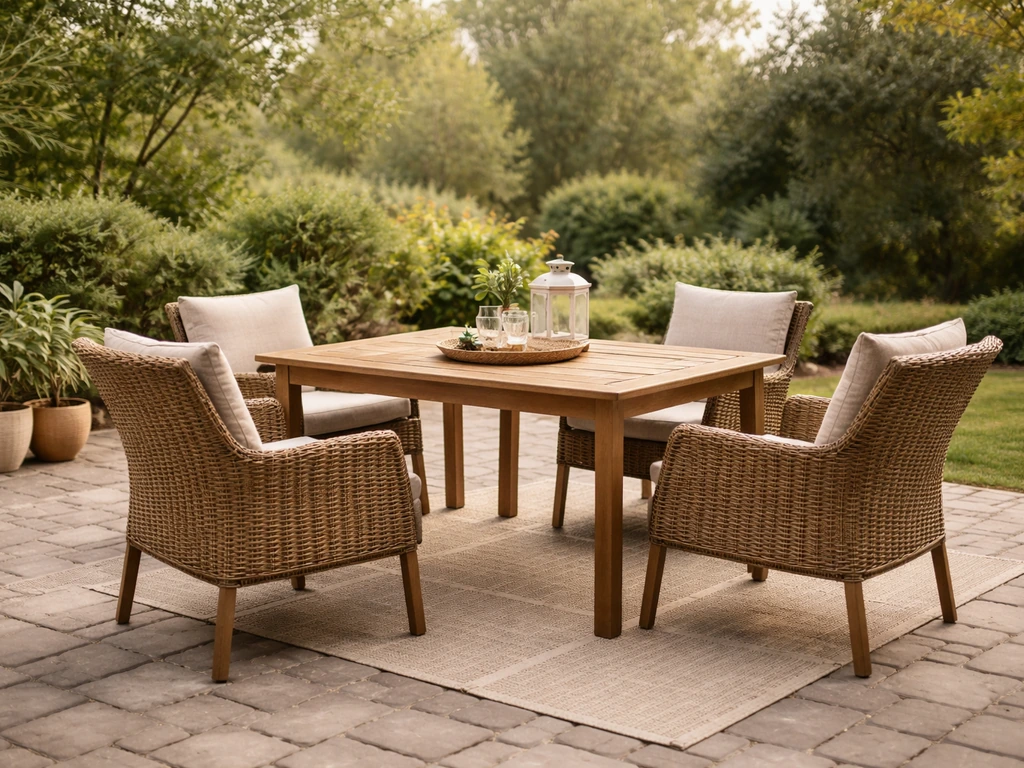
Patio Furniture Buying Guide: What to Buy and Why
Expert patio furniture buying guide: choose the right set and materials for your climate, durability, and budget.
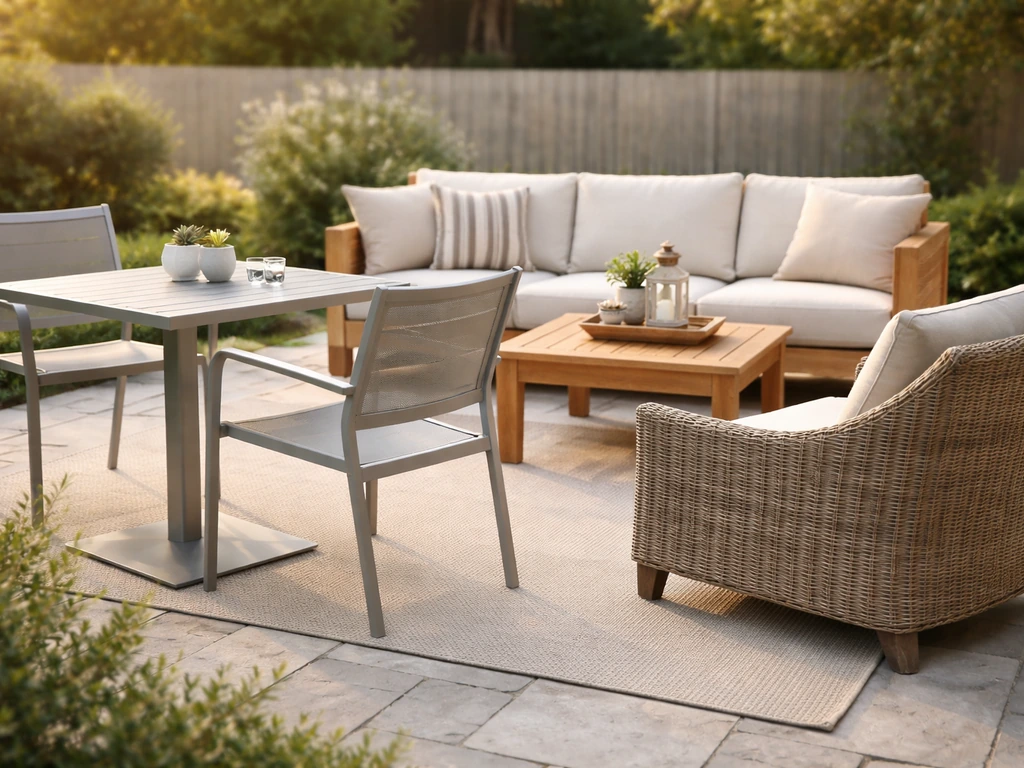
How to Pick Patio Furniture: A Step by Step Buying Guide
Step-by-step how to pick patio furniture: measure layout, choose durable materials, cushions, comfort, and compare warra
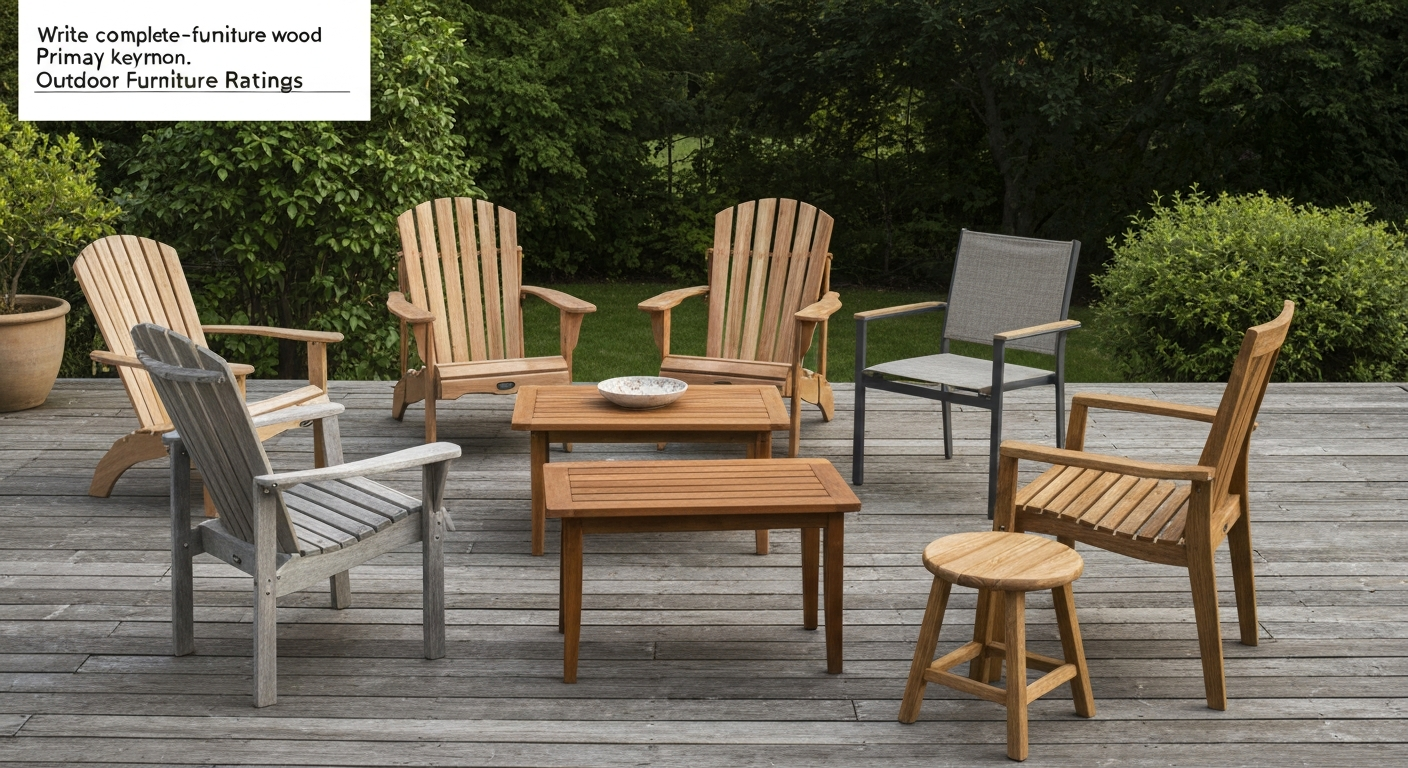
Common Patio Furniture Wood: Best Choices, Care & Tips
Compare common patio furniture wood types, teak, cedar, redwood, oak, with durability, finishes, and care tips.