
The best patio furniture setup for you comes down to three things: how you actually use your outdoor space, what your climate throws at it, and how much maintenance you're willing to do. A 4-person teak dining set with a 48-inch round table works beautifully on a medium-sized covered patio in a wet Pacific Northwest climate. A powder-coated aluminum sectional with Sunbrella cushions is the right call for a sun-baked Arizona backyard. A composite (HDPE) Adirondack set is nearly bulletproof for a coastal Maine deck. The examples below are real, copyable setups organized by how people actually use their patios, the materials that make sense for each, and the sizing that fits real spaces.
Patio Furniture Examples by Setup and Material Guide

Theo Tierney
1 Jun 2026
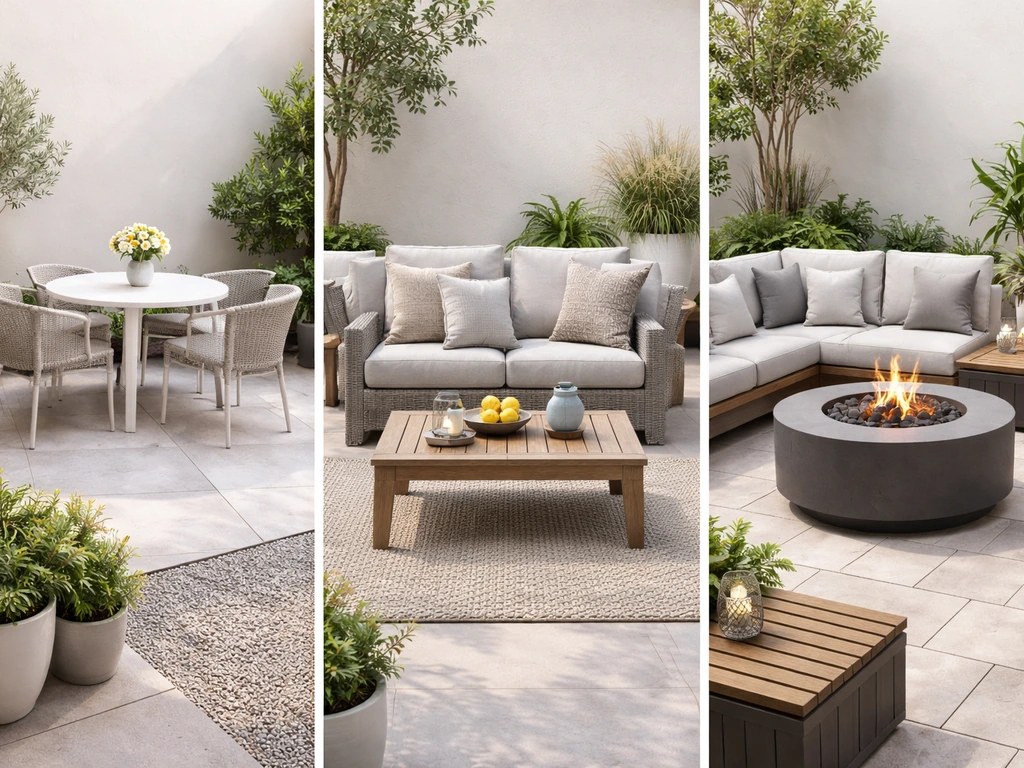
Patio furniture setups by how you use your space
Before you shop anything, figure out which category your patio actually belongs to. Most outdoor spaces fall into one of five functional setups, and matching the furniture type to the function is the single biggest factor in whether you'll be happy with it in year three.
Dining setups
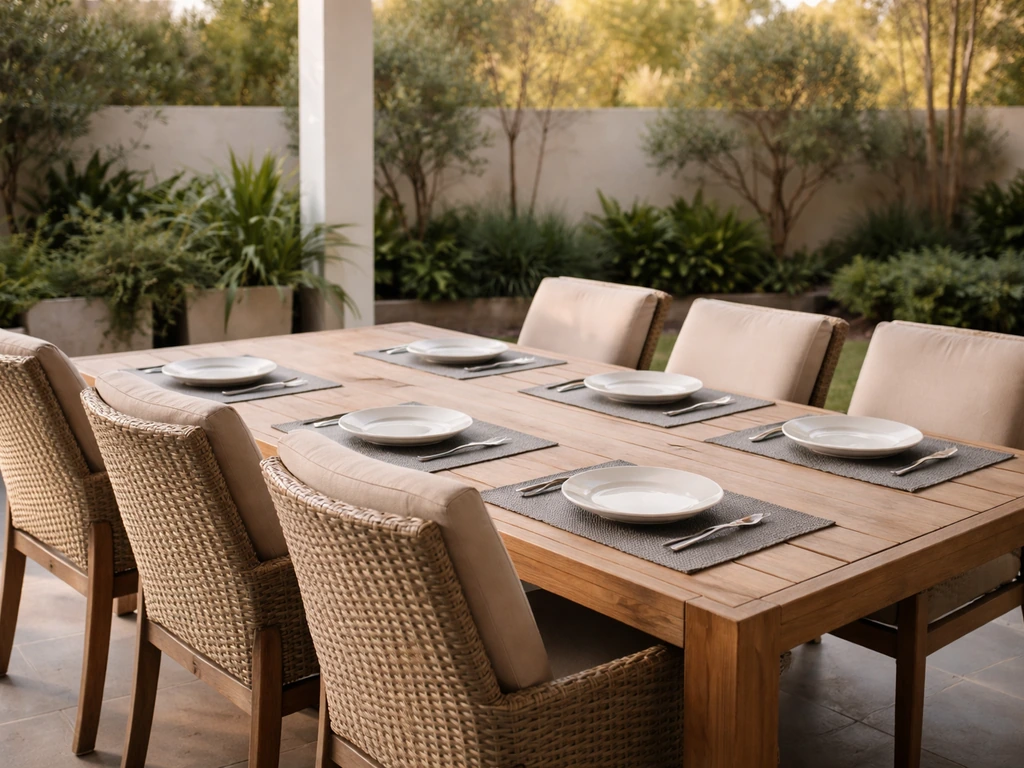
A dining set is a table plus chairs sized for regular meals outdoors. The classic format is a rectangular table (60 to 72 inches long) with 6 chairs for medium to large patios, or a 36-to-48-inch round table with 4 chairs for tighter spaces. Standard dining height is 28 to 30 inches; pair that with dining chairs at about 17 to 19 inches seat height. Bar-height tables run 40 to 42 inches and pair with counter or bar stools at 28 to 30 inches. A good concrete example for a covered porch: a 60-inch rectangular teak table with 6 stacking teak chairs. A good example for an apartment balcony: a folding 32-inch round bistro table with 2 lightweight aluminum chairs.
Lounge and conversation setups
A conversation set prioritizes seating for talking, not eating. Think loveseat plus two club chairs arranged around a low coffee table (16 to 18 inches high). A sectional-based setup works well for larger patios: an L-shaped sectional with a corner piece, two end chairs, and an ottoman creates a flexible lounge zone that comfortably seats 6 to 8. If your patio is 12 by 16 feet or larger, a sectional with a built-in chaise or daybed on one end is a practical luxury. For smaller patios or decks, a 3-piece conversation set (loveseat plus 2 chairs plus coffee table) is the most common and versatile layout.
Mixed-use and accessory-driven setups
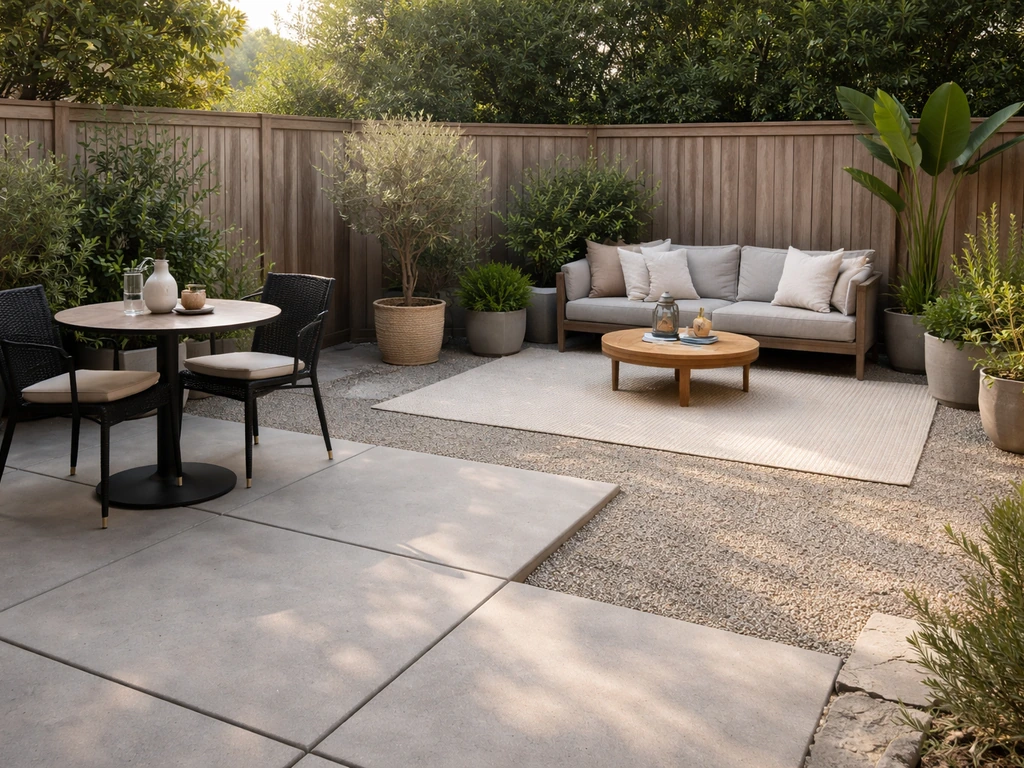
Some patios need to do double duty: dining on one end, lounge seating on the other. This works best when the two zones are visually separated by an outdoor rug, a change in surface material, or at least 5 feet of open walkway between them. A good mixed-use example for a 16-by-20-foot patio: a 4-person rectangular dining set on one end, a 3-piece conversation set anchored by a 6-by-9-foot outdoor rug on the other, with a side table and floor lamp between zones. Umbrella placement matters here; a 9-foot market umbrella over the dining table and a separate cantilever umbrella over the lounge chairs keeps both zones usable on hot afternoons.
Material examples: what each one actually looks like and lasts
Material choice is where most people go wrong, either by buying what looks good in a showroom without thinking about their climate, or by defaulting to the cheapest option and replacing it every two or three years. Here's what each major material category looks like in real product terms and where each one makes sense.
Teak (and other hardwoods)
Teak is the gold standard for outdoor wood because its natural oils make it highly resistant to moisture, insects, and warping. Real-world example: a Grade-A teak 4-piece dining set with a 48-inch round table and 4 folding chairs. Teak left untreated will turn a silvery gray over a season or two from UV exposure, not from water damage. That gray patina is fine structurally; it's purely aesthetic.
If you want to keep the honey-brown color, an annual cleaning with mild soap and water plus a teak oil or sealer application is all it takes. No stripping, no repainting. Other outdoor hardwoods like shorea (also called meranti or Philippine mahogany) and eucalyptus follow similar care paths but are generally less dense and slightly less durable than teak over 10-plus years. Teak dining sets are a strong choice for rainy climates, humid Southern climates, and covered patios anywhere.
Aluminum and steel
Cast aluminum is heavy and furniture-grade; extruded aluminum is lighter and often less expensive. Both won't rust, but their powder-coat finishes can chip and eventually corrode if scratched. Aluminum furniture itself typically won’t rust, but the powder-coated finish needs protection from scratches and damage, since that’s what can lead to corrosion [powder-coat finishes can chip and eventually corrode if scratched](https://www. patio.
com/outdoor-furniture-care). Real-world example: a 7-piece cast-aluminum dining set with a 60-inch rectangular table and 6 stackable chairs in a dark bronze or matte black finish. This kind of set typically runs $500 to $1,200 and is widely available at furniture stores and home centers. Steel is heavier, stronger, and cheaper than aluminum but does rust, especially at welds and scratches.
Powder-coated steel works fine inland but degrades noticeably faster in coastal or high-humidity environments. If you're near salt water, aluminum is always the better call over steel. Galvanized steel (zinc-coated) resists rust better than plain powder-coated steel because the zinc acts as a sacrificial barrier even if the coating is scratched, but it's less common in residential patio furniture.
All-weather wicker (PE/HDPE resin)
What most stores sell as 'wicker' outdoors is actually polyethylene (PE) or high-density polyethylene (HDPE) resin woven around a powder-coated aluminum frame. This is not the natural rattan wicker that belonged on a covered porch in the 1970s. Quality all-weather wicker can realistically last 10 to 20 years outdoors with basic care; the aluminum frame underneath won't rust, and PE resin doesn't rot.
Real-world example: a 4-piece PE wicker conversation set with a loveseat, 2 club chairs, and a glass-top coffee table. Good sets have tightly woven flat-weave resin that doesn't snag, UV-stabilized resin that doesn't bleach out, and aluminum (not steel) inner frames. The way to tell the difference: good sets weigh more than they look, the weave is uniform with no gaps, and the frame hardware is stainless or aluminum, not zinc pot metal.
Avoid natural rattan for anything that will be exposed to weather; it absorbs moisture and breaks down quickly.
Composite and HDPE plastic lumber
HDPE lumber (brands like Polywood are the most recognized) is made from recycled plastic, often including milk jugs. It looks like painted wood planks, doesn't rot, doesn't splinter, and doesn't need sealing or painting. Real-world example: a set of 4 Polywood Adirondack chairs with a matching side table in classic white or slate gray. These chairs retail for around $350 to $500 each depending on color and retailer, which is expensive upfront but nearly zero maintenance for 20-plus years.
HDPE furniture includes UV-inhibiting compounds (Polywood calls theirs ColorStay technology) that resist fading far better than painted wood. This material is particularly well-suited to coastal environments and freeze-thaw climates because it doesn't absorb water, so it doesn't crack when temperatures drop. The main trade-off: HDPE furniture is heavier than aluminum and can feel plasticky up close, though good manufacturers like Polywood do a reasonable job mimicking wood grain texture.
| Material | Best Climate Match | Typical Lifespan | Maintenance Level | Best Use Case |
|---|---|---|---|---|
| Teak (Grade A) | Rainy, humid, covered patios | 20-50+ years | Low (annual cleaning, optional oil) | Dining sets, benches, high-end lounge |
| Powder-coated aluminum | Most climates; good coastal performance | 10-20+ years | Low (touch-up scratches, rinse) | Dining sets, sectionals, bistro sets |
| Powder-coated steel | Inland/dry climates only | 5-10 years | Moderate (rust prevention, touch-up) | Budget dining sets, chairs |
| PE/HDPE all-weather wicker | Most climates (avoid heavy snow loads) | 10-20+ years | Low (rinse, cushion care) | Conversation sets, lounge chairs |
| HDPE composite lumber | Coastal, freeze-thaw, high humidity | 20-50+ years | Very low (rinse only) | Adirondacks, dining, benches |
Climate-specific examples: what actually holds up where you live
Climate is probably the most underrated factor in patio furniture selection. Marketing photos are shot in controlled studio settings. Real furniture has to survive your actual weather, and that changes what makes sense dramatically.
Hot, sunny climates (Arizona, Nevada, Southern California)
UV radiation is the primary enemy here. Fabrics fade, plastics crack and chalk, and wood dries out and splits if not maintained. Best material example for this climate: a powder-coated aluminum frame conversation set with Sunbrella or solution-dyed acrylic cushions in a lighter color (dark colors absorb heat and make seating uncomfortable). HDPE composite furniture also holds up very well because of built-in UV inhibitors. Avoid: cheap resin furniture with no UV stabilizers (it will chalk and crack within 2-3 years), and dark powder-coat finishes on metal that gets direct afternoon sun (they can get hot enough to be painful to touch).
Wet and rainy climates (Pacific Northwest, Gulf Coast, Southeast)
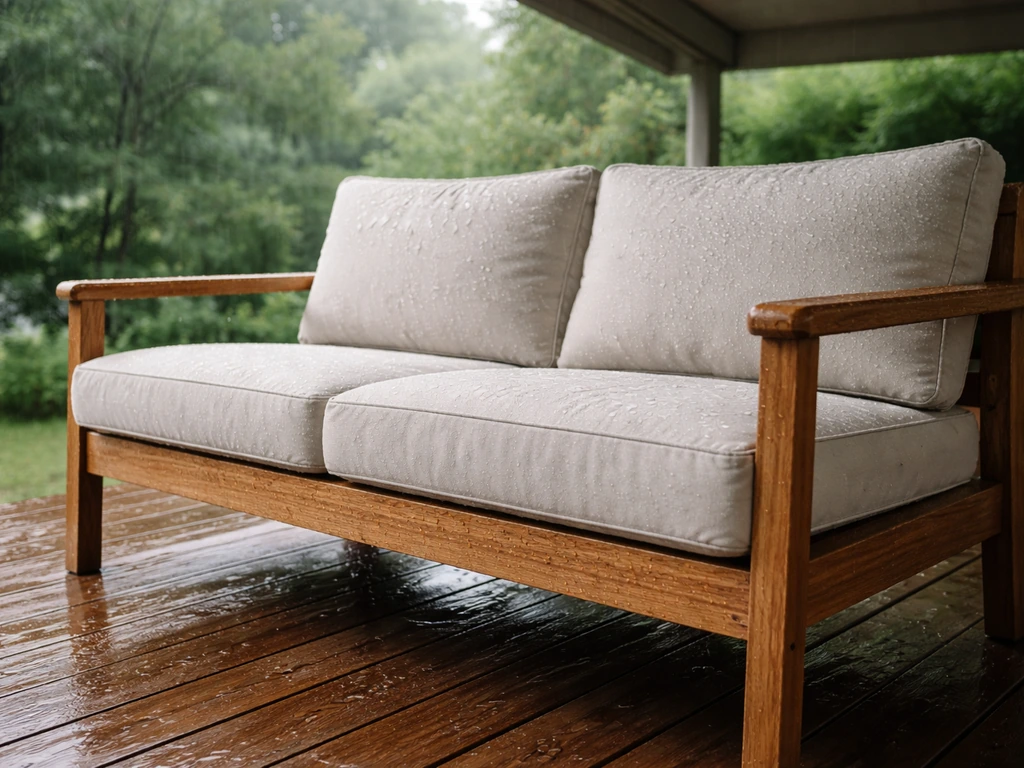
Moisture penetration, mildew on cushions, and wood rot are the main concerns. Teak is genuinely the best wood for this climate because its natural oils prevent moisture absorption. Aluminum frames with quality PE wicker are also excellent. Best example for a rainy climate: a teak dining set or an aluminum-frame PE wicker conversation set, both with Sunbrella cushions stored in a deck box between uses. Sunbrella fabric resists mildew growth because the dye is baked into the fiber core, not coated on the surface, but dirt and debris on the fabric can still feed mildew. Regular cleaning (mild soap, water, soft brush) and fully air-drying cushions before storing prevents the issue entirely.
Freeze-thaw climates (Midwest, Northeast, Mountain West)
Water that gets into porous materials, then freezes, expands and destroys them fast. Wood joints crack, cheap wicker frames split, and concrete or ceramic table tops can spall. Best example for a freeze-thaw climate: HDPE composite Adirondack chairs or a dining set, because the material is non-porous and handles temperature swings without absorbing water. Aluminum furniture stores flat or can be left out covered with quality furniture covers. Teak handles freeze-thaw reasonably well if maintained, but cushions and fabric accessories should always come inside for winter. Avoid: concrete table tops left uncovered, natural fiber cushions stored outdoors, and any furniture with pot-metal zinc hardware (it corrodes and seizes in freeze-thaw cycles).
Coastal and salt-air environments (Florida, Maine, Pacific Coast)
Salt air is corrosive in a way that regular humidity is not. Salt-spray testing (an industry accelerated corrosion test using atomized 5% sodium chloride solution) is how manufacturers rate metal hardware for coastal performance, and it's worth asking about or looking up for any metal furniture you're considering for a coastal property. The practical conclusion from that data: aluminum is far superior to steel at the coast, and stainless steel hardware at joints is non-negotiable.
Best material example for coastal use: HDPE composite lumber furniture (zero corrosion, zero rot) or marine-grade powder-coated aluminum with stainless fasteners. Best product example: Polywood or similar HDPE Adirondack chairs, dining sets, and benches for a coastal deck. They genuinely require almost no maintenance in salt air, just an occasional rinse with fresh water.
Sizing and layout examples for real patios
Furniture that looks right in a showroom or online can feel completely wrong once it's on your patio. The most common mistake is buying too large for the space. A key practical rule: allow at least 36 inches from the table edge (or furniture edge) to any wall, railing, or obstruction for comfortable movement. Behind dining chairs, plan for 24 to 30 inches of pull-out space minimum, and 30 to 36 inches in a main traffic path. These numbers matter more than most people realize.
Small patios and balconies (under 100 sq ft)
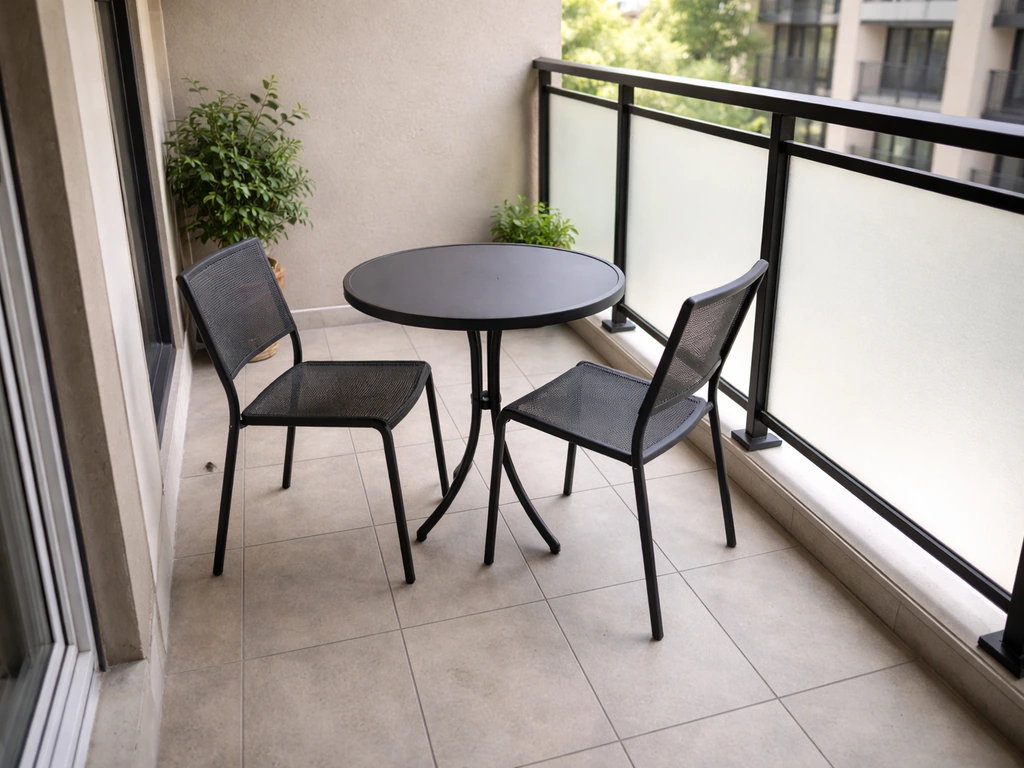
A 6-by-10-foot balcony works with a bistro set: a 24-to-28-inch round table and 2 folding or stackable chairs. That's it. Adding more furniture to a balcony this size just blocks movement. If you want a lounge element, a single folding chair or a narrow loveseat (60 inches wide or less) with a small side table can work, but not both a dining set and lounge seating unless the balcony is at least 8 by 12 feet. For a small apartment balcony, folding and stackable furniture that can be moved or stowed is almost always the right call. A 36-inch round table with 2 folding chairs and a wall-mounted folding shelf for drinks is a complete, functional small-balcony setup.
Medium patios (100-300 sq ft)
A 12-by-14-foot patio can fit a 4-person dining set (48-inch round or a 36-by-60-inch rectangular table) plus a 3-piece conversation set if you keep the walkway clear. If you want to translate these examples into your own measurements, use a patio furniture size guide to get the spacing right. Realistically, most medium patios do one or the other well, not both.
A 4-person rectangular dining set with 4 chairs and a market umbrella is a complete, comfortable setup for this size. If you want lounge seating instead, a 3-piece conversation set (loveseat plus 2 chairs plus coffee table) fits a 12-by-14 space with room to breathe. An outdoor rug anchoring the conversation area (ideally sized so the front legs of major pieces sit on the rug) visually defines the zone and makes the space feel intentional.
Large patios and yards (300+ sq ft)
A 16-by-20-foot or larger patio can comfortably support two distinct zones. A practical large-patio example: a 6-person dining set (60-inch rectangular table, 6 chairs, 9-foot market umbrella) on one end, and a 4-to-6-piece sectional conversation set anchored by a 8-by-10-foot outdoor rug on the other. A cantilever umbrella or shade sail over the conversation zone keeps both areas functional in afternoon sun.
Fire pit tables (about 40 to 48 inches in diameter) fit nicely into large lounge zones as the coffee table alternative, adding a functional focal point in the evenings. For sizing outdoor rugs in a dining area, a practical guideline is to extend the rug about 24 inches beyond all edges of the dining table so chairs stay on the rug when pulled out.
Comfort and usability: cushions, ergonomics, storage, and shade
A structurally solid furniture set that's uncomfortable to sit in for more than 20 minutes doesn't get used. Comfort is about cushion depth, back angle, seat height, and how the furniture works with shade and storage. These aren't afterthoughts.
Cushions: what actually matters
Cushion thickness and fill density matter more than cushion fabric for comfort. Look for cushions at least 4 inches thick for seating and 3 inches thick for back cushions. The fill should be high-density polyester or a foam-polyester blend; cheap fiberfill flattens in one season. Fabric is where you should invest: solution-dyed acrylic (Sunbrella is the most well-known brand, but there are good alternatives) resists fading, repels water, and cleans easily.
The cleaning process when mildew appears is straightforward: a solution of 1/4 cup dish soap and 1 cup bleach per gallon of water, applied with a soft-bristle brush, works on Sunbrella fabric without damaging it.
Rinse thoroughly and let cushions air-dry completely before storing them. Storing slightly damp cushions in a deck box is the single biggest cause of mildew problems.
Storage and furniture organization
Stackable chairs are worth choosing deliberately: 4 to 6 stacking side chairs take up the space of about 2 non-stacking chairs when stored. A 100-gallon deck box (roughly 50 by 26 inches) fits 4 to 6 standard chair cushions with room for throw pillows. If you don't have a covered outdoor storage area, a deck box is almost mandatory for cushion longevity. Furniture covers are worth using for metal and wicker sets left outdoors in winter; they're not necessary for teak or HDPE composite, though a cover in a heavy snow climate prevents debris accumulation.
Ergonomics and seat height
Standard dining chair seat height is 17 to 19 inches. Deep-seating lounge chairs (the kind in conversation sets) often sit lower, around 14 to 16 inches, which some people find hard to get in and out of. If you're buying lounge furniture for people over 60 or with mobility concerns, look for sets with higher seat heights (17 inches or more) or with arms positioned to help with standing. Deep-seating sectionals are comfortable for lounging but impractical as dining seating because the low seat height and angled back make it hard to eat at a normal table height.
Shade options
A 9-foot market umbrella covers a 4-person dining table adequately. A 10 or 11-foot umbrella is better for a 6-person table. Cantilever (offset) umbrellas range from 9 to 13 feet and are better for conversation zones because there's no center pole to work around. Look for aluminum poles (not fiberglass or wood) and a canopy rated for wind with ventilation holes. Shade sails are a lower-cost option for large areas but need proper anchor points and should be removed in high winds. Pergolas and permanent shade structures are outside the scope of furniture selection but are worth planning for if you're laying out a large patio zone from scratch.
Maintenance by material: what you actually need to do each season
Good patio furniture doesn't maintain itself, but the right choices keep annual maintenance to an hour or two rather than a weekend project. Here's what real maintenance looks like for each material category.
Teak maintenance
Once a year: clean with mild soap and water, rinse thoroughly, and let dry. If you want to preserve the original brown color, apply teak oil or a penetrating teak sealer after cleaning. Don't use harsh pressure washing or wire brushes; they open the wood grain and cause more damage than the UV ever would. If teak has turned gray and you want to restore it, a teak cleaner (oxalic acid-based products) followed by brightener works well, then oil or seal. Otherwise, leave the gray and just clean annually. Check and tighten hardware bolts in spring; teak expands and contracts slightly with moisture and the joints can loosen.
Aluminum and steel maintenance
Aluminum: rinse with fresh water monthly (weekly if coastal), inspect the powder coat for chips or scratches each spring, and touch up any bare metal with a color-matched spray touch-up paint before rust can start. Aluminum itself doesn't rust, but the powder coat is the barrier that keeps it looking new. Steel: same cleaning approach, but rust checks are more critical. Any scratch or chip on steel furniture that reaches bare metal needs to be touched up immediately, especially at welds and joints where water pools. A light coat of paste wax over powder-coated aluminum or steel each spring adds UV protection to the finish and makes cleaning easier year-round.
All-weather wicker maintenance
PE wicker itself is very low maintenance: rinse with a garden hose and use a soft brush with mild soap to get into the weave once or twice a season. Check the frame where the wicker attaches at joints; if the weave is coming loose or the aluminum frame is bending at stress points, that's typically a sign of a lower-quality piece (or normal wear after many years). The hardware at joints is a good quality indicator; look for stainless or aluminum screws and bolts, not zinc or pot metal, which corrode and seize over time. Don't pressure-wash wicker; the force can separate the strands from the frame and damage the weave permanently.
HDPE composite maintenance
HDPE lumber requires almost nothing: rinse occasionally, scrub with soap and water if it gets dirty, and that's genuinely it. It won't splinter, rot, or rust. The stainless steel hardware in quality HDPE furniture (like Polywood) is chosen specifically to match the material's longevity. One thing to know: HDPE does expand and contract with temperature changes more noticeably than wood or metal, so don't overtighten assembly hardware at installation. If a chair wobbles after a year or two, check hardware tightness as the first fix.
Cushion and fabric maintenance
Clean cushions at the start and end of each season with mild soap and water, using a soft-bristle brush. Let them air-dry completely before storing; even a slightly damp cushion sealed in a deck box overnight is enough to start mildew. For mildew that's already established on Sunbrella or similar solution-dyed acrylic fabric, the 1/4 cup dish soap plus 1 cup bleach per gallon of water solution, applied with a soft brush and rinsed thoroughly, removes it without damaging the fabric. Store cushions indoors or in a deck box for winter in freeze-thaw climates. In mild climates, a breathable outdoor storage bag is enough.
How to evaluate value and pick the right set (beyond the marketing)
Price is not the same as value in patio furniture. A $300 steel dining set that rusts in 3 years costs more over a decade than a $900 aluminum set that lasts 15. Here's what to actually look for when evaluating any set you're considering buying, whether it's from a big-box store, a specialty retailer, or an online brand. What to look for in patio furniture comes down to the materials, construction, and comfort details that match your climate and how you use your space what to actually look for.
- Check the frame material first: aluminum is almost always better than steel for outdoor use, and the product listing should clearly state which one it is. If it just says 'metal frame,' ask or look for a spec sheet.
- Inspect the hardware: look for stainless steel or aluminum screws and bolts, not zinc or pot-metal fittings. This matters most in coastal and wet climates where hardware corrodes faster than frames.
- Evaluate the cushion fill and fabric: 4-inch minimum thickness, high-density fill, and solution-dyed acrylic fabric (Sunbrella or equivalent) are the benchmarks. Avoid polyester-cover cushions for anything left outdoors regularly.
- Look for a frame warranty: reputable outdoor furniture brands offer 3-to-5 year frame warranties at a minimum; 10-year warranties are common at the quality tier. A 1-year warranty on a frame is a red flag.
- Weigh the piece if you can: heavier cast-aluminum or solid teak furniture is almost always better-constructed than lightweight versions. Very light 'aluminum' furniture often uses thin-wall extrusions that bend.
- Ask about UV ratings for fabric and plastic components: solution-dyed fabric and UV-inhibited HDPE resins hold color; surface-coated fabrics and unstabilized plastics don't.
- Calculate cost per year: take the price, divide by the realistic lifespan in your climate, and compare. A $1,200 teak set lasting 25 years is $48/year. A $400 steel set lasting 4 years is $100/year.
Choosing the right example setup is easier once you've locked in your climate, your use case (dining versus lounge versus mixed), and your honest maintenance budget. If you want a structured way to make these choices, use this patio furniture buying guide as your checklist from layout to materials.
If you want a simple checklist to follow, our guide on how to pick patio furniture walks you through choosing the right type, material, and size which setup is easier once you've locked in your climate, your use case (dining versus lounge versus mixed). If you're still working through which layout fits your specific patio dimensions and lifestyle, the sizing guide and general buying framework covered in related guides on this site go deeper on those decision points.
What matters most is not buying what looks good in a catalog, but buying what fits your actual space, survives your actual weather, and gets used comfortably for years without becoming a weekend maintenance project.
FAQ
How do I choose patio furniture examples if I have a tight patio but still want a table and seating?
Use a bistro or counter-height dining layout first, then add lounge only if you preserve a clear walkway. For example, keep a 24 to 28 inch round bistro table with 2 chairs on one side, and if you want an extra lounging seat, use a single narrow chair (around 28 to 32 inches wide) instead of a full conversation set so you do not block traffic or access to doors.
What should I do if my cushions get mildew even though I store them in a deck box?
Dry-to-the-touch is the rule. If cushions go into storage slightly damp, mildew returns fast. Add a 1 to 2 hour “air burst” in sun before closing the deck box, and keep the deck box lid ventilated when possible so trapped humidity can escape.
Can I mix different materials in the same patio furniture example, like aluminum with teak or HDPE with steel?
Yes, but watch the weak points where different materials meet. Pair aluminum frames with solution-dyed acrylic or PE/HDPE surfaces, but avoid mixed hardware at joints (for instance, zinc parts with salt air). If you mix materials, confirm that fasteners are stainless or aluminum, not pot metal, so corrosion does not spread from one component to another.
Are patio furniture covers worth it for HDPE or teak, or will they trap moisture?
Covers help most for metal and PE wicker in winter, but for teak and HDPE they are usually optional. If you do cover, choose breathable covers and ensure items are fully dry, because non-breathable covers can trap condensation and cause mold on any removable cushion covers or fabric components.
What’s the best patio furniture example for people who want minimal upkeep year-round in a freeze-thaw climate?
An HDPE composite set is the simplest low-maintenance option, especially Adirondacks or dining pieces, because it is non-porous and handles temperature swings. If you choose an umbrella, bring cushions and fabric accessories inside or into fully dry storage, and store umbrellas upright under cover to prevent water pooling around joints.
How can I tell if a PE wicker set is actually high quality before I buy?
Do a quick “weight and hardware” check. Good sets typically feel heavier than expected, the weave looks uniform with no loose gaps, and the frame hardware at joints is stainless or aluminum. If the set uses zinc hardware, expect faster loosening and corrosion even if the wicker looks fine initially.
What spacing should I plan when my patio furniture includes an outdoor rug and a dining table?
If you want the chairs to stay on the rug when people pull them out, extend the rug about 24 inches past the dining table edges. Also keep the front clearance in mind, plan for roughly 30 to 36 inches in main traffic paths, so the rug does not create a pinch point when chairs slide.
Is it better to pick a larger patio furniture example with more seats, or a smaller set that fits comfortably?
Comfort and access beat capacity. If your space only works for one zone well, choose that. A 12 by 14 foot patio often supports either a 4-person dining setup or a 3-piece conversation setup, not both without compromising walkway space, door access, or shade coverage.
What cushion sizing mistakes cause uncomfortable seating in patio furniture examples?
Two common issues are too-thin cushions and deep seating at the wrong height. Aim for at least 4 inches thick seat cushions and around 14 to 16 inches seat height for deep lounge pieces, but if you want easier in-and-out for mobility needs, target seat height closer to 17 inches or choose dining-height chairs for the main seating group.
Can I restore gray teak instead of buying new patio furniture examples?
Yes, but only after you clean and assess the finish. Use a teak cleaner that contains oxalic acid to lift embedded gray, then brighten and oil or seal if you want honey-brown tone. If the teak is structurally sound, the gray patina is mostly UV aesthetic change, so annual cleaning without stripping is often enough.
What umbrella choice works best for conversation setups in patio furniture examples?
For conversation zones, an offset cantilever umbrella is usually the most practical because there is no center pole blocking seating conversations. Choose an aluminum pole and a wind-rated canopy (with ventilation holes) so the umbrella stays usable in gusty afternoons, especially if your conversation set is near seating pathways.
Should I buy the cheapest metal furniture to save money now?
Often no, because corrosion and finish failure compound the cost. For instance, powder-coated steel that chips can rust quickly at welds and scratches, especially inland with wet winters or near the coast. If you want a “buy once” patio furniture example, aluminum with intact powder coat, stainless fasteners, and timely touch-up is typically the better long-term bet.
Next Articles
Patio Furniture Size Guide: Measure, Plan, and Fit Confidently
Measure your patio and match chair, sectional, and dining sizes with spacing rules to fit comfortably and safely.
What to Look for in Patio Furniture: Buying Guide
Checklist for choosing patio furniture by climate, materials, construction, comfort, and maintenance to ensure lasting v
Patio Furniture Buying Guide: What to Buy and Why
Expert patio furniture buying guide: choose the right set and materials for your climate, durability, and budget.