
Measure your patio's usable area first, subtract at least 36 inches from every edge that needs a walking path, and then shop for furniture that fits what remains. Once you know the usable area and key clearance paths, you can better judge what to look for in patio furniture so the pieces fit comfortably Measure your patio's usable area first. That one step eliminates most sizing mistakes before you ever look at a product listing. The dimensions on a furniture tag tell you the overall footprint, but what actually matters is whether people can move around the set comfortably once it's in place. This guide walks you through the whole process: measuring your space, decoding seat dimensions, sizing dining sets, planning layouts for any patio size, and checking the numbers before you hit buy.
Patio Furniture Size Guide: Measure, Plan, and Fit Confidently

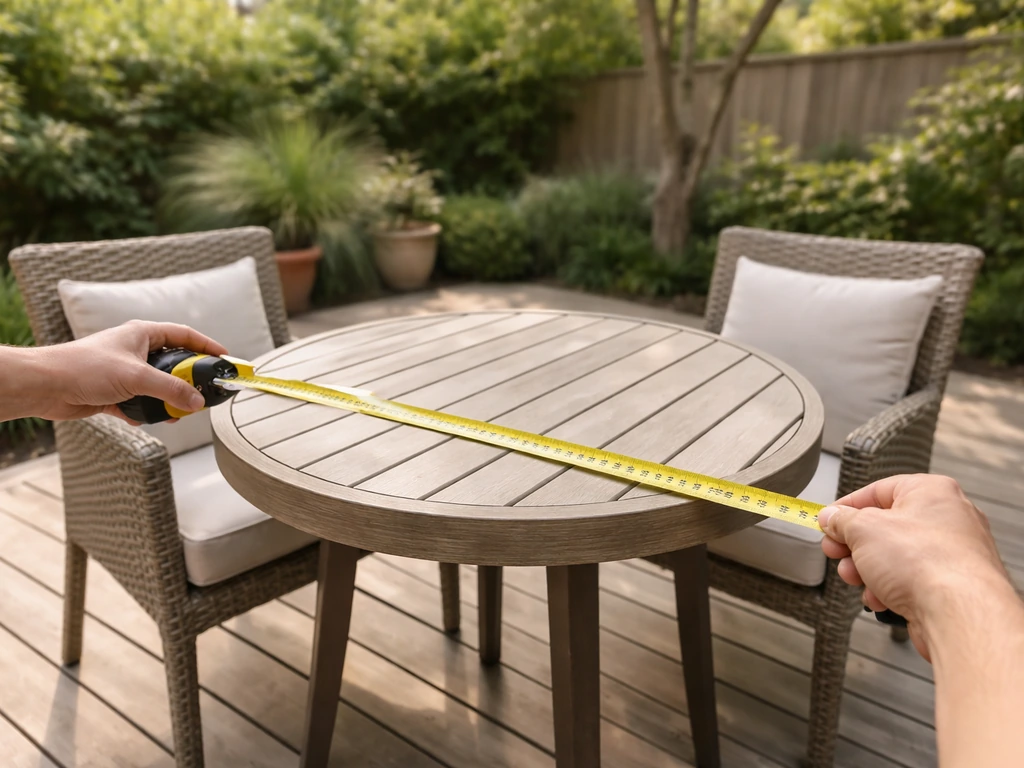
How to Measure Your Patio for Furniture
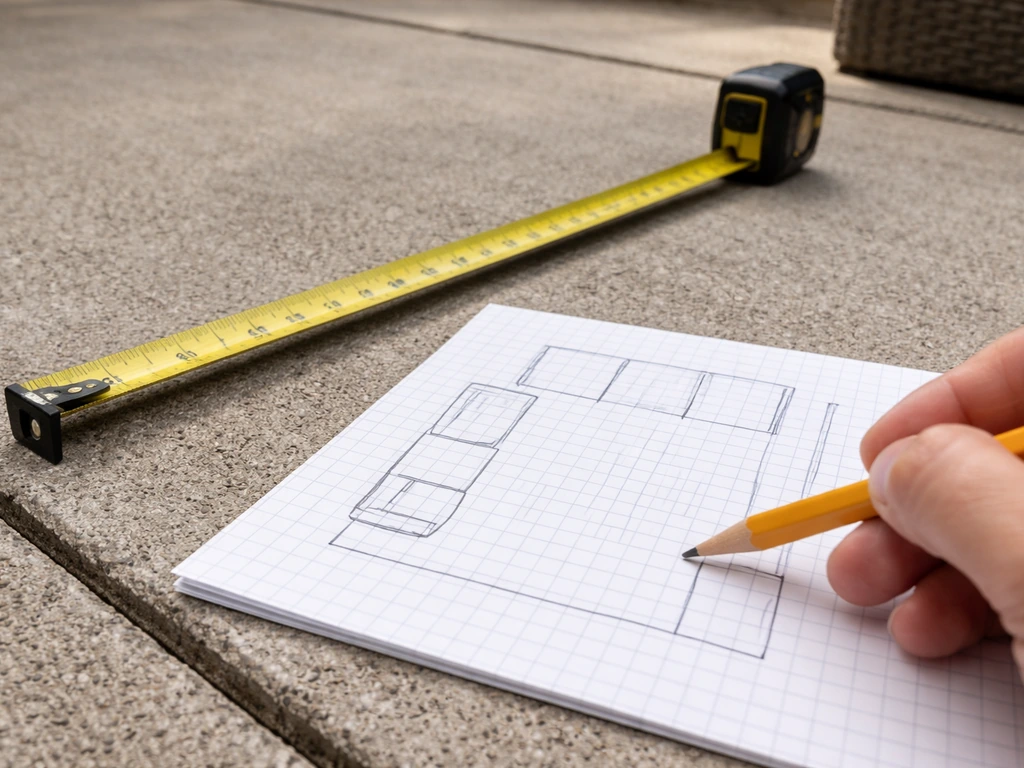
Start with a tape measure and a piece of grid paper (or a free app like Magicplan). Measure the full perimeter of your patio, then identify every fixed obstruction: door swings, steps, gate clearances, downspouts, and HVAC units. These carve into your usable zone even if the raw square footage looks generous.
Usable area is the space left after you subtract clearance zones from the total. As a baseline, reserve 30 to 36 inches for any main walkway (the path people regularly use to move across or out of the patio). For lower-traffic edges, 24 inches is workable. For a high-traffic path near a door or grill, push that to 40 inches. These aren't decorating preferences, they're the minimum people need to walk without turning sideways or bumping furniture.
Door swings are one of the most overlooked clearance killers. Measure how far your door swings open and mark that arc on your layout. A piece that technically fits the patio floor can still be wrong if it blocks your back door from opening fully. Same logic applies to a gas grill's side shelf, a gate latch, or a stair railing. Mark every fixed hazard before you start placing furniture on the plan.
- Measure total patio length and width (or sketch irregular shapes in sections)
- Mark every fixed obstruction: doors, steps, gates, downspouts
- Subtract 30–36 inches from any edge that needs regular foot traffic
- Subtract 24 inches from low-traffic edges or against walls with no walking path
- Note door swing arcs and mark them on your sketch
- What remains is your usable furniture zone — work with that number, not the gross total
If your patio is irregular (L-shaped, wrapped around a pool, or partially covered by a pergola), break it into rectangles and calculate each zone separately. A pool edge deserves special attention: POLYWOOD's safety recommendation is at least 3 feet of clearance between chaise loungers and the pool's edge. That's not generous, it's the minimum to avoid someone tripping into the water.
Seat Sizing Basics: What Chair and Sofa Dimensions Actually Mean
When you're reading outdoor sofa or chair specs, three numbers matter most: seat depth, seat height, and arm width. Marketing copy tells you a sofa 'seats three,' but the actual comfort experience depends on these dimensions, and they vary widely across styles.
| Dimension | What It Affects | Typical Comfortable Range |
|---|---|---|
| Seat depth | How far back you sit; deep seats feel lounge-like but make it harder to get up | 20–26 inches for most adults; 25–26 inches for a true lounging feel |
| Seat height | How easy it is to sit down and stand up; lower chairs feel casual but can be tough on joints | 16–18 inches is typical; 17–18 inches works for most adults |
| Arm width | Comfort for resting your arms, but also restricts adding extra seats at the ends | 3–5 inches standard; wide arms eat space at tables |
Seat depth is the single biggest driver of how much patio space a piece actually consumes. A sofa with a 26-inch seat depth will likely have an overall depth closer to 34 to 38 inches once you include the back frame. A chair labeled 30 inches deep could have a seat depth of only 22 inches, the rest is backrest. Always check the spec sheet for 'seat depth' separately from 'overall depth.'
Armrests are a trade-off worth thinking through before you buy. They add comfort for everyday sitting, but they physically prevent adding a side chair at the end of a sofa, and they can push the overall footprint wider than you expect. If you're tight on space or need maximum seating flexibility around a dining table, look for pieces with narrower arms or armless options on the ends of a sectional.
Dining Set Sizing: Tables, Chairs, and the Clearance You'll Actually Need
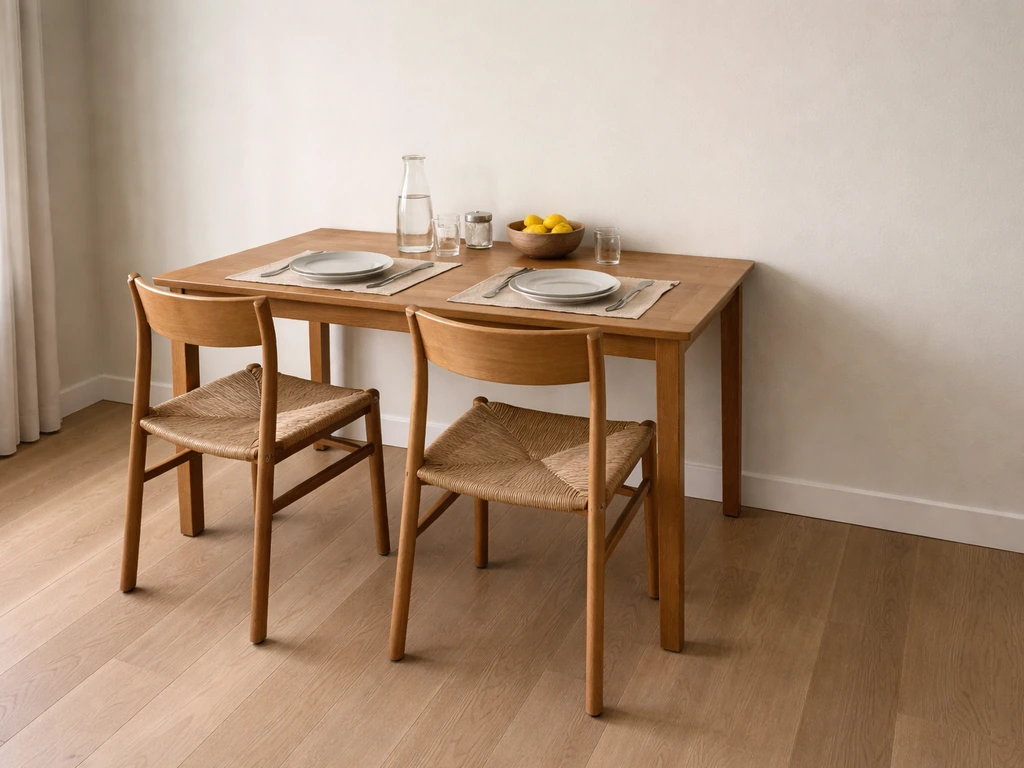
The table's listed size is only the starting point. What you need to plan around is the total zone the table and chairs occupy when someone is actually seated and pushing back to get up. For a 4-person dining set, plan on a 9-by-9-foot to 10-by-10-foot footprint at minimum. That accounts for the table, chairs in their seated position, and a chair pulling back about 24 to 36 inches beyond the table edge.
Around the outside of that footprint, you still need the 36-inch walking clearance. Wayfair and most layout guides agree on 3 feet around the table perimeter as the standard for comfortable dining circulation, enough for someone to walk behind a seated person without them having to shift their chair in. If your patio can't accommodate that, you may need to go down a table size or switch from a rectangular to a round table to reclaim corner space.
Round vs. Rectangular Tables
Round tables are more space-efficient in tight patios because they have no corners eating into circulation zones and you can often squeeze in an extra chair without it feeling cramped. A 48-inch round table comfortably seats 4. A 60-inch round gets you 6 seats. Rectangular tables scale better for larger groups but require more precise layout work, you need to verify that the table legs don't conflict with where chairs need to be positioned, especially at the corners.
Table leg style matters more than most shoppers realize. Pedestal and trestle-base tables give everyone full leg room regardless of chair placement. Four-corner-leg tables can create awkward seating at the ends, especially if you're using chairs with wide frames. Check the leg placement on the spec sheet before assuming a table 'seats 6' means 6 comfortable seats.
| Table Size | Comfortable Seat Count | Minimum Patio Zone Needed (with chair pull-out + 36" clearance) |
|---|---|---|
| 36" round | 2–3 people | ~8 x 8 ft |
| 48" round | 4 people | ~9 x 9 ft |
| 60" round | 5–6 people | ~10 x 10 ft |
| 60" rectangular | 4–6 people | ~9 x 12 ft |
| 72" rectangular | 6–8 people | ~10 x 14 ft |
| 84–96" rectangular | 8–10 people | ~10 x 16 ft |
A useful calculation method for dining zones: take the table diameter (or length), add half a chair's depth for the seated position, add one full chair depth for the pull-out, and then add 12 to 18 inches for walking clearance on each side. That sum gives you the minimum patio width or length you need in each direction. It's more reliable than the 'seats X people' marketing label on any product page.
Layout Planning for Small, Medium, and Large Patios
Small Patios and Balconies (Under 100 sq ft)
Small spaces punish the wrong furniture scale fast. A bistro set (two chairs plus a small round table, typically 24 to 30 inches in diameter) is usually the right call for balconies under 60 square feet. If you want a starting point, look at patio furniture examples for bistro setups that match your balcony measurements and clearance needs. For a patio in the 60 to 100 square foot range, a compact 4-person dining set with stackable chairs or a loveseat with a side table can work if you stay disciplined about clearance. Stick to furniture with a slim profile and avoid deep-seat lounge pieces that eat 36-plus inches of depth on their own.
On small patios, every inch counts for covers and storage too. If you live somewhere with serious winters or heavy rainfall, oversized furniture means bigger (and more expensive) covers, and you'll fight with storage every fall. Choosing appropriately-sized pieces now saves real hassle in year two and three.
Medium Patios (100–300 sq ft)
This is the most common backyard patio size, and it's where layout decisions get genuinely interesting. You typically have room for one primary zone (either dining or lounge, not both) plus a narrow secondary function. A 4 to 6-person dining set with a 36-inch clearance path on all sides fits comfortably on a 12-by-14-foot patio. A conversation set (a sofa, two chairs, and a coffee table) fits in roughly a 10-by-12-foot zone with proper clearance.
If you want both dining and lounge areas on a medium patio, use rugs to define each zone and place the sets so the walking path between them is at least 30 inches. Choosing a round dining table over rectangular often unlocks enough space to add a pair of lounge chairs in the remaining corner.
Large Patios (Over 300 sq ft)
Large patios give you room to plan multiple zones, but they create a different problem: furniture that's too small makes the space feel empty and awkward. Scale up your pieces and define zones clearly. A full sectional in one zone, a dining set in another, and a separate fire pit or lounge area in a third can all coexist if you maintain 36-inch walking paths between zones. On big patios, the 36-inch clearance between zones is even more important, without it, the space feels like furniture in a warehouse rather than a designed outdoor room.
Sectionals, Loungers, and Umbrellas: Footprint and Circulation
Sectionals
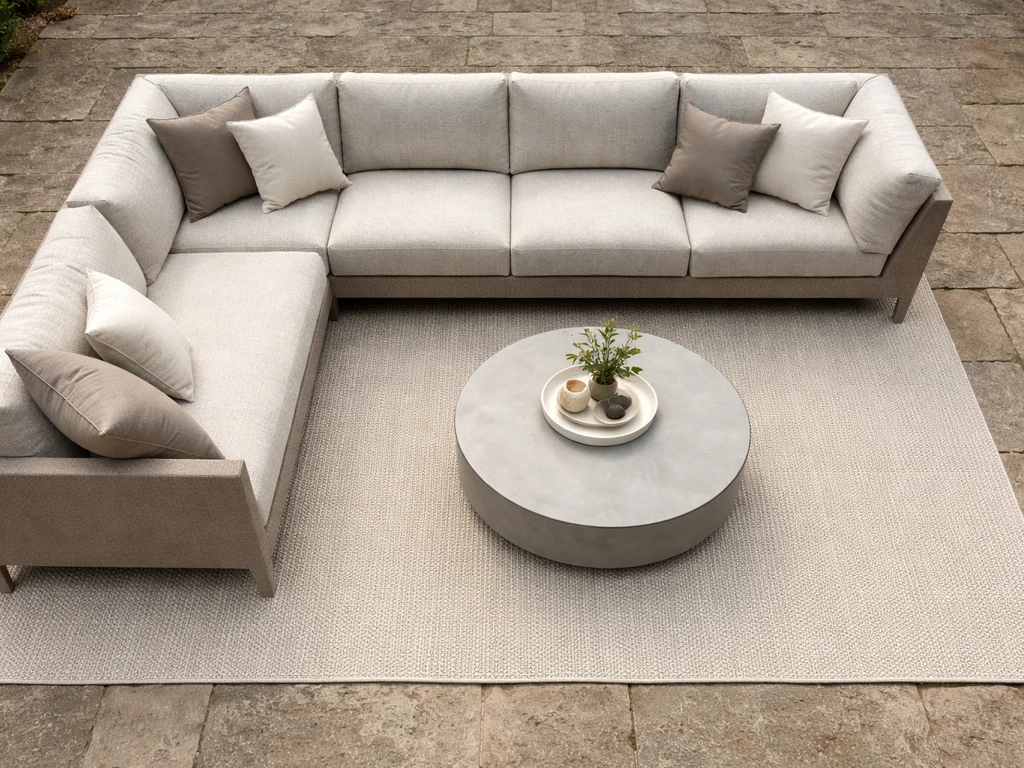
Outdoor sectionals are the biggest footprint items you'll put on a patio, and they're the most commonly mis-sized piece in my experience. A typical L-shaped 4 to 5-seat sectional runs roughly 100 to 120 inches on one leg and 80 to 100 inches on the other. Add a coffee table and you're looking at a zone that can easily span 12 by 12 feet. Measure your usable area before you fall in love with a specific configuration online.
Leave 14 to 18 inches between a sectional and the coffee table, enough to set down a drink or rest your feet, but not so much that the table feels disconnected. Keep 30 to 36 inches clear on the walking side of the sectional. If your sectional wraps a corner of the patio, the open end of the L needs at least that 30-inch clearance for people to enter and exit the seating area without climbing over furniture.
Chaises and Recliners
Chaise loungers have two footprints: upright and fully reclined. The reclined position is the one that matters for layout. A typical chaise runs 65 to 80 inches long when fully extended. Pool-side arrangements need the POLYWOOD-recommended 36-inch minimum between the chaise edge and the pool's edge. For patio recliners (the rocking or gliding style), measure the reclined depth because it can add 12 to 18 inches beyond the chair's listed overall depth. If you don't plan for the extended state, you'll block the path behind it.
Umbrellas
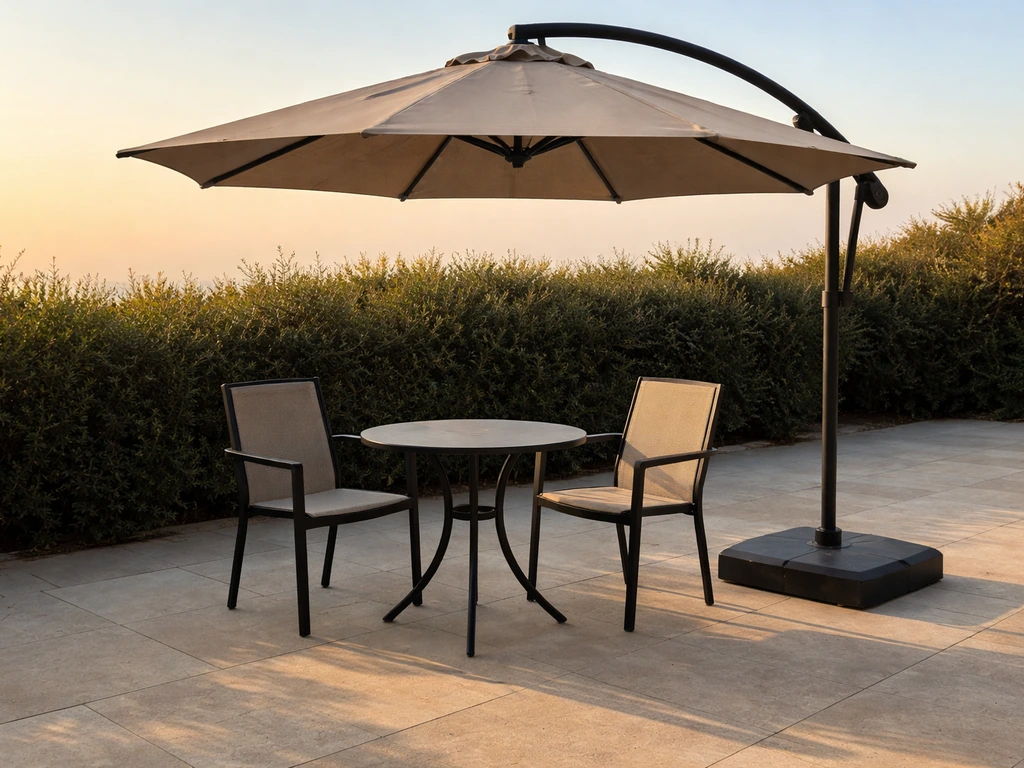
Umbrella sizing is about coverage and clearance, not just aesthetics. The canopy should extend at least 2 feet beyond the table edge on each side to actually shade seated guests. A 48-inch round table typically pairs with a 9-foot umbrella; a 60-inch table or a 6-person rectangular table usually calls for an 11-foot canopy. Against walls or structures, leave at least 6 inches of clearance between the canopy edge and the obstruction so you can open it fully without catching fabric.
Cantilever (offset) umbrellas need extra footprint consideration because the base sits outside the seating zone. The arm extends over the table, but the base can stick out 3 to 5 feet in another direction entirely, often right into a walking path. Measure base placement before you buy, not after delivery.
Common Sizing Mistakes and Quick Checks Before You Buy
Most sizing regrets come from the same handful of errors. Here are the ones I see most often, along with a fast pre-purchase check for each. If you want the same kind of guidance organized step-by-step, use a patio furniture buying guide to keep your measurements, layout, and specs all aligned fast pre-purchase check.
- Trusting 'seats X people' without checking actual dimensions: A table marketed as 'seats 6' may only fit 4 comfortably once you account for leg placement and arm width on chairs. Always verify the table's actual dimensions and how many chairs the manufacturer specifies per side, not just the total count.
- Forgetting chair pull-out space: Chairs need 24 to 36 inches beyond the table edge to slide back comfortably. If you measure only the table footprint, you'll underestimate the zone by 2 to 3 feet on each end.
- Ordering a sofa or sectional that blocks a door: Before purchasing, tape the furniture's footprint on the patio floor using painter's tape and walk through your normal traffic patterns. Check door swings specifically.
- Choosing 'overall' dimensions instead of 'seat' dimensions: A sofa listed as 88 inches wide with deep arms might only have 72 inches of actual usable seating. Pull up the full spec sheet and look for seat-specific measurements.
- Ignoring umbrella base placement on a cantilever: The canopy placement looks fine in photos, but the base often projects into the main walking path. Confirm base footprint dimensions separately from canopy size.
- Not accounting for recliner or chaise extended position: Layout for the fully open position, not the folded one. A recliner that looks compact upright can extend 18 inches farther than its listed depth.
- Skipping the climate check on sizing: In humid climates like the Gulf Coast or Florida, larger sectionals with thick cushions need oversized covers, which are harder to manage and more prone to mold trapping. Sizing down slightly and choosing quick-dry cushion materials is a practical trade-off worth making before you buy.
A simple pre-buy checklist: write down your usable zone dimensions, mark every clearance path at 30 to 36 inches, use painter's tape on the actual patio to mock up the furniture footprint (including chairs pulled out), confirm the spec sheet shows seat depth and height (not just overall dimensions), and blank" rel="noopener noreferrer">verify that the umbrella's base position doesn't land in a walk zone. Once your measurements are set, use these steps as your guide for how to pick patio furniture that fits your circulation needs. Five minutes with tape and a tape measure prevents a furniture return.
If you're also working through questions like what material or style to buy, how to evaluate quality across price points, or what to prioritize in your overall purchase, those decisions overlap closely with sizing, the wrong style choice often creates the wrong footprint. Getting your sizing right and your buying criteria aligned at the same time leads to a set you'll actually use comfortably for years, not just one that looked good in the product photo.
FAQ
Do I measure the patio floor size, or the usable space after furniture and people move around?
Measure both. Start with the raw perimeter, then create a “usable zone” by subtracting clearances, but also account for movement by planning chair pull-out distance and the path around the set when seated (especially at dining). If you only measure floor area, you can end up with a layout that blocks normal entry, exiting, or chair movement.
When a furniture listing shows “overall dimensions,” should I use those or the seat depth/height?
Use overall dimensions only as a quick filter, then verify seat depth, seat height, and arm width on the spec sheet. Overall depth often includes back frames or cushions that compress slightly, so your real footprint changes. For dining, seat depth matters because it changes how far chairs need to pull back to clear the table.
How do I plan clearance around a fire pit or grill if they are near a door or walkway?
Treat the heat feature as a fixed obstruction for both width and approach. Plan your main circulation path first, then place the fire pit or grill so you still have a continuous route behind seated people (for dining) or around seating (for lounge). If a side shelf or door swing overlaps the base footprint, switch the orientation before buying rather than trying to “make it work” after delivery.
What if my patio slopes or has a raised step, will that change the size requirements?
Yes. Use the measurements from the narrowest point of the usable zone, and confirm the highest or most protruding edge (like a step lip, wall ledge, or planter). If the set includes rocking or gliding parts (recliners), verify there is enough level space so it fully extends without bumping the edge.
Do I need to subtract clearance for storage like planters, grill covers, or a doormat?
Yes for anything that sticks out or changes size. A doormat can add friction to door clearance and a grill cover or side storage bin can occupy space when the item is opened or moved. Include the “open state” footprint in your mockup with painter’s tape so you do not plan around a closed-only layout.
How can I tell if an umbrella will fit if the base is near a wall or walkway?
Check the closed and open behavior. You need clearance for the canopy to swing without snagging, plus enough room so the base does not land in your walking zone. For cantilever umbrellas, measure where the base sits in relation to the path, because the base can occupy an area 3 to 5 feet away from the seating center.
Should I plan clearance behind lounge seating the same way as dining?
Not exactly. Dining is usually chair pull-out focused, lounge is more about continuous circulation around the sofa and coffee table. A practical approach is to keep the walking side clear (commonly 30 to 36 inches) and also leave enough space between the sofa and any coffee table so people can sit down and stand up without twisting into the table corner.
Can I fit a bigger dining table by pushing chairs tighter to the wall?
Sometimes, but only if you confirm the chair pull-out path. Chairs need space to slide out and back, and walls do not forgive tight clearances. For wall seating, verify that you can still push chairs out far enough to exit comfortably, then ensure the overall set still preserves at least the standard walking perimeter around the dining footprint.
What’s the best way to mock up furniture before ordering?
Use painter’s tape on the real patio and include the “worst case” positions: chairs pulled back, sectional entry access, chaise fully reclined, and umbrella base location. Mark door swing arcs and any gate latch movement too. If your mockup fails, adjust early by changing orientation, switching to round for corners, or choosing narrower arm or armless configurations.
If I’m between two sizes, how do I decide what to choose?
Choose the smaller option if you are short on one dimension that affects movement (door swing clearance, chair pull-out, or a continuous walkway). Choose the larger option only when you have slack in the measured circulation paths and the table or seating can still maintain your buffer. A common mistake is upgrading seating capacity while accidentally breaking the flow around the set.
Are modular sectionals always easier to fit than a fixed sofa?
They can be, but only if you plan the open ends and access points. Pay attention to the L-shape orientation, the “open entry” side, and the space needed for people to sit, stand, and navigate around the corner. If the open end ends up too close to a door, you may lose usability even if the module footprint matches the available space.
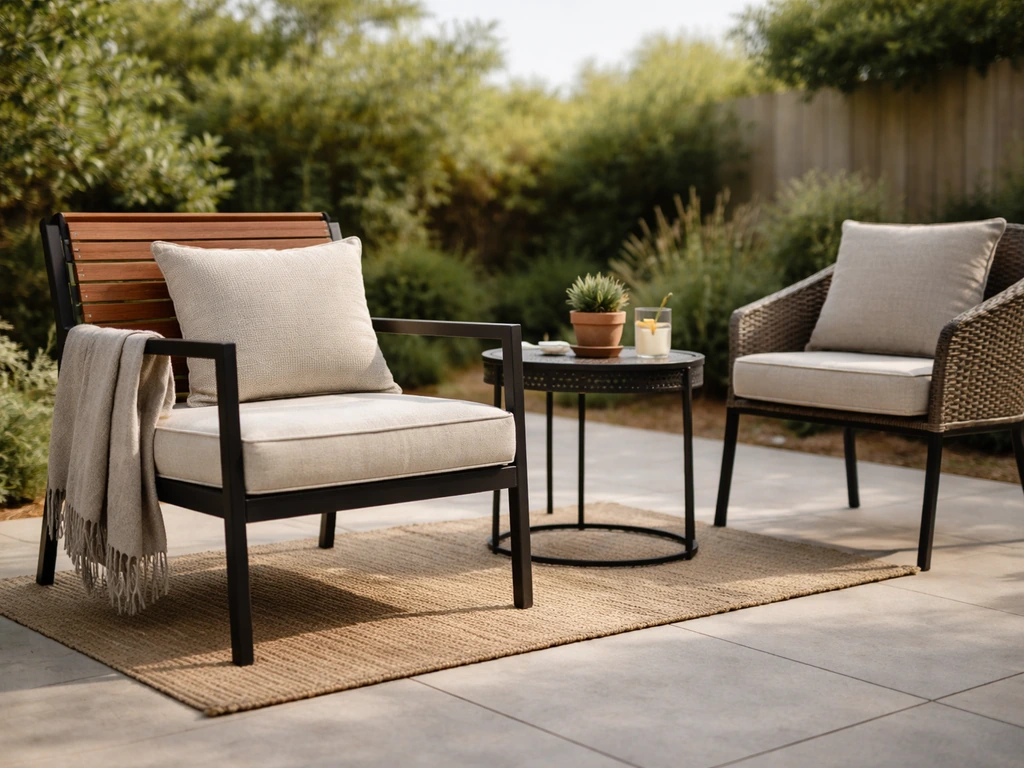
Checklist for choosing patio furniture by climate, materials, construction, comfort, and maintenance to ensure lasting v
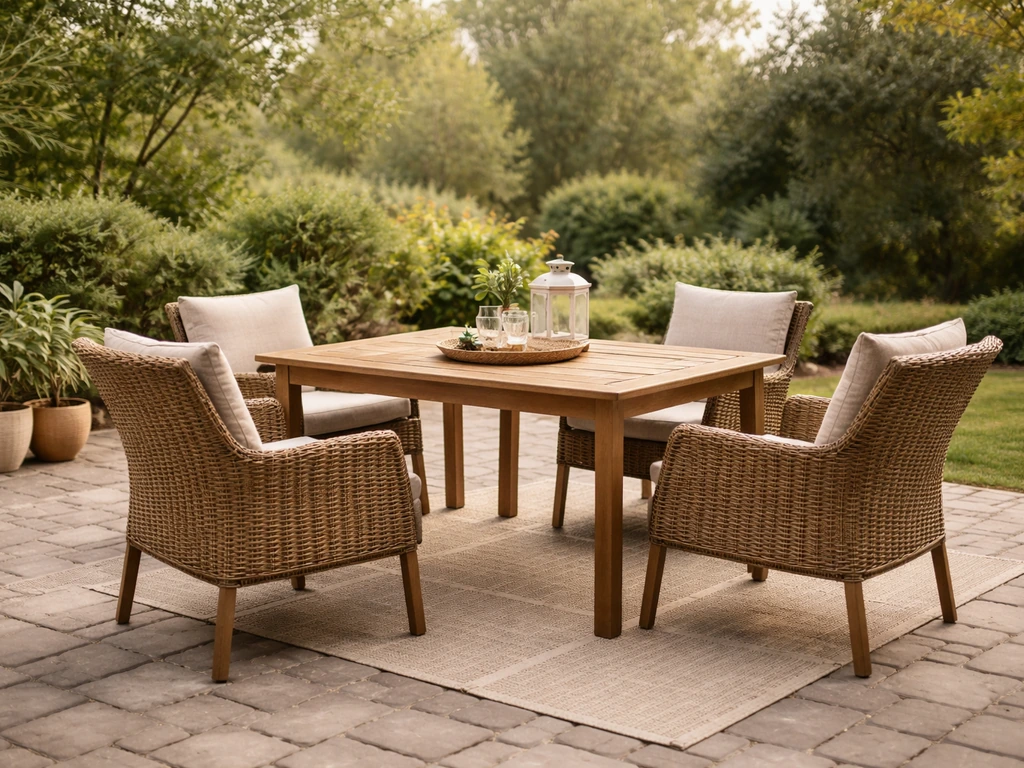
Expert patio furniture buying guide: choose the right set and materials for your climate, durability, and budget.
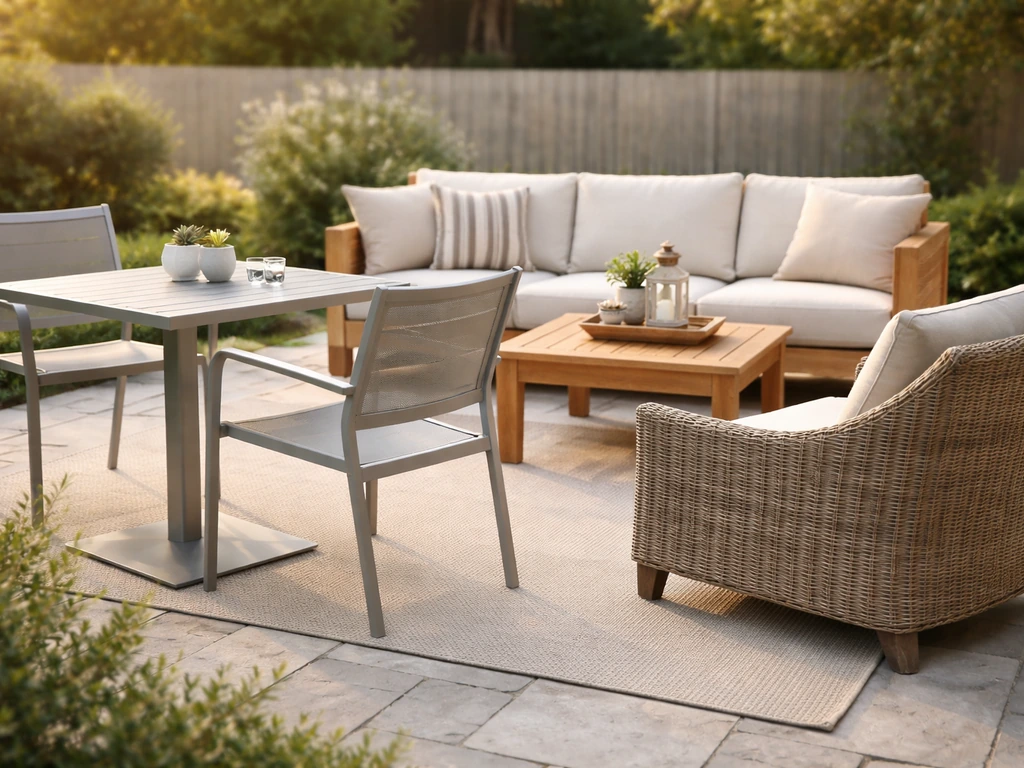
Step-by-step how to pick patio furniture: measure layout, choose durable materials, cushions, comfort, and compare warra