
Buy the material that matches your climate first, then size the furniture to your space, and finally set a budget based on how long you actually want it to last. If you're in a coastal or humid region, powder-coated aluminum or HDPE (recycled plastic lumber like Polywood) will outlast most other options by years. If you're in a dry, sunny climate, the biggest threat is UV degradation, so solution-dyed acrylic cushions and UV-stable frames matter most. If you get hard winters with freeze-thaw cycles, avoid natural wood and natural wicker entirely unless you can store them indoors seasonally. Get these three things right and the rest of the buying decision is straightforward.
Patio Furniture Buying Guide: What to Buy and Why

Theo Tierney
22 May 2026
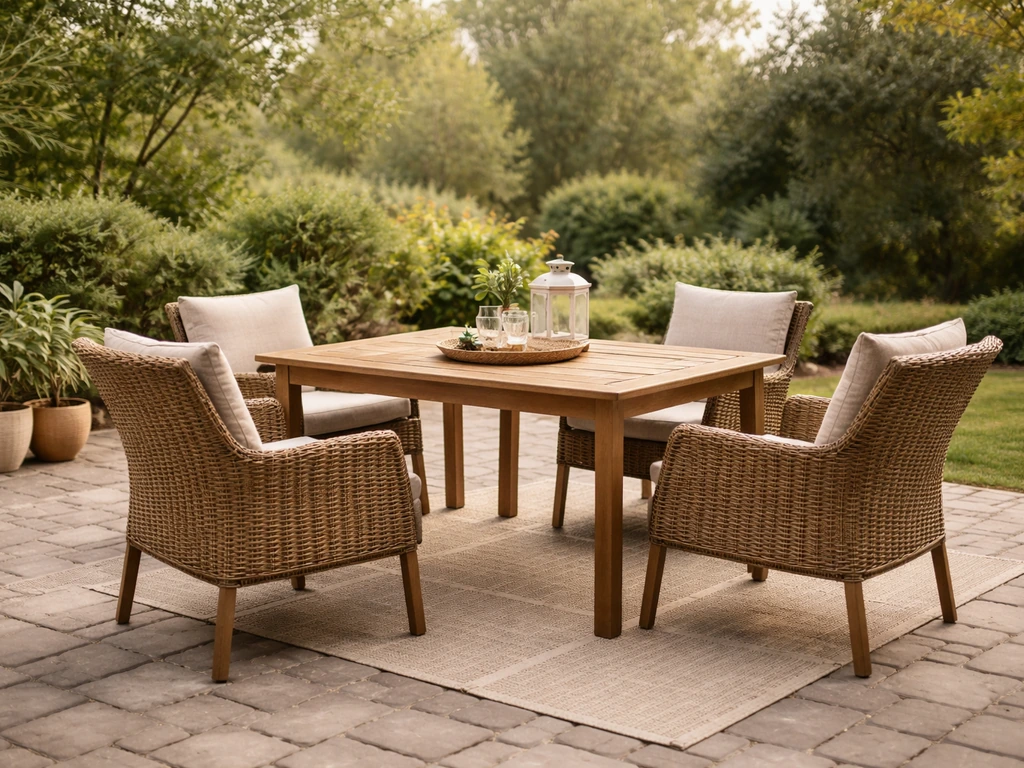
Plan your space before you shop anything
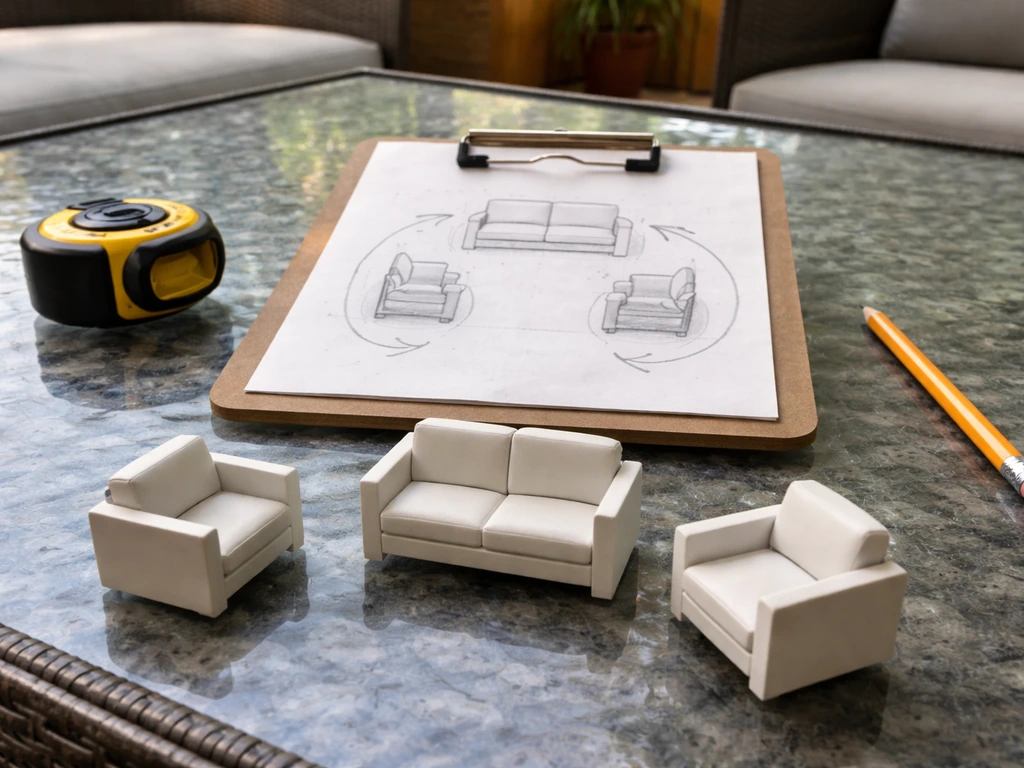
The single biggest buying mistake is falling in love with a set online and then discovering it doesn't fit, or fits so tightly that the chairs can't pull out without scraping the wall. Measure your patio before you look at a single product. You want at least 36 to 48 inches of clearance around a dining table on all sides where chairs will pull out and people will walk. On a primary circulation path, 48 inches is better.
On the sides where people just sit and stand, 36 inches is workable. That clearance requirement alone will tell you what size dining table your space can actually handle. If you're unsure where to start, use a patio furniture size guide to measure your space and match chair and table dimensions to proper clearances.
For conversation sets and lounge areas, sketch out where each piece sits and make sure there's at least 18 inches of walkable space between any two seating pieces facing each other. If you're adding an outdoor rug, size it so all furniture legs sit fully on the rug with at least 6 inches of rug extending beyond the outermost legs. This keeps the arrangement from looking like furniture floating on a postage stamp.
Also think about purpose before you size anything. Are you eating outside most nights? Then a dining set is the core piece and everything else is secondary. Do you mostly entertain with drinks and conversation?
A conversation set with a coffee table and four seats handles that better than a dining table. Do you want to read and nap outside? A pair of deep-seat lounge chairs or a daybed becomes the priority. Most patios try to do all three and end up crowded.
Pick the primary use, plan for it first, and add secondary pieces only if the square footage genuinely supports it. If you need inspiration before you shop, browse patio furniture examples that match your space and climate.
Materials that actually last: honest tradeoffs across wood, metal, wicker, and composite
Every material has a climate and use case where it excels and a situation where it fails faster than it should. Here's the real-world breakdown.
Aluminum
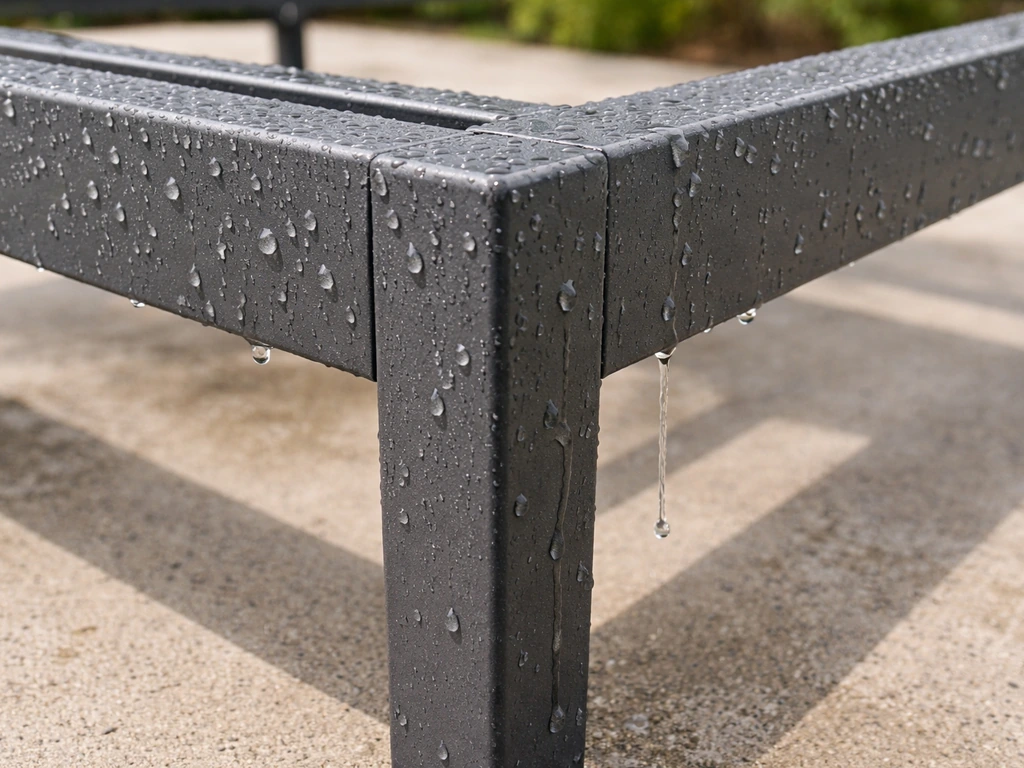
Powder-coated aluminum is the most versatile outdoor furniture material available right now. Aluminum doesn't rust, which immediately eliminates one of the biggest failure modes for outdoor furniture. The powder coat adds a layer of protection against UV fading, scratches, and corrosion from salt air. For coastal environments, this combination is hard to beat. When evaluating aluminum furniture, look for manufacturers who reference AAMA 2604 or AAMA 2605 coating standards. AAMA 2605 is the more demanding spec, designed for severe UV, extreme temperatures, and harsh weather including salt spray. Most budget aluminum won't mention any coating standard at all, which is a red flag. Good powder-coated aluminum furniture can live outdoors year-round in nearly any climate with minimal intervention.
HDPE and recycled plastic lumber
High-density polyethylene (HDPE), which is what Polywood and similar brands use, is extremely durable and essentially maintenance-free. It doesn't rot, splinter, absorb moisture, or need sealing or painting. Polywood backs their furniture with a 20-year limited residential warranty, which is one of the strongest in the industry and reflects genuine confidence in the material's longevity. The tradeoffs: it's heavier than aluminum, it can fade in intense sustained sun if not UV-stabilized, and some people find the aesthetic less premium than real teak. But for longevity with near-zero upkeep, it's the most honest value in outdoor furniture.
Teak and hardwoods
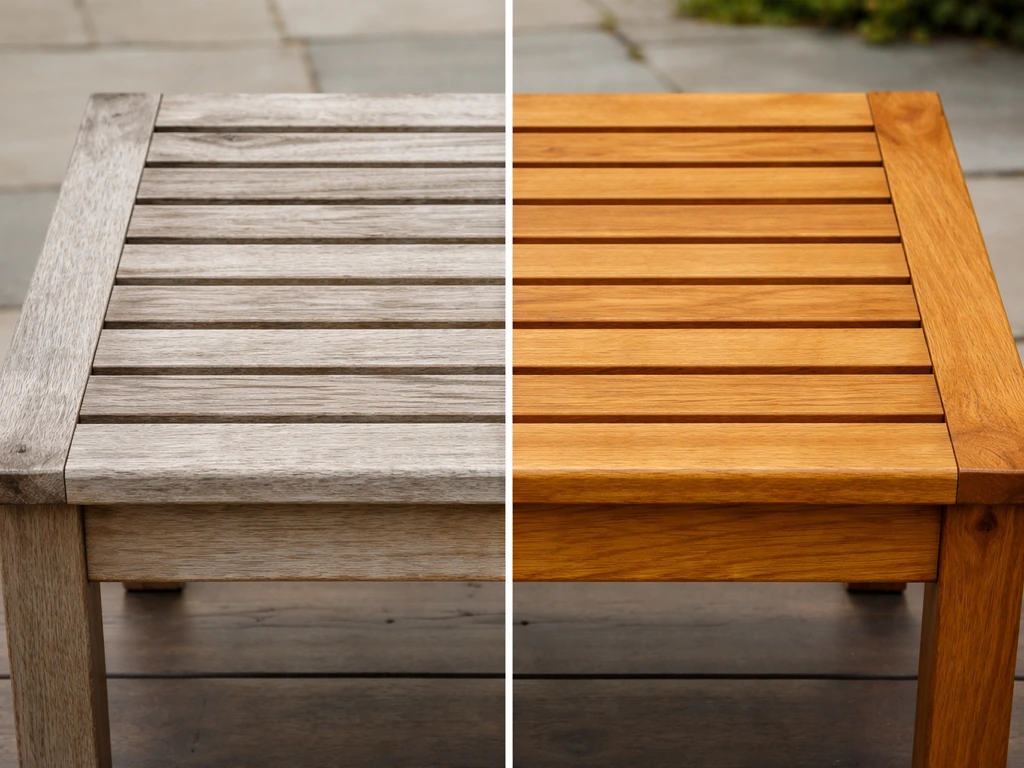
Teak is genuinely excellent outdoor wood because its natural oil content resists moisture, rot, and insects without much intervention. Left untreated, it turns a silvery gray. Treated with teak oil annually, it stays warm golden-brown. Either way is fine, but pick one and stick with it consistently. The problem with teak is cost (quality teak is expensive) and sustainability sourcing (look for FSC-certified pieces). Shorea and eucalyptus are more affordable hardwood alternatives with decent performance but shorter lifespans than teak. Avoid pine, cedar, and any softwood for anything you want to last more than three to five years outdoors without heavy maintenance.
Resin wicker vs. natural wicker
Natural wicker is not outdoor furniture. Consumer Reports is direct about this: natural fiber wicker woven around a metal frame is not meant for outdoor use. It molds, deteriorates, and falls apart in any real outdoor exposure. Resin wicker (synthetic wicker made from UV-stabilized polyethylene over a metal frame) is an entirely different product and performs well outdoors. A quality resin wicker conversation set starts around $700 at the mid-tier level. The frame underneath the weave matters as much as the weave itself. Look for powder-coated aluminum or steel frames rather than plain steel, which will eventually rust and cause the weave to buckle.
Steel
Steel is heavier and stronger than aluminum but far more vulnerable to rust if the finish is compromised. For most homeowners, powder-coated steel is fine in mild climates where furniture is brought in or covered in winter. In coastal environments or areas with heavy sustained rain, steel requires much more vigilance. Any chip or scratch in the finish becomes a corrosion entry point. If you're comparing steel versus aluminum at a similar price, aluminum almost always wins for outdoor longevity with less maintenance.
| Material | Best Climate Fit | Maintenance Level | Typical Lifespan | Relative Cost |
|---|---|---|---|---|
| Powder-coated aluminum | All climates, coastal | Low | 15+ years | Mid to high |
| HDPE / recycled plastic | All climates, coastal, freeze-thaw | Very low | 20+ years | Mid to high |
| Teak / hardwood | Mild to moderate, low coastal | Medium (annual oiling) | 10–20+ years | High |
| Resin wicker | Mild to moderate, dry coastal | Low to medium | 8–12 years | Mid |
| Powder-coated steel | Mild, non-coastal | Medium (check finish) | 8–12 years | Low to mid |
| Natural wicker | Indoor or covered only | High | 2–5 years outdoor | Low |
Weather resistance and climate fit
Your climate is the most important variable in this entire decision, and most buying guides bury it or skip it entirely. Here's how to think about the four main outdoor stress categories and which materials hold up in each.
Intense sun and heat (Arizona, Nevada, Southern California)
UV radiation is the primary killer here. Cushion fabric fades and weakens, plastic components become brittle, and wood dries out and cracks. The solution is solution-dyed acrylic fabric for any cushions (the dye goes through the entire fiber, not just the surface, so UV can't strip it from the outside in). Sunbrella is the most recognized brand in this category and backs its upholstery fabric with a 5-year limited warranty specifically covering fading and strength loss under normal outdoor exposure. For frames, powder-coated aluminum or HDPE outperforms everything else because neither degrades from UV alone. Avoid dark-colored frames in direct intense sun if you want to use armrests comfortably in summer.
High humidity and rain (Florida, Gulf Coast, Pacific Northwest)
Moisture and mildew are the dominant threats. Any organic material (wood, natural fiber, standard foam cushions) absorbs moisture and starts growing mildew fast in sustained humidity. Powder-coated aluminum and HDPE frames are your best options because neither absorbs water. For cushions, solution-dyed acrylics like Sunbrella resist mildew better than most other fabrics, and when mildew does appear, you can clean it with a diluted bleach solution without damaging the fabric. Quick-dry foam inserts (open-cell or draining foam cores) are also worth the premium because they shed water rather than holding it. In very wet climates, plan to bring cushions inside or at least stand them on edge to drain after rain.
Freeze-thaw cycles (Midwest, Northeast, Mountain West)
Water expanding as it freezes is brutal on furniture joints and materials. Wood absorbs moisture and then the freeze-thaw cycle pries joints apart over seasons. Any porous material fails faster here. HDPE is uniquely good in freeze-thaw climates because it doesn't absorb water and isn't affected by the expansion cycle. Powder-coated aluminum performs well too, as long as the finish is intact. Plan to store or cover cushions over winter, and for wood furniture, bring it into a garage or shed if you want it to last a decade or more in a cold climate.
Coastal salt air (beachside properties, waterfront homes)
Salt air accelerates corrosion of any metal that isn't well-protected, and it degrades finishes faster than normal outdoor exposure. For coastal buyers, powder-coated aluminum with a high-quality coating (AAMA 2604 or 2605 spec) and HDPE are the two best choices. Both handle salt air exposure better than anything else at reasonable prices. Teak can work on the coast too, but it needs more maintenance. Steel, even powder-coated, is risky within about a mile of the ocean unless you're very diligent about touching up any scratches immediately. Resin wicker over aluminum frames is better coast-side than resin wicker over steel frames.
How to check construction quality before you buy
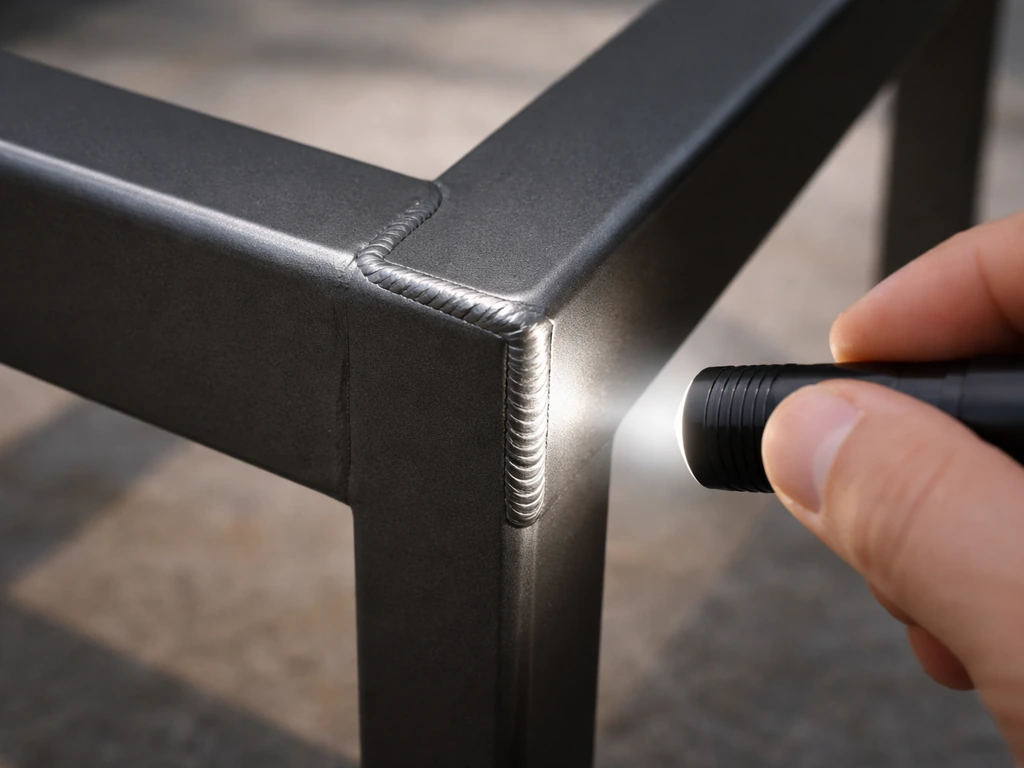
Most furniture marketing tells you nothing useful about whether it will hold up. Here's what to actually look at, whether you're buying in a store or reviewing specs online.
Frames and joinery
For aluminum and steel, look at the welds. They should be smooth, continuous, and consistent. Pitted, bubbly, or visibly uneven welds indicate poor manufacturing quality and future crack points. For bolted connections, check whether stainless steel hardware is used rather than zinc-plated steel. Zinc-plated hardware rusts first, and a rusting bolt will eventually stain and compromise the frame around it. On wooden furniture, look for mortise-and-tenon joinery or through-bolted connections rather than just glue or short screws. Glued-only joints in outdoor furniture are a durability red flag.
Frames: wall thickness and weight
Aluminum tube wall thickness matters more than most buyers realize. Budget aluminum outdoor furniture often uses 1.0 to 1.2mm wall thickness, which flexes and eventually cracks at stress points. Better-quality aluminum uses 1.5 to 2.0mm walls, which you'll feel immediately when you pick up the piece (it's noticeably heavier and more solid). If you can physically pick up the furniture before buying, do it. A flimsy, light dining chair is a warning sign even if the powder coat looks perfect.
Cushions and fabric
Cushion quality is where brands cut the most corners and where you'll feel it fastest. The fabric should be tight-woven with no visible looseness in the weave. Solution-dyed acrylic is the performance standard, and Sunbrella is the most well-known brand with documented warranty coverage. For the foam core, press firmly on the cushion: it should feel dense and spring back fully. Thin, soft foam that compresses easily will flatten within one season. Look for cushion covers with zipper closures so you can remove and wash them, and check that the zipper pull feels solid rather than thin and plasticky. Double-stitched seams at the corners and piping edges indicate better construction.
Finishes and coating quality
On powder-coated metal, the finish should be even, with no thin spots, drips, or visible texture variations. Run your hand along edges and undersides: budget furniture often has thin or missing powder coat on edges and undersides where the spray misses. Those are the first spots to rust or fade. On wood, check for even penetration of any sealant or stain, with no peeling, bubbling, or dry raw-wood patches.
Best options by furniture type
Dining sets
For outdoor dining, prioritize a sturdy table with a surface that can handle heat, food, and cleaning without degrading. Powder-coated aluminum tabletops, porcelain-topped aluminum tables, and teak are the most practical. Glass tabletops look great but chip and require frequent cleaning. The chairs need to be comfortable for a full meal, which means a seat depth of at least 17 inches and armrests if you entertain for long stretches. Stackable chairs are worth considering if storage space is limited. A standard 60-inch round or 72-inch rectangular table seats six comfortably, but verify your clearance measurements before committing.
Conversation sets
Conversation sets are the most popular category for homeowners who primarily entertain rather than dine outside. A typical four-piece set includes a sofa, two chairs, and a coffee table. Resin wicker over aluminum frames is very competitive here because the aesthetic is appealing and the performance is solid for most non-coastal climates. Mid-tier sets start around $700 and climb into several thousand dollars for premium aluminum or cast aluminum with high-end cushions. Deep-seat cushion thickness matters most for this category: look for at least 4 inches of cushion depth, ideally 5 to 6 inches for comfortable lounging.
Lounging and chaise sets
Chaise lounges and outdoor daybeds are where materials like HDPE and powder-coated aluminum really earn their keep because they sit in direct sun constantly. For pool-adjacent use, HDPE slat-style loungers are the most practical choice: they don't retain heat uncomfortably, they drain immediately, they don't rust from pool chemicals, and they require almost no maintenance. For cushioned loungers, the same rule applies: solution-dyed acrylic fabric with quick-dry foam is worth paying more for. Loungers with adjustable back positions (ideally three to five stops) are much more useful in practice than flat ones.
Budget and value: where to spend and where to save
The biggest budget mistake in outdoor furniture is buying cheap twice. A $300 dining set that needs replacing in three years costs more over a decade than an $800 set that lasts twelve. That said, not every piece requires top-tier investment. Here's how to think about where quality actually matters.
- Spend on frames: A high-quality frame with a decent cushion beats a cheap frame with premium cushions every time. Frames are structural and harder to replace.
- Spend on cushion fabric if you have sun or humidity: Sunbrella or equivalent solution-dyed acrylic costs more upfront but won't need replacing for 5 to 10 years under warranty conditions. Cheap polyester cushion fabric fades and deteriorates in one to two seasons.
- Save on accent pieces: Side tables, plant stands, and smaller decorative items don't face the same structural stress as seating. Budget options here rarely disappoint.
- Save on umbrellas and shade structures: These need periodic replacement regardless of quality due to UV and wind exposure. Don't over-invest here.
- Spend on covers if you don't have covered storage: A good-quality weather cover that actually fits pays for itself by protecting a premium frame investment.
- Mid-tier is usually the sweet spot: Entry-level sets under $400 to $500 rarely last more than three to five years in real outdoor exposure. Above $1,500 to $2,000 for seating sets, you're into genuine quality territory with warranties to match. $700 to $1,500 for conversation and dining sets is where most homeowners find the best balance.
Warranty length is a useful shortcut when comparing brands. HDPE furniture brands like Polywood that offer 20-year limited warranties are communicating something real about material confidence. Sunbrella's 5-year upholstery warranty and 10-year fabric warranty (depending on the product category) also function as durability benchmarks worth comparing against store-brand cushion fabric that comes with no documented coverage.
Maintenance and protection: keep it lasting for years
Even the most durable outdoor furniture lasts longer with basic seasonal care. The good news is that the best materials require very little. The bad news is that neglecting even simple tasks on lower-maintenance materials accelerates their decline significantly.
Cleaning routines
For Sunbrella and solution-dyed acrylic cushions, clean with mild soap and water using a soft-bristle brush or sponge, working seam to seam rather than scrubbing in circles. Brush off loose dirt before it embeds in the weave. For mold or mildew (common in humid climates), a diluted bleach solution is safe on Sunbrella fabric without damaging the fiber. Always rinse thoroughly and let cushions dry completely before storing or restacking. Damp cushions stored in a bin grow mildew fast, even on high-performance fabrics.
For powder-coated aluminum and steel frames, rinse with a hose periodically (more frequently in coastal areas where salt deposits) and wipe down with mild soap and water two to three times per season. Touch up any chips or scratches with matching paint immediately, especially on steel. For HDPE furniture, soap and water or a pressure washer on a low setting is all you'll ever need.
Covers and seasonal storage
Covers protect frames and surfaces from UV degradation, debris accumulation, and tree sap even in mild climates. A cover that fits properly is worth significantly more than a too-large universal cover that collects water and creates its own mildew problem. For frames, covers are beneficial but optional if your material choice is genuinely weather-resistant (HDPE and quality powder-coated aluminum can realistically be left uncovered year-round in most climates). For cushions, the calculus is different: cushions should come inside or into a deck box when not in use, particularly in rain and overnight. This one habit extends cushion life dramatically regardless of fabric quality.
In freeze-thaw climates, teak and hardwood furniture benefits meaningfully from winter storage in a garage or shed. Even a tarp that keeps standing water off wood joints will slow down the deterioration cycle significantly. HDPE and powder-coated aluminum don't technically need winter storage but come out of winter looking better with even minimal cover protection.
Seasonal inspection checklist
- At the start of the season: Check all hardware (bolts, screws, glides) for rust or looseness. Tighten anything that has worked free over winter.
- Inspect frame finish for chips, scratches, or rust spots. Touch up powder-coated metal immediately; re-sand and re-seal wood if needed.
- Check weld and joint integrity on metal frames. Any cracks or separation at welds should be addressed or the piece retired before it fails under a user.
- Inspect cushion fabric for mildew, delamination at seams, or significant fading. Mildew is cleanable; major fading or seam failure means the fabric is near end of life.
- At the end of the season: Clean everything thoroughly before storing. Dirty furniture stored wet degrades significantly faster than clean, dry furniture.
- For teak and hardwoods: decide whether to apply teak oil to restore color and moisture resistance for the following season.
The buying decision and the maintenance plan are really two sides of the same choice. If you buy the right material for your climate, clean it a few times a season, bring cushions in when it rains, and do a quick start-of-season inspection, quality outdoor furniture should give you ten to twenty years of use without major issues. If you want to buy once and keep it for years, use this material and climate checklist as a guide for what to look for in patio furniture material for your climate. The pieces that fail early almost always fail because of the wrong material for the climate, not because outdoor furniture is inherently fragile.
FAQ
How do I choose between aluminum and HDPE if my patio gets both strong sun and occasional rain?
If you have intense, long-duration sun, pick solution-dyed acrylic cushions with quick-dry foam regardless of frame, then choose frames based on how much you use and cover them. Powder-coated aluminum is usually best for year-round look with minimal bulk and easier cleaning, while HDPE is best if you want the most hands-off approach and you often leave furniture uncovered during wet spells. Either way, plan to bring cushions in after rain or overnight to prevent trapped moisture and mildew.
What clearance rules apply to outdoor sectional sofas that include ottomans or a chaise?
Use the same walking-space idea, but measure the pieces in their actual use positions. If you have a chaise or ottoman that slides out, include clearance for the extended footprint (not just the folded-in position). As a practical target, aim for about 18 inches of walkable space where you expect people to pass, and ensure any slide-out seat does not scrape a wall, railing, or the edge of a rug.
Can I leave outdoor cushions outside under a cover, or do they still need to come in?
A cover helps protect from UV and debris, but it does not reliably stop moisture from getting trapped, especially if rain enters or the cover is loose. For best longevity, store cushions inside (or in a dry deck box) when it will rain heavily or overnight. Even quick-dry foam can become a mildew risk if cushions are damp and stored together in an unventilated bin.
How can I tell whether resin wicker is actually outdoor-grade, not “looks like” wicker?
Check the construction beyond the weave. Outdoor resin wicker should specify UV-stabilized polyethylene and be wrapped over a corrosion-resistant frame, ideally powder-coated aluminum or steel with strong rust protection. If the listing just says “wicker” without calling out resin material and frame type, treat it as a higher risk purchase.
Is it worth buying a higher AAMA coating spec for powder-coated aluminum if I live far from the ocean?
Often, yes if your region has strong sun and seasonal harshness, because higher coating specs are designed to handle more than salt spray. That said, if you are in a mild climate with moderate sun and you can keep furniture rinsed and the finish intact, AAMA 2604 may be sufficient. The decision aid is maintenance reality: the less likely you are to touch up chips quickly, the more the higher coating spec matters.
What’s the best way to test aluminum tube quality in-store without special tools?
Lift it and check how quickly it flexes under your grip. Budget aluminum typically feels noticeably lighter and less solid, while higher-grade tubing feels denser and more rigid. Also inspect welds and the underside edges for thin, uneven powder coat, because those are common early failure points even if the top surface looks good.
How often should I clean outdoor furniture, and what happens if I skip it?
For frames, a basic rinse and mild soap wipe a few times per season keeps salt, pollen, and grime from accelerating finish wear. In coastal areas, do it more frequently because salt deposits can start corrosion at tiny scratches. For cushions, brushing off loose dirt before it embeds in the weave reduces the need for harsher treatments, and it helps maintain fabric strength and color.
What should I do if I scratch powder-coated aluminum or powder-coated steel?
Address it quickly, especially on steel. Clean the area, let it dry, then touch up with matching outdoor-rated paint made for powder-coated finishes. If you ignore a small scratch, it can become a corrosion entry point that spreads under the coating, which leads to bubbling and larger repairs later.
Do I need covers if I buy HDPE or AAMA 2605 powder-coated aluminum?
You can often leave HDPE and good powder-coated aluminum out year-round, but covers still help with debris, tree sap, and reducing how much cleaning you have to do. Choose correctly sized covers, because overly large “universal” covers trap moisture and accelerate mildew on nearby fabrics. For cushions specifically, covers are not a replacement for bringing them inside in rain-prone periods.
How do I plan for dining chairs that slide in and out without scraping the wall or obstructing doors?
Measure not only the chair width, but also the chair’s turning and pull-out path when seated. Use your clearance targets as a minimum for circulation, then subtract for any nearby obstacles like planters, gates, or baseboards. If chairs scrape during a test pull, adjust the seating width or pick a different chair design, such as ones with narrower profiles or arms that allow smoother clearance.
Next Articles
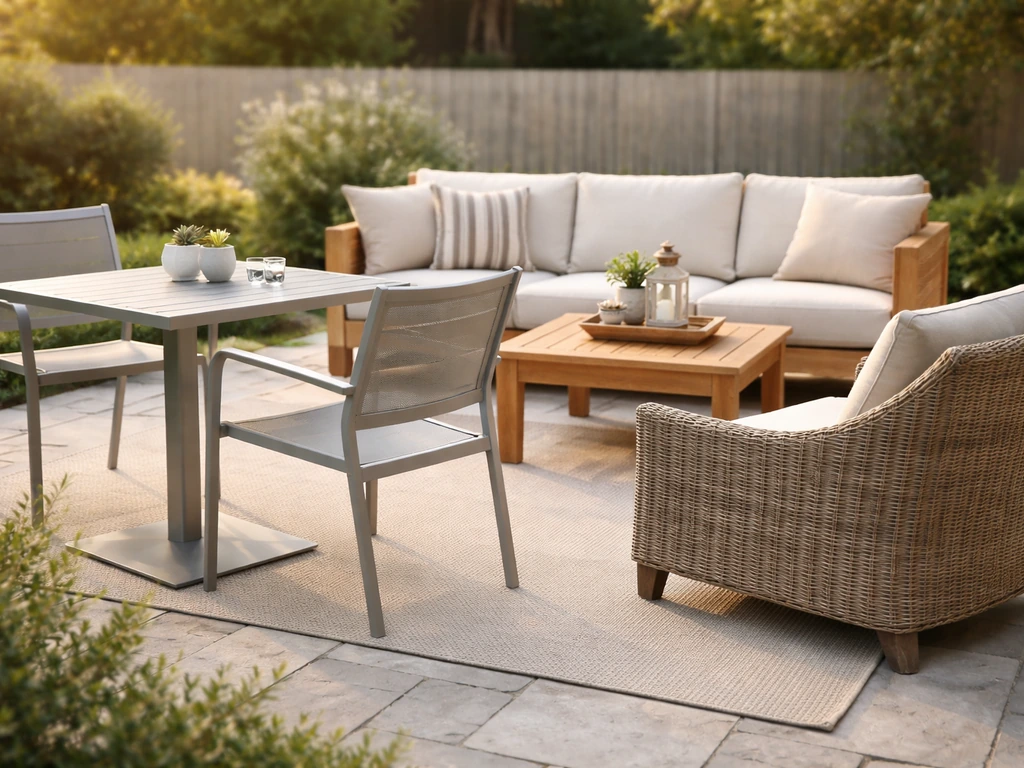
How to Pick Patio Furniture: A Step by Step Buying Guide
Step-by-step how to pick patio furniture: measure layout, choose durable materials, cushions, comfort, and compare warra
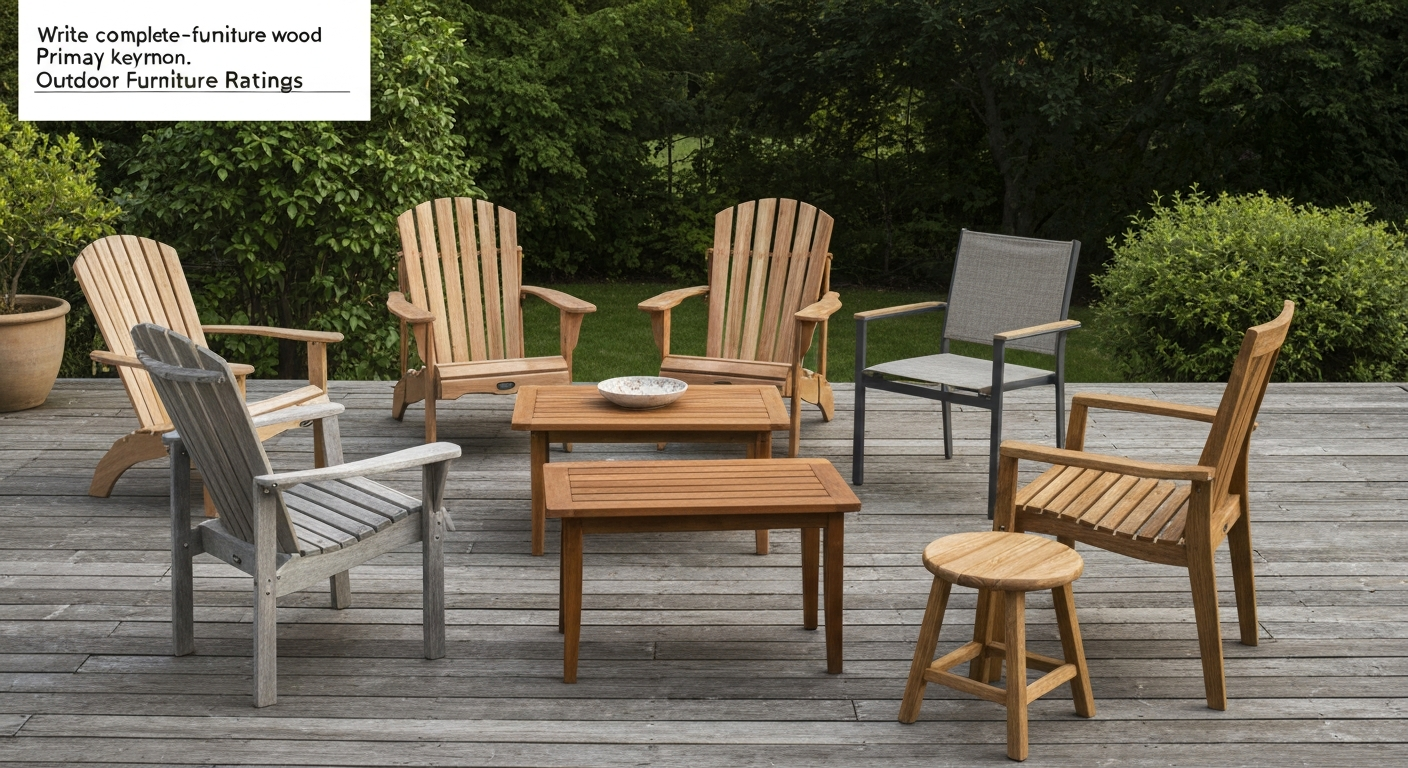
Common Patio Furniture Wood: Best Choices, Care & Tips
Compare common patio furniture wood types, teak, cedar, redwood, oak, with durability, finishes, and care tips.
Best Wood Patio Stain: Choosing Durable, Low-VOC Finishes
Compare and choose the best wood patio stain: durability, finish, climate tips, prep, and top product picks.