
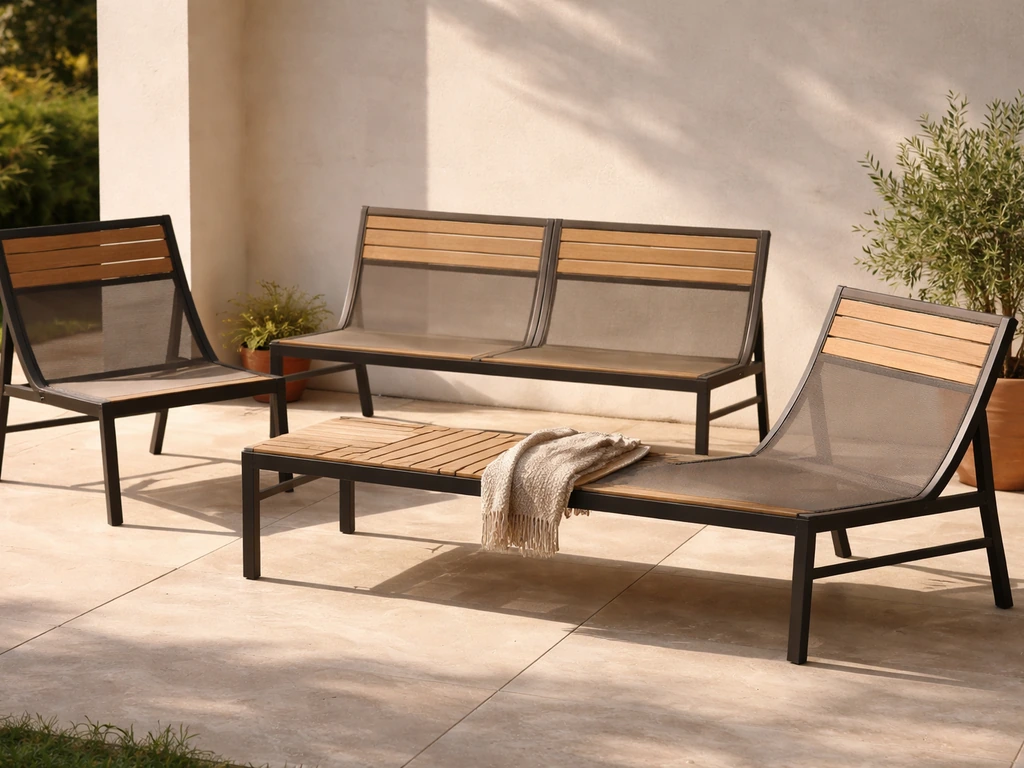
The best patio furniture without cushions is made from teak, powder-coated aluminum, or high-density polyethylene (HDPE) composite, paired with a chair or bench design that does the ergonomic work the cushion used to do. Sling chairs, slatted Adirondack-style seats, and mesh dining chairs all deliver genuine comfort without a pad underneath you, as long as the seat-to-back angle sits around 95 to 105 degrees and the seat height lands near 18 inches. For example sling chair listings report seat height ranges of about 14, 16 inches, which you can compare against your comfort needs for cushion-free seating seat height lands near 18 inches. Get the material and geometry right, and you won't miss the cushion at all.
Best Patio Furniture Without Cushions: Buyer’s Guide

Theo Tierney
2 Jun 2026
Why going cushion-free actually changes how you shop
Cushion-free furniture isn't just furniture with the cushions removed. It's a fundamentally different category, because the seat itself has to carry all the comfort, and the material has to tolerate everything the weather throws at it without the protective buffer a cushion provides. When cushions are in the picture, they soak up the sun's heat before it reaches you, they hide surface imperfections, and they mask a poorly shaped seat. Without them, every detail matters: the seat angle, the slat spacing, the surface texture, and how hot the material gets at 2 p.m. in July.
The maintenance story also changes completely. Cushions are the number-one maintenance headache in outdoor furniture: storing them, drying them, replacing them when the foam breaks down. Go cushion-free and you eliminate most of that overhead. But you also eliminate the moisture barrier cushions provide between rain and your seat frame, which means the frame itself needs to be genuinely weather-resistant, not just coated to look that way. This matters especially if you're comparing notes with low-maintenance or leave-it-outside furniture strategies, where material quality is the whole ballgame.
Heat absorption is the third factor most buyers don't think about until they sit down on a black metal chair in August and immediately stand back up. Dark powder-coated aluminum and wrought iron turn into frying pans in direct sun. Bare teak and HDPE composite stay significantly cooler because wood and dense plastic don't conduct heat the way metal does. If you're in a hot-sun climate, that seat surface temperature is a real comfort issue, not a minor footnote.
Best materials for cushion-free outdoor furniture
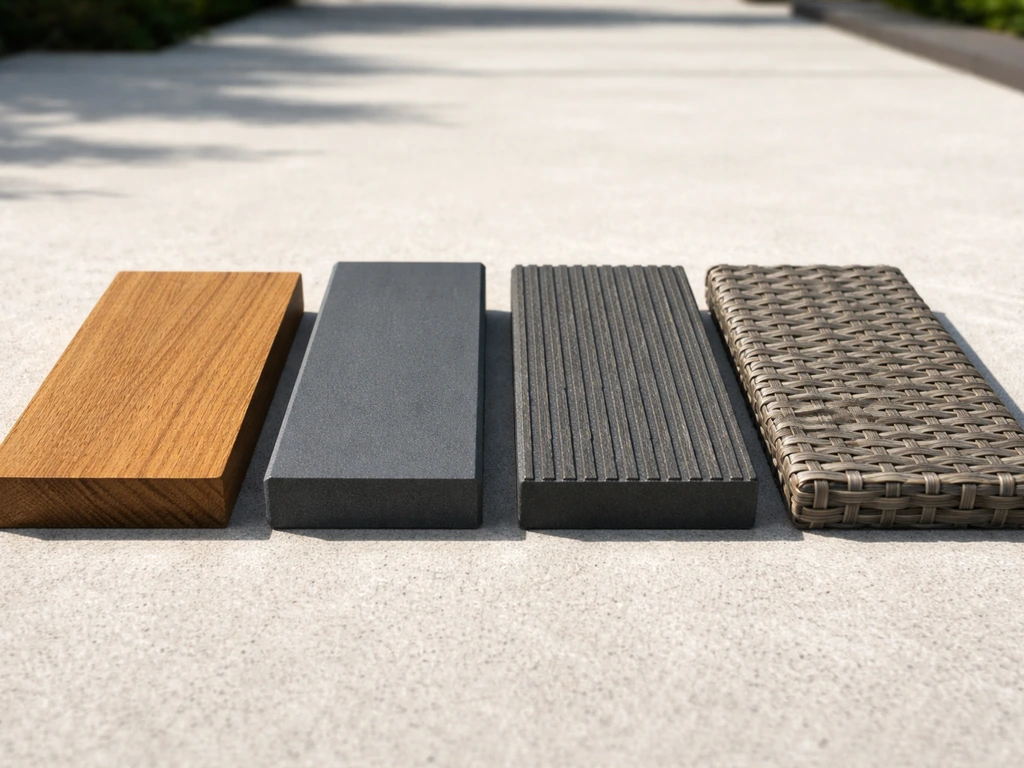
Each major material has a different profile when you're relying on it for bare-seat comfort and long-term durability. Here's how they actually compare.
Teak
Teak is the gold standard for cushion-free wood furniture, and it earns that reputation. The natural silica and oils in the grain resist rot, repel water, and make it dimensionally stable in ways that most other woods aren't. A well-made teak chair or bench can last 20 to 30 years outdoors. The surface is also warm to the touch rather than scorching, and the natural texture gives bare skin something to grip instead of sliding.
The honest trade-off: teak is expensive, it will silver to a grey patina if left untreated (which many people actually prefer), and the surface can develop mildew if dirt and debris accumulate on it. Teak itself doesn't mildew, but the organic material sitting in the grain will. Cleaning a few times a year handles it. [If black spots appear](https://www.
goldenteak. com/teak-outdoor-furniture-care. htm), a 1-to-4 ratio of white vinegar to water applied for 15 minutes before rinsing usually clears them. A mild bleach solution (1 part bleach to 10 parts water) works for more stubborn cases.
Powder-coated aluminum
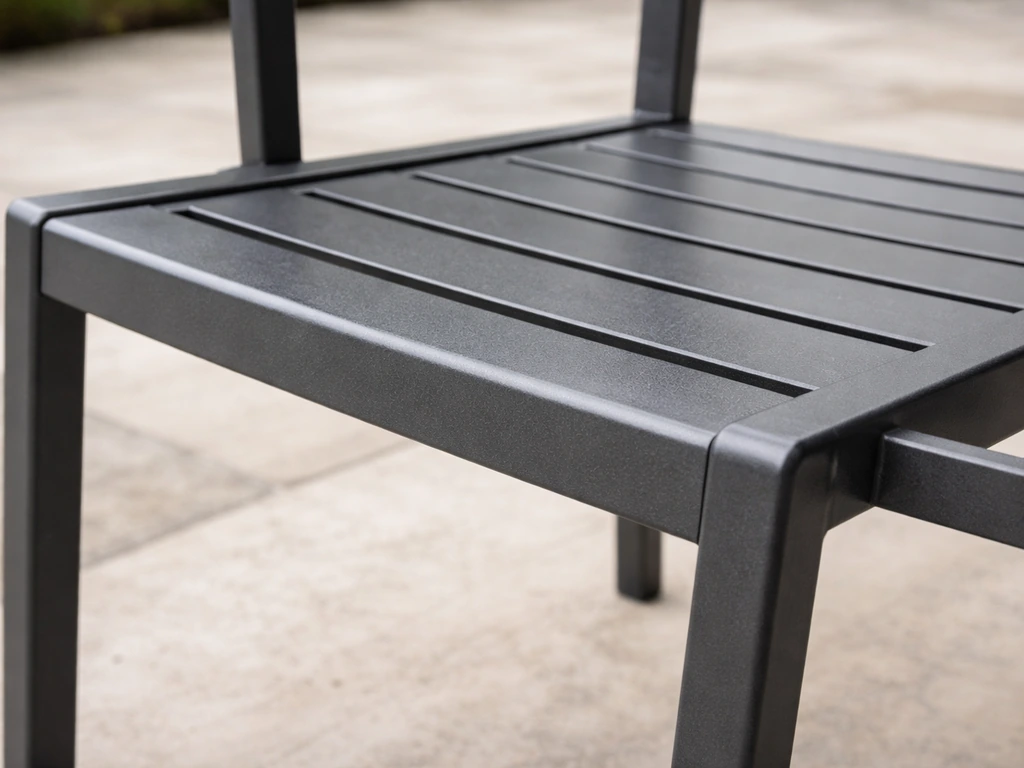
Aluminum is the practical workhorse. It won't rust, it's lightweight enough to rearrange easily, and a good powder coat finish protects the surface for a decade or more. The key word is 'good. ' When shopping, look for coatings that meet AAMA 2604 standards at minimum: that spec requires at least 80% of finish measurements to hit 30 microns (1.
2 mil) of dry-film thickness on exposed surfaces, and it's been tested for up to 10 years of UV resistance in South Florida conditions. AAMA 2605 is higher-performance still and worth seeking out if you're in a harsh climate. Cheap aluminum furniture has a thin spray finish that chips and chalks within a couple of seasons, especially in high-UV or coastal environments.
The comfort limitation with aluminum is heat absorption: light colors help, and sling or mesh seat panels (which don't contact as much surface area) largely solve the problem.
HDPE composite (also called poly lumber)
High-density polyethylene composite, often sold as poly lumber or recycled plastic lumber, is the most genuinely maintenance-free material on this list. If you want the best maintenance-free patio furniture, HDPE composite is one of the top choices because it stands up to years outdoors with minimal upkeep. If you want the best low-maintenance patio furniture, HDPE composite and well-built sling or mesh options are usually the easiest to live with.
It won't rot, rust, fade significantly, or absorb moisture. It holds color through UV exposure for years without painting or sealing. The surface stays cooler than metal in direct sun. The trade-off is aesthetics: it looks like plastic, because it is.
Some people are fine with that. The material is heavy, which actually helps stability in wind. Welded or bolted aluminum frames with HDPE slat surfaces are a common combination that gets the best of both: lightweight structure with a comfortable, weather-proof seat surface.
Wrought iron and steel
Wrought iron looks great and is very sturdy, but it rusts, and cushion-free use means that bare seat surface is fully exposed to rain. Without a cushion acting as a partial moisture cover, any chip in the powder coat turns into a rust spot faster than you'd expect. Steel has the same problem at scale. Some warranties explicitly exclude rust and rust staining from coverage, so read the fine print before you buy. If you go this route, invest in touch-up paint, plan to inspect hardware annually, and use breathable furniture covers when you're not using the set. Wrought iron also gets extremely hot in direct sun.
All-weather wicker and resin rattan
Natural rattan falls apart outdoors. Full stop. What you want is resin wicker or all-weather wicker, which is a synthetic weave (usually polyethylene or vinyl) over an aluminum or steel frame. A well-constructed all-weather wicker chair is surprisingly comfortable without cushions because the weave has natural give and breathes. The frame underneath is the variable that separates durable sets from disposable ones. Look for aluminum frames, not steel, for rust resistance. The weave itself should feel tight and uniform, with no visible gaps at the seams where it's joined to the frame. Cheaper versions start to unravel or sag within a few seasons.
| Material | Comfort Bare | Heat in Sun | Rust/Rot Risk | Maintenance Level | Best For |
|---|---|---|---|---|---|
| Teak | Excellent | Low | Very low (rot); mildew if dirty | Low-moderate (clean 2x/year) | Most climates, premium buyers |
| Powder-coated aluminum | Good (with mesh/sling) | High if dark | None (rust-free) | Low | Most climates, budget-to-mid |
| HDPE composite | Good | Low-moderate | None | Very low | Rainy, humid, or coastal zones |
| Wrought iron/steel | Poor-moderate | Very high | High if coating chips | High | Dry climates only |
| All-weather wicker | Good | Low-moderate | Low (Al frame) | Low | Mild climates, covered patios |
Chair and seat styles that stay comfortable without cushions
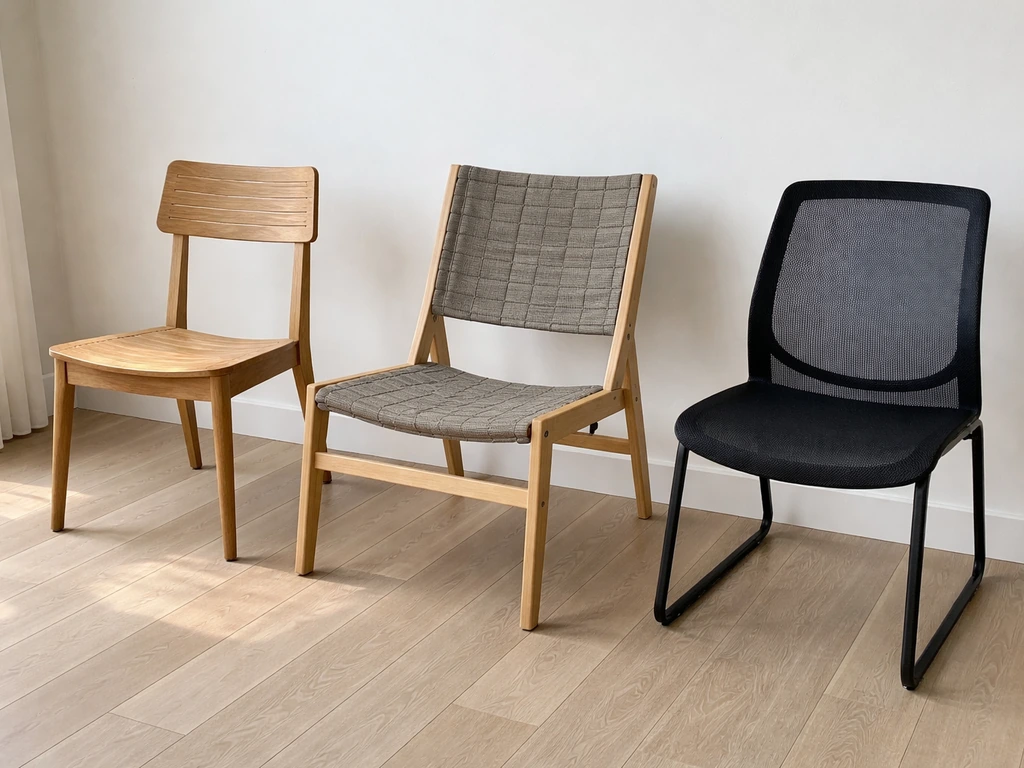
The shape of the seat does more work than the material when it comes to cushion-free comfort. A flat, 90-degree dining chair made of teak is still uncomfortable without a cushion. The same wood in a correctly shaped Adirondack or sling design is perfectly fine for hours. Here's what to look for by style.
Sling chairs
Sling chairs, where the seat and back are a single piece of fabric or vinyl suspended in a frame, are probably the most naturally comfortable cushion-free outdoor chair design available. The sling conforms slightly to your body, distributes weight evenly, breathes well (no sweaty back), and stays relatively cool. Look for a seat height in the 15 to 17-inch range for dining and conversation heights, and confirm the sling material is UV-stabilized. Stretched or sagging slings are a common failure point on cheaper versions.
Slatted and contoured chairs
A well-designed slatted chair (teak, aluminum, or HDPE) that curves the seat and back to match your body's natural position can be genuinely comfortable without any padding. The critical spec is that seat-to-back angle: 95 to 105 degrees is the range that reduces back strain versus sitting bolt-upright at 90 degrees. Slat spacing also matters for airflow and comfort: too narrow and the slats dig into your legs, too wide and you lose support. About 1 to 1.5 inches of spacing is typical for most slatted dining and lounge chairs. Slat orientation also helps with drainage and drying after rain, which is an added benefit for any furniture you're planning to leave outside.
Mesh chairs
Powder-coated aluminum or steel mesh seats are common in commercial outdoor settings for a reason: they distribute weight, drain water instantly, and breathe well. The mesh itself is essentially invisible in terms of maintenance. These work best for dining chair applications. The frame quality is what varies most here: check that welds are clean and that the mesh is tensioned evenly across the seat and back panels.
Benches
Cushion-free benches are comfortable when the geometry is right. Target a seat height of 18 to 20 inches and a seat depth of 15 to 20 inches. If the bench has a backrest, that back should extend at least 16 inches above the seat surface to provide meaningful lumbar and upper-back support. A 2 to 10-degree backward tilt on the seat itself (so you're not perching on a perfectly flat surface) adds a lot of comfort. Backless benches are fine for shorter sitting periods but aren't designed for long relaxation without something to lean against.
Bar stools and counter-height options
Outdoor bar stools without cushions work best as sling or mesh designs, or in contoured teak or HDPE. The main comfort issue at bar height is foot support: a built-in footrest rail at the right height makes a significant difference for longer seating. Without it, leg fatigue sets in fast regardless of the seat material.
What works (and what doesn't) in your specific climate
Hot, sunny climates (think Arizona, Southern California, Texas)
UV degradation and surface heat are your two problems. Dark powder-coated metal furniture becomes painful to sit on in direct afternoon sun, so prioritize light-colored aluminum, teak, or HDPE. Avoid resin wicker in extreme UV climates unless it's specifically rated for high-UV exposure, because cheaper weaves can become brittle and crack. Teak will silver faster in intense sun but holds up structurally. HDPE composite is a strong pick here because good-quality versions are UV-stabilized and hold color without sealing or painting. Look for furniture rated for direct outdoor use rather than 'covered patio' applications.
Freeze-thaw climates (Midwest, Northeast, mountain regions)
Moisture that gets into cracks or joints and then freezes will split wood, pop welds, and crack cheap coatings faster than almost anything else. Teak handles freeze-thaw well due to its dimensional stability, but most other woods don't. Aluminum is excellent here because it won't rust and isn't damaged by cold. HDPE composite is also a strong choice for freeze-thaw regions.
Steel and wrought iron are risky unless you're committed to storing them or covering them every winter, and even then you'll fight rust at any compromised coating area. If you're looking at what furniture to leave outside year-round in these climates, material choice becomes everything. With the right cushion-free materials and construction, the best patio furniture to leave outside can handle sun, rain, and temperature swings.
Humid and coastal climates (Florida, Gulf Coast, Pacific Northwest)
Salt air is highly corrosive and goes after metal furniture relentlessly. In these environments, hardware is as important as the main frame material: look specifically for 316 marine-grade stainless steel fasteners, not 304. The difference matters: 316 has added molybdenum that resists chloride corrosion from salt spray significantly better than 304. Aluminum frames themselves are generally fine in coastal settings, but the bolts, screws, and joint hardware are where cheaper furniture fails first.
HDPE composite is arguably the best coastal material overall: it's completely impervious to salt, humidity, and moisture. Teak performs well but needs more frequent cleaning to prevent mildew-promoting dirt buildup in humid environments. Avoid any steel or iron furniture on or near the coast unless you're prepared for intensive maintenance.
Rainy climates (Pacific Northwest, Southeast, areas with frequent rain)
Drainage and drying speed are the priorities in wet climates. Slatted designs are better than solid seats because water runs off immediately rather than pooling. Mesh seats drain instantly. HDPE composite doesn't absorb moisture at all.
The problem with cushion-free furniture in rainy areas isn't usually the seat material, it's the joints and hardware sitting in standing water repeatedly. Stainless steel hardware and aluminum frames handle this best. Teak is fine in rain if you keep it clean, but let it dry for about 48 hours after a thorough washing before covering it, to avoid trapping moisture that darkens the grain and encourages mildew.
Furniture intended for rainy climates overlaps significantly with what makes the best rain-specific patio furniture in general.
What to actually check before you buy
Construction details that separate good from bad
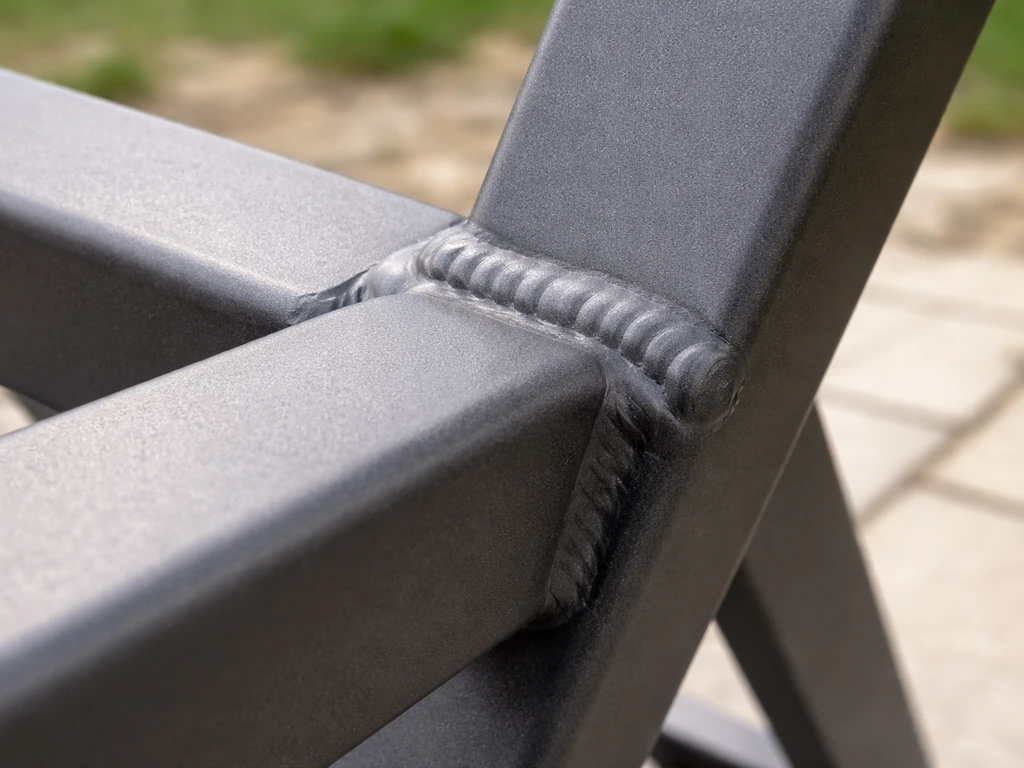
Joints are where outdoor furniture fails. Look for welded aluminum frames rather than bolted-together parts at structural stress points, and check that weld seams are smooth and fully closed, not porous or rough. On wood furniture, mortise-and-tenon joinery or stainless steel bolt connections at the corners are far more durable than simple screws driven into end grain. Wobble test any chair before you buy it: a quality frame won't flex when you press down on a corner.
Finish quality and coating specs
For aluminum furniture, ask or look up whether the powder coat finish meets AAMA 2604 or AAMA 2605 standards. AAMA 2604 sets a minimum dry-film thickness of 30 microns (1.2 mil) on exposed surfaces and requires performance testing including South Florida UV exposure. If a brand can't tell you what coating spec their furniture meets, that's a red flag. Avoid furniture described as 'spray-painted' or 'baked enamel' without a stated specification: these terms cover a wide range of quality from adequate to completely inadequate.
Dimensions and ergonomics
- Seat height: 18 to 20 inches for dining chairs and benches; 16 to 17 inches for lounge/sling styles; 28 to 30 inches for bar height
- Seat-to-back angle: 95 to 105 degrees for both chairs and backed benches; anything closer to 90 degrees gets uncomfortable fast without padding
- Back height on benches: at least 16 inches above the seat surface for meaningful back support
- Seat depth: 15 to 20 inches for benches; 18 to 22 inches for lounge chairs
- Footrest on bar stools: should be present and positioned to let your feet rest naturally without hanging
Warranty coverage: what to read carefully
Outdoor furniture warranties vary enormously and the exclusions are where most buyers get surprised. Some warranties cover frame construction defects for five years but explicitly exclude rust, rust staining, and finish fading. Others cover finish for one to three years but nothing structural beyond that. A warranty that excludes rust on steel furniture is essentially excluding the most common failure mode for steel in outdoor conditions: that's a warranty with very limited practical value. Read the exclusion list, not just the headline coverage period. For cushion-free furniture specifically, prioritize warranties that cover the frame and finish together for at least three years.
Keeping cushion-free furniture looking and performing well
Cleaning routines by material
Teak: clean two to three times per year with mild soap and water, scrubbing with the grain. For mildew or black spots, use either a 1:4 white vinegar-to-water solution (15 minutes, then rinse) or a 1:10 bleach-to-water solution for stubborn cases. After a thorough wash, let the furniture dry for about 48 hours before covering or sealing it. One caution: applying teak oil in humid or high-moisture conditions can actually promote mildew rather than prevent it. In most climates, letting teak weather naturally or applying a UV-stable teak sealer is safer than oiling.
Aluminum and powder-coated metal: soap and water is all you need regularly. For coastal furniture, rinse with fresh water monthly to remove salt deposits, and check for any chips in the coating that need touch-up paint before rust can establish. Avoid abrasive cleaners or steel wool, which will scratch through the powder coat.
HDPE composite: easiest of all. Soap and water, or a dilute bleach solution for stains. No sealing, no painting, no annual treatment needed.
All-weather wicker: rinse with a hose to clear debris from the weave, then scrub with a soft brush and mild soap. Make sure water doesn't pool inside hollow frame sections, especially at the joints.
Covers and storage
Breathable furniture covers are worth using even on weather-resistant materials. The key word is breathable: non-breathable plastic tarps trap moisture underneath and create exactly the mildew conditions you're trying to avoid. Look for covers with vents and a woven fabric construction rather than solid plastic sheeting. For teak and all-weather wicker especially, trapped moisture is a bigger long-term problem than exposure to light rain.
In freeze-thaw climates, storing aluminum and teak furniture in a garage or shed during the winter extends finish life significantly even though the materials can technically handle freezing temperatures. HDPE composite can genuinely stay outside year-round without damage. Steel and wrought iron furniture should always be stored or covered during wet and freezing seasons.
Hardware checks and seasonal upkeep
Once a season, check every bolt and fastener on your outdoor furniture. Vibration and thermal expansion cause hardware to loosen over time, and a wobbly joint puts stress on welds and wood connections that can cause permanent damage. Tighten anything that's loose. Look for any rust staining around hardware on wood furniture (a sign the fasteners aren't stainless), any cracking in powder-coat finish around bolt holes, and any signs of weave separation on wicker pieces at the frame attachment points. Catching these early is the difference between a five-minute fix and a replacement purchase.
How to pick your set right now
Here's the fastest way to narrow it down. Answer these four questions and you'll have a clear shortlist.
- What's your climate? Hot and sunny: HDPE or light-colored aluminum. Rainy or humid: HDPE or teak. Coastal: HDPE or aluminum with 316 stainless hardware. Freeze-thaw: teak or aluminum. Dry and mild: almost anything works.
- How much maintenance are you willing to do? Zero: HDPE composite. Minimal (clean twice a year): teak or powder-coated aluminum. Some: all-weather wicker. Regular (annual treatment, touch-up): steel or wrought iron.
- What's the primary use? Dining: sling chairs or slatted dining chairs at 18-inch seat height. Lounging: contoured slatted or sling lounge chairs with 95-to-105-degree back angle. General seating/social: benches with a proper 16-inch backrest or all-weather wicker conversation sets.
- What's your actual budget? Under $500 for a set: aluminum with mesh or sling seating is your best cushion-free value. $500 to $1,500: look at quality aluminum sets with AAMA 2604 finish or entry-level teak. Over $1,500: properly graded teak, HDPE composite, or premium aluminum sets with multi-year finish warranties.
Common mistakes to avoid
- Buying 'all-weather' furniture without checking what specifically is covered: most all-weather claims cover rain resistance, not UV fade, rust, or finish durability
- Choosing dark-colored metal for hot, sunny patios and then wondering why no one sits on it in summer
- Skipping the warranty exclusion section: warranties that exclude rust on steel furniture provide very little real protection
- Using plastic tarps instead of breathable covers: you'll create mildew problems on furniture that would otherwise handle rain fine on its own
- Applying teak oil in humid climates without checking whether your conditions promote mildew growth on oiled surfaces
- Ignoring hardware material in coastal settings: aluminum frames with cheap steel hardware will rust at every joint within a couple of seasons
- Picking a chair purely on looks without checking the seat-to-back angle: a beautiful chair with a 90-degree seat angle is uncomfortable after 20 minutes, cushion or not
The bottom line: cushion-free outdoor furniture that genuinely works long-term is about choosing the right material for your climate, verifying that the construction and finish specs are real rather than marketing language, and matching the seat geometry to how you actually sit. Do those three things and you'll end up with a patio setup that requires almost no seasonal hassle and still feels comfortable every time you use it.
FAQ
Are cushion-free patio chairs comfortable in hot weather, or do they become too hot to sit on?
Metal is the main risk. Dark powder-coated aluminum and wrought iron can become dangerously hot in direct sun, even if the chair looks comfortable at shade temperature. If you want cushion-free seating in high-UV areas, prioritize light-colored aluminum, teak, or HDPE composite, and consider sling or mesh chairs that reduce the amount of surface area you contact.
What seat dimensions should I use if my patio table has a fixed height?
Match the chair to the table height so you are not perching or reaching. As a practical guide, the article’s cushion-free targets are around 18 inches seat height for general dining heights, slings that sit about 15 to 17 inches for conversation or dining, and about 18 to 20 inches for cushion-free benches. If you are buying for a bar height, confirm there is a footrest rail or add-on that prevents leg fatigue.
Do slat or mesh chairs need different spacing than cushioned styles?
Yes, because bare skin is directly exposed to texture and airflow. For slatted chairs, the comfort sweet spot is about 1 to 1.5 inches between slats to avoid leg pressure and to keep airflow. For mesh chairs, the key is even tension across the seat and back so the surface supports you consistently without sagging.
Is teak still a good cushion-free choice if I do not want to do regular cleaning?
Teak is durable, but cushion-free teak still needs periodic cleaning to prevent mildew-promoting buildup in the grain. If you truly want low-touch care, HDPE composite or well-built sling and mesh designs usually fit better. If you choose teak anyway, plan on washing about two to three times per year and drying thoroughly before covering.
How can I tell if an “all-weather” wicker chair is actually durable without cushions?
Check for an aluminum frame and a weave that is tight and uniform at the seams, with no visible gaps where the weave joins the frame. Cheap versions tend to unravel or sag at frame attachment points. Also confirm the resin weave is rated for high-UV exposure if you are in intense sun conditions.
If I live in a freeze-thaw climate, can I leave cushion-free furniture outside year-round?
Some materials can, others should not. HDPE composite can generally stay outside year-round, and aluminum is usually fine through freezing. Teak handles freeze-thaw well structurally, but steel and wrought iron are higher risk unless you can reliably store or cover them throughout winter, because compromised coatings can rust faster in wet freeze conditions.
What is the biggest mistake people make when buying cushion-free outdoor furniture?
Buying based only on appearance and assuming the seat shape will compensate. Cushion-free comfort depends on geometry (like the seat-to-back angle) and on construction details that stay tight over time. If the chair is flat-backed like a standard 90-degree dining chair, it will often be uncomfortable without a pad, even if the material is high quality.
Do warranties matter more for cushion-free furniture than for cushioned sets?
They matter more, mainly because the failure modes are easier to notice and more annoying when there is no cushion to hide surface or structural issues. Prioritize coverage that includes both frame and finish for at least a few years, and read exclusions carefully, especially around rust, rust staining, and finish fading.
What should I inspect after I receive the furniture to avoid early failures?
Do a wobble test and check for movement at corners and joints, because looseness can turn into permanent damage. For aluminum and powder-coated items, look for coating chips or cracks near bolt holes. For wicker, inspect seam areas and frame attachment points for any signs of weave separation.
How do I protect cushion-free furniture if I want to use covers during the season?
Use breathable covers. Non-breathable plastic tarps tend to trap moisture and create mildew conditions, especially on teak and all-weather wicker. Before covering after rain or cleaning, ensure the furniture dries fully, then place a cover that includes vents or woven airflow rather than a sealed sheet.
Next Articles
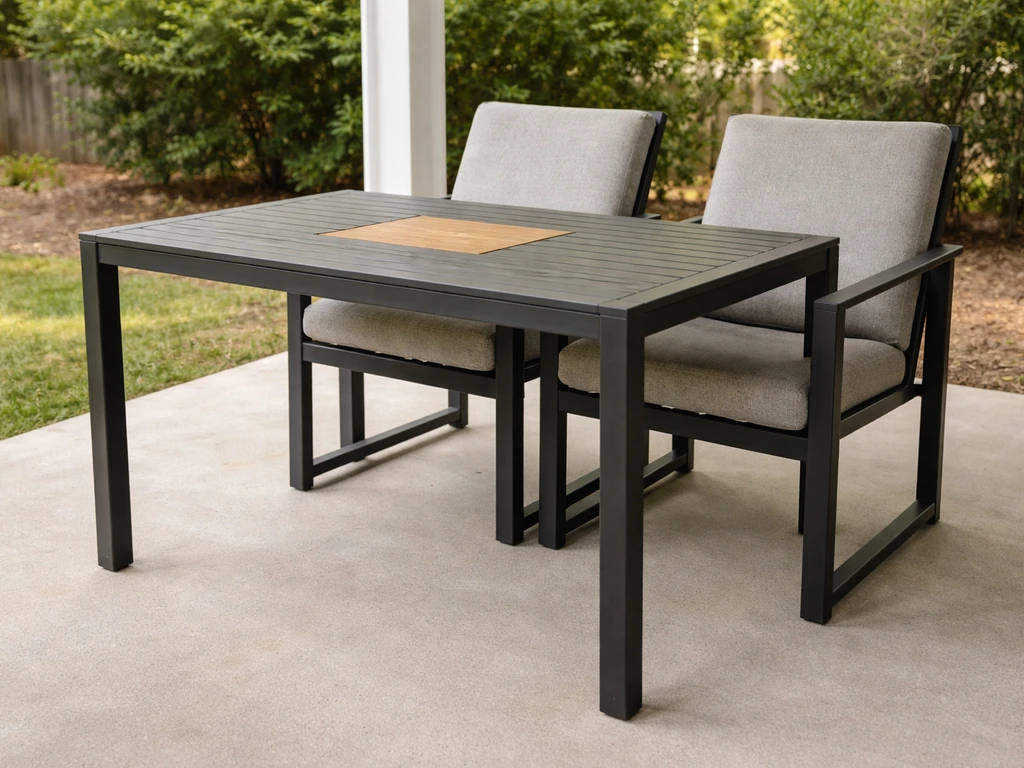
Best Patio Furniture to Leave Outside Year-Round
Best patio furniture to leave outside year-round by climate, with durable materials, cushion care, maintenance steps.
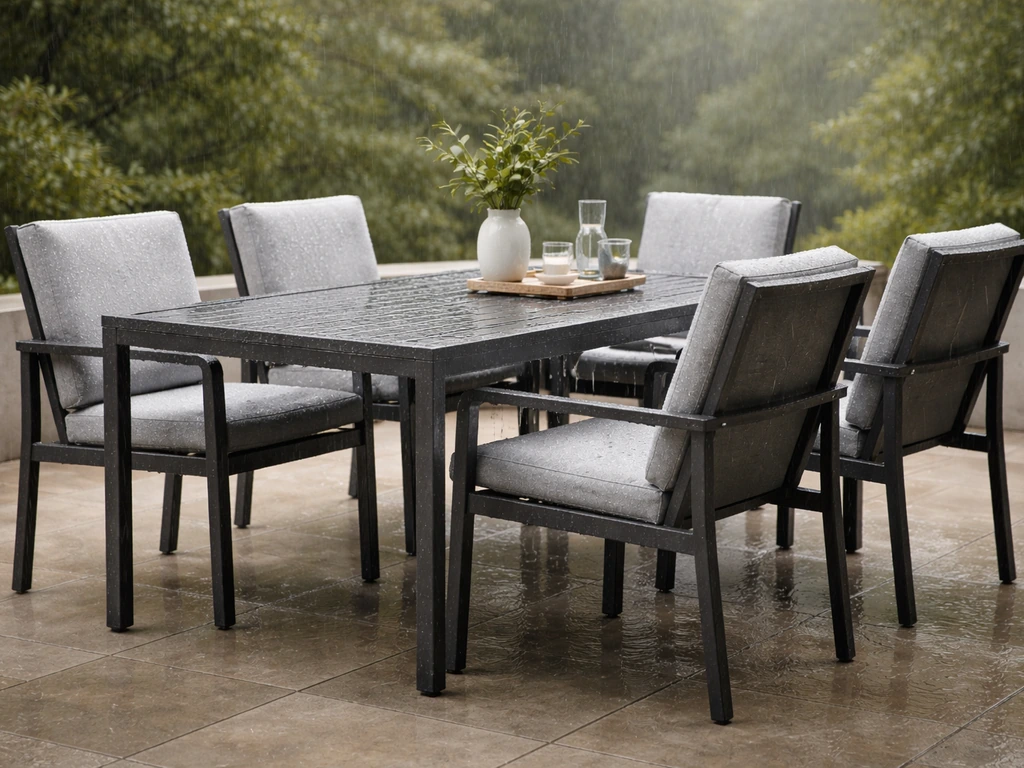
Best Patio Furniture for Rain: What to Buy and Why
Shop the best patio furniture for rain with material picks, must-have features, and maintenance tips for wet climates.
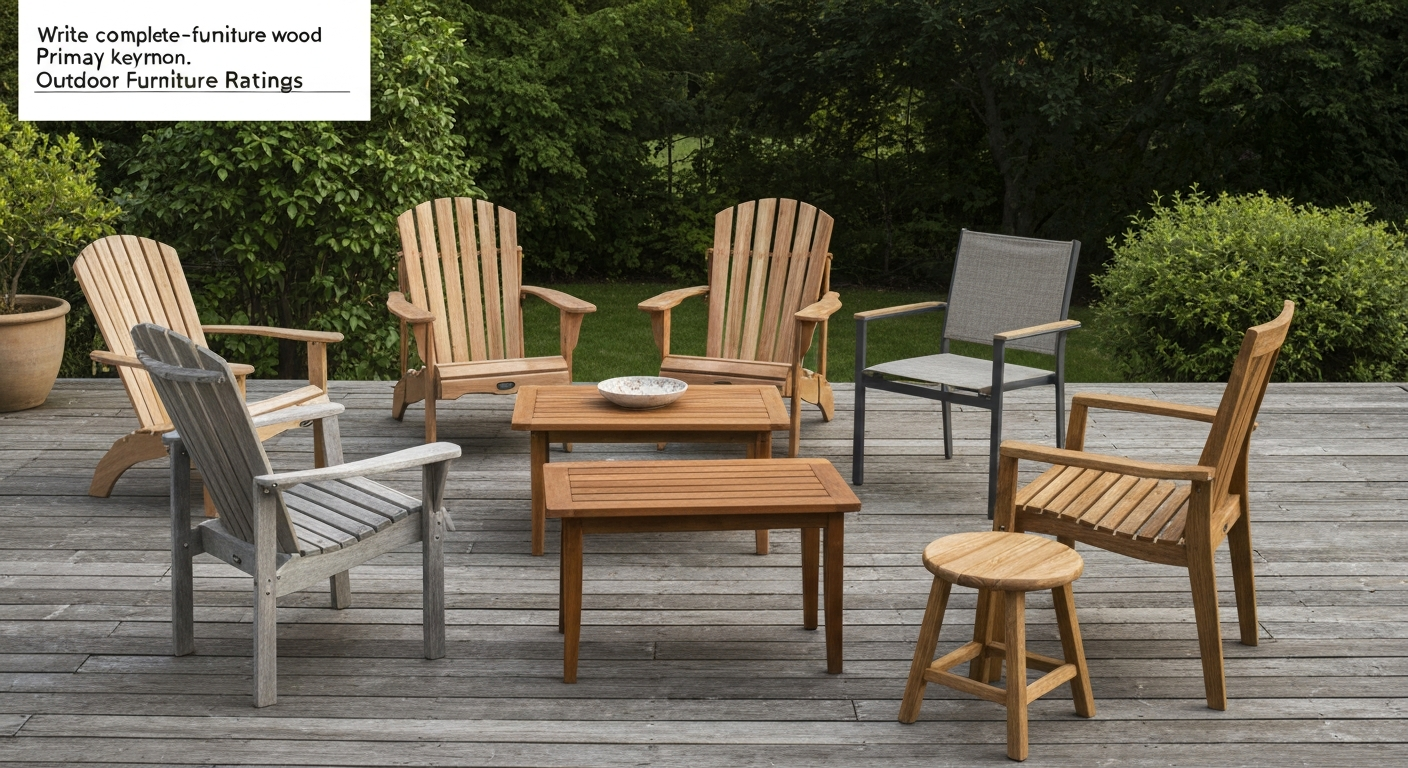
Common Patio Furniture Wood: Best Choices, Care & Tips
Compare common patio furniture wood types, teak, cedar, redwood, oak, with durability, finishes, and care tips.