
For full sun, your best material picks are powder-coated aluminum, HDPE poly lumber, and all-weather resin wicker made with UV-stabilized HDPE. Pair any of these frames with Sunbrella or another 100% solution-dyed acrylic fabric for cushions, choose lighter or mid-tone colors over deep navy or black, and you'll have a setup that holds up for years without fading, warping, or rusting. Everything else on the market is a compromise you should at least know you're making before you buy.
Best Patio Furniture for Full Sun: What to Buy

Theo Tierney
27 May 2026
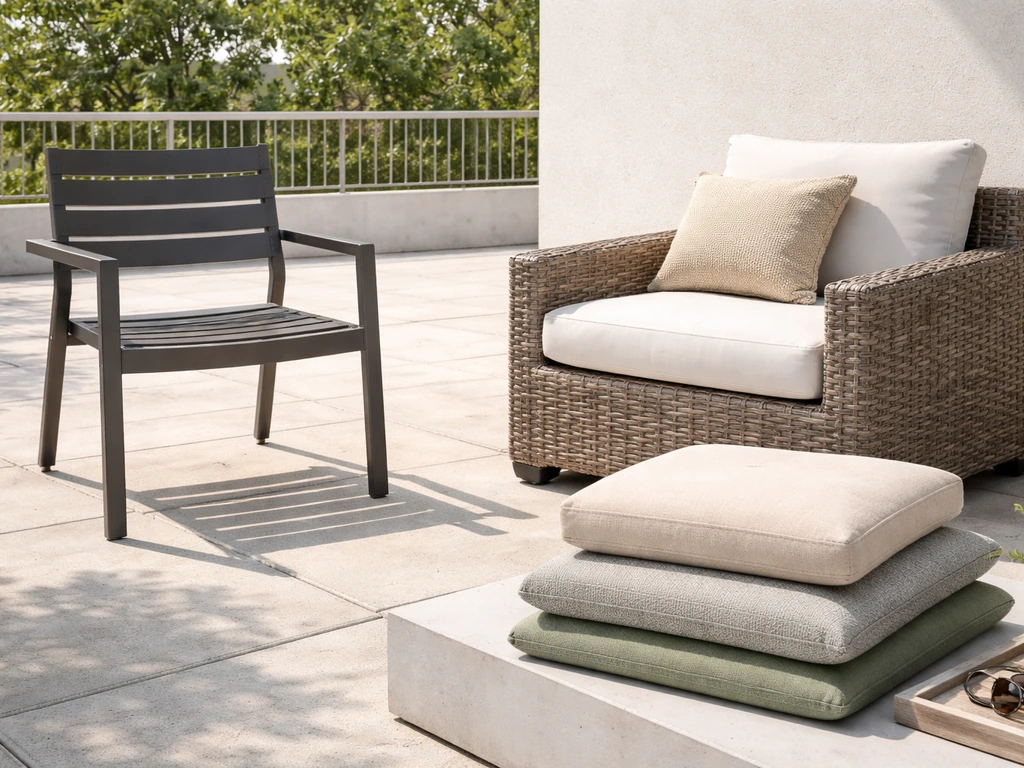
How to choose patio furniture for full sun
Full sun is the most demanding environment for outdoor furniture. You're dealing with sustained UV radiation that breaks down chemical bonds in coatings and fibers, surface temperatures that can exceed 150°F on dark materials, and the daily expansion-contraction cycle that stresses joints and welds over time. Shopping for a shaded deck is a different exercise. Here, you need to think about UV resistance from the frame level down to the fastener.
The core questions to ask before buying anything: What material is the frame? What finish is on it, and how thick? How are the joints connected (welded, bolted, or mortise-and-tenon)? Are the cushion fabrics solution-dyed, or just coated polyester? And does the brand offer a real warranty on the finish and structure separately? If a listing can't answer those questions, treat it as a risk.
You also want to think about use case from the start. Dining furniture, lounge chairs, and conversation sets all have different durability priorities. A dining chair gets bumped around and wiped down constantly; a lounge chair bakes in place all afternoon; a deep-seat conversation set is where cushions see the most UV hours. Knowing your use case helps you weight the trade-offs correctly.
The checklist before you commit
- Frame material: aluminum, HDPE poly lumber, or UV-stabilized resin wicker are top picks for sun exposure
- Finish: powder coat on aluminum should be applied over a proper pre-treatment (chromate or equivalent) for adhesion; look for a 5-year finish warranty as a baseline signal
- Joints and welds: welded frames are stronger than bolt-only assemblies under thermal cycling; check that water can't pool in frame cavities where powder coat can't penetrate
- Fabric: '100% solution-dyed acrylic' or 'Sunbrella' are the markers that matter; '100% polyester' without 'solution-dyed' is a seasonal fabric at best
- Color: mid-tones and lighter shades stay cooler and show less fading over time than deep saturated colors
- Foam core: outdoor-rated foam with antimicrobial treatment, not repurposed indoor foam that will break down and grow mildew
Material picks that resist fading, heat, and weather
Not all materials behave the same in direct sun, and the differences matter a lot over a 5- to 10-year ownership window. Here's what actually holds up and why.
Powder-coated aluminum
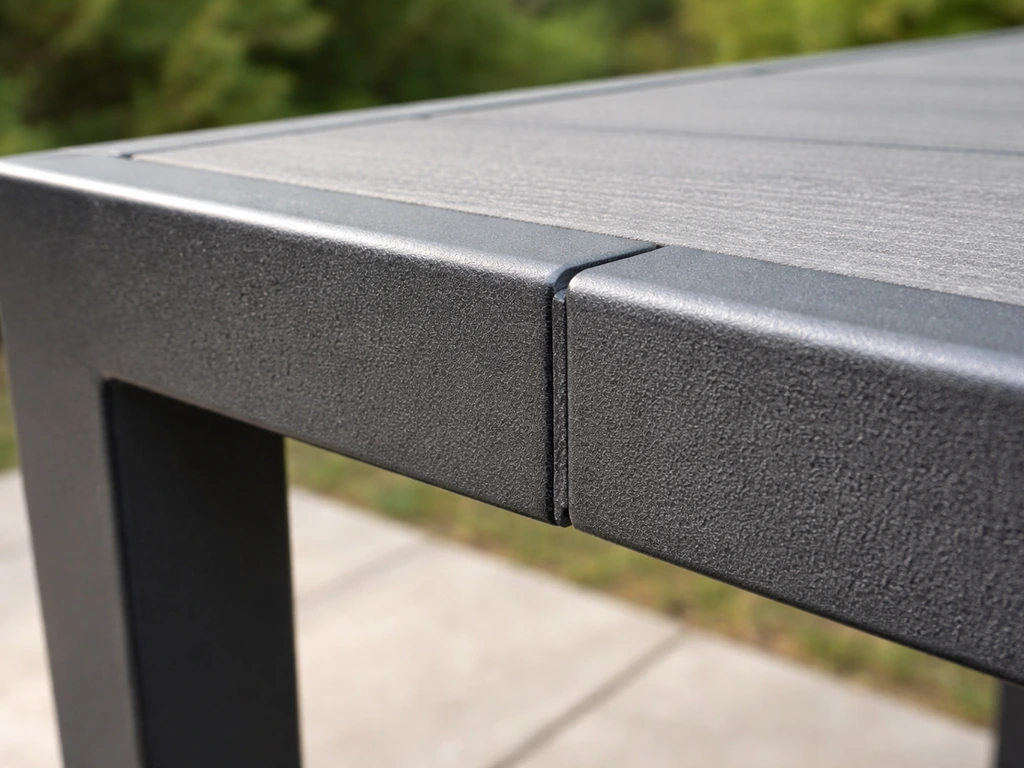
This is my go-to frame material for full-sun setups. Aluminum doesn't rust, it's light enough to move when you need to, and a well-applied powder coat resists UV breakdown far better than spray paint or liquid coatings. The reason: powder coat forms a thicker, cross-linked protective film that UV has to work through before it reaches the metal. That said, coating quality varies a lot. A proper application involves pre-treating the aluminum (typically with a chromate conversion coating) before powder is applied. A coat thickness in the 60-80 micron range hits the sweet spot; go too thin and adhesion suffers, too thick (above about 100 microns at joints) and the coat can become brittle and crack under flexing. When you see a brand offer a 5-year warranty on powder coat finish covering cracking, peeling, and excessive fading from normal exposure, that's a signal the process was done right.
HDPE poly lumber
HDPE (high-density polyethylene) poly lumber is made from recycled plastic, and the good versions have color blended throughout the material with UV inhibitors built into the compound. There's no surface finish to peel or fade because the color literally goes all the way through. Reputable manufacturers describe this as being 'very fade resistant' for exactly that reason. It doesn't warp, it won't splinter, and it tolerates heat well. The trade-off is that it can feel slightly plasticky to the touch compared to wood, and cheaper versions skip the UV stabilizers, so you need to specifically look for that call-out in the product specs.
All-weather resin wicker (HDPE-based)
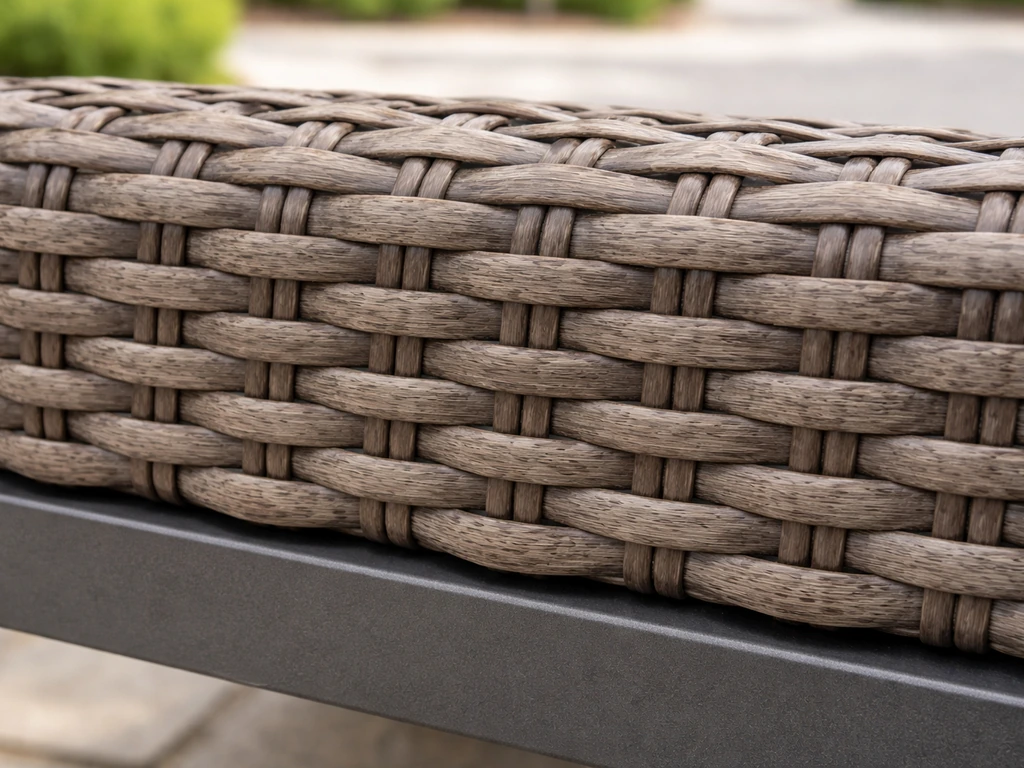
Real outdoor wicker today isn't plant fiber. It's extruded HDPE resin woven over a powder-coated aluminum frame. The best versions are 'through-dyed' (color runs through the strand, not just on the surface) and include UV inhibitors in the resin itself. This combination prevents the photodegradation that causes cheaper resin wicker to fade, become brittle, and eventually crack or unravel after two or three seasons in full sun. Natural rattan and low-grade resin wicker are not full-sun materials. If a listing says 'all-weather wicker' but doesn't specify HDPE or UV stabilizers, ask or skip it.
Teak and other hardwoods
Teak is genuinely durable in full sun. It has natural oils that resist moisture, and structurally it holds up well under UV and heat. But it will change color: UV breaks down the lignin on the surface, and untreated teak goes from golden-brown to silvery gray over about six to twelve months outdoors. That patina is largely cosmetic, not structural, and plenty of people prefer the weathered look. If you want to keep the original golden tone, you'll need to apply teak oil or a UV-blocking sealer once or twice a year. The bigger issue with teak in full sun is the joinery. Mortise-and-tenon joints with stainless steel hardware are the standard for quality teak; cheap teak furniture uses staples or low-grade fasteners that fail as the wood moves seasonally.
Steel (galvanized and stainless)
Steel can work well in full sun if it's properly protected, but it adds maintenance complexity that aluminum doesn't. Hot-dip galvanized steel with a Z275 coating (roughly 85 microns of zinc) typically lasts 20 to 50 years before significant rust develops in low-humidity, non-coastal environments. Adding a powder coat on top of the galvanization gives even better protection because the powder coat shields the zinc layer from direct weathering. Stainless steel is strong and corrosion-resistant but will spot, dull, and eventually rust if salt accumulates on the surface and isn't rinsed off. Both materials are heavier than aluminum, which matters if you rearrange your layout seasonally. For full sun in a coastal or humid climate, aluminum is still the cleaner choice.
| Material | UV/Fade Resistance | Rust Risk | Weight | Maintenance Level | Best For |
|---|---|---|---|---|---|
| Powder-coated aluminum | Excellent (with proper pre-treat) | None | Light | Low | All-purpose, especially humid/coastal |
| HDPE poly lumber | Excellent (UV inhibitors built in) | None | Moderate | Very low | Adirondacks, dining, benches |
| HDPE resin wicker | Good to excellent (look for UV-stabilized) | None (aluminum frame) | Light-moderate | Low | Conversation sets, deep seating |
| Teak | Good structurally; surface patinas | None | Heavy | Moderate (oiling optional) | Dining tables, benches |
| Galvanized + powder-coated steel | Good | Low (if coating intact) | Heavy | Moderate | Dining chairs, commercial-grade |
| Stainless steel | Good | Low-moderate (salt risk) | Heavy | Moderate (regular rinse) | Coastal with diligent care |
Best furniture types by use: dining, lounging, and conversation
Patio dining sets
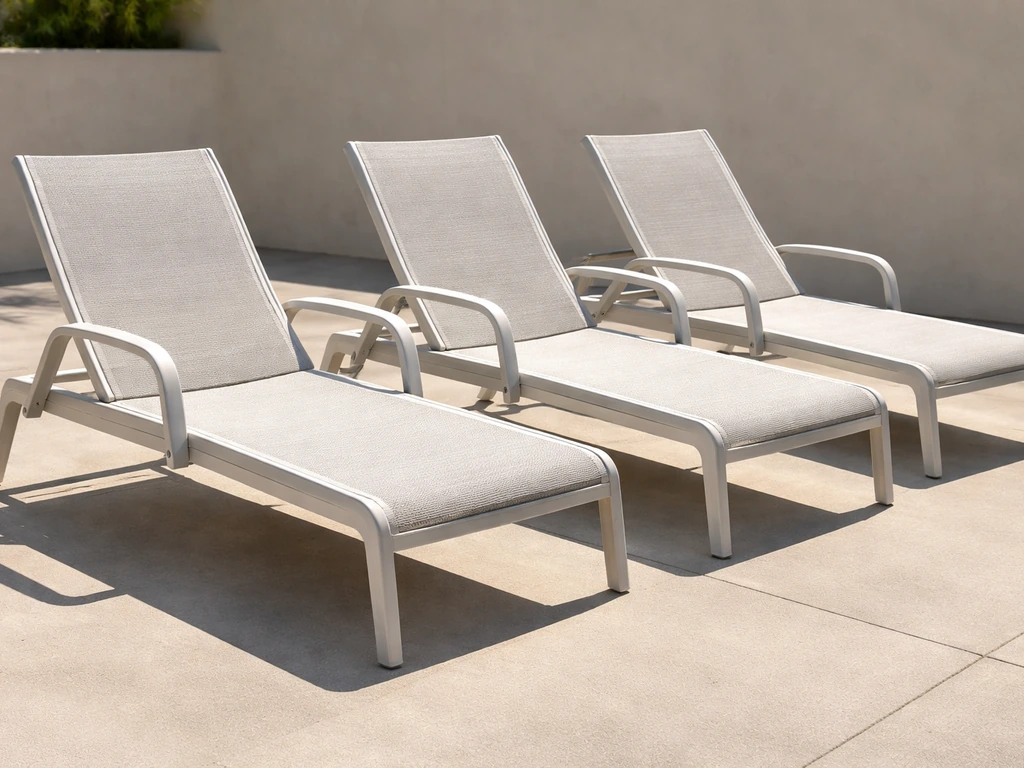
For a dining setup in full sun, I'd lean toward a powder-coated aluminum table with a tempered glass or slatted top and matching aluminum or HDPE chairs. Glass tabletops let heat dissipate and don't warp, though they need regular cleaning in dusty climates. Slatted tops in aluminum or HDPE poly lumber allow airflow and drain quickly. Avoid solid wood tabletops in unrelenting full sun unless you're committed to annual sealing; they cup and crack faster than most people expect. For chairs, sling-style seats (with Phifertex-type vinyl-coated polyester mesh or comparable UV-rated sling fabric) are actually excellent for dining in full sun because they stay cooler than cushioned seats, drain rain immediately, and don't absorb UV as aggressively as thick foam cushions do.
Lounge chairs and chaises
Chaise lounges see the most direct UV exposure of any piece on the patio, so material choices really matter here. Sling chaises in UV-rated mesh fabric on powder-coated aluminum frames are the most practical: they're breathable in heat, dry fast, and the fabric is easy to replace if it does eventually degrade. If you want a cushioned chaise, go with Sunbrella or a comparable 100% solution-dyed acrylic cushion cover with a quick-dry, antimicrobial foam core. For the best sunbrella patio furniture options, prioritize solution-dyed acrylic cushions that are meant to handle direct UV for years. Teak or HDPE chaises are solid choices for frame durability, but get removable cushions you can store on days you won't be using them. Leaving thick cushions baking in direct sun every day accelerates degradation faster than anything else.
Conversation and deep-seating sets
Deep-seating conversation sets are where cushions dominate the look and comfort, so fabric quality is non-negotiable here. The frame can be HDPE resin wicker, powder-coated aluminum, or HDPE poly lumber. What you really need to protect is those thick seat and back cushions. Go with removable cushion covers in solution-dyed acrylic, foam cores rated for outdoor use with antimicrobial treatment, and covers you can pull off and store on consecutive hot days. A good conversation set in full sun should be built like a piece you partially maintain rather than something you just leave out and ignore.
Cushions, fabrics, and color: what actually holds up in direct sunlight
This is where most people make their biggest full-sun mistake. The frame can be perfect and the cushions can be destroyed in two seasons if you pick the wrong fabric. Here's what the difference actually looks like in practice.
Sunbrella is the benchmark because it's 100% solution-dyed acrylic: the color is added to the yarn before it's ever spun into fiber, not applied to the surface afterward. That means UV doesn't strip a coating off the surface, it has to break down the fiber itself. The real-world result is fade resistance up to roughly 2,000 hours of direct UV exposure before degradation begins, compared to standard piece-dyed polyester that can visibly fade in as little as 90 days in full sun. That's not a marginal difference. When a listing says '100% polyester' without specifying 'solution-dyed,' treat that fabric as seasonal. It's fine for a covered porch; it's not a full-sun material.
For sling furniture, look specifically for vinyl-coated polyester mesh (Phifertex, Textilene, and similar branded options). These are dimensionally stable, UV-resistant, dry instantly, and hold color well because the vinyl coating protects the polyester yarn underneath from direct UV contact. They're not as plush as thick cushion foam, but for a dining chair or chaise that sits in direct sun all day, they genuinely outlast any cushion fabric in the same conditions.
Color choice matters more than most people realize, and not just aesthetically. Deep, saturated colors like navy, forest green, and especially black absorb significantly more heat, making surfaces uncomfortable to touch and accelerating UV-driven color breakdown over time. Lighter and mid-tone colors reflect more UV, stay cooler, and tend to show fading less dramatically even when it does occur. If you're in a climate with brutal afternoon sun, like Arizona, Texas, or Florida, lean toward lighter tones and you'll extend cushion life noticeably. (The related question of whether black furniture itself gets uncomfortably hot is worth thinking through separately if that's on your mind.)
What to look for in cushion foam
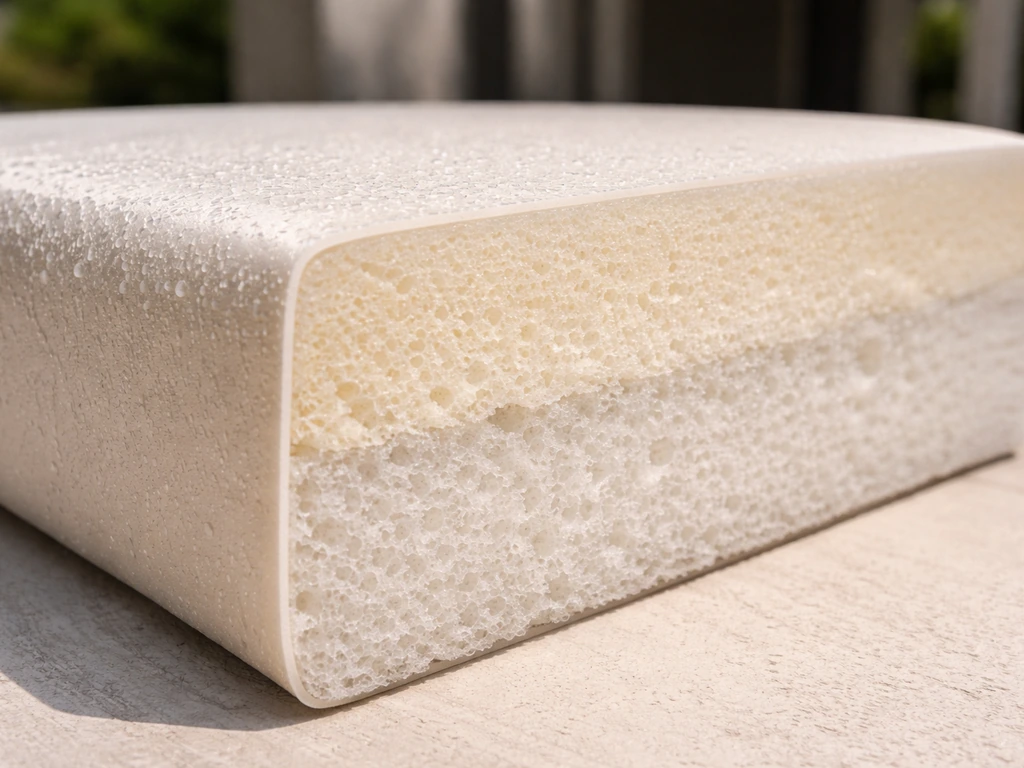
Cushion foam is the hidden weak point. Standard indoor polyurethane foam absorbs water, grows mildew, and breaks down in outdoor UV conditions within a season or two. What you need is high-density outdoor foam (often around 1.8 lbs/cu ft or higher) with antimicrobial treatment built into the foam itself, not just the cover. Some brands use 'dry fast' open-cell foam that drains water rather than absorbing it. Either approach works; the key is that the foam spec has to be explicitly outdoor-rated. If a listing doesn't specify the foam type at all, that's a red flag.
Durability, maintenance, and care in high-UV areas
Good materials in full sun still need basic maintenance. The difference between furniture that lasts 3 years and furniture that lasts 10 is mostly about whether you do a few simple things consistently.
Cleaning routines that actually matter
For powder-coated aluminum and resin wicker, a rinse with a garden hose and a wipe-down with mild soap a few times per season keeps dirt and grime from acting as an abrasive on the finish. For stainless steel or galvanized steel, rinsing with fresh water is critical if you're anywhere near the coast. Salt that pools in crevices is what causes stainless to pit and spot; it's not the UV that kills it, it's the salt sitting there. Teak gets wiped down with a teak cleaner once or twice a year if you're maintaining the golden tone, or just left alone if you're okay with the silver patina.
Protective covers: use them right
Protective covers extend finish and fabric life significantly, but they have to be used correctly. A cover that traps moisture is worse than no cover at all: you'll end up with mildew on your cushions and accelerated finish breakdown from moisture sitting against the surface. Always make sure furniture is dry before covering, and if your covers pool water after rain, get covers with vents or a different fit. Let covers dry completely before reinstalling them. This sounds obvious but it's the step most people skip, and it's where mildew problems start.
Storage timing and seasonal strategy
In full-sun climates, the strategy isn't necessarily about seasonal storage (if you're in Arizona or South Florida, you're using furniture year-round). It's more about reducing unnecessary exposure. Bring cushions inside or store them covered when the furniture won't be used for several days. In climates with actual winters, getting cushions indoors by October does more for their longevity than any UV-resistant fabric claim on the tag. Frames can typically stay outside year-round with good covers, but cushions shouldn't.
Quick fixes before problems escalate
If you catch a chip in a powder-coat finish early, a touch-up with matching powder-coat pen or spray stops moisture from getting under the coat and spreading the damage. With teak, a light sand and re-oil on spotted areas restores the look without needing to refinish the whole piece. Resin wicker strands that loosen can often be re-tucked and secured before they unravel further. None of this is complicated, but the window to catch it is short. Inspect frames and finishes once at the start of the season and once mid-season in high-UV climates.
Sizing, placement, and shade strategies for brutal sun
Even the best full-sun furniture benefits from some strategic shade. This isn't about hiding the furniture away; it's about reducing the total UV load your cushions and finishes absorb over a season, and making the space actually comfortable to use at 2pm in July.
For dining sets, a market umbrella (9 to 11 feet for a 6-person table) placed through or beside the table is the simplest solution. Make sure the table has an umbrella hole or that you have a base weighted adequately for wind. Cantilever umbrellas give more flexibility for lounge setups because they don't require a center hole and can be repositioned to track the sun. Shade sails are an increasingly practical option for full coverage over a conversation area; a properly tensioned sail can knock solar gain down dramatically while still letting air move through.
Placement matters too. Even orienting your seating group slightly so it catches afternoon shade from a wall, fence, or existing tree changes the UV hours your furniture sees considerably. If you're designing a new layout, think about where the sun is between noon and 4pm, because that's the highest-UV window. A dining table that's in full shade by 3pm will have cushions that look noticeably better after three years than one that bakes all afternoon.
For sizing, leave enough room between pieces that air circulates and surfaces dry quickly after rain. If you live in a humid climate, prioritize materials and construction that resist moisture-related problems, not just fading from sun best patio furniture for humid climates. Deep-seat conversation sets need about 18 inches of clearance around them for comfortable movement. Dining sets should have roughly 36 inches from table edge to wall or railing. Overcrowding a full-sun space also means pieces stay damp longer in humid climates, which compounds the mold and finish risk.
Brand and value guidance: what to actually look for in listings
The outdoor furniture market is loaded with products that look similar online but perform very differently after one or two full-sun seasons. Here's how to cut through the listing language quickly.
Warranty language as a quality signal
A brand willing to offer separate, specific warranties for the frame/welds and the powder-coat finish is telling you something. A 5-year warranty covering welds against cracking and the finish against peeling is a real quality signal because it costs the brand money to honor it. Generic '1-year warranty against defects' language covers almost nothing and signals the brand knows the product has a short useful life. Look for warranties that specifically name what's covered: joint integrity, finish adhesion, and rust resistance. If you can't find the warranty terms before buying, email the brand and ask. How they respond tells you a lot.
What spec language actually means
Some listing terms are meaningful, others are marketing noise. Here's a quick translation guide:
| Listing Term | What It Actually Means | What to Watch For |
|---|---|---|
| '100% solution-dyed acrylic' | Color is in the fiber; genuine fade resistance up to ~2,000 UV hours | This is the real thing. Confirm it's acrylic, not polyester |
| '100% polyester' (no qualifier) | Surface-dyed fabric; can fade visibly in 90 days of full sun | Seasonal use only; not a full-sun material |
| 'UV-resistant' (generic) | Means almost nothing without a specification | Ask for the specific fabric brand or test standard |
| 'Powder-coated finish' | Better than spray paint, but quality varies by thickness and pre-treatment | Look for warranty coverage; ask about pre-treatment process |
| 'All-weather wicker' | Could be HDPE or low-grade resin; big quality range | Confirm HDPE and UV stabilizers in the product spec |
| 'Rust-resistant' | Often means galvanized or powder-coated steel | Ask what's underneath the coating; check for welded vs. exposed raw edges |
| 'Commercial grade' | Usually means heavier gauge materials and better welds | Verify with frame thickness specs, not just the label |
Where price actually correlates with quality
In full-sun furniture, the price-quality relationship is real at the extremes. The cheapest sets (sub-$300 for a full dining group) almost universally use thin-gauge steel with basic paint finishes, piece-dyed polyester cushions, and bolt-only construction. They'll look fine in year one and be noticeably degraded by year two in direct sun. In the mid-range ($500 to $1,500 for a set), you start seeing actual powder-coated aluminum, HDPE frames, and solution-dyed acrylic fabric. That range represents genuine value for most homeowners. Above $2,000, you're getting into higher-grade aluminum alloys, designer profiles, and premium Sunbrella upgrades that do last longer and hold up better, but the jump from budget to mid-range matters more than the jump from mid-range to premium.
Brands and buying channels worth considering
For aluminum and HDPE frames, brands that manufacture specifically for outdoor use (rather than general furniture brands that dabble in outdoor) tend to get the construction details right. Look for brands that publish frame gauge, powder coat process, and cushion foam specs rather than relying on lifestyle photography to sell the product. Big-box store sets can work if you specifically verify the spec points above; many mid-range sets from warehouse clubs and home improvement chains now use legitimate powder-coated aluminum and Sunbrella-comparable fabrics, and they're worth considering if the specs check out. Specialty outdoor retailers and brands that have been around for more than a decade are lower-risk because returns and warranty claims keep them accountable over time. If the brand only exists as a storefront on a marketplace platform with no direct web presence, that's worth factoring into your risk assessment before you buy something that needs a warranty claim in year two.
One final practical note: if you're also thinking through hot-weather performance more broadly, considerations around shade structures, material heat absorption, and humidity resistance are all closely related to the full-sun furniture question. If you're focused on the best patio furniture for hot weather, also weigh how shade structures and material heat absorption affect comfort and durability hot-weather performance. Getting the frame material and fabric right is the foundation, but the whole setup works better when placement and shade are part of the plan from the start.
FAQ
How can I tell if the cushion fabric is actually full-sun rated, not just “UV-resistant” marketing?
If the listing only says “outdoor” or “UV-resistant,” that usually means the fabric or coating is meant to handle sun, not that it resists fading in sustained full sun. For full-sun use, confirm the cushion cover is 100% solution-dyed acrylic (or equivalent spec) and that the foam core is outdoor-rated (antimicrobial and able to dry), otherwise plan on faster fading and breakdown.
Can I combine a great frame material with cheaper cushions and still expect long life in full sun?
Yes, but you have to treat the “UV risk” as a whole-system problem. The best approach is matching solution-dyed acrylic cushions with either powder-coated aluminum frames or HDPE-based frames, and using lighter or mid-tone colors to reduce heat buildup. Without that fabric spec, the frame material alone will not prevent cushion failure in a high-UV location.
Are sling chairs better than cushioned chairs for the best patio furniture for full sun?
Sling dining chairs are often a better full-sun choice than plush cushions because the mesh dries quickly and doesn’t trap heat the way thick foam does. If you want cushioning, look for thin, removable seat cushions with solution-dyed covers and outdoor foam cores, and plan to store cushions when the set will sit unused for several hot days.
Should I remove cushions in summer, even if they are solution-dyed acrylic?
Prefer removable cushion covers if the set will be in full sun daily. Store cushions indoors or in a dry, ventilated area when temperatures are consistently high or when your patio sits unused for multiple days. Leaving cushions out continuously is the fastest way to accelerate UV degradation even with top-tier fabric.
Can I buy a “full-sun” set secondhand if it looks like the right materials?
Often, but only if the details match. For power-coated aluminum, look for a stated warranty that separately covers joint integrity and finish cracking or peeling, and confirm the powder-coat thickness is in a typical performance range rather than “powder coated” as a generic label. For resin wicker, confirm the strands are HDPE and UV-stabilized through-dyed, not just “all-weather wicker.”
What maintenance checks actually prevent early failure in full sun?
For full-sun areas, you should budget for periodic inspection rather than one-time setup. Do a quick check at the start of the season and mid-season in high-UV climates for loose wicker strands, compromised cushion zippers or seams, and early chips in powder coat. Catching a small finish chip early prevents moisture from getting under the coating and spreading damage.
Are furniture covers always beneficial in full sun, or can they make things worse?
A cover helps only when it doesn’t trap moisture. If rain gets trapped, you can see mildew on cushions and faster finish deterioration. Choose covers that either vent or fit in a way that allows drying, and always let cushions and frames dry completely before covering again.
Will switching to lighter furniture colors really extend the life of cushions and finishes?
Yes, but do it intentionally. If you have a dark-colored set, increase shade coverage and reduce cushion exposure time (for example, use a quick shade umbrella or move the set so it gets afternoon shade). This directly reduces both the heat absorbed by dark surfaces and the UV hours your cushions spend degrading.
Is teak a safe choice for full sun if I don’t mind it turning gray?
Be careful with teak. It will not rust and it tolerates heat, but it changes color quickly in sun and the joinery quality is the real divider. If you want stable performance, prioritize mortise-and-tenon joinery with stainless hardware and plan for light re-oiling if you prefer the original tone.
What’s the most failure-resistant material setup for a full-sun dining set?
For full-sun dining, sling-style seats (UV-rated mesh) are usually more durable than deep cushioned seats. For tabletops, slatted aluminum or HDPE drains and ventilates well, tempered glass resists warping but needs regular cleaning, and solid wood tabletops require consistent sealing or they can cup and crack sooner.
How do I verify the foam will hold up, and what happens if the listing doesn’t mention foam type?
If the outdoor foam type is not stated, treat it as a risk. Look specifically for outdoor foam density and antimicrobial treatment, or quick-dry open-cell foam designs, because indoor polyurethane foam absorbs water and breaks down faster under UV and heat cycles.
What warranty wording should I look for when buying the best patio furniture for full sun?
If you can’t find warranty terms for both the frame and the finish, email for clarification before buying. A strong signal is separate coverage that names what’s protected, such as weld or joint integrity plus finish cracking or peeling, with a multi-year duration. Generic “defects” warranties often won’t help when sun exposure is the real cause of damage.
Do full-sun recommendations change if I live near the coast or in a humid climate?
For humid or coastal full-sun patios, prioritize corrosion-resistant construction and keep salt from sitting on surfaces. Rinsing with fresh water after coastal exposure, choosing aluminum or properly protected galvanized steel, and maintaining spacing for airflow (so it dries quickly) matter as much as UV resistance.
What’s the best way to reduce UV exposure without hiding the furniture?
In a high-UV location, plan layout and shade first, then choose materials. Use umbrellas with adequate base weight or cantilever models for lounge setups, add a shade sail for conversation areas, and place seating so afternoon sun is blocked between roughly noon and 4 pm. Better shade reduces cushion degradation and makes darker materials more comfortable.
Next Articles
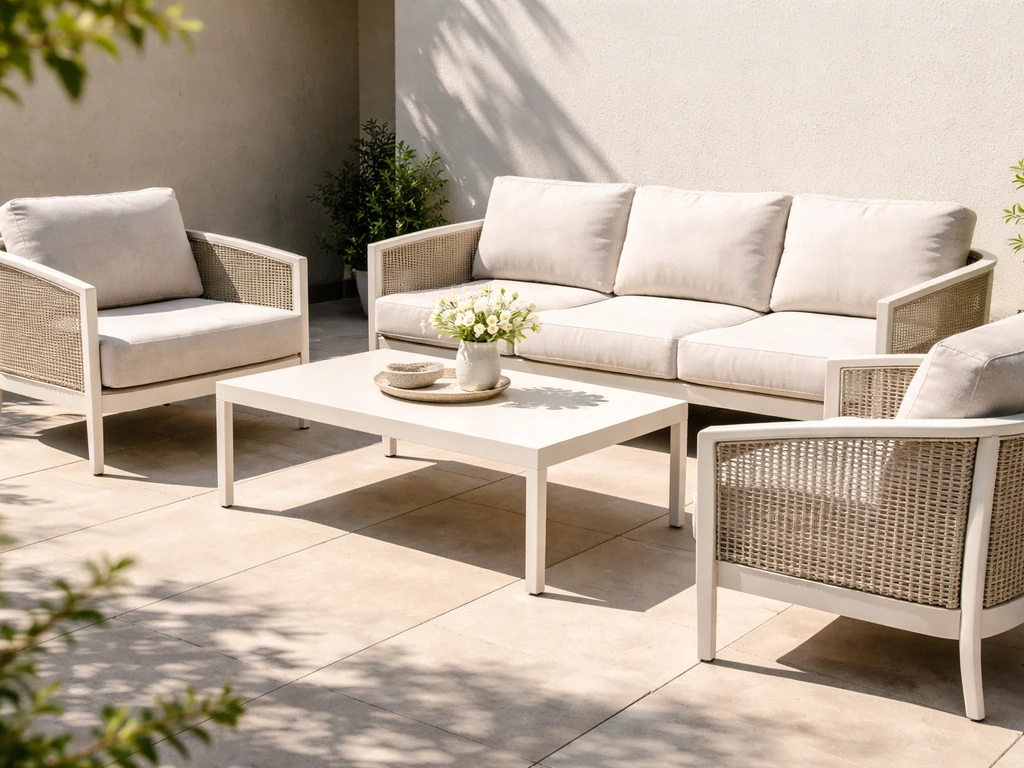
Best Patio Furniture for Hot Weather: Materials Guide
Find the best patio furniture materials for hot weather, with heat, UV, rust, and sun exposure tips for buying now.
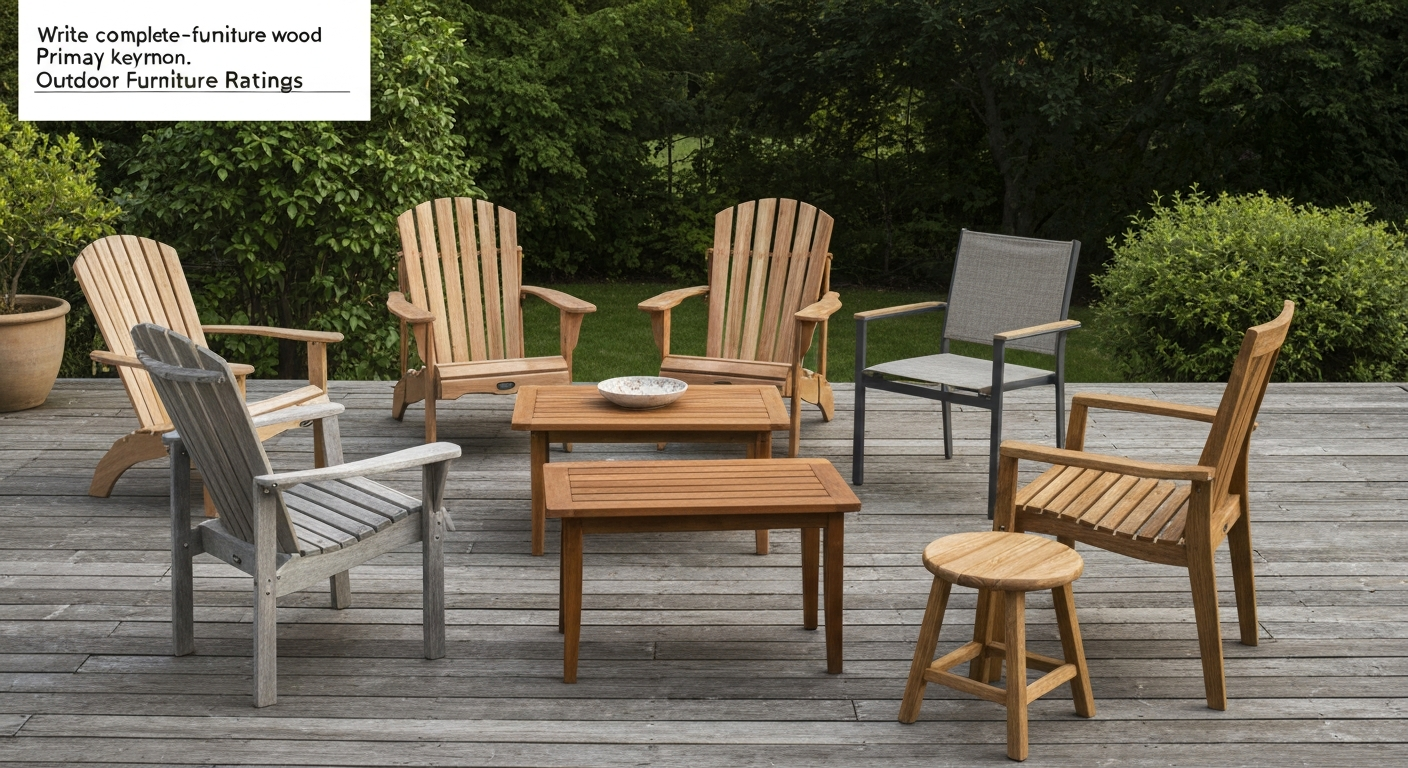
Common Patio Furniture Wood: Best Choices, Care & Tips
Compare common patio furniture wood types, teak, cedar, redwood, oak, with durability, finishes, and care tips.
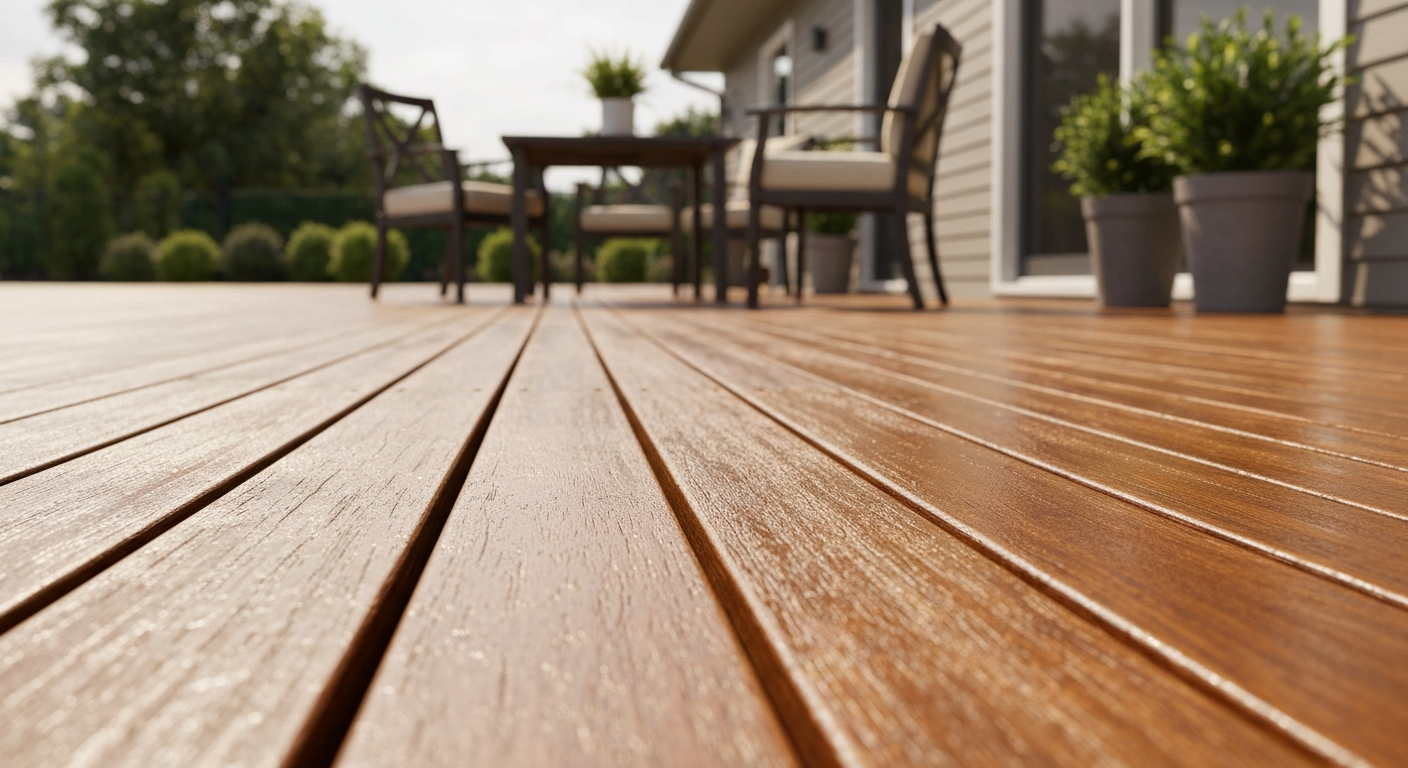
Best Wood Patio Stain: Choosing Durable, Low-VOC Finishes
Compare and choose the best wood patio stain: durability, finish, climate tips, prep, and top product picks.