
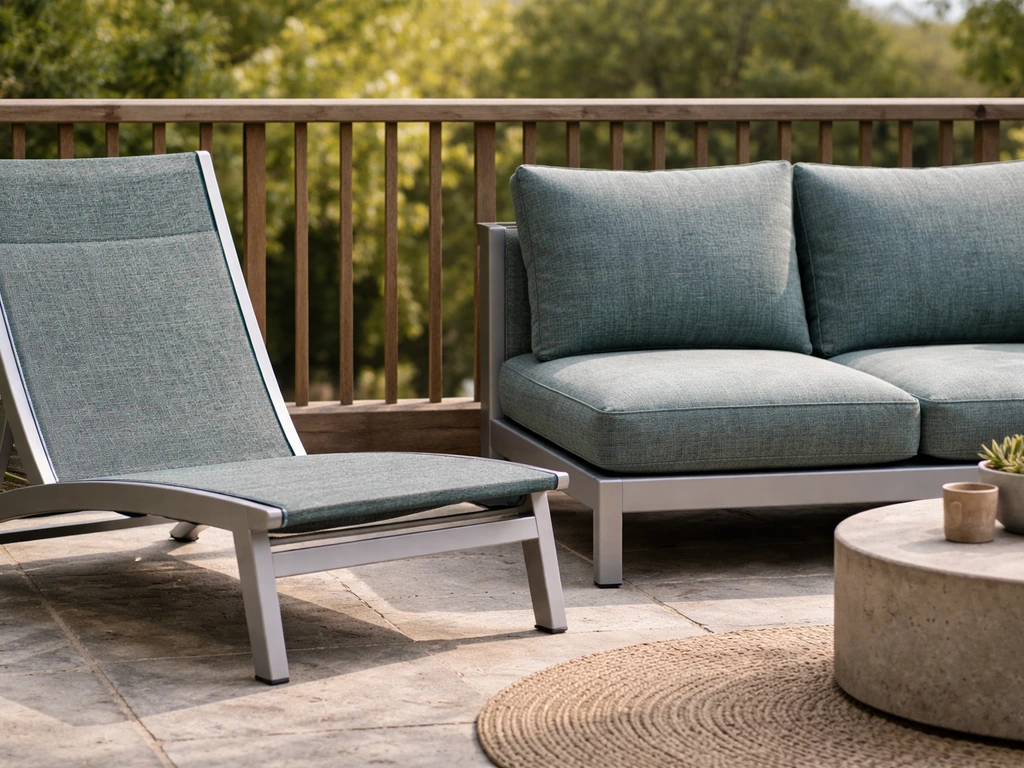
Sunbrella patio furniture is outdoor furniture that uses Sunbrella-brand fabric on its cushions, slings, or canopies. The fabric itself is 100% solution-dyed acrylic, meaning the color runs all the way through each fiber rather than sitting on the surface as a coating that eventually peels or fades. That distinction matters enormously outdoors. Paired with a quality frame, Sunbrella cushions can last 10 years or more in direct sun exposure while cheaper polyester fabrics start pilling, cracking, or bleaching out within a single season. If you're shopping for outdoor seating that won't look haggard in two years, starting with Sunbrella fabric is one of the smartest filters you can apply.
Best Sunbrella Patio Furniture: Durable Picks and Buying Guide

Theo Tierney
20 Jun 2026
What 'Sunbrella patio furniture' actually includes
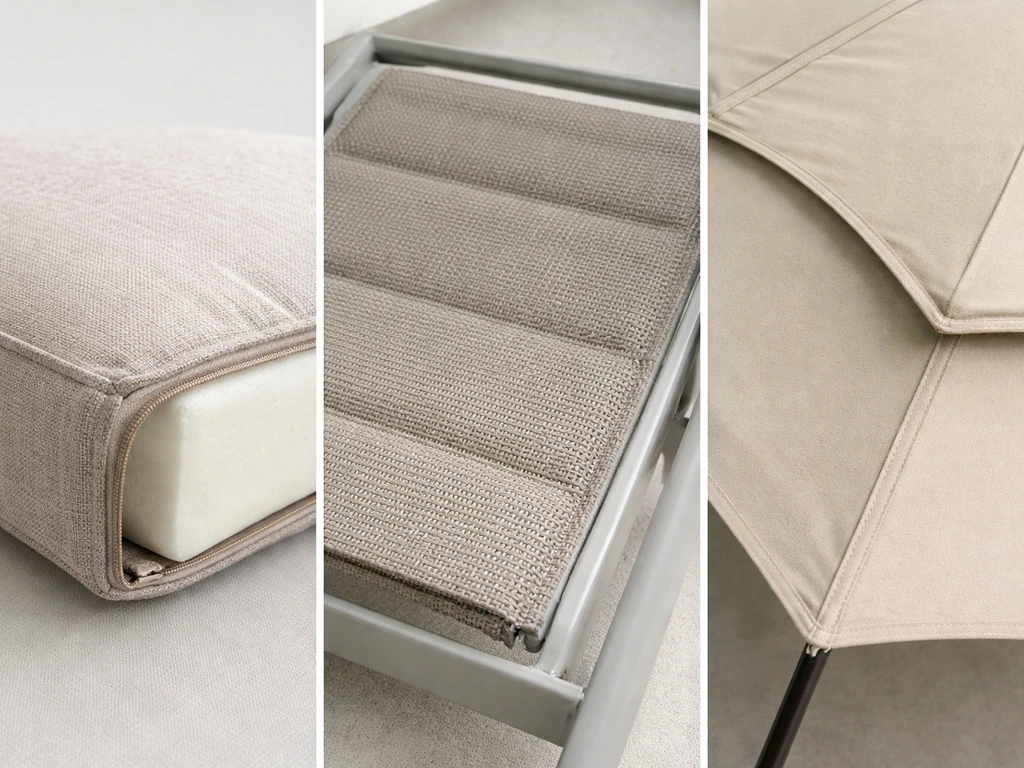
Sunbrella is a fabric brand owned by Glen Raven, and it shows up on patio furniture in a few different forms. Understanding which type you're dealing with changes how you shop and what you pay for.
- Cushion upholstery: The most common use. Sunbrella fabric wraps foam cushion inserts on chairs, sofas, sectionals, and ottomans. You'll see it on deep-seating sets, dining chairs, and loungers.
- Sling seating: The fabric itself IS the seat and back, stretched tightly across an aluminum or steel frame with no separate cushion. Common on dining chairs, chaise lounges, and stacking chairs.
- Umbrellas and canopies: The canopy panels on quality market and cantilever umbrellas are often made from Sunbrella fabric for UV and fade resistance.
- Outdoor pillows and accessories: Throw pillows, outdoor rugs (sometimes), and bolsters marketed as Sunbrella products use the same solution-dyed acrylic fiber.
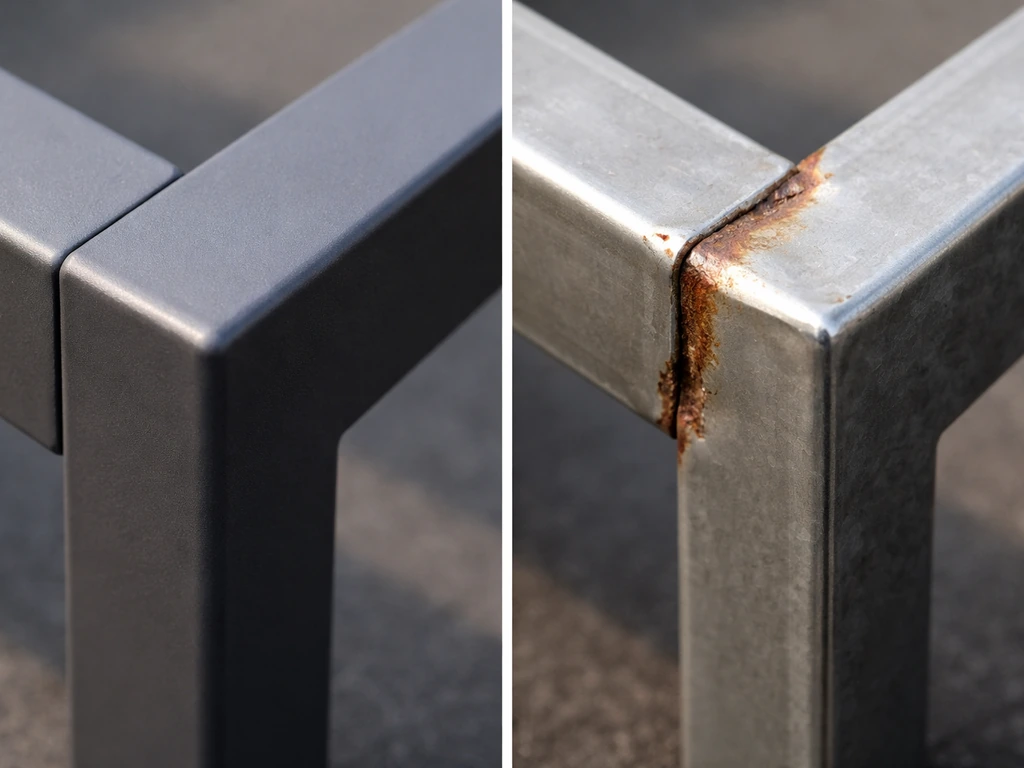
The key thing to know: buying furniture labeled 'Sunbrella' or 'Sunbrella fabric included' means Glen Raven's fabric is used somewhere on the product, but the frame, foam, and hardware are sourced separately by the furniture manufacturer. Sunbrella has no control over how those components are built. So a $400 chair with Sunbrella cushions can be genuinely good, or it can have a flimsy powder-coated steel frame that rusts in two seasons. The fabric might outlive the frame. You have to evaluate both independently.
How to choose the best piece for your climate
Climate is the single biggest variable in outdoor furniture longevity, and Sunbrella fabric handles most weather conditions better than alternatives. But the frame material needs to match your environment just as much as the fabric does. Here's how to think about it by climate type.
Hot sun and UV-heavy climates (Southwest, South, high altitude)
If you're in Arizona, New Mexico, Colorado, or anywhere that gets 300+ days of direct sun per year, UV degradation is your biggest enemy. This is exactly where Sunbrella's solution-dyed acrylic earns its price premium. The color doesn't depend on a surface finish, so there's nothing for UV to strip away at the molecular level the way it attacks polyester.
Pair Sunbrella cushions with a powder-coated aluminum frame (no rust, lightweight, expands minimally with heat) and you have a combination that holds up well in dry desert heat. If you want the best patio furniture for Texas heat, focus on UV-resistant Sunbrella cushions paired with a heat-tolerant frame. Avoid dark-colored frames if heat-to-touch is a concern, though cushion fabric color matters less with Sunbrella because the fade resistance is built into the fiber.
Humid and rainy climates (Southeast, Gulf Coast, Pacific Northwest)
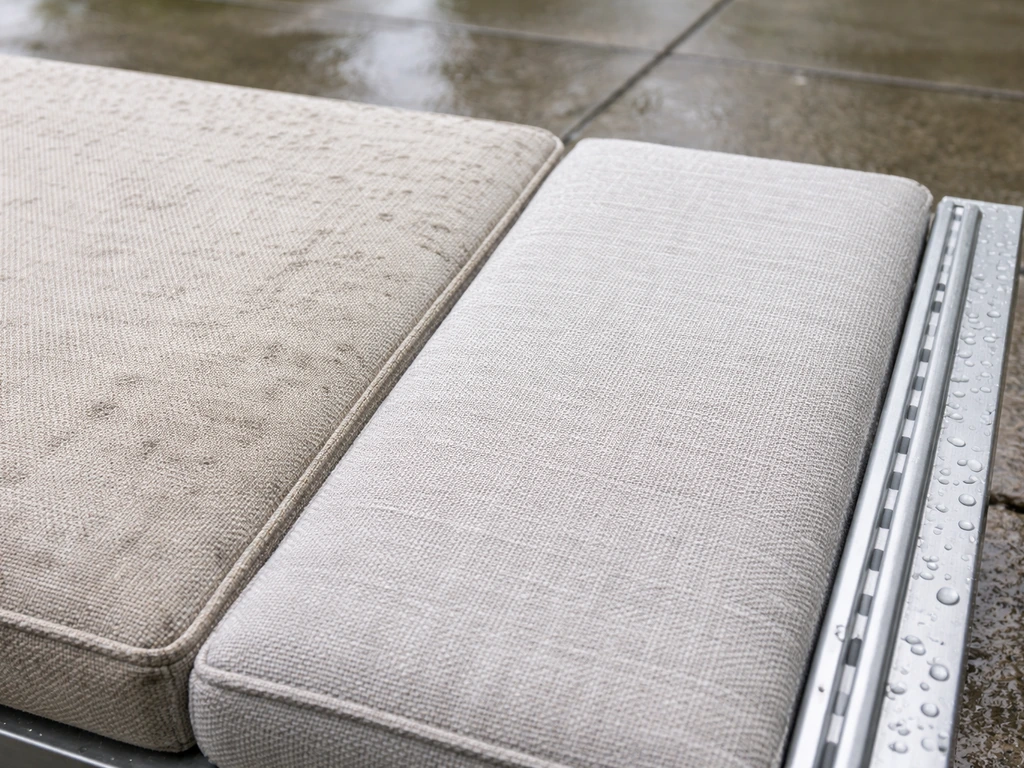
High humidity and frequent rain create two problems: mildew growth and frame corrosion. That makes the best patio furniture for humid climates the one with mildew-resistant fabric and frames that do not corrode, even after frequent wet weather humid and rainy climates. Sunbrella fabric itself does not promote mildew growth, but the brand is transparent about the fact that mildew can still grow on dirt and debris sitting on the surface if you don't clean it regularly.
Keeping cushions clean is your primary maintenance task in humid climates. For frames, aluminum wins here too. Resin wicker over aluminum frames is also a strong choice because the wicker itself won't absorb moisture or rot, and aluminum doesn't rust. Avoid steel frames unless they have a very thick powder coat and you're willing to inspect them annually for chipping.
Teak is a legitimate option for humid climates because its natural oils resist moisture, but it requires more active maintenance than aluminum.
Coastal and salt-air environments
Salt air is harder on metal than almost anything else. If you're within a mile or two of the ocean, marine-grade aluminum (sometimes called 5000-series or marine-grade alloy) is the right frame choice. Standard aluminum powder coatings can corrode in salt air if they chip. Cast aluminum frames with thick, baked-on powder coats hold up better than extruded aluminum with thinner coatings. Stainless steel hardware on the cushion zippers and frame connections is worth looking for specifically in coastal settings. Teak also performs well by the coast historically, but requires seasonal oiling to stay looking good. The Sunbrella fabric itself handles salt air fine since the acrylic fiber is inert to corrosion.
Cold winters and freeze-thaw cycles (Midwest, Northeast, Mountain West)
Freeze-thaw cycles crack anything that holds moisture. For cushion furniture, the practical answer is to bring cushions inside (a storage ottoman, garage shelf, or deck box) when temperatures drop below freezing for extended periods. Sunbrella cushions can technically handle outdoor exposure better than most fabrics, but the foam core inside can absorb moisture and then freeze, which degrades foam faster than heat does. Frames that survive winter best are aluminum and wrought or cast iron (heavy, but essentially impervious to cold if coated properly). Steel needs to be watched for rust spots where the coating was scratched. Teak handles cold reasonably well but can crack if water penetrates and freezes in any micro-checks in the wood.
Frame and cushion construction: what actually determines durability
The frame is where most budget furniture cuts corners. Here's what separates furniture that lasts a decade from furniture that wobbles and rusts after three years.
Frame materials compared
| Frame Material | Rust/Corrosion Risk | Weight | Maintenance | Best Climate |
|---|---|---|---|---|
| Powder-coated aluminum | Very low | Light | Minimal (rinse annually) | All climates, especially humid/coastal |
| Cast aluminum | Very low | Heavy | Minimal | All climates; more rigid than extruded |
| Steel (powder-coated) | Moderate to high if coating chips | Heavy | Inspect annually for rust | Dry climates; needs cover in rain/snow |
| Wrought iron | Moderate (surface rust possible) | Very heavy | Touch up paint as needed | Dry climates; stays put in wind |
| Teak | None (wood, not metal) | Medium-heavy | Oil 1-2x per year | Humid, coastal, or variable climates |
| Resin wicker over aluminum | Very low | Medium | Rinse to clean | Humid and rainy; UV can fade cheaper resin |
Cushion construction: what's inside the cover matters
The Sunbrella cover is only as good as what it wraps. Quality outdoor cushions use either quick-dry open-cell foam or polyester fiberfill wrapped in a Dacron layer. Open-cell foam drains water quickly rather than absorbing and holding it, which is what you want outdoors. Cheap cushions use dense closed-cell foam that stays soggy for days after rain.
A minimum of 4 inches of thickness is a reasonable benchmark for seated comfort on a lounge or sofa cushion. Look for double-stitched seams on the cover (not just glued), marine-grade zippers (YKK or equivalent), and cushions that are reversible so you can extend their life by flipping them. Removable covers that can be unzipped and hand-washed separately are a genuine practical advantage over sewn-shut cushion covers.
Hardware and connection points
Check the screws, bolts, and connection hardware on any frame you're considering. Stainless steel hardware won't rust or seize. Galvanized steel is acceptable. Standard zinc or plated steel hardware is what you find on budget pieces, and it's also the first thing that fails: bolts seize, joints corrode, and the chair wobbles within a couple of seasons. On sling furniture specifically, look at how the sling fabric is attached. Quality slings have the fabric splined into the frame channel, which holds the tension evenly. Low-quality slings are just stapled or glued, and the attachment fails before the fabric does.
Top furniture types and where Sunbrella helps most
Not every outdoor furniture category benefits equally from Sunbrella fabric. Here's where the investment pays off most clearly.
Deep-seating sofas and sectionals
This is where Sunbrella earns its keep most obviously. Large cushions on outdoor sofas and sectionals are expensive to replace, and they take more sun and rain exposure than smaller dining chair cushions. An outdoor sectional with Sunbrella cushions in a neutral or deeper color (navy, charcoal, forest green) should hold its color and resist mildew for 7 to 10 years with basic care.
The same sectional with polyester cushions typically needs new cushions in 2 to 3 seasons if left in full sun. This sentence fits well because it already contrasts full-sun durability by cushion fabric type, which is the same problem addressed by finding the best patio furniture for full sun. The math usually favors spending more upfront.
Sling chairs and chaise lounges
Sling furniture is an underrated option for people who want low maintenance. Because the fabric is the seat with no foam underneath, there's nothing to soak up rain or grow mildew inside a cushion. Sunbrella sling fabric is specifically designed for this application. The care instruction is essentially: rinse it off and let it air-dry. This makes sling furniture excellent for pool areas, covered patios in humid climates, or any situation where furniture gets wet frequently. Even though Sunbrella fabric resists fading, dark patio furniture can still get hot to the touch in direct sun, so shade and frame color matter patio furniture get hot. The trade-off is comfort: sling chairs are less plush than deep-seated cushion furniture.
Dining chairs and side chairs
For dining chairs, Sunbrella fabric makes the most sense on the seat cushion (if there is one) and less so on sling-style dining chairs where the sling is the whole seat. Many quality outdoor dining sets include Sunbrella slings rather than separate cushions, which reduces maintenance. If you're comparing a dining set with Sunbrella cushions versus one with a cheaper outdoor polyester, the durability difference in dining chair cushions is real but slightly less dramatic than on large sofa cushions, simply because dining chairs get less total cumulative sun exposure if you're using them at a table under an umbrella.
Umbrellas and shade structures
A Sunbrella market umbrella canopy is one of the better value applications of the fabric. An umbrella takes direct UV year-round, and cheaper polyester canopies fade and become brittle within two to three seasons. A Sunbrella canopy on a quality aluminum or fiberglass pole umbrella can last 5 to 8 years or longer before needing replacement. Since the canopy on most umbrellas is a replaceable component, you can extend the life of the pole/frame by swapping canopies. Cantilever umbrellas (offset/side-pole) with Sunbrella fabric are worth the premium if you have a covered seating area that needs shade without a center pole in the way.
Price vs value: how to spot quality and avoid marketing traps
The outdoor furniture market is full of products that slap 'Sunbrella' on the tag and charge a premium for what is otherwise a $150 chair. Here's how to read past the marketing.
Price tiers and what they actually reflect
| Price Tier (per seat or piece) | What You Typically Get | Expected Lifespan |
|---|---|---|
| Under $150 (chair) / Under $800 (set) | Thin powder coat, basic steel or light aluminum, standard polyester often mislabeled, minimal cushion | 2-4 years before frame or cushion failure |
| $150-$400 (chair) / $800-$2,500 (set) | Genuine Sunbrella fabric possible, extruded aluminum or resin wicker, quick-dry foam, decent hardware | 5-8 years with moderate care |
| $400-$800+ (chair) / $2,500-$6,000+ (set) | Cast aluminum or teak, thick powder coat, genuine Sunbrella, quality foam, stainless hardware, double stitching | 10-15+ years with proper care |
Red flags that signal poor quality despite a high price
- The tag says 'Sunbrella-grade' or 'Sunbrella-style' rather than 'Sunbrella fabric' — these are not Sunbrella products
- Cushion covers that are sewn shut with no zipper, making them impossible to clean or replace the insert separately
- Thin cushions under 3 inches — uncomfortable and usually cheap foam that degrades quickly
- Frames with visible seams that are welded at obvious stress points (look for wobble when you press down on a corner)
- Plastic caps covering hollow frame ends — fine aesthetically, but peek underneath to assess tube wall thickness
- Hardware that doesn't match (some bolts stainless, others standard steel — indicates cost-cutting mid-production)
One honest concession: mid-range Sunbrella furniture from brands like Telescope Casual, Woodard, Homecrest, or Brown Jordan hits a sweet spot most homeowners don't need to exceed. You don't have to spend $800 per chair to get furniture that performs. What you do need is a frame material that matches your climate (see the section above) and confirmed genuine Sunbrella fabric. The 'performance fabric' marketing language used by competitors copying Sunbrella's positioning is widespread, and most of those fabrics don't match Sunbrella's tested fade resistance or bleach-cleanability.
Care, cleaning, and storage to make it last
Sunbrella's maintenance advantage over other fabrics is real, but it's not zero-maintenance. Here's the practical care routine.
Routine cleaning (monthly or after heavy use)
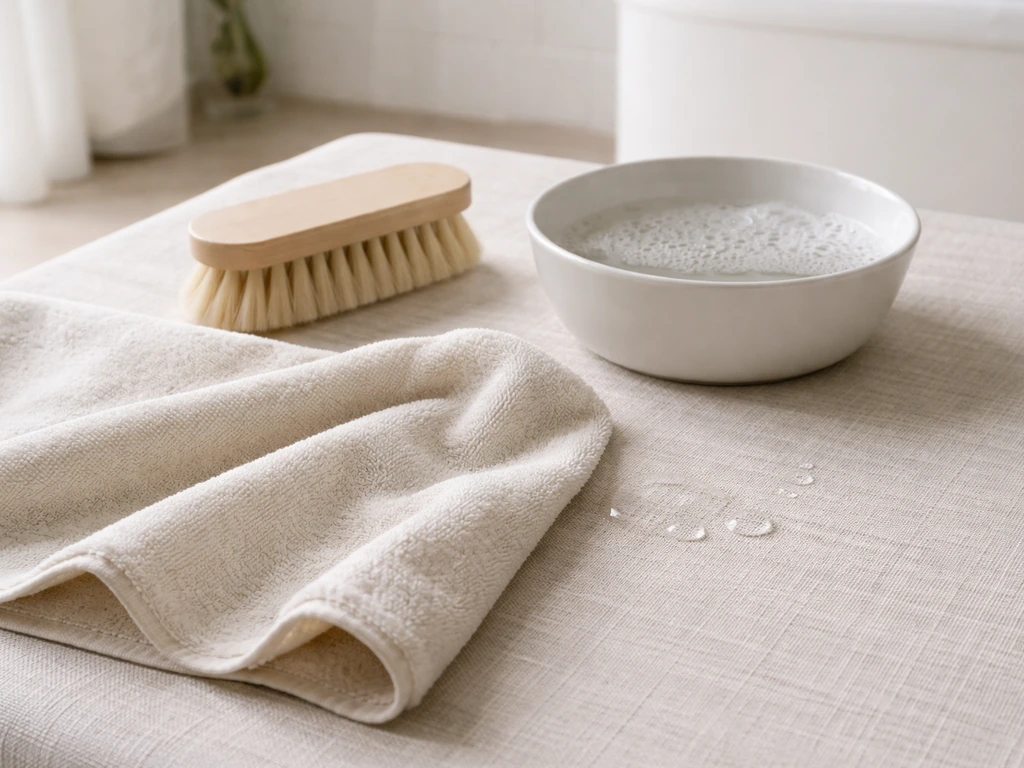
- Brush off loose dirt and debris with a soft bristle brush before wetting the fabric.
- Mix a solution of mild dish soap (like Dawn) and lukewarm water.
- Apply with a soft cloth or sponge, working in a circular motion.
- Rinse thoroughly with clean water — soap residue left in the fabric attracts dirt faster.
- Allow to air dry completely before replacing cushions or folding slings. Never put Sunbrella fabric in a dryer.
Mold and mildew removal (the bleach method)
If you see mildew (dark spots or musty smell), Sunbrella's own care guidance allows bleach, which almost no other upholstery fabric tolerates. Mix 1 cup of bleach and 1/4 cup of mild soap per gallon of water. Sunbrella’s care guidance for mold and mildew recommends mixing bleach with mild soap, applying the solution, soaking about 15 minutes, gently scrubbing with a soft tool, rinsing thoroughly, and air drying [bleach + mild soap solution](https://www. sunbrella.
com/clean-sunbrella-upholstery). Apply the solution to the affected area, let it soak for 15 minutes, then scrub gently with a soft brush. Rinse very thoroughly with clean water afterward to remove all bleach residue, and air dry. Do this in a shaded area if possible to avoid bleach reacting with direct sunlight.
This bleach tolerance is one of Sunbrella's most practical advantages over competing outdoor fabrics.
When and how to store
In climates with freezing winters, bring cushions inside once nighttime temperatures consistently drop below 32°F. A sealed deck box or storage ottoman works fine for short-term storage. For winter, a dry garage shelf or basement is better than a deck box that can trap condensation. Frames can usually stay outside year-round if properly covered with a breathable, UV-resistant furniture cover (avoid plastic tarps that trap moisture and encourage the mildew you're trying to prevent).
Teak frames benefit from one coat of teak oil or sealer in the fall before winter. For sling furniture, there's generally no need to disassemble for winter if you have a good cover, but rinsing and drying thoroughly before covering prevents any off-season mildew on accumulated debris.
Lifespan expectations
With basic care: Sunbrella fabric on cushions should hold its color and integrity for 10 years or more in normal residential use. Sunbrella slings on quality aluminum frames can last 8 to 12 years. Umbrellas with Sunbrella canopies typically last 5 to 8 years before the canopy needs replacement. Signs you bought well: color looks essentially the same as year one after 5 years, seams hold without fraying, foam retains its shape, frame joints stay tight. Signs of a cheaper product regardless of fabric: color fades within 2 years (the fabric may not be genuine Sunbrella), stitching unravels at seam edges, foam compresses permanently within one season.
Your buying checklist and recommendations by patio setup
Use this checklist when evaluating any piece of Sunbrella furniture in-store or online. It takes about 5 minutes to run through and catches most of the quality issues that only show up two years later.
- Confirm the fabric is genuine Sunbrella (look for the Sunbrella hang tag or label on the cushion/sling — not just 'performance fabric' language in the product description)
- Check the frame material matches your climate: aluminum or resin wicker for humid/coastal, cast aluminum or teak for high-end durability everywhere
- Squeeze the cushion and measure its thickness: 4 inches minimum for a sofa seat, 2.5 to 3 inches acceptable for dining chairs
- Locate the zipper: if there isn't one, or it's plastic, that's a quality indicator to factor into the price assessment
- Tug gently on an exposed seam if possible: double-stitched seams hold without moving, single-stitched seams will show stress
- Inspect frame hardware: look for matching hardware metals, and check that any welds or joints feel solid without flex
- Ask or check the product spec for foam type: 'quick-dry' or 'open-cell' foam is the right answer for outdoor use
- Verify the cover can be removed and machine-washed or at least hand-washed with bleach solution
Recommendations by patio use case
| Use Case | Best Furniture Type | Frame Recommendation | Priority Feature |
|---|---|---|---|
| Pool or spa area | Sunbrella sling chaise and dining chairs | Marine-grade aluminum | Sling construction (no foam to soak) |
| Covered porch or lanai | Deep-seating sofa or sectional with Sunbrella cushions | Powder-coated aluminum or resin wicker | Cushion thickness and removable covers |
| Open backyard in full sun | Sunbrella dining set + market umbrella | Cast aluminum with UV-resistant powder coat | Fade resistance and umbrella Sunbrella canopy |
| Coastal or salt-air patio | Any Sunbrella cushion furniture | Marine-grade aluminum or teak | Stainless hardware throughout |
| Four-season use with cold winters | Sunbrella sectional or loveseat with removable cushions | Cast aluminum or wrought iron (frames stay out, cushions go in) | Removable covers and indoor-storable cushions |
| Small balcony or apartment patio | Sunbrella sling bistro chairs + compact side table | Lightweight extruded aluminum (stackable) | Portability and sling low-maintenance |
One last practical note: if you're shopping in a hot, full-sun environment, the combination of Sunbrella fabric and a quality frame is closely related to considerations covered in guides on the best patio furniture for full sun and the best patio furniture for hot weather, since fabric fade resistance and frame heat management overlap in those conditions. For buyers in the Southeast or Gulf Coast, the humidity and mold considerations in guides on the best patio furniture for humid climates are directly relevant alongside the cleaning routine here. The core principle is the same across all of them: match your materials to your actual climate, buy genuine Sunbrella, and do the 10-minute annual cleaning that keeps everything looking good for a decade.
FAQ
How can I tell if the furniture actually has genuine Sunbrella fabric, not just a marketing claim?
Look for clear product labeling that specifies Sunbrella by name on the actual cushions, slings, or canopy, then confirm the manufacturer provides the fabric name or fabric collection. Be cautious when the listing only says “performance fabric” or “Sunbrella-style,” because those phrases often describe look-alikes where the frame and cushion quality may still be budget grade.
Does Sunbrella patio furniture really need cleaning every season, even if it resists fading?
Yes. Sunbrella resists UV damage, but dirt and pollen can still trap moisture and lead to mildew spots. A simple seasonal rinse plus gentle washing, especially in humid areas, prevents buildup on the fiber surface that can cause dark staining over time.
Is bleach always safe to use on Sunbrella, and what’s the biggest mistake to avoid?
Bleach can be used for mildew on Sunbrella, but the key mistake is not rinsing thoroughly afterward. Leftover bleach residue can degrade surrounding material or create uneven discoloration. Also avoid applying in strong direct sun so you do not accelerate chemical reaction and spotting.
What should I do if my Sunbrella cushions develop mildew but the odor and stains keep coming back?
First, clean more deeply and rinse very thoroughly, then let everything dry completely before covering. If mildew returns quickly, it usually means the cushions stayed damp due to poor drainage foam, trapped debris under the cover, or you covered them while still slightly wet.
Can I store Sunbrella cushions in a deck box during winter without causing problems?
You can for short-term storage, but the risk is condensation inside the box. If you live somewhere with frequent swings around freezing, prefer a dry indoor or garage location, or choose a breathable storage solution that does not trap moisture.
What’s the best way to winterize the frame without damaging it?
Use a breathable, UV-resistant cover that allows moisture to escape. Avoid plastic tarps that seal in humidity, because trapped moisture can promote corrosion on fasteners and encourage mildew on sling fabric and crevices.
If I have a coastal home, is marine-grade aluminum enough, or should I change anything else?
Marine-grade aluminum helps with frame corrosion, but you should also verify stainless hardware on zippers, brackets, and cushion connections. Coastal salt air can corrode the small metal parts first, even when the frame itself is protected.
Are Sunbrella slings better than cushion sets if it rains a lot?
Often, yes. Slings do not have a foam core to soak up water, so they dry faster after storms. That can reduce mildew risk and shorten the time furniture sits damp, which is the main cause of recurring spots in rainy climates.
Do darker cushion or sling colors make Sunbrella heat up more?
The fabric may resist fading, but color can still affect how hot the surface feels. In full sun, consider lighter colors for comfort, and pair any color with good shade and a heat-tolerant frame so the furniture does not become uncomfortable to use.
What foam thickness or cushion construction should I target for long-lasting comfort?
Aim for at least about 4 inches for typical lounge or sofa comfort, and prioritize quick-dry open-cell foam or fiberfill wrapped in a protective layer. Dense foam that stays soggy after rain is a common reason cushions look fine at first but degrade quickly.
On sling chairs, what attachment method should I prioritize?
Choose slings that are properly tensioned with the fabric secured into the frame channel, not stapled or loosely glued. Poor attachment fails at the seams and edges first, even if the sling fabric itself is high quality.
How can I check frame quality quickly in-store or on delivery?
Inspect fasteners and joints for hardware grade, confirm the frame has tight, consistent connections, and look for any coating damage or thin spots at welds. If you see exposed or easily scratched metal, plan on faster deterioration regardless of how good the fabric is.
What’s the most cost-effective Sunbrella purchase: cushions, slings, or full furniture sets?
Cushions and canopies are often the smartest upgrade because they are the expensive-to-replace parts that benefit most from solution-dyed fabric. If the frame is already a good material for your climate, replacing just the Sunbrella components can extend the total lifespan without paying for a whole new set.
Next Articles
Does Black Patio Furniture Get Hot? Heat Guide and Tips
Black patio furniture heats up fast in sun. Get heat expectations by material and tips to prevent burns and discomfort.
Best Patio Furniture for Full Sun: What to Buy
Buy the best patio furniture for full sun: UV-fade, heat, rust and cushion tips for wood, metal, wicker and composite.
Best Patio Furniture for Hot Weather: Materials Guide
Find the best patio furniture materials for hot weather, with heat, UV, rust, and sun exposure tips for buying now.