
Solution-dyed acrylic (think Sunbrella-type fabrics) is the best overall material for patio furniture covers if you want long-term protection with real breathability. If you want the best material for outdoor patio furniture covers, solution-dyed acrylic is one of the top choices to look for. For most homeowners, a 600D polyester cover with a PU coating and air vents is the practical sweet spot: it handles rain, resists UV fading, and costs a fraction of premium acrylic.
Best Material for Patio Furniture Covers That Last

Theo Tierney
20 May 2026
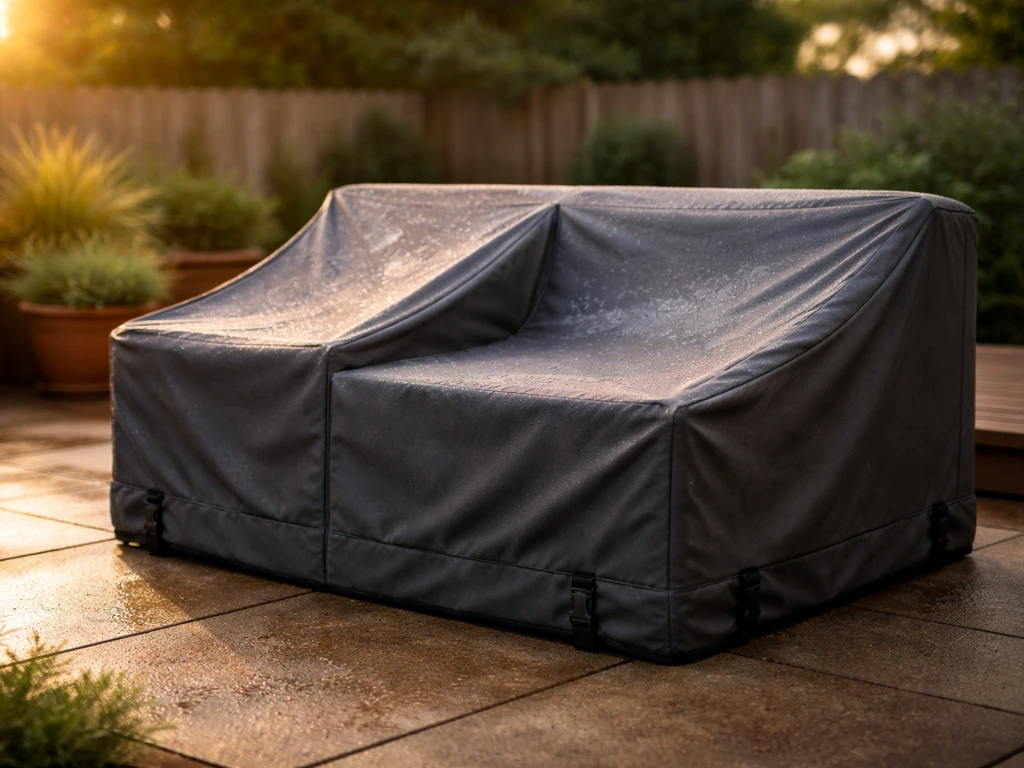
Straight PVC or vinyl covers work in a pinch but trap moisture and create mold problems faster than most people expect. The right choice depends on your climate, what furniture you're covering, and how much maintenance you're willing to do. Here's how to think through it.
Why the cover material you choose actually matters
A patio furniture cover sounds like a simple purchase, but the fabric does a lot of work simultaneously. It has to block rain without letting water pool on top (pooling water causes rust on metal frames, warping in wood, and mold underneath the cover). It has to breathe enough so that any trapped humidity can escape, because a non-breathable cover creates a warm, damp microenvironment that's basically ideal for mildew. And it has to hold up against UV radiation, which breaks down fabric fibers, fades colors, and causes covers to crack and peel within a season or two if the material isn't built for it.
These three demands (water resistance, breathability, and UV stability) pull in different directions. A fully waterproof vinyl cover blocks all water, but it also traps all moisture. A loosely woven canvas breathes beautifully but soaks through in heavy rain. Good cover materials are engineered to hit all three targets at once, which is why understanding what's in the fabric matters more than just checking whether a product is labeled 'waterproof.'
The main cover materials, compared honestly
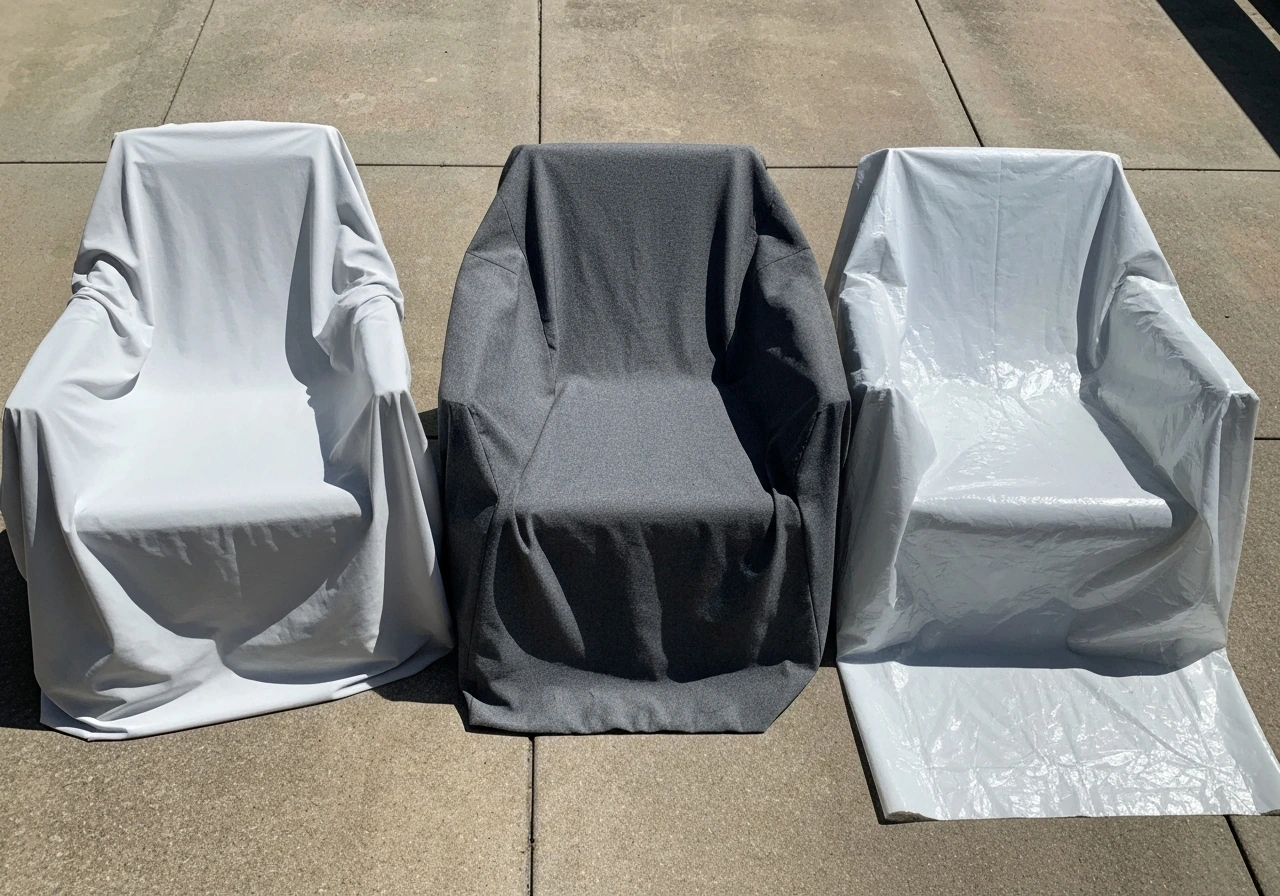
There are five material categories you'll run into when shopping for patio furniture covers. Each has a real use case, real limitations, and a specific type of buyer it suits best.
| Material | Water Resistance | Breathability | UV Resistance | Durability | Best For |
|---|---|---|---|---|---|
| Solution-dyed acrylic (e.g., Sunbrella) | High | High | Excellent (color stable for 5+ years) | 5–10 years | Long-term use, sun-heavy or humid climates |
| Solution-dyed olefin/polyolefin | High | Moderate-High | Very good | 4–7 years | Budget-conscious buyers wanting acrylic-like performance |
| Coated polyester (600D+ PU/oxford) | High | Moderate (vent-dependent) | Good (degrades faster than acrylic) | 2–4 years | Most homeowners: solid all-around value |
| Canvas (heavy-weight natural or synthetic) | Moderate | Very High | Fair (needs UV treatment) | 3–5 years with maintenance | Dry climates, covered patios, design-focused buyers |
| PVC / vinyl | Very High | Very Low | Fair (cracks in UV over time) | 1–3 years | Short-term or off-season storage only |
Solution-dyed acrylic: the performance benchmark
Solution-dyed acrylic is the material that premium outdoor fabric brands are built on. The key difference from regular polyester is how the color is added: the pigment goes into the fiber itself during manufacturing, not onto the surface afterward. That means UV rays can't bleach the color out because there's no surface dye to strip away. These fabrics also resist mildew growth naturally, wick water off the surface, and allow enough air movement to prevent moisture buildup underneath. If you're covering a teak dining set or a high-end aluminum sectional and you want it to last, this is the material to specify. The downside is cost: expect to pay two to three times more than a standard polyester cover.
Coated polyester: the practical choice for most people
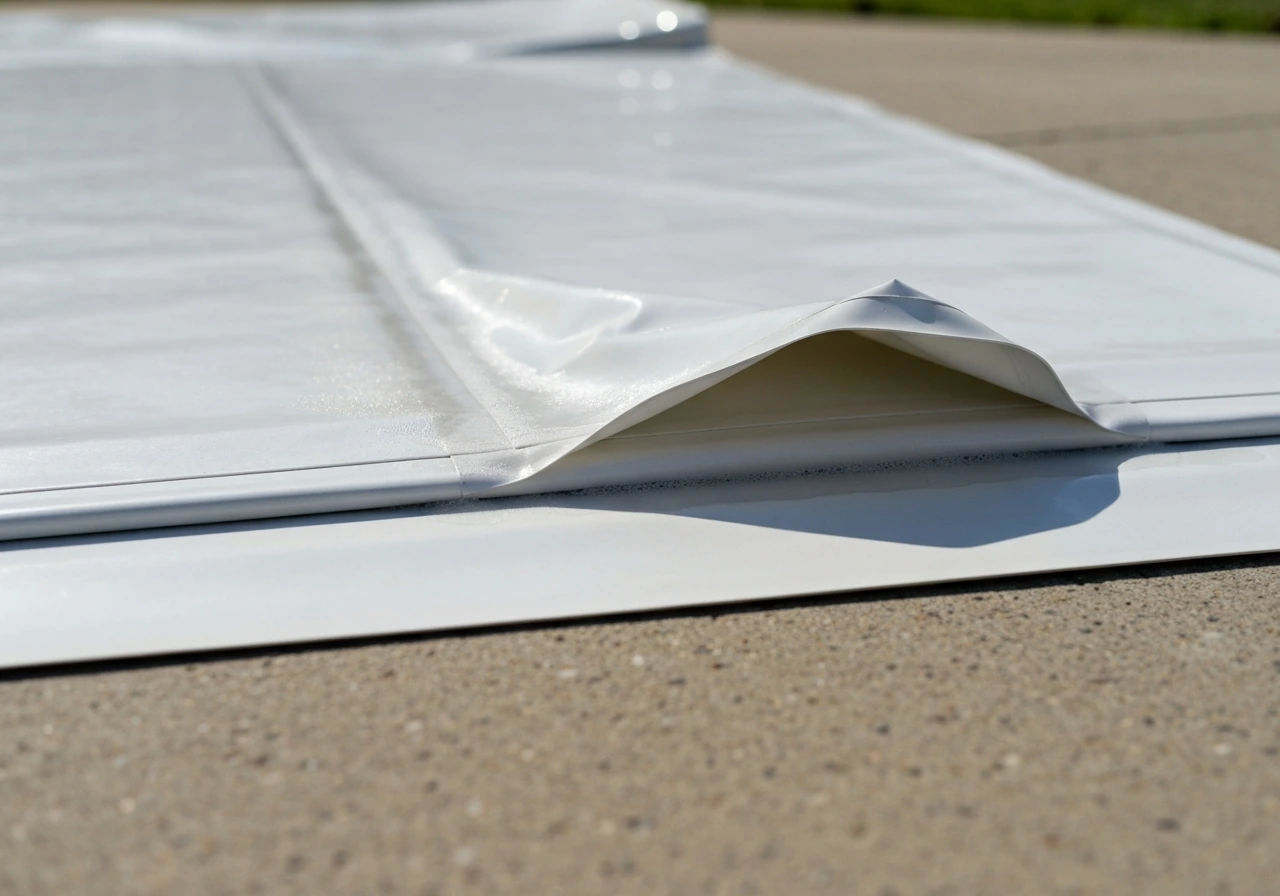
Most of the covers sold at home improvement stores and online are 300D to 600D polyester with a polyurethane (PU) or silver-coated backing. The denier number (D) refers to the thread thickness: 600D is noticeably heavier and more tear-resistant than 300D. A good 600D oxford polyester cover with a PU coating handles rain well, is light enough to put on and take off easily, and costs $30 to $80 for most furniture sizes. The catch: the PU coating degrades with UV exposure over time, usually showing as cracking or flaking after two to three seasons. Buying covers with a UPF or UV-resistance rating, and storing them when not needed, extends their life significantly.
PVC and vinyl: more risk than most people realize
Vinyl and PVC covers are tempting because they're cheap and appear to be completely waterproof. The problem is that 'waterproof' works in both directions: they lock rain out, but they also lock humidity in. When the sun heats the cover during the day and temperatures drop at night, condensation forms on the inside surface, right against your furniture. That trapped moisture is exactly what causes rust on wrought iron, mold on cushion foam, and rot on wood frames. A vinyl cover on a wicker sectional over a humid summer can do more damage than no cover at all. Reserve vinyl for short-term protection (covering furniture during an unexpected storm) or completely enclosed, dry storage situations.
Which material to use based on your climate
Climate is the single biggest variable in cover material selection. The fabric that works perfectly in Phoenix will fail within a season in coastal Florida, and vice versa.
Rainy and humid climates (Pacific Northwest, Southeast, Gulf Coast)
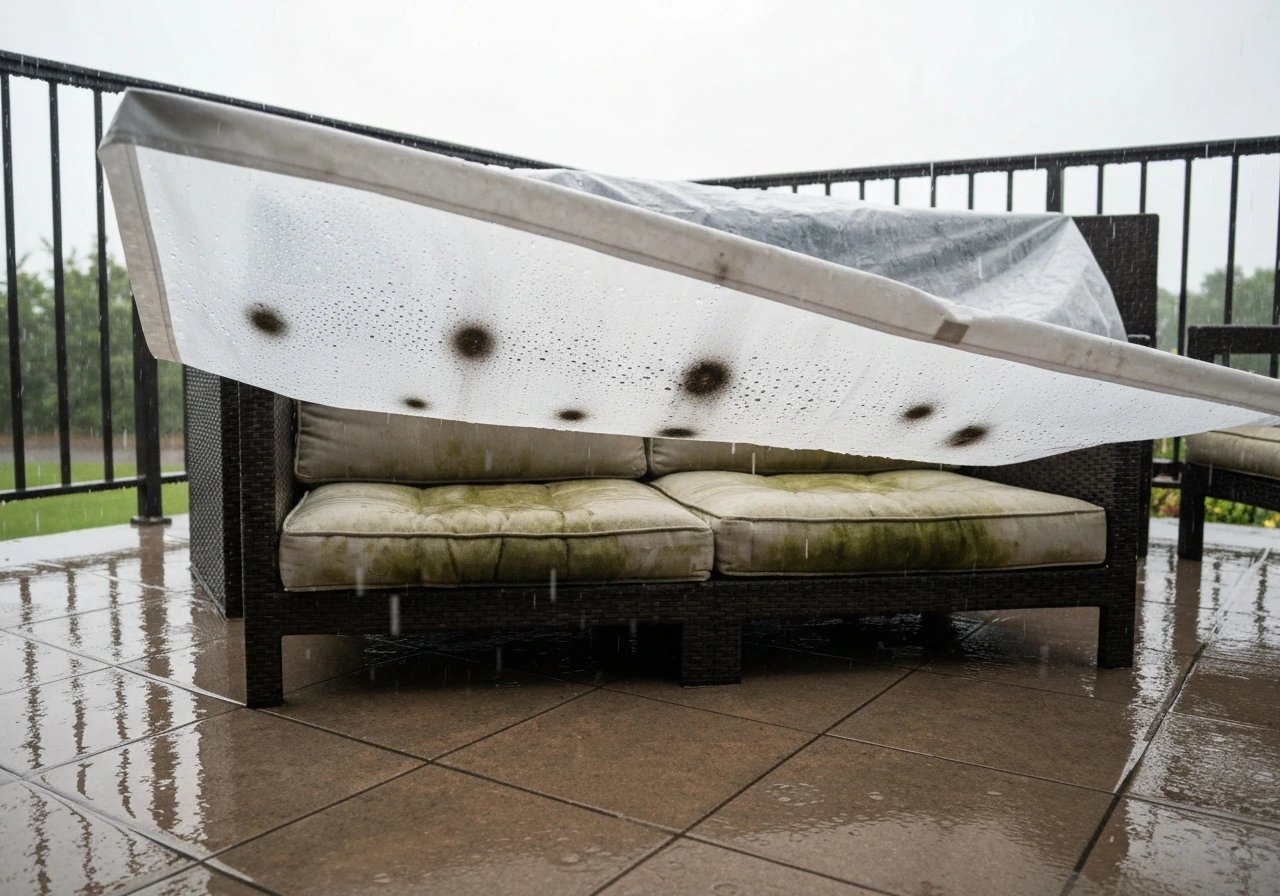
Breathability is non-negotiable here. Constant humidity means moisture is always trying to get under your cover, and a non-breathable material guarantees mildew on anything you're trying to protect. Solution-dyed acrylic is the top pick: it repels surface water while letting vapor escape, and its natural mildew resistance is a genuine advantage, not just marketing language. If you go with polyester, look for covers that have built-in air vents and make sure the seams are heat-welded or taped rather than just stitched, because stitched seams wick water through the needle holes over time.
Hot and sunny climates (Southwest, desert regions)
UV degradation is the main enemy in high-sun regions like Arizona, Southern California, and Nevada. Regular polyester covers can fade and start breaking down in under a year with intense, daily UV exposure. Solution-dyed acrylic holds color and structural integrity far longer because the pigment is embedded in the fiber rather than sitting on the surface. Look for covers with a UPF 50+ rating and avoid anything with a PVC backing, which cracks in extreme heat and direct sunlight faster than almost any other cover material.
Cold, snowy climates (Midwest, Northeast, Mountain regions)
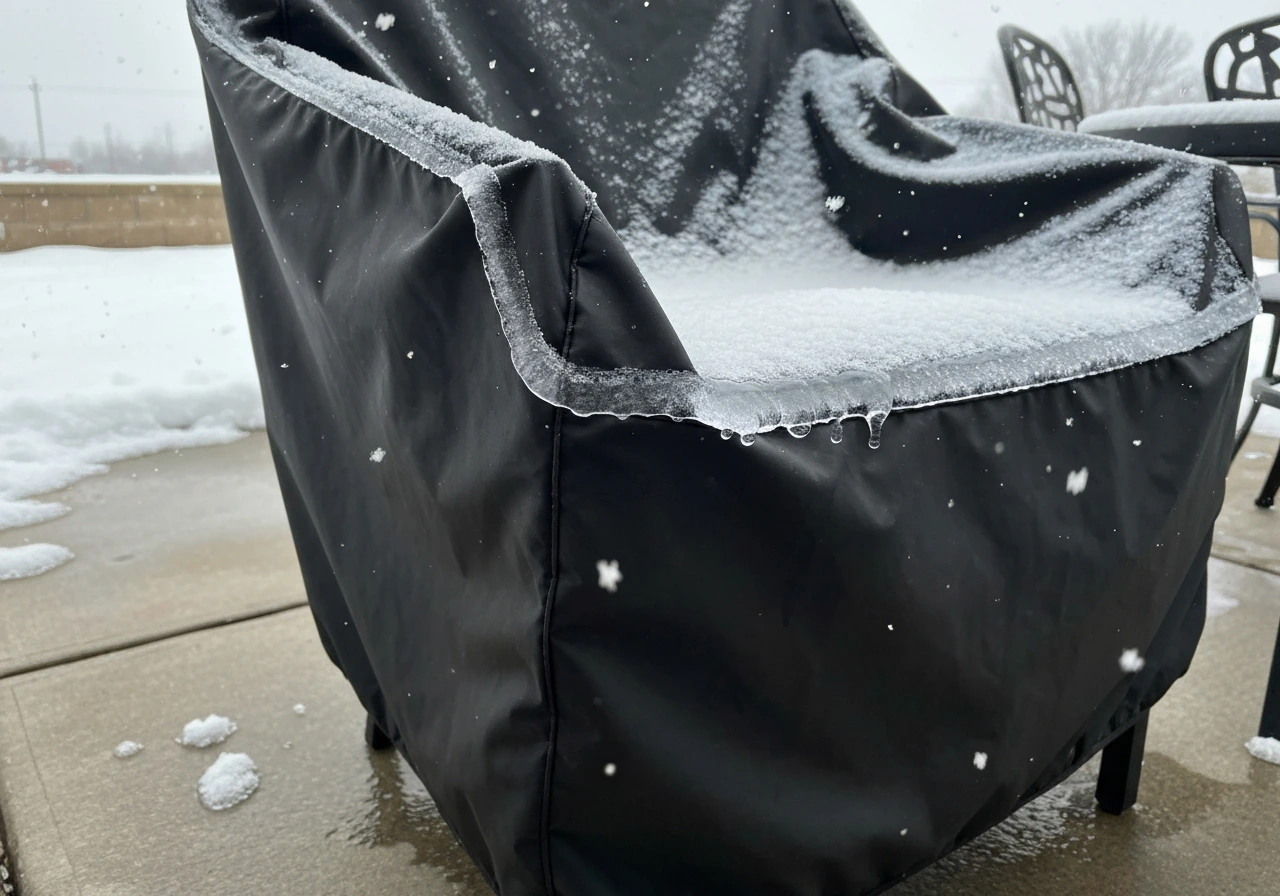
Snow load and freeze-thaw cycles create a different set of problems. A cover that absorbs water and then freezes will crack at the seams, and any standing water on top of the cover becomes ice that's heavy enough to warp the furniture underneath. Heavy 600D polyester or canvas covers work well here because their weight holds them in place during wind, and a slightly sloped cover design helps shed snow rather than letting it accumulate. Make sure any cover you buy for a cold climate stays pliable at freezing temperatures: some PVC and vinyl covers stiffen and crack below 32°F. Look for materials rated for cold-weather use specifically.
Coastal climates (salt air, wind, humidity)
Salt air accelerates corrosion on metal furniture frames and degrades fabric coatings faster than in inland environments. Solution-dyed acrylic or olefin are both good choices because neither absorbs salt the way cotton-blend or natural canvas materials do. Wind is also a major issue on coastal properties, so the cover fit matters as much as the fabric: loose covers that catch wind become projectiles or wear through at the edges very quickly. Covers with full wraparound elastic hems, adjustable straps, or clip systems are essential in coastal conditions, not optional.
Breathability vs waterproofing: why you need both
This is the central tradeoff in cover design, and it's worth understanding clearly. A fabric's breathability refers to how easily air (and water vapor) passes through it. Sailrite also explains that breathability is how easily air passes through fabric and that choosing outdoor fabric involves balancing breathability with water resistance breathability (how easily air passes through fabric) and frames the tradeoff between water resistance and breathability. A fabric's water resistance refers to how well it blocks liquid water from penetrating. These are related but different properties. The goal is a fabric that blocks rain coming in from outside while allowing vapor pressure from inside to escape. That's how you prevent both wet furniture from rain and mold from trapped condensation.
Solution-dyed acrylic fabrics achieve this naturally through their weave structure: water beads and runs off the surface, but air moves through the weave. Coated polyester achieves water resistance through the coating, which is why vents are critical in polyester covers: without vents, the coating blocks vapor from escaping just as effectively as it blocks rain from entering. When you see a polyester cover without any venting, that's a design problem. Non-breathable vinyl or solid PVC covers trap moisture entirely, creating the humid microenvironment that accelerates mold, mildew, and rust on whatever is underneath.
If you're covering cushioned furniture, breathability matters even more than for bare frames. Cushion foam holds moisture and is slow to dry. A non-breathable cover over cushioned furniture in a warm climate is one of the fastest ways to ruin cushions that would otherwise last years.
Construction details that separate good covers from bad ones
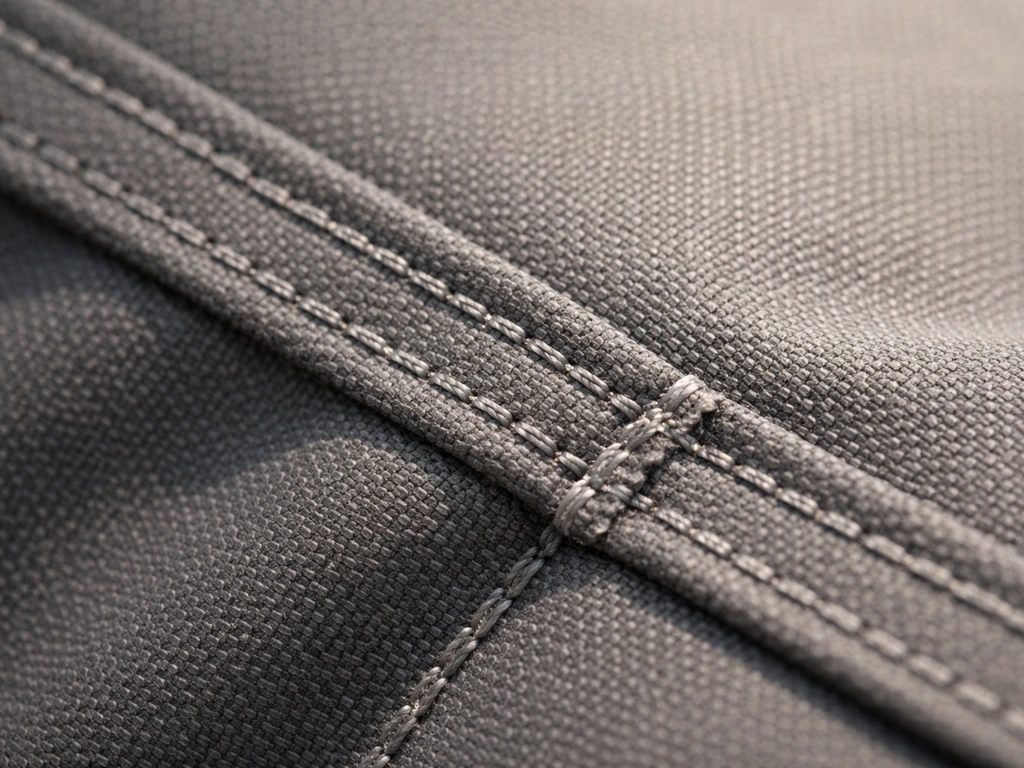
The fabric type is only part of what determines how a cover performs. Construction quality, especially at the seams and edges, is where most covers fail first.
Seams and stitching
Double-stitched or reinforced seams last longer than single-stitch construction, but even double-stitched seams on waterproof fabrics can become leak points because the needle punctures the fabric. Better covers use heat-welded or seam-taped construction, where the seam is bonded rather than sewn, eliminating the needle holes entirely. If a cover description mentions 'taped seams' or 'welded seams,' that's a genuine quality indicator, especially for rainy climates.
Fabric weight and denier
For polyester covers, 600D is the minimum worth buying for furniture you care about. 300D covers are light and packable but tear at stress points (corners, strap attachments) after a season or two of use. For canvas, look for 10 oz per square yard or heavier. Heavier fabric isn't just more durable; it also stays in place better in wind and drapes more securely over furniture with irregular shapes.
Coatings and UV ratings
A PU coating on polyester is standard and effective when new. Silver-coated or aluminized backings add some UV reflection and can slow heat buildup under the cover, which matters for vinyl furniture and composite materials that can warp in extreme heat. Look for covers with a listed UPF rating of 50+ if you're in a high-sun region. Avoid covers that list 'water-resistant' without any specification of the coating type or denier: that usually means a light 300D with a cheap coating that won't last more than one season.
Fade resistance
Fading is mostly a cosmetic issue in covers, but it's a useful indicator of material quality. A cover that fades badly within a season is also losing structural integrity from UV degradation even if it's not visible yet. Solution-dyed fabrics hold color dramatically longer than surface-dyed or printed fabrics. If a cover is showing significant fading after one summer, plan to replace it before the following season rather than running it until it fails.
Getting the fit right: size, vents, and straps
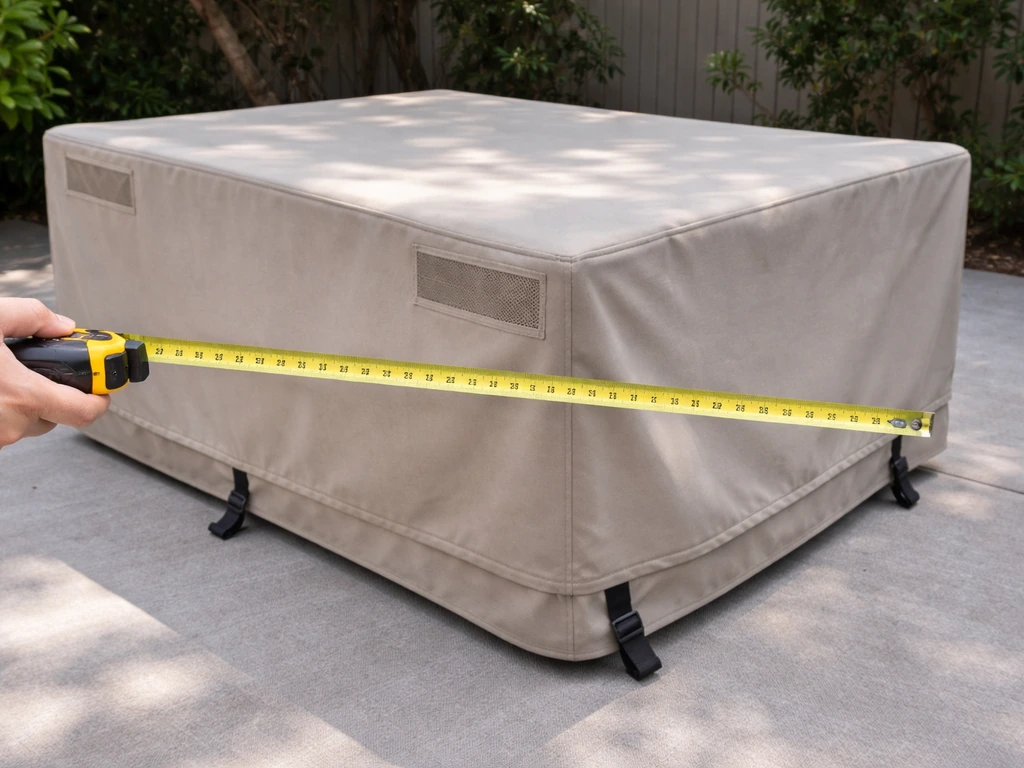
A cover made from excellent material will still fail if it fits poorly. An oversized cover catches wind, pools water in sagging sections, and rubs against furniture edges until it tears. An undersized cover leaves gaps at the bottom that let rain and debris blow in, and puts stress on the seams every time you put it on or take it off.
Measure your furniture at its widest and tallest points before buying, including any cushions if you leave them on. Add 2 to 3 inches of clearance to allow for easy removal and drape, but don't go more than 4 to 5 inches oversized or you'll get pooling and wind issues. For irregularly shaped furniture like L-shaped sectionals or round fire pit tables, look for covers designed for that specific shape rather than trying to use a generic rectangular cover.
- Air vents: look for covers with at least two vents placed on opposing sides so air can actually flow through, not just escape from one point
- Elastic hems: a full-perimeter elastic hem stays put better than a drawstring, especially in wind
- Adjustable straps or buckles: critical for any coastal or windy location; straps that thread under the furniture frame prevent the cover from lifting
- Padded handles: make it easier to put covers on and off without tearing at stress points
- Zipper access panels: useful for covering sectionals where you may need to remove one piece without uncovering the whole set
For cushioned furniture specifically, leave the cushions slightly fanned out or propped rather than stacked, so air can circulate around them under the cover. A well-vented cover over stacked wet cushions still won't dry them out the way proper airflow will.
How to make your covers actually last
Even the best cover material will fail prematurely if you treat it like a set-it-and-forget-it product. A little seasonal maintenance goes a long way.
Do these things
- Rinse covers with a garden hose every month or two to remove dirt, pollen, and salt before it degrades the coating or weave
- Let covers dry completely before folding and storing them; folding a damp cover into a storage bag is how you get mold growing in the off-season
- Reapply a water repellent spray (like 303 Fabric Guard or Nikwax) to polyester covers once a season to maintain the DWR (durable water repellent) finish
- Store covers loosely in a breathable bag or container during the off-season, not compressed in a tight plastic bin
- Check straps and elastic hems in spring before relying on them for the season; replace covers before the hardware fails, not after
Avoid these common mistakes
- Covering furniture while it's still wet or after rain without letting it dry first, which traps moisture underneath
- Using a solid vinyl or PVC cover year-round in a humid or hot climate
- Buying a cover that's 10 or more inches too large and expecting it to stay in place in any wind
- Ignoring small tears at corners or strap attachment points; they become large tears within one season
- Leaving covers on through a full winter without checking for moisture or mildew buildup underneath
- Machine-washing covers with harsh detergents, which strips protective coatings faster than anything else
The furniture underneath the cover matters here too. Metal furniture (especially wrought iron or steel) is more vulnerable to trapped moisture than aluminum or teak, so pairing it with a breathable, well-vented cover is especially important. The cover choices you make for a teak dining set are different from what you'd choose for an all-weather wicker sectional or a cast aluminum bistro set, and factoring in the furniture material alongside the cover material is how you get genuinely long-term protection.
For most homeowners, a 600D polyester cover with taped seams, built-in vents, and perimeter elastic handles the job well for two to four seasons at a reasonable price. If you're protecting furniture worth $1,500 or more, investing in solution-dyed acrylic pays for itself in the extended life of both the cover and the furniture underneath it. Whatever material you choose, fit and breathability matter just as much as the fabric itself: a mediocre material that fits correctly and breathes properly will outperform a premium fabric on a poorly designed cover every time.
FAQ
What’s the “best material for patio furniture covers” if I’m unsure of my climate and storage conditions?
If you want one default choice that works across most regions, pick solution-dyed acrylic, then prioritize construction (taped or heat-welded seams) and a snug but breathable fit. If cost matters more, choose 600D polyester with a PU coating plus built-in vents and perimeter elastic, but treat it as more of a 2 to 4 season plan (especially in high-UV areas).
How can I tell if a polyester cover’s PU coating will last in my sun exposure?
Look for a stated UPF 50+ rating and any mention of UV resistance, not just “waterproof.” Also check seam design (taped or heat-welded) because needle-punctured seams can leak earlier than the coating. If the product only says “water-resistant” and lists a light denier like 300D, expect a shorter life.
Are air vents enough on a polyester cover, or do I need specific seam construction too?
You need both. Vents help vapor escape, but if seams are only stitched, needle holes can become leak paths over time, especially during repeated rain. Vented and taped or heat-welded seams are the combination that best prevents both trapped moisture and water intrusion.
Can I use a waterproof vinyl cover for a covered porch or gazebo, where it’s not directly raining much?
Sometimes, but only if the area stays relatively dry and the cover does not trap humidity. Even under partial protection, vinyl can still create condensation when temperatures swing. If you cover cushioned furniture on vinyl, plan on higher mildew risk unless you can remove the cover often for drying.
What size clearance should I use if I want to avoid pooling but still prevent gaps?
Use 2 to 3 inches of clearance for typical patio sets, and avoid going beyond about 4 to 5 inches oversized. Too tight increases friction and seam stress during removal, too loose creates sagging that collects water and concentrates wind abrasion on the edges.
Should I cover my cushions differently than my frames?
Yes. If cushions stay on the furniture, ensure airflow by fanning them slightly or propping them rather than stacking or tightly compressing them. For cushioned sets, breathability is the deciding factor, because foam holds moisture longer and takes longer to dry under a non-breathable cover.
What’s the safest approach for snow and freeze-thaw regions?
Choose heavier, wind-stable materials like 600D polyester or heavier canvas, and prefer a design that sheds snow (slightly sloped or form-fitting). Also make sure the cover is rated for cold-weather flexibility, since some vinyl or PVC stiffens below freezing and can crack at seams.
I live near the coast, should I prioritize material or cover fit first?
Fit first, then material. Loose covers catch wind, wear through at corners, and allow salt spray entry. After that, solution-dyed acrylic or olefin helps because they resist salt-driven deterioration better than cotton-blend or natural canvas materials that can absorb and hold salt.
How do I prevent mold if I accidentally covered furniture that was already damp?
Remove the cover as soon as practical and let the furniture dry with good airflow. If you must re-cover temporarily, consider using the cover only for short intervals and ensure vents are unobstructed. A breathable cover reduces risk, but it cannot fully compensate for prolonged moisture trapped against cushion foam or wrought iron.
What maintenance should I do to make the cover last longer?
At least a seasonal inspection helps. Look for seam lift, cracking at coating edges, and stretched elastic that no longer tightens the hem. If you see significant fading early, treat it as a UV warning sign and plan replacement rather than waiting for seam or coating failure.
Is a higher denier always better for polyester covers?
Mostly, for durability. 600D generally outlasts 300D at stress points like corners and strap attachments, but “best” still depends on the coating quality and ventilation. A heavy 600D cover with poor ventilation or stitched seams can still fail faster than a well-constructed, properly vented design.
Do printed or surface-dyed covers behave differently from embedded-color fabrics?
Yes. Surface-dyed or printed covers tend to fade sooner because the color layer is exposed to UV wear. Solution-dyed acrylic holds color much longer, and early heavy fading is often a sign the fabric is losing structural integrity even before holes appear.
Next Articles
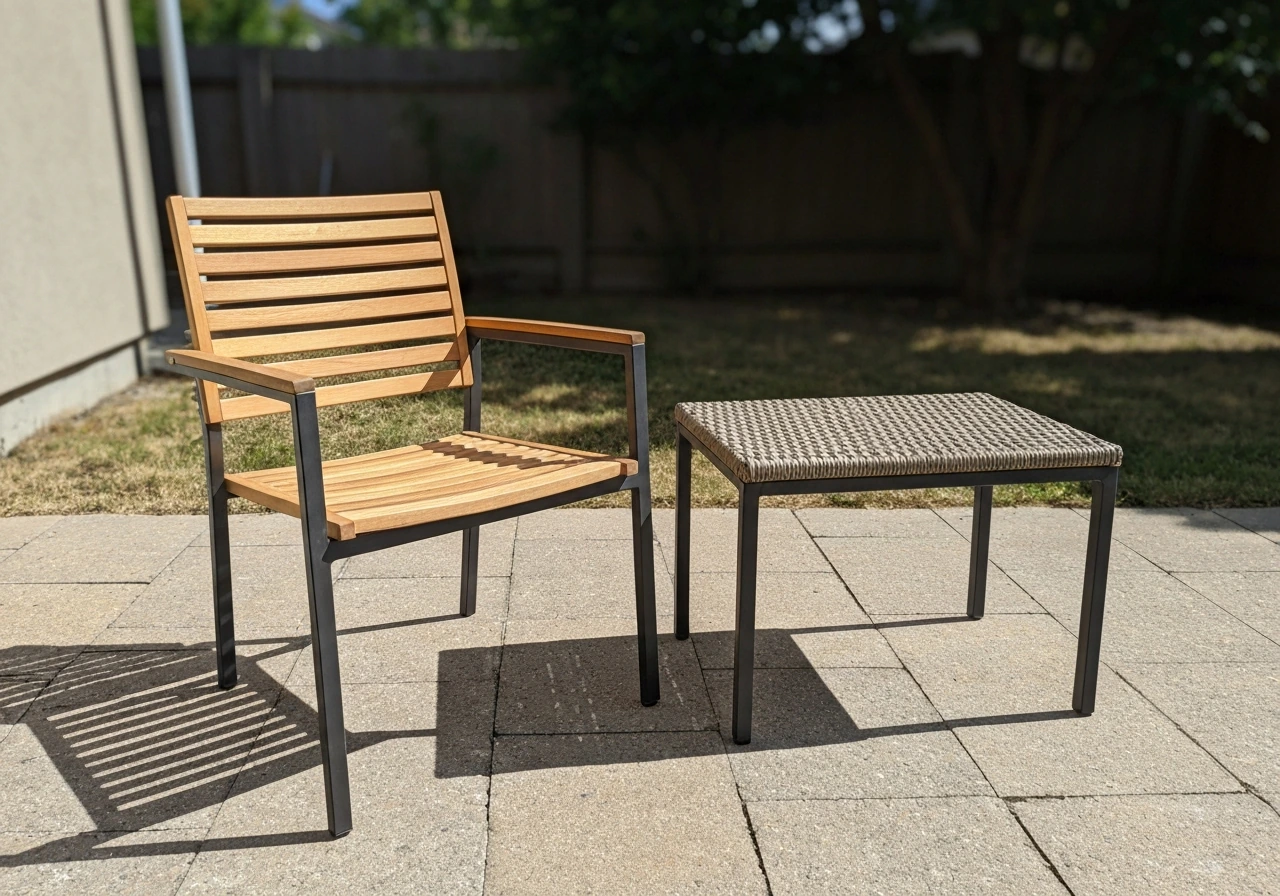
What Is Patio Furniture Made Of? Materials Guide
Learn what patio furniture is made of wood, metal, wicker, and composites plus frame vs cushion materials and care tips.
What Material Is Best for Patio Furniture?
Compare wood, metal, wicker, and composite to find the best patio furniture material for your climate and upkeep needs.
Best Patio Furniture Material: Choose the Right One by Climate
Climate-based guide to the best patio furniture material: compare wood, metal, wicker and composite by weather, cost, du