
If you want one honest answer: powder-coated aluminum is the best all-around material for most people's patio furniture. It handles rain, UV, humidity, and coastal salt air better than almost anything else, needs minimal maintenance, and costs far less over time than wood or wrought iron. But "best" is genuinely climate-dependent, and if you're in a dry inland climate, love the look of wood, or want deep cushioned comfort, you have real options worth understanding before you spend money.
What Material Is Best for Patio Furniture?

Theo Tierney
4 May 2026
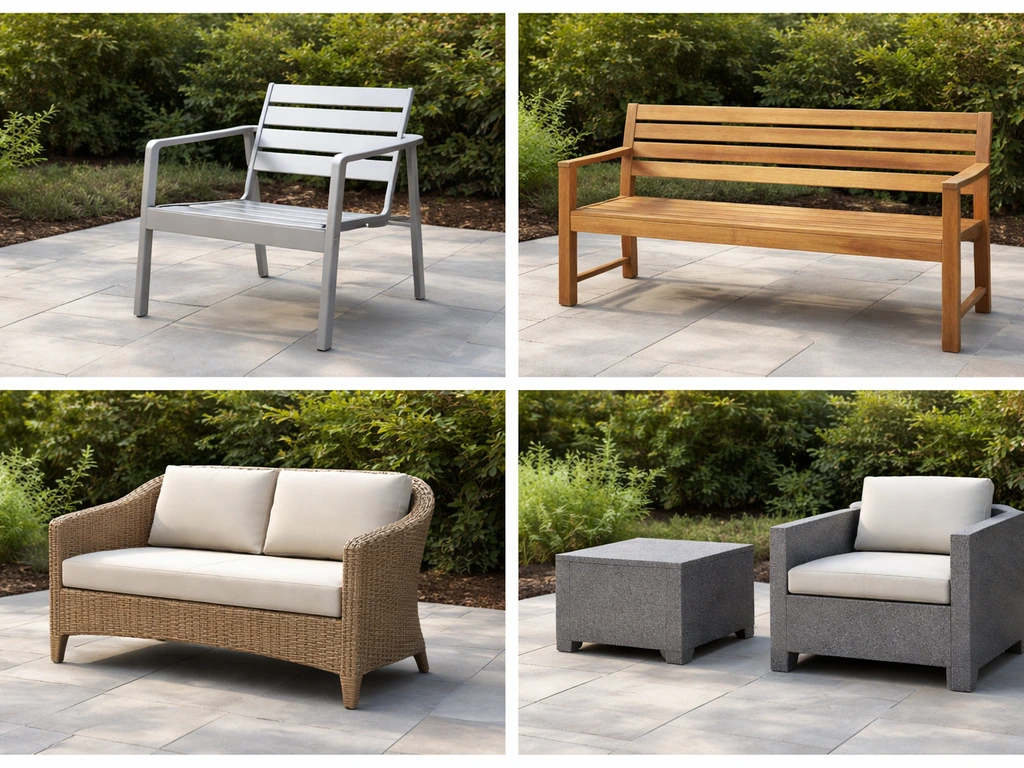
How to pick the best patio furniture material for your climate
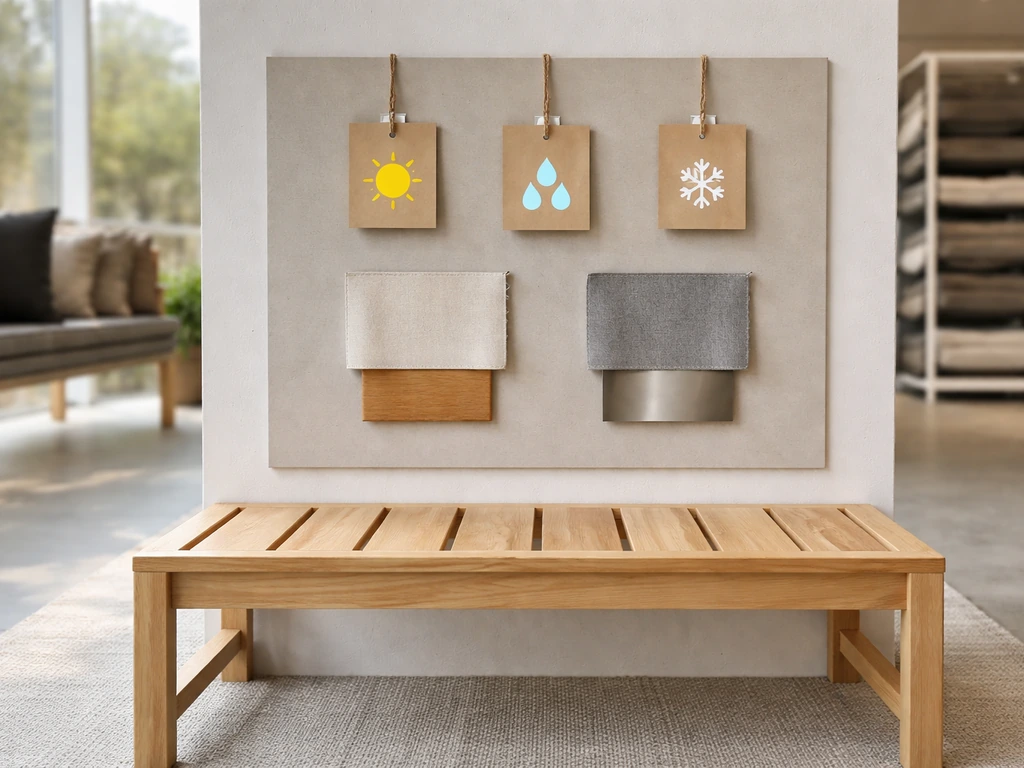
Climate is the single biggest variable in this decision, and it's where most people go wrong. They buy something that looks great in the showroom and watch it deteriorate in two seasons because it wasn't built for their specific conditions. Before you get into material comparisons, be honest about what your furniture will actually face. After that, it helps to understand what patio furniture is made of and how different materials handle rain, UV, and salt air.
The four conditions that destroy outdoor furniture fastest are: salt air (coastal environments), UV exposure (desert Southwest, high altitude), sustained humidity (Gulf Coast, Southeast), and freeze-thaw cycles (Midwest, Northeast winters). Most materials handle one or two of these well but struggle with the others. The right question isn't just "what's the best material" but "what's the best material for where I live and how I store it."
| Climate/Condition | Best Material | Avoid |
|---|---|---|
| Coastal/Salt Air | Powder-coated aluminum, marine-grade 316 stainless steel, HDPE synthetic wicker | Wrought iron, untreated steel, natural wicker |
| High Humidity (Southeast, Gulf Coast) | Aluminum, teak, synthetic wicker (HDPE) | Cheap composites, untreated softwood, natural wicker |
| Desert/High UV (Southwest) | Powder-coated aluminum, teak, composite with UV cap layer | Cheap resin, natural fiber wicker, untreated wood |
| Freeze-Thaw (Midwest, Northeast) | Aluminum, teak, synthetic wicker | Cast iron, untreated wood with water absorption issues |
| Dry/Mild (Pacific Northwest, Mountain) | Almost any material performs well; teak and cedar shine here | No major restrictions if maintained |
| Covered Patio (any climate) | More flexibility; wood and natural wicker are viable | Still avoid untreated steel near coast |
Whether your furniture lives under a pergola, a covered porch, or completely exposed also matters enormously. A covered patio dramatically reduces UV and rain exposure, which means wood and even natural wicker become much more practical choices. Fully exposed furniture in Florida or coastal Texas needs to be treated like it's in combat conditions year-round.
The main material options and how they actually perform outdoors
Aluminum
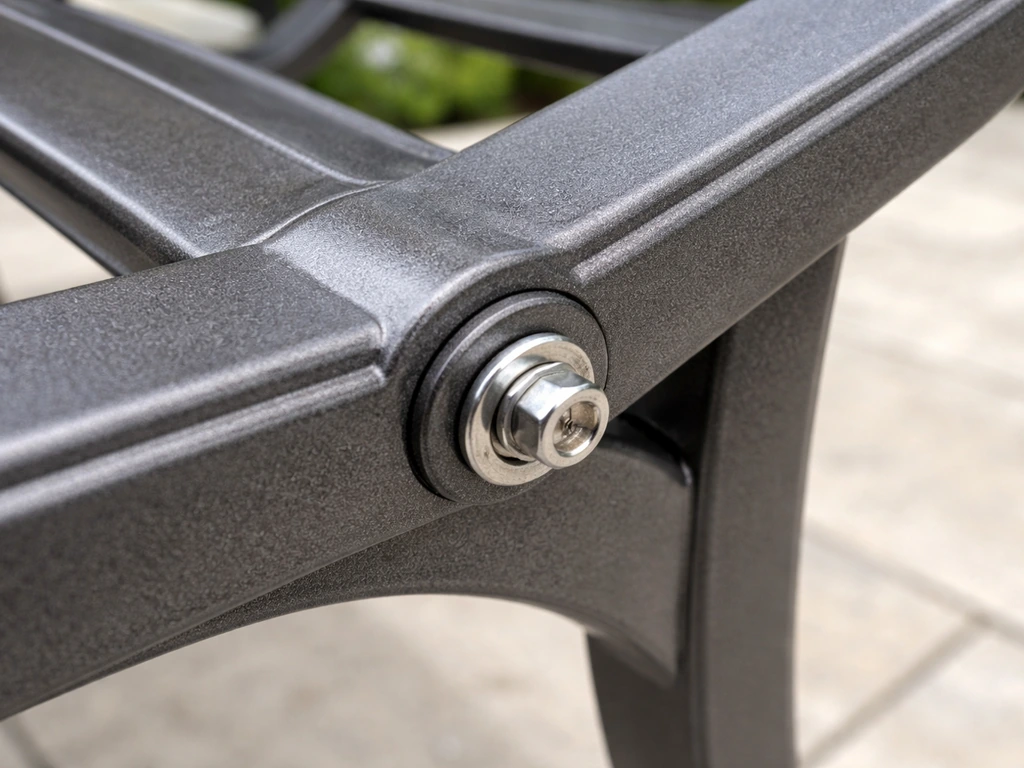
Aluminum is genuinely the workhorse of outdoor furniture, and Consumer Reports has called cast aluminum the best combination of durability and affordability in the category. It doesn't rust (aluminum oxidizes, but that forms a protective layer rather than degrading the metal the way iron rust does), it's lightweight enough to move around easily, and when it's powder-coated properly it handles salt air, UV, and moisture well.
Powder coating is electrostatically applied and baked on, creating a sealed surface that resists chipping and holds up in coastal climates. For coastal buyers, the spec to look for is a coating system tested to at least 500 hours of salt-spray exposure without visible corrosion (using the ASTM B117 salt-spray standard).
For many coating systems, performance is compared against the ASTM B117 salt-spray standard, which is designed to evaluate relative corrosion resistance under continuous indirect salt-water fog conditions around 35°C tested to at least 500 hours of salt-spray exposure without visible corrosion. Ferrous metals with basic protective coatings can fail in the 100-200 hour range by comparison.
The downside: cheaper cast aluminum can feel thin and lightweight in the bad way, and the finish can chalk or fade if the UV inhibitors in the coating are poor quality.
Wood (teak, cedar, eucalyptus, and others)
Wood furniture has a warmth and weight that metal simply can't replicate, and high-quality hardwoods like teak genuinely earn their reputation. Teak's natural oils make it moisture-resistant and naturally repel insects and decay, which is why it's been used in marine applications for centuries. The catch is that UV breaks down those natural oils over time, turning teak from golden-brown to a silvery grey. That grey patina is beautiful to some people and a maintenance problem to others.
If you want to preserve the original color, you'll need to oil it regularly, with frequency depending on your climate: coastal salt-spray exposure calls for more frequent oiling than a dry inland setting. Cedar is another solid natural choice: western red cedar has genuine natural rot and insect resistance, and unlike teak it takes stains and sealers beautifully. For maximum longevity outdoors, use an exterior-grade sealer with both UV and moisture protection and reapply as the manufacturer recommends.
In humid climates, wood swells with moisture absorption, which can stress joints and finishes over time. Teak handles this better than most softwoods. Eucalyptus sits in the middle: more affordable than teak, more durable than pine, but less forgiving if you skip maintenance.
Wicker: natural vs. synthetic
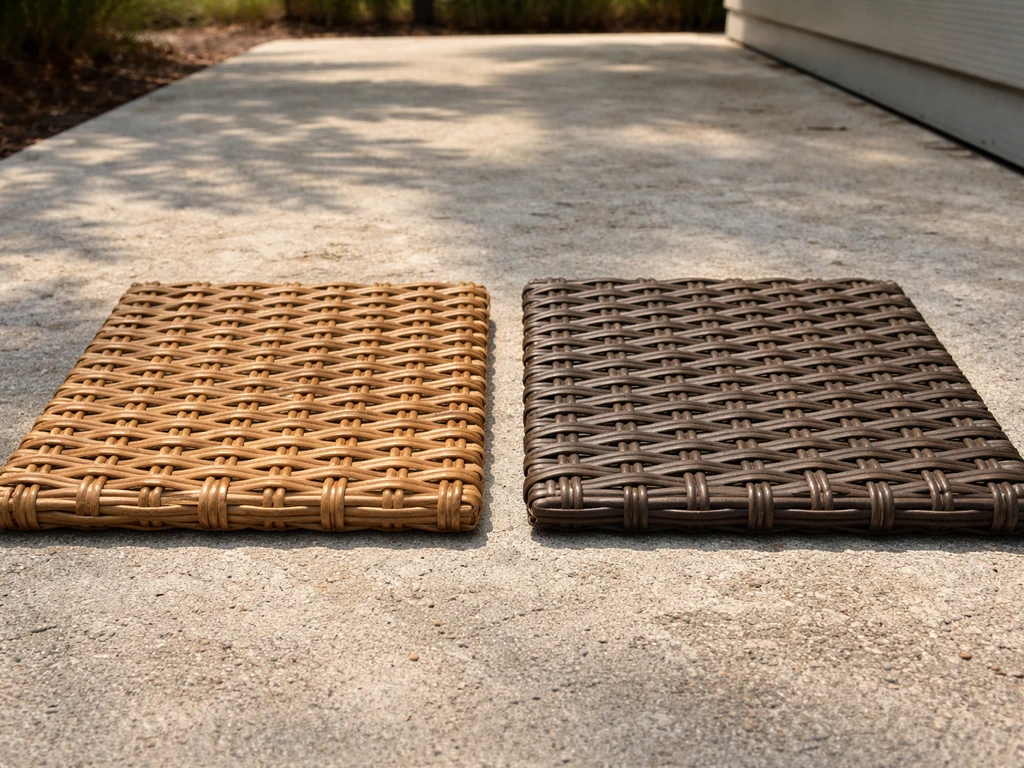
Natural wicker (rattan, reed, cane) belongs on covered porches and inside sunrooms, not on a fully exposed patio. It deteriorates quickly with rain and UV exposure. Synthetic wicker is a completely different product and performs dramatically better outdoors. The best synthetic wicker uses HDPE (high-density polyethylene) resin fiber woven over a powder-coated aluminum frame.
Premium HDPE wicker is UV-stabilized at the material level, meaning the UV inhibitors are built into the fiber rather than applied as a coating that wears off. This makes a real difference in fade resistance over years of sun exposure. The frame underneath matters just as much as the weave: an HDPE weave over a steel frame is a significantly weaker product than the same weave over an aluminum frame, especially in humid or coastal settings.
Check what the frame is made of before you buy.
Composite (WPC and HDPE solid)
Wood-plastic composites (WPCs) blend wood fiber with plastic (usually HDPE or polypropylene) to create a material that looks like wood but theoretically requires less maintenance. In practice, the durability story is more complicated than manufacturers suggest. US Forest Service research spanning 20 years shows that while WPCs absorb moisture more slowly than solid wood, moisture does still penetrate over time.
When moisture cycles in and out, it can create microcracks in the plastic matrix, and those cracks can give decay fungi access to the wood component inside. US Forest Service Research and Development (Forest Products Laboratory) spanning 20 years reports that moisture-induced expansion stresses in wood-plastic composites can create microcracks in the plastic matrix [moisture cycles in and out](https://research. fs. usda.
gov/treesearch/68010). UV fading is a real issue too, though coextruded composites with a clear HDPE cap layer perform noticeably better on UV tests. The bottom line: a quality capped WPC in a shaded or partially covered setting performs well and looks great. A cheap uncapped composite left in full desert sun or coastal humidity for five years is going to show its age.
Solid HDPE (no wood component) is more durable but also more expensive and less common in furniture versus decking.
Durability, maintenance, and weather resistance by material
| Material | UV Resistance | Rain/Humidity | Salt Air | Cold/Freeze-Thaw | Maintenance Level |
|---|---|---|---|---|---|
| Powder-coated aluminum | Good (coating-dependent) | Excellent | Excellent (if quality coated) | Excellent | Very low |
| Teak | Fair (greys without oiling) | Very good | Good with maintenance | Good | Moderate (oiling) |
| Cedar | Fair (needs sealer) | Good with sealer | Fair | Good | Moderate (sealing/staining) |
| Wrought iron/steel | Good (painted) | Poor without coating | Poor to fair | Fair | High (rust prevention) |
| Synthetic wicker (HDPE) | Very good (UV-stabilized) | Very good | Very good (aluminum frame) | Good | Low |
| Natural wicker | Poor | Poor | Poor | Poor | High (covered only) |
| WPC composite | Fair to good (cap-dependent) | Fair (moisture concern long-term) | Fair | Fair | Low to moderate |
| Marine-grade stainless (316) | Excellent | Excellent | Excellent | Excellent | Very low (polish occasionally) |
The biggest trap people fall into is confusing "low maintenance" with "zero maintenance." Even powder-coated aluminum benefits from an annual wash and inspection of hardware. Even teak that you've let go silver still needs to be checked for cracked joints. The maintenance difference between materials is really about how fast they fail if you ignore them: neglected steel rusts through in a few seasons, neglected teak just keeps slowly greying, neglected WPC gets mold stains but usually doesn't structurally fail quickly.
Comfort, style, and how materials age
Material choice affects how furniture feels to sit in, not just how long it lasts. Bare metal and composite get hot in direct sun, which matters enormously if you're in Arizona or Texas and your furniture sits in full afternoon sun. Teak and cedar stay cooler to the touch. Synthetic wicker with deep cushion frames can be extremely comfortable but the cushions become a second maintenance concern entirely.
Speaking of cushions: the cushion material matters as much as the frame. Solution-dyed acrylic fabrics (Sunbrella being the best-known brand) are significantly more UV and moisture resistant than polyester fabrics. Polyester cushion covers fade visibly in one season in harsh sun; solution-dyed acrylic holds color for years. The fill material matters too: quick-dry foam or open-cell foam that drains water is far better than dense foam that traps moisture and grows mold. If you're buying furniture with cushions included at a low price point, the cushions are almost always the first thing that fails, not the frame.
Aesthetically, teak and cedar age with genuine character: the grey patina of unfinished teak is legitimately beautiful in certain settings. Aluminum keeps its finish color until the powder coat starts to chalk or peel, which on quality pieces takes a decade or more. Cheap composite can look faded and tired in three to four years without UV protection built into the outer layer. Wrought iron has an enduring, heavy look that suits certain styles but requires more effort to keep it from rusting at connection points and hardware.
Cost vs. value over time
The sticker price is one of the more misleading numbers in outdoor furniture. A $300 steel patio set that rusts through in three years costs more per year of use than a $900 aluminum set that lasts fifteen years. The math on quality outdoor furniture almost always favors spending more upfront on better materials and construction.
Teak is expensive, typically the highest cost per piece, but a well-maintained teak set realistically lasts 25 to 30 years outdoors. Powder-coated aluminum hits a sweet spot: mid-range prices (quality dining sets run $600 to $2,000 depending on size), very long lifespan with minimal ongoing cost, and near-zero maintenance expense. Synthetic wicker frames vary widely: a $400 set with a steel frame and thin weave will not last as long as a $1,200 set with a cast aluminum frame and thick HDPE fiber. WPC composites fall in the middle on price but the long-term durability gap between budget and premium products is large enough to be worth researching carefully. Natural wicker is cheap upfront and expensive in replacements.
One thing worth knowing: warranty language from retailers often excludes rust spotting, fading, and finish issues after a limited window, so a warranty that sounds impressive may not actually cover the failure modes you care about. The real protection is buying quality materials and construction to begin with, not relying on a warranty claim.
What to actually look for when buying
Manufacturers are not required to prove weatherability claims independently. Industry standards body BIFMA notes that weatherability assurance is the responsibility of the individual manufacturer or brand, which means "weather-resistant" on a hang tag is a marketing claim, not a certification. Here's what to look for instead:
- Frame material: aluminum over steel for anything near moisture or salt air. Cast aluminum is thicker and more rigid than tubular extruded aluminum, though both are rust-free.
- Powder coat quality: look for thickness specs (1.5 to 3 mils is typical for quality furniture coatings) and ask whether the piece was tested to ASTM B117 salt-spray standards. Coastal buyers should look for 500+ hour salt-spray ratings.
- Hardware: stainless steel or aluminum fasteners only. Zinc-plated or bare steel screws and bolts are the first things to rust on otherwise decent furniture.
- Weld quality: smooth, consistent welds without gaps or rough spots indicate better construction. Rough or visibly incomplete welds are a sign of rushed manufacturing.
- Wicker frame: confirm the frame is aluminum if buying synthetic wicker. A steel frame under HDPE wicker undermines the whole weather-resistance case for the product.
- UV testing: quality outdoor pieces reference ASTM G154 accelerated UV weathering testing, which simulates years of sun exposure in a controlled lab environment. It's not a guarantee but it means the manufacturer tested for UV degradation.
- WPC cap layer: for composite furniture, look for coextruded products with an outer cap layer. Research on HDPE/wood-flour composites shows the cap layer significantly reduces UV-driven discoloration.
- Cushion fabric: solution-dyed acrylic (not just "outdoor fabric") with quick-dry fill. Check whether cushion covers are removable and machine washable.
Maintenance and care by material to extend lifespan
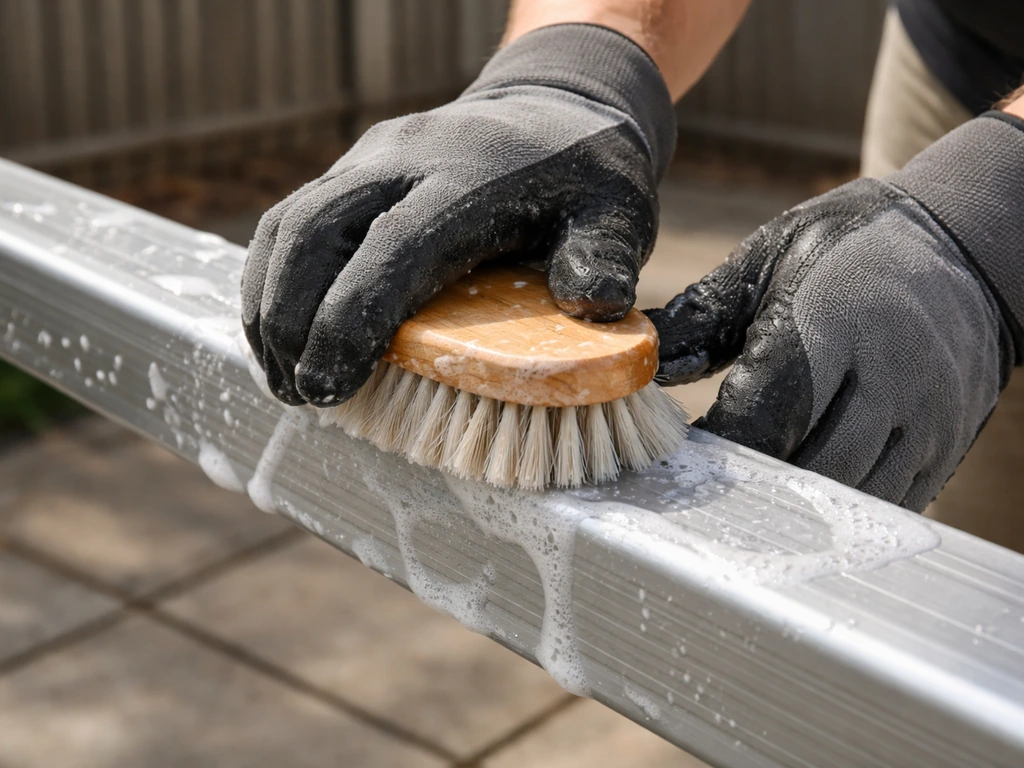
Even low-maintenance materials last longer with basic care. Here's what each material actually needs, not the marketing version.
Aluminum
Wash with mild soap and water once or twice a year to remove salt, pollen, and grime that can degrade the powder coat over time. Inspect the finish for chips or scratches and touch up with matching paint or powder coat spray to prevent oxidation at exposed spots. Check and retighten hardware annually. In coastal settings, rinse more frequently (monthly during heavy use season) to prevent salt buildup on the coating surface.
Teak and cedar
Teak left to weather naturally needs almost no maintenance other than an annual cleaning with a teak cleaner and a check of joinery. If you want to maintain the golden color, apply teak oil or a teak sealer annually in mild climates, and every six months in coastal or hot-humid climates where UV and salt accelerate oil depletion. Cedar needs an exterior-grade sealer or stain with UV protection: apply every one to two years depending on exposure. Use a penetrating oil-based product rather than a surface-only film finish, which can peel and trap moisture. Any cracked or checked wood should be addressed quickly, as open grain in humid climates invites moisture and biological growth.
Synthetic wicker
Rinse or hose down regularly to prevent dirt and mold from building up in the weave. A soft brush with mild soap handles most staining. Avoid pressure washers at close range, which can stress the weave over time. Inspect the frame where the wicker is attached at stress points for any rust (if the frame is steel) or for fraying of the fiber. UV-stabilized HDPE fiber doesn't need any treatment, but cushions should be stored or covered when not in use for extended periods.
Composite (WPC)
Clean composite surfaces with a composite-specific cleaner or mild soap and water to prevent mold and mildew, which can colonize surface moisture in humid climates. Avoid abrasive scrubbers that can damage any cap layer. Follow the specific manufacturer's cleaning guidance, as WPC formulations vary enough that a product that's fine for one composite may damage another. Don't let organic debris (leaves, wet cushions) sit on composite surfaces for extended periods, as moisture trapped against the surface accelerates any mold or staining issues. Some manufacturers offer composite-specific UV protectants that can help extend appearance over time.
Wrought iron and steel
Steel furniture needs active rust prevention to stay in good shape. Inspect all surfaces annually and touch up any rust spots immediately with a rust-inhibiting primer before they spread under the coating. Use a rust converter product on any active rust before priming. In coastal or humid settings, this is a two-to-three times per year task, not an annual one. If you love the look of iron but hate the maintenance, cast aluminum furniture can closely mimic traditional iron styling with a fraction of the upkeep.
Storing furniture over winter
In climates with real winters, bringing cushions inside is non-negotiable. For frames, aluminum and quality synthetic wicker can generally stay out with covers. Wood benefits from being stored indoors or under a breathable cover (not a sealed plastic tarp that traps moisture). Iron and steel should ideally be stored indoors or kept very well covered to avoid the freeze-thaw moisture cycle that accelerates rust. A fitted furniture cover made from breathable, UV-resistant material adds meaningful life to any furniture left outside seasonally. For outdoor season storage, the best material for patio furniture covers is breathable, UV-resistant fabric that can shed moisture rather than trap it.
FAQ
What’s the best material if my patio is in full sun all day?
If your patio gets intense sun for most of the day, choose a material plus cushion plan together: powder-coated aluminum or capped HDPE wicker handles the frame well, but you still need solution-dyed acrylic cushions and quick-drain foam. This matters because bare metal and many composites can become uncomfortable enough that you will not use the furniture, even if it lasts outdoors.
What material works best for areas with real winter freeze-thaw cycles?
For freezing winters, prioritize materials that tolerate freeze-thaw and avoid trapping water inside: powder-coated aluminum, cast aluminum frames, and quality synthetic wicker with a drain-friendly cushion setup. For wood, use exterior-rated sealer and store cushions inside, because moisture trapped in joints and under wet cushions is what accelerates damage.
Does powder-coated aluminum still hold up if the set uses cheap hardware?
Powder-coated aluminum performs best when the coating is baked correctly and the hardware is compatible, meaning stainless or properly coated fasteners. If the chairs use mixed metals, you can still get corrosion at connection points even when the frame material is corrosion-resistant.
How can I tell if a patio set is truly coastal-ready?
Avoid “all-weather” claims when the product is marketed only for appearance. Instead, verify whether the brand can point to a salt-spray type test for the coating system and whether the wicker fiber is UV-stabilized at the material level (HDPE). If they only mention generic weather-resistance language, assume performance will be uneven in coastal sun and humidity.
If I’m buying a set with cushions, what material should I focus on first?
Cushions fail sooner than frames, so judge cushion specs as carefully as the furniture material. Look for solution-dyed acrylic (not just “poly” or “fade resistant”) and foam that drains quickly (open-cell or quick-dry). A strong frame with poor cushions can still lead to a replacement cycle in 1 to 3 seasons.
What material option best resists fading and stains in desert sun?
For long-term color retention in harsh sun, the key is the top layer design: capped WPCs with a UV-protective cap and HDPE wicker with UV inhibitors built into the fiber typically age more predictably than uncapped composites or fiber that relies on a thin surface coating. In practice, cheaper composites can fade and stain before they “break.”
What’s the best low-maintenance material if I’m not willing to do regular upkeep?
Even the best materials need seasonal cleaning, but there’s a smart difference: aluminum needs gentle soap washing and hardware inspection, while wood needs cleaning plus either maintenance oiling or sealing depending on whether you want patina or color retention. If you refuse maintenance entirely, synthetic wicker with covers and good cushions is usually the most forgiving approach.
Should I cover my patio furniture in humid climates, and what kind of cover is safest?
Covers extend life, but they can also trap moisture. Use breathable, UV-resistant covers for seasonal storage, keep cushions ventilated, and avoid sealed plastic tarps over wood or tightly woven wicker because trapped humidity increases mold and joint stress.
What material choices are best if I expect spills, pets, or frequent outdoor messes?
If you have pets or frequent spills, prioritize fabrics with strong UV and moisture resistance plus easy cleaning: solution-dyed acrylic and quick-drying foam. For frames, powder-coated aluminum or HDPE wicker are easier to rinse and dry thoroughly than porous wood or many composites.
Next Articles
Best Patio Furniture Material: Choose the Right One by Climate
Climate-based guide to the best patio furniture material: compare wood, metal, wicker and composite by weather, cost, du
Patio Furniture Material Best Choice by Climate and Use
Choose the patio furniture material best for your climate and use, comparing wood, metal, wicker, composite and upkeep.
Best Material for Outdoor Patio Furniture: Wood, Metal, Wicker, Composite
Compare wood, metal, wicker and composite to find the best outdoor patio furniture material for your climate, comfort an