
If you want one answer: cast aluminum or high-density polyethylene (HDPE) composite are the best overall materials for outdoor patio furniture for most people. Cast aluminum wins on looks, strength, and longevity with minimal upkeep. HDPE composite wins on pure durability and near-zero maintenance. Everything else, including teak, steel, natural wicker, and synthetic resin wicker, has a valid place depending on your climate, your willingness to do seasonal care, and your budget. Here is how to pick the right one for your specific situation.
Best Material for Outdoor Patio Furniture: Wood, Metal, Wicker, Composite

Theo Tierney
30 Apr 2026
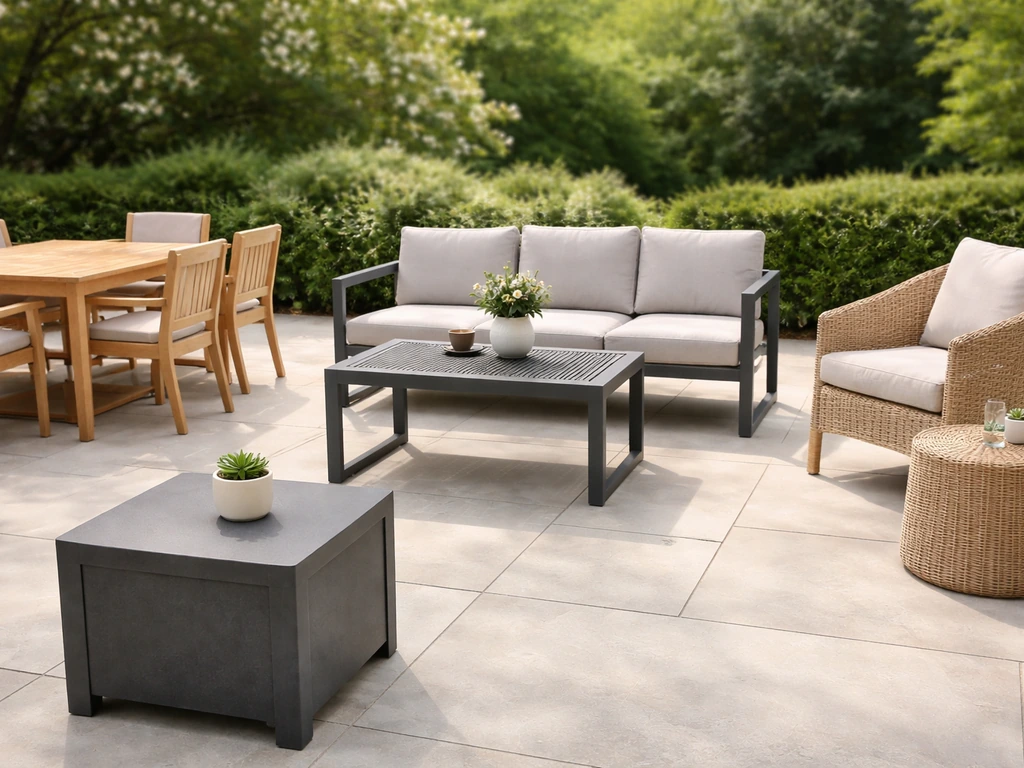
Best material by climate and how much maintenance you'll actually do
The single biggest mistake people make is buying for looks without factoring in their climate and whether the furniture will sit uncovered year-round or get stored and covered seasonally. A set that looks great in the showroom can warp, rust, or bleach out within two summers if it's mismatched to your environment. Use the table below as a fast reference, then read the full material breakdowns below it.
| Climate / Situation | Best Material | Avoid |
|---|---|---|
| Hot and sunny (Arizona, Nevada, inland South) | HDPE composite, cast aluminum with powder coat | Natural wicker, untreated wood |
| Coastal / salt air (Florida coast, Pacific coast) | 316 stainless steel, cast aluminum, HDPE composite | Wrought iron, galvanized steel, natural wicker |
| Frequent rain / high humidity (PNW, Gulf Coast, Southeast) | HDPE composite, cast aluminum, teak (with oiling) | Natural wicker, uncoated steel, pine/cedar without sealant |
| Freeze-thaw winters (Midwest, Northeast, Mountain) | Cast aluminum, HDPE composite | Cast iron, natural wicker, unsealed wood |
| Covered patio, stays shaded year-round | Any material works well; wrought iron, teak, synthetic wicker are excellent choices | Nothing disqualified here |
| Low maintenance (set it and forget it) | HDPE composite, powder-coated cast aluminum | Teak, wrought iron, natural wicker, pine |
| High maintenance acceptable, want natural beauty | Teak or ipe wood, wrought iron with annual touch-up | HDPE (looks engineered, not natural) |
Wood patio furniture: the best types, finishes, and what care actually looks like
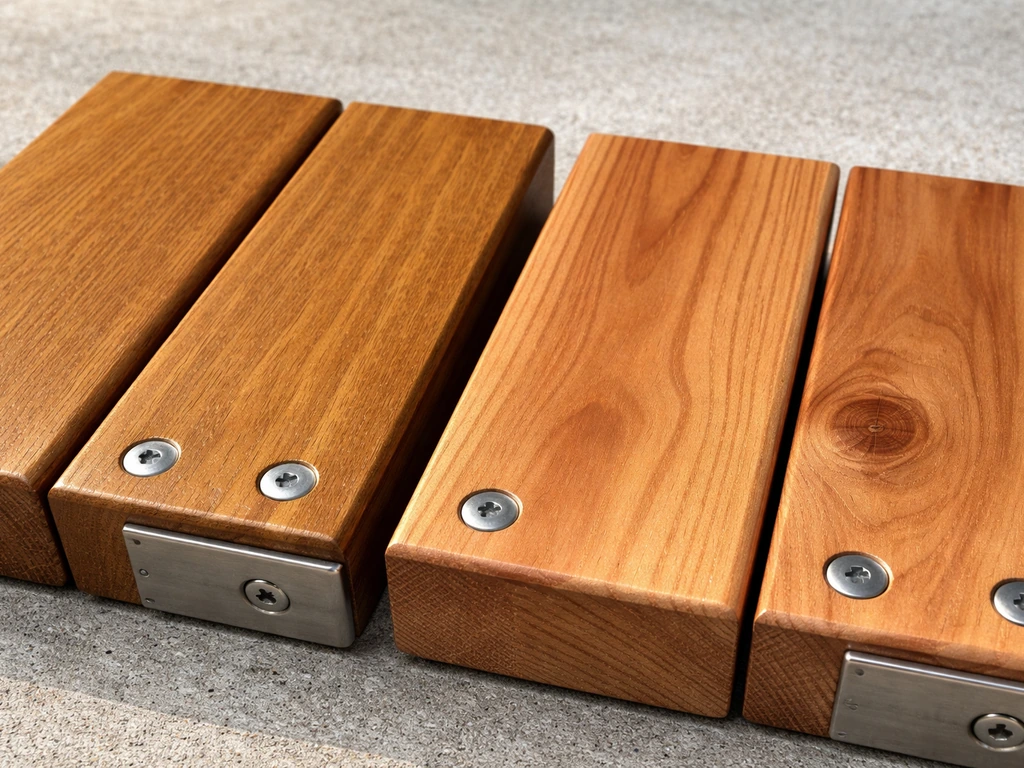
Wood is the material people fall in love with in the store and sometimes regret in the backyard. That said, the right wood, properly finished, absolutely earns its place outdoors. The problem is that "wood patio furniture" covers everything from cheap pine to dense tropical hardwoods, and those perform completely differently outside.
The woods worth buying
- Teak: The gold standard. Naturally high in silica and oils, teak resists rot, insects, and moisture absorption better than almost any other wood. It grays to a silver patina if left untreated, which many people like. If you want the honey-brown color, you'll need to oil or seal it seasonally.
- Ipe (pronounced ee-pay): Harder than teak, extremely dense, very resistant to rot and insects. Harder to work with and more expensive, but it can last 25 to 40 years outdoors with reasonable care.
- Eucalyptus: A more affordable teak alternative with similar natural oils and decent rot resistance. Not quite as durable as teak but a solid mid-budget option.
- Cedar and redwood: Naturally rot-resistant softwoods that work fine in covered or semi-covered situations. They need regular sealing outdoors and won't hold up in high-humidity or coastal conditions the way hardwoods will.
- Pine and acacia (budget end): These require consistent sealing and are better suited for covered patios or climates with dry summers. They are genuinely short-lived if neglected outdoors.
Finishes and care for outdoor wood
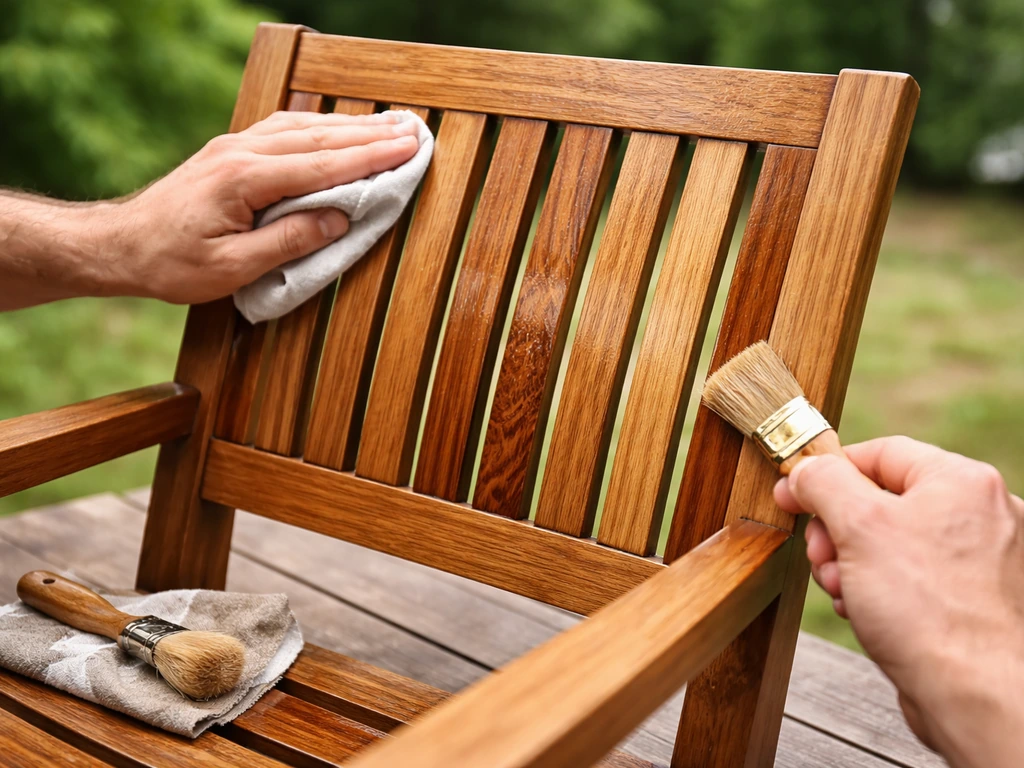
Wood requires occasional oiling to prevent cracking, and for teak specifically, a two-step care system works better than simply slapping on a generic teak oil. The proper sequence is: clean with a teak-specific cleaner first to remove dirt, water stains, and old oil residue, then apply a water and stain protector. Skipping the cleaning step means you're sealing in grime and getting uneven penetration. Plan for this ritual once or twice a year depending on your sun and rainfall exposure. If you're happy with the natural gray patina, teak can go years without any treatment at all, which is part of its appeal.
For cedar, redwood, and eucalyptus, a penetrating oil or sealer every spring is the minimum. In rainy climates or direct sun, you may need to touch up in fall too. Any cracking you see is a sign the wood dried out and missed a treatment cycle. Once deep cracks form, no amount of oiling brings the wood fully back.
| Wood Type | Durability (Outdoor) | Maintenance Level | Best Climate | Lifespan (with care) |
|---|---|---|---|---|
| Teak | Excellent | Low to moderate | Any, including rain/humidity | 20-50 years |
| Ipe | Excellent | Low to moderate | Any | 25-40 years |
| Eucalyptus | Good | Moderate | Mild to moderate climates | 10-20 years |
| Cedar / Redwood | Moderate | Moderate to high | Dry climates, covered patios | 10-15 years |
| Pine / Acacia | Low to moderate | High | Covered/sheltered only | 5-10 years |
Metal patio furniture: aluminum vs steel vs iron, and why the coating matters as much as the metal
Metal furniture covers a huge range of quality and durability depending on the specific metal and how it's finished. Getting this wrong means watching a $600 set rust through in three years. Getting it right means buying something you pass down.
Cast aluminum: the practical best-overall metal
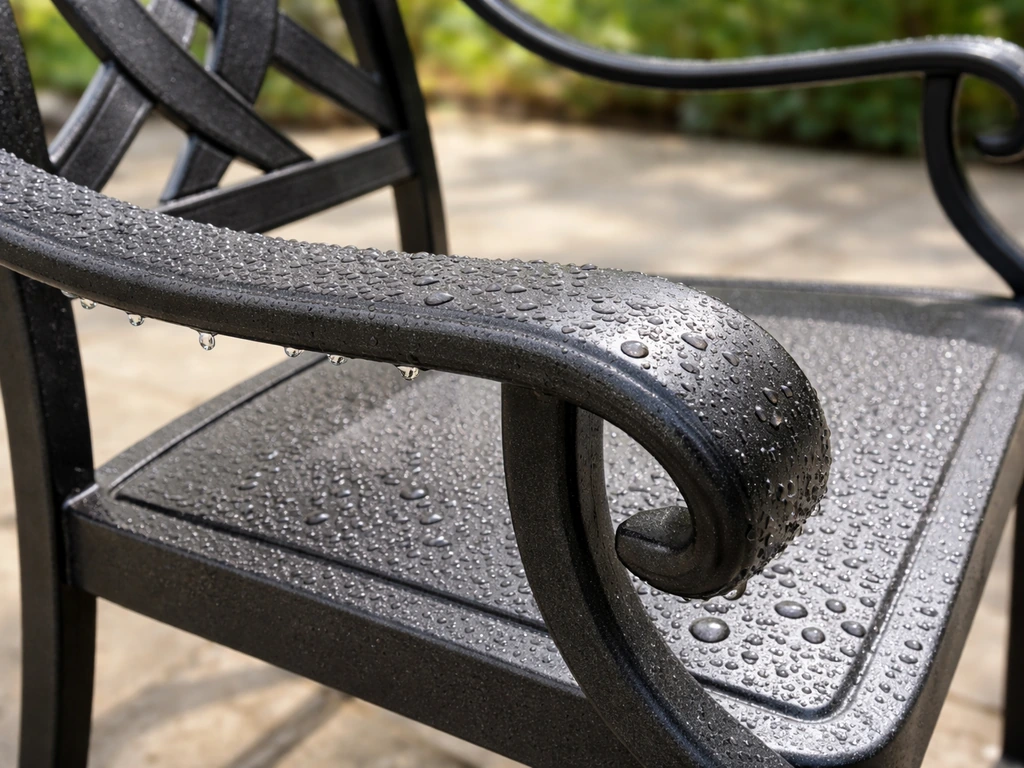
Cast aluminum genuinely offers the best combination of durability and affordability in the metal category. It does not rust, it holds its shape through freeze-thaw cycles, and a good powder-coat finish keeps it looking sharp for many years without much intervention. The one caveat: powder-coated aluminum can oxidize if the coating gets chipped or scratched and the bare metal is exposed. That chalky white oxidation won't eat through the piece the way rust eats steel, but it's worth touching up chips with a matching paint pen to keep moisture out. For most homeowners in most climates, cast aluminum with a quality powder-coat finish is the right call on metal furniture.
Wrought iron and steel: beautiful but demanding
Wrought iron is heavy, extremely sturdy, and has a classic look that aluminum simply can't replicate. The downside is that wrought iron is susceptible to rust, especially anywhere with rain, humidity, or salt air. Consumer Reports is clear on this: wrought iron should be kept on a covered porch or patio, or you need to use furniture covers consistently. For the best material for patio furniture covers, focus on weather-resistant fabrics designed to shield metal from moisture and UV furniture covers consistently. Even then, expect to touch up scratches and chips with a rust-inhibiting primer and paint annually. For a covered patio in a dry climate, wrought iron is a beautiful long-term investment. For an uncovered deck in the Pacific Northwest or Florida, it's a maintenance headache.
Galvanized steel uses a zinc coating to protect the base steel, and the zinc acts as a sacrificial layer, corroding first to protect the steel underneath even if the coating is slightly damaged. It performs better than bare steel outdoors but still requires monitoring. In coastal environments with salt air, galvanized steel degrades faster than aluminum. For coastal or high-humidity climates, 316 stainless steel (which includes molybdenum for improved resistance to chloride pitting) is a better choice than 304 stainless or galvanized steel, though 316 stainless furniture comes at a premium price.
| Metal Type | Rust Risk | Weight | Maintenance | Best Use Case | Lifespan |
|---|---|---|---|---|---|
| Cast aluminum (powder-coated) | Very low | Light to medium | Low | Any climate, uncovered or covered | 15-30+ years |
| Wrought iron | High if exposed | Very heavy | High | Covered patios, dry climates | 20+ years (covered) |
| Galvanized steel | Moderate | Heavy | Moderate | Dry to moderate climates | 10-20 years |
| 316 Stainless steel | Very low | Heavy | Low | Coastal/salt air environments | 20-30+ years |
| 304 Stainless steel | Low (moderate near coast) | Heavy | Low to moderate | Inland environments | 15-25 years |
Rust prevention in practice
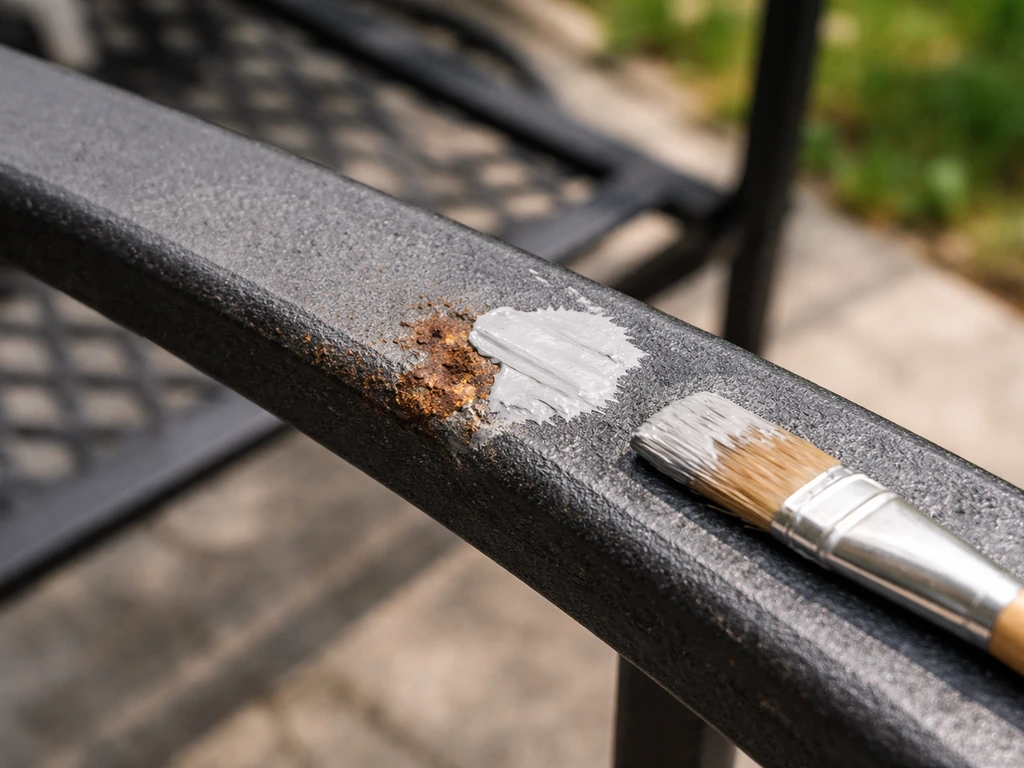
Whatever metal you buy, the coating is doing most of the protective work. Inspect pieces every spring for chips, scratches, and bubbling paint. Touch up immediately with a rust-inhibiting primer before oxidation spreads under the coating. Store or cover metal furniture during extended periods of rain, and in coastal climates, rinse pieces with fresh water monthly to remove salt deposits. Prevention is far easier than remediation once rust gets underneath a coating.
Wicker and woven furniture: why natural and synthetic are completely different products
"Wicker" is a weaving style, not a material, and that distinction matters enormously outdoors. Natural wicker (woven from rattan, reed, or bamboo) and synthetic wicker (woven from resin or polyethylene) look similar in photos but perform completely differently in weather.
Natural wicker: for covered spaces only
Natural rattan and wicker are moisture-sensitive materials that are not designed for year-round outdoor exposure. If rain hits natural rattan continuously for more than a couple of weeks, moisture-related problems like mold, fiber breakdown, and frame loosening are expected. Consumer Reports states flatly that traditional natural wicker isn't meant for outdoor use. If you love the look, keep it on a fully covered porch where it won't see direct rain, and bring it inside during wet seasons. For fully exposed patios, natural wicker is the wrong choice regardless of how good it looks at the store.
Synthetic resin wicker: the outdoor-ready version
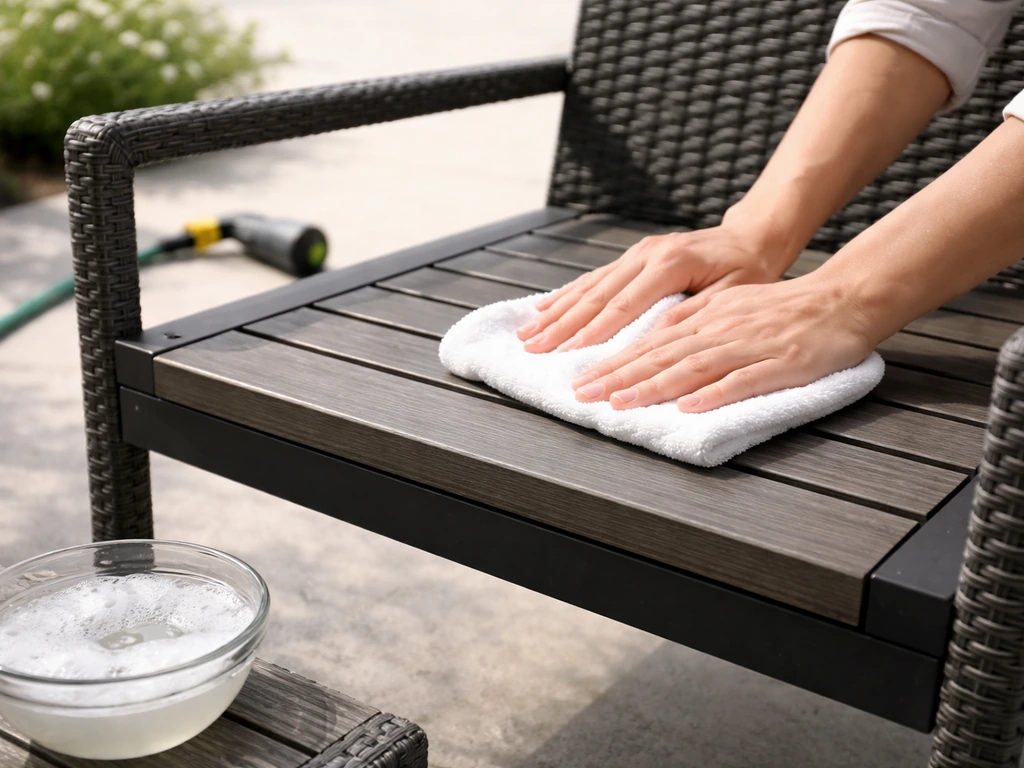
Synthetic wicker made from polyethylene (PE) or high-density polyethylene (HDPE) resin over a powder-coated aluminum or steel frame is a genuinely weather-resistant product. It doesn't absorb water, doesn't rot, and resists most UV fading better than natural fibers. The frame underneath still matters: an aluminum frame is lighter and rust-free, while a steel frame is heavier and needs the coating intact to stay rust-free. For care, regular dusting and occasional washing with mild soap and water keeps synthetic wicker looking good. Use UV-resistant covers during extended periods of harsh sun or severe weather, and consider covering it during off-season months in freeze-thaw climates to protect the resin from repeated expansion and contraction. Quality synthetic wicker over an aluminum frame is a solid choice for most climates and is genuinely low maintenance.
The quality gap in synthetic wicker is wide. Cheap resin wicker can feel brittle and fade unevenly within a few seasons. Look for round-strand PE weave (more flexible and durable than flat-strand) and a powder-coated aluminum frame. Budget products that skip the quality frame or use thin, flat resin strands tend to deteriorate noticeably within two to three years of full outdoor exposure.
Composite, HDPE, and engineered options: what actually lasts the longest with the least effort
High-density polyethylene (HDPE) lumber, sometimes sold under brand names like Polywood, is made from recycled plastic (often milk jugs and similar containers) processed into boards that look like painted wood but behave nothing like it. It doesn't rot, doesn't splinter, doesn't absorb water, and resists insects completely. It is the closest thing to a genuinely maintenance-free outdoor furniture material that currently exists.
Wood-plastic composite (WPC) is a related but different category: it blends wood fiber with plastic binders. WPC is marketed heavily as low-maintenance and high-durability, but research from the US Forest Products Laboratory is worth knowing here. Weathering exposure, specifically UV light and water cycling, can cause WPC materials to fade in color and lose some flexural stiffness over time. This doesn't mean WPC furniture falls apart, but it does mean the "zero maintenance" claims are optimistic. Uncovered, full-sun exposure accelerates these effects. Pure HDPE (no wood fiber) performs better in this regard because there's no organic content to photodegrade.
For HDPE furniture specifically, maintenance is genuinely minimal: wash with soap and water, rinse, and you're done. It won't fade as dramatically as WPC in direct sun, and it holds up through freeze-thaw cycles without cracking. The trade-off is aesthetic: HDPE furniture looks and feels like painted plastic, not natural wood. If you want a wood grain appearance and texture, teak or ipe will always look more authentic. A POLYWOOD PDF notes that teak left outdoors will weather to a silver-gray color and describes expected patina and maintenance behavior If you want a wood grain appearance and texture, teak or ipe will always look more authentic.. If you want maximum longevity with minimum time investment, HDPE wins.
| Material | Maintenance | UV/Fade Resistance | Water/Rot Resistance | Lifespan | Looks Like |
|---|---|---|---|---|---|
| Pure HDPE (e.g., Polywood) | Very low | Good to excellent | Excellent | 20-30+ years | Painted wood/plastic |
| Wood-plastic composite (WPC) | Low to moderate | Moderate (fades over time) | Good | 10-20 years | Wood-grain look |
| Teak wood (for comparison) | Low to moderate | Good (grays naturally) | Excellent | 20-50 years | Natural hardwood |
Your buying checklist and maintenance plan before you spend a dollar
Before you buy, run through these questions. They will narrow your options faster than any style preference will.
- What is your climate? Coastal salt air eliminates wrought iron and budget steel. Freeze-thaw winters make HDPE and cast aluminum the safest bets. Hot sunny climates favor anything with UV-stable coatings, so avoid natural wicker and unsealed wood.
- Will the furniture stay uncovered year-round? If yes, eliminate natural wicker entirely and be cautious with WPC. Cast aluminum and HDPE are your most forgiving options here.
- How much maintenance will you actually do? Be honest. If the answer is "almost none," buy HDPE composite or powder-coated cast aluminum. If you enjoy seasonal upkeep and want beautiful natural materials, teak or eucalyptus is worth the effort.
- What is your budget per piece and over time? Cheap materials cost more over 10 years when you factor in replacement. A quality teak or cast aluminum set bought once often beats replacing a budget set every four to five years.
- Do you care about the furniture matching a specific aesthetic? Modern and minimal: powder-coated aluminum or HDPE. Classic and traditional: wrought iron or teak. Casual and coastal: synthetic wicker over aluminum frame.
What to look for when buying each material
- Wood: Look for FSC-certified teak, ipe, or eucalyptus. Check for mortise-and-tenon or stainless steel hardware joints. Avoid stapled or nailed construction on any wood piece meant for outdoor use.
- Cast aluminum: Confirm it's powder-coated, not just painted. Look for thick-wall casting, not thin-tube welded construction. Welded aluminum is fine but inspect weld quality closely.
- Wrought iron: Buy only for covered applications. Look for factory-applied rust-inhibiting primer under the topcoat. Have touch-up paint on hand from day one.
- Synthetic wicker: Confirm PE or HDPE resin weave (ask the retailer), round-strand not flat-strand construction, and a powder-coated aluminum or galvanized steel frame underneath.
- HDPE composite: Look for virgin or high-percentage recycled HDPE content, not thin veneers over a cheaper core. Quality pieces feel heavy and solid, not hollow.
- WPC: Ask about UV inhibitor additives in the composite mix. Products without UV stabilizers will fade and chalk faster outdoors.
Maintenance schedule and expected lifespan by material
| Material | Annual Maintenance | Off-Season Care | Expected Lifespan |
|---|---|---|---|
| HDPE composite | Wash with soap and water as needed | Cover or store if desired, not required | 20-30+ years |
| Cast aluminum (powder-coated) | Inspect and touch up chips, wash with mild soap | Cover or store in harsh winters | 15-30 years |
| Teak | Clean and re-oil or seal once or twice per year | Cover or store in freeze-thaw climates | 20-50 years |
| Synthetic wicker (PE/aluminum frame) | Dust regularly, wash monthly, use UV cover in peak summer | Cover during off-season | 10-20 years |
| Wrought iron | Touch up chips annually with rust-inhibiting paint, inspect for rust spots | Cover or store, essential in wet/coastal climates | 20+ years if covered |
| Eucalyptus | Oil or seal once per year, inspect for cracking | Cover or store in cold or wet climates | 10-20 years |
| Natural wicker | Dust and wipe only, keep dry always | Bring indoors for any extended wet or cold period | 5-10 years (covered porch only) |
| WPC composite | Wash seasonally, check for chalking/fade | Cover in high-UV or freeze-thaw climates | 10-20 years |
The honest bottom line
For most homeowners with an uncovered or semi-covered patio in any climate, powder-coated cast aluminum or HDPE composite gives you the best combination of longevity, weather resistance, and realistic maintenance requirements. For the patio furniture material best match, focus on HDPE composite or cast aluminum if you want durability with minimal upkeep For most homeowners with an uncovered or semi-covered patio. Teak earns its premium if you appreciate natural wood and will commit to annual care. Synthetic wicker over an aluminum frame is a legitimate choice for comfort and style as long as you're buying quality construction with a round-strand PE weave. Natural wicker belongs indoors or on a completely protected porch only. Wrought iron is a covered-patio specialist. And when you're comparing patio furniture materials more broadly, the what-it's-made-of question and what covers protect it are two sides of the same long-term value decision. That’s why choosing the best material for patio furniture also depends on how well you’ll protect it from the elements.
FAQ
What’s the best material for outdoor patio furniture if it will be left uncovered all year?
If your patio furniture will be uncovered year-round, prioritize materials that handle water and freeze-thaw well. Cast aluminum with a quality powder coat and HDPE composite are the most forgiving options, because they do not rust and they resist cracking from repeated wet and cold cycles.
Which material holds up better in hot sun versus rainy climates?
Choose based on sun plus moisture swings. For full sun where UV can be harsh, HDPE (and HDPE composite) generally holds color better than wood-plastic composite, while cast aluminum stays structurally stable. If you have frequent rain or coastal salt air, cast aluminum typically outperforms steel-based choices unless the finish stays flawless.
If cast aluminum scratches, does it still rust, and how should I touch it up?
Powder-coated cast aluminum can still corrode where coating is chipped, but it’s usually manageable. Touch up exposed spots quickly with a matching exterior paint pen or a small can of aluminum-safe touch-up paint, to keep moisture from attacking the bare metal.
Can natural wicker be used outdoors with covers?
Yes, but the “natural” look is usually the limiting factor. Natural wicker (rattan, reed, bamboo) can grow mold and loosen as fibers repeatedly get wet, so even good covers may not help if the piece stays damp for days. Plan to keep it on a fully covered porch and bring it inside during wet seasons.
What should I look for to ensure synthetic wicker is truly weather-resistant?
For synthetic wicker, the frame is just as important as the weave. Look for round-strand PE with a powder-coated aluminum frame, then check that the cushions and fabric are UV- and water-resistant. If the frame is steel, you’ll need to be more vigilant about coating chips.
How do I balance “lowest maintenance” with wanting a wood-like look?
If you want minimal upkeep and maximum weather tolerance, HDPE composite is usually the easiest path. However, if your priority is texture and a wood-like appearance, teak or ipe will look more authentic, at the cost of periodic cleaning and sealing.
Is wood-plastic composite (WPC) as maintenance-free as pure HDPE?
Not always. Many “wood look” boards are WPC, which can fade and slowly lose some stiffness under intense UV and water cycling. If you want closer to maintenance-free behavior, choose pure HDPE (no wood fiber) rather than WPC.
Why does wrought iron seem to rust faster in some yards than others?
Wrought iron can last a long time, but it requires a plan. Use furniture covers designed to block moisture and UV when it’s outdoors, keep it on a covered porch when possible, and inspect for rust spots in spring. Touch up scratches with rust-inhibiting primer and paint before surface rust spreads.
What’s the best way to store outdoor furniture in winter to prevent damage?
For longer life, clean covers and furniture off-season so water does not sit trapped under the fabric. In freeze-thaw climates, consider a periodic inspection during winter storms to make sure the cover is still in place and not holding pooled moisture.
Do cushions affect the choice of patio furniture material?
Cushions can be the weak link even when the frame material is excellent. Choose outdoor cushions with mildew-resistant foam and quick-draining covers, and store them indoors or in a dry ventilated area during heavy rain or winter months to prevent mold and permanent stains.
How should I protect furniture from salt air if I’m using covers?
A “good cover” is not the same as leaving furniture wrapped year-round without attention. In coastal or rainy climates, covers should be fitted and breathable enough to reduce condensation, and you should rinse salt residue periodically on the frame, especially for steel-based pieces.
Next Articles
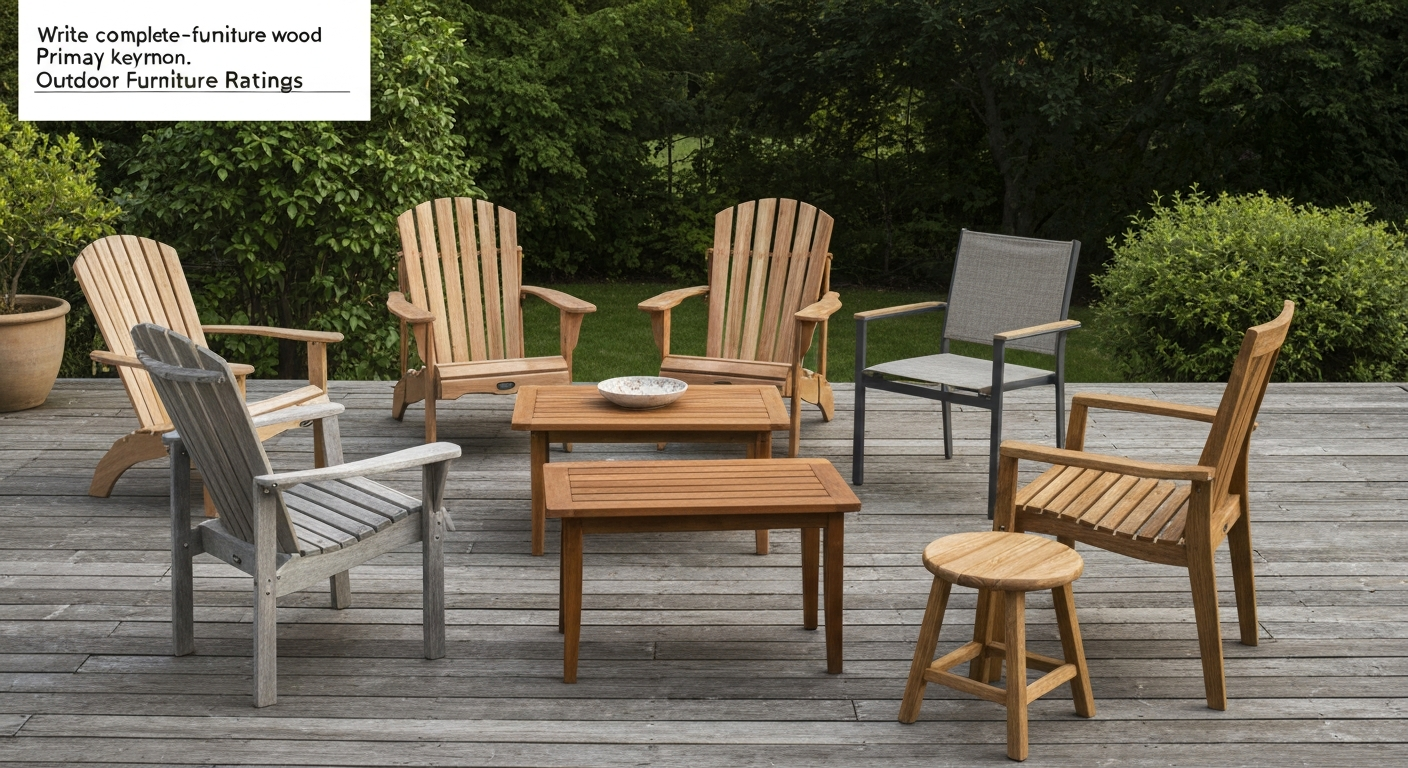
Common Patio Furniture Wood: Best Choices, Care & Tips
Compare common patio furniture wood types, teak, cedar, redwood, oak, with durability, finishes, and care tips.
Best Wood Patio Stain: Choosing Durable, Low-VOC Finishes
Compare and choose the best wood patio stain: durability, finish, climate tips, prep, and top product picks.
Common Patio Furniture Wood: Teak, Cedar, Redwood and More
Compare common patio woods like teak cedar redwood and pressure-treated: durability, quality checks, and care for long l