
If you want the single most practical answer: aluminum and teak are the two materials that hold up best across the widest range of climates and uses, with composite (HDPE-based) a close third for anyone who wants near-zero maintenance. Wicker and steel can work, but both require more conditions to go right. The "best" material for your patio isn't a universal answer though. It depends on your climate, how exposed the furniture will be, whether you'll use cushions, and how much upkeep you're actually willing to do. Work through those factors first, and the right pick becomes obvious fast.
Patio Furniture Material Best Choice by Climate and Use

Theo Tierney
1 May 2026
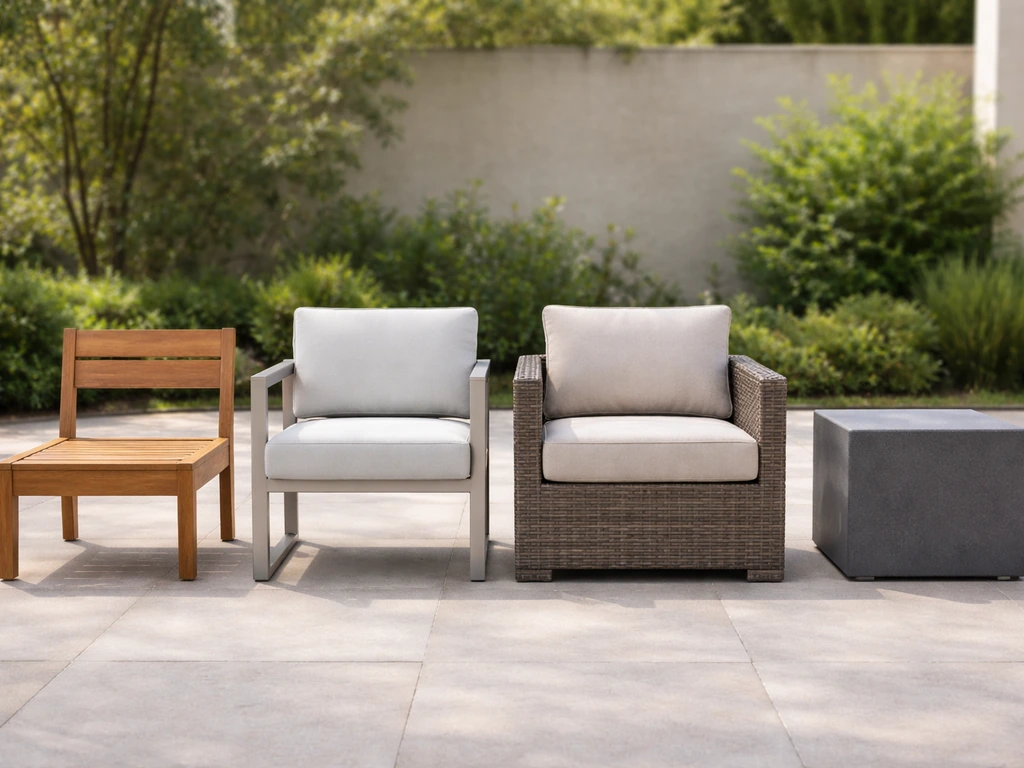
How to figure out what "best" actually means for your yard
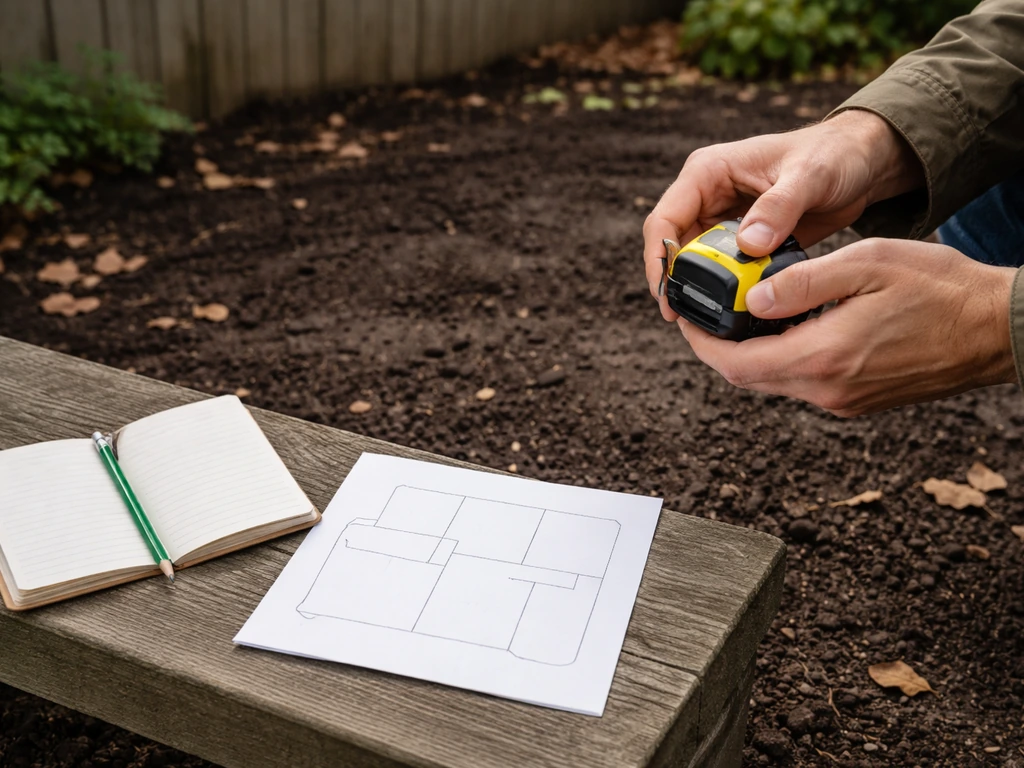
Before you compare materials, you need to assess your specific outdoor conditions. Three things drive most material failures: UV exposure, moisture cycling (wet/dry or freeze/thaw), and salt air. If you're in a coastal zone within a mile or two of the ocean, salt-driven corrosion becomes your primary threat and changes almost every recommendation. If you're in a freeze-thaw climate (think Chicago, Denver, the Northeast), materials that trap water in joints and seams fail faster. If you're in the desert Southwest, UV degradation and heat absorption matter more than moisture.
A free, practical way to quantify your climate: look up your location on NOAA's Climate Data Online or check the 1991-2020 Climate Normals. NOAA’s NCEI released updated U.S. Climate Normals for the 1991, 2020 period, spanning 30 years check the 1991-2020 Climate Normals. These tools give you concrete numbers for your actual conditions, not just a regional guess. Your USDA hardiness zone also tells you your average annual minimum winter temperature, which directly predicts freeze-thaw stress on furniture joints and finishes. Zone 5 or colder means freeze-thaw is a real factor; Zone 9 and above means it's basically irrelevant.
Beyond climate, ask yourself two honest questions. How much direct sun does the furniture get? Full-sun furniture in Arizona will degrade finishes, bleach fabrics, and heat up frames far faster than the same set under a pergola in Seattle. And how much maintenance will you actually do? Not what you intend to do, but what you'll realistically do. If the answer is "almost none," that eliminates teak and steel as your top picks and points you firmly toward aluminum or composite.
How each material handles weather: the real durability picture
Wood (teak, eucalyptus, acacia)
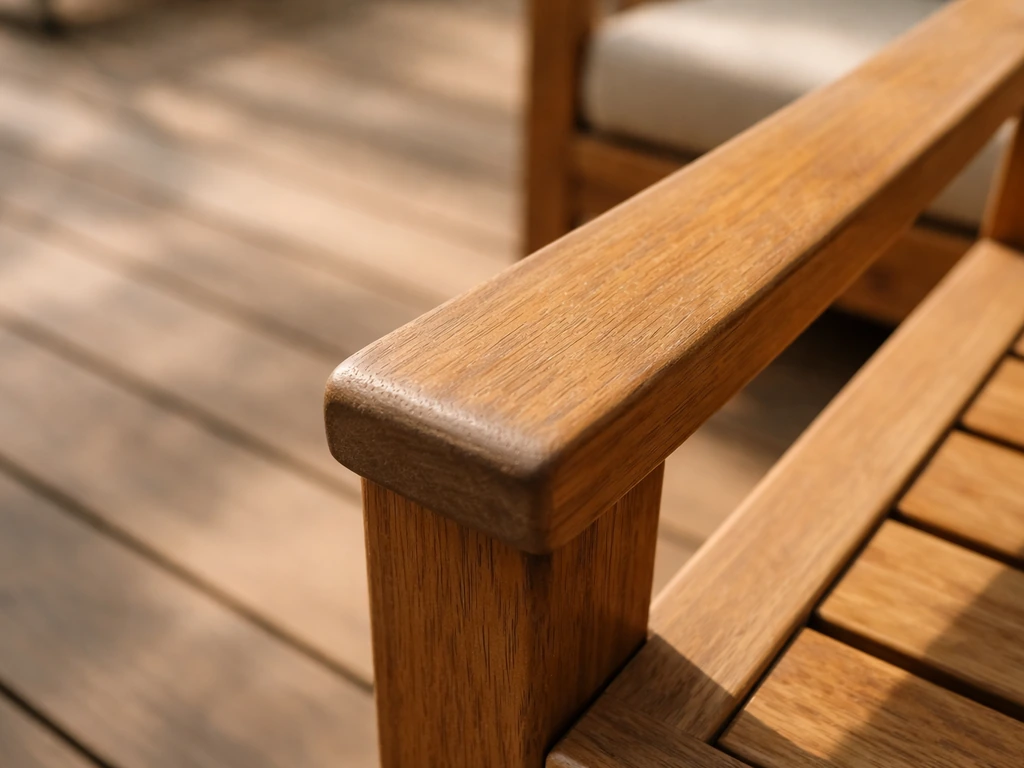
Teak is genuinely exceptional wood for outdoor use. Its natural silica and oil content make it resistant to rot, insects, and moisture even without treatment. A well-made teak set can realistically last 20 to 30 years. The catch is cost (teak commands a premium), and it does need occasional cleaning and re-oiling if you want to maintain the warm honey color. Left untreated, teak weathers to a silver-gray patina, which many people actually prefer. That gray finish isn't damage; the wood is still structurally sound. In coastal environments with salt air, more frequent oiling may be warranted. Eucalyptus and acacia are lower-cost alternatives but are notably less durable and more prone to cracking in freeze-thaw climates.
Metal (aluminum vs. steel)
Aluminum and steel behave very differently outdoors and shouldn't be treated as the same category. Aluminum doesn't rust because it lacks the iron that drives corrosion. However, it can oxidize and pit in coastal salt air environments, particularly where sodium chloride forms an electrolyte on the surface when humidity is high. Powder-coated aluminum (especially with PVDF-grade coatings built to standards like AAMA 2604) resists this well, but the coating has to stay intact. A chip or deep scratch in coastal air is the beginning of accelerated surface breakdown, so inspect and touch up coatings annually. Steel, by contrast, will rust the moment bare metal is exposed to moisture and oxygen. The iron reacts directly with both to form iron oxide. Powder-coated or galvanized steel can hold up for 10 to 15 years with care, but any scratched finish left untreated on steel moves toward rust fast. For most buyers, aluminum is the smarter metal choice.
Wicker and rattan-style (resin wicker vs. natural)
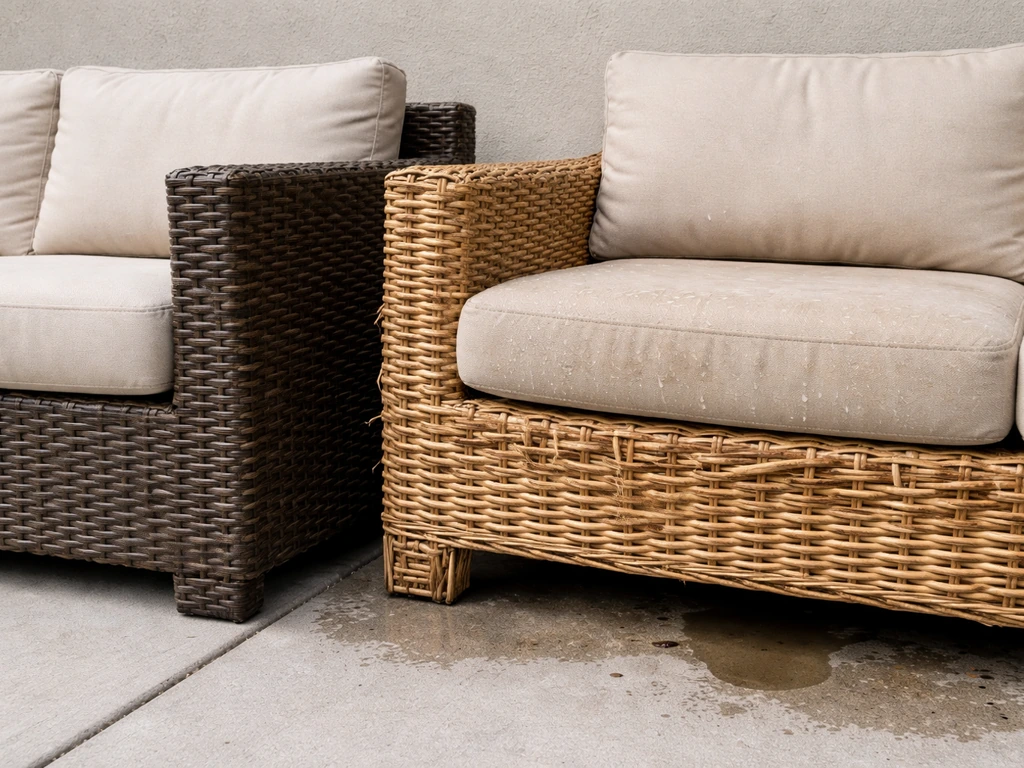
Natural rattan wicker belongs indoors or in a covered, dry patio. It swells, cracks, and breaks down with repeated wet-dry cycling. What most people buy today labeled as outdoor wicker is actually all-weather resin wicker: synthetic fibers (usually polyethylene or PVC) woven over an aluminum or steel frame. Quality varies enormously. The frame material inside matters as much as the weave. If the frame is steel and the coating gets scratched, rust bleeds through the weave within a couple of seasons. Aluminum frames inside resin wicker are far more durable. Even good resin wicker is more vulnerable to UV over time than solid aluminum or composite, and the weave can loosen or crack in sustained UV exposure after 5 to 10 years. It's a comfort-first choice, not a longevity-first one.
Composite (HDPE-based)
High-density polyethylene (HDPE) composite furniture, sold under brands like Trex Outdoor Furniture and Polywood, is purpose-built for low maintenance and weather resistance. It doesn't rot, rust, absorb moisture, or splinter. Trex backs their outdoor furniture with a 20-year structural warranty covering defects like splintering, cracking, rot, and insect damage. The limitation is UV-driven color fading: even with photostabilizers, colors do fade over time. Trex explicitly acknowledges this in their warranty language, separating cosmetic fading from structural coverage. UV and combined UV-plus-moisture cycling are the primary degradation drivers for these composites, which is why cap layers and photostabilizers matter in higher-end products. For buyers who want genuine set-it-and-mostly-forget-it furniture, HDPE composite is the most honest low-maintenance option.
| Material | Rust/Rot Risk | UV Resistance | Freeze-Thaw | Coastal Salt Air | Typical Lifespan |
|---|---|---|---|---|---|
| Teak | Very low | Good (grays naturally) | Excellent | Good with oiling | 20-30 years |
| Aluminum (powder-coated) | None (oxidizes if uncoated) | Good (coating-dependent) | Excellent | Good (coating must stay intact) | 15-25+ years |
| Steel (powder-coated) | High if coating damaged | Moderate | Moderate | Poor to moderate | 10-15 years |
| Resin Wicker (aluminum frame) | Low | Moderate | Moderate | Moderate | 7-12 years |
| HDPE Composite | None | Good (fades cosmetically) | Excellent | Excellent | 20+ years (structural) |
Comfort and real-world performance beyond just durability
Material durability gets most of the attention, but how a chair actually feels to sit in, and how the material performs on a hot afternoon or a cool morning, matters just as much to daily use. Metal frames, especially dark powder-coated aluminum or steel, absorb and radiate heat in full sun. A black aluminum chair left in direct afternoon sun in Phoenix or Florida can become genuinely uncomfortable to touch. Lighter frame colors help, or look for sling-style seats made from vinyl-coated polyester fabric, which stays cooler and more breathable than solid surfaces. Composite materials like HDPE also absorb and hold heat but generally less aggressively than dark metal.
Cushions transform comfort for rigid frames, but cushion quality has a major impact on how long you'll actually enjoy the set. Solution-dyed acrylic fabrics like Sunbrella are made from fiber-level dyeing rather than surface printing, which means UV breaks down the fabric structure before it bleaches the color. These fabrics also resist mildew growth on their own, though dirty fabric can still develop mildew where organic debris sits. If you're buying furniture for full-sun exposure, solution-dyed acrylic cushions are the meaningful upgrade to make. Cheaper polyester cushion covers fade noticeably within one or two seasons in full sun and lose their water resistance quickly. The cushion choice genuinely affects how long your outdoor space looks good, sometimes as much as the frame material does.
Wicker and sling-style chairs have a natural ergonomic flex that solid teak or aluminum frames don't. For lounging furniture especially, that give in the seat makes a real comfort difference over long periods. Rigid chairs (solid wood, cast aluminum, thick composite) often need cushions to be truly comfortable for extended sitting. Sling fabrics, like the 100% woven vinyl-coated polyester Polywood uses, combine durability with a degree of flexibility that works well for both dining and lounging without requiring thick cushions.
Best material for your specific situation
Coastal or salt-air environments
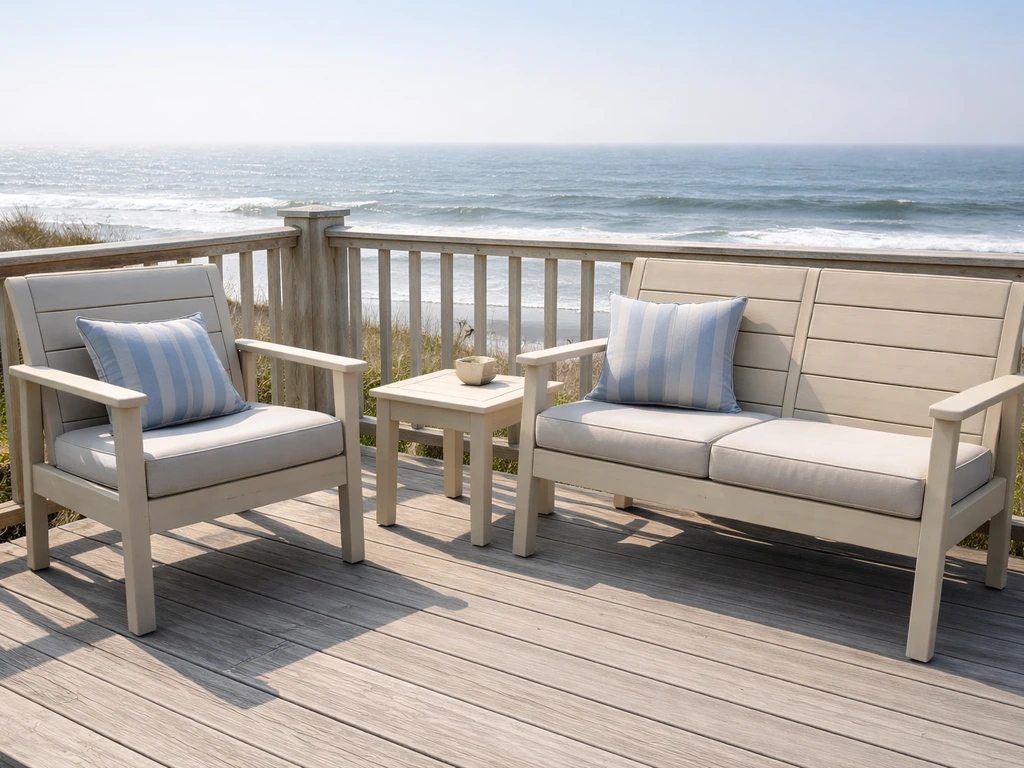
Coastal conditions are uniquely punishing because salt accelerates corrosion on metal and degrades cheaper finishes fast. Your best picks here are HDPE composite (no metal to corrode, entirely immune to salt) and powder-coated aluminum with a high-grade finish, cleaned and inspected regularly. Teak with regular oiling also performs well. Avoid steel frames of any kind within a mile or two of salt water unless you're prepared to inspect and touch up the finish every few months. Resin wicker with aluminum frames is acceptable; resin wicker with steel frames is a bad choice in coastal zones.
Freeze-thaw climates (Zone 5 and colder)
Freeze-thaw stress is real but manageable if you store or cover furniture properly. HDPE composite handles freeze-thaw better than almost anything else since it doesn't absorb water and won't crack, split, or have joints stressed by ice expansion. Aluminum frames also perform very well. Teak handles cold fine structurally but should be cleaned and dried before covering for winter storage. Steel frames with any existing coating damage heading into winter are at risk: water gets in, freezes, and forces flaking from the inside. Resin wicker can survive winters fine if covered, but leaving it fully exposed through freeze-thaw cycles accelerates weave cracking.
High-sun, low-humidity climates (desert Southwest)
Intense UV without much moisture means the primary threat is surface fading and material embrittlement from UV exposure rather than corrosion. HDPE composite and powder-coated aluminum both hold up structurally, though both will show some cosmetic fading. Teak weathers to gray but remains structurally sound. Choose lighter frame colors to manage heat absorption. If you use cushions, solution-dyed acrylic is non-negotiable in Arizona, New Mexico, or Southern California full-sun patios.
High-humidity, rainy climates (Southeast, Pacific Northwest)
Persistent moisture means mold, mildew, and corrosion are constant pressure. Teak, HDPE composite, and aluminum all handle this well. Resin wicker with aluminum frames is fine if cleaned regularly. The real risks here are cushions sitting wet (always dry before covering or storing) and steel frames getting surface damage. In humid climates especially, the space under furniture cushions stays damp longer, so quick-dry foam cushion inserts matter almost as much as the cover fabric.
Covered or shaded patios
A shaded patio substantially reduces UV stress on all materials, which widens your viable options. Resin wicker that might degrade faster in full sun lasts longer under a pergola or covered porch. Budget-tier powder-coated steel or aluminum can be a reasonable choice when UV is minimal. Teak under shade will stay darker longer and need less re-oiling. Composite still works great but you're not getting as much advantage from its UV resistance in this scenario, so a wood or wicker choice can make more aesthetic sense.
Everyday outdoor dining vs. occasional lounging
Daily-use dining furniture takes more abuse: food, liquids, chair scraping, and repeated handling. Teak and aluminum are the most practical for a dining set in this scenario because they clean easily, hold up to hard use, and don't require special care after every meal. For a lounge or deep-seating setup that gets occasional use, wicker and composite both make strong candidates since comfort and aesthetics carry more weight and the use cycle is less punishing.
Maintenance that actually makes or breaks longevity
The honest truth about patio furniture maintenance is that most people overestimate how much they'll do. So the best maintenance plan is the simplest one that covers the highest-impact tasks. Here's what actually moves the needle for each material.
- Teak: Wash annually with a mild cleaner (diluted bleach works for mold and mildew stains). Re-oil every one to two years if you want to maintain the warm color. In high-salt or high-sun environments, oil more frequently based on how the surface looks and feels. Don't sand unless you have deep cracks or gouges; aggressive sanding removes the protective weathered layer unnecessarily. Before covering for winter, let the furniture dry for at least 48 hours to prevent trapped moisture from darkening the grain or promoting mildew.
- Powder-coated aluminum: Wash with mild soap and water two to four times per year. Inspect annually for chips, scratches, or bare spots in the coating. Touch up any damage promptly with a matching powder coat touch-up paint or even clear nail polish as a temporary measure. In coastal zones, rinse off salt deposits after storms and inspect more frequently.
- Steel (powder-coated or galvanized): The same cleaning routine as aluminum, but treat any coating damage as urgent. Bare steel exposed to moisture begins rusting quickly. If rust spots appear, address them immediately with a rust converter or appropriate primer and touch-up paint before they spread under the coating.
- Resin wicker: Clean with warm water and dish soap, rinse thoroughly, and let dry completely before covering. A 25% white vinegar to 75% water solution handles mold and mildew on weave surfaces. Avoid pressure washing, which can loosen the weave. Use protective covers through winter to limit UV and moisture cycling on the weave.
- HDPE composite: Wash with soap and water. That's genuinely most of the maintenance. Inspect hardware and tighten bolts annually since composite furniture relies on mechanical joints for stability. Some surface fading is inevitable and expected; cosmetic touch-up options vary by brand.
- Cushions (all materials): Dry completely before storing or covering. Store or bring inside during extended off-season periods. Spot clean with mild soap for everyday dirt; use diluted bleach solutions sparingly and only on solution-dyed acrylic fabrics, which can handle it without color damage.
One habit that pays off across every material: never cover furniture while it's damp and never store it in a sealed environment without ventilation. Trapped moisture under a tight cover is one of the fastest ways to develop mildew on wood, cushions, and wicker weaves. If you use furniture covers, choose breathable ones and make sure the furniture is dry first.
Budget vs. long-term value: what to actually watch for
Patio furniture pricing has a wide range, and the gap between budget and premium isn't always about the frame material. It's often about wall thickness, alloy grade, coating quality, hardware, and cushion fabric. A $299 aluminum dining set and a $1,200 aluminum dining set are both labeled aluminum. The difference is in the alloy grade, how thick the tubing is, whether the welds are clean, and whether the powder coat is a basic single-layer finish or a higher-spec multi-layer coating built to AAMA standards. Budget sets can be fine for shaded, low-exposure situations. For full sun, coastal, or heavy daily use, cheaper construction fails faster, and you'll spend more replacing budget furniture every four to six years than you would have on a better set at the start.
Watch out for a few specific marketing claims. "Weather-resistant" and "weatherproof" are not defined or regulated terms. They mean nothing specific. What matters is whether the manufacturer specifies the coating standard, the warranty terms, and what's actually covered. A 20-year structural warranty on HDPE composite from a brand like Trex is a specific, meaningful commitment. A "lifetime warranty" on a $199 steel frame from an off-brand is often meaningless because the company or the product line won't exist in five years. Read what the warranty actually covers: structural defects versus cosmetic fading are usually treated separately, and most warranties explicitly exclude fading. Expect fading; it's normal. Don't expect structural failure.
Rough lifespan ranges to use as planning numbers, not guarantees: teak 20 to 30 years with reasonable care; quality HDPE composite 20-plus years structurally; powder-coated aluminum 15 to 25 years depending on coating quality and environment; resin wicker 7 to 12 years; powder-coated steel 10 to 15 years. These numbers assume covers or winter storage in cold climates and basic annual cleaning. Cut those numbers roughly in half for furniture left fully exposed year-round with no maintenance.
What to actually do before you buy
- Assess your climate zone: freeze-thaw yes or no, coastal salt air yes or no, high UV yes or no. This eliminates materials that are wrong for your environment before you get distracted by aesthetics.
- Measure your patio space and decide dining, lounging, or both. This sets the frame and comfort requirements.
- Be honest about your maintenance commitment. If you won't oil annually, teak is still fine (it just grays). If you won't inspect and touch up metal coatings, avoid steel in any exposed or coastal setting.
- Look at the warranty language, not just the years. What failures are covered? What is explicitly excluded? Is cosmetic fading separate from structural coverage?
- Check the frame and hardware specs, not just the material label. For aluminum, look for powder-coat thickness specs and alloy grade. For wicker, confirm the frame material inside the weave. For composite, look for cap-layer or UV-stabilizer mentions.
- Choose cushion fabric to match sun exposure. Solution-dyed acrylic for full-sun; budget alternatives for shaded or occasional-use setups where UV pressure is low.
- Plan your seasonal routine now: one washing per season minimum, annual hardware inspection, dry before covering, and cover or store during the off-season in freeze-thaw zones.
If you're still deciding between specific material families, the comparisons between wood, metal, wicker, and composite go deeper on individual product attributes, and the question of what patio furniture is actually made of (and what that means for quality) is worth understanding before you finalize a choice. If you want a fast, bottom-line comparison of options, see what material is best for patio furniture for the simplest decision rules by use and climate. Different patio furniture materials like teak, aluminum, steel, resin wicker, and HDPE composite all have distinct benefits and failure risks based on how they handle moisture, UV, and corrosion what patio furniture is actually made of. For covers specifically, the material of the furniture cover itself affects how well it protects the frame and cushions through winter, which is a separate decision that pairs directly with whatever frame you buy.
FAQ
Which patio furniture material is best if I live in an area with both intense sun and periodic heavy rain?
Prioritize UV-resistant, non-rot materials, HDPE composite or powder-coated aluminum. If you choose metal, keep an eye on coating chips because repeated wetting can expose metal underneath faster than in dry climates. Also plan for drying time, cushions should dry fully before covering or storing.
Is teak still a top choice if I do not want to re-oil it?
Teak is structurally durable even when you leave it untreated, it typically weathers to a silver-gray patina. If you dislike that look, you need periodic cleaning and re-oiling, especially near the coast where salt air can accelerate surface wear. Without maintenance, it may still last decades, but the appearance will change.
What should I check to confirm an “outdoor wicker” set will actually hold up?
Look for an all-weather resin wicker with an aluminum frame, and inspect whether the weave is simply cosmetic or tightly bonded to the frame. If the listing does not clearly state the frame material, treat it as a higher risk purchase, resin over steel can rust once scratches occur and damage becomes visible through the weave.
How do I choose between aluminum and steel if the furniture will be under a pergola or covered porch?
Under cover reduces UV and moisture cycling, so the gap narrows. Still, aluminum is usually safer because minor coating damage does not become rust, while steel can start corroding quickly once bare spots appear. If you buy steel, be ready to keep a touch-up kit and check seams after storms.
Do cushion covers need to match the frame material in terms of weatherproofing?
Not exactly. Frame material drives rot and corrosion risk, cushions drive how long you will tolerate appearance and odor. For full sun, solution-dyed acrylic is a key upgrade, for humid areas focus on quick-drying foam and breathable storage so moisture does not sit under covers.
Is a furniture cover enough protection for winter in freeze-thaw climates?
A cover helps, but it must not trap moisture. Use breathable covers, make sure furniture is completely dry before covering, and avoid sealed storage that prevents air exchange. For any scratched metal finishes, winter is when moisture exposure can turn small defects into peeling and rust.
What is the most common mistake people make that shortens patio furniture lifespan?
Covering or storing furniture while it is still damp, this creates a moist microclimate that can drive mildew on cushions and trapped moisture damage on wood and finishes. The second most common mistake is ignoring minor coating damage, especially on coastal metal where scratches accelerate failure.
How can I estimate durability if I’m comparing two “aluminum” sets with very different prices?
Compare real construction details, tubing thickness, alloy grade if provided, weld quality, and the coating system. A higher-spec powder coat built for outdoor performance and a robust warranty usually indicates longer service life, because thin, basic coatings can fail sooner in coastal or full-sun conditions.
Do warranties reliably predict long-term performance for composite or metal furniture?
They help, but read how they define coverage. Many warranties separate structural defects from cosmetic fading, and fading is commonly excluded from “structural” claims. For composite, a long structural warranty is meaningful, but expect color loss over time regardless of brand.
Is sling seating a good option for comfort in hot climates?
Often yes, sling-style seats with vinyl-coated polyester can feel cooler than solid metal because they breathe and flex slightly. Still, dark sling fabrics can get hot to the touch, consider lighter colors or shaded placement if you spend long afternoons outdoors.
Next Articles
Best Material for Outdoor Patio Furniture: Wood, Metal, Wicker, Composite
Compare wood, metal, wicker and composite to find the best outdoor patio furniture material for your climate, comfort an
Common Patio Furniture Wood: Best Choices, Care & Tips
Compare common patio furniture wood types, teak, cedar, redwood, oak, with durability, finishes, and care tips.
Best Wood Patio Stain: Choosing Durable, Low-VOC Finishes
Compare and choose the best wood patio stain: durability, finish, climate tips, prep, and top product picks.