
The best patio furniture set for you comes down to four things: how much space you actually have, how many people you need to seat, what weather your furniture will face year-round, and how much you want to spend without buying it twice. For most homeowners, powder-coated aluminum with solution-dyed acrylic cushions is the single strongest all-around choice, it resists rust, handles UV, stays light enough to move, and lasts 10 to 20 years with minimal effort. But that's the starting point, not the final answer. Read on and you'll have a specific recommendation locked in for your exact situation by the end.
Patio Furniture Recommendations: Best Sets by Size and Material

Theo Tierney
4 Jul 2026
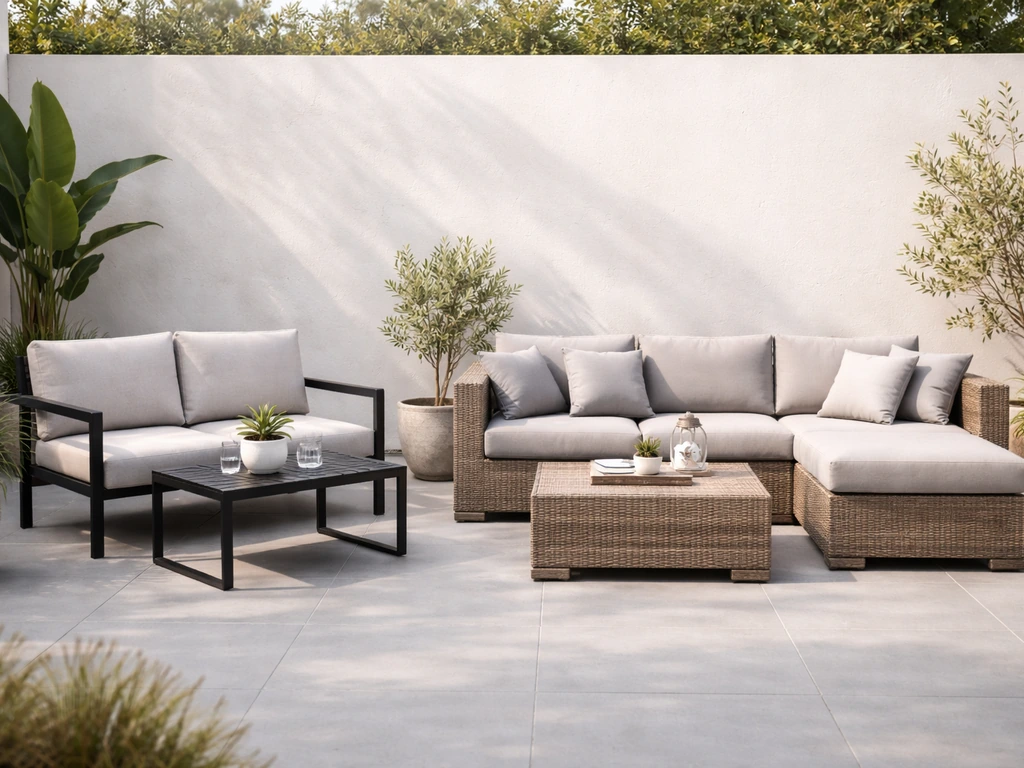
How to figure out what you actually need before you buy anything
Before you look at a single product listing, spend 10 minutes measuring and thinking through three things: your space, your seating count, and your primary use. These three factors will eliminate about 80% of the options on the market and save you from the most common buying mistake, which is falling in love with a set that physically doesn't fit or that you'll never actually use.
Measure your space first (and be realistic about clearance)
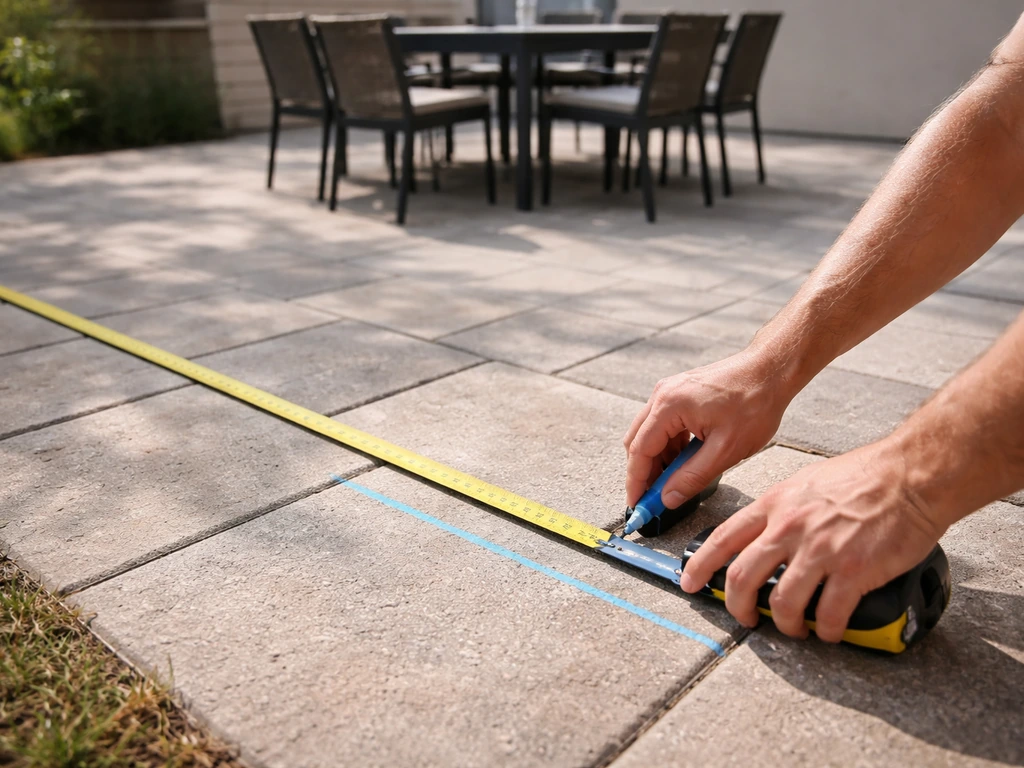
Get a tape measure and mark your usable patio area. Then subtract for circulation. A good rule for dining setups is 36 inches of clearance around the table on all sides where someone will push out a chair and walk. That's not a suggestion, it's what actually lets people sit down and stand up without knocking into planters or a wall. A painter's tape outline on your patio surface is a genuinely useful trick: lay out the footprint of the furniture you're considering before you order, and walk through it a few times. You'll immediately know if it works or feels cramped. For a 10x10 patio, you're looking at a 4-person bistro or cafe set, not a 6-piece sectional.
Seating count and intended use
Think about the realistic maximum number of people you entertain at once, then size down by one if you're tight on space. A household that occasionally hosts six can get by with a 4-person dining set plus a pair of lounge chairs on the side. For dining-focused patios, a round table seats more people per square foot than a rectangular one and allows easier conversation.
For lounging or a pool deck, a sectional or chaise lounge combination makes more sense than a dining table you'll rarely use. If you're deciding between different layouts, the difference between patio furniture styles comes down to how they handle your space and weather. Mixed-use patios (dining and relaxing) do best with a modular set or a dining table paired with an adjacent small conversation grouping.
Budget: where to draw the lines
Budget roughly like this: under $500 gets you a functional small set in powder-coated steel or basic resin wicker that will last 3 to 5 years with care; $500 to $1,500 gets you entry-level aluminum or better synthetic wicker with improved cushions that will realistically last 7 to 10 years; $1,500 to $4,000 covers commercial-grade aluminum, quality teak, or premium synthetic wicker with solution-dyed cushions that can last 15 or 20 years; above $4,000 you're in designer and contract-grade territory. The honest advice: don't buy a $300 set expecting it to survive three Florida summers. If your budget is truly tight, buy less furniture of higher quality rather than a full cheap set you'll replace in two years.
Material recommendations by climate
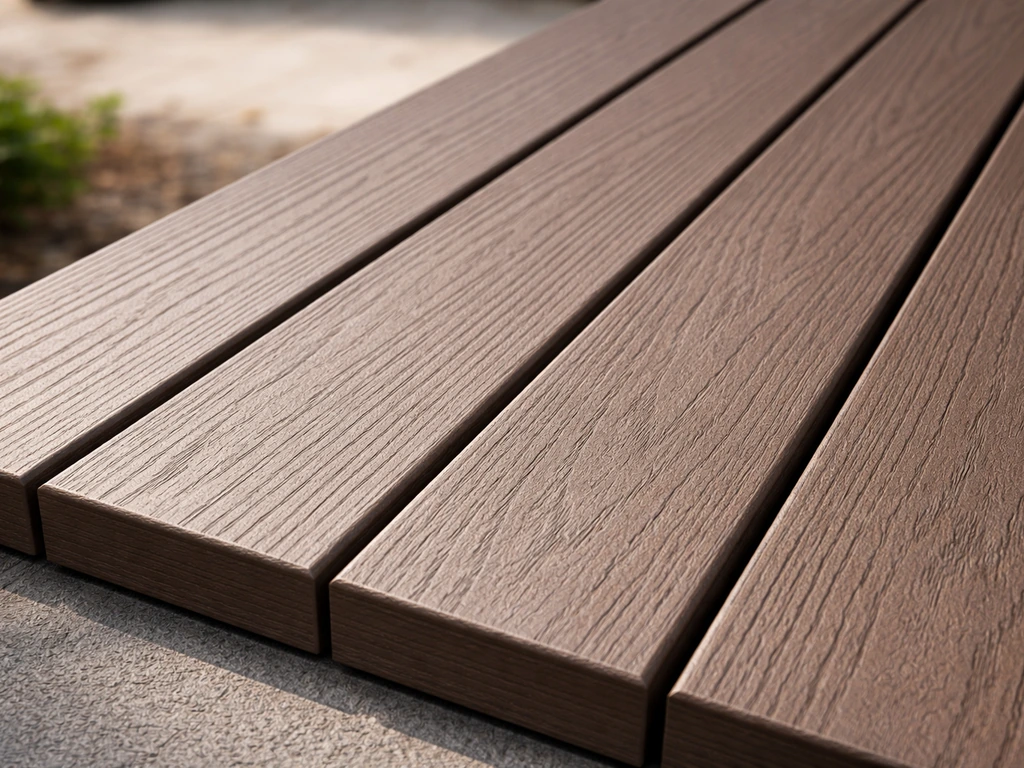
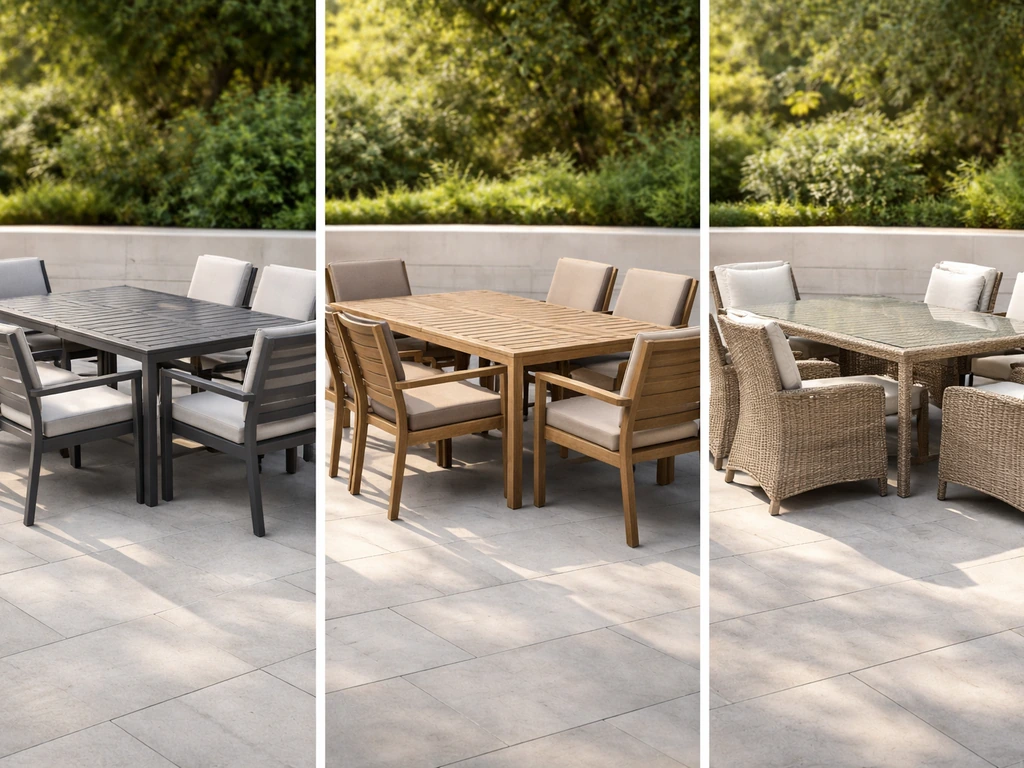
This is where the real decision gets made. No single material is best for every climate, and buying the wrong one for your environment is the most expensive mistake you can make. Here's how each of the four major materials performs in real conditions.
| Material | Hot/High UV (AZ, TX) | Rain/Humidity (FL, Southeast) | Freeze/Snow (Midwest, Northeast) | Coastal Salt Air |
|---|---|---|---|---|
| Powder-coated aluminum | Excellent | Excellent | Very good (stays outside or bring in) | Excellent (won't rust) |
| Teak/hardwood | Very good (oil yearly) | Good (needs mildew watch) | Good (store or cover) | Good (oil protects) |
| Wrought/steel iron | Good (check finish) | Poor (rusts fast) | Poor (paint chips, then rusts) | Poor (rusts aggressively) |
| Synthetic (resin) wicker | Good (fades over time) | Very good | Good (UV causes brittleness over years) | Very good |
| HDPE composite | Very good | Excellent | Excellent | Excellent |
| Natural rattan/wicker | Poor (dries/cracks) | Poor (rots) | Poor | Poor |
Aluminum: the closest thing to a universal pick
Powder-coated aluminum is the material I'd recommend to most homeowners regardless of climate. It doesn't rust, it's about one-third the weight of steel (which matters when you're rearranging or storing it), and a quality powder-coat finish handles UV and rain for a decade or more. The key quality signal is wall thickness: look for tubular frames with walls at least 1.5mm to 2mm thick. Thin-wall aluminum (under 1mm) will eventually bend or crack at weld joints under repeated use. Cast aluminum is even more durable for legs and arm joints, though heavier. In coastal environments, aluminum is genuinely one of the only smart choices because it has zero iron content and won't rust even with constant salt-air exposure.
Teak and hardwood: beautiful but requires commitment
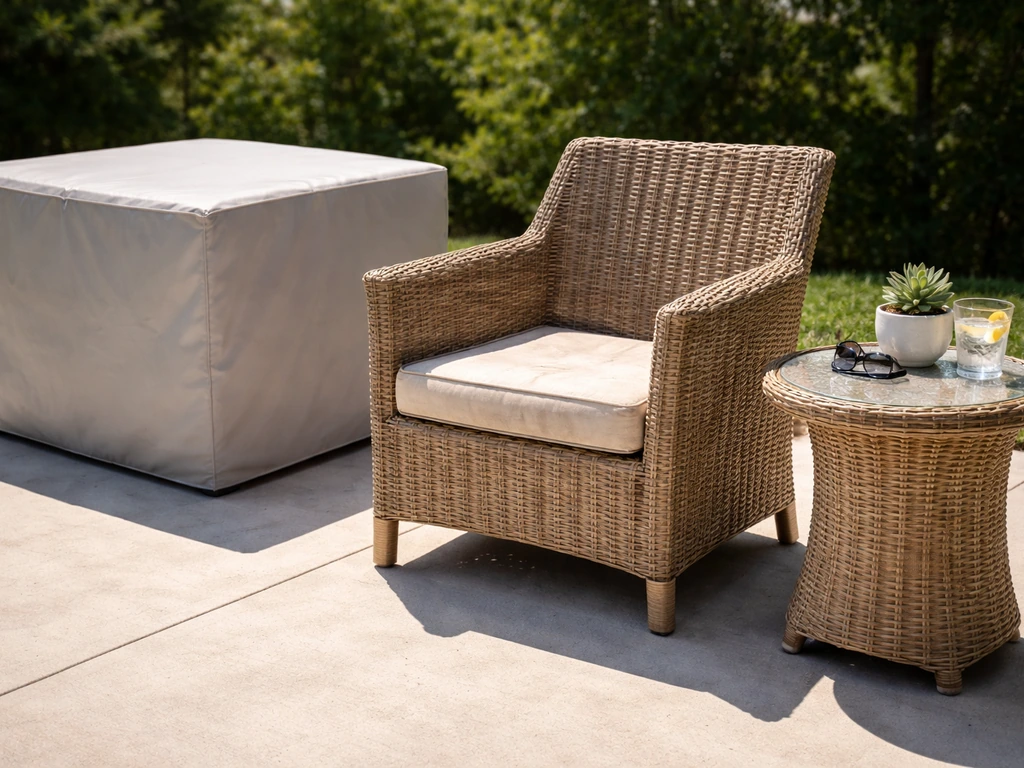
Grade A teak (from the heartwood of mature trees) is legitimately one of the most durable outdoor wood options available. Its natural silica and oil content make it resistant to rot, insects, and warping without any treatment at all. Left untreated, it weathers to a silver-gray patina that many people like. If you want to maintain the golden-brown color, apply a teak oil or sealer once or twice a year.
In high-humidity climates like Florida or the Pacific Northwest, watch the undersides and joints for mildew, especially if the furniture sits on a covered porch with poor airflow. In freezing climates, teak tolerates winter reasonably well but benefits from covers or indoor storage to prevent joint expansion and cracking. Avoid plantation teak labeled as Grade B or C, the wood density is lower, and it won't perform the same way.
Synthetic wicker and resin: low maintenance but watch the UV over time
Synthetic resin wicker (HDPE or PVC strands woven over an aluminum frame) is a practical choice for covered patios, screened porches, and humid climates. The material doesn't rot, doesn't absorb water, and cleans up easily. The long-term weakness is UV degradation: cheaper PVC strands will become brittle and start cracking after 4 to 7 years of direct sun exposure in Arizona or southern climates. HDPE-based wicker is more UV-stable and should be your target in high-sun environments. Always check that the frame underneath is aluminum, not steel, a steel frame under wicker will rust at the joints and you'll never know until the furniture starts leaning.
HDPE composite: the low-maintenance long-hauler
High-density polyethylene composite lumber looks like wood, doesn't act like wood outdoors, and has an impressive track record for longevity. It won't rot, crack, splinter, or absorb water. In snowy or freeze-thaw climates it's one of the best choices available because water can't penetrate the material and cause expansion damage. It's also completely immune to salt air corrosion. The trade-off is that it can feel plastic in appearance (though higher-end versions are convincing) and can get quite hot to the touch in direct afternoon sun in desert climates. It's also heavier than aluminum. The brands making quality composite outdoor furniture include Polywood, which has been manufacturing HDPE furniture in the U.S. since the early 1990s.
Steel and wrought iron: proceed carefully

Wrought iron and steel furniture can look beautiful and is genuinely heavy and stable in wind, which matters in open, exposed patios. The durability problem is rust. Any chip or scratch in the paint or powder coat exposes bare metal, and from that point humidity, rain, and especially salt air will corrode the frame aggressively. In dry climates like Arizona or New Mexico, well-maintained steel can last years. In Florida, the Gulf Coast, or anywhere with regular rain, steel furniture is a genuine liability. If you already own steel furniture, treat scratches immediately with rust-inhibiting touch-up paint.
Best styles and sets for different outdoor setups
Small patios (under 120 sq ft)
Work with bistro sets (a small round table and two chairs), folding sets that tuck away when not in use, or a loveseat-style conversation set with a small coffee table. The 36-inch clearance rule still applies, which means a 10x10 patio can handle a bistro set comfortably but probably not a 4-piece conversation set unless the furniture is specifically designed for compact spaces. Folding chairs are your friend here, they give you extra seating capacity without permanently occupying floor space.
Aluminum or HDPE composite both work well for small patios since neither needs a lot of storage logistics. If you want something different from the usual aluminum, wood, or resin wicker options, patio furniture alternatives can also work well depending on your climate and setup.
Dining-focused patios
For a dedicated outdoor dining area, a 4- to 6-person rectangular or round dining table with side chairs or a mix of chairs and a bench is the standard approach. Once you pick a material and size, these patio furniture tips will help you choose comfortable styles that actually fit how you live outdoors. Extendable tables are worth considering if you occasionally host larger groups, they save space day-to-day and expand when needed.
For a dining set with six chairs, plan for a minimum of roughly a 12x12 foot area to accommodate the table footprint plus the 36-inch clearance around the perimeter. Millennium Seating describes booth planning with a per-diner table-space guideline of about 300 square inches per person.
Aluminum dining sets with sling or mesh seats are a smart pick because sling fabric doesn't require cushions, dries instantly, and holds up well in UV. If you want cushioned dining chairs, solution-dyed acrylic fabric (Sunbrella being the most recognized brand) is the standard to target.
Lounging and poolside setups
For lounging, prioritize deep-seating conversation sets or chaise lounges with quality cushions over dining furniture. Deep-seat pieces have seat depths of 20 to 24 inches compared to a dining chair's 16 to 18 inches, and that extra depth is what makes the difference between furniture that's comfortable for an hour and furniture people actually relax in. For pool decks and areas with direct water exposure, aluminum frames with sling or quick-dry mesh are significantly more practical than cushioned pieces you'll constantly be hauling inside or standing upright to drain.
Mixed-use and larger spaces
A large covered patio or outdoor living room benefits from a sectional conversation set paired with a separate dining area. Modular sectionals that can be reconfigured give you flexibility for entertaining different group sizes. On a mixed-use patio, use an outdoor rug to visually define zones and anchor each furniture grouping. In larger uncovered spaces, weight and wind stability become more important, heavier cast aluminum or composite pieces won't blow around in afternoon storms the way lightweight aluminum sling chairs might.
Features that actually matter when you're comparing sets
Frame construction signals
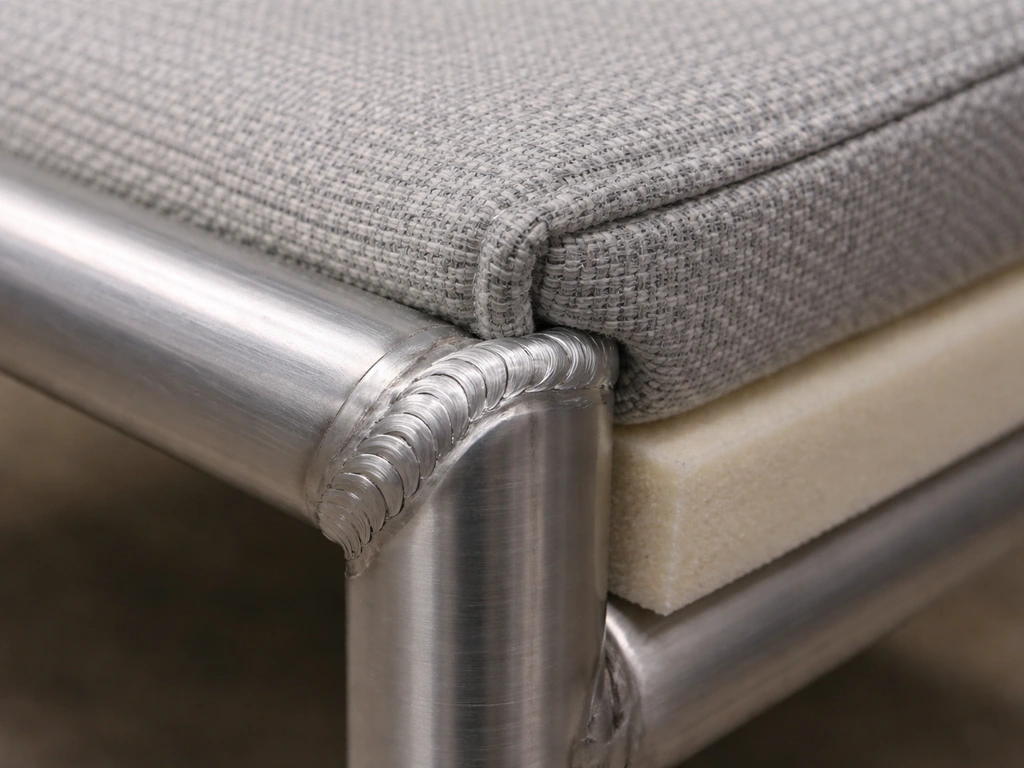
On tubular aluminum, look for welded joints rather than bolt-together connections at stress points. Welded frames are stronger and don't develop looseness over time the way bolt connections can. On cast aluminum pieces (arms, corner joints), check for even surface texture without obvious voids or pitting, which indicates casting quality. Bounce lightly in a chair before buying in-store, quality frames shouldn't flex or creak. Stainless steel hardware (bolts, screws, hinges) is worth paying for; zinc-plated hardware will rust.
Rust and corrosion resistance
Aluminum doesn't rust (it oxidizes but forms a protective layer). HDPE composite doesn't rust. Stainless steel (304 or 316 grade) resists rust well, with 316 being the gold standard for coastal environments. Powder-coated steel is adequate in dry climates only. Galvanized steel is better than plain steel but still not ideal in humid or coastal environments. If a set is advertised only as 'weather-resistant steel' without specifying the finish type or grade, treat that as a yellow flag.
Cushions and fabric performance
Cushion quality is where budget sets cut corners most aggressively. The two things that matter most are the fabric and the foam. Solution-dyed acrylic fabric (Sunbrella is the brand name most people recognize, but there are solid competitors) has the dye baked into the fiber rather than printed on the surface, so it fades far more slowly and is inherently mold-resistant.
Polyester fabric cushion covers are significantly cheaper and significantly worse, they fade noticeably in one to two seasons of direct sun. For the foam insert, look for quick-dry or open-cell foam that won't become waterlogged and grow mildew in wet climates. In the real world, even good outdoor cushions should come inside or be stored in a deck box when not in use for extended periods. That one habit alone doubles cushion lifespan.
UV and weather protection
For frames, UV breaks down paint and powder coat over time, causing fading and chalking. Higher-quality powder-coat finishes are thicker (typically 2 to 4 mils) and contain UV stabilizers. Teak and HDPE naturally handle UV better than painted metals. For fabric, look for a minimum 1,000-hour UV fade resistance in product specs; Sunbrella-grade fabrics typically rate at 2,000 hours or more. For wicker strands, HDPE-based weaves hold color significantly longer than PVC in direct sun.
Stability and wind tolerance
Furniture weight and center of gravity matter if your patio is exposed or on a rooftop. Sling chairs and lightweight aluminum pieces will blow over or around in a strong storm. In exposed locations, heavier cast aluminum, HDPE composite, or steel sets stay put better. Alternatively, look for furniture with tie-down points or plan to stack and store lighter pieces before storms. Most manufacturers don't publish weight specs prominently, so when in doubt, heavier is better for wind-exposed spaces.
Care, maintenance, and getting the most life out of your furniture
Cleaning routines by material
- Aluminum frames: wash with mild soap and water once or twice a season. Use a soft brush on powder-coated surfaces. Rinse thoroughly. Apply a coat of car wax annually to protect the finish.
- Teak: scrub with a teak cleaner and soft brush to remove mildew or staining. If you want to maintain the golden color, apply teak oil or sealer after cleaning and let it dry fully. Do this once a year in most climates, twice a year in humid environments.
- Synthetic wicker: hose down regularly — this is its biggest maintenance advantage. Use a soft brush with soapy water to get into the weave. Avoid pressure washers, which can stretch or damage the strands.
- HDPE composite: soap and water or a deck cleaner. Virtually nothing can damage it chemically. It may develop surface chalking over years, which a composite cleaner or light sanding addresses.
- Cushions: brush off debris regularly to prevent mold spores from settling. Spot clean with a mild soap solution. For deeper cleaning, a solution of 1 cup bleach per gallon of water (applied and rinsed thoroughly) handles mildew on solution-dyed acrylic fabric without damaging it. Air-dry completely before storing.
Mildew prevention in humid climates
Mildew is the enemy in humid, rainy, or shaded patio environments. It grows on anything that stays damp: cushions, wicker weave, wood grain, even powder-coated frames in the right conditions. The single most effective prevention habit is to stand cushions on edge or bring them in after rain so they dry completely. A deck box with a vented lid is worth the investment. For covered patios with poor airflow, a small outdoor fan keeps air moving and dramatically reduces mildew buildup on both furniture and cushions.
Storage and covers for winter and storms
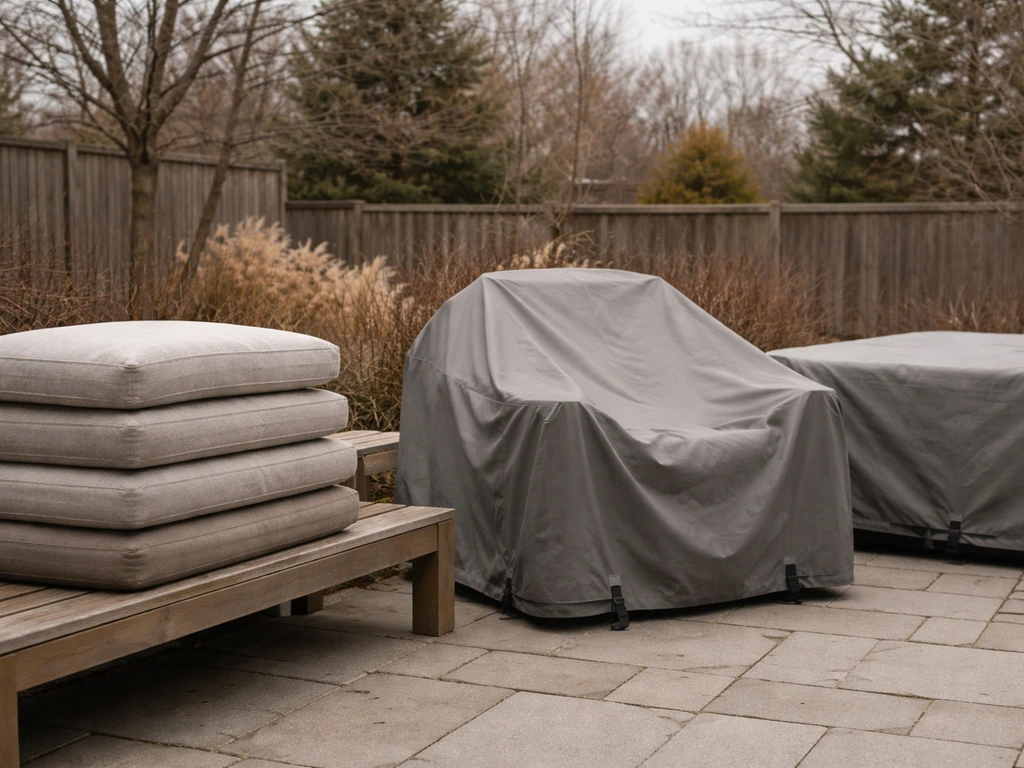
In climates with hard winters, bringing cushions and lighter furniture inside is the single biggest longevity move you can make. For frames too large to store indoors, quality outdoor furniture covers (polyester with a PVC coating, fitted with vents to prevent condensation buildup) protect against freeze-thaw damage, UV, and debris accumulation. Avoid cheap covers without vents, trapped moisture accelerates mold and corrosion. For teak and wood furniture left outside in winter, a breathable cover is better than a fully sealed one. In climates without hard freezes, seasonal covers are still worthwhile but less critical for the frames, prioritize covering or storing cushions above everything else.
Where to buy and what to look for in a retailer
Brand quality signals
Brand names worth knowing in each category: for HDPE composite, Polywood has a long track record and a 20-year warranty on their furniture frames. For aluminum, Brown Jordan, Telescope Casual, and Tropitone are long-established commercial and residential brands with documented longevity. For teak, Smith & Hawken (discontinued but second-hand pieces are still excellent), Barlow Tyrie, and Kingsley Bate are respected names. For synthetic wicker over aluminum frames, Woodard and Pride Family Brands supply many mid-range and upper-range retailers. Budget options from mass-market retailers can be reasonable for small bistro sets or simple dining chairs, but avoid budget deep-seat sectionals, the foam and fabric quality drops sharply at lower price points.
Warranties and what they actually cover
Read the warranty language carefully before buying. A quality aluminum or HDPE frame should carry a minimum 3-year warranty, with premium brands offering 5 to 20 years on structural components. Cushion warranties are typically shorter (1 to 3 years) and almost always exclude normal fading, which means they primarily cover manufacturing defects. Watch for warranties that exclude 'outdoor use' or 'sun exposure', that's a red flag on a product explicitly sold as outdoor furniture. A warranty only has value if the company is likely to be around to honor it, so buying from established brands or well-capitalized retailers reduces that risk.
Return policies and buying online vs. in-store
Large online retailers like Wayfair and Amazon offer broad selection and easy price comparison, but return logistics on large furniture sets can be complicated and expensive. Understand the return window and who pays return shipping before you buy. Specialty outdoor furniture retailers (both local and online, like Hayneedle or dedicated outdoor brands) often have better product knowledge and more favorable return terms for large sets. For expensive sets, buying from a retailer with a physical showroom lets you actually sit in the furniture, check fabric quality, and test frame stability before committing, that's hard to replicate from photos and specs alone.
Your buyer checklist and next steps
Here's a quick checklist to work through before you finalize any purchase. Using this quick checklist makes it easier to shop smart and find the right tips on buying patio furniture for your space and climate. Run through every item, the ones you skip are usually the ones that cause regret.
- Measure your patio and tape out the furniture footprint, including 36 inches of clearance around dining tables and main walkways.
- Decide on primary use: dining, lounging, or mixed — this drives the set style before material even comes up.
- Match material to your climate: aluminum or HDPE composite for humid, coastal, or snowy climates; teak for those willing to do annual maintenance; synthetic wicker for covered patios in any climate; avoid steel in rain-heavy or coastal areas.
- Set a realistic budget and buy the best quality you can afford in a smaller set rather than a full cheap set.
- Check frame construction: welded joints, minimum 1.5mm wall thickness on aluminum tubes, stainless steel hardware.
- Verify cushion fabric: solution-dyed acrylic (Sunbrella or equivalent) is the target; avoid plain polyester fabric for direct-sun applications.
- Read the warranty terms: look for minimum 3-year frame coverage and confirm what is actually excluded.
- Confirm the return policy before ordering, especially for large sets bought online.
- Plan your maintenance routine now: covers, a deck box for cushions, and a seasonal cleaning schedule will double the lifespan of whatever you buy.
- If you're unsure between two options, choose the one with the better frame material and warranty — you can always replace cushions; replacing the frame means buying new furniture.
Once you've worked through the checklist, you should have a clear shortlist of one or two sets that fit your space, climate, and budget. From there, it's worth digging into the specifics of buying strategy (timing sales, negotiating floor models, evaluating bundle deals) and comparing specific styles across brands before pulling the trigger. The investment is worth getting right the first time, quality outdoor furniture bought thoughtfully and maintained properly is something you genuinely won't have to think about again for a decade or more.
FAQ
What patio furniture recommendations work best for a covered patio where cushions still get damp?
If your patio is covered but still humid, prioritize mildew-resistant cushion fabric and quick-dry foam, then add a cover or storage plan for rainy spells. Solution-dyed acrylic fabric and open-cell or quick-dry foam hold up best, but you still need to dry cushions fully after storms (standing them on edge or bringing them inside).
Which patio furniture materials are best for intense, direct sun (hot summers)?
Start with the frame material, then check how the cushions are made. Look for solution-dyed acrylic (or comparable fade-resistant outdoor fabric) plus quick-dry foam, and avoid budget polyester covers that fade quickly in direct sun. Also confirm the sling or cushion includes UV-stable components, and consider lighter-weight pieces only if you can tie them down or store them during wind events.
Can a 10x10 patio handle more furniture than a bistro set if we choose a small sofa?
Not always. Compact patios often fit a bistro dining set or a loveseat-style conversation grouping, but you need to count actual circulation paths. Use the 36-inch clearance rule around the seating area where chairs pull out, then test the layout with painter’s tape before ordering, because “looks small enough” is a common fit mistake.
What should I do differently with patio furniture recommendations in freezing winter areas?
If you live in a freeze-thaw climate, cushions and light pieces should come indoors during hard freezes. For frames that cannot be stored, use fitted, vented covers to prevent trapped condensation, because trapped moisture accelerates corrosion and mildew. Avoid sealed, cheap covers that “hold in” water vapor.
What patio furniture recommendations are safest for wind-prone or rooftop patios?
Look for tie-down points and weight, then plan for storm mode. For exposed patios or rooftops, heavier cast aluminum, HDPE composite, or anchored setups reduce blow-over risk. If the set is lightweight, you may need storage during storms or straps that secure the frames.
Are there specific patio furniture recommendations for salt-air coastal areas?
For coastal conditions, prioritize materials that do not have iron content (aluminum, HDPE composite) or use high-grade stainless hardware. Avoid “weather-resistant steel” unless the finish type and protection are clearly specified, because chips in coating can lead to aggressive corrosion in salt air.
How do I choose between dining chairs and deep-seating furniture for everyday use?
Take comfort out of the equation by matching seat depth to how you’ll use it. If you want to lounge, choose deep-seat or sectional pieces (around 20 to 24 inch seat depth). If you want dining, choose dining chairs (around 16 to 18 inch seat depth) because deep seats can feel sloppy for meals and dining-height tables.
What details should I check to avoid getting fooled by vague “weather-resistant” claims?
Don’t rely on product marketing terms like “weather-resistant.” Instead, verify cushion fabric type (solution-dyed acrylic or equivalent) and foam type (quick-dry/open-cell). Confirm the frame thickness on aluminum (often at least 1.5mm to 2mm for tubular frames) because thin-wall frames can fail at stress points over time.
What is the most common mistake when sizing patio furniture recommendations?
Measure, then test chair pull-out paths, not just the table footprint. Even if the set “fits” on paper, chairs need clearance to move and people need space to stand up. Painter’s tape is quick, but you should also sit where you’ll use the furniture to verify you can enter and exit without scraping walls.
Should I avoid cushioned patio furniture if my patio is near a pool?
Yes, especially for long-term comfort and durability in wet climates. Solution-dyed acrylic can still be a good choice, but you should expect to store or dry cushions after rain. If your use is near a pool or you expect splash, prioritize sling or quick-dry mesh over traditional cushioned seats, since they drain faster.
How should I interpret outdoor furniture warranty terms before buying?
Warranty is useful only if it matches real exposure. Check whether the warranty covers outdoor use and sun exposure, then note that cushion warranties are often shorter and usually exclude normal fading. Also confirm the manufacturer is established enough to honor warranty claims.
What are the best patio furniture recommendations for people who want “wood look” without wood maintenance?
If you want the look of wood, HDPE composite is the most dependable low-maintenance alternative for rot-free performance, but it can feel warmer or hotter in direct desert sun. If you want the natural feel, teak is durable but needs routine maintenance for color and periodic attention to mildew in high humidity.
Do patio furniture covers actually matter, or is it optional?
Most people should assume yes, because dust, pollen, and rain residue add wear and staining over time. The key is choosing the right cover: fitted and vented for enclosed storage over winter, breathable for teak, and covers with vents to avoid moisture trapping.
Next Articles
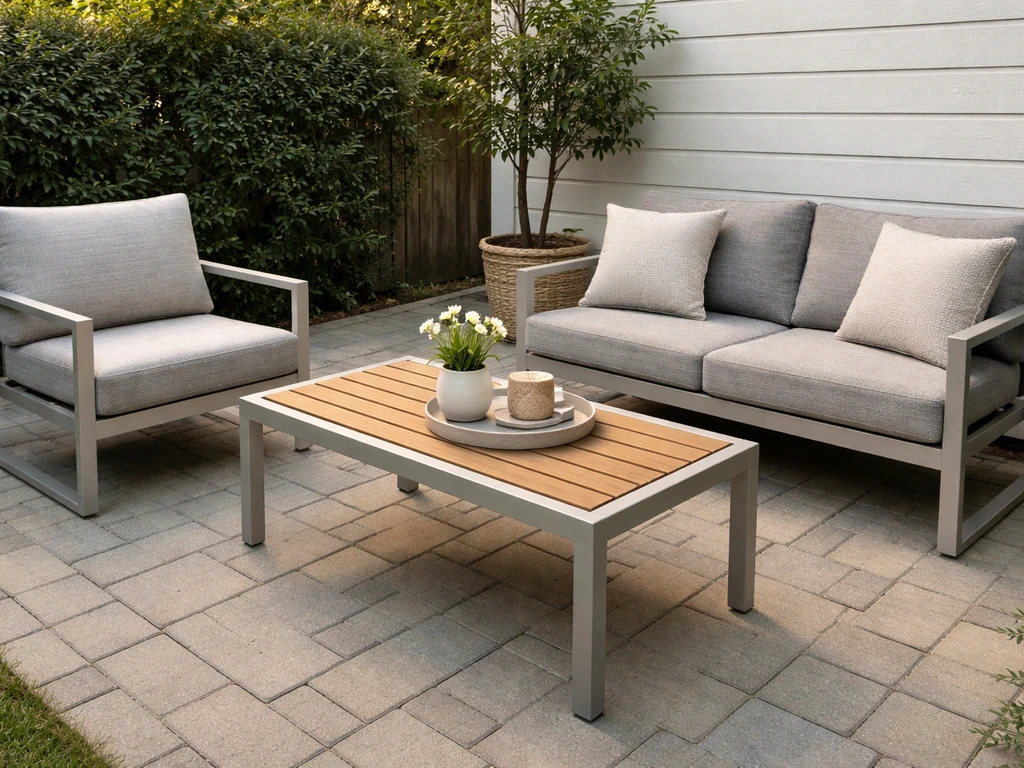
Patio Furniture Tips: Choose Materials, Fit, and Care
Patio furniture tips: pick the right size and materials for your climate, then clean, protect, and maintain it for years
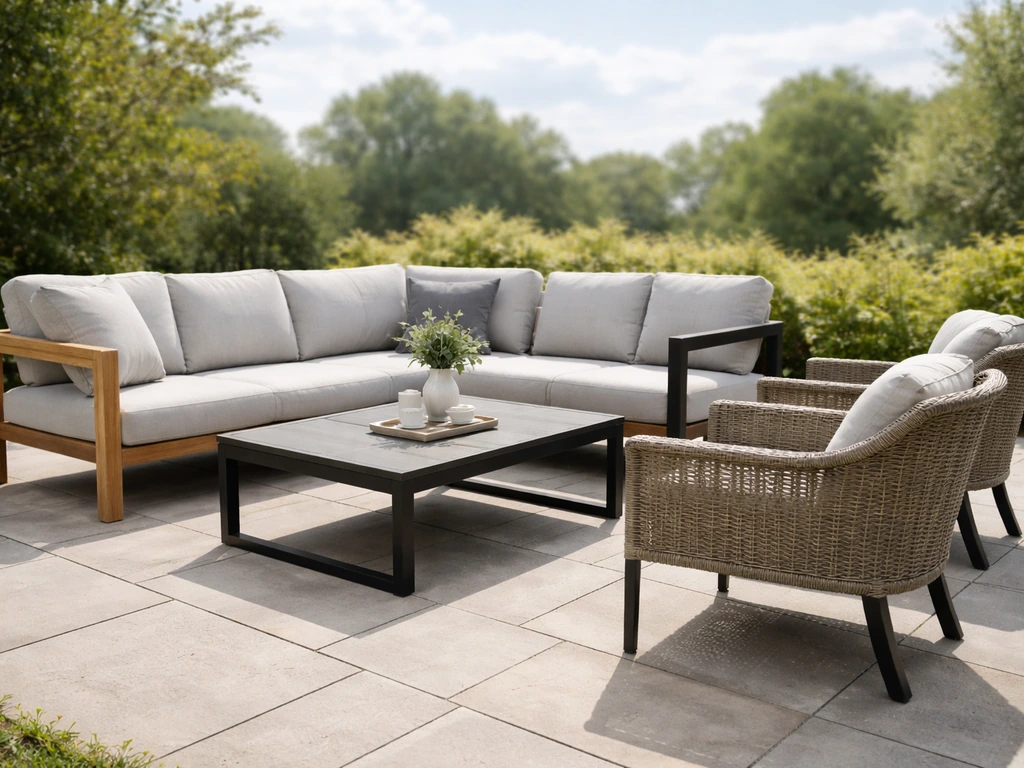
La différence patio furniture: materials, styles, and fit
Compare patio furniture materials and types to pick the right set for sun, rain, wind, and coastal humidity, with care t
Patio Furniture Alternatives: Buyer’s Guide by Material
Material-by-material patio furniture alternatives with durability, comfort, and maintenance tips for rust, rot, mold, an