
Replacing patio cushions comes down to three things done right: measuring the actual frame (not the old cushion), picking materials that genuinely resist sun and rain rather than just claiming to, and knowing which construction details separate cushions that last five years from ones that flatten or mildew in one season. Get those three right and you'll end up with cushions that fit, hold their shape, and look good a few summers from now.
Good Housekeeping Patio Furniture Replacement Cushions: Fit, Durability

Theo Tierney
10 Jun 2026
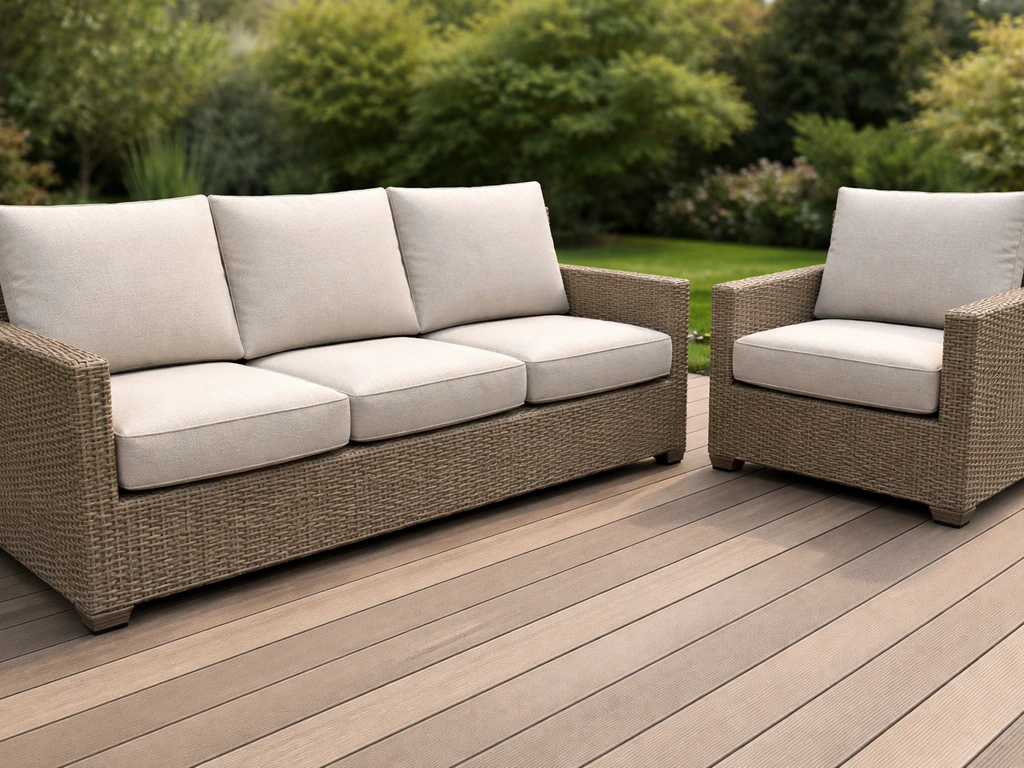
How to measure your patio furniture for replacement cushions
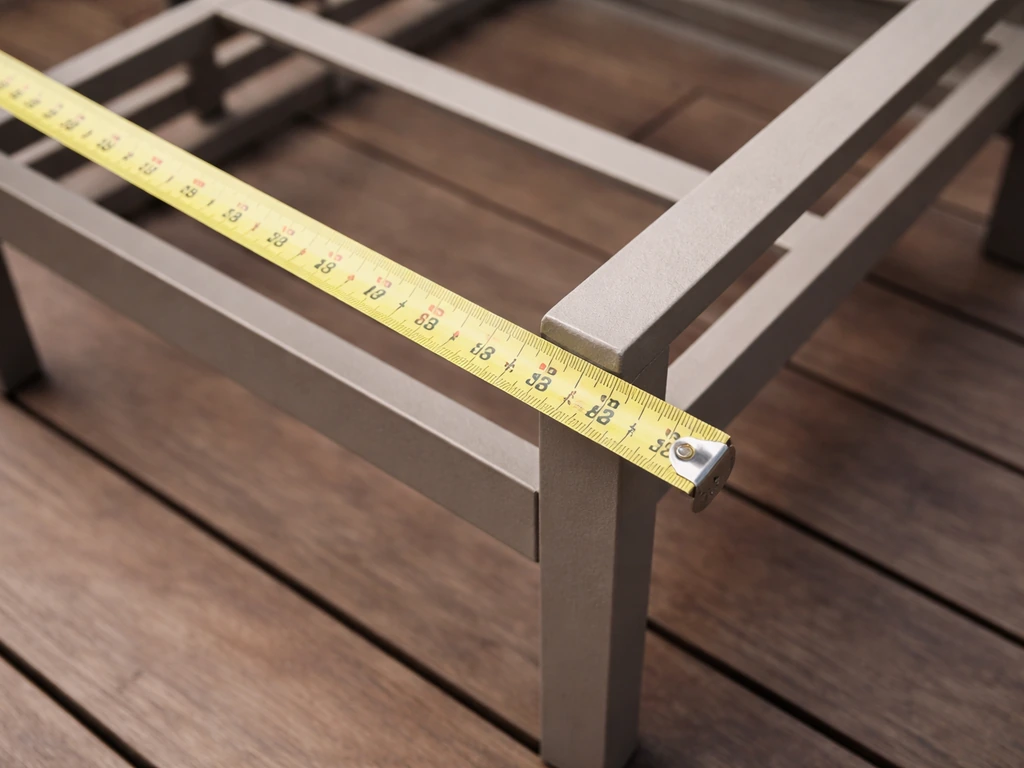
The single biggest mistake people make is measuring the old cushion instead of the frame. After years of use, cushions compress and shift, so their dimensions are no longer accurate. Always measure the inside of the furniture frame where the cushion actually sits, and measure at the widest point of the seating area for seat width.
For seat cushions, you need three numbers: width (side to side), depth (front to back), and thickness. Thickness is a separate decision, not just whatever the old cushion happened to be. Custom cushion vendors typically offer thickness in 1-inch increments, commonly ranging from 2 to 6 inches, so you'll choose this deliberately based on comfort preference and frame clearance.
Back cushions have one tricky calculation most people miss. Measure the total back height of the frame from the top of the chair frame down to the top of the seat frame, then subtract the thickness of your seat cushion. That final number is your back cushion height. Skip that subtraction and your back cushion will sit too high, leaving an awkward gap or pushing forward. When ordering online, you'll see separate fields for seat depth, seat width, back height, and cushion thickness for exactly this reason.
A practical tip that works across most ordering platforms: add about 1 inch to your measured dimensions. This gives a snug fit and accounts for minor frame irregularities. For deep-seating furniture (those wide, sofa-style outdoor chairs and sectionals), measure both seat and back as a coordinated pair so they align when ordered together.
Don't overlook tie placement. If your chair frame has anchor points, loops, or rings at specific locations, the replacement cushion's ties need to match those positions. A cushion with ties in the wrong spots won't anchor properly and will slide around or pull the cover out of shape.
Choosing the right cushion type and style for your furniture
Not all patio chairs take the same cushion shape. Outdoor furniture broadly falls into a few categories, and each one takes a specific cushion style. Using the wrong format creates fitting problems no amount of measuring will fix.
- Standard dining chair cushions: seat-only pads, usually 2–3 inches thick, with or without a back piece
- Deep-seating chairs and sofas: thick seat and back cushions as a set, typically 4–6 inches thick, designed to mimic indoor sofa comfort
- Adirondack chairs: contoured cushions cut to fit the wide seat pan and slanted back angle specific to that chair style
- Bench and settee cushions: long single-piece cushions measured by total bench length
- Curved-back chairs: contoured back cushions shaped to follow the curve rather than a flat rectangle
When shopping for replacements, identify your furniture style first so you're browsing the correct cushion format. Many replacement cushion listings are labeled by furniture type, and ordering a flat back cushion for a curved-back chair is a common and frustrating mistake. If you're buying from the original furniture brand or a vendor that carries OEM replacements, look for a model number or production code on the furniture's ID tag, usually found on a label attached to the frame. That number can match you directly to the correct cushion dimensions without any guesswork.
Materials that actually hold up outside
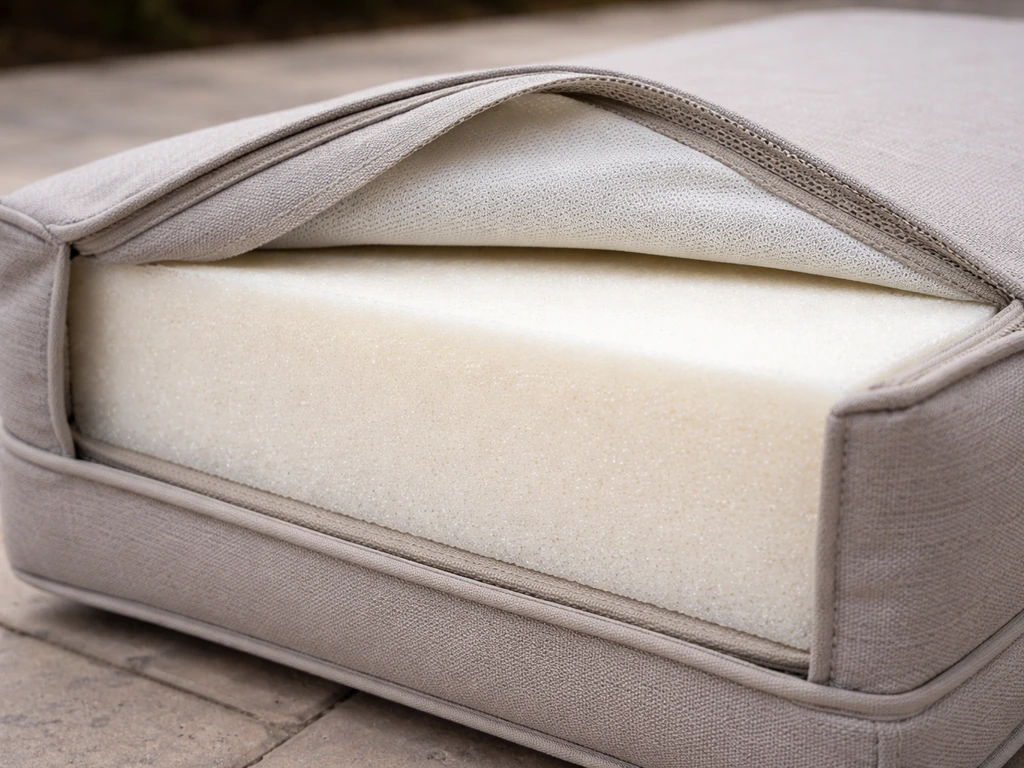
Foam: the part that determines long-term comfort
Foam density is the number that separates budget cushions from ones worth buying. Look for high-density foam in the 2.0 to 2.5 lb/ft³ range for outdoor seat applications. Below that range, foam compresses faster and loses support within a season or two. High-resilience (HR) upholstery foam at around 2.3 lb/ft³ can realistically last 12 to 20 years under reasonable conditions. That's the meaningful end of the density spectrum. If you're shopping for the best foam for patio cushions, start with a high-density range and look for HR outdoor foam that matches your seat use.
For outdoor use specifically, open-cell or reticulated foam matters because it drains. Standard closed-cell foam traps water inside, which leads to mildew growth inside the cushion even when the cover looks fine. Reticulated foam has a skeletal structure that lets water pass through and evaporate. Some brands offer fast-drying outdoor foam engineered specifically to shed rain, dew, and moisture, often paired with a polyester fiber wrap around the foam core. That fiber wrap adds softness and helps the cushion hold its plump shape over time.
A reasonable ILD (Indentation Load Deflection) range for seat cushions is roughly 35 to 40 ILD. Lower ILD means softer foam; higher means firmer. For outdoor chairs that people sit in for extended periods, staying in that range gives you a comfortable seat that doesn't bottom out.
Fabric: where most of the weather resistance lives
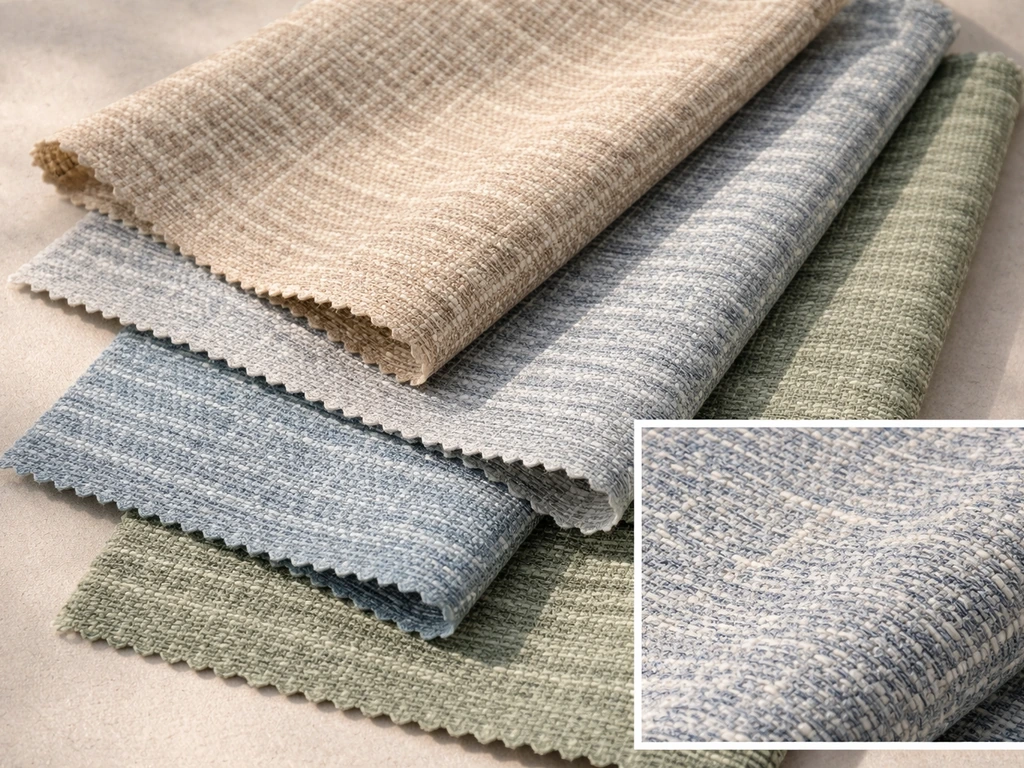
Solution-dyed acrylic is the gold standard for outdoor cushion fabric, and Sunbrella is the most recognized brand in that category. To narrow down the best fabric for outdoor patio cushions, focus on solution-dyed acrylic because it resists fading and holds up through wet weather. The key with solution-dyed fabric is that the color runs through the entire fiber rather than sitting on the surface as a dye. That's why it resists fading much longer than printed or surface-dyed alternatives. Sunbrella's official spec is 100% solution-dyed acrylic, and the brand backs up UV resistance with formal testing standards including ASTM G154 accelerated weathering and AATCC 169 UV exposure testing. Sunbrella’s technical spec sheet example reports ISO-based colorfastness and UV colorfastness test information such as “Colour fastness UV - outdoor - 1000h.” blank" rel="noopener noreferrer">UV resistance backed by formal testing standards. When you see those standards cited on a product, it's a meaningful claim backed by lab data, not just marketing language.
Mildew resistance is a related but separate property. Sunbrella states that its fabric does not promote mildew growth, which is accurate but worth clarifying: mildew grows on dirt and organic debris sitting on the fabric, not on the acrylic itself. Keep the cover clean and it won't mildew. Solution-dyed polyester is a cheaper alternative, but it typically performs below solution-dyed acrylic in both UV colorfastness and mildew resistance over a multi-year period, especially in humid climates.
If you're choosing fabric separately (for a custom cushion or a recovered cover), look for lightfastness ratings. ASTM D3424 evaluates resistance to UV-induced fading, and products tested to 1,000+ hours of UV exposure are worth prioritizing. Anything that doesn't disclose testing standards is harder to evaluate, which is usually a reason to be skeptical.
Weather resistance: what actually degrades cushions and how to fight it
| Threat | What it damages | Best defense |
|---|---|---|
| UV exposure | Fabric color, fiber strength | Solution-dyed acrylic (Sunbrella-grade), ASTM G154-tested fabric |
| Rain and moisture | Foam core, cover stitching, interior mildew | Reticulated/fast-drying foam, water-resistant covers, proper drainage |
| Mildew | Fabric surface, foam interior | Regular cleaning, full drying before storage, open-cell foam |
| Heat cycling | Foam compression, cover fading | High-density foam (2.0–2.5 lb/ft³), UV-stable fabrics |
| Salt air | Cover fiber degradation, stitching corrosion | Marine-grade or solution-dyed acrylic, UV-resistant thread |
Climate matters a lot here. In Florida or coastal areas, mildew and salt air are the dominant threats, so solution-dyed acrylic with marine-grade stitching is worth every extra dollar. In Arizona or desert climates, UV degradation is the primary enemy, making UV colorfastness ratings the most important spec to check. In regions with cold winters, foam that stays outdoors through freeze-thaw cycles degrades faster, so storage becomes part of the durability equation rather than an optional extra step.
Color, style, and thickness: balancing comfort with longevity
Thickness is a comfort decision with a durability implication. Thicker cushions (4 to 6 inches) feel more like indoor furniture and are appropriate for deep-seating frames designed to hold them. But a thicker cushion in a frame not designed for it will overhang, compress unevenly, or interfere with armrests. For dining chairs, 2 to 3 inches is the practical range. Going thicker than the frame was designed for doesn't give you more comfort, it just creates a fit problem.
On color: dark colors absorb more heat and can feel noticeably hot to the touch on a sunny afternoon, especially in warmer climates. Mid-tones and patterns are more forgiving from a heat and fading perspective than deep navy or black, which show UV degradation faster as the dye shifts. With solution-dyed acrylic, fading is dramatically reduced across all colors, but it's still a factor over many years. Lighter neutrals and earthy tones tend to age most gracefully.
Pattern choice matters practically, not just aesthetically. Stripes and geometric patterns hide minor staining between cleanings better than solid light colors. If you have kids, pets, or heavy outdoor entertaining, a patterned fabric in a mid-tone saves you a lot of cleaning stress.
Where to find exact replacements and how to match your furniture
Start with the furniture manufacturer. Most major patio furniture brands, including deep-seating and sectional brands, offer OEM replacement cushions matched to their specific models. Find the model number on the ID tag attached to your furniture frame, then check the brand's website or call their parts line. This approach eliminates guesswork on dimensions and cushion style entirely.
If the furniture is older, discontinued, or a no-name brand, the next best option is a custom cushion vendor. Vendors like those found through a search for 'custom outdoor replacement cushions' let you enter exact dimensions (width, depth, thickness, back height) and choose your foam density and fabric. This is worth the extra cost over buying stock cushions that almost fit. Measure the frame carefully using the method described above and order to spec.
For stock replacement cushions at retail (big box stores, outdoor furniture retailers, online marketplaces), you're shopping by nominal size, so cushions are listed in standard increments like 20x20, 24x24, and so on. Stock cushions are fine if your furniture dimensions happen to fall on those standard sizes, but many frames don't. If a stock cushion is a half-inch off on one dimension, it can still work. If it's 2 or more inches off, it'll look wrong and wear unevenly.
When matching cushions to a brand, look for the production code or part number on existing cushions or on the furniture's label. Some brands include this on a law label sewn into the cushion itself. That code, combined with the manufacturer's replacement parts system, is the most reliable path to an exact match.
How to clean and store cushions to make them last
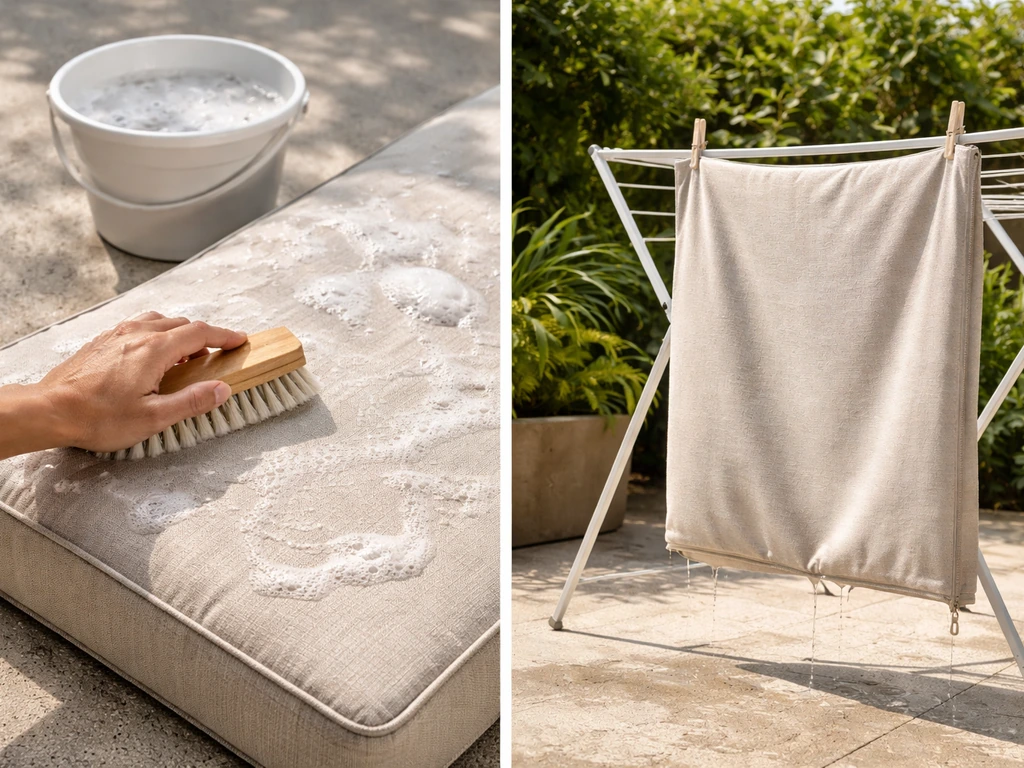
For routine cleaning of solution-dyed acrylic covers, mix about 1/4 cup of mild dish soap per gallon of water, apply with a soft brush, let it soak for a few minutes, then rinse thoroughly. For mildew, a stronger solution works: 1 cup of bleach plus 1/4 cup of mild soap per gallon of water. Apply, let it sit, then rinse completely and let the cushions dry fully in the sun before bringing them inside or storing. Always plan deep cleaning on sunny days so everything dries completely. A damp cushion stored in a bin or cushion bag is a mildew starter kit. Using good housekeeping habits helps your patio furniture cushions stay cleaner longer and extend the time between replacements good housekeeping patio furniture.
Drying completely is not optional. This is the most commonly skipped step and the main reason mildew comes back. Even if the cover feels dry to the touch, moisture can remain inside the foam. Stand cushions upright or prop them at an angle so air circulates around all surfaces.
For off-season storage, a breathable cushion storage bag or a dry storage bench works better than an airtight container, which traps any residual moisture. If you store cushions in a garage or shed, keep them off concrete floors, which wick moisture upward. In climates with freezing winters, foam that gets wet and then freezes cracks internally, shortening its lifespan significantly.
A quick seasonal wipe-down at the start and end of the outdoor season takes 20 minutes and adds years to cushion life. Spot-treat stains immediately rather than letting them set into the fabric.
When to replace entirely vs. when to just repair
The repair-versus-replace decision is worth making deliberately rather than defaulting to buying a whole new set. There are really three separate components that can fail independently: the foam core, the cover fabric, and the cover hardware (zippers, ties, Velcro). They don't all age at the same rate.
If the cover is torn, faded, or worn but the foam is still firm and holds its shape, recover it. Custom cushion cover replacements are significantly cheaper than full cushion replacement, and if the foam is high-density and structurally sound, there's no reason to replace it. Recovering a foam core that still performs well is genuinely good value.
If the foam has flattened noticeably, you're sitting closer to the frame than you should be, or the cushion doesn't bounce back when you stand up, the foam is done. Foam replacement (with a new cover) runs roughly $100 to $200 per cushion depending on size and foam grade, which is still substantially less than buying new furniture or even a full replacement cushion set for a large sectional.
Replace entirely when you see any of these: persistent mold or mildew that returns shortly after thorough cleaning and drying, a musty smell that comes back quickly after the cushion dries (this usually means mildew has grown inside the foam, not just on the surface), significant UV fading across the entire cover surface, or fabric that is fraying or tearing at seams. Internal foam mildew is the exception to the 'just recover it' rule. Once mildew is in the foam, it doesn't clean out, and no cover will hide the smell or prevent it from spreading.
Zipper failures are an easy fix if the rest of the cushion is sound. A broken zipper on an otherwise good cover is worth a simple repair or a zipper replacement from a local tailor or upholstery shop, often for under $20 per cushion. Don't throw out a functional cover over a zipper.
The honest decision framework: if the foam is good and holds its shape, recover. If the foam is flat or internally mildewed, replace the foam (or the whole cushion). If it's just a zipper or tie, repair it. Buying an entirely new cushion set when only the covers are worn is where most people overspend.
FAQ
Can I replace only the seat cushion and keep the old back cushion?
Yes, but only if the cushion is truly compatible. When you replace good housekeeping patio furniture replacement cushions, verify the tie or strap locations, the back height calculation (frame back height minus seat thickness), and whether the frame has a channel or skirt that expects a specific cushion thickness. If you simply swap a different brand cushion by “close enough” dimensions, the anchors often do not line up and the cushion slides or gaps.
What if my seat and back cushions are from different manufacturers or years, will they still fit together?
Check the cushion labeling for a foam core rating or density, not just the fabric. Even if the covers match, mismatched foam (density, ILD, or drainage type) can make the new seat feel significantly firmer or softer and can affect how the back cushion sits when installed together.
How do I choose cushion thickness if my cushions look fine but the frame clearance is tight?
Measure the frame clearance and use that to choose thickness, especially for arms and deep-seating frames. A 1 inch thickness increase can create noticeable overhang on narrower frames, or it can compress unevenly so the cushion front edge lifts and doesn’t seat flat. If the vendor lists a “recommended thickness” range, follow it.
Is it ever okay if my replacement cushion size is slightly off from my measurements?
Stock cushions sometimes fit “functionally” at half-inch differences, but you should avoid larger gaps because uneven support accelerates flattening. If one dimension is off by 2 inches or more, expect faster wear, worse drainage, and a cover that pulls when you sit.
Can I use the same cleaner for regular dirt and for mildew?
For solution-dyed acrylic covers, keep cleaning routine gentle and focus on rinsing thoroughly. After any soap or bleach cleaning, rinse until the runoff is no longer soapy, then dry fully with airflow. Residual cleaner can attract dirt faster and can also dull color over time.
My cushions got mildew last year, how can I prevent it from coming back?
Plan for deep cleaning on sunny days, because partial drying is the biggest relapse trigger. Even if the fabric feels dry, moisture can remain inside the foam core, especially in rainy climates. Stand cushions upright or prop at an angle, then confirm dryness before storing.
When mildew comes back after cleaning, should I recover the cushion or replace the foam?
If the mildew returns quickly, assume it is inside the foam rather than only on the cover. In that case, replacing just the cover will not fix the odor or reoccurring mildew, because the foam core is the contamination source.
Is it worth repairing a broken zipper on patio cushion replacement covers?
Yes, but only if the cushion is otherwise structurally sound. Zipper failures are often localized, but check the seams and tie attachment points too, because stress around hardware can mean deeper cover wear. If the zipper runs smoothly after repair and the fabric is not fraying, repair is usually the best value.
Do I need open-cell or reticulated foam if my cushions live under a cover but still get occasional rain?
Look for a fast-drying, drainage-focused foam and confirm it’s suitable for outdoor use. Open-cell or reticulated foam helps water drain and reduces internal mildew risk. Closed-cell foam can trap moisture, which is where “the cover looks fine but the cushion smells” problems start.
What’s the safest way to store patio cushions during winter?
Storage matters even when you do everything else right. Use breathable bags or a dry storage bench, keep cushions off concrete floors, and avoid airtight containers that trap residual moisture. In freeze climates, wet and then freeze-thaw can crack foam internally, shortening lifespan.
If my furniture model is discontinued, how should I order replacement cushions?
If you can’t find an OEM match, custom is usually the best path when dimensions are non-standard. Provide width, depth, thickness, and back height from the frame measurement method, then choose foam density and fabric based on your climate (UV in deserts, mildew and salt in coastal areas).
Next Articles
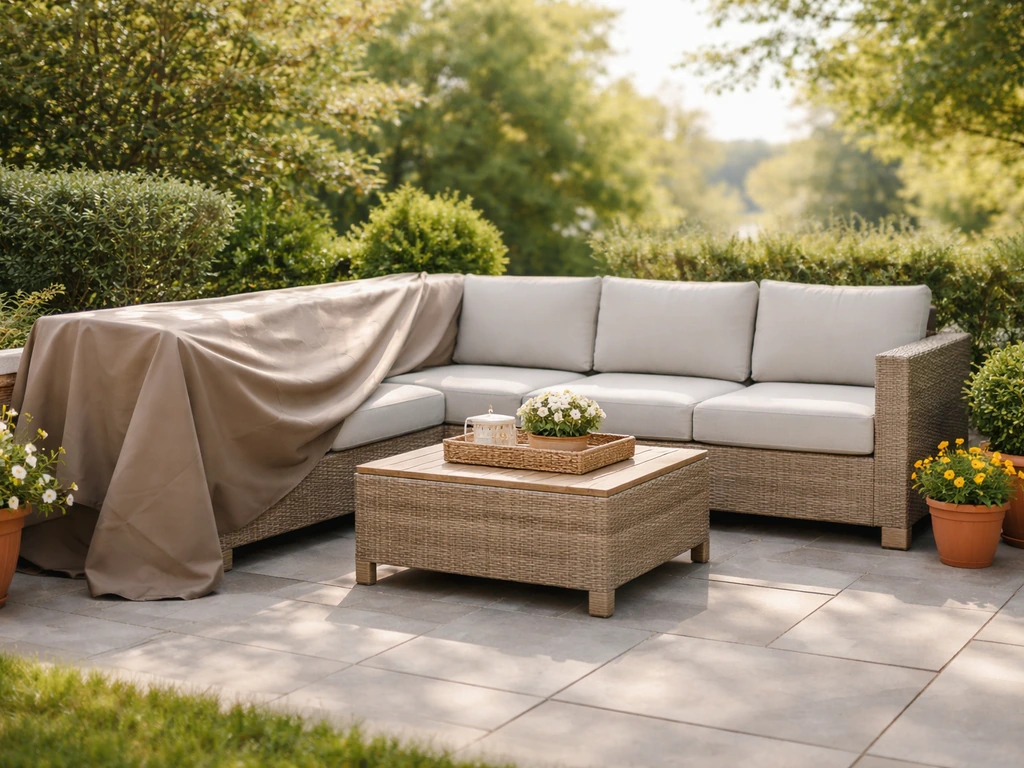
Good Housekeeping Patio Furniture Care Guide by Season
Seasonal care guide for good housekeeping patio furniture: clean by material, stop rust and mildew, prevent fading and c
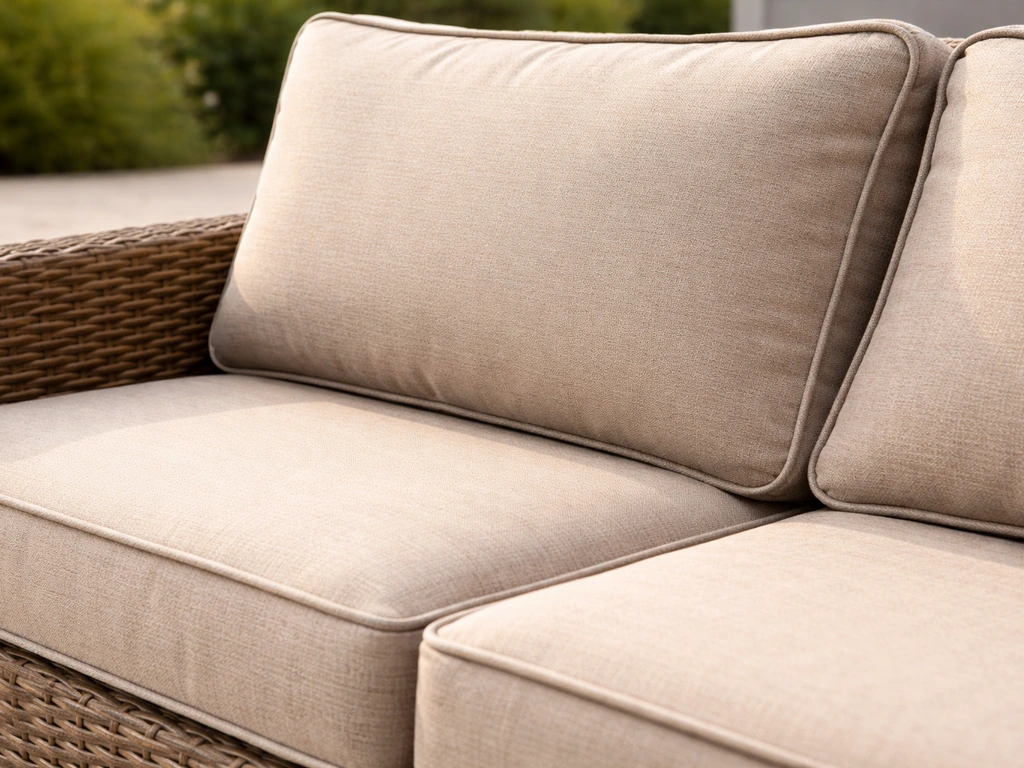
Best Cushions for Patio Furniture: Buying Guide by Climate
Choose the best patio furniture cushions by climate: fabric, foam, fit, weather testing, and cushion-free options.
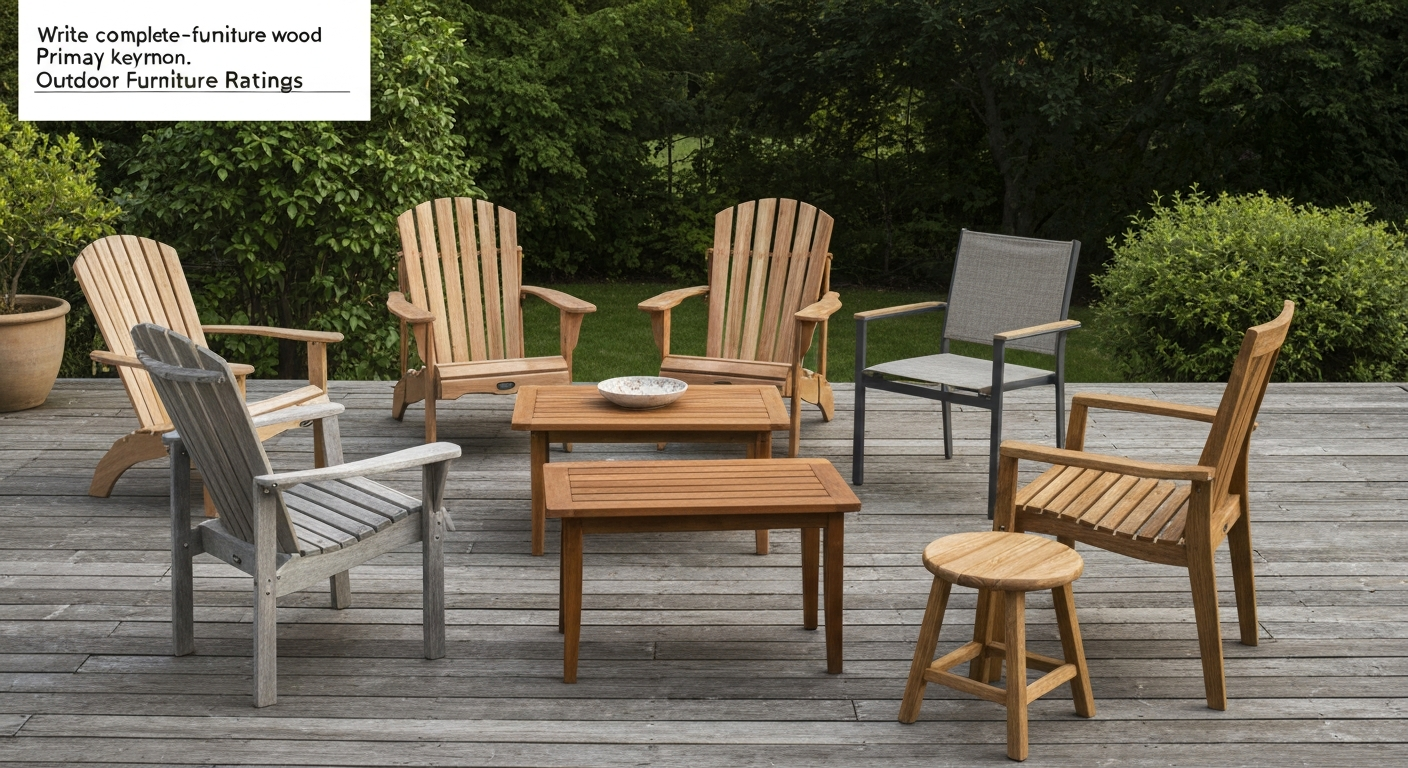
Common Patio Furniture Wood: Best Choices, Care & Tips
Compare common patio furniture wood types, teak, cedar, redwood, oak, with durability, finishes, and care tips.