
For Texas, powder-coated aluminum and recycled HDPE (Polywood-style) are the two most reliable patio furniture materials you can buy. Both handle the combination of extreme UV, triple-digit heat, and variable humidity that defines Texas summers far better than most other options. Teak is the best wood choice if you want natural grain and are willing to do occasional maintenance. Resin wicker over an aluminum frame is solid if you want that woven look. What you want to avoid is raw steel, cheap epoxy-coated metal, untreated softwood, and any cushion fabric that isn't rated for outdoor UV exposure.
Best Patio Furniture for Texas Heat: Materials & Care and Maintenance Guide

Theo Tierney
16 Jul 2026
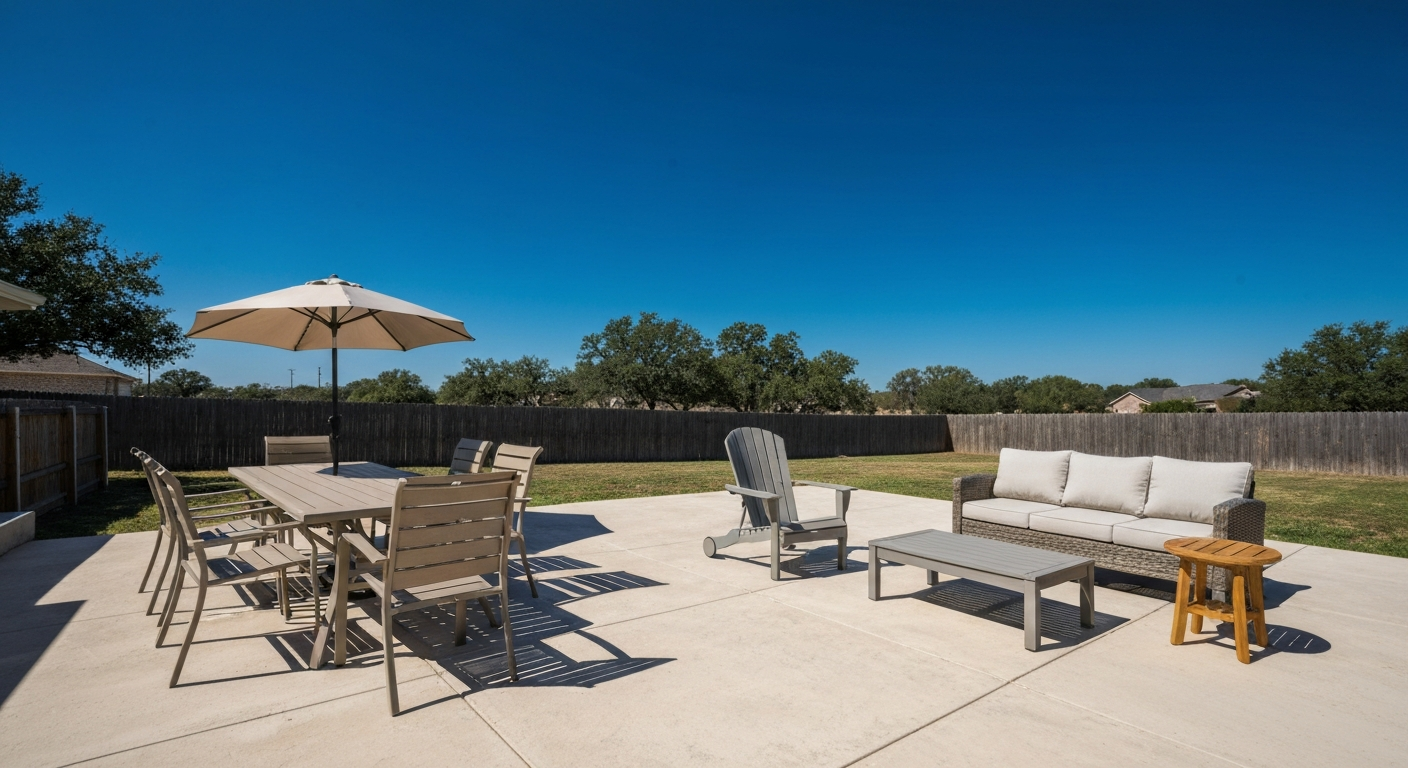
Why Texas heat and humidity are a different problem than most climates
Texas is not one climate. NOAA climate normals show summer mean maximum temperatures across much of the state running through the 90s into the low 100s°F from June through August, but the humidity picture varies drastically. Houston and Corpus Christi get persistent Gulf moisture, airborne salt spray, and rainfall that keeps relative humidity high year-round. Dallas and San Antonio sit in a middle zone with hot, occasionally humid summers. West Texas and El Paso get scorching heat with lower humidity but even more intense UV because of the elevation and clear skies.
That variation matters for material selection. On the Gulf Coast, corrosion is your primary enemy alongside UV degradation. Airborne chlorides from salt spray accelerate pitting on unprotected metals and eat through cheap coatings far faster than anything you'd see 200 miles inland. Inland Texas trades some of that corrosion risk for even more intense solar irradiance: NREL's National Solar Radiation Database shows Texas locations among the highest solar energy values in the continental U.S., meaning UV-driven fading, chalking, and material breakdown hit hard and fast. Any material you choose needs to handle both heat stress and UV, with corrosion resistance added to the list if you're anywhere near the coast.
Quick picks: the best materials and fabrics for Texas
If you want a short answer before we go deep, here is where I land after evaluating materials specifically against the Texas exposure profile. For a broader guide comparing materials and cooling performance, see our roundup of the best patio furniture for hot weather.
| Material | Best for | Weakness | Maintenance level |
|---|---|---|---|
| Powder-coated aluminum | All Texas regions, especially coastal | Coating chips if abused; avoid thin single-coat finishes | Low |
| Recycled HDPE (Polywood) | Full sun, all regions | Can feel plasticky; lighter pieces move in wind | Very low |
| Teak | Covered patios, inland humid zones | Cost; needs periodic oiling or will silver/check | Medium |
| Eucalyptus | Budget hardwood alternative | Less consistent durability than teak; needs sealing | Medium-high |
| Resin/HDPE wicker over aluminum frame | Covered or semi-shaded patios | Tight weaves trap moisture; inspect frame welds | Low-medium |
| Marine-grade stainless (316) | Coastal; accent hardware and frames | Expensive; still needs rinsing in salt-spray zones | Low-medium |
| Sunbrella or solution-dyed acrylic cushions | Any Texas region for cushions/slings | Must dry fully to prevent mildew under cushion | Low |
What actually degrades patio furniture in full sun, hot weather, and humid climates
There are five mechanisms that destroy outdoor furniture in Texas-style conditions, and a good buying decision means evaluating each material against all five at once. UV radiation is the most universal problem. The EPA and NWS UV Index framework rates anything 8 and above as Very High risk, and Texas summer UV Index readings routinely hit 10 to 11 or above. Prolonged UV exposure photodegrades polymers, fades dyes and coatings, and can chalk or embrittle surfaces within a single season if the material is not properly stabilized.
Heat buildup is the second factor, and it is partly a physics problem. Surfaces sitting in direct Texas sun can reach 150 to 180°F even when air temperature is 100°F. That thermal cycling, expanding and contracting every day, stresses joints, loosens fasteners, and can cause cheaper materials to warp or crack. Third is corrosion, especially relevant near the Gulf: airborne chlorides in coastal atmospheres accelerate pitting and coating breakdown on metals, and this is a well-documented problem in corrosion literature comparing exposure in salt-rich atmospheres. Fourth is mildew and biological growth driven by humidity, which attacks fabrics, untreated wood surfaces, and any surface that stays damp. Fifth is fading, which hits fabrics and coatings alike; standardized tests like AATCC TM16 (textile colorfastness to light) and ASTM G154 (accelerated UV exposure) are the industry way to validate fade resistance claims, so look for manufacturers who actually cite these test results.
How color and surface finish affect how hot your furniture gets
Yes, dark patio furniture gets noticeably hotter to the touch. This is basic radiative physics: darker surfaces absorb more solar radiation and re-emit it as heat. A black metal chair sitting in direct Texas sun can become painful or unsafe to touch, and the thermal stress on the coating and underlying material is higher. Light colors, especially whites and tans, reflect more solar energy and stay meaningfully cooler on the surface. For metal furniture, this translates into both comfort and coating longevity: a light-colored powder coat on aluminum will experience less thermal cycling and UV-induced chalking than the same coating in dark colors.
That said, the practical answer is not simply to buy only white furniture. Surface finish quality matters more than color for long-term durability. A well-formulated super-durable polyester or PVDF-based powder coat in dark charcoal will outlast a cheap single-coat epoxy finish in white. If you like darker colors, pair them with furniture designed to be sat on with cushions rather than bare metal you'll touch directly, and look for high-quality coating specifications. For HDPE solid furniture, black grades actually get additional UV stabilization from carbon black pigment, which is a known UV-blocking additive in polymer formulations, so dark HDPE can be more UV-stable at the material level even while running hotter on the surface.
Metals: powder-coated aluminum vs. marine-grade stainless
Powder-coated aluminum
Powder-coated aluminum is my first recommendation for most Texas homeowners because it hits the best combination of weight, corrosion resistance, UV durability, and price. Aluminum does not rust. The powder coat adds UV, scratch, and impact protection, but the quality of that coating is where most cheap furniture fails. Industry specifications distinguish between standard polyester powder coats and super-durable polyester or PVDF-based finishes; the AAMA 2604 and 2605 architectural standards require extended South Florida weathering test performance and are what separate coatings that last a decade from ones that chalk and peel in three years of Texas sun. See AAMA 2604 Powder Coating Finishes, Gordon Inc. (AAMA specification summary) for a concise explanation of AAMA 2604 requirements and South Florida weathering test criteria that distinguish standard and super-durable finishes AAMA 2604 Powder Coating Finishes — Gordon Inc. (AAMA specification summary).
Film thickness matters too. Industry technical guidance recommends single-coat applications at 60 to 100 micrometers (roughly 2 to 4 mils) for standard outdoor use, with two-coat systems (120 to 240 micrometers) for severe or coastal exposures. Cheap furniture typically cuts corners here. If a brand or spec sheet references AAMA 2604 compliance or ASTM B117 salt-spray test results, that is a meaningful signal. If they just say 'powder coated,' treat it as the minimum.
- Aluminum does not rust, even when coating is scratched, unlike steel
- Lightweight: easier to move, less wind-load risk in storms
- Look for super-durable polyester or PVDF coatings, not generic epoxy
- Two-coat systems recommended for Gulf Coast locations
- Touch up chips promptly with color-matched powder coat paint to prevent moisture intrusion
- Rinse frames with fresh water every few weeks in coastal environments
Marine-grade stainless steel (316/316L)
Marine-grade 316 stainless steel is the right call for frames, fasteners, and hardware in coastal Texas environments where salt spray exposure is real. Peer-reviewed field studies confirm that 316/316L shows substantially fewer and smaller pits than 304 stainless after multi-year exposure in salt-laden atmospheres. This is an important distinction because a lot of furniture marketed as 'stainless steel' uses 304, which is adequate inland but can pit and stain visibly in Gulf Coast conditions. If you're in Houston, Galveston, Corpus Christi, or anywhere within a few miles of the coast, verify that hardware and structural components are 316 or higher.
The trade-off is cost: marine-grade stainless furniture commands a significant premium, and it is heavy. For most people, it makes more sense to use marine-grade 316 for fasteners and accent hardware while building the primary frame from powder-coated aluminum. Full stainless furniture makes most sense for commercial applications or high-end installations where longevity over 20-plus years is the goal and budget is not the constraint. Even 316 needs occasional rinsing in active salt-spray environments to prevent surface deposit buildup.
Hardwoods: teak and eucalyptus in Texas heat and humidity
Teak
Teak (Tectona grandis) is genuinely the benchmark hardwood for outdoor furniture, and that reputation is earned by its natural chemistry. The wood has high natural oil content and silica levels that give it documented resistance to rot, fungal decay, and insect damage without requiring external treatment. Wood-science literature consistently places teak at the top of outdoor durability rankings, with well-detailed teak furniture lasting multiple decades in humid, UV-intense climates. In Texas, that means it handles Houston's humidity and heat without warping or rotting the way pine or cheaper imported woods would.
Maintenance comes down to a choice: oil periodically to retain the warm golden color and reduce surface checking, or leave it alone and let it silver naturally to a gray patina. The silver look is structurally fine; it is purely aesthetic. The practical regimen most manufacturers and wood-care specialists recommend is annual or biannual cleaning with a teak cleaner and light sanding, with oiling every one to two years if you prefer the golden tone. See the blank" rel="noopener noreferrer">teak maintenance / manufacturer care guide (example: industry maintenance PDF) for recommended annual or biannual cleaning with teak cleaner, light sanding, and oiling every one to two years to retain color and reduce checking. In full Texas sun, I'd oil at least once a year to slow checking. The main barrier to teak is cost and supply-chain concerns around sustainable sourcing, so look for FSC-certified teak.
Eucalyptus
Eucalyptus shows up frequently as a lower-cost teak alternative, and it is a legitimate option with a realistic understanding of its trade-offs. Species variation is the core issue: not all eucalyptus is equal in durability, and peer-reviewed wood science shows that performance varies by species and how the wood was treated or dried. Properly kiln-dried eucalyptus with a penetrating oil finish can hold up in humid Texas conditions for several years, but you will need to apply a quality outdoor wood sealer or oil at least once a year, and possibly twice in full-sun installations. It is less forgiving than teak if you skip maintenance cycles. I'd recommend eucalyptus for covered patios or semi-shaded installations rather than furniture sitting in unobstructed Texas sun all day.
Recycled HDPE and Polywood-style furniture: the low-maintenance case
Recycled high-density polyethylene (HDPE) furniture, sold under brand names like POLYWOOD and Trex Outdoor Furniture, is the most maintenance-free option I can point to for Texas conditions. The material is formulated with integrated UV inhibitors: high-performance HALS (hindered amine light stabilizers) combined with UV absorbers and color-lock pigment systems. Manufacturers report structural lifespans of 20 to 30 years or more, and in my evaluation of long-term user experience, the fade and split resistance claims hold up better than most competing materials when the product is from a reputable manufacturer using proper UV-stabilizer chemistry. For a broader comparison focused specifically on damp regions, see our guide to the best patio furniture for humid climates.
HDPE does not rot, does not absorb moisture, and cleaning is soap and water with a garden hose. That is genuinely the full maintenance requirement for the structural components. It handles the cycle of 100-degree days and summer thunderstorms without warping. The downsides are real though: the material has a plastic look and feel that some people find hard to get past, it is heavier than aluminum, and lighter pieces can move in the strong storms that regularly hit Texas. Look for furniture with stainless hardware to avoid rust at the fastener level. From an environmental standpoint, genuine recycled content from post-consumer milk jugs is the standard claim, which is a meaningful use of material that would otherwise go to landfill.
Resin and HDPE wicker: the woven look in a Texas climate
Natural rattan wicker has no place on a Texas patio. It absorbs moisture, molds, and degrades rapidly in sun and heat. What the market sells as 'outdoor wicker' is almost always synthetic resin or HDPE stranding woven over a frame, and the quality varies substantially. The weave itself is not the primary durability concern; it is what is underneath. An all-aluminum frame with resin wicker stranding is a genuinely weather-resistant combination. A steel frame with resin wicker will eventually rust from the inside out, usually starting at welded joints and where the weave contacts the frame.
In Texas specifically, the densely woven styles that look luxurious in a showroom create a problem outdoors: tight weaves trap moisture and debris, creating conditions for mildew and biological growth between the strands and under the cushion area. Open-weave or half-back designs dry faster and are easier to clean. For any woven synthetic furniture on a Texas patio, plan on periodic rinsing with a hose, a scrub with diluted bleach solution if mildew appears, and always dry cushions completely rather than leaving them face-down on wet wicker. The stranding itself, if it is genuine HDPE or high-quality resin rather than basic PVC, will handle UV and heat adequately, but inspect for brittleness and cracking at stress points after a couple of seasons.
Fabrics and cushions: Sunbrella, solution-dyed acrylics, and quick-dry foam
The frame of your furniture might last 20 years in Texas, but cushions are often what degrades first if you choose the wrong fabric. The standard recommendation for outdoor cushions in high-UV, humid climates is solution-dyed acrylic fabric, with Sunbrella being the most widely recognized brand. Solution-dyed means the color goes all the way through the fiber rather than being applied to the surface, which is why the fade resistance is genuinely superior to piece-dyed alternatives. AATCC TM16 colorfastness testing and ASTM G154 accelerated weathering are the validation methods behind outdoor fabric fade claims, and Sunbrella's published performance data against these standards is why it consistently earns recommendations for high-exposure climates.
The foam inside the cushion matters as much as the fabric cover. Standard polyurethane foam in a humid Texas environment will hold moisture, grow mildew, and compress prematurely. Quick-dry foam with an open-cell structure or reticulated foam allows water to drain and dry completely, which is the only practical option for cushions that will experience rain, humidity, and condensation. Even with quick-dry foam and Sunbrella covers, store cushions or flip them on edge after rain to allow airflow under and around them. A mildew inhibitor spray at the start of each season adds another layer of protection.
Sling and textilene seating: the understated high-performer
Sling chairs with textilene or PVC-coated polyester mesh fabric deserve more attention in Texas patio decisions. The sling stretches across the frame with no separate cushion, which eliminates the entire mildew-in-cushion problem. The mesh material allows airflow against your back and thighs, which makes a meaningful difference in Texas heat compared to solid cushion surfaces that trap heat and sweat. Textilene is UV-stabilized and typically rated for heavy outdoor exposure, and sling furniture tends to be lighter and easier to move than cushioned sets.
The practical trade-off is comfort for extended sitting. Sling seating is excellent for dining chairs and quick use but is less suited for deep lounging. Also check the attachment method: sling fabric that simply slips over frame pins can pull loose and is harder to re-tension than designs with threaded or bolted sling attachment. Replacement sling fabric is available for most major frames, which is a meaningful long-term maintenance option when the fabric eventually fades or stretches after years of Texas sun.
Shade structures: working with what Texas sun actually delivers
Even the best patio furniture will last longer under some shade, and in Texas, the UV Index regularly hits Very High and Extreme (10 to 11+) during peak summer hours. For recommendations on the best patio furniture for full sun, see our guide to durable, UV-rated pieces suited to Texas conditions. A market umbrella, pergola, or retractable awning does more than make your patio comfortable. It reduces the UV load on every material in your space and can cut surface temperatures on furniture by 30 to 50°F compared to full direct sun exposure.
For umbrellas, look for frames in powder-coated aluminum or fiberglass ribs (fiberglass flexes in wind rather than snapping), canopy fabric in solution-dyed acrylic with a UPF rating of 50+, and a base rated for the umbrella diameter with appropriate weight for Texas wind events. A 9-foot umbrella typically requires a 50-pound base minimum; go heavier in exposed locations. Pergolas and shade sails add permanent or semi-permanent coverage and shift the investment to the structure itself, which can dramatically extend the life of everything underneath.
Construction quality and warranty cues worth checking
The marketing for outdoor furniture is full of vague durability claims. Here is what to actually look for when evaluating a piece or a brand.
- Frame wall thickness: aluminum furniture frames should use tubing with 1.2mm wall thickness or greater; thinner tubing flexes, loosens joints, and fails faster
- Welding quality: look for continuous welds rather than spot welds at load-bearing joints; MIG-welded aluminum joints should be smooth without porosity
- Coating spec: ask or look for AAMA 2604/2605 compliance, super-durable polyester, or PVDF coating references rather than just 'powder coated'
- Hardware material: fasteners should be stainless steel (316 for coastal, 304 minimum inland); avoid zinc-plated or galvanized hardware on exposed furniture
- Fabric test data: look for AATCC TM16 or ASTM G154 test references for cushion and sling fabrics
- Warranty length and what it covers: 5-year structural warranties are a baseline for quality aluminum; HDPE furniture from major brands often carries 20-year structural warranties
- Country of manufacture and QC transparency: brands that publish manufacturing specs and third-party test data are generally more reliable than those relying entirely on lifestyle imagery
Seasonal maintenance and storage: how to actually extend furniture life in Texas
Texas does not have a true off-season the way northern climates do, which means your outdoor furniture takes year-round exposure. The fact that you can use your patio 10 to 11 months a year is great, but it means you cannot rely on winter storage to give materials a recovery period. A consistent maintenance schedule matters more than it does in cooler climates.
- Start of season (March/April): inspect all frame joints and hardware for corrosion, coating chips, or cracked welds; tighten fasteners; apply touch-up paint to any coating chips on powder-coated frames immediately
- Monthly during summer: rinse aluminum and metal frames with fresh water; wipe down HDPE surfaces with mild soap; brush out debris from wicker weave with a soft brush
- After rain events: flip or stand cushions on edge to drain; do not leave cushions face-down on the furniture where water pools under them
- For teak and eucalyptus: clean with appropriate wood cleaner and apply oil or sealer at least once per year, ideally before peak summer UV exposure; lightly sand any rough or checked surfaces before oiling
- Coastal locations (Gulf Coast): rinse all metal frames, hardware, and wicker frames with fresh water every 2 to 4 weeks during salt season; more frequently if you are within a mile of the water
- Late fall: deep clean all surfaces; store cushions indoors or in a sealed deck box; cover frames with breathable furniture covers (not plastic tarps, which trap moisture); check and re-tighten all hardware
- HDPE/Polywood: inspect for surface oxidation or chalking and scrub with a diluted bleach solution (about 1/3 cup bleach per gallon of water) if needed; this material requires the least maintenance of any option
How to choose: a practical selection checklist for Texas buyers
Before you buy, run through these questions to narrow down what you actually need.
- Are you within a few miles of the Gulf Coast? If yes, prioritize marine-grade 316 hardware, two-coat aluminum finishes, or HDPE solid furniture; skip anything with exposed steel
- Is your patio in full unobstructed sun all day? If yes, HDPE and high-quality powder-coated aluminum will outlast wood and budget wicker significantly
- Do you want minimal maintenance? HDPE is the clear winner; teak and wicker both require periodic attention
- Do you want cushions? Budget for Sunbrella or solution-dyed acrylic covers and quick-dry foam inserts from the start, not as an afterthought
- Are strong storms a regular factor in your location? Heavier HDPE furniture and aluminum frames with proper cross-bracing hold up better than lightweight budget aluminum
- Is the furniture going under a covered patio or pergola? Under-cover installations tolerate teak and wicker much better than full-exposure locations
- What is your realistic maintenance commitment? Be honest: if you will not oil teak annually, choose HDPE or aluminum instead
FAQ
What patio furniture materials hold up best in Texas heat, high UV and humidity?
Top choices for Texas conditions are: powder‑coated aluminum with a super‑durable finish (AAMA 2604/2605), marine‑grade stainless steel (316/316L) for coastal areas, teak (well‑maintained) or high‑quality eucalyptus for woods, HDPE/polywood composites, resin/HDPE wicker, and sling/textilene seating. These materials resist UV fade, rot, and corrosion when specified and finished properly; standards and industry data (AAMA, ASTM, NREL solar maps) back the material guidance for high‑sun and humid exposures.
How should I choose metal frames for coastal vs inland Texas?
For inland Texas choose powder‑coated aluminum (lightweight, non‑rusting) or 304 stainless in low‑salt locations. For Gulf Coast or salt‑spray exposure specify 316/316L stainless fasteners and fittings and super‑durable powder coats with robust pretreatment. Coastal atmospheres accelerate pitting—engineering literature and corrosion studies routinely recommend 316 for marine exposure.
Does powder‑coated aluminum really resist Texas sun and humidity? What specs matter?
Yes if it’s a super‑durable polyester or PVDF system meeting AAMA 2604/2605 practices, properly pretreated and at recommended film thicknesses (single coat ~60–100 μm; two‑coat for severe/coastal). Look for supplier data referencing accelerated UV (ASTM G154) and salt‑spray (ASTM B117) testing and clear warranty language for exterior use.
Is stainless steel a good choice and which grade should I pick?
Stainless is excellent for strength and corrosion resistance. Use 316/316L in salt‑exposed/coastal areas for superior pitting resistance; 304 can be acceptable inland but will be more likely to pit closer to the Gulf. Corrosion field studies document markedly better performance for 316 in chloride environments.
How do teak and eucalyptus perform in Texas heat and humidity?
Teak has high natural oils and proven long‑term outdoor durability; with cleaning and either periodic oiling or acceptance of natural silvering, it can last decades. Eucalyptus varies by species and treatment—properly finished or thermally modified eucalyptus can work, but it generally requires more maintenance than teak in humid/UV‑intense climates.
Are HDPE/polywood and resin wicker good for long life in Texas?
Yes—when formulated for outdoor use with UV stabilizers (HALS, UV absorbers) and color packages. Recycled HDPE (e.g., POLYWOOD‑type products) resists rot, cracking, and needs only soap‑and‑water cleaning. Resin/HDPE wicker with UV stabilization and good backing also performs well in sun and humidity.
Next Articles
Best Patio Furniture for Humid Climates: Picks That Last
Best patio furniture for humid climates: mold and rust-resistant picks plus shopping checklist and upkeep to make it las
Best Sunbrella Patio Furniture: Durable Picks and Buying Guide
No-fluff guide to the best Sunbrella patio furniture: fabric, frames, climate fit, and care to extend lifespan
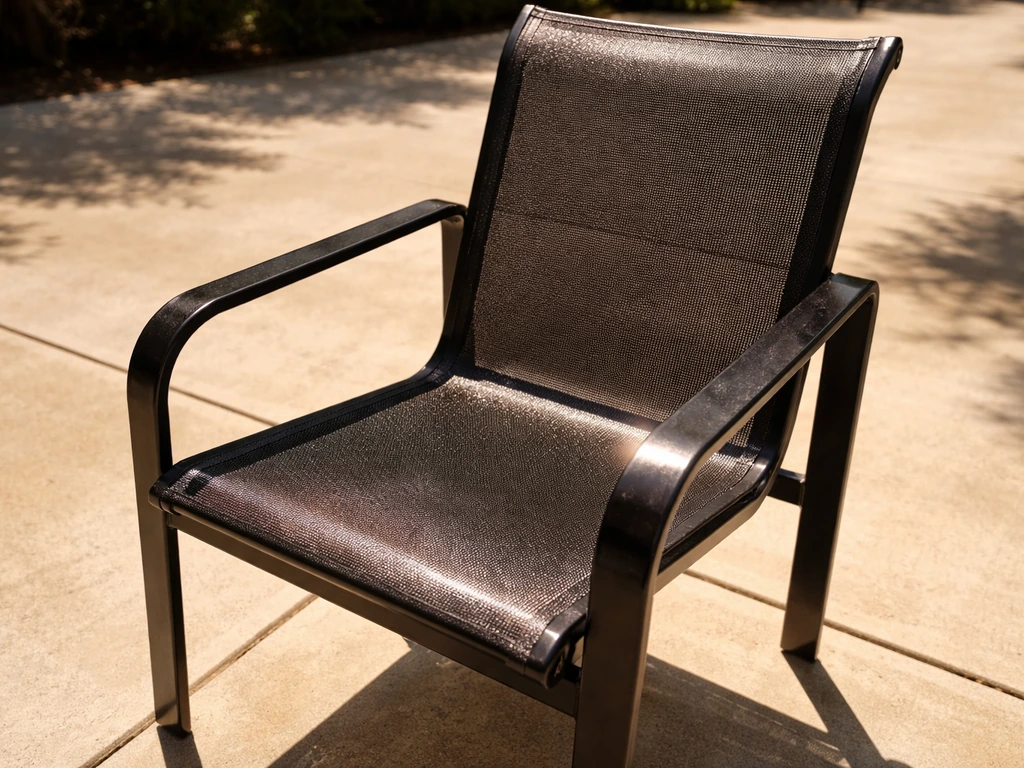
Does Black Patio Furniture Get Hot? Heat Guide and Tips
Black patio furniture heats up fast in sun. Get heat expectations by material and tips to prevent burns and discomfort.