
The materials that actually hold up outside are teak, cast aluminum, HDPE plastic lumber, and high-quality synthetic wicker. Each one handles rain, UV, temperature swings, and humidity through different mechanisms, and the best choice for your patio depends on your climate, how much maintenance you're willing to do, and how long you want the furniture to last. If you're in a cold-weather state like Minnesota or anywhere along the New England coast, that answer narrows further, because freeze-thaw cycles, road salt spray, and nor'easters eliminate several materials from serious consideration.
Best Patio Furniture to Withstand Elements: Materials Guide

Theo Tierney
21 Jul 2026
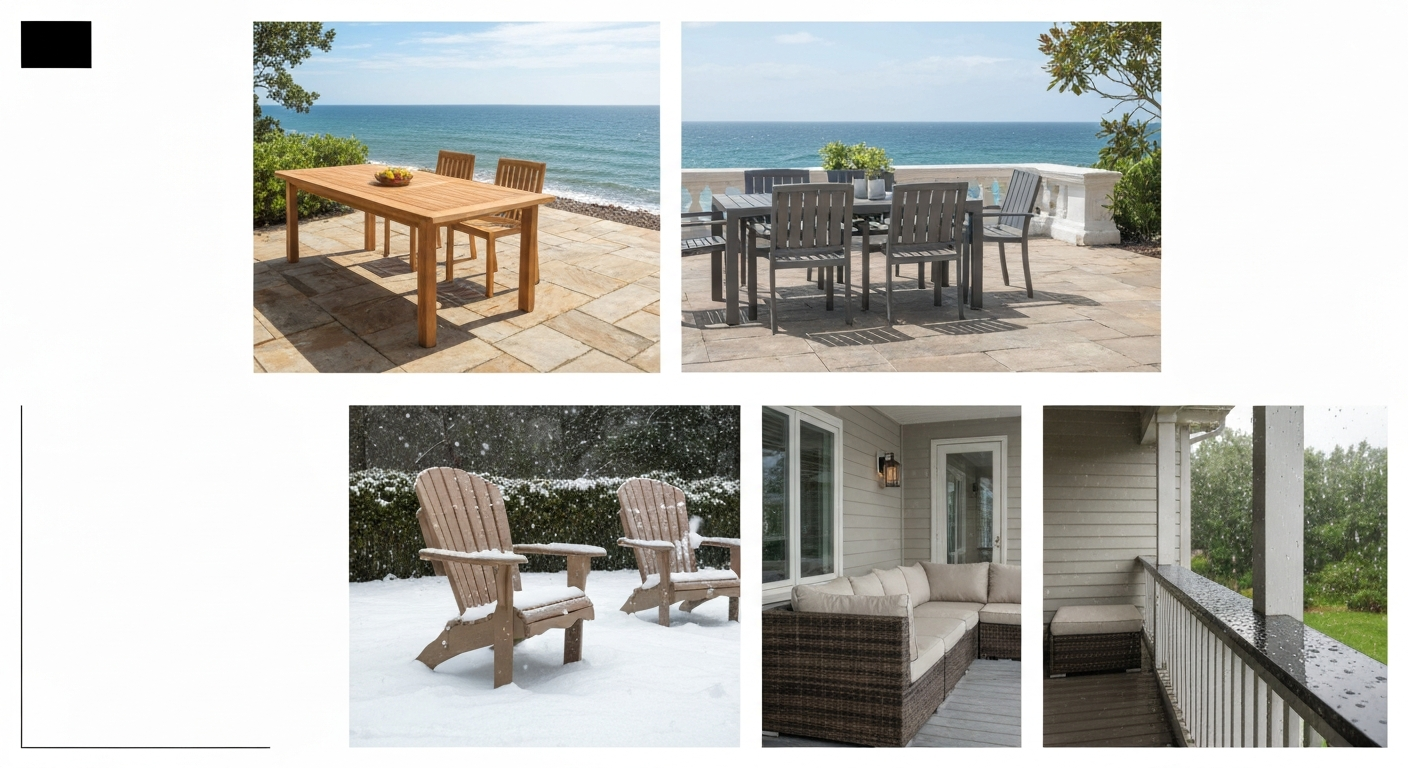
What 'withstand the elements' actually means
Outdoor furniture faces four main threats: UV radiation, moisture (rain, humidity, dew), temperature cycling (including freeze-thaw), and physical stress from wind. 'Weatherproof' and 'all-weather' in marketing copy are not standardized terms. They can mean anything from genuine UV-stabilized HDPE lumber to a thin plastic chair that fades in one season. When you see those labels, you need to look past them at the actual material, finish chemistry, and hardware specs.
UV breaks down polymer chains, bleaches pigments, and degrades finishes. Moisture causes corrosion in metals, rot in untreated wood, and mold in cushion fills. Temperature cycling is especially brutal in cold climates: water infiltrates micro-cracks, freezes, expands, and mechanically shatters finishes, welds, and even wood grain. Wind is the most immediate physical threat, capable of launching an unsecured chair into a window at speeds as low as 25 to 35 mph. None of these are abstract concerns; they all cause real, measurable product failure, and understanding them lets you read product specs critically rather than just trusting a brand name.
Quick decision guide: match your choice to your situation
Before getting into material specifics, here's a fast framework. Answer these four questions and you'll have a working shortlist before you even see a product photo.
| Your Priority | Best-Fit Material |
|---|---|
| Maximum durability, minimal maintenance | HDPE plastic lumber or cast aluminum |
| Natural wood aesthetics, willing to do annual care | Grade A teak or ipe |
| Comfort-first with some style flexibility | Powder-coated aluminum frame + synthetic wicker + quality cushions |
| Cold climate (Minnesota, New England) | HDPE, cast aluminum, or teak — store cushions seasonally |
| Coastal / salt-air exposure | Marine-grade aluminum, teak, or HDPE — avoid steel and natural wicker |
| Budget-conscious but still wants durability | Powder-coated aluminum or HDPE entry-level sets |
| Design-focused renovator | Teak or cast aluminum with performance cushions (solution-dyed acrylic) |
| DIY homeowner who wants to maintain in place | HDPE or galvanized steel with sealed finish |
Material-by-material overview
There are four material families worth your attention: wood, metal, synthetic wicker, and composite or plastic lumber. Natural wicker, cheap wrought iron, and untreated softwoods are not on this list because they fail in real outdoor conditions within a few seasons. Each of the four main families has a distinct durability profile, maintenance demand, and cost structure. Here's the high-level picture before we go deep on each.
| Material | Approx. Cost Range | Expected Lifespan | Maintenance Level | Weather Resistance | Typical Weight |
|---|---|---|---|---|---|
| Grade A Teak | $800–$4,000+ (set) | 20–50+ years | Low to moderate (annual cleaning/oiling optional) | Excellent (moisture, UV, insects) | Heavy |
| Cast Aluminum | $400–$3,000+ (set) | 15–30+ years | Low (rinse, inspect annually) | Excellent (rust-free, UV-stable finish) | Light to medium |
| Wrought Iron / Steel | $300–$2,000+ (set) | 5–20 years | Moderate–high (touch-up rust spots) | Moderate (needs coating maintenance) | Very heavy |
| HDPE / Plastic Lumber | $300–$2,500+ (set) | 20–50 years | Very low (soap and water) | Excellent (UV-stabilized, moisture-proof) | Medium |
| Synthetic (Resin) Wicker | $300–$2,500+ (set) | 10–20 years | Low (rinse, UV depends on resin grade) | Good to excellent (resin grade matters) | Light |
| Natural Wicker / Rattan | $150–$1,000+ (set) | 1–5 years outdoors | High (must be kept dry) | Poor (mold, rot, UV fade) | Light |
| Plantation Teak alternatives (Shorea, Ipe) | $500–$2,500+ (set) | 15–30+ years | Low to moderate | Very good | Heavy |
Wood options: species, treatments, and realistic lifespans
Not all outdoor wood is created equal. The species and grade matter enormously, and most wood furniture sold at mass-market retailers uses species or grades that won't last a decade without serious maintenance.
Teak: the benchmark for outdoor hardwood
Grade A teak from the heartwood of mature plantation trees is the gold standard. It contains high concentrations of natural oils and silica that repel moisture and resist rot and insects without any treatment. Left untreated, it weathers to a silver-gray patina within a season or two. That patina is purely cosmetic; the structural integrity holds for decades. Teak & Deck Professionals, Teak maintenance / longevity guidance notes that high-grade plantation teak contains natural oils that resist rot and insect attack, weathers to a silver‑gray patina, and can last decades outdoors with periodic cleaning or sealing Teak & Deck Professionals — Teak maintenance / longevity guidance. If you want to preserve the honey-gold color, apply a teak oil or sealer annually. Either way, Grade A teak furniture can realistically last 20 to 50 years outdoors. The caveat is cost: a quality teak dining set runs $1,500 to $4,000 or more. Grade B and Grade C teak include more sapwood, which doesn't carry the same oil content and degrades much faster. Always confirm you're buying Grade A heartwood.
Ipe, shorea, and other dense hardwoods
Ipe (Brazilian walnut) and shorea (Philippine mahogany) are both extremely dense tropical hardwoods with good natural rot resistance. Ipe in particular is used in commercial decking specifically because of its durability. As furniture, expect 15 to 30 years with periodic cleaning and oiling. Neither is as widely available as teak, and quality control varies significantly by supplier. If you go this route, verify the source and look for consistent grain and heartwood color throughout the piece.
Softwoods and treated lumber: usually not worth it
Cedar and redwood have some natural rot resistance and are used in budget outdoor furniture. They can last 5 to 15 years with diligent sealing every 1 to 2 years, but they're far more maintenance-intensive than teak and considerably less durable. Pine and other softwoods treated with preservatives are not appropriate for quality outdoor furniture. The finish will peel, the wood will check (develop surface cracks) with temperature cycling, and you'll be replacing pieces within a few years.
Wood pros and cons at a glance
- Pros: natural aesthetics, high-end appeal, excellent longevity in quality species (teak especially)
- Pros: teak and ipe need minimal chemical treatment to stay structurally sound
- Cons: high upfront cost for quality species
- Cons: quality varies widely; Grade B teak and lower hardwoods degrade much faster
- Cons: heavy pieces are harder to move for seasonal storage
- Cons: most wood benefits from some seasonal care even if minimal
Metal options: aluminum, steel, and wrought iron
Cast and extruded aluminum: the practical all-rounder
Aluminum doesn't rust. That single fact makes it the most broadly useful metal for outdoor furniture in almost every climate. Cast aluminum pieces are heavier and more ornate; extruded aluminum is lighter and more modern in profile. Both resist corrosion because aluminum forms a stable oxide layer on its surface. The finish, typically a powder coat, is what determines long-term appearance. A quality powder coat on properly prepared aluminum will last 10 to 20 years. The vulnerability is in the coating, not the metal: chips and scratches expose the substrate and let moisture in. On aluminum, the worst outcome is cosmetic oxidation; on steel, it's rust that spreads. Check welds and joints on any cast aluminum piece, since those are the most likely failure points if surface prep was inadequate during manufacturing.
Steel and wrought iron: durable but demanding
Wrought iron and steel furniture is extremely heavy (an advantage in windy conditions) and can look genuinely beautiful, especially in traditional or ornate styles. The problem is that steel corrodes in the presence of moisture and oxygen, and if you're anywhere near road salt or ocean salt, that process accelerates dramatically. Powder-coated steel can last 10 to 20 years with diligent maintenance, but that means inspecting annually, touching up chips immediately with rust-inhibiting primer, and not leaving pieces standing in pooled water. Most powder-coat warranties from furniture manufacturers explicitly exclude corrosion caused by environmental salt exposure, so don't assume a warranty covers you in a coastal or cold-weather setting where road salt is used. If you want the heft and look of iron without the corrosion risk, consider galvanized steel with a powder coat, but cast aluminum still wins on the maintenance math.
Stainless steel hardware: grade matters
Even on aluminum furniture, hardware like bolts, screws, and brackets can be a corrosion point. For any coastal or salt-exposed setting, 316 stainless steel hardware is meaningfully better than 304 stainless because of its higher molybdenum content, which improves resistance to chloride pitting. Research on 316L in marine-urban environments confirms the improvement, but also notes that surface finish, crevice geometry, and installation quality all influence real-world performance. A case study on corrosion of 316L stainless steel in marine–urban atmospheres documents instances of pitting and crevice corrosion tied to welding, surface finish, and crevice geometry, emphasizing that specifying 'marine‑grade' hardware alone does not ensure long-term performance (Corrosion of 316L Stainless Steel used for Building Applications in Marine–Urban Atmospheres: Case Study) Case study on 316L stainless steel in marine–urban atmospheres. Specifying marine-grade hardware is the right call, but poor installation or tight crevices can cause failures even with the better steel.
Wicker and synthetic rattan: natural vs. resin
Natural wicker: not for year-round outdoor use
Natural rattan and wicker look beautiful and are popular in covered porch settings, but they are not designed for direct rain, sustained humidity, or UV exposure. Natural fibers absorb moisture, swell, crack, and develop mold. UV bleaches and weakens the weave. Even with covers, leaving natural wicker outdoors through a New England winter or a humid southern summer will damage it within one or two seasons. If you love the look, use natural wicker indoors or in a fully covered, ventilated outdoor room, and be prepared to bring it inside seasonally.
Synthetic (resin) wicker: the practical choice
Quality synthetic wicker is made from extruded resin (typically PE or PVC) woven over an aluminum or powder-coated steel frame. The resin is UV-stabilized and moisture-proof. The weave quality, resin grade, and frame material all matter. Better pieces use HDPE or high-grade PE resin with a dense, consistent weave over an aluminum frame. Cheaper pieces use lower-grade PVC over steel frames, and the PVC becomes brittle from UV over time while the steel frame rusts from the inside out. A quality synthetic wicker set from a reputable manufacturer can last 10 to 20 years. Inspect the weave at joints and corners, where stress and UV exposure concentrate.
- Look for: HDPE or high-grade PE resin, aluminum inner frame, tight consistent weave with no loose ends
- Avoid: PVC resin on steel frames, open weave ends that collect water, hollow round tubing that can rust from inside
- Maintenance: rinse with a mild soap solution, dry before covering, store cushions indoors off-season
Composites and plastics: HDPE and engineered plastic lumber
High-density polyethylene lumber, sold by brands like POLYWOOD and Trex Outdoor Furniture, is arguably the most practically durable material family you can buy for outdoor furniture. HDPE is inherently moisture-proof, doesn't rot, won't splinter, and resists insects. When compounded with UV absorbers and hindered amine light stabilizers (HALS) and colored with UV-stable pigments like carbon black or titanium dioxide, it resists fading and embrittlement for decades. POLYWOOD and similar brands back their furniture with multi-decade residential warranties; Trex cites a 20-year residential warranty on many outdoor furniture lumber components.
The trade-off is aesthetics. HDPE lumber has improved significantly in texture and appearance, but it still reads as plastic to most design-conscious buyers. It can also flex slightly under load compared to wood, and in very hot direct sun, cheaper formulations can soften. High-quality HDPE furniture handles this well, but the quality spread in this category is significant. Stick to established brands that provide specific UV stabilizer and warranty documentation rather than generic imported alternatives. For DIYers and renovators prioritizing longevity over aesthetics, HDPE is hard to beat.
Side-by-side comparison: all materials at a glance
| Material | Cost (set) | Lifespan | Maintenance | Weather Resistance | Weight | Best Climate Fit |
|---|---|---|---|---|---|---|
| Grade A Teak | $1,500–$4,000+ | 20–50 yrs | Low–moderate (annual clean/optional oil) | Excellent | Heavy | All climates |
| Cast Aluminum | $400–$3,000+ | 15–30 yrs | Low (annual rinse, inspect) | Excellent | Light–medium | All climates |
| Wrought Iron / Steel | $300–$2,000+ | 5–20 yrs | Moderate–high (rust touch-up) | Moderate (needs coating) | Very heavy | Dry, non-salt climates |
| HDPE Plastic Lumber | $300–$2,500+ | 20–50 yrs | Very low (soap/water) | Excellent | Medium | All climates, esp. cold/wet |
| Synthetic Resin Wicker | $300–$2,500+ | 10–20 yrs | Low (rinse) | Good–excellent (grade varies) | Light | Most climates, not extreme cold |
| Natural Wicker / Rattan | $150–$1,000+ | 1–5 yrs | High (keep dry) | Poor | Light | Covered indoor/porch only |
| Cedar / Redwood | $200–$1,500+ | 5–15 yrs | Moderate (seal every 1–2 yrs) | Moderate | Medium | Dry or mild climates |
Durability and weather-resistance testing: what the standards actually mean
You'll sometimes see manufacturers cite ASTM test results on spec sheets. Here's what those mean in practical terms and what to watch out for.
ASTM B117 is the salt spray (fog) test used to evaluate corrosion resistance of metals and coated metals. A specimen is exposed to a controlled neutral salt fog environment for a specified number of hours, and the test measures when the coating or metal shows corrosion signs. Higher hours before failure is better. This is useful for comparing powder-coat systems but doesn't perfectly replicate what happens over years of real outdoor exposure, because real atmospheric corrosion involves variable humidity, temperature cycling, UV, and pollution. The test is a relative ranking tool, not a precise lifespan predictor.
ASTM G154 and ASTM D4329 cover accelerated UV and weathering exposure for non-metallic materials and plastics respectively. G154 uses fluorescent UV lamps to simulate sunlight; D4329 is specifically for fluorescent UV exposure of plastics. Both standards measure things like color change, gloss retention, and mechanical property loss after accelerated UV cycles. Again, these are comparative tools. Industry guidance is clear that direct extrapolation from accelerated test hours to field service life requires validation against real outdoor exposure in the target climate. If a manufacturer claims 'tested to 3,000 hours UV resistance,' that's meaningful relative to a competitor claiming 1,000 hours, but it doesn't map directly to '10 years in Minnesota.'
AATCC test methods (like TM16 for colorfastness to light) are the relevant standards for outdoor cushion fabrics, measuring UV fade resistance and water and stain performance. Brands like Sunbrella publish these ratings for their solution-dyed acrylic fabrics. Solution-dyed means the pigment is locked into the fiber before it's woven, not surface-applied, so colorfastness is structurally better. When evaluating cushion fabric claims, look for solution-dyed acrylic specifically, not just 'outdoor fabric.'
Climate-specific recommendations: a general framework
No single material is optimal everywhere. Hot-humid climates (Gulf Coast, Florida, Southeast) stress UV resistance and mold prevention hardest. Temperate climates with moderate winters (Pacific Northwest, mid-Atlantic) add rain and humidity but avoid extreme freeze-thaw. Cold climates (Upper Midwest, New England, Mountain West) add freeze-thaw cycling, snow load, and road-salt exposure. Each shifts the material priority.
| Climate Type | Primary Threats | Top Material Choices | Avoid |
|---|---|---|---|
| Hot/Humid (FL, Gulf Coast) | UV, mold, humidity, humidity on cushions | HDPE, cast aluminum, teak, synthetic wicker | Natural wicker, untreated softwood, steel |
| Temperate (Pacific NW, mid-Atlantic) | Rain, moderate UV, some frost | Cast aluminum, teak, HDPE, synthetic wicker | Natural wicker, unsealed softwood |
| Cold/Snow (Midwest, Mountain) | Freeze-thaw, snow load, road salt | HDPE, cast aluminum, teak (stored or covered) | Steel, natural wicker, softwood |
| Coastal/Salt Air (NE coast, FL coast) | Salt spray, UV, humidity, freeze-thaw (NE) | Marine-grade aluminum, HDPE, teak | Carbon steel, natural wicker, cheap powder coat |
Cold-climate guidance: Minnesota-level winters and beyond
If you're in Minnesota, Wisconsin, the Dakotas, or any climate that sees sustained sub-zero temperatures and significant snowfall, the material calculus is clear: HDPE plastic lumber and cast aluminum are your two best choices, with teak as a strong third if you're willing to invest more upfront and store cushions. These three materials handle freeze-thaw cycling without cracking, don't corrode from road salt spray, and don't absorb water that could freeze and cause mechanical failure. For product picks and seasonal storage tips tailored to freeze-thaw and road-salt conditions, see our guide to the best patio furniture for Minnesota weather.
Steel furniture, even with a heavy powder coat, is a bad bet in Minnesota winters. Road salt accelerates corrosion aggressively, and powder-coat warranties from most manufacturers explicitly exclude environmental salt damage. Once rust starts at a weld or scratch, it spreads under the coating. Natural wicker is completely inappropriate for cold climates outdoors. Even quality synthetic wicker can develop micro-cracking in the resin with repeated extreme freeze-thaw cycling, though high-grade HDPE resin wicker handles this better than PVC alternatives.
Design tactics matter too in cold climates. Choose furniture with drainage gaps rather than solid flat surfaces where ice can accumulate and cause mechanical stress. Avoid furniture with hollow tubular frames that can collect water, freeze, and crack. For storage, most HDPE and cast aluminum pieces can stay outdoors covered through winter (use breathable, UV-resistant covers), but cushions must come indoors. Storing even durable furniture in a garage or covered space reduces UV and moisture fatigue and extends useful life. Articles on best patio furniture for cold weather and best patio furniture for Minnesota weather cover regional specifics in more depth.
New England recommendations: salt spray, freeze-thaw, and coastal storms
New England combines nearly every outdoor furniture threat: coastal salt spray, freeze-thaw cycling, wet springs, humid summers, and severe fall storms. The combination eliminates most mid-range materials quickly. Steel corrodes from salt. Natural wicker disintegrates in the humidity and winter moisture. Cheap powder coats peel from the thermal cycling.
The right choices for New England are teak, marine-grade aluminum (with 316 stainless steel hardware at joints), and HDPE. Teak's natural oils resist salt and moisture; it's been used in marine environments for centuries for good reason. Marine-grade aluminum doesn't corrode, and using 316 stainless at the fasteners eliminates the most common failure point in coastal settings, where chloride pitting in 304 stainless hardware is a common problem. HDPE is completely immune to salt and moisture. For New England specifically, factor in snow load: heavy, slab-style furniture without drainage gaps can accumulate ice that stresses joints. Furniture with open-slat or slatted designs sheds snow and ice better than solid surfaces.
Anchoring is important for New England coastal settings given the frequency of nor'easters and strong wind events. More on this in the next section. For deeper regional recommendations, the best patio furniture for New England article covers specific product categories and seasonal strategies.
Wind and anchoring: what actually moves patio furniture
Wind is the most immediate threat to outdoor furniture in storms, and the relationship between wind speed and furniture movement is well understood. Lightweight pieces like folding chairs, lightweight aluminum bistro tables, and umbrellas can move in winds of 25 to 35 mph. A standard dining chair with no ballast weight can become airborne in 45 to 55 mph gusts. Heavier wrought iron or solid teak pieces may stay put up to 60 mph or higher, but they'll still move eventually, and at those speeds the risk of damage from impact is real regardless.
The main factors affecting when furniture moves are total weight, center of gravity, surface area exposed to wind, and whether the piece is secured. A heavy cast-iron table with a low profile and no umbrella is much more stable than a lightweight aluminum table with a market umbrella mounted in the center hole. The umbrella acts as a sail and multiplies the effective wind load dramatically. For detailed guidance on specific wind speeds and furniture types, the article on what wind speed will move patio furniture covers this with more specificity.
DIY securement and anchoring tactics
You don't need to bolt everything to the deck to secure it effectively. Here are practical options ranked roughly from easiest to most involved.
- Stack chairs: the simplest approach for dining chairs is to stack them flat or face-down against a wall or table when storms are forecast. Stacked chairs have less wind profile and more collective weight.
- Furniture straps and tie-downs: purpose-made outdoor furniture straps thread under chair or table legs and anchor to deck cleats, railing posts, or eyebolts. Ratchet-style straps can handle sustained high winds.
- Ballast weights: furniture leg weights or sandbag-style weights that slip over chair or table legs add 10 to 25 lbs per leg and are especially useful on lightweight aluminum pieces.
- Deck anchoring systems: L-brackets or specialized furniture anchors bolted to decking can secure table legs directly. These are appropriate for permanent or semi-permanent installations.
- Umbrella bases and weights: a freestanding umbrella base should weigh at least 50 lbs for a standard 9-foot umbrella; 75 lbs or more for larger canopies. Fill bases with sand or water as directed. Consider removing or furling umbrella canopies when wind is expected above 25 mph.
- Store lightweight pieces: when a significant storm is forecast, the most reliable protection is simply moving pieces indoors or into a garage. No securing system beats physical removal.
Cushions and fabric: what actually lasts and what to avoid
Cushions are the most common early failure point in outdoor furniture sets. The frame might last 20 years; the cushions might last 3 to 5 years on a cheap set. Fabric, fill, and construction are all factors.
Fabric: solution-dyed acrylic is the standard
Sunbrella is the benchmark brand, and its performance is documented. The fabric is 100% solution-dyed acrylic, meaning the color is baked into the fiber rather than applied to the surface. This makes it significantly more fade-resistant than surface-dyed or screen-printed outdoor fabrics. It's also mildew-resistant and bleach-cleanable, which matters in humid climates. AATCC colorfastness and water resistance testing validate these claims quantitatively. Other brands make comparable solution-dyed acrylic fabrics (Outdura, Dickson, Phifertex), but make sure the fabric is specifically solution-dyed, not just labeled 'outdoor.' The difference in lifespan is significant: 5 to 10 years versus 1 to 3 years in direct sun.
Fill: quick-dry is not optional
The fill inside the cushion matters as much as the cover. Standard polyester fill absorbs water and stays wet for days, creating mold and mildew inside the cushion even if the cover appears dry. Quick-dry or open-cell foam fills drain and dry within hours of a rain event. Look for fills labeled 'Dryfast foam,' 'quick-dry polyester,' or equivalent. Some quality cushions use a combination of a quick-dry foam core with a polyester fiberfill wrapping for comfort. Verify this before you buy; it's rarely the headline spec but it dramatically affects longevity in wet climates.
Mildew prevention and storage
Even good cushions need some care. At the end of the season, store cushions in a dry indoor location, ideally in breathable bags rather than sealed plastic bins that trap residual moisture. If cushions develop mildew despite a Sunbrella-type cover, a dilute bleach solution (roughly 1 cup bleach per gallon of water with a mild soap) is manufacturer-approved for cleaning. For most climates, cushions that spend winter outdoors, even covered, will degrade significantly faster than those stored inside.
Maintenance schedules and seasonal storage by material
Spring (setup and inspection)
- All materials: inspect all hardware, fasteners, and joints for corrosion, looseness, or cracking; tighten or replace as needed
- Teak: wash with mild soap and water; apply teak oil or sealer if maintaining golden color; leave to weather naturally if gray patina is acceptable
- Aluminum: rinse with mild soap and water; inspect powder coat for chips and touch up with matching paint to prevent corrosion points
- HDPE: wash with soap and water; no treatment required; inspect for UV fading (quality HDPE shows minimal change)
- Synthetic wicker: rinse with a soft brush and mild soap; inspect weave ends at joints for cracking or fraying
- Cushions: inspect for mildew, fading, and fill integrity; clean with appropriate fabric cleaner before placing back on furniture
Summer (in-use maintenance)
- Rinse furniture periodically (monthly in coastal areas, quarterly in inland areas) to remove salt, pollen, and dust
- Stand cushions on edge after rain events to allow drainage and drying; bring indoors during multi-day rain if possible
- Check umbrella base weight after heavy use and windy periods; refill if water-filled bases have lost volume
- Steel/iron: inspect for rust spots after any damage or chip; touch up immediately
- Teak: wipe down with a teak cleaner if black mildew staining develops on the surface
Fall (winterizing)
- All materials: deep clean before storage or covering; storing dirt and organic material on furniture promotes mold and accelerated surface degradation
- Cushions: clean, dry completely, and store indoors in breathable bags — do not leave outdoors through winter in cold or wet climates
- Teak: apply a coat of teak oil if maintaining color; no further treatment needed for weathering naturally
- Aluminum and HDPE: cover with breathable outdoor furniture covers or move to covered storage; both materials can technically stay outdoors in cold climates but covers extend finish life
- Steel/iron: move indoors or to a dry garage if possible; apply a thin coat of car wax or specialized metal protectant over the powder coat before storage
- Umbrellas: remove canopies and store separately; store base weight in a garage if possible to prevent cracking from freeze-thaw in water-filled bases
Winter (cold climate specific)
- Stack or stack-cover chairs to reduce snow accumulation and wind profile
- Drain any water from hollow tubing legs before freeze season to prevent crack damage
- For HDPE and teak: pieces can remain outdoors under breathable covers; clear snow accumulation from flat surfaces to reduce load stress
- For steel/iron: strongly recommended to store indoors; even covered, road-salt overspray and freeze-thaw dramatically accelerate coating failure
- Check covers periodically after heavy snow events; wet snow can pool under covers and create sustained moisture contact
Cost vs. longevity: how to actually compare value
The most useful comparison tool is cost per year, which divides the total purchase price (plus maintenance costs) by expected lifespan. A $300 steel set that lasts 5 years costs $60 per year before any maintenance. A $1,200 cast aluminum set that lasts 25 years costs $48 per year. A $2,000 Grade A teak set that lasts 40 years costs $50 per year. These numbers get even more favorable for quality materials when you factor in maintenance costs: steel furniture requires touch-up paint, rust treatment, and possible refinishing every few years, while HDPE and quality aluminum need essentially nothing beyond cleaning.
| Material | Example Purchase Price | Est. Lifespan | Est. Annual Maintenance Cost | Approx. Cost/Year |
|---|---|---|---|---|
| Budget steel/iron | $300 | 5 yrs | $30–$50 (rust treatment, paint) | $90–$110 |
| Cast aluminum (mid-range) | $1,200 | 25 yrs | $5–$10 (cleaning supplies) | $53–$58 |
| Grade A Teak | $2,000 | 40 yrs | $10–$20 (cleaner/oil) | $60–$70 |
| HDPE Plastic Lumber | $800 | 30 yrs | $0–$5 (soap and water) | $27–$32 |
| Quality Synthetic Wicker | $700 | 15 yrs | $10–$15 (cleaning, cushion replacement) | $57–$62 |
| Budget plastic/resin (not HDPE) | $200 | 3–5 yrs | $0 | $40–$67 |
This analysis shows why HDPE is such a compelling value proposition for cost-conscious buyers who still want durability. It's not always the most attractive option aesthetically, but the cost-per-year math is hard to argue with. Cast aluminum at mid-range pricing is competitive for buyers who want metal aesthetics. Budget steel is almost always the worst value once maintenance and replacement cycles are factored in.
Actionable buying checklist: what to inspect before you purchase
Use this checklist whether you're buying in a showroom or evaluating a product online. These are the specific things that separate quality outdoor furniture from underperforming pieces.
- Confirm the material grade: Grade A teak heartwood, cast aluminum vs. thin-tube extruded, HDPE vs. generic recycled plastic, HDPE-resin wicker vs. PVC wicker. Grade claims should be verifiable.
- Examine welds and joints: look for smooth, complete welds with no exposed bare metal. Visible weld porosity, sharp edges, or visible rust at joints on a new piece are red flags.
- Check fastener material: on any piece with exposed screws or bolts, look for 316 stainless or marine-grade markings, especially for coastal or cold climates with road salt.
- Test the powder coat: a quality powder coat should be at least 2 to 3 mils thick (ask the manufacturer), uniform in color and sheen, and free of chips, bubbles, or thin spots at corners and welds.
- Read the warranty carefully: note whether the warranty covers finish/coating separately from structure, and read the exclusions. If environmental corrosion (salt, humidity) is excluded, factor that into your risk assessment for your climate.
- Check cushion fill and fabric type: confirm quick-dry fill (Dryfast foam or equivalent) and ask whether the fabric is solution-dyed acrylic. If fabric specs are not disclosed, that's a warning sign.
- Assess drainage design: look for drainage holes in seat and table surfaces, open slat designs that shed water, and hollow frame tubes with drainage holes at the low point to prevent water pooling.
- Test stability in person where possible: sit in chairs, push on tables. Good outdoor furniture should feel solid and heavy relative to its size, with no wobble at joints.
- Verify country and source of manufacture: quality can vary significantly for the same material family depending on manufacturing standards. Known quality brands with documented warranties and test certifications are worth a price premium.
- Ask about replacement cushion availability: cushions will wear out before frames. Confirm that replacement cushions are available and their cost before committing to a frame purchase.
Design-conscious choices: aesthetics without sacrificing durability
If you're a decorator or renovator who doesn't want to compromise on aesthetics, the good news is that all of the top-performing materials have strong design options. The key is understanding which material family maps to which visual aesthetic so you're not forced into a false choice between looks and longevity.
Teak is the prestige choice for natural wood aesthetics. It photographs beautifully, ages gracefully into a silver-gray patina that many designers prefer, and works in both traditional and modern outdoor spaces. Pair it with Sunbrella cushions in neutral or bold performance fabric for a look that can last 20 or more years without significant visual degradation. Cast aluminum covers the widest range of traditional to transitional design styles, with ornate cast patterns available for classic looks and clean-line extruded profiles for modern spaces. Finishes range from hammered bronze to matte white to powder-coat colors. HDPE has made genuine design progress: current collections from POLYWOOD include Adirondack styles, modern sling designs, and dining sets that look convincingly like painted wood. They're not fooling anyone up close, but in context they work well. Synthetic wicker is the practical choice for lounge and seating sets where the woven texture is part of the visual appeal; a quality aluminum-framed synthetic wicker sectional with Sunbrella cushions in a well-chosen colorway is a legitimate design statement, not just a concession to practicality.
Top choices by climate and homeowner type
For cold climates (Minnesota, Upper Midwest, Mountain West)
- Best overall: HDPE plastic lumber (POLYWOOD or equivalent) — handles freeze-thaw and road salt, lowest maintenance, strong value
- Best for natural aesthetics: Grade A teak — invest upfront, store cushions seasonally, leave furniture out covered or in a garage
- Best metal option: cast aluminum with marine-grade hardware — not steel or wrought iron in salt-exposed climates
- Avoid: steel/iron frames, natural wicker, PVC-resin synthetic wicker, any furniture without drainage design
For coastal and New England climates
- Best overall: HDPE or marine-grade aluminum — immune to salt and moisture, long warranties
- Best premium option: Grade A teak with 316 stainless fasteners — proven in marine environments for centuries
- Key hardware requirement: 316 stainless steel at all fasteners and connections, not 304
- Avoid: carbon steel frames, powder-coated steel, natural wicker, and any furniture with tight crevices in fastener design
For DIY homeowners
- Best choice: HDPE — no ongoing treatment, cleaning with soap and water, no seasonal refinishing
- Second choice: cast aluminum — slightly more involved but still low maintenance
- Cushion priority: invest in quality quick-dry fill and solution-dyed acrylic fabric upfront to avoid frequent replacement
For design-conscious decorators and renovators
- Best for natural wood look: Grade A teak — the aesthetic is worth the investment if budget allows
- Best for modern or contemporary spaces: clean-line cast aluminum or HDPE in modern profiles
- Best for lounge and sectional seating: quality synthetic wicker over aluminum frame with Sunbrella cushions
- Fabric guidance: solution-dyed acrylic (Sunbrella, Outdura, or equivalent) only — do not compromise on cushion fabric in favor of aesthetics
For hot, humid climates (Gulf Coast, Florida, Southeast)
- Best overall: HDPE or cast aluminum — both handle sustained heat and humidity without degradation
- Best wood option: Grade A teak — natural oils resist mold and moisture better than any other wood
- Cushion priority is highest here: UV fading and mold are the fastest failure modes; invest in the best cushion fabric and fill available
- Avoid: steel, natural wicker, any cushion fill that isn't quick-dry
FAQ
Which patio furniture materials hold up best in real-world weather, and what are their main pros and cons?
Top material families and practical trade-offs: - Teak (dense, Grade A/plantation teak): extremely rot‑resistant from natural oils; weathers to silver patina; long service life (decades) with periodic cleaning; cons: expensive, can darken or crack if neglected, and requires owners to choose whether to maintain natural color with oil/sealer. - Aluminum (powder‑coated): lightweight, won’t rust like steel; good corrosion resistance when properly coated; pros: low maintenance, widely available; cons: powder‑coat can chip at scratches/welds and expose substrate—leading to localized corrosion; choose high‑quality coatings and attention to welded joints. - Stainless steel (316/316L preferred): excellent corrosion resistance, especially near coasts/road‑salt; very durable but heavier and more expensive; crevices/welds and contaminated surfaces can still pit—installation and finish quality matter. - HDPE / engineered plastic lumber (Trex/POLYWOOD style): excellent moisture and rot resistance, low maintenance, good UV formulations available; pros: resists splitting and insect damage; cons: can discolor/abrade over time depending on UV package and pigment; thermal expansion and lower stiffness can affect large frames. - Synthetic wicker (all‑weather resin wicker over aluminum frames): looks like wicker with good weather resistance; choose furniture with powder‑coated or stainless frames; cons: lower‑end resin weaves can sag or fade; inspect weave and backing. - Steel/iron (galvanized or powder‑coated): very strong and can be long‑lasting if galvanized and well‑coated; cons: will rust where coating is scratched or at welds; not ideal for salty environments unless detailed protections added. - Natural wicker/rattan and most untreated woods (pine, eucalyptus, cedar): lower durability; expect higher maintenance and shorter lifespans unless under covered patios. Evidence: choose materials with demonstrated UV/corrosion treatments (ASTM test awareness) and marine‑grade hardware where chloride exposure is likely.
How should I choose materials if I live in a cold, snowy, road‑salt environment (Minnesota, New England)?
Priority criteria: corrosion resistance to chloride exposure, low water uptake, and minimal freeze‑thaw sensitivity. Recommendations: - Top picks: 316/316L stainless hardware and fasteners; HDPE/plastic lumber furniture; high‑grade teak (if you can maintain it); powder‑coated aluminum with careful finish quality and protected welds (but expect finish wear over time); heavy‑gauge cast aluminum with good coatings. - Avoid: plain carbon steel and low‑grade painted metals without proven corrosion protection; untreated woods unless you plan indoor winter storage. - Cushions/fabrics: use solution‑dyed acrylics (Sunbrella or equivalent) with water‑resistant cushion cores and quick‑dry designs. - Practical approach: assume winter storage for cushions and smaller pieces; for large anchored items (benches, heavy tables) select stainless fasteners and materials that tolerate deicing salts—316 stainless for coastal/road‑salt sites. - Evidence notes: field studies and corrosion literature show 316 outperforms 304 in chloride environments; warranties and manufacturer notes commonly exclude damage from road salt, so material choice + maintenance matter.
What about furniture for coastal environments (salt spray, high humidity)?
Choose materials optimized for chloride resistance and avoid coatings alone as the only protection: - Best: 316/316L stainless steel for hardware/fasteners; HDPE/plastic lumber; dense teak; powder‑coated aluminum with excellent surface prep and marine‑grade finishes (but expect some maintenance); heavy resin wicker over stainless/aluminum frames. - Avoid: 304 stainless as sole spec in aggressive marine exposure; unprotected steel. - Installation detail: avoid crevices, exposed weld seams, and trapped water where salt can concentrate; rinse periodically with fresh water to remove salt. - Note: lab corrosion tests (ASTM B117) are useful for relative comparisons but don’t perfectly predict field life—validate manufacturer field exposure data where possible.
How do materials compare for UV resistance and fading?
Rankings and why: - Best: solution‑dyed acrylic fabrics (Sunbrella) and properly UV‑stabilized HDPE/plastic lumber (with HALS and UV absorbers). - Good: pigmented plastics with UV packages and high‑quality powder coatings that include UV stabilizers. - Poorer: untreated plastics, some dye‑through fabrics, and natural fibers that degrade quickly. - Testing context: ASTM G154 and ASTM D4329 are the standard accelerated UV/moisture tests used by manufacturers to compare products; they’re informative but outdoor field correlation varies—look for fabrics and plastics with documented UV test results and warranties.
Which designs and product features help furniture withstand high winds and when will pieces move?
Design/feature guidance: - Heavy, low‑profile pieces (cast aluminum, teak benches, stone tables) resist wind better than lightweight stacking chairs. - Broad base and low center of gravity are preferable. - Wind thresholds: approximate practical guidance—light chairs/side tables can move in gusts 20–30 mph; full‑size lounge chairs and lightweight aluminum dining chairs may shift at sustained 25–40+ mph; heavy teak sets, cast aluminum, and anchored items resist much higher gusts but can still overturn in severe storms (50+ mph). Exact speeds depend on sail area, shape, and weight. - Securement tactics: use furniture anchors, through‑bolting kits, ground anchors for deck‑mounted items, or non‑marking straps to secure to railings. For loose pieces consider: stacking and storing indoors at forecasted high wind events; use wind‑rated tie‑downs for pergola‑attached swing seating. - Landscape siting: place seating in sheltered areas (near house/behind windbreaks) and avoid roofline or exposed ridgelines.
How should I anchor or secure patio furniture — practical solutions for homeowners and DIYers?
Anchoring options by furniture type: - Small/light chairs and tables: store or stack indoors; use bungee or ratchet straps through chair legs to a heavy object or fixed point when needed. - Medium/heavy pieces and umbrella bases: use bolted deck anchors, through‑bolts into concrete patios, or heavy steel anchors with epoxy for permanent installs. - Bench seating and fixed sets: use stainless lag bolts or carriage bolts into deck framing or concrete anchors (use marine‑grade hardware in chloride areas). - Umbrellas: choose wind‑rated umbrellas, weighted bases sized to manufacturer recommendations, and consider tie‑down straps in gusty conditions. - Quick attachment: removable ground screws/anchors provide a compromise—screw into soil/deck with a shank and attach with stainless shackles. - Safety note: when bolting, follow structural guidance for deck loads and avoid installing fasteners that damage hidden utilities. Use 316 stainless hardware where road salt/salt spray exposures exist.
Next Articles
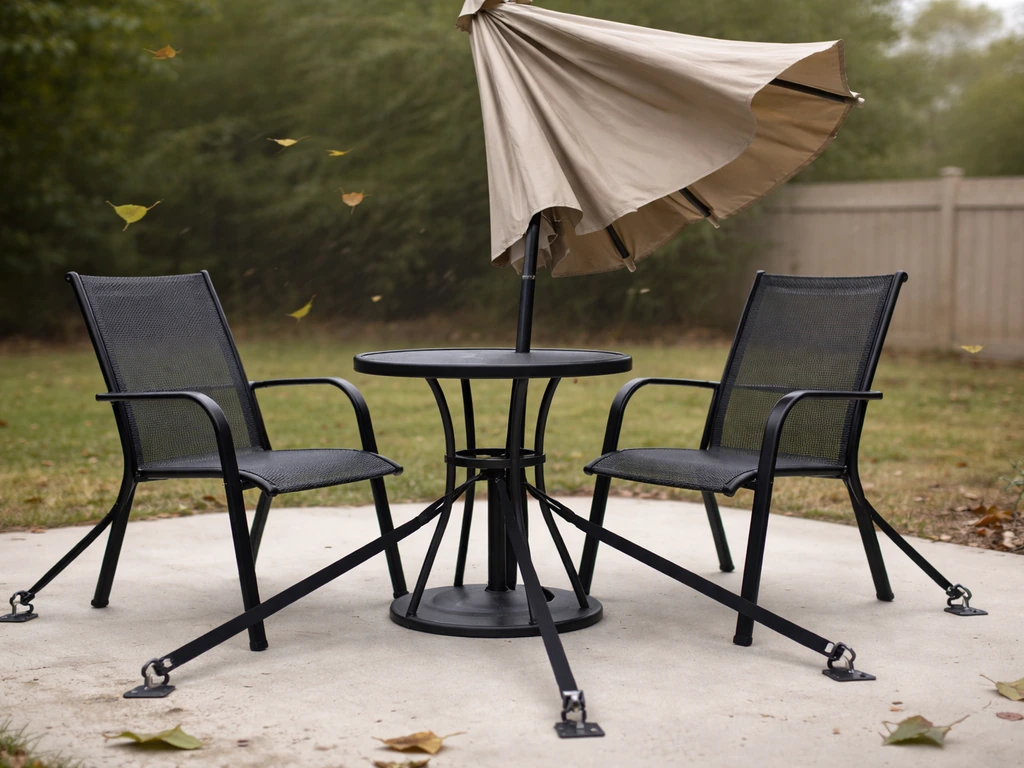
What Wind Speed Moves Patio Furniture and How to Secure It
Learn what wind speeds can slide or tip patio furniture, plus how to anchor and secure it safely.
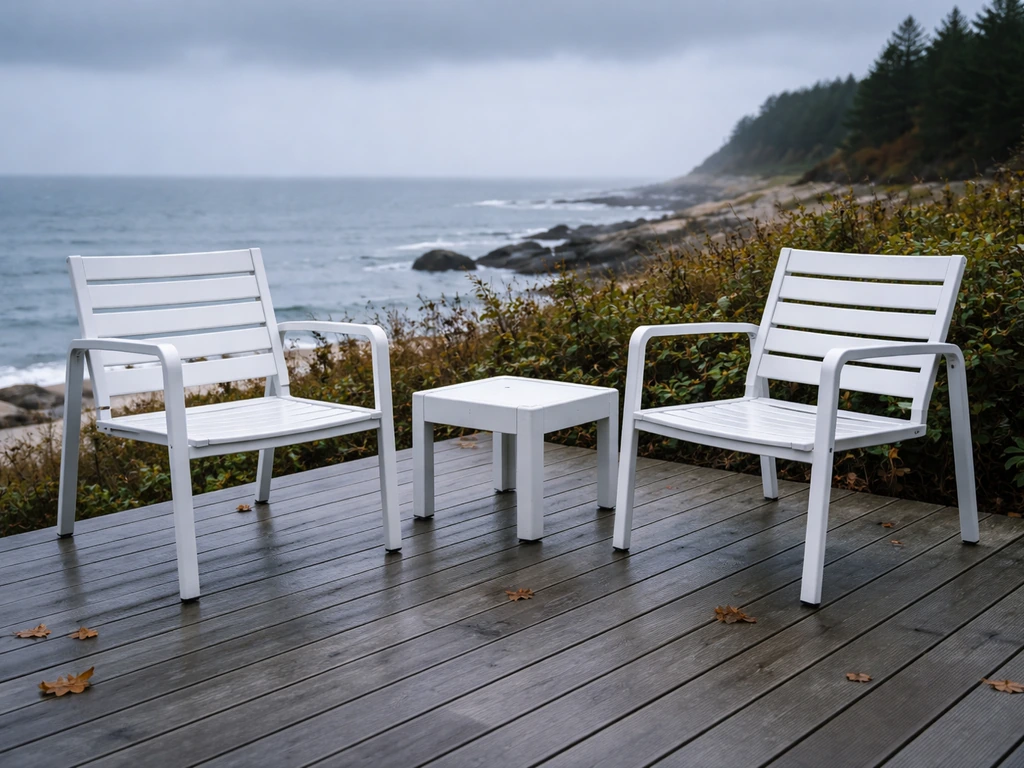
Best Patio Furniture for New England: Buyer Guide
Weatherproof patio furniture guide for New England: top materials, must-have construction, care plan, and size tips for
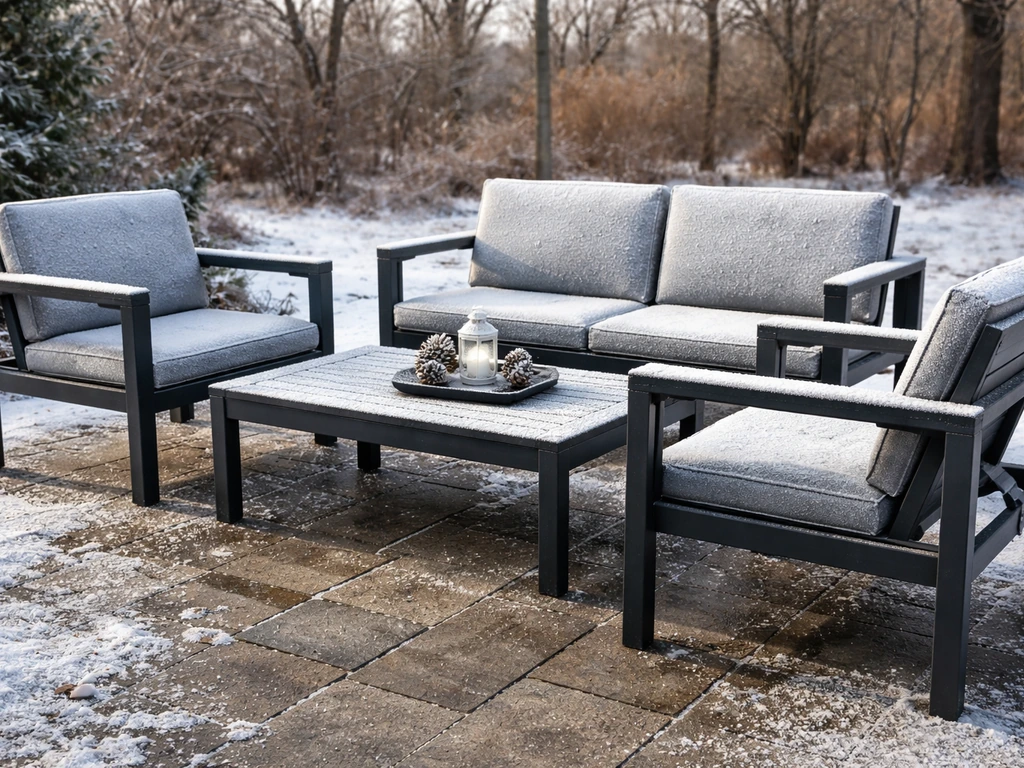
Best Patio Furniture for Cold Weather: Materials Guide
Compare wood, metal, wicker, and composite for cold climates, with durability tips and a shopping checklist.