
Most patio furniture starts to slide or shift at sustained winds around 20 to 25 mph, and lighter pieces like cushions, umbrellas, and plastic chairs can move at even less, sometimes 15 mph is enough. Tipping and full-on flipping typically happens between 35 and 55 mph depending on the piece. But here's the thing: a single wind-speed number doesn't tell the whole story. Whether your furniture actually moves depends on its weight, shape, material, leg design, and where you've placed it on your patio. This guide will help you estimate risk for your specific setup and take action based on today's forecast.
What Wind Speed Moves Patio Furniture and How to Secure It

Theo Tierney
10 Jul 2026
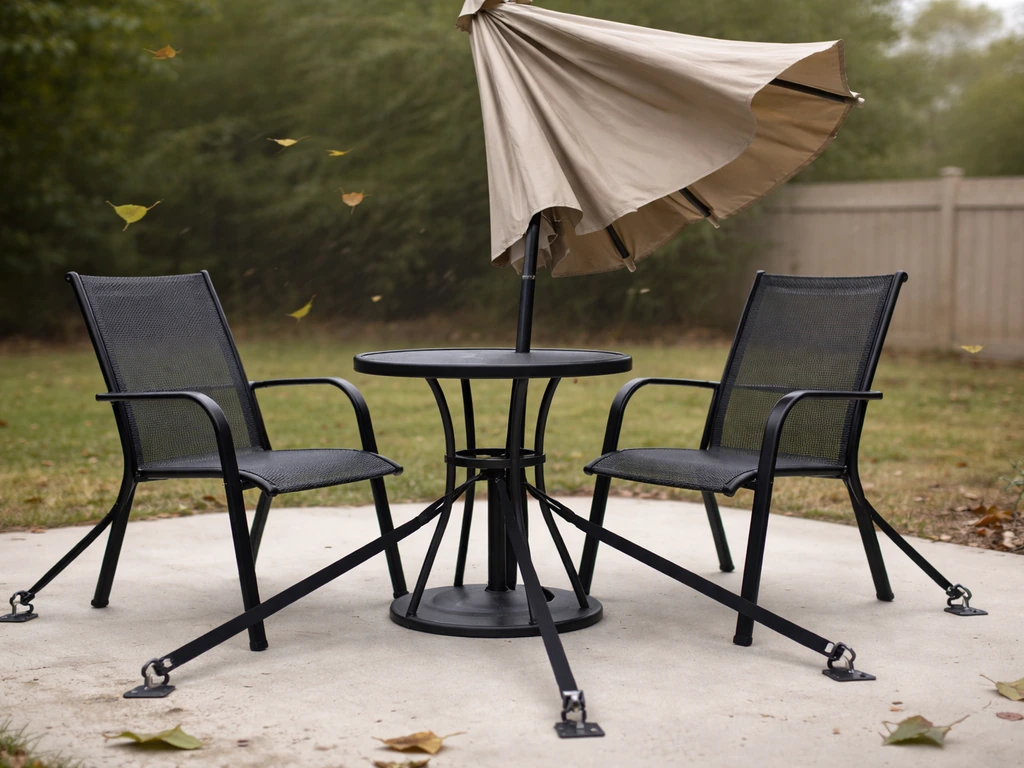
Why wind speed alone doesn't predict movement
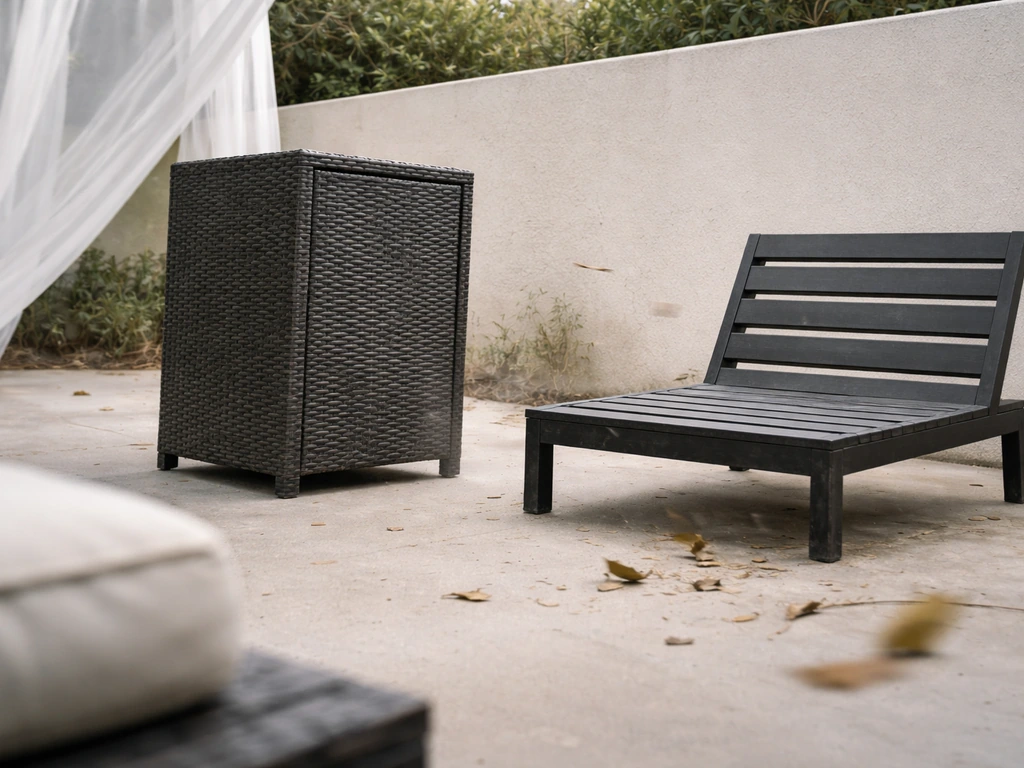
Wind moves objects by exerting force across their surface area. A tall, boxy piece catches far more wind than a low-profile slatted chair, even if they weigh the same. So the interaction between surface area and weight (what engineers call the power-to-weight ratio for wind loading) is really what determines whether your furniture stays put. A 40-pound folding table with a solid top is far more vulnerable than a 40-pound cast-iron chair with open, slatted construction.
Center of gravity matters too. Furniture that sits low to the ground with a wide base is harder to tip than something tall with a narrow footprint. Think about a standard patio umbrella: it's relatively light, has a huge surface area, and sits high up, that's three strikes against it. Compare that to a low-slung cast-aluminum lounge chair with open armrests, and you're dealing with a completely different wind-resistance profile. Leg shape, foot material (rubber feet grip better than metal on pavers), and whether cushions are attached also all change the equation.
Placement compounds everything. A corner of a covered porch channels wind differently than an open rooftop deck. Furniture pressed against a wall or fence has more protection than a piece sitting isolated in the center of an exposed patio. If you live somewhere that regularly sees high winds, the upper Midwest, coastal New England, or anywhere with strong seasonal storms, these factors should be driving your furniture buying decisions from the start.
Know the wind numbers: gusts vs. sustained winds
When you pull up a weather forecast, you'll typically see two wind figures: a sustained wind speed and a gust speed. These are not the same thing, and for furniture protection purposes, the gust number is what you should care about most.
Sustained wind speed is an average, the National Weather Service uses a 2-minute averaging period for U.S. forecasts, while the World Meteorological Organization standard is 10 minutes. Gust speed, by contrast, is the maximum instantaneous wind speed recorded during a measurement period. The NWS defines a gust as the peak 3-second wind speed expected within any 2-minute window at a standard 10-meter height. In plain terms: that gust number is the worst-case punch your furniture will actually feel.
A forecast reading '15 mph winds with gusts to 30 mph' means the air is moving steadily at 15 mph, but your patio will occasionally get hit with bursts at 30 mph. That 30 mph gust is what tips the chair. Plan for the gust number, not the sustained number. The NWS issues a High Wind Warning when sustained winds reach 40 mph for one hour or more, or when gusts hit 58 mph or greater for any duration, at that point, anything not strapped down is at serious risk.
On the metric side: 20 mph is roughly 32 km/h, 35 mph is about 56 km/h, and 58 mph is roughly 93 km/h. If you're reading a Canadian or international weather service and seeing km/h, divide by 1.6 to convert to mph.
Furniture movement thresholds: slide vs. tip by type
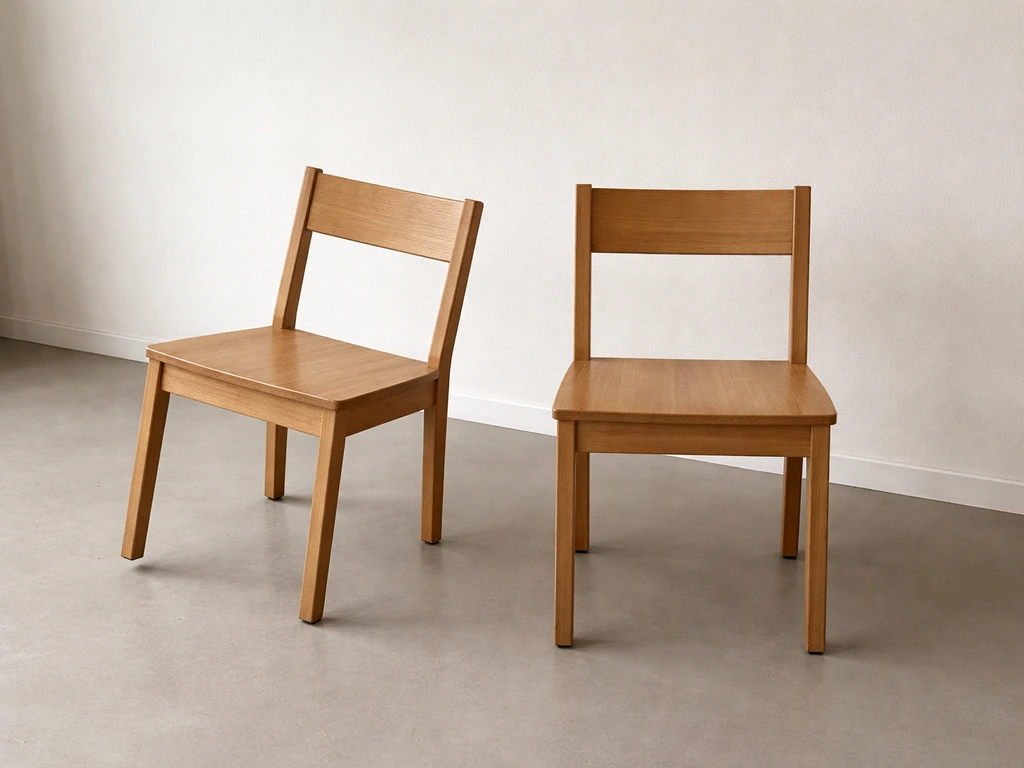
These ranges are real-world estimates based on typical furniture weights and construction. Your specific pieces will vary, but these give you a solid decision framework when you're watching a storm roll in.
| Furniture Type | Starts Sliding (Gust MPH) | Tips or Flips (Gust MPH) | Notes |
|---|---|---|---|
| Plastic/resin chairs (lightweight) | 15–20 | 25–35 | Very high risk; stack or store indoors |
| Cushions and pillows | 10–15 | N/A (just blows away) | Always bring in when wind is forecast |
| Patio umbrella (open) | 15–20 | 25–35 | Highest risk item on any patio |
| Aluminum folding chairs | 20–25 | 30–40 | Depends heavily on leg spread and weight |
| Wicker/rattan dining chairs | 20–25 | 35–45 | Open weave helps, but hollow frames tip |
| Aluminum or steel dining table (slatted top) | 25–35 | 40–50 | Slatted top reduces sail effect |
| Solid-top table (glass, solid aluminum) | 20–30 | 35–50 | Large sail effect; glass tops especially risky |
| Teak or hardwood dining chair | 30–40 | 45–55 | Dense wood adds meaningful stability |
| Cast iron or cast aluminum furniture | 35–50 | 50–60+ | Heaviest residential option; most wind-stable |
| Chaise lounger (padded) | 20–30 | 35–45 | Surface area is high when reclined |
| Fire pit (freestanding) | 25–35 | 40–55 | Base weight varies widely; never leave lit in wind |
The takeaway from that table: if your forecast shows gusts above 35 mph, anything that isn't heavy cast metal or anchored hardwood should be dealt with, either secured or moved inside. At 45+ mph gusts, even your heavier pieces need attention. At 58 mph and above (NWS High Wind Warning territory), clear the patio completely.
Material and design factors that change how easily furniture moves
Material weight is the most obvious factor, but design details matter just as much. Here's how common patio furniture materials stack up in real wind situations.
Cast iron and cast aluminum
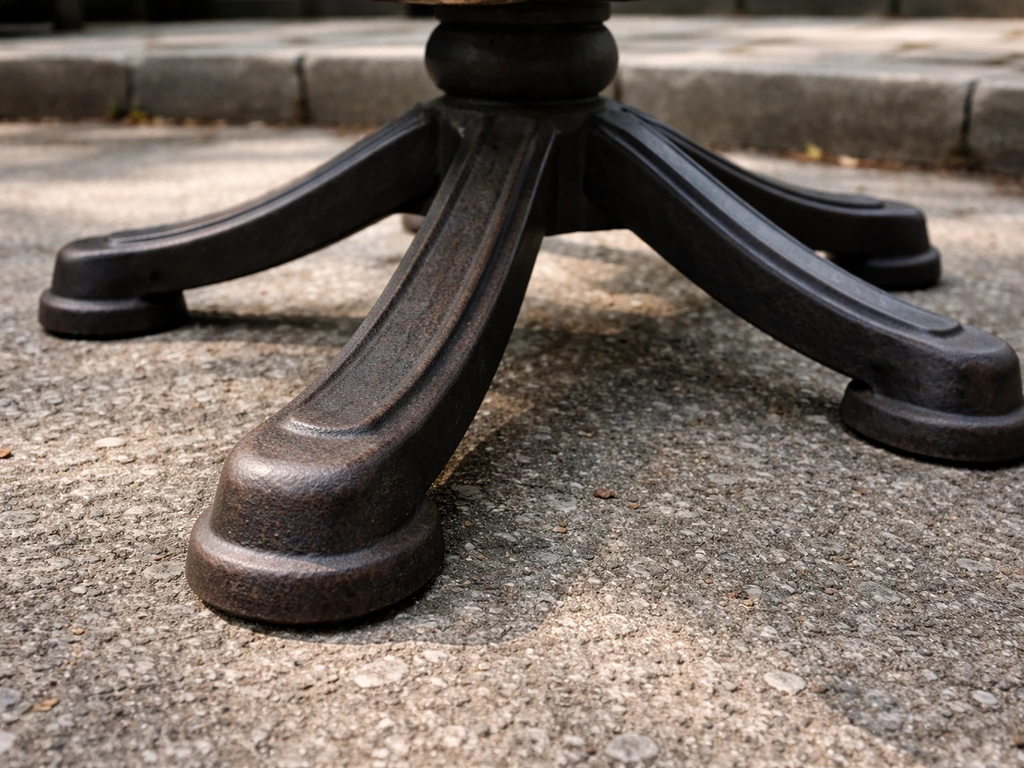
These are the most wind-stable residential materials by a wide margin. Cast iron runs 40 to 80+ pounds per chair, which makes it genuinely hard to move even in significant gusts. Cast aluminum is lighter (typically 15 to 30 pounds per chair), but quality cast-aluminum pieces have low centers of gravity and wide bases. If you're in a genuinely windy climate, coastal, high-altitude, or storm-prone, this is the category where your money should go.
Teak and dense hardwoods
Teak is dense (around 40 to 55 lbs/ft³) and typically constructed with low, wide proportions. A solid teak dining chair sits in the 20 to 35 pound range and has a low profile. It won't anchor a patio in a hurricane, but it does meaningfully outperform aluminum frames and wicker in moderate wind. Teak also has no hollow parts that catch air the way tubular aluminum does.
Tubular aluminum and steel frames
These are the most common materials in mid-range patio furniture, and they're a mixed bag for wind resistance. The frames are lightweight (good for portability, bad for wind), and hollow tubular legs can act like sails if the design has any open-frame back or boxed sections. Slatted backs and seats are genuinely better than mesh or solid panel designs in wind because they let air pass through. If your set is tubular aluminum, it needs more active wind management than cast or hardwood furniture.
Wicker and resin wicker
Natural rattan wicker is rarely used outdoors anymore because it deteriorates quickly in weather. Resin wicker (HDPE or PVC woven over a steel or aluminum frame) is the modern standard. The open weave is actually helpful in wind because air passes through it. The vulnerability is that the frames underneath are usually lightweight, and the overall piece is often tall and relatively light. Deep-seat wicker pieces with wide bases do better than standard dining chairs.
Plastic and resin
Basic plastic stacking chairs (the kind you find for $15 each) have almost no wind resistance. They're light, have relatively solid backs that catch air, and have small rubber feet. Stack them, bag them, or store them anytime wind is in the forecast above 20 mph. If you want a short list of options that work well in Minnesota, focus on wind-stable materials like cast aluminum, heavy teak, and dense HDPE composite, and pair them with properly fitted, tie-down covers. HDPE composite furniture (like Polywood) is denser and heavier than standard plastic and performs considerably better, but it's not immune.
Design features that add stability
- Wide leg spread relative to seat height (lower center of gravity)
- Slatted or open backs instead of solid panels
- Rubber or non-slip feet instead of bare metal
- Low-profile seating height rather than bar or counter height
- Angled legs that flare outward rather than straight vertical legs
How to secure patio furniture quickly for today's forecast
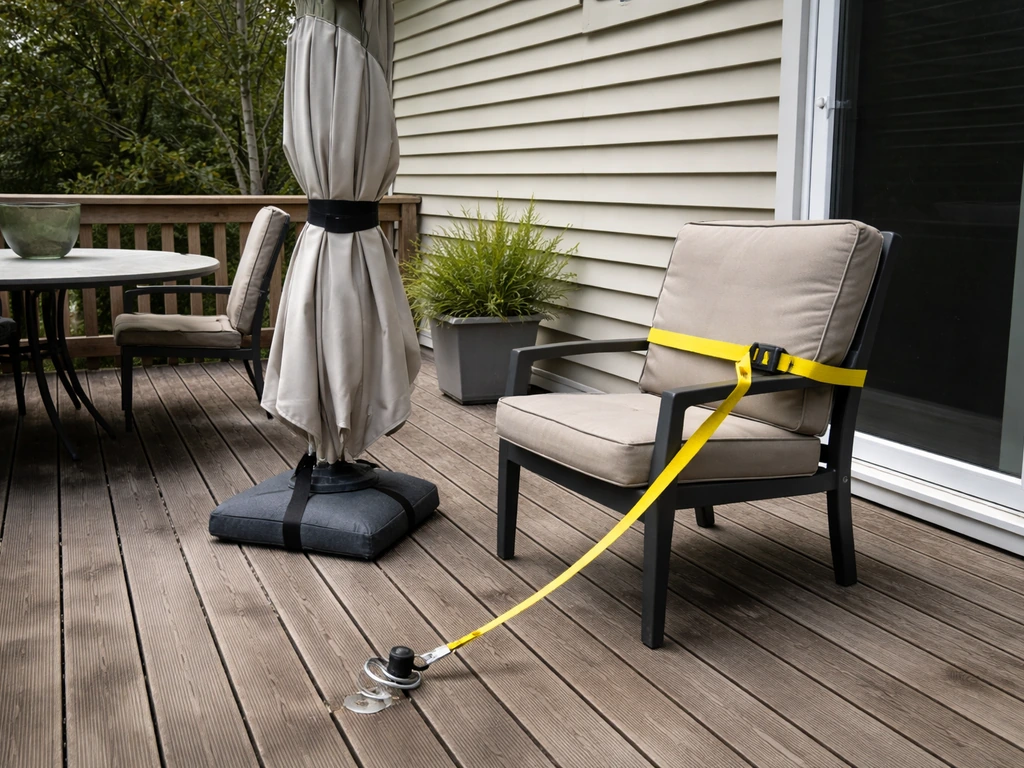
If there's a wind event in the next 24 to 48 hours, here's a practical action plan from fastest to most involved.
- Bring in everything light immediately: cushions, pillows, umbrellas, tablecloths, decorative lanterns, and any plastic or resin chairs. These have no business being outside in winds above 20 mph gusts.
- Close and latch your patio umbrella. Better yet, remove it from the base and store it flat in a garage or shed. An open umbrella in 25 mph gusts is a projectile. If you can't store it, collapse it fully and use a strap or bungee to keep it closed, then lay it horizontal.
- Stack and strap lightweight chairs. Stack plastic chairs and run a bungee cord or ratchet strap through the legs to keep the stack together. Loop one end to a fixed point like a deck railing if possible.
- Use furniture weights or sandbags on heavier pieces. You can buy purpose-made furniture leg weights (typically 10 to 25 lbs each) or improvise with sandbags. Place them over the legs or base, not just on the seat. For a standard dining chair, adding 20 to 30 lbs at the base raises your slide threshold by roughly 10 to 15 mph.
- Anchor tables with tie-down straps. Run a ratchet strap or cam buckle strap through the table's leg frame and attach it to a deck bolt, railing post, or ground anchor. A table with a solid top is a sail — even a modest wind can slide it across pavers.
- Move smaller pieces against a wall or fence. Stacking furniture against a solid wall reduces wind exposure dramatically. Just make sure the wall is on the windward side (upwind of the furniture, so the wall blocks the wind).
- Flip chairs and tables upside down. If you can't store them inside, flip them upside down on the patio. This changes the aerodynamics and lowers the center of gravity. A table flipped upside down on the ground is far harder to move than one sitting normally.
If the forecast is showing gusts above 50 mph, do not try to secure things in place and hope. That's NWS High Wind Warning territory. Clear the patio completely and move everything indoors or into a garage. At those speeds, even weighted furniture can become a hazard.
How to choose weather-resistant, wind-stable furniture and covers
If you're buying new furniture and wind is a regular concern, and it should be if you live anywhere with thunderstorm seasons, coastal exposure, or winter wind events, here's what to prioritize. If you're buying new furniture and wind is a regular concern, and it should be if you live anywhere with thunderstorm seasons, coastal exposure, or winter wind events, here's what to prioritize best patio furniture for cold weather.
Weight is your first filter. Look for actual weight specs, not just material descriptions. A 'cast aluminum' chair that weighs 12 pounds is not in the same category as one that weighs 28 pounds. If you're shopping in coastal and storm-prone areas like New England, focus on pieces that meet the durability and stability bar for the best patio furniture for New England. Manufacturers list this in the spec sheet; ask for it if it's not posted. For a dining chair, aim for 20+ pounds minimum if wind is a real concern. For a lounge chair, 30+ pounds is a reasonable target.
Check the base-to-height ratio. A chair that's 36 inches tall with a 20-inch wide base is far tippier than one that's 32 inches tall with a 26-inch base. Measure it in the store or check spec sheets online. The same logic applies to tables, wider leg spreads and lower table heights are genuinely more stable.
Look for built-in anchor points. Some higher-quality patio furniture frames include bolt-through holes or mounting brackets specifically for anchoring to decks. If your patio is decked and you're serious about wind resistance, this feature is worth seeking out.
Covers are useful but need to be chosen carefully. A poorly fitted cover can act like a sail and make things worse by catching wind and adding force to a piece that was otherwise sitting quietly. Use covers that are sized correctly, have tie-down straps or drawstring closures at the base, and ideally have vented panels to let air pass through. Never put a loose-fitting cover on furniture and expect it to help in real wind, it won't.
For climates with serious seasonal wind exposure, the Upper Midwest with its severe thunderstorm season, coastal New England with nor'easters, or any high-wind corridor, invest in furniture that doesn't require elaborate securing every time a storm rolls through. Cast aluminum, heavy teak, and dense HDPE composite pieces are all worth the extra upfront cost because they reduce the ongoing maintenance burden and the risk of damage or injury.
Quick DIY stability checks and when to move items indoors
You don't need an engineering degree to assess whether your furniture is adequately wind-stable. Here's a quick hands-on test you can do right now.
The push test: stand at the side of a chair or table and push horizontally at roughly the midpoint of its height, using a firm, consistent force (not a shove, more like a steady lean). A piece that rocks easily or slides more than an inch on dry pavers under modest hand pressure is going to have problems in 25+ mph gusts. If you can tip it by pushing at the top of the backrest with moderate force, add it to your 'secure first' list.
The foot check: flip the piece over and look at the feet. Bare metal feet on pavers or concrete have very little friction. Rubber feet, rubber caps, or felt pads all add grip. If your feet are bare, $5 of rubber furniture caps from a hardware store can meaningfully raise the slide threshold. While you're under there, check for any structural wobble in the joints, loose joints are a wind vulnerability because the piece can rack and deform under lateral force.
When to move things inside, not just secure them: use this as your rule of thumb. Gusts under 30 mph, standard securing is fine (strap, stack, add weight). Gusts 30 to 45 mph, bring in anything under 25 pounds, secure everything else with straps and weights, collapse and store umbrellas. Gusts above 45 mph, clear the patio of all lightweight and mid-weight items, and seriously consider clearing everything if gusts are forecast above 55 mph. At 58 mph and above (NWS High Wind Warning), the patio should be completely clear and you should be inside. During a high wind event, the NWS recommends getting indoors and staying away from windows NOAA / NWS.
One last thing: check your forecast specifically for gusts, not just the headline wind speed. For the best patio furniture to withstand elements, prioritize materials and designs that resist wind loading and tipping. Most weather apps show gust data if you look at the hourly breakdown. The sustained wind might look manageable at 18 mph, but if gusts are forecast to 42 mph, that's the number driving your furniture decisions today.
FAQ
What wind speed will move patio furniture if it is strapped down or covered?
Even with straps or tie-downs, movement can occur from cover drag and from furniture racks at the joints. Use the gust number as your trigger, and treat “secure” as having limits: if gusts are above about 35 mph, tighten straps and remove anything that can catch the cover fabric (light cushions, chair toppers, loose umbrella covers). For gusts above 50 mph, the safest assumption is that straps and covers are not enough, clear the patio.
Will patio furniture move in the rain or right after, even when the forecast gusts look similar?
Yes. Wet surfaces often reduce friction at the feet, and puddles can let legs slide more easily than on dry pavers. Your push test can be less forgiving in wet conditions, so if the forecast calls for gusts near your threshold (around 20 to 25 mph), plan to move or strap early rather than waiting for the first gusts.
Does gust speed or sustained wind speed matter more for tipping patio furniture?
Gust speed matters more for tipping. Sustained wind is an average, furniture can steady against it, but a higher instantaneous gust provides the peak force that starts tipping. When reading a forecast, compare the worst gust number over several hours, not just the peak hour.
What wind speed should make me remove or collapse an umbrella first?
Umbrellas should be treated as high risk at lower wind than chairs because they sit high with a large exposed surface. If gusts are above roughly 30 mph, collapse the umbrella and secure the base, and if gusts approach the mid-30s to 40 mph range, consider removing it indoors rather than relying on straps alone.
Can patio furniture covers make wind damage worse?
Yes, a loose or poorly sized cover can billow like a sail and add downward and sideways forces, even if the furniture underneath is heavy. Use properly fitted, tie-down or drawstring covers with vents if available, and remove the cover entirely if you cannot tighten it securely, especially when gusts exceed about 35 mph.
What is a safe rule for how much weight is “enough” to leave furniture outside?
Weight helps, but it is not the only factor. A practical rule is to be more conservative with lightweight items even when gusts look moderate: for gusts around 30 to 45 mph, bring in pieces under about 25 pounds unless you have reliable anchoring. For heavier cast or dense materials, you can often leave them out at higher gusts, but still plan to secure or remove anything with a tall profile.
How can I tell whether my furniture will slide on my patio surface?
Check friction by doing the push test on the exact surface you have (pavers, concrete, decking). If the piece moves more than about an inch on dry pavers during a firm, steady horizontal push, assume it will slide in gusts in the mid-20s mph range. Rubber feet and caps usually make a noticeable difference, especially on smooth concrete.
If I have a table and chairs, should I secure both or just the chairs?
Secure both, because tables can shift and then act like a lever that tips chairs, especially if chairs are spaced to the table edges. In moderate wind forecasts, strap the table down and collapse or stack chairs; in higher gust forecasts, bring in lighter chairs and leave only the pieces that are truly heavy and low-profile, secured or anchored.
What should I do if the forecast says wind is 18 mph sustained but gusts are high?
Use the gust number to decide. Sustained 18 mph can be tolerable while gusts in the 35 mph range can still topple umbrellas, plastic chairs, and lightweight sets. Check the hourly gust values and treat the highest gusts as the event you are preparing for.
Is it better to store cushions inside or to tie them down on the chair?
Inside is safest because cushions add lift and can act like a sail if not tightly secured. If you must leave them out for low-risk conditions, use straps to prevent flap movement and keep them fastened so they cannot shift upward on gusts.
What is the most common mistake people make when preparing furniture for high wind?
Relying on a single “headline wind speed” or assuming that a cover equals protection. The more reliable approach is: read the forecast gusts, remove umbrellas and lightweight pieces first, and ensure covers are tight (vented and strapped) rather than loose.
Next Articles
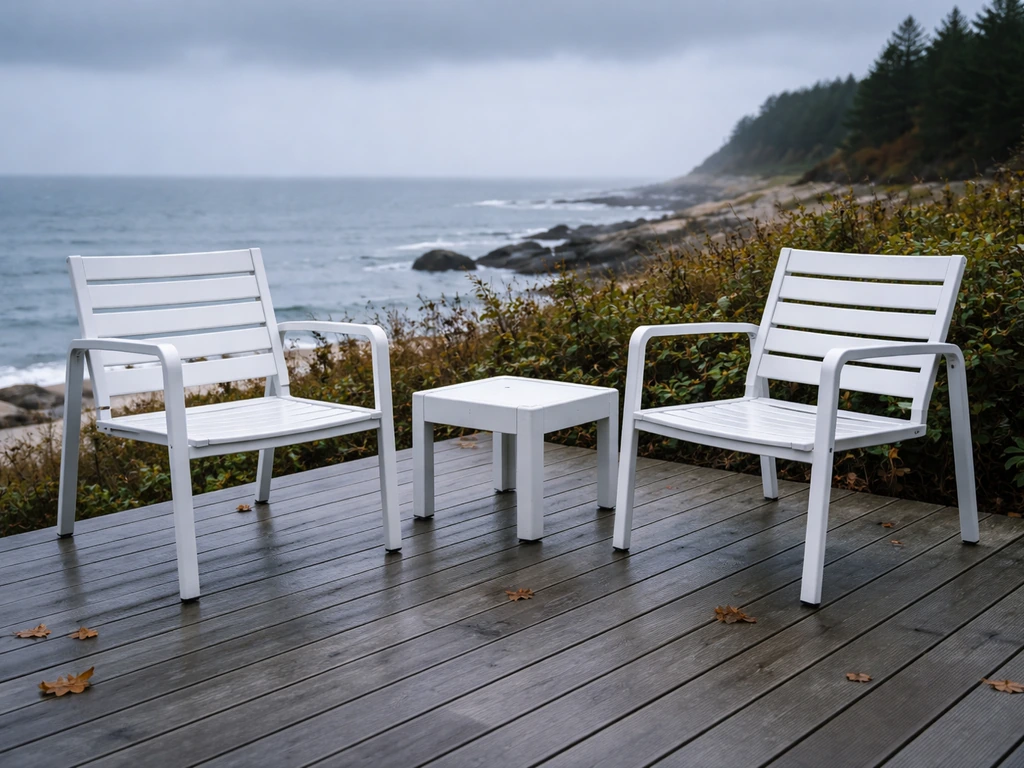
Best Patio Furniture for New England: Buyer Guide
Weatherproof patio furniture guide for New England: top materials, must-have construction, care plan, and size tips for
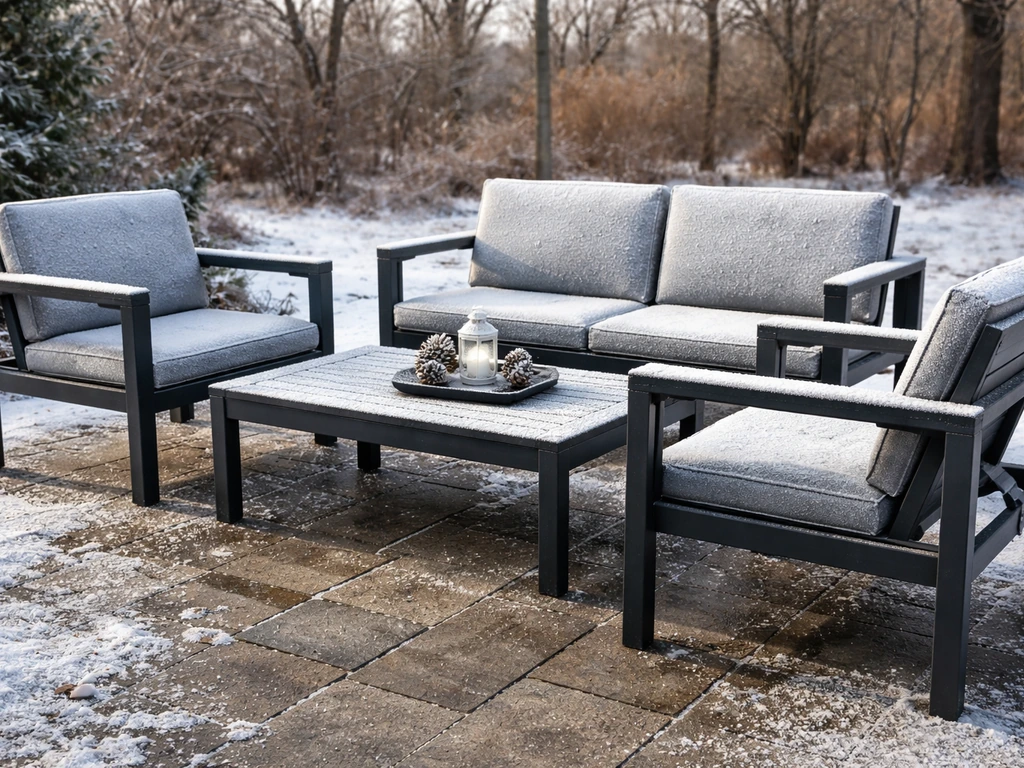
Best Patio Furniture for Cold Weather: Materials Guide
Compare wood, metal, wicker, and composite for cold climates, with durability tips and a shopping checklist.
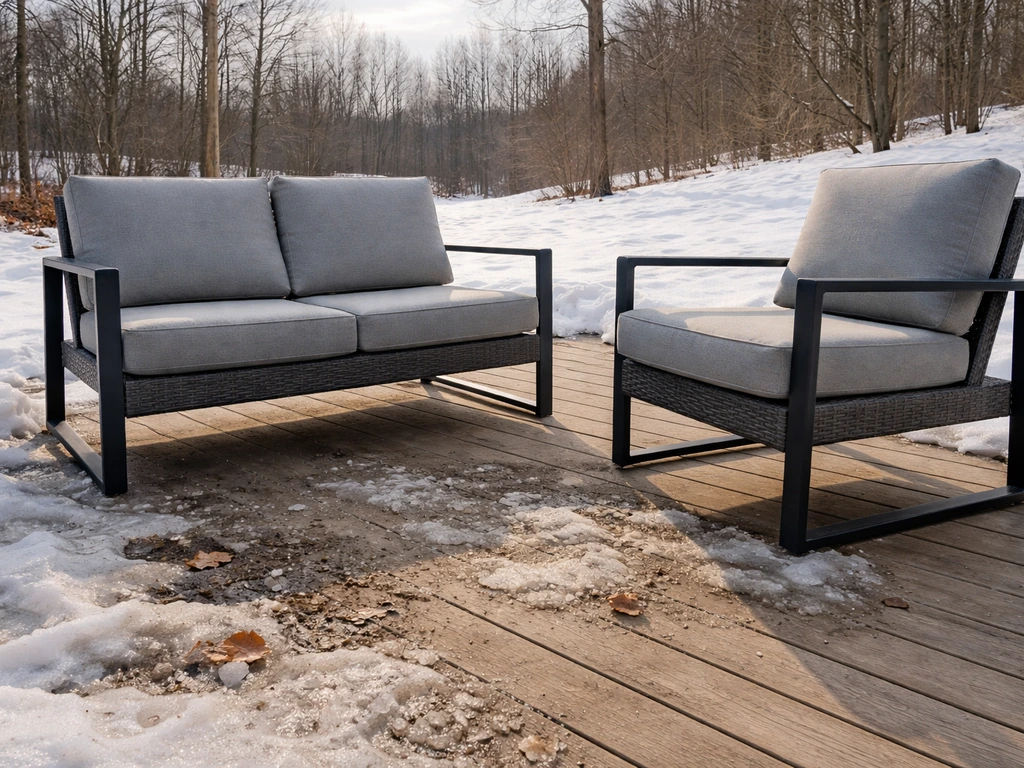
Best Patio Furniture for Minnesota Weather: What Lasts
Compare wood, metal, wicker and composite patio furniture for Minnesota freeze-thaw, sun and salt, with purchase and car